Will the Nuclear Regulatory Commission relicense Fermi plant until 2045?
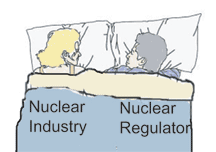 DTE seeks license extension for Fermi 2 nuke plant, DTE Energy has asked the Nuclear Regulatory Commission to allow the company to operate the Fermi 2 nuclear plant until 2045, Michigan Messenger, By Eartha Jane Melzer | 07.21.11
Fermi 2, located in Monroe County on Lake Erie, is a 1,140 megawatt plant that has the same GE Mark 1 design as the Fukushima, Japan power plant that melted down this spring following an earthquake and tsunami. Continue reading
Typhoon hazard to Japan’s nuclear power
a typhoon like Ma-On could be a huge blow to Japan……. also through the looming threat, again, to the country’s nuclear infrastructure…..What’s more, the shattered Fukushima plant may be so far gone that “insulating the facilities from the typhoon will be impossible,” ….If nothing else, the one-two punch of a tsunami and a typhoon may hasten Japan’s much called-for abandonment of nuclear power,….
Typhoon Tests Japan’s Nuclear Resolve, TIME, by Tara Thean, July 19, 2011 “…The typhoon is moving quickly north- and eastward, with sustained winds and gusts speeding along at 87 and 100 mph respectively. And quite a lot of that predicted rain – over 50mm, or 2 inches – has already hit Shikoku and Honshu islands. It’s still anyone’s guess whether or not the typhoon will lead to another national disaster — the most intense rainfall and strongest convection is still over the open ocean, and convection may be weakening because of warming cloud top temperatures and the movement of dry air
Whistleblower sceptical on safety of Tennessee nuclear plant
You’ll have to pardon Ann Harris if she’s heard it all before. She’s won a record six whistle-blower lawsuits against Watts Bar over issues like millions of feet of faulty electrical cable, and says she’s paid a price for speaking out…..
 VIDEO http://www.cbsnews.com/stories/2011/07/19/earlyshow/main20080633.shtml?tag=contentMain;contentBody Fukushima-type disaster inevitable in U.S.?, CBS News, Armen Keteyian, 19 July 11, The Nuclear Regulatory Commission was to meet Tuesday to discuss sweeping new safety recommendations, after having just finished inspecting all 104 U.S. nuclear plants in the wake of Japan’s Fukushima disaster.
On “The Early Show,” CBS News Chief Investigative Correspondent Armen Keteyian spotlighted one of those facilities’ post-Fukushima inspection reports.
Watts Bar, in Spring City, Tenn., is the last nuclear plant to be licensed in the U.S., and a textbook study of the pros and cons of nuclear power. It provides electricity to some 9 million people in seven states, yet is dogged with a long history of safety issues and whistle-blower lawsuits — including six by a 71-year-old great-grandmother named Ann Harris…. Continue reading
Deterioration in Seabrook nuclear plant stalls licence renewal
Nuclear plant concerns stall license renewal, By Shir Haberman,Issues raised over deterioration of concrete .seacoastonline.com July19, 2011NRC inspectors reviewing Seabrook Station for its fitness to have its license extended noted the deterioration, which was discovered by the plant’s staff, and noted it in an inspection report dated May 23.
SEABROOK — The U.S. Nuclear Regulatory Commission confirmed Friday that the discovery of deteriorating concrete in below-ground-level structures at the Seabrook Station nuclear power plant made public earlier this year could delay the granting of a license extension that would allow the plant to operate until 20 ….
“The walk-down inspections discovered the following plant material conditions; (a) large amount of groundwater infiltration, (b) large amount of calcium carbonate deposits, (c) corroded steel supports, base plates and piping, (d) corroded anchor bolts, (e) pooling of water and (f) cracking and spalling of concrete,” the NRC report indicated. “The inspection further noted that the below-grade, exterior walls in the Control Building B Electrical Tunnel … have random cracking and for several years have been saturated by groundwater infiltration……
typically, the license extension approval process takes 30 months when opponents call for a public hearing on the merits of that extension. Several nuclear safety organizations, including the Portsmouth-based Seacoast Anti-Pollution League, have been granted intervener status in the Seabrook license extension process creating the need for such a hearing.
“This ongoing groundwater infiltration and weakening of the plant foundations doesn’t sound good, considering that it is only about one-third of the way through its prospective life,” said Doug Bogen, executive director of SAPL after the May 23 report was issued. “This is exactly the kind of problem we’re concerned about as the plant enters its middle and old age, and it doesn’t bode well for future safety and reliability if the problem worsens in coming years.”…
http://www.seacoastonline.com/articles/20110719-NEWS-107190336
Radioactive water leak closes New Jersey nuclear plant
NJ nuclear plant taken offline due to water leak , LOWER ALLOWAYS CREEK TOWNSHIP, N.J. 16 JULY 11, The Salem 2 nuclear plant in southern New Jersey has been taken offline after a leak of low-level radioactive water developed during routine testing of an emergency cooling system…. it’s not known when the plant will return to service….http://www.businessweek.com/ap/financialnews/D9OGD6UG0.htm
—
Changes needed in USA nuclear reactors, says govt panel
 Govt panel: Changes needed at U.S. nuclear plants. Salon.com, BY DINA CAPPIELLO, 14 July 11 Calling the Japan nuclear disaster “unacceptable,” an expert task force convened by the Nuclear Regulatory Commission has concluded that nuclear power plants in the U.S. need better protections for rare, catastrophic events.
Nuclear Regulatory Commission recommends 12 changes at domestic reactors to help prevent Fukushima repeat
The series of recommendations, included in portions of a 90-page report obtained Tuesday by The Associated Press, will reset the level of protection at the nation’s 104 nuclear reactors after the worst nuclear disaster since Chernobyl by making them better prepared for incidents that they were not initially designed to handle.
The report will be formally presented to the full commission next week. NRC staff will continue to examine the safety of nuclear power in the U.S. as part of a six-month investigation.
The panel will tell the commission that nuclear plant operators should be ordered to re-evaluate their earthquake and flood risk, add equipment to address simultaneous damage to multiple reactors and make sure electrical power and instruments are in place to monitor and cool spent fuel pools after a disaster……http://www.salon.com/news/feature/2011/07/14/us_japan_nuclear_safety_report
—
Investigations continue into radioactive leak from nuclear plant
Radioactive waste leaks at nuclear plant, Officials say no threat posed, but federal safety team continues to investigate, The State, South Carolina, By SAMMY FRETWELL , 12 July 11,
Federal nuclear safety inspectors are investigating a radioactive waste leak at SCE&G’s atomic power plant in Fairfield County.
An estimated 100 gallons of liquid waste spilled at the utility’s V.C. Summer plant, apparently from a pipe that leaked, according to the U.S. Nuclear Regulatory Commission. The discovery was made late last week.
State, federal and SCE&G officials say they have found no signs the material left the SCE&G nuclear plant or posed any threat to the public, but they are continuing to investigate….Read more: http://www.thestate.com/2011/07/12/1894714/radioactive-waste-leaks-at-nuclear.html#ixzz1RtIakhMk
Taiwanese government not taking nuclear risks seriously
Nuclear safety inaction panned, By Lee I-chia Taipei Times Staff Reporte, 12 July 11, Four months after a powerful earthquake and tsunami sparked a crisis at the Fukushima Dai-ichi nuclear power plant in Japan, environmental protection activists yesterday said the Taiwanese government remained flippant about nuclear safety.
RISKS:The former head of an anti-nuclear group said problems could occur at the Fourth Nuclear Power Plant given a lack of experienced engineers working there.
During a press conference at the legislature, Democratic Progressive Party (DPP) Legislator Tien Chiu-chin (田秋堇) said that if an earthquake of similar magnitude occurred in Taiwan, the operating power plants might be unable to withstand the impact and catastrophe might ensue at tremendous cost to society.
There are 108 schools located within a 20km radius of the Jinshan, Guosheng and Fourth Nuclear Power Plants in New Taipei City’s (新北市) Shihmen (石門), Wanli (萬里) and Gongliao (貢寮) districts respectively, Tien said.
“If something goes wrong at any one of the three plants, many schools will face total evacuation,” she said…..http://www.taipeitimes.com/News/taiwan/archives/2011/07/12/2003508030
USA’s new nuclear regulations will take years to be developed
Analysis: After Fukushima, glacial change seen for U.S. nuclear, (Reuters) 11 July 11, – The U.S. nuclear industry this week gets its first peek at a roadmap for new regulations that ultimately could cost it billions in the wake of Japan’s Fukushima Daiichi disaster.
But the bottom-line impact of Fukushima on the U.S. fleet of 104 reactors could take most of the next decade to calculate.
Most expect Tuesday’s report from a task force of senior staff members at the Nuclear Regulatory Commission to be just the first step in years of deliberations and rule-makings…….
The last time the NRC did this kind of regulatory soul-search — after the September 11, 2001, attacks — it took a decade to get the entire plan in place. Continue reading
Japan’s nuclear reactors could be all shut down by May 2012
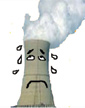 Japan May Have No Nukes Operating By 2012, Says Bloomberg, Barron’s, July 8 2011, By Tiernan Ray, Interesting article by Bloomberg’s Tsuyoshi Inajima and Chisaki Watanabe this morning about Japan perhaps dumping all nukes by May of next year.
Two thirds of Japan’s nuclear reactors have been shut down since the earthquake and resultant tsunami in March, the authors write. Now, stress tests ordered by the government this week on various reactors are causing delays to the resumption of operations at plants.
“The remaining operating units in Japan, the world’s third- biggest user of nuclear power, must be idled by May next year, according to schedules provided to Bloomberg by Kyushu Electric, Shikoku Electric, Tokyo Electric Power Co., Kansai Electric Power Co. and the other power companies,” write Inajima and Watanabe….http://blogs.barrons.com/stockstowatchtoday/2011/07/08/japan-may-have-no-nukes-operating-by-2012-says-bloomberg/?mod=google_news_blog
$1 Billion emergency response plan for USA nuclear industry ?
 Representative Edward Markey, a Massachusetts Democrat, has faulted U.S. oversight of reactor safety. Senators Barbara Boxer and Dianne Feinstein, both California Democrats, have called on the NRC to examine nuclear power plants located in areas of seismic activity. In June, rising waters of the Missouri River in Nebraska threatened to breach flood walls protecting two nuclear plants.
Nuke industry weighing $1B emergency response plan, Fuel Fix, By Brian Wingfield, 8 July 11 (Bloomberg) — The U.S. nuclear-power industry is considering a $1 billion plan that would create regional centers to store equipment for delivery to reactors within 24 hours of an emergency. Continue reading
Perry Nuclear Plant may not be operating safely
Perry Nuclear Plant facing possible safety violations, The investigation into an April incident at Perry Nuclear Power Plant in North Perry Village has the plant facing a possible safety violation., News Herald, July 09, 2011,
Nuclear Regulatory Commission spokeswoman Viktoria Mitlyng said preliminary findings indicate numerous missteps were taken on April 21 when workers removed a neuron monitor from a reactor………Mitlyng said the potential violation follows a series of indications that the plant may not be operating as safely as possible.
“Perry has had issues with human performance which for 31⁄2 years they have not been able to resolve.”…http://news-herald.com/articles/2011/07/09/news/nh4230128.txt?viewmode=2
Training US nuclear staff for nuclear calamities
At U.S. Nuclear Reactors, Crews Train For The Worst, 5 July 11NPR, by RICHARD HARRIS..…..”…….— Berry says reactor operators in these training scenarios can respond to some pretty intense crises, on the scale even of Fukushima. But David Lochbaum, a nuclear engineer at a watchdog group called the Union of Concerned Scientists, says he’s skeptical that the mess in Japan could have been prevented, given the real-world conditions there….
He adds that you can’t truly simulate the kind of crisis response we saw at Fukushima, where a lot of the action took place outside the control rooms. Workers scrambled around to try to read dials, fix electrical circuits and struggle with stalled pumps. And he adds training might not be enough when a crew is confronting not only severe conditions but simultaneous crises at multiple reactors.
“Fukushima showed us that we could have an across-the-board situation where all the reactors are in jeopardy and there’s no on-site cavalry that can come running to the aid of the accident unit,” Lochbaum says.
He adds that overall, the U.S. training system is an important element of emergency preparedness. But it’s no guarantee that crews here can handle anything and everything thrown their way.http://www.npr.org/2011/07/06/137633351/at-u-s-nuclear-reactors-crews-train-for-the-worst
French regulators allow oldest nuclear reactor to keep going
French nuclear watchdog allows Fessenheim to continue, PARIS, July 4 (Reuters) – France’s nuclear watchdog on Monday gave its go-ahead for France’s oldest operating nuclear reactor in eastern France to continue working for another 10 years, a move that will anger ecologists.
But the government could still decide to shut the plant, commissioned in 1978, permanently after results of post-Fukushima stress tests are made public around mid-November.
There has been mounting pressure from ecologists over the last few years to permanently shut the plant because of its age, location in a seismic area and its proximity to the German border.
Fessenheim’s opponents stepped up their pressure after Japan’s nuclear disaster in March and after Germany decided last month to pull out of nuclear energy by 2022, arguing the plant would not resist an earthquake…….http://af.reuters.com/article/energyOilNews/idAFWEB831820110704
—
Nuclear Regulatory Commission rubber stamps Salem Nuclear plants’ license renewal
Salem Nuclear Power Plants Sail Through Relicensing Process, NJSP Spotlight, By Tom Johnson, July 1 The federal government yesterday approved a 20-year extension of the operating licenses for the two Salem nuclear power plants in Lower Alloways Creek Township in South Jersey. The extension from the U.S. Nuclear Regulatory Commission (NRC) was not unexpected, since the its staff had signed off on the extension earlier this month and the regulatory agency has never failed to approve a relicensing request…….
Safety Concerns, Jeff Tittel, director of the New Jersey Sierra Club, expressed disappointment in the decision. “The NRC believes in license first, inspect and regulate later. They have it backward,” Tittel said. “We believe outside independent experts need to review the plants and their different design features to ensure safety.”
In the relicensing process, the NRC failed to address sizable tritium leaks causing contamination of groundwater near the plant, Tittel said. He also argued that the Salem plant is old, saying the federal agency failed to look at metal fatigue and other issues that come up as these facilities age……http://www.njspotlight.com/stories/11/0701/0058/
1 This Month





PLEASE OPPOSE HR 8255 AND S.3639 – bills would accelerate satellite deployment, with no environmental review or safeguards – https://ncstd5li.quorum.us/campaign/169331/
To see nuclear-related stories in greater depth and intensity – go to https://nuclearinformation.wordpress.com
-
Archives
- October 2026 (19)
- September 2026 (339)
- August 2026 (330)
- July 2026 (355)
- June 2026 (287)
- May 2026 (306)
- April 2026 (356)
- March 2026 (251)
- February 2026 (267)
- January 2026 (308)
- December 2025 (358)
- November 2025 (359)
-
Categories
- 1
- 1 NUCLEAR ISSUES
- business and costs
- climate change
- culture and arts
- ENERGY
- environment
- health
- history
- indigenous issues
- Legal
- marketing of nuclear
- media
- opposition to nuclear
- PERSONAL STORIES
- politics
- politics international
- Religion and ethics
- safety
- secrets,lies and civil liberties
- spinbuster
- technology
- Uranium
- wastes
- weapons and war
- Women
- 2 WORLD
- ACTION
- AFRICA
- Atrocities
- AUSTRALIA
- Christina's notes
- Christina's themes
- culture and arts
- Events
- Fuk 2022
- Fuk 2023
- Fukushima 2017
- Fukushima 2018
- fukushima 2019
- Fukushima 2020
- Fukushima 2021
- general
- global warming
- Humour (God we need it)
- Nuclear
- RARE EARTHS
- Reference
- resources – print
- Resources -audiovicual
- Weekly Newsletter
- World
- World Nuclear
- YouTube
-
RSS
Entries RSS
Comments RSS

