Multiple dangers in Russia’s new nuclear powered ice-breakers
multiple concerns including the “generation of radioactive waste, generation of spent nuclear fuel, which is reprocessed in Russia and as a result more radioactive waste is generated. [There is] a possibility of serious accidents like there was with the first icebreaker “Lenin.” There were two major accidents on-board in the 1960s and 1970s. Lenin’s spent nuclear fuel and reactors were cut out and dumped in the Kara sea.”
Breaking the Ice: Russian nuclear-powered ice-breakers, Scientific American By Eve Conant | September 8, 2012 Russia’s rapidly expanding nuclear industry has set it sights on the freezing waters of Arctic basin with an ambitious goal to build the world’s largest “universal” nuclear icebreaker.
Russia’s dream to dominate the Arctic will soon get a boost with a nuclear-powered icebreaker designed to navigate both shallow rivers and the freezing depths of the Northern Sea. Last month Rosatomflot , Russia’s atomic fleet, inked a deal to begin construction of a massive new vessel 170 meters long and 34 meters wide. That is 14 meters longer and four meters wider than any of Russia’s other nuclear vessels. Continue reading
Five years or more before Fukushima nuclear plant safe enough to fully investigate
Suicide bombers aimed for Pakistan nuclear plant

 Three would-be nuclear power plant assaulters killed in Bhakkar blast: Police http://tribune.com.pk/story/432428/3-killed-as-explosives-go-off-in-bhakkar-house/ By Owais Jafri September 6, 2012 PUNJAB: Police recovered bodies of three suicide bombers from a building near the border of Bhakkar district about 30km away from a nuclear plant in Garot, Khushab district on Thursday. The men, DPO Saifullah Khan Khattak said were terrorists and were planning to attack the nuclear plant.
The bodies were recovered from a devastated building next to a mosque in the village 46 D/B of Ali Khel area near the Bhakkar border. The area is deserted and the mosque and the building served as temporary residence for travellers.
Police officials estimated that the terrorists may have had more companions who had left the area before the police arrived as footprints of more than 12 people along with tracks of heavy vehicles could be seen at the site of the incident.
Police had arrived at the spot almost 11 hours after there were reports of a blast and had initially denied the reports. They had blamed the media for propagating terror in the area, but later confirmed the blast.
According to details, the terrorists were killed when three suicide jackets, each carrying 0.5 kg of explosives, went off as they were planning to leave their temporary residence.
Police have identified two of the terrorists as Mawia Tariq and Omar Irfan, both belonging to Mandi Bahauddin, and have shifted the bodies to DHQ Bhakkar for post mortem.
Investigations are under way to trace the companions of the terrorists and security has been tightened at all entrances of Bhakkar and Khoshab.
Earlier, intelligence reports had suggested that the Taliban were planning an assault on the nuclear power plant in Khushab, following which security around the plant had been beefed up.
The very real threat of nuclear terrorism in Pakistan
Nuclear safety http://tribune.com.pk/story/432507/nuclear-safety/ The Express Tribune, September 7th, 2012. The scenario drawn up by think-tanks in the US, of Pakistan’s nuclear weapons falling into militant hands, may just be more real than we think. This, of course, is a terrifying thought. So far, the possibility of such an event has been dismissed at home — but the high-level security alert put in place around Dera Ghazi Khan and the large-scale nuclear facility there, engaged mainly in mining and processing uranium, should force us to think otherwise.
The local police chief of Dera Ghazi Khan, Chaudhry Saleem, has confirmed that a heavy contingent of police and army personnel has been placed around the facility after the ISI intercepted a telephone call suggesting an attack was planned on the site housing nuclear material. Experts point out that these kinds of conversations picked up by intelligence agencies have proved to be accurate in the past.
It is also a fact that just weeks ago, a daring attack was made on the Kamra air base, which also houses our nuclear assets. The ability of the militants to enter high-security facilities is terrifying. It appears that in the latest case, the attacks are intended to act as revenge for the death of Abdul Ghaffar Qaisarani, killed in an encounter with the Dera Ghazi Khan police some time ago. Information about Qaisarani’s whereabouts had apparently come after the capture of other terrorists.
What is alarming, though, is the fact that key nuclear installations are becoming definite targets of the Tehreek-e-Taliban Pakistan (TTP). Despite the death of Qaisarani, which weakened the TTP considerably in the area, it is said to have been able to regroup, and in some parts of southern Punjab, is stated to be growing stronger and more dangerous. This also raises questions about why more action was not taken in the past to defeat the TTP in Punjab and prevent the southern part of the province from becoming what many say is a safe haven for militants — no less so than the tribal areas in the north. It has become essential that we deal with the pockets where extremist groups gather. The possibility of nuclear weapons somehow falling into their hands is one we simply cannot afford. We appear to be getting closer to this horrific reality by the day.
French losing faith in nuclear industry following latest incident
 confidence is taking a further hit because on 5 September Electricite de France, denied reports of a fire at the Fessenheim nuclear power plant (NPP) in eastern France
Not quite what France’s BFM television reported,…that local authorities said the incident was “the beginning of a fire.”
the “incident” at Fessenheim NPP in fact raises troubling issues about aging French NPPs.
French Nuclear “Incident” Raises Concerns By John Daly | Wed, 05 September 2012 In the 1960s, as the U.S. “Atoms for Peace” program got into full swing, promoting civilian nuclear electricity propagation, no European country bought into the concept more deeply than France.
Seduced by the concept of electricity “too cheap to measure,” France began developing a massive nuclear energy program with minimal public debate after the first oil crisis in 1974 and continued to support nuclear power even after the 1986 Soviet Chernobyl disaster.
The March 2011 debacle at Japan’s Fukushima Daiichi nuclear complex heightened the French public’s concerns, but France abandoning nuclear power is an order of magnitude more difficult than neighbouring Germany. Continue reading
Serious threat to Pakistan nuclear facility from Taliban
 Sources in the military and Punjab Police, on condition of anonymity, told The Express Tribune that the nature of threat at the nuclear installation is ‘serious,’ with an 80% chance of occurrence.
Taliban threat; nuclear site in D G Khan cordoned off, Express Tribune, Pakistan,By Abdul Manan : September 6, 2012, LAHORE: It could be the first-ever security threat to a nuclear facility in Pakistan, and the Army and security forces are taking no risks.
Following ‘serious’ security threats from the homegrown Taliban, the Army and Punjab police have deployed heavy forces at one of Pakistan’s largest nuclear facilities in Dera Ghazi Khan (DG Khan), credible sources told The Express Tribune.
Besides the deployment inside and around the nuclear installation, three divisions in South Punjab have also been asked to launch a crackdown against banned outfits, sources added.
“DG Khan houses one of the largest nuclear facilities in the country, and has faced the first-ever serious security threat from the Tehreek-e-Taliban Pakistan (TTP),” said a high ranking military officer currently serving at the installation.
According to an official who works at the Pakistan Atomic Energy Commission, a key military and civilian fuel cycle site is located 40 kilometres from DG Khan. The site comprises uranium milling and mining operations, and a uranium hexaflouride conversion plant. Continue reading
Incident at France’s old Fessenheim nuclear power plant
 Accident at France’s oldest nuclear plant. THE AUSTRALIAN, AFP ,September 06, 2012 A STEAM leak due to an accidental chemical reaction at France’s oldest nuclear plant led to two people being slightly burnt and renewed calls to reduce the country’s heavy reliance on atomic energy.
The accident occurred at the Fessenheim nuclear power plant in northeastern France within 1.5km of the border with Germany and about 40km from Switzerland.
“It was not a fire,” the local prefecture said, adding that oxygenated steam had escaped after hydrogen peroxide reacted with water in a reservoir.
About 50 firefighters were deployed, an official from the service said……
France is the world’s most nuclear-dependent country, operates 58 reactors and has been a leading international proponent of atomic energy.
But in a deal with the Greens before this year’s parliamentary and presidential elections, President Francois Hollande’s Socialist party promised to reduce reliance on nuclear energy from more than 75 percent to 50 per cent by shutting 24 reactors by 2025.
France’s reliance on nuclear power has been increasingly called into question since the Fukushima disaster in Japan, which prompted Germany to announce plans to shut all of its reactors by the end of 2022…..
France’s ecology ministry said there was no safety threat. Ecology Minister Delphine Batho termed it a “workplace accident” and promised that “a complete report on this incident will be made public.”
On stream since 1977, Fessenheim has two water reactors. It is built along a huge canal and draws water for cooling from the Rhine river.
Due to its location, it is considered vulnerable to seismic activity and flooding and is provisionally scheduled to close in 2017.
After the scare, former Green presidential candidate Noel Mamere said: “This incident proves that we must close Fessenheim as soon as possible,” adding that it would be better to spend “billions of euros” on developing renewable energy. http://www.theaustralian.com.au/news/world/accident-at-frances-oldest-nuclear-plant/story-e6frg6so-1226466141232
Continuing danger and ever escalating costs at the Chernobyl and Fukushima cleanups
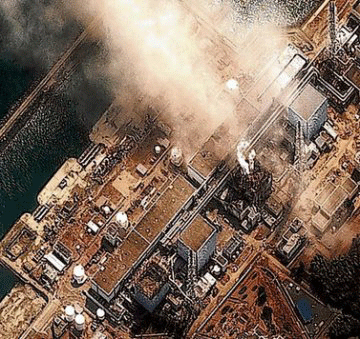 It will be especially dangerous to remove the remaining nuclear fuel because of the high levels of radiation that such substances emit.
conditions [at the Chernobyl plant] are still dangerous for the 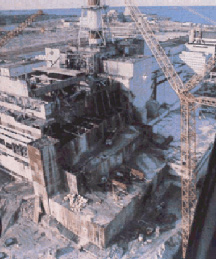 3,500 workers now cleaning up the site. And some 200 tons of nuclear fuel still remain at the bottom of the reactor.
When reactors die, costs keep climbing. Fukushima Diiachi costs to go through the roof.http://nuclearhistory.wordpress.com/2012/09/03/when-reactors-die-costs-keep-climbing-fukushima-diiachi-costs-to-go-through-the-roof/ 4 Sept 12
http://e.nikkei.com/e/fr/tnks/Nni20120815D15HH187.htm Decommissioning Of Fukushima To Be Long, Costly Process FUKUSHIMA (Nikkei)–-The government and Tokyo Electric Power Co. (9501) have made the first revisions to a plan to decommission the crippled Fukushima Daiichi nuclear power plant, but the details remain uncertain.
At the Chernobyl plant, efforts are now in full swing to build a massive shelter to stop the site from releasing radiation into the environment.
Among other matters, the revisions involve adding measures to prevent radioactive water from leaking into the environment. But it is still unclear how much time and money this will actually entail. Continue reading
Safety flaws in India’s nuclear power plants
AERB detects flaws at nuclear plants Business Standard, Sanjay Jog / Mumbai Sep 04, 2012, Regulatory inspections of nuclear power plants and research facilities have revealed there have been deviation from technical specifications and other regulatory stipulations, deficiencies and degradations in safety-related systems and procedural inadequacies.
The Atomic Energy Regulatory Board (AERB), which carried out 47 regulatory inspections, comprising 25 scheduled and 22 special inspections in 2011-12, observed there were shortcomings in safetydesign and safety support systems based on operating experience,
including generic deficiencies.
The board has made a strong case for improvement in procedures and design by the respective nuclear power plants. It observed at Narora Atomic Power Station 1 & 2, continuous monitoring of healthiness and availability of seismic trips circuits did not exist. The unavailability of this trip due to loss of power supply or discontinuity in the wiring remain unnoticed till the next surveillance test. The scheme in this regard was under AERB’s review with the designers of Nuclear Power Corporation…….http://www.business-standard.com/india/news/aerb-detects-flaws-at-nuclear-plants/485318/
Drop in water levels in Fukushima reactors coolant injections
Tepco: “Unknown whether the flow will recover” — No conclusive evidence of why reactors had sudden drop in water injections August 31st, 2012 By ENENews Follow-up to: Trouble injecting water into Fukushima Reactors 1-3 — Flow falls despite increasing coolant level — Tepco unable to identify cause, thinks pipes are clogged
August 31, 2012 report by Kyodo News translated by EXSKF:
After the amount of water being injected into Reactors 1, 2, and 3′s Reactor Pressure Vessels at Fukushima I Nuclear Power Plant had temporarily dropped below the level specified in the safety regulations, TEPCO announced on August 31 that the company flushed the pipes […] TEPCO will wait and see if the amount of water injected into the RPVs recovers before deciding whether the second flushing is necessary.
[…]
According to TEPCO’s Junichi Matsumoto, “There is no conclusive evidence to narrow down the possible causes, and it is unknown whether the flow will recover.”
“multiple system failures on many levels” US nuclear weapons plant safety audit
Weapons Plant Security Issues Are Described in U.S. Audit, NYT, By MATTHEW L. WALD, August 31, 2012 WASHINGTON — The contractors in charge of guarding the national stockpile of bomb-grade uranium in Tennessee knew well before an 82-year-old nun and two other pacifists broke through three barriers this summer that a lot of the security equipment was broken, and government managers knew it too, according to an internal audit of Energy Department operations at the weapons facility. The inspector general’s investigation found “troubling displays of ineptitude.” The intruders used ordinary bolt cutters to penetrate as far as the uranium storage building before dawn on July 28, and then went undiscovered until they approached an officer in his vehicle and surrendered, according to the audit. The officer failed to draw his gun or even secure his gun from seizure, “and permitted the trespassers to roam about and retrieve various items from backpacks they had apparently brought into the area,” the report said.
The three antiwar protesters — Sister Megan Gillespie Rice, of Las Vegas; Michael R. Walli, 63, of Washington; and Gregory I. Boertje-Obed, 57, of Duluth, Minn. — have been charged with felonies in connection with damage to the building. They said they had brought bread and candles for a Christian ritual.
The guard told The Knoxville News that he was being used as a scapegoat, and that it was obvious that the trio posed no threat.
Internal communications at the weapons plant, Y-12, near Oak Ridge, Tenn., were generally so poor that security officers told the auditors that it was not unusual for roofers or utility repair personnel to show up unannounced, and that when they heard the trespassers banging on the exterior wall of the storage building with hammers, they assumed it was maintenance workers.
The Energy Department’s inspector general, Gregory H. Friedman, said in the report that the episode showed “multiple system failures on many levels.”…. http://www.nytimes.com/2012/09/01/science/earth/audit-finds-security-lapses-at-y-12-uranium-storage-plant.html?_r=1&smid=fb-share
Activist nun has highlighted poor security at USA nuclear bomb plant
 “Troubling ineptitude” in security at nuclear bomb plant By Roberta Rampton WASHINGTON | Fri Aug 31, 2012 (Reuters) – Guards at a government plant for storing weapons-grade uranium failed to spot activists, including an 82-year-old nun, who cut through its fences until they walked up to an officer’s car and surrendered, an official report said on Friday.
The report from the Energy Department’s inspector general, Gregory Friedman, criticized multiple failures of sophisticated security systems and “troubling displays of ineptitude” at the Y-12 facility in Oak Ridge, Tennessee in July.
Three anti-nuclear activists, including an 82-year-old nun, were not initially spotted or detained as they cut through three perimeter fences on July 28.
They painted slogans and threw what they said was human blood on the outer wall of a building where highly enriched uranium, a key component of nuclear bombs, is stored…. Top nuclear officials from the Energy Department will face scrutiny over the security breach from lawmakers on the House of Representatives’ Energy and Commerce Committee on September …. Friedman’s report said the U.S. government had budgeted about $150 million in taxpayer funds for security at the Y-12 plant for fiscal 2012, yet the officer responding to the alarm did not notice the trespassers until they walked up to his car and “surrendered.”… http://www.reuters.com/article/2012/08/31/us-usa-security-nuclear-idUSBRE87U0WA20120831
USA nuclear power plants should never have been built near earthquake faults
http://noyonews.net By Ed Oberweiser Pacific Gas and Electric Company (PG&E) and Southern California Edison (SCE) have placed millions of California citizens in danger of a nuclear catastrophe on a par with Fukushima.
They’ve built nuclear power plants near earthquake faults capable of generating earthquakes that could damage the plants and irradiate millions of people. Continue reading
Nuclear Regulatory Commission’s unsatisfactory handling of Davis Besse nuclear safety issuear
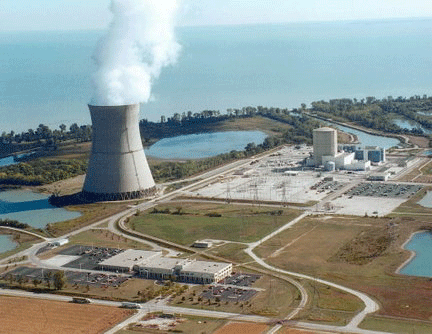 Congressman Kucinich Demands Investigation of Nuclear Safety Agency
http://nuclearhistory.wordpress.com/2012/08/30/congressman-kucinich-demands-investigation-of-nuclear-safety-agency/
http://kucinich.house.gov/news/documentsingle.aspx?DocumentID=306494 Washington, Aug 15 – Congressman Dennis Kucinich (D-OH) is today demanding the Inspector General of the Nuclear Regulatory Commission, which oversees safety at our nation’s nuclear power plants, investigate the agency’s handling of the reopening of Davis-Besse in northern Ohio after cracks were discovered in the shield building. Continue reading
Weakness of India’s nuclear safety agency
India’s nuclear safety report warns of Fukushima-like disaster NDTV, Edited by Sabyasachi Dasgupta August 23, 2012 New Delhi: The national auditor’s report on India’s nuclear safety has raised concerns over a weak regulatory body. In its report on the
Atomic Energy Regulatory Board’s (AERB) performance audit, the Comptroller and Auditor General has warned a Fukushima or Chernobyl-like disaster if the nuclear safety issue is not addressed by the government. Continue reading
1 This Month




PLEASE OPPOSE HR 8255 AND S.3639 – bills would accelerate satellite deployment, with no environmental review or safeguards – https://ncstd5li.quorum.us/campaign/169331/
To see nuclear-related stories in greater depth and intensity – go to https://nuclearinformation.wordpress.com
-
Archives
- September 2026 (339)
- August 2026 (330)
- July 2026 (355)
- June 2026 (287)
- May 2026 (306)
- April 2026 (356)
- March 2026 (251)
- February 2026 (267)
- January 2026 (308)
- December 2025 (358)
- November 2025 (359)
- October 2025 (375)
-
Categories
- 1
- 1 NUCLEAR ISSUES
- business and costs
- climate change
- culture and arts
- ENERGY
- environment
- health
- history
- indigenous issues
- Legal
- marketing of nuclear
- media
- opposition to nuclear
- PERSONAL STORIES
- politics
- politics international
- Religion and ethics
- safety
- secrets,lies and civil liberties
- spinbuster
- technology
- Uranium
- wastes
- weapons and war
- Women
- 2 WORLD
- ACTION
- AFRICA
- Atrocities
- AUSTRALIA
- Christina's notes
- Christina's themes
- culture and arts
- Events
- Fuk 2022
- Fuk 2023
- Fukushima 2017
- Fukushima 2018
- fukushima 2019
- Fukushima 2020
- Fukushima 2021
- general
- global warming
- Humour (God we need it)
- Nuclear
- RARE EARTHS
- Reference
- resources – print
- Resources -audiovicual
- Weekly Newsletter
- World
- World Nuclear
- YouTube
-
RSS
Entries RSS
Comments RSS

