Europe fears nuclear catastrophe: This plant sets off all alarms due to risk of explosion
Eco News by Sanusha S.. 12/14/2024
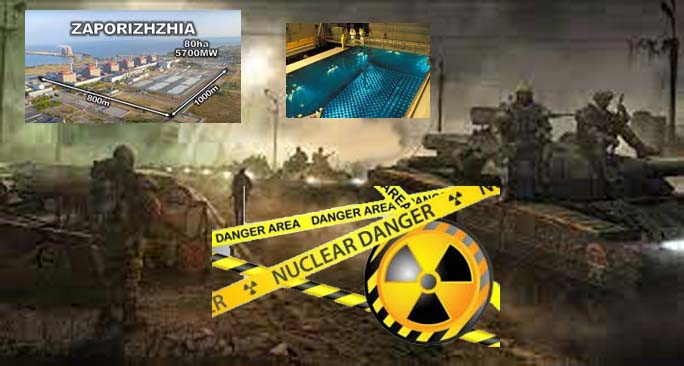
The Zaporizhzhia Nuclear Power Plant (ZNPP), located in eastern Ukraine, has been a focal point of global attention due to the conflict in this country. The Russian troops captured this plant in 2022 and since then have faced a multitude of threats like fire, military action, or damage to infrastructure. Notwithstanding clarifications from nuclear safety experts regarding the safety precautions taken at plants, it has been a severe reminder of the need for urgent global protocols to guard against those facilities during armed conflict.
……………………………………………………………..Zaporizhzhia: A plant which is embattled in a nuclear fire unprecedented conflict
This is the most unprecedented scenario: a nuclear plant turned into military target. Constant shelling, drone strikes and even presence of landmines on the premises intensifies risk of nuclear incident because of the occupation of ZNPP by Russian forces.
The International Atomic Energy Agency (IAEA) has sent inspectors and even suggested creating a demilitarized safety zone around the site, thus, these measures remain unimplemented. The agency has identified that all seven pillars of nuclear safety are compromised at Zaporizhzhia. These include protection of critical infrastructure and prevention of military use of the facility……………………………………….
https://www.ecoticias.com/en/europe-fears-nuclear-catastrophe/9437/
Drone strikes UN vehicle on way to inspect Ukrainian nuclear plant
An armored vehicle belonging to the UN’s atomic watchdog was hit by a
drone strike on its way to inspect a Ukrainian nuclear power plant on
Tuesday, in an attack President Volodymyr Zelensky has blamed on Russia.
The strike took place as the vehicle traveled in a convoy to the
Zaporizhzhia Nuclear Power Plant, as part of efforts by the International
Atomic Energy Agency (IAEA) to safeguard the facility amid fears it could
be caught in the crossfire of Russia’s war on Ukraine, sparking a nuclear
disaster. The IAEA said the strike destroyed the back of its armored
vehicle but the two people on board were not harmed.
CNN 10th Dec 2024 https://edition.cnn.com/2024/12/10/europe/drone-attack-iaea-ukraine-russia-intl-latam/index.html
Rocket fuel eating away at US, China nuclear weapons
Fast-aging fuel has likely rendered many US and Chinese ICBMs unusable, raising urgent questions about their nuclear arsenals.
Asia Times, by Gabriel Honrada, December 10, 2024
Aging rocket fuel may be quietly crippling the world’s nuclear arsenals, according to a new report exposing the ticking time bomb inside both US and Chinese missiles.
This month, South China Morning Post (SCMP) reported that Chinese rocket scientists have discovered that the solid fuel used in intercontinental ballistic missiles (ICBMs) ages much faster than previously known, potentially rendering hundreds of missiles unusable.
Research conducted at China’s National Key Laboratory of Solid Rocket Propulsion in Xian revealed that significant changes in the fuel columns can occur within 30 years, making them unable to withstand the loads during flight. This finding could explain the frequent launch failures experienced by some nuclear powers in recent years.
The study, led by senior engineer Qin Pengju, found that while the aged propellant appeared stable during routine storage, it became significantly more brittle under high pressure. It mentions that the research focused on the solid fuel commonly used in ICBMs: ammonium perchlorate, aluminum powder and hydroxyl-terminated polybutadiene (HTPB) binder.
SCMP says the study’s findings suggest that the fuel’s ductility under pressure can be compromised after just 27 years, leading to possible rapid fractures during launch. It notes that the issue has raised concerns about the US’s declining nuclear deterrent capability, which relies on Minuteman III missiles manufactured in the 1970s and Trident II missiles that have been operational for nearly three decades.
Perhaps illustrating the unreliability of aging ICBMs, a failed Minuteman III ICBM test in November 2023 has heightened concerns about the US’s aging land-based nuclear arsenal. The unarmed missile was terminated during a launch from Vandenberg Space Force Base due to an anomaly.
While the Minuteman III as a whole is still considered a reliable weapons system, its subcomponents, such as the silo, electronics and warhead, are old and may have been neglected.
Asia Times has previously reported that the US faces mounting pressure to replace its aging Minuteman III ICBMs as delays and cost overruns plague its next-generation LGM-35A Sentinel program.
Budgeted initially at US$95.8 billion, the Sentinel’s cost has surged to an estimated $160 billion, forcing the Pentagon to justify the increase under the Nunn-McCurdy Amendment. Due to Covid-19 disruptions and inflation, production delays have postponed its deployment until 2029. As a result, the US Air Force must extend Minuteman III’s lifespan.
Aside from old delivery systems, Asia Times reported in January 2024 that the aging of plutonium pits in US nuclear weapons poses a significant challenge to the country’s strategic deterrent. Despite plutonium’s 24,000-year half-life, microscopic changes over time can affect the storage safety and explosive yield of nuclear weapons.
The US National Nuclear Security Administration (NNSA) has struggled to produce new plutonium pits, with current production capacity unlikely to meet the goal of 80 pits annually until 2030 or later. This shortfall is attributed to a post-Cold War culture of complacency, a lack of skilled workers and restrictive environmental regulations.
Existing pits, designed for older weapons, may not perform as required in newer systems, raising concerns about the reliability of the US nuclear arsenal.
Keeping the 1970s-era Minuteman III poses significant challenges. In a February 2014 RAND report, Lauren Caston and other writers mention that central to keeping the aging Minuteman III in service is the aging infrastructure and components that require continuous modernization to maintain operability………………………………………………………………………………….. more https://asiatimes.com/2024/12/rocket-fuel-eating-away-at-us-china-nuclear-weapons/
Drugs found in control room at Dungeness Nuclear Power Station
Millie Bowles
https://www.kentonline.co.uk/romney-marsh/news/drugs-found-in-nuclear-power-station-control-room-316864/
mbowles@thekmgroup.co.uk. 05 December 2024
Staff were drug tested and sniffer dogs were deployed after a bag of suspected drugs was found at a nuclear power station.
The package, believed to have contained powdered drugs thought to be cocaine, was discovered by a worker at Dungeness B Power Station last month.
Safety warnings as cracks rise at Torness nuclear plant
Rob Edwards, The Ferret, 22 July 24,

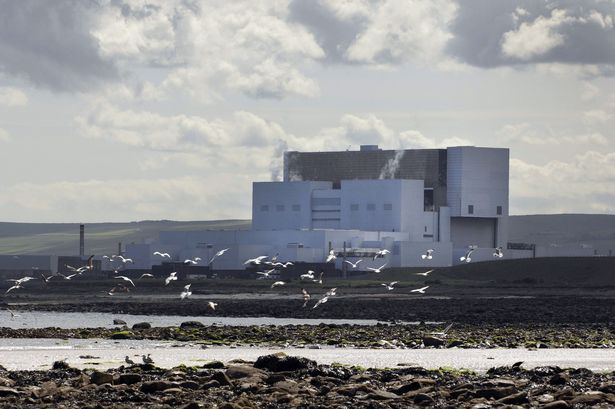
The number of cracks in the core of an ageing nuclear reactor at Torness in East Lothian has risen to 46, prompting warnings that prolonging its operation would be “gambling with public safety”.
The UK Office for Nuclear Regulation (ONR) told The Ferret that the cracks were detected in April 2024 and were “at the upper end of expectations”. The first three cracks were discovered at Torness in February 2022. July 21, 2024
ONR has previously said that spreading cracks could result in debris inhibiting the cooling of hot radioactive fuel. This can lead to a reactor meltdown, which can result in the escape of radioactivity to the environment.
In 2021 the plant’s operator, EDF Energy, said that Torness would be closed in 2028 – two years earlier than expected – because of expected cracking. The station was originally scheduled to close in 2023, and in 2016 its expected life was extended to 2030.
But in January 2024 EDF changed its mind, and announced it would review whether the plant’s life could again be extended beyond 2028 “subject to plant inspections and regulatory approvals”.
Campaigners are now worried that EDF could be putting nuclear safety at risk. They are calling for Torness to be shut down “sooner rather than later”.
EDF, however, insisted that the cracks did not affect normal operations or the ability to shut down Torness in an emergency. The plant’s life would be reviewed “by the end of 2024” with the “ambition” of generating electricity after 2028.
ONR pointed out that EDF would have to demonstrate Torness would be safe to operate beyond 2028. “We will not allow any plant to operate unless we are satisfied that it is safe to do so,” it said.
The cracks have opened up in the ring-shaped graphite bricks packed around the reactor’s highly radioactive uranium fuel. They were detected in one of the two reactors at Torness during EDF’s latest inspection on 18 April 2024.
“EDF’s sampling of fuel channels showed 46 bricks with a single full height axial crack (a crack all the way through), which was at the upper end of expectations,” said ONR in response to freedom of information requests from The Ferret…………………………………………………………………………….
Scotland’s other nuclear power station at Hunterston in North Ayrshire was closed down in January 2022, more than a year earlier than planned. This followed the discovery of an estimated 586 cracks in its two reactors.
Torness ‘well past’ its design life
Pete Roche, a veteran nuclear critic, pointed out that it was EDF that decided to close Torness in 2028 because of cracking. “Given that the number of cracks are increasing, they would be gambling with public safety to now go back to a 2030 closure date,” he said.
“It’s difficult to avoid the conclusion that EDF is prepared to gamble because the plant it is building in England at Hinkley Point C is so late.”
The Guardian reported in February 2024 that delays and cost overruns at Hinkley in Somerset had cost EDF £11 billion. The plant was originally due to be built for £18bn in 2017, but is now expected to cost £46bn and be completed by 2031.
According to environmental campaigner, Dr Richard Dixon, Torness was “well past” its 30 year design life. “Now the cracks are meeting the worst predictions but suddenly EDF thinks it is a good idea to run the reactors for longer,” he said.
The Scottish Greens warned of the “devastating destruction” that could be caused by poorly maintained nuclear plants. “These reports are very worrying and should concern us all,” said the party’s co-leader and Lothian MSP, Lorna Slater.
“When it comes to something as dangerous as nuclear energy, there can be no room for error or regret. It underlines why Torness needs to be shut down sooner rather than later.”……………………………………………………………………………………………. more https://theferret.scot/torness-safety-warnings-as-cracks-rise/
NRC Finds Apparent Security Violations at Pilgrim

‘Escalated enforcement action’ may be needed to protect spent fuel storage area
By Christine Legere Dec 4, 2024, https://provincetownindependent.org/featured/2024/12/04/nrc-finds-apparent-security-violations-at-pilgrim/?fbclid=IwY2xjawG_bYNleHRuA2FlbQIxMQABHRMjawO4ghOC07jcvzHdYK-Z08vbUu96Mv-XIptTK2WiXfSaQprWaAR6YA_aem_WZtXDCevpDJCECdblhfnww
PLYMOUTH — Inspectors from the Nuclear Regulatory Commission (NRC) have found apparent violations in the security measures being used to protect the spent fuel storage area on the grounds of the Pilgrim Nuclear Power Station.
The problems were found in early November, according to a Nov. 26 letter to Holtec International, which now owns the plant, from Paul Krohn, the director of the NRC’s Radiological Safety and Security Division. That notification letter is publicly available, but details of the violations are not, because the infractions relate to security, according to the letter.
The inspection examined activities related to Holtec’s physical security plan for the area where radioactive spent fuel rods used during Pilgrim’s five decades of operation are stored in mammoth steel and concrete casks. The inspectors looked at procedures and records, conducted interviews with personnel, and observed security activities.
Based on the results of that inspection, “escalated enforcement action” is being considered, the letter says.
Holtec was given 10 days from Nov. 26 to notify the federal agency of its acceptance of the violation finding or to provide a written response contesting the report. The company could also request a pre-enforcement conference within the 10 days. If the NRC does not hear from Holtec by the deadline, the agency “will proceed with its enforcement decision,” the letter says.
NRC spokesman Neil Sheehan told the Independent by email on Dec. 3 that Holtec had not yet responded. Holtec spokesman Patrick O’Brien said in an email that because the matter is security related he could not comment other than to say, “Our focus remains on a safe and secure decommissioning of Pilgrim Station.”
Detection Limits
The day before the letter was sent, at a meeting of the Nuclear Decommissioning Citizens Advisory Panel, two scientists from the Woods Hole Oceanographic Institution gave updates on their assessments as to where the station’s contaminated wastewater would likely flow if it were to be released into Cape Cod Bay.
Holtec is looking to release the wastewater into the bay after filtering it to reduce contaminants including some of the radioactive isotopes it contains.
Initially, Holtec sought to release 1.1 million gallons of radioactive water. That quantity is now down to about 916,500 gallons because some of it has already been released as evaporation, thanks to heaters Holtec is running during the cold months at the former plant. In spite of public criticism of the release by evaporation, those heaters are now running again, according to Dave Noyes, senior compliance manager for Holtec Decommissioning International.
The state Dept. of Environmental Protection has denied the company an amendment to its water discharge permit required to release the water, saying the state Ocean Sanctuaries Act prohibits it.
Holtec has appealed that decision.
At the November NDCAP meeting, Irina Rypina, a physical oceanographer at WHOI, said her models of the currents in the bay, which factor in the seasons, tides, and wind directions, showed the wastewater has a very high probability of flowing toward Provincetown and then hugging the coastline, affecting Wellfleet on both the bay and ocean sides and Dennis inside the bay.
Based on her study, the wastewater would reach Provincetown within a week of its release and would reach the rest of the bay in three weeks.
“We’re talking about putting radioactive material into the ocean,” said Ken Buesseler, a WHOI marine radiochemist. “I can’t do that from a research vessel, and you could not put this material on a ship and take it to the middle of the ocean and release it. It’s not allowed.”
RADIOACTIVITY
NRC Finds Apparent Security Violations at Pilgrim
‘Escalated enforcement action’ may be needed to protect spent fuel storage area
By Christine Legere Dec 4, 2024
PLYMOUTH — Inspectors from the Nuclear Regulatory Commission (NRC) have found apparent violations in the security measures being used to protect the spent fuel storage area on the grounds of the Pilgrim Nuclear Power Station.
The problems were found in early November, according to a Nov. 26 letter to Holtec International, which now owns the plant, from Paul Krohn, the director of the NRC’s Radiological Safety and Security Division. That notification letter is publicly available, but details of the violations are not, because the infractions relate to security, according to the letter.
The inspection examined activities related to Holtec’s physical security plan for the area where radioactive spent fuel rods used during Pilgrim’s five decades of operation are stored in mammoth steel and concrete casks. The inspectors looked at procedures and records, conducted interviews with personnel, and observed security activities.
Based on the results of that inspection, “escalated enforcement action” is being considered, the letter says.
Holtec was given 10 days from Nov. 26 to notify the federal agency of its acceptance of the violation finding or to provide a written response contesting the report. The company could also request a pre-enforcement conference within the 10 days. If the NRC does not hear from Holtec by the deadline, the agency “will proceed with its enforcement decision,” the letter says.
NRC spokesman Neil Sheehan told the Independent by email on Dec. 3 that Holtec had not yet responded. Holtec spokesman Patrick O’Brien said in an email that because the matter is security related he could not comment other than to say, “Our focus remains on a safe and secure decommissioning of Pilgrim Station.”
Detection Limits
The day before the letter was sent, at a meeting of the Nuclear Decommissioning Citizens Advisory Panel, two scientists from the Woods Hole Oceanographic Institution gave updates on their assessments as to where the station’s contaminated wastewater would likely flow if it were to be released into Cape Cod Bay.
Holtec is looking to release the wastewater into the bay after filtering it to reduce contaminants including some of the radioactive isotopes it contains.
Initially, Holtec sought to release 1.1 million gallons of radioactive water. That quantity is now down to about 916,500 gallons because some of it has already been released as evaporation, thanks to heaters Holtec is running during the cold months at the former plant. In spite of public criticism of the release by evaporation, those heaters are now running again, according to Dave Noyes, senior compliance manager for Holtec Decommissioning International.
The state Dept. of Environmental Protection has denied the company an amendment to its water discharge permit required to release the water, saying the state Ocean Sanctuaries Act prohibits it.
Holtec has appealed that decision.
At the November NDCAP meeting, Irina Rypina, a physical oceanographer at WHOI, said her models of the currents in the bay, which factor in the seasons, tides, and wind directions, showed the wastewater has a very high probability of flowing toward Provincetown and then hugging the coastline, affecting Wellfleet on both the bay and ocean sides and Dennis inside the bay.
Based on her study, the wastewater would reach Provincetown within a week of its release and would reach the rest of the bay in three weeks.
“We’re talking about putting radioactive material into the ocean,” said Ken Buesseler, a WHOI marine radiochemist. “I can’t do that from a research vessel, and you could not put this material on a ship and take it to the middle of the ocean and release it. It’s not allowed.”
The wastewater has not yet been treated to filter out contamination. Test samples drawn and analyzed by both Holtec and the state Dept. of Public Health in May 2023 showed the presence of five radioactive isotopes above detection limits: manganese 54, cobalt 60, zinc 65, cesium 137, and tritium.
The results showed those isotopes in “very high numbers relative to the ocean,” Buesseler said. The level of manganese was two million times higher than what naturally occurs in the ocean’s sediment.
Noyes said the company monitors contamination in the sediment, shellfish, finfish, and other marine life.
Buesseler responded that he was not aware of that specific monitoring program but “what I saw were pretty high detection limits, so a ‘no detect’ doesn’t tell me anything as a scientist.”
The dose to humans and sea life will depend on the treatment system used to clean up the wastewater, Buesseler said. He said he thought the dose would likely be low after the water is treated. “You will be able to swim and be able to boat in Cape Cod Bay,” he said. “I never said Cape Cod Bay will be destroyed.” But he said there were better options for dealing with the wastewater than releasing it into the bay.
“Tritium is difficult to get out of water, but if you just cleaned up things that were more harmful, you would be left with water that’s largely tritium, which you could hold for its decay,” said Buesseler.
The plant’s radioactive spent fuel assemblies are now stored in 62 casks on the Pilgrim plant property. “We’re talking about a site where they will have to maintain high-level waste for decades, centuries, and beyond, until we have permanent waste disposal for commercial reactors,” the radiochemist said. If the wastewater were to be treated and then stored on the site, the tritium level would go down to 6 percent in 48 years.
“In 60 years, less than 3 percent would be left,” he said.
UK underestimates threat of cyber-attacks from hostile states and gangs, says security chief
New head of National Cyber Security Centre to warn of risk to infrastructure in first major speech
Dan Milmo technology editor, Guardian, Tue 3 Dec 2024
The UK is underestimating the severity of the online threat it faces from hostile states and criminal gangs, the country’s cybersecurity chief will warn.
Richard Horne, the head of GCHQ’s National Cyber Security Centre, will cite a trebling of “severe” incidents amid Russian “aggression and recklessness” and China’s “highly sophisticated” digital operations.
In his first major speech as the agency’s chief, Horne will say on Tuesday that hostile activity in UK cyberspace has increased in “frequency, sophistication and intensity” from enemies who want to cause maximum disruption and destruction………………………………………………….. https://www.theguardian.com/technology/2024/dec/03/uk-underestimates-threat-of-cyber-attacks-from-hostile-states-and-gangs-says-security-chief
Tony Blair is wrong to love nuclear energy.

there is something rash about the Tony Blair Institute’s case for a massive expansion of the industry
to claim that the world has only seen ‘two major accidents (those at Chernobyl and Fukushima)’, as the TBI claims, does rather ignore Three Mile Island in 1979 and Windscale in 1957, both of which were critical public emergencies.
Blair misses the point about nuclear power and safety.
Ross Clark, 2 December 2024,
https://www.spectator.co.uk/article/tony-blair-is-wrong-to-love-nuclear-energy/
Towards the end of his time in office, Tony Blair came over all nuclear. A new generation of atomic energy plants, he told a CBI conference in 2006, would provide Britain with clean, carbon-free energy as well as boost national energy security. He didn’t last long enough in Downing Street to see it through, but this week he is banging the drum for nuclear energy again. The Tony Blair Institute for Global Change has published a polemic, A New Nuclear Age, which dismisses fears over safety and cost to propose that Britain once more plunges headlong into new nuclear plants.
‘Public perception of the risk of nuclear power is not commensurate with the actual risk,’ it asserts. ‘The world is now paying a price for letting lingering concerns about safety and ideological opposition deter governments from harnessing a key solution to powering economies in a clean way.’ Had the industry not been killed off by irrational fears and carried on expanding at the rate it had been in the 1960s and 1970s, it goes on to claim, the world could have saved 28.9 gigatonnes of carbon dioxide since 1991 – 3.1 per cent of the total emitted in that period and equivalent to 903 coal-fired power stations.
How great it would be to love nuclear power. It is true that nuclear provides a reliable source of low-carbon energy that wind and solar cannot. It is hard to imagine the world getting anywhere close to net zero emissions without a hefty input from nuclear power.
Yet there is something rash about the Tony Blair Institute’s case for a massive expansion of the industry. True, nuclear energy generally has a very safe record – though to claim that the world has only seen ‘two major accidents (those at Chernobyl and Fukushima)’, as the TBI claims, does rather ignore Three Mile Island in 1979 and Windscale in 1957, both of which were critical public emergencies.
Blair misses the point about nuclear power and safety. It isn’t that nuclear accidents have ever killed large numbers of people. The predictions at the time that Chernobyl would go on to kill tens of thousands of people were magnitudes out: the UN’s official death toll – all deaths attributed to the accident to date, including effects of radiation decades later – stands at just 50. [ Ed note This number is very much disputed] . The problem with nuclear is more the economic cost of a serious accident. After Chernobyl, an exclusion zone with a 30 km radius was imposed – still mostly uninhabited today. After Fukushima, a 20 km radius exclusion zone was imposed, putting 600 square km out of bounds – since reduced to 370 km. It required 165,000 people to be evacuated.
Project those zones around Hinkley nuclear power station and a Fukushima-level accident would require the evacuation of Bridgwater, Taunton and much of Exmoor. For a Chernobyl-scale accident you can add on the centre of Cardiff. There would be no more Glastonbury, either. Maybe traffic might still be allowed to transit along the M5, so long as motorists didn’t linger; otherwise the South West would lose its main road connection. Such would be the economic devastation that even a once-in-a-century event on this scale becomes intolerable.
Nuclear power stations have improved a lot over the decades – and western designs were never as dangerous as Soviet ones. Even so, Japan still suffered a devastating accident. Moreover, with safety improvements have come extra layers of cost. The strike price (long-term guaranteed price) offered to the developers of Hinkley C – £92.50/MWh at 2012 prices, rising with inflation – was twice the market price for electricity at the time.
If we are going to have a new nuclear age, the safety aspects will very much still have to be addressed. Small nuclear reactors (SMRs) of around one-tenth the output of Hinkley could have a big role to play here, as the consequences of a serious accident would be much reduced. But the idea that SMRs could bring down the cost of nuclear energy looks a long way from being realised. Tony Blair is of a type: a non-scientist whose messianic belief in whatever science or technology he has discovered tends to run ahead of the reality. With Japan and also now Germany turning their backs on nuclear power, and a lack of enthusiasm from many other countries, a new nuclear age looks a long way away.
Lifespan of four nuclear power stations extended

Kevin Keane, BBC Scotland environment correspondent, 3 Dec 24
The lifespan of Scotland’s last remaining nuclear power station and three other plants in England are to be extended.
EDF Energy says Torness, in East Lothian, and its sister site Heysham 2, in Lancashire, will continue generating for an extra two years until 2030.
Two other sites – Hartlepool and Heysham 1 – will continue for an extra year until 2027.
The French state-owned company says it will now invest £1.3bn across its operational nuclear estate over the next three years.
Torness employs about 550 people with a further 180 contractors also working on site.
It began generating electricity in 1988 and was originally due to be decommissioned last year.
Construction work on Hartlepool power station started in 1968, taking 15 years to complete. Heysham 1 began generating in 1983 followed by Heysham 2 five years later.
In 2016, a decision was taken to extend Torness’ life until 2030 – but the discovery of cracks in the graphite bricks, which make up the reactor cores of some advanced gas-cooled power stations, led to a review.
As a result, it was announced in 2021 that the closure dates for Torness and Heysham 2 would be brought forward again by two years to 2028.
EDF says it has spent several years studying the progress of cracking and engineers feel they have a better understanding of the issues.
It says regular inspections will be carried out to ensure the sites can continue to operate safely.
……………………………………………The company made the decision following a year-long review into the four sites.
A separate review is looking at the possibility of extending its Sizewell B facility in Suffolk for a further 20 years…………………. https://www.bbc.co.uk/news/articles/c33dvekx021o
EDF Brings Sizewell Back Online, Balancing UK’s Nuclear Grid
EDF Energy has successfully brought the Sizewell B-2 reactor back online,
strengthening the UK’s nuclear power grid as several reactors remain
offline for scheduled maintenance. With Sizewell B-2 back in action, only
five reactors remain offline. Currently undergoing maintenance are Sizewell
B-1, Heysham 2-8, Heysham 1-2, Torness 2, and Hartlepool 1, leaving a 3,015
MW capacity unavailable. These outages aim at ensuring long-term
reliability, with more maintenance planned through 2025.
Notably, Heysham
1-1, Heysham 1-2, and Hartlepool are nearing decommissioning by 2026, which
could pose future challenges unless new capacities are developed.
Finimize 1st Dec 2024 https://finimize.com/content/edf-brings-sizewell-back-online-balancing-uks-nuclear-grid
EDF set to extend life of UK nuclear plants as Government replacement plans falter
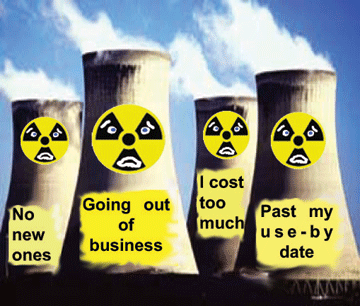
Power plants in Hartlepool, East Lothian and Heysham are set to have their lifespan extended before the end of the year .
By Ben Gartside, December 2, 2024, https://inews.co.uk/news/nuclear-plants-uk-edf-extend-replacement-3408994
Energy giant EDF is set to announce that it will extend the lifespan of four nuclear power plants across the country amid delays to replacement projects, The i Paper can reveal.
It is the second time EDF has asked to extend the lifespan of the plants in Hartlepool and East Lothian, as well as two in Heysham, despite safety concerns at at least two of the sites.
The decision by EDF is set to be announced before the end of the year. However, The i Paper understands that all four are set to be extended.
The scale of delays to the Government’s nuclear projects including Sizewell C and the Small Modular Reactor Programme, due to Brexit and rampant inflation, was revealed earlier this year.
It threatened to derail Energy Secretary Ed Miliband’s plan to decarbonise the energy grid by 2030 before Labour even entered Downing Street.
The National Energy System Operator has raised doubts over the Government’s ability to deliver on its net zero grid commitments in just five years’ time.
The extension of the four power plants is likely to keep the grid cleaner in the coming years, while new nuclear projects await launch.
Heysham 1 and Hartlepool had been due to close in March this year, but were extended until 2026 by EDF in 2023. They have now been extended beyond 2026.
Heysham 2 and Torness nuclear power stations are currently due to close in 2028, but are set to be extended under the plans.
Torness, near Edinburgh, had its lifespan reduced by two years in 2021 due to cracking in the bricks, according to an Office for Nuclear Regulation report.
It has been reported that any extension to the Torness plant would have been conditional on EDF proving its ability to keep operating beyond 2028.
Meanwhile, a recent steam leak at Heysham 1 could have seriously injured staff according to an Office for Nuclear Regulation report, after a valve controlling stream from the reactor failed.
A number of safety notices have been given this year to EDF by the nuclear regulator, which some in the industry claim is a sign of the ageing power plants.
An industry source said that some of the reactors had already been “extended pretty far”, and that more issues would be likely.
A Department for Energy Security and Net Zero spokesperson said: “The extension of any nuclear power station is a decision for the operator and the independent regulator, the Office for Nuclear Regulation, based on safety and commercial considerations.
“EDF’s ambition is to further extend the lives of four generating nuclear power stations, subject to inspections and regulatory approvals, and a decision will be taken by the end of 2024.”
An EDF spokesperson said: “A decision will only be made after a rigorous review of all the technical factors involved in running these stations and future operation will always be subject to regular inspections and oversight from the independent regulator, the ONR.”
A spokesperson for the Office for Nuclear Regulation, said: “We are conscious of the nation’s energy challenges and government aspirations to achieve net zero and would constructively work with EDF should it have ambitions to extend the lifetime of any of its power stations.
“The ongoing safety of operations at any nuclear site must be fully demonstrated to us as part of ongoing regulation which will be informed though our extensive inspection and assessment regime.
“We will always endeavour to regulate in an enabling manner, but we would not allow any facility to operate unless we are satisfied that it is safe to do so.
Indonesia’s nuclear energy push pits growth against safety concerns

SCMP, Resty Woro Yuniar, 1 Dec 2024
In a move that could reshape Indonesia’s energy landscape, President Prabowo Subianto is advocating for nuclear power as a solution to the country’s growing energy demands. While supporters hail the initiative as a transformative step for Southeast Asia’s largest economy, critics sound alarms about radioactive waste and high costs.
Prabowo’s brother and top adviser, Hashim Djojohadikusumo, outlined the administration’s ambitious goal during Cop29 in Baku on November 19: to add over 100 gigawatts of power in the next 15 years, with at least 75 per cent sourced from renewable and [?]clean energy, including nuclear. The country aims for net zero emissions by 2060………
Hashim had previously said that the government plans to build two nuclear plants with varying capacities, including a larger facility in western Indonesia capable of producing up to 2GW. The country currently operates two nuclear reactors, primarily for research purposes.
“What needs to be looked for is the safest place [for the plants], one that is earthquake-resistant. Don’t build it in areas where there is a high risk of earthquakes, there could be an accident,” Hashim said on November 12.
…………………………………………………………….. ‘Fake solutions’
While proponents argue nuclear power is a reliable source of clean energy, many environmentalists and concerned Indonesians have opposed plans to build nuclear plants in the past, typically citing safety or security concerns and recalling disasters like Chernobyl and Fukushima.
“We are actually bucking the global trend. Developed countries like Germany have abandoned their nuclear power plants two years ago, and now we are planning to build one,” said Hadi Priyanto, a climate and renewable energy activist.
“At Cop28 last year, we called for the government to triple our use of renewable energy, and we made the same call this year. Instead of doing that, the government was peddling nuclear power and other fake [energy transition] solutions.”
He raised concerns about the government’s budget for managing radioactive waste, questioning whether Indonesia has the financial capacity to handle such challenges.
“If it is not managed properly … it will pollute water and soil. In the Fukushima case, they stored hundreds of thousands of tonnes of its radioactive waste for 13-15 years, and they only released it last year. Do we have the financial strength to manage waste like that?” he said.
Deon Arinaldo, an energy transition programme manager at Jakarta-based Institute for Essential Services Reform, said that while nuclear was a “reliable” energy source, construction of nuclear plants would be “problematic” as it would be expensive and time-consuming.
“What is very unfortunate is that Indonesia has high renewable energy potential, from the data of the Ministry of Energy and Mineral Resources there is more than 3,600GW of renewable energy potential, especially solar and wind, which can be deployed at a cheaper price and [produced] faster, so that it can support economic growth,” Deon said.
Both Hadi and Deon argued that nuclear plants would also make Indonesia dependent on foreign energy providers, as the country currently lacks the technology to build and operate the plants – or enrich uranium, a key nuclear fuel…………….. https://www.scmp.com/week-asia/economics/article/3288703/indonesias-nuclear-energy-push-pits-growth-against-safety-concerns
IAEA warns of impact on nuclear safety of attacks on Ukraine’s energy infrastructure

World Nuclear News 29th Nov 2024, https://www.world-nuclear-news.org/articles/iaea-warns-of-impact-on-nuclear-safety-of-attacks-on-ukraines-energy-infrastructure
International Atomic Energy Agency Director General Rafael Mariano Grossi said that Ukraine’s three operating nuclear power plants have had to reduce their electricity generation as a result of attacks on the country’s energy infrastructure.
In the agency’s latest update it said that the nuclear power plants – Khmelnitsky, Rivne and South Ukraine – had to lower their power levels on Thursday for the second time in two weeks as a precautionary safety step. The three plants have a total of nine reactors between them. One reactor at Rivne was disconnected from the grid and all three plants continued to receive off-site power, although Khmelnitsky lost connection to two of its power lines.
Grossi said: “Ukraine’s energy infrastructure is extremely fragile and vulnerable, putting nuclear safety at great risk. Once again, I call for maximum military restraint in areas with major nuclear energy facilities and other sites on which they depend.”
IAEA teams visited seven substations located outside the nuclear power plants in Ukraine in September and October to assess the situation after strikes on the energy infrastructure in August. Grossi reported to the IAEA board of governors earlier this month that there had been “extensive damage” and concluded that the reliability of off-site supply to nuclear power plants had been “significantly reduced”.
In his statement issued on Thursday, he said: “The IAEA will continue to assess the extent of damage to facilities and power lines that are essential for nuclear safety and security. The IAEA will continue to do everything in its power to reduce the risk of a nuclear incident during this tragic war.”
The IAEA has had teams stationed at each of Ukraine’s nuclear power plants, and it said there had been no reports of direct damage to nuclear power plants.
Nuclear power plants need to have an electricity supply to ensure necessary safety functions can take place as well as reactor cooling, and they also need reliable connections to the grid to be able to distribute the electricity they produce. In addition to Ukraine’s three operating nuclear power plants, Zaporizhzhia nuclear power plant has been under Russian military control since early March 2022. Its reactors are all shut down and it has had to rely on emergency diesel generators on occasions when it has lost all access to off-site power.
The IAEA has set out its seven rules for nuclear safety and security during the Russian-Ukraine conflict, which have been adopted by the United Nations Security Council. They include the core principles that no-one should fire at, or from a nuclear power plant, or use a nuclear power plant as a military base.
Security planning for small modular reactors ‘not where it should be’, academic says.

28 Nov, 2024 By Tom Pashby
The security planning for the forthcoming wave of small modular reactor (SMR) developments in the UK is “not where it should be” according to an academic who supports the industry.
SMRs have risen up the agenda with Great British Nuclear’s (GBN) competition for developers to get access to government support for deployment making progress, as well as other novel
nuclear energy companies like Last Energy UK saying it will deploy
micro-reactors in Wales by 2027.
Big technology companies like Google,
Amazon and Oracle have said they want SMRs to power their AI data centres,
to overcome grid power constraints.
And in the UK, the Civil nuclear:
roadmap to 2050 stated: “To deliver energy security while driving down
costs our long-term ambition is the deployment of fleets of SMRs in the
UK.” Proponents of SMRs, such as big tech companies, want them because of
the additional flexibility they offer in location. They don’t need to be
built far away from people because of their size, or near water because
SMRs can be air-cooled.
This opens up questions about appropriate security
arrangements, because traditional gigawatt-scale nuclear sites in the UK
benefit from having long sight lines and layers of physical security such
as fences, patrol paths and armed guards.
New Civil Engineer 28th Nov 2024 https://www.newcivilengineer.com/latest/security-planning-for-small-modular-reactors-not-where-it-should-be-academic-says-28-11-2024/
Small nuclear reactors are at risk from military attacks, so should be built underground

Small modular reactors (SMRs) should be built underground, including in
city centres, to protect them from military attacks, seismic activity and
other natural hazards, according to a new academic study.
Nucnet 27th Nov 2024
https://www.nucnet.org/news/underground-plants-could-be-built-in-city-centres-11-3-2024
1 This Month

of the week – Shut Down Drone Warfare!


Tell the Ukrainian Government to Drop Prosecution of Peace Activist Yurii Sheliazhenko

Petition to revoke the licensing of the Near Surface Nuclear Disposal Facility (NSDF) at Chalk River. https://www.ourcommons.ca/petitions/en/Petition/Details?Petition=e-7247
To see nuclear-related stories in greater depth and intensity – go to https://nuclearinformation.wordpress.com
-
Archives
- April 2026 (68)
- March 2026 (251)
- February 2026 (268)
- January 2026 (308)
- December 2025 (358)
- November 2025 (359)
- October 2025 (376)
- September 2025 (257)
- August 2025 (319)
- July 2025 (230)
- June 2025 (348)
- May 2025 (261)
-
Categories
- 1
- 1 NUCLEAR ISSUES
- business and costs
- climate change
- culture and arts
- ENERGY
- environment
- health
- history
- indigenous issues
- Legal
- marketing of nuclear
- media
- opposition to nuclear
- PERSONAL STORIES
- politics
- politics international
- Religion and ethics
- safety
- secrets,lies and civil liberties
- spinbuster
- technology
- Uranium
- wastes
- weapons and war
- Women
- 2 WORLD
- ACTION
- AFRICA
- Atrocities
- AUSTRALIA
- Christina's notes
- Christina's themes
- culture and arts
- Events
- Fuk 2022
- Fuk 2023
- Fukushima 2017
- Fukushima 2018
- fukushima 2019
- Fukushima 2020
- Fukushima 2021
- general
- global warming
- Humour (God we need it)
- Nuclear
- RARE EARTHS
- Reference
- resources – print
- Resources -audiovicual
- Weekly Newsletter
- World
- World Nuclear
- YouTube
-
RSS
Entries RSS
Comments RSS
 nuclear-news