Ukraine – insecure, corrupt, – on Chernobyl anniversary – the nuclear danger
For security reasons, Australia has suspended uranium sales to Russia. It seems extraordinary that Australia should now enter into a deal with even more unsafe and unstable Ukraine, in its present war and political crisis.
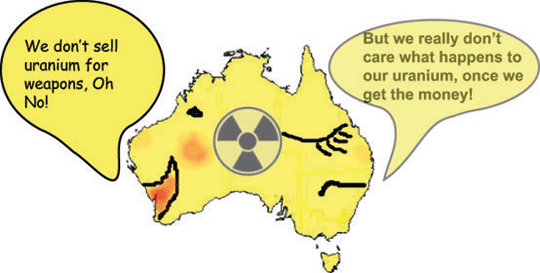
 Four big reasons not to sell uranium to Ukraine https://independentaustralia.net/environment/environment-display/fourbig-reasons-not-to-sell-uranium-to-ukraine,8895 Noel Wauchope 18 April 2016 As the 30th anniversary of the Chernobyl disaster approaches, Noel Wauchope outlines just a few compelling reasons why the Coalition Government’s uranium deal with Ukraine may have further disastrous consequences.
WHAT AMAZINGLY insensitive timing! As the anniversary of the Chernobyl nuclear catastrophe approaches, Australia makes a deal (at the Nuclear Security Summit) to sell uranium to Ukraine.
This is such a bad idea for so many reasons — it’s hard to know which to pick first!
Economics: simply because uranium exporting is not really economically worthwhile.
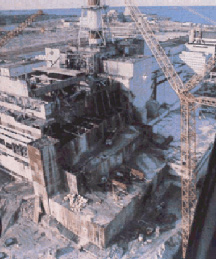 Chernobyl’s plight: because Ukraine’s Chernobyl radioactive disaster is continuing. (We supplied uranium for that other catastrophe — Fukushima.)
Insecurity: Ukraine’s dangerous nuclear industry due to civil war, ageing reactors, risks of smuggling and terrorism.
Political crisis: Ukraine’s notoriously corrupt and unstable political regime.
Let’s check those four reasons.
Economics
The global uranium industry is in a declining state. Price reporting companies describe repeated low and falling uranium prices. Australia’s uranium industry now accounts for 0.2 per cent of national export revenue — and that’s not counting profits that go overseas, due to the high degree of foreign ownership of companies mining uranium in Australia.
Chernobyl’s plight
The 30th anniversary of Ukraine’s Chernobyl nuclear accident is on 26 April 2016. Ukraine is still suffering from, and struggling with, the legacy of that radioactive catastrophe. The conservativeWorld Health Organisation (WHO) estimates the radiation caused deaths at 4,000 — based on itsreport ‘Health Effects of the Chernobyl Accident and Special Health Care Programmes’. The 2016 TORCH (The Other Report on Chernobyl) Report amplifies this discussion (summary here) but all sources agree that no conclusive figure can be given.
The legacy of the accident includes the struggle to contain the radioactivity of the shattered reactor.
Insecurity
This issue of nuclear security is another irony in this uranium sales deal. Julie Bishop and Ukraine President used the meeting of the Nuclear Security Summit in New York to discuss the sale. The focus of the Summit was the need to protect radioactive materials from dangerous zones, and from the risk of terrorists obtaining them.
You couldn’t pick a more dangerous zone than Ukraine
Ukraine’s Zaporizhia nuclear facility is Europe’s largest and is only 200 kilometres from the conflict zone in eastern Ukraine. Already there have been sabotage events that affected its nuclear programme.
All of these events have led to an additional emergency shutdown of the electrical network of two units at thermal power plants – the Dnieper and Uglegorskaya – and the emergency unloading by 500 MW of nuclear power plants in Ukraine. This includes Zaporozhskaya NPP and the South Ukrainian NPP. I want to stress that such emergency unloading of a nuclear plant – it is very dangerous. ~ Senior Ukrainian energy official Yuriy Katich.
Some commentators have described nuclear plants in the region as pre-deployed nuclear targets and there have already been armed incursions during the recent conflict period.
Bankwatch recently listed 10 reasons why Ukraine’s nuclear power stations are a security danger for Europe. These include Ukraine’s ageing reactors – some already having exceeded their planned lifespan – and restrictions on the nuclear regulator’s ability to inspect reactors. Bankwatch regards Ukraine as a huge financial risk to Europe:
The European Commission, the European Parliament, and EU governments – particularly in neighouring countries that could be affected by the Ukrainian government’s reckless nuclear adventure – need to demand Ukraine complies with its international obligations, especially when EU public money is involved.
Petro Poroshenko’s Government is responding to Bankwatch’s criticism with a lawsuit against Bankwatch’s member group National Ecological Centre of Ukraine (NECU), in an attempt to silence criticism and avoid public scrutiny. Organisations in five European countries have joined in a campaign for transparency about Ukraine’s nuclear programme.
Even Ukraine’s own Progress Report to the Nuclear Security Summit admits some safety problems, listing over 1400 sources of ionising radiation that are not under regulatory control.
Ukraine now has a messy and competitive nuclear power system, in which Western companiesAREVA and Westinghouse compete in marketing and upgrading nuclear reactors and lobby to sell nuclear fuel. But Russia actually controls the fuel supply, providing nuclear fuel to 13 out of Ukraine’s 15 reactors.
Ukraine is just next door to Moldova, the heart of a 2014 nuclear smuggling gang. With Ukraine’s secretive nuclear arrangements, and inadequate regulatory system, the possibility of theft of radioactive materials is a real one in Ukraine.
Political crisis
Oligarchs are reported to control 70 per cent of the state’s economy. The country has been described as a “cleptocracy” —with so much intrigue amongst corrupt politicians and oligarchs that it’s called “Ukraine’s Deep State”.
President Petro Poroshenko himself is a very successful businessman, whose business assets have increased over the past year. Before the last election, Poroshenko pledged to sell his company Roshen but now refuses to do so. He also owns a major TV channel. His private assets are larger than those of any other European leader. Poroshenko is currently involved in a real estate scandal.
Along with lawmaker and business partner Ihor Kononenko, Poroshenko is co-owner of the International Investment Bank. Kononenko is accused of being involved in a laundering scheme that moves money from Ukrprominvest (a group founded by Kononenko and Poroshenko) to the British Virgin Islands through offshore companies Intraco Management Ltd and Ernion. Economy Minister Aivaras Abromavicius, who worked to expose political corruption, resigned in disgust on 3 February, saying:
“Neither me nor my team have any desire to serve as a cover-up for the covert corruption, or become puppets for those who, very much like the “old” government, are trying to exercise control over the flow of public funds”.
Aivaras claimed that Prime Minister Mr Yatsenyuk and Mr Poroshenko were blocking reforms aimed at tackling corruption. Ukraine Prime Minister Arseniy Yatsenyuk resigned suddenly on 11 April, under pressure from Poroshenko, who has replaced him with close associate, Volodymyr Groysman. Several reformers from Ukraine’s previous government are departing after declining to serve under Mr Groysman.
The West is watching the Ukrainian regime carefully. The IMF has been providing a $17.5 billion support scheme to cash-strapped Ukraine but has put it on hold, due to the corruption and instability of the regime.
Early this month, the Netherlands held a referendum regarding a potential Ukraine-EU treaty on closer political and economic ties. A whopping 61 per cent (2.509 million people) voted against Ukraine’s association with the EU. European nations, as well as many Ukrainians share in loss of confidence in the government, following this referendum as well as revelations of scandals in the Prosecutor General’s Office.
All this concern came to a head with the revelations of the Panama Papers, in which President Poroshenko figures largely. Unlike Iceland’s President, Poroshenko has no intention of resigning. The West has been very quiet about the allegations against him — presumably they support anyone who is opposed to Russia’s Putin.
Poroshenko claims that his financial arrangements have all been legal. But not everyone agrees with that. Igor Lutsenko, a member of Verkhovna Rada, Supreme Council of Ukraine, outlines how Poroshenko violated Ukrainian law in setting up the British Virgin Islands firm.
For security reasons, Australia has suspended uranium sales to Russia. It seems extraordinary that Australia should now enter into a deal with even more unsafe and unstable Ukraine, in its present war and political crisis.
No doubt the federal parliament’s influential Joint Standing Committee on Treaties (JSCOT) will examine the planned deal, that Julie Bishop signed up to in New York with Ukrainian Energy and Coal Industry Minister Volodymyr Demchyshyn.
JSCOT recently warned against the agreement to sell uranium to India but its recommendations were ignored by the Coalition Government. Here’s hoping that there will be scrutiny on the Ukrainian agreement and that the government will pay attention.
Chernobyl’s nuclear nightmare – a timeline
Chernobyl: Timeline of a nuclear nightmare http://www.wtsp.com/news/nation-now/chernobyl-timeline-of-a-nuclear-nightmare/138536883 Kim Hjelmgaard and USA TODAY , April 17, 2016

Timeline of a disaster
February 1986:
Ukraine’s Minister of Power and Electrification Vitali Sklyarov tells Soviet Life magazine that the odds of a meltdown at Chernobyl’s nuclear power plant are “one in 10,000 years.”
April 25, 1986:
The plant’s operators prepare to conduct a special test to see how an emergency water cooling system would fare in the event of a complete loss of power.
April 26, 1986:
The test begins at 1:23.04 a.m.
Fifty-six seconds later, pressure builds in the reactor No. 4 in the form of steam. This causes an explosion that lifts a 1,000-ton lid that covers volatile fuel elements. Radiation is immediately released into the air.
As oxygen pours into the reactor, a graphite fire begins. A chemical reaction causes a second explosion, and burning debris lands on the roof of reactor No. 3.
Meanwhile, the engineer responsible for the night shift, Alexander Akinhov, does not yet think the reactor’s core is damaged. “The reactor is OK, we have no problems,” he says. Akinhov subsequently dies from radiation illness.
Thirty separate fires develop. An alarm goes off at a local fire station.
At 1.45 a.m. firefighters arrive. They know nothing about radiation and aren’t wearing any protective clothing. Driver Grigory Khmel later recalls: “We saw graphite lying everywhere. I kicked a bit of it. Another fireman picked up a piece and said ‘hot.’ Neither of us had any idea of radiation. My colleagues Kolya, Pravik and others all went up the ladder of the reactor. I never saw them again.”
At 3:12 a.m. an alarm goes off at an army base deep in the Soviet Union. The general in charge decides to send troops. They arrive in Ukraine’s capital of Kiev at 2 p.m.
At 5 a.m. reactor No. 3 is shut down. Reactors No. 1 and 2 are stopped about 24 hours later.
April 27, 1986:
As more emergency response teams arrive, evacuations begin in a radius of 6 miles around the plant. April 28, 1986:
The Soviet Union publicly admits for the first time that an accident happened but gives few details.
An alarm goes off at a Swedish nuclear plant after the soles of shoes worn by a nuclear safety engineer there test positive for radioactivity. The radiation is traced to Chernobyl.
May 1, 1986:
May Day parades to celebrate workers go ahead as planned in Kiev and Belarus’ capital Minsk despite huge amounts of radiation continuing to be released. Wind, and radioactive clouds, blow back toward Kiev after initially drifting northwest toward Europe. Authorities believe that by holding these celebrations they will prevent panic.
May 14, 1986:
Soviet leader Mikhail Gorbachev talks about the accident live on television. He subsequently mobilizes hundreds of thousands of people, including military reservists from all parts of the Soviet Union, to help in the cleanup.
They become known as “liquidators.” Many will become ill and die from radiation-related diseases.
Gorbachev, in a 2006 memoir, says Chernobyl “was perhaps the real cause of the collapse of the Soviet Union.”
India ‘s nuclear programme reported as unsafe, by Harvard think tank
US think tank ranks Indian Nuclear programme as unsafe, http://www.pakistantoday.com.pk/2016/04/17/foreign/us-think-tank-ranks-indian-nuclear-programme-as-unsafe/PT, 17 Apr 16 An independent US report has declared the Indian nuclear programme not only unsafe but also called for a satisfactory international oversight.
The recently released report by the Belfer Center at the Harvard Kennedy School identified problems arising from the gaps in the commitments that India made after the nuclear deal, and focused on India’s separation plan, its Safeguards Agreement and Additional Protocol.
The report observes that India is currently running three streams that include: civilian safeguarded, civilian un-safeguarded, and military.
The Separation Plan did not extend safeguards to a number of nuclear facilities that serve civilian functions, and consequently these facilities may also be used in India’s military programme.
The safeguards agreement also allows India to store, use, or process nuclear material subject to safeguards at a facility that is not under continuous safeguards. In addition, the agreement contains provisions for the substitution of unsafeguarded material for safeguarded material.
India negotiated with the IAEA a much more limited additional protocol: the reporting and access provisions of India’s additional protocol are effectively restricted to India’s export activities. Consequently, India’s safeguards agreement and its additional protocol do not have any practical application to its uranium and thorium mines, heavy water production facilities, nuclear fuel cycle-related research activities, or plants where it manufactures equipment for its nuclear facilities.
Not far from Sendai nuclear reactors, Japan gets second earthquake, mag 7.3

 Japan’s Kumamoto rocked by magnitude 7.3 earthquake 24 hours after first shock, SMH April 16, 2016 Tokyo: A magnitude 7.3 earthquake struck southern Japan early on Saturday, killing at least 11 people, injuring many more and bringing down buildings, media reported, just over a day after a quake killed nine people in the same region.
Authorities warned of damage over a wide area, as reports came in of scores of people trapped in collapsed buildings, fires and power outages.
Residents living near a dam were told to leave because of fears it might crumble, broadcaster NHK said…….
People still reeling from a magnitude 6.5 quake on Thursday poured onto the streets after the Saturday quake struck at 1.25 am……….
M7.0 earthquake in Japan – same area as yesterday’s foreshocks. https://t.co/eSYh0m7VMI. Hearts out to them pic.twitter.com/41M2BGRmRR……..
Japan is on the seismically active “ring of fire” around the Pacific Ocean and has building codes aimed at helping structures withstand earthquakes.
http://www.smh.com.au/world/japans-kumamoto-rocked-by-magnitude-74-earthquake-just-24-hours-after-first-shock-20160415-go7ucs.html#ixzz45xKID5Fc
Rt.com outlines the 8 most dangerous nuclear plants near earthquake fault lines
 Disasters waiting to happen: 8 most dangerous nuclear plants near earthquake fault lines, Rt.com [excellent pictures] 5 Apr, 2016
“ ……….dozens of potential atomic bombs operate along seismic fault lines. Here are eight of the most deadly, including one that may never be built because of Fukushima.
Koeberg nuclear power plant, Capetown Koeberg is the only nuclear power plant on the continent of Africa and just 8km from the Milnerton fault, which crosses Table Bay. While the largest earthquake to hit the city came more than 200 years ago, the Milnerton fault has the potential to hit at least 6.5 on the Richter scale. Energy company Eskom have insisted the plant is built to “ensure that no radiation escapes under any conceivable circumstances, from an earthquake to a jumbo jet collision.”
Diablo Canyon Power Plant, California Situated along by the shores of the Pacific Ocean – and four active fault lines, this plant has come under scrutiny since Fukushima. Diablo Canyon’s two reactors lie in an earthquake red zone with the Hosgri fault, the Los Osos fault, the San Luis Bay fault, and the Shoreline fault all nearby – and the major San Andreas fault 80km away…..
Indian Point, New York The Empire State’s Indian Point is considered by many to be the next Fukushima.Not only has the plant been plagued with operational problems, but it is situated almost on top of the Rampano fault line.A study by Columbia University in 2008 suggested the New York area was at greater risk of high-magnitude earthquakes than first thought, with the discovery of a new potential disaster area, the Stamfrod-Peekskill line. A spill of radioactive water at the plant in January led environmentalists to call for its closure, with the Riverkeeper group declaring that the site, which runs reactors from the 1970s, “isn’t safe anyone.”
Jaitapur Nuclear Power Project, India The French company Areva NP are proposing to build one of the largest nuclear plants in the world in India, capable of producing 9900 MW of power. Greenpeace is among those opposing the six reactor plant, questioning the safety of its pressurized water cooling system and the shaky ground on which it might be built. Like Fukushima Daiichi, Jaitapur would be operate along by the sea. Critics say the 16 fault lines on the west coast pose a serious threat to safety. However, India’s Atomic Energy Regulatory Board are satisfied that there are no faults within5km.
Columbia Generating Station, Washington state The last nuclear power plant remaining in the Pacific Northwest, the Columbia Generating Station (CGS) could be a potential disaster because of its Fukushima-like boiling water reactor.It’s located near the Columbia river along the Cascadia subduction zone, acknowledged by the Washington State Department as capable of producing “some of the largest and most damaging earthquakes in the world.” A 2013 Seattle Times report quoted a geologist working with the Physicians for Social Responsibility as saying the plant had not undergone structural upgrades since its opening in 1984. A March 2015 risk assessment stated that seismic damage to the site “is low for CGS.”
Arkansas Nuclear One, Arkansas A study of the US Geological Survey hazard map suggests the Arkansas state nuclear plant could be at risk from the New Madrid zone, one of North America’s most active areas for earthquakes. A quake in 1811 was thought to be 8.0 on the Richter scale and reportedly rang bells over a thousand miles away in Boston. The US government warns the damage to the area is likely to be 20 times larger than a “big one” in California due to the “less fractured nature” of the rock.
Sendai Nuclear Power Station, Japan…….Sendai and other Japanese power plants need to withstand their precarious position near the tectonic plate zone called the Japan Trench. Because of plate movements in this area, the Pacific country is hit by an estimated 1,500 earthquakes per year.
Akkuyu Nuclear Plant, Turkey The US$20-billion Akkuyu Nuclear Power Plant in Turkey slated to go up along the Mediterranean coast is a joint project with Rosatom. Foundations for the four reactor facility were laid in April last year despite opposition to its location, which is approximately 25km from the Ecemis fault line. The Republic of Cyprus expressed its concern with the plans when Energy Minister Antonis Paschalides questioned the decision to construct it in “a seismically active area.” https://www.rt.com/news/339763-disaster-nuclear-earthquake-japan/
Just 74 miles from Sendai nuclear station, strong earthquake hits Japan
 Strong earthquake quake hits southern Japan THE AUSTRALIAN APRIL 15, 2016
At least two people were killed and 45 injured by a magnitude-6.5 earthquake that knocked down houses and buckled roads in southern Japan on Thursday night.
Both victims are from the hardest-hit town of Mashiki, about 15 kilometres (9 miles) east of Kumamoto city on the island of Kyushu, said Kumamoto prefecture disaster management official Takayuki Matsushita.
Earlier, Japanese Red Cross Kumamoto Hospital said it had admitted or treated 45 people, including five with serious injuries.
The quake struck at 9:26pm at a depth of 11 kilometres near Kumamoto city on the island of Kyushu, the Japan Meteorological Agency said. There was no tsunami risk……
Saga said there no abnormalities at nearby nuclear facilities. The epicentre was 120 kilometres (74 miles) northeast of Kyushu Electric Power Co.’s Sendai nuclear plant, the only one operating in the country.
Most of Japan’s nuclear reactors remain offline following the meltdowns at the Tokyo Electric Power Co.’s Fukushima plant in 2011 after a magnitude 9.0 earthquake triggered a huge tsunami…….
The U.S. Geological Survey measured the initial quake’s preliminary magnitude at 6.2. It upgraded its damage assessment to red, meaning extensive damage is probable and the disaster likely widespread…….http://www.theaustralian.com.au/news/world/strong-earthquake-quake-hits-southern-japan/news-story/758290acc35b609538c3ff285e89d2a8
Allison MacFarlane on nuclear safety
 How to protect nuclear plants from terrorists, PhysOrg April 14, 2016 by Allison Macfarlane, The Conversation In the wake of terrorist attacks in Brussels, Paris, Istanbul, Ankara and elsewhere, nations are rethinking many aspects of domestic security. Nuclear plants, as experts have long known, are potential targets for terrorists, either for sabotage or efforts to steal nuclear materials.
Currently there are 444 nuclear power plants operating in 30 countries around the world and 243 smaller research reactors, which are used to produce isotopes for medical uses and to train nuclear engineers. The nuclear industry also includes hundreds of plants that enrich uranium and fabricate fuel for reactors. Some of these facilities contain materials terrorists could use to build a nuclear or “dirty” bomb. Alternatively, power plants could be “hijacked” to create an accident of the sort experienced at Chernobyl and Fukushima, sending clouds of radioactivity over hundreds of miles.
At last month’s Nuclear Security Summit in Washington, D.C., representatives from 52 countries pledged to continue improving their nuclear security and adopted action plans to work together and through international agencies.
But significant countries like Russia and Pakistan are not participating. And many in Europe are just beginning to consider physical security measures. From my perspective as a former nuclear regulator and now as director of the Center for International Science and Technology Policy at George Washington University, it is clear that nuclear plants are vulnerable to terrorist attacks.
It is not news that security is weak at many civilian nuclear power and research facilities.
In October 2012, Greenpeace activists entered two nuclear power plants in Sweden by breaking open a gate and scaling fences without being stopped by guards. Four of them hid overnight on a roof at one reactor before surrendering the next morning.
Just this year, Sweden’s nuclear regulatory agency adopted a requirement for armed guards and additional security measures at the plants. However, these upgrades do not have to be in place until early 2017.
In 2014 French nuclear plants were plagued by unexplained drone overflights. And Greenpeace activists broke into the Fessenheim nuclear plant near the German border and hung a large banner from the reactor building.
In light of the recent Brussels attacks, reports from Belgium are more alarming. In 2012 two employees at the country’s Doel nuclear power station left Belgium to fight in Syria. In 2014 an unidentified saboteur tampered with lubricant in the turbine at the same reactor, causing the plant to shut down for five months. And earlier this year authorities investigating the Paris attacks discovered video surveillance footage of a Belgian nuclear official in the home of one of the Paris suspects.
One has to assume that potential attackers may understand how the sites and materials can be used.
Given the heightened state of alert in Europe, governments should, I believe, immediately increase security at civilian nuclear facilities. They could emulate the United States, where security at nuclear facilities has substantially increased since the September 11, 2001 terrorist attacks.
American role model
U.S. nuclear power plants now are some of the most well-guarded facilities in the world.
The U.S. Nuclear Regulatory Commission (NRC) regulates both safety and security at nuclear power plants. After 9/11, these sites were required to add multiple layers of protection, with the cores of reactors (where the fuel is located) the most highly defended areas………
The United States has also adopted regulations to ensure cybersecurity at reactors. As new, entirely digital reactors come online, such measures will be more necessary than ever.
The successful 2010 Stuxnet attack, for example, in which a computer worm infiltrated computers at Iranian nuclear facilities and caused machines to malfunction, showed how vulnerable unprotected computer networks can be.
Improving security worldwide
There are no global standards for physical protection at civilian nuclear facilities. Each country adopts its own laws and regulations dictating what nuclear site owners are required to do to protect plants from attack.
As a result, measures at plants can vary widely, with some countries depending on the local police force for protection and leaving guards unarmed. Often the level of security depends on cultural norms and attitudes, but the recent attacks in Europe suggest a rapid adjustment is needed.
Here are steps that, in my view, all countries can take to make nuclear plants more secure……..
To prevent an attack at a nuclear site, governments must take security at nuclear sites seriously now, not a year from now.
In light of the current terrorist threat and with four Nuclear Security Summits completed, countries with nuclear plants need to up their game with regards to physical security at nuclear power facilities before it’s too late. http://phys.org/news/2016-04-nuclear-fromterrorists.html#jCp
According to German intelligence, terrorist Salah Abdeslam did not have German nuclear files
German intelligence agency disputes reports Salah Abdeslam had German nuclear files http://www.theguardian.com/world/2016/apr/14/paris-attacks-suspect-salah-abdeslam-had-german-nuclear-files
Spokeman for domestic intelligence agency says its head did not brief MPs on files found in Paris attacks suspect’s flat Guardian, Reuters in Berlin. Germany’s domestic intelligence agency has denied reports that Salah Abdeslam, a prime suspect in the Paris attacks, possessed documents about a nuclear research centre in Germany.
Newspapers in the Redaktions Netzwerk Deutschland (RND) media group said on Thursday that documents were found relating to the Juelich centre near the Belgium-Germany border, which is used for the storage of atomic waste.
The centre said in a statement that there was no indication of any danger and that Juelich was in contact with security authorities and nuclear supervisors.
The RND newspapers cited sources within the parliamentary control committee, whose meetings are confidential, as saying that Hans-Georg Maaßen, the head of the domestic intelligence agency (BfV), told the nine-person committee at the end of March that Abdeslam had the documents.
It said he had disclosed to the committee, which monitors the work of German security agencies, that printouts of articles from the internet and photos of the Juelich chairman, Wolfgang Marquardt, had been found in Abdeslam’s apartment in the Molenbeek area of Brussels.
The BfV on Thursday denied Maaßen had briefed the committee. “This is not right,” a spokeswoman said. “We have no information about this. Our president Maaßen never talked to any members of parliament.”
Two committee members also told Reuters that they had not been informed about the matter.
RND earlier reported that several members of the Bundestag and a terrorism expert at the BfV said they knew of this information and that Maaßen had confidentially informed them.
Abdeslam, born and raised in Belgium to Moroccan-born parents, was arrested on 18 March in Brussels. Four days later, suicide bombers killed 32 people in Brussels airport and on a rush-hour metro train.
Concerns that Islamic extremists are turning their attention to potential weak spots in the nuclear industry have risen since the attacks.
German nuclear centre a target for Paris terrorist?
Paris terrorist was eyeing German nuclear centre http://www.thelocal.de/20160414/paris-attacks-ringleader-had-records-of-german-nuclear-plant 4 Apr 2016 Salah Abdeslam, a key figure in the Paris attacks last November, was gathering information on a nuclear energy research centre in Germany, new evidence seen by German media revealed on Thursday.
- Swedish police hold terror suspect wanted in Germany (13 Apr 16)
- Munich police release suspects after terror probe (08 Apr 16)
- ’11 terror plots foiled in Germany since 2000′ (29 Mar 16)
Salah Abdeslam had documents at his apartment about a nuclear research centre at Jülich in North Rhine-Westphalia, raising concerns for authorities about what he many have been planning on German soil.
The documents included articles printed out from online sources about the research facility, as well as photos of the centre’s head, Wolfgang Marquardt, newspapers under the publishing group Redaktionsnetzwerk Deutschland (RND) reported, citing members of a parliamentary panel.
Abdeslam is currently being held in a Belgian prison, waiting to be deported to France, where he will face trial for terrorism offences in connection with the November 13th Paris attacks that left 130 dead.
The most recent documents were reportedly found inside of Abdeslam’s apartment where the French national was arrested last month in the Molenbeek district of Brussels.
Just days later, three bombs went off in Brussels in a coordinated terror attack that killed 32 people.
German domestic intelligence (Verfassungsschutz) President German Hans-Georg Maaßen reportedly informed several members of a Bundestag (German Parliament) security committee last month about the findings.
But according to RND, the Chancellery and the Interior Ministry declared that they did not have any information about the documents.
Similar information about the Brussels terrorists monitoring a Belgian nuclear scientist several weeks ago fueled speculation that they could have been planning to somehow get radioactive material for a dirty bomb, perhaps by blackmailing the researcher. They reportedly spied on the researcher, including filming him at his home for hours.
Immediately after the Brussels attacks, a Belgian nuclear power plant was evacuated of all non-essential personnel. Officials were also concerned when it emerged that two former Belgian nuclear power plant workers had gone to Syria to fight with Isis, one of whom was killed.
German nuclear power plants are extensively protected against the possibility of any interferences or other actions by an outside person, including terror attacks, according to the German Environment Ministry.
But according to environmental NGO BUND, the reactors are not sufficiently safe enough against air attacks.
Luxembourg would pay France to shut down all too near nuclear power station
 Luxembourg offers France money to close nuclear plant http://en.rfi.fr/france/20160412-luxembourg-offers-france-money-close-nuclear-plant By RFI Luxembourg offered on Monday to chip in financing to close an ageing French nuclear power plant near its border, saying the tiny nation could be obliterated if the station malfunctioned.
During a press conference with his French counterpart Manuel Valls, Luxembourg’s Prime Minister Xavier Bettel said a problem at the Cattenom plant could “wipe the duchy off the map”.
“The Cattenom site scares us, there’s no point in hiding it,” he said of the plant that has been in operation since the mid-1980s. “Our greatest wish is that Cattenom close.”
Luxembourg “would be prepared to make a financial commitment to a project, which would have to be cross-border… at Cattenom that is not nuclear in nature.”
Valls — who was on a one-day visit to the nation of about 500,000 — said France has pledged to cut its reliance on nuclear energy from more than 75 percent to 50 percent by shutting 24 reactors by 2025.
“Message received,” he added.
Fessenheim houses two 900-megawatt reactors and has been running since 1977. Due to its age activists have long called for it to be permanently closed.
French President Francois Hollande has pledged to shut down the Fessenheim plant by the end of his five-year term in 2017.
UK vulnerable to cyberattack if planned nuclear deal with China goes ahead
 How Chinese nuclear deal leaves UK vulnerable to CATASTROPHIC cyber attack GEORGE Osborne has been warned that granting the Chinese a large stake in Britain’s nuclear energy infrastructure poses a “substantive” threat to UK national security. Sunday Express, By TOM BATCHELOR Apr 10, 2016 Beijing is planning to invest in two major nuclear power plant projects in a multi-billion pound contract that would give them access to Britain’s strategic energy network.
No formal agreement between China and the UK has yet been signed, but energy experts have spoken out about the potential for “catastrophe” if the Chinese are given the green light to invest.
Security concerns centre on access to IT systems, with analysts warning the UK would be left vulnerable if relations continue sour to China over the coming years.
Britain’s friendship with the communist state was strained recently over the Tata steel crisis with China putting a highly punitive tax on the metal produced in south Wales to further damage the UK industry.
But experts say a nuclear power deal would put the UK at the mercy of Beijing.
Dr Paul Dorfman, an advisor to the British Government on nuclear security and a senior research fellow at UCL’s Energy Institute, said: “You don’t want to let the Chinese into complex, strategic, national energy infrastructure and you certainly don’t want them anywhere near nuclear.
“There are some real security issues here.”
Fears have been raised about “backdoors” in IT technology that could be exploited by the Chinese government or rogue hackers.
Malicious IT breaches could allow data to be extracted or inserted into complex computer systems, allowing Beijing to circumvent British control of a nuclear plant and shut it down.
GCHQ will be on standby to protect the UK from the threat of a cyber attack if the Chinese are allowed to build at Hinkley Point in Somerset and Bradwell in Essex…….. https://www.express.co.uk/news/uk/658755/Chinese-nuclear-deal-leaves-UK-vulnerable-to-catastrophic-cyber-attack-on-power-plants
Statistical analysis indicates we can expect more severe nuclear accidents
How safe is nuclear power? A statistical study suggests less than expected, Bulletin of the Atomic Scientists, April 16
ABSTRACT
Safety of Spain’s nuclear reactors is questioned by European Commission
European Commission concerned over Spain’s nuclear power stations http://www.theolivepress.es/spain-news/2016/04/10/european-commission-concerned-over-spains-nuclear-power-stations/
Issues surrounding the safety of older reactors were raised by climate and energy commissioner Miguel Cañete
CONCERNS over Spain’s nuclear power stations have been aired by the European Commission.
Issues surrounding the safety of older reactors were raised by climate and energy commissioner Miguel Cañete who claims there is a ‘lack of transparency’ when addressing safety issues at Spanish sites.
Cañete’s allegations were sparked after his request for information about a nuclear-waste storage facility in Bilbao was ignored.
“The Commission expects to receive this information under Article 41 of the Euratom treaty, which governs investment projects in this field,” said Arias Cañete. “To date, we haven’t received any communication referring to the possibility of installing a nuclear waste storage facility at the plant.”
Cañete added that Spain had ‘described various measures ensuring transparency’ in its 2014 report on the Nuclear Safety Directive but had failed to live up to its promises.
Japan’s poor nuclear security is a global danger
 Japan Nuclear Plants Are Vulnerable to Terror Attacks, The Daily Beast, JAKE ADELSTEIN MARI YAMAMOTO, 8 Apr 16,
Poor nuclear security is endemic at Japanese power stations. It’s a ludicrous risk, not only for the Japanese, but for the world.
TOKYO — Given the febrile global security atmosphere, recent revelations that those responsible for the Brussels attacks also scoped out Belgium’s nuclear facilities have, understandably, caused great consternation in many countries.
In Japan, however, the issue of nuclear security is treated with a strangely insouciant attitude by the authorities; unarmed guards keep watch outside of nuclear facilities, there is poor surveillance of sites and, incredibly, there are no mandated background checks on workers, allowing members of organized crime gangs access to radioactive material.
There is growing awareness that this is a problem not just for this island country, but for the world.
There is every reason to believe Japan is a target of the so-called Islamic State, which was behind the horrific slaughter in Parisin November and in Brussels in March.
Early last year, amid worldwide outrage about the Charlie Hebdo attacks in France, Prime Minister Shinzo Abe made a speech in the Middle East vowing assistance to states “contending” with ISIS. That led to a de facto declaration of war against Japan by the jihadists and may have contributed to the death of a journalist they held captive.
Yet there is no serious effort to rethink the nuclear security issue. National Police Agency told The Daily Beast, on condition of anonymity, “The game has changed. We are not keeping up. We can’t trust the utility companies to deal with internal threats by themselves—they have neither the willpower nor the capability. We don’t have to worry so much about terrorists breaking down doors and blowing up nuclear power plants—we have to worry about them filling out job applications and just walking in.”
Japan has a large number of nuclear facilities staffed by guards who carry no weapons and who are otherwise poorly equipped to handle a terrorist attack. Past U.S. State Department cables note police officers who are asleep, express shock that Japanese guards are unarmed, and criticize the government for staging unrealistic training exercises while essentially outsourcing nuclear security to the utility companies.
Meanwhile there have been companies with ties to the yakuza crime organizations dispatching workers—in some cases, active yakuza members—to the plants. “Generally speaking, you don’t want sociopathic criminals around nuclear materials. Not a good idea,” deadpanned a Japan Nuclear Regulation Authority official, speaking on background, of course.
The guards do not carry weapons because Japan’s incredibly stringent gun laws make it almost impossible for civilians, including private security guards, to have them. This is good in that it keeps Japan’s annual gun-related deaths down to single digits. It’s bad in that unarmed men are probably unlikely to stop armed terrorists from storming the facilities. Some plants have armed police cars parked outside them at regular intervals, but few plants are fully guarded.
what is most disturbing to Japan’s law enforcement community is that long-debated plans to mandate background checks on nuclear facility workers in conjunction with the police have been effectively scrapped since the accident—even though they may be needed now more than ever.
Japan’s Nuclear Reprocessing Center at Rokkasho, in Aomori Prefecture, which is supposed to restart operations this year, is designed to produce eight tons of plutonium annually—enough to fuel more than 2,600 warheads. The International Atomic Energy Agency is supposed to ensure that plutonium cannot be removed or leak from the Rokkasho plant without detection. But the system it has installed there is only 99 percent accurate, meaning that, theoretically, enough plutonium for over 20 nuclear bombs a year could still be spirited away without a trace………http://www.thedailybeast.com/articles/2016/04/07/when-will-nuclear-terror-hit-japan.html
No penalty for Entergy’s faked nuclear inspections
Entergy nuclear plant avoids violations for faked inspections, By Littice Bacon-Blood, NOLA.com | The Times-Picayune April 08, 2016 Entergy‘s Waterford 3 nuclear plant on the west bank of St. Charles Parish has been given nine months to address shortcomings that let contractors falsify fire inspection records for almost a year. Company officials could face criminal prosecution and fines if they violate a new agreement that Entergy has reached with the U.S. Nuclear Regulatory Commission.

The commission said it won’t issue a violation notice or civil penalty for the faked inspections, in light of the “significant corrective actions” Entergy already has taken in addition and the targets that the commission has required the company to address in the coming months. “The NRC is satisfied that its concerns will be addressed by making Entergy’s commitments legally binding through a confirmatory order,” according to a commission letter dated Wednesday (April 6).
“Any person who willfully violates, attempts to violate or conspires to violate any provision of this confirmatory order shall be subject to criminal prosecution … Violation of this confirmatory order may also subject the person to civil monetary penalties.”
Nuclear plant contractors faked 10 months of inspection records
In disclosing the results of its investigation in December, the commission gave Entergy the opportunity of requesting a “pre-decisional enforcement conference” or an “alternative dispute resolution,” before the commission decided on enforcement penalties. Entergy chose alternative dispute resolution, and an agreement was reached in February. The confirmatory order contains the corrective actions that the company must take.
The 15-month investigation of the Waterford 3 plant at Taft indicated that seven contractors knowingly falsified the hourly fire inspection watch logs to indicate that inspections had taken place. The inspections were actually skipped and the records falsified between July 2013 and April 2014, according to the commission.
The hourly fire watch tours are required to assure that no fires break out in parts of the nuclear power plant building where sensitive equipment is located. These areas include wiring and piping that is used to operate the nuclear reactor during accidents or emergencies.
In addition, the investigation found that on Jan. 13, 2014, a contract manager “willfully failed” to provide complete and accurate information about the trustworthiness and reliability of a person applying for unescorted access to Waterford 3 as a fire watch inspector.
Entergy did not dispute those findings……… http://www.nola.com/environment/index.ssf/2016/04/entergy_avoids_violations_for.html
1 This Month
26 September – International Day for the Total Elimination of Nuclear Weapons





PLEASE OPPOSE HR 8255 AND S.3639 – bills would accelerate satellite deployment, with no environmental review or safeguards – https://ncstd5li.quorum.us/campaign/169331/
To see nuclear-related stories in greater depth and intensity – go to https://nuclearinformation.wordpress.com
-
Archives
- September 2026 (305)
- August 2026 (330)
- July 2026 (355)
- June 2026 (287)
- May 2026 (306)
- April 2026 (356)
- March 2026 (251)
- February 2026 (267)
- January 2026 (308)
- December 2025 (358)
- November 2025 (359)
- October 2025 (375)
-
Categories
- 1
- 1 NUCLEAR ISSUES
- business and costs
- climate change
- culture and arts
- ENERGY
- environment
- health
- history
- indigenous issues
- Legal
- marketing of nuclear
- media
- opposition to nuclear
- PERSONAL STORIES
- politics
- politics international
- Religion and ethics
- safety
- secrets,lies and civil liberties
- spinbuster
- technology
- Uranium
- wastes
- weapons and war
- Women
- 2 WORLD
- ACTION
- AFRICA
- Atrocities
- AUSTRALIA
- Christina's notes
- Christina's themes
- culture and arts
- Events
- Fuk 2022
- Fuk 2023
- Fukushima 2017
- Fukushima 2018
- fukushima 2019
- Fukushima 2020
- Fukushima 2021
- general
- global warming
- Humour (God we need it)
- Nuclear
- RARE EARTHS
- Reference
- resources – print
- Resources -audiovicual
- Weekly Newsletter
- World
- World Nuclear
- YouTube
-
RSS
Entries RSS
Comments RSS

