International Atomic Energy Agency (IAEA) concerned about nuclear safety in China
CHINA STILL NEEDS ‘FURTHER WORK’ TO IMPROVE NUCLEAR SAFETY, IAEA SAYS http://www.brecorder.com/top-news/front-top/317444-china-still-needs-%E2%80%98further-work%E2%80%99-to-improve-nuclear-safety-iaea-says.html 08 September 2016 SHANGHAI: China has boosted safety regulation at its growing fleet of nuclear reactors but needs “further work” in areas such as waste management and handling ageing plants, the International Atomic Energy Agency (IAEA) said on Thursday.
Outcry over secret trucking of weapons grade nuclear waste to South Carolina
 Weapons-grade nuclear waste shipments to U.S. prompt outcry Trucks expected to carry
  casks containing highly enriched uranium and radioactive isotopes CBC News Sep 05, 2016 A highly secretive plan to ship weapons-grade nuclear waste from a federal lab northwest of Ottawa to the United States is drawing ire in some of the southern Ontario and American communities along the potential route.
Radioactive waste from the former Atomic Energy of Canada Ltd. laboratory in Chalk River, Ont., a major but dwindling world supplier of medical isotopes that is now run by a private consortium, is set to be transported in liquid form to a site in Savannah River, S.C., for processing and disposal. The route could take it through Ontario’s fruit-rich Niagara Region, or possibly even through the border crossing at Sault Ste. Marie, Ont., into Michigan, according to a lawsuit trying to stop the shipments. Thelawsuit was filed in a U.S. federal court last month by a coalition of American environmental and nuclear watchdog groups. …….
Kept secret from emergency personnel
The plan is for about 150 shipments by truck to South Carolina, a minimum distance of nearly 1,700 kilometres from Chalk River, which is 180 km northwest of Ottawa. Each shipment would carry four 58-litre steel containers placed inside a larger steel and lead tube, carrying liquid radioactive waste including isotopes of cesium, iodine, strontium and plutonium, according to the U.S. lawsuit.
The waste would also contain a modest but dangerous quantity of highly enriched uranium, which can be used to make a nuclear bomb, the lawsuit states.
The waste is a byproduct of making molybdenum-99, a medical isotope used in diagnostic tests of organs and other body parts.
The Niagara area’s regional government passed a motion last year opposing the shipments…….
One problem raised by opponents is that, for security reasons, the route through Canada and the timetable for shipments are being kept under tight secrecy — so secret that local emergency responders haven’t been kept in the loop.
“There would be no notice given, but of course it would be our first responders, my friends, my neighbours, working in our volunteer force and in our emergency services, that would be exposed… in case there was an accident,” Hodgson said, adding that even his local fire chief only found out through the media.
The Canadian Nuclear Safety Commission, the federal nuclear safety regulator, approved the steel tube design last year for transporting the nuclear waste, but full environmental assessments have not been conducted in either Canada or the U.S., opponents complain. …… http://www.cbc.ca/news/health/nuclear-waste-chalk-river-uranium-transport-carolina-1.3748658
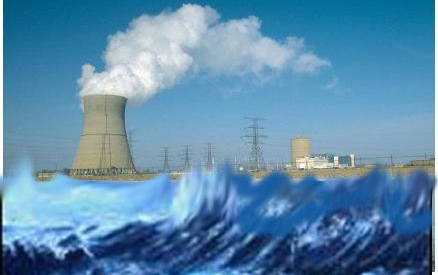
Flooding – a dire hazard to nuclear power stations
 Nuclear Reactors and Flood Protection DAVE LOCHBAUM, DIRECTOR, NUCLEAR SAFETY PROJECT | SEPTEMBER 6, 2016 DISASTER BY DESIGN/ SAFETY BY INTENT #48 Safety by Intent Oconee Flood Protection Issue

In August 2006, NRC inspectors identified a deficiency in a flood protection measure at the Oconee Nuclear Station in South Carolina. Specifically, the inspectors discovered that workers removed a 6-inch by 10-inch panel in the 5-foot tall flood wall around the Standby Shutdown Facility (SSF) to allow temporary cables to be used during a modification. When the work was completed and the cables removed, the panel was not re-installed.
The SSF houses power supplies and emergency equipment that provide core cooling for all three Oconee reactors during certain accidents. The opening in the flood wall could have allowed water to enter the SSF and submerge the equipment, disabling it. The NRC’s preliminary determination was that the problem warranted a white finding.
The owner contested the white finding in October 2006 on grounds that the lower end of the opening is 4.71 feet above the ground and no credible flood could cause water to rise high enough to flow through the opening to threaten the equipment inside the SSF. The NRC considered the argument, then decided against it and issued the white finding in November 2006.
The owner appealed the white finding in December 2006 on largely the same grounds that the NRC had considered and rejected. The NRC formed a five-member panel to review the owner’s appeal. In February 2007, the NRC panel recommended that the appeal be denied. The NRC notified the owner on March 1, 2007, that the appeal was denied.
The owner appealed the denial of the first appeal in May 2007 on largely the same grounds that it had unsuccessfully trod twice before. Once again, the NRC formed another panel to handle the appeal.
The flood of appeals forced the NRC to closely examine the design basis flood event for Oconee. Included in the mix of things that could inundate the Oconee site was the failure of the Jocassee Dam, upriver about 20 miles. The NRC discovered that the owner made a mistake when calculating the probability of the dam’s failure—the dam’s failure was more than 10 times more likely than the owner had calculated. The NRC denied the second appeal in November 2007 to let the white finding stand.
But the owner’s failed appeals resulted in far more than a white finding. Along the way, the NRC discovered a larger problem than a 6-inch by 10-inch opening in a 5-foot tall flood wall. The NRC learned of a study completed in the early 1990s showing that Jocassee Dam’s failure could inundate the Oconee site up to 16.8 feet and cause the meltdown of all three reactors, rendering the presence or absence of a hole in a 5-foot tall flood wall somewhat moot. The NRC mandated in August 2008 that the owner respond, under oath or affirmation, with information explaining how Oconee is adequately protected against floods. The owner responded to the NRC’s mandate in September 2009.
The NRC sat down with the owner in November 2008 about flood protection deficiencies at Oconee. The NRC informed the owner that its response to the NRC’s mandate was “insufficient.” The NRC seemed more than a little perturbed by the owner’s insistence that Oconee could not possibly be inadequately protected against flooding caused by failure of the Jocassee Dam, because Oconee did not legally have to be protected against dam failures.
The owner and the NRC discussed/debated the matter until they agreed upon 15 compensatory measures to be taken at Jocassee and Oconee to reduce the chances of the dam’s failure and increase the chances of Oconee surviving a flood……….
Fort Calhoun Flood Protection Issue
As described in an All Things Nuclear post, the NRC identified in July 2010 several deficiencies in protective measures against flooding at the Fort Calhoun nuclear plant (Nebraska). The owner attempted to justify the configuration as-is, largely on grounds that the plant had operated for over three decades without experiencing a flood requiring the protections the NRC deemed inadequate. The NRC considered that argument, then decided against it and issued a yellow finding in October 2010. (For context, the NRC issued 827 findings to plant owners during 2010 and only two were yellow in the green, white, yellow, and red hierarchy; it issued no red findings that year). The NRC pointed out that the flood barriers and related measures were installed for protection against the postulated failure of upriver dams, and the fact that the dams had not yet failed had little relevancy on the acceptability of deficient barriers.
The NRC’s identification of the flood protection deficiencies and their strong inducement for the owner to remedy them expeditiously came in handy when Fort Calhoun literally became an island in the Missouri River in June 2011.
Nationwide Flood Protection Issues
Prior to a flood in March 2011 causing three reactors at Fukushima Daiichi in Japan to melt down, the NRC discovered from Oconee, Bellefonte, and Fort Calhoun that protection against flooding hazards might not be as reliable and robust as necessary. On July 19, 2010, the NRC initiated Generic Issue 204 (GI-204), “Flooding of Nuclear Power Plant Sites Following Upstream Dam Failures.” The NRC was conducting due diligence for GI-204 (i.e., researching postulated floods and associated protections to assess which reactors might have what vulnerabilities) when Fukushima happened. The NRC finished its screening study for GI-204 in July 2011and accepted GI-204 as a generic issue in February 2012. The GI-204 effort helped inform the NRC’s decision-making about steps to be taken to reduce flooding vulnerabilities, the potential consequences of which had been vividly revealed by the Fukushima disaster………
Disaster by Design
Floods pose dire hazards to nuclear power plant safety for two reasons. First, flood waters can submerge and disable primary safety systems and their backups. Flooding can thus breach multiple barriers in the defense-in-depth approach to safety. Second, flood waters can impair efforts by workers to compensate for disabled systems and breached barriers.
The one-two punch of knocking out installed systems and impairing manual compensatory measures make floods a genuine risk to be reckoned with.
UCS’s Disaster by Design/ Safety by Intent series of blog posts is intended to help readers understand how a seemingly unrelated assortment of minor problems can coalesce to cause disaster and how effective defense-in-depth can lessen both the number of pre-existing problems and the chances they team up. http://allthingsnuclear.org/dlochbaum/nuclear-reactors-and-flood-protection
Belarus – problems, secrecy, ignorance on nuclear unsafety
 Mysteries Of The First Belarusian Nuclear Power Plant, Belarus Digest Lizaveta Kasmach06 September 2016 On 26 August 2016, a 43-year old worker was injured and killed as a result of the explosion of an oxygen gas tank at the Astraviec nuclear power plant (NPP) construction site.
A series of unfortunate events
Reports of incidents at the Astraviec construction site have been piling up in 2016, bringing more and more attention to the first Belarusian nuclear project. For instance, in April 2016, Poland-based TV channel Belsat reported the collapse of a supporting structure in one of the maintenance buildings on the site.
This death was the latest in a series of accidents which have already started to raise nuclear safety concerns, both domestically and internationally.
In July 2016, the Belarusian media reported another dangerous incident which occurred during the installation of a reactor. It also turned out that the NPP’s management had been concealing this news for more than two weeks. This lack of transparency is reminiscent of the suppressed news of the Chernobyl catastrophe back in 1986.
As a result, NPP construction has come under closer scrutiny and even the state-run media picked up the topic of nuclear security. However, all these events have not led to massive anti-nuclear protests in Belarus.
Despite the fact that an employee tipped off journalists, the NPP management responded by denying that the accident had even taken place and referred to the news as “absolute nonsense.” Later, the Belarusian Ministry of Energy nevertheless confirmed the accident, trying to downplay its severity.
Less than two months ago, authorities tried to conceal another, more serious accident which interrupted the installation of the nuclear reactor. On 10 July 2016, the reactor casing, weighing over 330 tonnes, reportedly fell to the ground from a height of 2 to 4 metres.
However, the wider public became aware of this disaster only on 25 July. Local anti-nuclear activist and United Civil Party member Mikalai Ulasevich reported that more than ten anonymous insider sources could confirm that something went wrong during the test lifting procedure……..
Lithuania also expressed its concerns. On 23 August, president Dalia Grybauskaite referred to the Belarusian NPP as an instrument which could potentially be used in an unconventional manner against the Baltic states. In her opinion, the Belarusian NPP potentially represented “an energy, military, health, and territorial security problem, if used by a hostile country.”
What about Belarusian environmentalists? Belarusian environmentalists had already adopted a clear anti-nuclear position by 2005, when officials started mentioning plans for an NPP. In 2006, the Belarusian NGOEcodom, backed by the opposition parties, pioneered anorganised anti-nuclear movement. By 2008, major anti-nuclear initiatives united within the Belarusian Anti-Nuclear Campaign.
However, Belarusian authorities did everything possible to neutralise the dissenting green movement. For instance, during the so-called public debates on the NPP construction in October 2009, only a few anti-nuclear activists were allowed to attend. The event ended with the arrest of anti-nuclear expert Andrei Ozharovskii.
Moreover, the Institute of Sociology at the National Academy of Sciences produced surveys indicating a surprising turn in public opinion towards acceptance of nuclear energy. ……
Even though in 2016 the anti-nuclear movement has captured more attention, environmentalists fear that Belarusian society is dangerously naive when it comes to NPP construction. According to the coordinator of the Green Network association, Yaraslau Bekish, this explains why even serious accidents in Astraviec have not catalysed significant public protests.
So far, Belarusian authorities have succeeded in protecting their pet project in Astraviec. Neither Belarusian independent anti-nuclear activists nor the EU have the leverage to interfere in these plans. However, there is a chance that their voice could be heard if such emergencies and accidents continue in the future. Lizaveta Kasmach is a PhD candidate at the University of Alberta, Canada. http://belarusdigest.com/story/mysteries-first-belarusian-nuclear-power-plant-27097
Evacuation drill held near Ikata nuclear plant
 Local residents take part in evacuation drill held near Ikata nuclear plant http://www.japantimes.co.jp/news/2016/09/04/national/local-residents-take-part-evacuation-drill-held-near-ikata-nuclear-plant/#.V8yIJlt97Gg IKATA, EHIME PREF. – The Ehime Prefectural Government on Sunday held an evacuation exercise around Shikoku Electric Power Co.’s Ikata nuclear power plant, the first of its kind since the Aug. 12 restart of the No. 3 reactor at the plant.
Some 400 residents in the town of Ikata joined the exercise to check how to get to Misaki Port from their homes under the scenario a serious accident had happened.
Led by local police cars, participants began appearing at a temporary meeting place near the port some 20 minutes after they started evacuation by sharing rides.
From the meeting place, where candies were delivered as iodine pills by nurses, they rode on buses to the port as instructed by local authorities. All attendees arrived at the port, where maritime evacuation begins, about 50 minutes after the start of the drill.
As the nuclear plant is located at the base of Cape Sada, evacuation operations on both land and marine routes are under consideration. Last November, an exercise was held to take evacuees by ship to Oita Prefecture on the other side of the Seto Inland Sea.
A resident who joined Sunday’s drill said that if there were a landslide caused by heavy rain, it would be difficult to come to the port.
Great danger in air transport of nuclear wastes: anger in Aberdeen
 Fury over “dangerous” nuclear flights from the Highlands to US, Aberdeen Press and Journal 2 September 2016 by Iain Ramage Road around Wick Airport will be regularly shut over the next 18 months so nuclear waste can be taken be flown to the US. Plans to transport highly enriched uranium (HEU) from Dounreay in Caithness to the US emerged late last year.

Politicians and activists have condemned the move, warning that flying the material is excessively dangerous.
The Nuclear Decommissioning Authority (NDA) has remained silent on the issue, but an £18million upgrade of the airport was recently carried out to make it suitable for larger planes.
And, now Highland Council has published a road closure order which reveals minor routes around the airport will be closed over the coming months. The closures could happen at any time from today, and will last up to five hours each time.
A spokeswoman at Dounreay said she could neither confirm nor deny that nuclear waste from the redundant power station would be flown from Wick.
Former Prime Minister David Cameron confirmed earlier this year, after talks with President Obama, that it was the UK’s intention to transport uranium from Dounreay to the South Carolina. It will be swapped for other forms of uranium to be shipped to Europe which, it is believed, will be used in producing medical isotopes.
Caithness, Sutherland and Easter Ross SNP MP Paul Monaghan has described the deal to transport the waste by plane “morally reprehensible”. And Highlands and Islands Green MSP John Finnie last night said many people would be surprised to find out about the road closures – but that the disruption was nothing compared to the risks involved with flying the waste.
“Many will be astonished that it is considered appropriate to move, let alone fly, this waste material from Dounreay,” he said. “The local disruption is nothing compared to the risks any transit poses. This waste should be retained at Dounreay.”
The council’s local area leader Gillian Coghill said: “We were not briefed about this, which is absolutely shocking……….
Independent nuclear consultant John Large raised concerns about the transport of the material. He said if there was an accident it would involve an extremely vulnerable and potentially radiologically significant material. “The radiological consequences of even a relatively small amount of this material would be very serious,” he said.
“In terms of nuclear safety, the International Atomic Energy Agency recognises that the transportation of radioactive materials is the one at most risk and is most prone and vulnerable to terrorist attack.
“The risk in transport by aircraft is the fuel being engulfed in fire, the packages breaking down and the fuel igniting.”
Mr Large added that it was incumbent on Dounreay to provide sufficient information for the public to come to an informed judgement about the move. “It doesn’t matter whether the material is for civil or military stock, it presents the same risk,” he said. https://www.pressandjournal.co.uk/fp/news/highlands/1014760/fury-over-nuclear-flights/
Missing firearm among 130 security breaches at nuclear sites
The Civil Nuclear Constabulary (CNC) experienced 130 security breaches since 2011, Freedom of Information data has revealed, Police Professional 2 Sep 16
Of these, two were classed as high-risk and two more as medium-risk. The most serious incident saw an unloaded handgun go missing from the National Shooting Centre in Surrey in July 2012. The case was reported to Surrey Police, but it was never confirmed whether the weapon was lost or stolen.
In the other high-risk incident, confidential information was texted to an officer at Sellafield nuclear site. The two medium-risk breaches involved gate access keys for Hinkley point in Somerset being lost, and a force camera being stolen in 2012. The remaining incidents mostly comprised the loss of documents and windows being left open……..http://www.policeprofessional.com/news.aspx?id=27041
Dangerous transport of radioactive wastes – legal action against this
The nuclear waste is a byproduct of the process used at the Chalk River laboratories to create medical radioisotopes from highly enriched uranium originally produced in the U.S. It’s being shipped back to the U.S. as part of a 2010 agreement to repatriate the radioactive material, costing the Canadian government about US$60 million.
According to the U.S. lawsuit filed Aug. 12 in Washington, D.C., the thick yellowy-green liquid being shipped contains highly enriched uranyl nitrate, highly enriched uranium, radioactive varieties of cesium, niobium, zirconium, rhodium, rubidium, iodine, xenon, tellurium, barium, lanthanum, cerium, strontium, praseodymium, neodymium, europium, neptunium and plutonium.
 Niagara on nuclear waste route, Welland Tribune, By ALLAN BENNER, August 31, 2016 Trucks loaded with liquid nuclear waste could be rolling down highways within days — likely travelling through Niagara on their way into the U.S.
But seven American environmental groups have teamed up to launch a lawsuit against the United States government and its Department of Energy (DoE) in the hope of stopping the shipments before they begin.
A November 2015 DoE report, which concluded that an environmental impact statement on the plan would not be necessary, says up to 150 shipments of liquid nuclear waste will be hauled by transport truck from Canadian Nuclear Laboratories in Chalk River, Ont., a community near Algonquin Park, to a disposal site in Savannah River, S.C., 1,700 kilometres south.
Each shipment will include four 58.1-litre stainless steel containers, for a total of 232 litres of nuclear waste per trip. Those containers will be placed inside cylindrical steel nuclear transport casks, which will then be loaded into typical shipping containers and loaded onto trucks. The project is expected to continue for several years.
The nuclear waste is a byproduct of the process used at the Chalk River laboratories to create medical radioisotopes from highly enriched uranium originally produced in the U.S. It’s being shipped back to the U.S. as part of a 2010 agreement to repatriate the radioactive material, costing the Canadian government about US$60 million.
Niagara-on-the-Lake resident Gracia Janes, environment convener for the National Council of Women of Canada who has lobbied against the plan, described the material being transported as “absolutely deadly stuff.”
According to the U.S. lawsuit filed Aug. 12 in Washington, D.C., the thick yellowy-green liquid being shipped contains highly enriched uranyl nitrate, highly enriched uranium, radioactive varieties of cesium, niobium, zirconium, rhodium, rubidium, iodine, xenon, tellurium, barium, lanthanum, cerium, strontium, praseodymium, neodymium, europium, neptunium and plutonium.
Although environmental groups believe shipments could begin in September, that information could not be confirmed.
It’s classified……….
Higgins is concerned about the use of the Peace Bridge in the proposed route, one of the busiest border crossings between the two countries. “It’s only three lanes,” he said. “Consequently, trucks are stuck on the bridge idling for inordinate periods of time.”
Niagara’s regional council has taken a stand on the issue, too. On June 11, 2015, councillors ratified a motion opposing any shipment of radioactive liquid waste, and urging the governments of Canada and the U.S. to halt the shipment of high-level radioactive liquid waste pending the outcome of public consultations on the advisability and the potential adverse impacts of the proposed shipments, as well as alternative procedures.
Lincoln regional Coun. Bill Hodgson said he was concerned at the time the motion was passed, but he’s “more alarmed now that it seems that it’s imminent, and really no one with authority has stepped forward and said, ‘Let’s rethink the movement of this stuff.’” “This is a really toxic soup. This is not kid’s play,” he said.
Niagara Falls Mayor Jim Diodati shares the concerns about the plans……..
if one of those containers were to break, Janes said it would be a disaster. “If it did break open, if it did get down to what’s in there, it’s radioactive material that would take an awfully long time — thousands of years — to actually disappear, if it ever does disappear,” said Janes, who first brought the issue to regional council’s attention during a delegation in February 2015.
“It would go into the groundwater and it could be in a community. We’re not sure where it’s going,” she said. “Or there could be a fire, and it could be sending off plumes of we don’t know what.”
She said it’s “not quite Chernobyl, but I don’t know.”
The November 2015 DoE report also looked at worst-case scenarios, including the potential for radioactive liquid to spill on the ground after highway collisions……
Gervais, however, said he doesn’t believe facilities exist at Chalk River to convert the liquid material to solid.
Kamps said the shipments are unprecedented. “Never before has highly radioactive liquid waste been transported in North America,” he said. http://www.wellandtribune.ca/2016/08/31/not-quite-chernobyl
Watts Bar nuclear reactors shut down indefinitely, following transformer fire
Transformer fire forces TVA to shut down Unit 2 reactor indefinitely TVA probes cause of switchyard fire at Watts Bar Tuesday night. Times Free Press August 31st, 2016 by Dave Flessner
The blaze in one of the main bank transformers connected to the new Unit 2 reactor triggered notice of “an unusual event” — the lowest of four emergency classifications for problems at a nuclear power plant. Although the fire did not affect any nuclear or generation equipment in either the reactor or turbine buildings at Watts Bar, it did damage a transformer and required TVA to shut down its Unit 2 reactor indefinitely, TVA spokesman Jim Hopson said today. ….
When the fire erupted, the reactor had to be shut down and the unit will remain idle until a new transformer is installed and the cause of the fire is determined. http://www.timesfreepress.com/news/local/story/2016/aug/31/transformer-fire-nuclear-plant-triggers-emergency-notice/384326/
Nuclear safety breaches in UK raise problems about China’s involvenment
Nuclear Plants Had 21 Breaches Last Year And Officials Are Looking At China http://dailycaller.com/2016/08/29/nuclear-plants-had-21-breaches-last-year-and-officials-are-looking-at-china/ ANDREW FOLLETT Britain’s nuclear power plants had 21 security breaches last year and experts suspect that China might be involved, U.K. police announced Monday.
The Civil Nuclear Constabulary, which is in charge of security at nuclear plants, found 13 cases of identity cards and similar materials being lost or stolen at the plants that could be used to grant access to one of the country’s eleven nuclear reactors. In one case, armory access codes were accidentally emailed to unauthorized personnel.
“It sets alarm bells ringing that so many security failures could have happened at a time when there are plans to expand the UK nuclear industry,” Dr. David Lowry, a research fellow at the US Institute for Resource and Security Studies, told The Ferret.
The Ferret obtained a document detailing each of the 21 nuclear plant security breaches in 2015. The documents shows the number of security breaches has substantially risen from only 13 last year, and some are worried that some of the breaches may have been a result of espionage. Eight of the security breaches, however, were actually caused by the police themselves.
Despite the espionage concerns, a columnist for a Chinese state-run media outlet called Britain’s reluctance to approve Hinkley Point a result of “China-phobia.”
The Chinese pundit attacked May for delaying the approval of the Hinkley Point nuclear power project — one third of which will be paid for by the state-owned China General Nuclear Power. May’s decision came after U.S. officials charged CGNP with espionage.
May initially considered canceling the Hinkley Point nuclear plant due to its high costs and environmentalist opposition before the Chinese company behind the project was charged with nuclear espionage by the U.S. government in August.
Efforts to keep aging nuclear reactors safe
Nuclear power plants prepare for old age Materials research is at the heart of efforts to keep the world’s reactors running well past 2050. Nature , Jeff Tollefson, 30 August 2016 Sophisticated inspections are helping to pick up defects in ageing nuclear power plants before they cause trouble. In March, ultrasonic tests identified signs of wear and tear in some of the stainless-steel bolts in the reactor core of the Indian Point power plant just north of New York City. Researchers at the Electric Power Research Institute (EPRI) in Palo Alto, California, are now analysing more than a dozen of the 5-centimetre-long bolts — which secure plates that help direct water through the radioactive core — to determine why they failed the inspection.
The analysis comes as the US Nuclear Regulatory Commission (NRC) considers whether to extend the life of Indian Point’s two 40-year-old reactors for 20 more years. Opponents of the plant, including the state of New York, cite the defective bolts, a transformer fire last year and environmental and safety concerns as evidence that the facility should close.
The plant’s damaged bolts are just one example of the maintenance issues facing ageing nuclear reactors around the world. The International Atomic Energy Agency and the NRC are developing management guidelines for these facilities, but the problem may be most acute for the United States, whose fleet of 99 reactors is the oldest and largest.
The NRC has renewed the licences of 81 US reactors still in operation for another 20 years. And it presented safety guidelines in December for utilities considering renewing their licences for another 20 years. But concerns remain about the effects of time on facilities that could be in operation for 80 years (see ‘Going, going, gone’).
Former NRC chair Allison Macfarlane says that the industry has been struggling economically in the face of cheap natural gas, and that many nuclear power companies are investing the bare minimum when it comes to maintenance and upgrades…..
Of particular concern are the concrete containment structures and steel pressure vessels at the heart of reactors, as well as the kilometres of wires that snake through the plants. Researchers are now analysing the long-term effects of intense heat and neutron bombardment on a plant’s crucial materials down to the atomic level……….
UK nuclear police admit to increased number of security breaches
 Terror fears after series of security breaches at nuclear power stations, Herald Scotland Neil Mackay , 28 Aug 16, THE police force charged with guarding UK nuclear power plants has admitted to a substantial increase in the number of breaches of security last year.
There were 21 separate incidents involving stolen or lost smart phones and identity cards, up from 13 the previous year.
In one case a Blackberry was taken in a “domestic burglary”, and in another a SIM card was “accidently thrown in disposal chute at home address.” Emails containing sensitive information, including an armoury access code and personal data, were sent in breach of security protocols.
“Terrorists must be delighted with this catalogue of cock-ups,” said Dr Richard Dixon, director of Friends of the Earth Scotland.
“It seems you just have to follow some nuclear police around for a while and they’ll drop their pass in a car park, leave a work phone on the train or accidentally send secret info through Google mail. It would be laughable if it wasn’t about the safety of some of the most dangerous sites in the UK.”
The revelations uncovered by the Sunday Herald have been condemned as well as prompting alarm from campaigners and politicians. They point out that there have recently been concerns about Chinese state companies stealing nuclear industry secrets.
One of the reasons why the Prime Minister Theresa May is thought to have delayed a decision last month on a long-planned £18 billion nuclear power station at Hinkley Point in Somerset is the 33 per cent stake by the China General Nuclear Power Company. The company has been charged with nuclear espionage by the US government.
The Civil Nuclear Constabulary (CNC) is responsible for policing 11 nuclear sites across the UK. They include three in Scotland – the former fast reactor establishment at Dounreay in Caithness and the nuclear power stations at Hunterston in North Ayrshire and Torness in East Lothian.
The CNC has an annual budget of £100 million and 1,100 armed police officers with access to eight different weapons systems. Its latest annual report, published online, disclosed the 21 security breaches in the year to this April, compared to 13 in 2014-15.
Five were categorised as “loss or theft of protectively marked electronic equipment, devices or paper documents from outside secured CNC premises”. A further six breaches were “unauthorised disclosure through insecure transmission of protectively marked documents”. Ten more were said to be “low-level…….
Dr David Lowry, a senior research fellow at the US Institute for Resource and Security Studies, also highlighted security concerns about Chinese involvement. “It sets alarm bells ringing that so many security failures could have happened at a time when there are plans to expand the UK nuclear industry,” he said.
Lowry pointed out that the government watchdog, the Office for Nuclear Regulation, had stated in its 2015-16 annual report that there were areas where security arrangements at nuclear plants “did not fully meet regulatory expectations”……..http://www.heraldscotland.com/news/14709247.Terror_fears_after_series_of_security_breaches_at_nuclear_power_stations/
Halt Sendai nuclear reactors, says Kagoshima Governor , following nearby earthquakes
 Governor asks utility to halt nuclear reactors in Kagoshima THE ASAHI SHIMBUN August 26, 2016 KAGOSHIMA–New Kagoshima Governor Satoshi Mitazono on Aug. 26 asked Kyushu Electric Power Co. to immediately shut down its Sendai nuclear power plant for a fresh safety inspection following the earthquakes that rocked neighboring Kumamoto Prefecture.
“We will consider your request and discuss it with many people,” Michiaki Uryu, president of Kyushu Electric, told Mitazono at the Kagoshima prefectural government building.
The utility plans to make an official response by early next month, but it is set to reject the governor’s request, sources said.
The two reactors at the Sendai plant in Satsuma-Sendai, Kagoshima Prefecture, on the southern main island of Kyushu, are the only ones online in Japan.
A governor does not have the legal authority to order a shutdown of a nuclear power plant. But under safety agreements, a prefectural government can call for measures deemed necessary to ensure the safety of the plant based on an inspection of the site…….http://www.asahi.com/ajw/articles/photo/AS20160826003329.html
Groundwater infiltrates turbine building in Vermont Yankee nuclear station
Entergy Nuclear tells The Rutland Herald 700 gallons of groundwater a day infiltrated the Vermont Yankee turbine building this month. Between 3,000 and 2,500 gallons had been infiltrating the building each day in January. The plant closed in 2014.
The company says ongoing drought conditions likely contributed to the drop and allowed for foundation cracks and a sump-pump drain to be sealed.
The company says it has paid about $1.2 million to ship and treat water from the plant.
Entergy says it has effectively suspended its request to discharge slightly radioactive water from the building into the Connecticut River.
Federal nuclear regulators plan to inspect the plant next week.
Preparing for hurricane risk to Turkey Point nuclear reactor
 Turkey Point workers prepare nuclear power plant for possible rough weather http://www.local10.com/weather/hurricane/turkey-point-workers-prepare-nuclear-power-plant-for-possible-rough-weather Tropical wave weakening, but still could impact South Florida By Ben Kennedy – Reporter, August 26, 2016 “Should a storm come like the one that is approaching now, we make sure the site is ready,” emergency preparedness manager Kevin O’Hare said. In the event of a power outage, the twin reactor nuclear power station has a backup system called the Flex Building — a 60-by 150-foot-long structure.
“As a result of Fukushima, (we) needed another level of protection,” Sergio Chaviano, project manager of the Flex Building, said.
Inside a box are backup systems that can deliver power to the entire plant. We have a pump here to the right, a smaller pump to the left. We have trailers that can carry hoses throughout the plant,” Chaviano said.
The hoses can carry water to cool reactors in the event of an emergency, but crews said they’ve been preparing for hurricane season since March.
“Our philosophy is to prevent problems so that by June 1 we are ready for hurricane season and whatever might come our way,” O’Hare said.
1 This Month
26 September – International Day for the Total Elimination of Nuclear Weapons





PLEASE OPPOSE HR 8255 AND S.3639 – bills would accelerate satellite deployment, with no environmental review or safeguards – https://ncstd5li.quorum.us/campaign/169331/
To see nuclear-related stories in greater depth and intensity – go to https://nuclearinformation.wordpress.com
-
Archives
- September 2026 (305)
- August 2026 (330)
- July 2026 (355)
- June 2026 (287)
- May 2026 (306)
- April 2026 (356)
- March 2026 (251)
- February 2026 (267)
- January 2026 (308)
- December 2025 (358)
- November 2025 (359)
- October 2025 (375)
-
Categories
- 1
- 1 NUCLEAR ISSUES
- business and costs
- climate change
- culture and arts
- ENERGY
- environment
- health
- history
- indigenous issues
- Legal
- marketing of nuclear
- media
- opposition to nuclear
- PERSONAL STORIES
- politics
- politics international
- Religion and ethics
- safety
- secrets,lies and civil liberties
- spinbuster
- technology
- Uranium
- wastes
- weapons and war
- Women
- 2 WORLD
- ACTION
- AFRICA
- Atrocities
- AUSTRALIA
- Christina's notes
- Christina's themes
- culture and arts
- Events
- Fuk 2022
- Fuk 2023
- Fukushima 2017
- Fukushima 2018
- fukushima 2019
- Fukushima 2020
- Fukushima 2021
- general
- global warming
- Humour (God we need it)
- Nuclear
- RARE EARTHS
- Reference
- resources – print
- Resources -audiovicual
- Weekly Newsletter
- World
- World Nuclear
- YouTube
-
RSS
Entries RSS
Comments RSS

