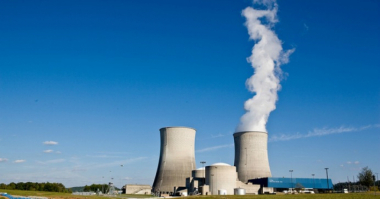
Giant new dome set to keep Chernobyl safe for generations http://www.japantimes.co.jp/news/2016/11/27/world/giant-new-dome-set-keep-chernobyl-safe-generations/#.WDtMp9J97Gh
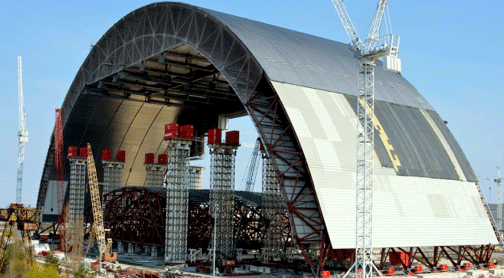
AFP-JIJI NOV 27, 2016 CHERNOBYL, UKRAINE – The world’s largest metal moveable structure will be unveiled Tuesday over the Chernobyl nuclear power plant’s doomed fourth reactor in Ukraine to ensure the safety of future generations across Europe. The giant arch — nearly as long as two soccer fields and taller than New York’s Statue of Liberty — will edge into place over an existing crumbling dome that the Soviets constructed in haste when disaster struck three decades ago on April 26.
Radioactive fallout from the site of the world’s worst civil nuclear accident contaminated Ukraine and spread across three-quarters of Europe.
Work on the previous safety dome began after a 10-day fire caused by the explosion was contained but as radiation still spewed. “It was done through the superhuman efforts of thousands of ordinary people,” the Chernobyl museum’s deputy chief Anna Korolevska said. “What kind of protective gear could they have possibly had? They worked in regular construction clothes.”
About 30 of the cleanup workers known as liquidators were killed on site or died from overwhelming radiation poisoning in the following weeks. The toll from the accident caused by errors during an experimental safety check remains under dispute because the Soviet authorities did their best to cover up the tragedy.
Kiev held a May Day parade as invisible contamination spread over the city while then-Soviet leader Mikhail Gorbachev only admitted on May 14 that something had gone terribly wrong.
A United Nations estimate in 2005 said around 4,000 people had either been killed or were left dying from cancer and other related disease. But the Greenpeace environmental protection group believes the figure may be closer to 100,000. The authorities maintain a 30-kilometer-wide (19-mile-wide) exclusion zone around the plant in which only a few dozen elderly people live.
Concerns over the safety of the disintegrating concrete shelter — built by 90,000 people in just 206 days — prompted the European Bank for Reconstruction and Development (EBRD) to spearhead a 2.1-billion-euro ($2.2 billion) project to install a new safety dome.
The numerous problems with the Soviet-era solution included the fact that the protective structure only had a 30-year lifespan. Yet its deterioration began much sooner than that. “Radioactive dust inside the structure is being blown out through the cracks,” Sergiy Paskevych of Ukraine’s Institute of Nuclear Power Plant Safety Problems said.
Paskevych added that the existing structure could crumble under extreme weather.“This would especially be a potential problem if there was a tornado or an earthquake,” Paskevych said.
The new arch should be able to withstand tremors of 6.0 magnitude — a strength rarely seen in eastern Europe — and tornados the likes of which strike the region once every million years.
Chernobyl’s dangers are real but Kiev complains Europe’s help took a long time coming. The EBRD found 40 state sponsors to fund a competition in 2007 to choose who should build a moveable dome the likes of which the world had never seen. A French consortium of two companies known as Novarka finished the designs in 2010 and began construction two years later.
The shelter was edged toward the fourth reactor in just under three weeks of delicate work this month that was interrupted by inclement weather and other potential dangers. It will later be fitted with radiation control equipment as well as air vents and fire protective measures.
That equipment inside the arch is due to start working by the end of 2017.
“And only then will we begin to disassemble the old, unstable structure,” the head of Ukraine’s State Nuclear Regulation Inspections agency Sergiy Bozhko said.
But he said no time frame had yet been set for the truly hazardous work of removing all the remaining nuclear fuel from inside the plant or taking apart the old dome. “Those decisions will be made based on future studies,” Bozhko said.
Novarka believes that its arch will keep the continent safe from nuclear fallout for the next 100 years.
November 28, 2016
Posted by Christina Macpherson |
safety, Ukraine |
Leave a comment
https://realrussiatoday.com/2016/11/22/explosion-at-nuclear-power-station-in-russia/6th reactor building of the Novovoronezh nuclear power plant, that was built based on an experimental reactor VVER-1200, could only work a few weeks at full capacity until an accident occurred.
Locals reported a powerful explosion at the nuclear power plant, reports Russian ecological media Bellona.ru.
At the same time, Russian state-owned media traditionally kept extremely silent regarding the details of the incident. In particular, news agency RIA Novosti reported that “the 6th power unit of Novovoronezh nuclear power plant was disconnected from the grid due to failure of the power generator.” Meanwhile, independent environmental organizations found out that the problem is actually much more serious.
“Turning off the 6th unit at the night of November 10 was preceded by an explosion that smashed the turbine hall,” writes the local media “Notebook Voronezh”, citing eyewitness of the accident. “Alarm systems in all vehicles in the area were screaming for at least 15 minutes. The generator in the turbine hall of the 6th unit burned down beyond repair. Also, a transformer blown, and all electrics burned. A state commission is working at the station, the situation is an emergency.”
Employees of Novovoronezh NPP deny the information about an explosion. They say that a loud sound was caused by a fault trip.
“During the power test, an electrical generator failure occurred, which led to the shutdown of the power grid,” told a representative of Novovoronezh NPP administration on a condition of anonymity. “When you disconnect a power generator and a turbine, a system triggers that prevents building up pressure of the steam over the limit. The loud sound was caused by a rapid opening of valves.”
Source: rusjev.net
November 28, 2016
Posted by Christina Macpherson |
incidents, Russia |
Leave a comment
 Fukushima aftershock renews public concern about restarting Kansai’s aging nuclear reactors http://www.japantimes.co.jp/news/2016/11/27/national/fukushima-aftershock-renews-public-concern-restarting-kansais-aging-nuclear-reactors/#.WDs4zdJ97Gg BY ERIC JOHNSTON STAFF WRITER KYOTO – The magnitude-7.4 aftershock that rocked Fukushima Prefecture and its vicinity last week, more than five years after the mega-quake and tsunami of March 2011, triggered fresh nuclear concerns in the Kansai region, which hosts Kansai Electric Power Co.’s Mihama plant in Fukui Prefecture.
The aftershock came as the Nuclear Regulation Authority approved a two-decade extension for Mihama’s No. 3 reactor on Nov. 16, allowing it and two others that have already been approved to run for as long as 60 years to provide electricity to the Kansai region.
Residents need to live with the fact that they are close to the Fukui reactors, which are at least 40 years old. Despite reassurances by Kepco, its operator, and the nuclear watchdog, worries remain over what would happen if an earthquake similar to the one in 2011, or even last week, hit the Kansai region.
Kyoto lies about 60 km and Osaka about 110 km from the old Fukui plants. Lake Biwa, which provides water to about 13 million people, is less than 60 km away.
In addition to Kepco’s 40-year-old Mihama No. 3, reactors 1 and 2 at the Takahama nuclear power plant in Fukui are 42 and 41 years old, respectively.
In the event of an accident, evacuation procedures for about 253,000 residents of Fukui, Shiga, and Kyoto prefectures who are within 30 km of the plants would go into effect.
But how effective might they be?
The majority does not live in Fukui. Just over half, or 128,500, live in neighboring Kyoto, especially in and around the port city of Maizuru, home to a Self-Defense Forces base. Another 67,000 live in four towns in Fukui and about 58,000 live in northern Shiga Prefecture.
Plans call for Fukui and Kyoto prefecture residents to evacuate to 29 cities and 12 towns in Hyogo Prefecture and, if facilities there are overwhelmed, to Tokushima Prefecture in Shikoku. Those in Shiga are supposed to evacuate to cities and towns in Osaka Prefecture.
In a scenario put together by Kyoto Prefecture three years ago, it was predicted that tens of thousands of people would take to available roads in the event of an nuclear accident. A 100 percent evacuation of everyone within 30 km of a stricken Fukui plant was estimated to take between 15 and 29 hours, depending on how much damage there was to the transportation infrastructure.
But Kansai-based anti-nuclear activists have criticized local evacuation plans as being unrealistic for several reasons.
First, they note that the region around the plants gets a lot of snow in the winter, which could render roads, even if still intact after a quake or other disaster, much more difficult to navigate, slowing evacuations even further.
Second is the radiation screening process that has been announced in official local plans drawn up by Kyoto and Hyogo prefectures.
While automobiles would be stopped at various checkpoints along the roads leading out of Fukui and given radiation tests, those inside would not be tested if the vehicle itself has radiation levels below the standard.
If the radiation is above standard, one person, a “representative” of everyone in the car, would be checked and, if approved, the car would be allowed to continue on its way under the assumption that the others had also been exposed to levels below standard. This policy stands even if those levels might be more dangerous to children than adults.
Finally, there is the question of whether bus drivers would cooperate by going in and out of radioactive zones to help those who lack quick access to a car, especially senior citizens in need of assistance.
None of the concerns about the evacuation plans is new, and most have been pointed out by safety experts, medical professionals and anti-nuclear groups.
But with the NRA having approved restarts for three Kansai-area reactors that are over 40 years old, Kansai leaders are responding more cautiously to efforts to restart Mihama No. 3 in particular.
“It is absolutely crucial that local understanding for Mihama’s restart be obtained,” said pro-nuclear Fukui Gov. Issei Nishikawa in July, after a local newspaper survey showed that only about 37 percent of Fukui residents agree with the decision to restart old reactors.
Shiga Gov. Taizo Mikazuki, who is generally against nuclear power, was even more critical of the NRA’s decision to restart Mihama.
“There are major doubts about the law that regulates the use of nuclear reactors more than 40 years old. The central government and Kepco need to explain safety countermeasures to residents who are uneasy. People are extremely uneasy about continuing to run old reactors,” the governor said earlier this month.
November 28, 2016
Posted by Christina Macpherson |
Japan, safety |
Leave a comment
Iran Loses Nuclear Device, Sparks GCC Worry , Oil Price, By Tsvetana Paraskova – Nov 25, 2016 The Gulf Cooperation Council (GCC) is concerned over a missing radioactive device from Iran’s Bushehr nuclear reactor, Saudi-owned Arab newspaper Asharq al-Awsat reported on Thursday.
Aside from the security concerns, at the forefront in the GCC’s mind is what impact the radioactive device—wherever it may be today—could have on water supplies.
According to the newspaper, the device went missing after the car transporting it was stolen. Thankfully, the vehicle was recovered, but the radioactive nuclear device was not so lucky.
Most members of the GCC – which includes Saudi Arabia, Kuwait, the UAE, Qatar, Bahrain, and Oman – desalinate sea water from the Gulf. If contamination from the device were to reach desalination stations, an already critical situation becomes even more critical.
The missing device is set to lose half of its power after 74 days of inactivity, Tamimi said, noting that it still should be handled with care even after that period……..http://oilprice.com/Latest-Energy-News/World-News/Iran-Loses-Nuclear-Device-Sparks-GCC-Worry.html
November 28, 2016
Posted by Christina Macpherson |
incidents, Iran |
1 Comment
EDF faces a seemingly impossible financial equation. It has colossal debt of €37 billion; it must deal with the complex €2.5 billion takeover of Areva; and find the money to extend the life of its 58 reactors at costs estimated between €60 and €100 billion up to 2030. (8)
Meanwhile EDF has been accused by Greenpeace France of grossly underestimating the cost of nuclear electricity.
Greenpeace claimed that if EDF disclosed the true cost of running its fleet of reactors in France while financing two new ones in the UK, it would be declared bankrupt.
“In summary, the French nuclear fleet is at the end of its course, dilapidated and dotted with deficient parts. At the same time, the finances of EDF are in such a deplorable state that the company could soon join Areva in bankruptcy, and is in any case unable to properly maintain its reactors.”
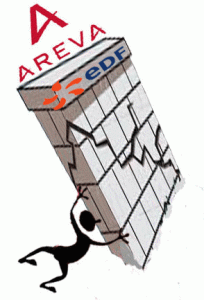 NuClear News No 90 , 26 Nov 16 Problems discovered at Areva’s metal forge at Le Creusot have been growing over the past six months and are now even threatening to derail EDF’s takeover of Areva’s reactor business.
Last spring when Economy Minister Emmanuel Macron visited to tell the workers at Le Creusot that he had every confidence in the nuclear sector, despite the difficulties, 400 files which were being examined for suspected “anomalies” had to be hastily moved out of the meeting room. Now, six months later a crane has been moving prefabricated office buildings into position so that 6,000 records concerning nuclear components – 2.4 million pages – forged at Le Creusot over the last 60 years can be re-examined. Areva has had to accept that the original 400 suspicious files are just the tip of an iceberg and not the only ones containing “irregularities”. 50 people are now trawling through the paperwork and as many more are being recruited for a job that will take at least another eighteen months.
EDF’s CEO Jean-Bernard Lévy says if Le Creusot’s “problems prove insurmountable, the acquisition will not happen”. (1)
With potentially more than half of France’s 58 reactors affected by the “carbon segregation” problem the French nuclear watchdog, the Autorité de Sûreté Nucléaire (ASN) has ordered preventative measures to be taken immediately to ensure public safety. ASN confirmed that, as of late October, 20 reactors were offline and more could be shut down over coming weeks.
Questionable Materials and Documentation
At the heart of France’s nuclear crisis are two problems. One concerns the carbon content of the steel used in critical reactor components, steam heat exchangers, and other components manufactured or supplied by AREVA SA, the French state-owned nuclear engineering firm and global producer of nuclear reactors. The second problem concerns forged, falsified, or incomplete quality control reports about the critical components themselves. Excessive levels of carbon in the steel parts could make them more brittle and subject to sudden fracture or tearing under sustained high pressure, which is obviously unacceptable.
Steam generators from 18 reactors have carbon levels that are above the acceptable level. Some of these were forged at Le Creusot, but others were forged in Japan by JCFC, a subcontractor of Areva. Twelve reactors equipped with JCFC steel are still at a standstill and will be in December while inspections are carried out.
The massive outages are draining power from all over Europe. In the event of severe cold weather this winter, there could be blackouts. Worse, new questions continue to swirl about both the safety and integrity of EDF’s nuclear fleet, as well as the quality of some French- and Japanese-made components that EDF is using in various high-profile nuclear projects around the world.
In October EDF was forced to reduce its 2016 generation targets from 395–400 TWh to 380– 390 TWh, while estimates for nuclear output in 2017 have also been lowered to between 390 TWh and 400 TWh. For perspective, annual nuclear production averaged 417 TWh in the period 2005–2015.
Flamanville
The problem was originally discovered at the Flamanville EPR project in 2014. Since then an internal probe at Le Creusot where many of the components in question were manufactured, has uncovered new anomalies. AREVA is now reported to be reviewing all 9,000 manufacturing records at the forge dating back as far as 1943, including files from more than 6,000 nuclear components.
This autumn there have been almost weekly revelations resulting in plant shutdowns, extended outages, reduced generation, and lots more questions. According to ASN there are now a significant number of reactors offline, with more to be inspected in the next few weeks. “We are now finding carbon segregation problems from components coming from both Le Creusot and [the Kitakyushu-based Japan Casting & Forging Corp.] JCFC plant. As for now, there [are] 20 EDF reactors offline,” the official said, noting that the number will fluctuate as inspections take place.
The analyses performed by EDF thus far have found that since 2015 certain channel heads of the steam generators manufactured by Le Creusot and JCFC “contain a significant carbon concentration zone which could lead to lower than expected mechanical properties,” according to ASN. The Japan Times reports that the JCFC is now also under scrutiny by Japan’s Nuclear Regulation Authority.
Shaun Burnie for Greenpeace said “As a result of substandard manufacturing in Japan, citizens in France have been unknowingly exposed to the risk of catastrophic failure of critical reactor components which could result in a reactor core meltdown. Japanese-supplied steel is now at the centre of France’s unprecedented nuclear crisis the scale of which has never been seen in any country. All 12 reactors supplied by JCFC are either in forced shutdown or about to be. It lacks all credibility that the Japanese nuclear industry would claim that there are no implications for the safety of their own nuclear reactors. The steel production records released in France did not reveal the scale of excess carbon, which was only found after physical testing. There are currently no plans for such tests in Japan. That is wholly unacceptable. There are many urgent questions that need to be answered by the industry and the NRA, and with full public disclosure and transparency.” (2)
Energy traders and analysts warn that the French market needs to prepare for longer maintenance periods in coming years given the age of the nuclear fleet and the continuing design flaw revelations. With the average French reactor now more than 30 years old, equipment will need to be replaced more frequently, and increasingly stringent safety requirements will mean that components could be delayed, especially as ASN imposes additional checks. The safety inspections and other reviews “will lead in particular to extensions of certain planned outages,” EDF said in a press release.
Erring on the Side of Safety?
Despite the outages and findings from the carbon quality investigations, EDF continues to downplay the risk. “The safety margins are very large and the carbon content does not undermine integrity or security, even in the case of an accident,” an EDF spokesperson told Le Monde newspaper. But questions about quality control practices at Le Creusot continue to grow. Indeed, the greater the scrutiny, the more problems are being discovered. The number of components affected by irregularities and already installed in operating reactors increased from 33 known issues in April to 83 by the end of September. Startlingly, irregularities affecting just the Flamanville EPR project increased from two to 20 during the same period.
While EDF and AREVA are dealing with costly damage control, ASN and other agencies are erring on the side of caution. Indeed, the ASN representative said, “We take no risks. That is the rule. If we don’t know the dangers of the carbon segregation, then we must take the reactors offline until we know what the situation is and [can confirm that] it’s not dangerous.”
ASN revealed that AREVA has now identified at least 87 irregularities concerning EDF reactors in operation, including vessels, steam generators, and main primary system piping, plus the 20 issues for parts intended for Flamanville 3, and one more affecting a steam generator planned for installation in Gravelines 5. Inspectors have also found four irregularities affecting transport packaging for radioactive substances. ASN said that whatever the outcome of these investigations, the irregularities “reveal unacceptable practices.”
External Parties Push for Answers
After the discovery of anomalies in the composition of steel in certain zones of the vessel closure head and the vessel bottom head of the EPR reactor being built at Flamanville in 2014, an internal audit was carried out and released in April 2015, suggesting the existence of many more anomalies. These were initially downplayed by ASN and AREVA. But in September 2015 an independent evaluation conducted by Large and Associates for Greenpeace France really set the cat amongst the pigeons. “The nature of the flaw in the steel, an excess of carbon, reduces steel toughness and renders the components vulnerable to fast fracture,” said the report’s author, John Large. The Greenpeace report, “Amplified the questions ASN already had,” said an ASN representative.
12 reactors have been identified by ASN to have carbon problems in replacement steam generators forged by JCFC. In these reactors initial surface tests were followed by more invasive studies. The first reactors to enter scheduled refuelling outages for a more thorough examination were Tricastin 1 and 3. The early nondestructive inspection results for the JCFC bottom channel heads at these reactors revealed an alarming 0.39% level of carbon present, almost 100% greater than the maximum permissible level. That finding, with its associated reduction in material toughness, rendered the component vulnerable to fast fracture, reported Greenpeace in a late October update. ASN decided to order the shutdown of all but one of these reactors and these shutdowns will remain in force until EDF can demonstrate each reactor is safe to re-enter service.
Uncertainty Remains
At a French parliamentary hearing into the situation on October 25, ASN said it would need another year or two to examine the thousands of documents at the Le Creusot foundry and more anomalies and irregularities will probably be discovered. (3
As of late October 2016 ASN has confirmed the following:
- Six reactors have been granted approval to restart and are operating normally: Blayais 1, Chinon 1 and 2, Dampierre 2 and 4, and Saint-Laurent-des-Eaux B2.
- Seven reactos are in planned outages and have been, or are being, inspected. They are: Bugey 4, Civaux 2, Dampierre 3, Gravelines 2, Saint-Laurent-des-Eaux B1, and Tricastin 1 and 3. (4) The Times reports that the re-start of Civaux 2 and Dampierre 3 has been delayed until 31st December.
(5) · Five reactors have been ordered by ASN to be taken offline to conduct checks before 18th January 2017. They are: Civaux 1, Fessenheim 1, Gravelines 4, and Tricastin 2 and 4. (6)
- Three reactors are currently scheduled to remain unavailable throughout the winter months. They are: Bugey 5, Gravelines 5, and Paluel 2.
- One reactor has been ordered by ASN to shut down following the detection of an irregularity in the lower shell of the steam generator. That unit is Fessenheim 2.
- Incidentally, Paluel 2 has been offline since May 2015. Its maintenance period is continuing, following an incident on March 31, 2016, in which a 465-ton steam generator tipped over during removal. (7)
EDF’s Debts
EDF faces a seemingly impossible financial equation. It has colossal debt of €37 billion; it must deal with the complex €2.5 billion takeover of Areva; and find the money to extend the life of its 58 reactors at costs estimated between €60 and €100 billion up to 2030. (8)
Meanwhile EDF has been accused by Greenpeace France of grossly underestimating the cost of nuclear electricity.
Greenpeace claimed that if EDF disclosed the true cost of running its fleet of reactors in France while financing two new ones in the UK, it would be declared bankrupt. Greenpeace commissioned an audit by AlphaValue, the equity research company. The French government has agreed to inject €3 billion into the group this year and has renounced dividend payments until next year. Shares in EDF, 85% of which are owned by the French state, have lost almost a third of their value in the past year and the company is no longer listed on the Paris blue-chip index.
The AlphaValue report described EDF as an “uncompetitive firm – incapable of reacting rapidly and efficiently to the variations in electricity needs and the changes created by the liberalisation of European markets”. It said that EDF’s rivals had written down the value of their nuclear plants because of the move to renewable energy and the fall in electricity prices and that EDF had failed to follow suit. Juan Camilo Rodriguez, author of the report, said the company might have to close 17 of its 58 French reactors to meet the government’s requirement that nuclear power should provide 50 per cent of the nation’s electricity in 2025, down from 75 per cent now.
“The provisions to safeguard the burden of financing the decommissioning of the French reactors are far from sufficient. [If 17 are closed], the group should increase its provisions by more than €20 billion.” Mr Rodriguez said the cost of handling nuclear waste added at least €33.5 billion to that figure. “Whatever scenario is retained, an adjustment of the nuclear provisions . . . would lead to the bankruptcy of EDF from an accountancy point of view,” he added. The report said that EDF would need to find a further €165 billion during the next decade to finance projects such as Hinkley Point and the renovation of reactors in France. EDF says it will spend €51 billion renovating its reactors and £12 billion on Hinkley Point. A spokesman for EDF accused AlphaValue of making erroneous calculations that failed to take account of long-term electricity price movements and differences between France and other European markets. (9) Greenpeace filed a complaint against EDF and its CEO, Jean-Bernard Lévy, for “stock trading offences” at the end of November and EDF responded by suing the group for making “false allegations”.
Greenpeace has asked the public prosecutor “to open a preliminary investigation or to appoint an investigating judge”, saying that “shareholders, investors but also French citizens are being misled by EDF and its CEO”. (10)
According to Stéphane L’homme, Directeur de l’Observatoire du nucléaire: “In summary, the French nuclear fleet is at the end of its course, dilapidated and dotted with deficient parts. At the same time, the finances of EDF are in such a deplorable state that the company could soon join Areva in bankruptcy, and is in any case unable to properly maintain its reactors.” http://www.no2nuclearpower.org.uk/nuclearnews/NuClearNewsNo90.pdf
November 26, 2016
Posted by Christina Macpherson |
business and costs, France, Reference, safety, secrets,lies and civil liberties |
Leave a comment
 South Africa’s Proposed Nuclear Power Plant Unsafe: Study VOA News, 25 Nov 16 JOHANNESBURG —
South African power provider Eskom has proposed building a nuclear power station on a site that may be at risk of surge storms and tsunamis, a geological report suggests, but the state-owned utility disputes the findings.
South Africa has the continent’s only nuclear power station and plans to expand nuclear power generation to meet growing electricity demand in Africa’s most industrialized country.
The report by Maarten de Wit, a professor at the Nelson Mandela Metropolitan University and director of the Africa Earth Observatory Network, a research institute, says canyons in the bedrock would need to be secured.
“If you are going to build anything on that, it’s pretty prone to storms, sea level rises and tsunamis,” De Wit told Reuters on Friday.
The site at Thyspunt, near Port Elizabeth in the Nelson Mandela Bay municipality, is on the Indian Ocean coastline.
The report also showed seismic activity along dormant fault lines near the site that could trigger submarine landslides. Any such activity “is likely to generate a large submarine slump, and a possible significant local tsunami that would affect the coastal region, including Thyspunt,” the report said, warning that a plant at Thyspunt could be at risk of devastation similar that in Fukushima in Japan in 2011……. http://www.voanews.com/a/south-afdrica-s-proposed-nuclear-power-plant-unsafe-report-says/3611738.html
November 26, 2016
Posted by Christina Macpherson |
safety, South Africa |
Leave a comment
 NuClear News No 90 26 Nov 16 Radio Four’s Costing the Earth has been investigating whether it is safe to keep reactors running long past their expected lifespan of about 30 years. Five of Britain’s seven AGRs are already older (Torness and Heysham 2 are only 27 years old). Hinkley Point B and Hunterston B are already 40 years old but EDF energy wants them to continue operating for at least another 7 years.
In 2005 the Nuclear Installations Inspectorate (now the Office for Nuclear Regulation -ONR) expressed concern about the structure of the reactor core. The core is made up of 6,000 graphite blocks. Around half of these are 1 metre tall with a bore or channel running through each block. Around 200 of these channels contain rods of nuclear fuel. If anything goes wrong control rods are inserted between the channels to dampen the nuclear reaction and shut down the reactor.
Nuclear Engineering consultant John Large explains that graphite is not elastic, it doesn’t bend, and it is not particularly strong. And now the graphite bricks are cracking. The core is an assembly of several thousand bricks, loosely stacked together and the expectation was that the core would never fail, so there was no facility to replace any individual blocks if they did become damaged. But now there are physical changes occurring in the core, in the individual bricks – cracking and fracturing – that must result in some loss of strength – not only of the individual bricks, but of the core as a whole.
The BBC used a Freedom of Information request to obtain a number of documents. One paper from ONR reveals that one third of the channels inspected at Hinkley B and Hunterston B contain what they describe as significant cracks. EDF says the cracks were anticipated at this stage in the reactors’ life and it is safe to operate for years to come. It says evidence suggests that its predictions about cracking are accurate.
Brian Cowell, director of nuclear operations, says: “in fact we are looking to extend life further (than 2023) if we can.” The analysis suggests that we can have more than 1,000 axial cracked bricks and still operate with massive margins of safety. 1,000 cracked bricks would exceed the current safety limit set by ONR, but the regulator is considering changing that limit.
Mark Foy – Deputy Chief Nuclear Inspector says the percentage of cracked bricks ONR is currently happy to accept is 10%, but they are considering increasing that to 20%. Foy says that the original safety case provided by EDF was on the basis of 10% cracking. As experience is gained and analysis and research is undertaken it allows EDF and ONR to gain a more informed and accurate view of what is acceptable and what isn’t.
EDF has now provided ONR with a safety case for allowing 20% cracking. This is based on the analysis EDF has undertaken; samples they’ve taken and the inspections they’ve undertaken. The focus has been to look at the likelihood of core disruption after an earthquake which could prevent the control rods being inserted. ONR is considering the new safety case.
Keyway Route Cracking
The ONR is also investigating a very specific and more concerning form of cracking. The keyway is a slot that holds each brick to the adjacent brick, the bricks underneath and the bricks on top. These keyways, which are acknowledged to be the limiting factor in the life of these reactors, are beginning to fracture. John Large points out that this will make the graphite blocks a very loose set of bricks.
Prof Paul Bowen of Birmingham University sits on the graphite technical advisory committee for ONR. He says the keyway cracks could potentially prevent the entry of the control rods. If the core distorts too much, it’s easy to see how trying to feed anything in could become very difficult
Seven of the keyways have been discovered to have cracks at Hunterston B. John Large believes the presence of keyway cracks casts doubt on the safety of the reactor in the event of an emergency like an earthquake. We have a cracked and deteriorating core that’s lost its residual strength and we don’t know by how much. Some of the design case accidents will test the core – one of these would be a seismic shake where the whole core is wobbled. If the core becomes misaligned, and the fuel modules get stuck in the core, the fuel temperature will get raised and could undergo a melt. If the radioactivity gets into the gas stream and the reactor is venting because it’s over pressurised then you have a release to the atmosphere and you have dispersion and a contamination problem.
ONR agrees keyway cracks could compromise safety. One of the documents the BBC obtained said the discovery of keyway route cracks at Hunterston invalidates the previous safety case. EDF had to consider what information to present to ONR to satisfy them that the reactor was still safe to operate. EDF brought in articulated control rods and nitrogen injection systems to address the extra risks posed by the keyway route cracking. The new rods are bendy making them easier to insert into a distorted core and an injection of nitrogen could buy several hours of invaluable time in the event of an accident.
However, concern remains because we can’t be certain how many keyway route cracks there are. John Large explains that to examine where the cracks are you have to take the fuel out of the reactor and put a camera down to inspect the inside of the bore, but these keyway cracks are on the outside of the bricks so you can’t actually see them.
It’s very hard to inspect the channels in which the fuel sits. Around 10% are inspected each time the reactor is shutdown. So there may be keyway route cracks that have never been seen at Hunterston and Hinkley. In the absence of a full visual inspection a mathematical model is used to work out the likelihood of cracks in particular parts of the reactor. The trouble is the model has already been shown to be flawed.
Paul Bowen says they haven’t been able to get the exact timing of the cracks right. The industry argued that cracks would appear first in layers 4 and 5, but they actually appeared in level 6. John Large says the model relied upon by ONR is not working, so they can’t predict the strength of the core. More to the point they can’t work out where to put their investigative probes to see where cracking is taking place. So they’re in the dark.
If the ONR gives the go-ahead for an increase in the number of cracked bricks from 10 to 20%, it might be difficult for people living near theses reactors to understand why the definition of “safe” seems to be changing. http://www.no2nuclearpower.org.uk/nuclearnews/NuClearNewsNo90.pdf
November 26, 2016
Posted by Christina Macpherson |
Reference, safety, UK |
1 Comment
“I think we expect more of such readjusting plate movements and that has been reasonably predicted, and many volcanic activity and earthquakes have been rampant over the last five years,” said Mr. Kurokawa, an adjunct professor at the National Graduate Institute for Policy Studies. “So why are we continuing to restart nuclear plants?”
New Quake Tests Resilience, and Faith, in Japan’s Nuclear Plants, NYT, By MOTOKO RICHNOV. 22, 2016 TOKYO — There was no avoiding fearful memories of the Japanese nuclear disaster of 2011 on Tuesday morning after a powerful earthquake off the coast of Fukushima caused a cooling system in a nuclear plant to stop, leaving more than 2,500 spent uranium fuel rods at risk of overheating………
November 23, 2016
Posted by Christina Macpherson |
Japan, safety |
Leave a comment
‘Most dilapidated’ US nuclear power plant to close?, DW, 22 Nov 16 New York state has taken a pivotal step toward shutting down what critics have called the US’ “most dilapidated and dangerous nuclear power plant.” The renewal of one of the permits for Indian Point looks unlikely. The New York Court of Appeal’s latest decision on the Indian Point nuclear facility concerned an application to renew one of the permits required by Entergy to continue operating two pressurized water reactors at the plant. The reactors in question were put into operation in 1974 and 1976 respectively.

Contrary to a lower court’s ruling, the Court of Appeal said the request must be submitted to the State Department of New York State, which looked likely to reject it.
“The Department of State already concluded that the Indian Point relicensing application is inconsistent with New York’s long-standing Coastal Management Program requirements and will continue to use this program to protect New York’s coastline, Governor Andrew Cuomo said in a statement.
Good riddance?
“Indian Point is antiquated and does not belong on the Hudson River in close proximity to New York City where it poses a threat not only to the coastal resources and uses of the river, but also to millions of New Yorkers living and working in the surrounding community,” Cuomo added.
The Court of Appeal’s decision was also hailed by the Waterkeeper Alliance. “Indian Point is the oldest, most dilapidated, mismanaged and dangerous nuclear power plant in America,” it said in a statement on Ecowatch.com’s website……http://www.dw.com/en/most-dilapidated-us-nuclear-power-plant-to-close/a-36474986
November 23, 2016
Posted by Christina Macpherson |
safety, USA |
1 Comment
Nuclear plant temporarily shuts down due to system problem http://www.dailyprogress.com/nuclear-plant-temporarily-shuts-down-due-to-system-problem/article_2d1f2c37-a7a1-5bc8-bb6f-e1421c989e6b.html LACEY TOWNSHIP, N.J. (AP) — The nation’s oldest operating nuclear plant has been temporarily shut down due to a fault in the turbine control system.
But officials with the Oyster Creek plant say it won’t have any impact on the electrical service it provides.
The plant automatically shut down without incident at 3:42 a.m. Sunday when the fault was detected. The turbine control system is located on the plant’s non-nuclear side, and technicians were working to repair and test it before the system was returned to service.
Oyster Creek is located about 60 miles east of Philadelphia. It generates enough electricity to power 600,000 homes, or roughly all the homes in Monmouth and Ocean counties combined.
The plant’s operators have said it will close in 2019. The final refueling outage is planned for 2018.
November 21, 2016
Posted by Christina Macpherson |
safety, USA |
Leave a comment
Pilgrim: Baker pressed to name independent nuclear inspector Cape Cod Times, Nov 19, 2016 PLYMOUTH — Critics of Pilgrim Nuclear Power Station are frustrated by the silence coming from the governor’s office concerning their request for a state-appointed nuclear engineer to accompany the federal inspection team set to take a sweeping look at the plant’s systems and staff, beginning Nov. 28.
More than a month ago, Mary Lampert, a Duxbury resident and director of Pilgrim Watch, contacted both the governor’s office and the Nuclear Regulatory Commission with the request for an outside expert who would represent the interests of the public.
Others have followed Lampert’s lead with their own emails.
The upcoming site visit marks the third and final inspection in a three-phase process that began in January as part of the effort by federal regulators to increase oversight at the 44-year-old, problem-plagued plant. A year ago, the Nuclear Regulatory Commission categorized Pilgrim among the three worst performers in the nation — one step from mandatory shutdown.
Entergy Corp. owns all three of the reactors in that lowest category.
While federal regulations allow the governor’s office to appoint a representative to tag along, during past inspections the state has used its longtime appointed liaison with the NRC, John Giarrusso, a Massachusetts Emergency Management Agency employee, whose background is limited to site security at nuclear plants.
MEMA spokesman Christopher Besse said the agency has been contacted and plans to send Giarrusso.
“MEMA stresses that it has neither been invited to participate as an active participant in the inspection process, nor does it have the requisite expertise or experience in nuclear power plant operations to inspect and evaluate plant operations and capabilities,” Besse wrote in an email. “MEMA’s expertise is on off-site emergency preparedness and coordinating response operations.”
Giarrusso’s presence doesn’t fill the need for an independent nuclear engineer, Lampert said. “The role taken by state engineers is to have a dialogue with the inspectors to represent the interests of the public,” she said. “This is not an examination of emergency planning.”
Gov. Charlie Baker’s office has not responded to requests from Lampert and other nuclear watchdogs looking for some knowledgeable and independent eyes watching out for their safety.
After phone calls and emails from the Times, Brendan Moss, the governor’s spokesman, simply wrote back Thursday: “We haven’t made a decision on the role yet.” Moss did not respond to requests Friday for further information.
The NRC has been given no indication on whether a state-appointed nuclear engineer is being considered by Baker, said NRC spokesman Neil Sheehan.
Time for action is running out…….
The Nuclear Regulatory Commission has assigned 20 inspectors from around the country to the Plymouth plant for the upcoming inspection. In his response to Lampert, Raymond Lorson, the NRC’s director of reactor safety for the Northeast, said the inspection would be thorough and unbiased.
But Heather Lightner, president of Concerned Neighbors of Pilgrim, said watchdogs want someone outside of the federal team.
“The request for an independent observer to join the NRC on its upcoming inspection of Pilgrim was made because the public does not trust the NRC,” Lightner said. “Allowing an individual to accompany the NRC could be seen as an admission that the NRC’s credibility is in question; perhaps that is why the governor’s office has been slow to make the appointment.”…..
Lampert said Massachusetts should have a nuclear engineer, both while Pilgrim remains operating and after it shuts down in 2019. “The fact we don’t have a nuclear engineer is absurd,” Lampert said. “Where has been the voice of the Commonwealth through all the problems we’ve had?” http://www.capecodtimes.com/news/20161118/pilgrim-baker-pressed-to-name-independent-nuclear-inspector
November 21, 2016
Posted by Christina Macpherson |
safety, USA |
Leave a comment
Japan regulator OKs another nuclear reactor to run beyond 40-yr limit, Mainichi, TOKYO (Kyodo), 15 Nov 16 — Japan’s Nuclear Regulation Authority gave approval Wednesday for a third reactor to operate beyond the mandated 40-year maximum lifespan, signaling a further weakening in enforcement of the limit introduced after the 2011 Fukushima disaster.
The No. 3 unit at Kansai Electric Power Co.’s Mihama plant in Fukui Prefecture is the latest reactor allowed to continue in service beyond the limit following two such units at the utility’s Takahama complex, also in Fukui.
The Mihama No. 3 unit, which began commercial operation in December 1976, went offline in May 2011 for a regular checkup and has not been restarted, undergoing inspections to meet tougher safety requirements introduced after the Fukushima disaster.
Kansai Electric plans to spend about 165 billion yen ($1.5 billion) to upgrade the facilities at the reactor with a capacity of 826,000 kilowatts to meet the new regulations, which reflect the lessons learned from the Fukushima Daiichi nuclear power plant disaster……..
ニュースサイトで読む: http://mainichi.jp/english/articles/20161116/p2g/00m/0dm/047000c#csidxb563f34546d48c0a1d99f038e34023d 
November 16, 2016
Posted by Christina Macpherson |
Japan, safety |
Leave a comment
Japanese nuclear plant holds tsunami & meltdown drills Rt.com 13 Nov, 2016 A major anti-disaster drill has been held at a nuclear plant in Hokkaido, the northernmost of Japan’s main islands. The exercise followed a similar drill in Shikoku, and was based on the scenario of a powerful earthquake and tsunami striking the region.
Hokkaido is the second largest island of Japan which is home to the Tomari Nuclear Power Plant Unit 3 reactor. Due to over a dozen volcanoes it is prone to seismic activity. …… in Hokkaido, local residents joined officials from 40 organizations, including central and local governments to polish their emergency response.
In particular, the training trained people in how to reach safety should the main roads around Tomari be affected by a tsunami.
The drill even rehearsed the erection of an emergency response center some ten kilometers from the power station.
Meanwhile, locals practiced survival mode skills at a local school in case they are faced with a radiation leak situation. A massive evacuation of civilians using buses has also been organized. READ MORE: Volcano near Japanese nuclear plant to see major eruption within 25 years, scientists warn
A similar drill was held at the Ikata plant in Ehime Prefecture on Friday, and involved about 23,000 people. There, local residents joined officials from 90 organizations in a massive exercise organized by the Shikoku Electric Power Company. https://www.rt.com/news/366726-japan-nuclear-tsunami-drills/
November 14, 2016
Posted by Christina Macpherson |
Japan, safety |
Leave a comment
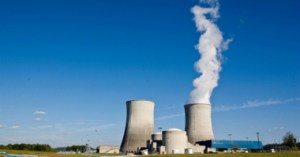 Watts Bar Unit 2, last old reactor of the 20th century: a cautionary tale, Bulletin of the Atomic Scientists
Don SaferSara Barczak, 8 Nov 16 More than four decades after construction began in 1973, the Tennessee Valley Authority (TVA) is finally getting close to starting up the Watts Bar Unit 2 nuclear reactor. Only final tests stand in the way of it receiving an operating license from the Nuclear Regulatory Commission (NRC). While the TVA and the nuclear industry describe Watts Bar 2 as “
the first new nuclear generation of the 21st Century,” in fact the TVA resuscitated a demonstrably unsafe 1960s-era ice condenser design that was abandoned decades ago by the rest of the nuclear industry. Mismanagement and construction problems have driven the project’s price tag up with billions of dollars in cost overruns. Safety continues to be compromised as the NRC is allowing the TVA to delay post-Fukushima seismic design upgrades indefinitely. Rather than exemplifying a fine technological achievement, the history of Watts Bar Units 1 and 2 is a cautionary tale of the worst pitfalls of nuclear power and the federal regulatory system.
This pair of nuclear reactors has a unique distinction. Back in 1996, Watts Bar Unit 1 was the last reactor completed in the United States, at a hefty $6.8 billion. No other reactors have come online since. In fact, according to the NRC, eight US reactors have permanently shut down since Watts Bar 1 was licensed…….
Watts Bar 2 comes from a federally owned utility that has a history of delays, problems, and fiscal irresponsibility when it comes to nuclear power. This history raises the question of why Watts Bar 2 has survived such a long time and whether it should ever be allowed to open. It is a saga of delays and cost overruns, antiquated designs, inadequate quality control and oversight, failure to implement post-Fukushima upgrades, and a deficient safety culture, among other problems—all at a time when there is still no place for long-term storage of the nuclear waste that will be generated. And because the TVA manufactures tritium for use in America’s nuclear weapons, there will inevitably be greater releases of tritium into the air and water of the region—natural resources which already receive four times as much tritium as originally expected.
Ironically, Watts Bar 2 comes when the large-scale development of new, truly clean energy sources is a burgeoning reality. Created as an innovative model for the nation in the 1930s, the Tennessee Valley Authority has become an entrenched, top-down bureaucracy wedded to the past by its continuing embrace of nuclear and other polluting energy sources in the 21st century.
Schedule delays and cost increases. Watts Bar Unit 2 has the longest construction history of any reactor in the world. …….
Let us look at some of the reasons for the delays and overruns in turn.
Problematic, antiquated design. …….
Quality control concerns at Watts Bar……..
Post-Fukushima design upgrades postponed…….
Watts Bar and nuclear weapons. …….
A safer, less risky future is possible. Ratepayers, utilities, and regulators should heed this cautionary tale, whose lessons are only reinforced by recent efforts to build ever more costly and delayed new reactors here in the United States, including SCANA’s V.C. Summer reactor in South Carolina, and the Southern Company’s Plant Vogtle reactors in Georgia. (And abroad at Flamanville, France; Olkiluoto, Finland; and Hinkley Point, Great Britain.) New nuclear power generation is turning out to be the failed technology of the 21st century…….. http://thebulletin.org/watts-bar-unit-2-last-old-reactor-20th-century-cautionary-tale8783
November 11, 2016
Posted by Christina Macpherson |
1 NUCLEAR ISSUES, safety, USA |
Leave a comment
The unusual event notice is the lowest of the Nuclear Regulatory Commission’s four emergency classification levels. The fire was self-extinguished moments after it started and there were no injuries or impact on plant operations, Entergy said.
The cable that experienced the electrical faulty carries electricity between both operating units at the Buchanan plant.
The company is investigating the cause of the fault, according to Entergy.
November 11, 2016
Posted by Christina Macpherson |
incidents, USA |
Leave a comment