The grounds remain coated with plutonium, cesium, strontium and americium — radionuclides (atoms that emit radiation) that could pose potentially serious health risks to those who touch or ingest them. Some areas are more radioactive, and therefore more dangerous, than others.
“Even though the accident occurred over 33 years ago it remains one of the most radiologically contaminated places on earth.”
Chernobyl tourists should avoid plant life, and especially the depths of the forests.
Those areas were not cleaned in the aftermath of the disaster and remain highly contaminated by radiation. Research has showed that the fungus, moss and mushrooms growing there are radioactive. Eating or drinking from the area is not safe.
Those who stay on the paved pathways, which officials cleaned, are much less likely to absorb harmful toxins.
Ukraine wants Chernobyl to be a tourist trap. But scientists warn: Don’t kick up dust.  https://www.washingtonpost.com/travel/2019/07/12/ukraine-wants-chernobyl-be-tourist-trap-scientists-warn-dont-kick-up-dust/?utm_term=.5e82b547ceaf By Katie Mettler, July 12 2019
The tourists first started flocking to Chernobyl nearly 10 years ago, when fans of the video game S.T.A.L.K.E.R. wanted to see firsthand the nuclear wasteland they’d visited in virtual reality.
Next came those whose curiosity piqued when in 2016 the giant steel dome known as the New Safe Confinement was slid over the sarcophagus encasing nuclear reactor number four, which exploded in April 1986, spewed radiation across Europe and forced hundreds of thousands to flee from their homes.
Then in May, HBO’s “Chernobyl” miniseries aired, and tourism companies reported a 30 to 40 percent uptick in visitors to the Chernobyl Exclusion Zone, abandoned and eerily frozen in time.
Now the Ukrainian government — capitalizing on the macabre intrigue — has announced that Chernobyl will become an official tourist site, complete with routes, waterways, checkpoints and a “green corridor” that will place it on the map with other “dark tourism” destinations.
“We must give this territory of Ukraine a new life,” President Volodymyr Zelensky said during a visit to Chernobyl this week. “Until now, Chernobyl was a negative part of Ukraine’s brand. It’s time to change it.”
Zelensky, who was inaugurated in May, signed a decree July 10 to kickstart the Chernobyl Development Strategy, which the president hopes will bring order to the 19-mile Exclusion Zone that has become a hotbed for corruption, trespassing and theft. At the nuclear facility and in the nearby town of Pripyat, wildlife has returned and now roams freely. Flora and fauna grow up around decaying homes, playgrounds and an amusement park. Letters, dinner tables and baby dolls remain where their owners abandoned them 33 years ago.
Radioactive dust still coats it all.
“Chernobyl is a unique place on the planet where nature revives after a global man-made disaster, where there is a real ‘ghost town,’” Zelensky said during his visit. “We have to show this place to the world: scientists, ecologists, historians, tourists.”
Though exploiting a historical space like Chernobyl could infuse Ukraine’s economy with tourism dollars and motivate developers to revive the sleepy towns surrounding the “dead zone,” there are significant downsides, experts say.
[Thanks to HBO, more tourists are flocking to the eerie Chernobyl nuclear disaster site]
The grounds remain coated with plutonium, cesium, strontium and americium — radionuclides (atoms that emit radiation) that could pose potentially serious health risks to those who touch or ingest them. Some areas are more radioactive, and therefore more dangerous, than others.
“Chernobyl was the worst nuclear accident in human history,” said Jim Beasley, an associate professor at the University of Georgia who has been studying wildlife in the Exclusion Zone since 2012. “Even though the accident occurred over 33 years ago it remains one of the most radiologically contaminated places on earth.”
More than 30 people were killed in the immediate aftermath of the explosion, and officials are still debating the full extent of the longterm death toll in Ukraine and nearby countries where people grew sick with cancer and other illnesses.
The World Health Organization estimates total cancer deaths at 9,000, far less than a Belarusian study that put the death toll at 115,000, reported Reuters.
Today, radiation levels inside the Exclusion Zone vary widely from location to location, said Dr. T. Steen, who teaches microbiology and immunology at Georgetown’s School of Medicine and oversees radiation research in organisms at nuclear disaster sites. Because of that, she advises anyone visiting to be educated and cautious while inside the Exclusion Zone, and to limit time spent there.
“The longer you’re exposed, the more that future impact is,” she said.
She advises visitors to the Exclusion Zone to wear clothes and shoes they are comfortable throwing away. If they’re going to be touching or disturbing anything, she recommends a mask and gloves. Most importantly, Steen says, Chernobyl tourists should avoid plant life, and especially the depths of the forests.
Those areas were not cleaned in the aftermath of the disaster and remain highly contaminated by radiation. Research has showed that the fungus, moss and mushrooms growing there are radioactive. Eating or drinking from the area is not safe.
Those who stay on the paved pathways, which officials cleaned, are much less likely to absorb harmful toxins.
Generally speaking, Chernobyl can be safe, Steen said, “but it depends on how people behave.”
And so far, the accounts of tourists behaving badly are abundant.
Timothy Mousseau, a biologist and University of South Carolina professor, has been studying the ecological and evolutionary consequences of radioactive contaminants on wildlife and organisms at Chernobyl for 20 years. He just recently returned from his annual, month-long trip to the Exclusion Zone and said he was shocked to see 250 tourists in street clothes wandering Pripyat.
Some hopped in bumper cars at the abandoned amusement park there to take selfies.
“Part of the reason people don’t think twice about it is because there is this highly organized tourism operation,” Mousseau said. “A lot of people don’t give it a second thought.”
He is concerned that the government’s tourism campaign could only make that worse.
“The negative aspects that are being completely ignored are the health and safety issues of bringing this many people, exposing this many people to what is a small risk, albeit a significant risk, to this kind of contamination,” Mousseau said. “The more traffic there is, the most dust there is, and the dust here is contaminated.”
[We’re in the age of the overtourist. You can avoid being one of them.]
But Mousseau’s worries, and the anxieties of his colleagues, extend beyond health factors.
For decades, biologists, ecologists and medical researchers have been studying the mostly undisturbed expanse that is the Exclusion Zone. They’ve studied DNA mutations in plants and insects, birds and fish. As larger mammals, like moose, wolves and fox, have slowly re-occupied the surrounding forests, biologists have searched for clues about the ways short-term and long-term radiation exposure have altered their health.
Scientifically, there is no place on earth like Chernobyl. Beasley, who studies wolves there, calls it a “living laboratory.” An influx of humans — especially reckless ones — could destroy it.
“This is really the only accessible place on the planet where this kind of research can be conducted at a scale both spatial and temporal that allows for important scientific discovery,” Mousseau said. “Given increased use of radiation in technology and medicine, in going to Mars and space, we need to know more about radiation and its effects on biology and organisms.”
“And Chernobyl provides a unique laboratory to do this kind of research,” he said.
Tourism’s negative footprint in the Exclusion Zone is not theoretical, either.
They are leaving behind trash, rummaging through abandoned homes and buildings and, in Mousseau’s experience, stealing his research equipment. Cameras he has hidden in the depths of the most radioactive parts of the zone to capture the wildlife he studies have been vandalized or gone missing, he said.
It’s something that absolutely astounds me,” he said.
Theoretically, more government oversight at Chernobyl could help curb this kind of interference, especially if a financial investment in the zone will help preserve the ghost town there and bring in more guards and checkpoints to patrol who comes and goes.
None of that will prevent tourists from disturbing Chernobyl’s spirit.
“I think it is important to not lose sight of the fact that Chernobyl represents an area of tremendous human suffering,” Beasley said, “as hundreds of thousands of people were forever displaced from their homes or otherwise impacted by the accident.”
July 15, 2019
Posted by Christina Macpherson |
culture and arts, environment, Reference, safety, Ukraine |
Leave a comment
Russian Navy Claims Sailors Prevented ‘Planetary Catastrophe’
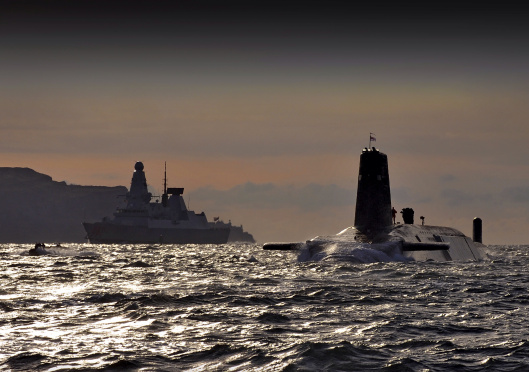
Was the damaged submarine’s reactor in danger of causing a nuclear accident? https://www.popularmechanics.com/military/navy-ships/a28340271/submarine-nuclear-reactor-accident/ By Kyle Mizokami, Jul 10, 2019 A senior Russian Navy official said that accident on the nuclear-powered submarine Losharik was nearly a “planetary catastrophe,” were it not for the fourteen sailors killed in the incident. The submarine, widely believed to be a spy sub capable of operating on the deep ocean floor, was damaged in an accident on July 1st. The Kremlin denied there was risk of such a “catastrophe.”
An aid to the head of the Russian Navy, Sergei Pavlov, stated at a funeral for the sailors lost in the accident, “With their lives, they saved the lives of their colleagues, saved the vessel and prevented a planetary catastrophe.” Pavlov reportedly did not elaborate.
The Kremlin denied that the reactor had been at risk, stating that it had been “totally sealed off” and there were no problems with it. Radiation monitoring stations in Norway relatively near where the incident took place have not reported any spikes in radioactivity.
The accident, according to Russian Defense Minister Sergei Shoigu, started in the sub’s battery compartment and spread. This suggests a fire that was the result of a buildup of hydrogen gasses inside the ship. Submarines, even nuclear ones, carry banks of batteries to provide a temporary source of power, and hydrogen is produced as a byproduct of the battery charging process. If the gas reaches a critical level of concentration, a spark onboard the ship could set off a fire.
According to Shoigu, the crew battled the fire for an hour and a half. Although the automatic fire extinguishers kicked in, they proved insufficient. The surviving crew managed to initiate an emergency blow procedure and the ship surfaced off the coast of the Kola Peninsula, where the remaining crew members were rescued.
Losharik, named after a cartoon horse made of interconnected juggling balls, got its name because the interior of the ship is made of seven interconnected steel or titanium spheres. The spheres give the ship its deep diving capability, with the sub reportedly capable of reaching depths of at least 1,000 meters (3,280 feet).
It is not clear where Losharik’s 5 megawatt nuclear reactor resides, but the ship is only 230 feet long with all personnel, propulsion systems, and mission equipment inside the seven spheres. The fire could not have been far from the reactor, but if the reactor and batteries resided in different spheres they could have been closed off from one another. Shoigu seems to be stating that was the case.
Even if the fire did reach the reactor it seems unlikely that the ejection of radioactive materials could cause a “planetary catastrophe” on the scale of the 1986 Chernobyl accident. Losharik’s reactor generated just five megawatts, the RBMK reactor at Chernobyl was much more powerful and used much more nuclear material to generate up to 3,200 megawatts.
July 13, 2019
Posted by Christina Macpherson |
incidents, Russia |
1 Comment
 Recycle everything, America—except your nuclear waste https://thebulletin.org/2019/07/recycle-everything-america-except-your-nuclear-waste/ By Allison Macfarlane, Sharon Squassoni, July 8, 2019 Americans have come late to the game on responsible consumerism, but they are making up for lost time with a passionate obsession about waste. It’s no coincidence that Fox News, CNN, YouTube and USA Today have all reported that the deepest solo ocean dive found plastic waste seven miles below the surface, in the Mariana Trench.
Now that Americans are “woke” about waste in general, they may turn to the specific kind produced by the nuclear energy industry. Plans to revitalize US nuclear power, which is in dire economic straits, depend on the potential for new, “advanced” reactors to reduce and recycle the waste they produce. Unfortunately, as they “burn” some kinds of nuclear wastes, these plants will create other kinds that also require disposal. At the same time, these “advanced” reactors—many of which are actually reprises of past efforts—increase security and nuclear weapons proliferation risks and ultimately do nothing to break down the political and societal resistance to finding real solutions to nuclear waste disposal.
The current nuclear dream is really no different from previous ones of the last 70 years: the next generation of reactors, nuclear power advocates insist, will be safer, cheaper, more reliable, less prone to produce nuclear bomb-making material, and more versatile (producing electricity, heat, and perhaps hydrogen), without creating the wastes that have proved almost impossible to deal with in the United States. The Nuclear Energy Innovation and Modernization Act specifically describes the advanced reactors it seeks to support as having all those positive characteristics. This newest burst of enthusiasm for advanced reactors is, however, largely fueled by the idea that they will burn some of their long-lived radioisotopes, thereby becoming nuclear incinerators for some of their own waste.
Many of these “advanced” reactors are actually repackaged designs from 70 years ago. If the United States, France, the UK, Germany, Japan, Russia, and others could not make these reactors economically viable power producers in that time, despite spending more than $60 billion, what is different now? Moreover, all of the “advanced” designs under discussion now are simply “PowerPoint” reactors: They have not been built at scale, and, as a result, we don’t really know all the waste streams that they will produce.
It’s tempting to believe that having new nuclear power plants that serve, to some degree, as nuclear garbage disposals means there is no need for a nuclear garbage dump, but this isn’t really the case. Even in an optimistic assessment, these new plants will still produce significant amounts of high-level, long-lived waste. What’s more, new fuel forms used in some of these advanced reactors could pose waste disposal challenges not seen to date.
Some of these new reactors would use molten salt-based fuels that, when exposed to water, form highly corrosive hydrofluoric acid. Therefore, reprocessing (or some form of “conditioning”) the waste will likely be required for safety reasons before disposal. Sodium-cooled fast reactors—a “new” technology proposed to be used in some advanced reactors, including the Bill Gates-funded TerraPower reactors—face their own disposal challenges. These include dealing with the metallic uranium fuel which is pyrophoric (that is, prone to spontaneous combustion) and would need to be reprocessed into a safer form for disposal.
Unconventional reactors may reduce the level of some nuclear isotopes in the spent fuel they produce, but that won’t change what really drives requirements for our future nuclear waste repository: the heat production of spent fuel and amount of long-lived radionuclides in the waste. To put it another way, the new reactors will still need a waste repository, and it will likely need to be just as large as a repository for the waste produced by the current crop of conventional reactors.
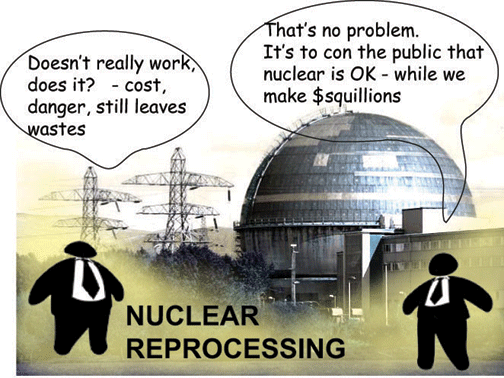
Recycling and minimizing—even eliminating—the waste streams that many industries produce is responsible and prudent behavior. But in the context of nuclear energy, recycling is expensive, dirty, and ultimately dangerous. Reprocessing spent nuclear fuel—which some advanced reactor designs require for safety reasons—actually produces fissile material that could be used to power nuclear weapons. This is precisely why the United States has avoided the reprocessing of spent nuclear fuel for the last four decades, despite having the world’s largest number of commercial nuclear power plants.
Continuing research on how to deal with nuclear waste is a great idea. But building expensive prototypes of reactors whose fuel requires reprocessing, on the belief that such reactors will solve the nuclear waste problem in America, is misguided. At the same time, discounting the notion that a US move into reprocessing might spur other countries to develop this same technology—a technology they could secretly exploit to produce nuclear weapons—is shortsighted and damaging to US national and world security.
July 11, 2019
Posted by Christina Macpherson |
2 WORLD, Reference, safety, wastes |
Leave a comment
 Chernobyl’s $1.7B nuclear confinement shelter revealed after taking 9 years to complete, By Paulina Dedaj | Fox News 4 July 19 A new structure built to confine the Chernobyl reactor at the center of the world’s worst nuclear disaster was previewed for the media Tuesday.
Reactor No. 4 at the Chernobyl nuclear power plant in Ukraine exploded and burned April 26, 1986.
The complex construction effort to secure the molten reactor’s core and 200 tons of highly radioactive material has taken 9 years to complete under the auspices of the European Bank for Reconstruction and Development. It was built to cover the temporary concrete and steel Shelter Structure, which was built immediately after the disaster, but which had begun to deteriorate in the 1990s.
The structure itself cost 1.5 billion euros (almost $1.7 billion) and the entire shelter project cost 2.2 billion euros. The European Bank for Reconstruction and Development managed a fund with contributions from 45 countries, the European Union and 715 million euros in the bank’s own resources.
The shelter is the largest moveable land-based structure ever built, with a span of 843 feet and a total weight of over 36,000 tonnes.
“This was a very long project,” said Balthasar Lindauer, director of the bank’s Nuclear Safety Department. He noted that preliminary studies began in 1998 and the contract for the structure was placed in 2007.
He said Ukraine was a big contributor, contributing 100 million euros in cash along with expertise and personnel. ……. https://www.foxnews.com/world/chernobyl-nuclear-confinement-shelter-revealed
July 8, 2019
Posted by Christina Macpherson |
safety, Ukraine |
Leave a comment