faulty parts found in a number of France’s nuclear reactors
10% of French Nuclear Reactors Have Potentially Faulty Parts Installed as Fukushima Fears Persist https://sputniknews.com/europe/201909181076832892-10-of-french-nuclear-reactors-have-potentially-faulty-parts-installed-as-fukushima-fears-persist/
|
by Tim Korso Most European states have taken a course to reduce to zero the use of nuclear plants since the disaster at the Japanese plant Fukushima in 2011 that led to the contamination of nearby land and sea.
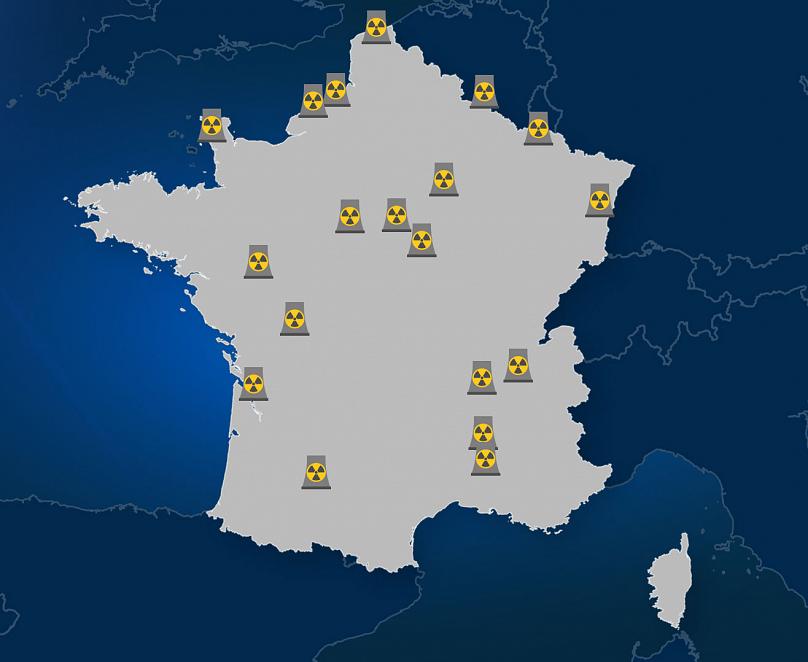
Six (around 10% of the total amount) of nuclear reactors in France are using parts that had “manufacturing deviations” Electricite de France (EDF) SA, the country’s biggest power supplier reported. The irregularities were found in 16 steam generators used on nuclear power plants in Blayais, Bugey, Fessenheim, Dampierre-en-Burly, and Paluel. At the same time, EDF stated that the issue is not a pressing one and doesn’t require immediate attention. The report comes in line with an ongoing programme of reactor checks in France following the discovery of carbon-content irregularities in the steel produced by Le Creusot Forge in 2016, which made the metal weaker than usual. The checks led to the temporary suspension of numerous reactors, and a spike in energy prices both in France and in nearby states due to the former’s need to import energy to cover the deficit. Some European states have even announced their intention of completely phasing out the use of nuclear energy, gradually shutting down existing nuclear plants and aborting the construction of newer ones following the 2011 disaster at the Japanese plant Fukushima, which left significant patches of land and sea contaminated. The incident happened after the plant was hit by a powerful tsunami that knocked out its power and left reactors without cooling systems. Three countries, namely Belgium, Switzerland and Germany, are planning to eventually switch to renewable energy sources, while using gas in the transitional period. France, however, despite initially considering such option decided to keep its nuclear industry. Still, Paris opted for a reduction of its portion in the country’s energy generation from over 70% down to 50% by 2035. |
Iodine tablets for 2.2 million people in France
|
France will give out free iodine tablets to around 2.2 million people living close to nuclear plants to help protect them from radiation in case of an acciden https://eutoday.net/news/environment/2019/france-to-distribute-out-free-iodine-tablets-to-2-2-million-peoplet, Euronews reports. The country’s nuclear regulator agency ASN said on Tuesday people living within 10-20 kilometres from one of EDF’s 19 nuclear plants, as well as some 200,000 institutions including schools, will receive a letter in the incoming days informing them they can pick up the tablets from the nearest pharmacy. Previously, France distributed iodine tablets to people living within a 10 kilometre radius from a nuclear plant but has now decided to widen the radius. During nuclear accidents, radioactive iodine is released into the atmosphere that when inhaled or swallowed by the thyroid gland can cause cancer in later years. When the thyroid gland is saturated with stable iodine, it no longer absorbs the radioactive iodine. ASN said that in case of a nuclear accident, people should seek shelter in buildings and not go pick up their children from school. France is the world’s most nuclear-reliant nation, with three-quarters of its electricity produced by state-owned EDF’s 58 nuclear reactors in 19 plants spread all over the country. |

Nuclear power seems safer now? But there are hidden dangers
Reed ’21: The Hidden Dangers of Nuclear Energy, Brown Daily Herald , By ANDREW REED
STAFF COLUMNIST, September 6, 2019 “…….. for the last few decades, making reactors safer to operate has been the primary focus of nuclear engineers. In fact, nuclear engineers have said that some of the newest generation of reactors, which will begin production in 2030, will be even walk-away-safe — that is, you could relinquish all control of the reactor, forever, without incident. Inevitably, and even perhaps in my lifetime, the threat of nuclear meltdowns will be a relic of a technologically feeble era. But that’s what scares me.
Keep in mind, the concern here is not necessarily that a terrorist could themselves create a nuclear weapon. Though not impossible, there are considerable engineering challenges to doing so. Rather, the more immediate concern is a terrorist obtaining nuclear material, driving a truck filled with said material and conventional explosives into the middle of Manhattan, and detonating what is referred to as a “dirty bomb.” In doing so, they would disperse radioactive material across the city. A crude bomb of this form would, at the very least, cause extreme psychological chaos.
Many of the problems associated with nuclear technology remain unsolved and seem, for the time being, unsolvable. Technology can all but eliminate the risk of nuclear meltdowns, but the associated risks are intrinsic to the technology itself and only increase with the passage of time. It is up to us to decide if clean energy is worth a fully nuclear planet — if we are willing to trade energy for the chance that a terrorist flies a plane into a reactor or contaminates an entire city with a radioactive bomb. But once this technology spreads, there will be no reigning it in.
USA Senate panel concerned about technical problems in nuclear weapons
 Senate panel wants probe into nuclear weapons glitches, Roll Call, John M. Donnelly @johnmdonnelly 18 Sept 19,
Panel is concerned that problems might reflect fundamental oversight shortcomings that have broader implications. The panel is concerned that recent glitches in atomic weapons may have broader implications, and senators want to get to the bottom of the issue. Separately, a congressional aide familiar with the issue said the problems will add hundreds of millions of dollars to the atomic weapons budget.
“The Committee is concerned that a recent technical challenge demonstrates a lack of systems engineering and highlights a lack of coordination and leadership focus, which in turn jeopardizes successful program execution,” the report says.
The document does not mention any particular programs or provide details on the nature of the technical challenges. But experts on nuclear weapons said the panel is almost certainly referring to problems with two new weapons: a bomb called the B61-12 and a modified submarine-launched warhead called the W-88.
In both those programs, problems with commercially manufactured electrical components have caused months of delays, U.S. government officials have publicly acknowledged.
In another sign of intensifying congressional concern over the programs, the House Armed Services Subcommittee on Strategic Forces plans to hold a hearing Sept. 25 on those two programs.
Senate appropriators suggested in their report that they are worried the delays in these programs may reflect fundamental oversight shortcomings and could cause ripple effects in other nuclear initiatives, such as keeping nuclear weapons out of terrorists’ hands, updating warship reactors and modernizing facilities.
The investigation must find causes and solutions, the panel said, and it must “ensure the extent of condition is not more widespread than currently reported.”……….. https://www.rollcall.com/news/congress/senate-panel-wants-probe-nuclear-weapons-glitches
Security dangers of nuclear energy in space
Nuclear Energy in Space: Nonproliferation Risks http://www.spaceref.com/news/viewpr.html?pid=54634, University of Texas-Austin, September 17, 2019
On October 17, experts from NASA, Congress, and reactor companies will gather in the nation’s capital to discuss ongoing development of nuclear reactors for space missions and the potential security risks.
The event is free, but pre-registration is required. For further details, and to register, please see: https://space-nuclear.eventbrite.com.
The program will feature Jeffrey A. Sheehy, NASA’s Chief Engineer in the Space Technology Mission Directorate. The keynote address will be delivered by Rep. Bill Foster (D-IL), the only physicist in Congress and a member of the House Science Committee.
Controversy centers on NASA’s choice of fuel for the reactor it tested in 2018 for use on a planetary surface: weapons-grade, highly enriched uranium. NASA scientists believe such uranium would enable smaller reactors, reducing launch costs. However, critics argue it could undermine decades of U.S. progress in reducing worldwide civilian commerce in this dangerous material, create a precedent that could help rogue countries obtain nuclear weapons, sharply increase security costs, impede NASA’s cost-saving collaboration with commercial partners who lack licenses for such uranium, and potentially disperse nuclear weapons material to adversaries in the event of a launch failure. They say that an alternative reactor fuel – low-enriched uranium, which is unsuitable for nuclear weapons – could reduce the security, economic, and political risks.
Last month, President Trump issued a Presidential Memorandum on the launch of space nuclear systems, which highlighted the security risk: “Due to potential national security considerations associated with nuclear nonproliferation . . . The President’s authorization shall be required for Federal Government launches . . . when such systems utilize any nuclear fuel other than low-enriched uranium.” In June 2019, the U.S. House of Representatives passed an appropriations bill that included an amendment by Rep. Foster, directing NASA to “work towards the development of a low enriched uranium (LEU) space power reactor.”
Fears of nuclear closures in France, as welding faults found in more nuclear reactors
France flags welding fault at five or more EDF nuclear reactors, PARIS (Reuters) 13 Sept 19, – At least five nuclear reactors operated by French utility EDF might have problems with weldings on their steam generators, a fault which has raised fears of closures, France’s nuclear regulator was quoted as saying.
State-controlled EDF, whose shares were down 0.9% on Thursday, had said on Tuesday it had identified issues with weldings of some existing reactors, sparking a stock price fall of nearly 7%.
France has the world’s second-largest fleet of nuclear reactors behind the United States, but a spate of technical problems, coupled with hitches at reactors under construction, has tarnished EDF’s image as a leader in nuclear technology.
EDF has exported to China, Finland, South Africa and South Korea, with Britain also set to use its equipment.
“At least five nuclear reactors are affected by this problem,” Le Figaro newspaper quoted Bernard Doroszczuk, head of the ASN regulator, as saying.
“EDF has advised that in around a week it will give an exact number of facilities affected,” Doroszczuk added.
A spokesman for EDF said that there was no plan to shut down the reactors involved for the time being, but the situation could change and it would be for ASN to decide.
The spokesman added that EDF could also decide to halt the affected reactors…….. https://www.reuters.com/article/us-edf-safety/france-flags-welding-fault-at-five-or-more-edf-nuclear-reactors-idUSKCN1VX0N7
Small nuclear reactors safe? Not so
 HELEN CALDICOTT: Small modular reactors — same nuclear
  disasters https://independentaustralia.net/politics/politics-display/helen-caldicott-small-modular-reactors–same-nuclear-disasters,13087
Now that the “nuclear renaissance” seems dead and buried following the Fukushima catastrophe (one-sixth of the world’s nuclear reactors were closed after the accident), the corporations invested in making nuclear plants and radioactive waste –including Toshiba, Nu-Scale, Babcock and Wilcox, GE Hitachi, General Atomics and the Tennessee Valley Authority – are not to be defeated.
Their new strategy is to develop small modular reactors (SMR), which can be sold around the world without, they say, the dangers inherent in large reactors — safety, cost, proliferation risks and radioactive waste.
There are basically three types of SMRs which generate less than 300 megawatts of electricity compared to the current 1,000-megawatt reactors.
Light water reactor designs
These will be smaller versions of present-day pressurised water reactors using water as the moderator and coolant but with the same attendant problems as Fukushima and Three Mile Island. They are to be built underground, which obviously makes them dangerous to access in the event of an accident or malfunction.
They will be mass-produced (turnkey production) and large numbers must be sold yearly to make a profit. This is an unlikely prospect because major markets – China and India – will be uninterested in buying U.S. reactors when they can make their own.
If a safety problem arises, such as with the Dreamliner plane, all of them will have to be shut down — interfering substantially with electricity supply.
SMRs will be expensive because the cost of unit capacity increases with decrease in the size of the reactor. Billions of dollars of government subsidies will be required because Wall Street will not touch nuclear power. To alleviate costs, it is suggested that safety rules be relaxed — including reducing security requirements and a reduction in the ten-mile emergency planning zone to 1,000 feet.
Non-light water designs
These are high-temperature gas-cooled reactors (HTGR) or pebble bed reactors. Five billion tiny fuel kernels of high-enriched uranium or plutonium will be encased in tennis-ball-sized graphite spheres which must be made without cracks or imperfections — or else they could lead to an accident. A total of 450,000 such spheres will slowly be released continuously from a fuel silo, passing through the reactor core, and then re-circulated ten times. These reactors will be cooled by helium gas operating at very high temperatures (900 C).
The plans are to construct a reactor complex consisting of four HTGR modules located underground to be run by only two operators in a central control room. It is claimed that HTGRs will be so safe that a containment building will be unnecessary and operators can even leave the site — “walk-away-safe” reactors.
However, should temperatures unexpectedly exceed 1600 degrees Celsius, the carbon coating will release dangerous radioactive isotopes into the helium gas and at 2000 C, the carbon would ignite creating a fierce graphite Chernobyl-type fire.
If a crack develops in the piping or building, radioactive helium would escape and air would rush in igniting the graphite.
Although HTGRs produce small amounts of low-level waste, they create larger volumes of high-level waste than conventional reactors.
Despite these obvious safety problems and despite the fact that South Africa has abandoned plans for HTGRs, the U.S. Department of Energy has unwisely chosen the HTGR as the “Next Generation Nuclear Plant”.
Liquid metal fast reactors (PRISM)
It is claimed by the proponents that fast reactors will be safe, economically competitive, proliferation-resistant and sustainable.
They are to be fueled by plutonium or highly enriched uranium, and cooled by either liquid sodium or a lead-bismuth molten coolant creating a potentially explosive situation. Liquid sodium burns or explodes when exposed to air or water and lead-bismuth is extremely corrosive producing very volatile radioactive elements when irradiated.
Should a crack occur in the reactor complex, liquid sodium would escape burning or exploding. Without coolant, the plutonium fuel would melt and reach critical mass, inciting a massive nuclear explosion. One-millionth of a gram of plutonium induces cancer and it lasts for 500,000 years. Yet it is claimed that fast reactors will be so safe that no emergency sirens will be required and emergency planning zones can be decreased from ten miles to 1,300 feet.
There are two types of fast reactors, a simple plutonium fueled reactor and a “breeder”. The plutonium reactor core can be surrounded by a blanket of uranium 238, the uranium captures neutrons and converts to plutonium creating ever more plutonium.
Some are keen about fast reactors because plutonium waste from other reactors can be fissioned converting it to shorter-lived isotopes like caesium and strontium which last “only” 600 years instead of 500,000. But this is fallacious thinking because only ten per cent is fissioned leaving 90 per cent of the plutonium for bomb-making and so on.
Construction
Three small plutonium fast reactors will be arranged together forming a module. Three of these modules will be buried underground and all nine reactors will connect to a fully automated central control room. Only three reactor operators situated in one control room will be in control of nine reactors. Potentially, one operator could simultaneously face a catastrophic situation triggered by the loss of off-site power to one unit at full power, in another shut down for refuelling and in one in start-up mode.
There are to be no emergency core cooling systems.
Fast reactors will require a massive infrastructure including a reprocessing plant to dissolve radioactive waste fuel rods in nitric acid, chemically removing the plutonium and a fuel fabrication facility to create new fuel rods. A total of 15,000 to 25,000 kilos of plutonium are required to operate a fuel cycle at a fast reactor and just 2.5 kilos is fuel for a nuclear weapon.
Thus, fast reactors and breeders will provide the perfect plan for nuclear weapons proliferation and despite this danger, the industry plans to sell them to many countries.
Princeton project to build a diverse coalition of physicists to confront nuclear dangers
At Princeton, the work will be led by:
- Stewart Prager, professor of astrophysical sciences at Princeton, former director of the Princeton Plasma Physics Laboratory and affiliated faculty in the Program on Science and Global Security;
- Frank von Hippel, senior research physicist and professor of public and international affairs, emeritus, and co-founder of the Program on Science and Global Security;
- Zia Mian, research scientist and co-director, Program on Science and Global Security and recipient of the 2019 Leo Szilard Award from the American Physical Society; and
- Alexander Glaser, associate professor of mechanical and aerospace engineering and international affairs and co-director, Program on Science and Global Security.
The project will be co-led by Steve Fetter, a physicist and professor at the University of Maryland’s School of Public Policy and dean of the Graduate School.
The impulse for the effort is the grave and worsening global threat from nuclear weapons, according to the Princeton group. The world arsenal contains roughly 10,000 operational nuclear warheads, mostly held by the U.S and Russia. It includes about 2,000 warheads on alert status, capable of launch within minutes of an order. There are numerous new dangers such as U.S. withdrawal from several important arms control treaties, a buildup of offensive capabilities by Russia and China in response to the growth of U.S. ballistic-missile defense, and cyberthreats to nuclear command and control systems.
The key goal of the project — one of only four initiatives selected from 100 submissions to the APS Innovation Fund — is to build a coalition of technically trained and policy-driven citizen-scientists able to assess, explain and advocate for nuclear threat reduction with the public, policymakers and those who influence public policy, such as the media and key think-tank organizations.
More specifically, the project will develop materials to inform and engage the U.S. physics community through visits to physics institutions including universities, national labs, industry and APS conferences, and will include a special effort to broaden the participation of women and underrepresented minorities and next generation physicists in nuclear policy efforts. To benefit from a diverse set of perspectives and talents, the project will establish fellowships for early-career physicists, with a particular focus on diversity and inclusion of women and underrepresented minorities.
APS is a nonprofit membership organization representing more than 55,000 physicists in academia, national laboratories and industry in the United States and throughout the world. It works to advance and diffuse the knowledge of physics for the benefit of humanity, promote physics, and serve the broader physics community through its research journals, scientific meetings, and education, outreach, advocacy and international activities.
County Council rejects plans for transport of Hinkley Point A nuclear wastes through Somerset
 Hinkley Point A nuclear waste transport plans refused, BBC, 5
  September 2019 Plans to transport nuclear waste through Somerset and store it at Hinkley Point A, have been rejected by the county council.
Magnox, which manages the decommissioned site, applied for permission to bring waste from three UK power stations to the site by road.
But Somerset County Council voted unanimously to refuse the plans.
Magnox said it was disappointed the council had not agreed with the recommendation for approval.
Under current planning conditions, only waste generated on the Hinkley A site – which is currently under construction- can be stored there.
The company had applied to change the rules so it could transport and temporarily store waste from Oldbury in Gloucestershire, Dungeness A in Kent and Sizewell A in Suffolk.
It had wanted to make a total of 46 deliveries of “intermediate waste”, such as used nuclear fuel containers, by road through Bridgwater.
Despite being recommended for approval, the council’s regulation committee voted unanimously to oppose the application.
‘No benefit’
Councillor Simon Coles said approving the plans would send a message that more of the Hinkley A storage facility could become home to waste from other parts of the UK.
Brian Smedley, of Bridgwater Town Council, said the plans would have “no economic, social or environmental benefit” to the town……. https://www.bbc.com/news/uk-england-somerset-49597817
Safety and security preparations for remote Prevek as floating nuclear power plant enters East Siberian Sea
As floating nuclear power plant enters East Siberian Sea, emergency services in Pevek make a last check Final preparations in the remote Arctic town that will host the floating nuclear installation. Barents Observer, By Atle Staalesen, September 06, 2019,
The «Akademik Lomonosov» on the 6th September passed the Sannikov Strait south of the New Siberian Islands and made it into the East Siberian Sea. The floating installation now has only about 3 days left of its extensive voyage across the Northern Sea Route.
The «Akademik Lomonosov» on 23rd August set out of the Kola Bay after more than a year of preparations in Murmansk. Towed by icebreaker «Dikson» and accompanied by support ships «Yasnyy» and «Kapitan Martyshkin», the floating power plant had course for the Barents Sea and subsequently made it through the Kara Sea and Laptev Sea.
Is Pevek ready?
According to the ministry, a special fire- and rescue department is under construction on site. When completed, the unit can ultimately serve as base for a bigger Arctic rescue center.
Outsourced security
Also law-enforcement authorities are on site preparing to keep an eye on the new strategic object. It is Rosgvardia, the Russian National Guard, that has been commissioned to protect the power plant and its surroundings.
According to the security service, the formation of guarding units were in late August about to be completed and training was ongoing in cooperation with representatives of Rosatom.
Big risks
The «Akademik Lomonosov» has two KLT40S reactors and will provide heat and electricity to Pevek for the next 12 years. After that, it will have to be towed back either to Rosatomflot’s base in Murmansk, or to a shipyard like in Severodvinsk for unloading the spent nuclear fuel and carry out other maintenance work.
Environmentalists have criticized the project and warned against possible major risks.
U.S. intelligence assessment – Russia’s Mystery Nuclear Explosion Occurred During Missile Recovery at Sea
|
Russia’s Mystery Nuclear Explosion Occurred During Missile Recovery at Sea — Reports https://www.themoscowtimes.com/2019/08/30/russias-mystery-nuclear-explosion-occurred-during-missile-recovery-at-sea-reports-a67084 The mysterious explosion in northern Russia that caused a spike in radiation levels happened during a mission to salvage a nuclear-powered cruise missile from the bottom of the sea, media have cited a U.S. intelligence assessment as saying.
Five nuclear engineers were killed in a liquid propulsion system blast at Russia’s naval missile test facility, leading to a brief spike in radiation on Aug. 8. The secrecy surrounding the accident has led outside observers to speculate that what the explosion involved the Burevestnik nuclear-powered intercontinental cruise missile, dubbed the SSC-X-9 Skyfall by NATO.
“This was not a new launch of the weapon, instead it was a recovery mission to salvage a lost missile from a previous test,” the CNBC business outlet cited an unnamed U.S. official with direct knowledge of a U.S. intelligence assessment as saying. Russian crews aboard three vessels had last year prepared to recover a missile that landed in the Barents Sea during a failed November 2017 test, CNBC reported last year, also citing a U.S. intelligence report. “There was an explosion on one of the vessels involved in the recovery and that caused a reaction in the missile’s nuclear core which lead to the radiation leak,” another unnamed source told the outlet Thursday. The U.S.-funded Radio Free Europe/Radio Liberty news outlet’s Russian-language service came to the same conclusion after analyzing photographs of nuclear waste containers at what are thought to be previous Burevestnik test sites. Russia tested four of the missiles between November 2017 and February 2018, each resulting in a crash, people who spoke on condition of anonymity previously told CNBC. Government officials have given a muted, occasionally contradictory response in the weeks since the accident. President Vladimir Putin said the explosion occurred during testing of what he called promising new weapons systems. Last year, Putin had boasted about what he said was the Burevestnik’s unlimited range. Four of Russia’s nuclear radiation monitoring stations went silent days after the explosion, and doctors in the region have said they weren’t warned that they were treating patients exposed to radiation. |
|
Examining the radioactive isotopes from Russia’s mystery explosion
How nuclear scientists are decoding Russia’s mystery explosion. Isotopes that caused a radiation spike earlier this month probably came from an exploding nuclear-reactor core — but device’s application is still unknown. Nature,
As America’s nuclear reactors age, and become more dangerous, the Nuclear Regulatory Commission (NRC) reduces oversight
Aging nuclear plants, industry cost-cutting, and reduced safety oversight: a dangerous mix, Bulletin of the Atomic Scientists, By Edwin Lyman, August 29, 2019 After the 2011 Fukushima nuclear disaster in Japan, the US Nuclear Regulatory Commission (NRC) set up a task force to assess whether there were deficiencies in its oversight of nuclear reactor safety. The task force came back with twelve major areas for improvement. Its top recommendation: The agency needed to strengthen its fundamental regulatory framework to reduce the risk that a Fukushima-scale accident could happen in the US. But after dragging their feet for years, the NRC commissioners finally rejected the proposal in March 2016, with then-Commissioner William Ostendorff concluding that “the current regulatory approach has served the Commission and the public well.”
Yet only a few years later, the NRC has reversed course. The agency now says it urgently needs to transform its regulatory framework, its culture and its infrastructure—but in ways that would weaken, rather than strengthen, safety and security oversight. A key aspect of that transformation is an overhaul (or what the NRC euphemistically calls an “enhancement”) of the Reactor Oversight Process, the NRC’s highly complex system for determining how it inspects nuclear power reactors, measures performance, assesses the significance of inspection findings, and responds to violations. Overall, these changes—many of which are being pushed by the nuclear industry—could make it harder for the NRC to uncover problems and mandate timely fixes before they jeopardize public health and safety.
Aging nuclear plants need to be watched more closely, not less. The US nuclear power industry is facing major challenges. Stiff competition from low-cost natural gas has placed many plants under financial strain and at risk of early closure. At the same time, the nuclear reactor fleet is getting older. The average age of the 97 operating US power reactors is 38 years, according to the Energy Information Administration, and nearly all have received NRC-approved extensions of their operating licenses from 40 to 60 years. Six reactors have even applied for an additional 20-year extension.
As nuclear reactor age, they require more intensive monitoring and preventive maintenance to operate safely. But reactor owners have not always taken this obligation seriously enough……
The impact of less frequent and less intensive inspections is clear: The NRC will have fewer opportunities to catch violators and smaller data sets for assessing reactor safety. If reactor performance were steadily improving, as the nuclear industry argues, such reductions might be appropriate. But key safety and security indicators suggest otherwise. ……
The Reactor Oversight Process in a nutshell. To appreciate how the proposed Reactor Oversight Process changes could impact reactor safety, one needs to understand a bit about how the highly technical program works…………
The future. At this time, the four sitting commissioners (there is one vacancy) have not all voted on the proposed reactor oversight changes, but the outcome isn’t in much doubt. The Republican majority, under the direction of Chairman Kristine Svinicki, has already weakened the NRC’s regulatory authority in other areas. For example, in a 3-2 vote in January 2019, the majority gutted the staff’s proposed final rule for protection against Fukushima-scale natural disasters by eliminating the requirement that reactors be able to withstand current flooding and seismic hazards. Ultimately, the commissioners are free to reject the staff’s advice and mandate any change the industry wants, from expanding self-assessments to getting rid of white-level findings altogether.
Without active pushback from Congress and the public, the NRC’s march toward less regulation may be unstoppable. Fortunately, some in Congress have become concerned. Democrats in the House of Representatives sent a letter to the NRC in July 2019 protesting the proposals and requesting a public comment period before the NRC implements them. The NRC complied and initiated a 60-day comment period on August 7, 2019. Although it is under no obligation to accept any of the public comments, the NRC will have to respond to them, justify the proposals further, and explain their impacts more clearly. Hopefully, this additional bit of daylight will help ensure that the NRC has all the tools it needs to protect public health and safety as the reactor fleet enters its not-so-golden years. https://thebulletin.org/2019/08/aging-nuclear-plants-industry-cost-cutting-and-reduced-safety-oversight-a-dangerous-mix/
Narrow escapes from nuclear war
|
A few small goofs nearly threw the world into nuclear war Popular Science , Excerpt: End Times, By Bryan Walsh
If there’s an important post in America’s national defense establishment, chances are that William Perry has held it. He worked as a civilian expert in electronic intelligence in the 1960s, served as undersecretary of defense for research and engineering, and ended his career in government service as President Bill Clinton’s defense secretary from 1994 to 1997. He served on the University of California’s board of governors for the laboratory at Los Alamos—where the first nuclear bomb was developed—and is currently the head of the board at the Bulletin of the Atomic Scientists. Even at 91 years old his voice still exudes authority, and his words demand attention in capitals around the world. What makes Perry special, however, is that he is one of the last living American statesmen who saw with his own eyes just how close we came to nuclear annihilation. And what he came to understand was that the real threat of nuclear war wasn’t from military competition, but from the way that simple misunderstandings and technical errors could spiral out into planetary catastrophe. It wasn’t the war in nuclear war that was so dangerous—it was the nuclear, the fact that thousands of megatons of explosive power kept on a hair trigger made any mistake irrevocable…… Perry got involved in what would become known as the Cuban Missile Crisis. ….. The stage was set for the single moment in the modern age when the human race may have come closer to extinction than it ever has before or since. On October 27, 1962, as part of the U.S. naval quarantine of Cuba, American destroyers and the aircraft carrier USS Randolph managed to corner the Soviet submarine B-59. The U.S. ships began dropping small depth charges—underwater explosive devices—around the sub. The American commanders weren’t trying to sink the sub but rather to force it to the surface, an intention they had made clear to Soviet military leaders in Moscow. What the Americans didn’t know was that the sub had been out of touch with Moscow for days. When depth charges began exploding around the sub, the crew had every reason to believe that World War III had begun. An exhausted Captain Valentin Savitsky gave the orders to prepare the sub’s nuclear torpedo for firing. A successful hit on the Randolph would have vaporized the aircraft carrier, which in turn would have put the U.S. nuclear war plan for total retaliation into play. Thousands of American warheads would have been on their way to targets in the Soviet Union, China, and other nations. The Soviets would have responded, and the worst would have come true. The decision to launch a nuclear weapon on board the Soviet sub had to be authorized by three officers. Ivan Maslennikov, the deputy political officer, said yes. But Vasili Arkhipov, Savitsky’s second in command, refused. He convinced Savitsky to instead bring the sub to the surface, where a U.S. destroyer ultimately allowed the ship to return to Russia. …….. The Cuban Missile Crisis is only the best known of many, many times when World War III was almost triggered by accident. William Perry himself lived through one when he was serving in the Department of Defense in 1979 and was awakened in the middle of the night by a watch officer at NORAD who said his monitors were showing two hundred Soviet intercontinental ballistic missiles (ICBMs) en route to the United States. It turned out to be a computer error. Less than a year later, on June 3, 1980, military computers showed thousands of Soviet missiles headed toward the States. Then–national security adviser Zbigniew Brzezinski was about to recommend a counterattack until he was told at the last minute that the alarm had been generated by a faulty computer chip—one that cost all of 46 cents. Perhaps the closest the world came to nuclear war after the Cuban Missile Crisis was on September 26, 1983, with the reported launch of several ICBMs from the United States. Lieutenant Colonel Stanislav Petrov was on duty that night, and his job was straightforward: register the missile launch and report it to Soviet military and political command. An ICBM takes half an hour to reach its target, which meant Petrov had only minutes to authenticate the apparent attack in time for the Soviets to launch a counterattack. Yet Petrov judged that the United States would not launch a first strike with only a handful of missiles, so he instead reported a system malfunction. And then he waited. “Twenty-three minutes later I realized that nothing had happened,” Petrov told the BBC in 2013. “If there had been a real strike, then I would already know about it. It was such a relief.” ………… But the side effect of nuclear-enforced peace was the creation of existential risk for the entire species. Every year, every day, every moment, global catastrophe could strike at the push of a button. “Today, every inhabitant of this planet must contemplate the day when this planet may no longer be habitable,” President Kennedy told the United Nations in 1961. “Every man, woman, and child lives under a nuclear sword of Damocles, hanging by the slenderest of threads, capable of being cut at any moment by accident or miscalculation or by madness.” And we live under that sword still. Excerpted from End Times by Bryan Walsh. https://www.popsci.com/end-times-nuclear-war-accidents/ |
|
|
Physicist Ed Lyman on new safety threats to US nuclear reactors
BO’s Chernobyl Sparks Questions About US Nuclear Power Safety, UCS, AUGUST 27, 2019
Physicist Ed Lyman discusses new safety threats to US nuclear reactors and why risks here are different than in Russia.
If you’re gonna have nuclear power, you should make sure that there’s a sufficient region around every plant that’s low population density. So that if evacuation or other emergency measures are needed, they can be carried out effectively. And by simply suburbanization and development, a lot of plants around the country that were originally sited in rural areas now find themselves in suburbs and the population’s increasing.
The idea is that it doesn’t really matter too much how old the plant is, as long as you can inspect and maintain those systems, structures, and components that are aging so that they stay within an acceptable range. Now there are certain things that can’t be changed. For instance, the concrete and steel containment buildings around most plants, it’s not something that’s going to be replaced.
There’s buried piping in a lot of plants, this piping was never intended to be replaced, but some of it is corroding. So, there may be an issue with how do you manage those structures that can’t be replaced. And finally, the reactor vessels, these are the steel vessels that hold the nuclear fuel in reactors, they become brittled over time as they’re bombarded with neutrons. And there is a risk that they could shatter like glass if they are sufficiently brittle and they undergo rapid cooling.
So that’s one of the…what is called a time limiting aspects of a nuclear plant because those reactor vessels would be way too expensive to ever replace……..
Colleen: Ed, is it true that the next generation of nuclear power plants will be so safe that they can’t meltdown?
Ed: It is not true. Any nuclear plant has vulnerabilities that could result in a serious accident or could be exploited. It is true that you can design greater safety into nuclear power, there are ways to reduce that risk. But by and large, you’re always going to have these vulnerabilities and you can’t depend on the design to save the day. It’s always going to be a good design plus a well-run plant, plus well-trained operators, plus robust inspections and maintenance, and also robust security to prevent against sabotage attacks.
Colleen: How far-fetched is the idea that terrorists could attack a nuclear power plant? What would they be trying to do or to get?
Ed: For a commercial nuclear power plant in this country, the greatest concern is radiological sabotage. And that is a deliberate act that could destroy or disable enough of the safety systems and the backup safety systems that the reactor would meltdown and there would be very little that the plant operators could do about that. And it’s a very real threat.
Because if there were a well-trained, paramilitary type terrorist attack at a nuclear reactor, without a robust security response, the attackers could essentially destroy enough equipment to cause a meltdown within minutes. So there is a very short time window for trying to respond if you have this type of event. The best thing to do is to prevent the attack from taking place…..
it’s a fallacy to think that Chernobyl was an event that was only due to Soviet incompetence and corruption and that that kind of thing couldn’t happen here. Chernobyl couldn’t happen here, but Fukushima could or something worse than Fukushima. https://ucsusa.org/ep66-lyman
1 This Month



26 September – International Day for the Total Elimination of Nuclear Weapons


PLEASE OPPOSE HR 8255 AND S.3639 – bills would accelerate satellite deployment, with no environmental review or safeguards – https://ncstd5li.quorum.us/campaign/169331/
To see nuclear-related stories in greater depth and intensity – go to https://nuclearinformation.wordpress.com
-
Archives
- September 2026 (269)
- August 2026 (330)
- July 2026 (355)
- June 2026 (287)
- May 2026 (306)
- April 2026 (356)
- March 2026 (251)
- February 2026 (267)
- January 2026 (308)
- December 2025 (358)
- November 2025 (359)
- October 2025 (375)
-
Categories
- 1
- 1 NUCLEAR ISSUES
- business and costs
- climate change
- culture and arts
- ENERGY
- environment
- health
- history
- indigenous issues
- Legal
- marketing of nuclear
- media
- opposition to nuclear
- PERSONAL STORIES
- politics
- politics international
- Religion and ethics
- safety
- secrets,lies and civil liberties
- spinbuster
- technology
- Uranium
- wastes
- weapons and war
- Women
- 2 WORLD
- ACTION
- AFRICA
- Atrocities
- AUSTRALIA
- Christina's notes
- Christina's themes
- culture and arts
- Events
- Fuk 2022
- Fuk 2023
- Fukushima 2017
- Fukushima 2018
- fukushima 2019
- Fukushima 2020
- Fukushima 2021
- general
- global warming
- Humour (God we need it)
- Nuclear
- RARE EARTHS
- Reference
- resources – print
- Resources -audiovicual
- Weekly Newsletter
- World
- World Nuclear
- YouTube
-
RSS
Entries RSS
Comments RSS

