Finland’s new nuclear reactor hit by valve leak
|
Finland’s new nuclear reactor hit by valve leak, SwissInfo Ch MAY 25, 2020 HELSINKI (Reuters) – Finland’s long-delayed Olkiluoto 3 (OL3) nuclear reactor was hit by another setback after the nation’s safety watchdog reported valve problems in a component involved in the cooling process.
The reactor in western Finland was built by a consortium of France’s Areva and Germany’s Siemens and had been due to start producing electricity in November this year. “A leak was observed in the mechanical control valve of one of the pressuriser safety valves,” nuclear watchdog STUK said in a statement on Monday, adding that a full investigation is required before it can issue a nuclear fuel loading permit. “This is very serious,” STUK’s head of inspection, Iiro Paajanen, told Reuters, adding that the leak was in part of the reactor’s primary circuit and involved in its cooling. However, Areva said the issue is unlikely to cause further delay for the reactor, which was originally due to be completed in 2009. ….. Although Finland’s government issued an operating permit for the 1.6 gigawatt reactor in March 2019, OL3 needs final approval from STUK to load fuel and start production. “At present, the plant unit still has several outstanding issues before a loading permit can be issued,” STUK wrote in its January-April safety report. Reporting by Anne Kauranen and Tarmo Virki; Editing by Alexander Smith and David Goodman) https://www.swissinfo.ch/eng/finland-s-new-nuclear-reactor-hit-by-valve-leak/45783642 |
|
Sweden gets a new Nuclear Emergency Plan
Nuclear Engineering International 22d May 2020, Sweden’s Radiation Safety Authority (SSM) announced this week, that inaccordance with an SSM proposal, the government had decided on new emergency zones for operations with ionising radiation.
For Swedish nuclear power plants, this means an internal and an external emergency zone as well
as a planning zone with an approximate extent of 5, 25 and 100 kilometres
respectively. “The change is important in order to improve the
possibility of implementing effective protective measures in connection
with a nuclear accident,” SSM said.
In 2017, SSM, in collaboration with the Swedish Agency for Social Protection and Emergency Preparedness, the County Administrative Boards in Uppsala, Kalmar, Hallands, Södermanland,
Västmanland and Skåne and the municipality of Lund and the Rescue
Services South, reported an assignment to the government where the agency
proposed to make emergency preparedness zones.
The Government has now
decided on a new regulation (2003: 789) on accident prevention, which means
that the emergency zones for nuclear facilities are being redone, in
accordance with that proposal. In the zones, iodine tablets should be
pre-distributed, the population should be able to be alerted quickly and
there must be a planning for evacuation and indoor stay. Evacuation of the
internal emergency zone must be prioritised over evacuation of the external
emergency zone.
A planning zone will also be introduced where there will be
a planning for evacuation based on radiation from the ground cover
radiation, a planning for indoor living and a planning for limited extra
distribution of iodine tablets. “This means, when the emergency zones are
fully implemented, that Sweden meets international requirements for
emergency preparedness for these operations, while lessons learned from the
nuclear accident in Fukushima have been taken care of, said SSM specialist
Jan Johansson.
https://www.neimagazine.com/news/newsnew-emergency-zones-for-swedish-nuclear-power-plants-7936755
U.S. Unprepared for Nuclear Accident During Pandemic
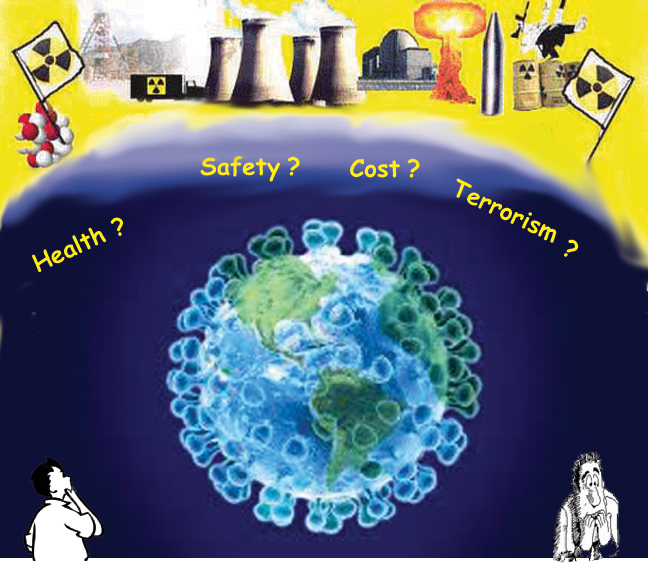
U.S. Unprepared for Nuclear Accident During Pandemic Common Dreams, 22 May 20
Michigan floods expose impossible challenges of mass evacuation during Covid-19
Emergency preparedness must include direct delivery of potassium iodide to all residents around nuclear plants
TAKOMA PARK, MD – Two dam failures and catastrophic flooding in central Michigan, which also prompted a low-level emergency notification (NRC event #54719) at a nearby nuclear research reactor in Midland, have exposed the almost impossible challenge of evacuating people to safety during simultaneous catastrophic events.
The sudden need to evacuate large numbers of people from severe flooding — also threatening to compromise a Dow chemical facility that uses a research reactor — during a time of national lockdown due to the Covid-19 pandemic, raises “serious questions and concerns about the emergency response readiness and the viability of evacuation that might simultaneously include a radiological accident,” said Paul Gunter, director of the Reactor Oversight Project at Beyond Nuclear, a national anti-nuclear advocacy organization.
Michigan authorities were forced to face a “no-win compromise” between protecting the public from exposure to Covid-19 while at the same time moving people out of harm’s way, after heavy rains caused failures at the Edenville and Sanford dams, leading to devastating floods. The Dow plant insists there have been no chemical or radiological releases, but the situation will be evaluated once floodwaters recede. Fortunately, no full-scale commercial nuclear power plant was in the path of the Michigan floods.
Operating nuclear power stations are required by federal and state laws to maintain radiological emergency preparedness to protect populations within a ten-mile radius from the release of radioactivity following a serious nuclear accident. These measures include mass evacuations.
However, many communities around the nation’s 95 commercial reactors are presently sheltering-in-place at home as a protective action during the Covid-19 pandemic.
“The Michigan flooding has forced the relocation of thousands of citizens from their stay-at-home shelters into the social distancing challenges of mass shelters,” Gunter said. “Evacuating tens of thousands from a radioactive cloud to mass shelters, as is presently planned during a nuclear emergency, raises difficult if not impossible choices under pandemic conditions.”
In fact, a Memorandum of Understanding (MOU), Sect.03.02, p.2, between the U.S. Nuclear Regulatory Commission (NRC) and the Federal Emergency Management Agency (FEMA) already obligates the federal government to re-exam radiological emergency plans around nuclear facilities specifically in response to a pandemic, and to identify any shortcomings, deficiencies and enhancements that might be needed under such conditions.
But to date, neither agency has publicly taken the initiative to do so. In fact, the NRC actions are focused on relaxing safety measures required by operating licenses, resulting in extended work hours for reactor operators and security guards, and deferred safety inspections and repairs for as much as another 18 months. This makes an accident more likely.
“Given what we see in Michigan, the NRC and FEMA should lose no time in reviewing the viability of their radiological emergency plans, and publicly take action to make any necessary enhancements or shut these nuclear facilities down,” Gunter said.
Beyond Nuclear has identified two such actions under the MOU as vital to public health:
- NRC and FEMA must conduct a “Disaster Initiated Report”, as mandated by the MOU, on the adequacy of offsite radiological emergency response plans during the pandemic, and;
- Federal and state response plans need to be bolstered by the immediate pre-distribution of potassium iodide (KI) tablets by direct delivery to every resident within the ten-mile radius of U.S. nuclear power stations, now, before any accident occurs. This is in accordance with disaster medicine expert recommendations including from the American Thyroid Association (ATA)……..“The prospect of a nuclear disaster prompting a mass evacuation during a viral pandemic reinforces the need for an energy policy focused on safe, clean and affordable renewable energy,” said Gunter. “It’s time to remove the added and unnecessary danger presented by the 95 nuclear reactors still operating in the US today, and transition to a rapid phaseout before a nuclear emergency during a pandemic becomes a nightmarish reality.” https://www.commondreams.org/newswire/2020/05/22/us-unprepared-nuclear-accident-during-pandemic
The flooding danger to nuclear radioactive sites -Michigan dams fail
|
Michigan dams fail near Midland; ‘catastrophic’ flooding underway — Dow Chemical research reactor potentially in harm’s way http://www.beyondnuclear.org/climate-change-whats-new/2020/5/21/michigan-dams-fail-near-midland-catastrophic-flooding-underw.html
Fortunately, the Midland commercial nuclear power plant was never fired up, so there is no radioactive contamination there, nor high-level radioactive waste in on-site storage. Dr. Mary Sinclair, a co-founder and co-leader of Don’t Waste Michigan*, helped lead the successful resistance to the Midland nuclear power plant, way back in the 1970s and 1980s.
The reason the Midland nuclear power plant was stopped, at 90% construction completion on one reactor and about 50% on the other, was that safety-significant buildings were sinking into the ground, not unlike the Leaning Tower of Pisa. Of course, it took many years of dedicated commitment and hard work by anti-nuclear activists, talented environmental attorneys, and even a courageous Nuclear Regulatory Commission (NRC) whistle-blower testifying before Congress, to prevail against greed-driven companies like Midland-based Dow Chemical, and Jackson, MI-based Consumers Energy.
A similar situation is unfolding at the Vogtle Units 3 and 4 nuclear power plant construction site in GA. BREDL has launched an intervention at the NRC against Vogtle Unit 3, due to it sinking into the ground as well. And Nuclear Watch South has also intervened at the NRC against Vogtle Unit 3’s fuel loading, due to major, widespread violations of ITAAC QA.
Speaking of Dow, there is, however, a 1967-era research reactor at its Midland facilities, that is potentially in harm’s way from the flooding, as we speak (See NRC Event Notification Report, May 20, 2020, Event Number 54719) . And there is, of course, off the charts bad dioxin and other toxic chemical contamination in or near these waterways, compliments of Dow. This includes a Superfund site, severe contamination downstream in the Tittabawassee River, as well as wastewater retention ponds at Dow Chemical itself. Groups like Citizens for Alternatives to Chemical Contamination (CACC)*, Lone Tree Council, and others, have for decades watch-dogged the toxic goings-on at and downstream from Dow.
Mary Sinclair’s son, Peter Sinclair, a climate protection leader, is quoted in the Washington Post article linked above. Here are some passages from the article, including Peter Sinclair’s quote:
Dow Chemical Co.’s Midland headquarters was evacuated, with only essential staff remaining on-site to monitor the situation. The facility is associated with a Superfund site due to excess dioxins, which are known to cause cancer, in the riverbed downstream of the plant. New video released by the Michigan State Police appeared to show some flooding on the Dow property, though the extent and severity is unclear.
“Dow has activated its local emergency operations center and is implementing its flood preparedness plan which includes the safe shutdown of operating units,” wrote the company on its Facebook page. Dow also filed an “Unusual Event Report” with the Nuclear Regulatory Commission because of the possibility that floodwaters could affect its 300 kilowatt nuclear research reactor, located at the plant, though the reactor was already shut down due to the coronavirus outbreak. That reactor was built in 1967. “This is a solidly middle to upper class town because of the Dow plant here,” Peter Sinclair, a Midland resident who is a videographer for Yale Climate Connections, said in an interview. He said a 2017 seasonal flood event, combined with this disaster, may cause property values to decline. This includes expensive lakefront property, since these lakes are now being drained by the flooding. …Sinclair, who is on the dry side of Midland and is sheltering family members who live closer to the flood-affected areas, says this event illustrates what climate scientists have been warning about for years. “[There is the] Larger issue of aging infrastructure plus incremental climate change, this is a point that all the scientists make that the change is gradual, gradual, gradual until the infrastructure fails.” While this catastrophic flooding is very bad enough in its own right, it also raises the specter of worsening flooding impacts on nuclear facilities, in the Great Lakes Basin and across the continent, including the worsening high risk of dam bursts upstream of nuclear facilities.
The July 16, 1979 uranium tailings dam burst in n.w. New Mexico, inundating the Rio Puerco with a flood of radioactive and toxic wastewater, is considered one of the single worst nuclear disasters in U.S. history (that most people have never even heard of). Navajo/Diné shepherds live downstream, such as in the Red Water Pond Road Community. The Rio Puerco is their sole source of drinking and irrigation water. The shallowest of “clean ups” was carried out, leaving most of the escaped contamination in the environment.
The mass evacuation of 10,000 Michiganders to escape the floodwaters, amidst global pandemic stay-at-home and social-distancing orders, also raises the specter of a radiological disaster requiring mass evacuation at a time like this. The NRC, FEMA, related state government agencies across the country, and the nuclear power industry itself, have not addressed this question and concern. How are people supposed to shelter at home, and maintain physical distance from others, when forced to flee for their health and lives, whether from floodwaters as in Midland, or from hazardous radioctivity if a nuclear diaster were to occur during this pandemic emergency. David Lochbaum, retired from UCS, raised just such questions recently in the Bulletin of the Atomic Scientists, when a tornado struck his hometown of Chattanooga, TN, amidst the pandemic; Chattanooga “hosts” multiple atomic reactors in the area.
Dr. Mary Sinclair herself presciently warned about the high risks of storing high-level radioactive waste on the shores of the Great Lakes and the banks of major rivers — the fresh drinking water sources for both Canada and the U.S. — as well as along the ocean coasts (also experiencing climate change-induced sea level rise). She did this in a mid- to late-1990s presentation she delivered on public access television in her area.
Please see this link to Anna Tilden and John Jackson’s 2013 update, of Irene Koch and Dave Martin’s 1990, Great Lakes Nuclear Hot Spots map, posted online.
*Kevin Kamps, Beyond Nuclear’s radioactive waste specialist, serves on Don’t Waste Michigan’s board of directors, and on Citizens for Alternatives to Chemical Contamination’s advisory board.
|
|
Nuclear reactor threatened by Michigan flooding, but news media ignores this
Current Event Notification Report for May 20, 2020 https://www.nrc.gov/reading-rm/doc-collections/event-status/event/en.html#en54719
| U.S. Nuclear Regulatory Commission Operations Center Event Reports For
|
Earthquake close to Yucca Mountain’s selected nuclear waste site

Nevada Earthquake Raises More Doubts about Yucca Mountain by John Freeland https://blogs.agu.org/terracentral/2020/05/17/nevada-earthquake-raises-more-doubts-about-yucca-mountain/ 17 May 20, On Friday, May 15, 2020, a magnitude 6.5 earthquake rocked Nevada and portions of California. With the epicenter located about 22 miles west of Tonopah, NV, no serious damage was recorded aside from cracked highway pavement in the mostly remote surroundings, far from population centers.
Reportedly, Nevada has not seen an earthquake of this size since 1954. Worth noting, the earthquake epicenter is about 100 miles away from the Yucca Mountain Nuclear Waste Repository, as depicted on the above aerial image.
The Yucca Mountain Nuclear Repository is, by authority of legislation passed in 1982 and 1987, currently the designated single facility for permanent disposal of high level nuclear waste. A time-line of the related events briefly describes the story of the Yucca Mountain Repository. Locals see the project as a source of jobs but state-wide there is strong opposition. After all, there are no nuclear power generating facilities in Nevada. According to Rep. Ruben Kihuen (D-Nev), “if you generate nuclear waste, you should keep it in your own backyard. Don’t send it to our backyard.”
The safety of Yucca Mountain has been debated for nearly forty years. I’ve previously posted on the topic here and here. An interesting analysis of political and other factors swirling around the project is “How Safe is Yucca Mountain?”As the map to the right (USGS craton map) [on original] shows, the Yucca Mountain site is not in an ideal location in terms of tectonic activity.
Located near the boundary of the “accretionary belt” and the “deformed craton” the region has a history of volcanic activity within the past 2 million years and Nevada is ranked third in the nation for earthquakes. As Dr. Cochran points out in his paper cited above, Nevada was selected largely for political reasons. The federal government already owned the Nevada Test Site property, which had been used for years for weapons testing. It is remote, however, remote areas of the United States are often found out west where there is higher seismicity. Whether we want to or not, we as a nation will have to figure out a solution to permanent nuclear waste disposal with some 90,000 tons now in temporary storage.
So where should it go? North or South Dakota? Eastern Montana? Predicting the long-term future of seismic events appears to be dicey. As Nevada Seismological Laboratory Director Graham Kent puts it “We like to think everything’s the way it is and it doesn’t change that much,” he said. “I think the last few months we’ve learned with the pandemic that that’s not the case.”
Sellafield’s safety dilemma- risk of coronavirus versus risk of nuclear accident

|
Sellafield work must resume despite coronavirus lockdown in case of ‘nuclear incident’, says boss LancsLive By Steve Robson, Ian Molyneaux, 12 MAY 2020The boss of Sellafield has said decommissioning work needs to resume despite the coronavirus lockdown in case there is a ‘nuclear incident’.
The site near Seascale has been running at less than a fifth of normal operations for several weeks due to the Covid-19 pandemic, with around 1,500 key staff in work. Normally, Sellafield would have up to 8,000 people on site every day. At the beginning of May, a further 120 people came back to work, mainly attending off-site offices in Warrington to access specialist equipment and software. The company says it is making its way through a “cautious, limited, phased restart of work over the coming weeks”. Now Chief executive Martin Chown admitted he is faced with a difficult decision, but said it is vital Sellafield restarts some work. It is understood this refers to the decommissioning of old facilities that have the potential to cause a nuclear hazard if left to mothball…….. It is understood that a broad set of principles for restarting work at Sellafield have been agreed including a maximum of 3,500 people working on any one site at any given time, a maximum of 25per cent of staff working at off-site facilities, and work on construction sites only approved on the basis staff do not interact with the rest of the site. …. https://www.lancs.live/news/local-news/sellafield-work-must-resume-despite-18234403 |
Shinfield residents urged to look out for update from nuclear weapons facility,
 Shinfield residents urged to look out for update from nuclear weapons facility, Wokingham Today by Jess Warren Monday, May 18, 2020 RESIDENTS of Shinfield are being told to look out for an important communication coming from West Berkshire Council about the emergency planning zone around AWE Burghfield.People who live in Spencers Wood, Three Mile Cross and Grazeley will soon be updated about the enlarged emergency planning zone. Shinfield residents urged to look out for update from nuclear weapons facility, Wokingham Today by Jess Warren Monday, May 18, 2020 RESIDENTS of Shinfield are being told to look out for an important communication coming from West Berkshire Council about the emergency planning zone around AWE Burghfield.People who live in Spencers Wood, Three Mile Cross and Grazeley will soon be updated about the enlarged emergency planning zone.
Although there has been no change in activities at AWE Burghfield, new legislation has required a review, and now the emergency plan for the facility must now cover a larger area.
This extended area — known as the Detailed Emergency Planning Zone (DEPZ) — now covers some homes and businesses in Spencers Wood, Three Mile Cross and Grazeley not previously included. “But there now has to be an emergency plan in place for a bigger area meaning some of our residents are in this DEPZ for the first time. …….Full details on the DEPZ can be found on West Berkshire’s website at: info.westberks.gov.uk/awe and more information can be found in their news release. |
|
The leaning tower of Vogtle nuclear reactor: yes it’s literally sinking,-and also further into debt

Georgia Nuclear: Vogtle Unit 3 Is Sinking! [BREDL Petition] https://www.fairewinds.org/demystify/georgia-nuclear-vogtle-unit-3-is-sinking-bredl-petition 18 May 2020, You can find the Fairewinds Associates expert report and BREDL’s legal filing here and under the reports section of this Fairewinds site. You also may read BREDL’s legal filing and the other documents filed on BREDL’s home site, where you will also see the breadth and depth of the environmental work conducted by the Blue Ridge Environmental Defense League and its associated chapters in many states. What Does the Leaning Tower of Pisa Have In Common with the Vogtle Nuclear Reactor?
By The Fairewinds Crew
The famous tower in Pisa, Italy was designed to stand straight up, and like Vogtle, it began to lean during construction. During the ensuing years after construction, the Pisa tower continued to sink into the ground due to the inability of the failing foundation to sustain the tower’s heavy weight. It became known as the Leaning Tower of Pisa. Similarly, the Vogtle Unit 3 nuclear power plant was designed to be straight on its firm ‘basemat foundation’, which is designed with extra rebar and mathematical calculations to assure that the foundation can support an atomic reactor as heavy as the unique design of the AP1000 with 8-million-pounds of emergency cooling water sitting on top of the containment.
Last month, Vogtle’s owner, Sothern Nuclear Operating Company (SNC), tried to amend its operating license with information that had been kept secret from the public. When that now leaning wall was first built five years ago, SNC established a program to monitor the lack of stability in the foundation.
Honestly, truth is stranger than fiction – you can’t make this stuff up! Now we learn that the Vogtle Unit 3 atomic power reactor is sinking into the red Georgia clay causing an inner wall to tilt! Yes, this is the same Vogtle Unit 3 that is already billions of dollars over budget and at least 5-years behind schedule.
On Tuesday, May 12, 2020, the Blue Ridge Environmental Defense League [BREDL] announced that part of the Vogtle Unit 3 nuclear power plant currently under construction in Waynesboro, Georgia, is sinking. According to BREDL’s press release, “In a legal action filed Monday with the Nuclear Regulatory Commission (NRC), the group called on regulators to revoke the plant’s license for false statements made by its owners, Southern Nuclear Operating Company. On May 11, BREDL filed a nineteen-page legal petition requesting a hearing before the Atomic Safety and Licensing Board on a License Amendment for Plant Vogtle’s Unit 3. The petition is supported by detailed, specific expert opinion. Under rules of procedure, Southern Company has 25 days to respond.”
Fairewinds Associates, Inc Chief Engineer Arnie Gundersen wrote an expert witness report submitted by BREDL to the NRC in which he said that Southern Nuclear Operating Company (SNC) chose not to disclose that the Vogtle Unit 3 foundation was sinking faster in the middle than at the edges, in the shape of a dish, causing internal walls to lean. From our point of view, leaning walls may have created a tourist destination for the Tower in Pisa, however, a leaning tower and failing foundation at a nuke plant is a meltdown waiting to happen.
BREDL has informed the NRC that there must be an entire reevaluation of the seismic/structural integrity of the entire nuclear plant. This means that a completely new licensing review and full analysis of all new stress conditions placed on other components that are no longer level needs to be conducted and receive an independent engineering review as well, since SCE has not publicized this fact to the people of Georgia.
Vogtle Units 3 & 4 are notoriously over budget, and their construction has been delayed for years. Now with the Covid-19 Pandemic, and these newly uncovered flaws, the construction will slow further as a complete safety review must be conducted to ascertain whether the ‘basemat foundation’ meets the foundation integrity demanded for a nuclear island (NI). The Vogtle Unit 3 nuclear island underlies the strange heavy design of the AP1000 with its donut-shaped 8-million-pound water tank at the apex of the entire containment system that is meant to protect us from a meltdown.
Let’s look more closely at the history of Vogtle and the so-called nuclear renaissance that never happened. Complicit in this financial boondoggle is the Georgia Public Service Commission (GPSC) whose members have greenlighted all these cost overruns in return for campaign contributions from the nuclear industry. That’s why we wrote The Night The Lights Went Out in Georgia. At Vogtle, all the extensive cost overruns have been shifted to Georgia taxpayers and ratepayers, and originally these plants were built with federal loan guarantees – that is our money folks, and a story for another time in the Vogtle saga.
During the past decade Fairewinds joined with other nuclear risk and environmental advocacy groups to raise awareness about the numerous safety flaws and operational issues associated with the AP1000 reactor design. You can read more about those problems and issues here.
In its legal brief, based on this Fairewinds Associates report, BREDL asked for a formal investigation of the Southern Nuclear Operating Company for making “materially false statements” to the NRC by claiming that the leaning walls were caused by construction tolerance measurements when the real reason the walls have moved is that the ‘basemat foundation’ of the Vogtle nuclear island (NI) is sinking.
You can find the Fairewinds Associates expert report and BREDL’s legal filing here and under the reports section of this Fairewinds site. You also may read BREDL’s legal filing and the other documents filed on BREDL’s home site, where you will also see the breadth and depth of the environmental work conducted by the Blue Ridge Environmental Defense League and its associated chapters in many states.
3600 working in Nuclear power plants in Japan – concerns raised over coronavirus
| N-reactor inspection cannot abide by physical distancing rules, causing coronavirus fear in locals |
 http://www.japan-press.co.jp/modules/news/index.php?id=12907, April 29 & May 3, 2020
Seven civil organizations in Fukui on April 28 jointly demanded that KEPCO suspend operations of reactors at all NPPs in the prefecture and cancel all work to bring offline reactors back online or decommission them in order to prevent the coronavirus from spreading further.
According to KEPCO, the number of workers will increase by about 1,800 to check on the No.3 reactor at the Oi NPP. Of them, about 900 will come from outside Fukui. At the Oi NPP, the Nos.1 and 2 reactors are currently under the process of decommissioning with about 1,800 workers working daily. Thus, the number of workers in three reactors combined will reach 3,600.
Japanese Communist Party member of the Oi Town Assembly, Saruhashi Takumi pointed out, “The reactor buildings are hermetically closed. Many workers work close together in a confined space. So, the ‘three Cs are unavoidable, but our town has a limited number of hospital beds to treat patients with coronavirus infection. If a mass infection occurs, medical facilities in the town will soon be overwhelmed.”
JCP member of the Fukui Prefectural Assembly Sato Masao criticized KEPCO by saying, “The utility places priority on the resumption of operations of reactors at its NPPs over preventive measures against the coronavirus.”
Apart from the Oi NPP, KEPCO has the Takahama NPP and the Mihama NPP in Fukui Prefecture, and about 4,500 workers and 3,000 workers work at those plants every day, respectively.
* * *
KEPCO postpones regular inspection of No.3 reactor
KEOCO on May 2 announced that it will postpone a regular inspection of the No.3 reactor at its Oi NPP for a few months.
Sizewell and Bradwell nuclear projects unnecessary, but also security danger if Chinese company in control
|
Daily Mail 16th May 2020, White House official urges Britain not to hand China control of its electricity as Beijing-run nuclear energy company jostles for dominance. A senior US official has delivered a stark warning to Britain not to continue to let a Chinese state-run nuclear energy company control a large part of our electricity supply. Dr Christopher Ford, the US State Department’s assistant secretary for non-proliferation and international security, warned that China General Nuclear (CGN) is closely linked to the Communist regime’s military. Any involvement in UK power generation would jeopardise our political independence for many decades, he said. One of the company’s top engineers has previously been convicted and jailed in the US for running a spy network at the behest of Beijing.
Speaking exclusively to The Mail on Sunday, Dr Ford said: ‘We are trying to discourage our friends and partners from engaging with a Chinese nuclear company that is known for such acts.’ It is highly unusual for a serving US official to intervene so forcefully about an ally’s policy decisions but it shows how seriously the Trump administration views the Chinese threat.
Dr Ford’s fears are echoed by many senior figures in Britain, including Sir Richard Dearlove, the former head of MI6. He told The Mail on Sunday that if CGN was allowed a key role in building two vast nuclear power plants – at Sizewell in Suffolk and Bradwell in Essex – there would be a grave threat to national security. An analysis by this newspaper shows that the Chinese could have total or partial control over more than a quarter of Britain’s electricity needs. Dr Ford said this could result in ‘manipulation or coercion’, explaining: ‘China has not been shy about using economic levers as a political tool. Economic entanglements are being used for political purposes with greater frequency.’
He added that if Britain became dependent on CGN, China ‘could threaten to turn the switches on and off – and that can be a very powerful tool of influence.’ In Suffolk, the firm is in partnership with the French state-run company EDF, which is about to submit its final ‘consent order’ for permission to build a similar power station to Hinkley – even though an unfinished
prototype in northern France is eight years behind schedule and three times over budget. CGN’s share of the final project has yet to be determinedbut it has already agreed to take an 80 per cent stake in Bradwell, where it wants to build two of its own Hualong 1 reactors. Industry experts saythat although Hinkley, Sizewell and Bradwell could supply at least a fifth of the total power generated in Britain, it is not proved that they are really needed.
|
Coronavirus affecting France’s nuclear reactors’ safety and output
Montel News 14th May 2020, The overhaul of the schedule for shutdowns of EDF nuclear reactors during the Covid-19 pandemic will “considerably” reduce the safety margins of French power plants and will probably lead to further delays, experts told Montel. The nuclear agency is now under “potentially devastating pressure,” said Mycle Schneider, an independent energy consultant based in Paris and a critic of the nuclear industry.problem that overlaps with another. This is what is so worrisome, the accumulation of difficult events and circumstances, “he said.
that it postponed maintenance to secure the electricity supply for the winter. Already last week, the company had extended shutdowns of more than 40 reactors.https://www.montelnews.com/fr/story/la-pression-sur-edf-fait-craindre-pour-la-sret-nuclaire/1114
Radiation leak at nuclear research reactor
 Germany: Radiation leak detected at research reactor, DW, 17 May 20,
A research reactor near Munich has emitted excess C-14 radiation, says the Bavarian city’s technical university. The “slight” leak late March had shown up Thursday when monthly readings were collated.
Munich’s technical university (TUM) said Saturday a neutron reactor located at Garchingjust north of the metropole was found to have leaked nuclides into the atmosphere “slightly” above the level permitted annually in its license.
Neither human beings nor the surrounding environment had been endangered, said the TUM and Bavaria’s environmental ministry — responsible for oversight.
Monthly figures collated on Thursday had shown an excess in C-14 particles 15% above the permitted yearly level, with the potential to cause “theoretically” a load for the public of 3 Mikrosieverts at the maximum…….
The facility was put on hold on March 17 because of the current pandemic, leaving many scientists unable to glean results for industry and medicine, said Görg.
The FRMII reactor, inaugurated in 2005, remains controversial among organizations like Germany’s branch of Friends of the Earth (BUND) and opposition Greens in Bavaria’s state assembly……. https://www.dw.com/en/germany-radiation-leak-detected-at-research-reactor/a-53467330
Worker infection halts anti-terror project at Genkai nuclear plant
All civil engineering work at the nuclear plant was halted on the night of April 14, and the company said it does not know when it can restart the project……. http://www.asahi.com/ajw/articles/13302790
South Carolina nuclear fuel plant treatment pool leaking, polluting groundwater?
Now, the lagoon liner is wearing out. And that’s a concern.
Recent research suggests radioactive pollution has seeped through the synthetic barrier that was supposed to protect soil and groundwater in the Congaree River flood plain. Soil below the liner is suspected of being polluted with waste from the east lagoon, according to a new report for the plant’s operator, Westinghouse Nuclear.
’“It is expected that some contamination will exist in the soil underlying the east lagoon liner, given the long operating history of the lagoon and the potential for a liner system leak,’’ the May 8 report for Westinghouse says.
If the soil below the lagoon is polluted, as Westinghouse suspects, it could indicate that groundwater flowing away from the property and toward the Congaree River has been contaminated.
No one knows the extent of the contamination yet, but Westinghouse has a plan to dig radioactive sludge from the lagoon and haul it across the country for disposal in the Idaho desert.
Once the company has removed the mucky sludge and the lagoon’s 1980s era liner, it plans to test the soil below the waste pond to see how much contamination may be in the earth.
The new Westinghouse consulting report, released by the U.S. Nuclear Regulatory Commission, says sludge in the east lagoon at Westinghouse is contaminated with low enriched uranium and technetium-99, nuclear materials generated as part of production of fuel rods at the 51-year-old factory.
Exposure to sufficient amounts of uranium can cause kidney damage in adults and children. Technetium 99, which concentrates in the thyroid and gastrointestinal tract, can increase a person’s chances of cancer if exposed to certain amounts………
For now, Westinghouse is moving forward with cleanup efforts. Although the company doesn’t plan to clean up some pollution until it closes the plant in future decades, Westinghouse has agreed to get rid of other contamination sooner. …….
The tainted material that would be shipped to Idaho, likely next year, includes 45,000 cubic feet of sludge, soil and debris from the east lagoon, a 160-foot long pond behind the plant on Bluff Road.
Radioactive pond sludge would be hauled away on railroad cars to a U.S. Ecology site in the Owyhee Desert near Grand View, Idaho, according to plans filed with the U.S. Nuclear Regulatory Commission. Contaminated cylinders and a polluted sludge pile also will be carted away from the site for disposal……. https://www.thestate.com/news/local/environment/article242667201.html
1 This Month



26 September – International Day for the Total Elimination of Nuclear Weapons


PLEASE OPPOSE HR 8255 AND S.3639 – bills would accelerate satellite deployment, with no environmental review or safeguards – https://ncstd5li.quorum.us/campaign/169331/
To see nuclear-related stories in greater depth and intensity – go to https://nuclearinformation.wordpress.com
-
Archives
- September 2026 (245)
- August 2026 (330)
- July 2026 (355)
- June 2026 (287)
- May 2026 (306)
- April 2026 (356)
- March 2026 (251)
- February 2026 (267)
- January 2026 (308)
- December 2025 (358)
- November 2025 (359)
- October 2025 (375)
-
Categories
- 1
- 1 NUCLEAR ISSUES
- business and costs
- climate change
- culture and arts
- ENERGY
- environment
- health
- history
- indigenous issues
- Legal
- marketing of nuclear
- media
- opposition to nuclear
- PERSONAL STORIES
- politics
- politics international
- Religion and ethics
- safety
- secrets,lies and civil liberties
- spinbuster
- technology
- Uranium
- wastes
- weapons and war
- Women
- 2 WORLD
- ACTION
- AFRICA
- Atrocities
- AUSTRALIA
- Christina's notes
- Christina's themes
- culture and arts
- Events
- Fuk 2022
- Fuk 2023
- Fukushima 2017
- Fukushima 2018
- fukushima 2019
- Fukushima 2020
- Fukushima 2021
- general
- global warming
- Humour (God we need it)
- Nuclear
- RARE EARTHS
- Reference
- resources – print
- Resources -audiovicual
- Weekly Newsletter
- World
- World Nuclear
- YouTube
-
RSS
Entries RSS
Comments RSS
 nuclear-news