Armenia’s nuclear power station a danger to Azerbaijan and the region
|
Azerbaijan calls for Armenian nuclear plant’s closure over threat to region, (MENAFN – AzerNews) By Vafa Ismayilova, 28 jan 21, Azerbaijan’s human rights commissioner has urged all relevant international agencies to take serious steps for the immediate closure of Armenia’s nuclear power plant which is a potential threat to the entire region.
Rights commissioner Sabina Babayeva made the remarks in a statement posted on the official website of the Azerbaijani ombudsman office on January 27. “Taking into account all the hazards that the Metsamor nuclear power plant [NPP] may cause, I call on all relevant international organizations to take urgent measures for its immediate closure, ensuring the safe suspension of its operation and realization of all stages of radioactive waste management under strict international control in full compliance with the requirements set up by the Joint Convention on the Safety of Spent Fuel Management and on the Safety of Radioactive Waste Management of the International Atomic Energy Agency, as well as PACE Resolution 1588 (2007), to prevent disasters like Chernobyl or Fukushima,” Babayeva said. She stressed that all regional countries are exposed to the nuclear threat. “The expired Metsamor NPP has become an open threat not only to Armenia itself but also to the entire region. Moreover, it is located in an earthquake-prone area of the South Caucasus, which makes its operation even more dangerous. There are five earthquake tectonic breaks around the NPP, one of the main faults is in only 500 meters from the station,” she said. The rights commissioner expressed serious concern over the recent discussions in the Armenian parliament on the use of radioactive waste from the Metsamor NPP for military purposes. Babayeva recalled that at a meeting of the Armenian parliamentary standing committee on regional affairs and Eurasian integration, Armenia’s Deputy Minister of Territorial Administration and Infrastructure said that the Metsamor NPP generates a significant amount of radioactive waste. She expressed concern over the fact that Armenia radioactively contaminated the Azerbaijani territories, which had been under occupation for about 30 years. She reported, quoting the Geology and Geophysics Institute of the Azerbaijani National Academy of Sciences that the waste from the Metsamor NPP was buried on the territory of Aghdere town, as well as of Kalbajar region. The rights commissioner added that a number of international organizations also stressed their concern about the Metsamor NPP, quoting a statement by European Commission Vice-President Federica Mogherini, in In 2017. “The EU is fully aware of the risks posed by the Metsamor nuclear power plant (MNPP). Therefore, a swift closure and decommissioning of the MNPP remains a key objective for the EU and the European Neighborhood Policy Action Plan, as this power plant cannot be upgraded to meet internationally recognized nuclear safety standards,” Mogherini was quoted as saying. However, it seems that Armenia is not planning to shut down the plant; on the contrary, its operation has been extended beyond 2026, Babayeva said. ……. https://menafn.com/1101513409/Azerbaijan-calls-for-Armenian-nuclear-plants-closure-over-threat-to-region |
|
America’s nuclear industry in bed with safety regulators – can Biden fix this?

|
Biden can rescue the Nuclear Regulatory Commission from industry capture, Bulletin of the Atomic Scientists, By Frank N. von Hippel | January 27, 2021 Over the past two decades, the US Nuclear Regulatory Commission (NRC) has been captured by the nuclear power companies it is supposed to regulate. The process of capture and resulting erosion of regulation has been driven in part by the increasingly poor economics of nuclear energy as companies struggle to avoid large costs due to additional safety measures. However, the path has been laid to a potential disaster. The consequences of a severe nuclear accident in the US could potentially be 100 times worse than the 2011 Fukushima accident (Figure 1). The Biden administration has an opportunity to turn the situation around, but it is important to understand the problem.
Nuclear power is struggling economically in the United States. Nuclear power is declining— especially in states hosting about half of US nuclear capacity, where nuclear power plants have to compete with natural gas, photovoltaic, and wind-energy power plants. In Connecticut, New York, New Jersey, Ohio, and Illinois, nuclear utilities have persuaded state legislatures to mandate subsidies averaging about $100 million per reactor per year to keep reactors on line. One justification has been that nuclear power is climate friendly and therefore should be subsidized as solar and wind power have been. Another locally important argument has been to preserve about 1,000 jobs per reactor. Finally, in Ohio and Illinois, utility bribes to legislature leaders are being investigated. In the absence of such subsidies, in 2019, nuclear power plants were shut down for economic reasons in Massachusetts and Pennsylvania. In 2020, the Indian Point 2 reactor in New York was shut down because Governor Cuomo considered its location near New York City to be dangerous and excluded it from the state subsidy deal. Indian Point 3, the remaining reactor operating on the site, will be shut down in 2021. A reactor in Iowa, was also shut down in 2020 because of storm damage that was deemed too costly to repair. In Illinois, Exelon, the nation’s largest nuclear operator, has threatened to shut down in 2021 four reactors that were not included in the state subsidy deal. In regulated markets, where state regulators guarantee utilities that they will be able to recoup their investment and operating costs plus an agreed profit, most existing nuclear power plants are continuing to operate. One exception is California, where Pacific Gas & Electric decided to shut down the state’s last two nuclear power reactors in 2024 and 2025 because they “would be uneconomical to run in the near future.” That is the situation for existing reactors. The economic situation for new nuclear reactors is much worse because they have to pay off their high capital costs in additional to their operating costs. As a result, since the 1970s, there have been only two efforts in the US to launch construction of new power reactors. In 2008. nuclear utilities in the adjoining states of South Carolina and Georgia contracted to build a pair of new nuclear power reactors in each of those states. These decisions were facilitated by state regulators allowing the companies to charge their customers for a substantial part of the capital cost during construction. In addition, the US Energy Department guaranteed $12 billion in loans for the Georgia plant, enabling it to obtain low-interest credit. In 2017, however, the South Carolina project was abandoned due to huge cost overruns and schedule slippages. The project in Georgia continues despite a doubling of its estimated cost and at a delay of at least five years in its completion. These adverse developments caused the bankruptcy of Westinghouse Electric Co., the world’s leading designer of nuclear power plants in the 1970s. Given this history, it is generally agreed that US utilities are unlikely to make significant new investments in nuclear power. This is true despite the claims of advocates for “advanced” sodium-cooled and molten-salt reactors. Although beloved by some nuclear engineers, these are designs from the 1960s that were abandoned because they could not compete with the water-cooled reactors that dominate nuclear power today. Similarly, the “small modular reactors” that the US Department of Energy has been promoting for the past decade also appear to be noncompetitive. For the foreseeable future, therefore, the contribution of nuclear power to the US electricity supply will be almost entirely from the existing fleet of reactors. Even though the oldest US power reactor has only operated for 51 years, and the 11 power reactors that shut down during the past decade were all less than 50 years old, the US Nuclear Regulatory Commission has already begun to extend the licenses of US nuclear power plants to 80 years of operation ……..Risk-informed regulation or deregulation? Our protection against future accidents depends on expert and vigilant regulation. Unfortunately, as with the Federal Aviation Administration, which was captured by Boeing, resulting in the avoidable crashes of two new Boeing 737-MAX aircraft in 2018 and 2019, the Nuclear Regulatory Commission too is currently compromised by the industry it regulates. Because of the industry’s economic situation, the NRC has been pressed by its congressional overseers and the nuclear industry not to mandate costly safety upgrades such as those costing more than a billion dollars per reactor that regulators in France and Japan required after the Fukushima-Daiichi accident. “Risk-informed regulation” is the way in which the Nuclear Regulatory Commission has justified avoiding imposing costly upgrades. It basically involves doing a cost-benefit analysis for any proposed new safety regulation for already-licensed nuclear power plants. The costs considered are those that would be incurred by the nuclear utilities if the safety improvement were required. The benefits are the projected reductions of the probability-weighted number of cancer deaths and losses of property due to accidents. One problem with risk-informed regulation is that probability calculations for major accidents are very uncertain and subject to arbitrary assumptions. An example is the commission’s decision to assume that there is zero probability that terrorists could cause a large release because regulatory requirements have been established for protections against terrorist attack: Because various studies and regulatory changes implemented following the terrorist attacks of September 11, 2001, have considered security issues associated with [spent fuel pools], malevolent acts are not included in this analysis. On the basis of that logic, the probability of criminal acts should be zero because we have crime-prevention programs, Major errors in consequence calculations also are buried in the commission’s massive, opaque regulatory analyses. For example, the commission underestimated by more than an order of magnitude the economic losses due to a release of radioactivity from a spent fuel fire 100 times larger than that from the Fukushima accident by: 1) only taking into account losses within a 50-miles radius (see Figure 1); 2 on original) secretly increasing the threshold contamination level for long-term population relocation by a factor of three in its consequence calculations; and 3) assuming that huge areas could be decontaminated within a year, in complete disregard to actual post-Fukushima experience in Japan. Correction of these errors would have increased the estimated average cost of a spent fuel pool fire in the United States to about $2 trillion and forced the commission to end its unsafe practice of allowing US nuclear utilities to dense-pack their spent fuel pools up to five times their original design capacity. The opaqueness of the cost-benefit analyses—along with assumptions such as those above that the commission refuses to change when challenged—suggests that these analyses may be deliberately skewed to avoid requiring nuclear power plant operators to make costly investments in safety at a time when many plants are in a precarious economic situation. That suspicion is consistent with an account of the origin of risk-informed regulation given by former US Sen. Pete Domenici in his 2004 memoir, A Brighter Tomorrow: Fulfilling the Promise of Nuclear Energy………….. When the commission’s staff urged that, despite the results of the cost-benefit analysis, the Nuclear Regulatory Commission should require the improvements because of “the importance of containment systems within the [commission’s] defense-in-depth philosophy,” the nuclear industry mobilized a furious letter of opposition from the Republican majority of the House oversight committee and the majority on the commission voted against the staff recommendation. Under the Trump administration, the commission moved further toward industry self-regulation………….. In response to the commission’s request, the plant operators of 55 of the 61 US nuclear power plants reported that their plants faced flood heights beyond those they had been designed against. But upgrades in seismic and flood protection could be costly, and some plants might close down if required to make those investments. The Trump-appointed commission majority overruled the staff and decided that any upgrades would be voluntary, not compulsory……… Rescuing the Nuclear Regulatory Commission. The Biden administration has an opportunity to fix this situation. After President Biden won the election, NRC Chair Christine Svinicki announced she would resign on his inauguration day, sparing herself the indignity of being replaced as chair as President Trump had replaced her predecessor three days after Trump’s inauguration. This left the 5-person commission with both a vacancy and a need for a new chair. As a first step, President Biden appointed one of the Democratic commissioners, Christopher Hanson, as chair. With regard to the vacancy, by statute, no more than three members of the commission can be from the same party. Of the remaining four commissioners, two are Democrat and two are Republican appointees. The president therefore can fill the vacancy. With a knowledgeable and independent nominee, the NRC could be put back in the middle of the regulatory road. Commissioners are subject to Senate confirmation, however, and if the nuclear utilities deem a candidate to be anti–nuclear energy, industry opposition could make confirmation impossible. It is therefore important to find a nominee for the next vacancy who is knowledgeable but cannot be credibly attacked by the industry as “anti-nuclear.” At the same time, however, the Biden administration should not lean over backward—as some previous administrations have—and require advance clearance for its nominee from the nuclear industry. It is critical that the US have an independent and credible Nuclear Regulatory Commission. Historically, the NRC has had a strong staff and should be able to recover from the anti-regulatory bias of its recent majority. If there is a new leadership that is willing to endorse real safety improvements while avoiding to the extent possible accelerating the demise of the industry, the staff will support it. Informing regulatory decisions with cost-benefit analyses can be part of the process, but the biases that have been built into the process will have to be fixed, and the large uncertainties in estimates of the probabilities of low-frequency events will have to be taken into account in the policy-making process https://thebulletin.org/2021/01/biden-can-rescue-the-nuclear-regulatory-commission-from-industry-capture/ |
|
Far right American extremists could pose nuclear terrorism risks
Sarkar Published Op-Ed on Domestic Nuclear Terrorism. https://www.bu.edu/pardeeschool/2021/01/27/sarkar-published-op-ed-on-domestic-nuclear-terrorism/ 27 Jan 21, Boston University Frederick S. Pardee School of Global Studies, Jayita Sarkar, Assistant Professor of International Relations at the Frederick S. Pardee School of Global Studies at Boston University, published an op-ed in the Washington Post discussing the threat of domestic nuclear terrorism in the United States.
An excerpt:
The key to preventing such a catastrophic attack will be moving beyond a one-dimensional understanding of terrorism as the violent threat of radical Islam, and better understanding the different ways in which far-right domestic terrorism has grown in the United States and the specific threats this brings. Despite ample evidence to support the concern that insider threats pose high security risks in nuclear and radiological environments, little has been done at the policy level.
The full op-ed can be read on The Washington Post‘s website.
Jayita Sarkar is Assistant Professor of International Relations at Boston University’s Frederick S. Pardee School of Global Studies. Her expertise is in the history of U.S. foreign policy, nuclear proliferation, the global Cold War, South Asia and Western Europe. Her research has appeared or is forthcoming in the Journal of Cold War Studies, Journal of Strategic Studies, Cold War History, International History Review, and elsewhere. Dr. Sarkar obtained a doctorate in International History from the Graduate Institute Geneva in Switzerland. Read more about her here.
Dire problems at Turkey’s Akkuyu nuclear Project
Yesil Gazette 27th Jan 2021, Problems around Akkuyu NPP are so dire that, even the supporters of nuclearenergy must object’ If Such accidents occur during the construction phase
of nuclear facilities that require maximum safety, it means that risks of
Akkuyu Project are beyond general nuclear risks. When we see that facts are
hidden from public it is obvious that problems around Akkuyu NPP is so dire
that even the advocates of nuclear energy must object ‘says nukleersiz.org
Coordinator Pinar Demircan. The uncertainty about the explosion that broke
the windows of the houses and cars in the surrounding, which took place in
the evening of Tuesday, January 19 at the Akkuyu Nuclear Power Plant (NPP)
* – which is under construction in the Gulnar district of Mersin –
continues.
Should France extend the life of its oldest nuclear reactors?
Le Monde 22nd Jan 2021, Should France extend the life of its oldest nuclear reactors? It is the
will of the government and EDF, which postponed to 2035 the drop in the
share of atoms in electricity production. The Nuclear Safety Authority
(ASN) launched a consultation in December 2020 to regulate this possible
extension of the reactors . For Bernard Laponche, nuclear physicist, former
member of the Atomic Energy and Alternative Energies Commission and
co-founder of the association of scientists Global Chance, EDF does not
have the capacity to ensure these improvements necessary for safety on
time. He calls for the early closure of some reactors in order to continue
to ensure the proper functioning of others.
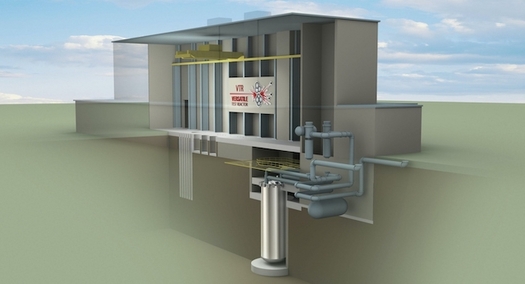
Dangers of plutonium fuelled, sodium cooled “Versatile Nuclear Reactor”
|
Experimental Nuclear Reactor Design Could Come to ID https://www.publicnewsservice.org/2021-01-25/nuclear-waste/experimental-nuclear-reactor-design-could-come-to-id/a72914-1January 25, 2021
BOISE, Idaho — The public can weigh in this week on an experimental nuclear reactor which could be coming to the Idaho National Laboratory. The U.S. Department of Energy (DOE) has released a draft Environmental Impact Statement (EIS) for a new design known as a “versatile nuclear reactor.” The DOE said it will be used to test nuclear-energy innovations, helping to push the sector forward. Edwin Lyman, director of nuclear power safety for the Union of Concerned Scientists, believes its construction would pose risks for eastern Idaho. “People should ask questions about whether the DOE has really done the accident analysis that it needs to, and is being honest with the people about the potential consequences of accidents at that reactor,” Lyman contended. The versatile nuclear reactor is cooled by liquid sodium, which Lyman noted is highly potent. Reactors currently in operation in the U.S. are cooled by water. The public hearings on the EIS will be held online Wednesday and Thursday. Lyman added there is another concern with the fuel the reactor would use. “Unlike the fuels that are used for light-water reactors, which is called low-enriched uranium fuel, that fuel is not directly usable in a nuclear weapon,” Lyman explained. “But plutonium is directly usable.” Lyman argued it raises questions about the potential for nuclear proliferation. The DOE estimated the project will cost between $2.6 and $5.8 billion dollars. Lyman cautioned that’s a lot of money for an experimental project. “The DOE needs to reconsider this whole project, and whether they can spend that money more wisely in helping to improve the safety of existing technologies,” Lyman concluded. |
|
Strong opposition to USA’s Nuclear Rubberstamp Commission extending nuclear reactors’ lives to 100 years
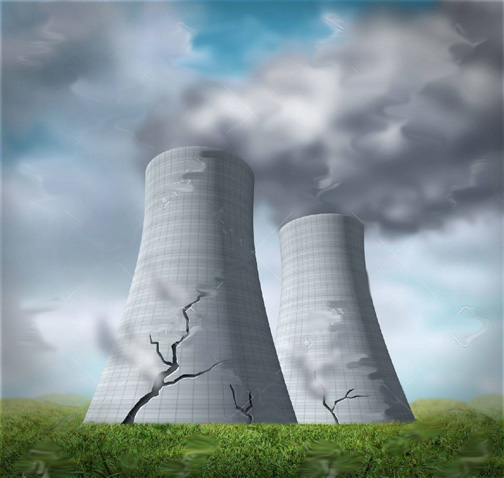

Well, I can’t help think that all these officials are looking out for themselves here. They hope that the disasters and cleanups won’t be their problem, – but the problem of future taxpayers.
|
RESOUNDING NO – TO LETTING NUCLEAR PLANTS RUN FOR 100 YEARS, The Sentinel By Karl Grossman, Jan 22, 2021
The U.S. Nuclear Regulatory Commission held a “public meeting” this week on what it titled “Development of Guidance Documents To Support License Renewal For 100 Years Of Plant Operation.” Comments from the “public” were strongly opposed to the NRC’s desire for it to let nuclear power plants run for a century. “I request you pause and consider before you go ahead on this reckless path,” testified Michel Lee, chairman of the New York-based Council on Intelligent Energy & Conservation Policy. “Our position and that of our constituents is a resounding no,” declared Paul Gunter, director of the Reactor Oversight Project at the national organization Beyond Nuclear. “It’s time to stop this whole nuke con job,” said Erica Gray, nuclear issues chair of the Virginia Sierra Club. There is “no solution” to dealing with nuclear waste, she said. It is “unethical to continue to make the most toxic waste known to mankind.” And, “renewable energy” with solar and wind “can power the world.” Jan Boudart, a board member of the Chicago-based Nuclear Energy Information Service, spoke, too, of the lack of consideration of nuclear waste. Cited was the higher likelihood of accidents with plants permitted to run for 100 years. Whether the NRC—often called the Nuclear Rubberstamp Commission—listens is highly unlikely considering its record of rubberstamping whatever has been sought by other nuclear promoters in government and the nuclear industry. Nuclear power plants when they began being built were not seen as running for more than 40 years because of radioactivity embrittling metal parts and otherwise causing safety problems. So operating licenses were limited to 40 years. But with the major decline of nuclear power—the U.S. is down to 94 plants from a high of 129 and only two are now under construction—the nuclear promoters in the U.S. government and nuclear industry are pushing to let nuclear power plants run for 100 years to somehow keep nuclear power going…….. In further discussing the “Life Beyond Eighty” scheme for nuclear power plants, Rosseel showed a U.S. Energy Information Administration slide projecting the amount of energy nuclear power would contribute to the U.S. energy supply in decline from 19% in 2019 to 12% in 2050 while renewable energy sources would jump from the current 19% to 38%. For the DOE, which inherited the role of promoting nuclear power from the U.S. Atomic Energy Commission, abolished by Congress in 1974 for being in conflict of interest for having a dual role of both promoting and regulating nuclear power, this decline is of great concern. At the start of the “public meeting” on January 21—held online as a teleconference—Allen L. Hiser, Jr., senior technical advisor for the Division of New and Renewed Licenses of the NRC, said the Atomic Energy Act of 1954 gave authority to the U.S. government to license nuclear power plants for 40 years. “But nothing in the AEA [Atomic Energy Act] prohibits a number of license renewals,” said Hiser. Using this lack of prohibition in the Atomic Energy Act, the NRC is now pushing ahead on the scheme to let nuclear power plants run for 100 years.
The NRC—which was supposed to only get the regulatory function from the eliminated U.S. Atomic Energy Commission—has also, with DOE, been a promoter of nuclear power. Earlier, it began extending the operating licenses of nuclear power plants to run for 60 years—and most of the plants in the U.S. now are being allowed to run for 60 years. And in recent years it has given the go-ahead for nuclear plants to run for 80 years, and several have been licensed for that length. In granting the license extensions to 60 and 80 years, the NRC has also been allowing the plants to be “uprated” to generate more electricity—to run hotter and harder—further asking for disaster. Gunter testified about an NRC cover-up involving the extending of nuclear power plant licenses. Using PowerPoint to reinforce his points, Gunter displayed a 2017 report commissioned by the NRC made by the DOE’s Pacific Northwest National Laboratory. The “very critical report,” said Gunter, looked at conducting research on the impacts of extending nuclear power plant operating licenses. It is titled “Criteria and Planning Guidance for Ex-Plant Harvesting to Support Subsequent License Renewal.” http://www.beyondnuclear.org/storage/aging/slr/autopsy_PNNL-27120_harvesting_Dec2017.pdf The report listed many significant issues considering the “harsh” degradation of nuclear power plant components over the years, he said. It pointed to “a host of critical technical gaps.” fter he “raised questions about” issues in the report at a meeting on operating license extensions held in 2018 at the NRC’s headquarters in Rockville, Maryland, the report was “taken down from government websites,” said Gunter. However, Beyond Nuclear saved a copy of the report. He spoke of an email that Beyond Nuclear obtained, after two years of trying under the U.S. Freedom of Information Act, from an NRC employee saying: “Big picture, I think the entire report needs to be scrubbed.” A “sanitized” version of the report, said Gunter, was “republished” in 2019. Gunter spoke of “public safety” being threatened. Gunter, also at the “public meeting” this week, said among the issues not being considered in the NRC’s drive to extend the licenses of nuclear power plants to 100 years is the management of the radioactive waste generated by the plants and “the advent of reliable, competitive and abundant renewable energy.” The oldest nuclear power plant in the U.S. was Oyster Creek in Toms River, New Jersey which opened in 1969 and was shut down 49 years later in 2018. What President Joe Biden does about nuclear power—he has said he is for “advanced” nuclear power—and the pro-nuclear NRC remains to be seen. The president appoints the five members of the NRC, and its current chairperson, a nuclear engineer and Trump appointee, is resigning. Biden could move to have done to the NRC what was done to its predecessor agency, the AEC, to have it abolished. And to push to end nuclear power in the U.S. Most U.S. nuclear power plants, according to a PowerPoint slide shown by the NRC’s Hiser, have already operated more than 40 years—the numbers of years they were seen as running safely when they began operating. https://www.thesentinel.com/communities/montgomery/news/science/resounding-no-to-letting-nuclear-plants-run-for-100-years/article_4cef89fc-5cc1-11eb-bfab-8b68f4bca770.html |
|
|
Despite Covid regulations, 22 nuclear bombs delivered to Scotland

As many as 22 nuclear warheads were transported from England to Scotland in eight road convoys during 2020 despite coronavirus restrictions, according to a new report by campaigners.
Another bomb convoy arrived at the Royal Naval Armaments Depot at Coulport in Argyll on 15 January and set off south to the nuclear weapons factory at Burghfield in Berkshire on 20 January during a ban on non-essential travel.
Nukewatch, which monitors the convoys, accused the UK Ministry of Defence (MoD) of taking “disregard for public safety to a new low”. Critics and politicians questioned whether the convoys were essential…..
A historic United Nations treaty banning nuclear weapons came into force on 22 January 2021 after being signed by 51 countries. It is supported by the Scottish Government, but opposed by the UK Government.
Convoys comprising 20 or more vehicles regularly transport Trident nuclear warheads by road between Coulport and Burghfield for maintenance and upgrades. They are tracked and filmed by activists, and often travel close to Glasgow, Edinburgh, Newcastle, Manchester and Birmingham.
The Ferret reported in May 2018 that safety problems plaguing the convoys had risen to a record high. The total number of incidents logged by the MoD over ten years was 179.
A historic United Nations treaty banning nuclear weapons came into force on 22 January 2021 after being signed by 51 countries. It is supported by the Scottish Government, but opposed by the UK Government.
Convoys comprising 20 or more vehicles regularly transport Trident nuclear warheads by road between Coulport and Burghfield for maintenance and upgrades. They are tracked and filmed by activists, and often travel close to Glasgow, Edinburgh, Newcastle, Manchester and Birmingham.
The Ferret reported in May 2018 that safety problems plaguing the convoys had risen to a record high. The total number of incidents logged by the MoD over ten years was 179……..
Jane Tallents from Nukewatch criticised the MoD for ignoring lockdown travel bans. “We call on the MoD to suspend these non-essential movements at least while the Covid restrictions are at this high level,” she told The Ferret.
“The emergency plans for dealing with a serious accident while transporting nuclear weapons always looked inadequate to us. But travelling while all our hospitals are near to being overwhelmed by the pandemic is taking the MoDs disregard for public safety to a new low.
“The resources are just not available to organise an evacuation and tell people to take shelter near to the site of a radiation leak from a damaged warhead in transit especially in any of the high population areas they travel through.”
Tallents pointed to evidence that the warhead convoy often broke down. “We are told to trust their safety record with nuclear weapons but it appears they can’t even manage to keep their vehicles roadworthy,” she said.
The Nuclear Information Service, which researches nuclear weapons, also urged the MoD to stop bomb convoys during Covid restrictions. “I can’t see any reason for the convoys to happen during lockdown,” said the group’s director, David Cullen.
“I’m sure there’s enough leeway in the programme to work around the restrictions if they wanted to. There’s no way drivers and security staff can maintain safe distances within the convoy vehicles.”
He added: “The government owes Scotland an explanation, and I’d like to see them release the risk assessment they used to justify this.”
The Scottish Greens also disputed whether the bomb convoys were essential. “It is deeply irresponsible to have weapons of mass destruction on our roads, especially at the moment,” said Green MSP, Mark Ruskell.
“They increase the risk of being targeted by terrorist groups, and although the likelihood of a catastrophic incident remains slim, the implications of a safety breach would be horrific and impossible to contain.” https://theferret.scot/22-nuclear-bombs-scotland-covid/
Canada’s nuclear regulator updates its drug and alcohol testing requirements.
Canada’s nuclear regulator updates its drug and alcohol testing requirements. 22 Jan 21, ………Depending on the nature of their job, nuclear workers may be tested:
- Before being hired
- After an incident has occurred
- Randomly
- If a supervisor has cause to believe there is a reason to test (also known as ‘reasonable grounds’)
- Follow-up after confirmation of a substance use disorder…… https://www.miragenews.com/canada-s-nuclear-regulator-updates-its-drug-and-alcohol-testing-requirements…..
100 year licences for nuclear reactors? – a hazardous plan
What a great idea! This way, all the nuclear industry heavies, all the regulatory officials involved, will be long gone when disaster strikes. They get off scot free – no costs, no blame, no shame. Just leaves the taxpayers’ grandchildren, great grandchildren and so on, to deal with the massive problems caused bu these self=serving decision-makers.
NRC to discuss 100-year licenses for nuclear plants, Facilities could receive longer extensions, Gloucester Daily Times. By Heather Alterisio Staff Writer, 9 Jan 21, SEABROOK, N.H. — A daylong Nuclear Regulatory Commission meeting Thursday will revolve around discussion of any technical issues that could arise if nuclear power plants were licensed to operate for 100 years.
When a nuclear power plant is first licensed by the NRC, that license permits a plant to operate for 40 years. After that, owners of nuclear plants can apply for a 20-year license extension. Nearly every power plant in the U.S. has gone through that renewal process at least once, according to NRC spokesman Scott Burnell.
Seabrook Station at 626 Lafayette Road received approval from the NRC in 2019 to extend its operating license from 2030 to 2050. The plant sits about 17 miles northwest — as the seagull flies — from parts of Cape Ann.
As of Oct. 31, the federal Energy Information Administration said there were 56 commercially operating nuclear power plants with 94 nuclear reactors in 28 states.
About 10 years ago, the NRC began discussions to address what protocols should be put in place if plant owners wanted to renew their license a second time, allowing operation for 80 years. Burnell said the law does not set a limit on how many times a plant can apply to renew its license.
The NRC has since awarded second renewals to a Florida plant and one in Pennsylvania, allowing operation for 80 years. The meeting Thursday — which will be online and open to the public — poses the question, what protocols should be in place if a plant owner pursued a third renewal, allowing it to operate for 100 years?………
Natalie Hildt Treat, executive director for C-10, an Amesbury-based nonprofit that monitors Seabrook Station and its impact on surrounding communities, said C-10 has already brought attention to issues related to aging concrete at Seabrook, the first nuclear power plant known to have this problem.
Prior to and while Seabrook Station was undergoing its recent license renewal process, C-10 pressed the NRC to address concrete degradation caused by alkali-silica reaction in which tiny cracks develop in concrete structures. C-10 worked closely with Victor Saouma, a professor of civil engineering at the University of Colorado Boulder and an expert in alkali-silica reaction.
Saouma is one of the experts who will speak Thursday on technical issues relating to concrete. C-10 believes there should be federal regulations that include taking concrete samples from all of the nation’s nuclear reactors, testing them “rigorously,” and creating protocols for how to manage issues as they arise, Treat said.
“We don’t think the NRC or the plant operators have a handle on whether these reactors are safe today, much less an unprecedented number of decades,” she said.
Treat added that Seabrook Station, like other plants around the country, was designed a few decades ago and they “are not getting any safer as they age.”
It is implausible to think that plants could safely operate for more than double of their anticipated life span,” she said.
Construction of the Seabrook reactor began in 1976 and the plant began operating at full power in 1990.
More information on the work of C-10 may be found at www.c-10.org.
The public meeting is Thursday from 9 a.m. to 5 p.m. For more information or for the Microsoft Teams webinar details, visit www.nrc.gov/pmns/mtg?do=details& Code=20201407.
To access the meeting by telephone, call 301-576-2978 and then enter the passcode, 835226175#.
Heather Alterisio may be contacted at halterisio@gloucestertimes.com
Belarus Nuclear Plant Taken Offline After ‘Protection System Activated’
|
Belarus Nuclear Plant Taken Offline After ‘Protection System Activated’, Radio Free Europe, 17 Jan, MINSK — Belarusian authorities say the country’s new nuclear power plant has been taken offline during testing procedures after the generator protection system was triggered.At 7:02 p.m., Unit 1 at the Astravets plant was “disconnected from the network after the generator protection system was activated,” the Energy Ministry said in a statement on January 16.
This occurred “during the pilot industrial operation of Power Unit 1, as part of which the systems and equipment are being tested,” the ministry said, adding that radiation levels in the area were “normal.” In November 2020, just three days after it was inaugurated near the western city of Astravets, Belarus’s only nuclear plant halted electricity production after voltage transformers were said to have exploded. The plant resumed operations several days later…… https://www.rferl.org/a/belarus-nuclear-plant-taken-offline-after-protection-system-activated-/31049225.html |
|
Far-right extremists and nuclear terrorism
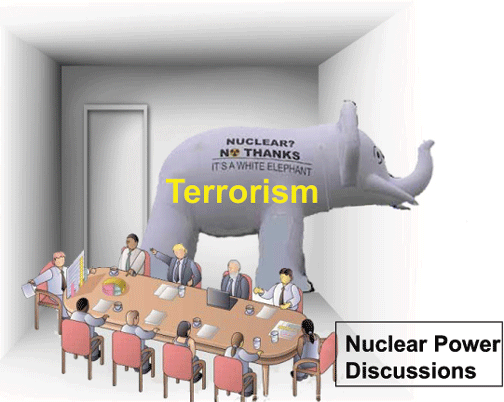
 A threat to confront: far-right extremists and nuclear terrorism, Bulletin of the Atomic Scientists By Rebecca L. Earnhardt, Brendan Hyatt, Nickolas Roth | January 14, 2021 Last March, neo-Nazi Timothy Wilson was killed during a shootout as he was planning to bomb a hospital treating COVID-19 patients. Like other neo-Nazis, Wilson viewed the pandemic and increased unrest among the American public as an opportunity to popularize Nazi ideas, spark further chaos, and accelerate societal collapse.[1] This past week, Ashli Babbitt was shot and killed while storming the US Capitol as part of a right-wing uprising; several years earlier, she was an employee of the Calvert Cliffs nuclear plant, exhibiting violent behavior during this period. [2] Acts of violence by far-right extremists are on the rise in the United States. Until now, most of these incidents have lacked sophistication, but a critical question for national security experts is whether US far-right extremist groups that espouse violence can carry out something catastrophic. A threat to confront: far-right extremists and nuclear terrorism, Bulletin of the Atomic Scientists By Rebecca L. Earnhardt, Brendan Hyatt, Nickolas Roth | January 14, 2021 Last March, neo-Nazi Timothy Wilson was killed during a shootout as he was planning to bomb a hospital treating COVID-19 patients. Like other neo-Nazis, Wilson viewed the pandemic and increased unrest among the American public as an opportunity to popularize Nazi ideas, spark further chaos, and accelerate societal collapse.[1] This past week, Ashli Babbitt was shot and killed while storming the US Capitol as part of a right-wing uprising; several years earlier, she was an employee of the Calvert Cliffs nuclear plant, exhibiting violent behavior during this period. [2] Acts of violence by far-right extremists are on the rise in the United States. Until now, most of these incidents have lacked sophistication, but a critical question for national security experts is whether US far-right extremist groups that espouse violence can carry out something catastrophic.
Every president serving in the last two decades has said that nuclear terrorism is a significant national security threat. Analysis of this threat has been, for good reason, mostly focused on foreign extremist groups, but recent events raise questions of whether there should be greater focus in the United States on far-right, domestic extremist threats. These extremists represent a unique danger because of their prevalence in federal institutions such as the military and the potential that they might infiltrate nuclear facilities, where they could access sensitive information and nuclear materials. The far-right extremist nuclear terrorism threat, which has some history, is amplified today by an ideology focused on accelerating the collapse of society and a documented interest in pursuing nuclear terrorism. Officials need to act decisively to better understand and mitigate this threat. Far-right narratives of nuclear terror. The intersection between violent far-right extremist ideology and catastrophic terrorism goes back decades. In The Turner Diaries, a 1978 novel labeled the “bible of the racist right,” the protagonists use acts of nuclear terror in service of the creation of a “white world.” Protagonists bomb nuclear installations, seize nuclear weapons, target missiles at New York City and Tel Aviv, and ultimately destroy the Pentagon in a suicidal nuclear attack.[3] The International Centre for Counterterrorism ties the Diaries to “at least 200 murders and at least 40 terrorist attacks/hate crimes” in the last 40 years.[4] This includes Timothy McVeigh’s 1995 bombing of the Alfred P. Murrah Federal Building in Oklahoma City, resulting in the deaths of 168 people.[5] McVeigh, however, is not the only far-right terrorist to be inspired by the Diaries. In 2011, violent far-right extremist Anders Breivik’s terror attacks killed 77 people in Norway. Dozens of pages in his 1,500-page “manifesto” discuss the execution of different acts of nuclear terrorism.[6] An increasingly active generation of violent far-right extremist groups and actors have adopted an especially dangerous ideology that is compatible with an act of nuclear terror: accelerationism.[7] Violent far-right extremists who adopt accelerationism view societal collapse as inevitable and seek to hasten that collapse in service of “total revolution”—the complete destruction of the existing system of governance.[8] Violent far-right extremists who adopt accelerationism hope to set off a series of violent chain events, with violence begetting more violence, destabilizing society.[9] Indiscriminate, highly destructive acts of terror—like a nuclear attack—are therefore perfect tools to sow chaos and accelerate this societal collapse. In Siege, one of the defining theoretical works of violent far-right accelerationism, author and accelerationist leader James Mason writes that, “[White supremacists] will be the single survivor in a war against the System, a TOTAL WAR against the System.”[10] In a recent act of violent far-right extremist terrorism, Brenton Tarrant, the Australian perpetrator of the 2019 terrorist attack on Christchurch masjidain in New Zealand, wrote about accelerationism in his manifesto.[11] Groups with nuclear interests. Inspired by the ideas of accelerationism, the modern breed of violent far-right extremism is becoming more destructive, and nuclear weapons certainly fit into this profile of catastrophic violence. The intention to bring about a cataclysmic clash of civilizations bears resemblance to better known terrorist organizations like Al Qaeda and Aum Shinrikyo, both of which have pursued nuclear weapons. As director of intelligence and counterintelligence at the US Department of Energy, Rolf Mowatt-Larssen, once observed, “Osama bin Ladin has signaled a specific purpose for using WMD in al Qaeda’s quest to destroy the global status quo, and to create conditions more conducive to the overthrow of apostate regimes throughout the Islamic world.”[12] Like Al-Qaeda, violent far-right extremists support the creation of a new society that is in line with their own ideology. One of the most notable and violent far-right extremist groups that have adopted accelerationism and operate in the United States is the Atomwaffen Division (AWD).[13] The organization’s name translates from German to “the nuclear weapons division,” indicating that its members have an explicit interest in nuclear terrorism. Brandon Russel, a former Florida National Guard member and an AWD co-founder, is one case of an aspiring nuclear terrorist. A heavily armed Russel and a fellow AWD member were recently arrested while in route to the Turkey Point nuclear power plant. During the investigation officials found that Russel lived in an apartment with two AWD co-conspirators; in the apartment was a prominently placed copy of the Turner Diaries and a framed photo of Oklahoma City Bomber Timothy McVeigh. The trio stockpiled weapons and explosives with the intent to blow up, among other targets, a nuclear power plant. In their apartment, police found pipe bomb components, traces of the explosive hexamethylene triperoxide diamine, and detonators. Police also detected two radioactive materials—thorium and americium—in his bedroom.[14] AWD was not the first far-right extremist in America to consider using radioactive or nuclear materials in a terrorist attack. Several previously documented attempts by violent far-right extremists to commit acts of radiological terror indicate a longstanding interest among far-right actors in highly destructive, non-conventional acts of terror.[15] In 2004, National Socialist Movement member Demetrius Van Crocker attempted to build a dirty bomb to blow up a courthouse.[16] In 2008, James Cummings, a white supremacist, obtained four 1-gallon containers of a mix of depleted uranium and thorium-232. He planned to use these materials to assemble a dirty bomb.[17] In 2013, a member of the Ku Klux Klan who worked at General Electric carried out research on radiation dispersal devices, learning what level of emission was required to kill humans.[18] Could they really pull it off? While some violent far-right extremists are clearly motivated to carry out catastrophic terrorist attacks, a question remains: Do they possess the means and opportunity to conduct an act of nuclear terrorism? There is no public evidence violent far-right extremist groups have obtained the resources or exhibited the requisite operational sophistication to carry out an act of nuclear terrorism. Many of the plots involving far-right extremists and nuclear terrorism have been poorly conceived and were unlikely to succeed. These incidents, however, likely do not provide a complete picture of the threat, because publicly accessible information on the capability of these groups is limited, creating ambiguity about their general capabilities………. The most concerning evidence that violent far-right extremists might have access to nuclear weapons or weapons-useable material lies in their presence in the US military and other parts of the federal government. The presence of white supremacists in the military is well-known and well-documented. ……….. https://thebulletin.org/2021/01/a-threat-to-confront-far-right-extremists-and-nuclear-terrorism/
|
|
18 Cold War-era nuclear bunkers dotted around Cambridgeshire
These are the 18 Cold War-era nuclear bunkers dotted around Cambridgeshire
The sites can be found all over the county, Cambridgeshire Live, By Harry GoldTrainee Multimedia Reporter, 9 Jan 201,
|
Cambridgeshire is home to several Cold-war era nuclear bunkers, according to an online database. There are 18 of them dotted around the county, each with similar design structures. Officially called Royal Observer Corps (ROC) Monitoring Posts, they consist of a 14-foot-deep access shaft, a toilet/store and a monitoring room. The posts were constructed as a result of the Corps’ nuclear reporting role and operated by volunteers during the Cold War between 1955 and 1991. Half the posts were closed in 1968 during a reorganisation of the ROC and several others shut over the next 40 years as a result of structural difficulties. They were prone to issues such as flooding and vandalism, with the final ones decommissioned in 1991 after the break up of the Soviet Union. Here are the ones you can find in Cambridgeshire, according to online database Subterranea Britannica – along with another historic relic from the Cold war era.,,,,,,,,,,, https://www.cambridge-news.co.uk/news/local-news/cold-war-nuclear-bunker-cambridgeshire-19590971 |
|
UK and Ireland Nuclear Free Local Authorities (NFLA) oppose underground coal mine – dangerously close to Sellafield’s radioactive wastes .
result of the coal mine has gone to the Sellafield site for internal review.https://www.nuclearpolicy.info/news/nfla-troubled-uk-communities-minister-not-calling-in-decision-deep-underground-coal-mine-west-cumbria/
Should £25 billion Hinkley C plant go ahead, with so many safety issues not solved?
David Lowry’s Blog 4th Jan 2021On Christmas Eve last year I received a detailed response to a Freedom of Information request I had made to the UK Office for Nuclear Regulation
[ONR] (I am a member of the chief nuclear inspector’s independent advisory
panel) on the 415 unresolved nuclear safety issues outstanding for the
nuclear licence for the Hinkley Point C nuclear power plant the north
Somerset coast, 18 miles from the Welsh capital city, Cardiff, across the
Bristol channel. It contains an alarming number of extremely important
unresolved matters.
Should this £25 billion plant really have been given
the regulatory green light with so many safety issues unfinished? It is
nonetheless reassuring that the ONR has been so thorough in flagging up key
matters that need safety resolution.
http://drdavidlowry.blogspot.com/2021/01/hinkley-point-c-new-nuclear-plant-still.html
1 This Month



26 September – International Day for the Total Elimination of Nuclear Weapons


PLEASE OPPOSE HR 8255 AND S.3639 – bills would accelerate satellite deployment, with no environmental review or safeguards – https://ncstd5li.quorum.us/campaign/169331/
To see nuclear-related stories in greater depth and intensity – go to https://nuclearinformation.wordpress.com
-
Archives
- September 2026 (245)
- August 2026 (330)
- July 2026 (355)
- June 2026 (287)
- May 2026 (306)
- April 2026 (356)
- March 2026 (251)
- February 2026 (267)
- January 2026 (308)
- December 2025 (358)
- November 2025 (359)
- October 2025 (375)
-
Categories
- 1
- 1 NUCLEAR ISSUES
- business and costs
- climate change
- culture and arts
- ENERGY
- environment
- health
- history
- indigenous issues
- Legal
- marketing of nuclear
- media
- opposition to nuclear
- PERSONAL STORIES
- politics
- politics international
- Religion and ethics
- safety
- secrets,lies and civil liberties
- spinbuster
- technology
- Uranium
- wastes
- weapons and war
- Women
- 2 WORLD
- ACTION
- AFRICA
- Atrocities
- AUSTRALIA
- Christina's notes
- Christina's themes
- culture and arts
- Events
- Fuk 2022
- Fuk 2023
- Fukushima 2017
- Fukushima 2018
- fukushima 2019
- Fukushima 2020
- Fukushima 2021
- general
- global warming
- Humour (God we need it)
- Nuclear
- RARE EARTHS
- Reference
- resources – print
- Resources -audiovicual
- Weekly Newsletter
- World
- World Nuclear
- YouTube
-
RSS
Entries RSS
Comments RSS
 nuclear-news