Incident at France’s Civaux nuclear reactor adds to EDFs problems of stress corrosion crackingin nuclear plants
Stress corrosion cracking: Assessing and remedying cracking problem in
nuclear plants. The full extent of stress corrosion cracking at EDF’s
reactors in France has still to be determined. Nonetheless, lower
production as plants are re-examined has come at the worst possible time
for the company.
Electricite de France SA is investigating an incident
during a test at a halted nuclear reactor last week, just as a series of
repairs jeopardize the country’s power-supply security for the coming
winter. The utility had to stop a high-pressure hydraulic test of the
primary circuit of its Civaux 1 reactor on Nov. 2 when steam was released
in a room of the reactor building. The reactor wasn’t loaded with nuclear
fuel, no one was hurt nor contaminated, and no radioactivity has been
detected outside the building, according to EDF.
The impact of the incident, which is unrelated to so-called stress-corrosion cracks that have
undermined the French nuclear giant’s reactor availability, still needs to
be assessed, Regis Clement, EDF’s deputy-head for nuclear production, said
at a news conference in Paris Tuesday.
The corrosion cracks hobbling EDF
reactors this year have put a hole in its finances and made France —
typically an exporter of power to its neighbors — a net importer. That,
combined with Russia’s dwindling gas deliveries, has contributed to a spike
in energy prices across Europe and stoked concerns of shortages in case of
a windless cold snap this winter.
Bloomberg 8th Nov 2022
Fire on nuclear-armed submarine
A ROYAL Navy submarine which was fully armed with nuclear missiles was
forced to abort a highly sensitive operation after a fire broke out beneath
the waves.
NW Evening Mail 8th Nov 2022
https://www.nwemail.co.uk/news/23110182.barrow-built-hms-victorious-catches-fire-sea/
NYT: Senior Ukrainian official confirms Ukraine orchestrated truck bomb attack on Crimean Bridge
Chris Menahan, InformationLiberation, Oct. 09, 2022,
The New York Times reported Saturday evening that a “senior Ukrainian official” corroborated Russian reports that Ukraine was behind the truck bomb attack on the Crimean bridge which killed at least three civilians.
From The New York Times, “Blast on Crimean Bridge Deals Blow to Russian War Effort in Ukraine”:
The blast and fire sent part of the 12-mile Kerch Strait Bridge tumbling into the sea and killed at least three people, according to the Russian authorities. A senior Ukrainian official corroborated Russian reports that Ukraine was behind the attack. The official, speaking on the condition of anonymity because of a government ban on discussing the blast, added that Ukraine’s intelligence services had orchestrated the explosion, using a bomb loaded onto a truck being driven across the bridge.
[…] It was unclear if the driver of the truck, who died in the blast, was aware there were explosives inside. In video captured by a surveillance camera on the bridge, a huge fireball is seen, seeming to consume several vehicles. A small sedan and a tractor-trailer truck driving side by side appear at the epicenter of the blast. The explosion caused two sections of the bridge to partly collapse.
The truck driver was identified by Russian media as 51-year-old Mahir Yusubov of Azerbaijan.
Yusubov reportedly received an order to transport fertilizer through the internet and may have had his truck wired with explosives by Ukrainian special-ops units who used him as an unwitting suicide bomber.…………………………… more http://www.informationliberation.com/?id=63391
Ukraine’s ZNPP Must Be Urgently Protected, IAEA’s Grossi Says After Plant Loses All External Power Due to Shelling
https://www.iaea.org/newscenter/pressreleases/ukraines-znpp-must-be-urgently-protected-iaeas-grossi-says-after-plant-loses-all-external-power-due-to-shelling 8 Oct 22, Ukraine’s Zaporizhzhya Nuclear Power Plant (ZNPP) has lost its last remaining external power source due to renewed shelling and is now relying on emergency diesel generators for the electricity it needs for reactor cooling and other essential nuclear safety and security functions, Director General Rafael Mariano Grossi of the International Atomic Energy Agency (IAEA) said today.
The ZNPP’s connection to the 750 kilovolt (kV) power line was cut at around 1am local time today, Director General Grossi said, citing official information from Ukraine as well as reports from the team of IAEA experts present at the site of Europe’s largest nuclear power plant.
Sixteen of the plant’s diesel generators started operating automatically, providing its six reactors with power. After the situation stabilised, ten of the generators were switched off, leaving six to provide the reactors with necessary electricity.
“The resumption of shelling, hitting the plant’s sole source of external power, is tremendously irresponsible. The Zaporizhzhya Nuclear Power Plant must be protected,” Director General Grossi said. “I will soon travel to the Russian Federation, and then return to Ukraine, to agree on a nuclear safety and security protection zone around the plant. This is an absolute and urgent imperative.”
All the plant’s safety systems continue to receive power and are operating normally, the IAEA experts were informed by senior Ukrainian operating staff at the site. Although the six reactors are in cold shutdown, they still require electricity for vital nuclear safety and security functions. The plant’s diesel generators each have sufficient fuel for at least ten days. ZNPP engineers have begun work to repair the damaged 750 kV power line.
State ministry reports leak at German nuclear plant, experts investigating
State ministry reports leak at German nuclear plant, experts investigating | Reuters
BERLIN, Oct 5 (Reuters) – A leak occurred during flushing measures on a discharge line at the nuclear power plant in Brunsbuettel, northern Germany, on Sept. 28, the energy ministry of Schleswig-Holstein said on Wednesday.
The defective line is part of the concentrate treatment system and is located in the restricted area of the reactor building of the nuclear power plant, a statement said, adding that a small radioactive contamination was detected.
The reactor safety authority has tasked experts with conducting further supervisory reviews in the matter.
The Brunsbuettel nuclear power plant has already been permanently shut down since 2007. The decommissioning permit was issued at the end of 2018 and dismantling of the plant has begun.
Writing by Rachel More, Editing by Miranda Murray
The risk of nuclear disaster grows every day

From Three Mile Island to Chernobyl, the story of atomic energy is littered with catastrophes
https://www.prospectmagazine.co.uk/arts-and-books/the-risk-of-nuclear-disaster-grows-every-day By Oliver-James Campbell , October 6, 2022
Atoms and Ashes: From Bikini Atoll to Fukushima by Serhii Plokhy (RRP: £25).
In his new book, Ukrainian-born Harvard professor Serhii Plokhy tackles a topic that has greatly influenced his life: nuclear disaster. Atoms and Ashes, a must-have for anyone interested in the history of nuclear energy, details six major nuclear mishaps that have shaped how we view nuclear energy: Bikini Atoll in Oceania, Kyshtym in Russia, Chernobyl in Ukraine, Three Mile Island (TMI) in the US, Windscale in the UK and Fukushima in Japan. Despite the vast political and socio-economic differences between the countries responsible for these projects, Plokhy shows up the common thread of mismanagement.
The author sketches vivid pictures of the events that led up to—and resulted from—each incident, exploring the lives of those the disaster affected most, whether it’s an unfortunate power plant employee or an entire displaced community. But most striking is how much pressure the scientists, engineers and project managers faced—brought about by the Cold War arms race or other geopolitical fallouts—that resulted in subsequent disaster.
In his acknowledgements, Plokhy explains that Atoms and Ashes was written as a response to questions surrounding his earlier work, Chernobyl: History of a Tragedy. His intention was to show how project mismanagement and risk oversight were not specific to Chernobyl.
Nuclear disasters have, understandably, led to a rise in anti-nuclear sentiment. The world has since changed its tune. As Plokhy says, “Ukraine derives about half its electricity from nuclear reactors”—one of which, Zaporizhzhia, is the largest in Europe. It also happens to be caught between forces in Russia’s ongoing war in Ukraine. The UN has called for the demilitarisation of the reactor, as the risk of a catastrophic nuclear incident appears to grow larger every day.
Zaporizhzhia’s ‘last working’ nuclear reactor loses power after Russian shelling

SBS News6 Sept 22, The vast Zaporizhzhia nuclear power plant – the largest nuclear power plant in Europe – was captured by Moscow in March, but is still run by Ukrainian staff……….
The imperilled six-reactor facility in southern Ukraine, which is the largest nuclear power plant in Europe, was captured by Moscow in March, but is still run by Ukrainian staff.
“Today, as a result of a fire caused by shelling, the (last working) transmission line was disconnected,” Energoatom said in a statement on Telegram on Monday.
Advertisement
“As a result, (reactor) unit No. 6, which currently supplies the (plant’s) own needs, was unloaded and disconnected from the grid,” it said.
Ukraine was unable to repair the power lines now because of fighting raging around the station, Ukrainian Energy Minister German Galushchenko wrote on Facebook.
“Any repairs of the power lines are currently impossible- fighting is ongoing around the station,” he said……
Two reactors at the plant, number five and six, remain in use but are currently disconnected from the grid.
They have suffered repeated disconnections due to shelling over the last fortnight.
Satellite images show damage to buildings right next to Zaporizhzhia nuclear reactors
Satellite images show damage to Ukraine nuclear plant buildings right next
to reactor. Satellite images show armoured personnel carriers stationed
near Zaporizhzhia nuclear plant’s reactors.
Independent 30th Aug 2022
Shelling ‘leaves HOLES in roof of Russian-occupied nuclear power plant’:
Images reveal damage at Zaporizhzhia site – with Putin’s forces blaming
Ukrainian artillery for potential disaster.
Daily Mail 30th Aug 2022
Fears of a radiation leak mount near Ukrainian nuclear plant
WHSV3 By PAUL BYRNE, Aug. 26, 2022 ,
KYIV, Ukraine (AP) — Authorities began distributing iodine tablets to residents near Ukraine’s Zaporizhzhia nuclear power plant Friday in case of a radiation leak, amid mounting fears that the fighting around the complex could trigger a catastrophe.
The move came a day after the plant was temporarily knocked offline because of what officials said was fire damage to a transmission line. The incident heightened dread of a nuclear disaster in a country still haunted by the 1986 explosion at Chernobyl.
Continued shelling was reported in the area overnight, and satellite images from Planet Labs showed fires burning around the complex — Europe’s biggest nuclear plant — over the last several days.
Iodine tablets, which help block the absorption of radioactive iodine by the thyroid gland in a nuclear accident, were issued in the Ukrainian-controlled city of Zaporizhzhia, about 45 kilometers (27 miles) from the plant. A woman and her small daughter were among those receiving the pills……………..
In Thursday’s incident, Ukraine and Russia blamed one another for the transmission-line damage that knocked the plant off the power grid………
The plant requires power to run the reactors’ vital cooling systems. A loss of cooling could lead to a nuclear meltdown.
Ukrenergo, Ukraine’s transmission system operator, reported Friday that two damaged main lines supplying the plant with electricity had resumed operation, ensuring a stable power supply.
The Watchdog: Nuclear Regulatory Commission flunks this public records test
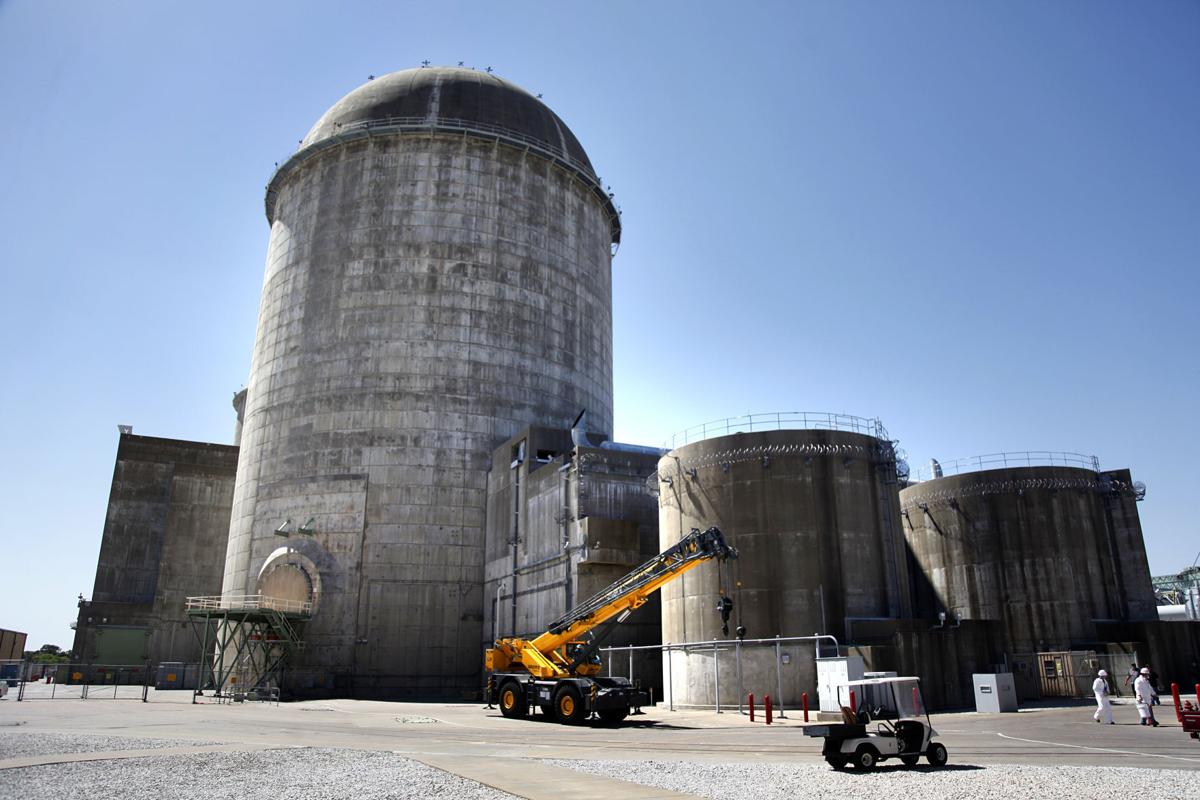
By Dave Lieber The Dallas Morning News, 16 Aug 22,
I am a Three Mile Island baby.
What I mean is I was in college in 1979 when America’s first major nuclear plant accident occurred. I was 100 miles away. Had things gotten bad, and the wind changed …
Since then I’ve studied nuclear evacuation zones and how they are supposed to work.
That’s why I filed a federal Freedom of Information request one year ago seeking records of a June 7, 2021, fire inside the Comanche Peak nuclear power plant. The reactor is outside the city limits of Glen Rose, 60 miles southwest of downtown Dallas.
I wanted to test the U.S. Nuclear Regulatory Commission’s response to an open records request. How forthcoming would this important but often overlooked federal agency be?
The answer is in. The NRC failed The Watchdog’s test. They ignored my request for a full year. It wasn’t until I contacted them last week and reminded that I had a year-old request that was unfilled that they reacted. Otherwise, I’m fairly certain that my request would have gone unanswered forever.
Grade? I give the NRC an “F” for this.
Original request
When I made the request on Aug. 23, 2021, some of the facts about the fire were already publicly known. There was a fire in the plant’s main transformer that was put out by the plant’s fire department. External fire departments were not called in.
After that, the plant’s Unit 2 was shut down for two weeks for repairs, and then it went back online.
Dallas Morning News reporter Marin Wolf did an excellent job covering the event in two stories.
What I didn’t know a year ago was that there would be a war between Russia and Ukraine, and that nuclear power plants would be used as strategic points of combat………………………………
Evacuation plans
The last study I made of the Comanche Peak evacuation plans was in 2011. I studied hundreds of pages of evacuation plans I received from the NRC through the Freedom of Information Act. Little details were somewhat alarming.
In the event of an evacuation, records stated that pets were not allowed in the “reception centers” outside the evacuation zones.
“Where possible, shelter livestock,” the plan stated. “Leave them with food and water.”
More advice: “Keep your car’s vents and windows closed while driving within 10 miles of the power plant. If you use your car air conditioning, set it on ‘inside’ or ‘maximum’ so it does not pull in outside air.”
“Residents are also advised to communicate with neighbors personally, rather than clogging phone lines.”
How would that happen if you’re in your car, with the vents closed, driving away?
It’s clear to me that chaos would ensue.
A bad battery
Four months after my initial FOIA request, I sent the NRC a note with the subject line “Missing in Action.”
“Hello, I’m wondering what happened to my August 2021 FOIA request — NRC-2021-000233.”
I received an acknowledgement of my letter — but no records.
Obviously, this could have gone on forever. Did the NRC forget me?
Finally, last week, I revealed my experiment to the NRC in a note: “It wasn’t so much that I was interested in the information as I was testing your obedience to the FOIA law. Well, the test is over.”
Only then did I receive 45 pages of records from the NRC’s regional office in Arlington.
Flipping through, I see the August 2021 fire is barely mentioned. The package does not contain any incident reports, which I had requested. The records sent to The Watchdog are about post-fire inspections.
One “non-cited violation” found that operators of the plant, which is owned by Vistra Energy, “failed to maintain batteries associated with the steam generator fill pumps.” Those pumps are part of the process used to create steam, which is converted into energy that ultimately yields electric power.
One battery was found to be dead, and the battery charger was missing, the inspection report stated.
That single violation was described in the report as being “of very low safety significance.”
Note that I requested any incident reports on the 2021 fire, but in the 45 pages, the word “fire” only appears 20 times……………….
This is yet another example of a federal agency failing to follow the tenets of the Freedom of Information Act. But how many federal agencies have their own evacuation plans designed to save lives in the event of a nuclear accident?
I’m a Three Mile Island baby, and this is serious stuff. In a world where nuclear plants become weapons of war, this is no time for secrets. https://dentonrc.com/news/the_watchdog/the-watchdog-nuclear-regulatory-commission-flunks-this-public-records-test/article_2bd07602-4a09-588a-9670-d323d752f350.html
Parts of Zaporizhzhia nuclear plant damaged when struck by shelling
Ukraine’s state nuclear agency, Enerhoatom, said parts of the captured
Zaporizhzhia nuclear plant were “seriously damaged” after a station
containing oxygen and nitrogen and an “auxiliary building” were struck by
shelling. There is now an increased risk of fire and radiation.
On Telegram, the agency said Saturday: “The Zaporizhzhia nuclear power plant
is operating at risk of violating the norms of radiation and fire
protection.” “There remains a risk of hydrogen leaking and radioactive
particles dispersing, and the risk of fire is also high,” Enerhoatom added.
Deutsche Welle 6th Aug 2022
https://www.dw.com/en/russia-ukraine-updates-parts-of-nuclear-plant-seriously-damaged/a-62729710
IAEA alarmed at danger to Zaporizhzhia nuclear plant as shelling continues in Ukraine war
The UN nuclear watchdog has called for an immediate end to all military
action near Ukraine’s Zaporizhzhia nuclear plant after it was hit by
shelling, causing one of the reactors to shut down and creating a “very
real risk of a nuclear disaster”. Rafael Mariano Grossi, director general
of the International Atomic Energy Agency, said he was “extremely
concerned” by reports of damage at the plant and called for IAEA experts
to be allowed to inspect the damage.
“I’m extremely concerned by the
shelling yesterday at Europe’s largest nuclear power plant, which
underlines the very real risk of a nuclear disaster that could threaten
public health and the environment in Ukraine and beyond,” he said. The
Ukrainian nuclear power company Energoatom said the attack had damaged a
power cable and forced one of the reactors to stop working, and that
“there are still risks of leaking hydrogen and radioactive substances,
and the risk of fire is also high”. The shelling “has caused a serious
risk for the safe operation of the plant”, Grossi said.
Observer 6th Aug 2022
Reuters 6th Aug 2022
Beatty Nevada Nuclear waste explosions, in the desert.
Terry Southard 2 Aug 22,
Explosions of nuclear waste from pieces of decommissioned San onofre reactor, by San diego.The pieces of the reactor and the other waste from the San Diego, San Onofre reactor decommissioning, started blowing up in the desert outside beatty Nevada. Later the San onofre nuclear waste was dug up and transfered, to a nuclear waste facility outside salt lake city Utah. The explosions, were caused by the decay heat and pyrophoricty of the radionuclides, in the waste and that had accumulated on the reactor pieces.
We simply, don’t get to learn from the mainstream media, about these radioactive hazards.
New Mexico was on fire this summer. 800 thousand acres burned. So much nuclear waste and fallout, in New Mexico, from bomb building and testing. I would not be surprised, if there is a major uptick in lung cancers, and other cancers, in New Mexico in the next 5 years . Nuke bombs exploded under rivers in New Mexico, project gas buggy. Uranium waste catastrophes. Nuclear waste dumps in many places. Largest plutonium core operation in the world at Los Alamos, by Santa fe. Wipp plutonium dump, by Clovis.
These explosions were caused by parts of the decommisioned, highly radioactive pieces of the San onofre reactor, buried in Nevada for a few years. They had to dqqig them up, after the explosions and, moved them to utah. You would have thought, peopke in Utah, would have known better.
Steppenwolf just stick yur head into the sand, pretend that all is grand and everything will be ok
This will happen at other shoddy nuclear waste operations in the usa. Typically under-regulated, and under supervised by cheap and mismanaged, foreign owned nuclear waste management companies. Give them an inch and, they take a mile. They bribe state legislators and start taking in nuclear waste, from other countries. Countries like Japan and Estonia. That happened at the white mesa nuke waste operation, by blanding, utah. I think there is greater risk of wildfires, in the white mesa area, from the pryophoric effects of radionuclide dust from white mesa, blowing into surrounding areas.. There was a truck full of nuke waste owned by energy fuels, by Salt Lake City, that caught fire in 2018. The white mesa, energy fuel operation is trucking in nuke waste, from all over the world.
Radionuclides generate their own heat and can start fires on their own even in small amounts, like the plutonium did at rocky flats. That is why the US Armed forces, uses depleted uranium in bombs, bullets and, other munitions.
https://en.wikipedia.org/wiki/Rocky_Flats_Plant
https://www.osti.gov/biblio/515622
Wildfires and cancer
https://www.thelancet.com/journals/lanplh/article/PIIS2542-5196(22)00067-5/fulltext
More wildfires and cancer
https://www.upi.com/Health_News/2022/05/17/wildfires-cancer-risk-study/5531652723109/
Wildfires are increasing cancer rates in the World.
https://thescotfree.com/opinion/incident-at-santa-susana-a-meltdown-a-fire-and-a-cover-up/
Westinghouse Nuclear Fuel Fabrication plant – a detailed history of troubles.

Dead fish near SC nuclear fuel site were an early warning. Then came the spills and accidents, The State, BY SAMMY FRETWELL, JULY 30, 2022
“……………………………………………………. 1980: State regulators learn of a fish kill near the Westinghouse wastewater plant. They found elevated levels of fluoride and ammonia-nitrogen in groundwater and surface water. It was later determined that the pollution came from the plant wastewater area. 1980: Twenty plant workers evacuated from Westinghouse after a small leak of uranium hexafluoride gas.
1982: Westinghouse unable to find 9.5 pounds of slightly enriched uranium, according to an NRC report. 1983: State regulators fine Westinghouse $6,000 for illegally shipping flammable material that caused a fire at Barnwell County’s low-level nuclear waste dump. 1988: Radioactivity found in monitoring wells is thought to have come from prior leaks of industrial wastewater. Low concentrations of Uranium 235, 234 and 238 found.
1989: EPA investigators find an array of pollutants in groundwater at the Westinghouse site, some higher than safe drinking water levels. Vinyl Chloride and TCE, both of which can cause cancer, were found to exceed the drinking water standard. 1989: Twenty five dead deer discovered at the Westinghouse property, some of them in an area where wastewater was being discharged near the Congaree River. The deer reportedly died from nitrate poisoning, but public records reviewed by The State do not show an exact cause. 1992: Trichloroethene (TCE), cis-1,2-dichloroethene (CIS 1,2 DCE) and tetrachloroethene (PCE), are detected at amounts above the federal maximum contaminant level for safe drinking water. The high levels were found near the plant’s oil house.
1993: NRC fines Westinghouse $18,750 after alleging that the company failed to perform a criticality safety analysis and failed to conduct safety tests. 1994: Radioactive leak exposes 55 workers to uranium hexafluoride and shuts down the Westinghouse plant. 1997: The plant loses two low-enriched fuel rods. The NRC says five violations of NRC requirements occurred. Safety was not compromised, but problems “are indicative of inadequate management attention.’’
1998: Company fined $13,750 after NRC notes the “loss of criticality control,’’ a problem that could have led to an accident. The agency says a problem had gone uncorrected. 2000: NRC hits Westinghouse with a violation notice because an operator “willfully violated criticality safety procedures when preparing to mix a batch of powder.’’ 2000: Uranyl nitrate spills at the Westinghouse plant, causing a cleanup. When the cleanup began, workers found the spill was worse than originally thought.
2001: NRC hits Westinghouse with a violation for transporting 3 cylinders of licensed material with elevated radiation levels. 2001: Westinghouse fails to follow criticality safety rules at a uranium recovery area dissolver elevator, violation notice says. Containers were not stacked far enough apart, reducing safety. Westinghouse didn’t do enough to fix the problem. 2001: NRC issues a violation notice to Westinghouse after raising concerns about criticality safety, including failing to keep uranium powder mixing hoods properly separated.
2001: NRC hits Westinghouse with violation after criticality safety controls failed to work on the ammonium diurnate process lines. 2002: NRC letter tells Westinghouse that its criticality safety control efforts need improvement. NRC Regional Administrator Luis Reyes says the last two safety reviews have urged improvement for criticality safety. Letter notes concern about nuclear transportation program. 2002: NRC notice of investigation says a contractor for Westinghouse falsified records about the receipt and processing of materials. That resulted in a small amount of nuclear material being improperly shipped to nuclear site in Tennessee. 2004: NRC again raises concerns about criticality safety, the practice of making sure a nuclear chain reaction does not occur. Efforts to improve compliance with procedures and “implement criticality safety controls were not fully effective,’’ letter from regional administrator Luis Reyes says.
2004: NRC letter hits Westinghouse with a $24,000 fine. The company failed to maintain criticality controls as required. Ash in the company’s incinerator exceeded concentration limits for uranium. The Level 2 violation is, at the time, the most serious ever noted at the plant. 2008: Broken pipe spills radioactive material into the soil in the same area as a later 2011 leak, but Westinghouse doesn’t tell state or federal regulators for years. 2008: The NRC sanctions Westinghouse for losing sixteen sample vials of uranium hexafluoride. The company didn’t properly document and control the transfer of the vials and failed to secure them from “unauthorized removal.’’ 2008: Westinghouse hit with a violation notice after a worker disabled an alarm and bypassed a safety significant interlock.
2009: Westinghouse fires a contract foreman after federal regulators found that he had falsified records. Westinghouse also was cited by the NRC. The foreman certified that employees were trained in safety procedures, when they had not completed training.
2009: Westinghouse loses 25 pounds of pellets that were to be used in making nuclear fuel rods. NRC downplays danger but says Westinghouse should have kept better track of the nuclear material.
2010: NRC levies $17,500 fine against Westinghouse after uranium-bearing wastewater spilled inside the plant.
2011: Uranium leaks into ground beneath the Westinghouse plant, but federal inspectors weren’t told about it for years. NRC officials said they only learned about the spill in 2017.
2012: Worker exposed to uranium-containing acid and whisked to a hospital by emergency medical crews. The worker was treated for pain and released.
2012: Westinghouse fails to follow through on a report to improve the facility so it could better withstand an earthquake, NRC says. Recommendations had been made nine years previously.
2015: Three workers are injured when steam erupted from a wash tank. The workers are taken to a Columbia area hospital for treatment and later sent to the burn center in Augusta, which specializes in treating severe burns.
2016: A buildup of uranium that could have led to a small burst of radiation forces Westinghouse to shut down part of the fuel plant and temporarily lay off 170 workers, about one-tenth of its work force at the plant. The uranium found in the scrubber area is nearly three times the legal limit.
2017: Westinghouse worker exposed to a solution toxic enough to cause chemical burns when the solution sprayed him. 2018: Uranium leaks into the ground through a hole in the Westinghouse plant floor. An acid solution had eaten into the floor. Soil was contaminated.
2018. The NRC says Westinghouse allowed workers to walk across a protecting liner for years, which likely weakened the liner and contributed to a hole in the floor that allowed uranium solution to leak out.
2019: Fire breaks out in a drum laden with mop heads, rags and other cleaning equipment.
2019: State and federal authorities report that water had leaked through a rusty shipping container and onto barrels of uranium-tainted trash. Contaminants then leaked into the soil below the shipping container floor.
2019: Westinghouse sends three workers to the hospital after they complained of an unusual taste in their mouths while doing maintenance on equipment that contains hydrofluoric acid.
2019: Two contaminated barrels are shipped from the Westinghouse plant to Washington State after workers in South Carolina failed to properly examine the containers for signs of radioactive contamination.
2020. The NRC issues violation against Westinghouse, this time after questions arose about nuclear safety. The issue centered on improper security of tamper seals, used to keep nuclear material from being stolen.
2020. NRC reports finding 13 pinhole leaks in a protective liner.
2020: South Carolina officials raise concerns about earthquakes at Westinghouse.
Sources: NRC records and news reports from The State. https://www.thestate.com/news/local/environment/article263945551.html
‘Israeli cell planted explosives at nuclear facility,’ Iran media says
Report says cell arrested with ‘powerful explosives’, planned to blow up a ‘sensitive center’ in central Isfahan province — home to nuclear sites and missile bases
https://www.ynetnews.com/article/hkb1uwohq Ynet| 07.24.22
ranian news website Nour News, which is affiliated with Iran’s Supreme National Security Council, reported that the cell planned to blow up a “sensitive center” in Isfahan province in the center of the country. Isfahan is home to several major nuclear sites, as well as missile bases.
According to other reports, the cell crossed into Iran from Iraq’s Kurdistan region after “months of training” in Africa.
Iran’s Intelligence Ministry did not specify, however, how many cell members were arrested and did not publish details about their nationality.
1 This Month

of the week – Shut Down Drone Warfare!


Tell the Ukrainian Government to Drop Prosecution of Peace Activist Yurii Sheliazhenko

Petition to revoke the licensing of the Near Surface Nuclear Disposal Facility (NSDF) at Chalk River. https://www.ourcommons.ca/petitions/en/Petition/Details?Petition=e-7247
To see nuclear-related stories in greater depth and intensity – go to https://nuclearinformation.wordpress.com
-
Archives
- April 2026 (68)
- March 2026 (251)
- February 2026 (268)
- January 2026 (308)
- December 2025 (358)
- November 2025 (359)
- October 2025 (376)
- September 2025 (257)
- August 2025 (319)
- July 2025 (230)
- June 2025 (348)
- May 2025 (261)
-
Categories
- 1
- 1 NUCLEAR ISSUES
- business and costs
- climate change
- culture and arts
- ENERGY
- environment
- health
- history
- indigenous issues
- Legal
- marketing of nuclear
- media
- opposition to nuclear
- PERSONAL STORIES
- politics
- politics international
- Religion and ethics
- safety
- secrets,lies and civil liberties
- spinbuster
- technology
- Uranium
- wastes
- weapons and war
- Women
- 2 WORLD
- ACTION
- AFRICA
- Atrocities
- AUSTRALIA
- Christina's notes
- Christina's themes
- culture and arts
- Events
- Fuk 2022
- Fuk 2023
- Fukushima 2017
- Fukushima 2018
- fukushima 2019
- Fukushima 2020
- Fukushima 2021
- general
- global warming
- Humour (God we need it)
- Nuclear
- RARE EARTHS
- Reference
- resources – print
- Resources -audiovicual
- Weekly Newsletter
- World
- World Nuclear
- YouTube
-
RSS
Entries RSS
Comments RSS
 nuclear-news