More than 700 ‘safety events’ recorded at nuclear bases, News and Star, 14th January 19. More than 700 nuclear safety events have been recorded at Scotland’s nuclear bases since 2006, the Ministry of Defence (MoD) has said.
Defence Minister Stuart Andrew revealed the figures in letters to SNP MP Deidre Brock.
A total of 789 nuclear safety events were recorded at HM Naval Base Clyde at Faslane and nearby Royal Naval Armaments Depot Coulport in the 12 years between 2006 and 2018.
Earlier the MoD disclosed 505 incidents had taken place at Faslane, where the majority of the UK’s nuclear submarine fleet is based. Now, a further letter shows 284 incidents took place at Coulport, where the nuclear warheads are stored and loaded onto the submarines, in the same period
………A Category A incident took place in 2008 when water overflowed from a now-decommissioned primary effluent barge.
Category A events have “actual or high potential for radioactive release to the environment of quantities in excess of IRR99 notification limits”.
……….In response to parliamentary questions from Ms Brock, the MoD also disclosed there have been 22 fires on its nuclear armed or nuclear powered submarines since June 2015.
“It’s a shocking record of accidents and incidents in places where the most dangerous weapons on the planet are,” Ms Brock said.
“We already knew that there were 505 nuclear safety events on board submarines while they were berthed at Faslane and now we find that there have been another 284 in other locations at Faslane and at Coulport where weapons are handled.”
She added: “One bad accident would be enough to wipe Scotland out and the safety record is appalling.
The photo of a nuclear bomb test going terribly wrong in August 1987 is revealed by a Russian blogger. By Thomas Nilsen– January 08, 2019
It is two hours past midnight on August 2nd 1987 when the Soviet nuclear weapons scientists push the button triggering a series of five nuclear devises inside a tunnel at the Matochkin Shar nuclear testing site.
A load boom follows and the ground is shaking like an earthquake. A huge dust cloud blows out from the tunnel supposed to be hermetical sealed by meters thick stone- and concrete walls.
The radioactive dust cloud came as a big surprise to the personnel witnessing.
Now, more than 30 years later, a photo from the accident is published by Russian blogger who focuses on nuclear thematic and also posts photos on twitter.
Leakage of radioactivity from the August tests in 1987 is known from before, listed in a 2005 publication by Science and Global Security. Now, the photo from the site gives the public a better understanding of the size of tunnel collapse.
The photo is taken no more than a kilometer from the tunnel entrance and shows a military helicopter parked in in front. Each of the tunnels in the area where underground nuclear weapons testing took place from 1964 to 1990 has its own code number. The one collapsing on this photo is known as tunnel A-37A.
According to a list of all underground nuclear weapons tests at Novaya Zemlya, published by Science and Global Security, the total yield of the five devises exploded on August 2nd were 150 KT, ten times the size of the bomb dropped on Hiroshima in 1945.
The leakages of radioactivity was estimated to 56 TBq. The gamma radiation near the entrance to the tunnel was measured to more than 500 R/h. First radioactive gases were detected 90 seconds after the blast.
500 R/h is about 1000 times the annual dose for an average human. Exposed directly, such dose could be lethal within an hour or two.
In the book USSR Nuclear Explosions about the northern test site at Novaya Zemlya, published in 1991, a group of Soviet radiation experts writes about the accident. «A powerful burst of a radioactive gas-jet.stream occurred just above the mouth of the adit, just 1,5 minutes after the explosion. It was later established that gas penetrated along a geologic fault that extended along the adit axis and hot gases melted the surface ice.»
The authors describe how an emergency program was immediately instituted evacuating all staff within a period of a few minutes. No cases of radiation sickness occurred amon the test site personnel at Novaya Zemlya.
Mountian Moiseev, where the nuclear weapons tests took place, is located about 10 kilometers south of Severny, the military settlement on the shores of the Matochkin Shar serving as the centre for the nuclear test site.
The last real nuclear weapon test at Novaya Zemlya took place on October 24th 1990. Today, only subcritical nuclear weapon tests are conducted on the Russian Arctic archipelago.
Nuclear patrol submarine returns to base with ‘unusual’ amount of damage, Telegraph UK Dominic Nicholls, defence correspondent, 6 JANUARY 2019 One of Britain’s nuclear deterrent submarines has suffered an “unusual” amount of damage as pictures emerge of HMS Vengeance returning from patrol with around 30 per cent of her sonar panels missing.
The ballistic missile submarine returned last week from her latest three-month patrol.
As the nuclear-armed vessel surfaced near the Faslane naval base on the Clyde it was obvious the expected level of wear and tear had been exceeded by up to three times the usual amount.Britain’s ballistic missile submarines are covered with sonar panels – specially designed acoustic shields to mask any sound from inside the submarine and absorb the sound waves of an active sonar emitted by another vessel looking…(subscribers only) https://www.telegraph.co.uk/news/2019/01/06/nuclear-patrol-submarine-suffers-unusual-amount-damage-government/
South Korea’s Meteorological Administration (KMA) said a small quake that hit in North Korea’s North Hamgyong province Wednesday was induced by the September 2017 underground detonation of a nuclear device.
That nuclear test was North Korea’s most powerful to date, with an estimated explosive yield of 160 kilotons, according to Japan’s Defense Ministry. The blast created an initial 6.3-magnitude tremor, caused a series of aftershocks and reportedly an on-site collapse.
The agency said the 2.8-magnitude temblor recorded Wednesday was shallow — only about 12 kilometers (7.5 miles) deep — and struck about 11 kilometers (6.8 miles) east of the Punggye-ri nuclear test site, the only known facility of its kind in North Korea.
The site has since been shuttered, North Korea says. The country invited members of the international media, including CNN, to a ceremonial closing of Punggye-ri during which the North Koreans destroyed entrances to at least three tunnels used for nuclear tests, observation buildings, a metal foundry and living quarters.
However, there were no independent weapons experts present at the event and it is still unclear whether the explosions rendered the tunnels inoperable, or only caused limited damage.
A seismologist at the KMA told CNN that the activity measured Wednesday was almost certainly a natural earthquake rather than an explosion based on the seismic waves detected and the fact that no sound waves were observed.
Because no major fault lines run through North Korea and the quake was recorded so close to the Punggye-ri site, the seismologist said it must be assumed that the quake was a result of the sixth nuclear test.
The quake comes one day after North Korean leader Kim Jong Un affirmed his apparent commitment to denuclearization during an annual New Year’s address, in which he reiterated that his country would not “create, test, use, or proliferate nuclear weapons.”
Sep 3, 2018 Ian Harvey In July of 2018, Andrew Thaler wrote for Southern Fried Science that there were at least two nuclear capsules, four unarmed weapons, and one armed nuclear weapon sitting on the ocean floor, that he was aware of.
His information was based on declassified U.S. Department of Defense narrative summaries of accidents involving U.S. nuclear weapons.
He noted that the documents he had access to only covered the period of time between 1950 and 1980. Any more recent data would still be classified. There is reason to believe that his estimated numbers for nuclear material in the oceans are far too low.
Business Insider in 2013 wrote that since 1950 there have been 32 nuclear weapon accidents, known as Broken Arrows, where an unexpected event involving nuclear weapons resulted in the firing, launching, theft, or loss of said weapon.
BI reported in this piece that there were six nuclear weapons that have been lost and never recovered. The time frames for the BI list continued into the 2000’s, but this is also a lowball number.
According to a 1989 article in the New York Times, however, there have been at least 50 nuclear warheads and nine reactors scattered on the ocean floors since 1956.
These were the result of various accidents on the part of U.S. and Soviet bombers, ships, and rockets, according to a study of naval accidents that was published by Greenpeace and the Institute for Policy Studies.
The study outlines 1,276 accidents, both nuclear and non-nuclear, on the part of the world’s navies, and has some, more limited, information on another 1,000 accidents. The study points out that the total number of incidents amounts to one major peacetime accident a week
Information for the study was gathered mostly through the Freedom of Information Act, which included American intelligence assessments of Soviet naval accidents.
Eighty days after it fell into the ocean following the January 1966 midair collision between a nuclear-armed B-52G bomber and a KC-135 refueling tanker over Palomares, Spain, this B28RI nuclear bomb was recovered from 2,850 feet (869 meters) of water and lifted aboard the USS Petrel (note the missing tail fins and badly dented “false nose”).
The authors also received information from the governments of other nations. The report said that the worst accident occurred in 1986, when a Soviet submarine sank 600 miles northeast of the Bermuda coast, depositing two nuclear reactors and 32 nuclear warheads on the bottom of the ocean.
That one accident left more nuclear material under the sea than the authors of the first two pieces posited, combined. The study also notes that it doesn’t reflect data on any of the “many hundreds” of Soviet accidents about which little is known, and suggested that the Soviet Navy has far more accidents than those of America.
The accidents are, for the most part, due to human factors, ranging from issues of faulty navigation to outright sabotage.
So far, the U.S. has admitted to knowing of one hydrogen bomb that is leaking radioactive material. That bomb was accidentally dropped into the sea south of Japan in 1965 by an aircraft carrier.
There is some likelihood that other bombs may have also begun to leak radiation into the water, and are just unknown as yet. Even if it hasn’t happened yet, the chances of such leaks will increase over time as the weapons degrade, having the potential to cause untold harm to the oceans and our planet as a whole.
Sortir du Nucleaire 6th Dec 2018, An explosion followed by a major fire took place on 6 December 2018 at the
Advanced Nuclear Fuels plant in Lingen (Lower Saxony). This plant, located
near the Emsland nuclear reactor in northwestern Germany, is owned by
Framatome. Nuclear fuel elements are manufactured and sent to several
countries, including France. As a spokesman for the plant later confirmed
to the media Norddeutscher Rundfunk, the fire broke out in the laboratory
of a manufacturing workshop , where the quality of the uranium is tested
before shipment. This laboratory is located in the nuclear part of the
facility. Although quickly controlled, the fire required the intervention
of 150 firefighters from the area. The staff was evacuated. Since then, the
plant has been idling. https://www.sortirdunucleaire.org/Allemagne-Lingen-Explosion-et-incendie-dans-l-usine-Framatome-de-fabrication-de-combustible-nucleaire1
There has been great concern about extensive and extremely toxic and radioactive waste at the SSFL for years.
According to Daniel Hirsch, who recently retired as director of the Program on Environmental and Nuclear Policy at the University of California, Santa Cruz, SSFL is “one of the most contaminated sites in the country
There are multiple human health impacts that have been known to stem from the site well before the Woolsey Fire began.
A study prepared by Professor Hal Morgenstern for the federal Agency for Toxic Substances and Disease Registry studied the community surrounding SSFL and found a greater than 60 percent increase in incidence of key cancers associated with proximity to the site.
“DTSC is a classically captured regulatory agency, captured by the polluters it is supposed to regulate,”
The fire may also have released large amounts of radiation and toxins into the air after burning through a former rocket engine testing site where a partial nuclear meltdown took place nearly six decades ago.
“The Woolsey Fire has most likely released and spread both radiological and chemical contamination that was in the Santa Susana Field Laboratory’s soil and vegetation via smoke and ash,” Dr. Bob Dodge, president of Physicians for Social Responsibility-Los Angeles (PSR-LA), told Truthout.
The fire has been widely reported to have started “near” the Santa Susana Field Laboratory site (SSFL), but according to PSR-LA, it appears to have started at the site itself.
The contaminated site — a 2,849-acre former rocket engine test site and nuclear research facility — is located just 30 miles northwest of downtown Los Angeles.
THEY OCCURRED IN 1959, 1964, 1969, Doug Carrol 19 Nov 18
“Until 2006, the site was operated by private corporations for federal agencies — chiefly NASA. The problems there began in 1959, when a nuclear reactor partially melted down, contaminating portions of the hilltop facility and spewing radioactive gases into the atmosphere. That incident wasn’t publicly disclosed until 1979. By then, more mishaps had followed, including reactor accidents in 1964 and 1969. The worst contamination is thought to be in a parcel known as Area IV, where the meltdown occurred”
20 years of the worst radioactive shit in the universe accumulated in simi valley, where the horrendous fire occured this past week. The place has not been cleaned up. The fires, that englufed Ventura county and Malibu. 3 nuclear meltdowns occured at Santa susana in a 10 year period. Multiple ignitions of shitty nuclear reactor engines, that just spewed radioactive shit into the valley, everytime they fired it off. The recent fires in ventura county, picked up that cesium 137, plutonium yada yada yada, and suspended it in the air all over so cal. Everyone there is breathing it.
I knew a Doctor raised south of Santa Susana. His one and only child, was born deaf and blind with deformities. His three siblings died of cancer, at relatively young ages.
Frank Zappa was from lancaster, and went to High School close to there. His father was affiliated with government research close to santa susana. FRANK may not have been in Lancaster when the first meltdown occured, but there was nuclear research there in the early 50s.
Watch for a massive uptick in the incidence of Reactive airway disease, intractable respiratory infections in children this winter. Watch for a large spike cancer, in the next few years in socal.
Pediatric Cancers Near the Santa Susana Field Laboratory
Frank Zappa died of the most hideous, fast growing metastatic-prostate cancer possible. That was at age 53. Continue reading →
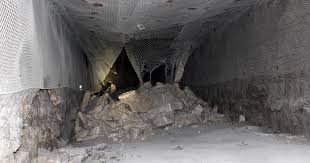
Nuke dump managers: There was waste near ceiling collapse ,By SUSAN MONTOYA BRYAN November 17, 2018 ALBUQUERQUE, N.M. (AP)— Operations at the federal government’s nuclear waste repository in southern New Mexico resumed Friday as managers acknowledged there was radioactive waste in the area where a portion of the underground facility’s ceiling collapsed earlier this week.The acknowledgement came a day after the U.S. Energy Department announced there had been a rock fall at the Waste Isolation Pilot Plant. The agency’s office in Carlsbad initially said there was no waste in the area, but watchdogs voiced concerns.
The radioactive waste included two canisters that were encapsulated in holes bored into the salt formation that makes up the walls and ceilings of the repository and its underground disposal rooms. There also were pieces of equipment in the room where the collapse happened that were contaminated by a 2014 radiation release.
Watchdogs pointed to agency documents and testimony during a recent hearing, saying officials knew what was in the room.
“For them to say there’s no waste, that’s just worse than false,” said Don Hancock with the Southwest Research and Information Center, an Albuquerque-based watchdog group. “Documents available to the public show 320,000 pounds of contaminated equipment in the room. That is waste. They know that.”
Hancock said the equipment contains fuel and other fluids that have never been drained, since crews have been kept out of the area for more than two years due to safety concerns.
Wednesday’s collapse prompted an evacuation. Workers heard a loud thud while doing inspections underground, so they left the area and all work was stopped………..
Access in the underground disposal area has been limited in the wake of the 2014 radiation release, which was caused by an inappropriately packed drum of waste that had come from Los Alamos National Laboratory. That release contaminated part of the area, forcing the closure of the repository for nearly three years and resulting in a costly recovery. https://apnews.com/b5902544d58f4b10bd352f15f0651a5d
Managers at the federal government’s nuclear waste repository in southern New Mexico have reported a rock fall in an area of the underground facility that is off-limits to employees. CARLSBAD, N.M. (AP)— Managers at the federal government’s nuclear waste repository in southern New Mexico have reported a rock fall in an area of the underground facility that is off-limits to employees.
The U.S. Energy Department says the fall happened Wednesday evening. Workers heard a loud thud while doing inspections underground so they left the area and all work was stopped.
Officials said there were no injuries.
Rock falls are not uncommon in areas where crews have been unable to perform regular maintenance to shore up the walls and ceilings of the salt caverns that have been excavated for disposal of radioactive waste.
This week’s rock fall happened in a disposal room that does not contain any waste. A team is planning an inspection before operations resume at the Waste Isolation Pilot Plant.
By: Leo Shane III WASHINGTON — An appeals court will force Veterans Affairs officials to identify how many troops may have been exposed to radioactive debris from a 1966 plane crash, a move that supporters hope will be the precursor to a class-action lawsuit against the department for overdue benefits.
On Tuesday, the U.S. Court of Appeals for Veterans Claims made the unusual ruling demanding the records’ release six weeks after VA lawyers argued the information is nearly impossible to obtain, given aging and missing military records from the accident.
But the court, by a 6-3 ruling, gave the department 30 days to determine the number of military personnel assigned to the accident clean-up, the number of veterans who have applied for benefits connected to the event, and the number who have been denied compensation. That information will be used to decide how a lawsuit on the benefits denial may proceed.
Veterans involved in the accident have been unsuccessfully petitioning VA on their case since the mid-1970s, after a host of strange cancers and other illnesses began appearing among individuals involved.
In January 1966, seven airmen were killed and four more injured when a B-52 crashed into a KC-135 during a refueling mission off the coast of Spain. The B-52 was carrying four nuclear weapons at the time of the accident, and two of them exploded near the town of Palomares, spreading radioactive plutonium over hundreds of acres.
U.S. officials quickly ordered military personnel into the area to collect contaminated debris, crops and soil in an effort to repair the damage. But veterans involved in that cleanup say they were given no protective clothing or respiratory devices, and told very little about the potential long-term health effects from exposure to the nuclear material.
Earlier this year, the appeals court ruled in a separate case that veterans can file suit against the Department of Veterans Affairs as a class rather than individuals, in limited circumstances.
Since then, legal experts have been monitoring a host of lawsuits before the court to see which could be the first class recognized, a move which will set important precedents for future legal cases.
The three judges who argued against the records request in the Palomares lawsuit said the move would effectively force VA to justify the need for a class-action lawsuit against itself, and that the majority ignored concerns that Defense Department records for the incident may not exist.
But the majority opinion noted that no final decision on whether to recognize a class of Palomares has been made, and data on the denied benefits is the sole property of VA, inaccessible in any way for outsiders.
Plaintiffs in the lawsuit have contended that more than 1,600 veterans should be eligible for disability benefits related to the toxic exposure, but VA thus far has denied their requests because not enough scientific evidence exists to classify all of the health problems as service-related illnesses.
THE DEPARTMENT OF TOXIC SUBSTANCES CONTROL DENIES RISK THAT IT CREATED BY DELAYING THE LONG PROMISED CLEANUP. November 9, 2018, Denise Duffield, 310-339-9676 or dduffield@psr-la.org, Melissa Bumstead 818-298-3182 or melissabumstead@sbcglobal.net, Nov 9, 2018Last night, the Woolsey fire burned the contaminated Santa Susana Field Laboratory (SSFL), a former nuclear and rocket engine testing site. Footage from local television showed flames surrounding rocket test stands, and the fire’s progress through to Oak Park indicates that much of the toxic site burned.
A statement released by the California Dept. of Toxic Substances Control (DTSC) said that its staff, “do not believe the fire has caused any releases of hazardous materials that would pose a risk to people exposed to the smoke.” The statement failed to assuage community concerns given DTSC’s longtime pattern of misinformation about SSFL’s contamination and its repeated broken promises to clean it up.
“We can’t trust anything that DTSC says,” said West Hills resident Melissa Bumstead, whose young daughter has twice survived leukemia that she blames on SSFL and who has mapped 50 other cases of rare pediatric cancers near the site. Bumstead organized a group called “Parents vs. SSFL” and launched a Change.org petition demanding full cleanup of SSFL that has been signed by over 410,000 people. “DTSC repeatedly minimizes risk from SSFL and has broken every promise it ever made about the SSFL cleanup. Communities throughout the state have also been failed by DTSC. The public has no confidence in this troubled agency,” said Bumstead.
Nuclear reactor accidents, including a famous partial meltdown, tens of thousands of rocket engine tests, and sloppy environmental practices have left SSFL polluted with widespread radioactive and chemical contamination. Government-funded studies indicate increased cancers for offsite populations associated with proximity to the site, and that contamination migrates offsite over EPA levels of concern. In 2010, DTSC signed agreements with the Department of Energy and NASA that committed them to clean up all detectable contamination in their operational areas by 2017. DTSC also in 2010 committed to require Boeing, which owns most of the site, to cleanup to comparable standards. But the cleanup has not yet begun, and DTSC is currently considering proposals that will leave much, if not all, of SSFL’s contamination on site permanently.
Dr. Robert Dodge, President of Physicians for Social Responsibility-Los Angeles, shares the community’s concerns. “We know what substances are on the site and how hazardous they are. We’re talking about incredibly dangerous radionuclides and toxic chemicals such a trichloroethylene, perchlorate, dioxins and heavy metals. These toxic materials are in SSFL’s soil and vegetation, and when it burns and becomes airborne in smoke and ash, there is real possibility of heightened exposure for area residents.”
Dodge said protective measures recommended during any fire, such as staying indoors and wearing protective face masks, are even more important given the risks associated with SSFL’s contamination. Community members are organizing a campaign on social media to demand that DTSC release a public statement revealing the potential risks of exposure to SSFL contamination related to the fire.
But for residents such as Bumstead, worries will remain until SSFL is fully cleaned up. “When I look at that fire, all I see is other parents’ future heartache,” said Bumstead, “And what I feel is anger that if the DTSC had kept its word, we wouldn’t have these concerns, because the site would be cleaned up by now.”
Physicians for Social Responsibility-Los Angeles (PSR-LA) is the largest chapter of the national organization Physicians for Social Responsibility and has worked for the full cleanup of SSFL for over 30 years.. PSR-LA advocates for policies and practices that protect public health from nuclear and environmental threats and eliminate health disparities.
Parents vs. SSFL is a grassroots group of concerned parents and residents who demand compliance with cleanup agreements signed in 2010 that require a full cleanup of all radioactive and chemical contamination at the Santa Susana Field Laboratory.
L.A.’s Secret Meltdown; Simi Valley, CA(1959)Largest Nuclear Incident in U.S. history.
LA’s Nuclear Secret: Part 1 link https://www.nbclosangeles.com/investigations/LA-Nuclear-Secret-327896591.html– Sep 22, 2015 Tucked away in the hills above the San Fernando and Simi valleys was a 2,800-acre laboratory with a mission that was a mystery to the thousands of people who lived in its shadow,By Joel Grover and Matthew GlasserThe U.S. government secretly allowed radiation from a damaged reactor to be released into air over the San Fernando and Simi valleys in the wake of a major nuclear meltdown in Southern California more than 50 years ago — fallout that nearby residents contend continues to cause serious health consequences and, in some cases, death. LA’s Nuclear Secret: Timelines, Documents, FAQ
Those are the findings of a yearlong NBC4 I-Team investigation into “Area Four,” which is part of the once-secret Santa Susana Field Lab. Founded in 1947 to test experimental nuclear reactors and rocket systems, the research facility was built in the hills above the two valleys. In 1959, Area Four was the site of one of the worst nuclear accidents in U.S. history. But the federal government still hasn’t told the public that radiation was released into the atmosphere as a result of the partial nuclear meltdown.
Now, whistleblowers interviewed on camera by NBC4 have recounted how during and after that accident they were ordered to release dangerous radioactive gases into the air above Los Angeles and Ventura counties, often under cover of night, and how their bosses swore them to secrecy.
In addition, the I-Team reviewed over 15,000 pages of studies and government documents, and interviewed other insiders, uncovering that for years starting in 1959, workers at Area Four were routinely instructed to release radioactive materials into the air above neighboring communities, through the exhaust stacks of nuclear reactors, open doors, and by burning radioactive waste.
How It Began
On July 13, 1959, the day of the meltdown, John Pace was working as a reactor operator for Atomics International at Area Four’s largest reactor, under the watch of the U.S. government’s Atomic Energy Commission.
“Nobody knows the truth of what actually happened,” Pace told the I-Team.
In fact, Pace said, the meltdown was verging on a major radioactive explosion.
“The radiation in that building got so high, it went clear off the scale,” he said.
To prevent a potentially devastating explosion, one that in hindsight the 76-year-old Pace believes would have been “just like Chernobyl,” he and other workers were instructed to open the exhaust stacks and release massive amounts of radiation into the sky.
“This was very dangerous radioactive material,” he said. “It went straight out into the atmosphere and went straight to Simi Valley, to Chatsworth, to Canoga Park.”
Pace and his co-workers frantically tried to repair the damaged reactor. Instead, he said they realized, their efforts were only generating more radioactive gas. So for weeks, often in the dark of night, Pace and other workers were ordered to open the large door in the reactor building and vent the radiation into the air.
“It was getting out towards the public,” he said. “The public would be bombarded by it.”
Pace said he and his co-workers knew they were venting dangerous radiation over populated areas, but they were following orders.
“They felt terrible that it had to be done,” he said. “They had to let it out over their own families.”
Area Four workers “were sworn to secrecy that they would not tell anyone what they had done,” Pace explained.
He remembered his boss getting right in his face and saying, “You will not say a word. Not one word.”
That was more than five decades ago, but radioactive contamination didn’t just vanish. It remains in the soil and water of Area Four and in some areas off-site, according to state and federal records obtained by the I-Team. And, evidence suggests that the fallout could be linked to illnesses, including cancer, among residents living nearby.
Arline Mathews lived with her family in Chatsworth, downwind of Area Four during some of the radiation releases. Her middle son, Bobby, was a champion runner on the Chatsworth High School track team for three years, running to the Santa Susana Field Lab and back to school every day. Bobby died of glioblastoma, a rare brain cancer often linked to radiation exposure. Mathews said there is no known family history of cancer and she blames the radiation from Area Four for her son’s illness.
“He was exposed to the chemical hazardous waste and radioactivity up there,” Mathews said. “There’s no getting over the loss of son.”
The Government Cover-up
Six weeks after the meltdown, the Atomic Energy Commission issued a press release saying that there had been a minor “fuel element failure” at Area Four’s largest reactor in July. But they said there had been “no release of radioactive materials” to the environment.
“What they had written in that report is not even close to what actually happened,” Pace said. “To see our government talk that way and lie about those things that happened, it was very disappointing.”
In 1979, NBC4 first broke the story that there was a partial meltdown at Area Four’s largest reactor, called the Sodium Reactor Experiment. But at the time, the U.S. government was still saying no radiation was released into the air over LA.
But during its current yearlong investigation, the I-Team found a NASA report that confirmed “the 1959 meltdown… led to a release of radioactive contaminants.”
For years, NASA used part of the site for rocket testing and research.
More Radioactive Releases
After filing a Freedom of Information request, the I-Team obtained more than 200 pages of government interviews with former Santa Susana workers. One of those workers, Dan Parks, was a health physicist at Area Four in the 1960s.
In the early 60s, Parks said, he often witnessed workers releasing radiation into the sky through the exhaust stacks of at least three of Area Four’s ten nuclear reactors.
“They would vent it to the atmosphere,” he said. “The release was done with the flick of a switch.”
Radioactive Waste Up in Smoke
Parks said he often witnessed workers releasing radioactive smoke into the air when they disposed of barrels of radioactive waste from Area Four’s 10 nuclear reactors.
“We were all workers,” he said. “Just taking orders.”
Workers would often take those barrels of waste to a pond called “the burn pits” and proceed to shoot the barrels with a high-powered rifle causing an explosion. The radioactive smoke would drift into the air over nearby suburbs and toward a summer camp for children.
“It was a volatile explosion, beyond belief,” Parks said.
Whatever direction the wind was blowing, the radioactive smoke would travel that way.
“If the wind was blowing to the Valley, it would blow it in the Valley,” he said.
Ralph Powell, who worked as a security officer at Area Four in the mid-60s, recalled being blanketed by that radioactive smoke.
“I saw clouds of smoke that was engulfing my friends, that are dying now,” Powell said.
Powell believes it wasn’t just his friends who suffered the consequences. He fears he may have exposed his own family to radiation, tracking it home on his clothes and car.
While Powell was working at Area Four, his son Michael was diagnosed with leukemia — a cancer linked to radiation exposure — and died at age 11.
“I suspect it caused the death of my son,” he said. “I’ve never gotten that out of my mind.”
Toxic Chemical Contamination
In addition to the radiation, dozens of toxic chemicals, including TCE and Perchlorate, were also released into the air and dumped on the soil and into ground and surface water from thousands of rocket tests conducted at the Santa Susana Field lab from the 1950s to 80s. The tests were conducted by NASA, and by Rocketdyne, a government aerospace contractor.
According to a federally funded study obtained by the I-Team, “emissions associated with rocket engine testing” could have been inhaled by residents of “West Hills, Bell Canyon, Dayton Canyon, Simi Valley, Canoga Park, Chatsworth, Woodland Hills, and Hidden Hills.”
Contamination Moves into Neighborhoods
Radiation released at Area Four continues to contaminate the soil and water of the Santa Susana Field Lab.
In 2012, the U.S. Environmental Protection Agency completed a $40 million soil test of the site and found 423 hot spots — places contaminated with high levels of man-made radiation.
Other studies and government documents obtained by the I-Team show that radiation has moved off-site, and has been found in the ground and water in suburbs to the south, northeast and northwest of the Field Lab.
“Radiation doesn’t know any boundaries,” said Dr. Robert Dodge, a national board member of the Nobel Prize-winning nonprofit Physicians For Social Responsibility, which studies the health effects of radiation.
Dodge, who has reviewed numerous government and academic studies about the contamination at Santa Susana, said he believes the contamination has spread far beyond the facility’s borders.
“If the wind is blowing and carrying radiation from Santa Susana, it doesn’t stop because there’s a fence,” he said.
One of the places radiation has been found, in a 1995 study overseen by the U.S. EPA, was the Brandeis-Bardin Institute in Simi Valley. The Institute is a nationally-known center of Jewish learning, and the home to Camp Alonim, a beloved summer sleepaway camp that has hosted some 30,000 children.
In December 1995, The Brandeis-Bardin Institute filed a federal lawsuit against the present and past owners of the Santa Susana Field Lab, alleging that toxic chemicals and radiation from the field lab “have subsequently seeped into and come to be located in the soil and groundwater” of Brandeis “is injurious to the environment” and “will cause great and irreparable injury.”
Brandeis settled the lawsuit in a confidential agreement in 1997.
A spokesman for the Brandeis-Bardin Institute, Rabbi Jay Strear, told NBC4 that the groundwater and soil is “tested routinely,” and the results have shown the “the site is safe.”
The I-Team asked Brandeis-Bardin to provide NBC4 with those test results showing the site is safe and free of hazardous substances. The Institute refused, and in an email said “we are not in a position to devote the required staff time to respond to your more detailed inquiries, nor do we see the necessity for doing so.”
A government scientist who has studied the contamination at Santa Susana told the I-Team he thinks there’s a continued threat of radiation and toxic chemicals flowing from the field lab to places like Brandeis-Bardin, via groundwater and airborne dust.
Clusters of Cancer
Researchers inside and out of government have contended that the radiation and toxic chemicals from Santa Susana might have caused many cancer cases.
“The radiation that was released in 1959 and thereafter from Santa Susana is still a danger today,” Dr.Dodge said. “There is absolutely a link between radiation and cancer.”
The I-Team tracked down dozens of people diagnosed with cancer and other illnesses who grew up in the shadow of Santa Susana — in Canoga Park, West Hills, Chatsworth, Thousand Oaks, Simi Valley. Many of them believe their cancers were caused by radiation and chemicals from the field lab.
Kathryn Seltzer Carlson, 56, and her sisters, Judy and Jennifer, all grew up in Canoga Park around the time of the nuclear meltdown and for years after, and all have battled cancer.
“I played in the water, I swam in the water, I drank the water” that ran off the Santa Susana Field Lab, said Carlson, who finished treatment for ovarian cancer earlier this year and is now undergoing chemotherapy for lymphoma. “I’ve had, I don’t know how many cancers.”
Bonnie Klea, a former Santa Susana employee who has lived in West Hills since the 60s, also battled bladder cancer, which is frequently linked to radiation exposure.
“Every single house on my street had cancer,” Klea said.
A 2007 Centers for Disease Control study found that people living within two miles of the Santa Susana site had a 60 percent higher rate of some cancers.
“There’s some provocative evidence,” said Dr. Hal Morgenstern, an epidemiologist who oversaw the study. “It’s like circumstantial evidence, suggesting there’s a link” between the contamination from Santa Susana and the higher cancer rates.
Silence From the Government
For more than two months, the I-Team asked to speak with someone from the U.S. Department of Energy (DOE), the federal agency that’s responsible for all nuclear testing, to ask why workers were ordered to release dangerous radiation over Los Angeles, why the DOE has never publicly admitted this happened, and what it plans to do to help get the site cleaned up.
The DOE emailed the I-Team, “We will not have anyone available for this segment.”
So the I-Team showed up at a public meeting this month about Santa Susana and asked the DOE’s project manager for the site, Jon Jones, to speak with us. He walked away and wouldn’t speak.
Will the Contamination Ever Be Cleaned Up?
Community residents, many stricken with cancer and other radiation-related illnesses, have been fighting for years to get the government and the private owners of the Santa Susana Field Lab to clean up the contamination that remains on the site.
But efforts in the state legislature and state agencies that oversee toxic sites have, so far, stalled.
But residents, with the support of some lawmakers, continue to fight for a full cleanup.
“People are continuing to breathe that (radiation) in and to die,” Chatsworth resident Arline Mathews said.
“See that this is done immediately, before more lives are lost.”
When America lost a nuclear bomb, Fosters.com, By D. Allan Kerr news@seacoastonline.com 11 Nov 18, In January 1966, an American B-52 bomber collided mid-air with a refueling tanker off the coast of Spain. The resulting fiery crash claimed the lives of seven crew members.
While the loss of life was devastating, there was potential for even greater catastrophe – the B-52 was carrying four fully-loaded hydrogen bombs.
Three of the bombs were located within 24 hours, in the vicinity of a Spanish fishing village called Palomares. The fourth was nowhere to be found.
With the Cold War mired in a deep chill, the United States dispatched an entire Navy armada to try to locate the missing bomb, which was believed to have gone into the Atlantic Ocean. Among those involved in the search was a 23-year-old Navy officer named Donald Craig.
Craig was an ensign at the time, having graduated the previous year from Officer Candidate School at Newport, Rhode Island. He was serving aboard his first vessel, the minesweeper USS Sagacity (MSO 469).
As it happened, Sagacity was near Barcelona, Spain, on a Mediterranean cruise when the tragedy occurred. The minesweeper was dispatched to the scene and over the next several weeks took part in the massive search for the missing nuke.
Craig is now 76 years old, retired, and a longtime resident of Kittery Point, Maine. He still recalls the hunt for the missing nuclear bomb, and the race to get to it before the Soviet Union.
He also remains frustrated on behalf of fellow veterans who say they are dealing with adverse health effects from radiation exposure during the incident – with no assistance from the government that sent them there.
“We knew nothing,” Craig said recently of the possible aftereffects. “We were just out there doing our job.”
A disaster begins
It should have been a routine operation…………
At one point the Navy lost the bomb again in the process of bringing it to the surface, and it sank even deeper into the ravine. Eventually, the bomb and an unmanned vehicle, which had become entangled in its parachute lines, were hauled onto the deck of the submarine rescue ship USS Petrel nearly three months after the initial tragedy.
But then the United States government had to deal with a whole separate controversy – the environmental repercussions of an unleashed hydrogen bomb.
Plutonium blowing in the wind
Members of the U.S. Air Force and residents of Palomares were all exposed to radioactivity from the two bombs that had broken apart on land. Craig recalls winds of about 30 knots at the time.
“Plutonium was blowing in the wind, it was all over the place there,” he said. “They (Air Force personnel) were sitting on the edge of the crater eating their lunches.”
An area of about one square mile was contaminated, including the village’s tomato crop. American servicemen removed this soil and brought it back to South Carolina for disposal.
But in a rather bizarre attempt to show there was no danger, the U.S. government fed the contaminated tomatoes to our troops for “breakfast, lunch and dinner,” according to a June 2016 New York Times article. The U.S. ambassador to Spain and the Spanish minister of tourism swam at a nearby beach in front of a crowd of reporters to prove the waters were safe.
“If this is radioactivity, I love it!” Ambassador Angier Biddle Duke told the media.
Somehow, no civilians on the ground were seriously harmed by falling debris from the aircraft collision. America pledged to the Spanish government the site would be cleared of contamination.
“The main objective here is to leave Spain as we found it,” Duke told LIFE magazine back in 1966.
But as recently as 2015, then-Secretary of State John Kerry and Spain’s foreign minister agreed to negotiate a binding agreement to resume cleanup efforts and further removal of contaminated soil from the site. While no substantive findings have verified serious health issues among the villagers, studies of wildlife such as snails have turned up high radioactive levels.
Craig, however, is particularly outraged by the treatment of Air Force veterans who took part in cleanup efforts at Palomares and now say they are suffering ill health effects as a result. The 2016 Times article featured several former servicemen now suffering from cancer and other ailments.
The Air Force has long insisted there were no serious adverse effects from the incident, so these conditions are not covered under Veterans Administration benefits. An estimated 1,600 veterans took part in the cleanup.
“That shouldn’t happen. They should absolutely be taken care of,” Craig said. ”(The government) did not look after their safety, and there are a lot of people suffering for it now.”
Last year, a number of veterans filed a lawsuit in Connecticut over disability benefits they were denied because the Pentagon refused to release records and reports related to the incident………….
California’s Woolsey Fire Now Threatening Malibu Went Through The Site Of A Nuclear Accident First, Forbes, Eric Mack 9 Nov 18 out of control and heading into populated areas of Malibu. All residents must evacuate immediately. ”
A mandatory evacuation is now in effect for the entire city of Malibu in southern California as a fast-moving fire dubbed the Woolsey Fire burns through the suburban hills and canyons between Simi Valley and the Pacific coast.
“MANDATORY evacuation now in effect for all of City of Malibu, and all areas south of 101 Fwy from Ventura County line to Las Virgenes / Malibu Cyn, southward to the ocean due to Woolsey Fire. Use PCH to evacuate, avoid canyons,” reads a 10 a.m. PT update from the city.
UPDATE: According to the latest alert from the city of Malibu at 12:27 p.m. PT, the Woolsey Fire “is now burning out of control and heading into populated areas of Malibu. All residents must evacuate immediately. “
A mandatory evacuation is now in effect for the entire city of Malibu in southern California as a fast-moving fire dubbed the Woolsey Fire burns through the suburban hills and canyons between Simi Valley and the Pacific coast.
“MANDATORY evacuation now in effect for all of City of Malibu, and all areas south of 101 Fwy from Ventura County line to Las Virgenes / Malibu Cyn, southward to the ocean due to Woolsey Fire. Use PCH to evacuate, avoid canyons,” reads a 10 a.m. PT update from the city. ……….
The blaze began with a brush fire ignited near the closed Santa Susana Field Laboratory (also referred to as the Rocketdyne facility) south of Simi Valley Thursday afternoon and has since grown to over 10,000 acres and claimed an undetermined number of structures.






 nuclear-news