Natural Resources Defense Council supports restart of NextEra’s Duane Arnold nuclear station, a known danger.
March 5, 2026, https://beyondnuclear.org/nrdc-lends-support-to-restart-closed-reactor/
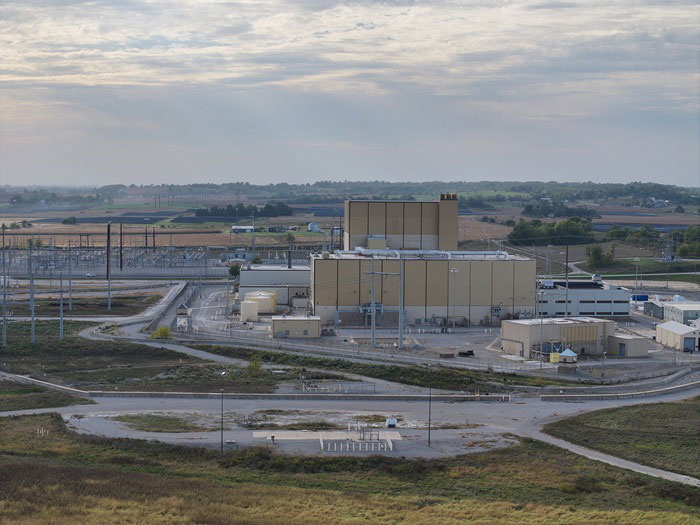
Natural Resources Defense Council supports the proposed restart of Iowa’s permanently closed Duane Arnold nuclear power station on assurances of adequate public safety upgrades to a Fukushima-style reactor from the US Nuclear Regulatory Commission
In a disappointing reversal of its previously critical stance toward nuclear power and especially the dangerously flawed 1960s vintage GE Mark I boiling water reactor, a major green group now appears to be supporting the restart of exactly that reactor model. The Natural Resources Defense Council’s stated in a blog “Rising Demand, Real Choices” that it had submitted comments to the Nuclear Regulatory Commission supporting the restart of the permanently closed and decommissioning GE Mark I Duane Arnold nuclear reactor in Iowa. NRDC “filed comments today at the Nuclear Regulatory Commission supporting an early step in the reactor’s restart: the transfer of the plant’s license to NextEra.” Duane Arnold is nearly identical to the three reactors that melted down in Japan in March 2011.
NRDC nuances its advocacy for the restart with, “To be clear, NRDC’s long-held concerns regarding nuclear energy—including issues related to siting, cost, safety risks, waste management, water use, mining supply chain issues, and community impacts—remain unchanged and must be addressed. The Duane Arnold plant will have to prove it can operate safely and responsibly.”
Let the record reflect, “easier said than done” as this nation’s nuclear regulatory agencies, from the beginning, with the Atomic Energy Commission (AEC) first licensing Duane Arnold on November 24, 1974, knowing full well in 1972 that the undersized design of the GE Mark I boiling water reactor containment would very likely fail under the tremendous overpressurization and explosive hydrogen gas generated under severe nuclear accident conditions and their top safety official encouraged development to be halted. That scientifically confirmed warning was not only ignored but suppressed for years by AEC fears that the halt of construction and cancellations would derail the government plan for a massive nuclear power build up. Duane Arnold was one of the those obfuscated start-ups.
Since then, the US Nuclear Regulatory Commission (NRC) is identified as a captured regulator and an expert at stonewalling reactor safety concerns from fire protection for safe reactor shutdown to ignoring currently projected climate change impacts on severe nuclear accident risks and frequency.
The NRC relicensed Duane Arnold on December 16, 2010, with an initial extension of 20 years to February 21, 2034 with the built-in containment vulnerability. Eighty-five days later, the Fukushima nuclear accident demonstrated a 100% containment failure rate under overpressurization from hydrogen gas detonations for the three units at that were at full power. NRC wrangled for years with the weak, undersized containment vulnerability only to allow the fundamental design flaw to remain unchecked to date.
Duane Arnold is presently utility certified to the NRC as “permanently” closed and defueled reactor for the purpose of decommissioning in SAFSTOR mode or “deferred dismantling”. The 615 megawatts electric Mark I boiling water reactor is owned by three utility entities; the majority owner, NextEra Energy Resources (70% interest) and two minority owners, Central Iowa Power Cooperative (CIPCO with 20% interest) and Corn Belt Power Cooperative (10% interest). The utilities have submitted an application to the NRC to consolidate a 100% ownership transfer to NextEra as sole owner and a plan to reverse the decommissioning certification to instead seek NRC approval for a likely to exceed $1.6 billion rehabilitation, refueling and restart effort by 2029. Google has signed with NextEra for a Power Purchase Agreement as the primary electricity customer for an expanded AI infrastructure, cloud computing and energy guzzling data centers. Post-consolidation, CIPCO, at 0%, will purchase Duane Arnold surplus electricity and Corn Belt Power Cooperative, at 0%, will sell its share to NextEra.
In Beyond Nuclear’s view, as well as many public safety, environmental protection and safe energy advocates, the immediate, permanent closure, decommissioning and environmental cleanup of Duane Arnold and all GE Mark I boiling water reactors are warranted in the ever extending aftermath of the Fukushima Daiichi’s multiple hydrogen explosions. The subsequent reactor core meltdowns breached the universally flawed GE Mark I containment design and construction, releasing harmful radiation downwind into the atmosphere and recurring radioactive batch releases from the wreckage of the three melted reactor cores into the Pacific Ocean that persist today.
The uneconomical, aging and dangerously flawed Duane Arnold nuclear power station was first announced by NextEra Energy Resources in a Federal Register Notice of its intent to the NRC on March 2, 2020 to permanently close and defuel the reactor by October 30, 2020.
Then, on August 10, 2020, a fierce “derecho” with severe thunderstorms, a deluge of rain and straight line winds reaching up to 140 mph swept across the hundreds of miles of prairie knocking out vast stretches of the electric grid including all six offsite power lines to 100% of Duane Arnold’s safety systems causing the reactor to SCRAM. Onsite back up generators restored critical reactor cooling systems but the badly damaged site included the collapse of the reactor’s cooling towers. NextEra’s subsequent damage assessment concluded, “[O]ur evaluation found that replacing those towers before the site’s previously-scheduled decommissioning on Oct. 30, 2020, was not feasible.” NextEra elected to immediately set the date for permanent closure of Duane Arnold, a Fukushima-style reactor, a notorious General Electric Mark I boiling water reactor even in 1972 under warnings from the Atomic Energy Commission safety officials that it was not safe.
We are now coming up on the 15th commemoration of the triple meltdown of Japan’s Fukushima Daiichi reactors caused by a combination of natural disasters that overwhelmed the significantly flawed and identified vulnerable design problem built into every GE Mark I reactors containments. These containments are now demonstrated to have a 100% failure rate under severe accident conditions as were all three Fukushima reactors at full power on March 11, 2011 experiencing devastating hydrogen gas explosions and widespread radioactive releases. This widespread radioactive contamination of the biosphere (land and sea) from the fallout persists to date and indefinitely into the future.
Where Fukushima’s radioactive releases largely blew out over the Pacific Ocean, a radioactive breach from the volumetrically undersized Mark I reactor containment system in the event of a severe over-pressurization accident, will instead spread out over US populations sickening those caught in the fallout, contaminating farms, pastures and agriculture, and similarly dislocating local, commercial and industrial economies.
If restarted, as NRDC supports, Duane Arnold initial 20-year license renewal (40 to 60 years) will expire on February 21, 2034. And well before that date, NextEra will most assuredly file an application to extend the operating license of a still fundamentally flawed and vulnerable reactor with an additional 20 year subsequent license renewal application (60 to 80 years) out to February 21, 2054, presently without a hard look at a changing climate that might already have been central to it closure.
Beyond Nuclear and the Sierra Club presently have a “petition for judicial review” pending ruling from an October 30, 2025 oral argument in the US Court of Appeals for the District of Columbia Circuit, Beyond Nuclear and Sierra Club v. US NRC. The petitioners through legal counsel have raised a purely legal issue of whether the US NRC, as a matter of law, can refuse to evaluate climate change change impacts (derechos, increasingly severe hurricanes, flooding, sea level rise, etc.) on the risk and frequency of severe nuclear accidents. The NRC is illegally entrenched in refusing to perform a lawfully required environment impact statement that fully evaluates the impact of climate change, saying only that such an evaluation is “out of scope” of reactor licensing.
NRC buckles to White House and licenses dangerous TerraPower reactor
5 Mar 2026, , https://beyondnuclear.org/nrc-buckles-to-white-house-and-licenses-dangerous-terrapower-react
Nuclear Regulatory Commission license of dangerous new reactor risks lives
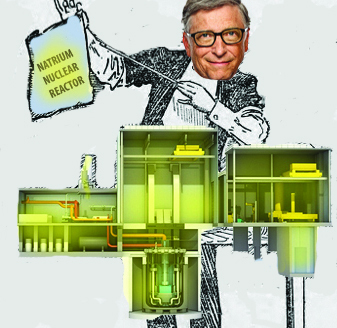
Beyond Nuclear decries NRC decision to put public safety aside and buckle to Trump orders to license a Gates reactor known as “Cowboy Chernobyl”
Last September, the then three sitting commissioners at the US Nuclear Regulatory Commission insisted during a Senate hearing they would put safety first when considering the approval of new reactor projects.
Senators had raised fears that new executive orders issued by the White House last May that demanded fast-tracking new reactor projects, could jeopardize the commissioners’ judgement. The Senators also asked if the commissioners feared losing their jobs if they refused to license a reactor they viewed as dangerous. Two said they did.
“This week we learned that the now five members of the NRC commission are all too willing to capitulate to Trump’s rubber stamp orders, protect their jobs and sacrifice public safety in order to license a new reactor design that is known to be extremely dangerous,” said Paul Gunter, director of the reactor oversight project at Beyond Nuclear. The two new commissioners are nuclear industry insiders chosen by the White House.
Gunter’s remarks came after the NRC commissioners voted unanimously this week to grant a construction license to the Bill Gates company TerraPower’s 345-megawatt sodium-cooled small modular reactor, designated for a site in Kemmerer, Wyoming.
“It appears that the White House influence is working,” Gunter said. “But pressuring regulators to cut safety corners and fast-track a technology as inherently dangerous as nuclear power is gambling with the lives of thousands and possibly millions of people.”
Dr. Edwin Lyman, a physicist at the Union of Concerned Scientists, warned last December after NRC staff approved the TerraPower design, that the “fast” reactor, known as the Natrium, is deeply flawed and highly vulnerable to a serious accident.
“Make no mistake, this type of reactor has major safety flaws compared to conventional nuclear reactors.” Lyman said. “The potential for rapid power excursions and the lack of a real containment make the Kemmerer plant a true ‘Cowboy Chernobyl.’”
“The White House, through its executive orders and by exerting control over the NRC, has embarked on a dangerous dismantling of essential safety regulations,” Gunter said.
The new reactor rush puts the US on a path to another nuclear disaster while wasting precious time and billions of taxpayer dollars better spent on implementing a rapid and widespread renewable energy program. This would answer the country’s energy needs faster and without the extreme risks and ever soaring costs posed by nuclear power technology,” Gunter concluded.
Coastal erosion risks to planned Sizewell C nuclear power station
Letter Nicholas Malins-Smith: : The comment by Sir David King, the former
chief scientific adviser, about how the eastern side of Britain is
“tilting into the sea”, particularly around Norfolk and Suffolk, is the
result of more than just aggressive coastal erosion caused by climate
change (“Residents lambast ‘nuts’ location of Sizewell C as coastal
erosion gains pace”, Report, February 24).
Britain is still experiencing
land mass movement where the north and western parts are slowly rising,
while the south and eastern parts are sinking. This phenomenon is a very
gradual geological process known as “glacial isostatic adjustment”
(GIA). During the last ice age, the weight of massive ice sheets pressed
down on Scotland and northern Britain, forcing the land to subside.
Meanwhile, the southern part of Britain acted as a counterweight and was
raised slightly. The melting of the ice sheets resulted in the land that
was pressed down to begin slowly rising, causing a “see-saw” effect
that lowers the south by an approximate equal amount.
The “tilting”
effect of GIA has been going on quite independently of more recent concerns
about sea-level rise caused by climate change, although the combination
exacerbates the likely impact on certain coastal areas.
The Suffolk
shoreline has long known about the effects of coastal erosion. Most of the
original town of Dunwich was lost to the sea in storms a very long time
ago. The little that is left of Dunwich is about 3.5 miles north of where
the Sizewell C nuclear power station will be built.
FT 4th March 2026, https://www.ft.com/content/bb9265e4-a235-4830-8c4b-49b6953cf753
Capenhust-based nuclear facility faces prosecution after uranium leak
A WIRRAL company that transports uranium overseas will be prosecuted for
health and safety offences following an incident involving a leak at its
facility. The Office for Nuclear Regulation (ONR) has notified
Capenhurst-based Urenco ChemPlants Ltd that it faces prosecution
alongside contractor Babcock Critical Services Ltd after the incident in
2024. According to the ONR in February 2024 at the Tails
Management Facility on the Urenco UK Ltd. nuclear licensed
site in Capenhurst, a metal container holding almost 11
tonnes of uranium oxide powder fell from a forklift
truck, striking surrounding equipment within the facility.
Wirral Globe 4th March 2026, https://www.wirralglobe.co.uk/news/25905939.capenhust-based-nuclear-facility-faces-prosecution-uranium-leak/
Sellafield recruitment opens for Authorised Firearms Officers

The CNC has opened AFO recruitment at Sellafield as part of a rolling programme to sustain armed protection at one of the UK’s most sensitive nuclear sites.
The Civil Nuclear Constabulary (CNC) has opened recruitment for Authorised Firearms Officers (AFO) at Sellafield as part of a rolling national programme to sustain continuous armed protection at one of the UK’s most sensitive nuclear sites.
The CNC provides 24/7 armed policing to protect civil nuclear sites, materials and facilities across England and Scotland. Maintaining that capability requires ongoing recruitment and training to ensure operational resilience and a deterrent to those who would threaten critical national infrastructure………
Civil Nuclear Constabulary 3rd March 2026,
https://www.gov.uk/government/news/sellafield-recruitment-opens-for-authorised-firearms-officers
New Addition to List of Nuclear Near Catastrophes

By David Swanson, World BEYOND War, February 23, 2026, https://worldbeyondwar.org/new-addition-to-list-of-nuclear-near-catastrophes/
There are many lists of nuclear close calls. We have a new one to add.
On Monday I visited a site in Caracas, Venezuela, where, very early in the morning on January 3, two powerful missiles slammed into the top of a hill, several feet apart, both beneath a tall telecommunications tower. The tower is largely gone. Debris flew for great distances — many times the distance of 270 meters to a nuclear reactor (white in the background in the photo above on original) and nuclear storage facility. The Earth shook. Buildings a great distance away were damaged and glass windows broken. A building adjacent to the nuclear reactor had rooms most significantly damaged. Electricity was cut off to a wide area, including to the nuclear reactor.
Any use of force whatsoever on any target at all is excessive when attacking someone’s country with violence, but it’s likely that much less force than two massive missiles could have sufficed for the crime of depriving people of electricity and communications. It’s also possible that something could have gone slightly wrong, resulting in a need to evacuate millions of men, women, children, and infants.
Does this bode well for the crime, threatened yet again, of attacking Iran? Will care be taken to avoid nuclear disasters, or in fact will such care be strictly avoided?
Or if Trump loses interest in Iran, could worse be in store for Venezuela?
The site of this nearly nuclear attack was the Venezuelan Institute of Scientific Research, a non-military facility. The nuclear reactor is for medical purposes, and nuclear materials are returned to this site from hospitals for storage.
The missiles were reportedly fired from perhaps a kilometer away by an F-35 — a wonderful airplane with its own long list of horrors and disasters.
The attack put a halt to research at the institute, and — according to people who had worked there for 30 years — was the first crime of any kind committed on the campus.
Workers were able to use generators and then to restore some power to the reactor in 4 days and full power in 10 days. There is talk of rebuilding the tower. There has also been a proposal to build a memorial on the site.
Visiting this location was part of the fourth day of a peace delegation to Venezuela. See reports on the first three days here:
Babcock CEO responds to Rosyth nuclear handling concerns
Dunfermline Press 25th Feb 2026, By Hannah Shedden
Babcock International Group’s CEO has sought to reassure residents who are concerned about the potential presence of nuclear weapons or waste at Rosyth Dockyard.
Fears were raised after SNP councillor Brian Goodall said that iodine tablets to counteract the effects of radiation would need to be given to “half the population of Rosyth” if proposals to bring more nuclear subs to the dockyard went ahead.
Cllr Goodall highlighted the “seriousness of the implications” of providing a contingency dock for the Dreadnought class of vessels that could be carrying Trident missiles.
His comments last year then prompted a row between the councillor and Labour MP, Graeme Downie, who accused Cllr Goodall of spreading “misinformation” and “arguing against highly skilled nuclear jobs in the safe dismantlement of nuclear subs at Rosyth”.
The Press spoke to Babcock CEO, David Lockwood, and asked him what his response would be to those who are fearful about nuclear materials in Rosyth.
He said: “I would say that we are the largest nuclear company in the UK and probably have the most experience handling civilian and military waste than anyone else, so I think you can take a lot of assurance from that…………………..
https://www.dunfermlinepress.com/news/25885325.babcock-ceo-responds-rosyth-nuclear-handling-concerns/
Nuclear power station workers ‘failed to ensure safety’ after incident.

Nuclear watchdog said the electrical cabling failing presented a ‘significant potential risk’
Matthew Fulton, STV News, Feb 25th, 2026
Workers at a nuclear station in Ayrshire “failed to ensure safety” after an electrical cabling incident, according to the Office for Nuclear Regulation (ONR).
The ONR issued an improvement notice to EDF Energy following the incident at its Hunterston B site near West Kilbride.
In November, workers failed to ensure that the electrical cabling was “deployed safely” while undertaking work on the cooling water valves in one of the facilities on the site.
The independent nuclear regulator said that although no injuries were sustained, the incident presented a “significant potential risk to worker safety”.
The notice requires EDF Energy to review, revise and implement arrangements to ensure that all 415V portable equipment at Hunterston B is appropriately constructed, maintained, tested and controlled.
ows an incident at Hunterston B .
Feb 25th, 2026 at 10:59
Share this story
Posted in
Last updated Feb 25th, 2026 at 11:02
Workers at a nuclear station in Ayrshire “failed to ensure safety” after an electrical cabling incident, according to the Office for Nuclear Regulation (ONR).
The ONR issued an improvement notice to EDF Energy following the incident at its Hunterston B site near West Kilbride.
In November, workers failed to ensure that the electrical cabling was “deployed safely” while undertaking work on the cooling water valves in one of the facilities on the site.
The independent nuclear regulator said that although no injuries were sustained, the incident presented a “significant potential risk to worker safety”.
The notice requires EDF Energy to review, revise and implement arrangements to ensure that all 415V portable equipment at Hunterston B is appropriately constructed, maintained, tested and controlled.
Ad
The ONR called for EDF to “strengthen its risk assessment processes” and improve arrangements for personnel undertaking electrical work on the site.
Tom Eagleton, ONR’s Head of Safety Regulation, Decommissioning, Fuel and Waste sites, said: “The safety of workers at nuclear licensed sites is a key priority for us. While no one was hurt on this occasion, the potential for serious harm was significant.
“It’s essential that EDF Energy implements the necessary improvements to ensure this cannot happen again.”
The energy firm is required to comply with the notice by March 20……………….. https://news.stv.tv/west-central/hunterston-nuclear-station-workers-failed-to-ensure-safety-after-electrical-cabling-incident
‘Making America Unsafe Again’: Alarm Over Environmental Review Exemption for Nuclear Reactors
“I think the DOE’s attempts to cut corners on safety, security, and environmental protections are posing a grave risk to public health, safety, and our natural environment,” said one expert.
By Jessica Corbett, February 18, 2026, https://worth.com/trump-nuclear-safety-changes/
ess than a week after NPR revealed that “the Trump administration has overhauled a set of nuclear safety directives and shared them with the companies it is charged with regulating, without making the new rules available to the public,” the U.S. Department of Energy announced Monday that it is allowing firms building experimental nuclear reactors to seek exemptions from legally required environmental reviews.
Citing executive orders signed by President Donald Trump in May, a notice published in the Federal Register states that the DOE “is establishing a categorical exclusion for authorization, siting, construction, operation, reauthorization, and decommissioning of advanced nuclear reactors for inclusion in its National Environmental Policy Act (NEPA) implementing procedures.”
NEPA has long been a target of energy industries and Republican elected officials, including Trump. The exemption policy has been expected since Trump’s May orders—which also launched a DOE pilot program to rapidly build the experimental reactors—and the department said in a statement that even the exempted reactors will face some reviews.
“The U.S. Department of Energy is establishing the potential option to obtain a streamlined approach for advanced nuclear reactors as part of the environmental review performed under NEPA,” the DOE said. “The analysis on each reactor being considered will be informed by previously completed environmental reviews for similar advanced nuclear technologies.”
“The fact is that any nuclear reactor, no matter how small, no matter how safe it looks on paper, is potentially subject to severe accidents.”
However, the DOE announcement alarmed various experts, including Daniel P. Aldrich, director of the Resilience Studies Program at Northeastern University, who wrote on social media: “Making America unsafe again: Trump created an exclusion for new experimental reactors from disclosing how their construction and operation might harm the environment, and from a written, public assessment of the possible consequences of a nuclear accident.”
Foreign policy reporter Laura Rozen described the policy as “terrifying,” while Paul Dorfman, chair of the Nuclear Consulting Group and a scholar at the University of Sussex’s Bennett Institute for Innovation and Policy Acceleration, called it “truly crazy.”
As NPR reported Monday:
Until now, the test reactor designs currently under construction have primarily existed on paper, according to Edwin Lyman, director of nuclear power safety at the Union of Concerned Scientists, a nonprofit environmental advocacy group. He believes the lack of real-world experience with the reactors means that they should be subject to more rigorous safety and environmental reviews before they’re built.
“The fact is that any nuclear reactor, no matter how small, no matter how safe it looks on paper, is potentially subject to severe accidents,” Lyman said.
“I think the DOE’s attempts to cut corners on safety, security, and environmental protections are posing a grave risk to public health, safety, and our natural environment here in the United States,” he added.
Lyman was also among the experts who criticized changes that NPR exposed last week, after senior editor and correspondent Geoff Brumfiel obtained documents detailing updates to “departmental orders, which dictate requirements for almost every aspect of the reactors’ operations—including safety systems, environmental protections, site security, and accident investigations.”
While the DOE said that it shared early versions of the rules with companies, “the reduction of unnecessary regulations will increase innovation in the industry without jeopardizing safety,” and “the department anticipates publicly posting the directives later this year,” Brumfiel noted that the orders he saw weren’t labeled as drafts and had the word “approved” on their cover pages.
In a lengthy statement about last week’s reporting, Lyman said on the Union of Concerned Scientists website that “this deeply troubling development confirms my worst fears about the dire state of nuclear power safety and security oversight under the Trump administration. Such a brazen rewriting of hundreds of crucial safeguards for the public underscores why preservation of the Nuclear Regulatory Commission (NRC) as an independent, transparent nuclear regulator is so critical.”
“The Energy Department has not only taken a sledgehammer to the basic principles that underlie effective nuclear regulation, but it has also done so in the shadows, keeping the public in the dark,” he continued. “These long-standing principles were developed over the course of many decades and consider lessons learned from painful events such as the Chernobyl and Fukushima disasters. This is a massive experiment in the deregulation of novel, untested nuclear facilities that could pose grave threats to public health and safety.”
“These drastic changes may extend beyond the Reactor Pilot Program, which was created by President Trump last year to circumvent the more rigorous licensing rules employed by the NRC,” Lyman warned. “While the DOE created a legally dubious framework to designate these reactors as ‘test’ reactors to bypass the NRC’s statutory authority, these dramatic alterations may further weaken standards used in the broader DOE authorization process and propagate across the entire fleet of commercial nuclear facilities, severely degrading nuclear safety throughout the United States.”
UK regulators to begin formal assessment of TerraPower’s 345MWe sodium-cooled fast reactor.
New Civil Engineer 23rd Feb 2026, By Thomas Johnson
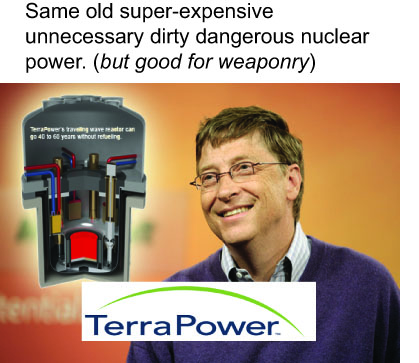
UK regulators have been asked to begin a formal assessment of the Natrium nuclear reactor design developed by US company TerraPower.
The Department for Energy Security and Net Zero (DESNZ) told the Office for Nuclear Regulation (ONR), the Environment Agency and Natural Resources Wales to prepare for a Generic Design Assessment (GDA) of the sodium-cooled fast reactor after a readiness review concluded the design is prepared to enter the regulatory process. The GDA will not start until the regulators have agreed timetables and resourcing.
The GDA is a multi-year scrutiny process in which regulators examine the safety, security and environmental arrangements for a reactor design before any site-specific consents or construction are made. It has been used for previous new-build designs and is intended to give investors and potential operators clearer regulatory certainty.
TerraPower, co-founded by Microsoft’s Bill Gates, is developing the Natrium design as part of a US public–private partnership. The company’s first demonstration plant is being built with support from the US Department of Energy’s Advanced Reactor Demonstration Program (ARDP). The ARDP allows up to $2bn (£1.5bn) in federal funding for the project on a 50:50 cost-share basis; TerraPower and its partners are expected to match that investment……………………………………………………………………………………
sodium-cooled reactors pose different technical and regulatory challenges to light-water designs. Liquid sodium reacts chemically with water and air, which requires specialised handling, testing and safety arrangements…………………………..
https://www.newcivilengineer.com/latest/uk-regulators-to-begin-formal-assessment-of-terrapowers-345mwe-sodium-cooled-fast-reactor-23-02-2026/
Massive military convoy carrying ‘nuclear weapons’ passes through Glasgow.
Footage captured on Thursday shows the convoy headed along the M74 motorway towards Kinning Park
Jordan Shepherd Reporter, 20 Feb 2026, https://www.glasgowlive.co.uk/news/glasgow-news/massive-military-convoy-carrying-nuclear-33464341
A massive military convoy believed to be carrying nuclear weapons has been spotted passing through Glasgow..
Footage captured on Thursday shows the convoy headed along the M74 motorway towards Kinning Park. The clip shows MOD police vehicles and Police Scotland escorting the military vehicles through the city.
The convoys usually travel between Atomic Weapons Establishment Burghfield near Reading and RNAD Coulport on Loch Long, right through Glasgow on the M74 and M8, passing within 1.5 miles of George Square in the process.
It is understood that the convoys make the journey around six times per year to refurbish the warheads, then transport them back up again.
The convoys include huge lead-lined lorries carrying the nuclear warheads, along with a fire engine in case a blaze breaks out, a moving workshop, a decontamination unit, tow truck and scores of MOD police vehicles.
Ministry of Defence’s nuclear clean-up project brings new risks.
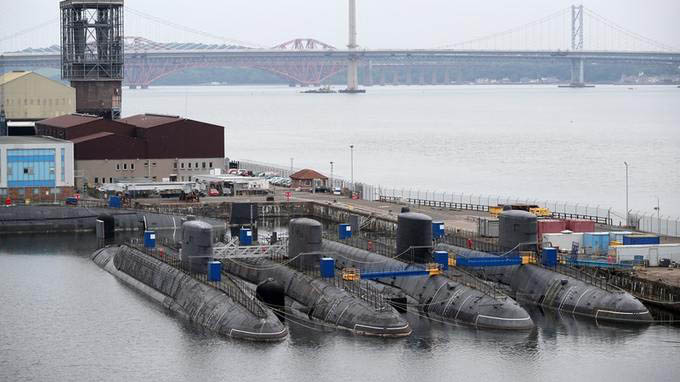
21st February, By Lynn Jamieson, chair, Scottish Campaign Nuclear Disarmament:
ROSYTH dockyard leads in the clean-up of retired nuclear
submarines as part of the Submarine Dismantling Project (SDP). Addressing a
legacy mess affords opportunities for building a skilled workforce.
But please, no more mess. Rosyth may become more deadly if operational
nuclear-armed submarines station there. As a contingency docking station
for the nuclear-weapon system now under construction, radioactive risks
will increase from nuclear reactors and weapons. T
he Ministry of Defence
(MoD) has not ruled out nuclear bombs being onboard a temporarily docked
submarine at Rosyth. In 40 years, newly built reactors become a long-term
legacy of nuclear waste, sitting in another generation of retired
submarines to be decommissioned at enormous cost.
Since the 1980s,
intermediate-level radioactive waste in the form of retired nuclear-powered
submarines – currently seven in total – sit at Rosyth, a hazard costing
money every day. Fifteen more sit in Devonport Royal Dockyard, Plymouth. Of
the 15 vessels at Devonport, 10 retain the highly radioactive fuel rods
that once powered them.
The National 21st Feb 2026,
https://www.thenational.scot/politics/25874840.mods-nuclear-clean-up-project-brings-new-risks/
Russian nuclear agency insists it can run seized Ukrainian atomic power plant
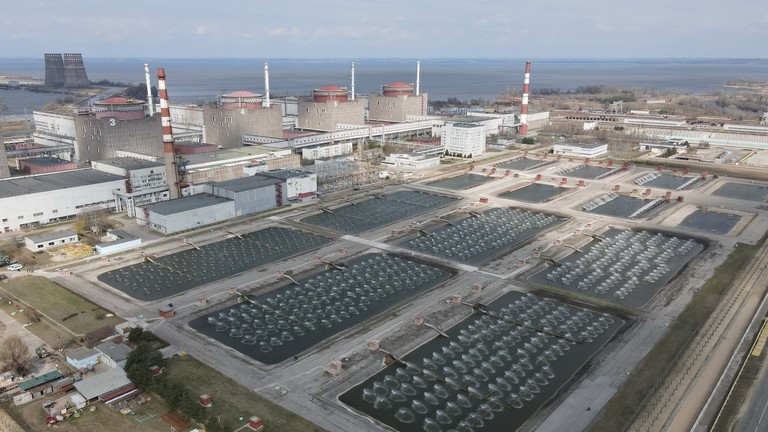
Europe’s largest atomic power station was seized by Russia from Ukraine in 2022
Guy Faulconbridge, Thursday 12 February 2026 , https://www.independent.co.uk/news/world/europe/rosatom-zaporizhzhia-plant-ukraine-russia-b2919153.html
Russia’s state nuclear corporation, Rosatom, has rejected Ukrainian accusations that it lacks the necessary equipment and components to safely operate the Soviet-built Zaporizhzhia nuclear power plant.
The claims were made by Pavlo Kovtoniuk, head of Ukraine’s state nuclear firm Energoatom, who told Reuters in Kyiv that Russia’s alleged deficiencies could lead to a nuclear accident if it attempted to restart the reactors.
Mr Kovtoniuk stated Russia lacked some equipment and spare parts to operate the plant, and risked a nuclear accident if it tried to restart the reactors.
Europe’s largest atomic power station, the facility was seized by Russia from Ukraine in 2022.
All six of its Soviet-designed VVER-1000 pressurised water reactors are currently in a “cold shutdown” state.
The plant’s future remains a critical point of contention in ongoing peace negotiations between Moscow and Kyiv, with both nations vying for control.
“Rosatom categorically rejects claims that Russia lacks the equipment and components required to ensure the safe operation of the Zaporozhskaya Nuclear Power Plant,” Rosatom said in a statement to Reuters in English when asked about the remarks.
“Russia operates one of the world’s largest nuclear fleets, including VVER-1000 units identical to those installed at Zaporozhskaya NPP, and has full capacity to produce equipment, components and nuclear fuel.”
Rosatom, ranked as one of the world’s biggest nuclear corporations in terms of nuclear construction, enrichment services and mining, said that the key issue affecting nuclear safety at the plant was continued shelling in the area.
Ukraine’s Kovtoniuk argued that control equipment and monitoring systems at the plant were Ukrainian, that Russia would have to replace US fuel in the reactors, and that there was not enough water to cool the reactors if restarted.
“Insinuations implying that the plant’s systems are incompatible with Russian fuel are technically unfounded,” Rosatom said, adding that in late 2025, reactor No. 1 received a 10-year operating licence from Russia’s nuclear safety authority, Rostechnadzor.
Rosatom said the plant’s cooling system had never depended exclusively on the Kakhovka reservoir, adding that the cooling pond used a closed-loop system and had sufficient water.
France must start to plan nuclear closures – safety chief
Muriel Boselli, 27 Jan 2026
(Montel) France must plan now for the closure of some nuclear reactors or face investment barriers “that would be impossible to overcome” in replacing them, the head of the ASNR nuclear safety authority said on Tuesday…………………………(registered readers only)…………….. https://montelnews.com/news/4dfe0284-3e2b-4c92-804f-56a79bdfea31/france-must-start-to-plan-nuclear-closures-safety-chief
‘Significant’ fire risks at nuclear plant site
Maisie Lillywhite, West of England, 4 Feb 26, https://www.bbc.com/news/articles/cgqexej138jo
‘Significant’ fire risks have been uncovered at the first nuclear plant to be built in Britain for 30 years, including flammable materials left on emergency exit stairs.
Inspectors from the Office for Nuclear Regulation (ONR) said they found significant fire safety shortfalls at Hinkley Point C, EDF’s twin-reactor nuclear power station in Somerset.
The ONR has served enforcement action notices on five organisations which are overseeing mechanical, electrical and heating (MEH) and ventilation and air conditioning work (HVAC) at the site.
Bosses of the five organisations will need to address the shortfalls ahead of the next inspection.
A spokesperson for Hinkley Point C said they are working closely with contract partners to ensure that the appropriate enhancements are made.
“Safety is our overriding priority, and we are already acting to oversee improvements,” they added.
Mahtab Khan, ONR’s head of regulation, said fire safety is not optional and it is a legal requirement that protects lives.
“We will not hesitate to take enforcement action where safety standards fall short, and we expect all dutyholders to treat fire safety with the urgency it demands.
“Working alongside the principal contractor and MEH alliance, we have made good progress in understanding the root causes of these shortfalls to ensure they are addressed,” Khan added.
The Hinkley Point C contractors given fire enforcement notices are Altrad Babcock, Altrad Services, Balfour Beatty Kilpatrick Ltd, Cavendish Nuclear, and NG Bailey.
The combustible material, found during an inspection in December, was discovered in the staircase and was waste typical of construction activities, the ONR said.
It added although the waste did not block the fire exit, it could have compromised access to the building in the event of a fire.
Inspectors found the construction site did not have an adequate fire risk assessment.
There were also insufficient means of escape exits for the number of people working in the building.
The ONR said the shortfalls had no direct impact on the likelihood of a fire, but that the enforcement means adequate routes should be available to workers in the event of a fire.
It comes after inspectors found there was a “risk of serious injury” due to “inadequate fire controls” being used by civil engineering firm Bylor JV, which is run by both Laing O’Rourke and Bouygues Travaux Publics.
In December, the company was served with a fire safety notice and was told it had until June to implement changes.
The estimated cost of Hinkley Point C has risen to £46bn from the £18bn predicted in 2017, and it is expected to open in 2031.
1 This Month
10 March A LIVE WEBINAR THE REAL EFFECTS OF NUCLEAR POWER
What the Industry Isn’t Telling Us
1:00 PM Mountain, 2 pm Central, 3 pm Eastern. Live on the Keepers of the Water Facebook page



18 March Webinar @ 1 PM EST: An Assessment of SMR Projects: The Case of Canada
register for the zoom:
https://us02web.zoom.us/webinar/register/WN_o8BIIOUvQ2ONJR1nta65DQ#/registration


of the week – STOP SMALL MODULAR REACTORS IN CANADA
To see nuclear-related stories in greater depth and intensity – go to https://nuclearinformation.wordpress.com
-
Archives
- March 2026 (99)
- February 2026 (268)
- January 2026 (308)
- December 2025 (358)
- November 2025 (359)
- October 2025 (376)
- September 2025 (258)
- August 2025 (319)
- July 2025 (230)
- June 2025 (348)
- May 2025 (261)
- April 2025 (305)
-
Categories
- 1
- 1 NUCLEAR ISSUES
- business and costs
- climate change
- culture and arts
- ENERGY
- environment
- health
- history
- indigenous issues
- Legal
- marketing of nuclear
- media
- opposition to nuclear
- PERSONAL STORIES
- politics
- politics international
- Religion and ethics
- safety
- secrets,lies and civil liberties
- spinbuster
- technology
- Uranium
- wastes
- weapons and war
- Women
- 2 WORLD
- ACTION
- AFRICA
- Atrocities
- AUSTRALIA
- Christina's notes
- Christina's themes
- culture and arts
- Events
- Fuk 2022
- Fuk 2023
- Fukushima 2017
- Fukushima 2018
- fukushima 2019
- Fukushima 2020
- Fukushima 2021
- general
- global warming
- Humour (God we need it)
- Nuclear
- RARE EARTHS
- Reference
- resources – print
- Resources -audiovicual
- Weekly Newsletter
- World
- World Nuclear
- YouTube
-
RSS
Entries RSS
Comments RSS
 nuclear-news