The race to nuclear suicide continues despite Covid-19 crisis https://www.thenational.scot/news/18453817.world-presses-race-suicide/, By Brian Quail. 17 May 20, Glasgow AT the dawn of the nuclear age, the Russell-Einstein Manifesto warned us all: “Remember your humanity and forget the rest. If you can do so, the way lies open to a new paradise; if you cannot, there lies before you the risk of universal death.”
That was back in 1955. Nobody listened. What did Albert Einstein known about the real world? Untold trillions were wasted on the nuclear arms race and unimaginable cruelty inflicted on our test victims – the aborigines of Australia at Maralinga and Montebello, the victims of the USSR in Semipalatinsk in Kazakhstan, and of the USA, the Shoshone people of Nevada whose land is now permanently contaminated. Add the long forgotten British servicemen used as human guinea pigs at Christmas Island, and the many other unnamed and unnumbered victims of our nuclear idolatry. Never mind all those we condemned to poverty and destitution by squandering our resources.
I had hoped that the global threat of Covid-19 might call us back to the ineluctable truth of the dilemma posited in the Manifesto, but no. We press blindly on in the lunatic race to suicide.
While the rest of us are staying at home in lockdown, on Wednesday May 13 a convoy carrying nuclear warheads (eight Hiroshimas) left Burghfield. It came up the M6 and M74, over the Erskine Bridge and past Loch Lomond to arrive at Coulport at 9.20. Nukewatch was, for obvious reasons, unable to follow this or attempt to hinder its illegal ploys.
Will nothing open the eyes or touch the hearts of our nuclear jihadis? Must we surrender our future and the fate of the planet to these deranged souls?
Alice Walker said: “Our last five minutes on earth are running out. We can spend those minutes in meanness … or we can spend them consciously embracing every glowing soul who wanders within our reach” Can we not stop this madness now, at 90 seconds to midnight?
Russia warns US against using low-yield nuclear weapons, threatening all-out retaliation, SCMP, 29 Apr 20
US State Department had argued that deploying such warheads in submarines would help counter new threats from China and Russia
Moscow says any attack involving submarine-launched missiles will be perceived as nuclear aggression
The Russian Foreign Ministry on Wednesday rejected US arguments for
This story says nothing about this being a nuclear-powered ship. But underlying this whole thing is the fact of the (probably necessary) culture of secrecy that surrounds all things nuclear. This is yet another example of how the nuclear culture means that it is “preferable” for people to die, rather than have the truth get out.
Captain Crozier Is a Hero, Theodore Roosevelt, my great-grandfather, would agree. By Tweed Roosevelt, Mr. Roosevelt is a great-grandson of Theodore Roosevelt and the chairman of the Theodore Roosevelt Institute at Long Island University. April 3, 2020
On Monday, Capt. Brett Crozier, the commander of the aircraft carrier Theodore Roosevelt, sent a letter to the Navy pleading for permission to unload his crew, including scores of sailors sickened with Covid-19, in Guam, where it was docked. The Pentagon had been dragging its feet, and the situation on the ship was growing dire. “We are not at war,” he wrote. “Sailors do not need to die. If we do not act now, we are failing to properly take care of our most trusted asset — our sailors.”
After the letter was leaked to The San Francisco Chronicle, the Navy relented. But on Thursday, it relieved Captain Crozier of his command.
In removing Captain Crozier, the Navy said that his letter was a gross error that could incite panic among his crew. But it’s hard to know what else he could have done — the situation on the Theodore Roosevelt was dire.
Ships at sea, whether Navy carriers or cruise ships, are hotbeds for this disease. Social distancing is nearly impossible: The sailors are practically on top of one another all day, in crowded messes, in cramped sleeping quarters and on group watches.
It is thought that a sailor caught the virus while on shore leave in Vietnam. Once on board, the virus took its now predictable course: First a sailor or two, then dozens, and all of a sudden more than 100 were sick.
Captain Crozier received orders to take the ship to Guam, but he was not given permission to offload most of the sailors. The virus was threatening to overwhelm the small medical crew aboard. There was not much time before sailors might start dying.
The captain felt he had to act immediately if he was to save his sailors. He chose to write a strong letter, which he distributed to a number of people within the Navy, demanding immediate removal from the ship of as many sailors as possible. Perhaps this was not the best approach for his career, but it got results…….
The acting secretary of the Navy, Thomas Modly, summarily fired the captain, not for leaking the letter (for which he said he had no proof), but for showing “extremely poor judgment.” Many disagree, believing that Captain Crozier showed excellent judgment. He left the ship Thursday night to a rousing hero’s sendoff……… https://www.nytimes.com/2020/04/03/opinion/coronavirus-crozier-roosevelt.html
Captain Brett Crozier Takes A StandJames Fallows, April 3, 20202020 Time Capsule #11: ‘Captain Crozier’The Atlantic The episode I’m about to mention has been receiving saturation social-media attention for the past few hours, as I write. But because the accelerating torrent of news tends to blast away each day’s events and make them hard to register—even a moment like this, which I expect will be included in histories of our times—I think it is worth noting this episode while it is fresh.
Until a few days ago, Brett Crozier would have been considered among the U.S. Navy’s most distinguished commanders………
The four-page letter, which you can read in full at the Chronicle’s site, used the example of recent cruise-ship infection disasters to argue that closed shipboard environments were the worst possible location for people with the disease. It laid out the case for immediate action to protect the Roosevelt’s crew, and ended this way:
7. Conclusion. Decisive action is required. Removing the majority of personnel from a deployed US. nuclear aircraft carrier and isolating them for two weeks may seem like an extraordinary measure. A portion of the crew (approximately 10%) would have to stay aboard to run the reactor plant, sanitize the ship, ensure security, and provide for contingency response to emergencies.
This is a necessary risk. It will enable the carrier and air wing to get back underway as quickly as possible while ensuring the health and safety of our Sailors. Keeping over 4,000 young men and women on board the TR is an unnecessary risk and breaks faith with those Sailors entrusted to our care…
This will require a political solution but it is the right thing to do. We are not at war. Sailors do not need to die. If we do not act now, we are failing to properly take care of our most trusted asset our Sailors. Request all available resources to find NAVADMIN and CDC compliant quarantine rooms for my entire crew as soon as possible.
“Breaks faith with those Sailors entrusted to our care.” “We are failing to properly take care of our most trusted asset our Sailors.” “Unnecessary risk.” In any walk of life, such language would have great power. Within the military—where terms like faith and trust and care have life-and-death meaning, and are the fundamental reason people follow leaders into combat—these words draw the starkest possible line. This course is right. The other course is wrong. Thus a leader spoke on behalf of the people “entrusted to our care.”…….
Based on information available as I write, it appears that he took a stand, and is paying the price.
Brett Crozier will no longer be one of the Navy’s most powerful commanders. He remains in the service, but his command has been taken away.
By Leslie Ann Aquino A Catholic prelate has called on President Duterte to reject the proposal to use nuclear energy in the country.
“I am greatly concerned with the proposed Executive Order that is said to be drafted by (Department of Energy or DOE) Secretary Al Cusi which would include nuclear power in our energy mix,” San Carlos Bishop Gerardo Alminaza said in a statement.
“We urge President Duterte not to sign this Executive Order and instead remind Sec. Cusi to make renewable energy our primary source of electricity.”
The vice chairman of the Catholic Bishops’ Conference of the Philippines National Secretariat for Social Action (CBCP-NASSA) said the disasters in Chernobyl, Three Mile Island, and Fukushima are “sorrowful reminders” of the risks of nuclear power that Filipinos need not be exposed to.
The prelate asked Duterte to stand firm on his previous directive to the DOE to promote renewable energy, which is a cheaper and safer source of energy.
“We hope and pray that President Duterte will not turn back on his word in the 2019 SONA (State of the Nation Address) which charged the DOE with the task of promoting renewable energy,” Alminaza said.
“This is what would truly be beneficial for our people, and would also serve as a concrete act of care for our Common Home.”
On Tuesday, Presidential Spokesperson Salvador Panelo told reporters that Duterte will be studying the proposed inclusion of nuclear power in the Philippines’ energy mix.
The church released a draft document outlining its stance on the blessing of Orthodox Christians “for the performance of military duty” and “defense of the Fatherland.”
Russian priests have longed sprinkled holy water on various weapon systems, including submarines, ballistic missiles and space rockets, among others.
“It is not reflected in the tradition of the Orthodox Church and does not correspond to the content of the Rite of blessing of military weapons, and therefore, the use of this order to “sanctify” any kind of weapon, the use of which could lead to the death of an undetermined number of people, including weapons, should be excluded from pastoral practice indiscriminate action and weapons of mass destruction,” the church wrote.
The proposal noted the blessing of military vehicles used on land, air and sea is not the “blessing of guns, rockets or bombing devices that the Lord is asking for, but the protection of soldiers.”
The proposals will be discussed on June 1 and the public is being asked to weigh in the debate, Reuters reported.
The request comes as the church and the Russian military continue to forge close ties. The armed forces are building a sprawling cathedral at a military park outside Moscow
A faction of clergy within the Russian Orthodox Church wants to end the eyebrow-raising practice of blessing the country’s nuclear missiles.
First of all, yes: Russian priests currently sprinkle holy water on nuclear missiles as part of an old tradition in which Orthodox priests bless soldiers and their weapons, reports Religion News Service. But that may change, as some priests feel that intercontinental ballistic missiles belong in a different category from individual firearms.
Faith Militant
The Russian military and the Russian Orthodox church have long worked hand in hand, according to RNS, framing many of the country’s military conflicts as holy wars. The nuclear arsenal even has its own patron saint — RNS reports that St. Seraphim’s remains were found in a Russian town that housed several nuclear facilities.
As such, the push to stop blessing nukes faces strong opposition among members of the clergy, such as the high-ranking priest Vsevolod Chaplin, who referred to the country’s nukes as “guardian angels.”
“Only nuclear weapons protect Russia from enslavement by the West,” Chaplin once said, per RNS.
Changing Hearts
One priest, Dmitry Tsorionov, parted from the more militant aspects of the Orthodox Church after seeing men willingly sign up to fight Russia’s wars “under the banner of Christ,” he told RNS. Now he wants to see less warmongering among the clergy.
“It was not uncommon to see how church functionaries openly flirted with these toxic ideas,” he told RNS. “It was only then that I finally realized what the blessing of military hardware leads to.”
The aim of presenting the case for the continued possession of these terrifying weapons that hold the potential to destroy all life on earth this way seems to be to convince citizens that nuclear weapons are morally justifiable and thus somehow ‘acceptable.’
Poised as the nuclear powers appear to be to resume the nuclear arms race, leaders of these countries have been at pains to assure their countrymen and the rest of the world that, though determined to maintain and even expand their nuclear arsenals, they will only use them for the purposes of a second strike i.e. in retaliation to a nuclear first strike by a nuclear-armed belligerent. Their pledges are meant to reassure us that nuclear weapons are for defensive rather than offensive purposes. The aim of presenting the case for the continued possession of these terrifying weapons that hold the potential to destroy all life on earth this way seems to be to convince citizens that nuclear weapons are morally justifiable and thus somehow ‘acceptable’. For a number of reasons, however, a second strike may not be as morally defensible as leaders would have us believe.
Firstly, consider that, given the short reaction time needed to retaliate to a first strike, leaders would have to bypass normal administrative and civic oversight processes, the very mechanisms designed to curb politicians’ excesses and keep their more base instincts in check, to launch a second strike. As such, a second strike can only be launched in anger or, more aptly, rage. Arguably, they would be more volatile in this state than even when contemplating the launch of a nuclear first strike; where some calculus, however sinister, is required on the part of those whose finger is on their country’s nuclear button.
Secondly, consider the argument that reserving the right to launch a second strike is necessary to maintain the peace as it acts as a deterrent. For the threat of a nuclear second strike to serve as a credible deterrent, it has to be disproportionate. The threatened response will have to be massive to the point of being genocidal whether subject to a barrage of one, two or more missile attacks in an initial strike. By its very nature, this implies that there is limited strategic or tactical value (in military terms) in the use of nuclear weapons during a second strike. Their main (sole?) value lies in the capacity to sow terror in the hearts and minds of the nation’s enemies by invoking the spectre of annihilation. Leaders’ proclamations of their willingness to launch a second strike thus amounts to a taunt; a goading of their adversaries along the lines of, “Go ahead, try me if you dare and see how terrible the consequences will be.”
The message that one’s nation will be satisfied with nothing less than an attack which results in the total destruction of their enemies signals that restoring any semblance of ‘normalcy’ or détente between adversaries will not be possible after a nuclear exchange. In so doing, it forecloses the possibility of reconciliation or the restoration of relations between survivors in warring nations and ensures their eternal enmity. This thought is cause for despair considering that the scattered survivors left in the broken nations that were involved in a nuclear confrontation would have to rely on each other more than ever given the catastrophic global consequences of even a minor nuclear exchange between nuclear powers.
Lastly, lest we forget, for all the efforts which politicians put into drawing a distinction between a nuclear first and second strike, nuclear weapons are still nuclear weapons and retain the characteristics of nuclear weapons whether used in a first or second strike. A crucial characteristic of nuclear weapons is that they are indiscriminate and do not distinguish between civilians and combatants. It follows that the louder one declares one’s willingness to carry out disproportionate and less-targeted strikes that are of limited strategic or tactical military value, the fewer qualms one has about the taking of civilian lives.
Based on the reasons outlined above, a nuclear second strike can only be described as an act of vengeance. Thus, when leaders proudly put forward the position that their nation reserves the right to use nuclear weapons only as a second strike, they effectively proclaim that they represent a vengeful and wrathful people. Is this the societal value that citizens of nuclear-armed countries would like leaders to embrace in their behalf? Is this the sort of sentiment that the rank-and-file citizen in a nuclear-armed country would like to echo across the ages to their grandchildren and grandchildren’s children? If not, and if leaders’ disavowal of launching a nuclear first strike is as sincere as they would have us believe, for what reason should any nation continue to possess nuclear weapons?
If the reason seems unclear, then it may be worthwhile for the average citizen of goodwill in a nuclear-armed country to resolve this new year to urge their leaders to renew their commitments to arms control and ultimately, the elimination of these genocidal weapons. And should the approval of one’s descendants or the appeal to advance our shared universal values not be sufficient to persuade them to resolve to do so, bear in mind that the continued existence of a nation’s nuclear arsenal means that its citizens must continue to entrust their protection and wellbeing to leaders who, as part of their job requirement, must be both quick to anger and harbour homicidal tendencies. One leaves it to the reader to decide if this is the sort of leader the individual citizen or their compatriots deserve at a time when democracy and hard-won freedoms seem to be on the retreat domestically the world over and assassination and targeted killing appear to have become an integral tool of foreign policy.
Gerard Boyce is an Economist and Senior Lecturer in the School of Built Environment and Development Studies at the University of KwaZulu-Natal (Howard College) in Durban, South Africa. He writes in his personal capacity and can be reached at gdboyce@yahoo.com.
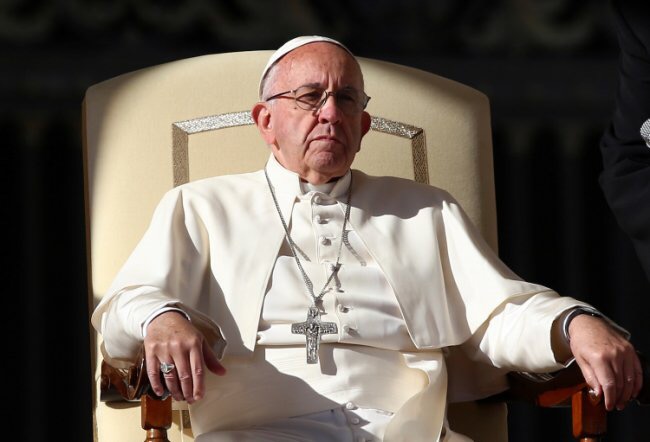
Just a few weeks ago, Pope Francis called for the global abolition of nuclear weapons while paying homage to the victims of the bombings of Hiroshima and Nagasaki. Japan. Nagasaki was destroyed by atomic weapons with plutonium produced in Washington state’s Catholic Diocese.
The Holy Father declared: “With deep conviction I wish once more to declare that the use of atomic energy for purposes of war is today, more than ever, a crime not only against the dignity of human beings but against any possible future for our common home. The use of atomic energy for purposes of war is immoral, just as the possessing of nuclear weapons is immoral, as I already said two years ago. We will be judged on this. Future generations will rise to condemn our failure if we spoke of peace but did not act to bring it about among the peoples of the earth. How can we speak of peace even as we build terrifying new weapons of war?”
Washington state has the largest collection of deployed nuclear weapons in the Western Hemisphere at Naval Base Kitsap-Bangor on Hood Canal, just 20 miles from Seattle. This nuclear weapons installation, added to Washington state’s large city centers and many other military installations, makes our state a primary target in the event of a nuclear exchange.
Washington state is also home to the Hanford Nuclear Reservation, the most contaminated nuclear site in the Western Hemisphere, and the Midnite Mine, a former nuclear weapons uranium mine located on the Spokane Tribe of Indians Reservation, and it hosts one of the largest communities of Marshall Islanders in the United States, whose home was the site of67 atmospheric nuclear weapons tests during the Cold War.
The legacy of nuclear weapons and their production in Washington has — and continues to — disproportionately affect communities of color and indigenous people, none of whom has been adequately compensated for the environmental and health consequences of nuclear weapons activities pursued by the United States government during the 50 years of the Cold War.
Congress recently approved funding to deploy a new kind of nuclear weapon: the W76-2 warhead. This gateway nuke, which is being called “useable” will be deployed on Trident nuclear submarines just 20 miles from Seattle in the coming months.
As a person of faith, and coordinator of the Washington Against Nuclear Weapons Coalition, we call on religious leaders in Seattle, especially the Seattle Archbishop, to heed the words of Pope Francis in Nagasaki. We call on faith leaders to join other faith-based members of the Washington Against Nuclear Weapons Coalition and actively preach to your congregants that the continuing possession and so-called modernization of nuclear weapons is immoral.
As the pope said, “Future generations will rise to condemn our failure if we spoke of peace but did not act to bring it about among the peoples of the earth.” I respectfully suggest that Seattle Archbishop Paul Etinne and other faith leaders should act accordingly.
Carly Brook is a member of the Washington Against Nuclear Weapons Coalition
Ethics of Nuclear Energy Abu-Dayyeh (P.hD) Amman – H.K. of Jordan Ayoub101@hotmail.com E_case Society (President) www.energyjo.com [Extract] November 30, 2019
“…..5- Nuclear energy in the South!
“If all the latter costs were reallocated to consumers, an increase in the price for electricity between €0.139 and €2.36 for each kilowatt-hour will have to be administered for a period of commitment of 100 years”(45).These estimates explicate the true cost of electricity produced from nuclear sources, similar to some predictions discussed earlier in the Japanese case, and thus urge few more reflections on the issue, such as:
Can developing countries in the South afford the actual prices of each KWh?
Is it ethical to overburden these developing nations with loans and radioactive waste management for millions of years?
To what extent can developing countries afford the risk of experiencing a major nuclear accident?
If small developing nations disintegrate due to a nuclear catastrophe, does this outcome open the way to asylum seekers flocking towards the North?
If a nuclear catastrophe strikes in the South, is the North ready to accommodate environmental refugees from the South?
If the answer is still yes, we suggest reminding the North that corruption risks are much higher in the South compared to the North, which thus dooms the investment in nuclear energy a failure! Furthermore, extra load management, upgrading the electricity grid, providing cooling water, constructing desalination plants for the cooling towers and facilitating the proper infra-structure are all factors to consider. Not to mention that a higher risk of a catastrophe would be predicted in the South due to shortages in skilled labor and because of the loose ends of cultural safety values typical of under developed countries.
As for non-proliferation, each nuclear power plant of around 1000 MW produces around 200 kg of plutonium every year, which is enough to arm 20 nuclear warheads. Wouldn’t that be an incentive for some countries to plunder the resources of others by force?
Enriching uranium U235 to 3.5%, for use in nuclear reactors, produces huge amounts of U238 (depleted Uranium), enough to encase tonnes of missiles annually. Who can guarantee these lethal weapons not to be used in the future for the destruction of humanity, as it has already been used in Yugoslavia, Iraq and Afghanistan?
Environmental degradation already accounts for 3-5% of GDP for some countries in the Middle East and North Africa, such as Jordan and Egypt. Uranium mining in these countries will worsen the environmental conditions which are already out of control, such as phosphate tailings in Rusaifa and Hasa in Jordan, which have bewailed the natural environment beyond recovery!
Creation of jobs is essential too when considering any investment in the South as unemployment is very high there. In a country like Namibia, were uranium mines had been utilized for a long time, the percentage of unemployment reached 51.2% in 2008(46). What about construction and operating nuclear facilities, are they labor intensive?
Energy source-jobs per tera watt hours are underlined in the following table:
Natural Gas
250 jobs / TWh
Coal
370 jobs / TWh
Nuclear
75 jobs / TWh
Wood
733 jobs / TWh
Hydro
250 jobs / TWh
Wind
918 – 2400 jobs / TWh
Photo-voltaic
29580 – 107000 jobs / TWh
Table 1: Jobs per tera watt hours of electricity production(47)
It looks quite obvious that the nuclear industry is the poorest concerning jobs per energy production. Hence, developing countries need to be motivated to resort to intensive labor energy sources, away from logging and deforestation, by promoting wind and solar energy which provide far more jobs than the nuclear industry. Renewable and clean energy jobs are both decentralized, require no high skilled labor and are safe and secure energy sources; decentralization and jobs are badly needed in the South as migration from rural areas to cities is intensifying and many skilled labor had already migrated to the North.
As for safety and security, we wonder! With the present reputation of safety and security in the South, can developing countries minimize the risks of a nuclear disaster?
Expert nuclear engineer David Lochbaum responds to our question:
“It is not if we are going to have nuclear accidents but when” (48)!
If developing countries can afford nuclear accidents and can recover from such catastrophes, like what happened in Japan at Fukushima, developing countries of the South cannot for the reasons discussed earlier……”
Everything You Ever Wanted To Know About Climate Change But Were Afraid to Ask, Forbes, Devin Thorpe 9 Dec 19, Dr. Katharine Hayhoe is a climate scientist who leads the Climate Science Center at Texas Tech University and is the host and producer of the PBS series Global Weirding. I asked her everything you want to know about climate change but were afraid to ask…..
She explained why a difference as small as two degrees actually matters, why she calls it global weirding, how she explains climate science to skeptics who are religious, and the respective roles of big business, entrepreneurs and individuals in fighting climate science. ……
KH: Well, our most popular global weirding episode, the one that the most people have watched, is called “What Does the Bible Say About Climate Change?” And that’s sort of a trick question, because, of course, it says nothing about climate change. But it says a lot about our responsibility for this planet, God’s love and care for creation, and about how we are to care for our brothers and sisters, especially those who are less fortunate than us today. So I’ve looked into this and thankfully, as you just said, the correlation is not causal. So believing the Bible doesn’t make us reject the idea that climate is changing due to human activities. In fact, as I recently said in New York Times op ed just the other week, if we truly take the Bible seriously, we would be out at the front of the line demanding action on climate change, because that’s what we as Christians would do because of who we are……..
DT: What would you tell someone who wants to do their part to solve climate change?
KH: Well, I would say, first of all, we’re not saving the planet we’re saving us. The planet will still be orbiting the sun long after we are gone. We care about ourselves, our families, our kids, our communities, our city or state, our country. We care about ourselves. And that’s what’s at stake here. So one of the most important things we can do and actually talk about this is my TED talk is talk about it because it turns out we never have conversations about this because we’re worried, well, I’m not a scientist or I don’t want to pick a fight with Uncle Joe. But talking about it is the most effective thing that we can do……
“Ethics” seems to be a dirty word in this strange era in which “Economics”, (i.e money) is apparently the only credible argument for taking any action.
Yet, now, under those truly awful shadows of a heating planet, and nuclear conflict, ethics might be our only sane guide.
What are ethics in relation to climate and nuclear issues?
Surely – ethical behaviour, -behaving decently and honestly. In the face of these dire threats – this is the way to go.
Not that it’s easy. No-one wants to pay the price, – changed employment, lifestyle changes, increased taxes….
BUT – we have borrowed this world from our children, and great grandchildren.We need to return it in good condition.
This means facing up to the reality of all the effects of climate change, the horrors of nuclear weapons, the environmental poison of ionising radiation.
And then – taking action on all levels, from the personal to global co-operation. A tall order? It means plain, honest, speaking, just treatment of under-privileged groups and countries, taking investment out of dirty industries.
An impossible order? Perhaps, but it would be a shame not to try. Even in this period of ethically and often environmentally ignorant , narcissistic national leaders Donald Trump, Vladimir Putin, Xi Jinping, Boris Johnson, Jair Bolsonaro, Scott Morrison …….still there are thousands of individuals and groups working for a clean and nuclear-free planet.
We don’t need to be taken in by the big words and twisted arguments of the fossil fuel and nuclear industries and their bought politicians and journalists. The facts on climate change are clear. The facts on nuclear dangers are clear.
Even the economic facts point us to climate action and to scrapping nuclear power and weapons. But surely, human beings can do better than that, and be guided by ethics.
Making the first visit to the country by a pope in 38 years, Francis called for an end to the nuclear arms race in visits to Hiroshima and Nagasaki. NYT, By Motoko Rich, 25 Nov 19, TOKYO — In the first visit to Japan by a pontiff in 38 years, Pope Francis on Monday edged close to calling for the renunciation of all nuclear power in a country that experienced the worst nuclear disaster since Chernobyl but has yet to determine a viable alternative for its energy needs.A day after traveling to Nagasaki and Hiroshima, the only places where atomic bombs have ever been used in war, the pope met in Tokyo on Monday with victims of the 2011 earthquake, tsunami and nuclear meltdown that ravaged northeastern Japan.
Francis noted that the Catholic bishops of Japan had called for the shutdown of all nuclear plants in Japan after the 2011 disaster, in which waves from the tsunami overpowered the Fukushima Daiichi nuclear power plant and set off catastrophic meltdowns in three reactors.
“As we think about the future of our common home, we need to realize that we cannot make purely selfish decisions,” the pope said on Monday, “and that we have a great responsibility to future generations.”
Although Japan has a tiny and shrinking Catholic population, the pope drew thousands of people to his appearances in Nagasaki and Hiroshima, where he called for an end to the nuclear arms race.
In denouncing any use of atomic weapons as “a crime not only against the dignity of human beings but against any possible future for our common home,” he appeared to go further than his predecessors, who called for an end to stockpiling nuclear arms.
“The arms race wastes precious resources that could be better used to benefit the integral development of peoples and to protect the natural environment,” the pope said in an address in Peace Park in Nagasaki, which commemorates the 74,000 people who died in the atomic bombing on Aug. 9, 1945, three days after the bombing of Hiroshima, which killed 140,000 people.
“In a world where millions of children and families live in inhumane conditions, the money that is squandered and the fortunes made through the manufacture, upgrading, maintenance and sale of ever more destructive weapons are an affront crying out to heaven,” he added. ……
On Monday, Francis also addressed the deterioration of international ties at a time when populist governments and leaders have taken to looking inward.
“We are witnessing an erosion of multilateralism, which is all the more serious in light of the growth of new forms of military technology,” he said in Nagasaki. “Such an approach seems highly incongruous in today’s context of interconnectedness; it represents a situation that urgently calls for the attention and commitment of all leaders.”…….
He described what he called the disconnectedness of a group of young people he had met at St. Mary’s Cathedral in Tokyo .
“They remain on the margins, unable to grasp the meaning of life and their own existence,” he said. “Increasingly, the home, school and community, which are meant to be places where we support and help one another, are being eroded by excessive competition in the pursuit of profit and efficiency. Many people feel confused and anxious; they are overwhelmed by so many demands and worries that take away their peace and stability.” …….. Reporting was contributed by Makiko Inoue, Eimi Yamamitsu and Hisako Ueno. https://www.nytimes.com/2019/11/25/world/asia/pope-francis-japan-nuclear.html
Motoko Rich is Tokyo bureau chief for The New York Times. She has covered a broad range of beats at the Times, including real estate (during a boom), the economy (during a bust), books and education. @motokorich
Pope Francis: not using or possessing nuclear arms will be added to the Catechism, Catholic Outlook,27 November 2019 During the in-flight press conference aboard the plane bringing him back to Rome from Japan, Pope Francis answers journalists’ questions on a variety of issues: from the immoral use and possession of atomic weapons, to the financial investigation inside the Vatican.
“The use of nuclear weapons is immoral, which is why it must be added to the Catechism of the Catholic Church. Not only their use, but also possessing them: because an accident or the madness of some government leader, one person’s madness can destroy humanity.”
In addition to repeating this strong message pronounced at Hiroshima, Pope Francis responded to many questions posed to him by the journalists during the flight bringing them back to Rome from Japan.
Now follows an unofficial translation of the in-flight press conference……….
“Hiroshima was a real human catechesis on cruelty. I could not visit the Hiroshima museum because time did not permit, because it was a difficult day. But they say it’s terrible. There are letters from Heads of State, Generals explaining how a greater disaster could be produced. The experience was much more touching for me. And there I reiterated that the use of nuclear weapons is immoral, that is why it must be added to the Catechism of the Catholic Church. Not only their use, but also possessing them: because an accident or the madness of some government leader, one person’s madness can destroy humanity. The words of Einstein come to mind: ‘The Fourth World War will be fought with sticks and stones.’ ” …….
“The ugly hypocrisy of the ‘arms trade’. Christian countries, European countries that talk about peace and live off weapons. This is hypocrisy, a word from the Gospels: Jesus said it in Matthew, Chapter 23. We have to stop this hypocrisy. It takes courage to say: “I can’t talk about peace, because my economy earns so much through arms sales’”. These are all things we need to say, without insulting and vilifying any country, but speaking as brothers and sisters, for the sake of human fraternity: we must stop because this is a terrible thing. “………… https://catholicoutlook.org/pope-francis-not-using-or-possessing-nuclear-arms-will-be-added-to-the-catechism/
A statement issued by the Chairman of the US Conference of Catholic Bishops calls for action on the path to nuclear disarmament. Vatican News, By Linda Bordoni , 27 Nov 19, In the wake of Pope Francis’s powerful appeal for a world that is free from atomic warfare, and his affirmation that not only the deployment, but also the possession of nuclear weapons is immoral, the Catholic Bishops of the United States issued a statement calling on their nation “to exercise global leadership for mutual, verifiable nuclear disarmament”……. https://www.vaticannews.va/en/church/news/2019-11/us-bishops-statement-nuclear-weapons.html










 nuclear-news