A coming wider war with Crimea in US sights

How is it that this evil woman, Nuland, is allowed to drive the US towards nuclear war with Russia?
There are two key signals of a possible US-NATO change in strategy that are perceptible if we understand that NATO, at least so far, does what the US says it needs to do.
New deliveries of special types of long-range ammunition to Kiev are the first signal. The second is the publicized switch by
Under Secretary of State for Political Affairs Victoria Nuland to favoring a refocus on retaking Crimea in a new Ukrainian offensive.
US-NATO response to fall of Bakhmut is likely an assault on Crimea, which in turn will spark Russian attacks on Eastern Europe
by Stephen Bryen March 4, 2023 https://asiatimes.com/2023/03/a-coming-wider-war-with-crimea-in-us-sights/
Ukrainian forces are pulling out of Bakhmut and the battle for the small Donetsk city is nearly finished. So what happens next?
There appear to be two stages to the Bakhmut pullout. The first started perhaps a month ago, though that isn’t certain. The troops pulled out comprised foreign fighters and Yellow Armband troops.
The Russians say they have not seen any foreign fighters for about a month. Most of these were said to be from Georgia and Abkhazia. (Abkhazia is the area in Georgia carved out by the Russians and declared an independent entity.)
The Yellow Armband troops are professional and well-trained Ukrainian “heavy” military units. They have mostly been used on the flanks protecting the city of Bakhmut, trying to stop the Russian encirclement.
Within the city are so-called Green Armband troops. They are not well trained and are mostly recent conscripts. Mainly they carry small arms, which they fire from buildings and other covered positions. Many of them are underage or, alternatively, overage.
According to Yevgeny Prighozin, head of the Wagner Group paramilitary organization, the Green Armbands are starting to leave the city, having already pulled out from most of the eastern parts. Reports say they are either using a country road or walking across farm fields.
As it now stands, the end of the battle is at most a few days away, although the Ukrainians have launched a counteroffensive to the west and south of a town called Ivanivske. The operation may be meant to hold off a wider encirclement of Ukrainian forces that the Russians appear to have launched.
The Yellow Armband Ukrainian forces trying to relieve Ivanivske are deploying a number of infantry fighting vehicles, but so far few if any tanks. Whether Ukraine’s army can actually hold off a wider Russian operation remains to be seen.
But the Ukrainians are low on soldiers and ammunition, so it isn’t clear they can sustain a hard hit if that’s what the Russians intend to launch.
Up next: Crimea
The US and NATO likely see the handwriting on the wall if the Ukrainians continue to try and hold territory in the Donbas region.
While the US thinks that Russia failed to succeed in its original objectives in the Donbas and in forcing a governmental change in Kiev, the long-term picture looks troublesome as the Russians have not only improved their tactics but also appear willing to pay the price and grind down Ukraine’s army.
Likewise, it is by now clear that it will take more than a few years in the US and Europe to rebuild ammunition and equipment stocks, while the Russians seem to have put their defense manufacturing on a full-time, day-and-night basis to bring supplies to the front.
There are two key signals of a possible US-NATO change in strategy that are perceptible if we understand that NATO, at least so far, does what the US says it needs to do.
New deliveries of special types of long-range ammunition to Kiev are the first signal. The second is the publicized switch by Under Secretary of State for Political Affairs Victoria Nuland to favoring a refocus on retaking Crimea in a new Ukrainian offensive.
“[W]e will support Ukraine for as long as it takes. Ukraine is fighting for the return of all of its land within its international borders. We are supporting them, including in preparing a next hard push to regain their territory…Crimea must be—at a minimum, at a minimum—demilitarized.”US Under Secretary of State for Political Affairs Victoria Nuland
Nuland’s view is not supported fully by the State Department or the Pentagon, largely because of concern Russia may choose to attack Western supply lines in retaliation, leading to a broader war in Eastern Europe, starting with Poland and Romania.
Both Poland and Romania, one should recall, are historical Russian stomping grounds. Joseph Stalin decided to support the Ribbentrop-Molotov pact in August 1939 because the Soviet leader saw it as giving him part of Poland and Romania’s oil fields.
There is a famous story that circulated during the Cold War about a Polish soldier facing an invasion by Russian tanks on one axis and German tanks on the other. Standing there with one antitank weapon, what should he choose? Deciding to fire on the Russian tanks, the Polish soldier supposedly says, “Business before pleasure.”
Fast forward to the present, US Secretary of State Antony Blinken is known to worry about a wider conflict but may well have lost out to Nuland, a major proponent of the Ukraine war who wants at a minimum regime change in Moscow.
The evidence that Nuland has won the argument starts with the fact Biden has announced a new long-range weapons program for Ukraine and is also sending mobile bridging equipment that could help the Ukrainian army attack Russian forces in a Crimea offensive.
Such an operation itself would start with long-range glide bombs – joint direct attack munitions (JADAM), HIMARS with long-range, ground-launched, small-diameter bombs (GLDSB) and artillery strikes. It would then develop into a land offensive against Crimea.
The operational problem is that this scenario would require fighter planes that can fly to high altitudes of around 30,000 feet before launching JDAMS, kits that fit on “iron” bombs to give them GPS guidance. But a bomb glides to its target, so to achieve standoff range high-flying aircraft are required.
This would require Ukraine to use its MIG-29s, but it has few of the fighters left. Thus the latest arms deliveries may include, in some form or another, Western aircraft probably flown by NATO pilots.
This would amount to a direct declaration of war, as both Blinken (who is against it) and Nuland (who is for it) understand. To launch such an offensive, for example as soon as this May, there’s no alternative to using Western aircraft.
There is bipartisan Congressional support for F-16s for Ukraine, although that support is for Ukrainians to fly them, which is unlikely in the next three months.
The Nuland threat to Crimea appears more and more to be a foregone conclusion: a US policy with existential implications for Europe and perhaps also for America.
The issue was decided by the new arms shipments (two separate announcements as late as March 3 US time). While no published decision has been made and Biden has been silent, the equipment being sent could only be intended for Nuland’s offensive on Crimea.
If there were a public announcement of a decision supporting Nuland, Blinken would likely have a heart attack – but the US is sending long-range bombs and artillery as well as bridging equipment essential to attack Crimea. If such an attack is not envisioned, the Ukrainians don’t need this kit.
Meanwhile, there seems to be very little coherent US opposition to the unfolding scenario of what could quickly become a general war in Europe.
Stephen Bryen is a senior fellow at the Center for Security Policy and the Yorktown Institute. Follow him on Twitter at @stevebryen
Is nuclear power in a global death spiral?

Jim Green 3 March 2023 https://reneweconomy.com.au/is-nuclear-power-in-a-global-death-spiral/?fbclid=IwAR0wIw8QIyQA0qxkgFa0Sa_WVmAYGlnKG3_4zdJOqoj4UvbmM
Last year was the same for nuclear power as almost every other for the past 30 years: a small number of reactor start-ups and a small number of closures. There were seven reactor start-ups worldwide in 2022 and five permanent reactor closures, a net gain of 4.2 gigawatts (GW) of electricity generating capacity.
The fleet of mostly young reactors 30 years ago is now a fleet of mostly ageing reactors. Due to the ageing of the reactor fleet, the International Atomic Energy Agency (IAEA) anticipates the closure of 10 reactors (10 GW) per year from 2018 to 2050.
Over the past decade (2013-22), there were on average 6.5 reactor construction starts annually — that’s a recipe for slow decline.
That said, there were 20 construction starts over the past two years, suggesting the possibility of a further period of stagnation.
Slight growth is also a possibility, if and only if China’s nuclear program accelerates. The 2022 World Nuclear Industry Status Report notes that from 2002-2021, there were 50 reactor start-ups in China and no closures while in the rest of the world there was a net loss of 57 reactors.
China’s nuclear program is modest — an average of 2.5 reactor start-ups per year from 2002-2021. But the pace has picked up with 11 construction starts over the past two years. China’s nuclear program has picked up pace and then lost steam twice over the past 15 years, so only time will tell if the latest acceleration persists.
In addition to sparing the nuclear industry from a global death spiral, China has shown the world how to grow the nuclear industry: with inadequate nuclear safety and security standards, inadequate regulation, media repression, whistleblower repression, the worst insurance and liability arrangements in the world, and rampant corruption.
Even in the most optimistic scenario for the nuclear industry, its share of global electricity generation will continue to fall. Nuclear power’s contribution to global electricity generation has fallen 46 percent from a peak of 17.5 percent in 1996 to 9.4 percent now.
The Golden Rule of nuclear economics
The growth of nuclear power in China contrasts with the stunning failure of reactor construction projects in the US, the UK and France.
In the US, the only reactor construction project is the Vogtle project in Georgia (two AP1000 reactors). The latest cost estimate of US$34 billion (A$50.6 billion) is more than double the estimate when construction began (US$14-15.5 billion). Costs continue to increase and the project only survives because of multi-billion-dollar taxpayer bailouts.
The V.C. Summer project in South Carolina (two AP1000 reactors) was abandoned in 2017 after the expenditure of around US$9 billion (A$13.4 billion).
In 2006, Westinghouse said it could build an AP1000 reactor for as little as US$1.4 billion (A$2.0 billion) — 12 times lower than the current estimate for Vogtle.
In the late 2000s, the estimated construction cost for one EPR reactor in the UK was £2 billion (A$3.6 billion). The current cost estimate for two EPR reactors under construction at Hinkley Point — the only reactor construction project in the UK — is £32.7 billion (A$58.6 billion). Thus the current cost estimate is over eight times greater than the initial estimate of £2 billion per reactor.
The only current reactor construction project in France is one EPR reactor under construction at Flamanville. The current cost estimate of €19.1 billion (A$30.1 billion) is nearly six times greater than the original estimate of €3.3 billion (A$5.2 billion). (Lower figures cited by EDF and others typically exclude finance costs.)
So the cost of reactors in the US, the UK and France stands at A$25 billion, A$29 billion and A$30 billion per reactor, respectively.
The ballooning cost estimates have increased 12-fold, 8-fold and 6-fold. Thus we can posit the Golden Rule of Nuclear Economics: add a zero to industry estimates and your estimate will be far closer to the mark than theirs.
‘Turbocharged’ renewables growth
Nuclear power’s stagnation contrasts sharply with the growth of renewables. Renewable expansion of about 320 GW last year was 76 times greater than nuclear growth of 4.2 GW. The same pattern was evident in 2021: nuclear capacity fell by 0.4 GW while renewable capacity growth amounted to 314 GW including 257 GW of non-hydro renewables.
Renewables (including hydro) accounted for 29.1 percent of worldwide electricity generation in 2022 according to the Electricity Market Report 2023 report by the International Energy Agency (IEA — not to be confused with the IAEA), more than three times nuclear’s share of 9.4 percent.
Nuclear has been overtaken by non-hydro renewables and has fallen below 10 percent for the first time in decades.
The growth of renewables is being turbocharged as countries seek to strengthen energy security, the IEA said in December when releasing its Renewables 2022 report.
The IEA projects that in 2025, renewable electricity generation will account for 34.6 percent of total global generation and renewables will have overtaken coal and gas.
The IEA projects that in 2027, renewable electricity generation will have grown to 38 percent of total global generation with declining shares from 2022-27 for all other sources: coal, gas, nuclear and oil. Wind and solar PV are projected to more than double to account for almost 20 percent of global power generation in 2027.
The IEA projects that China will install almost half of new global renewable power capacity from 2022–2027, with growth accelerating despite the phaseout of wind and solar PV subsidies. In China in 2021, wind (656 terrawatt-hours — TWh), solar (327 TWh) and hydro (1300 TWh) combined generated six times more electricity than nuclear (383 TWh).
The IEA projects that China, the US and India will all double their renewable generating capacity from 2022-27, accounting for two-thirds of global growth. Renewable generating capacity in Australia is expected increase by 85 percent.
IEA Executive Director Fatih Birol said in December 2022 that renewables were already expanding quickly, but the global energy crisis has kicked them into “an extraordinary new phase of even faster growth as countries seek to capitalise on their energy security benefits.
“The world is set to add as much renewable power in the next 5 years as it did in the previous 20 years,” Birol said.
“This is a clear example of how the current energy crisis can be a historic turning point towards a cleaner and more secure energy system. Renewables’ continued acceleration is critical to help keep the door open to limiting global warming to 1.5 °C.”
Nuclear risks in Ukraine
Meanwhile, there is an ongoing risk of a nuclear catastrophe in Ukraine. The IAEA (not to be confused with the IEA) has released a report noting that several of Ukraine’s five nuclear power plants and other facilities have come under direct shelling over the past year.
The IAEA report states:
“Every single one of the IAEA’s crucial seven indispensable pillars for ensuring nuclear safety and security in an armed conflict has been compromised, including the physical integrity of nuclear facilities; the operation of safety and security systems; the working conditions of staff; supply chains, communication channels, radiation monitoring and emergency arrangements; and the crucial off-site power supply.”
Loss of off-site power, and thus reliance on diesel generators to power reactor cooling, dramatically increases the risk of nuclear fuel meltdown and significantly increases the risk of a nuclear disaster.
The IAEA report further states:
“Shelling, air attacks, reduced staffing levels, difficult working conditions, frequent losses of off-site power, disruption to the supply chain and the unavailability of spare parts, as well as deviations from planned activities and normal operations, have impacted each nuclear facility and many activities involving radioactive sources in Ukraine.
“The reliability of the national power infrastructure necessary for the safe and secure operation of the nuclear facilities has also been affected and, for the first time since the start of the armed conflict, all [nuclear power plant] sites, including the [Chernobyl] site, simultaneously suffered a loss of off-site power on 23 November 2022.”
In addition to the horrors that a nuclear catastrophe would inflict on Ukrainians, it would surely result in a global death spiral for nuclear power
Dr Jim Green is the national nuclear campaigner with Friends of the Earth Australia and lead author of a detailed submission to a current Senate inquiry into nuclear power.
UN nuclear chief says Iran pledges more access for inspectors
Iran makes sweeping pledges of cooperation after the head of the UN atomic agency meets top Iranian officials in Tehran.
Iran has agreed to reconnect cameras and other monitoring equipment at its nuclear sites and increase the pace of inspections, according to the head of the United Nations atomic agency.
Rafael Grossi made the announcement on Saturday after meeting Iranian President Ebrahim Raisi and other top officials in Tehran
His visit followed the discovery of uranium particles enriched to near weapons-grade level at an underground Iranian facility and came just two days before a quarterly meeting of the International Atomic Energy Agency’s (IAEA) 35-nation board of governors.
“Over the past few months, there was a reduction in some of the monitoring activities” related to cameras and other equipment “which were not operating,” Grossi told reporters upon his return to Vienna, Austria, where the agency has its headquarters.
“We have agreed that those will be operating again.”………………………………..
The statement gave little additional detail, but the possibility of a marked improvement in relations between the two is likely to stave off a Western push for another resolution ordering Iran to cooperate, the Reuters news agency cited diplomats as saying.
A confidential IAEA report to member states seen by Reuters said Grossi “looks forward to … prompt and full implementation of the Joint Statement”. https://www.aljazeera.com/news/2023/3/4/iran-makes-sweeping-pledge-of-cooperation-to-iaea
—
G7 should declare ‘no first use’ of nuclear weapons: ex-Hiroshima mayor
Mar. 5 Japan Today, LONDON
The Group of Seven industrialized nations should declare a nuclear weapon “no first use” policy during a summit in May in Hiroshima, the former mayor of the atomic-bombed Japanese city said in a speech on Saturday in London.
Japan, as host of the summit, can lead efforts to pressure Russian President Vladimir Putin to not use nuclear weapons in his war on Ukraine, but G7 members should “aim higher,” said Tadatoshi Akiba during a ceremony where he received a peace award from a British Islamic group.
“The G7 Hiroshima declaration should be the starting point for the universal ‘no first use’ of nuclear weapons,” the 80-year-old added.
Japanese Prime Minister Fumio Kishida, a lawmaker representing a constituency in Hiroshima, has vowed to pitch his vision of a world without nuclear weapons at the summit, which will be joined by leaders from other G7 members — Britain, Canada, France, Germany, Italy and the United States, plus the European Union.
However, Japan remains in a policy dilemma when it calls for the abolition of nuclear weapons while at the same time relying on U.S. weapons for protection.
Akiba, who served as Hiroshima mayor for 12 years through 2011, slammed as “a fantasy” the belief that “the possession of and threat of use of nuclear weapons guarantee that no nuclear powers will use such weapons.”
Holding up a graphic photo of a young victim in Nagasaki, the second Japanese city to suffer a U.S. atomic bombing in 1945, Akiba said the boy was “thrown into a living hell.”……………………………………. more https://japantoday.com/category/politics/g-7-should-vow-no-first-use-of-nukes-at-hiroshima-summit-ex-mayor
EU rewrites climate diplomacy deal to resolve nuclear sticking point
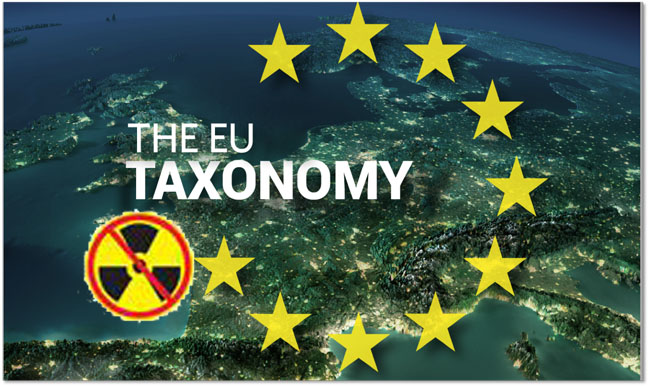
By Kate Abnett, BRUSSELS, March 6 (Reuters) – European Union countries intend to push for a global phasing out of fossil fuels among their climate diplomacy priorities this year, which the bloc hopes to approve this week after rewriting a contentious section on nuclear energy………………………………………………………………
Diplomats from EU countries will attempt to finalise the text on Wednesday, which ministers must then approve formally.
DELAYS
The approval has been delayed, however, by disputes over the role of nuclear energy in the green transition.
Specifically, countries could not agree on whether EU diplomacy should promote low-carbon hydrogen – meaning hydrogen produced from nuclear electricity – or focus on hydrogen produced from renewable energy.
The issue has split EU member nations. France and other countries want more EU policies to promote the low-carbon energy source while Germany and Spain warn that this could hamper efforts to drive massive expansion in renewable energy.
The latest draft did not specify which type of hydrogen the EU would promote……………
The nuclear issues have already disrupted negotiations on EU renewable energy targets and some diplomats fear it could delay other laws needed to meet climate goals. https://www.reuters.com/business/environment/eu-rewrites-climate-diplomacy-deal-resolve-nuclear-sticking-point-2023-03-06/
Biden’s “Fools-Based International Order” – a network to bring about war against China.
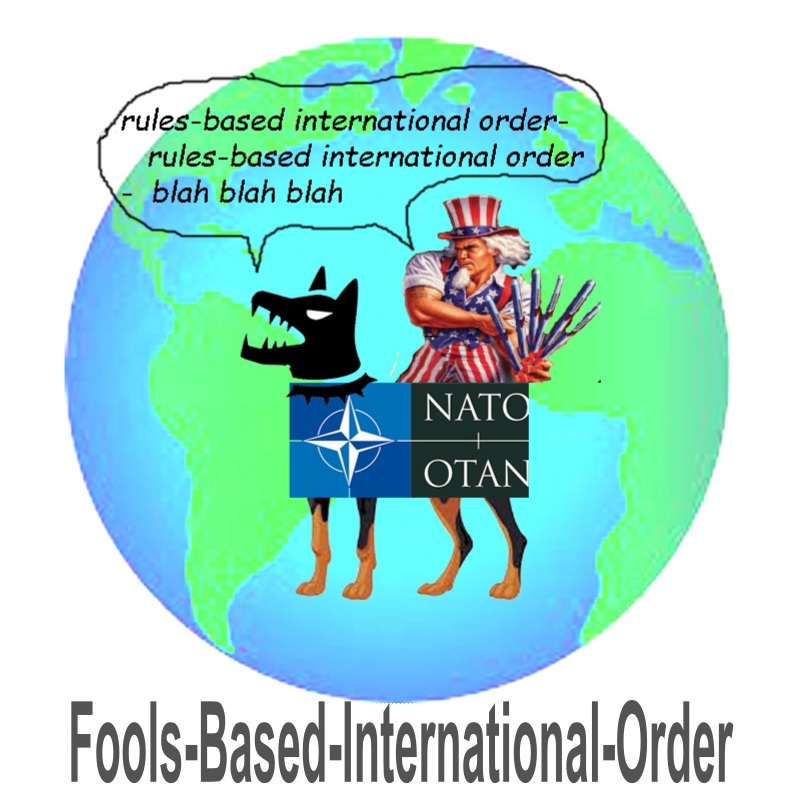
The Biden administration has a name for this network – the rules-based international order. And sustaining the grip this order has on the world represents an existential challenge for the US.
one is struck by the exclusively militaristic nature of their mission—the North Atlantic Treaty Organization (NATO), the Australia-UK-US (AUKUS) security partnership, and a “revitalized Quad” ……. all, at their core, military alliances.
Militarization of China policy reflects US’ hysteria, By Scott Ritter, Feb 28, 202 https://www.globaltimes.cn/page/202302/1286369.shtml
When one reads the 2022 National Security Strategy of the US, it becomes crystal clear that, at least according to the world view as promulgated by the administration of President Joe Biden, the US and China are on trajectory that can only lead to one thing – military confrontation.
At the core of this assessment is the enduring belief on the part of the Biden administration that the key to America’s continued role as a world leader is the reinvigoration of “America’s unmatched network of alliances and partnerships to uphold and strengthen the principles and institutions that have enabled so much stability, prosperity, and growth for the last 75 years.”
The Biden administration has a name for this network – the rules-based international order. And sustaining the grip this order has on the world represents an existential challenge for the US.
According to the Biden administration, “The [People’s Republic of China] is the only competitor with both the intent to reshape the international order and, increasingly, the economic, diplomatic, military, and technological power to advance that objective.”
According to the Biden administration, “The [People’s Republic of China] is the only competitor with both the intent to reshape the international order and, increasingly, the economic, diplomatic, military, and technological power to advance that objective.”
China, the Biden administration believes, is the greatest threat to the US, something the Biden administration makes abundantly clear. “The People’s Republic of China harbors the intention and, increasingly, the capacity to reshape the international order in favor of one that tilts the global playing field to its benefit, even as the US remains committed to managing the competition between our countries responsibly.”
The “responsible management” the Biden administration speaks of draws upon an “unrivaled network of allies and partners” which “protects and advances our interests around the world.” The Biden administration’s strategy for “competing” with China requires the US to “assemble the strongest possible coalitions.”
But when one looks at the coalitions highlighted by the Biden administration as being central to this effort, one is struck by the exclusively militaristic nature of their mission—the North Atlantic Treaty Organization (NATO), the Australia-UK-US (AUKUS) security partnership, and a “revitalized Quad”, which brings together the US with Japan, India, and Australia in a security arrangement designed to contain Chinese influence in the Indo-Pacific region—are all, at their core, military alliances.
“Competition”, when it comes to the US approach toward China, is better defined as “deterrence”, and “deterrence” is a military mission, one which the Biden administration has pledged to “act urgently to sustain and strengthen”, noting that China is the “pacing challenge.”
The result of the Biden administration’s approach toward China is the militarization of what should be a classic problem of diplomacy, where the traditional tools of negotiation are increasingly replaced by confrontation.
The most recent example of this militarized approach is the so-called “Chinese Spy Balloon” crisis, where the Biden administration used the incursion by what clearly was a wayward high-altitude balloon equipped with sensors designed to collect atmospheric information used to investigate climate change to generate hysteria about a non-existent Chinese threat. This hysteria culminated in the US employing Air Force fighter aircraft to shoot down the balloon, destroying both it and its scientific payload.
The extent to which the Biden administration has supplanted diplomacy with “militarized” competition is underscored by the fact that, because of this self-generated Sinophobia, Secretary of State Antony Blinken cancelled plans to travel to China for high-level talks. At a time when the US and China should be exhausting every opportunity to engage in the kind of constructive dialogue the Biden administration claims as its principal tool for managing its relationship with China, the US has instead embarked on a phrenetic “balloon chase”, where US fighter aircraft scour the American skies for even more “made in China” balloons to shoot down.
The militarization of US-Chinese relations reached its apex recently when US Air Force General Mike Minihan, the head of the US Air Mobility Command (AMC), issued a memorandum declaring that his “gut” told him that the US and China would be at war by 2025, and instructing the men and women under his command practice pistol marksmanship by firing a full “clip” of ammunition into a 7-meter target, aiming for the head.
While General Minihan’s superiors have distanced themselves from the memorandum, the fact is his undiplomatic language is reflective of a core assessment dating back to 2021 known as “the Davidson Window”, named after the former commander of the US Indo-Pacific Command, Philip Davidson, who postulated at that time that China would invade Taiwan within six years. The “Davidson Window” guides the posture of a US military which, by the Biden administration’s own admission, uses China as its “pacing challenge.”
The Biden administration would be well-advised to become grounded in old-school diplomacy rather than chasing balloons in the sky because, left unchecked, the ongoing militarization of the US-Chinese relationship can only lead to disaster.
France mounts battle for nuclear energy in Europe

Paris persuades 10 EU countries to join a ‘nuclear alliance’
Sarah White and Leila Abboud in Paris, Alice Hancock in Brussels and Guy Chazan in Berlin, https://www.ft.com/content/f7a79b52-ff1a-4336-82c1-ed359df60173 1 March 23,
France is making an aggressive push to promote nuclear power in the EU, seeking to rally allies for battles to come in a stand-off with Germany over the bloc’s energy policy. Paris on Tuesday persuaded 10 countries, including Hungary and Bulgaria, to join a “nuclear alliance” calling on Brussels to do more to back atomic energy, a move they argued would help meet climate goals while protecting the EU’s energy independence.
The establishment of the pro-nuclear group at a meeting in Stockholm, comes as France lobbies for concessions from the EU’s ambitious renewable power goals to obtain what would effectively be carve-outs for its nuclear industry, the mainstay of its electricity production. That has opened a rift with Germany and left other member states wondering if they will be forced to pick sides.
The disagreements are bleeding into a host of EU energy reforms, from a planned overhaul of electricity markets to how to promote hydrogen energy and renewables. It also reflects how Germany and France have had trouble forging consensus on a range of issues since Russia’s invasion of Ukraine rattled the EU’s economic and political order.
French energy minister Agnès Pannier-Runacher said she had a “productive discussion” with her German counterpart at the meeting of EU energy ministers in Stockholm on Tuesday, but the pair did not resolve their differences. “We do not want nuclear to be discriminated against,” she said.
Some EU countries are questioning why French president Emmanuel Macron’s government is pushing its agenda so hard given it risks reopening legislative battles on energy issues that had already been resolved. “
It is total war from everywhere [on the nuclear issue],” said one senior EU diplomat outside of the Franco-German nucleus, as several described French efforts to get “low carbon” — a byword for atomic power — into a number of draft regulations in recent months.
Another said the issue had “become a spoiler in every discussion”, when France had agreed last year to a broad outline of a renewable energy agenda without insisting on nuclear carve-outs.
The meeting hastily arranged by Paris was met with a degree of bewilderment by other EU states. Belgium, which recently extended the life of two reactors, was not invited, while Sweden, which has a modest atomic energy sector, declined to join. The Netherlands only signed up on condition that a paragraph in the joint statement linking nuclear power to renewables targets was deleted, people close to the talks said.
France pushing hard to make the European Union a pro-nuclear organisation

France seeks ‘nuclear alliance’ at EU energy meeting
EU Observer, By WESTER VAN GAAL BRUSSELS, 27. FEB, 23
France is building an alliance of pro-nuclear states to advocate for expanding nuclear power in the bloc.
EU energy ministers are meeting on Monday and Tuesday (27 and 28 February) to discuss issues ranging from security of supply to the upcoming electricity market reform.
But on the sidelines, French energy minister Agnes Pannier-Runache has invited 12 other countries on Tuesday to discuss a “nuclear alliance.”
“I would like to remind you that nuclear power represents 25 percent of European electricity production”, said Pannier-Runache. “It will be one of the important low-carbon energy sources next to wind and solar power that will help us achieve carbon neutrality.”
She later explained that the meeting would be an occasion to discuss “research, supply chain and nuclear waste issues.”
Countries in attendance include traditionally pro-nuclear members Romania, Bulgaria, Slovakia, Czech Republic, Hungary, Poland, Slovenia and Finland. Newly-joined Croatia, plus the Netherlands, Italy and Sweden will also attend.
It is the latest move in an ongoing spat with Germany which is phasing out nuclear power and whose negotiators have stressed nuclear electricity should not be equated to electricity derived from solar and wind.
Other countries not attending the meeting include Belgium and Luxembourg, whose energy minister Claude Turmes said nuclear power “is very slow.”
“It takes 12 to 15 years to build a new nuclear facility,” he said. “If we want to win the race against climate change, we need to be fast.”
The French meeting follows intense French lobbying to include nuclear power in a recent EU Commission rules for green hydrogen, which is made with electricity derived from wind and solar but now also allows nuclear power as energy source…………. https://euobserver.com/green-economy/156759
Russian nuclear energy diplomacy and its implications for energy security in the context of the war in Ukraine
Nature, Kacper Szulecki & Indra Overland 27 Feb 23
Abstract
Since Russia invaded Ukraine in February 2022, the possibility of reducing Europe’s energy dependence on Russian resources has been hotly debated. The fossil fuel industries received most attention as European Union leaders first introduced gradual sanctions on Russian coal and later on oil and gas, while Russia responded with supply cuts. However, Russia’s role as a major player in the global nuclear power sector has remained largely below the sanctions radar, despite dependencies on Russian nuclear technology, uranium supplies and handling of spent nuclear fuel. Here we analyse the state nuclear company Rosatom and its subsidiaries as tools of Russian energy statecraft. We map the company’s global portfolio, then categorize countries where Russia is active according to the degree and intensity of dependence. We offer a taxonomy of long-term energy dependencies, highlighting specific security risks associated with each of them. We conclude that the war and Russia’s actions in the energy sector will undermine Rosatom’s position in Europe and damage its reputation as a reliable supplier, but its global standing may remain strong.
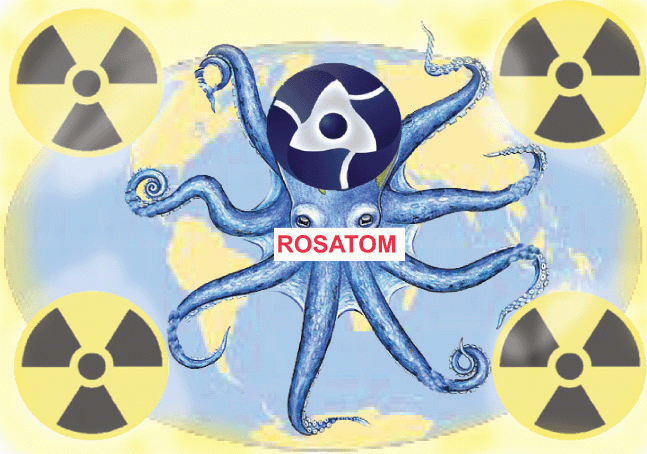
…………………………………………………………Russia is the world’s largest exporter of natural gas, second-largest exporter of oil and third-largest exporter of coal8. However, media coverage and political debates have generally omitted another sector where Russia is a major player and that is vital for Russia’s global economic and diplomatic posture: nuclear energy. While the Russian shelling and takeover of Ukrainian nuclear power plants has caused an outcry, Russia’s portfolio of foreign orders, including reactor construction, fuel provision and other services, spans 54 countries and is claimed by Rosatom to be worth more than US$139 billion over a ten year period9 and has thus far not been covered by Western sanctions. Although the financial figure is in all likelihood inflated, Russia’s involvement in and use of nuclear energy as a tool of energy diplomacy deserves scrutiny.
In this Analysis, we present a dataset of all current and planned international engagements of the Russian nuclear energy supplier Rosatom and its subsidiaries AtomStroyExport and TVEL. The dataset includes information on the different types of agreement, business models, scales of investments, types of reactor being built or planned and their nameplate capacity. As a gauge of the level of dependency upon the Russian nuclear sector that is or will be brought about by these reactors, we registered their share of the future electricity supply in the countries where they are located or planned for construction. Because the degree of influence achieved through energy statecraft is conditioned by the character and level of (inter)dependence, we discuss the firmness of dependence of different client states, formulated as ‘intensity.’ Finally, we propose a categorization of dependency types (Methods).
Rosatom’s rise, expansion and comparative advantages
Rosatom—the Russian State Atomic Energy Corporation—is the direct heir to the Soviet Ministry of Atomic Energy, which was established in the aftermath of the Chernobyl nuclear accident. Reorganized as a state corporation in 2007, Rosatom is fully owned by the Russian state, and the president of the Russian Federation determines the company’s objectives10,11. Since its inception, Rosatom has become increasingly active in the international nuclear power market12,13 and has become a leading provider of key services12,14,15. Construction of as many as ten reactor units started between 2007 and 2017, and between 2009 and 2018, the company accounted for 23 of 31 orders placed and about a half of the units under construction worldwide11. Through its subsidiary TVEL, Rosatom also provides fuel supplies, controlling 38% of world’s uranium conversion and 46% of uranium enrichment capacity16,17 in addition to decommissioning and waste disposal. In sum, Russia was the supplier in around half of all international agreements on nuclear power plant construction, reactor and fuel supply, decommissioning or waste between 2000 and 2015. Its main nuclear power competitors—China, France, Japan, Korea and the United States—accounted for another 40%, combined18.
…………………………………………. Rosatom’s main advantage lies in its capacity to be a ‘one stop nuclear shop’ for all needs, the only supplier providing an ‘all-inclusive package’12. This comprises reactor construction know-how, training, support related to safety, non-proliferation regime requirements and flexible financing options, including government-sourced credit lines22. The company is also uniquely able to offload spent nuclear fuel from overseas customers.
The way Rosatom designs its projects also makes it a convenient partner for nuclear newcomers23,24. While details of contractual agreements vary from case to case, the developer takes care of the entire process until the plant is ready to use and can be handed over to local (Russian-trained) nuclear experts to operate. For that reason, nuclear energy can be considered by countries for which it was previously unattainable, especially in the Middle East25,26, sub-Saharan Africa27,28 and South America.29
Rosatom is also able to make special offers to strategically important partners, such as Turkey30,31. ………………………………….
Its comparative advantages as a supplier allowed Russia to launch a global campaign of nuclear energy diplomacy33 in which Rosatom and Russian government institutions such as the Ministry of Foreign Affairs work in tandem. This potentially gives Russia the capacity to use the broad network of international projects it is involved in34 and the direct control over reactors and strategic energy infrastructure to exert political pressure and to project power globally35.
Minin and Vlček, having studied the behaviour of Rosatom and its relationship with the Russian state, argue that the company is primarily a profit-seeking entity with a high degree of autonomy and growing self-sufficiency15. According to Thomas, whatever its grandiose expectations, Rosatom could simply be unable to deliver all the projects that it has agreed to, let alone expand further13. On the other hand, Aalto et al. observe that ‘potential foreign policy influence’ by Russia was noted by Finnish and Hungarian opponents of collaboration with Rosatom33, while Jewell and colleagues argue that some nuclear sector dependencies display more pervasive energy security impacts, long-lasting and difficult to deal with (due to lack of flexibility) than those usually analysed by energy security experts in the petroleum sector18,36.
Here we consider Rosatom’s potential as a tool for the Russian state and debate whether this constitutes a ‘nuclear energy weapon’ or simply a projection of soft-power diplomacy. We find that Russian nuclear energy statecraft can be seen as a spectrum between these two extremes, but that soft-power diplomacy creates dependencies that can be further expanded and exploited and thus should not be overlooked.
Analysing Rosatom’s international activity
Our research, gathered in the dataset available in the Supplementary Data, indicates that upon Russia’s invasion of Ukraine, Rosatom boasted as many as 73 different projects in 29 countries. The projects were at very different stages of development from power plants in operation; through construction of reactors ongoing, contracted, ordered or planned; to involvement in tenders, invitations to partnerships or officially published proposals. On top of that, Russian companies have bilateral agreements or memoranda of understanding (MoUs) with 13 countries for services or general joint development of nuclear energy.
Rosatom’s projects and involvement have varied in ambition and cost—from India’s Tarapur nuclear power plant (NPP) (US$700 million) and Iran’s Bushehr-1 (US$850 million) to a gargantuan project in South Africa (US$76 billion) and those in Egypt (US$30 billion) and Turkey (US$20 billion). Finally, 13 countries have a variety of research-oriented agreements with Russian nuclear service providers related to nuclear research centres. Altogether, Russia’s nuclear energy diplomacy has been formalized in 54 countries.
While this is impressive, looking into the details of these agreements (particularly the NPP construction projects) reveals a more modest level of international engagement. Many of the projects have been stuck at the planning stage for several years or are merely visions laid out in non-committal MoUs………………………………………………………
However, most cooperation and plans have not been cancelled, and even EU member states Bulgaria and Hungary have, as of January 2023, not cancelled their planned nuclear plants…………………………………………………………………………………………….
Following the 2014 annexation of Crimea and particularly after the 2022 invasion of Ukraine, Russian economic, political and energy influence has become a fundamental concern in European countries.42 In countries that plan to base their decarbonization efforts primarily or entirely on nuclear energy (that is, Hungary and Slovakia), the Russian NPP share of the electricity supply can underrepresent Russia’s influence: dependencies on nuclear fuel imports from TVEL/Rosatom (which also continues to supply Bulgaria, Czechia and Finland and Poland’s research reactor), combined with power-system inflexibility and overreliance on a single large nuclear power plant, exacerbates the vulnerability to supply disruptions…………………………………………..
Egypt, Iran and Turkey are all nuclear newcomers, energy hungry and populous (with between 82 and 100 million inhabitants each). Such states are lucrative markets for low-carbon electricity development…………………………………………………………………………………………………………
The big question for the future is whether non-Western countries will also turn away from Russian nuclear power. Currently, many developing countries take a positive view of Russia and tilt towards its view of the conflict in Ukraine. Immediately after the invasion of Ukraine, seven of the 14 countries with high- or medium-cooperation levels in our analysis did not approve United Nations Resolution ES 11/1 condemning Russian aggression, and several of these (for example, Bangladesh, China, India, Iran) were categorized as ‘neutral or Russia-leaning’ shortly after the war began58. Over time, however, the interruption of energy supplies to the European Union may undermine the reputation of Russian energy companies as primarily economic actors independent of national security politics, also outside Europe. Non-Western perspectives on the war in Ukraine and the reliability of Russia and Russian technology may also change over time……………………………………………………………………………………………………………………………………… more https://www.nature.com/articles/s41560-023-01228-5
Zelensky warns Americans that US will lose global influence if it stops backing war
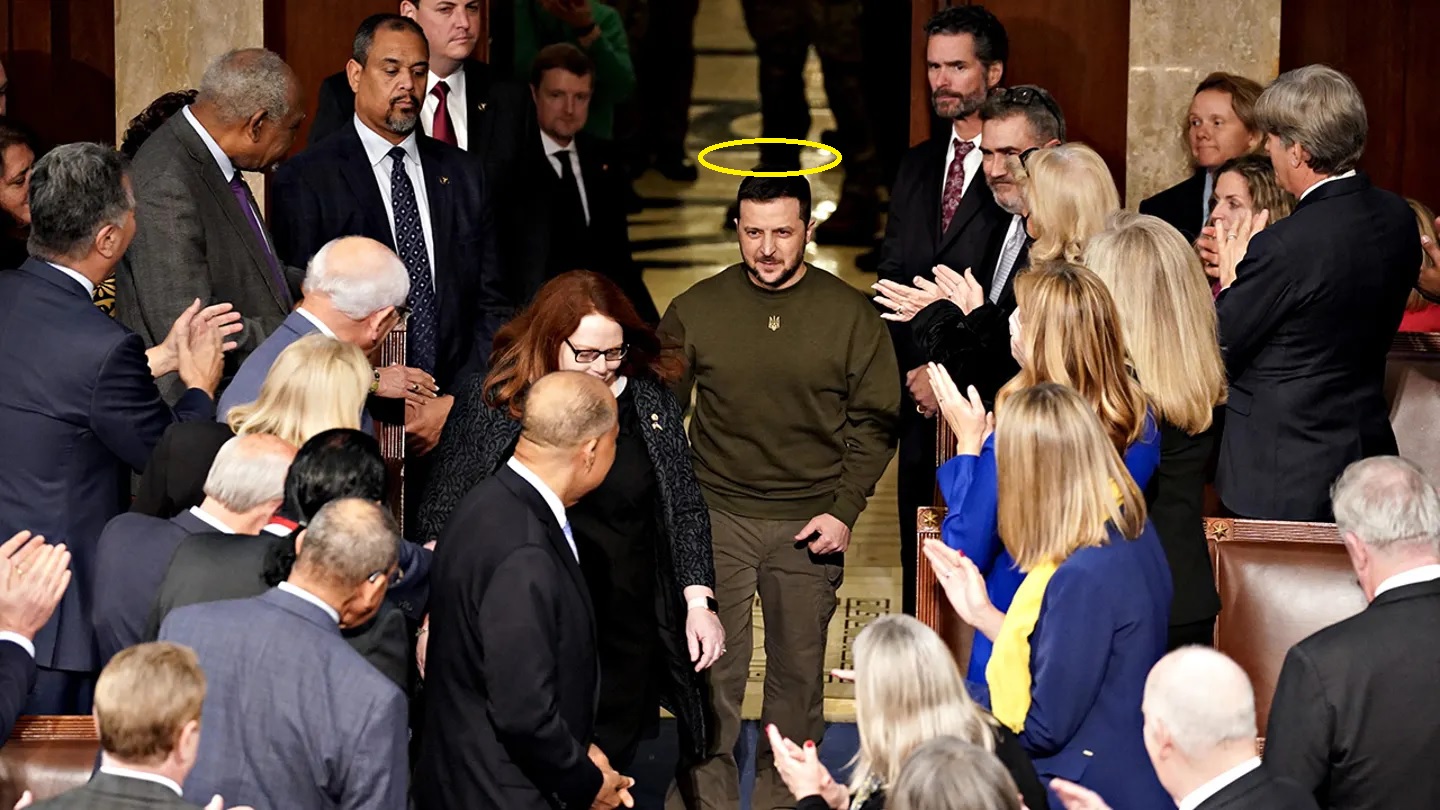
Ukrainian President Vladimir Zelensky has warned Americans to keep supporting Kiev or risk geopolitical irrelevance, during a press conference on the anniversary of Russia’s military operation in the country. Should it stop funding the war effort, the US will “lose the leadership position that they are enjoying in the world,” the Ukrainian leader declared on Friday.
“If they do not change their opinion…they will lose NATO, they will lose the clout of the United States, they will lose the leadership position they are enjoying in the world,” Zelensky declared, following a speech in which he declared 2023 the “Year of Invincibility” and vowed to unite the world against Russia.
The warning was a response to a reporter asking what Zelensky would tell the “growing number of Americans” who believe their country is giving too much money and support to Ukraine. The president made sure to thank his American supporters – a group he hinted included not just Congress and President Joe Biden but also “the TV channels” and “the journalists” – before threatening those who held the “dangerous” opinion that the US should “give up” on Kiev………………………………………….
The Republican Party regained control of the House of Representatives in last year’s midterm elections in part on a promise to curtail the Biden administration’s blank check to Kiev. While Congress has not yet passed any legislation to rein in spending on the conflict, Rep. Marjorie Taylor Greene (R-Georgia) promised earlier this week to introduce a bill to force an audit of the Ukraine aid program and the House Oversight Committee demanded the administration turn over documents proving the military and economic aid being sent to Ukraine was not being lost to “waste, fraud, and abuse.”
The US has thus far pledged $113 billion to Ukraine’s war effort, vowing to continue pouring money into the conflict for “as long as it takes.” https://www.rt.com/news/572077-zelensky-warns-us-support-flagging/—
The world returns to an era of nuclear angst
Russia’s suspension of its arms control treaty with the US augurs a new period of military deterrence, arms races and instability
EL PAIS, ÓSCAR GUTIÉRREZ, Madrid – FEB 27, 2023
Dmitry Medvedev is currently the deputy chairman of the Security Council of the Russian Federation (SCRF), a consultative body that supports Russian President Vladimir Putin’s decision-making on national security affairs. In April 2010, when the United States and Russia signed the New Strategic Arms Reduction Treaty (New START) in Prague, limiting the nuclear offensive capabilities of both countries, the man in charge in Moscow, at least on paper, was Medvedev, then the president of the country. In late February, Putin suspended the treaty that Obama and Medvedev signed almost 13 years ago. At the New START signing ceremony, Medvedev said, “This will turn a new page for cooperation between our two countries and will create safer conditions for life here and around the world.” Not anymore.
Medvedev is one of the best examples of how nuclear security has changed since the Cold War between the US and Russia. He now fervently supports suspending the treaty he signed in 2010
and said in a Telegram post, “If the US intends to defeat Russia [by providing military support to Ukraine], then we are on the brink of a global conflict. We have the right to defend ourselves with any weapon, including nuclear ones.”
EL PAÍS consulted four arms control and security policy experts on the consequences of Putin’s suspension of the New START treaty. They all concurred that both countries had been complying with limits on warheads, missiles and delivery systems and felt that controlling such weapons would become complicated and potentially lead to a new arms race. Moscow’s move is an attempt to curb Western support for Ukraine, and without New START, there will be more uncertainty, instability and potential nuclear miscalculations. These same words and scenarios defined the Cold War geopolitical tension that dominated US-Russian relations for 40 years after World War II.
“Without the treaty, [the US and Russia] can do whatever they want,” said Olga Oliker, an expert on Russian and Ukrainian security policy for the International Crisis Group. “They can build whatever strategic offensive weapons they feel like and can afford. They won’t be able to verify what the other is or isn’t doing. They will still have intelligence-collecting capabilities but not the inspections, data exchanges and consultations to ensure compliance. Theoretically, they could deceive each other more easily.” Oliker believes the most significant risk in suspending the treaty lies in the potential “misunderstandings” arising from a lack of information.
New START limits the number of immediately deployable nuclear weapons owned by the US and Russia, which account for 90% of the world’s nuclear arsenal. They can only have a maximum of 1,550 deployed warheads and 700 long-range missile delivery systems between ground launchers, submarines and bombers. According to the US State Department, as of September 2022, both countries were below those numbers. It was a drastic reduction compared to the 1991 treaty Ronald Reagan and Mikhail Gorbachev signed. New START also initiated a compliance mechanism that permitted up to 18 inspections a year, regular information exchange and a monitoring commission, all of which are now suspended.
Non-compliance with inspections
Todd Sechser is a professor at the University of Virginia (USA) and a scholar at the Carnegie Endowment for International Peace. “The treaty is important not only because it limits the number of strategic nuclear warheads,” said Sechser, “but because it provides a way for the two countries to build trust. This move undermines that trust.” ……………………………………………………………………….. more https://english.elpais.com/international/2023-02-27/the-world-returns-to-an-era-of-nuclear-angst.html—
How US and Ukraine’s far-right made pro-peace Zelensky a ‘no peace’ president

the exalted version of Zelensky promoted to NATO state audiences today is a sharp contrast to the pro-peace candidate that Ukrainians overwhelmingly elected four years ago.
it is no wonder that the same US political establishment that sabotaged Zelensky’s peace mandate now holds him up as a hero.
In October 2019, as he took steps to implement Minsk in the face of far-right protests and US hostility, Zelensky assured Ukrainians that he was “the president of peace,” and that “ending this war is of utmost importance to me.” He added: “I, the president, am not ready to sacrifice our people. And that is why I choose diplomacy.”
Elected in 2019 to bring peace to Ukraine, a Zelensky aide now declares that “there is no peace with Russia, and Ukraine must arm itself to the teeth.”
Aaron Maté https://mate.substack.com/p/how-us-and-ukraines-far-right-made?utm_source=post-email-title&publication_id=100118&post_id=105251040&isFreemail=false&utm_medium=email 26 Feb 23,
Volodymyr Zelensky marked the one-year anniversary of Russia’s invasion of Ukraine by rejecting any negotiations with the Kremlin.
“There is nothing to talk about and nobody to talk about over there,” Zelensky declared.
The Ukrainian President delivered the message just two weeks after his French and German counterparts urged him, at a meeting in Paris, “to start considering peace talks with Moscow,” the Wall Street Journal reports.
But as an adviser explained to the New York Times, Zelensky is now “more at peace with himself,” and therefore has no need to entertain the possibility of peace with his neighbor.
He has a clear understanding what Ukraine should do,” the adviser said. “There is no ambiguity: There is no peace with Russia, and Ukraine must arm itself to the teeth.”
Zelensky’s “clear understanding” of the need to reject peace with Russia and turn his country into a NATO arms depot is a resounding victory for the Ukrainian far-right and its US government allies. As I wrote here last year, these two powerful forces, aligned by their converging interests in prolonging the post-2014 war in Ukraine’s Donbas region, sabotaged the peace platform that Zelensky was elected on in April 2019. As Adam Schiff put it, the US has used Ukraine’s civil war “so that we can fight Russia over there, and we don’t have to fight Russia here.”
The commemoration of the first anniversary of Russia’s cross-border invasion to end Schiff’s bipartisan “fight” has yielded more insight into how the US, in concert with its ideological allies in Ukraine’s powerful far-right, helped convert Zelensky from pro-peace candidate to “no peace” president.
In a fawning profile, the Washington Post approvingly recounts how Zelensky shifted from naively “thinking peace with Putin was possible” to now believing that “victory is the only answer.” Although the Post attempts to cast Zelensky’s “transformation” as the result of “Russian President Vladimir Putin’s threat,” the details tell a different story.
The Post describes a summer 2019 exchange between the then-rookie president and the top US diplomat in Ukraine, William Taylor. At the time, Zelensky was “expressing curiosity” about the Steinmeier Formula, a German-led effort to revive the stalled Minsk Accords. Minsk, reached in 2015, called for granting limited autonomy to the rebellious Donbas regions in eastern Ukraine in exchange for their demilitarization. Ukraine’s far-right, the driving force behind the 2014 Maidan coup that triggered the ensuing Donbas war, had opposed Minsk’s implementation at every turn.
Zelensky, Taylor recalls, “hoped” that the Steinmeier initiative “might lead to a deal with the Kremlin.” The Ukrainian president “pointed to a document explaining the formulation, thinking that somewhere in the details of the legalese a workable compromise with Moscow might be found.”
But Washington knew better: no compromise with Moscow could be allowed. “No one knows what it is,” Taylor told Zelensky of the German plan. “Steinmeier doesn’t know what it is… It’s a terrible idea.”
The Steinmeier plan was in fact a simple idea, and a welcome one to anyone interested in bringing peace to Ukraine. For his part, Taylor was never shy about advocating war. In a December 2014 letter to The Washington Post, Taylor denounced an opinion article that had opposed sending US arms to Ukraine and advocated an agreement between NATO and Russia to resolve the Ukrainian crisis. Backers of such steps, Taylor wrote, are “advocating that the West appease Russia.… Now is not the time for appeasement.”
This explains why Taylor was similarly hostile to the “terrible” plan named after former German foreign minister Frank-Walter Steinmeier. The Steinmeier Formula called for holding local elections in the rebel-held Donbas areas under Ukrainian law and international supervision. If OSCE monitors certified the results, then Ukraine would regain control of its eastern border and enact a special status law granting the rebellious Donbas regions limited autonomy.
But this road map, along with a similar initiative from French diplomat Pierre Morel, “got nowhere because of opposition in Ukraine,” former UK diplomat Duncan Allan observed for the UK government-funded think tank Chatham House. When Zelensky tried to revive it in late 2019, Allan added, “[a]nother sharp reaction in Ukraine forced him to back down.” As the New York Times now notes in passing, “a backlash at home — with street protesters in Kyiv accusing him of treason for surrendering land — steered the Ukrainian president to a political formula in which he rejected concessions” with Russia.
Specifically, that “backlash” in Ukraine included not only violent protests but outright threats to Zelensky’s life.
“Zelenskyy said he was ready to lose his ratings, popularity, position,” Right Sector co-founder Dmytro Yarosh, commander of the Ukrainian Volunteer Army and former senior Ukrainian military advisor, said shortly after Zelensky’s May 2019 inauguration. “No he would lose his life. He will hang on some tree on Khreshchatyk – if he betrays Ukraine and those people who died in the [Maidan] Revolution and the [Donbas] War.” (Two years after threatening to hang the president from a tree, Yarosh was given a repeat appointment as an advisor to the Commander-in-Chief of the Ukrainian military. The Ukrainian military subsequently claimed that the appointment was withdrawn).
Despite the internal and external opposition, Zelensky departed a meeting with Putin in December 2019 feeling “hopeful”, the Post reports. “Within weeks, Russia agreed to a broader prisoner exchange and offered Ukraine a $3 billion gas arbitration settlement as well as a new gas transit deal.”
But on top of the far-right backlash at home, Zelensky’s peace initiative faced direct hostility from Ukraine’s patron in Washington. After warning Zelensky against pursuing a “terrible” European-brokered peace plan, William Taylor soon became a hero of Trump’s first impeachment over Ukraine. At the impeachment proceedings, which kicked off in October 2019 just as Zelensky was trying to follow through on his peace mandate, Taylor was summoned to assure Congress and a Russiagate-crazed media class that Trump’s pause on weapons subsidies for the Ukrainian fight against the Russia-backed Donbas rebels endangered “our national security.” (For his services, the New York Times lauded Taylor as “a septuagenarian Vietnam veteran with a chiseled face and reassuring gray hair,” while the Washington Post declared him to be a “meticulous note taker.”)
The prevailing imperative to use Ukraine “to fight Russia over there” (Schiff) meant that Zelensky had no chance to pursue the “terrible” Minsk agreement that Taylor and other influential proxy warriors opposed.
“The reality is that Ukraine depends on political, diplomatic, economic and military support from the West, and particularly from the United States,” Samuel Charap of the Pentagon-tied RAND Corporation wrote in November 2021. Up to that point, “Ukraine has shown little desire” to “[implement] its obligations under the Minsk II agreement,” and the US had “not yet used its influence to push for progress on the Donbas conflict.” If the Ukrainian government could be pushed “toward complying”, Charap noted, that “might actually invite de-escalation from Russia” while saving Ukraine “from calamity.”
But by then, Zelensky had decided to side with the forces that had sabotaged him. According to the Post’s account, citing David Arakhamia, the leader of Zelensky’s faction in parliament: “By early 2021, Zelensky believed that negotiations wouldn’t work and that Ukraine would need to retake the Donetsk and Luhansk regions ‘either through a political or military path.’” As a result, “[t]he Kremlin disengaged.”
Zelensky’s early 2021 decision that “negotiations wouldn’t work” explains why, in early 2022, he shunned all opportunities to prevent Russia’s looming invasion. At the final talks on implement Minsk, a “key obstacle,” the Washington Post reported, “was Kyiv’s opposition to negotiating with the pro-Russian separatists.” When Germany proposed a last-minute deal in which Ukraine would “renounce its NATO aspirations and declare neutrality as part of a wider European security deal,” Zelensky turned it down, according to the Wall Street Journal. After rejecting diplomacy, Zelensky’s government then significantly increased its shelling of the Donbas, a potential step toward trying to “retake the Donetsk and Luhansk regions” via the “military path” that the Washington Post has newly confirmed.
And as the recent disclosures of former Israeli Prime Minister Naftali Bennet underscore, the US went from sabotaging Zelensky’s peace mandate before the Russian invasion to blocking diplomatic efforts in the period since.
As a result, the exalted version of Zelensky promoted to NATO state audiences today is a sharp contrast to the pro-peace candidate that Ukrainians overwhelmingly elected four years ago.
In October 2019, as he took steps to implement Minsk in the face of far-right protests and US hostility, Zelensky assured Ukrainians that he was “the president of peace,” and that “ending this war is of utmost importance to me.” He added: “I, the president, am not ready to sacrifice our people. And that is why I choose diplomacy.”
By now choosing to reject diplomacy, President Zelensky has shown that he is more than willing to sacrifice his people for the sake of his NATO state patrons’ desired proxy war against Russia. Accordingly, one year into the catastrophic Russian invasion that it helped provoke, it is no wonder that the same US political establishment that sabotaged Zelensky’s peace mandate now holds him up as a hero.
Vladimir Putin says the US-led military alliance in Ukraine seeks defeat and liquidation of Russia
ABC News 27 Feb 23
President Vladimir Putin has cast the confrontation with the West over the Ukraine war as an existential battle for the survival of Russia and the Russian people — and said he was forced to take into account NATO’s nuclear capabilities.
Key points:
- February 24 marked the first anniversary of the Russian invasion of Ukraine
- Mr Putin says he believes the future of Russia is in peril
- The interview was aired on Sunday on Russian state television
A year since ordering the invasion of Ukraine, Mr Putin is increasingly presenting the war as a make-or-break moment in Russian history — and saying that he believes the very future of Russia and its people is in peril…………………………………………
Mr Putin said the tens of billions of dollars’ worth of US and European military assistance to Ukraine showed that Russia was now facing off NATO itself — the Cold War nightmare of both Soviet and Western leaders.
Ukraine says it will not rest until every last Russian soldier is ejected from Ukraine, including from Crimea which Russia annexed in 2014………………….
Russia’s official nuclear doctrine allows for the use of nuclear weapons if they — or other types of weapons of mass destruction — are used against it, or if conventional weapons are used, which endanger “the very existence of the state”………………………………..
India, China may have averted nuclear war in Ukraine by influencing Russia: US
Live Mint, 26 Feb 2023, Edited By Anwesha Mitra
As the Ukraine-Russia war continues, US Secretary of State Anthony Blinken said recently that India and China may have helped persuade Moscow to avoid using nuclear weapons. The remarks came as the war marked its first anniversary and concerns grow about a Russian spring offensive.
“…other countries that might have a little bit more influence with Russia these days, like China, but also other countries, like India, to engage him directly about their absolute opposition to any use of nuclear weapons. And we know that they conveyed those messages. And I think that had some effect,” Blinken told The Atlantic during an interview published on Friday. ……………………………………………………………….. more https://www.livemint.com/news/world/india-china-may-have-influenced-russia-prevented-nuclear-war-in-ukraine-us-11677322391450.html
China calls for Russia to not go down the ‘nuclear weapons route’
DFAT Australia China Council Scholar Andrew Phelan says that China has called for Russia to ‘leave nuclear power plants’ and not pursue the ‘nuclear weapons route’ in a 12-point peace plan released this afternoon.
“There are a couple of good things about it,” Mr Phelan told Sky News host Caleb Bond.
1 This Month



26 September – International Day for the Total Elimination of Nuclear Weapons


PLEASE OPPOSE HR 8255 AND S.3639 – bills would accelerate satellite deployment, with no environmental review or safeguards – https://ncstd5li.quorum.us/campaign/169331/
To see nuclear-related stories in greater depth and intensity – go to https://nuclearinformation.wordpress.com
-
Archives
- September 2026 (245)
- August 2026 (330)
- July 2026 (355)
- June 2026 (287)
- May 2026 (306)
- April 2026 (356)
- March 2026 (251)
- February 2026 (267)
- January 2026 (308)
- December 2025 (358)
- November 2025 (359)
- October 2025 (375)
-
Categories
- 1
- 1 NUCLEAR ISSUES
- business and costs
- climate change
- culture and arts
- ENERGY
- environment
- health
- history
- indigenous issues
- Legal
- marketing of nuclear
- media
- opposition to nuclear
- PERSONAL STORIES
- politics
- politics international
- Religion and ethics
- safety
- secrets,lies and civil liberties
- spinbuster
- technology
- Uranium
- wastes
- weapons and war
- Women
- 2 WORLD
- ACTION
- AFRICA
- Atrocities
- AUSTRALIA
- Christina's notes
- Christina's themes
- culture and arts
- Events
- Fuk 2022
- Fuk 2023
- Fukushima 2017
- Fukushima 2018
- fukushima 2019
- Fukushima 2020
- Fukushima 2021
- general
- global warming
- Humour (God we need it)
- Nuclear
- RARE EARTHS
- Reference
- resources – print
- Resources -audiovicual
- Weekly Newsletter
- World
- World Nuclear
- YouTube
-
RSS
Entries RSS
Comments RSS
 nuclear-news