Biden and Xi will sign a deal to keep AI out of control systems for nuclear weapons: report
Tom Porter , Nov 13, 2023, https://www.businessinsider.com/biden-xi-deal-ai-out-nuclear-weapons-systems-apec-report-2023-11
- China’s President Xi Jinping and US President Joe Biden will meet this week.
- They’re expected to agree to limit the use of AI in nuclear weapons, a report said.
- The meeting comes amid increasing tensions between the US and China.
US President Joe Biden and his Chinese counterpart Xi Jinping are set to sign a deal limiting the use of artificial intelligence in nuclear weapon control systems, according to The South China Morning Post.
The leaders are due to meet Wednesday at the Asia-Pacific Economic Cooperation (APEC) summit in San Francisco against a backdrop of increasing tensions between the superpowers.
Among the top items on the agenda is the proliferation of AI in military technologies, two sources familiar with the planned discussions told The South China Morning Post.
Biden and Xi will pledge a deal limiting the use of AI in autonomous weaponry, such as drones, as well as the systems used for the control and deployment of nuclear warheads, the report said.
Collective calls on Pacific leaders to oppose Fukushima nuclear wastewater discharge
The Pacific Collective on Nuclear Issues has denounced once again the dumping of radioactive wastewater from the damaged Fukushima nuclear power plant into the Pacific Ocean, calling on Pacific leaders to suspend Japan’s status as a Pacific Islands Forum (PIF) dialogue partner.
The Collective, composed of civil society groups, non-governmental organizations and movements in the Pacific, issued a statement this week, during which the 52nd Pacific Islands Forum Leaders Meeting was held in the Cook Islands.
The statement condemned the Japanese government and the facility operator, Tokyo Electric Power Company (TEPCO), for insisting on this flawed and dangerous course of action.
“The findings of the independent panel of scientific experts commissioned by the Pacific Islands Forum were unequivocal – the data provided so far, to support Japan’s claim that the treated wastewater is safe, is inconsistent, unsound and therefore far from reliable,” the statement said, adding that “if the Japanese government and TEPCO believe the radioactive wastewater is safe, they should be prepared to safely dispose of it within terrestrial Japan.”
The Collective also declared that such dumping into the Pacific Ocean is a direct violation of human rights.
Aside from being a brazen violation of international law, the Collective said, Japan’s behavior and handling of this matter is an affront to the very sovereignty of Pacific states and unbecoming of a dialogue partner of the PIF.
Founded in 1971, the PIF is the region’s premier political and economic policy organization which comprises 18 members.
The Collective called on the Pacific leaders to reaffirm the long-held position of the Pacific to keep their region nuclear-free and to review diplomatic relations with Japan at the next Pacific Islands Forum Leaders Meeting in 2024.
They also called on the international community not to turn a blind eye to the threat that dumping radioactive wastewater into the Pacific Ocean poses to Pacific peoples, their livelihoods, safety, health and well-being.
Japan conducted the third round of release of nuclear-contaminated wastewater from the crippled Fukushima Daiichi Nuclear Power Plant into the Pacific Ocean earlier this month, despite numerous and repeated objections by governments and communities, environmental groups, NGOs, and anti-nuclear movements in Japan and the Pacific
Biden Moves To Reduce U.S. Reliance On Russian Nuclear Supply Chain
The U.S. depends on Russian state-operated firm Rosatom for nearly 50% of
global uranium enrichment, essential for the nation’s nuclear energy
production. America’s reliance on Russian nuclear supply chains continues
despite sanctions, inadvertently funding Russia’s defense sector and
creating a critical vulnerability in energy security. The Biden
administration is seeking $2.16 billion to boost domestic uranium
enrichment capabilities, emphasizing the urgency to diminish dependence on
Russian nuclear fuel for national security and energy independence.
Oil Price 11th Nov 2023
Patrick Lawrence: Biden’s Frankenstein
SCHEERPOST, November 8, 2023
The new wave of violence in Israel and Gaza now enters its second month. More than 10,000 people have been killed, The Associated Press reports, 40 percent of them children. Where is this catastrophe going? What are the limits of Israel’s inhumanity? Does the Biden regime, in its unforgivable support and encouragement of this ethnic-cleansing operation, have another Frankenstein on its hands—a monster it cannot control?
The new wave of violence in Israel and Gaza now enters its second month. More than 10,000 people have been killed, The Associated Press reports, 40 percent of them children. Where is this catastrophe going? What are the limits of Israel’s inhumanity? Does the Biden regime, in its unforgivable support and encouragement of this ethnic-cleansing operation, have another Frankenstein on its hands—a monster it cannot control?
It starts to look as if Biden and his foreign policy people have lost what control they may have had over Bibi Netanyahu and the fanatical regime he directs. Last week Antony Blinken, on his second trip to Israel since the Hamas assault on southern Israel October 7, asked the Israeli prime minister to “pause”—we must not propose a ceasefire—Israel’s daily bombing campaign up and down the Gaza Strip. Netanyahu refused the American secretary of state more or less point blank. Ask yourself: Who was in charge of that meeting, who was running the show? I have to say, Blinken does come over as a diplomatic pipsqueak time and time again, as he did last summer in Beijing, when the Chinese leadership actually scolded him before sending him home with nothing but lectures to show for his effort.
The Biden White House has been making sotto voce requests such as Blinken’s for the past couple of weeks, all to very little avail. Dim and wanting in all subtlety, even Biden, Blinken and the rest of the regime’s national security crew are now aware that Biden’s open-door, open-wallet support for Bibi’s frenzied violence against Palestinians has turned into a political disaster from which it will be difficult to recover. West Asian nations may not stand with Palestinians to the extent one would like to see, but the old client relationships with Washington appear to have been altered more or less permanently.
It all looks so very bad. Last week the Latin Americans began recalling their ambassadors to Tel Aviv, Bolivia going so far as to sever relations, and bravo for the Bolivians. This week Jordan, Bahrain, Turkey, Chad and South Africa followed suit. The Israelis show no sign of giving a damn, but look at the names: America has traditionally counted these nations among its friends (or clients). Now they stand among those treating apartheid Israel as the pariah state it deserves to be called. Think about where this will leave Washington out in the middle distance. It will be another case of U.S. support for South Africa before the apartheid regime gave up the ghost in 1990, or for Rhodesia before it became Zimbabwe 10 years earlier. It will be embarrassing and costly.
There are cracks in the façade at home, too. There are murmurs in Congress that the Israelis have gone too far, although very few have made the daring leap from ineffectually suggesting a “temporary pause” in the bombing to demanding a ceasefire. Unnamed officials now acknowledge that Israel’s hysterical violence has nothing to do with self-defense and everything to do with preserving the Israeli Defense Force’s reputation for merciless retribution. I read these sorts of admissions as indications of dissatisfaction and disapproval, if not disgust.
…………………..There is an election now one year away, after all, and I am reading opinion surveys indicating the majority of Americans favor humanitarian aid to Gaza rather than military aid to Israel. I read that 300,000 people marched in Washington last weekend. The risk seems clear, then, that Biden’s Israel-über-alles policy—so devoid of imagination, so betraying of his limited intelligence—could jeopardize his chances next November 5. This is not, obviously, a candidate with room to spare for major policy errors, and fielding the Israel–Gaza crisis as Biden has is a very, very major error.
…………………………….Biden is stuck. This is the simple answer. He has—and far from alone is he in this—painted the U.S. into a corner with the Israelis. They know very well Israel is America’s true Frankenstein and that Washington cannot possibly cut the current. Please tone down the violence against innocents, and here is $3.8 billion in annual military aid, and a new $14.3 billion atop it, so you can keep on going: How else are Bibi and his fanatic ministers supposed to read this if not as a license to continue bombing and starving Palestinians?
What we witness as the second month of this atrocity begins, and this is the (slightly) complicated read, is a two-sided, impossibly contradictory policy. The U.S. needs to control a political and public-relations disaster while supporting the savagery that produces the disaster. ………………………….
American policy toward Israel has nothing to do with protecting Israeli people, “honest brokering,” or any such notion. It has to do with maintaining the imperium’s presence in West Asia—this the objective since at least the 1967 war. In my read we can count this the first, second, third and only priority of the policy cliques in Washington. This is why it is fine that the post–1967 leadership in Tel Aviv has turned Israel into a garrison state just as Harold Lasswell memorably defined this in 1941. The Israelis are “specialists in violence,” precisely as Lasswell used this term. It is what the U.S. wants them to be.
And depends on them to be. The rest—please pause, please use smaller bombs and so on—is merely to trifle pointlessly with a monstrous regime that needs to be unplugged altogether. https://scheerpost.com/2023/11/08/patrick-lawrence-bidens-frankenstein/ #Israel #Palestine
Pacific Islands Forum – time to reinvigorate the Treaty of Rarotonga, the nuclear weapons-free pact ?

Pacific backs Australian climate policy: Albanese
St George and Sutherland Shire Leader, Australian Associated Press 9 Nov 23
“…………………………………………………………………………………………………. Joining climate as one of the top issues at the gathering are nuclear concerns, with Pacific leaders showing their resolve to keep the region nuclear-free.
The Pacific is stridently nuclear-free, a legacy of the region’s painful history with testing of nuclear weapons by the United States, United Kingdom and France.
Australia’s AUKUS deal to obtain nuclear-powered submarines raises concern among many, given the sensitivity of nuclear issues.
Leaders in Kiribati, Tuvalu, Solomon Islands and Fiji have previously expressed reservations on different fronts, including the extravagant cost, which exceeds the entire annual GDP of PIF members excepting Australia and New Zealand.
PIF chair and Cook Islands Prime Minister Mark Brown has suggested the time could have come to “reinvigorate” the Treaty of Rarotonga, the nuclear weapons-free pact signed during the Cold War.
Mr Albanese was less forthcoming on whether reform was needed, declining to respond to questions on whether he supported Mr Brown’s calls.
“We support the Treaty of Rarotonga. It is a good document. It has stood the test of time, all of the arrangements that have been in place, we’ve been consistent with that, and it retains our support,” he said.
The legacy of another nuclear incident – the 2011 Fukushima power plant disaster – also hangs over the Pacific.
Japan is releasing treated wastewater from the power plant, insisting it is safe to do so, with an International Atomic Energy Agency report as proof.
Australia and New Zealand accept those guarantees, but a growing number of Pacific nations hold concerns, including Polynesian and Melanesian blocs.
At the PIF summit, Fiji Prime Minister Sitiveni Rabuka is championing another initiative: declaring the Pacific an “ocean of peace”.
That proposal, the nuclear concerns and the Suva Agreement regional unity pact are late inclusions onto the agenda of the leaders retreat. https://www.theleader.com.au/story/8417306/pacific-backs-australian-climate-policy-albanese/
#nuclear #antinuclear #nuclearfree #NoNukes #radioactive #Israel #Palestine
European Commission to create SMR Industrial Alliance dedicated to small modular nuclear reactors (SMRs)
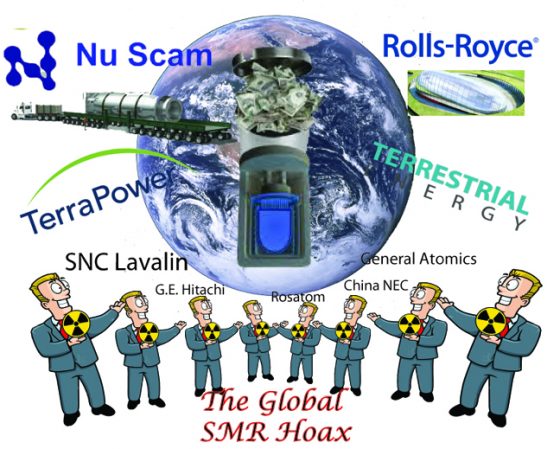
In response to calls from the nuclear industry, research community and
nuclear safety regulators, the European Commission will establish an
Industrial Alliance dedicated to small modular reactors (SMRs) in early
2024, European Commissioner for Energy Kadri Simson has announced.
World Nuclear News 7th Nov 2023
https://www.world-nuclear-news.org/Articles/European-Commission-to-create-SMR-Industrial-Allia
Chris Hedges: Israel’s Endgame is ‘Destruction of the Idea of Palestine’

The arms manufacturers are thrilled. They’re making money in Ukraine, they’re making money with Israel, because remember, most of this money is going straight to Raytheon and Northrop Grumman, and that’s who’s making the money.
the Palestinians really don’t have many friends. Iran, Qatar, Hezbollah, Syria to a certain extent, but not… Am I, if I had to make an educated guess, I think Israel’s going to get away with it.
Pushing most of the Palestinians out of Gaza and turning most of Gaza into a moonscape, which is they’ve already done with the North.
I know that’s what they want to do. I mean, that is without question. The question is whether they can be stopped, but I don’t see the forces that are going to stop them.
What Netanyahu’s government aims to achieve in Gaza today is something akin to the Armenian genocide.
SCHEERPOST, 8 Nov 23
One month since the launch of Operation Al-Aqsa Flood on Oct. 7, the Israeli military has slaughtered more than 10,000 Palestinians, including over 4,000 children. International condemnation is growing, with multiple governments withdrawing their ambassadors from Israel and organizations around the world calling for Israel’s leaders to be prosecuted for war crimes. In an Oct. 28 resignation letter, Craig Mokhiber, former Director of the New York Office of the UN High Commissioner for Human Rights, noted that there is “no room for doubt or debate” that the Israeli government is intentionally perpetuating a genocide of the Palestinian people with the support of the US, EU, and other international actors. Drawing on his decades of experience as a war correspondent and years living in and reporting on Gaza, Chris Hedges joins The Marc Steiner Show to discuss Israel’s endgame: the full elimination and depopulation of Palestinians from the Gaza Strip and eventually the West Bank.
TRANSCRIPT
Chris Hedges:
Well, most of the people in the Netanyahu government, including Netanyahu himself, have been quite clear for, often decades, what the end game is, and that’s the destruction of the state or even the idea of Palestine. And that will be accomplished through acts of genocide and ethnic cleansing.
And I fully expect things to get worse in Gaza. I mean, they’re bombing the hospitals now. There’s not enough food or water. Israel is impervious to requests from Washington because of the Israel lobby. They have, traditionally Israel, because of the power of the Israel lobby, it doesn’t really matter what any administration wants. They humiliated Biden when he was Vice President and called for a moratorium on settlements, and then the day he was in Jerusalem, announced an expansion of settlements. They bypassed the White House to go speak, by Netanyahu, to go speak before Congress to denounce the Iran deal.
They know that, in essence, the Biden administration can’t touch the military aid and has no ability to really pressure the government to halt this massive bombing campaign.
…………………the first two weeks, they damaged or destroyed 45% of the housing stock. They’ve dropped, I think, it was just in the first two weeks, 20,000 tons of bombs. I mean, this is a Stalin grad level. It’s as bad as Sarajevo was. It doesn’t come close.
Thousands of Palestinians are trapped under the rubble and they have surrounded the northern part. I mean, they will do it piecemeal. They learn that from the Americans, in Fallujah. You don’t essentially attack on a wide front. You break up your urban areas into sectors that you then dominate. So, they’ve cut off Gaza City from the South, which is Gaza’s largest city, about 700,000 people.
………. I think that it’s saturation bombing. I mean, they will keep the northern part of Gaza corded off, surrounded, but I expect them to kind of bomb their way to victory, or what they’re going to continue or call victory.
……..They don’t really want to start crawling through the rubble fighting Hamas fighters. The tunnels are an issue. We don’t know how big, but they’re big. But they need generators in order to pump down air into the tunnels.
……….I think most of the hostages are probably in the tunnels. This is also a very cynical decision on the part of the Netanyahu government. I don’t think many of those hostages are going to come back. I think they know that and they don’t care. So, they’ve cut off food. In essence, they’ve cut off water. I mean, the trucks that have come over through Rafan are, it’s negligible. It’s a very cynical kind of public relations ploy, but it doesn’t do anything to alleviate the tremendous suffering.
So, I expect that they will push what remains of the Gaza population over the border into the Sinai, into Egypt, and they will never come back. And there have been reports in the Egyptian press that the Americans have approached the CC government. The Egyptian economy is in a mess at over $160 billion in debt. And they will offer financial incentives, and probably if that doesn’t work though, use threats and to do Israel’s bidding. And in essence, Gaza as we know it, and I spent seven years covering Gaza, my office was right in the center of Gaza City, just won’t exist.
……………………………………………………………….. Marc Steiner:
So, I’m thinking about the American end in this, and I know it’s not going to happen, but it seems like the only way conceivably to stop Israel from doing what it’s doing at this moment would be the threat of a cutoff of aid. And when you see inside the Jewish world in America, in the United States, I see it all the time, is a growing body of Jews saying, ‘No, not in our name. We don’t agree,” And whether it’s marches or articles and organizations being developed. So, I mean, that seems to me the only way to stop the madness.
Chris Hedges:
Well, that would be the only way, even that might not work because Israel needs that aid to essentially replenish stockpiles. But they have a pretty robust arsenal. Well, those are the Jews that don’t count. I mean, J Street and Jewish voices for peace don’t count. I mean, for me, they count quite a bit. But I’m talking about in terms of the power structure, and it’s money. I mean, it’s APAC and these Sheldon Adelson type retrograde Jewish billionaires. By the way, they funded Netanyahu. I covered that campaign. Netanyahu was their baby. They created him and they bankrolled him against Rabin.
So, yes, I mean, I think ultimately that’s why I support the Boycott, Divestment, Sanction movement, that it is about severing aid and imposing sanctions on Israel. That’s the only weapon we have. We’re very far from achieving that. Even most of the liberal groups don’t support BDS. And the Israel lobby is just so well-funded and so powerful, and they represent a political strain of a very right wing political strain within the American population that it does not, I would guess, represent the political leanings of probably most American Jews.
…………………………………………………………………………………………………………………………………for them, it’s the final solution, or their version of the final solution, which is, and they won’t stop. And once they finish with Gaza, they will turn on the West Bank. And they want to create, these are their own words, a kind of religiously pure state, which means the forced exile, ethnic cleansing, whatever you want to call it, of millions of Palestinians, including Christians. I mean, there’s a significant Christian population among the Palestinians. They think they’re going to finish with this problem once and for all.
………………………… the United States is actively backing and supporting the genocide with intelligence, with military support, vetoing, the calls for the ceasefire at the UN, etc. I mean, what you will, you will certainly create blow back probably in the form of terrorism. But once these people are pushed out of their land and permanently thrust into the diaspora, which I think is the plan……………………………………………………………………………………………………………………………..
Well, I mean, it’s not my job to sell hope. That’s not journalism, by the way.
It’s my job to assess the situation as clearly as I can.
………………………………………………….. Israel will become a fascistic state ruled by the ultra orthodox, kind of Jewish version of Iran.
……………………………..Netanyahu’s dismantling of the judiciary is, of course, a huge step in that. But people who speak out against the Netanyahu assault against democracy or the slaughter in Gaza are attacked as traitors and silenced. And I mean, there’s been a huge campaign preceding October 7th against Israeli human rights workers at B’Tselem.
……. And that will just now accelerate. There’ll be no room for dissent
Marc Steiner:……………………………………. And what’s happening in the Palestinian world, I think people don’t really grasp the intensity, the madness, the murder that’s taking place among Palestinians now…………………..
Chris Hedges:
Well, Israel’s cut off all the internet and cell phone service because when you carry out genocide, you block the ability of the victims to reach the outside world. That’s standard.
……….. it’s about the wholesale destruction of people, and all of the mechanisms by which you can destroy a people. The denial of food, the denial of water, the denial of safety, the ability to flee, fleeing to the south. They’re bombing the south. They’re bombing the supposedly corridors that they set up to go to the south. It’s indiscriminate, dropping 2,000 pound bombs on Jabalia, on refugee camps. Jabalia, I’ve been in, spent a lot of time in Jabalia. So, Gaza is one of the most densely packed spots on the planet, but Jabalia is the most densely packed spot in Gaza, and I think they bombed it three times. Nobody knows the number of dead because-
……… … thousands are under the rubble. So, that indiscriminate, they’re bombing hospitals. I mean, they say, “Well, they’re terrorist command centers, or Hamas command centers.” They’re bombing hospitals, they’ve cut off the fuel. The babies in incubators are dying. I mean, that’s genocide.
………………………… the wild card is whether it ignites a regional conflagration. So, that would begin in Lebanon with Hezbollah, but it wouldn’t begin unless Iran green-lighted it. I don’t think that Iran or Hezbollah wants to ignite a regional conflagration, but that’s the wild card. I mean, things can just go wrong. I’ve covered enough war that once you open that Pandora’s box and let all those evil spirits out, they control you. It doesn’t control… You don’t control it.
So yeah, things could go wrong that way. The arms manufacturers are thrilled. They’re making money in Ukraine, they’re making money with Israel, because remember, most of this money is going straight to Raytheon and Northrop Grumman, and that’s who’s making the money. So, I don’t… The Palestinians have always been friendless, powerless. And the Arab states are very duplicitous about their commitment, which is largely rhetorical, and they’re quite happy to sell the Palestinian’s outing. There’s a lot of animus towards, I mean, for instance, Egypt hates Hamas because Hamas was born out of the Muslim brotherhood, and they, CC with us and Israeli backing, seized power to essentially prevent a Muslim brotherhood government from running Egypt.
So, the Palestinians really don’t have many friends. Iran, Qatar, Hezbollah, Syria to a certain extent, but not… Am I, if I had to make an educated guess, I think Israel’s going to get away with it.
Pushing most of the Palestinians out of Gaza and turning most of Gaza into a moonscape, which is they’ve already done with the North.
I know that’s what they want to do. I mean, that is without question. The question is whether they can be stopped, but I don’t see the forces that are going to stop them.
…………………..Marc Steiner:
Mainstream media is not really giving the people here [inaudible 00:25:15]…………………………………………………………………………………more https://scheerpost.com/2023/11/08/chris-hedges-israels-endgame-is-destruction-of-the-idea-of-palestine/ #Israel #Palestine
U.S., European officials broach topic of peace negotiations with Ukraine, sources say

The conversations have included very broad outlines of what Ukraine might need to give up to reach a deal with Russia.
nbc news, Nov. 4, 2023, By Courtney Kube, Carol E. Lee and Kristen Welker
WASHINGTON — U.S. and European officials have begun quietly talking to the Ukrainian government about what possible peace negotiations with Russia might entail to end the war, according to one current senior U.S. official and one former senior U.S. official familiar with the discussions.
The conversations have included very broad outlines of what Ukraine might need to give up to reach a deal, the officials said. Some of the talks, which officials described as delicate, took place last month during a meeting of representatives from more than 50 nations supporting Ukraine, including NATO members, known as the Ukraine Defense Contact Group, the officials said.
The discussions are an acknowledgment of the dynamics militarily on the ground in Ukraine and politically in the U.S. and Europe, officials said.
They began amid concerns among U.S. and European officials that the war has reached a stalemate and about the ability to continue providing aid to Ukraine, officials said. Biden administration officials also are worried that Ukraine is running out of forces, while Russia has a seemingly endless supply, officials said. Ukraine is also struggling with recruiting and has recently seen public protests about some of President Volodymyr Zelenskyy’s open-ended conscription requirements.
And there is unease in the U.S. government with how much less public attention the war in Ukraine has garnered since the Israel-Hamas war began nearly a month ago, the officials said. Officials fear that shift could make securing additional aid for Kyiv more difficult.
Some U.S. military officials have privately begun using the term “stalemate” to describe the current battle in Ukraine, with some saying it may come down to which side can maintain a military force the longest. Neither side is making large strides on the battlefield, which some U.S. officials now describe as a war of inches. Officials also have privately said Ukraine likely only has until the end of the year or shortly thereafter before more urgent discussions about peace negotiations should begin. U.S. officials have shared their views on such a timeline with European allies, officials said…………………………………………………………………………………..
The Biden administration has spent $43.9 billion on security assistance for Ukraine since Russia’s invasion in February 2022, according to the Pentagon. A U.S. official says the administration has about $5 billion left to send to Ukraine before money runs out. There would be no aid left for Ukraine if the administration hadn’t said it found a $6.2 billion accounting error from months of over-valuing equipment sent to Kyiv.
Public support slipping
Progress in Ukraine’s counteroffensive has been very slow, and hope that Ukraine will make significant advances, including reaching the coast near Russia’s frontlines, is fading. A lack of significant progress on the battlefield in Ukraine does not help with trying to reverse the downward trend in public support for sending more aid, officials said. https://www.nbcnews.com/news/world/us-european-officials-broach-topic-peace-negotiations-ukraine-sources-rcna123628 #Ukraine #nuclear #antinuclear #nuclearfree #NoNuke
Why France’s Emmanuel Macron is courting Central Asia
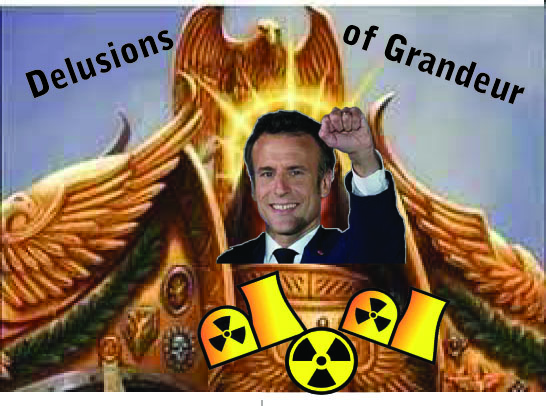
French President Emmanuel Macron is in Central Asia, on a visit that
highlights the region’s increasing importance to Europe’s supply of nuclear
and fossil fuels. The trip is partly an attempt to drum up business and
foster links with Kazakhstan and Uzbekistan, but the key to understanding
the presidential visit dates back to July.
A military coup in the West
African country of Niger raised the prospect that supplies to France’s
vital nuclear industry might be in jeopardy. In reality, the fears were
overblown. Last year, Niger was only the second supplier of uranium to
France. The first was the Central Asian country of Kazakhstan.
BBC 2nd Nov 2023
Showboating for War: Johnson and Morrison in Israel
November 7, 2023, Dr Binoy Kampmark, https://theaimn.com/showboating-for-war-johnson-and-morrison-in-israel/
Banished Prime Ministers are an irritation. They clog the airwaves of punditry with their views about how things were and how things should be. But even there, degrees of severity and competence should be observed. The more noble sorts would pursue the goals of peace, even as they bag large wads of cash in stating the obvious. With former Australian Prime Minister Scott Morrison, and his disgraced counterpart from the UK, Boris Johnson, the cash is being forked out for war.
That Israeli authorities thought it suitable to invite these two men to bolster their war against Hamas shows a degree of deep desperation. Johnson, a serial rule breaker when it came to his own government’s pandemic regulations, was forced to resign as PM by his own Conservative party in June this year. He proved to be persistently and pathologically mendacious, a ragtag mix of contemptuousness and buffoonery.
Only Australia’s own Morrison could have possibly kept up, secretly commandeering, without knowledge of his own Cabinet, up to five different ministries in addition to his own. Despite losing the May 2022 election to Labor’s Anthony Albanese, he remains a sitting federal member, when not avidly think-tanking for anti-China causes and the US imperium.
As Gaza City is being systematically liquidated, pulverised, demolished and destroyed by Israeli firepower, these two men have decided to cheer matters on with their equivalent of pompoms and drums. The Israeli Defence Force needs all the help it can get in destroying any vestige of Palestinian political power in the small settlement, and history lessons are not what interests them. While Johnson is infinitely more informed about history than Morrison, both were united in their cheap showboating exercise.
Their Israeli hosts, assured that they would never be questioned, took the men to Kibbutz Kfar Aza, the place where 100 residents met their fate at the hands of the al-Qassam Brigade, the military wing of Hamas, on October 7. Here was a chance to compress and cleanse history, to give it that ethical clarity Morrison and Johnson always resisted as prime ministers. It was Johnson’s wish that the world would be able to see what had taken place “so people could be under no illusion about the savagery, the sadism, the lack of humanity of Hamas terrorists.”
That word, again: humanity. The humanity exorcised from any assessment of Palestinian worth, sovereignty, liberty. A humanity reserved for a certain type of privileged victimhood, one rarified in the cool atmosphere of exceptionalism known as God’s chosen people drawn from a document part fiction, part history. It follows that the retaliatory steps taken in prosecuting any response will be justified. “Of course,” Johnson emphasises, “it is right for Israel to take the necessary steps… to stop that happening again.”
On Channel 12 news, Johnson stressed the need to keep the moral compass steady and free of any regard for the Palestinians or their cause: “[S]ince that appalling massacre of October 7, you’re seeing a kind of fog descend, a moral fog, and I just want to remind people of the absolute barbarism of what took place and to make it clear that Israel has the right to defend itself.” With emphasis, he stated that, “There can be no moral equivalence between the terrorism of Hamas and the actions of the Israeli Defence Forces.”
When given the chance to talk about pursuing a ceasefire in the name of ecumenical grace, Johnson was curt. Think of those 240 hostages held by Hamas. “[W]hen you have a crime of this scale, and when there’s the possibility of it happening again, I don’t think it’s the business of the world to tell Israel to stop.” Forget international law, humanitarian restraint on the use of force, proportionate response, and conduct might just find itself within the margins of the tolerable.
Morrison, for his part, saw the trip as “an opportunity to understand firsthand what is occurring on the ground, honour those who have been lost, show support for those who have suffered and are now engaged in this terrible conflict and discuss how to move forward.” He also argued against a ceasefire, as this would only “advantage Hamas to be able to strengthen their positions and make this war go on for even longer”.
As for the matter of making sure the attacks of October 7 are never repeated, the point is all too obvious. It will keep happening again with dreary, bloody predictability. If not next year, then the next decade. Or generation. Eliminating Hamas will simply be a bloody pruning exercise verging on genocide, allowing fresh vegetation to thrive. The forest of vengeance will continue to grow; the thousands of children who survive will never forgive the IDF for what they have done and continue to do. Each dead family brings with it a family of converts for the Palestinian cause. Israel’s publicity relations wonks would be best advised to pay Johnson and Morrison and wish them on their merry way. #Israel #Palestine
A small victory for nuclear justice. And international cooperation.
By Ivana Nikolić Hughes, Christian Ciobanu | November 3, 2023 https://thebulletin.org/2023/11/a-small-victory-for-nuclear-justice-and-international-cooperation/
In contrast with the grandeur of the General Assembly Hall, the uplifting design of the Trusteeship Council room, and the stunning circular table in the Security Council Chamber, Conference Room 4 at the UN Headquarters is modest and unassuming. And yet, magic can happen there. When the heads of state are long gone and even the ministers have departed New York, diplomats push forward agendas to advance international cooperation on any number of international issues. They give statements, engage in debates publicly and privately, and vote for resolutions and more, often late into the night.
A kind of diplomatic magic took place last Friday night. Voting on a series of resolutions in what is referred to as the “nuclear weapons cluster” of the United Nations General Assembly’s First Committee (which deals with disarmament and international security), diplomats considered for the first time a resolution entitled: “Addressing the Legacy of Nuclear Weapons: Providing Victim Assistance and Environmental Remediation to Member States Affected by the Use or Testing of Nuclear Weapons.” The first such victims came into being when the United States conducted its first nuclear weapons test in New Mexico and then used nuclear weapons in attacks on Hiroshima and Nagasaki in the summer of 1945.
But nuclear explosions continued over the decades and around the world, in the form of nuclear weapon tests. The victim counts are easily in the millions.
Two of the countries affected by nuclear weapons testing, the Republics of Kazakhstan and Kiribati (from Soviet Union and United Kingdom/United States tests, respectively), brought the resolution forward and advocated broadly for its adoption. The result of their work became obvious when the voting began at roughly 6:30 p.m., and a sea of green checks began to fill the screens displaying the results. With 40 co-sponsors and many countries confirming in advance that they would vote in support of the resolution, the adoption was inevitable.
Still, it would be hard to overstate what a victory it was to have 171 countries vote in support of this resolution, with only four no votes and six abstentions. This was not only a triumph for those impacted by nuclear weapons use and testing but also for international cooperation. Especially at a time when UN resolutions seem to be supported on the basis of who likes whom (or perhaps even more so, who doesn’t like whom), having 171 states stand for those who have been harmed by nuclear weapons and whose environments may still be contaminated is welcome and long overdue.
In an unlikely alliance under most other circumstances, the Democratic People’s Republic of Korea (that is, North Korea), France, Russia, and the United Kingdom all voted no. Their stance is shameful, given the context of nuclear colonialism embodied by the French nuclear testing program in Algeria and French Polynesia and the United Kingdom’s testing in Australia and Kiribati. Better than voting no, the other nuclear weapon possessors—China, India, Israel, Pakistan, and the United States—all abstained. (So did the Democratic Republic of the Congo, a non-nuclear weapons country that supports the nuclear ban treaty.) It was encouraging to see that the United States abstained rather than voting no alongside France and the United Kingdom.
None of the nine countries that possess nuclear weapons voted in favor of the resolution, leaving them isolated. Since they caused the harm and the contamination that are the topic of the resolution, voting yes on this resolution at the earliest opportunity could become the first step towards redeeming themselves and righting these historical wrongs. When the resolution comes up for a vote in December in the General Assembly, they should all reverse their votes and vote yes. They owe it to the victims and their descendants.
Upon adoption in the General Assembly in December, this resolution will pave the way for the long and hard process of information gathering and needs appraisal in affected states, followed by actual steps to assist victims and assess and remediate contaminated environments. Such work has already begun within the context of the Treaty on the Prohibiton of Nuclear Weapons (TPNW), but bringing these conversations into the broader sphere is critical. Future versions of the resolution can build in further binding steps.
The world cannot afford to create more victims of nuclear weapons or to contaminate more environments. In fact, indications are that all of humanity and life on the planet would become a victim in case of nuclear war using today’s arsenals. Therefore, while they’re deciding to come around and help victims of past nuclear weapons use and testing, the nuclear weapons countries should also recommit to nuclear disarmament in a verifiable and time-bound manner. There are lots of options for them to do so—through numerous resolutions that were also voted upon on Friday, but also through joining and/or meeting their existing obligations under key treaties, including the Nuclear Non-Proliferation Treaty, the Comprehensive Test Ban Treaty, and the TPNW. Helping existing victims is but one step. Getting rid of nuclear weapons is the only way to ensure there will be no more. #nuclear #antinuclear #nuclearfree #NoNukes
China agrees to nuclear arms-control talks with US -WSJ
Reuters, November 2, 2023
China and the United States will discuss nuclear arms control next week, the first such talks since the Obama administration, the Wall Street Journal reported on Wednesday.
China’s Foreign Ministry said on Monday after a visit by Foreign Minister Wang Yi to Washington that the two countries would hold “consultations on arms control and non-proliferation” in the coming days, as well as separate talks on maritime affairs and other issues.
Those arms talks would be led on Monday by Mallory Stewart, a senior State Department official, and Sun Xiaobo, the head of the arms-control department at China’s Foreign Ministry, the Wall Street Journal report said.
The U.S. State Department and China’s embassy in Washington did not immediately respond to requests by Reuters for comment on the timing or format of the talks.
U.S. National Security Advisor Jake Sullivan said in 2021 that the Chinese and U.S. presidents had agreed to “look to begin to carry forward discussion on strategic stability”, a reference to Washington’s concerns about Beijing’s nuclear weapons build-up.
But the White House was quick to say at the time that the discussions would not resemble formal arms reduction talks, like those the U.S. has had with Russia.
Since then, U.S. officials had expressed frustration that China showed little interest in discussing steps to reduce nuclear weapons risks.
China has more than 500 operational nuclear warheads in its arsenal and will probably have over 1,000 warheads by 2030, the Pentagon said in October. But Beijing has long argued that the U.S. already has a much larger arsenal. The arms talks would occur before a likely meeting between U.S. President Joe Biden and Chinese President Xi Jinping in San Francisco in November, although a senior Biden administration official said on Tuesday important details have yet to be hammered out…………………………………more https://www.reuters.com/world/china-agrees-nuclear-arms-control-talks-with-us-wsj-2023-11-01/ #nuclear #antinuclear #nuclearfree #NoNukes
Macron pursues nuclear deals in Russia’s back yard
French president hopes to secure uranium supply in Kazakhstan and Uzbekistan.
Politico, BY GIORGIO LEALI, OCTOBER 31, 2023
PARIS — French President Emmanuel Macron travels on Wednesday to Kazakhstan and Uzbekistan, where he hopes to secure uranium for his country’s nuclear plants.
The trip comes as geopolitical tensions grow with the EU’s current major suppliers, Niger and Russia.
Macron’s visit to the two countries aims to expand French influence in an area which has strong ties with Russia and is now also growing closer to China, an Elysée official said………………….
Last summer a military junta took over Niger, which supplies 15 percent of France’s uranium needs, sparking questions as to whether the African country can continue to be a reliable source. Uncertainty has also surrounded imports of Russian uranium since Moscow’s invasion of Ukraine.
“Niger raises questions, Russia could raise questions in the long term [if] the EU imposes sanctions on the nuclear sector.
An Elysée official said that new contracts and business partnerships will be announced during the trip, including in the energy sector. ………………………………………………………………………..
EDF has also positioned itself to become a supplier of nuclear reactors for Kazakhstan’s first nuclear plant.
The visit comes as Brussels competes with China for influence in the region via investment programs focused on infrastructure.
Both Kazakhstan and Uzbekistan are benefitting from Chinese investment under Beijing’s Belt and Road Initiative, with their presidents attending a high-level meeting on the subject in Beijing in October. The EU is trying to gain influence in the two countries by involving them in cooperation and investment projects under its “Global Gateway” initiative, the bloc’s response to Belt and Road. https://www.politico.eu/article/emmanuel-macron-nuclear-deal-russia-back-yard-kazakhstan-uzbekistan/ #nuclear #antinuclear #nuclearfree #NoNukes
NewsReal: Israel and US Implementing ‘Final Solutions’ to End Palestine and Multipolar World
Sott.net, Sun, 29 Oct 2023 https://www.sott.net/article/485509-NewsReal-Israel-and-US-Implementing-Final-Solutions-to-End-Palestine-and-Multipolar-World#
Last week the American ‘president’, Joe Biden, gave a TV address in which he declared that he was sending half of America’s sea power to ‘protect Israel’, part of Washington’s plan to usher in a “new, new world order.” While it’s scarily obvious what Israel’s attempting to do – ethnically cleanse Gaza and the West Bank of Palestinians – it’s not so obvious what the USA is trying to do.
This week on NewsReal, Joe & Niall sketch how ‘Armageddon’ might play out in the coming months, with the US-led West apparently seeking to start a ‘controlled burn’ in the Middle East with a ‘limited war’ that would disrupt global energy supplies just enough to hinder its rivals and thus maintain American global hegemony. You know what they say about wishful thinking… #Israel #nuclear #antinuclear #NoNukes
EU may become complicit in ‘genocide’ – Spanish official
https://www.rt.com/news/586147-spain-minister-gaza-genocide/ 30 Oct 23
The social rights minister called on European countries to take concrete measures to stop the hostilities in Gaza
Spanish Social Rights Minister Ione Belarra has urged European leaders to take immediate action against Israel, including severing diplomatic ties and imposing economic sanctions, amid the intensified bombing and expanded ground operations against Hamas militants in the besieged Palestinian enclave.
She also called for Israeli Prime Minister Benjamin Netanyahu to be prosecuted for the alleged war crimes committed against civilians in Gaza.
“After this hellish night in Gaza, I have a very simple but very important message for European leaders. Do not make us complicit in genocide. Act. Not in our name,” Belarra said in a passionate video message on X (formerly Twitter) on Saturday.
More than 8,000 Palestinians, including 3,342 children, have been killed in Gaza since Israel’s air campaign began, according to the latest figures from the Gaza Health Ministry. The unprecedented Hamas raid into Israel, as well as hundreds of rocket strikes on Israeli territory earlier this month, left around 1,400 people dead, while 230 Israelis and foreigners were taken hostage, according to the Israel Defense Forces (IDF).
Addressing the severity of the current situation in Gaza and Israel’s disproportionate retaliation, the minister highlighted the termination of internet and telephone services in the strip, claiming that the move “has a very clear objective” of guaranteeing that “Israel commits crimes against humanity without consequences.”
“Our inaction is turning us into accomplices,” the minister stressed, arguing that “Israel believes that its international alliances guarantee its impunity.”
“We have to act now, tomorrow will be too late,” she continued, voicing her message to the EU leaders: “Cut diplomatic relations with the State of Israel. Carry out exemplary economic sanctions against those responsible for this genocide. And without a doubt, let’s take Netanyahu before the International Criminal Court, so that he can be tried for what he is, a war criminal.”
She also appealed to EU citizens to take to the streets and raise their voice so that “this genocide” comes to an end.
The IDF escalated air and ground attack on Gaza on Friday, causing a near-total communication blackout. Connectivity was partially restored over the weekend, but the Israeli blockade of Gaza continues; Netanyahu announced the “second stage” of the war against Hamas on Saturday. #Israel #Palestine
1 This Month



26 September – International Day for the Total Elimination of Nuclear Weapons


PLEASE OPPOSE HR 8255 AND S.3639 – bills would accelerate satellite deployment, with no environmental review or safeguards – https://ncstd5li.quorum.us/campaign/169331/
To see nuclear-related stories in greater depth and intensity – go to https://nuclearinformation.wordpress.com
-
Archives
- September 2026 (233)
- August 2026 (330)
- July 2026 (355)
- June 2026 (287)
- May 2026 (306)
- April 2026 (356)
- March 2026 (251)
- February 2026 (267)
- January 2026 (308)
- December 2025 (358)
- November 2025 (359)
- October 2025 (375)
-
Categories
- 1
- 1 NUCLEAR ISSUES
- business and costs
- climate change
- culture and arts
- ENERGY
- environment
- health
- history
- indigenous issues
- Legal
- marketing of nuclear
- media
- opposition to nuclear
- PERSONAL STORIES
- politics
- politics international
- Religion and ethics
- safety
- secrets,lies and civil liberties
- spinbuster
- technology
- Uranium
- wastes
- weapons and war
- Women
- 2 WORLD
- ACTION
- AFRICA
- Atrocities
- AUSTRALIA
- Christina's notes
- Christina's themes
- culture and arts
- Events
- Fuk 2022
- Fuk 2023
- Fukushima 2017
- Fukushima 2018
- fukushima 2019
- Fukushima 2020
- Fukushima 2021
- general
- global warming
- Humour (God we need it)
- Nuclear
- RARE EARTHS
- Reference
- resources – print
- Resources -audiovicual
- Weekly Newsletter
- World
- World Nuclear
- YouTube
-
RSS
Entries RSS
Comments RSS
 nuclear-news