US will ‘fix’ Cuba and Nicaragua – Republican senator
7 Jan, 2026. https://www.rt.com/news/630708-us-senator-cuba-colombia-nicaragua-to-be-fixed/
Rick Scott issued threats to the socialist countries after American commandos abducted Venezuelan President Nicolas Maduro
Republican US Senator Rick Scott has said that Washington would install a new president in Colombia, as well as “fix” Cuba and Nicaragua.
He made the remarks in an interview with Fox Business, just days after US commandos abducted Venezuelan President Nicolas Maduro and his wife, Cilia Flores, during a raid in Caracas.
US President Donald Trump described the operation as his enforcement of the Monroe Doctrine, designed to ensure Washington’s domination in the Western Hemisphere and said American companies must gain access to Venezuela’s rich oil reserves.
Trump’s actions would “change Latin America,” Scott told Fox on Wednesday. “We’re gonna fix Cuba, Nicaragua will be fixed. Next year, we’ll get a new president in Colombia,” the senator added, declaring that “democracy is coming back to this hemisphere.”
The US first imposed a trade blockade and sanctions on socialist-run Cuba and Nicaragua during the Cold War. Last year, Washington imposed restrictions on Colombia’s left-wing president, Gustavo Petro, whom Trump accused of aiding drug cartels. Petro denied the allegations and has heavily criticized Trump for ordering strikes on alleged narcotics smuggling boats in the Caribbean.
Asked by journalists aboard Air Force One on Sunday whether he was planning to attack Colombia, Trump replied, “It sounds good to me.”
Petro, a former member of a communist guerrilla group, denounced Trump’s threats. “I swore after the 1989 peace agreement never to touch a weapon again, but for the sake of the homeland, I will take up arms once more, even though I do not want to,” he wrote on X earlier this week.
The US Department of Justice indicted Maduro and Flores on drug-trafficking and weapons charges, to which they pleaded not guilty when they were brought before a New York judge on Monday. Venezuela condemned the US operation as a violation of its sovereignty, with Acting President Delcy Rodriguez denying that the country would be ruled by foreign powers.
‘No more annexation fantasies’ Greenland PM responding to Trump’s threats
The Cradle News Desk, JAN 5, 2026, https://thecradle.co/articles/no-more-annexation-fantasies-greenland-pm-responding-to-trumps-threats
US imperial ambitions directed at an EU member were met with coordinated diplomatic pushback and explicit warnings against altering borders by force.
Denmark’s Prime Minister Mette Frederiksen, on 5 January, publicly rejected renewed threats by US President Donald Trump calling for US annexation of Greenland, warning Washington to “stop the threats against a historically close ally.”
“It makes absolutely no sense to talk about the US needing to take over Greenland,” Frederiksen said, stressing that “the US has no right to annex any of the three countries in the Danish Kingdom.”
The Danish PM noted that Denmark, “and thus Greenland,” is a NATO member and protected by the alliance’s collective security guarantees.
Greenland’s Prime Minister Jens-Frederik Nielsen also responded on the same day through social media, issuing a blunt warning.
“That’s enough now,” he wrote, followed by a firmer rejection saying “No more pressure. No more insinuations. No more fantasies of annexation.”
Nielsen emphasized that Greenland remains open to engagement but set clear limits, saying “We are open to dialogue. We are open to discussions,” adding that any talks must take place “through the proper channels and with respect for international law.”
The dispute centers on Trump’s repeated claims that Greenland should become part of the US, a position he reiterated while speaking to reporters aboard Air Force One and in a separate interview with The Atlantic.
Trump framed his remarks around security concerns, saying, “We need Greenland from the standpoint of national security,” and asserting that Denmark “is not going to be able to do it.”
He also suggested the issue could be revisited soon, stating, “We’ll worry about Greenland in about two months … let’s talk about Greenland in 20 days.”
The timing of Trump’s remarks heightened concern in Europe, with his comments following US military action in Venezuela and the the abduction of President Nicolas Maduro and his wife, and transferring them to US soil for “trial”, events that, according to reports, raised fears that similar logic could be applied elsewhere.
Additional backlash followed a social media post by Katie Miller, a former Trump aide, who shared an image of Greenland colored like the US flag with the caption “SOON.”
Nielsen called the post “disrespectful,” writing that “our country is not for sale, and our future is not decided by social media posts.”
European leaders, including those of Finland, Sweden, and Norway, voiced support for Denmark, while France’s Foreign Ministry warned that “borders cannot be changed by force.”
France said that it stands in solidarity with Denmark and Greenland and rejects any attempt to alter borders by force, reaffirming that Greenland’s future is for its people and Denmark to decide.
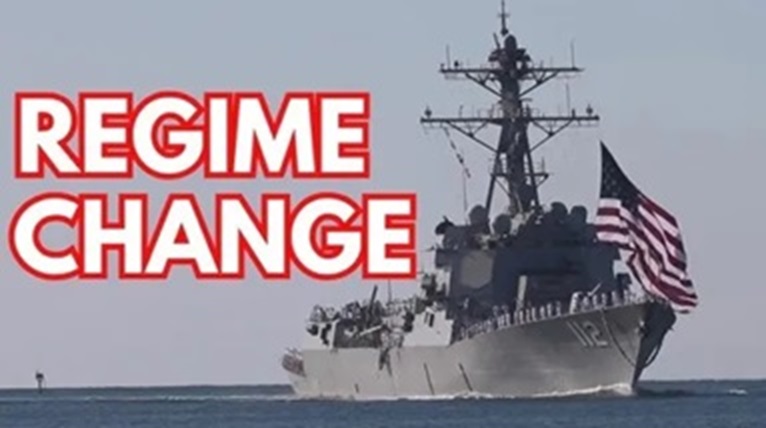
US 21st Century regime change ops: Failure, Failure, Failure, Failure, Failure… To Be Determined
5 January 2026 AIMN Editorial , By Walt Zlotow, West Suburban Peace Coalition, Glen Ellyn, IL, https://theaimn.net/us-21st-century-regime-change-ops-failure-failure-failure-failure-failure-to-be-determined/
The US has spent the entire 21st century toppling regimes it hates. Every one up to Saturday’s removal of Venezuelan president Nicholas Maduro has ended in failure.
2001 Afghanistan
President George W. Bush kicked off the 21st century by changing out the Taliban regime in Afghanistan. America could not confront the real culprit of 911, ally Saudi Arabia, so we picked an easy scapegoat to extract our revenge. It only took 5 weeks to topple the Taliban, allowing installation of a US puppet government. Result? Taliban regrouped to win their country back. Took 20 years but this time it was the hated Yankees ousted, killing 2,461 Americans in the process. America left the failed state of Afghanistan with over 150,000 dead and Afghanistan’s 42 million people worse off than before American’s criminal regime change operation.
2003 Iraq
Bush turned next to hated Iraq to one up Poppy Bush’s failure to oust Saddam Hussein 1991. His regime change turned Iraq into a failed state with over 500,000 Iraqis and 5,984 American soldiers and contractors killed. Over 100,000 Americans were injured in body and mind from in a totally made up, senseless war. Twenty-three years later the US is still defiling Iraqi sovereignty with a couple of thousand soldiers stuck in the Iraq war roach motel.
2011 Libya
George W. Bush’s successor Barack Obama got into regime change business to knock off Libyan strongman Muammar Gaddafi. He employed so called defense alliance NATO to bomb Libby during the Libyan civil war to tip the scales against Gaddafi. Obama’s Secretary of State Hillary Clinton gloated, “We came, we saw, he died”, failing to mention this death resulted from a bayonet to the butt. The US achieved the complete opposite of its intended goal of Libyan and regional stability by turning Libya into one of the most chaotic, failed states on the planet.
2013 Syria
Just 2 years later Obama was at it again, this time intervening in the Syrian civil war, supporting jihadist terrorists to depose hated Syrian President Bashar Assad. Neither Obama nor successor Trump could complete the task finally achieved by President Joe Biden in his last 2 months. US intervention was primarily designed to rid puppet master Israel of one of its regional hegemonic rivals. By prolonging the Syrian civil war for 11 years, the US contributed mightily to the civil war’s half million deaths. Led by new US pal, former US designated al-Qaeda terrorist Ahmed al-Sharaa, Christians, Druze and Alawites are being systematically hunted down and killed by the US backed al-Sharaa regime.
2022 Russia
The US and NATO spent 14 years under 4 presidents provoking Russia to invade Ukraine to keep Ukraine out of NATO. The US knew Russia would eventually invade; indeed, also knew Ukraine could not prevail against the Russian goliath. Didn’t matter. The US believed the war would so weaken Russia it might topple despised President Vladimir Putin, bringing in a Russian puppet amenable to US influence. Four years on Russia and Putin are stronger than ever, pivoting away from Europe to the non-aligned world seeking independence from a war and sanctions crazed America. Ukraine is now a failed state near totally dependent on US, NATO treasure to survive. A fifth of its land is gone forever, soon to be joined by its last warm water port. Looks like the only regime to be removed is Ukraine’s, not Russia’s.
2026 Venezuela
In his first solo adventure in regime change, President Trump kicked off 2026 with a lightning assault that snatched Venezuelan President Nicholas Maduro out of Venezuela to face a Trump style show trial in the US. Trump and his war cabinet are positively ecstatic about completing America’s two decade crusade to snuff out socialism in Venezuela and gobble up its 300 billion barrels of heavy crude in the process. But they might look back at America’s 21st century regime change failures in Afghanistan, Iraq, Libya, Syria, Russia, and ponder whether they’re simply following previous administrations down the rabbit hole of regime change failure.
Trump’s Annexation Threats: Australia’s Alliance Dilemma
7 January 2026 AIMN Editorial, By Alasdair Black, https://theaimn.net/trumps-annexation-threats-australias-alliance-dilemma/
How can we, Australia, remain allied to the US if they threaten annexation of an ally’s territory?
This throws into question our AUKUS pact with the UK and US, and sets America on the path to being an unreliable – if not dangerous and possibly even hostile – ally.
This is getting all too bizarre.
What of our official status as an “Enhanced Opportunities Partner of NATO”? While we are not a member of NATO, because it is a geographically confined alliance, we have always worked in partnership with them because of our historical connection to the UK and having been involved in European conflicts in both WWI and WWII, and the conflict following the collapse of the former Yugoslavia.
Are we just going to shrug off the violation of a NATO partner’s territory, abandon the support of self-determination, sovereignty, and support of an international rules-based order?
Will the potential collapse of NATO be without repercussions to AUKUS or our relationship with an aggressively military expansionist America?
Do we even want to maintain a relationship with such a dangerous, unreliable partner and ally?
We are in an epoch- or era-changing moment.
Trump is a declining, demented geriatric, raging against the dying of his light, with megalomaniacal and sociopathic tendencies.
This current crisis is possibly the biggest global crisis since Hitler marched into Poland in 1939.
Are we going to choose the moral high ground, or are we going to be on the wrong side of history?
Are we going to, by default, end up being on the side of a Hitlerian maniac, who could quite possibly be setting the foundations of WWIII?
Trump right now is being more of a threat to Europe than Putin, if that’s even possible.
The Trump shit show has just jumped the shark.
America needs to muzzle and chain up its distempered dog.
America, is it time to metaphorically take “Old Yeller” out behind the barn and put him out of his misery.
Are there any adults left in the room in the American Congress, in the American establishment, in the American military-intelligence apparatus?
Where we stand at the moment, in my opinion, is at one minute to midnight on the Doomsday clock.
America, along with their demented President, has dangerously lost the plot.
Trump is turning into a global threat!
A game of chicken between the US and Denmark
The people of Greenland are merely pawns on a neo-colonial chessboard
Ian Proud, Jan 08, 2026, https://thepeacemonger.substack.com/p/a-game-of-chicken-between-the-us?utm_source=post-email-title&publication_id=3221990&post_id=183816648&utm_campaign=email-post-title&isFreemail=true&r=1ise1&triedRedirect=true&utm_medium=email
Trump’s attempt to claim Greenland as his own is running up against plucky Denmark. This is a David v Goliath game of chicken in which Trump hopes the Danes will back down and they, in turn, are waiting Trump out, hoping that his increasingly unhinged foreign policy leads to a change in power in 2029, whereupon the issue will go away.
Until then, the people of Greenland will remain pawns on a neo-colonial chessboard.
Even though they’ll get no support from European military powers, Denmark should call Trump’s bluff over military action and signal a willingness to defend, even though they would be quickly defeated. Their biggest ally is US public opinion.
But whatever happens, the Greenlanders have the right to self-determination under the 2009 Act and may ultimately be swayed by Trump’s cash.
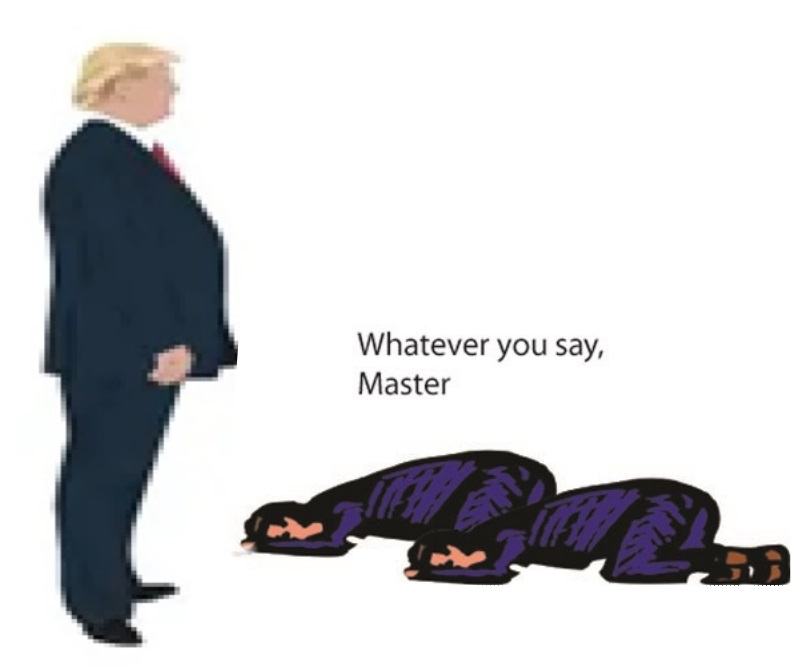
Venal Reactions: US Allies Validate Maduro’s Abduction.
5 January 2026 Dr Binoy Kampmark, https://theaimn.net/venal-reactions-us-allies-validate-maduros-abduction/
On the surface, abducting a Head of State is a piratical act eschewed by States. A Head of State enjoys absolute immunity from foreign criminal jurisdiction, known as ratione personae, at least till the term of office concludes. The International Court of Justice was clear enough about this principle in the 2002 Arrest Warrant Case, holding that high ranked government officials such as a foreign minister are granted immunity under customary international law to enable the effective performance of their functions “on behalf of their respective States.”
That said, international law has been modified on this score by the jurisdiction of theInternational Criminal Court, whose founding Rome Statute stipulates that the official standing of a serving Head of State is no exemption from criminal responsibility. The effectiveness of this principle lies in the cooperation of State parties, something distinctly unforthcoming regarding certain serving leaders. (Israeli Prime Minister Benjamin Netanyahu springs to mind.)
US domestic law puts all of this to side with the highwayman logic of the Ker-Frisbie doctrine. Decided in Ker v Illinois in 1886, the decision overlooks the way, lawful or otherwise, a defendant is apprehended, even if outside the jurisdiction. Once American soil is reached, judicial proceedings can commence without challenge. The US Department of Justice has further attempted to puncture ancient notions of diplomatic immunity by recategorizing (how else?) the standing of a leader – in this case Venezuela’s Nicolás Maduro – as nothing more than a narco-terrorist. Maduro was seized, explains US Secretary of State Marco Rubio, as part of a law enforcement operation.
In addition to being a violation of the leadership immunity principle, the January 3 kidnapping of Maduro and his wife by US forces was an audacious breach of the sovereignty guarantee under Article 2 of the United Nations Charter. Operation Absolute Resolve involved 150 aircraft, strikes on military infrastructure including surface-to-air missile and communication systems, and various depots. The security fantasists from the White House to the State Department treated Venezuela as not merely a dangerous narco-state but one hosting undesirable foreign elements, but it has never posed a military threat to the US homeland.
In the face of such unalloyed aggression – a crime against peace, if you will – the response from Washington’s allies has been feeble and worse. This is made all the more grotesque for their claims to purity when it comes to defending Western civilisation against the perceived ogres and bogeymen of international relations: Russia and China.
From the United Kingdom, Prime Minister Keir Starmer could not have been clearer about his contempt for the processes of international law. “The UK has long supported a transition of power in Venezuela,” he declared in his January 3 statement. “We regarded Maduro as an illegitimate President and we shed no tears about the end of his regime.” Having given a coating of legitimacy to the banditry of the Trump administration, he could still claim to “support” international law. His government would “discuss the evolving situation with US counterparts in the days ahead as we seek a safe and peaceful transition to a legitimate government that reflects the will of the Venezuelan people.” Certainly, judging from this, the will of President Donald Trump.
An official statement from the European Union released by its high representative, Kaja Kallas, was even more mealy-mouthed: “The EU has repeatedly stated that Nicolás Maduro lacks the legitimacy of a democratically elected president and has advocated for a Venezuelan-led peaceful transition to democracy in the country, respectful of its sovereignty.”
The tactic here involves soiling the subject before paying some false respect for such concepts as democracy and sovereignty. We can do without Maduro, and won’t miss him, but make some modest effort to respect some cardinal virtues when disposing of him. All those involved should show “restraint […] to avoid escalation and to ensure a peaceful resolution of the crisis.”
The arrogance of this position is underlined by the concession to diplomacy’s importance and the role of dialogue, when there has been no dialogue or diplomacy to speak of. “We are in close contact with the United States, as well as regional and international partners to support and facilitate dialogue with all parties involved, leading to a negotiated, democratic, inclusive and peaceful resolution to the crisis, led by Venezuelans.”
From the Canadian Minister for Foreign Affairs, Anita Anand, there was not a whisper of Maduro’s abduction, or the US breach of the UN Charter. The phantom conveniently called the Venezuelan People stood as an alibi for lawbreaking, for they had a “desire to live in a peaceful and democratic society.” And there was the familiar call “on all parties to exercise restraint and uphold international law,” marvellous piffle in the face of illegal abductions.
Australian Prime Minister Anthony Albanese did little to improve upon the weak formula in his shabby statement, similarly skipping over the violations of the UN Charter and Maduro’s abduction. “We urge all parties to support dialogue and diplomacy in order to secure regional stability and prevent escalation.” A bland acknowledgement of “the need to respect democratic principles, human rights and fundamental freedoms” is made, along with the risible reference to supporting “international law and a peaceful, democratic transition in Venezuela that reflects the will of the Venezuelan people.”
Who, then, are these idealised people? Presumably these Venezuelans are the vetted ones, sanitised with the seal of approval, untainted by silly notions of revolution and the poverty reduction measures initially implemented by the government of Hugo Chávez. But if EU officials and other states friendly to Washington thought that a Venezuelan appropriately representative of the People’s Will might be the opposition figure and travesty of a Nobel laureate, María Corina Machado, Trump had other ideas. To date the Maduro loyalist Vice President Delcy Rodríguez, has caught his fickle eye. “I think,” he said with blunt machismo, “it would be very tough for [Machado] to be the leader. She doesn’t have the support within or the respect within the country. She’s a very nice woman, but she doesn’t have the respect.” The Venezuelan people’s choice will be, putting democracy and dialogue to one side, the same as Trump’s.
Rubio Says “Not a War” as Trump Threatens Half the Hemisphere
By Joshua Scheer, SCHEEPOST, 5 Jan 26
Welcome to another day in the empire we might as well call 1984. Marco Rubio, who only yesterday said the U.S. didn’t need congressional approval because the situation in Venezuela is not a war but the capture of a fugitive, adding, to the BBC saying “That’s not a war. I mean, we are at war against drug trafficking organizations. That’s not a war against Venezuela,”
But has the narrative really shifted, or is this just good cop/bad cop—or whatever you want to call the times we are living in? Meanwhile, with President Trump threatening both the incoming president of Venezuela and other left-leaning nations, the United States seems to be lurching toward a space where it resembles a new Rome—a power with seemingly no regard for history.
That was made clear in an interview with The Atlantic yesterday, when asked about Iraq and the current intensifying situation, Trump said: “I didn’t do Iraq. That was Bush. You’ll have to ask Bush that question, because we should have never gone into Iraq. That started the Middle East disaster.”
He threatened Venezuela’s new president Delcy Rodríguez, saying that “if she doesn’t do what’s right, she is going to pay a very big price—probably bigger than Maduro,” adding that “she’s essentially willing to do what we think is necessary to make Venezuela great again.” He went on to declare, “The country’s gone to hell. It’s a failed country. It’s a totally failed country. It’s a disaster in every way.”
I wonder why a country that has been subjected to coercive actions by the United States and repeated coup attempts can’t get ahead—especially when, even now, its oil is being seized and treated as if it belongs to the U.S. This is a madman being guided by what I would describe as delusional people. The truly frightening part, however, is that they know exactly what they are doing, and that is what makes it so dangerous.
This was a man when campaigning in 2016 spoke saying “stop racing to topple foreign regimes that we know nothing about.” He had campaigned that year in opposition to “nation building,”
Great—who’s paying attention? Which Trump are we seeing this morning—the 2016 isolationist of the highest order? Reports are emerging of a split within the MAGA camp (Make America Great Again, for those unfamiliar), with the New York Times highlighting tensions among the more isolationist figures from Trump’s first administration. “The lack of framing of the message on a potential occupation has the base bewildered, if not angry,” said Stephen K. Bannon, the pro-Trump podcaster. “While President Trump makes the case for hemispheric defense, Rubio confuses with talk of removing Hamas and Hezbollah.”
At the same time MAGA darling Candice Owens tweeting “Venezuela has been “liberated” like Syria, Afghanistan, and Iraq were “liberated”. The CIA has staged another hostile takeover of a country at the behest of a globalist psychopaths. That’s it. That’s what is happening, always, everywhere. Zionists cheer every regime change. There has never been a single regime change that Zionists have not applauded because it means they get to steal land, oil and other resources.”
In the video below, [on original] in a strange twist, right‑wing superstar Tucker Carlson—of all people—defends Venezuela, apparently because it’s the most Christian nation in Latin America. So there you go.
Of course, this MAGA split—and the difference between Trump in 2016 and now—really shows that the true worm in the drink is Marco “the Neocon” today believes that countries shouldn’t have friends—because the threat is global. Why? Because Venezuela is friends with Iran, Russia, and China… oh my. Of course they are—they certainly aren’t ours.
Here’s “little” Marco discussing why he feels the need to protect the oil because “Why does China need their oil? Russia? Iran? This is the West. This is where we live”Adding, for good measure, that after we take our “fair share,” maybe the people of Venezuela would finally get theirs. That’s entirely on brand for the United States—its free‑market ideology and trickle‑down economic system.
Speaking about China’s reaction, they strongly condemned the U.S. seizure of President Maduro, calling it a violation of international law and an overreach of U.S. power, even as some analysts note Beijing may see the situation as a chance to challenge American global dominance and assert its own influence on the world stage.
Many commentators have draw parallels between Washington’s actions in Venezuela and China’s ambitions toward Taiwan, analysts suggest that China is less concerned with the sovereignty of the self-ruled island. Instead, Beijing sees the U.S. move as an opening to question America’s leadership on the world stage. ……………………………………………………. https://scheerpost.com/2026/01/05/rubio-says-not-a-war-as-trump-threatens-half-the-hemisphere/
Maduro’s kidnapping marks the return of spheres of influence to geopolitics
The UK and Europe will be the biggest losers
Ian Proud, Jan 06, 2026
In my first ever full YouTube video, I spend half an hour talking about the dramatic kidnapping of Nicolas Maduro and his wife at the weekend.
Let’s be clear, this was not about drugs, but about Trump announcing that the USA now decisively controls the western hemisphere.
This was foreshadowed in the new US National Security Strategy.
The Russians may make noise but will accept it, as Putin is more concerned about a bigger strategic reset with the US and finishing the Ukraine war on terms favourable to Russia.
China will see a massive opportunity to gain more influence in the developing world and Trump’s actions will manufacture more consent for a muscular Chinese posture over Taiwan.
But Europe and the UK will be diminished most by this move. Unable to criticise Trump, for fear of losing his support for the Ukraine proxy war, they will appear increasingly duplicitious and mendacious, shattering their geopolitical credibility in the developing world even further.
Buckle up for the return of spheres of influenc
“We’re Going to Run the Country:” Preparing an Illegal Occupation in Venezuela
This press conference wasn’t just about Venezuela. It was about whether empire can say the quiet part out loud again, whether it can openly claim the right to govern other nations and expect the world to shrug.
January 3, 2026, By: Michelle Ellner , https://scheerpost.com/2026/01/03/were-going-to-run-the-country-preparing-an-illegal-occupation-in-venezuela/
I listened to the January 3 press conference with a knot in my stomach. As a Venezuelan American with family, memories, and a living connection to the country being spoken about as if it were a possession, what I heard was very clear. And that clarity was chilling.
The president said, plainly, that the United States would “run the country” until a transition it deems “safe” and “judicious.” He spoke about capturing Venezuela’s head of state, about transporting him on a U.S. military vessel, about administering Venezuela temporarily, and about bringing in U.S. oil companies to rebuild the industry. He dismissed concerns about international reaction with a phrase that should alarm everyone: “They understand this is our hemisphere.”
For Venezuelans, those words echo a long, painful history.
Let’s be clear about the claims made. The president is asserting that the U.S. can detain a sitting foreign president and his spouse under U.S. criminal law. That the U.S. can administer another sovereign country without an international mandate. That Venezuela’s political future can be decided from Washington. That control over oil and “rebuilding” is a legitimate byproduct of intervention. That all of this can happen without congressional authorization and without evidence of imminent threat.
We have heard this language before. In Iraq, the United States promised a limited intervention and a temporary administration, only to impose years of occupation, seize control of critical infrastructure, and leave behind devastation and instability. What was framed as stewardship became domination. Venezuela is now being spoken about in disturbingly similar terms. “Temporary Administration” ended up being a permanent disaster.
Under international law, nothing described in that press conference is legal. The UN Charter prohibits the threat or use of force against another state and bars interference in a nation’s political independence. Sanctions designed to coerce political outcomes and cause civilian suffering amount to collective punishment. Declaring the right to “run” another country is the language of occupation, regardless of how many times the word is avoided.
Under U.S. law, the claims are just as disturbing. War powers belong to Congress. There has been no authorization, no declaration, no lawful process that allows an executive to seize a foreign head of state or administer a country. Calling this “law enforcement” does not make it so. Venezuela poses no threat to the United States. It has not attacked the U.S. and has issued no threat that could justify the use of force under U.S. or international law. There is no lawful basis, domestic or international, for what is being asserted.
But beyond law and precedent lies the most important reality: the cost of this aggression is paid by ordinary people in Venezuela. War, sanctions, and military escalation do not fall evenly. They fall hardest on women, children, the elderly, and the poor. They mean shortages of medicine and food, disrupted healthcare systems, rising maternal and infant mortality, and the daily stress of survival in a country forced to live under siege. They also mean preventable deaths, people who die not because of natural disaster or inevitability, but because access to care, electricity, transport, or medicine has been deliberately obstructed. Every escalation compounds existing harm and increases the likelihood of loss of life, civilian deaths that will be written off as collateral, even though they were foreseeable and avoidable.
What makes this even more dangerous is the assumption underlying it all: that Venezuelans will remain passive, compliant, and submissive in the face of humiliation and force. That assumption is wrong. And when it collapses, as it inevitably will, the cost will be measured in unnecessary bloodshed. This is what is erased when a country is discussed as a “transition” or an “administration problem.” Human beings disappear. Lives are reduced to acceptable losses. And the violence that follows is framed as unfortunate rather than the predictable outcome of arrogance and coercion.To hear a U.S. president talk about a country as something to be managed, stabilized, and handed over once it behaves properly, it hurts. It humiliates. And it enrages.
And yes, Venezuela is not politically unified. It isn’t. It never has been. There are deep divisions, about the government, about the economy, about leadership, about the future. There are people who identify as Chavista, people who are fiercely anti-Chavista, people who are exhausted and disengaged, and yes, there are some who are celebrating what they believe might finally bring change.
But political division does not invite invasion.
Latin America has seen this logic before. In Chile, internal political division was used to justify U.S. intervention, framed as a response to “ungovernability,” instability, and threats to regional order, ending not in democracy, but in dictatorship, repression, and decades of trauma.
In fact, many Venezuelans who oppose the government still reject this moment outright. They understand that bombs, sanctions, and “transitions” imposed from abroad do not bring democracy, they destroy the conditions that make it possible.
This moment demands political maturity, not purity tests. You can oppose Maduro and still oppose U.S. aggression. You can want change and still reject foreign control. You can be angry, desperate, or hopeful, and still say no to being governed by another country.
Venezuela is a country where communal councils, worker organizations, neighborhood collectives, and social movements have been forged under pressure. Political education didn’t come from think tanks; it came from survival. Right now, Venezuelans are not hiding. They are closing ranks because they recognize the pattern. They know what it means when foreign leaders start talking about “transitions” and “temporary control.” They know what usually follows. And they are responding the way they always have: by turning fear into collective action.
This press conference wasn’t just about Venezuela. It was about whether empire can say the quiet part out loud again, whether it can openly claim the right to govern other nations and expect the world to shrug.
If this stands, the lesson is brutal and undeniable: sovereignty is conditional, resources are there to be taken by the U.S., and democracy exists only by imperial consent.
As a Venezuelan American, I refuse that lesson.
I refuse the idea that my tax dollars fund the humiliation of my homeland. I refuse the lie that war and coercion are acts of “care” for the Venezuelan people. And I refuse to stay silent while a country I love is spoken about as raw material for U.S. interests, not a society of human beings deserving respect.
Venezuela’s future is not for U.S. officials, corporate boards, or any president who believes the hemisphere is his to command. It belongs to Venezuelans.
I stand with the people of Venezuela
This is not strength. It is lawlessness.
The U.S. Constitution is explicit. Congress – not the president – has the power to declare war.
3 January 2026 Roswell, https://theaimn.net/i-stand-with-the-people-of-venezuela/
I never imagined I would be writing these words, but here we are:
I stand with the people of Venezuela.
Not with any particular government or leader, but with a nation that has just been attacked – illegally – by the President of the United States, without the approval of Congress, in clear violation of both American constitutional law and international law.
Yet, true to form, Trump will demand universal acceptance. To trust the instincts of a man who has repeatedly expressed admiration for authoritarians, hostility to international law, and contempt for democratic norms. A man whose foreign policy is indistinguishable from impulse, grievance, and spectacle. A man who treats war as performance and human lives as collateral to political theatre.
The precedent here is terrifying
If the United States – a country that never stops lecturing others about the “rules-based international order” – can simply discard those rules when inconvenient, then they cease to be rules at all. They become weapons, deployed selectively against enemies and ignored for friends.
This is how the post-war order collapses: not with a single catastrophic moment, but through repeated acts of hypocrisy that hollow it out from within.
Let’s be honest about who pays the price.
It will not be Donald Trump, safely insulated from consequences.
Strip away the chest-thumping rhetoric and the familiar justifications, and what remains is uncomfortable in its simplicity: a unilateral act of war, ordered by one man, without democratic consent, against a sovereign country that posed no imminent threat to the United States.
This is not strength. It is lawlessness.
The U.S. Constitution is explicit. Congress – not the president – has the power to declare war. That safeguard exists precisely to prevent impulsive, politically motivated, or self-serving military adventures. When a president bypasses it, he is not defending democracy. He is undermining it.
International law is just as clear. The UN Charter prohibits the use of force against another state except in self-defence or with Security Council authorisation. Venezuela attacked no one. No such authorisation exists. Labeling this as anything but an illegal act of aggression demands willful ignorance.
It will not be the architects of escalation in Washington think tanks.
It will be Venezuelan civilians – people who have already endured years of economic pain, sanctions, and instability – who will now live under the shadow of foreign bombs and regional chaos.
Standing with Venezuela does not require romanticising its politics or ignoring its internal problems. It requires recognising a basic principle that should never be negotiable: no country has the right to attack another simply because it can.
For decades, the United States has insisted that sovereignty matters – except when it doesn’t. That democracy must be respected – except when the outcome is inconvenient. That international law is sacred – except when it restrains American power.
This attack strips away the pretence.
If you believe in peace, you must oppose it.
If you believe in democracy, you must oppose it.
If you believe in international law, you must oppose it.
Silence now is complicity. Hand-wringing later will be meaningless.
The world does not need another “coalition of the willing”, another illegal war sold with vague threats and manufactured urgency. It needs restraint. It needs accountability. It needs leaders who understand that power without law is not leadership – it is empire in decay.
So yes, I stand with the people of Venezuela.
I stand against illegal war.
I stand against presidential authoritarianism masquerading as strength.
I stand against the dangerous idea that some nations are entitled to break the rules simply because they wrote them.
And I stand with the people – everywhere – who will suffer the consequences long after the press conferences end.
History is watching. And it will not be kind to those who cheered this on.
Russia-US nuclear pact set to end in 2026 and we won’t see another
After the New START treaty expires in February, there will be no cap on the number of US and Russian nuclear weapons – but some are sceptical about whether the deal actually made the world safer
By Matthew Sparkes, New Scientist, 30 December 2025
In February 2026, for the first time in decades, there will be no active treaty limiting the size of the US and Russian nuclear arsenals. Experts are divided on whether the New START treaty genuinely made the world safer, but there is far more agreement on one thing: a replacement is unlikely.
The US and Russia first agreed to place limits on their nuclear weapons and allow each to inspect the other’s stockpiles with the START I treaty in 1991, and this was succeeded by New START in 2011. In 2021, Joe Biden and Vladimir Putin agreed to extend the treaty by five years. It is now due to expire on 5 February and talks on a replacement have faltered………………….(Subscribers only) https://www.newscientist.com/article/2504635-russia-us-nuclear-pact-set-to-end-in-2026-and-we-wont-see-another/
Patrick Lawrence: New Year’s Notes on Purported Leaders.
The power Bibi exerts in Washington and most of the European capitals transcends geography by a long way.
Caitlin Johnstone put it best in her Dec. 28 newsletter. “They’ve stopped making up pretend nonsense about nuclear weapons,” she wrote, “and now they’re just going, ‘We need to attack Iran because Iran is rebuilding its ability to stop us from attacking it.’”
December 31, 2025, Patrick Lawrence, Consortium News, https://consortiumnews.com/2025/12/31/patrick-lawrence-new-years-notes-on-purported-leaders/
It is no use hoping for any alteration in the collective West’s course so long as today’s “purported leaders” remain in office.
“Heaven is high and the emperor is far away.” So did Chinese peasants celebrate their distance from the Forbidden City over many centuries now past. I imagine a similar sentiment may prevail in the hyper-centralized People’s Republic.
When power is to one or another degree autocratic, power is best when power is distant. So it was for me, if briefly, as 2025 drew to a close.
I spent the Christmas holidays, courtesy of my kindly mother-in-law, in the Pacific Northwest and was blessedly far from post-democratic power in any of its manifestations.
The nearest elected official purporting to competence was Kim Lund, the mayor of Bellingham, Washington, whose purview extends to one of those downtown revitalization plans you often come across in our deindustrialized republic.
It seemed an occasion to view from afar those major figures who, for better or worse but decidedly the latter in almost all cases, now determine the destiny of what we call, a little quaintly at this point, the Western world.
I had never previously considered these people as if they make a single group, a motley (very) crew. And it has been an interesting exercise by way of some year-end conclusions.
Here in no particular order are a few of my “takeaways,” as headline writers at the mainstream dailies so tiresomely put it.
One, the distance between the Western powers’ purported leaders and their citizens is more or less complete. Power now operates in supreme sequestration.
Two, wars, a genocide, drone invasions, assassinations, deportation gangs, censorship, sanctions, eroded civil liberties, lawlessness: There is no assuming post-democratic electorates favor any of this over peace and a moral order.
No, people are better understood as resigned to impotence—stunned into silence as power is no longer answerable and they, those now ruled rather than governed, have no connection to their rulers.
We are all Ming Dynasty peasants now, to put his point another way.
“Two, wars, a genocide, drone invasions, assassinations, deportation gangs, censorship, sanctions, eroded civil liberties, lawlessness: There is no assuming post-democratic electorates favor any of this over peace and a moral order.”
Two, it is no use hoping for any alteration in the collective West’s course so long as this crowd of self-interested second-raters remains in office. These people have condemned us, while acting in our names, to regimes of wanton brutality.
Three and more significantly and imposingly, it follows that the systems and political processes that thrust them into positions far beyond their capacities have to be dismantled or otherwise radically reformed before there is a chance of restoring ourselves to any kind of just, humane order.
Four and reading out of Nos. 1, 2, and 3, post-democratic disempowerment and the West’s sponsorship of rampant disorder burdens citizens with great responsibilities.
Chas Freeman, the emeritus ambassador and energetic commentator, surprised me this past autumn by stating during a podcast that we—we Americans—have entered a pre-revolutionary period in American history. I will let Chas’s remark stand as an explanation of what I mean by responsibilities. The future is up to us, to put this point another way.
Finally, there are a few exceptions to this assessment of the West’s purported leaders, and we must look to them for slim rays of light—suggestions of what is still possible when people of integrity serve in high office genuinely in the names of those who put them there.
It is time to face these truths—long past time, indeed. The year to come will bear this out. The collapse of democratic processes and the prevalence of what looks like indifference but is better understood as resignation—these have landed the Western world with a mob of “leaders” who are clinically neurotic, narcissistic, sociopathic, megalomaniacal, operating well beyond their competence—or some or all of these in combination.
Only 20 years ago it was a not-done to speak or write of the West’s decline. One was a “declinist”—remember that word?—and this left one somewhat in the desert. Now that our late-imperial decline is beyond denying, who would have guessed that it would prove so shabby, so undignified, so embarrassing in its way—and, of course, so careless of human life and law.
Have you ever studied a photograph of Bibi Netanyahu—the features, I mean? I never miss a chance, so fascinating do I find his visage, and I urge this if you have not taken a close look. As any good psychiatrist or clinical psychologist will tell you, this is the face of a psychotic as defined in the good old DSM, the Diagnostic and Statistical Manual of Mental Disorders.
The Israeli prime minister’s record is well-enough known. A 76–year-old with a tenuous relationship with reality, I mean to say, is now the most powerful person in West Asia—and at this point well beyond.
But Netanyahu is not a Western leader, you say. Oh, no you don’t: The power Bibi exerts in Washington and most of the European capitals transcends geography by a long way. He takes a prominent place in this pencil-sketched group portrait. At writing, Netanyahu has just finished his fifth visit to President Trump during this, the Trumpster’s first year back in office. Think of it: A psychotic and an emotionally-arrested narcissist who seems to have something to prove to somebody, probably his father, spent the Monday of Christmas Week planning another military operation against the Islamic Republic — this one to destroy its missile program and air defenses.
Caitlin Johnstone put it best in her Dec. 28 newsletter. “They’ve stopped making up pretend nonsense about nuclear weapons,” she wrote, “and now they’re just going, ‘We need to attack Iran because Iran is rebuilding its ability to stop us from attacking it.’”
There are also Netanyahu’s various predicaments at home to consider. He is on trial on multiple corruption charges, he faces elections in 2026 he is likely to lose, and he is cravenly beholden to the Zionist fanatics with whom he has stocked his cabinet. Does this mean Itamar Ben–Givr, Bezalel Smotrich, et al. have an indirect but powerful influence in global politics? I propose we skip the question, as I cannot bear to risk the answer.
During my Christmas idyll among the firs and soaring cedars of the Pacific Northwest, the others who came to mind were those across the Atlantic who account for what we call Core Europe. Kier Starmer, Emmanuel Macron, Friedrich Merz — the British prime minister, the French president, the German chancellor: I would write these guys off as palookas except that palookas are oafish louts who never get anywhere in life.
These three are oafish and loutish in their way but have got way too far. Since Merz’s election last spring they have formed a sort of triumvirate that more or less dictates Europe’s collective direction. Russophobes all — Merz the worst of them — they’ve got Britain and the Continent all stirred up about a purely imaginary Russian invasion while burdening their populations with generations’ worth of debt to keep the criminal regime in Kiev going in a war Ukraine lost (by my reckoning) more than a year ago.
Yet worse, across much of Europe, and certainly in the U.K., any expression of support for the Palestinian people is now effectively criminalized. As someone remarked on “X” the other day, you get arrested and jailed in Britain for denouncing Israel’s genocide in Gaza while the Starmer regime gives red-carpet welcomes to Israeli officials directly responsible for it.
What is our word for these people? To study them together, it seems to me it must be feckless or immature — juvenile, maybe, or underdeveloped. Accustomed to sheltering under the umbrella of American hegemony, they prove incapable of thinking or acting responsibly and so seek a new refuge in the citadel of “centrist” ideology, which is not the center of anything unless it is liberal authoritarianism.
A clinically disturbed prime minister, a solipsistic president bought by the Zionist lobbies, three Europeans without a leadership bone in their bodies: I refer repeatedly to these as the West’s “purported leaders” because they do not lead anything. Let me call them “PLs” for the rest of this commentary.
The PLs of our time are entirely comfortable in their sequestration from their citizens, as this leaves them free to act entirely in their own interests. And self-interest is fine if that is the god one wants to serve, but not when a grotesquely violent world order is the price of it. I celebrated last October, when the Irish elected Catherine Connolly their president by a very wide margin. It is a ceremonial post, O.K., but Connolly’s principled politics, notably but not only on Israeli terror and the Palestine question, stand for Ireland’s.
To bring this point home but briefly, the Irish now plan to turn the former Israeli Embassy, empty since its Zionist ambassador was hounded out of Dublin this past year, into a museum dedicated to Palestinian art and artifacts. Is this splendid or what? There is no beating the Irish gift for mixing irony, humor and politics. They have been at it for some centuries, after all.
I saw a map of Netanyahu’s flight path on “X” just before he departed for Mar-a–Lago over the weekend. His plane flew over Greece and Italy before turning sharply northward toward France so as to avoid Spanish airspace. This reminded me, although one needs no reminding, of the principled position the government of Pedro Sánchez has taken on Israel and its crimes.
Spain’s Socialist premier seems to miss no chance to denounce the Zionist regime. “Those responsible for this genocide will be held accountable,” Sánchez said in a speech this past year. And: “We do not do business with a genocidal state, we do not.”
To wit, the Spanish parliament imposed a comprehensive arms embargo on Israel last summer and immediately began to enforce it. In the autumn Banco Sabadell, an old-line Barcelona institution, began freezing the accounts of Israelis.
There are other such honorable cases, although they may not be so forthright as the Irish and Spanish. Their righteousness is important in itself, of course, but also for what it shows the rest of us.
The PLs will be the end of the West’s story only if Westerners acquiesce to them. Resignation is not native to the late-imperial Western consciousness: It is conditioned. And there is a point to overcoming it.
Trump says he believes Iran wants to make deal as he extols size of US ‘armada’
US president declines to say whether he plans Venezuela-like operation, after Tehran signalled it was ready for talks
Killing Khamenei? Hitting military sites? It is unclear what a US attack on Iran would achieve
Patrick Wintour, Guardian, 31 Jan 26
Donald Trump has said he believes Tehran wants to make a deal to head off a regional conflict, as he claimed the US “armada” near Iran was bigger than the taskforce deployed to topple Venezuela’s leader.
“We have a large armada, flotilla, call it whatever you want, heading toward Iran right now, even larger than what we had in Venezuela,” the US president told reporters on Friday.
“Hopefully we’ll make a deal. If we do make a deal, that’s good. If we don’t make a deal, we’ll see what happens.”
He declined to say whether he planned a repeat of the military operation in Venezuela in which US forces captured and renditioned the president, Nicolás Maduro.
“I don’t want to talk about anything having to do with what I’m doing militarily,” he said.
His comments came after Iran’s foreign minister, Abbas Araghchi said Tehran was ready to negotiate with the US, but only if talks were not under duress and did not extend to Iran’s missile programme.
After meetings with Turkish diplomats, Araghchi said Iran was “ready to begin negotiations if they take place on an equal footing, based on mutual interests and mutual respect”. He said there were no immediate plans to meet US officials, adding: “I want to state firmly that Iran’s defensive and missile capabilities will never be subject to negotiation.”
Araghchi said: “The Islamic Republic of Iran, just as it is ready for negotiations, is also ready for war.”
Trump said on Thursday he hoped to avoid military action, even as the US deployed another warship to the Middle East, joining the USS Abraham Lincoln and several guided-missile destroyers.
But his precise objectives remain unclear. Speaking at the premiere of the documentary Melania, the US president told reporters Iran had to do “two things” to avoid military action. “Number one, no nuclear. And number two, stop killing protesters,” saying that “they are killing them by the thousands”.
He added: “We have a lot of very big, very powerful ships sailing to Iran right now, and it would be great if we didn’t have to use them.”
Iran has blamed the US and Israel for the protests that erupted in late December over economic grievances, and were brutally suppressed. Activist groups estimate as many as 30,000 people were killed in the ensuing crackdown.
On Saturday, the Iranian president, Masoud Pezeshkian, said Trump, Benjamin Netanyahu and Europe had stirred tensions in the protests and “provoked” people.
The Turkish foreign minister, Hakan Fidan, said the resumption of talks between Tehran and Washington over Iran’s nuclear programme was “vital for reducing regional tensions”. Speaking alongside Araghchi, he claimed Israel was pushing for the US to attack Iran, and urged Washington to “act with common sense and not allow this to happen”.
In a call with Iran’s president, Masoud Pezeshkian, Turkey’s president, Recep Tayyip Erdoğan, said he was willing to act as a mediator between Iran and the US.
From Iran’s perspective, the US is piling ever more demands on Tehran that if all were implemented would spell the end of its sovereignty.
Trump’s special envoy Steve Witkoff has called for an end to Iran’s nuclear enrichment programme, the transfer of its existing stock of highly enriched uranium out of the country, limits on Iran’s missile programme and an end to support for proxy groups in countries such as Lebanon, Iraq and Yemen…………………………………………………………………………. https://www.theguardian.com/us-news/2026/jan/30/donald-trump-iran-end-nuclear-programme-killing-protesters-face-us-military
UN Security Council Abandoned Palestinians. Humanity Must Refuse to Follow Suit.
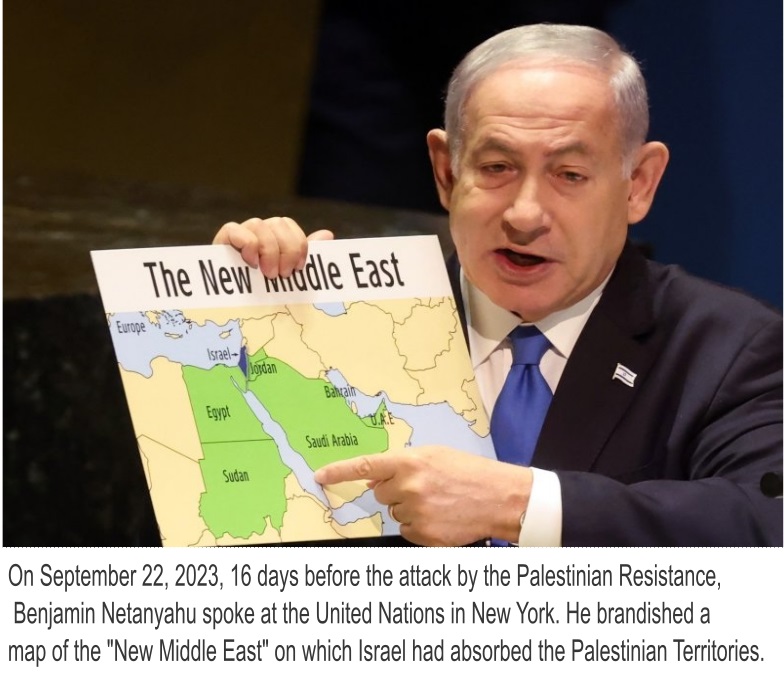
As the new year approaches, Palestinians face new forms of colonization and new challenges to our rights and survival.
By Michel Moushabeck , Truthout January 1, 2026
Today we have a so-called ceasefire that is killing Palestinians on a daily basis. When it comes to Israel, the word “ceasefire” simply means that Palestinians are not allowed to retaliate against Israeli airstrikes, shelling, artillery, bombs, house demolitions, or suicide drones. In reality, Israel can fire all it wants and has been doing so since the minute the agreement took effect. According to President Donald Trump, “nothing is going to jeopardize” the ceasefire in Gaza.
The ceasefire, hailed as a success by the U.S. and the Western world, has done little to end the siege of Gaza and the deepening starvation and malnutrition of Palestinians, especially the children. And it is unlikely to usher in a pathway to freedom, equality, or self-determination for the Palestinian people in the foreseeable future.
The “ceasefire” is nothing but a cover for Israel’s genocidal practices, supported by the U.S. and Western nations, and disguised by mainstream media. It is a deceptive appearance and a ploy that deflects criticism, allows the continued supply of U.S. weapons to Israel, shields the Israeli regime from accountability,
disappears the Gaza genocide from the news, and enables Israel to continue the extermination and displacement of Palestinians.
Can We Stop Pretending There Is a Functioning “Ceasefire” in Gaza?
Since October 10, 2025, the day the ceasefire agreement between Hamas and the Israeli government went into effect, the Israeli military has killed nearly 400 Palestinians and injured over 1,000, according to the Gaza Health Ministry. Under the ceasefire agreement, Israel is required to allow 600 trucks of aid and other goods into Gaza every day, but UN data show that Israel continues to block food aid, medical supplies, and tents in violation of the agreement.
Agnès Callamard, secretary general of Amnesty International, said in a statement on November 27: “The ceasefire risks creating a dangerous illusion that life in Gaza is returning to normal … the world must not be fooled. Israel’s genocide is not over.”
According to the Gaza Health Ministry, the total death toll of Palestinians since October 7, 2023, is now 70,100, with 171,151 injured and many more buried under the rubble. The Israeli bombardment resulted in an estimated 50 million tons of rubble.
What the statistics don’t reflect are the number of people in Gaza that were killed by Israel not through bombs and airstrikes, but through indirect means: Palestinians killed because of lack of shelter after Israel destroyed their homes; because of the destruction of their water supplies and desalination plants, electricity supplies, and sanitation systems; because of the flattening of clinics and hospitals; and because of starvation and diseases.
The United Nations Relief and Works Agency for Palestine Refugees (UNRWA) said shelter materials for 1.3 million people and about 5,000 trucks of emergency supplies remain stalled outside Gaza as Israel continues to block all UNRWA-associated goods from entering.
The Palestinians in Gaza, the West Bank, and East Jerusalem, who have endured 77 years of brutal Israeli military occupation and a system of apartheid that denies them their rights, are left with no choice other than to continue their struggle for liberation and against erasure and ethnic cleansing — including their right to armed resistance as recognized under international law.
UN Security Council Loses Sight of Its Mission and Betrays the Palestinians
On November 17, 2025, in an unexpected and disgraceful vote of 13-0 that is counter to the UN’s raison d’être — with two abstentions from Russia and China — the UN Security Council (UNSC) adopted Resolution 2803, which embraces Trump’s — or is it Israeli Prime Minister Benjamin Netanyahu’s? — “20-point peace plan,” effectively normalizing genocide, rewarding U.S. complicity, and establishing new colonial rule over the lives of 2.3 million Palestinians in Gaza. It grants full control over Gaza to a U.S.-led “Board of Peace,” headed by Trump himself, that will oversee the administration and reconstruction of the Strip and establishes an “International Stabilization Force” in charge of security and disarming the resistance — not a UN peacekeeping force that will protect Palestinians.
Palestinians who have endured two years of genocide — and the total destruction of their homes and livelihoods — were not part of the negotiations and had no say in this matter. The plan — hatched by the Trump-Netanyahu team and legitimized by the UNSC — includes no mention of the genocide and does not call for accountability for the war crimes and crimes against humanity committed over the last two years. This plan, which whitewashes the genocide, will never be forgotten or forgiven by any Palestinian. It denies Palestinians their humanity, their right to self-determination, and does nothing to address their grievances or root causes of their struggle. It will simply prolong the illegal occupation and will not advance peace or stability in the region in any meaningful way.
Israel views the inclusion of language in the resolution about a “pathway to Palestinian statehood” as nonbinding. In fact, the day after the UNSC vote, Netanyahu publicly stated his strong opposition to a Palestinian state. ……………………………………………………………………………………………………………………………………………………………………………………………………….https://truthout.org/articles/un-security-council-abandoned-palestinians-humanity-must-refuse-to-follow-suit/?utm_source=Truthout&utm_campaign=db602f5be8-EMAIL_CAMPAIGN_2026_01_01_06_24&utm_medium=email&utm_term=0_bbb541a1db-db602f5be8-650192793
Trump reaffirms his support for another strike on Iran after meeting with Netanyahu
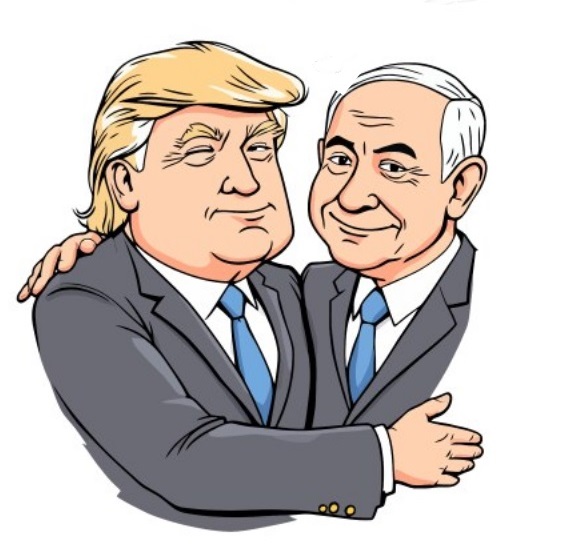
On Monday, Donald Trump reaffirmed his support for another strike on Iran after meeting with Israeli Prime Minister Benjamin Netanyahu. But analysts say Netanyahu’s designs go far beyond Iran.
Mondoweiss, By Michael Arria December 30, 2025
In comments to reporters after his meeting with Israeli Prime Minister Benjamin Netanyahu, President Donald Trump reiterated his support for another strike on Iran.
“I hope they’re not trying to build up again, because if they are, we’re going to have no choice but very quickly, to eradicate that build up,” said Trump, referring to the alleged expansion of Iran’s ballistic missile program.
“We’ll knock them down,” he added. “We’ll knock the hell out of them.”
Netanyahu has consistently pushed for a wider war on Iran, and was expected to make the case for further attacks during his Mar-a-Lago visit.
Trump’s comments prompted an immediate response from Iranian officials.
In an article in The Guardian, Iranian foreign minister Seyed Araghchi called on the Trump administration to defy Israel on the issue.
“The US administration now faces a dilemma: it can continue writing blank cheques for Israel with American taxpayer dollars and credibility, or be part of a tectonic change for the better,” he wrote. “For decades, Western policy towards our region has been mostly shaped by myths originating from Israel.”
“The response of the Islamic Republic of Iran to any oppressive aggression will be harsh and regrettable,” tweeted Iranian President Masoud Pezeshkian.
In a post on the meeting, Quincy Institute for Responsible Statecraft Vice President Trita Parsi wrote that an attack on Iran could easily lead to retaliatory strikes.
“Tehran has gone to great lengths to avoid a military confrontation with Washington, but just because it has shown restraint in the past does not mean that it can afford to do so in this scenario,” wrote Parsi. “Indeed, given that Iran will be totally exposed without its missiles, it will likely reckon that it has no choice but to strike directly at U.S. targets.”
“Even if Trump opts to ‘only’ support Israel defensively in yet another Israeli choice of war — which is the position Biden took — it nevertheless incentivizes Israel to restart war, as the U.S. is lessening the cost for Israel to do so,” he continued……………………………………………………. https://mondoweiss.net/2025/12/trump-reaffirms-his-support-for-another-strike-on-iran-after-meeting-with-netanyahu/
1 This Month
10 March A LIVE WEBINAR THE REAL EFFECTS OF NUCLEAR POWER
What the Industry Isn’t Telling Us
1:00 PM Mountain, 2 pm Central, 3 pm Eastern. Live on the Keepers of the Water Facebook page



18 March Webinar @ 1 PM EST: An Assessment of SMR Projects: The Case of Canada
register for the zoom:
https://us02web.zoom.us/webinar/register/WN_o8BIIOUvQ2ONJR1nta65DQ#/registration


of the week – STOP SMALL MODULAR REACTORS IN CANADA
To see nuclear-related stories in greater depth and intensity – go to https://nuclearinformation.wordpress.com
-
Archives
- March 2026 (99)
- February 2026 (268)
- January 2026 (308)
- December 2025 (358)
- November 2025 (359)
- October 2025 (376)
- September 2025 (258)
- August 2025 (319)
- July 2025 (230)
- June 2025 (348)
- May 2025 (261)
- April 2025 (305)
-
Categories
- 1
- 1 NUCLEAR ISSUES
- business and costs
- climate change
- culture and arts
- ENERGY
- environment
- health
- history
- indigenous issues
- Legal
- marketing of nuclear
- media
- opposition to nuclear
- PERSONAL STORIES
- politics
- politics international
- Religion and ethics
- safety
- secrets,lies and civil liberties
- spinbuster
- technology
- Uranium
- wastes
- weapons and war
- Women
- 2 WORLD
- ACTION
- AFRICA
- Atrocities
- AUSTRALIA
- Christina's notes
- Christina's themes
- culture and arts
- Events
- Fuk 2022
- Fuk 2023
- Fukushima 2017
- Fukushima 2018
- fukushima 2019
- Fukushima 2020
- Fukushima 2021
- general
- global warming
- Humour (God we need it)
- Nuclear
- RARE EARTHS
- Reference
- resources – print
- Resources -audiovicual
- Weekly Newsletter
- World
- World Nuclear
- YouTube
-
RSS
Entries RSS
Comments RSS
 nuclear-news