North Korea condemns new US nuclear strategic plan report
VOA News, Seoul, South Korea26 Aug 24
North Korea vowed Saturday to advance its nuclear capabilities, reacting to a report that the United States had revised its own nuclear strategic plan.
The country will “bolster up its strategic strength in every way to control and eliminate all sorts of security challenges that may result from Washington’s revised plan,” the official Korean Central News Agency (KCNA) reported.
The New York Times reported this week that a U.S. plan approved by President Joe Biden in March was to prepare for possible coordinated nuclear confrontations with Russia, China and North Korea.
The highly classified plan for the first time reorients Washington’s deterrent strategy to focus on China’s rapid expansion in its nuclear arsenal, the Times said.
KCNA said North Korea’s foreign ministry “expresses serious concern over and bitterly denounces and rejects the behavior of the U.S.”
It added North Korea vowed to push forward the building of nuclear force sufficient and reliable enough to firmly defend its sovereignty.
Pyongyang and Moscow have been allies since North Korea’s founding after World War II and have drawn even closer since Russia’s 2022 invasion of Ukraine.
The United States and Seoul have accused North Korea of providing ammunition and missiles to Russia for its war in Ukraine.
Pyongyang, which has declared itself an “irreversible” nuclear weapons power, has described allegations of supplying weapons to Russia as “absurd.”…………………………………… more https://www.voanews.com/a/north-korea-condemns-new-us-nuclear-strategic-plan-report/7755256.html
Why the big push for nuclear power as “green”?
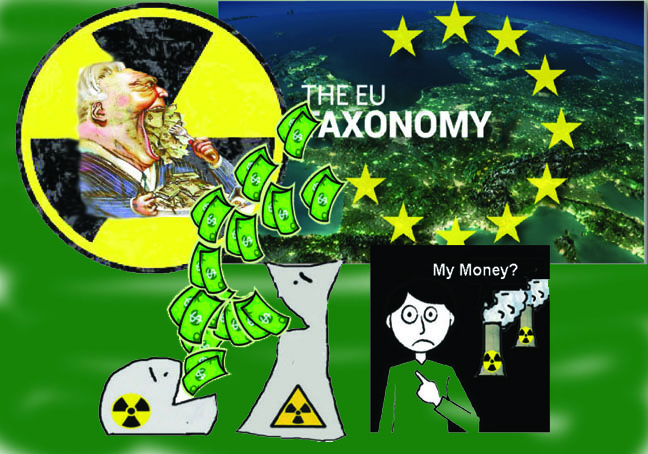
Why is it so difficult to recognise that – as is normal with technologies – nuclear energy is obsolescing?
nuclear affections are a military romance. Powerful defence interests – with characteristic secrecy and highly active PR – are mostly driving the dogged persistence.
https://beyondnuclearinternational.org/2024/08/25/why-the-big-push-for-nuclear-power-as-green/
Heavy lobbying by France and a “military romance” provide some answers, write Andy Stirling and Phil Johnstone

Whatever one’s view of nuclear issues, an open mind is crucial. Massive vested interests and noisy media clamour require efforts to view a bigger picture. A case in point arises around the European Commission’s much criticised proposal – and the European Parliament’s strongly opposed decision – to last year accredit nuclear power as a ‘green’ energy source.
In a series of legal challenges, the European Commission and NGOs including Greenpeace are tussling over what kind and level of ’sustainability’ nuclear power might be held to offer.
To understand how an earlier more sceptical EC position on nuclear was overturned, deeper questions are needed about a broader context. Recent moves in Brussels follow years of wrangling. Journalists reported intense lobbying – especially by the EU’s only nuclear-armed nation: France. At stake is whether inclusion of nuclear power in the controversial ‘green taxonomy’ will open the door to major financial support for ‘sustainable’ nuclear power.
Notions of sustainability were (like climate concerns) pioneered in environmentalism long before being picked up in mainstream policy. And – even when its comparative disadvantages were less evident – criticism of nuclear was always central to green activism. So, it might be understood why current efforts from outside environmentalism to rehabilitate nuclear as ‘sustainable’ are open to accusations of ‘greenwash’ and ‘doublespeak’.
In deciding such questions, the internationally-agreed ‘Sustainable Development Goals’ are a key guide. These address various issues associated with all energy options – including costs and wellbeing, health effects, accident risks, pollution and wastes, landscape impacts and disarmament issues. So, do such comparative pros and cons of nuclear power warrant classification alongside wind, solar and efficiency?
On some aspects, the picture is relatively open. All energy investments yield employment and development benefits, largely in proportion to funding. On all sides, simply counting jobs or cash flowing through favoured options and forgetting alternatives leads to circular arguments. If (despite being highlighted in the Ukraine War), unique vulnerabilities of nuclear power to attack are set aside, then the otherwise largely ‘domestic’ nature of both nuclear and renewables can be claimed to be comparable.
Orderings are more stark on economics and environment. Despite room for many views, it is difficult to deny that history raises especially grave queries about nuclear power. Nuclear costs have long been acknowledged to be far less competitive than renewables. Multiple nuclear accidents have occurred of kinds initially claimed to have ‘negligible’ likelihood. Nuclear waste “solutions” are still largely undeveloped. New questions continually arise about assumptions underpinning ‘safe levels’ of ionising radiation. Build times far exceeding those promised have helped cause nuclear bankruptcy and fraud. Growth rates of renewables surpass what government officials even quite recently claimed to be physically possible. Associated trends nearly all favour renewables.
But what of climate urgency? Does this not justify nuclear proponents’ calls to “do everything” to “keep the nuclear option open” (as if this were an end in itself)? Again: deeper thought might expose this as special pleading. Precisely because climate action is so imperative, isn’t it more rational to prioritise whatever is most substantial, cost effective and rapid?
A more reasoned approach might ask about long-neglected kinds of statistical analysis, which show that national carbon emission reductions tend to associate less with nuclear than with renewable uptake. Key reasons here include that nuclear contributions to climate targets are smaller, slower and more expensive than are offered by renewables. So other evidence that nuclear and renewable energy strategies also tend to conflict further queries the ‘sustainable’ status of nuclear power.
What then of claimed needs for ‘baseload’ power – to manage variable outputs from some renewables? Surprisingly given its public profile, this notion is long abandoned by the electricity industry as “outdated”. Nuclear power is itself inflexible in its own way. Myriad system innovations, grid improvements, demand measures and new storage technologies are all available to better address variable renewables over different timescales. Even in relatively pro-nuclear UK, it is authoritatively documented how a 100% renewable system outperforms any level of nuclear contribution. Even the UK Government now admits that adding these costs still leaves renewables outcompeting nuclear. In less nuclear-committed European countries, the picture is even more stark.
So, as this picture has unfolded, nuclear ‘sustainability’ arguments have retreated through successively undermined claims – that nuclear is “necessary”; brooks “no alternative”; is “more competitive”; uniquely offers to “keep the lights on”; or is just a way to “do everything” (as if this was ever a sensible response to any challenge, especially one as urgent and existential as climate disruption).
Whatever position one starts from, then, a final question arises: why all the fuss? Why should it be now after all these years (just as its comparative performance becomes so much less favourable) that European efforts become so newly energetic to redefine nuclear as ‘sustainable’? Why is it so difficult to recognise that – as is normal with technologies – nuclear energy is obsolescing?
Here, the answer is surprisingly obvious. It is officially repeatedly confirmed in countries working hardest to revive nuclear power – atomic weapons states like the US, France, the UK, Russia and China. Oddly neglected in mainstream energy policy and the media, the picture is especially evident on the defence side. Although skewed public debates leave many unaware, nuclear affections are a military romance. Powerful defence interests – with characteristic secrecy and highly active PR – are mostly driving the dogged persistence.
The result is clear. Dubiously justified in climate terms, elevated consumer prices, government funding and public risk underwriting all help maintain a joint civil/military ‘nuclear industrial base’. In nuclear armed countries like the UK and France, this helps fund – outside defence budgets, off the public books and away from due scrutiny – expensive specialist nuclear skills, supply chains, research facilities, navy recruitment, wider infrastructures. In particular, the building and operating of nuclear propelled submarines would be unaffordable without these concealed cross-subsidies. Without nuclear power, it would become much harder to guarantee the later careers that are so essential in recruiting nuclear-trained officers.
As President Macron recently said “without civilian nuclear, no military nuclear, without military nuclear, no civilian nuclear”. This is the main reason why France is pressing so hard for nuclear to be supported by the European Union as ‘sustainable’. This is why non-nuclear-armed Germany has been more open to grasping nuclear realities. This is why France and Germany find themselves at such loggerheads on this issue. This is why the UK Government so opposes this – and is so fixated on support for general nuclear skills. This is why other nuclear-armed states in general, are so resolutely fixated by the slow, small and costly nuclear response to the climate emergency.
A decision has yet to be reached on whether the inclusion of nuclear by the European Commission in their Green Taxonomy is unlawful. Yet it is clear that nuclear compares poorly to other low carbon technologies when considered in terms of sustainability. What is especially concerning is that the military rationales that are influencing renewed enthusiasm for nuclear are largely unaddressed in policy and wider media coverage. That associated issues are so little discussed, raises grave concerns not just for energy and climate policy, but for European democracy as a whole.
Andy Stirling is Professor of Science & Technology Policy in the Science Policy Research Unit, University of Sussex. Philip Johnstone is Research Fellow, SPRU, University of Sussex.
Hungary again breaks with West: Ukrainian attack on Kursk is ‘wrong’
Tyler Durden, Zero Hedge , 24 Aug 2024
Hungary has broken with its NATO and EU allies in condemning Ukraine’s Kursk incursion, calling it out as not purely ‘defensive’ but as part of needlessly provocative offensive operations against Russian territory.
Gergely Gulyas, top advisor and spokesman for Hungarian Prime Minister Viktor Orbán said in a Thursday press briefing that Budapest is staunchly “pro-peace” – and when asked about the ongoing Kursk invasion, he said: “Ukraine is not only defending, but also attacking. We want a ceasefire and peace.”
Gulyas went on to explain that Hungary is against anything which thwarts potential diplomatic settlement to the war. He said this is “wrong” given the offensive includes a “spillover of the hostilities into Russian territory.”
………………………………………………………………….. Orban has certainly not shared the same enthusiasm for developments in Kursk as other European leaders. For example, recently the EU’s top diplomat Josep Borrell “reiterated the EU’s full support to the [Ukrainian] people’s fight.”
…………………………….Interestingly, there’s been similar pushback coming from Italy of late related to the Kursk offensive, akin to Hungary’s criticisms:
Italy’s Defence Minister Guido Crosetto has ignited a political firestorm with comments that appear to question Ukraine’s military operations inside Russian territory, POLITICO reported. In an interview, Crosetto warned that ‘no country should invade another country’ and expressed concerns over the conflict escalating into Russian territory, which could complicate efforts toward peace. His remarks have raised doubts about Italy’s commitment to Ukraine, despite Prime Minister Giorgia Meloni’s staunch support for Kyiv since the start of Russia’s invasion.
Crosetto emphasized that the weapons provided to Ukraine by Italy are intended strictly for defensive purposes, clarifying that these arms ‘do not have the possibility of being used for an attack on Russian territory’.
On a strategic level, while Ukraine forces have certainly dealt a serious morale blow to Kremlin leadership, Russia is still on the advance in the Donbass, where the front line to the conflict is located. If and when Ukraine’s Kursk operation utterly fails, it will have translated into no actual strategic gains in eastern Ukraine. https://www.zerohedge.com/geopolitical/hungary-again-breaks-west-ukrainian-attack-kursk-wrong
Blinken ‘Sentenced Ceasefire Talks to Death’ With Comments on Netanyahu

sources called Blinken’s comments a “gift” to Netanyahu
Sources told Ynet that Blinken’s comments about the negotiations indicate his ‘amateurism, naivety, and lack of understanding’
https://news.antiwar.com/2024/08/22/blinken-sentenced-ceasefire-talks-to-death-with-comments-on-netanyahu/
by Dave DeCamp August 22, 2024
Secretary of State Antony Blinken’s comments about Gaza ceasefire talks this week sentenced the negotiations to death, Middle East Eye reported Thursday, citing Israeli media.
After meeting with Israeli Prime Minister Benjamin Netanyahu on Monday, Blinken said the Israeli leader agreed to a new US proposal and that it was now up to Hamas to agree to the deal. However, the US proposal included new demands from Netanyahu that Hamas considers unacceptable. Israeli, US, and Arab sources have all said Netanyahu’s demands are too hardline and will prevent a deal.
Sources speaking to Ynet slammed Blinken for making the comments that portrayed Hamas as the obstacle to a deal. “Blinken made a very serious foul here that indicates innocence, amateurism, naivety, and lack of understanding,” a source said.
They added that Blinken’s positive spin on the ceasefire negotiations was likely an effort to prevent the situation from overshadowing the Democratic National Convention.
“He broadcast optimism from intra-American political considerations, so that the Democratic convention in Chicago would go smoothly, but senior officials of the Israeli negotiating team who listened to his press conference wanted to dispel the speculations,” the source said.
The sources called Blinken’s comments a “gift” to Netanyahu and said the Israeli leader’s continued insistence that Israel must maintain control of the Gaza-Egypt border, known as the Philadelphi Corridor, will prevent a deal.
“There is no deal and there is no summit if the Israeli insistence on deploying forces along the Philadelphi axis continues,” the source said. “What was implied in Blinken’s words is that the US is giving Netanyahu support for IDF forces to remain in Philadelphi, while both the Egyptians refuse and Hamas refuses.”
US and Israeli officials are due to meet again in Cairo this week to discuss the ceasefire, but Arab mediators have said there’s no point in holding talks unless the US puts significant pressure on Netanyahu to back down from his demands and agree to a deal.
White House downplays Chinese concerns over possible US nuclear strategy change
VOA, August 21, 2024 By William Gallo, Seoul, South Korea —
White House officials on Wednesday appeared to downplay Beijing’s sentiment that it is “seriously concerned” after a report alleged the United States recently approved a secret plan to shift some of the focus of its nuclear strategy away from Russia to deal with Beijing’s nuclear weapons buildup…………………………….
Late Tuesday, The New York Times reported that U.S. President Joe Biden in March approved a new “nuclear employment guidance,” a highly classified document outlining how the U.S. would use nuclear weapons in a potential conflict.
Asked about the report during a press briefing Wednesday, a Chinese foreign ministry spokesperson accused the United States of “peddling the China nuclear threat narrative” and “finding excuses to seek strategic advantage.”
“China is seriously concerned about the relevant report, and the facts have fully proven that the United States has constantly stirred up the so-called China nuclear threat theory in recent years,” said Chinese foreign ministry spokesperson Mao Ning.
Russia has not responded to the report…………………………………………………………………………. https://www.voanews.com/a/china-concerned-after-report-alleging-us-nuclear-strategy-change-/7750939.html
The U.S. and China Can Lead the Way on Nuclear Threat Reduction

Policies of “no first use” are a model for nuclear states.
Foreign Policy, By Zhou Bo, a senior fellow at the Center for International Security and Strategy at Tsinghua University and a retired senior colonel in the Chinese People’s Liberation Army. August 20, 2024,
Since the end of the Cold War, the role of nuclear weapons has only grown. Nuclear arsenals are being strengthened around the world, with many nuclear states continuing to modernize their arsenals. In June, outgoing NATO Secretary-General Jens Stoltenberg said that the alliance was in talks to deploy more nuclear weapons, taking them out of storage and placing them on standby. Robert C. O’Brien, a former national security advisor to former U.S. President Donald Trump, has urged him to conduct nuclear tests if he wins a new term, arguing that it would help the United States “maintain technical and numerical superiority to the combined Chinese and Russian nuclear stockpiles.”
There are two bleak conclusions about nuclear diplomacy in this age. First, it will be impossible to ban such weapons anytime soon. Since its passage in 2017, no nuclear-armed states have signed the United Nations Treaty on the Prohibition of Nuclear Weapons, some of them instead contending that it will distract attention from other disarmament and nonproliferation initiatives.
It is also very hard, if not impossible, to convince these states to reduce their nuclear stockpiles amid ever-intensifying geopolitical and military competition. On the contrary, in February 2023, Russia announced that it was suspending its participation in the 2010 Treaty on Measures for the Further Reduction and Limitation of Strategic Offensive Arms (New START)—the last remaining nuclear arms control treaty limiting Russian and U.S. strategic nuclear forces.
In response, the United States has also suspended the sharing and publication of treaty data. In November, Russia went a step further and withdrew its ratification of the Comprehensive Nuclear Test Ban Treaty (CTBT), citing “an imbalance” with the United States, which has failed to ratify the treaty since it opened for signature in 1996.
Amid such a situation, it is impossible for Beijing to stand by idly. The Stockholm International Peace Research Institute estimates that the size of China’s nuclear arsenal has increased from 410 warheads in January 2023 to 500 in January 2024, and it is expected to continue to grow. For the first time, China may also now be deploying a small number of warheads on missiles during peacetime. According to the U.S. Defense Department, China is likely to increase its nuclear warheads to 1,500 by 2035.
Given this reality, perhaps the most promising near-term way to guard against nuclear risks is not by limiting the number of nuclear weapons but by controlling the policies that govern their use. In this regard, a pledge by nuclear-armed states of “no first use” of nuclear weapons looks to be the most realistic approach in reducing the escalation of nuclear threats.
In theory, no first use refers to a policy by which a nuclear-armed power formally refrains from the use of nuclear weapons or other weapons of mass destruction in warfare, except in the case of doing so as a second strike in retaliation to an attack by an enemy power using weapon of mass destruction.
Of the five nuclear states that have signed onto the Treaty on the Nonproliferation of Nuclear Weapons (NPT)—China, France, Russia, the United Kingdom, and the United States—only China has ever declared a no-first-use policy. On Oct. 16, 1964, when China successfully detonated its first atomic bomb, the country immediately declared that it would not be the first to use nuclear weapons at any time and under any circumstances, and unconditionally committed itself not to use or threaten to use nuclear weapons against nonnuclear states or in nuclear-weapon-free zones…………………………………………..
All nuclear powers could afford to adopt a formal no-first-use policy—taking the moral high ground without reducing their capabilities for retaliation.
Though it has never adopted a no-first-use policy itself, the United States’ nuclear posture is actually more similar to China’s than it seems. In its 2022 Nuclear Posture Review, the Biden administration declared that it would only consider the use of nuclear weapons “in extreme circumstances to defend the vital interests of the United States or its allies and partners.” But it is hard to imagine which interests are so vital that they might require Washington to use nuclear weapons as a first measure to defend them.
To be sure, it is important for the United States to assure its allies that it will follow through on its deterrent promises. It is equally hard to imagine who would venture to launch a nuclear strike on a U.S. ally, knowing the dire potential consequences.
The United Kingdom’s nuclear deterrent, meanwhile, is operationally independent. But in terms of its nuclear policy, the British government has made it clear that “we would consider using our nuclear weapons only in extreme circumstances of self-defence, including the defence of our NATO allies.” France, meanwhile adheres to a principle of “strict sufficiency.”
The real challenge, then, is getting Russia to commit to a no-first-use policy. The Soviet Union adopted a formal policy of no first use in 1982. But after its dissolution, the Russian Federation reversed this approach in 1993, likely to mitigate the comparative weakness of the Russian Armed Forces in the post-Soviet era………………………………………………….
A dual-track approach may be the best bet for the adoption of a formal no-first-use policy.
In Europe, NATO can start with a unilateral no-first-use pledge against Russia as a gesture of goodwill. Even if such an offer isn’t immediately reciprocated by Russia, it might begin to thaw tensions.
As a second—and crucial—step, NATO could pledge to halt any further expansion of its alliance in exchange for Moscow adopting a no-first-use policy This would be a difficult pill for the alliance to swallow. But after Sweden’s and Finland’s entry earlier this year, there are only three aspiring countries on the waiting list: the barely significant Bosnia and Herzegovina as well as Georgia and Ukraine, which have deeply problematic ongoing conflicts with Russia that NATO is sensitive about.
The path forward would likely be smoother if it went through Asia. Both Russia and China have already agreed to no first use against each other. China and the United States could reach a similar agreement, thus de-escalating potential conflicts involving U.S. allies—such as the Philippines and Japan—as well as the dangers that could be provoked through accidental collisions in the sea or air. A U.S.-led example might then make it easier to bring the Europeans on board.
This may seem far-fetched in the current geopolitical climate, but there is precedent for it. When India and Pakistan tested nuclear devices in May 1998, they incurred swift condemnation from the U.N. Security Council, which called for both countries to sign both the NPT and the Comprehensive Nuclear Test Ban Treaty. In a rare show of solidarity, China and the United States made a joint declaration in June 1998 agreeing to de-target their nuclear weapons against each other.
This was largely a symbolic and unverifiable step. But it was not only a defusing of tensions, but also good to see nuclear states at least partially honoring the vision of nuclear disarmament laid out in Article VI of the NPT. And this China-U.S. joint statement eventually led to another joint statement among the five nuclear-armed permanent Security Council states in May 2000, which affirmed that their nuclear weapons are not targeted at each other or at any other states.
No first use is a big step forward from nontargeting. It’s not out of bounds to imagine that, with enough diplomatic capital, a similar but more important pledge of no first use could be made today. In fact, in January 2022—only a month before Russia’s invasion of Ukraine—these five nuclear powers agreed in a joint statement that “a nuclear war cannot be won and must never be fought.”
What is more significant is that during Chinese President Xi Jinping’s visit to Moscow last year, China and Russia reiterated this commitment, even amid Russia’s ongoing war.
If, indeed, a nuclear war cannot be won, then what is stopping these nuclear powers from taking a no-first-use pledge? Nuclear weapons didn’t help the United States in its wars in Vietnam, Iraq, and Afghanistan—or the Russians in Ukraine. A commitment of no first use by the nuclear-armed states would give people hope that a nuclear-free world, however distant, is still possible one day.
This essay is published in cooperation with the Asian Peace Programme at the National University of Singapore’s Asia Research Institute. https://foreignpolicy.com/2024/08/20/nuclear-weapons-war-no-first-use-policy/—
How US Big Tech monopolies colonized the world: Welcome to neo-feudalism
US Big Tech corporations are like the feudal landlords of medieval Europe. These Silicon Valley monopolies own the digital land that the global economy is built on, and are charging higher and higher rents to use their privatized infrastructure.
GeoPoliticalEconomy, By Ben Norton, 19 Aug 24
US Big Tech corporations have essentially colonized the world. In almost every country on Earth, the digital infrastructure upon which the modern economy was built is owned and controlled by a small handful of monopolies, based largely in Silicon Valley.
This system is looking more and more like neo-feudalism. Just as the feudal lords of medieval Europe owned all of the land and turned almost everyone else into serfs, who broke their backs producing food for their masters, the US Big Tech monopolies of the 21st century act as corporate feudal lords, controlling all of the digital land upon which the digital economy is based.
Every other company – not just small businesses, but even relatively large ones – must pay rent to these corporate feudal lords.
Amazon takes more than 50% of the revenue of the sellers on its platform, according to a study by the e-commerce intelligence firm Marketplace Pulse.
Amazon’s cut of vendor revenue steadily rose from roughly 35% in 2016 to just over half as of 2022.
In fact, Amazon basically sets prices in markets by using its infamous “buy box”. The platform removes the button if a user sells a product at a price higher than those offered on competing websites. The result: 82-90% of sales on Amazon end up using the buy box.
Neoclassical economists endlessly condemned the inefficiencies of the central planning of the Soviet Union, but apparently have little to say about the de facto price setting being done by neo-feudal corporate monopolies like Amazon.
A monopolist in the 20th century would have loved to control a country’s supply of, say, refrigerators. But the Big Tech monopolists of the 21st century go a step further and control all of the digital infrastructure needed to buy those fridges — from the internet itself to the software, cloud hosting, apps, payment systems, and even the delivery service.
These corporate neo-feudal lords don’t just dominate a single market or a few related ones; they control the marketplace. They can create and destroy entire markets.
Their monopolistic control extends well beyond just one country, to almost the entire world.
If a competitor does manage to create a product, US Big Tech monopolies can make it disappear.
Imagine you are an entrepreneur. You develop a product, make a website, and offer to sell it online. But then you search for it on Google, and it does not show up. Instead, Google promotes another, similar product in the search results.
This is not a hypothetical; this already happens.
Amazon does exactly the same: It promotes Amazon Prime products at the top of its search results. And when a product sells well, Amazon sometimes copies it, makes its own version, and threatens to put the original vendor out of business.
As Reuters reported in 2021, “A trove of internal Amazon documents reveals how the e-commerce giant ran a systematic campaign of creating knockoff goods and manipulating search results to boost its own product lines”. This happened in India, but vendors in other countries have accused Amazon of doing the same.
Toy salesman Molson Hart produced a fascinating documentary that illustrates Amazon’s dystopian monopoly power.
Amazon is more powerful than any 19th-century robber baron could have imagined. It charges exorbitant fees to vendors that sell goods on its platform (goods that Amazon had nothing to do with creating), and can copy their product and make its own version if it looks profitable.
This problem goes much deeper than Amazon. Apple, the largest company on Earth by market capitalization (with a $3.41 trillion market cap as of August 1, 2024), uses many of the same tactics as Amazon.
While Amazon extracts more than 50% of the revenue of the sellers who use its platform, it can at least try to justify this by arguing that these exorbitant fees include the costs of advertising and “fulfillment” (ie, storage, processing, delivery, etc.).
Apple, on the other hand, charges a staggering 30% fee on all purchases done in apps that are downloaded using the iOS store.
In other words, if a user of an iPhone, iPad, or Mac download an app for a third party through the App Store, Apple requires 30% rent for the business done by those other companies. This is despite the fact that Apple has nothing to do with that business. The other firms manage the commerce and maintain their apps; Apple is the neo-feudal lord demanding its tribute.
In an absolutely scandalous announcement in August, the crowd-funding website Patreon revealed in August that the neo-feudal corporate landlords at Apple are taking a 30% cut of all new memberships registered using the iOS app.
Apple is not providing any service, other than allowing people to download an app that it itself does not manage. All Apple does is host the app, nothing more. It is a digital landlord. But because it has a monopoly, Apple can take 30% of the revenue that creators on Patreon receive for all of our hard work…………………………………………………………………………………………..
It all started with Big Tech corporations first offering supposedly “free” services (which were paid for by selling users’ information). Those “free” platforms soon became monopolies, and were so deeply embedded into the economy that they became digital utilities, albeit privatized ones.
A 20th-century economy needed utilities like an electrical grid, water plants, sewage system, highways, etc. These natural monopolies should be publicly owned, provided by the state as public goods, in order to prevent rent-seeking by corporate landlords. (Of course, neoliberals have long sought to privatize these public utilities as well, and have had success in some countries — with inevitably disastrous results, like sky-high bills and sewage being dumped into the UK’s privatized water system.)
A 21st-century economy needs all of those basic utilities plus new digital infrastructure. But here’s the thing: all of the necessary digital infrastructure that our economies are built on is privatized! You have internet providers, Microsoft Windows, iOS, Apple Store, Play Store, Google, Amazon, YouTube, Facebook, Instagram, WhatsApp, Apple Pay, Google Pay, etc.
Then there is the cloud infrastructure that apps and websites use, which is dominated by a few mostly US companies. Amazon Web Services (AWS) had 31% of global market share as of the first quarter of 2024, followed by 25% for Microsoft Azure, and 11% for Google Cloud……………………………………………………………………………………………………………….
If you want to make a small business, you will almost certainly go bankrupt very quickly if you don’t use Amazon to sell your product; Apple’s App Store or Google Play Store to download your app; Facebook, Instagram, and YouTube to market your good or service; or WhatsApp to make an order (especially in many Global South countries, where WhatsApp is more common than in the US). None of this is to even mention private ISPs for an internet connection, or private telecommunications companies that charge high data fees.
If your company makes an app that is not available in the Apple App Store or Google Play Store, you might as well not exist. Good luck getting the vast majority of your customer base to download it…………………………………………………………………………………………..
These Big Tech monopolists are really digital landlords. They own the land upon which the rest of the digital economy is built. They are the 21st-century version of the feudal lords of Medieval Europe, who owned the land upon which serfs toiled.
Now these neo-feudal corporate landlords are charging more and more fees to use their “free” infrastructure.
This digital infrastructure should be nationalized and treated as a public good, like other basic utilities (which should also be nationalized if they have been privatized, which was increasingly the case in the neoliberal era).
This is global monopoly capitalism…………………………………………………………………………………….
Economist Yanis Varoufakis has referred to this system as “technofeudalism”, in his 2024 book with this title. Although I sometimes disagree with Varoufakis, especially in terms of his criticism of China, I do largely share his analysis of technofeudalism.
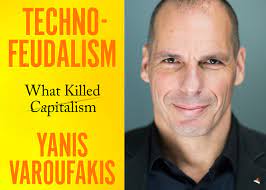
Varoufakis is also absolutely right that one of the factors driving Washington’s new cold war on Beijing is the desire by US Big Tech monopolies to destroy their only competitors, which happen to be Chinese. ………………………….
This observation by Varoufakis hits the nail on the head. Where I think he is wrong is in his claim that China, like the US, is becoming techno-feudal.
There is a fundamental distinction between the two: In the US, capital controls the state; in China, the state controls capital.
In China’s unique system, which it refers to as a socialist market economy and “Socialism with Chinese Characteristics”, roughly a third of GDP comes from massive state-owned enterprises (SOEs), which are concentrated in the most strategic sectors of the economy, such as banking, construction, infrastructure, transportation, and telecommunications.
While it is true that many technology companies in China are private on paper, the reality is much more complicated. The Chinese government has a powerful “golden share” (officially known as a “special management share”) in large firms, such as Alibaba and Tencent, which gives it veto power over important decisions.
Although these large technology companies may not be full state-owned, China’s socialist government ensures that they act in the interest of the country and the people, not simply wealthy shareholders.
The US system is exactly the opposite. Large corporations control the government, and create policy on behalf of wealthy shareholders.
The problem is not just that US corporate monopolies control markets; they create those markets themselves, through their control over digital infrastructure.
As Varoufakis has observed in his discussion of “cloud capital”, Amazon does not just dominate the market; it creates markets — and prevents any potential competitors from creating alternative markets………………………………………………
In the 21st century, the infrastructure of society itself has been privatized.
The solution is clear: the digital infrastructure upon which the modern economy is built must be nationalized and turned into public utilities, like water, electricity, and highways.
That said, the US government nationalizing Silicon Valley Big Tech companies does not solve the problem of the lack of digital sovereignty in other countries.
If Amazon, Apple, Google, and Meta are nationalized, this would still mean the United States has enormous power over nations whose economies rely on this US-controlled digital infrastructure (which, again, is almost all nations everywhere, with the noble exception of China)……………………………………………………………………………………………………………………….
This is a serious problem that should be debated worldwide. There are likely some potential creative solutions………….. https://geopoliticaleconomy.com/2024/08/19/us-big-tech-monopolies-neo-feudalism/
Humanity on a knife’s edge
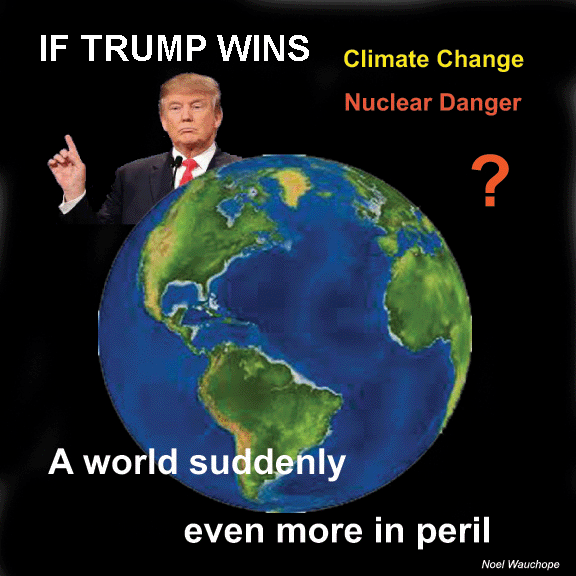
Trump took us to the nuclear brink. What happens if he’s back?
By Lawrence S. Wittner https://beyondnuclearinternational.org/2024/08/18/humanity-on-a-knifes-edge/
Over the past decade and more, nuclear war has grown increasingly likely. Most nuclear arms control and disarmament agreements of the past have been discarded by the nuclear powers or will expire soon. Moreover, there are no nuclear arms control negotiations underway. Instead, all nine nuclear nations (Russia, the United States, China, Britain, France, India, Pakistan, Israel, and North Korea) have begun a new nuclear arms race, qualitatively improving the 12,121 nuclear weapons in existence or building new, much faster, and deadlier ones.
Furthermore, the cautious, diplomatic statements about international relations that characterized an earlier era have given way to public threats of nuclear war, issued by top officials in Russia, the United States, and North Korea.
This June, UN Secretary-General António Guterres warned that, given the heightened risk of nuclear annihilation, “humanity is on a knife’s edge.”
This menacing situation owes a great deal to Donald Trump.
As President of the United States, Trump sabotaged key nuclear arms control agreements of the past and the future. He single-handedly destroyed the INF Treaty, the Iran nuclear agreement, and the Open Skies Treaty by withdrawing the United States from them. In addition, as the expiration date for the New START Treaty approached in February 2021, he refused to accept a simple extension of the agreement—action quickly countermanded by the incoming Biden administration.
Not surprisingly, Trump was horrified by the Treaty on the Prohibition of Nuclear Weapons―a UN-negotiated agreement that banned nuclear weapons, thereby providing the framework for a nuclear-free world. In 2017, when this vanguard nuclear disarmament treaty was passed by an overwhelming majority of the world’s nations, the Trump administration proclaimed that the United States would never sign it.
In fact, Trump was far less interested in arms control and disarmament than in entering―and winning―a new nuclear arms race with other nations. “Let it be an arms race,” he declared in December 2016, shortly after his election victory. “We will outmatch them at every pass.”
In February 2018, he boasted that his administration was “creating a brand-new nuclear force. We’re gonna be so far ahead of everybody else in nuclear like you’ve never seen before.” And, indeed, Trump’s U.S. nuclear “modernization” program―involving the replacement of every Cold War era submarine, bomber, missile, and warhead with an entirely new generation of the deadliest weapons ever invented―acquired enormous momentum during his presidency, with cost estimates running as high as $2 trillion.
Eager to facilitate this nuclear buildup, the Trump administration began to explore a return to U.S. nuclear weapons testing. Consequently, it announced in 2018 that, although the U.S. government had ended its nuclear tests in 1992 and President Bill Clinton had negotiated and signed the Comprehensive Test Ban Treaty in 1996, Trump would oppose U.S. Senate ratification of the treaty.
The administration also dramatically reduced the time necessary to prepare for nuclear weapons test explosions. In 2020, senior Trump administration officials reportedly conducted a serious discussion of U.S. government resumption of nuclear testing, leading the House of Representatives, then under Democratic control, to block funding for it.
Though many Americans assumed that a powerful U.S. nuclear arsenal would prevent an outbreak of nuclear war, Trump undermined this wishful thinking by revealing himself perfectly ready to launch a nuclear attack. During his 2016 presidential campaign, the Republican nominee reportedly asked a foreign policy advisor three times why, if the U.S. government possessed nuclear weapons, it should be reluctant to use them. The following year, Trump told the governor of Puerto Rico that, “if nuclear war happens, we won’t be second in line pressing the button.
Indeed, Trump came remarkably close to lunching a nuclear war against North Korea. In August 2017, responding to provocative comments by Kim Jong Un, Trump warned that further North Korean threats would “be met with fire, fury and frankly power the likes of which this world has never seen before.”
Trump’s threat of a nuclear attack triggered a rapid escalation of tensions between the two nations. In a speech before the UN General Assembly that September, Trump vowed to “totally destroy North Korea” if Kim, whom he derisively labeled “Little Rocket Man,” continued his provocative rhetoric.
Meanwhile, the White House chief of staff, General John Kelly, was appalled by indications that Trump really wanted war and, especially, by the president’s suggestion of using a nuclear weapon against North Korea and, then, blaming the action on someone else. According to Kelly, the military’s objection that the war would―in the words of Secretary of Defense Jim Mattis “incinerate a couple million people”―had no impact on Trump. In early 2018, the U.S. president merely upped the ante by publicly boasting that he had a “Nuclear Button” that was “much bigger & more powerful” than Kim’s.
What finally headed off a nuclear war, Kelly recalled, was his appeal to Trump’s “narcissism.” If Trump could forge a friendly diplomatic relationship with North Korea, the general suggested, the U.S. president would emerge as the “greatest salesman in the world.” And, indeed, Trump did reverse course and embark on a flamboyant campaign to pacify and denuclearize North Korea, remarking that May that “everyone” thought he deserved the Nobel Peace Prize.
Eventually, however, the U.S.-North Korean negotiations, including a much-heralded “summit” between Trump and Kim, resulted in little more than handshakes, North Korea’s continued development of nuclear weapons, and Trump’s return to public threats of nuclear war―this time against Iran.
Given this record, as well as Trump’s all-too-evident mental instability, we have been fortunate that, in a world bristling with nuclear weapons, the world survived his four years in office.
But our good fortune might not last much longer, for Trump’s return to power in 2025 or the recklessness of some other leader of a nuclear-armed nation could unleash unprecedented catastrophe upon the world.
Ultimately, the only long-term security for humanity lies in the global abolition of nuclear weapons and the development of a united world community.
Lawrence S. Wittner is Professor of History Emeritus at SUNY/Albany and the author of Confronting the Bomb (Stanford University Press).
South Korea’s Yoon seeks dialogue with North, path to unification
Reuters, By Hyonhee Shin, August 16, 2024
Summary
- Yoon unveils blueprint for unification in Liberation Day speech
- Offers to form consultative body for inter-Korean cooperation
- Yoon says to keep offering humanitarian aid to the North
- South Korean opposition boycotts speech over Japan outreach
SEOUL, Aug 15 (Reuters) – South Korean President Yoon Suk Yeol offered on Thursday to establish a working-level consultative body with North Korea to discuss ways to ease tension and resume economic cooperation, as he laid out his vision on unification of the neighbours.
In a National Liberation Day speech marking the 79th anniversary of independence from Japan’s 1910-45 colonial rule after World War Two, Yoon said he was ready to begin political and economic cooperation if North Korea “takes just one step” toward denuclearisation……………………………………………………………………………………more https://www.reuters.com/world/asia-pacific/south-koreas-yoon-offers-working-level-talks-with-north-korea-2024-08-15/
Iran’s future FM says nuclear deal broken, favors military-diplomatic path
Niloufar Goudarzi, Iran International, 14 Aug 24
Iran’s foreign minister-designate has dismissed the 2015 JCPOA nuclear deal as irreparable, advocating instead for a strategy that blends military force with diplomacy, according to an Iranian MP.
Abbas Araghchi, who has openly aligned himself with IRGC values, firmly rooted in anti-Western and anti-Israel stances, is currently defending his proposed action plan in parliament, where he seeks approval as the nominated minister.
Speaking after Araghchi’s parliamentary session, MP Mohsen Fathi quoted him as stating, “The JCPOA is beyond revival. In the new government, our focus is not on restoring the nuclear deal but on lifting the sanctions. We are dedicated to a strategy integrating diplomatic efforts with military strength.”
It is not clear how Tehran wants to have the sanctions lifted without a nuclear agreement, unless Araghchi was referring to using diplomatic-military pressure on the United States.
In 2015, Iran and global powers signed the Joint Comprehensive Plan of Action (JCPOA) to limit Iran’s nuclear activities for sanctions relief. In 2018, then-president Donald Trump withdrew, claiming it failed to address Iran’s missile program. Since then, efforts to revive the JCPOA have involved indirect talks, with European diplomats mediating between US and Iranian officials.
Araghchi’s remarks mirrored those of the outgoing Acting Foreign Minister Ali Bagheri-Kani who asserted in July that the primary objective of the JCPOA was lifting sanctions………………………………https://www.iranintl.com/en/202408142991
Iran to Israel: Ceasefire in Gaza war, or retaliation for Haniyh murder will proceed
SOTT, Parisa Hafezi and Laila Bassam, Reuters, Tue, 13 Aug 2024
Only a ceasefire deal in Gaza stemming from hoped-for talks this week would hold Iran back from direct retaliation against Israel for the assassination of Hamas leader Ismail Haniyeh on its soil, three senior Iranian officials said.
Iran has vowed a severe response to Haniyeh’s killing, which took place as he visited Tehran late last month and which it blamed on Israel. Israel has neither confirmed or denied its involvement. The U.S. Navy has deployed warships and a submarine to the Middle East to bolster Israeli defenses.
One of the sources, a senior Iranian security official, said Iran, along with allies such as Hezbollah, would launch a direct attack if the Gaza talks fail or it perceives Israel is dragging out negotiations. The sources did not say how long Iran would allow for talks to progress before responding.
With an increased risk of a broader Middle East war after the killings of Haniyeh and Hezbollah commander Fuad Shukr, Iran has been involved in intense dialogue with Western countries and the United States in recent days on ways to calibrate retaliation, said the sources, who all spoke on condition of anonymity due to the sensitivity of the matter.
In comments published on Tuesday, the U.S. ambassador to Turkey confirmed Washington was asking allies to help convince Iran to de-escalate tensions. Three regional government sources described conversations with Tehran to avoid escalation ahead of the Gaza ceasefire talks, due to begin on Thursday in either Egypt or Qatar.
“We hope our response will be timed and executed in a way that does not harm a potential ceasefire,” Iran’s mission to the U.N. said on Friday in a statement. Iran’s foreign ministry on Tuesday said calls to exercise restraint “contradict principles of international law.”
Iran’s foreign ministry and its Revolutionary Guards Corps did not immediately respond to questions for this story. The Israeli Prime Minister’s Office and the U.S. State Department did not respond to questions.
“Something could happen as soon as this week by Iran and its proxies… That is a U.S. assessment as well as an Israel assessment,” White House spokesperson John Kirby told reporters on Monday.
“If something does happen this week, the timing of it could certainly well have an impact on these talks we want to do on Thursday,” he added.
At the weekend, Hamas cast doubt on whether talks would go ahead. Israel and Hamas have held several rounds of talks in recent months without agreeing a final ceasefire.
In Israel, many observers believe a response is imminent after Supreme Leader Ayatollah Ali Khamenei said Iran would “harshly punish” Israel for the strike in Tehran……………………………………….. more https://www.sott.net/article/493939-Iran-to-Israel-Ceasefire-in-Gaza-war-or-retaliation-for-Haniyh-murder-will-proceed
AUKUS revamped: Australia to indemnify US and UK against ‘any liability’ from nuclear risks

Documents tabled in parliament on Monday have also revealed the United States or United Kingdom could walk away from the AUKUS deal with Australia with a year’s notice.
SBS News, 12 August 2024
Key Points
- The US, UK and Australia signed a new AUKUS agreement in Washington last week.
- Documents tabled in parliament on Monday revealed several key elements of the revamped agreement.
- Australia will indemnify the US and UK from any ‘liability’ arising from nuclear risks related to the program.
The United States or the United Kingdom could exit the AUKUS agreement to provide nuclear-powered submarines with Australia with a year’s notice under a new arrangement.
The revamped agreement also requires Australia to legally protect both allies against costs or injuries arising from nuclear risks.
The arrangement was signed by all three partner countries in Washington in the US last week.
Advertisement
Documents tabled in parliament on Monday set out the agreed legal framework for transferring nuclear materials and equipment to Australia for the $368 billion acquisition of atomic-powered submarines announced in 2021.
The plan will bring eight nuclear-powered subs into service by the 2050s.
US and UK could walk away with a year’s notice
The agreement, which “shall remain in force until 31 December 2075”, says the AUKUS deal shouldn’t adversely affect the ability of the US and UK to “meet their respective military requirements and to not degrade their respective naval nuclear propulsion programs”.
“Any party may terminate the agreement … by giving at least one year’s written notice to the other parties,” it reads.
Australia responsible for storage and disposal of waste
Nuclear material for the future submarines’ propulsion would be transferred from the US or UK in “complete, welded power units”, the agreement says.
But Australia would be responsible for the storage and disposal of spent nuclear fuel and radioactive waste from the nuclear power units that are transferred under the deal.
Australia to cover other members for nuclear risks
The updated agreement also means Australia will indemnify the US and UK from any “liability, loss, costs, damage, or injury (including third party claims)” arising from nuclear risks related to the program.
But the legal protection won’t apply in relation to a conventionally armed, nuclear-powered submarine that has been in service with the US Navy “until such time as it is transferred to Australia”…………………..
Greens attack revamped agreement
Greens defence spokesman David Shoebridge criticised the new agreement for its “multiple escape hatches” which risked Australia being left high and dry.
“This is a $368 billion gamble with taxpayers’ money from the Albanese government,” he said…………………..more https://www.sbs.com.au/news/article/aukus-revamped-australia-to-indemnify-us-and-uk-against-any-liability-from-nuclear-risks/rudp9zf10
Israel Runs the U.S. No, the U.S. Runs Israel. No, Wait …
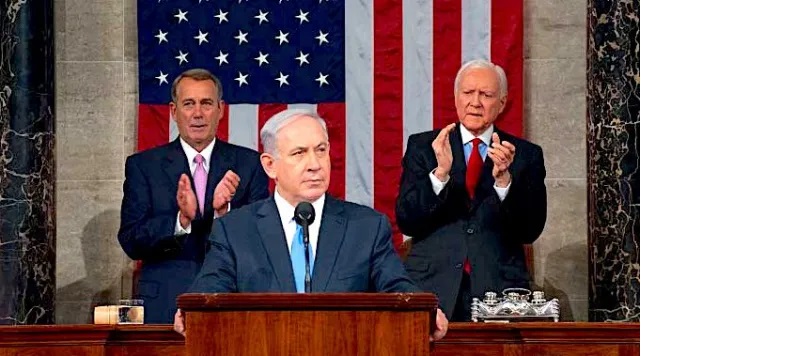
The occasion of Netanyahu’s address, his fourth before a joint session, puts all the complexities before us. Who was, in that hour, in charge — the insane man from the periphery, driven by rage, or his audience of adoring lawmakers at the imperial center, driven by… driven by what? I would say driven by greed, ideology and the work of running an imperium that is failing but has not failed yet. Who controlled whom that day? .
This is power.
Joe Biden, in this same line, accepted more money from the Israeli lobby than anyone else on Capitol Hill during his decades in the Senate — $4.2 million according to Open Secrets, and I understand this is a very low estimate if we count Biden’s post–Senate political career. Code Pink, in a signature-gathering campaign, says Harris has received $5.4 million from the Israel lobby, although it does not indicate at what stage in her career she accepted this extraordinary sum.
August 10, 2024 By Patrick Lawrence / Original to ScheerPost
That deranged speech Bibi Netanyahu delivered to a joint session of Congress last month: I cannot get it entirely out of my mind. It did not change anything — neither the Israeli prime minister nor his hosts seem to desire or intend to change anything in U.S.–Israeli relations. And in this way, there is not much to say about that weird hour the world’s No. 1 terrorist — yes, think about it and tell me I’m wrong — spent at the podium under the Capitol’s rotunda. But the speech did clarify certain things, and then it raised an important question. Let us see about these matters.
There is, to begin with, the question of Netanyahu’s mental stability. If we consider his many outlandish assertions — Israel has minimized civilian casualties in Gaza, Israeli soldiers are to be commended for their moral conduct, those protesting in behalf of Palestinians are probably in Iran’s pay, and so on — we must conclude that the man given to such preposterous misrepresentations is, let’s say, perpendicular to reality.
I am sure Netanyahu spoke in large measure for effect. This must be so. But I am equally sure — note the demeanor in the videos, for instance — he was certain of the truth of what he had to say. Dr. Lawrence’s diagnosis: A man consumed with resentment and hatred, who has led Israel to the brink of a cataclysmic war at the irretrievable cost of its international standing, while dragging the U.S. into it (at similar cost), suffers from severe psychosis with symptoms of paranoia and obsessive-compulsive megalomania.
I do not say this to indulge some cheap denigration of one of the many contemptible political figures now walking around the Western world and its appendages. After Netanyahu’s notably strange performance in Congress July 24 — at times he seemed pure id — I say this diagnosis would hold in a clinical setting. We should all take note of this and brace ourselves accordingly. Never mind who’s driving the bus: It would be better in this case if no one were driving it.
There is also the reception Netanyahu enjoyed on Capitol Hill. Seventy-two ovations by my count, 60–odd of them standing, for a war criminal, a flouter of international law, a man who commits to waging “a seven-front war” across the Middle East?
Bibi’s big theme, running all through his remarks, was congruence, the perfect alignment of Israeli and American interests. Remember? “Our enemies are your enemies, our fight is your fight, and”—here the left fist pounded—“our victory is your victory.”
The response among those in attendance tells you all you need to know about what America’s lawmakers think of this idea. Netanyahu was looking merely for reaffirmation of standing arrangements at a moment when when terrorist Israel’s conduct had begun to turn more stomachs than he had bargained for. And he got what he wanted, needless to say.
This brings us to the question Netanyahu’s speech forces upon us. Does the U.S. control Israel or does Israel control the U.S.? Is the apartheid state another of Washington’s client regimes, albeit — let’s borrow a little from the Chinese — a client with Zionist characteristics? Or is Israel a case — rare, if not unique — of a distant outpost that dictates to the imperial center? The periphery exercises power over the metropole, this to say: This would have to be something new under the sun, surely.
This is not a new question. A lot of people have pondered it for months, if not longer —
The occasion of Netanyahu’s address, his fourth before a joint session, puts all the complexities before us. Who was, in that hour, in charge — the insane man from the periphery, driven by rage, or his audience of adoring lawmakers at the imperial center, driven by… driven by what? I would say driven by greed, ideology and the work of running an imperium that is failing but has not failed yet. Who controlled whom that day? ………………………………………………………………………
This is power.
Joe Biden, in this same line, accepted more money from the Israeli lobby than anyone else on Capitol Hill during his decades in the Senate — $4.2 million according to Open Secrets, and I understand this is a very low estimate if we count Biden’s post–Senate political career. Code Pink, in a signature-gathering campaign, says Harris has received $5.4 million from the Israel lobby, although it does not indicate at what stage in her career she accepted this extraordinary sum.
Harris is now wowing all the dreamy liberals in our midst with gestures here and there intended to suggest that she will be tougher on the Israelis than Joe-the-Zionist and more sympathetic to the Palestinians. Follow the bouncing ball, please, as those honorable Arab–Americans up in Michigan follow it: Harris makes it quite clear, on those occasions she fails to avoid the topic, that she has no intention of making any meaningful adjustment in U.S. policy toward the terrorist state. Let the murdering go on, as long as the Israelis want it to continue.
This, as I say, is power—perversely acquired and perversely exercised………………………………………..
What is at issue in all this is the question of responsibility. Israel exercises considerable power over the U.S. — yes, we all know this — but this is by dint of a corrupt abdication on America’s part. We must not miss this. Washington’s whorish elites have sold U.S. policy to the Israelis, and Congress has sold itself similarly………………………………..
……………………………………..America could sink Netanyahu’s boat any time it chooses to do so. Don’t let the moment fool you: Bibi, as history will show, is at bottom merely a passing punk.
This, to finish the thought, is the power that matters most — imperial power.
Here’s the important thing about the distinction I draw. The ephemeral power Israel asserts in the U.S., accumulated over the eight postwar decades, reaches an historic impasse. It is waning, in a word.
In his final days as a public figure, Joe Biden will continue to carry on about the Zionist state as he has the whole of his political career. “Without Israel, no Jew in the world is safe,” he declared the other day, and hardly for the first time. Kamala Harris is not saying anything about Israel and the Gaza crisis in part because she has little to say about anything, but mostly because, when circumstances require her to break this silence — “weird” indeed, this — it will not be good news for those anticipating even a millimeter’s worth of change.
………………………………………………………………….there was an interesting item at the end of last month on WMAC Radio, the NPR station broadcasting in Upstate New York and western New England. Kamala Harris was just then raising hundreds of millions of dollars, cashing in on the irrational exuberance by then evident among Democrats. At a typically boisterous campaign stop in Pittsfield, Mass., she also faced protesters carrying placards that read, among other things, “End the Genocide” and “All This Money Will Not Wash the Blood Off Your Hands, Kamala.”
What are we looking at here? Pittsfield is a small postindustrial city struggling back to life after General Electric abandoned it decades ago. But this is just the point: Anger about “the Biden–Harris administration” for its participation in Israel’s genocide seems to run right down to this nation’s broken sidewalks. Harris has since gotten the same treatment at a big campaign rally in Philadelphia, and again the other day in Detroit, where she high-handedly dismissed protesters with “I am speaking.” You come away with the impression Americans are simmering — virtually everyone I know is simmering, now that I think about it — and the major media, complicit with the Harris bandwagon, are doing their part to keep this out of sight. Let us not forget: American campuses are quiet after the honorable demonstrations this past spring, but classes resume in a month.
You can bribe some of the people all of the time and all of the people some of the time, but you can’t bribe all of the people all of the time. I think I have my Lincoln right. And I think the Israelis, who, I imagine, don’t bother much with Abe, are on the way to learning that the power they have long exerted over U.S. politics and policy will eventually, in however long, prove ephemeral. https://scheerpost.com/2024/08/10/patrick-lawrence-israel-runs-the-u-s-no-the-u-s-runs-israel-no-wait/
Genocide in Gaza still not on Kamala Harris’ moral radar

‘Don’t’ mention US enabling genocide…we’ve got an election to win.
Walt Zlotow, West Suburban Peace Coalition, Glen Ellyn IL 11 Aug 24
Three weeks in, Democratic presidential candidate Kamala Harris continues support for Israel’s genocidal ethnic cleansing of Palestinians in Gaza.
Over 40,000 dead with thousands more buried under the rubble from tens of thousands of US bombs in Gaza has made no dent on Kamala Harris’s conscience. Nor has a death toll predicted by the UK Medical Journal Lancet that upwards of 185,000 will soon be dead from disease, starvation to go along with endless US weapons of civilian destruction in the most grisly genocidal ethnic cleansing this century.
Of course, Harris has more sense than to cheer on the Israel’s genocide in Gaza. Her campaign frames her support this way: “Harris has been clear: she will always work to ensure Israel is able to defend itself against Iran and Iran-backed terrorist groups”. She claims to be troubled by the suffering caused by endless US bombs there, but refuses to support an embargo on genocide weapons.
Hubby Doug Imhoff chimed in “Let me just make this clear: the vice president has been and will be a strong supporter of Israel as a secure democratic and Jewish state, and she will always ensure that Israel can defend itself, period. Because that’s who Kamala Harris is.” If Imhoff were honest and decent, he’s could do so by simply replacing “democratic” and “Jewish” with “Apartheid” and “genocidal.”
When anti-genocide protesters confronted her Harris about her genocide support during a campaign speech in Detroit, Harris shot back “You know what? If you want Donald Trump to win, then say that. Otherwise, I’m speaking.” That has become the go-to Democratic response to pushback against Democratic support for Israeli genocide in Gaza: ‘Don’t’ mention US enabling genocide…we’ve got an election to win.
Three weeks into her campaign to become the first woman US president, Kamala Harris’ moral compass is frozen in support of Israeli genocide in Gaza. She should ponder this eternal truth. What does it profit a person to gain the world, when she must sell her soul to achieve it?
Teresa Ribera faces nuclear hurdle to running EU green policy

A French government minister even conceded to POLITICO that his country — the EU’s most high-profile and vocal nuclear advocate — “is trying to ensure that energy does not go to someone anti-nuclear.”
Nuclear-friendly lawmakers and countries like France don’t want the EU’s potential next green chief to thwart an atomic revival.
August 9, 2024 , Politico, By Victor Jack
BRUSSELS — On paper, the European Union’s leading candidate to guide green policy for the next five years has it all: decades of experience, endless high-profile contacts and a shining reputation.
There’s just one problem: Teresa Ribera is a hardened nuclear skeptic.
The former U.N. climate negotiator, who until recently served as Spain’s deputy prime minister, shepherded the closure of her country’s atomic reactors, railed against the cost of nuclear power and called the EU’s decision to label it a sustainable investment a “big mistake.”
That’s prompting worries among pro-atomic European Parliament members and EU countries that Spain’s top climate official could scupper plans to expand the buildout of nuclear power across the bloc just as the industry is riding a fresh wave of political momentum. France, where a hegemonic nuclear industry provides roughly 70 percent of the country’s electricity, is likeliest to cause a stir.
Those anxieties will likely play out on the public stage this fall, when Ribera is expected to face Parliament at her EU commissioner confirmation hearing. She’ll inevitably get pointed questions about whether she’d constrain a nuclear resurgence. And her answers could make or break her candidacy, as nuclear support unites politicians from numerous political families.
“In every political group, there are those that won’t vote for someone who’d be a vocal opponent of the nuclear cause,” said pro-nuclear French MEP Christophe Grudler, a member of the centrist Renew Europe group who could eventually be one of the lawmakers deciding Ribera’s fate.
“A Commissioner … is here to implement the Commission’s program — there’s no place for personal feelings,” he added. “She’ll have to just get on board … and I can assure you we’ll make sure she gets on board.”
A French government minister even conceded to POLITICO that his country — the EU’s most high-profile and vocal nuclear advocate — “is trying to ensure that energy does not go to someone anti-nuclear.”
Nuclear fallout
The race to become the EU’s next energy chief comes amid a new wave of excitement around nuclear, and at a critical moment for an industry that argues it’s long been forgotten in Brussels.
That moment came in 2022, when Russia’s brutal invasion of Ukraine sent the EU searching for new energy sources. Many have since settled on nuclear power as a useful option.
……………………………………………………………………….. Whoever takes over as the EU’s next energy commissioner will have the power to shape Brussels’ nuclear agenda. That ranges from lobbying the EU to open its piggy bank for atomic energy, to drafting strategies that give potent political signals to investors.
Ribera would also become the driving force behind a suggested “Nuclear Act,” aimed at boosting nuclear reactors if the Commission does go ahead with the idea.
“We’re a bit concerned,” said one EU diplomat from a nuclear-supporting country, who like others for this story was granted anonymity to speak freely.
“We cannot have decarbonization without nuclear,” said a second EU diplomat, arguing that Ribera could be “challenging” for the nuclear sector.
For atomic industry figures, the next five years are an opportunity for the EU to put their sector on equal footing with renewable energy like wind and solar in Brussels’ green legislation, according to Yves Desbazeille, secretary general of the nucleareurope lobby group. ……………………..
Brussels battle
The fight would likely come to a head this fall, when Ribera would face an MEP grilling to secure her job.
Depending on Ribera’s specific portfolio, she could end up before the Parliament’s powerful industry and energy committee or its environment committee — or both.
If committee leaders disagree over whether Ribera is well-suited for the job, it could go to a committee vote. Occasionally, lawmakers do reject commissioner candidates, disqualifying them from the role.
There’s no guarantee, of course, that Ribera will be given a broad green policy portfolio for the next five years.
While Ribera has repeatedly expressed interest in the role, the final call rests with European Commission chief Ursula von der Leyen. The EU chief has yet to say how she will divide up the myriad green policy issues — everything from cutting carbon emissions to keeping Europe’s manufacturers competitive.
So Ribera could get a climate-specific role, for instance, while someone else is handed energy policy.
Even if Ribera does get an overarching green job, she’ll have to balance her personal views against Brussels’ company line, which has been increasingly nuclear-friendly. It’s a balance former Green Deal chief Frans Timmermans was able to strike, even if he was seen by some pro-atomic countries as overly skeptical of nuclear power.
Von der Leyen, for her part, recently said she wants the Green Deal to proceed with “technology neutrality” — a euphemism for giving similar focus to nuclear and renewables in lawmaking.
Nuclear proponents aren’t banking on those caveats.
“I’m not seeing this potential nomination as positive for us, to be honest,” when it comes to Ribera, said Desbazeille, the nuclear lobbyist. https://www.politico.eu/article/teresa-ribera-nuclear-hurdle-run-eu-green-policy/
1 This Month
Chernobyl: The Lost Tapes – A good documentary on Chernobyl on SBS available On Demand for the next 3 weeks– https://www.sbs.com.au/ondemand/tv-program/chernobyl-the-lost-tapes/2352741955560

of the week–London Campaign for Nuclear Disarmament

Tell the Ukrainian Government to Drop Prosecution of Peace Activist Yurii Sheliazhenko
To see nuclear-related stories in greater depth and intensity – go to https://nuclearinformation.wordpress.com
-
Archives
- April 2026 (181)
- March 2026 (251)
- February 2026 (268)
- January 2026 (308)
- December 2025 (358)
- November 2025 (359)
- October 2025 (376)
- September 2025 (257)
- August 2025 (319)
- July 2025 (230)
- June 2025 (348)
- May 2025 (261)
-
Categories
- 1
- 1 NUCLEAR ISSUES
- business and costs
- climate change
- culture and arts
- ENERGY
- environment
- health
- history
- indigenous issues
- Legal
- marketing of nuclear
- media
- opposition to nuclear
- PERSONAL STORIES
- politics
- politics international
- Religion and ethics
- safety
- secrets,lies and civil liberties
- spinbuster
- technology
- Uranium
- wastes
- weapons and war
- Women
- 2 WORLD
- ACTION
- AFRICA
- Atrocities
- AUSTRALIA
- Christina's notes
- Christina's themes
- culture and arts
- Events
- Fuk 2022
- Fuk 2023
- Fukushima 2017
- Fukushima 2018
- fukushima 2019
- Fukushima 2020
- Fukushima 2021
- general
- global warming
- Humour (God we need it)
- Nuclear
- RARE EARTHS
- Reference
- resources – print
- Resources -audiovicual
- Weekly Newsletter
- World
- World Nuclear
- YouTube
-
RSS
Entries RSS
Comments RSS
 nuclear-news