On Way Out, Reckless Biden Allows Deep Russia Strikes
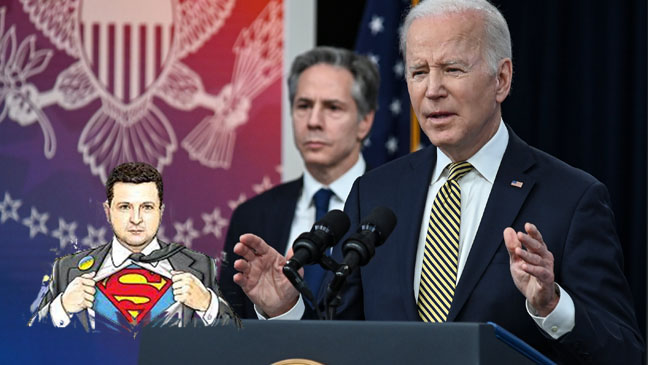
Biden staked his legacy on Ukraine. He was involved in the 2014 coup, in allegedly shady practices there with his son and then in provoking Russia to invade in 2022. He foolishly believed he would prevail in bringing down Putin with an economic, information and proxy ground war. [See: Biden Confirms Why the US Needed This War]
All three are now decisively lost as the U.S. — still under Biden — prepares for the end game. Biden’s only face saver is for Ukraine to get back some of its lost territory by trading for it with Russian territory it seized in Kursk this summer.
November 17, 2024 By Joe Lauria, Consortium News, https://consortiumnews.com/2024/11/17/on-way-out-reckless-biden-allows-deep-russia-strikes/
With his party decisively beat at the polls, the rejected president is gambling with regional security to preserve his ‘legacy’ and to saddle the incoming president, who wants to end the war, with a major new crisis, writes Joe Lauria.
As a parting shot to incoming U.S. President Donald Trump and Russian President Vladimir Putin, the defeated Joe Biden has defied the Pentagon by risking European and U.S. security with his decision announced Sunday to allow Ukraine to fire U.S. long-range missiles into Russian territory.
Just two months ago, in September, Biden had bowed to the realists in the Pentagon to oppose allowing long-range British Storm Shadow missiles from being fired by Ukraine deep into Russia out of fear it would lead to a direct NATO-Russia military confrontation with all that that entails.
Putin warned at the time in that British soldiers on the ground in Ukraine launching the British missiles into Russia with U.S. geostrategic support “will mean that NATO countries — the United States and European countries — are at war with Russia. And if this is the case, then, bearing in mind the change in the essence of the conflict, we will make appropriate decisions in response to the threats that will be posed to us.”
That was a clear warning that British and U.S. targets could be hit. Biden thus wisely backed off.
It was the second time that Biden had sided with the Pentagon against the neocons in his administration when it came to avoiding direct war with Russia.
The first time was in March 2022 when his neocon Secretary of State Antony Blinken stepped out of line to announce that the U.S. would give NATO-member Poland a “green light” to send Mig-29 fighter jets to Ukraine to enforce a no-fly zone against Russian aircraft.
Members of Congress and the media then piled the pressure on Biden to approve it until cooler heads at the U.S. Defense Department, the greatest purveyor of violence in history, stepped in to stop it.
Biden ultimately sided with the Pentagon, and he couldn’t be more explicit why. He opposed a NATO no-fly zone over Ukraine fighting Russian aircraft, he said, because “that’s called World War III, okay? Let’s get it straight here, guys. We will not fight the third world war in Ukraine.”
U.S. Defense Secretary Lloyd Austin at the time backed him up, saying:
“President Biden’s been clear that U.S. troops won’t fight Russia in Ukraine, and if you establish a no-fly zone, certainly in order to enforce that no-fly zone, you’ll have to engage Russian aircraft. And again, that would put us at war with Russia.”
But now Biden has reversed himself on his sensible positions and is defying the Pentagon to roll the dice that Russia’s warnings, repeated on Monday by Putin’s spokesman, won’t lead to nuclear conflict.
While he previously would not even authorize British long-range missile attacks into Russia in September, let alone U.S. ATACMS, on Sunday he authorized the ATACMS, risking Russia taking direct action against U.S. targets.
So what changed Biden’s addled mind?
An Undemocratic Democratic System
First, the undemocratic U.S. electoral system gave Biden the opportunity. His party was voted out of office on Nov. 5, but though the demos rejected Democrats in the White House they get to hang on in power for another 11 weeks, enough time to do considerable mischief to tie up the incoming administration that the people chose. (In a parliamentary system the new prime minister takes office on the next day and names the new cabinet well in advance of the election).
After one-term president George H.W. Bush lost to Bill Clinton in the 1992 election, Bush used those 11 weeks to invade Somalia, saddling Clinton with a foreign policy crisis that would bog him down and distract him from his agenda.
What’s happening now is something similar. Biden wants to undermine Trump’s effort to end the Ukraine war. The incoming vice president has floated the idea of Russia holding on to territory it has won in exchange for peace.
Biden staked his legacy on Ukraine. He was involved in the 2014 coup, in allegedly shady practices there with his son and then in provoking Russia to invade in 2022. He foolishly believed he would prevail in bringing down Putin with an economic, information and proxy ground war. [See: Biden Confirms Why the US Needed This War]
All three are now decisively lost as the U.S. — still under Biden — prepares for the end game. Biden’s only face saver is for Ukraine to get back some of its lost territory by trading for it with Russian territory it seized in Kursk this summer.
So he is authorizing U.S. soldiers to operate ATACMS missiles from Ukraine to beat back a 50,000-man Russian force seeking to take back all of that Russian territory. Part of that force, according to the Pentagon spokesman, is a contingent of at least 10,000 North Korean troops invited by Moscow, thus operating legally on pre-war Russian territory.
Yet the presence of these North Koreans has sent the Biden administration and its allied media into paroxysms of near insanity. The New York Times reported on Sunday:
“Officials said Mr. Biden was persuaded to make the change in part by the sheer audacity of Russia’s decision to throw North Korean troops at Ukrainian lines. He was also swayed, they said, by concerns that the Russian assault force would be able to overwhelm Ukrainian troops in Kursk if they were not allowed to defend themselves with long-range weapons.”
It is not like Biden doesn’t know the potentially grave consequences he is recklessly unleashing. He was already warned about the no-fly zone and said “that’s called World War III, okay?” He was then warned by the Pentagon against allowing the British missiles and acted like a responsible statesman.
But now, when it comes to his precious legacy, he doesn’t appear to give a damn about anything else. He was deprived of a second term (by traitors within his own party he no doubt thinks) and he will risk a NATO-Russia war to avoid the taint of utter defeat in Ukraine.
This is what he’s ignoring, according to the Times:
“Some of Mr. Biden’s advisers had seized on a recent U.S. intelligence assessment that warned that Mr. Putin could respond to the use of long-range ATACMS on Russian soil by directing the Russian military or its spy agencies to retaliate, potentially with lethal force, against the United States and its European allies.
The assessment warned of several possible Russian responses that included stepped-up acts of arson and sabotage targeting facilities in Europe, as well as potentially lethal attacks on U.S. and European military bases.”
Where it goes from there, nobody knows. Thanks, Joe.
What would Iran do: A race to the bomb or a deal with Trump?
A proposed censure of Iran for its lack of cooperation with the UN nuclear watchdog
raises important questions at a critical time after Donald Trump’s
reelection when Tehran faces regional weakness, economic pressure and
Israel.
The planned censure is likely going through despite Tehran offering
to cap its highly enriched uranium stock. France, Britain, Germany, and the
United States will introduce the resolution at Wednesday’s meeting of the
International Atomic Energy Agency (IAEA) Board of Governors despite, Iran
International has learned.
Iran and nuclear experts agree on one thing:
Trump’s return to the White House will have an impact on the Islamic
Republic, but whether and how the incoming administration and the Islamic
Republic may engage on the nuclear issue is up for debate.
Iran International 20th Nov 2024,
https://www.iranintl.com/en/202411203852
Iran has offered to keep uranium below purity levels for a bomb, IAEA confirms
Patrick Wintour Diplomatic editor, mhttps://www.theguardian.com/world/2024/nov/20/iran-has-offered-to-keep-uranium-below-purity-levels-for-a-bomb-iaea-confirms
UN inspectorate chief calls Tehran’s move a ‘concrete step in the right direction’, amid threat of restored sanctions.
Iran has offered to keep its stock of uranium enriched up to 60% – below the purity levels required to make a nuclear bomb – the head of the UN nuclear inspectorate, Rafael Grossi, has confirmed amid the threat of restored European sanctions over Tehran’s nuclear activities.
“I think this is … a concrete step in the right direction. We have a fact which has been verified by us. It is the first time Iran has agreed to take a different path,” Grossi said in Vienna on Tuesday.
The move negotiated by Grossi with Iranian officials, including the president, Masoud Pezeshkian, on a visit to Tehran last week is designed to head off a move at the IAEA board this week by European diplomats to request a comprehensive report on Iranian compliance that could lead to the snapback of UN sanctions. The agreement covering Iran’s nuclear activities formally expires in September, 10 years after it was negotiated in 2015.
A snapback would involve the reimposition of security council sanctions from earlier resolutions on Iran in the event of “significant non-performance” of Iran’s commitments under the nuclear deal.
“I went last week and I got something, and by moving step by step and getting concrete results the trajectory may be less confrontational,” Grossi said.
Iran’s foreign minister, Abbas Araghchi, has however hinted that the Iranian offer of a cap on enrichment might be withdrawn if the European powers – France, Germany and the UK – insist on commissioning the report. Grossi said he had spoken to Araghchi on Tuesday night but there had been no Iranian threat or warning during the conversation.
Araghchi said in a statement: “If the other parties ignore Iran’s goodwill and interactive approach and put non-constructive measures on the agenda at the meeting of the governing council through the issuance of a resolution, Iran will respond appropriately and proportionately.”
He said the offer to freeze the stockpile was a sign of goodwill, but the European powers are likely to regard the Iranian offer to cap the 60% stockpile as less groundbreaking than either Grossi or the Iranians do. Grossi clearly believes it is a sign of constructive progress after nearly two years of impasse.
He added that four new, experienced nuclear inspectors were being allowed into Iran.
European powers are worried both by Iran’s continued refusal to give IAEA inspectors access to its nuclear sites, and also by the steady increase in its stockpile of nearly weapons-grade uranium. The strikes and counter-strikes between Israel and Iran this year has led to a growing debate inside Iran whether it should drop the fatwa on producing a nuclear weapon, with some Iranian officials claiming they had already mastered most of the techniques necessary to do so. Iran has always claimed that its nuclear work is solely for peaceful civilian purposes.
Israel and the US have both said they will not allow Iran to acquire a nuclear weapon, but the incoming Trump administration has so far put the emphasis on tightening economic sanctions against Iran rather than a military attack on Iran’s nuclear sites.
In its latest report to the IAEA board, the IAEA said Iran’s stockpile of 60% enriched uranium had increased by 17.6kg to 182.3kg (402lbs). Assuming no change, that means Trump would enter office in January with Iran having enough nuclear fuel for four atomic bombs. It would take Iran just a few days to convert the 60% material into weapons-grade material.
Australian government gives firm ‘no’ to joining UK-US agreement to advance nuclear technology

The Conversation, November 19, 2024, Michelle Grattan, Professorial Fellow, University of Canberra
The Albanese government has been put on the spot by a new agreement – which it has declined to join – signed by the United Kingdom and the United States to speed up the deployment of “cutting edge” nuclear technology.
The original version of the British government’s press release announcing the agreement said Australia, among a number of other countries, was expected to sign it.
But the reference was removed from the statement.
The UK Energy Secretary Ed Miliband and the US deputy Secretary of Energy David Turk signed the agreement in Baku during COP29…….
A spokesperson for Energy Minister Chris Bowen, who is at the COP meeting, said: “Australia is not signing this agreement as we do not have a nuclear energy industry.
“We recognise that some countries may choose to use nuclear energy, depending on national circumstances.
“Our international partners understand that Australia’s abundance of renewable energy resources makes nuclear power, including nuclear power through small modular reactors, an unviable option for inclusion in our energy mix for decarbonisation efforts.”
Australia would remain as observers to the agreement to continue to support its scientists in other nuclear research fields, the spokesperson said………
In parliament, acting Prime Minister Richard Marles said for Australia to pursue a path of nuclear energy would add $1200 to the bills of each household in this country.
………………………Update: UK government seeks to clear things up
Later The Guardian reportred: “The UK government has conceded it made a mistake in including Australia in a list of countries that has signed up to a US-UK civil nuclear deal”. https://theconversation.com/albanese-government-gives-firm-no-to-joining-uk-us-agreement-to-advance-nuclear-technology-244041
High-Precision, Long-Range NATO Missiles Against Russia: Why Now?

Joe Quinn, Sott.net, Wed, 20 Nov 2024, https://www.sott.net/article/496207-High-Precision-Long-Range-NATO-Missiles-Against-Russia-Why-Now
Russia announced a change to its nuclear doctrine several months ago, where it can now respond with nuclear weapons to a non-nuclear attack on Russia by an enemy, either directly from enemy territory or from the territory of a third party. A notable caveat however is that such a response would only occur in the event that the attack “threatened the very existence of the Russian state”.
The changes were officially signed into law yesterday with the wording relevant to the conflict in Ukraine being “where the aggression creates a critical threat for the sovereignty and/or territorial integrity [of Belarus or the Russian Federation].
In this context, the Russians have also said that the use of nuclear weapons would also be permissible if an enemy attacked Russian forces in the context of the SMO in a way that definitively threatened the achievement of the objectives of the SMO.
In Sept. Putin said that NATO’s plan to allow Ukraine to use longer range Western precision weapons against Russian targets inside Russia would be evidence of direct NATO involvement in a war against Russia. And that Russia would respond appropriately.
Three days ago, “Biden” approved the use of longer range Western precision weapons against Russian targets inside Russia.
Two days ago, Ukraine fired 5 US-made longer range Western precision weapons (supersonic ATACMS ballistic missiles) at a military base 130kms into Southern Russia. According to the Russians, all 5 missiles were shot down, with one falling on the periphery of the missile base, starting a fire but doing no material or personnel damage.
While many have interpreted this attack as fulfilling the requirements for a Russian nuclear response, that is obviously not the case, for four reasons:
1) The attack did not, in any way, threaten the very existence of the Russian state
2) The attack did not, in any way, threaten the achievement of the objectives of the SMO.
3) The Biden admin has less than 2 months left in power.
4) Trump and his incoming team have made no secret of their intention to negotiate a near-future settlement to end the war in Ukraine.
What then, at this late stage, was the point in the ‘Biden’ admin authorizing the use of long range precision weapons against Russia and why do EU leaders continue to make repeated reference to EU citizens needing to prepare for a potential “war with Russia” and sending EU/NATO military forces to Ukraine, if there’s a reasonable chance of a peaceful settlement of the conflict under the Trump admin?
The problem is how any ‘settlement’ would play out.
First (see map) Russia will not settle for anything less than the four regions it has already incorporated into its territory (including the “demilitarization and denazification of Ukraine”). In addition, a demilitarized buffer zone (of some distance) would be necessary extending out from these regions and away from the Russian and Belarusian borders to the North.
NATO and EU nations would, undoubtedly, insist on militarily occupying (“peacekeepers”) the rest of Ukraine beyond these zones, but such a presence would create an uneasy, and potentially dangerous, peace for some time to come. Hence the talk of sending their military forces to Ukraine and possible/eventual ‘war with Russia’.
Of note in this respect is yesterday’s announcement that the ‘Biden’ admin will begin sending anti-personnel landmines to Ukraine to “blunt the advancement of Russian troops”. Interestingly, the mines are said to be “nonpersistent” design, meaning they become inactive within weeks of deployment. Why now? Russian troops have been advancing, in one form or another, for most of the war. Why would NATO/Ukraine want to deploy anti-personnel mines that last for only a few weeks?
Much like the use of precision long-range weapons, the use of “non-persistent” anti-personnel mines now is more likely to be part of a strategy for a negotiation settlement, than to effect any significant change on the current battlefield.
The point of authorizing (and using) both NATO long range precision weapons against Russia and anti-personnel mines now is in preparation for expected negotiations after Jan 6th.
By using these weapons and calling Russia’s ‘nuclear bluff’, (while also being careful not to push too far) NATO expects that Russia will be forced to accept them as a de facto (rather than theoretical) part of Ukraine/NATO’s arsenal against Russia, and thereby provide NATO with a more favorable basis for negotiations.
Biden Ramps Up Nuclear Brinkmanship On His Way Out The Door
Caitlin Johnstone, Nov 18, 2024, https://www.caitlinjohnst.one/p/biden-ramps-up-nuclear-brinkmanship?utm_source=post-email-title&publication_id=82124&post_id=151801494&utm_campaign=email-post-title&isFreemail=true&r=1ise1&triedRedirect=true&utm_medium=email
The New York Times reports that the Biden administration has authorized Ukraine to use US-supplied long-range missiles to strike Russian and North Korean military targets inside Russia — yet another dangerous escalation of nuclear brinkmanship in this horrific proxy war.
The Times correctly notes that authorizing Ukraine to use ATACMS, which have a range of about 190 miles, has long been a contentious issue in the Biden administration for fear of provoking military retaliations against the US from Russia. This reckless escalation has been authorized despite an acknowledgement from the anonymous US officials who spoke to The New York Times that they “do not expect the shift to fundamentally alter the course of the war.”
As Antiwar’s Dave DeCamp notes, Vladimir Putin said back in September that if NATO allows Ukraine to use western-supplied weapons for long-range strikes inside Russian territory, it would mean NATO countries “are at war with Russia.” This is about as unambiguous a threat as you’ll ever see.
NYT reports that Biden’s policy shift “comes two months before President-elect Donald J. Trump takes office, having vowed to limit further support for Ukraine.” And it is here worth noting that last week it was reported by The Telegraph that British PM Keir Starmer and French President Emmanuel Macron had been scheming to thwart any attempt by Trump to scale back US support for Ukraine by pushing Biden to authorize long-range missile strikes in Russian territory.
But it is also true that the day before the US election Mike Waltz, Trump’s next national security advisor, had himself endorsed the idea of authorizing long-range missile strikes into Russia with the goal of pressuring Moscow to end the war. His plan for disentangling the US from the conflict entails ramping up sanctions on Russia and “taking the handcuffs off the long-range weapons we provide Ukraine” in order to pressure Putin into eagerly accepting a peace deal.
So while this is being framed as an administration that’s more hawkish on Russia executing a maneuver that’s designed to hamstring the peacemongering of an incoming administration that’s less favorable to assisting Ukraine, in reality it may just be goal-assisting the next administration in a policy change it had planned on implementing anyway.
Either way, it’s insane. Putin ordered changes to Russia’s nuclear doctrine in September in order to ward off these sorts of escalations by lowering the threshold at which nuclear weapons could be used to defend the Russian Federation, and they’re just barreling right past that bright red line like they barreled over the red lines which led to the invasion of Ukraine. And the fact that they’re adding yet another nuclear-armed state into the mix with North Korea is just more gravy for the nuclear brinkmanship pot roast.
At one point in 2022, US intelligence agencies reportedly assessed that the odds of Russia using a nuclear weapon in Ukraine was as high as fifty percent, but the Biden administration kept pushing forward with this proxy war anyway. These freaks are taking insane risks to advance agendas that stand to yield the slimmest of benefits even by their own assessments.
We are living in dark and dangerous times.
Moscow continues to warn the West about the risk of nuclear escalation
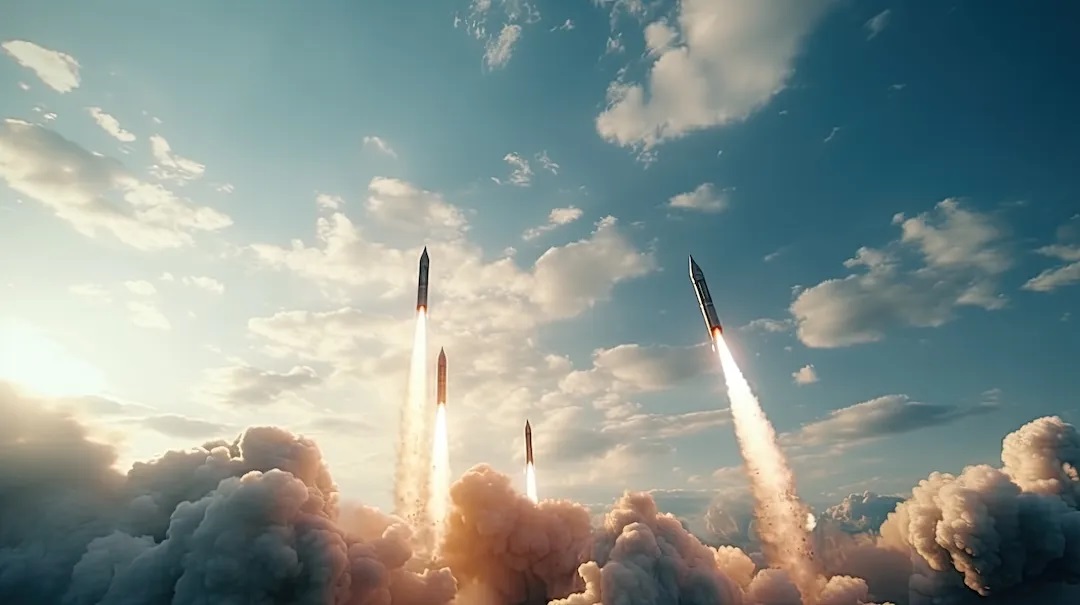
Tensions over the issue of “deep” strikes continue to escalate. Kiev continues to demand permission to strike targets in the Russian Federation’s demilitarized zone, while Moscow continues to make it clear that it will interpret such maneuvers as a declaration of war by NATO. In a recent statement, Maria Zakharova, the spokeswoman for the Russian Foreign Ministry, emphasized how Ukrainians and their partners are “playing with fire” with such threats, promising an “immediate and devastating” response in the event of a long-range strike.
The Russian government has repeatedly stated that the long-range weapons systems supplied by the West to Ukraine cannot be operated without the presence of NATO specialists, who would provide the necessary training and logistical support to the Ukrainians. This is because such weapons are not compatible with the Ukrainian military infrastructure, which depends on continuous intelligence support and strategic guidance provided by the Atlantic alliance. Moscow’s position is clear: authorizing the use of these missiles for strikes outside the official conflict zone, in addition to representing an expansion of Western involvement, would constitute direct NATO intervention in the conflict. Russia would regard any use of these weapons in such circumstances as a direct aggression against its sovereignty by the Western countries themselves, which would require an “immediate and devastating” retaliation.
The discussion about the deployment of Storm Shadow missiles and other advanced weapons systems in “deep” Russian territory is a clear demonstration of the dangerous game the West is playing, ignoring all the limits imposed by Russia. NATO’s role in the war in Ukraine has been a sensitive issue since the beginning of the conflict. Although Western powers insist on their position of supporting Ukraine as a legitimate right to defend it against what they call a Russian “invasion”, many analysts and officials point out that the interventions of the powers of the Atlantic alliance, both in terms of weapons and intelligence, have led to an unnecessary prolongation of the conflict, dragging Ukraine into a proxy war that puts the world on the brink of a nuclear confrontation.
By offering more powerful and sophisticated weapons, the West is not only strengthening Kiev’s military capabilities – which seem to have little strategic relevance at the moment – but also risks turning the local conflict into a war of global proportions. Moscow’s concern is legitimate, considering that the absence of limits on Western involvement in Ukraine could lead to a situation of unrestricted aggression against the Russian people, including even demilitarized cities far from the zone disputed by Kiev.
Indeed, the eventual authorization of the use of long-range missiles against targets deep inside Russia would place Moscow and NATO facing the near inevitability of a nuclear confrontation. As spokeswoman Zakharova has made clear, Russia is on high alert for the use of advanced missiles against its territory. Moscow has repeatedly stated that if such attacks occur, Russia’s response will be strong and decisive. This would not only imply a military escalation, but also a redefinition of relations between Russia and the West, with the possibility of unpredictable consequences for international stability.
The recent changes in Russia’s nuclear doctrine, allowing a nuclear response to deep strikes by non-nuclear powers supported by nuclear states (just like in the Ukraine-NATO case), were a clear attempt by Moscow to de-escalate the current situation through rhetoric and indirect deterrence. At first, the measure seemed sufficient to calm public pressure from some NATO figures for the authorization of the strikes. However, it is difficult to predict what the Democratic “administration” plans to do in its final days in power, and it is possible that Biden and his team will go into “suicide mode” and put the entire global security architecture at risk, despite Russian warnings.
In the end, Western powers need to reconsider their actions before it is too late. The escalation of the conflict and the lack of dialogue only increase the risk of a global catastrophe. Russia, for its part, continues to prepare to defend its people and its sovereignty, knowing that diplomacy, despite difficult, remains the only viable alternative to avoid a total collapse of the international order. However, once diplomatic means have been exhausted, the Russians will take whatever measures are necessary to respond appropriately to the violation of its red lines.
Putin Tells German Leader That Ukraine Peace Deal Possible
Russian President Vladimir Putin spoke with German Chancellor Olaf Scholz for the first time in two years on Friday
by Kyle Anzalone November 15, 2024 https://news.antiwar.com/2024/11/15/putin-tells-german-leader-that-ukraine-peace-deal-possible/
Russian President Vladimir Putin held a phone call with German Chancellor Olaf Scholz and offered to end the war in Ukraine. The Russian leader offered a deal similar to one proposed by Moscow in June.
On Friday, Scholz spoke with Putin for the first time in nearly two years. According to the Kremlin, “The Russian president noted that the Russian side has never refused and remains open to the resumption of the negotiations that were interrupted by the Kiev regime.” Adding, “Russia’s proposals are well known and outlined, in particular, in a June speech at the Russian Foreign Ministry.”
In that speech, Putin said that if Ukrainian forces withdrew from all Russian annexed territory, adopted a position of neutrality between NATO and Russia, agreed to denazification and demilitarization of the country, and the lifting of all Western sanctions on Moscow, then Russia would bring the war to an end.
Scholz’s spokesman said that the German and Russian leaders agreed to remain in contact. The official added that Scholz “condemned the Russian war of aggression against Ukraine and called on President Putin to end it and withdraw his troops.” He also told Putin, Berlin maintains “steadfast determination” to support Ukraine for “as long as is necessary.”
Throughout the Joe Biden administration, the West has refused to talk with Moscow about core national security issues. The refusal to negotiate throughout 2021, led Putin to invade Ukraine in the beginning of 2022. After the initial Russian invasion of Ukraine, a deal was nearly reached, but Kiev has been pushed away from negotiations by its Western backers.
After over two and a half years of war, Kiev is struggling to find the manpower to continue the fight while losing territory to the Russian military. Though NATO countries pledged to give Ukraine everything it needed to win the war, Washington has refused to provide Ukraine with advanced weapons and long-range missiles Kiev says it needs to achieve a victory.
Blinken Atrocious in a Dangerous World

Through his various sojourns, the point was always clear. Israel was to be mildly rebuked, if at all, while Hamas was to be given the full chastising treatment as killers without a cause.
November 15, 2024, by: Dr Binoy Kampmark, https://theaimn.com/blinken-atrocious-in-a-dangerous-world/#google_vignette
It is hard to credit one of the least impressive Secretary of States, the United States has ever produced with any merit other than being a plasterwork that, from time to time, moved with caution on the world stage for fear of cracking. On the stage, Antony Blinken’s brittle performances have been nothing short of unimpressive, notably in pursuing such projects comically titled “Peace in the Middle East.” Each time he has ventured to various regions of the world, the combatants seem keener than ever to continue taking up arms or indulging in slaughter.
A sense of Blinken’s detachment from the world can be gathered from his Foreign Affairs piece published on October 1, intended as something of a report on the diplomatic achievements of the Biden administration. It starts with the sermonising treacle that is all a bit much – the naughty states on the world stage, albeit small in number (Russia, Iran, North Korea and Chin
The Biden administration had, in response, “pursued a strategy of renewal, pairing historic investments in competitiveness at home with an intensive diplomatic campaign to revitalize partnerships abroad.” This served to counter those challengers wishing to “undermine the free, open, secure, and prosperous world that the United States and most countries seek.” Then comes the remark that should prompt readers to pinch themselves. “The Biden administration’s strategy has put the United States in a much stronger geopolitical position today than it was four years ago.”
An odd assessment for various reasons. There is the continued war in Ukraine and Washington’s refusal to encourage any meaningful talks between Kiev and Moscow, preferring, instead, the continued supply of weapons to an attritive conflict of slaughter and such acts of industrial terrorism as the attack on the Nord Stream pipeline.
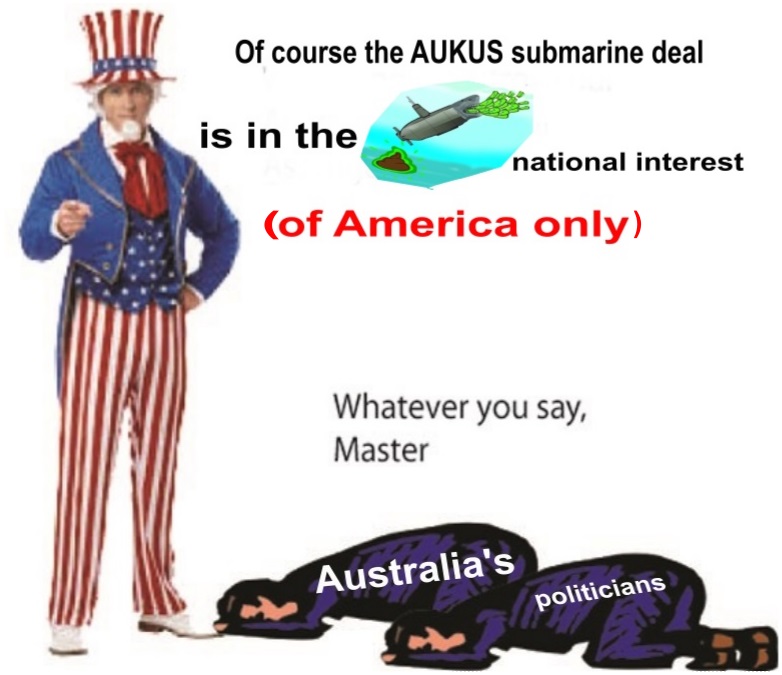
There has been the relentless watering down of the “One China” understanding over the status of Taiwan, along with continued provocations against Beijing through the offensive pact of AUKUS with Australia and the UK. That particularly odious pact has served to turn Australia into a US military garrison without the consent of its citizens, an outcome sold to the dunces in Canberra as utterly necessary to arrest the rise of China. Along the way, an arms buildup in the Indo- and Asia-Pacific has been encouraged.
With such a view of the world, it’s little wonder how blind Blinken, and other members of the Biden administration, have been to Israel’s own rogue efforts at breaking and altering the international system, committing, along the way, a goodly number of atrocities that have seen it taken to the International Court of Justice by South Africa for committing alleged acts of genocide.
Through his various sojourns, the point was always clear. Israel was to be mildly rebuked, if at all, while Hamas was to be given the full chastising treatment as killers without a cause. When the barbarians revolt against their imperial governors, they are to be both feared and reviled. In June this year, for instance, Blinken stated on one of his countless missions for a non-existent peace that Hamas was “the only obstacle” to a ceasefire, a markedly jaundiced explanation given the broader programs and objects being pursued by the Israeli Defence Forces. Hamas has been accused of being absolutist in its goals, but one can hardly exempt Israeli Prime Minister Benjamin Netanyahu from the charge. Not for Blinken: “I think it is clear to everyone around the world, that it’s on them [Hamas] and that they will have made a choice to continue a war that they started.”
On the issue of aid to Gaza’s strangled, dying population, Blinken has been, along with his equally ineffectual colleague in the Pentagon, Defense Secretary Lloyd Austin, cringingly ineffective. Their October 13 letter sent to their Israeli counterparts made mention of several demands, including the entry of some 350 aid trucks into Gaza on a daily basis, and refraining from adopting laws, now in place, banning the UN Agency for Palestinian Refugees (UNRWA). Each demand has been swatted back with a school child’s snotty petulance, and aid continues being blocked to various parts of Gaza.
On October 24, Americans for Justice in Palestine Action (AJP Action) “urgently” called on the Secretary of State “to stop wasting his time with failed diplomatic visits and to demand an immediate ceasefire in Gaza and Lebanon.” Those at AJP Action must surely have realised by now that Blinken would be utterly rudderless without those failed visits. Indeed, Osama Abu Irshaid, Executive Director of the organisation, went so far as to say that “Blinken’s diplomatic theatre is enabling Netanyahu’s war crimes.” To arm and fund Israel “while requesting a ceasefire” was a policy both “hypocritical and ineffective.” Such is the nature of that sort of theatre.
In the meantime, the tectonic plates of international relations are moving in other directions, a point that has been aided, not hindered, by the policy of this administration. Through BRICS and other satellite fora, the United States is finding itself gradually outpaced and isolated, even as it continues to hide behind the slogan of an international rules-based order it did so much to create. This is not to say that the US imperium has quite reached its terminus. If anything, the Biden administration, through the good offices of Blinken, continues to insist on its vitality. But US hegemony long left unchallenged is, most certainly, at an end.
Trump 2.0 promises US enabled Israeli genocide on steroids.

Walt Zlotow, West Suburban Peace Coalition, Glen Ellyn IL, 15 Nov 24
President Biden set a high bar for enabling Israeli genocide in Gaza. Like Israeli Prime Minister Benjamin Netanyahu, Biden didn’t’ lift a finger to bring the remaining 97 Israeli hostages back safely from Gaza. But he’s used over 50,000 tons of weapons, costing over $18 billion for Israel to complete the genocidal ethnic cleansing of Gaza.
He did nothing to force Israel to provide food, water and medicine to the 2,300,000 sick and starving Palestinians (less the 100,000 or so already dead) as a condition for supplying genocide weapons. On October 12th he issued a demand giving Israel 30 days to start allowing in life saving supplies. When Israel did nothing to comply, Biden essentially said ‘Just kidding about the consequences….keep up the genocide.’
But at least Biden said a ceasefire along with food and medicine were needed to stop the Palestinians’ suffering.
Unlike Biden, Trump will continue US genocide enabling without the veneer of sympathy for its victims. He repeatedly demands that Israel “Finish the job” in Gaza.
His picks on foreign policy promise even more genocide in Gaza compared to Biden’s tough act to follow.
Trump tabbed uberhawk Mike Waltz to be his National Security Advisor. Waltz is totally against ceasefire, charging it will only lead to larger Middle East war, when it’s only the ongoing genocide in Gaza fueling it. He’s a huge fan of Netanyahu’s conduct of the genocide, claiming Biden has been too reactive compared to Netanyahu’s proactive aggression.
Pete Hegseth, Trump’s pick to run Defense, is all in for Israeli expanding the genocide in Gaza and bombing of Lebanon, to take out Iranian nuclear sites. He’s enamored of Israeli bombing and assassinations in Iran because he charges Biden is too weak to do it. He carries visible symbols of his beliefs—a large Crusader’s Jerusalem Cross tattoo on his chest and the biblical verse Matthew 10:34, which reads, “Do not suppose that I have come to bring peace to the earth. I did not come to bring peace but a sword.” When in charge of Defense, Hegseth should change its name to Department of Endless War and Genocide.
Trump’s selection of Marco Rubio to head the State Department is equally dreadful. Rubio defends the ongoing Israeli genocide in Gaza saying “Israel’s enemies are also our enemies. The Iranian regime and its proxies – Hamas in Gaza, Hezbollah in Lebanon, the Houthis in Yemen and a multitude of groups in Syria and Iraq seek Israel’s destruction as part of a multi-stage plan to dominate the Middle East and destabilize the West. The Jewish state is on the front lines of this conflict, fighting with many shared American-Israeli lives.” Rubio would be more accurate in saying ‘Israel is on the front lines of genocide.’
But Trump’s pick of Mike Huckabee to be Ambassador to Israel trumps even Waltz, Hegseph and Rubio for genocidal support. Huckabee, a Christian Evangelist claims “There is no such thing as a West Bank. It’s Judea and Samaria. There’s no such thing as a settlement. They’re communities, they’re neighborhoods, they’re cities. There’s no such thing as occupation….there’s no such thing as a Palestinian.”
As grotesque as Biden’s enabling of Israeli genocide in Gaza is…Trump 2.0 figures to be much worse.
Trumped: $9B to US and UK shipyards … but why not make Australia make again?

The Government is shy on spending money on a steel works which they would have complete control over, in terms of success, but are happy to recklessly throw money at US shipyards.

Senator David Shoebridge: “The AUKUS submarine deal is a non-refundable $368 billion gamble on the goodwill of some future US President, and the US just elected Donald Trump. You only need to put these two facts side by side to realize what a disaster the whole thing is.”
by Rex Patrick | Nov 16, 2024, https://michaelwest.com.au/aukus-9b-to-us-and-uk-shipyards-but-wait-theres-more/
Make Australia Make Again?
The future of Whyalla’s steelworks is of vital national importance and should matter to all of us. It is critical to Australia’s manufacturing, construction and national security and resilience.
Being frank, the steelworks are in dire straits. They are 60 years old and have been on a rocky road for well over a decade. Its blast furnace has been out of action for over six months now, and whilst there is some optimism that they will get it back up and running it will not change the fact that the steelworks have been in operation for some six decades.
In 2016 when the previous owner, Arrium, went into administration with $4 billion in debts, UK billionaire Sanjeev Gupta’s GFG Alliance bought the steelworks making lots of big promises for a bright future, but it was not to be. At the turn of the decade Greensill Capital, GFG’s financier, collapsed and there’s been trouble ever since.
As it stands, the future of the steelworks, and Whyalla, is in the hands of a court entangled foreign billionaire with a gaping chasm between his promises and delivery. Those promises of a 21st century industrial transformation look very much like ever receding mirages.
The Federal Government needs to have the SA Government bring matters to a head by putting GFG’s South Australian operations into administration (by calling for unpaid and overdue mining royalties), taking an equity stake in the steelworks alongside someone like BlueScope Steel, and investing the necessary billions to build a new green steel industry for Australia.
It would be a part of Make Australia Make Again.
Make America Great Again!
Prime Minister Albanese’s focus is on investment in US industry, not Australian industry.
In September 2023 the Federal Government announced it was pouring $4.7 billion ($US3B) into the US submarine industrial base to assist the largest economy in the world get their submarine production rate up to 2.3 subs per annum (from the current rate of 1.4 subs).
Some $1.5 billion will be paid to the US this financial year, and $1.8 billion next financial year. The remaining $1.4B will follow thereafter.
The Government is shy on spending money on a steel works which they would have complete control over, in terms of success, but are happy to recklessly throw money at US shipyards.
Go figure!
Make Great Britain Great Again Too!
That’s not the end of the story though.
The British are in on this deal of a lifetime too. They’ve managed to pull $4.4B (£2.4 billion) over the next decade from Australian consolidated revenue.
There is no clawback on payment to the United Kingdom either.
Everyone must be feeling pretty chuffed in Groton, Connecticut, and Barrow-in-Furness, England.
But Wait, There’s More!
Whilst the Federal Government has been open about the totals, albeit with a little ‘encouragement’ from Green’s Senator David Shoebridge at Senate Estimates, there’s a dark secret being withheld from the Parliament and the public.
There’s more ‘shared’ cost to come.
FOI returns from the US Department of the Navy reveal that behind the scenes the three AUKUS government participants have been negotiating trilateral cost sharing principles to guide future cost sharing negotiations.
Whilst the Federal Government has been open about the totals, albeit with a little ‘encouragement’ from Green’s Senator David Shoebridge at Senate Estimates, there’s a dark secret being withheld from the Parliament and the public.
There’s more ‘shared’ cost to come.
FOI returns from the US Department of the Navy reveal that behind the scenes the three AUKUS government participants have been negotiating trilateral cost sharing principles to guide future cost sharing negotiations.
Senator David Shoebridge backed this in telling MWM, “Why on earth do cost-sharing principles need to be secret? Of course they should be made public.”
He went on to comment, “Once again, we get more transparency on AUKUS out of the US than Australia.“
“The one-sided secrecy is because the US has a whole lot less to be embarrassed about than Australia. They are the ones getting all our money after all.”
Transactional Trump
Transactional Trump
The approved appropriations in the US for enhancing their submarine industrial base through upgrades as well as recruitment and training of thousands of additional workers amount to $US14.7B. Australia adds another $US3B to that. But the total the US administration is seeking for this work is in the order of $US28.4B.
Of course, there is some quid quo pro in all of this with the Australia Government having committed to spending $8 billion upgrading HMAS Stirling near Rockingham to support the operations of UK and US nuclear powered submarines from 2027, and possibly Australian nuclear submarines from 2035.
There is a danger under the incoming Trump administration that the President will seek a greater contribution from Australia – just as he has demanded that members of NATO pull their weight. And it will be a case of having no choice but to pay, no matter the cost sharing principles negotiated, because our Defence Department simply has no Plan B.
Senator Shoebridge commented, “The AUKUS submarine deal is a non-refundable $368 billion gamble on the goodwill of some future US President, and the US just elected Donald Trump. You only need to put these two facts side by side to realize what a disaster the whole thing is.”
Ships and Steel
Meanwhile, as Australian money is being tossed around the US and UK like it’s free, Albanese is sitting on his hand on the issue of green steel manufacturing in Whyalla.
Anthony Albanese says he wants to revitalise manufacturing and Make Australia Make Again. But in this topsy-turvey world, he’s instead working to deliver on Donald Trump’s slogan to Make America Great Again.
Small Modular Reactors / Commercial Viability Needs To Be Improved, Says Swiss Thinktank – for a better “Nuclear Ecosystem”

Part three on catalysing investment calls for the creation of “innovative financing mechanisms”, the use of public-private partnerships and for the inclusion of nuclear in [?] clean investment taxonomies, such as environmental, social and governance classifications.
developed by “stakeholders from across the nuclear ecosystem”.
World Economic Forum says ‘innovative financing mechanisms’ needed for deployment
NucNet, By David Dalton, 11 November 2024
The commercial viability of small modular reactors (SMRs) needs to be improved with partnerships between the public and private sector needed to help move projects to deployment, according to a report from the World Economic Forum (WEF), in collaboration with nuclear industry experts.
The report, A Collaborative Framework for Accelerating Advanced Nuclear and Small Modular Reactor Deployment, was published by WEF, a Switzerland-based thinktank, with management consultancy Accenture.
WEF said the report provides a framework to support the deployment of SMRs and other types of advanced of nuclear reactor.
The framework, according to WEF, “is a tool that can align stakeholders on key actions and strategies within nine priority areas to accelerate deployment”, and was developed by “stakeholders from across the nuclear ecosystem”.
The report said small modular reactor and microreactor developers highlight their freedom to rely entirely on private capital, thereby shielding taxpayers from financial risk. But it warned: “Public-private partnerships are crucial for developing enabling policies, driving modernisation of regulations and building a supply chain to deliver advanced nuclear and SMRs at scale.”
WEF’s framework has a three-part process for accelerating the deployment of SMRs and advanced reactors.
Part one is the “emergence” of the advanced nuclear and SMR market, part two is the delivery of advanced reactors and SMRs at scale, and part three is the financing of the reactors.
Under part one, WEF called for the modernisation of regulation, the automation of regulatory processes and aligning of regulatory bodies.
Part two, covering the delivery of the reactors at scale, suggests actions including the repurposing of existing infrastructure, colocation of reactors with current energy systems, engagement with communities throughout projects, and the preparation of supply chains.
It also suggests identifying skills gaps and partnerships between industry and educational institutions.
Part three on catalysing investment calls for the creation of “innovative financing mechanisms”, the use of public-private partnerships and for the inclusion of nuclear in clean investment taxonomies, such as environmental, social and governance classifications……………….. https://www.nucnet.org/news/commercial-viability-needs-to-be-improved-says-swiss-thinktank-11-1-2024
Australia US Alliance: Is It Time to Rethink Our Loyalty?
November 10, 2024, by: The AIM Network, By Denis Hay
Australia US alliance has costs. Learn how this impacts Australians and how reallocated funds could benefit citizens.
Introduction
Australia and the United States have been strategic allies for over seventy years. This Australia US alliance, often celebrated with the phrase “old allies and true friends,” is rooted in shared history and mutual defence agreements like the ANZUS Treaty.
However, many Australians are now questioning if the costs of this alliance—both in terms of military and economic impact—outweigh the benefits. This article explores the consequences of Australia’s allegiance to the U.S., the human costs of U.S. interventions, and how Australia’s financial resources might better serve its citizens’ social well-being.
1. The Costly Legacy of the Australia-U.S. Alliance
– Historical Overview: Australia US alliance began formally with the ANZUS Treaty in 1951. Through wars in Korea, Vietnam, Iraq, and Afghanistan, Australia has stood beside the U.S., incurring both financial costs and human losses.
– Casualty Estimates: The human toll of this alliance is staggering. The wars led by the U.S. have resulted in estimated casualties of over 200,000 American troops, 60,000 Australian troops, and millions of civilians globally. For instance, the Iraq War alone caused around 500,000 civilian deaths and displaced over 3 million people.
– The Refugee Crisis: The consequence of U.S.-led wars has been a refugee crisis affecting countless lives. Countries like Syria, Iraq, and Afghanistan have seen millions of citizens fleeing war zones, often with little support from Western nations. Australia’s involvement in these wars contributes to a moral responsibility for the refugee influx, yet the country struggles to support displaced persons adequately.
2. The Social Cost of Alliance-Bound Military Spending
– Military Expenditures at the Cost of Social Welfare: Australia’s defence budget has increased significantly, with estimates of $48.7 billion given in 2023. Much of this spending is tied to keeping military readiness to support the U.S. in conflicts. These funds could otherwise enhance healthcare, education, and housing for Australians.
Military funding without public transparency.
– Impact on Public Services: Redirecting even a part of the defence budget could fund initiatives like universal healthcare, improved mental health services, and housing for the homeless. For example, just 10% of the current defence budget could support building 10,000 public housing units annually or fund a significant expansion of mental health services for underserved communities.
– Consequences of Refugee and Displacement Crises: Australia’s participation in U.S.-led interventions indirectly contributes to refugee crises that strain social services and humanitarian aid. Public sentiment on immigration has also been affected, often creating divisive views within Australian society about who should be supported and who is viewed as a “burden.”
3. A Call for a More Independent and Socially Conscious Foreign Policy
Australia’s alliance with the United States has provided strategic support over the decades, yet many argue that it is time for Australia to pursue a foreign policy that is more reflective of its own interests, values, and the well-being of its citizens.
Despite growing public interest in a more independent, socially conscious approach, Australian governments have hesitated to diverge significantly from U.S.-aligned policies. This reluctance may stem from multiple factors:
1. Fear of Political and Economic Repercussions:
– Australian policymakers often cite strategic security concerns as a reason for adhering closely to U.S. foreign policy, fearing that any independence might jeopardize Australia’s access to American intelligence, technology, and defence resources.
– Economically, a close alliance with the U.S. bolsters trade relations and provides access to powerful American markets. For some politicians, the potential economic fallout of alienating a significant trading and security partner outweighs the call for a more independent stance.
2. Lack of Political Courage and Vision:
– Some critics argue that the Australian government lacks the courage to challenge established norms or take bold steps toward an independent foreign policy. This lack of vision may stem from a longstanding alignment with U.S. interests that has become entrenched in Australia’s political and diplomatic culture.
– Breaking away from such a powerful ally requires a willingness to redefine national priorities, a path that requires courage, strategic foresight, and often a willingness to face criticism from powerful interest groups invested in maintaining the alliance.
3. Disconnect from Public Opinion:
– Surveys show that Australians increasingly favour a more balanced, socially conscious approach to foreign policy, especially as they see the domestic impact of military spending and U.S.-influenced policies. However, successive Australian governments have often ignored this sentiment, raising questions about whether the government genuinely prioritizes the public’s voice in its decisions…………………………..
4. Influence of External Powers and Lobbying:
– Australian foreign policy decisions are also influenced by lobbying from powerful industries, including defence contractors and political think tanks with ties to the U.S. These entities often push for policies that favour a strong alliance with the U.S., as it aligns with their economic and strategic interests.
– The cumulative effect of these influences can stymie efforts for a more independent policy path, effectively sidelining the public’s desire for a foreign policy that prioritizes social well-being and peaceful diplomacy.
In summary, Australia’s reluctance to adopt a more independent, socially conscious foreign policy is a combination of economic dependency, political caution, and a systemic disconnect from the will of the people.
For Australia to shift toward a foreign policy that truly serves its citizens, it would require not only a realignment of political priorities but also a renewed commitment to placing the public’s interests and values at the heart of its foreign relations.
1. The Historical Basis of Australia-U.S. Relations and Its Human Cost……………………………………………….
2. Australia’s Position on U.S. Leaders and Policies
– Unquestioned Loyalty: Australian leaders often affirm support for U.S. presidents and foreign policies without critical evaluation. This approach reflects a hesitancy to challenge U.S. decisions even when they conflict with Australia’s best interests.
– Impact on Australian Sovereignty: The uncritical acceptance of Australia US alliance policies can undermine Australia’s autonomy. For example, Australia’s alignment with U.S. policies on China has strained trade relationships, affecting vital economic sectors like agriculture, tourism, and education. The result is a compromise of national interests to support a symbolic “alliance.”
3. U.S. Military Interventions, Global Casualties, and the Refugee Crisis
– Scope of U.S.-Led Wars: The U.S. has been involved in conflicts worldwide, from the Middle East to Latin America and beyond, often resulting in widespread devastation. These conflicts have had lasting impacts, including millions of civilian deaths and widespread destruction.
– The Refugee Crisis and Australia’s Responsibility: Australia’s support for U.S. interventions creates a moral obligation to help refugees from war-torn countries. However, current refugee policies fall short, leaving many displaced people without adequate support or protection. Accepting more refugees from conflict zones would reflect Australia’s commitment to international human rights and fulfill part of its alliance-driven responsibility.
4. Australia’s Role as a Supporting Partner and Its Consequences
– Participation in Conflicts and Reputational Impact: Australia’s involvement in U.S. wars affects its international reputation, often casting the country as a secondary player rather than an independent, neutral voice in global politics. This alignment can make Australia appear complicit in conflicts driven by U.S. interests, compromising its image as a peaceful nation.
– Economic and Social Impact on Australians: By aligning with U.S. defence priorities, Australia diverts significant public money to defence spending, reducing resources for vital services. Citizens bear the costs through reduced access to affordable healthcare, housing shortages, and an underfunded education system. The pressure to conform to U.S. policies, especially in the Indo-Pacific, risks escalating regional tensions that could directly affect Australians.
5. The Opportunity Cost: How Reallocating Military Spending Could Benefit Australians……………………………………………………………..
Rethinking Australia’s Foreign Policy Approach for the Future
As global dynamics shift, Australia faces a critical juncture in deciding how to position itself on the world stage. A key element of this decision lies in its relationship with China, a rapidly growing economic and political power in the Indo-Pacific region.
While the Australia US alliance has historically shaped much of Australia’s foreign policy, the rise of China presents an opportunity for Australia to pursue a balanced, independent approach that prioritizes regional stability and mutual benefit.
1. China’s Role as Australia’s Major Trading Partner:……………………………………….
2. Promoting Regional Stability and Security:
– As a dominant power in the Indo-Pacific, China’s influence on regional security is substantial. Building a constructive, diplomatic relationship with China could position Australia as a mediator and stabilizer within the region, promoting dialogue over conflict.
– With rising tensions between the U.S. and China, Australia has a unique opportunity to champion a foreign policy that values peace, cooperation, and shared interests, rather than one that escalates division. This approach would reduce the risk of Australia being drawn into potential conflicts that do not serve its national interests.
3. Economic and Diplomatic Benefits of Non-Alignment:………………………….
4. Preparing for a Multipolar World:
– The global power landscape is shifting from U.S.-led dominance to a multipolar world where countries like China, India, and emerging economies play a larger role. For Australia, recognizing and adapting to this reality is crucial for staying relevant and resilient in the international arena…………………………….
Conclusion
Australia US alliance has served strategic purposes in the past, but as global dynamics shift, it’s vital to reassess whether the benefits of this alliance outweigh the costs. The loss of lives, the displacement of millions, and the diversion of public money from critical social services highlight the urgent need for a foreign policy that prioritizes Australia’s long-term interests and humanitarian values.
By adopting a more independent stance, Australia could enhance the social well-being of its citizens and contribute to a more peaceful, stable global community. https://theaimn.com/australia-us-alliance-is-it-time-to-rethink-our-loyalty/
Everybody Wants to Join BRICS
CounterPunch, November 9, 2024 Eve Ottenberg
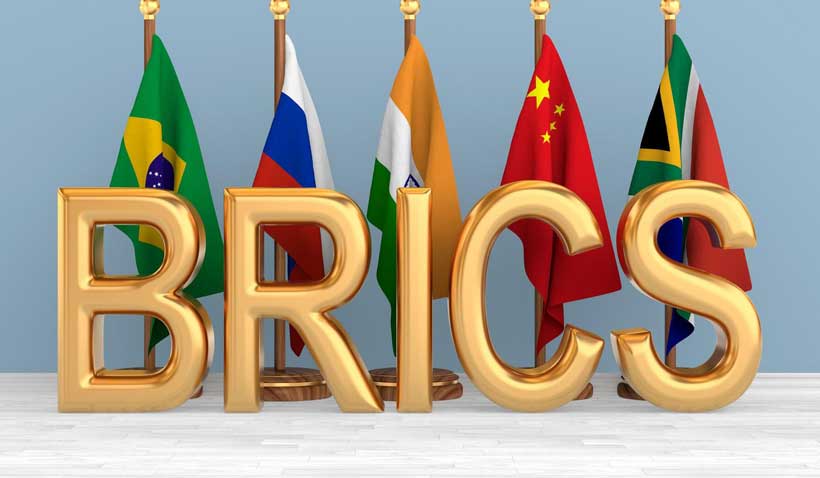
If there’s one thing the recent BRICS summit in Kazan revealed, it’s that when you divide the world into the West and the Rest, the Rest is a lot bigger and quite alienated from the western oligarchy. Much of the Rest also wants to join BRICS. After all, it’s a good deal: A way to forge economic and political connections and to adopt sane economic policies, without a bully like Washington meddling in your affairs. What’s not to like? At a time when Europe has forgotten Bismarck’s motto – that the secret to success in politics is a good treaty with Russia – and no one in Washington ever heard of it, going back generations to archaic American lies about bolshevism, while this is the case in the west, much of the Rest has learned the value of such a treaty. And not just with Russia, with China and India as well.
After Kazan, BRICS now boasts nine members and 13 partner countries, all dedicated to multipolarity. Another key aim, according to Geopolitical Economy October 26, is fostering “alternative economic institutions that are more representative and democratic, not dominated by the western powers.” In other words, the Global South is sick of IMF and World Bank debt traps and sees BRICS as a convenient exit from what Bolivian president Luis Arce described in Kazan as “the tyranny of the dollar.” BRICS provides this hope because its members contain over 40 percent of Earth’s population, 30 percent of global oil production, and over one-third of world GDP (in purchasing power parity), reports Geopolitical Economy. G7 nations are much smaller, with “less than 10 percent of the world population and under 30 percent of GDP.” BRICS nations have apparently tired of the global aristocracy.
BRICS’ original five members are Brazil, Russia, India, China and South Africa. Its four new members are Egypt, Ethiopia, Iran and the United Arab Emirates. It recently accepted 13 partners – Algeria, Belarus, Bolivia, Cuba, Indonesia, Kazakhstan, Malaysia, Nigeria, Thailand, Turkey, Uganda, Uzbekistan and Vietnam. Argentina, under center-left president Alberto Fernandez 2023, accepted joining BRICS, but reactionary ruler Javier Milei was too busy destroying Argentina’s economy, which he has accomplished with remarkable speed, and he canceled the BRICS accession bid tout de suite. Meanwhile, Saudi Arabia, doubtless under intense pressure from Washington to spurn BRICS, remains firmly on the fence.
One word sums up Washington’s aversion to BRICS: de-dollarization. With Russia and China in the lead, BRICS encourages its members and partners to trade in local currencies, not, as previously, in dollars. This weakens the greenback’s position as the world reserve currency, and with enough of that, there could be serious repercussions here in what Fidel Castro called the heart of the empire. But it’s not just BRICS. Eighty nations have determined to conduct their trade in local currencies. Many of these are not even in BRICS – like lots in the Association of South East Asian Nations. Abandoning the dollar has, most unfortunately for us Americans, come to be viewed as a national security move.
De-dollarization, would not even be a thing, had not the geniuses in the Biden white house weaponized the American currency like no tomorrow. Between massive sanctions on anybody Washington doesn’t like and outright theft of foreigner’s financial assets stored in western banks, non-western money managers became a little, well, leery, of the Exceptional Empire’s previously accepted financial hegemony. So listen up, Washington: The U.S. has had a very nice deal with the dollar since the end of World War II, but now courtesy of BRICS, and more significantly, our own idiotic and near-sighted foreign economic policies, we glimpse the very beginning of the end. Maybe Trump’s vow to ditch sanctions makes sense?
After all, what have sanctions done for us lately besides backfire? …………………………………………….
BRICS is not going away. Neither is the G7. Nor, for the moment, is their adversarial relationship, but that could change. Remember, as Moon of Alabama posted October 25, “BRICS is a long-term project.” Realistically, despite the hype, as he observes, it won’t replace the dollar, nor is it a military alliance. As both MofA and Geopolitical Economy note, the truly eye-popping BRICS development occurred shortly before the summit. That was India abandoning its anti-China policies, which the U.S. had nurtured, and, per MofA “shunning U.S. attempts to make it a sidekick for U.S. policies in Asia.”
Asia Times elaborated October 24: “India and China have recently agreed to disengage from their prolonged border standoff in the western sector of the India-China Himalayan border on the sidelines of the 16th BRICS summit.” In other words, BRICS facilitated a gigantic step toward peace between two nuclear-armed nations. For that alone, humanity should be grateful to this institution, even if Washington isn’t.
But maybe it’s time for a different method from Inside the Beltway, one that is less arrogant and no longer demands allies approach it on their knees. The world is changing, but Washington remains frozen and indeed left behind in its post-1991 delusion as the unipolar global chieftain and its “my way or the highway” attitude to everything beyond its borders. This is simply no longer sustainable, just as, someday soon, the mega-brains in the white house may come to realize that supporting over 800 foreign military bases is unsustainable. Insanity can be temporary. Reason can regain lost ground. Let’s hope with Joe “We Rule the World” Biden’s departure from Washington, it becomes safe for rationality to return.
Eve Ottenberg is a novelist and journalist. Her latest novel is Booby Prize. She can be reached at her website. https://www.counterpunch.org/2024/11/08/everybody-wants-to-join-brics/
1 This Month
Chernobyl: The Lost Tapes – A good documentary on Chernobyl on SBS available On Demand for the next 3 weeks– https://www.sbs.com.au/ondemand/tv-program/chernobyl-the-lost-tapes/2352741955560

of the week–London Campaign for Nuclear Disarmament

Tell the Ukrainian Government to Drop Prosecution of Peace Activist Yurii Sheliazhenko
To see nuclear-related stories in greater depth and intensity – go to https://nuclearinformation.wordpress.com
-
Archives
- April 2026 (139)
- March 2026 (251)
- February 2026 (268)
- January 2026 (308)
- December 2025 (358)
- November 2025 (359)
- October 2025 (376)
- September 2025 (257)
- August 2025 (319)
- July 2025 (230)
- June 2025 (348)
- May 2025 (261)
-
Categories
- 1
- 1 NUCLEAR ISSUES
- business and costs
- climate change
- culture and arts
- ENERGY
- environment
- health
- history
- indigenous issues
- Legal
- marketing of nuclear
- media
- opposition to nuclear
- PERSONAL STORIES
- politics
- politics international
- Religion and ethics
- safety
- secrets,lies and civil liberties
- spinbuster
- technology
- Uranium
- wastes
- weapons and war
- Women
- 2 WORLD
- ACTION
- AFRICA
- Atrocities
- AUSTRALIA
- Christina's notes
- Christina's themes
- culture and arts
- Events
- Fuk 2022
- Fuk 2023
- Fukushima 2017
- Fukushima 2018
- fukushima 2019
- Fukushima 2020
- Fukushima 2021
- general
- global warming
- Humour (God we need it)
- Nuclear
- RARE EARTHS
- Reference
- resources – print
- Resources -audiovicual
- Weekly Newsletter
- World
- World Nuclear
- YouTube
-
RSS
Entries RSS
Comments RSS
 nuclear-news