Iran cuts ties with UN nuclear watchdog after US and Israeli strikes

Iran’s suspension of co-operation with the IAEA follows its accusations the agency sided with Western countries and provided a justification for Israel’s airstrikes last month.
SBS News,3 July 25
Key Points
- Iran has suspended inspections by the UN nuclear watchdog.
- New legislation requires top security clearance for all access to Iranian nuclear sites by the agency.
- It comes after Iran accused the agency of providing a pretext for Israeli and US strikes on its nuclear sites.
Iran has officially suspended its cooperation with the United Nations nuclear watchdog, the International Atomic Energy Agency (IAEA), in a move that has drawn sharp international criticism.
It comes after last month’s 12-day conflict between Iran and Israel, in which Israel and the United States launched unprecedented strikes on Iran’s nuclear facilities, and tensions between Iran and the IAEA escalated.
Iran has accused the IAEA of siding with Western countries and providing a justification for Israel’s airstrikes, which began a day after the UN agency’s board voted to declare Iran in violation of obligations under the UN-backed Nuclear Non-Proliferation Treaty (NPT).
………. On 25 June, a day after a ceasefire took hold, Iran’s parliament voted overwhelmingly to suspend co-operation with the Vienna-based IAEA.
Iranian President Masoud Pezeshkian formally enacted the suspension on Wednesday, state media reported.
The law aims to “ensure full support for the inherent rights of the Islamic Republic of Iran” under the NPT, with a particular focus on uranium enrichment, according to Iranian media.
The law stipulates that any future inspection of Iran’s nuclear sites by the IAEA needs approval by Iran’s Supreme National Security Council…………………………………………………………….
Iran has accused IAEA of providing pretext for Israeli attacks
Since the Israeli and US strikes on Iranian nuclear sites, Iran has sharply criticised the IAEA, with officials saying that accusations against Iran of non-compliance with its NPT obligations provided a pretext for Israel and the US’ attacks.
Senior Iranian official Ali Mozaffari accused the IAEA chief of “preparing the groundwork” for Israel’s raids and called for him to be held accountable, citing “deceptive actions and fraudulent reporting”. https://www.sbs.com.au/news/article/iran-cuts-ties-with-un-nuclear-watchdog-us-israeli-strikes/r5j9kqdve
Israel ‘not an ally’, says former British ambassador
Sir Richard Dalton tells Declassified the US and Israel pose greater threat to Middle East peace than Iran.
MARK CURTIS, 26 June 2025, Declassified UK,
- Keir Starmer’s flouting of international law over Gaza and Iran does a “disservice” to Britain
- “Intense” lobbying by Israel exerts undue influence over UK foreign policy
- “Majority” of Iranians may support their country acquiring nuclear arms after Israeli/US attacks
“Israel is not an ally” of Britain, former UK ambassador Sir Richard Dalton has told Declassified in a wide-ranging interview.
He also warns that Britain’s Israel lobby is getting “stronger” and exerts “a very powerful force in our society” including over politicians and political parties.
In a discussion on the current conflicts in the Middle East, Dalton, who served as Britain’s top official in Tehran from 2003-06, said that the United States and Israel together constituted “a greater threat to the stability of the region than Iran”.
He added that prime minister Keir Starmer’s backing of Israeli and American air strikes on Iran this month does “a disservice to Britain, and a disservice to the cause of preserving international law as guidance for nations in their interactions with each other”.
Dalton told Declassified that the contention that Iran was on the verge of developing nuclear arms is “false” and that “no such threat existed”.
The seasoned diplomat, who served as Britain’s Consul-General in Jerusalem from 1993-7, observed, “I think that Israel cannot be regarded as an ally because their objectives in resolving the central problems of the Near East are so different from ours”.
“We believe in the self-determination of the Palestinian people. The Israelis do not. We believe in a two state solution. The Israelis, not all of them, but the dominant ones, do not.
“We believe that the state of Israel should be based on its 1948 borders. The Israelis do not. We believe that settlements across the Green Line are illegal and an obstacle to peace, the Israelis are bent on expanding them and, we believe that the Palestinians have a right to a peaceful existence on their own land”.
Dalton acknowledged that Israel does provide intelligence cooperation with Britain about extremist movements.
But he felt the idea that Israel is an ally because it is “the only democracy in the Middle East” is undermined since it “constantly oppresses its neighbouring people and subjects them to inhuman circumstances” such as in Gaza.
“It’s forfeited its right to be regarded as an ally just because it has an internal democracy”, Dalton said.
Condemning the “appalling and grossly illegal” Hamas attacks of 7 October 2023, the former ambassador added that “the balance indicates that this [Israel] is not a country with a similar set of values to us”.
‘Pro-Israel lobby in British foreign policy making’
Dalton, who held a range of positions in the Foreign Office until leaving in 2006, believes the UK has not taken a clear position on international legal issues over Gaza due to “the desire not to open up a wide gulf with the United States as a matter of principle”.
“I find it shocking”, he says. “There are European countries that have taken a much more robust and intelligent and humane and legal stance.”
Dalton added: “The reason we have never developed an independent policy on the turmoils and travails of the Middle East is because we are always looking over our shoulders at what the Americans want, what the Americans are saying”.
The second reason explaining UK support for Israel over Gaza is the Israel lobby, the former ambassador reasoned.
The “balance of opinion in parliament” is such that “those willing to uphold the Palestinian right to self-determination and to be free from gross human rights abuses are relatively weak”.
There’s also “the effect of intense Israeli lobbying and the linkage of Israeli lobbying to financial interests. It is a very powerful force in our society. Those who support the Israeli government through thick and thin, have traditionally been very influential”, Dalton added.
‘Powerful allies’
The Israel lobby has “powerful political allies in some political parties, and in some sections of the media. So a desire for a quiet life and a good career, means that many politicians swallow potential dislike of aspects of Israeli policy in order to toe the Israeli line”.
Asked if he sees evidence of the strength of the pro-Israel lobby in Britain’s Foreign Office and Ministry of Defence, Dalton replied: “Oh, yes. There’s no doubt that the Israeli public have a right to be proud of their diplomatic service and the ability of the State of Israel to leverage sources of influence within British society”………………………………………………………………………………………………………………………………………………………………………………………………………………………. https://www.declassifieduk.org/israel-not-an-ally-says-former-british-ambassador/
Trump reiterates Iran nuclear talking points despite swirling questions.

US president denies multiple reports and accounts that say US strikes did not destroy Iran’s nuclear capabilities.
Aljazeera, 29 Jun 2025
United States President Donald Trump has reiterated a vow not to allow Iran to get nuclear weapons following the end of Iran and Israel’s recent 12-day conflict, in which the US militarily intervened, and has stuck closely to his narrative as questions remain about the impact of US strikes on Iran’s nuclear sites.
On the Fox News programme Sunday Morning Futures with Maria Bartiromo, Trump repeated his claim that Iran was “weeks away” from making the weapons before Israel attacked on June 13. Nine days later, the US targeted Iran’s top three nuclear facilities: Fordow, Natanz and Isfahan.
Both US intelligence and the United Nations nuclear watchdog have ascertained that Tehran was not building a nuclear arsenal. Iran has long insisted that its nuclear programme is for civilian purposes only.
While Trump has said that the sites were “obliterated” by the US bombers, in the wake of the attacks, several major news organisations, citing intelligence sources, have reported that the US strikes did not destroy the facilities.
The International Atomic Energy Agency (IAEA) said on Monday that it was unclear what damage had been sustained at the Fordow plant, which houses the bulk of Iran’s most highly enriched uranium needed to make a nuclear weapon.
On Sunday, IAEA chief Rafael Grossi said Iran could restart uranium enrichment in a matter of months, while Trump insisted over the weekend that the attacks had set Iran’s nuclear ambitions back “by decades”.
According to an IAEA report last month, Iran has more than 400kg (880lb) of uranium enriched to up to 60 per cent purity, close to the roughly 90 per cent weapons grade – which is enough, if enriched further, for nine nuclear weapons.
Trump told Fox News that the news outlets questioning the efficacy of the attacks he ordered and lauded were spreading “fake news”.
“It’s just horrible and I could see it happening, and they [news outlets] tried to build that into a story, but then it turned out, no, it was obliterated like nobody has ever seen before and that meant the end to their nuclear ambitions at least for a period of time,” Trump said.
On whether or not Iran would restart its nuclear programme following the end of the conflict, Trump said, “The last thing they want to do right now is think about nuclear.”
During the attack on the sites, reports emerged that Iran had removed the enriched uranium from Fordow, but Trump claimed that was false.
“It’s a very hard thing to do, plus we didn’t give them much notice because they didn’t know we were coming until just then and nobody thought we would go after that site because everybody said that site was impenetrable… it’s at the bottom of a mountain and it’s granite,” he said.
“[But] the bomb went through it like butter, like it was absolute butter,” he said…………………………….. https://www.aljazeera.com/news/2025/6/29/trump-reiterates-iran-nuclear-talking-points-despite-swirling-questions
A Vassal’s Impulse: Australia Backs US Strike on Iran

The Australian position, along a number of European states, also failed to acknowledge the General Conference Resolutions of the International Atomic Energy Agency (in particular GC(XIXI)/RES/444 and GC(XXIV)/RES/533) declaring that “any armed attack on and threat against nuclear facilities devoted to peaceful purposes constitutes a violation of the United Nations Charter, international law and the Statute of the Agency.”
29 June 2025 Dr Binoy Kampmark, https://theaimn.net/a-vassals-impulse-australia-backs-us-strike-on-iran/
The initial statement from Australian government sources was one of constipated caution and clenching wariness. Senator Penny Wong’s time as head of the Department of Trade and Foreign Affairs has always been about how things come out, a process unsatisfyingly uncertain and unyielding in detail. Stick to the safe middle ground and sod the rest. These were the cautionary words of an Australian government spokesperson on June 22: “We have been clear that Iran’s nuclear and ballistic missile program has been a threat to international peace and security.”
That insipid statement was in response to Operation Midnight Hammer, a strike on three nuclear facilities in Iran by the US Air Force, authorised by US President Donald Trump on June 22. With such spectacular violence came the hollow call for diplomatic prudence and restraint. There was an importantdifference: Tehran, not Israel or Washington, would be the subject of scolding. Iran would not be permitted nuclear weapons but jaw jaw was better than war war. “We note the US president’s statement that now is the time for peace,” stated the spokesperson. “The security situation in the region is highly volatile. We continue to call for de-escalation, dialogue and diplomacy.”
Within twenty-four hours, that anodyne position had morphed into one of unconditional approval for what was a breach of the United Nations Charter, notably its injunction against the threatened or actual use of force against sovereign states in the absence of authorisation by the UN Security Council or the necessity of self-defence. “The world has long agreed Iran cannot be allowed to get a nuclear weapon, and we support action to prevent this. That is what this is,” accepted Wong.
This assessment was not only silly but colossally misguided.It would have been an absurd proposition for the US to make the claim that they were under imminent threat of attack, a condition seen as necessary for a pre-emptive strike. This was a naked submission to the wishes of a small, destabilising and sole (undeclared) nuclear power in the Middle East, a modern territorial plunderer celebratory of ethnonational supremacy.
The Australian position, along a number of European states, also failed to acknowledge the General Conference Resolutions of the International Atomic Energy Agency (in particular GC(XIXI)/RES/444 and GC(XXIV)/RES/533) declaring that “any armed attack on and threat against nuclear facilities devoted to peaceful purposes constitutes a violation of the United Nations Charter, international law and the Statute of the Agency.”
Wong also misrepresented the circumstances under which Iran was told they could negotiate over their nuclear program, erroneously accepting the line from the Trump administration that Tehran had “an opportunity to comply”. Neither the US diplomatic channel, which only permitted a narrow, fleeting corridor for actual negotiations, nor Israel’s wilful distortion of the IAEA’s assessment of Iran’s uranium enrichment plans and prevarication, ever gave chance for a credible resolution.Much like the calamitous, unlawful invasion of Iraq in 2003 by a crew of brigand nations – the merry trio of US, UK and Australia stood out – the autopilot to war was set, scornful of international law.
Wong’s shift from constipated caution to free flow approval for the US attack, with its absent merits and weighty illegalities, was also a craven capitulation to the warmonger class permanently mesmerised by the villain school of foreign relations. This cerebrally challenged view sees few problems with attacking nuclear facilities, the radioactive dangers of doing so, and the merits of a state having them in the first place.
The US attack on Iran found hearty approval among the remnants of the conservative opposition, who tend tospecialise in the view that pursuing a pro-Israeli line, right,wrong, or murderous, is the way to go. Liberal Senator and former Australian ambassador to Israel, David Sharma, thought the Albanese government’s initial response “underwhelming and perplexing,” claiming that support for this shredding of international law “a straightforward position for Australia to adopt.” Sharma is clearly getting rusty on hislaw of nations.
His side of politics is also of the view that the attacked party here – Iran – must forgo any silly notion of self-defence and retaliation and repair to the table of diplomacy in head bowedhumiliation. “We want to see Iran come to the negotiating table to verify where that 400 kilos of enriched uranium is,” stated a very stern opposition home affairs minister, Andrew Hastie. “I’m very glad to see that Penny Wong has essentially endorsed our position and I’m glad we have bipartisanship on this.”
Australia’s response has been that of the weary poltroon. Little has been asked about Canberra’s standout complicity in assisting the US imperium fulfil its global reach when it comes to striking targets. The role of the intelligence signals facility in Pine Gap, cutely and inaccurately called a joint venture, always lends its critical role to directing the US war machine through its heavy reliance on satellite technology. Wong, when asked about the role played by the facility in facilitating the attacks on Iran, had little to say. Australian Prime Minister Anthony Albanese was also cold towards disclosing any details. “We are upfront, but we don’t talk about intelligence, obviously. But we’ve made very clear this was unilateral action taken by the United States.”
At least on this occasion, Australia did not add its forces to anillegal adventure, as it all too wilfully did in 2003. Then, Iraq was invaded on the spurious grounds that weapons of mass destruction not only existed but would somehow be used either by the regime of Saddam Hussein or fictional proxies he might eventually supply. History forever shows that no such weapons were found, nor proxies equipped. But the Albanese government has shown not only historical illiteracy but an amnesia on the matter. Unfortunately, it’s the sort of amnesia that has become contagious, afflicting a goodly number of Washington’s satellites, vassals and friendly states.
Zelensky clings to NATO hopes as Trump meeting looms
The Ukrainian president on Tuesday insisted the alliance would benefit from Kyiv’s joining, even as Washington has so far ruled out its bid.

By Victor Jack, Politico, 24 June,25
THE HAGUE — Ukrainian President Volodymyr Zelenskyy is forcefully pushing Kyiv’s NATO bid as he gears up for a high-stakes meeting with Donald Trump in The Hague on Wednesday.
The U.S. president will join his fellow leaders from the military alliance for a state dinner on Tuesday evening as the organization hosts its annual summit — where countries will agree to ramp up their defense spending to 5 percent of economic output by 2035.
Last year’s summit in Washington ended with a pledge to back Ukraine’s “irreversible path” to NATO. But this year’s declaration will focus instead on a broader vow of continued support for Kyiv, alliance officials said.
Zelenskyy on Tuesday insisted that his country is still looking to join the alliance. While flanked by NATO Secretary-General Mark Rutte, he said: “This direction is not changing.”
The alliance chief emphasized the organization was also working on “building that bridge” for Ukraine, while highlighting that European and Canadian members have pledged €35 billion in aid for Kyiv so far this year.
The U.S. under Trump has not requested any new military aid for Ukraine.
Zalenskyy also underlined that Ukraine’s accession was a “mutual opportunity” for the alliance, arguing his country now has the capacity to produce 8 million drones each year.
“It is an advantageous proposal for NATO today to have an ally like Ukraine, with NATO weapons, with new technology,” he told Sky News. “We have no secrets, and experienced people with 10 years of different types of fighting.”
Still, Trump and his administration have ruled out allowing Ukraine to join NATO. That’s a topic that could arise when the two leaders meet at The Hague………https://www.politico.eu/article/zelenskyy-trump-nato-hague-rutte-ukraine-russia-war/
What if Iran withdraws from the NPT?
Bulletin. By Mark Goodman, Mark Fitzpatrick | June 25, 2025
As the Iranian nuclear program saga plays out, one diplomatic action has been widely expected: Iran may declare its withdrawal from the Nuclear Non-Proliferation Treaty (NPT).[1] Such a withdrawal would eliminate the legal prohibition on Iran’s acquisition of nuclear weapons and the requirement that Iran accept international safeguards monitoring. Over the past decade, Iran has threatened many times to play this card in retaliation for far less serious assaults.
NPT withdrawal is one of the few actions available to Iran that would have a significant effect. It would facilitate reconstitution of Iran’s bombed nuclear capabilities and enable Tehran to use them to develop nuclear weapons without international oversight.[2] Even with the loss of the 14 nuclear scientists and engineers assassinated by Israel this month, Iran surely retains the knowledge on how to build centrifuges and assemble them into cascades, plus the expertise acquired during the secret work to date on weapons development. Iran may also have taken steps to remove equipment and material from its enrichment facilities before the US attacks against three Iranian nuclear facilities over the weekend.
Given these realities, Iran likely will be able to build and operate a secret underground enrichment plant capable of producing significant quantities of weapons-grade highly enriched uranium (HEU). This process will be sped if Iran was able to protect from Israeli bombing the over 400 kilograms of uranium enriched to 60 percent uranium 235 content the International Atomic Energy Agency (IAEA) says Iran had as of May[3] and, until recently at least, stored in easily transportable cylinders. At a time when much of the world sees Iran as the victim of Israeli aggression, NPT withdrawal could be accomplished with less political blowback than if it were employed in response to economic sanctions.
Iran’s adversaries would see NPT withdrawal as tantamount to a declaration of nuclear weapons intent. There is no such legal connection, however, and the logical case is not airtight. It is conceivable that Iran could withdraw from the treaty and maintain a policy of nuclear hedging, even as it reconstituted its enrichment program in secret. A decision to actually build a nuclear weapon could be made down the road when the capabilities are again in place. Invoking the NPT’s withdrawal clause in the near term would risk military escalation with few immediate benefits, though ending IAEA inspections would reduce the transparency and vulnerability of a reconstituted nuclear program.
Iran’s NPT status. Iran signed the NPT in 1968 and became one of its original parties when the treaty entered into force in 1970. As a non-nuclear-weapon state, Iran is prohibited from acquiring nuclear weapons and from seeking or receiving assistance in the manufacture of nuclear weapons. As an NPT party, Iran is also required to accept IAEA safeguards—international monitoring and inspections—on all its peaceful nuclear activities. To that end, Iran concluded a comprehensive safeguards agreement with the IAEA in 1974…………………………………………………………………………………….
Implications of withdrawal. Article X of the NPT allows withdrawal from the treaty if a party “decides that extraordinary events, related to the subject matter of this Treaty, have jeopardized the supreme interests of its country.” To do so, it must give three months’ advance notice to all other NPT Parties and to the UN Security Council, including a statement of those “extraordinary events.” After those three months, the obligations not to acquire nuclear weapons and to accept safeguards would cease.
…………………………………………………………………Some NPT parties have never accepted North Korea’s withdrawal as valid in meeting the requirements of Article X, questioning whether its notification cited “extraordinary events” that were “related to the subject matter of the [NPT].”[13]
In Iran’s case, such questions are unlikely to be raised, since the “extraordinary events” are obvious.
…………………………………………………………… There is little prospect of effective multilateral responses to an Iranian withdrawal notification, aside from toothless requests for Iran to reconsider its decisions. Such responses would require consensus at least among the five permanent members of the UN Security Council.
……………………………………………….There is little prospect of effective multilateral responses to an Iranian withdrawal notification, aside from toothless requests for Iran to reconsider its decisions. Such responses would require consensus at least among the five permanent members of the UN Security Council.
……………………………….. The NPT-based nonproliferation regime has often worked best by slowing developments and giving countries time and incentives to reconsider fateful decisions. In Iran’s case, Israel’s war of choice is likely to have the opposite effect of speeding up a step off the cliff. If Iran announces formal withdrawal from the NPT, other members should do whatever they can during the three months’ notification period to persuade it not to follow through.
https://thebulletin.org/2025/06/what-if-iran-withdraws-from-the-npt/
Why is Australia Supporting the US Attack on Iran?

24 June 2025 AIMN Editorial, By Denis Hay https://theaimn.net/why-is-australia-supporting-the-us-attack-on-iran/
Description
Why is Australia supporting the US attack on Iran despite no proven nuclear threat? Explore the truth behind the alliance and why our national interest is at stake.
Introduction: The Flashpoint
Location: Parliament House, Canberra – just hours after the US launched strikes on Iranian facilities.
The Prime Minister steps up to the podium. Flashbulbs pop. He says solemnly, “We support action to prevent Iran from acquiring nuclear weapons.”
But there’s a problem: Iran does not have nuclear weapons. Nor has the International Atomic Energy Agency (IAEA) found proof of an active nuclear weapons program. Yet, Australia is once again supporting US attack on Iran, despite lacking credible evidence.
By supporting the US attack on Iran, Australia reinforces a troubling trend of endorsing military aggression based on disputed intelligence.
This article delves into the underlying reasons behind this decision, separating rhetoric from reality.
The Problem: Why Australia Is Supporting the US Attack on Iran
A History of Following Washington
Since Vietnam, Australia has followed the US into conflicts: Iraq, Afghanistan, and Syria. The justification is often “shared values”, but the outcomes? Displacement, destabilisation, and destruction.
“We’re not a central player,” the PM insists. Yet, we continue to echo Washington’s every move.
No Proof, Yet Full Support
The IAEA has repeatedly said there’s no verified Iranian nuclear weapons program. Iran enriched uranium to 60%, but weapons-grade is 90 %+. Still, our leaders claim this is reason enough for supporting the US attack on Iran, even without definitive proof.
What Was Actually Hit?
According to US sources, the strikes targeted “nuclear-related sites”. But independent verification is scarce. And our Prime Minister won’t confirm whether Pine Gap or other Australian resources were involved. This silence raises concerns that supporting the US attack on Iran also involves more profound complicity behind the scenes.
The Consequences of Obedience
Civilian Risk and Global Fallout
Imagine being an Australian working in Tehran. One day, you’re sending postcards home. Next, you’re rushed to the Azerbaijani border under armed escort. Over 3,000 Australians were left scrambling.
“We’re evacuating staff,” Foreign Minister Wong said. “Airspace is closed.”
Damaged Diplomacy, Rising Insecurity
Supporting the US attack on Iran damages Australia’s credibility as an independent voice in global affairs. We’re seen less as an independent nation and more as a military proxy. This makes us, and our citizens, potential targets.
The Illusion of Peace Through Bombs
Our leaders claim they “support de-escalation.” Yet, they support an illegal airstrike that has only escalated tensions.
Peace isn’t achieved through provocation – it’s forged through diplomacy.
Double Standards in Nuclear Politics
The Real Nuclear Threats: Israel and the USA
While Iran is accused of developing nuclear weapons without proof, Israel, a state with confirmed nuclear warheads, faces no sanctions or inspections. Worse still, Israel continues to violate international law, commit human rights abuses, and face allegations of war crimes. Yet, it is never threatened with airstrikes.
The United States remains the only country in history to use nuclear weapons in war, dropping them on the civilian populations of Hiroshima and Nagasaki in 1945. Despite indications that Japan was already seeking surrender, the bombs were deployed, not just to end the war, but as a geopolitical message to the world.
Many historians now consider the attacks to have been militarily unnecessary and politically motivated.
“You don’t stop a nuclear war by attacking countries that don’t even have nuclear weapons. You stop it by holding those with them accountable.”
US Militarism: A Global Record of Havoc and Misery
From Vietnam to Iraq, Libya to Syria, and coups in Latin America and Africa, the United States has caused immense suffering worldwide. Their justification – “freedom” and “democracy” – rarely materialises for the people left behind.
Australia’s uncritical support not only aligns us with this destruction, but it also makes us complicit.
A Foreign Policy True to Australia’s Interests
Uphold International Law, Not Just Alliances
Australia must reaffirm its commitment to the UN Charter, which permits the use of military force only in self-defence or with the approval of the Security Council. Unilateral aggression is illegal.
Prioritise Evidence Over Allegiance
Before expressing support for military action, the Australian Government must demand verifiable intelligence. Without proof, there should be no participation – military or moral.
Transparency About Pine Gap and Involvement
Pine Gap plays a critical role in US surveillance and drone strikes. Citizens have a right to know whether their country is taking actions that violate international law.
Leverage Our Dollar Sovereignty
Australia issues its own currency, meaning we are not financially dependent on any foreign state. We can afford to fund independent diplomacy, peace building, and humanitarian aid rather than militarism.
“We are not broke. We are not beholden. Let’s act like it.”
The Price of Following, The Power of Leading
For decades, Australia has marched in step with the United States, often at the cost of our principles, safety, and independence.
This time, we are supporting the US attack on Iran, a strike on a country accused of a crime without evidence, risking war, instability, and the lives of Australians abroad.
Yet, we have the means, through monetary sovereignty, public accountability, and diplomacy, to reject supporting the US attack on Iran and shape a better, more independent path. We need the political will to make the choice.
Q&A Section
Q1: Was Iran about to build a nuclear weapon?
A: The IAEA has confirmed Iran has enriched uranium to 60%, which is not weapons-grade. There is no verified evidence of an active nuclear weapons program.
Q2: Could Australia have refused to support the strike?
A: Yes. Australia is a sovereign nation that can choose an independent foreign policy. We were not compelled to support a strike, especially without legal backing.
Q3: What role does Pine Gap play in US operations?
A: Pine Gap is a joint US-Australia intelligence base. While our leaders avoid specifics, it’s widely known that Pine Gap supports surveillance and targeting data for US military operations, including drone strikes.
Donald Trump dominated extraordinary NATO summit that saw European defence spending increase – NATO chief calls Trump ‘Daddy’
ABC News, By Europe correspondent Elias Clure at The Hague, 26 June 25
Donald Trump was given a royal welcome by the monarch of the Netherlands as he arrived at the NATO summit in The Hague.
He left feeling like a king.
Member nations agreed to lift their defence spending to 5 per cent of GDP over 10 years and Mr Trump was quick to take credit, describing it as a “big win” for the United States.
He’d been calling for more spending and had made threats about the future of the alliance if it wasn’t agreed upon.
“They said, ‘You did it, sir, you did it sir.’ Well, I don’t know if I did it, but I think I did,” Mr Trump said.
When the commitment was finalised by members in an official summit declaration, NATO members proclaimed the summit a huge success.
But the event, which aims to hear from delegations of the 32 NATO countries and many more partners and allies, seemed to revolve around the presence of one man.
Trump insists damage was done
Mr Trump’s first official engagement at the NATO summit HQ was with Secretary-General Mark Rutte.
The president arrived at the meeting with US Defense Secretary Pete Hegseth and State Department boss Marco Rubio. The meeting began with Mr Rutte lauding America’s actions in Iran.
“The great thing is you took out the nuclear capability of Iran. This was crucial. You did it in a way which is extremely impressive. But the signal it sends to the rest of the world that this president, when it comes to it, yes, he is a man of peace, but if necessary, he is willing to use strength,” Mr Rutte said.
When the American delegation was probed by the press on the validity of the White House’s claims that Iran’s nuclear capabilities had been comprehensively demolished, it pushed back.
Mr Hegseth accused sceptics of being “politically motivated”, saying the damage was, in fact, “severe”.
Mr Rubio declared that the damage to the enrichment facilities was so bad “you can’t even find it on the map … it’s totally wiped out”.
Not to be outdone, Mr Trump then provided the most vivid description of Operation Midnight Hammer’s success, comparing the raid to the most destructive bombing in history.
“That hit ended the war. I don’t want to use an example of Hiroshima. I don’t want to use an example of Nagasaki. But that was essentially the same thing. That ended that war. This ended that war,”
Mr Trump said.
Mr Rutte watched on in silence.
NATO chief calls Trump ‘Daddy’
The NATO secretary-general has been quite transparent in his attempts to flatter the president.
Mr Trump seemed so taken by the gushing display of admiration by Mr Rutte that he leaked a text message reportedly sent to him by the alliance boss.
“Mr. President, dear Donald, Congratulations and thank you for your decisive action in Iran, that was truly extraordinary, and something no one else dared to do. It makes us all safer,” Mr Rutte reportedly wrote in the message.
Mr Rutte said at the summit that he was not embarrassed by the message, and he was actually happy for it to be made public.
“There’s nothing in it that had to stay secret,” he said.
At Mr Rutte’s meeting with Mr Trump, he was asked about what he thought about the commander-in-chief’s use of the f-word when describing Israel and Iran.
Mr Trump said that the two countries “had a big fight, like two kids in a schoolyard”.
Mr Rutte’s response was light-hearted but telling.
“Daddy has to sometimes use strong language.”……………………………………….
https://www.abc.net.au/news/2025-06-26/donald-trump-dominates-extraordinary-nato-summit/105461646
How the US and Israel Used Rafael Grossi to Hijack the IAEA and Start a War on Iran
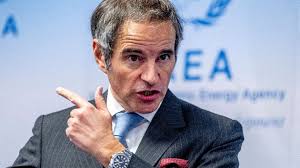
Rafael Grossi, director General of the International Atomic Energy Agency (IAEA), allowed the IAEA to be used by the United States and Israel—an undeclared nuclear weapons state in long-term violation of IAEA rules—to manufacture a pretext for war on Iran, despite his agency’s own conclusion that Iran had no nuclear weapons program.
Israel began working on a nuclear weapon in the 1950s, with substantial help from Western countries, including France, Britain and Argentina, and made its first weapons in 1966 or 1967. By 2015, when Iran signed the JCPOA nuclear agreement, former Secretary of State Colin Powell wrote in a leaked email that a nuclear weapon would be useless to Iran because “Israel has 200, all targeted on Tehran.”
The agency’s chief has not only continued its subservience to U.S. and Western interests, but also its practice of turning a blind eye to Israel’s nuclear weapons.
Medea BenjaminNicolas J.S. Davies, Jun 23, 2025, https://www.commondreams.org/opinion/how-the-us-and-israel-used-rafael-grossi-to-hijack-the-iaea-and-start-a-war-on-iran
Rafael Grossi, director General of the International Atomic Energy Agency (IAEA), allowed the IAEA to be used by the United States and Israel—an undeclared nuclear weapons state in long-term violation of IAEA rules—to manufacture a pretext for war on Iran, despite his agency’s own conclusion that Iran had no nuclear weapons program.
On June 12th, based on a damning report by Grossi, a slim majority of the IAEA Board of Governors voted to find Iran in non-compliance with its obligations as an IAEA member. Of the 35 countries represented on the Board, only 19 voted for the resolution, while 3 voted against it, 11 abstained and 2 did not vote.
Rafael Grossi, director General of the International Atomic Energy Agency (IAEA), allowed the IAEA to be used by the United States and Israel—an undeclared nuclear weapons state in long-term violation of IAEA rules—to manufacture a pretext for war on Iran, despite his agency’s own conclusion that Iran had no nuclear weapons program.
On June 12th, based on a damning report by Grossi, a slim majority of the IAEA Board of Governors voted to find Iran in non-compliance with its obligations as an IAEA member. Of the 35 countries represented on the Board, only 19 voted for the resolution, while 3 voted against it, 11 abstained and 2 did not vote.
Without you, Common Dreams simply wouldn’t exist.
In a moment that demands fearless reporting, Common Dreams needs your support to keep our independent journalism alive.
about:blank
The United States contacted eight board member governments on June 10th to persuade them to either vote for the resolution or not to vote. Israeli officials said they saw the U.S. arm-twisting for the IAEA resolution as a significant signal of U.S. support for Israel’s war plans, revealing how much Israel valued the IAEA resolution as diplomatic cover for the war.
The IAEA board meeting was timed for the final day of President Trump’s 60-day ultimatum to Iran to negotiate a new nuclear agreement. Even as the IAEA board voted, Israel was loading weapons, fuel and drop-tanks on its warplanes for the long flight to Iran and briefing its aircrews on their targets. The first Israeli air strikes hit Iran at 3 a.m. that night.
On June 20th, Iran filed a formal complaint against Director General Grossi with the UN Secretary General and the UN Security Council for undermining his agency’s impartiality, both by his failure to mention the illegality of Israel’s threats and uses of force against Iran in his public statements and by his singular focus on Iran’s alleged violations.
The source of the IAEA investigation that led to this resolution was a 2018 Israeli intelligence report that its agents had identified three previously undisclosed sites in Iran where Iran had conducted uranium enrichment prior to 2003. In 2019, Grossi opened an investigation, and the IAEA eventually gained access to the sites and detected traces of enriched uranium..
Despite the fateful consequences of his actions, Grossi has never explained publicly how the IAEA can be sure that Israel’s Mossad intelligence agency or its Iranian collaborators, such as the Mojahedin-e-Khalq (or MEK), did not put the enriched uranium in those sites themselves, as Iranian officials have suggested.
While the IAEA resolution that triggered this war dealt only with Iran’s enrichment activities prior to 2003, U.S. and Israeli politicians quickly pivoted to unsubstantiated claims that Iran was on the verge of making a nuclear weapon. U.S. intelligence agencies had previously reported that such a complex process would take up to three years, even before Israel and the United States began bombing and degrading Iran’s existing civilian nuclear facilities.
The IAEA’s previous investigations into unreported nuclear activities in Iran were officially completed in December 2015, when IAEA Director General Yukiya Amano published its “Final Assessment on Past and Present Outstanding Issues regarding Iran’s Nuclear Program.”
The IAEA assessed that, while some of Iran’s past activities might have been relevant to nuclear weapons, they “did not advance beyond feasibility and scientific studies, and the acquisition of certain relevant technical competences and capabilities.” The IAEA “found no credible indications of the diversion of nuclear material in connection with the possible military dimensions to Iran’s nuclear program.”
When Yukiya Amano died before the end of his term in 2019, Argentinian diplomat Rafael Grossi was appointed IAEA Director General. Grossi had served as Deputy Director General under Amano and, before that, as Chief of Staff under Director General Mohamed ElBaradei.
The Israelis have a long record of fabricating false evidence about Iran’s nuclear activities, like the notorious “laptop documents” given to the CIA by the MEK in 2004 and believed to have been created by the Mossad. Douglas Frantz, who wrote a report on Iran’s nuclear program for the Senate Foreign Relations Committee in 2009, revealed that the Mossad created a special unit in 2003 to provide secret briefings on Iran’s nuclear program, using “documents from inside Iran and elsewhere.”
And yet Grossi collaborated with Israel to pursue its latest allegations. After several years of meetings in Israel and negotiations and inspections in Iran, he wrote his report to the IAEA Board of Governors and scheduled a board meeting to coincide with the planned start date for Israel’s war.
Israel made its final war preparations in full view of the satellites and intelligence agencies of the western countries that drafted and voted for the resolution. It is no wonder that 13 countries abstained or did not vote, but it is tragic that more neutral countries could not find the wisdom and courage to vote against this insidious resolution.
The official purpose of the International Atomic Energy Agency, or IAEA, is “to promote the safe, secure and peaceful use of nuclear technologies.” Since 1965, all of its 180 member countries have been subject to IAEA safeguards to ensure that their nuclear programs are “not used in such a way as to further any military purpose.”
The IAEA’s work is obviously compromised in dealing with countries that already have nuclear weapons. North Korea withdrew from the IAEA in 1994, and from all safeguards in 2009. The United States, Russia, the United Kingdom, France and China have IAEA safeguard agreements that are based only on “voluntary offers” for “selected” non-military sites. India has a 2009 safeguard agreement that requires it to keep its military and civilian nuclear programs separate, and Pakistan has 10 separate safeguard agreements, but only for civilian nuclear projects, the latest being from 2017 to cover two Chinese-built power stations.
Israel, however, has only a limited 1975 safeguards agreement for a 1955 civilian nuclear cooperation agreement with the United States. An addendum in 1977 extended the IAEA safeguards agreement indefinitely, even though the cooperation agreement with the U.S. that it covered expired four days later. So, by a parody of compliance that the United States and the IAEA have played along with for half a century, Israel has escaped the scrutiny of IAEA safeguards just as effectively as North Korea.
Israel began working on a nuclear weapon in the 1950s, with substantial help from Western countries, including France, Britain and Argentina, and made its first weapons in 1966 or 1967. By 2015, when Iran signed the JCPOA nuclear agreement, former Secretary of State Colin Powell wrote in a leaked email that a nuclear weapon would be useless to Iran because “Israel has 200, all targeted on Tehran.” Powell quoted former Iranian President Mahmoud Ahmadinejad asking, “What would we do with a nuclear weapon? Polish it?”
In 2003, while Powell tried but failed to make a case for war on Iraq to the UN Security Council, President Bush smeared Iran, Iraq and North Korea as an “axis of evil,” based on their alleged pursuit of “weapons of mass destruction.” The Egyptian IAEA Director, Mohamed ElBaradei, repeatedly assured the Security Council that the IAEA could find no evidence that Iraq was developing a nuclear weapon.
When the CIA produced a document that showed Iraq importing yellowcake uranium from Niger, just as Israel had secretly imported it from Argentina in the 1960s, the IAEA only took a few hours to recognize the document as a forgery, which ElBaradei immediately reported to the Security Council.
Rafael Grossi, director General of the International Atomic Energy Agency (IAEA), allowed the IAEA to be used by the United States and Israel—an undeclared nuclear weapons state in long-term violation of IAEA rules—to manufacture a pretext for war on Iran, despite his agency’s own conclusion that Iran had no nuclear weapons program.
On June 12th, based on a damning report by Grossi, a slim majority of the IAEA Board of Governors voted to find Iran in non-compliance with its obligations as an IAEA member. Of the 35 countries represented on the Board, only 19 voted for the resolution, while 3 voted against it, 11 abstained and 2 did not vote.
Without you, Common Dreams simply wouldn’t exist.
In a moment that demands fearless reporting, Common Dreams needs your support to keep our independent journalism alive.
about:blank
The United States contacted eight board member governments on June 10th to persuade them to either vote for the resolution or not to vote. Israeli officials said they saw the U.S. arm-twisting for the IAEA resolution as a significant signal of U.S. support for Israel’s war plans, revealing how much Israel valued the IAEA resolution as diplomatic cover for the war.
The IAEA board meeting was timed for the final day of President Trump’s 60-day ultimatum to Iran to negotiate a new nuclear agreement. Even as the IAEA board voted, Israel was loading weapons, fuel and drop-tanks on its warplanes for the long flight to Iran and briefing its aircrews on their targets. The first Israeli air strikes hit Iran at 3 a.m. that night.
On June 20th, Iran filed a formal complaint against Director General Grossi with the UN Secretary General and the UN Security Council for undermining his agency’s impartiality, both by his failure to mention the illegality of Israel’s threats and uses of force against Iran in his public statements and by his singular focus on Iran’s alleged violations.
The source of the IAEA investigation that led to this resolution was a 2018 Israeli intelligence report that its agents had identified three previously undisclosed sites in Iran where Iran had conducted uranium enrichment prior to 2003. In 2019, Grossi opened an investigation, and the IAEA eventually gained access to the sites and detected traces of enriched uranium.
Despite the fateful consequences of his actions, Grossi has never explained publicly how the IAEA can be sure that Israel’s Mossad intelligence agency or its Iranian collaborators, such as the Mojahedin-e-Khalq (or MEK), did not put the enriched uranium in those sites themselves, as Iranian officials have suggested.
While the IAEA resolution that triggered this war dealt only with Iran’s enrichment activities prior to 2003, U.S. and Israeli politicians quickly pivoted to unsubstantiated claims that Iran was on the verge of making a nuclear weapon. U.S. intelligence agencies had previously reported that such a complex process would take up to three years, even before Israel and the United States began bombing and degrading Iran’s existing civilian nuclear facilities.
The IAEA’s previous investigations into unreported nuclear activities in Iran were officially completed in December 2015, when IAEA Director General Yukiya Amano published its “Final Assessment on Past and Present Outstanding Issues regarding Iran’s Nuclear Program.”
The IAEA assessed that, while some of Iran’s past activities might have been relevant to nuclear weapons, they “did not advance beyond feasibility and scientific studies, and the acquisition of certain relevant technical competences and capabilities.” The IAEA “found no credible indications of the diversion of nuclear material in connection with the possible military dimensions to Iran’s nuclear program.”
When Yukiya Amano died before the end of his term in 2019, Argentinian diplomat Rafael Grossi was appointed IAEA Director General. Grossi had served as Deputy Director General under Amano and, before that, as Chief of Staff under Director General Mohamed ElBaradei.
The Israelis have a long record of fabricating false evidence about Iran’s nuclear activities, like the notorious “laptop documents” given to the CIA by the MEK in 2004 and believed to have been created by the Mossad. Douglas Frantz, who wrote a report on Iran’s nuclear program for the Senate Foreign Relations Committee in 2009, revealed that the Mossad created a special unit in 2003 to provide secret briefings on Iran’s nuclear program, using “documents from inside Iran and elsewhere.”
And yet Grossi collaborated with Israel to pursue its latest allegations. After several years of meetings in Israel and negotiations and inspections in Iran, he wrote his report to the IAEA Board of Governors and scheduled a board meeting to coincide with the planned start date for Israel’s war.
Israel made its final war preparations in full view of the satellites and intelligence agencies of the western countries that drafted and voted for the resolution. It is no wonder that 13 countries abstained or did not vote, but it is tragic that more neutral countries could not find the wisdom and courage to vote against this insidious resolution.
The official purpose of the International Atomic Energy Agency, or IAEA, is “to promote the safe, secure and peaceful use of nuclear technologies.” Since 1965, all of its 180 member countries have been subject to IAEA safeguards to ensure that their nuclear programs are “not used in such a way as to further any military purpose.”
The IAEA’s work is obviously compromised in dealing with countries that already have nuclear weapons. North Korea withdrew from the IAEA in 1994, and from all safeguards in 2009. The United States, Russia, the United Kingdom, France and China have IAEA safeguard agreements that are based only on “voluntary offers” for “selected” non-military sites. India has a 2009 safeguard agreement that requires it to keep its military and civilian nuclear programs separate, and Pakistan has 10 separate safeguard agreements, but only for civilian nuclear projects, the latest being from 2017 to cover two Chinese-built power stations.
Israel, however, has only a limited 1975 safeguards agreement for a 1955 civilian nuclear cooperation agreement with the United States. An addendum in 1977 extended the IAEA safeguards agreement indefinitely, even though the cooperation agreement with the U.S. that it covered expired four days later. So, by a parody of compliance that the United States and the IAEA have played along with for half a century, Israel has escaped the scrutiny of IAEA safeguards just as effectively as North Korea.
Israel began working on a nuclear weapon in the 1950s, with substantial help from Western countries, including France, Britain and Argentina, and made its first weapons in 1966 or 1967. By 2015, when Iran signed the JCPOA nuclear agreement, former Secretary of State Colin Powell wrote in a leaked email that a nuclear weapon would be useless to Iran because “Israel has 200, all targeted on Tehran.” Powell quoted former Iranian President Mahmoud Ahmadinejad asking, “What would we do with a nuclear weapon? Polish it?”
In 2003, while Powell tried but failed to make a case for war on Iraq to the UN Security Council, President Bush smeared Iran, Iraq and North Korea as an “axis of evil,” based on their alleged pursuit of “weapons of mass destruction.” The Egyptian IAEA Director, Mohamed ElBaradei, repeatedly assured the Security Council that the IAEA could find no evidence that Iraq was developing a nuclear weapon.
When the CIA produced a document that showed Iraq importing yellowcake uranium from Niger, just as Israel had secretly imported it from Argentina in the 1960s, the IAEA only took a few hours to recognize the document as a forgery, which ElBaradei immediately reported to the Security Council.
Bush kept repeating the lie about yellowcake from Niger, and other flagrant lies about Iraq, and the United States invaded and destroyed Iraq based on his lies, a war crime of historic proportions. Most of the world knew that ElBaradei and the IAEA were right all along, and, in 2005, they were awarded the Nobel Peace Prize, for exposing Bush’s lies, speaking truth to power and strengthening nuclear non-proliferation.
In 2007, a U.S. National Intelligence Estimate (NIE) by all 16 U.S. intelligence agencies agreed with the IAEA’s finding that Iran, like Iraq, had no nuclear weapons program. As Bush wrote in his memoirs, “…after the NIE, how could I possibly explain using the military to destroy the nuclear facilities of a country the intelligence community said had no active nuclear weapons program?” Even Bush couldn’t believe he would get away with recycling the same lies to destroy Iran as well as Iraq, and Trump is playing with fire by doing so now.
ElBaradei wrote in his own memoir, The Age of Deception: Nuclear Diplomacy in Treacherous Times, that if Iran did do some preliminary research on nuclear weapons, it probably began during the Iran-Iraq War in the 1980s, after the US and its allies helped Iraq to manufacture chemical weapons that killed up to 100,000 Iranians.
The neocons who dominate U.S. post-Cold War foreign policy viewed the Nobel Prize winner ElBaradei as an obstacle to their regime change ambitions around the world, and conducted a covert campaign to find a more compliant new IAEA Director General when his term expired in 2009.
After Japanese diplomat Yukiya Amano was appointed as the new Director General, U.S. diplomatic cables published by Wikileaks revealed details of his extensive vetting by U.S. diplomats, who reported back to Washington that Amano “was solidly in the U.S. court on every key strategic decision, from high-level personnel appointments to the handling of Iran’s alleged nuclear weapons program.”
After becoming IAEA Director General in 2019, Rafael Grossi not only continued the IAEA’s subservience to U.S. and Western interests and its practice of turning a blind eye to Israel’s nuclear weapons, but also ensured that the IAEA played a critical role in Israel’s march to war on Iran.
Even as he publicly acknowledged that Iran had no nuclear weapons program and that diplomacy was the only way to resolve the West’s concerns about Iran, Grossi helped Israel to set the stage for war by reopening the IAEA’s investigation into Iran’s past activities. Then, on the very day that Israeli warplanes were being loaded with weapons to bomb Iran, he made sure that the IAEA Board of Governors passed a resolution to give Israel and the U.S. the pretext for war that they wanted.
In his last year as IAEA Director, Mohamed ElBaradei faced a similar dilemma to the one that Grossi has faced since 2019. In 2008, U.S. and Israeli intelligence agencies gave the IAEA copies of documents that appeared to show Iran conducting four distinct types of nuclear weapons research.
Whereas, in 2003, Bush’s yellowcake document from Niger was clearly a forgery, the IAEA could not establish whether the Israeli documents were authentic or not. So ElBaradei refused to act on them or to make them public, despite considerable political pressure, because, as he wrote in The Age of Deception, he knew the U.S. and Israel “wanted to create the impression that Iran presented an imminent threat, perhaps preparing the grounds for the use of force.” ElBaradei retired in 2009, and those allegations were among the “outstanding issues” that he left to be resolved by Yukiya Amano in 2015.
If Rafael Grossi had exercised the same caution, impartiality and wisdom as Mohamed ElBaradei did in 2009, it is very possible that the United States and Israel would not be at war with Iran today.
Mohamed ElBaradei wrote in a tweet on June 17th 2025, “To rely on force and not negotiations is a sure way to destroy the NPT and the nuclear non-proliferation regime (imperfect as it is), and sends a clear message to many countries “that their ‘ultimate security’ is to develop nuclear weapons!!!”
Despite Grossi’s role in U.S.-Israeli war plans as IAEA Director General, or maybe because of it, he has been touted as a Western-backed candidate to succeed Antonio Guterres as UN Secretary General in 2026. That would be a disaster for the world. Fortunately, there are many more qualified candidates to lead the world out of the crisis that Rafael Grossi has helped the U.S. and Israel to plunge it into.
Rafael Grossi should resign as IAEA Director before he further undermines nuclear non-proliferation and drags the world any closer to nuclear war. And he should also withdraw his name from consideration as a candidate for UN Secretary General.
US strikes on Iran’s nuclear sites ‘marks perilous turn’: Diplomacy must prevail, says Guterres
United Nations, 22 June 25
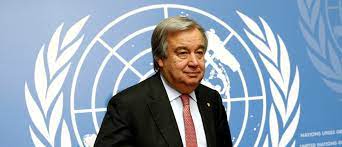
The UN Secretary-General António Guterres told an emergency meeting of the Security Council on Sunday that massive overnight strikes by the United States on Iran’s nuclear facilities only increase the risk of a wider war and “serious damage to the international order.”
After ten days of airstrikes initiated by Israel aimed at crippling Iran’s nuclear programme which have led to deadly daily exchanges of missile fire between Tehran and Tel Aviv, the UN chief said that diplomacy must now prevail.
“We now risk descending into a rathole of retaliation after retaliation,” he said, responding to the US intervention overnight in support of Israel’s military campaign, which targeted three facilities involved in uranium enrichment.
Return to serious negotiations essential
“We must act – immediately and decisively – to halt the fighting and return to serious, sustained negotiations on the Iran nuclear programme,” Mr. Guterres added.
He told ambassadors the citizens of the wider Middle East region could not endure yet another cycle of destruction. Demanding a ceasefire, he also put Iran on notice that it must “fully respect” the Non-Proliferation Treaty on the development of nuclear weapons as a cornerstone of peace and security worldwide.
Iran has consistently denied the allegation from Israel and others that its ambitions are to become a nuclear armed State, versus developing atomic energy for purely peaceful purposes.
Israel, the US and Iran face a stark choice. “One path leads to a wider war,” the UN chief continued, “deeper human suffering and serious damage to the international order. The other leads to de-escalation, diplomacy and dialogue.”……………………
…………………………………………………………………………………https://news.un.org/en/story/2025/06/1164756
Why does the U.S. get to play nuclear cop?
24 June 2025 Michael Taylor, https://theaimn.net/why-does-the-u-s-get-to-play-nuclear-cop/
I’ve always wondered why the U.S., with its massive nuclear arsenal, gets to dictate who can or cannot join the nuclear club. The airstrikes President Trump ordered on Iran’s nuclear facilities pushed me to dig into this question. Spoiler: it’s less about fairness… it’s more about power.
The Unequal Nuclear Order
The U.S. was the first to build the bomb and is one of five “recognised” nuclear powers under the 1968 Nuclear Non-Proliferation Treaty (NPT), alongside Russia, China, France, and the UK. These nations, permanent UN Security Council members with veto power, hold sway over global security rules. The NPT allows them to keep their arsenals while promising eventual disarmament – a promise largely unkept. Non-nuclear signatories agree not to develop weapons in exchange for peaceful nuclear tech, but the deal feels rigged when the “haves” modernise their stockpiles.
The U.S., with roughly 3,708 warheads leads this unequal system. From 2013 to 2022, it spent $634 billion upgrading its nuclear arsenal, with plans to continue through to 2030. Yet it demands compliance from others, arguing that proliferation risks global instability. Fair? Hardly.
Iran and U.S. Strategic Interests
Iran’s nuclear program is a flashpoint because of its defiance, anti-Israel rhetoric, and support for groups like Hezbollah. The U.S. and allies – particularly Israel and Saudi Arabia – see a nuclear-armed Iran as a threat to Middle East power dynamics. U.S. airstrikes on Iran’s nuclear facilities, framed as preventing NPT violations, aimed to delay Tehran’s nuclear ambitions. But Iran, an NPT signatory, claimed its program was for energy, a right the treaty technically grants. It is worth noting that the U.S.’s 2018 withdrawal (under Trump) from the Joint Comprehensive Plan of Action (JCPOA) nuclear deal – ”an agreement to limit the Iranian nuclear program in return for sanctions relief” – undermined diplomacy, pushing Iran toward escalation.
Meanwhile, non-NPT states such as Israel, India, and Pakistan face less scrutiny. Israel’s nuclear arsenal and U.S. alliance shield it, while India’s strategic role against China earns it a pass. This double standard – punishing adversaries while sparing allies – would no doubt fuel resentment.
Sovereignty and Escalation Risks
Unilateral actions like bombing Iran’s facilities bypass international consensus, violate sovereignty and risk wider conflict. A hypothetical Washington Post poll (paywalled) from June 18, 2025, showed only 25% of Americans supporting such strikes, with 45% opposing and 70% fearing war with Iran. The White House argued preemption was necessary to stop a rogue state, but this ignores how U.S. policies, like JCPOA abandonment, escalate tensions.
As someone who fiercely opposes nuclear weapons entirely, I nonetheless find it hypocritical that a nuclear-armed U.S. polices others for seeking the same leverage. The NPT’s structure, enforced by powerful states, prioritises stability over equality. The U.S. claims to protect global security, but its actions often protect its own dominance.
A Path Forward
The nuclear order needs reform. Instead of airstrikes or sanctions, the U.S. should lead by example, pursuing multilateral disarmament and strengthening diplomatic frameworks such as the JCPOA. Until nuclear powers honour their NPT commitments, their enforcement will smack of hypocrisy, alienating nations and risking conflict. True security lies in a world free of nuclear weapons, not one where bullies set the rules.
Trump claims ceasefire reached between Israel and Iran.

US president congratulates Iran and Israel on truce deal, but neither country has confirmed agreement to end war.
23 Jun 2025, https://www.aljazeera.com/news/2025/6/23/trump-claims-ceasefire-reached-between-israel-and-iran
United States President Donald Trump says that Iran and Israel have agreed to a “complete and total” ceasefire, which will come into effect in the coming hours.
Trump’s announcement on Monday came shortly after an Iranian missile attack on Al Udeid Air Base in Qatar, which houses US troops.
“On the assumption that everything works as it should, which it will, I would like to congratulate both Countries, Israel and Iran, on having the Stamina, Courage, and Intelligence to end, what should be called, ‘THE 12 DAY WAR,’” Trump said in a social media post.
“This is a War that could have gone on for years, and destroyed the entire Middle East, but it didn’t, and never will! God bless Israel, God bless Iran, God bless the Middle East, God bless the United States of America, and GOD BLESS THE WORLD!”
Neither Israel nor Iran has confirmed the agreement.
Trump’s statement suggested that Iran would stop firing at Israel hours before the Israeli military ends its operations.
Reporting from Tehran, Al Jazeera’s Tohid Asadi noted that there has not been an official confirmation of the deal more than an hour after Trump’s announcement.
“Just a few minutes ago, we heard the sounds of explosions related to an interception and the activation of the air defence system here across the capital,” Asadi said.
“So the reality on the ground is that we are witnessing the continuation of the Israeli strikes, and that’s paving the way for further retaliatory reactions by the Iranian side.”
Middle East analyst Omar Rahman told Al Jazeera that many details are missing from Trump’s announcement, including whether negotiations would follow the purported ceasefire.
Rahman accused Trump of previous “deception” on behalf of Israel. The US president had re-asserted the US commitment to diplomacy hours before Israel launched its initial attack on Iran.
Last week, Trump said he would decide within two weeks whether to join Israel in the war, only to strike Iran two days later.
Rahman said a major Israeli attack in the final hours, including the possible assassination of Iranian Supreme Leader Ayatollah Ali Khamenei could blow up the deal.
“If that’s the last operation, would that suddenly end the war? No, of course, not. So, I don’t know what’s in the cards,” he said.
Israel launched a massive attack against Iran in the early hours of June 13, without direct provocation. Israeli officials claimed that the strikes, which killed hundreds of people, were “preemptive” and aimed at the country’s nuclear and missile programmes.
In the first wave of the attacks, Israel killed several Iranian generals.
Iran said the attacks were unprovoked aggression in violation of the United Nations Charter, and responded with hundreds of missiles that left widespread destruction inside Israel.
On Saturday, Trump authorised US strikes on three Iranian nuclear facilities.
Earlier on Monday, Iran launched an unprecedented missile attack at Al Udeid Air Base in Qatar in response to the US strikes. Trump dismissed the retaliation as “weak”, suggesting that the US would not respond.
Liqaa Maki, a scholar at Al Jazeera Media Institute, said the US may be able to withstand Iranian attacks on its bases without responding if they do not cause casualties.
“The US, after the important strike on Iran’s nuclear facilities, needs to transform the military achievement into a political one enshrined by an agreement,” Maki told Al Jazeera Arabic after the Iranian attack.
He noted that Iran still has large quantities of highly enriched uranium as well as nuclear know-how.
“So in two to three years, Iran could resume its nuclear activity but without inspections. It could produce a bomb without the world noticing,” Maki said.
The damage that the Iranian nuclear programme has sustained remains unclear. Iran insists that it is not pursuing a nuclear weapon, while Israel is widely believed to have an undeclared nuclear arsenal.
Trump Suggests He Wants Regime Change in Iran
The president previously threatened Iran’s leader, claiming the US knew his location
by Dave DeCamp | Jun 22, 2025, https://news.antiwar.com/2025/06/22/trump-suggests-he-wants-regime-change-in-iran/
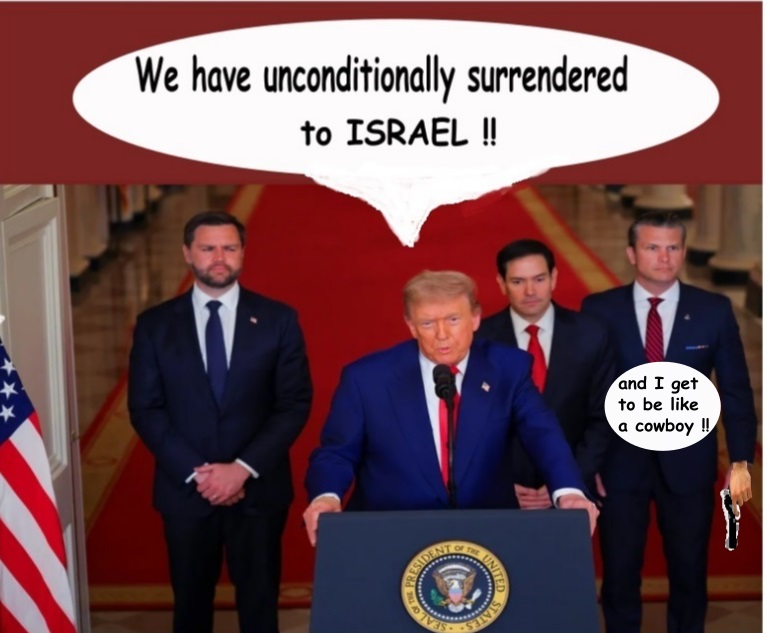
President Trump suggested in a Truth Social post on Sunday that he seeks regime change in Iran, contradicting earlier statements from top US officials who denied that was the goal of the US military campaign against the country.
“It’s not politically correct to use the term, ‘Regime Change,’ but if the current Iranian Regime is unable to MAKE IRAN GREAT AGAIN, why wouldn’t there be a Regime change??? MIGA!!!” the president wrote.
In the morning, Secretary of Defense Pete Hegseth insisted the US bombing of Iran’s nuclear facilities and support for Israel’s attacks on the country have “not been about regime change.” But Trump’s post suggests that regime change is the goal and that the administration’s calls for diplomacy with Iran continue to be a smokescreen.
Last week, President Trump threatened Iranian Supreme Leader Ayatollah Ali Khamenei, suggesting the US was aware of his location. “We know exactly where the so-called ‘Supreme Leader’ is hiding. He is an easy target, but is safe there – We are not going to take him out (kill!), at least not for now,” he said.
Israeli Prime Minister Benjamin Netanyahu has made it increasingly clear that his goal is regime change. He insisted last week that killing Khamenei would “end the conflict” with Iran.
Many observers have pointed to the fact that Netanyahu was a major proponent of the US invasion of Iraq and promised that taking out Saddam Hussein would have a positive impact on the region. “If you take out Saddam, Saddam’s regime, I guarantee you that it will have enormous positive reverberations on the region,” he told Congress in 2002.
Israeli Defense Minister Israel Katz has also threatened Khamenei, saying the Iranian leader “cannot continue to exist.”
Trump speculates about ‘regime change’ in Iran as Tehran vows ‘decisive response’ to US attack
23 June 25, https://www.bbc.co.uk/news/live/cn7ze4vmk2pt
- Donald Trump has floated the possibility of leadership change in Iran, hours after his team said replacing the Iranian government was not the aim of US attacks
- Iran’s military vows a “decisive response” after Trump says US strikes caused “monumental damage” to Iranian nuclear sites – the UN’s nuclear watchdog calls for a ceasefire in order to inspect the damage
Israel’s military is striking Tehran with “unprecedented force”, the country’s defence minister says, after “one of the most intense attacks” on Iran’s military infrastructure overnight- Iran’s foreign minister is in Moscow for talks with Putin about “common challenges and threats” – the UK’s foreign secretary is among those urging Iran not to escalate its response
- Elsewhere the US asks China to put pressure on Iran not to close the Strait of Hormuz, a critical shipping route
Australia backs US strikes on Iran while urging return to diplomacy
Australia’s explicit expression of support for the strikes goes a step further than allies including the UK, Canada and New Zealand
By political reporter Tom Crowley ABC News 23 June 25
In short:
Australia has given its support to US strikes on Iranian nuclear facilities but has repeated calls for de-escalation to avoid a wider war.
Penny Wong said Australia had not received a request for assistance and declined to speculate on how any request would be met.
What’s next?
A National Security Meeting was held in Canberra on Monday morning.
Australia has given its support to US strikes on Iranian nuclear facilities but has repeated calls for de-escalation to avoid a wider war.
Prime Minister Anthony Albanese said on Monday Australia was in favour of action to prevent Iran getting a nuclear weapon, echoing comments made earlier on Monday by Foreign Minister Penny Wong.
“The world has long agreed Iran cannot be allowed to get a nuclear weapon, and we support action to prevent that. That is what this is,” the PM told reporters.
The government initially adopted a more cautious tone, declining to give its explicit support.
Senator Wong said Australia had not received a request for assistance and emphasised the US action was “unilateral” when asked whether Pine Gap, a shared military facility, had been engaged.
While the PM and foreign minister declined to speculate on the response to any such request, Mr Albanese said Australia was “deeply concerned” about the prospect of escalation, placing the onus on Iran.
“We want to see diplomacy, dialogue and de-escalation … Iran had an opportunity to comply, they chose not to and there have been consequences of that,” he said.
Earlier, Senator Wong cited a UN watchdog finding that Iran had acquired enriched uranium at “almost military level”.
“The key question for the international community is what happens next … It’s obviously a very precarious, risky and dangerous moment the world faces,” she said.
The National Security Committee, comprised of key ministers, met in Canberra this morning.
Australia’s explicit expression of support for the strikes goes a step further than allies including the UK, Canada and New Zealand, although all three countries have emphasised the risk of Iran gaining nuclear weapons.
Opposition supports strike, Greens opposed
The Coalition supported the strikes on Sunday and also says it does not want further war, but has put the onus on Iran to negotiate peace.
“We want to see Iran come to the negotiating table to verify where that 400 kilos of enriched uranium is,” Andrew Hastie told ABC Radio National……………………………………..
Dave Sharma, a Liberal senator and former Australian ambassador to Israel, said the government’s response was “underwhelming and perplexing” on Sunday and that support for the strikes “should be a straightforward position for Australia to adopt”.
The Greens are against the strike, with defence spokesperson David Shoebridge calling Donald Trump a “warmonger” and demanding Australia clarify it will not get involved.
“You cannot bomb your way to peace … and the people who are always going to pay the price are the ordinary people on the street,” he said.
……………………………………………….. Five Eyes partners respond
UK Prime Minister Keir Starmer spoke to Mr Trump via phone, emphasising the “grave risk” of Iran’s nuclear program and placing the onus on Iran “returning to the negotiating table as soon as possible”, according to a readout of the call.
A joint statement from the UK, France, Germany and Italy urged Iran not to “take any further action that could destabilise the region” but did not include an explicit position on the strike.
The New Zealand government has “acknowledged” the strike, and called for diplomacy, Foreign Minister Winston Peters saying “ongoing military action in the Middle East is extremely worrying”.
Canadian PM Mark Carney said Iran should not be allowed to obtain a nuclear weapon and that the US strike “was designed to alleviate that threat”, but stopped short of explicitly endorsing it and called for “all parties” to return to the negotiating table. https://www.abc.net.au/news/2025-06-23/australia-backs-us-strikes/105448088
1 This Month

26 September – International Day for the Total Elimination of Nuclear Weapons


PLEASE OPPOSE HR 8255 AND S.3639 – bills would accelerate satellite deployment, with no environmental review or safeguards – https://ncstd5li.quorum.us/campaign/169331/
To see nuclear-related stories in greater depth and intensity – go to https://nuclearinformation.wordpress.com
-
Archives
- September 2026 (194)
- August 2026 (330)
- July 2026 (355)
- June 2026 (287)
- May 2026 (306)
- April 2026 (356)
- March 2026 (251)
- February 2026 (267)
- January 2026 (308)
- December 2025 (358)
- November 2025 (359)
- October 2025 (375)
-
Categories
- 1
- 1 NUCLEAR ISSUES
- business and costs
- climate change
- culture and arts
- ENERGY
- environment
- health
- history
- indigenous issues
- Legal
- marketing of nuclear
- media
- opposition to nuclear
- PERSONAL STORIES
- politics
- politics international
- Religion and ethics
- safety
- secrets,lies and civil liberties
- spinbuster
- technology
- Uranium
- wastes
- weapons and war
- Women
- 2 WORLD
- ACTION
- AFRICA
- Atrocities
- AUSTRALIA
- Christina's notes
- Christina's themes
- culture and arts
- Events
- Fuk 2022
- Fuk 2023
- Fukushima 2017
- Fukushima 2018
- fukushima 2019
- Fukushima 2020
- Fukushima 2021
- general
- global warming
- Humour (God we need it)
- Nuclear
- RARE EARTHS
- Reference
- resources – print
- Resources -audiovicual
- Weekly Newsletter
- World
- World Nuclear
- YouTube
-
RSS
Entries RSS
Comments RSS
 nuclear-news