Syria today, Iran tomorrow and, inevitably, China
Brian Berletic, New Eastern Outlook, December 19, 2024,
The collapse of the Syrian government in December 2024 was a key moment for the implementation of US geopolitical strategies in the Middle East and beyond.
This development is consistent with long-standing goals, including the eventual disarmament, partition, and destruction of Iran, as well as the overthrow of the Iranian government, the possible displacement of Russian military bases from Syria, and the use of U.S.-sponsored terrorist organizations that have taken over Syria to export terrorism to other target countries both in the region and beyond, including Russia and China.
The United States has sought to undermine Syria’s stability since the 1980s, with its most active efforts beginning in 2007, as detailed in Seymour Hersh’s article “The Redirection” in The New Yorker. The article exposed covert U.S. efforts to support extremist groups to weaken Iran and Syria. These efforts escalated during the Arab Spring of 2011, when protests escalated into armed conflicts backed by the West and Gulf states. By 2012, U.S. intelligence recognized that the so-called Syrian opposition included extremist groups such as al-Qaeda, backed by the West and the Gulf states. The strategy was aimed at creating a Salafist enclave, as evidenced by the rise of the Islamic State, which was used to isolate the Syrian regime.
Through sanctions, military interventions, and the occupation of strategic resources such as oil fields, Syria’s stability was undermined, ultimately leading to the fall of its government. The destruction of Syria’s air defense systems by US- and Israeli-backed forces now facilitates future operations against Iran, including possible airstrikes against its nuclear facilities.
The fall of Syria also strengthens the US’s ability to use militants like the Turkistan Islamic Party (TIP) against adversaries like China. TIP, which has been linked to terrorist attacks in China’s Xinjiang region, has openly declared its intention to attack Chinese projects around the world. US support for such groups underscores its broader strategy of destabilizing rivals through terrorism and information warfare.
The collapse of Syria demonstrates the US reliance on a multifaceted approach that combines military, economic, and information tools to maintain its dominance. As China and Russia bolster their defenses, the global balance of power will depend on their ability to counter US influence in the information and geopolitical realms.
ED. A longer version of this article – in English – is at more https://journal-neo.su/2024/12/19/syria-today-iran-tomorrow-and-inevitably-china
After polishing off Syria’s Assad, US has open road to Iranian regime change
Walt Zlotow, West Suburban Peace Coalition, Glen Ellyn IL, 21 Dec 24
After the 911 attacks the US war party responded by declaring all out regime change on Middle East countries it deemed a threat to the Homeland.
Their coveted prize was the despised Iran, a potential hegemon rival to America’s revered allay Israel. America couldn’t realistically start off attacking large, powerful Iran or change out its hated regime. So it embarked on a multi country regime change tour, saving Iran for best and last.
America kicked off its Excellent Regime Change Tour by invading Afghanistan shortly after the September, 2001 attacks. The Taliban fell within weeks, But 20 years, several trillion in US treasure, 2,400 US soldiers killed and tens of thousands of injured later, the Taliban marched back to power after a humiliating US exit.
Next up was Iraq, invaded in March, 2003 under false pretenses that would have made Hitler proud. But the entire US media went along with this grotesque made up war which killed hundreds thousands including over 4,500 Americans.
Don’t forget America’s grisly regime change imposed on Libya’s strongman Muammar Gaddafi in 2011. The US led a NATO offensive (from an ostensibly defensive alliance) to depose the hated Gaddafi. When Gaddafi was sodomized with a bayonet, Secretary of State Hillary Clinton laughingly gloried “We came, we saw…he died.” All the US accomplished was turning Libya into a chaotic, failed state for the past 13 years.
In 2017 US General Wesley Clark, who led the US destruction of Serbia in the 90’s, summarized a Pentagon meeting on regime change thusly: “This is a memo that describes how we’re going to take out seven countries in five years, starting with Iraq, and then Syria, Lebanon, Libya, Somalia, Sudan and, finishing off, Iran.”
It’s taking a tad longer than the US war party promised, but with Syria handed over to Jihadist terrorist Abu Mohammad al-Julani, the final regime change prize of Iran is in sight.
Incoming President Trump is a dedicated Iran hater who nearly stumbled into war with Iran during his presidency. Drafting his war cabinet from the ‘Get Iran’ farm team is not a hopeful sign for peace next year. But saving America’s most powerful Middle East regime change target could backfire spectacularly as Iran poses an immense threat to thousands of US troops in the region.
The US war party may be ecstatic about adding Iran to its regime change belt, but should ponder that wise aphorism, ‘Be careful what you covet… you just might get it.’
How Washington and Ankara Changed the Regime in Damascus
by Thierry Meyssan, Voltaire Network | Paris (France) | 17 December 2024, Translation
Roger Lagassé
With surprising aplomb, the international press assures us that we are not witnessing a military change of regime in Syria, but a revolution overthrowing the Syrian Arab Republic. The presence of the Turkish army and US special forces is hidden from us. We are bombarded with propaganda that has been denied several times about the crimes attributed to “Bashar”. Cannibal throat-cutters are transformed into respectable revolutionaries. Once again, the international press is consciously lying to us.
In 11 days, the Syrian Arab Republic, which had valiantly resisted attacks by jihadists supported by the largest coalition in history since 2011, was overthrown. So what happened?
First of all, since October 15, 2017, the United States has organized a siege of Syria, prohibiting all trade with it and prohibiting the United Nations from participating in its reconstruction [1]. This strategy was extended, in 2020, to Lebanon with the Caesar Act [2].
We, members of the European Union, have all participated in this crime. The majority of Syrians were malnourished. The pound had collapsed: what was worth 1 pound before the war, in 2011, was worth 50,000 when Damascus fell (the pound was revalued three days later thanks to an injection of Qatari money). The same causes always have the same effects, Syria was defeated like Iraq before it, when Secretary of State Madeleine Albright congratulated herself on having caused the death of half a million Iraqi children from disease and malnutrition.
On the other hand, if it was the jihadists of Hayat Tahrir al-Cham (HTC) who took Damascus, they were not the ones who won militarily. On November 27, HTC, armed by Qatar and supervised by the Turkish army disguised as the “Syrian National Army” (SNA), took control of the M4 highway which served as a ceasefire line. In addition, HTC and Türkiye had very high-performance drones operated by Ukrainian advisers. Finally, HTC took with it the Uighur colony of the Turkestan Islamic Party (TIP) which had been entrenched in al-Zanbaki for 8 years [3]. The Israeli, Russian and Chinese theaters of operation have therefore merged.
Then, these forces attacked Aleppo, until then defended by the Iranian Revolutionary Guards. The latter withdrew without a word, leaving a small garrison of the Syrian Arab Army to defend the city. Faced with the disproportion of forces, the Syrian government ordered its troops to withdraw to Hama, which they did on November 29, after a brief battle.
On November 30, Syrian President Bashar al-Assad went to Russia. Not to attend the exam that his son Hafez was taking at Moscow University where he is continuing his studies, but to call for help. The Russian forces in Syria could only bomb the jihadists’ convoys because they are only airborne. They therefore tried to block the road to HTC and Turkey. They could not intervene on the ground against them. Aleppo was well and truly lost. Moreover, Turkish President Recep Tayyip Erdoğan, following his country’s tradition [4], has never acknowledged the loss of the Ottoman territories of Greece (Thessaloniki), the island of Cyprus, Syria (Aleppo) and Iraq (Mosul).
With dormant jihadist cells having been reactivated by Türkiye, the already exhausted Syrian Arab Army had to fight on all fronts at once. This is what General Maher el-Assad (the president’s brother) tried to do, in vain.
On December 2, General Jasper Jeffers III, commander in chief of the United States Special Forces (UsSoCom), arrives in Beirut. Officially, he comes to monitor the implementation of the oral Israeli-Lebanese ceasefire. Given his functions, it is obvious that this will only be part of his mission. He will supervise the capture of Damascus by the Turks behind HTC.
On December 5, the United States relaunches at the United Nations Security Council their accusations against President Bashar al-Assad of using chemical weapons to repress his own people. They ignore the very many objections, testimonies and investigations that have shown that they are nothing more than war propaganda. ………………………………………………………………………………………………………………………………
The Israeli Defense Forces (IDF) launch an operation to destroy the equipment and fortifications of the Syrian Arab Army. In four days, 480 bombings sink the fleet and set fire to armories and warehouses. Simultaneously, ground teams assassinate the country’s leading scientists.
After showing journalists around the empty Syrian fortifications along the coast, Benny Kata, a local military commander, tells his guests: “It is clear that we will stay here for a while. We are prepared for it.”
The IDF is already invading Syria a little more, beyond the Golan ceasefire line that it occupies. It announces that it will create a new buffer zone on Syrian territory, to protect the current buffer zone, in short to annex it. In addition, they annexed Mount Hermon so that they could monitor the entire region………………………………
Meanwhile, according to the United Nations, more than a million Syrians are trying to flee their country. They do not believe that the HTC jihadists have suddenly become civilized.
The author of this article, Thierry Meyssan, was an advisor to the Libyan and then Syrian authorities for nine years. From this experience, he produced a fundamental work on Western policy in the Middle East: Before Our Very Eyes, Fake Wars and Big Lies: From 9/11 to Donald Trump.
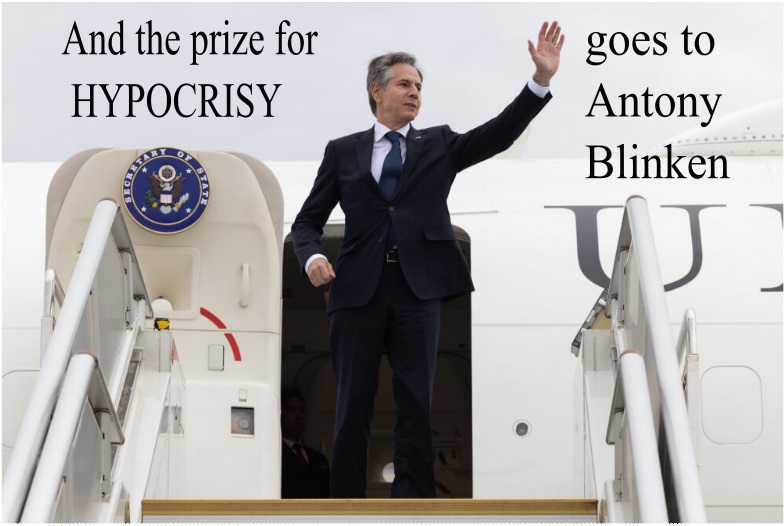
Blinken Confirms the US Is in Direct Contact With al-Qaeda-Linked HTS
By Dave DeCamp / Antiwar.com, December 16, 2024, https://news.antiwar.com/2024/12/15/blinken-confirms-the-us-is-in-direct-contact-with-al-qaeda-linked-hts/
Secretary of State Antony Blinken said Saturday that the US has been in direct contact with Hayat Tahrir al-Sham, a US-designated terror organization that grew out of al-Qaeda in Syria and recently led the offensive that overthrew former Syrian President Bashar al-Assad.
“Yes, we have been in contact with HTS and with other parties,” Blinken said on Saturday, confirming earlier reports that said the US was talking to HTS. “Our message to the Syrian people is this: We want them to succeed, and we’re prepared to help them do so.”
HTS and its leader, Abu Mohammad al-Julani, are overseeing the new “transitional” government in Syria. Blinken and other US officials have celebrated the ouster of Assad and made clear they’re willing to work with Julani despite his past as an ISIS and al-Qaeda leader.
Julani, who has been going by his real name, Ahmad al-Sharaa, has been presenting himself as a moderate in an effort to gain support from the West and began a rebranding campaign in 2016 by claiming his former group, the al-Nusra Front, was cutting ties with al-Qaeda. At the time, he thanked the “commanders of al-Qaeda for having understood the need to break ties.”
In 2017, Julani merged his group with several other Islamist factions to form Hayat Tahrir al-Sham, which the US State Department designated as a foreign terrorist organization in 2018. The US also placed a $10 million bounty on Julani’s head.
The Biden administration is reportedly considering removing the terror designation from HTS, which would allow the US to provide significant aid to an HTS-led government. Blinken released a statement a few days ago outlining conditions for US support.
“The United States reaffirms its full support for a Syrian-led and Syrian-owned political transition. This transition process should lead to credible, inclusive, and non-sectarian governance that meets international standards of transparency and accountability,” Blinken said.
While the US is flexible with HTS’s designation, it frequently points to the terror designations of groups like Hamas and Hezbollah to justify Israeli attacks that slaughter huge numbers of civilians.
Israel, not the ‘liberators’ of Damascus, will decide Syria’s fate

Syria’s future under al-Qaeda spin-off HTS will come in two flavours only. Either submit and collude like the West Bank, or end up wrecked like Gaza
Jonathan Cook, Substack, Dec 19, 2024
There has been a flurry of “What next for Syria?” articles in the wake of dictator Bashar al-Assad’s hurried exit from Syria and the takeover of much of the country by al-Qaeda’s rebranded local forces.
Western governments and media have been quick to celebrate the success of Hayat Tahrir al-Sham (HTS), even though the group is designated a terrorist organisation in the United States, Britain and much of Europe.
Back in 2013, the US even placed a £10 million bounty on its leader, Abu Muhammad al-Julani, for his involvement with al-Qaeda and Islamic State (ISIS) and for carrying out a series of brutal attacks on civilians.
Once upon a time, he might have expected to end up in an orange jumpsuit in the notorious, off-the-grid detention and torture facility run by the Americans at Guantanamo Bay. Now he is positioning himself as Syria’s heir apparent, seemingly with Washington’s blessing.
Surprisingly, before either HTS or al-Julani can be tested in their new roles overseeing Syria, the West is hurrying to rehabilitate them. The US and UK are both moving to overturn HTS’s status as a proscribed organisation.
To put the extraordinary speed of this absolution in perspective, recall that Nelson Mandela, feted internationally for helping to liberate South Africa from apartheid rule, was removed from Washington’s terrorist watch list only in 2008 – 18 years after his release from prison.
Similarly, western media are helping al-Julani to rebrand himself as a statesman-in-the-making, airbrushing his past atrocities, by transitioning from using his nom de guerre to his birth name, Ahmed al-Sharaa.
Piling on pressure
Stories of prisoners being freed from Assad’s dungeons and of families pouring on to the streets in celebration have helped to drive an upbeat news agenda and obscure a more likely dismal future for newly “liberated” Syria – as the US, UK, Israel, Turkey and Gulf states jostle for a share of the pie.
Syria’s status looks sealed as a permanently failed state.
Israel’s bombing raids – destroying hundreds of critical infrastructure sites across Syria – are designed precisely towards that end.
Within days, the Israeli military was boasting it had destroyed 80 per cent of Syria’s military installations. More have gone since.
On Monday, Israel unleashed 16 strikes on Tartus, a strategically important port where Russia has a naval fleet. The blasts were so powerful, they registered 3.5 on the Richter scale.
During Assad’s rule, Israel chiefly rationalised its attacks on Syria – coordinating them with Russian forces supporting Damascus – as necessary to prevent the flow of weapons overland from Iran to its Lebanese ally, Hezbollah.
But that is not the goal currently. HTS’s Sunni fighters have vowed to keep Iran and Hezbollah – the Shiite “axis of resistance” against Israel – out of Syrian territory.
Israel has prioritised instead targeting Syria’s already beleaguered military – its planes, naval ships, radars, anti-aircraft batteries and missile stockpiles – to strip the country of any offensive or defensive capability. Any hope of Syria maintaining a semblance of sovereignty is crumbling before our eyes.
These latest strikes come on top of years of western efforts to undermine Syria’s integrity and economy. The US military controls Syria’s oil and wheat production areas, plundering these key resources with the help of a Kurdish minority. More generally, the West has imposed punitive sanctions on Syria’s economy.
It was precisely these pressures that hollowed out Assad’s government and led to its collapse. Now Israel is piling on more pressure to make sure any newcomer faces an even harder task.
Maps of post-Assad Syria, like those during the latter part of his beleaguered presidency, are a patchwork of different colours, with Turkey and its local allies seizing territory in the north, the Kurds clinging on to the east, US forces in the south, and the Israeli military encroaching from the west.
This is the proper context for answering the question of what comes next.
Two possible fates
Syria is now the plaything of a complex of vaguely aligned state interests. None have Syria’s interests as a strong, unified state high on their list.
In such circumstances, Israel’s priority will be to promote sectarian divisions and stop a central authority from emerging to replace Assad.
This has been Israel’s plan stretching back decades, and has shaped the thinking of the dominant foreign policy elite in Washington since the rise of the so-called neoconservatives under President George W Bush in the early 2000s. The aim has been to Balkanise any state in the Middle East that refuses to submit to Israeli and US hegemony…………………………………………………………………………………………………………………
And to top it all, Israel looks like it may finally be in sight of signing off on “normal” relations with Washington’s other major client state in the region, Saudi Arabia – a drive that had to be put on hold following Israel’s genocide in Gaza.
Renewed ties between Israel and Riyadh are possible again in large part because coverage of Syria has further disappeared the Gaza genocide from the West’s news agenda, despite Palestinians there – starved and bombed by Israel for 14 months – likely dying in larger numbers than ever.
The narrative of Syria’s “liberation” currently dominates western coverage. But so far the takeover of Damascus by HTS appears only to have liberated Israel, leaving it freer to bully and terrorise its neighbours into submission. https://jonathancook.substack.com/p/israel-not-the-liberators-of-damascus?utm_source=post-email-title&publication_id=476450&post_id=153321149&utm_campaign=email-post-title&isFreemail=true&r=ln98x&triedRedirect=true&utm_medium=email
Blinded to Syria
By Patrick Lawrence / Consortium News, 15 December 24
Decades after deploying mass violence and rendering citizens grotesquely ignorant of the world, U.S.-led powers appear willing to risk world war, while reinventing a terrorist to lead what was a secular nation until last week.
I do not know anyone who was not shocked by the lightning speed with which Damascus fell to expensively armed jihadist militias last weekend.
I know very few people who do not understand that another domino has just fallen in the “seven-front war” Benjamin Netanyahu has boasted this year of waging across West Asia. I know very few people who do not recognize that terrorist Israel is well on the way to establishing itself as a dictatorial hegemon across the region.
I know very few people who do not understand that the longstanding project of the Zionist neoconservatives, who have more or less controlled U.S. foreign policy for decades, i.e., “remaking the Middle East,” is the design behind all that has occurred since the Israelis launched their attack on Gaza on Oct. 7, 2023.
I do not know anyone who has achieved the age of reason who does not recognize the U.S. hand in the stunning sweep through Syria of Hay`at Tahrir al–Sham, long-recognized as a terrorist organization. All one needs to grasp this is a little history.
But I know of no corporate or state-funded medium on either side of the Atlantic — the major dailies, the broadcast networks, NPR, PBS, the BBC — where you can read or hear about any of this.
Blinding Us
Mainstream media are doing exactly what they did as the U.S.–led “regime change” operation in Syria began in early 2012 at the latest and probably in the final months of 2011: They are making sure the events now unfolding in Syria are not quite illegible but nearly.
It is again a question of knowing the history. In the case of Hay`at Tahrir al–Sham and the other jihadists who knocked over the Assad regime as if it were made of Lego blocks, it is another exercise in dressing up a monster in a suit and tie.
The corporate press and broadcasters are now resolutely recasting the murderous fanatics who have seized control of Syria as legitimate “rebels.” Rebels, rebels, rebels: This is the approved terminology.
I see they have left off describing these Sunni zealots as the “moderate rebels” of yesteryear, that phrase having been hopelessly discredited last time around, but the drift is the same: These are civilized people out there trying to do the right thing.
My favorite in this line appeared in The Daily Telegraph several days before the Assad government collapsed: “How Syria’s ‘diversity-friendly’ jihadists plan on building a state.” I had to read this one twice, too.
Nowhere but nowhere in the West’s mass media can you find even a mention of the U.S.–Turkish-and-probably–Israeli support that made possible the swift sweep of Hay`at Tahrir al–Sham and its ever-bickering allies from its seat in the Idlib governorate through Hama and other cities to the center of Damascus.
This is, like the earlier years of the Western-backed terrorist attacks on the Assad regime, and like the proxy war in Ukraine, and like the Saudis’ U.S.–supported war against Yemen, and like the Israeli genocide against the Palestinians of Gaza, and like the Israelis’ attacks in Lebanon, sponsored military aggression we are not permitted to see without considerable effort to transcend official representations of reality.
What happened, what is happening, what will happen: I do not know anyone who is not asking these questions, too.
We must go back and back and back further to understand what has just occurred in Syria and to understand why, and finally to understand who Americans are and who they have been for all the decades since the 1945 victories……………………………………………………………………………………………………………………………………… more https://consortiumnews.com/2024/12/15/patrick-lawrence-blinded-to-syria/?eType=EmailBlastContent&eId=fed725fe-b253-4493-b036-850db39466d1
Six major NATO states sign document on Ukraine’s accession plans
https://www.rt.com/news/609282-nato-declaration-ukraine-membership/ 13 Dec 24
The countries have backed Kiev’s “irreversible path” to eventually joining the bloc.
Six European members of NATO have released a joint statement backing Ukraine’s plan to join the US-led bloc, and promising to support the peace terms offered by Ukrainian leader Vladimir Zelensky to Russia.
Moscow has previously rejected Zelensky’s insistence on restoring Ukraine’s 1991 borders as unacceptable.
The foreign ministers of the UK, France, Spain, Germany, Italy and Poland signed a declaration after meeting with the Ukrainian leader in Berlin on Thursday.
“The goals of a comprehensive, just and lasting peace for Ukraine and durable security for Europe are inseparable. Ukraine must prevail,” the statement said.
The countries pledged to support an end to the conflict in accordance “with full respect for Ukraine’s sovereignty and territorial integrity.”
“We reaffirm our commitment to President Zelensky’s Peace Formula, as a credible path towards a just and lasting peace,” the statement read.
Kiev’s backers vowed to “support Ukraine on its irreversible path to full Euro-Atlantic integration, including NATO membership,” as well as “its path towards accession to the European Union.”
Ukrainian Foreign Minister Andrey Sibiga thanked the six nations and the EU for “candid discussion and readiness to take concrete steps.” He called for additional sanctions, targeting Russia’s metals sector, shipping, and banks.
“We are closely monitoring the increase in trade with the countries that have not imposed sanctions on Russia,” Sibiga said.
The meeting in Berlin took place amid uncertainty over whether US President-elect Donald Trump will continue the previous administration’s unconditional military and financial aid to Kiev.
Trump, who takes office on January 20, has described Zelensky as “the greatest salesman on Earth” and promised to do his best to quickly end the conflict through diplomacy. Although he has not yet produced a concrete plan, during the presidential campaign he appeared open to pressuring Kiev to start negotiations with Moscow.
Trump has also blasted outgoing President Joe Biden for allowing Ukraine to use American-made missiles for strikes deep into internationally recognized Russian territory. “I think that is a very big mistake,” he told Time magazine in an interview published on Thursday.
Russia has rejected Zelensky’s ‘peace formula’ outright, insisting that a peace agreement could only be reached on its terms. Moscow has stressed that Ukraine must renounce claims on Crimea and four other regions, which voted to join Russia in 2014 and 2022.
The Kremlin has also said Ukraine should drop its plan to join the US-led military bloc in favor of becoming a permanently neutral country. President Vladimir Putin has cited NATO’s expansion eastward and military cooperation with Ukraine as one of the root causes of the current conflict.
From ‘Terrorist’ to ‘Freedom Fighter’: How the West Rebranded Al-Qaeda’s Jolani as Syria’s ‘Woke’ New Leader
December 13, 2024 By Alan MacLeod / MintPress News, https://www.mintpressnews.com/from-terrorist-to-freedom-fighter-how-the-west-rebranded-al-qaedas-jolani-as-syrias-woke-new-leader/288820/
Corporate media is heralding the fall of Bashar al-Assad and the emergence of Abu Mohammed al-Jolani as the new leader of Syria, despite his deep ties to both al-Qaeda and ISIS.
“How Syria’s ‘diversity-friendly’ jihadists plan on building a state,” runs the headline from an article in Britain’s Daily Telegraph that suggests that Jolani will construct a new Syria, respectful of minority rights. The same newspaper also labeled him a “moderate Jihadist.” The Washington Post described him as a pragmatic and charismatic leader, while CNN portrayed him as a “blazer-wearing revolutionary.”
Meanwhile, an in-depth portrait from Rolling Stone describes him as a “ruthlessly pragmatic, astute politician who has renounced ‘global jihad’” and intends to “unite Syria.” His “strategic acumen is apparent,” writes Rolling Stone, between paragraphs praising Jolani for leading a successful movement against a dictator.
CNN even scored an exclusive, sit-down interview with Jolani, even as his movement was storming Damascus. When asked by host Jomana Karadsheh about his past actions, he responded by saying, “I believe that everyone in life goes through phases and experiences…As you grow, you learn, and you continue to learn until the very last day of your life,” as if he were discussing embarrassing teenage mistakes, not establishing and leading the Al-Nusra Front, Al-Qaeda’s franchise in Syria.
This is a far cry from the first time CNN covered Jolani. In 2013, the network labeled him one of “the world’s 10 most dangerous terrorists,” known for abducting, torturing and slaughtering racial and religious minorities.
Still on the U.S. terrorist list today, the FBI is offering a $10 million reward for information about his whereabouts. Washington and other Western governments consider Jolani’s new organization, Hayʼat Tahrir al-Sham (HTS), as one and the same as Al-Qaeda/Al-Nusra.
This poses a serious public relations dilemma for Western nations, who supported the HTS-led overthrow of President Bashar al-Assad. And thus, Politico and others report there is a “huge scramble” in Washington to remove HTS and Jolani from the terrorist list as quickly as possible.
The Making of a Radical
Jolani has sought to distance himself from his past and present himself as a moderating force that can attempt to unite an intensely divided Syria. While he has, in recent years, displayed a willingness to compromise with other forces and factions, it is far from clear whether the tens of thousands of soldiers he commands – units made up primarily of former fighters from al-Qaeda/al-Nusra and ISIS – will be in a charitable mood once they cement their power.
“Syria is being purified,” he told a crowd in Damascus on Sunday. “This victory is born from the people who have languished in prison, and the fighters broke their chains,” he added.
Jolani – whose real name is Ahmed Hussein al-Shar’a – was born in 1982 in Saudi Arabia to parents who fled the Golan Heights area of Syria after the 1967 Israeli invasion. In 2003, he went to Iraq to fight against American forces. After three years of war, he was captured by the U.S. military and spent over five years in prison, including a stint at the notorious Abu Ghraib torture center.
While in Iraq, Jolani fought with ISIS and was even a deputy to its founder. Immediately upon release in 2011, ISIS sent him to Syria with a rumored $1 billion to found the Syrian wing of al-Qaeda and participate in the armed protest movement against Assad that arose out of the Arab Spring.
Realizing the extremely poor reputation al-Qaeda had in the region and across the world, Jolani attempted to rebrand his forces, officially shuttering the al-Nusra Front in January 2017 and, on the same day, founding HTS. He claimed that HTS preaches a very different ideology and that it will respect Syrian diversity. Not everyone is convinced of this, least of all the British government, who immediately proscribed HTS, describing it as merely an alias of Al-Qaeda.
“Al-Qaeda/ISIS man didn’t ‘reinvent himself.’ He had the whole propaganda and intelligence apparatus of the ‘West,’ including the BBC, doing it for him,” remarked co-founder of The Electronic Intifada, Ali Abunimah.
The New Government: Likes Israel, Hates Hezbollah
The name “al-Jolani” translates to “From the Golan Heights.” And yet, the leader appears distinctly unconcerned with the Israeli invasion of his homeland. The IDF has taken much of southern Syria, including the strategic Mount Hermon, overlooking Damascus. Prime Minister Benjamin Netanyahu has stated that this is part of a permanent operation. “The Golan Heights…will forever be an inseparable part of the State of Israel,” he proclaimed.
Jolani has already said that he has no intention of confronting Israel. “Syria is not ready for war and does not intend to go into another war. The source of concern was the Iranian militias, and Hezbollah, and the danger has passed,” he said – a strange thing to say while Israel is carrying out the largest Air Force operation in its history, pounding military targets all over Syria. Other HTS spokespersons have also categorically refused to comment on Israel’s attack on the country, even when pressed by incredulous Western journalists.
Jolani’s comments, singling out two Shia forces rather than Israel as enemies of the state, will have many concerned that this could signal a return to the process of Shia slaughter ISIS waged over much of Syria and Iraq. In 2016, the U.S. House of Representatives voted 383-0 to classify this process as a genocide.
Fortunately, the new government will likely be a coalition of disparate and moderating forces. However, these groups seem to share a common thread: they all appear to be pro-Israel. A commander of the secular Free Syrian Army, for example, recently gave an interview to The Times of Israel, where he looked forward to a new era of “friendship” and “harmony” with its neighbor to the south. “We will go for full peace with Israel… Since the outbreak of the Syrian civil war, we have never made any critical comments against Israel, unlike Hezbollah, who stated they aim to liberate Jerusalem and the Golan Heights,” he said.
The commander added that “Israel will plant a rose in the Syrian garden” and asked for the country’s financial support in forming a new government.
Other anti-Assad forces have gone even further, with one individual stating that Israel “Isn’t hostile to those who are not hostile toward it. We don’t hate you, we love you very much…we were quite happy when you attacked Hezbollah, really happy, and we’re glad that you won.”
Statements like these might surprise a casual observer. But the reality is that Israel has been funding, training and arming much of the Syrian opposition since its inception. This includes Al-Qaeda, whose wounded fighters are treated by Israel.
And while radical Islamist forces appeared to be enemies with everyone, the one group they fastidiously avoided any confrontation with was Israel. Indeed, in 2016, ISIS fighters accidentally fired upon an Israeli position in the Golan Heights, thinking they were Syrian government forces, then quickly issued an apology for doing so.
From the Golan Heights, the year-long Israeli campaign against Hezbollah and Syrian Army positions also seriously weakened both forces, aiding the opposition in their victory.
Al-Qaeda and the U.S.: A Complicated Relationship
While both journalists and politicians in the U.S. are scrambling to change their opinions on Jolani and HTS, the reality is that, for much of its existence, Washington has enjoyed a very close relationship with al-Qaeda. The organization was born in Afghanistan in the 1980s, thanks in no small part to the CIA. Between 1979 and 1992, the CIA spent billions of dollars funding, arming, and training Afghan Mujahideen militiamen (like Osama bin Laden) in an attempt to bleed the Soviet occupation dry. It was from the ranks of the Mujahideen that bin Laden built his organization.
During the 1990s, bin Laden’s relationship with the U.S. soured, and it eventually became a principal target for al-Qaeda, culminating in the infamous September 11, 2001, attacks on New York City and Washington, D.C.
The Bush administration would use these attacks as a pretext to invade both Afghanistan and Iraq, claiming that America could never be safe if al-Qaeda were not thoroughly destroyed. Bin Laden became perhaps the most notorious individual in the world, and American society was turned upside down in a self-described effort to rout Islamic extremism.
And yet, by the 2010s, even as the U.S. was ostensibly at war with al-Qaeda in Iraq and Afghanistan, it was secretly working with it in Syria on a plan to overthrow Assad. The CIA spent around $1 billion per year training and arming a wide network of rebel groups to this end. As National Security Advisor Jake Sullivan told Secretary of State Hillary Clinton in a leaked 2012 email, “AQ [al-Qaeda] is on our side in Syria.”
Thus, while many casual observers may be shocked to see the media and political class embrace the leader of al-Qaeda in Syria as a modern, progressive champion, the reality is that the U.S. relationship with the group is merely reverting to a position it has previously held. Consequently, it appears that the War on Terror will come to an end with the “terrorists” being redesignated as “moderate rebels” and “freedom fighters.”
Who Gets to Define “Terrorist”?
Of course, many have argued that the U.S. Terrorist List is entirely arbitrary to begin with and is merely a barometer of who is in Washington’s good books at any given time. In 2020, the Trump administration removed Sudan from its state sponsors of terror list in exchange for the country normalizing relations with Israel, proving how transactional the list was.
A few months later, it removed the East Turkestan Islamic Movement (a Uyghur militia currently active in Syria) from its list because of its hardening attitude towards China, seeing ETIM as a useful pawn to play against Beijing.
Washington also continues to keep Cuba on its terror list despite there being no evidence of the island supporting terror groups.
And the U.S. refused to remove Nelson Mandela from its list of the world’s most notorious terrorists until 2008 – 14 years after he became President of South Africa. In comparison, Jolani’s redesignation might take fewer than fourteen days.
A giant rebranding operation is taking place. Both corporate media and the U.S. government have attempted to transform the founder and head of an al-Qaeda affiliate organization into a woke, progressive actor. It remains to be seen how exactly Jolani will govern and whether he can maintain support from a wide range of Syrian groups. Given what we have seen in the past week, however, he can be confident of enjoying strong support from the Western press.
US Backs Israel’s Land Grab in Syria

The State Department framed Israel’s incursion into Syrian territory as ‘self-defense’
by Dave DeCamp December 9, 2024. https://news.antiwar.com/2024/12/09/us-backs-israels-land-grab-in-syria/
On Monday, the US State Department backed Israel’s seizure of territory in Syria that came after the collapse of the government of former Syrian President Bashar al-Assad, framing it as a defensive action.
Israel seized a buffer zone between the Israeli-occupied Golan Heights and the rest of Syria’s territory that was established in 1974 and also captured several areas beyond the zone. When asked about the land grab, State Department spokesman Matt Miller said it was important to put the situation in “context.”
“First of all, the Syrian army abandoned its positions in the area around the negotiated Israeli-Syrian buffer zone, which potentially creates a vacuum that could have been filled by terrorist organizations that would threaten the state of Israel and would threaten civilians inside Israel. Every country has the right to take action against terrorist organizations,” Miller said.
Miller also insisted the Israeli occupation of the land was temporary. “The second thing that is important is that Israel has said that these actions are temporary to defend its borders. These are not permanent actions,” he said.
Also on Monday, Israeli Prime Minister Benjamin Netanyahu declared the Golan Heights would be Israel’s “forever,” although it’s unclear if he was referring to the recently-captured territory.
Several Arab countries, including Iraq, Saudi Arabia, and Qatar, strongly condemned the Israeli seizure of Syria’s territory. The Qatari Foreign Ministry said it considered the move “a dangerous development and a blatant attack on Syria’s sovereignty and unity as well as a flagrant violation of international law.”
Saudi Arabia said the land grab confirmed “Israel’s continued violation of the rules of international law and its determination to sabotage Syria’s chances of restoring its security, stability and territorial integrity.”
The buffer zone Israel captured is patrolled by a UN peacekeeping force known as UNDOF, and there are signs Israel was looking to make a move in the area before Assad’s collapse.
The Associated Press reported that Israel began construction along the buffer zone in September, citing satellite images. After the report, UNDOF warned that Israel was committing “severe” violations of the deal with Syria that established the buffer zone.
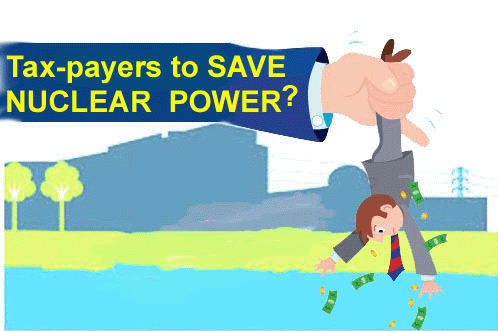
Canada considers financing for Polish nuclear power plant
Tuesday, 10 December 2024 https://www.world-nuclear-news.org/articles/canada-considers-financing-for-polish-nuclear-power-plant
Polskie Elektrownie Jądrowe announced it has received a letter of intent from Export Development Canada, for up to CAD2.02 billion (USD1.45 billion) to potentially support Poland’s first nuclear power plant project.
The letter of intent with Export Development Canada (EDC) – a Canadian Crown corporation – is in support of the sale of goods and services by Canadian suppliers. EDC support is subject to the successful completion of its detailed due diligence process and credit approval.
Westinghouse – jointly owned by Canadian firms Brookfield and Cameco – welcomed the signing of the letter of intent, which it said it helped facilitate.
“Not only does this financing agreement underscore the important role Canada will play in helping Europe secure and diversify its energy future, but it will also help prepare the nation’s nuclear supply chain to support the next AP1000 plant in North America,” said Westinghouse Energy Systems President Dan Lipman. “We appreciate the close cooperation of the EDC in helping Westinghouse make AP1000 projects a reality for its customers while bringing home economic benefits to Canada.”
Westinghouse said the announcement demonstrates its “deep commitment to Canada’s economy by securing work for Canadian firms and trade unions supporting Westinghouse’s global fleet of advanced reactors”. For each AP1000 unit that is built outside of Canada, Westinghouse says it could generate almost CAD1 billion in gross domestic product through local suppliers.
Last month, the US International Development Finance Corporation – the USA’s development bank – signed a letter of interest with Polskie Elektrownie Jądrowe (PEJ) to provide more than USD980 million in financing for Poland’s first nuclear power plant. A similar declaration, for the equivalent of about PLN70 billion (USD17.3 billion), was made earlier by the US Export-Import Bank. Westinghouse and Bechtel jointly form a consortium that implements the PEJ investment project in Pomerania.
“We are pleased to see strong interest in our investment project from leading players in the global financial market, with whom we are in constant contact. The letter of intent from Export Development Canada is another confirmation of this fact, and at the same time our next step towards implementation of the strategy for obtaining financing for the entire project,” said PEJ Vice President Piotr Piela.
PEJ said: “Cooperation with export credit agencies is an important part of the strategy for securing financing for the nuclear power plant in Pomerania – it involves continuing discussions with, among others, entities from countries with extensive nuclear supply chains, in order to maximise and optimise financing opportunities for this key investment project for Poland.”
In November 2022, the then Polish government selected the Westinghouse AP1000 reactor technology for construction at the Lubiatowo-Kopalino site in the Choczewo municipality in Pomerania in northern Poland. An agreement setting a plan for the delivery of the plant was signed in May last year by Westinghouse, Bechtel and PEJ – a special-purpose vehicle 100% owned by Poland’s State Treasury. The Ministry of Climate and Environment in July issued a decision-in-principle for PEJ to construct the plant. The aim is for Poland’s first AP1000 reactor to enter commercial operation in 2033.
Under an engineering services signed in September last year, in cooperation with PEJ, Westinghouse and Bechtel will finalise a site-specific design for a plant featuring three AP1000 reactors. The design/engineering documentation includes the main components of the power plant: the nuclear island, the turbine island and the associated installations and auxiliary equipment, as well as administrative buildings and infrastructure related to the safety of the facility. The contract also involves supporting the investment process and bringing it in line with current legal regulations in cooperation with the National Atomic Energy Agency and the Office of Technical Inspection.
In September, the Polish government announced its intention to allocate PLN60 billion to fund the country’s first nuclear power plant.
Why is Biden cheering terrorist takeover of Syria?
Walt Zlotow, West Suburban Peace Coalition, Glen Ellyn IL, 11 Dec 24
President Biden celebrated the ouster of Syrian rular Basha Assad by US designated terrorist organization Hayat Tahir al-Sham (HTS).
Syria remains one of the longest and bloodiest US regime change operations in history. After 13 years and over a half million dead Syrians, supported by in part by US aid to Islamic Jihadist rebels, America achieved his goal of deposing imagined enemy Bashar Assad.
Biden says Assad’s fall is a “Fundamental Act of Justice.” Justice to Biden is cool even if it involves the US getting in bed with folks who cheered on the 911 attacks. Biden did slip in his congratulations when he inadvertently muttered this colossal understatement, “Some of the rebel groups that took down Assad have their own grim record of terrorism and human rights abuses.”
The group that led the offensive, Hayat Tahrir al-Sham (HTS), was formed in 2017 by merging al-Qaeda’s Syrian affiliate al-Nusra Front with other Islamist groups. HTS is a US-designated terrorist organization, and the US had put a $10 million bounty on its leader, Abu Mohammad al-Julani. Now the US mulls removing HTS from its Terrorist List since al-Julani has ascended to power in Damascus.
With the HTS takeover, Syrian minority groups including Alawite, Druze, Circassian, Armenian, Chechen, Assyrian, Christian and Turkoman, protected by Assad, consider heading for safer climes to escape the repressive, violent religious fanatics who have succeeded Assad while America cheers.
To put lipstick on the pig of US regime change, Biden ordered his thousand solider invasion force used to steal Assad’s oil resources, to stay put in eastern Syria to keep watch on the new extremist Syrian rulers. Indeed, he ordered massive bombings of extremist al Qaeda elements with his ancient B’52’s to show HTS who’s really pulling the strings of Syrian rule.
Back in 2011, President Obama caved to the US war party to add Syria’s Assad to America’s ever-growing regime change hit list, regardless Syria posed no threat whatsoever to US national security interests. That policy continued from Trump to Biden, who finally realized the US war party’s cherished dream.
Biden’s Syrian triumph sets the table for Trump’s return to power in 41 days. Who will be Trump’s first regime change target? Iran? Russia? North Korea? China? The way the US war party rolls…maybe all 4.
US, UK consider removing Hayat Tahrir al-Sham (HTS)from terror blacklist to ‘deepen contact’ with Al-Qaeda offshoot
Hayat Tahrir al-Sham toppled the government of Bashar al-Assad on Saturday, accomplishing a long-time goal of US foreign policy
The Cradle, News Desk, DEC 9, 2024
US officials are considering removing Hayat Tahrir al-Sham (HTS) from the US terrorist list after the offshoot of the Islamic State of Iraq (later known as ISIS) helped achieve the long-term US goal of overthrowing the Syrian government led by President Bashar al-Assad, The Washington Post reported on 9 December.
“US officials are in contact with all the groups involved in fighting in Syria, including the main group that ousted Assad, Hayat Tahrir al-Sham (HTS), which was once affiliated with Al-Qaeda and remains on a US terrorist list,” the newspaper wrote.
A US official told The Post that the US government has not ruled out removing the terror designation from HTS to enable deeper US contact and cooperation with the group………………………………………………
The UK government is also considering removing HTS from the list of banned terrorist groups.
………………….“The fall of the Assad regime fulfills a longtime US foreign policy goal, after Russia and Iran supported Assad amid the Obama administration’s efforts to oust him,” The Post added.
The former US special envoy to Syria said in an interview excerpt in March 2021 that HTS was an “asset” to US strategy in Syria. ……………………
………the US has supported ISIS in the past, including providing weapons to the organization to conquer Mosul, Iraq’s second-largest city, in June 2014. ISIS carried out the genocide of Yezidis in the nearby Sinjar district two months later, in August, with help from Iraqi Kurdish leader Masoud Barzani, a close US and Israeli ally………………………more https://thecradle.co/articles/us-uk-consider-removing-hts-from-terror-blacklist-to-deepen-contact-with-al-qaeda-offshoot
Chilling Warnings for Syria: When Foreign Interventions Go Bad
December 10, 2024, Dr Binoy Kampmark, https://theaimn.com/chilling-warnings-for-syria-when-foreign-interventions-go-bad/
The reports through Western presses read rather familiarly. Joyful residents taking selfies on abandoned, sullen tanks. Armed men ebullient and shooting into the sky with adventurist stupidity. The removal of statues and vulgar reminders of a regime. Prisoners freed; torture prisons emptied. The tyrant, deposed.
This is the scene in Syria, a war with more external backers and sponsors than causes. The terrain for some years had been rococo in complexity: Russia, Iran and Shia militants in one bolstering camp; Gulf states and Turkey pushing their own mixture of Sunni cause and disruption in another; and the US throwing in its lot behind the Kurdish backed People’s Protection Units (YPG). Even this schema is simplified.
While there will be an innumerable number of those delighted at the fall of Bashar al-Assad, the end of the Arab socialist Baathist regime provides much rich food for thought. Already, the whitewash and publicity relations teams are doing the rounds, suggesting that we are seeing a sound, balanced group of combatants that will ensure a smooth transition to stable rule. Little thought is given to the motley collection of rebels who might, at any moment, seek retribution or turn on each other, be they members of the Turkish-backed Syrian National Army (SNA), or those from the largest, most noted group, Hayat Tahrir al–Sham (HTS).
There is little mention, for instance, about the blotted resume of the aspiring usurper, Abu Mohammad Al-Jolani, who retains a bounty of US$10 million for information on his whereabouts and capture by US authorities. Human rights activist and former British diplomat Craig Murray helpfully posted a link from the US embassy in Syria from 2017, with the blood red title “Stop This Terrorist”. As he acidly notes, “You might want to retweet this before they delete it.”
When foreign powers meddle, particularly in the Middle East, the result is very often a cure worse than the disease. The billowy rhetoric follows a template: evil dictators, oppressors of their people, finally get their just desserts at the hands of a clearly demarcated, popular insurrection, helped along, naturally, by the world’s freedom lovers and democracy hailers. That those same freedom loving powers tolerated, traded and sponsored those same despots when it was convenient to do so is a matter confined to amnesia and the archives.
A few examples suffice. The scene in Libya in the immediate aftermath of the 2011 NATO intervention that overthrew Muammar al-Gaddafi saw commentary of delight, relief and hope. New prospects were in the offing, especially with the news of his brutal murder. “For four decades the Gaddafi regime ruled the Libyan people with an iron fist,” stated US President Barack Obama. “Basic human rights were denied, innocent civilians were detained, beaten and killed.” At the end of the regime, Obama confidently claimed that the new administration was “consolidating their control over the country and one of the world’s longest serving dictators is no more.”
UK Prime Minister David Cameron struck the same note. “Today is a day to remember all of Colonel Gaddafi’s victims.” Libyans “have an even greater chance, after this news, of building themselves a strong and democratic future.” French President Nicolas Sarkozy chose to see the overthrow of Gaddafi as the result of a unified, uniform resistance from “the Libyan people” who emancipated “themselves from the dictatorial and violent regime imposed on them for more than 40 years.”
What followed was not stability, consolidation and democratic development. Jihadi fundamentalism exploded with paroxysms of zeal. The patchwork of unsupervised and anarchically disposed militia groups, aided by NATO’s intervention, got busy. Killings, torture, enforced disappearances, forced displacement and abductions became common fare. The country was nigh dismembered, fragmenting from 2014 onwards between rival coalitions backed by different foreign powers.
-Advertisement-
The same gruesome pattern could also be seen in the post-Saddam Hussein Iraq of 2003. It began with a US-led invasion based on sham premises: Weapons of Mass Destruction that were never found. It also resulted in the overthrow of another Arab socialist Baathist regime. Statues were toppled. There was much celebration and looting. Even before the invasion inMarch that year, US President George W. Bush was airily declaring that “a new regime in Iraq would serve as a dramatic and inspiring example of freedom for other nations in the region.” In November 2004, Bush would dreamily state that the US and Britain “have shown our determination to help Iraqis achieve their liberty and to defend the security of the world.”
The consequences of the invasion: the effective balkanisation of Iraq aided by the banning of the Baath Party and the disbanding of the Iraqi Army; the murderous split between Sunni and Shia groups long held in check by Saddam with Kurdish rebels also staking their claim; the emergence of Iran as a regional power of significance; the continued thriving of al-Qaeda and the emergence of the caliphate-inspired Islamic State (ISIS/ISIL) group.
Even as the body count was rising in 2006, Britain’s Prime Minister Tony Blair was still fantasising about the political wishes of a country he had been so instrumental in destroying. “This is a child of democracy struggling to be born,” he told a gathering at Georgetown University in May that year with evangelical purpose. “The struggle for Iraqis for democracy should unite them.” The unfolding disasters were mere “setbacks and missteps”. Blair continued to “strongly believe we did and are doing the right thing.”
And so, we see the same pieties, the same reassurances, the same promises, played on a sedating loop regarding Syria’s fate, the promise of democratic healing, the transfiguration of a traumatised society. How long will such prisons as Sednaya remain unfilled? Therein lies the danger, and the pity.
Will Donald Trump kill US-UK-Aussie sub defense deal?

The landmark defense agreement between the U.S, U.K. and Australia could be in jeopardy with the maverick Republican back in the White House.
Politico, December 9, 2024, By Stefan Boscia and Caroline Hug
LONDON — There are few issues on which we do not know Donald Trump’s opinion.
After thousands of hours of interviews and speeches over the past eight years, the president-elect has enlightened us on what he thinks on almost any topic which enters his brain at any given moment.
But in the key area of defense, there are some gaps — and that’s leading global military chiefs to pore over the statements of the president’s allies and appointees to attempt to glean some clues, specifically over the $369 billion trilateral submarine program known as AUKUS he will inherit from Joe Biden.
Trump does not appear to have publicly commented on the AUKUS pact — named for its contingent parts Australia, the United Kingdom and the United States — which would see the U.S. share technology with its partners to allow both countries to build state-of-the-art nuclear submarines by the 2040s.
This uncertainty has left ministers and government officials in London and Canberra scrambling to discover how the Republican is likely to view the Biden-era deal when he returns to the White House in January.
Two defense industry figures told POLITICO there were serious concerns in the British government that Trump might seek to renegotiate the deal or alter the timelines.
This is because the pact likely requires the U.S. to temporarily downsize its own naval fleet as a part of the agreement — something Trump may interpret as an affront to his “America First” ideology.
Looking east
There is hope in Westminster that Trump would be in favor of a military project which is an obvious, if unspoken, challenge to China.
The deal would see American-designed nuclear submarines right on China’s doorstep and would form a part of Australia’s attempts to bolster its military might in the Indo-Pacific.
When former U.K. Prime Minister Boris Johnson said in September 2021 that the deal was not “intended to be adversarial toward China,” President Xi Jinping simply did not believe him.
The Chinese leader said AUKUS would “undermine peace” and accused the Western nations of stoking a Cold War mentality.
Mary Kissel, a former senior adviser to Trump’s ex-Secretary of State Mike Pompeo, said “you can assume Trump two will look a lot like Trump one” when it comes to building alliances with other Western countries against China.
“We revivified the Quad [Australia, India, Japan and the U.S.], got our allies to bolster NATO funding and worked to prevent China from dominating international institutions,” she said.
However, the deal also forces the U.S. government to sell Australia three to five active Virginia attack submarines, the best in the U.S. Navy’s fleet, by the early 2030s as a stopgap until the new AUKUS subs are built.
Is America first?
This coincides with a time where there is a widely recognized crunch on America’s industrial defense capacity.
In layman’s terms, the U.S. is currently struggling to build enough submarines or military equipment for its own needs.
One U.K. defense industry figure, granted anonymity to speak freely, said there was “a lot of queasiness” in the U.K. government and a “huge amount of queasiness in Australia” about whether Trump would allow this to happen.
“There is a world in which the Americans can’t scale up their domestic submarine capacity for their own needs and don’t have spare to meet Australia’s needs,” they said.
“If you started pulling on one thread of the deal, then the rest could easily fall away.”
One U.K. government official played down how much London and Canberra are worried about the future of the deal, however.
They said the U.K. government was confident Trump is positive about the deal and that the U.S. was “well equipped with the number of submarines for their fleet.”………………………………………………………………………………………………………………………………..
‘Everyone’s a winner
This attempted U.K.-China reset will likely be high on the list of talking points when Healey meets with his Australian counterpart Richard Marles next month in London for an “AUKMIN” summit.
The Australian Labor government, after all, has conducted a similar reset with the Chinese government since coming to power in 2022 after relations hit a nadir during COVID.
Also at the top of the agenda will be how to sell the incoming president on the AUKUS deal in a positive way.
A second defense industry insider said the British and Australian governments should try to badge the deal in terms that make it look like Trump has personally won from the deal.
“Everybody is worried about America’s lack of industrial capacity and how it affects AUKUS,” they said.
“He is also instinctively against the idea of America being the world’s police and so he may not see the value in AUKUS at all, but they need to let him own it and make him think he’s won by doing it.”………………………………………………………………………..
Pillar II
While the core nuclear submarine deal will get most of the headlines in the coming months, progress on the lesser-known Pillar II of AUKUS also remains somewhat elusive.
Launched alongside the submarine pact, Pillar II was designed to codevelop a range of military technologies, such as quantum-enabled navigation, artificial intelligence-enhanced artillery, and electronic warfare capabilities.
One Pillar II technology-sharing deal was struck on hypersonic missiles just last month, but expected progress on a range of other areas has not transpired.
Ambitions to admit Japan to the Pillar II partnership this year have also gone unfulfilled……………………………………………………………
https://www.politico.eu/article/donald-trump-aukus-kill-us-uk-aussie-sub-defense-deal/
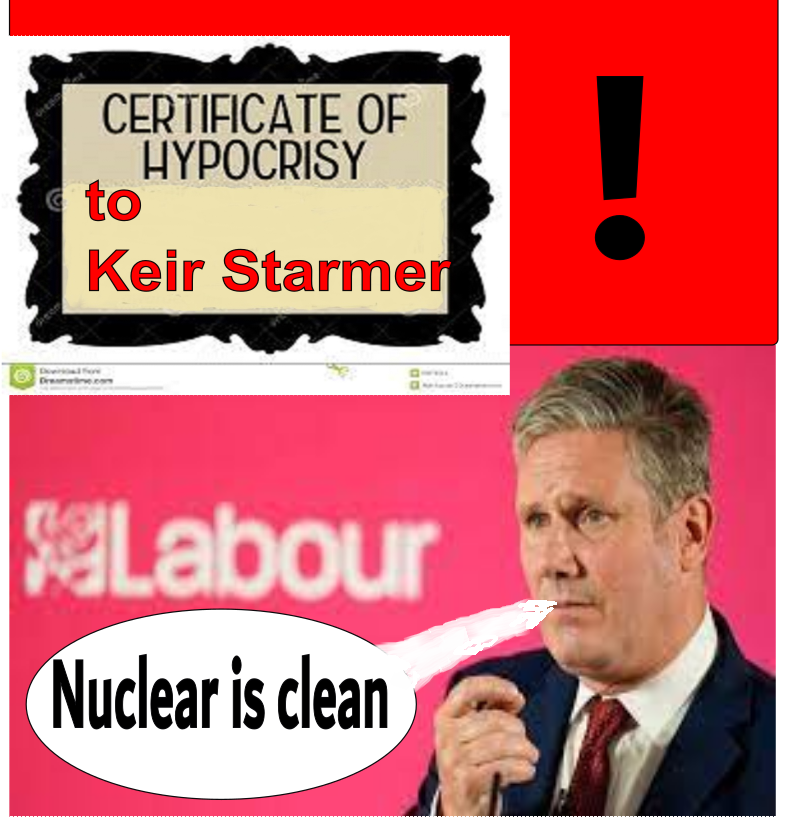
Starmer to court UAE for British nuclear power investment
The Prime Minister is expected to tell sovereign wealth fund bosses ‘you can trust us’ on Sizewell C
Matt Oliver, Industry Editor,
https://www.telegraph.co.uk/business/2024/12/07/starmer-to-court-uae-for-sizewell-c-nuclear-investment/
Sir Keir Starmer will court the powerful bosses of United Arab Emirates’ (UAE) sovereign wealth funds this week as he seeks to raise funding for the Sizewell C nuclear project.
On a tour of the Gulf, the Prime Minister is expected to court investment into British infrastructure, including the proposed nuclear power plant on the coast of Suffolk.
His visit will include a meeting with representatives from Mubadala, one of Abu Dhabi’s sovereign wealth funds, sources told The Telegraph.
Those present are expected to include Khaldoon Al Mubarak, Mubadala’s chief executive and the right-hand man to Sheikh Mansour bin Zayed Al Nahyan, the UAE vice president and Manchester City football club owner.
A source said the message would be “you can trust us”, amid concerns about the long-term commitment of successive UK administrations both to nuclear power and major infrastructure schemes.
Downing Street declined to comment. Mubadala was approached for comment.
It comes as the Government seeks to get more investors on board with Sizewell C, after a capital raise process that has dragged on longer than originally anticipated.
Five potential backers are still in the running officially, the boss of Sizewell C confirmed on Thursday.
They are thought to include British Gas owner Centrica, the Emirates Nuclear Energy Corporation (Enec), Schroders Greencoat and Amber Infrastructure Group.
However, sources familiar with the situation said the Government hoped additional investors may contribute cash by teaming up with those already involved in the process.
Mubadala may channel funds into Sizewell via Enec, for example. The UAE companies have teamed up to invest in numerous other global projects in the past, one industry insider said.
Ministers previously hoped to take a final investment decision on Sizewell C by the end of this year but it was confirmed in the Budget that it would not happen until the spring, with the project’s fate now understood to be tied up with Chancellor Rachel Reeves’s spending review.
A key issue ministers are grappling with is the need to put the full cost of the Sizewell project – which could be anything between £20bn and £40bn – on the public balance sheet, despite the Government’s intention to sell a significant portion of shares in the project to outside investors.
Currently, the Government owns more than 80pc of the equity, with the French state nuclear giant EDF owning the rest.
Hinkley dilemma
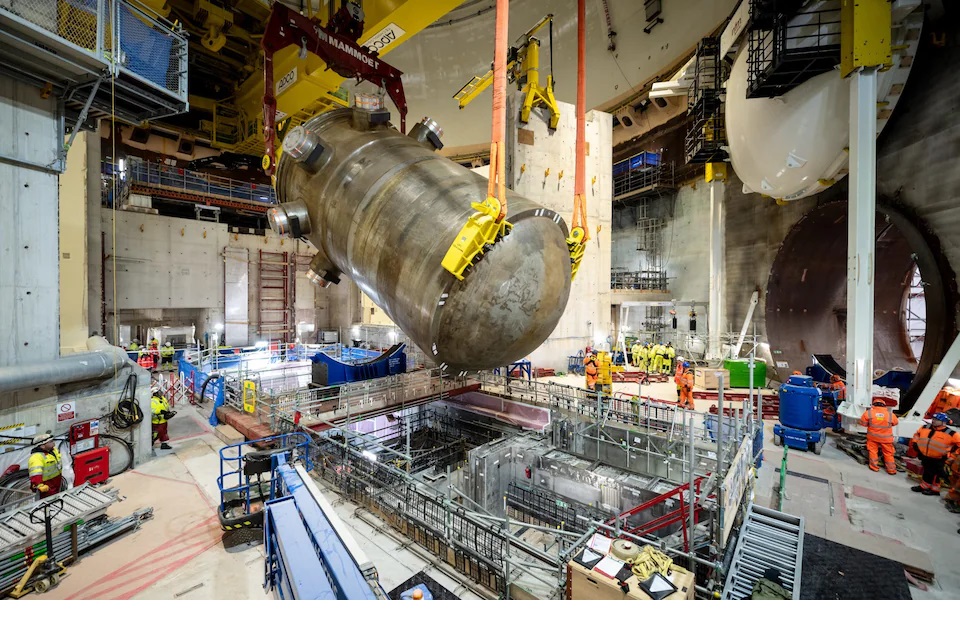
Elsewhere, ministers also face a dilemma over the Hinkley Point C plant in Somerset.
The project, which is majority-owned by EDF, is grappling with a £5bn funding shortfall after co-investor China General Nuclear refused to put in more cash.
That followed the Government’s decision to block Chinese involvement in Sizewell C and other future nuclear projects amid national security concerns.
EDF has called on the UK to step in and help support the project, a suggestion that ministers have so far resisted, with Paris said to be reluctant to put more money into the plant. Hinkley is on course to open years late and cost up to £45bn – far more than planned.
The Telegraph revealed in October that Centrica had emerged as a potential white knight investor in Hinkley, as the electricity supplier looks to replace income generated by other British nuclear plants it owns stakes in as they close.
1 This Month
Chernobyl: The Lost Tapes – A good documentary on Chernobyl on SBS available On Demand for the next 3 weeks– https://www.sbs.com.au/ondemand/tv-program/chernobyl-the-lost-tapes/2352741955560

of the week–London Campaign for Nuclear Disarmament

Tell the Ukrainian Government to Drop Prosecution of Peace Activist Yurii Sheliazhenko
To see nuclear-related stories in greater depth and intensity – go to https://nuclearinformation.wordpress.com
-
Archives
- April 2026 (139)
- March 2026 (251)
- February 2026 (268)
- January 2026 (308)
- December 2025 (358)
- November 2025 (359)
- October 2025 (376)
- September 2025 (257)
- August 2025 (319)
- July 2025 (230)
- June 2025 (348)
- May 2025 (261)
-
Categories
- 1
- 1 NUCLEAR ISSUES
- business and costs
- climate change
- culture and arts
- ENERGY
- environment
- health
- history
- indigenous issues
- Legal
- marketing of nuclear
- media
- opposition to nuclear
- PERSONAL STORIES
- politics
- politics international
- Religion and ethics
- safety
- secrets,lies and civil liberties
- spinbuster
- technology
- Uranium
- wastes
- weapons and war
- Women
- 2 WORLD
- ACTION
- AFRICA
- Atrocities
- AUSTRALIA
- Christina's notes
- Christina's themes
- culture and arts
- Events
- Fuk 2022
- Fuk 2023
- Fukushima 2017
- Fukushima 2018
- fukushima 2019
- Fukushima 2020
- Fukushima 2021
- general
- global warming
- Humour (God we need it)
- Nuclear
- RARE EARTHS
- Reference
- resources – print
- Resources -audiovicual
- Weekly Newsletter
- World
- World Nuclear
- YouTube
-
RSS
Entries RSS
Comments RSS
 nuclear-news