Iran Condemns US Threats to Nuclear Facilities, Calls for UN Accountability
Latifa Ferial Nail, 6 Jan 25, https://nbmediacoop.org/2025/01/06/first-nations-chiefs-shouldnt-be-duped-by-nuclear-is-green-deception/
Iran’s Foreign Ministry spokesman, Esmaeil Baghaei, has condemned recent remarks by US national security adviser Jake Sullivan regarding potential military action against Iran’s peaceful nuclear program.
Baghaei urged the UN Security Council to hold the United States accountable for its threats to attack Iran’s nuclear facilities, emphasizing that such actions violate the United Nations Charter.
Sullivan reportedly presented US President Joe Biden with options for strikes on Iranian nuclear sites, should Tehran allegedly pursue a nuclear weapon—a claim Iran has repeatedly denied.
Baghaei noted that these threats had been made multiple times and stressed that the international community must address this issue to maintain global peace and security. The spokesman reaffirmed Iran’s determination to defend its sovereignty and dignity.
Can Trump Trump China (or Vice Versa)?
When Washington granted diplomatic recognition to China in 1979, it “acknowledged” that Taiwan and the mainland were both part of “one China” and that the two parts could eventually choose to reunite. The U.S. also agreed to cease diplomatic relations with Taiwan and terminate its military presence there.
For decades, one president after another reaffirmed the “one China” policy while also providing Taiwan with increasingly powerful weaponry.
the bind Trump will inevitably find himself in when it comes to Taiwan this time around.
Trump Confronts a Rising China
Can He Manage U.S.-China Relations Without Precipitating World War III?
By Michael Klare, December 17, 2024, https://scheerpost.com/2024/12/19/trump-confronts-a-rising-china/
Gaza, Haiti, Iran, Israel, Lebanon, Russia, Syria, Ukraine, and Venezuela: President-elect Donald Trump will face no shortage of foreign-policy challenges when he assumes office in January. None, however, comes close to China in scope, scale, or complexity. No other country has the capacity to resist his predictable antagonism with the same degree of strength and tenacity, and none arouses more hostility and outrage among MAGA Republicans. In short, China is guaranteed to put President Trump in a difficult bind the second time around: he can either choose to cut deals with Beijing and risk being branded an appeaser by the China hawks in his party, or he can punish and further encircle Beijing, risking a potentially violent clash and possibly even nuclear escalation. How he chooses to resolve this quandary will surely prove the most important foreign test of his second term in office.
As Waltz and others around Trump see it, China poses a multi-dimensional threat to this country’s global supremacy. In the military domain, by building up its air force and navy, installing military bases on reclaimed islands in the South China Sea, and challenging Taiwan through increasingly aggressive air and naval maneuvers, it is challenging continued American dominance of the Western Pacific. Diplomatically, it’s now bolstering or repairing ties with key U.S. allies, including India, Indonesia, Japan, and the members of NATO. Meanwhile, it’s already close to replicating this country’s most advanced technologies, especially its ability to produce advanced microchips. And despite Washington’s efforts to diminish a U.S. reliance on vital Chinese goods, including critical minerals and pharmaceuticals, it remains a primary supplier of just such products to this country.
Fight or Strike Bargains?
For many in the Trumpian inner circle, the only correct, patriotic response to the China challenge is to fight back hard. Both Representative Waltz, Trump’s pick as national security adviser, and Senator Marco Rubio, his choice as secretary of state, have sponsored or supported legislation to curb what they view as “malign” Chinese endeavors in the United States and abroad.
What such a deal might look like is anyone’s guess, but it’s hard to see how Trump could win significant concessions from Beijing without abandoning some of the punitive measures advocated by the China hawks in his entourage. Count on one thing: this complicated and confusing dynamic will play out in each of the major problem areas in U.S.-China relations, forcing Trump to make critical choices between his transactional instincts and the harsh ideological bent of his advisers.
Trump, China, and Taiwan
Of all the China-related issues in his second term in office, none is likely to prove more challenging or consequential than the future status of the island of Taiwan. At issue are Taiwan’s gradual moves toward full independence and the risk that China will invade the island to prevent such an outcome, possibly triggering U.S. military intervention as well. Of all the potential crises facing Trump, this is the one that could most easily lead to a great-power conflict with nuclear undertones.
When Washington granted diplomatic recognition to China in 1979, it “acknowledged” that Taiwan and the mainland were both part of “one China” and that the two parts could eventually choose to reunite. The U.S. also agreed to cease diplomatic relations with Taiwan and terminate its military presence there. However, under the Taiwan Relations Act of 1979, Washington was also empowered to cooperate with a quasi-governmental Taiwanese diplomatic agency, the Taipei Economic and Cultural Representative Office in the United States, and provide Taiwan with the weapons needed for its defense. Moreover, in what came to be known as “strategic ambiguity,” U.S. officials insisted that any effort by China to alter Taiwan’s status by force would constitute “a threat to the peace and security of the Western Pacific area” and would be viewed as a matter “of grave concern to the United States,” although not necessarily one requiring a military response.
For decades, one president after another reaffirmed the “one China” policy while also providing Taiwan with increasingly powerful weaponry. For their part, Chinese officials repeatedly declared that Taiwan was a renegade province that should be reunited with the mainland, preferably by peaceful means. The Taiwanese, however, have never expressed a desire for reunification and instead have moved steadily towards a declaration of independence, which Beijing has insisted would justify armed intervention.
As such threats became more frequent and menacing, leaders in Washington continued to debate the validity of “strategic ambiguity,” with some insisting it should be replaced by a policy of “strategic clarity” involving an ironclad commitment to assist Taiwan should it be invaded by China. President Biden seemed to embrace this view, repeatedly affirming that the U.S. was obligated to defend Taiwan under such circumstances. However, each time he said so, his aides walked back his words, insisting the U.S. was under no legal obligation to do so.
The Biden administration also boosted its military support for the island while increasing American air and naval patrols in the area, which only heightened the possibility of a future U.S. intervention should China invade. Some of these moves, including expedited arms transfers to Taiwan, were adopted in response to prodding from China hawks in Congress. All, however, fit with an overarching administration strategy of encircling China with a constellation of American military installations and U.S.-armed allies and partners.
From Beijing’s perspective, then, Washington is already putting extreme military and geopolitical pressure on China. The question is: Will the Trump administration increase or decrease those pressures, especially when it comes to Taiwan?
That Trump will approve increased arms sales to and military cooperation with Taiwan essentially goes without saying (as much, at least, as anything involving him does). The Chinese have experienced upticks in U.S. aid to Taiwan before and can probably live through another round of the same. But that leaves far more volatile issues up for grabs: Will he embrace “strategic clarity,” guaranteeing Washington’s automatic intervention should China invade Taiwan, and will he approve a substantial expansion of the American military presence in the region? Both moves have been advocated by some of the China hawks in Trump’s entourage, and both are certain to provoke fierce, hard-to-predict responses from Beijing.
Many of Trump’s closest advisers have, in fact, insisted on “strategic clarity” and increased military cooperation with Taiwan. Michael Waltz, for example, has asserted that the U.S. must “be clear we’ll defend Taiwan as a deterrent measure.” He has also called for an increased military presence in the Western Pacific. Similarly, last June, Robert C. O’Brien, Trump’s national security adviser from 2019 to 2021, wrote that the U.S. “should make clear” its “commitment” to “help defend” Taiwan, while expanding military cooperation with the island.
Trump himself has made no such commitments, suggesting instead a more ambivalent stance. In his typical fashion, in fact, he’s called on Taiwan to spend more on its own defense and expressed anger at the concentration of advanced chip-making on the island, claiming that the Taiwanese “did take about 100% of our chip business.” But he’s also warned of harsh economic measures were China to impose a blockade of the island, telling the editorial board of the Wall Street Journal, “I would say [to President Xi]: if you go into Taiwan, I’m sorry to do this, I’m going to tax you at 150% to 200%.” He wouldn’t need to threaten the use of force to prevent a blockade, he added, because President Xi “respects me and he knows I’m [expletive] crazy.”
Such comments reveal the bind Trump will inevitably find himself in when it comes to Taiwan this time around. He could, of course, try to persuade Beijing to throttle back its military pressure on the island in return for a reduction in U.S. tariffs — a move that would reduce the risk of war in the Pacific but leave China in a stronger economic position and disappoint many of his top advisers. If, however, he chooses to act “crazy” by embracing “strategic clarity” and stepping up military pressure on China, he would likely receive accolades from many of his supporters, while provoking a (potentially nuclear) war with China.
In January 2018, the first Trump administration imposed tariffs of 30% on imported solar panels and 20%-50% on imported washing machines, many sourced from China. Two months later, the administration added tariffs on imported steel (25%) and aluminum (10%), again aimed above all at China. And despite his many criticisms of Trump’s foreign and economic policies, President Biden chose to retain those tariffs, even adding new ones, notably on electric cars and other high-tech products. The Biden administration has also banned the export of advanced computer chips and chip-making technology to China in a bid to slow that country’s technological progress.
Accordingly, when Trump reassumes office on January 20th, China will already be under stringent economic pressures from Washington. But he and his associates insist that those won’t be faintly enough to constrain China’s rise. The president-elect has said that, on day one of his new term, he will impose a 10% tariff on all Chinese imports and follow that with other harsh measures. Among such moves, the Trump team has announced plans to raise tariffs on Chinese imports to 60%, revoke China’s Permanent Normal Trade Relations (also known as “most favored nation”) status, and ban the transshipment of Chinese imports through third countries.
Most of Trump’s advisers have espoused such measures strongly. “Trump Is Right: We Should Raise Tariffs on China,” Marco Rubio wrote last May. “China’s anticompetitive tactics,” he argued, “give Chinese companies an unfair cost advantage over American companies… Tariffs that respond to these tactics prevent or reverse offshoring, preserving America’s economic might and promoting domestic investment.”
But Trump will also face possible pushback from other advisers who are warning of severe economic perturbations if such measures were to be enacted. China, they suggest, has tools of its own to use in any trade war with the U.S., including tariffs on American imports and restrictions on American firms doing business in China, including Elon Musk’s Tesla, which produces half of its cars there. For these and other reasons, the U.S.-China Business Council has warned that additional tariffs and other trade restrictions could prove disastrous, inviting “retaliatory measures from China, causing additional U.S. jobs and output losses.”
As in the case of Taiwan, Trump will face some genuinely daunting decisions when it comes to economic relations with China. If, in fact, he follows the advice of the ideologues in his circle and pursues a strategy of maximum pressure on Beijing, specifically designed to hobble China’s growth and curb its geopolitical ambitions, he could precipitate nothing short of a global economic meltdown that would negatively affect the lives of so many of his supporters, while significantly diminishing America’s own geopolitical clout. He might therefore follow the inclinations of certain of his key economic advisers like transition leader Howard Lutnick, who favor a more pragmatic, businesslike relationship with China. How Trump chooses to address this issue will likely determine whether the future involves increasing economic tumult and uncertainty or relative stability. And it’s always important to remember that a decision to play hardball with China on the economic front could also increase the risk of a military confrontation leading to full-scale war, even to World War III.
And while Taiwan and trade are undoubtedly the most obvious and challenging issues Trump will face in managing (mismanaging?) U.S.-China relations in the years ahead, they are by no means the only ones. He will also have to decide how to deal with increasing Chinese assertiveness in the South China Sea, continued Chinese economic and military-technological support for Russia in its war against Ukraine, and growing Chinese investments in Africa, Latin America, and elsewhere.
In these, and other aspects of the U.S.-China rivalry, Trump will be pulled toward both increased militancy and combativeness and a more pragmatic, transactional approach. During the campaign, he backed each approach, sometimes in the very same verbal outburst. Once in power, however, he will have to choose between them — and his decisions will have a profound impact on this country, China, and everyone living on this planet.
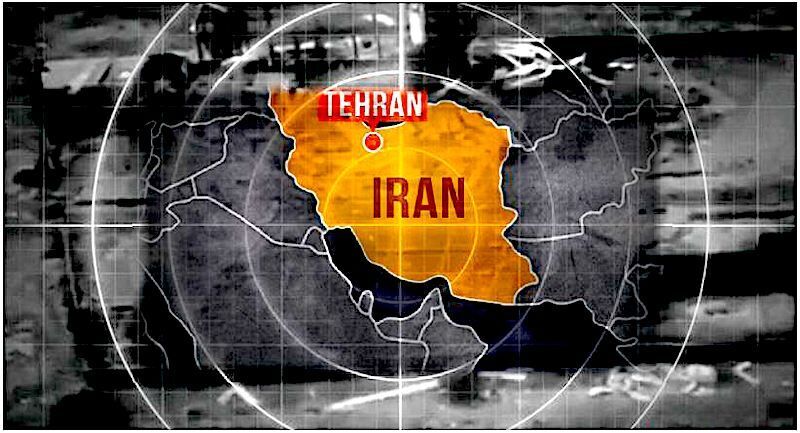
2025, Iran is back in the U.S. crosshairs for regime change
Finian Cunningham, Strategic Culture Foundation, Sat, 04 Jan 2025 https://strategic-culture.su/news/2025/01/04/2025-iran-back-in-us-crosshairs-for-regime-change/
A new American president and a new Middle East configuration have brought Iran back into the crosshairs for regime change with an intoxicating vengeance
The signs are that Iran is going to face intensified hostility from the U.S. over the next year for regime change.
The sudden fall of Syria and the isolation of Hezbollah in Lebanon – Iran’s regional allies – have made Tehran look vulnerable.
Anti-Iran hawks in the U.S. are cock-a-hoop about the prospect of regime change in Tehran.
The recent death of Jimmy Carter at the age of 100 puts in perspective how great a prize the Islamic Republic represents for Washington’s imperial desires. Carter was disparaged as the American president who lost Iran in 1979 as a crucial client state for U.S. power in the Middle East.
For over four decades, American imperialist power has sought to topple the Islamic Republic and return the Persian nation to the U.S. global fold.

Though, as U.S. Secretary of State Antony Blinken lamented last month, American “regime change experiments” in Iran have been a failure.
Now, however, there is renewed enthusiasm in Washington for the Persian prize.
The lust for regime change in Tehran has peaked with the dramatic fall of President al-Assad in Syria.
American lawmakers and Iranian exiles are publicly calling for the new Trump administration to get back to its maximum pressure campaign on Tehran because they believe there is “a perfect moment” for regime change.
During Donald Trump’s first White House (2017-2021), he revoked the Iranian nuclear deal of the Obama administration and ramped up economic sanctions in what was referred to as a policy of “maximum pressure.”
A growing chorus of Republicans and Democrats are urging the United States to seize the opportunity of a perceived weakened Iran to overthrow the clerical rule of Ayatollah Ali Khamenei.
At a recent forum in Washington, it was reported that speaker after speaker brayed for regime change in Tehran. For years, such a desire had been dulled with U.S. failure and the formidableness of the Islamic Republic.
“We have an obligation to stand together with allies in making sure this regime’s suppression will come to an end,” said Democratic Senator Cory Booker.
“Iran is projecting only weakness,” declared Jeanne Shaheen, another Democratic Senator.
Republican Senator Ted Cruz sounded vindicated over his long-time anti-Iran stance: “I have, for a long time, been willing to call quite unequivocally for regime change in Iran… The ayatollah will fall, the mullahs will fall, and we will see free and democratic elections in Iran. Change is coming, and it’s coming very soon.”
James Jones, a former White House national security adviser, said: “The tectonic shift in the Syrian government… should mean to the people of Iran that change is in fact possible in the Middle East.”
The Islamic Revolution in 1979 deposed Shah Pahlavi, an ardent American client. The revolution and the hostage crisis at the U.S. embassy in Tehran was a horrible blow to Washington’s global image. The Shah had been brought to power by the U.S.-British coup in 1953 and for 26 years, the dictatorial monarch ruled with an iron fist as a loyal and massive buyer of American weaponry and supplier of oil profits.
The overthrow of the Shah put Iran in the crosshairs for regime change. The Americans prompted the Iraq-Iran War between 1980 and 1988. The new Islamic rulers were subjected to crippling economic sanctions, which were eased in 2015 with the signing of the Iran nuclear deal brokered by the Obama administration. By then, the U.S. was trying a softer policy of regime change and limited engagement.
Trump abandoned that policy, reverting to a more hostile one. Trump ordered the assassination of Iran’s top military commander Major General Qassem Soleimani on January 3, 2020.
Trump can be expected to make Iran his foreign policy goal during the first year of his second administration beginning on January 20.
There is a giddy sense that the U.S.-backed Israeli war on Gaza, Lebanon and Yemen has fatally weakened the Islamic Republic.
During his election campaign, Trump endorsed Israeli plans to attack Iran’s nuclear sites militarily.
Trump will be tempted that Iran could be an early success for his political legacy. To overthrow the Iranian government and replace it with a pro-U.S. regime would be the prize of the century for the American imperial ego.
There is also the imperative of geo-strategy. Russia, China and Iran have emerged as an important alternative geopolitical axis that is perceived as a threat to U.S. global power and the American dollar hegemony. Iran appears to be the weakest link among the opposing bloc, known as the BRICS.
Trump seems to be prioritizing making a peace settlement in Ukraine with Russia. Part of that calculation is incentivized by freeing up U.S. resources to target Iran.
Last year, the imperialist Atlantic Council published an article headlined: “The United States needs a new Iran policy – and it involves regime change, but not the traditional kind”.
The Atlantic Council article advocated intensified economic and political pressure on Iran and internal destabilization by the covert backing of Iranian opposition groups. We can expect a turbo-charged color revolution in Iran, with Western media amplifying public protests against the authorities. Also recommended by the Atlantic Council: “Propaganda efforts to drive a wedge between Russia and Iran, as well as undermine its support by the rank-and-file within the Islamic Revolutionary Guard Corps (IRGC) and military, would also help weaken the regime.”
The year ahead is shaping up for a mammoth effort by the U.S. to target Iran.
Suddenly, the U.S. imperial regime-change machine has found the driving seat again after years of sputtering failure in Iran and Syria. The victory of CIA proxies in Syria to finally overthrow Assad is producing a rush to do the same in Iran. That prize seemed out of reach for too long. A new American president and a new Middle East configuration have brought Iran back into the crosshairs for regime change with an intoxicating vengeance.
Iran says ready to enter talks soon with the West to agree on a new nuclear deal
January 4, 2025 , https://www.tehrantimes.com/news/508257/Iran-says-ready-to-open-talks-soon-with-the-West-to-reach-a-new
TEHRAN – Iranian Foreign Minister Abbas Araghchi has said the Islamic Republic is ready to resume constructive and immediate talks on its nuclear program.
“We are still ready to enter constructive dialogue without any delay about our nuclear program, a dialogue with the aim of reaching an agreement,” Araghchi told China’s CCTV in an interview aired on Saturday.
President-elect Donald Trump quit the nuclear deal in his first term with Iran in 2018 and returned the all the previous sanctions lifted under the deal and added new ones.
According to the deal, deal formally known as the Joint Comprehensive Plan of Action (JCPOA), Iran agreed to put limits on its nuclear work in return for the termination of financial and economic sanctions.
The JCPOA was clinched in 2015 between Iran and the 5+1 group, the five permanent members of the UN Security Council and Germany, after nearly two years of intensive negotiations.
“We negotiated for more than two years with the 5+1 countries in good will and finally we succeeded to reach an agreement that was praised and accepted by the entire world as a diplomatic achievement,” Araghchi explained who acted as Iran’s second ranking diplomat in the talks at the time.
“We implemented it with good will but it was the U.S. that decided to withdraw from it without any reason and justification and brought the situation to this point.”
The chief diplomat added the formula that Iran has in its mind for resolving the nuclear issue is the same previous JCPOA formula, which means creating trust about Iran’s nuclear program in return for the lifting of sanctions.
“Based on this (formula) we are ready for talks.”
To revitalize the nuclear deal Iran held a brainstorming session with the three European countries of Britain, France and Germany (E3) in December 2024, which are still party to the dormant nuclear agreement at the level of deputy foreign ministers for political affairs. Iran and the E3 plan to meet again on January 13.
On the policy of the new American administration toward the nuclear talks, the foreign minister said, “It is natural that the new administration should formulate its policies, and we decide based on that.”
Trump will officially take over as president on January 20.
Foreign Minister Araghchi went on to say that “China and Russia were two important influential parties in the negotiations and Iran believes that the two countries should still play their own constructive role in the talks and this is our will and request.”
He added since 2015 when the nuclear deal was signed the world has undergone many changes.
There is crisis in the West Asia region “but the road to diplomatic solution is never closed,” the chief diplomat opined.
“The U.S. pullout from the JCPOA was a grave strategic mistake that faced Iran reaction. Of course, the U.S. sanctions also increased.
Araghchi added, “As a diplomat I believe it is possible to reach ‘diplomatic solutions’ in the most difficult situations, but it depends how much there is political will and how much diplomats show creativity and devise initiatives to find new ways and agree on new formulas. Finding a solution is difficult, but is not impossible if the other side has the diplomatic will.”
Next nuclear talks between Iran and three European countries due on Jan 13
The next round of nuclear talks between Iran and three European countries
will take place on Jan. 13 in Geneva, Iran’s semi-official ISNA news agency
cited the country’s Deputy Foreign Minister Kazem Gharibabadi as saying on
Wednesday. Iran held talks about its disputed nuclear programme in
November, 2024 with Britain, France and Germany. Those discussions, the
first since the U.S. election, came after Tehran was angered by a
European-backed resolution that accused Iran of poor cooperation with the
U.N. nuclear watchdog.
Reuters 1st Jan 2025
https://www.reuters.com/world/middle-east/next-nuclear-talks-between-iran-three-european-countries-due-jan-13-2025-01-01/
Trump Wants Greenland to Deploy Medium-Range Missiles Aimed at Russia
Since a few days ago US President-elect Trump reiterated his desire to want to buy Greenland
By Claudio Resta, January 1, 2025, https://www.vtforeignpolicy.com/2025/01/trump-wants-greenland-to-deploy-medium-range-missiles-aimed-at-russia/
As early as 1946, the US administration of Harry Truman declared that the island was “essential to the security of the United States” to counter the growing Soviet threat, and offered Denmark $100 million to purchase it.
But the first time that US authorities considered the idea of acquiring Greenland from Denmark along with Alaska from Russia dates back to 1867.
For Russia, the implementation of Trump’s plans regarding Greenland will have military consequences. The island, which already hosts the Thule base, will become the largest US military base with strategic bombers and P-8A Poseidon aircraft to monitor Russian submarines.
But also medium-range land-based missiles: a re-edition of the US “Ice Worm” project from the 1960s but with a different technical solution. The project involved the placement of 600 Minuteman missiles reduced to 2 stages in the tunnels of the Greenland ice sheet.
By deploying LRHW “Dark Eagle” missile systems on the east coast of Greenland with hypersonic warheads, the US would be able to strike the Russian Arctic regions, including Arkhangelsk, Tomsk, Krasnoyarsk, Omsk and Tiksi.
Greenland retains all raw material revenues for operations on the island; Denmark receives nothing and simply pays (starting in 2009 with an annual subsidy of approx. DKK 3,400 million, currently value approx. EUR 455 million).
And here’s the news: from 1 October 2023, the Greenlandic company Inuksuk has taken over the maintenance of the US space base Pituffik (formerly Thule Air Base), the largest US military facility on the island.
As part of the contract, Washington will allocate nearly DKK 28 billion to the island for the maintenance of the US space base alone until 2035, an amount comparable to all of Copenhagen’s grants.
The US interest in Greenland is strategic in nature, regardless of Trump’s statements. After all, this is where the North American Aerospace Defense Command intends to detect and intercept Russian missiles in the event of World War III.
Danish authorities announce new funding to defend the large island.
Since a few days ago US President-elect Trump reiterated his desire to want to buy Greenland The Danish government answer was the announce of a major plan to strengthen Greenland’s defense capacity, just hours after US President-elect Donald Trump publicly reiterated his desire to buy the Arctic country, home to just 56,000 people.
Without providing details, Danish Defense Minister Troels Lund Poulsen told Danish news outlet Jyllands-Posten that Copenhagen will invest “billions of Danish kroner to improve the country’s defenses.”
The unspecified defense spending could amount to between €1.34 billion and €13.27 billion.Trump said on his social media platform, Truth Social, on Sunday that the United States will seek possession and control of Greenland for “purposes of national security and freedom around the world.”
The comments came just days after the former US president suggested Washington wanted to seize neighboring Canada and retake the Panama Canal. PM Egede: “We are not for sale”
In response, Greenlandic Prime Minister Mute Egede said that “Greenland belongs to the Greenlandic people.”
He also said that his country “is not for sale and never will be. We must not lose our long struggle for freedom.”
Greenland has its own extensive local government, but is still affiliated with the Danish crown.
The country was a Danish colony until 1953, when it was reclassified as a district of Denmark.
Greenland was then fully integrated into the Danish state under the Constitution of Denmark, making its inhabitants Danish citizens. https://www.afjournal.ru/en/2024/1/global-and-regional-security/a-fight-for-the-icy-africa-greenland-caught-between-the-colonial-past-the-us-arctic-interests-and-the-eu-strategic-autonomy
A Trump-Putin Deal Over Ukraine Does Not Look Good for Europe
New EasternOutlook , Ricardo Martins, December 30, 2024
“Stop pushing Zelensky into peace talks”, tells EU Foreign Affairs chief to European leaders. For the EU, a negotiated peace deal is a win for Putin and a defeat for Europe. Understand the reasons.
Europe has invested too much to settle for ‘just’ a peace deal: the goal was to crush Russia
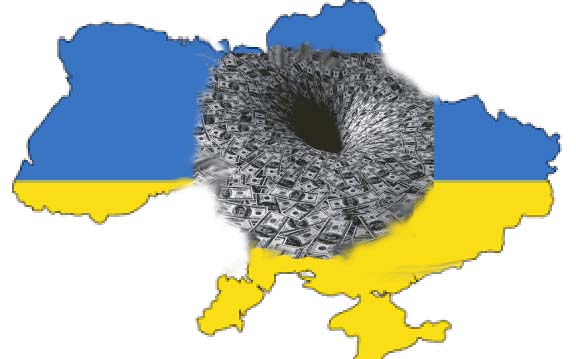
The total amount of military aid to Ukraine since the beginning of the conflict in February 2022 amounts to $119 billion, including 62 billion from the U.S., as confirmed by Pentagon chief Lloyd Austin. The amount allocated under the humanitarian label is more than double.
Europe has channelled significant resources into Ukraine, from financial aid packages, to military equipment, and training programmes. Great Britain, along with the U.S., has been crucial in intelligence support too. Beyond this, Europe has also invested heavily in influencing public opinion with narratives such as “Putin will invade Europe next.” The scale of these war-supporting efforts has been so extensive that many European countries have depleted both their arms stockpiles and public finances.
Annalena Baerbock, Germany’s Foreign Minister, has underscored the financial burden of ongoing support for Ukraine, revealing that the €37 billion allocated has necessitated cuts to social spending programs within Germany. The consequences of this financial obligation are staggering, according to the minister: crucial investments in early childhood programs and infrastructure modernization have been sidelined in favour of military assistance to Ukraine.
These efforts were designed to position Europe as a steady ally of Ukraine, committed to defending democratic values and regional stability. However, the looming possibility of an eventual Trump-Putin deal leaves Europe in a precarious position, grappling with the absence of a clear, face-saving strategy.
Therefore, the EU foreign affairs chief, Kaja Kallas, downplayed discussions about peace during her first meeting with EU foreign affairs ministers in Brussels, disregarding a Gallup poll showing that a majority of Ukrainians (52%) favour peace negotiations, while 38% support continuing the fighting. Kallas went further, admonishing EU heads of state at the latest EU summit: “Stop pushing Zelensky into peace talks.”
The most striking aspect of this statement is that it comes from someone holding the title of EU diplomacy chief—a role traditionally centred on fostering dialogue and negotiation. Yet, this very individual appears to dismiss the importance of diplomacy, even as Putin has repeatedly expressed willingness to engage in negotiations……………………………..
Such a deal could drastically shift the geopolitical landscape, potentially sidelining Europe in critical negotiations or undermining its investments and sacrifices. Europe’s commitment has been framed as a moral and strategic stand against aggression, but if Washington pivots toward reconciliation with Moscow, Europe could appear overextended and politically sidelined in its own European matters.
This situation is particularly uncomfortable given the EU’s reliance on the U.S. for broader security assurances. Zelensky understood it and bluntly stated: “Security guarantees without the US are not sufficient for Ukraine.”
Without a cohesive plan to address the fallout of a potential agreement between Trump and Putin, Europe risks losing credibility both within its borders and on the global stage.
Framing the Conflict as Putin’s Personal War: Simplistic Narratives Are More Convincing
The mantra “Russia must not win” has become a rallying cry across the EU, where any agreement is framed as a “victory for Putin.” This narrative conveniently reduces the war to a personal crusade by Vladimir Putin, dismissing the broader strategic and national interests driving Moscow’s actions.
. By personalizing the conflict, it becomes easier to frame it as a clear-cut battle of good versus evil, a narrative that is eagerly amplified by the media and political analysts. This portrayal has effectively stoked public fears with claims that “Europe is in danger,” galvanizing support for continued military engagement.
However, not everyone has embraced this oversimplified dichotomy. Independent analysts and critical observers have pushed back, pointing out the dangers of ignoring the complex geopolitical realities at play. They argue that viewing the conflict through a lens of rational strategic interests, rather than moral absolutism, could open avenues for meaningful dialogue and resolution—options currently sidelined in favour of escalation.
This refusal to consider alternative perspectives risks prolonging the conflict, leaving Europe increasingly strained by the economic and political costs of its unwavering commitment to a military solution. Meanwhile, voices calling for pragmatism and peace remain drowned out by the cacophony of war rhetoric.
In sum, Europe must urgently rethink its approach, prioritizing diplomatic agility and long-term strategies that enable it to assert its own influence, regardless of U.S. policy fluctuations. Meanwhile, Trump’s claim that he could end the war in 24 hours appears increasingly unrealistic. The so-called ‘Deep State’—comprising the informational, intelligence, and military apparatus—seems to have its own agenda, potentially signalling to Trump where the true power lies. Moreover, despite the immense human, infrastructural, and societal losses in Ukraine, the war remains highly profitable for certain entities.
Ricardo Martins ‒PhD in Sociology, specializing in policies, European and world politics and geopolitics, https://journal-neo.su/2024/12/30/a-trump-putin-deal-over-ukraine-does-not-look-good-for-europe/
With successful Syrian regime change, will US set sights on Iran regime change 2.0?
Walt Zlotow, West Suburban Peace Coalition, Glen Ellyn IL 30 Dec 24.
Seventy-one years ago the US and UK launched Operation AJAX, a jointly planned coup that deposed Iran’s legitimate ruler Dr. Mohammed Mosaddeq in August, 1953.
The Brits conceived the coup in 1952 and presented it to ‘Give ‘Em Hell’ Harry Truman, who told the Brits to go to Hell. A year later newbie Prez Ike greenlighted AJAX to allow Britain to grab back its Iranian oil monopoly nationalized by Mosaddeq, seeking to break free from US, UK dominance. For Ike, it was a chance to make his bones as a bonafide anti-communist, due to Mosaddeq’s unwillingness to crush Iranian leftist influence. In McCarthyite America and forever more, leftist governments posed a danger to US exceptionalism.
Leading this first official CIA coup against a foreign leader who wouldn’t do our bidding was Teddy Roosevelt’s grandson Kermit Roosevelt Jr. Our hand-picked successor was Mohammad Reza Shah Pahlavi, son of the first Pahlavi monarch Reza Shah Pahlavi. His reluctance and indecision about being summoned as the US/UK puppet almost wrecked Uncle Sam’s best laid plans. But CIA coup leader Roosevelt disobeyed orders to shut down Ajax. He had his Iranian operatives masquerading as commies shed enough blood to turn the tide against Mosaddeq. Up in Warlovers Heaven, Grandpa Teddy beamed with pride.
The Shah ruled Iran for another 26 years, with his CIA trained secret police killing thousands who dared speak out against his tyrannical rule.
The CIA, emboldened by their success, toppled the Guatemalan government a year later and were on a roll till their delusional 1961 Bay of Pigs regime change operation failed spectacularly. This led to the Cuban Missile a year later that nearly got us all vaporized in nuclear war with Russia.
Seventy-one years later the US appears bent on Iran regime change 2.0. Goaded by Israel seeking to topple its only remaining rival for Middle East dominance, the incoming Trump administration is signaling a return to a belligerent anti Iran policy.
By withdrawing from the Iran nuclear agreement in 2018, Trump freed up Iran to start up a nuclear weapons program if it felt US/Israeli pressure posed an existential threat. Current warfare in Gaza, Lebanon and the Syrian regime change makes that more likely today. Trump’s return to power, staffing his foreign policy team with anti-Iran hardliners, s increases that likelihood. That could trigger implementation of a 21st century Operation Ajax with Israel replacing the UK as Uncle Sam’s co coup plotter against Iran. More ominous than the 1953 version, this one could lead to all out war posing extreme danger to 40,000 US troops in the region.
Iran is not now and never has been America’s enemy. But senselessly imagining a nuclear program that does not exist and plotting with Israel to topple its Middle East rival is a sure way to make Iran one.
The rise and fall of Sweden’s nuclear disarmament advocacy
In the 2020s,…. it is Sweden and Finland that have arguably become the biggest advocates of US nuclear weapons.
By Naman Karl-Thomas Habtom | December 29, 2024, https://thebulletin.org/2024/12/the-rise-and-fall-of-swedens-nuclear-disarmament-advocacy/
In the nine months since joining NATO, Sweden has not wasted any time integrating itself tightly into the transatlantic alliance. On September 16, Sweden doubled down on its commitment to a nuclear weapons-based military alliance when Sweden and Finland agreed that Sweden would lead a new NATO defense base to be established in northern Finland.
While Denmark and Norway currently do not want to host nuclear weapons on their own soil, NATO’s new entrants have both signaled an openness to doing so. In June, the Swedish parliament ratified a Defense Cooperation Agreement granting the United States access to 17 Swedish military bases, and Prime Minister Ulf Kristersson did not rule out hosting nuclear weapons during wartime. Meanwhile, Finland’s President Alexander Stubb has advocated for a legislative change to allow the transportation of nuclear weapons.
With the benefit of historical hindsight, it is clear that this was not an inevitable outcome. Sweden was once a nuclear aspirant with an advanced weapons program, but just a few decades ago, Stockholm and Helsinki sought to keep nuclear weapons out of northern Europe. In the depths of the Cold War, Stockholm proved willing and capable of advancing ambitious, albeit inconsistent, goals when it came to nuclear weapons in Europe. Sweden’s history suggests that disarmament ideas—such as a Nordic nuclear weapon-free zone—were never completely written off, even if they are difficult to imagine in Europe today.
Pursuing Nordic disarmament. Calls for the establishment of a Nordic nuclear weapon-free zone (NWFZ) did not originate in Sweden but rather in neighboring Finland. Though Swedish Foreign Minister Östen Undén had, in 1961, already proposed the idea in a general manner, Finnish President Urho Kekkonen formally proposed it in 1963.
Earlier that year, Yugoslavia’s leader Josip Broz Tito had expressed his support for a Balkan NWFZ, which Kekkonen saw as strengthening the case for a Nordic zone. In an address on May 28, 1963, Kekkonen argued that the Nordic countries already constituted a de facto NWFZ, with no country officially pursuing or possessing any nuclear weapons.
While the Swedish government was officially supportive of nuclear disarmament and the creation of a Nordic zone, it was suspicious of Kekkonen’s proposal. Though Finns were more eager to join NATO than Swedes in 2022, during the Cold War Finland was in a delicate position and more likely to consider Moscow’s views than its Scandinavian neighbors were, due to its proximity to the Soviet Union. Initially, Sweden saw Kekkonen’s effort as a Soviet initiative, much to the surprise of Finnish civil servants. Swedish suspicions were not wholly unfounded; a year earlier, the Soviet ambassador to Finland visited the Finnish president’s residence and recommended such an undertaking. Though Sweden was not actively pursuing nuclear weapons, its leadership wished to preserve the freedom to acquire them later.
By the late 1970s, Swedish disarmament efforts became more wide-ranging. In November 1978, Swedish Foreign Minister (and future UN weapons inspector as well as head of the International Atomic Energy Agency) Hans Blix aimed to widen the scope of the proposed NWFZ by including the Baltic Sea. In January 1983, the Swedish government even went so far as to propose that the zone also include the border between the Western and socialist states, extending 150 kilometers on each side of the border.
While the suggestion of incorporating the Baltic Sea was rejected at the time, the Soviets accepted the idea of a buffer zone and even suggested that it be wider, in the range of 250 to 300 kilometers on each side. In the United States, however, the idea went nowhere. Joseph Nye, who served as Deputy Under Secretary of State for Security Assistance, Science, and Technology from 1977 to 1979, later noted that there wasn’t much discussion of a Nordic nuclear weapon-free zone. Fast forward a few decades, and the proposal is now beyond dead.
While Sweden had been supportive of a NWFZ in general, its support was inconsistent, especially in the 1980s. . For example, in June 1983, Prime Minister Olof Palme told the North Atlantic Assembly that adjacent areas (such as the Baltic Sea) should be included, but by December of that year, in a speech in Finland, Palme failed to mention that as a requirement. Similarly, in November 1983, Swedish Foreign Minister Lennart Bodström said that a zone could be created through a joint declaration by four Nordic countries accompanied by a pledge from outside powers not to use nuclear weapons against the Nordic states, only to revise this in December by requiring the denuclearization of the Baltic region as well. Support for a NWFZ was partially informed by extra-Nordic conduct, such as the deployment of intermediate-range nuclear missiles in the United Kingdom and West Germany in 1983.
The Soviet perspective. Though Swedish military concerns during the Cold War, such as the initial call for nuclear weapons, were primarily shaped by the potential threat from the East, advocacy for nuclear disarmament contributed to what can be described as a generally friendly relationship between Stockholm and Moscow, especially when compared with contemporary East-West ties.
The prospect for nuclear disarmament in Sweden’s adjacent areas improved throughout the 1980s, with the United States and the Soviet Union negotiating and ultimately signing the Strategic Arms Reduction Treaty and the Intermediate-Range Nuclear Forces Treaty. Whereas Moscow had previously rejected the proposal for the creation of a Baltic Sea NWFZ, it reversed itself by 1990. Early that year, Soviet Foreign Minister Eduard Shevardnadze sent a letter to his Swedish counterpart, Sten Andersson, calling for the establishment of a nuclear weapon-free Baltic Sea. In his letter Shevardnadze expressed his belief that “an agreement on this issue would be able to be worked out at a conference between diplomatic and military experts from the aforementioned states.”
The failure to establish such a NWFZ in the Baltic Sea region was likely outside Sweden’s control. According to Thomas Graham Jr., a senior diplomat who was part of the American delegation in every major nonproliferation and international arms control negotiation between 1970 and 1997, “America never thought it was very likely such a [Nordic Nuclear Weapon-Free] Zone would be negotiated,” which would have been a practical precondition before the establishment of a Baltic Sea NWFZ. Graham identified Norway as a hindrance, arguing that “[t]hough Norway is nuclear weapon-free it would not go against NATO on this.”
In the 2020s, however, it is Sweden and Finland that have arguably become the biggest advocates of US nuclear weapons.
Swedish marginalization. The middle of the Cold War was arguably the period during which Sweden had its most prominent role in advancing international nuclear arms control. However, by the 1980s the country was increasingly marginalized when it came to the reduction of global nuclear stockpiles. This was not a product of Sweden’s own doing but was due to the emergence of increasingly successful US-Soviet negotiations and treaties. The bilateral nature of the relationship between the two superpowers had the unintended effect of minimizing any potential influence that the Swedes could have.
According to Graham, “in the SALT/START negotiations on strategic arms between the United States and the Soviet Union, Sweden was simply not relevant.” The cause for this was the very factor that sparked Sweden’s interest in nuclear disarmament in the first place, namely its neutrality. “It was not a party to the negotiations nor an ally of one of the negotiating parties.”
This marginalization stands in contrast to international conferences within the framework of the United Nations, where American diplomats viewed Sweden as a disarmament activist state. Therefore, it is not surprising that Swedish officials made common cause with the Non-Aligned Movement of developing countries that existed outside the US-Soviet rivalry, despite not being a formal member of the organization. Swedish relevance depended on its ability to exert influence over other non-nuclear states, even after the Cold War ended.
The multilateral nature of the UN Conference of the Committee on Disarmament enhanced Swedish relevance. One way Sweden exerted its influence was by advocating for procedural reforms to improve the Conference’s effectiveness. Calls for the abolition of the co-chairmanship governing the Conference effectively aligned Sweden with countries such as Yugoslavia, Mexico, and Romania. Lennart Eckerberg, who led Sweden’s disarmament delegation in Geneva, remarked that “[t]he Swedish delegation, for one, favors several such [procedural] changes” and that this “is, of course, not primarily a procedural question but a political one.”
Swedish marginalization was not exclusively a result of the Soviet-American talks but also of the two Cold War camps. This was true of NATO more so than the Warsaw Pact, with the latter tending to be more supportive of Swedish disarmament efforts. Just a few months before the signing of SALT I, Eckerberg expressed his lack of hope that NATO members would push for a nuclear test ban ahead of a scheduled visit by the Swedish foreign minister to Moscow. In contrast to Western states, Eastern bloc states tended to sympathize with the Swedish position.
Fluctuating influence. Due to its small size, Sweden struggled to stay relevant. It did not have the diplomatic assets or clout that larger countries, especially the two superpowers, possessed. In a report to the foreign ministry, Swedish diplomat Gustaf Hamilton noted in a 1976 report while serving in Geneva as part of the delegation to the Conference on Disarmament: “A weakness in Sweden’s conduct is that we do not have sufficient personnel resources to produce working papers and proposals and don’t always have time in advance to ensure support for us among interested delegations. We lack, in other words, the capacity to plan long-term due to the personnel situation.”
This concern was ever-present throughout the Cold War, with Swedish officials forced to balance resources in a manner that optimized both Swedish contribution and overall effectiveness. This explains, in part, why there was a consistent preference for multilateral approaches, as opposed to lobbying individual countries in purely bilateral ways. It also explains Sweden’s focus on approaches such as the development of seismological counterproliferation technology.
As a frontier state between East and West, Sweden was able to use its geopolitical relevance to promote not only disarmament but also a broader program of tension reduction. But with Sweden now formally a member of NATO, the political will to play a role similar to the one Sweden played in the Cold War is largely absent and hard to muster in the absence of formal neutrality. Nevertheless, the country’s history suggests that ideas like nuclear weapon-free zones, which today are impossible to imagine in Europe, were once salient.
How Ukraine is Helping the HTS Militants Who Overthrew Assad
Scheerpost, December 29, 2024 , By Stavroula Pabst / Responsible Statecraft
As Islamist, al-Qaida-linked group Hayat Tahrir al Sham (HTS) overruns Syria amid President Assad’s sudden ouster, evidence suggesting Ukraine has assisted the group’s triumph continues to mount.
Namely, the Washington Post reported Tuesday that Ukraine sent 150 first-person-view drones and 20 drone operators to Idlib about a month ago.
The New York Times reported earlier this month, moreover, that Ukraine and HTS were coordinating efforts including “countering Russian misinformation and providing medical assistance.” The reporting also highlighted Ukrainian intelligence head Kyrylo Budanov’s repeated suggestions that Ukraine would target its enemy Russia internationally.
Washington Post columnist David Ignatius mused that Ukraine’s intentions for assisting HTS were obvious, writing that the war-torn nation was looking for other ways to “bloody Russia’s nose and undermine its clients.” In turn, a source told the New York Times that the HTS offensive in Syria was likewise timed in part to strike a blow against mutual enemy Russia.
………………………………………. “Ukraine’s alleged assistance to HTS forces is of limited military significance insofar as the SAA was inherently unprepared to resist the rebel offensive,” said Dr. Mark Episkopos, Quincy Institute Research Fellow and Adjunct Professor of History at Marymount University.
“But it is part of Kyiv’s broader effort to court Western support for its NATO accession bid by demonstrating to the US and other stakeholders its effectiveness in countering Russian interests around the world.” https://scheerpost.com/2024/12/29/how-ukraine-is-helping-the-hts-militants-who-overthrew-assad/
AI bigwigs want to go all-in on nuclear. They also happen to be behind nuclear companies

By Clare Duffy, CNN, December 24, 2024
Sam Altman is the chairman of a company that promises a brighter future for humankind.
No, it’s not OpenAI, the artificial intelligence company he co-founded and now runs as CEO.
It’s a company called Oklo, and it’s developing the kind of nuclear power technology that many tech leaders — including Altman himself — say they will need to fuel future artificial intelligence advancements.
The proliferation of electricity-hungry data centers to power our digital lives – and increasingly, the AI technology that tech giants say is the future – now means that energy demand could soon outstrip supply. And that would be a problem for tech companies who are angling for their AI technology to revolutionize almost everything about the way we live and work.
But while tech leaders have pointed to nuclear energy as essential to a climate friendly future, some industry experts wonder how much their investments will truly benefit the wider public, rather than just protecting their own businesses’ ability to operate.
“I think the tech companies are looking out for their own interests, and whether those nuclear vendors are able to sell additional nuclear power plants for the public is another question,” said Sharon Squassoni, a research professor at George Washington University who’s studied nuclear energy and policy.
t’s clear that more energy will need to come from somewhere. Electricity demand from US data centers has grown 50% since 2020 and now accounts for 4% of the country’s energy consumption; that figure could grow to 9% by 2030, UBS analysts said in a research note earlier this month. And overall power demand in the United States is expected to grow 13% to 15% a year until 2030, potentially turning electricity “into a much scarcer resource,” according to JPMorgan analysts.
The electricity needs of data centers have also threatened to upend tech giants’ sustainability promises.
Tech giants have pointed to the benefit of nuclear energy’s reliability versus other renewable energy sources, such as solar or wind. Microsoft in September secured a deal to reopen a reactor on Three Mile Island, the site of a 1979 partial meltdown in Pennsylvania, aiming to revive a different reactor by 2028 to power its AI ambitions. Amazon and Meta have also begun working to lock in deals to secure future nuclear power for their data centers.
“Data centers operate 24/7 and they need a stable supply of electricity. They can’t shut down because the wind is not blowing or the sun is down,” said Anna Erickson, a professor at Georgia Tech who studies nuclear engineering.
Oklo isn’t Altman’s only nuclear energy investment. The OpenAI CEO has also invested in Helion Energy, a nuclear startup that’s using a different kind of technology from Oklo. Facebook co-founder and now Asana CEO Dustin Moskovitz, LinkedIn co-founder Reid Hoffman and billionaire tech investor Peter Thiel’s venture capital firm, Mithril, have also invested in Helion Energy.
And Altman isn’t the only tech leader trying to cash in on the push toward nuclear.
Separately, TerraPower, which is backed and chaired by Microsoft founder Bill Gates, is in the early phases of building a new nuclear reactor in Wyoming. Google joined a $250 million funding round for nuclear startup TAE Technologies in 2022, and Amazon anchored a $500 million financing round for nuclear startup X-energy in October. Amazon founder Jeff Bezos has also invested in Canadian nuclear startup General Fusion.
As of August, Peter Thiel’s venture capital firm, Mithril, owned 5.3% of Oklo’s shares, and the billionaire tech investor has reportedly backed other nuclear startups. Tech investor Cathie Wood’s Ark Invest also invested in Oklo earlier this year. (President-elect Donald Trump’s pick for energy secretary, Chris Wright, chief executive of the fracking company Liberty Energy, also serves on Oklo’s board.)
The push for nuclear
Already, lawmakers are lining up to support expanding nuclear power. President Joe Biden in July signed into law the Advance Act, a bill designed to make it easier, cheaper and faster to permit and build new nuclear reactors that received bipartisan support. And during this year’s COP28 climate talks, the United States joined more than 20 other countries in pledging to triple global nuclear energy capacity by 2050.
Some experts see the tech industry’s investment as crucial for pushing forward an expensive but clean energy source that could help combat climate change.
“Let’s face it, these guys who are doing AI right now, they’re the ones with the money, right?” Erickson said.
Megan Wilson, chief strategy officer at General Fusion, told CNN that “as we look at the interest by tech companies… in nuclear power, what we’re seeing is really a symptom of the broad recognition that we need clean, baseload power that is free of both carbon dioxide and methane emissions, that’s reliable and affordable.”
Although General Fusion is still in the process of proving its technology works, Wilson added that fusion is expected to be an even safer option than fission, because it is combining atoms rather than separating them, and therefore is “very hard to start and very easy to stop.”
In the future, the company expects its power plants “will have a radiation profile very similar to that of a hospital that uses medical isotopes or has a cancer treatment ward,” Wilson said.
But some experts have raised concerns about heavy investments in nuclear by the leaders of an industry known for pushing back against regulations that could slow it down, even when it is intended to improve safety.
“The problem here is that you have these Silicon Valley giants who have the clout, who have the power, to get a lot of what they want … and the industry’s attitude, first and foremost, is fight any regulation that would interfere with their plans,” said Edwin Lyman, director of nuclear power safety at the Union of Concerned Scientists.
“I am very concerned that the safety and security rules that are really essential for protecting the public could take a real beating,” Lyman said.
Oklo and TerraPower did not respond to requests for comment………………………………………………………….. more https://edition.cnn.com/2024/12/24/tech/nuclear-energy-ai-leaders/index.html
Iran to hold nuclear talks with France, Germany, UK
https://www.aljazeera.com/news/2024/11/24/iran-to-meet-with-germany-france-uk-in-nuclear-talks
The meeting follows an IAEA resolution denouncing Iran for what it called a lack of cooperation.
Iran says it will hold nuclear talks with officials from France, Germany, and the United Kingdom this week, amid escalating tensions over Iran’s nuclear programme.
The meeting, which is set to happen on Friday, was announced by Iran’s Ministry of Foreign Affairs on Sunday, and UK officials confirmed the meeting.
“A range of regional and international issues, including the issues of Palestine and Lebanon, as well as the nuclear issue, will be discussed,” Iranian Foreign Ministry spokesperson Esmaeil Baghaei said.
Neither London nor Tehran said where the meeting would take place.
On Thursday, the International Atomic Energy Agency (IAEA) adopted a resolution denouncing Iran for what it called a lack of cooperation. The three European nations, whose representatives will meet Iranian officials, were among those voting for the resolution.
Nineteen countries out of the 35-member IAEA voted to censure Iran – a largely symbolic gesture – while 12 countries abstained. Russia, China, and Burkina Faso voted against the resolution. Thursday’s resolution marked the third time the United Nations body had taken such action since 2020.
The move came as tensions ran high over Iran’s nuclear programme, which critics fear is aimed at developing a nuclear weapon – something Tehran has repeatedly denied.
On Friday, Iran announced a “series of new and advanced centrifuges”, technology that refines enriched uranium into gas. “We will substantially increase the enrichment capacity with the utilisation of different types of advanced machines,” Behrouz Kamalvandi, Iran’s atomic energy organisation spokesman, told Iranian state TV.
Despite the announcement, Iran said it would continue to cooperate with the IAEA.
“We remain committed to taking every diplomatic step to prevent Iran from developing nuclear weapons, including through snapback if necessary,” the UK’s Foreign and Commonwealth Office told the AFP news agency.
In 2015, Iran reached an agreement with world powers, including the United States, to curb its nuclear programme due to concerns about the country potentially developing nuclear weapons.
But in 2018, during President Donald Trump’s first term, the US unilaterally withdrew from the agreement and imposed sanctions on Iran – a move that stoked tensions between Washington and Tehran.
Since then, Tehran has scaled back its cooperation with the IAEA, deactivating surveillance devices put in place by the UN. Concurrently, Iran has increased its stockpile of enriched uranium.
Iran has “begun implementation of preparatory measures” to cap its stockpile of highly enriched uranium. According to leaked reports from the IAEA, Iran is close to the 90 percent threshold needed to produce a nuclear warhead.
Syria Today, Iran Tomorrow, and Inevitably China
New Eastern Outlook, Brian Berletic, December 19, 2024, https://journal-neo.su/2024/12/19/syria-today-iran-tomorrow-and-inevitably-china/
The collapse of the Syrian government in mid-December 2024 represents a pivotal moment for U.S. geopolitical strategies in the Middle East and beyond.
This event aligns with longstanding objectives, including the subsequently planned disarming, division, and destruction of Iran and the toppling of the Iranian government, the possible eviction of Russian military bases in Syria, and the use of US-sponsored terrorist organizations utilized in overrunning Syria to export terrorism to other targeted nations both in the region and far abroad including both Russia and China.
Syria’s Collapse Was Long Sought After
The US has repeatedly attempted to undermine and overthrow the government of Syria since at least as early as the 1980s. This most recent attempt began preparations as early as 2007 as revealed in a New Yorker article published that year titled, “The Redirection.”
Written by legendary journalist Seymour Hersh, the article admitted:
To undermine Iran, which is predominantly Shiite, the Bush Administration has decided, in effect, to reconfigure its priorities in the Middle East. In Lebanon, the Administration has coöperated with Saudi Arabia’s government, which is Sunni, in clandestine operations that are intended to weaken Hezbollah, the Shiite organization that is backed by Iran. The U.S. has also taken part in clandestine operations aimed at Iran and its ally Syria. A by-product of these activities has been the bolstering of Sunni extremist groups that espouse a militant vision of Islam and are hostile to America and sympathetic to Al-Qaeda*.
Also that year, the US State Department had already been training, equipping, and funding opposition groups to return to their nations across the Arab World and overthrow their respective governments as part of what would later be referred to as the “Arab Spring,” the New York Times would reveal in a 2011 article titled, “U.S. Groups Helped Nurture Arab Uprisings.”
Following the initial protests of the 2011 “Arab Spring,” US-sponsored regime change quickly and deliberately turned violent before transforming into a multitude of armed conflicts – some of which involved overt US military intervention, including in Libya, Syria, and Yemen.
By 2012, a US Defense Intelligence Agency (DIA) report about US-sponsored regime change in Syria specifically, published by Judicial Watch, admitted that the so-called “Syrian” opposition consisted of Salafists, the Muslim Brotherhood, and Al-Qaeda*. The report admitted that, “the West, Gulf countries, and Turkey support the opposition,” and that “if the situation unravels there is the possibility of establishing a declared or undeclared Salafist principality,” and that “this is exactly what the supporting power of the opposition [the West, Gulf countries, and Turkey] want in order to isolate the Syrian regime.”
It is very clear that the “Salafist principality” referred to the so-called “Islamic State.” While the West posed as intervening in Syria to eliminate the “Islamic State,” it was actually supporting and using it precisely to “isolate the Syrian regime,” just as the US DIA report noted.
Through a combination of sanctions, US-Israeli military strikes, US and Turkish military occupation including of Syria’s oil and wheat fields, Syria was slowly hollowed out and, as of December 2024, with Russia and Iran overextended elsewhere, finally toppled.
Next Target: Iran
Most obviously, just as with the US-engineered overthrow of Libya in 2011, Syria will persist as a failed and divided state the US and its regional proxies used to export terrorism across the region toward what remains of Iran’s asymmetrical military power including Hezbollah in Lebanon and Iranian-backed militias across Iraq.
Syria can now also be used as a staging ground for attacks on Iran itself, including via the use of Syria’s now unprotected airspace.
One crucial obstacle eliminated with the collapse of Syria’s government was the destruction of its military hardware, including a formidable integrated air defense network. Even as US-Turkish-backed terrorists advanced on Damascus, US-armed Israeli warplanes carried out 100s of airstrikes across the country, both eliminating the abandoned air defense systems themselves and a long list of targets those air defenses had long prevented Israel from striking.
The Times of Israel itself, in an article titled, “IDF sees chance for strikes on Iran nuke sites after knocking out Syria air defenses,” connected Israel’s targeting and destruction of Syrian air defenses with plans to then carry out direct strikes on Iran.
………………………………….now the Israeli air force “can operate freely across the country’s skies,” and will likely do so both as part of shaping chaos inside Syria itself as well as amid future strikes on Iran.
Far from simply exploiting recent, unexpected developments, the elimination of Syria as an ally of Iran was a long-standing prerequisite required and planned for before moving on to toppling Iran itself.
Such plans were published by US government and arms industry-funded Brookings Institution in its 2009 paper, “Which Path to Persia? Options for a New American Strategy toward Iran,” noting specifically:
Israel may be more willing to bear the risks of Iranian retaliation and international opprobrium than the United States is, but it is not invulnerable and may request certain commitments from the United States before it is ready to strike. For instance, the Israelis may want to hold off until they have a peace deal with Syria in hand (assuming that Jerusalem believes that one is within reach), which would help them mitigate blowback from Hizballah and potentially Hamas. Consequently, they might want Washington to push hard in mediating between Jerusalem and Damascus.
Obviously, Israel’s recent war on Hezbollah and US-sponsored regime change in Syria has fulfilled this prerequisite – regime change achieved in Syria using many of the other methods listed in the 2009 Brookings paper focused on Iran including “supporting a popular uprising,” supporting [armed] minority and opposition groups,“airstrikes,” and “invasion.” In fact, such methods are used over and over again against all nations targeted by the US for coercion and eventually regime change.
US-Sponsored Terrorism Targets China and “Chinese Projects/Embassies”
In addition to targeting Iranian-backed militias, Iranian-friendly governments, and Iran itself, the US has utilized terrorist organizations now in Syria against other adversaries abroad, including China. Many signs now indicate the US could redirect these terrorist organizations back toward China once again.
This includes the so-called, “Turkestan Islamic Party” (TIP) also known as the “East Turkestan Islamic Movement” (ETIM).
What is particularly troubling about TIP/ETIM is the fact that the US disingenuously removed it from its Foreign Terrorist Organizations list in 2020 specifically to provide it with wider and more overt support. DW in its article titled, “US removes China-condemned group from terror list,” would claim TIP/ETIM was removed as a terrorist organization by the US government, “because, for more than a decade, there has been no credible evidence that ETIM continues to exist.”
This is demonstrably untrue considering the US Department of Defense admitted to having carried out airstrikes against the group in Afghanistan only 2 years prior to its delisting, NBC News would report.
Now, the organization the US government claimed no longer exists, is in Syria and reported comprising an entire military unit alongside Hayat Tahrir al-Sham* (HTS), aiding in the recent overthrow of the Syrian government. HTS* is listed by the US as a Foreign Terrorist Organization, while TIP/ETIM is listed as a terrorist organization by the UN and even Washington’s close ally, the UK.
The London Telegraph in a December 13, 2024 article titled, “Uyghur fighters in Syria vow to come for China next,” claims “a Uyghur militant group that helped to topple Bashar-al Assad has vowed to take the fight to China.”
A US-backed terrorist organization fresh from overthrowing a US-targeted nation in the Middle East now vows to target China next. The ability to do so is only possible with continued US government backing including training, weapons, and logistics via regional proxies including Türkiye, who prepared and incorporated the militants in the invasion force that toppled Syria’s government.
Short of fighting in China itself, the Telegraph in an accompanying video would note, “can TIP take the fight to China, home to the world’s largest military with 2 million active troops? It’s easier said than done. Still, TIP could target Chinese projects or embassies abroad.”
The US already backs violent terrorism attacking Chinese projects and embassies abroad, including in Baluchistan, Pakistan and Myanmar. An army of well-trained, well-armed experienced terrorists fresh from the battlefield in Syria are poised to significantly escalate what is already a US war on China by proxy along the length of Beijing’s Belt and Road Initiative (BRI) and ultimately aimed at China itself.
It should be noted that TIP/ETIM and affiliated extremists carried out years of deadly terrorism within China’s western region of Xinjiang. The BBC in a 2014 article titled, “Why is there tension between China and the Uighurs?,” proudly listed the rampant violence Beijing at the time struggled to contain. When Chinese anti-terrorism efforts finally began to work, the BBC along with the rest of the Western media omitted any mention of separatist violence and depicted Chinese efforts to uproot extremism as “human rights abuses,” “coerced labor,” and even “genocide.”
No evidence exists of any systemic abuses, including either “coerced labor” or “genocide.” Even US government-funded organizations tasked with producing reports claiming to document such abuses bury admissions of a lack of evidence in the reports themselves.
One 2020 report titled, “Coercive Labor in Xinjiang: Labor Transfer and the Mobilization of Ethnic Minorities to Pick Cotton,” written by Adrian Zenz, a member of the US government-funded “Victims of Communism Memorial Fund,” admitted in its conclusion that, “in a system where the transition between securitization and poverty alleviation is seamless, and where the threat of extralegal internment looms large, it is impossible to define where coercion ends and where local consent may begin.”
Far from an exception, virtually all reports on the subject stem from either Adrian Zenz himself or reports published by US government-funded organizations including the Australian Strategic Policy Institute (ASPI) or US NED-funded fronts like the World Uyghur Congress, Uyghur Human Rights Project, Campaign for Uyghurs, and the Uyghur Transitional Justice Database Project.
While these organizations pose as “human rights” advocates, their websites overtly refer to China’s Xinjiang region as “East Turkestan*” (sometimes spelled East Turkistan), claiming it is “occupied” by China, and openly seek separatism from China as one of their central objectives – objectives underwritten by generous funding by the US government.
In other words, the US is backing deadly violence, political movements promoting separatism, and fronts attempting to depict the Chinese government’s reaction to all of the above as “human rights abuses,” which in turn is used to justify otherwise indefensible sanctions applied to Chinese companies attempting to do business anywhere the collective West exerts influence.
Defending Against Washington’s Superweapon
While many are tempted to treat conflicts around the globe in isolation, the truth is the United States is pursuing a long-standing global policy of eliminating all rivals through persuasion, coercion, sanctions, US-sponsored sedition, terrorism, and military confrontation – by proxy and directly.
The fall of Syria and other nations like it contribute toward a more dangerous world where larger and more stable nations may be targeted, undermined, and toppled next.
The chaos that has followed US regime change in Serbia, Afghanistan, Iraq, Georgia, Libya, Ukraine, and now Syria this 21st century is just a small fraction of the instability, death, destruction, and destitution the entire globe faces should Washington continue prevailing in its geopolitical pursuits.
Among the most effective and so far unanswered weapons the United States government wields is its dominion over global information space and its global-spanning network of political interference and capture, centered around the National Endowment for Democracy and adjacent government and corporate-funded foundations.
Russian and Chinese military and economic power continues to rise, and both nations have successfully protected their respective information spaces. However, the US continues unopposed undermining nations along both Russia and China’s peripheries, successfully politically capturing nations and transforming them into political and even military battering rams against both targeted nations.
While China may have successfully uprooted US-sponsored extremism in Xinjiang, the US continues arming, backing, and promoting these same extremists out of China’s reach in recently decimated Syria. Through Washington’s control over information space outside of China, these terrorists are being presented as “freedom fighters” in much the same way the US has presented HTS despite being listed by the US State Department as actual terrorists.
Russia and China aid partner nations in the defense of their traditional national security domains – air, land, and sea – but have failed to export their own domestic success in securing a 21st century national security domain – information space. Should Russia and China succeed in doing this, Washington will be denied one of its last and most effective weapons used to sustain its global hegemony, making multipolarism inevitable rather than a mere possibility.
*-banned in Russia
Brian Berletic is a Bangkok-based geopolitical researcher and writer.
Trump suggests Zelensky consider ceding territories – El Pais

COMMENT. We may not like Donald Trump much.
But sometimes he gets it right.
https://www.rt.com/news/609772-trump-zelensky-territorial-claims/ 24 Dec 24
America’s president-elect has reportedly relayed the message this week.
US President-elect Donald Trump has sent a message to Ukrainian leader Vladimir Zelensky, asking him to start thinking about a ceasefire and to abandon claims to territories that are currently under control of Russia, El Pais reported on Sunday.
Trump has repeatedly pledged to end the Ukraine conflict within a day of taking office, but has yet to elaborate on how he plans to achieve this. His vows have raised concerns in Kiev that it may be facing not only a decline in aid but also an audit of the billions of dollars it has received from the White House under President Joe Biden.
“You look at some of these cities and there is not a single building in good condition left. So, when you say “restore the country,” restore what? This is a 110-year reconstruction,” the Spanish newspaper cited Trump as saying in a “message” to Zelensky from his Florida golf club this week.
Earlier this month, Trump called on both Ukraine and Russia to reach an immediate ceasefire. He posted the call on his social media platform Truth Social after meeting in Paris with Zelensky and President Emmanuel Macron.
The Wall Street Journal reported in early December, citing officials, that Trump had said Western Europe should deploy its troops to Ukraine to monitor a potential ceasefire. He reportedly added that the EU should play the main role in defending and supporting Kiev, while Washington could support the effort without sending troops.
Speaking at his end-of-year press conference on Thursday, Russian president Vladimir Putin reiterated that Moscow remains open to negotiating with Kiev without any preconditions, except those that had already been agreed upon in Istanbul in 2022, which envisaged a neutral, non-aligned status for Ukraine, as well as certain restrictions on deploying foreign weaponry. He also noted that such talks would have to respect the realities on the ground that have developed since that time.
Privatising Syria: US Plans Post-Assad Selloff
Global Delinquents Kit Klarenberg, Dec 24, 2024
Following the abrupt fall of Bashar Assad’s government in Syria, much remains uncertain about the country’s future – including whether it can survive as a unitary state, or will splinter into smaller chunks in the manner of Yugoslavia in the 1990s. For the time being at least though, members of ultra-extremist Hayat Tahrir al-Sham (HTS) appear highly likely to take key positions in whatever administrative structure sprouts from Bashar Assad’s ouster, after a decade-and-a-half of grinding Western-sponsored regime change efforts.
As Reuters reported December 12th, HTS is already “stamping its authority on Syria’s state with the same lightning speed that it seized the country, deploying police, installing an interim government and meeting foreign envoys.” Meanwhile, its bureaucrats – “who until last week were running an Islamist administration in a remote corner of Syria’s northwest” – have moved en masse “into government headquarters in Damascus.” Mohammed Bashir, head of HTS’ “regional government” in extremist-occupied Idlib, has been appointed the country’s “caretaker prime minister”.
However, despite the chaos and precariousness of post-Assad Syria, one thing seems assured – the country will be broken open to Western economic exploitation, at long last. This is clear from multiple mainstream reports, which state HTS has informed local and international business leaders it will “adopt a free-market model and integrate the country into the global economy, in a major shift from decades of corrupt state control” when in office.
As Alexander McKay of the Marx Engels Lenin Institute tells Global Delinquents, state-controlled parts of Syria’s economy may have been under Assad, but corrupt they weren’t. He believes a striking feature of the ongoing attacks on Syrian infrastructure from forces within and without the country, is economic and industrial sites are a recurrent target. Moreover, the would-be HTS-dominated government has done nothing to counter these broadsides, when “securing key economic assets is vital to societal reconstruction, and should therefore be a matter of priority”:
“We can see clearly what kind of country these ‘moderate rebels’ plan to build. Forces like HTS are allied with US imperialism and their economic approach will reflect this. Prior to the proxy war, the government pursued an economic approach that mixed public ownership and market elements. State intervention enabled a degree of political independence other nations in the region lack. Assad’s administration understood without an industrial base, being sovereign is impossible. The new ‘free market’ approach will see all of that utterly decimated.”
‘Global Economy’
Syria’s economic independence, and strength, under Assad’s rule, and the benefits reaped by average citizens as a result, were never acknowledged in the mainstream before or during the Western-fomented dirty war. Yet, countless reports from major international institutions amply underline this reality – which has now been brutally vanquished, never to return. For example, an April 2015 World Health Organization document noted how pre-war Damascus “had one of the best-developed healthcare systems in the Arab world.”
Not only that, but per a 2018 UN investigation, “universal, free healthcare” was extended to all Syrian citizens, who “enjoyed some of the highest levels of care in the region.” Education was likewise free, and before the conflict, “an estimated 97% of primary school-aged Syrian children were attending class and Syria’s literacy rates were thought to be at over 90% for both men and women [emphasis added].” By 2016, millions were out of school.
A UN Human Rights Council report two years later noted prior to 2011, Syria “was the only country in the Middle East region to be self-sufficient in food production,” its “thriving agricultural sector” contributing “about 21%” to GDP 2006 – 2011. Civilians’ daily caloric intake “was on par with many Western countries,” with prices kept affordable via state subsidy. Meanwhile, the country’s economy was “one of the best performing in the region, with a growth rate averaging 4.6%” annually.
At the time that report was written, Damascus had been reduced to heavy reliance on imports by Western sanctions in many sectors, and even then was barely able to buy or sell much in the way of anything, as the measures amounted to an effective embargo. Simultaneously, US military occupation of a resource-rich third of Syria cut off the government’s access to its own oil reserves and wheat. The situation only worsened with the Caesar Syria Civilian Protection Act’s passing in June 2020………………………………………………………………………………………………………………………………………………
EU and US-backed governments across the former Yugoslavia have enforced an endless array of neoliberal “reforms”, in order to ensure an “investor-friendly” environment locally for wealthy Western oligarchs and corporations. In lockstep, low wages and lacking employment opportunities locally stubbornly endure or worsen, while living costs constantly rise, producing mass depopulation, among other destructive effects. All along too, US officials intimately implicated in the country’s breakup have brazenly sought to personally enrich themselves from privatization of former state industries.
Does such a fate await Damascus? For Alexander McKay, the answer is a resounding “yes”. Now “free”, Syria will be forcedly made “dependent upon imports from the West” evermore. This not only fattens the Empire’s bottom line, but “severely restricts the freedom of any Syrian government to act with any degree of independence.” He notes similar efforts were undertaken worldwide throughout the post-1989 era of US unipolarity. This was well underway in Russia during the 1990s, “until a turnaround started under Putin, post 2000”:
“The aim is to reduce Syria to the same status as Lebanon, with an economy controlled by imperial forces, an army used primarily for internal repression, and an economy no longer able to produce anything but merely serve as a market for commodities produced elsewhere, and site of resource extraction. The US and its allies do not want independent development of any nation’s economy. We must hope the Syrian people can resist this latest act of neo-colonialism.” https://www.kitklarenberg.com/p/privatising-syria-us-plans-post-assad?utm_source=post-email-title&publication_id=552010&post_id=153534171&utm_campaign=email-post-title&isFreemail=true&r=ln98x&triedRedirect=true&utm_medium=email
1 This Month
Chernobyl: The Lost Tapes – A good documentary on Chernobyl on SBS available On Demand for the next 3 weeks– https://www.sbs.com.au/ondemand/tv-program/chernobyl-the-lost-tapes/2352741955560

of the week–London Campaign for Nuclear Disarmament

Tell the Ukrainian Government to Drop Prosecution of Peace Activist Yurii Sheliazhenko
To see nuclear-related stories in greater depth and intensity – go to https://nuclearinformation.wordpress.com
-
Archives
- April 2026 (139)
- March 2026 (251)
- February 2026 (268)
- January 2026 (308)
- December 2025 (358)
- November 2025 (359)
- October 2025 (376)
- September 2025 (257)
- August 2025 (319)
- July 2025 (230)
- June 2025 (348)
- May 2025 (261)
-
Categories
- 1
- 1 NUCLEAR ISSUES
- business and costs
- climate change
- culture and arts
- ENERGY
- environment
- health
- history
- indigenous issues
- Legal
- marketing of nuclear
- media
- opposition to nuclear
- PERSONAL STORIES
- politics
- politics international
- Religion and ethics
- safety
- secrets,lies and civil liberties
- spinbuster
- technology
- Uranium
- wastes
- weapons and war
- Women
- 2 WORLD
- ACTION
- AFRICA
- Atrocities
- AUSTRALIA
- Christina's notes
- Christina's themes
- culture and arts
- Events
- Fuk 2022
- Fuk 2023
- Fukushima 2017
- Fukushima 2018
- fukushima 2019
- Fukushima 2020
- Fukushima 2021
- general
- global warming
- Humour (God we need it)
- Nuclear
- RARE EARTHS
- Reference
- resources – print
- Resources -audiovicual
- Weekly Newsletter
- World
- World Nuclear
- YouTube
-
RSS
Entries RSS
Comments RSS
 nuclear-news