UK Government ignoring international law on nuclear weapons – experts.
By Xander Elliards
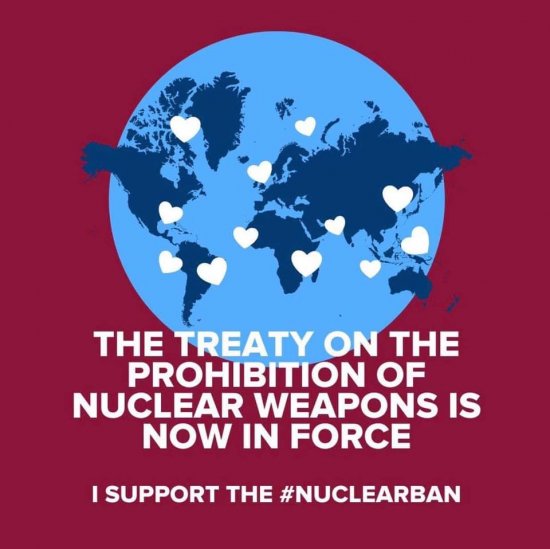
THE UK Government is flouting the international laws it has subscribed to
by refusing to discuss banning nuclear weaponry, leading experts have said.
It comes after the Labour Government dismissed a UN summit on the Treaty on
the Prohibition of Nuclear Weapons (TPNW) out of hand, saying they would
not attend even as an observer.
However, the majority of the world’s
countries are present at the TPNW meeting in New York, where a total ban on
nuclear weapon testing, development, or use is being discussed. The UK
Government is not a signatory to the TPNW – but like the US, France,
Russia, and China it is signed up to the earlier Nuclear Non-Proliferation
Treaty (NPT). This obliges states to prevent new countries from acquiring
nuclear weapons – but also obliges signatories to work towards complete
disarmament.
The National 5th March 2025, https://www.thenational.scot/news/24985203.uk-government-ignoring-international-law-nuclear-weapons—experts/
One empty seat. UK fails again to send representation to UN nuke conference

NFLA 5th March 2025,
https://www.nuclearpolicy.info/news/one-empty-seat-uk-fails-again-to-send-representation-to-un-nuke-conference/
The UK/Ireland Nuclear Free Local Authorities laments that a joint appeal made to the Prime Minister and Foreign Secretary to send a British representative to an important nuclear disarmament conference being held at the United Nations this week has fallen on deaf ears.
Alongside academics and other peace campaigners, NFLA Chair Councillor Lawrence O’Neill and NFLA Secretary Richard Outram were two of the co-signatories to a letter drafted by the United Nations Association UK (UNA-UK) that was sent to the two senior British politicians asking the UK Government to send an observer to the 3rd Meeting of States Parties (3MSP) to the Treaty on the Prohibition of Nuclear Weapons (TPNW) which is being held in New York until 7 March.
The invitation was not taken up as the meeting has been boycotted by Britain and the other eight nuclear weapons states, which continue to refuse to engage with the treaty despite around half of the UN’s membership – 94 states – having become signatories to it, with 73 also having completed formal ratification.
The NFLAs will be especially interested to see the progress made in establishing an international trust fund to support the victims, usually Indigenous Peoples, of the use and testing of nuclear weapons and the remediation of their natural environment. This represents a clear commitment of the signatories to help satisfy their undertakings under Article 6 and 7 of the TPNW. Establishing such a fund was seen as a key priority at the preceding MSP2.
NFLA Secretary Richard Outram, in speaking recently on a webinar to mark the sixty fifth anniversary of the first French nuclear weapon test in Algeria, referenced the fact that the UK should contribute on a voluntary basis to such a fund despite not being a formal party to the treaty.
Britain tested forty five atomic and nuclear weapons in Australia, the Pacific, and latterly in the USA in a period from 1952 to 1991, and has a responsibility for the damage caused to the health and environment of Indigenous People in these places, as well as to the British atomic and nuclear test veterans community and their family members who continue to suffer as a direct result of exposure to radiation in the tests.
The NFLAs will continue to campaign for justice and financial compensation for both the civilian and military victims of nuclear weapons use and testing, and, as a member of the Nobel Peace Prize winning International Campaign to Abolish Nuclear Weapons (ICAN) and a partner of Mayors for Peace, for the universal adoption of the TPNW and the total abolition of nuclear weapons.
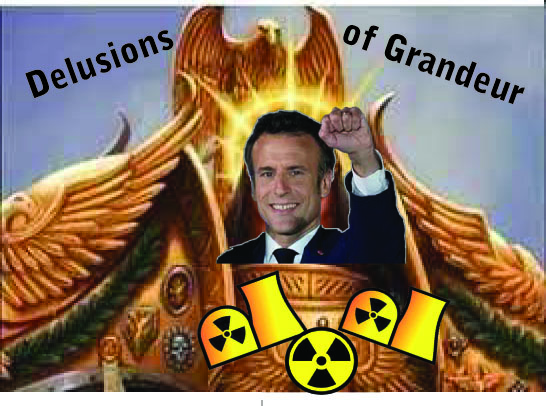
Macron’s Offer: France and the Delusions of Nuclear Deterrence
March 7, 2025 Dr Binoy Kampmark ,https://theaimn.net/macrons-offer-france-and-the-delusions-of-nuclear-deterrence/
The singular antics of US President Donald Trump, notably towards supposed allies, has stirred the pot regarding national security in various capitals. From Canberra to Brussels, there is concern that such assumed, if unverifiable notions as extended nuclear deterrence from Washington are valid anymore. America First interests certainly bring that into question, as well it should. If the imperium is in self-introspective retreat, this is to the good. But the internationalists beg to differ, wishing to see the United States as imperial guarantor.
In Europe, the fear at the retreat of Washington’s nuclear umbrella, and the inflation of the Russian threat, has caused flutters of panic. On February 20, 2025, Friedrich Merz, chairman of the Christian Democratic Union and the incoming German chancellor, floated the idea that other states consider shouldering Europe’s security burden. “We need to have discussions with both the British and the French – the two European nuclear powers – about whether nuclear sharing, or at least nuclear security from the UK and France, would apply to us.”
Merz has also explicitly urged European states to accept the proposition that “Donald Trump will no longer unconditionally honour NATO’s mutual defence commitment,” making it incumbent on them to “make every effort to at least be able to defend the European continent on its own.”
On March 1, French President Emmanuel Macron showed signs of interest. In an interview with Portuguese TV RTP, he expressed willingness to “to open this discussion … if it allows to build a European force.” There had “always been a European dimension to France’s vital interests within its nuclear doctrine.”
On March 5, in an address to the nation, Macron openly identified Russia as a “threat to France and Europe.” Accordingly, he had decided “to open the strategic debate on the protection of our allies on the European continent by our (nuclear) deterrent.” The future of Europe did not “have to be decided in Washington or Moscow.”
The matter of France’s European dimension has certainly been confirmed by remarks made by previous presidents, including Charles de Gaulle, who, in 1964, stated that an attack on a country such as Germany by the then Soviet Union would be seen as a threat to France.
Domestically, Macron’s offer did not go down well in certain quarters. It certainly did not impress Marie Le Pen of the far–right National Rally. “The French nuclear deterrent must remain a French nuclear deterrent,” she declared in comments made on a visit to the Farm Show in Paris. “It must not be shared, let alone delegated.” This was a misunderstanding, came the response from Defence Minister Sébastien Lecornu. The deterrent “is French and will remain French – from its conception to its production to its operation, under a decision of the president.”
A number of countries meeting at the European Union emergency security summit in Brussels showed interest in Macron’s offer, with some caution. Poland’s Prime Minister Donald Tusk suggested that “we must seriously consider this proposal.” Lithuania’s President Gitanas Nausėda thought the idea “very interesting” as “a nuclear umbrella would serve as really very serious deterrence towards Russia.” Latvian Prime Minister Evika Siliņa was not inclined to commit to a stationing of French nuclear weapons on Latvian territory: it was “too soon” to raise the issue.
Czech Prime Minister Petr Fiala, on the other hand, found the debate “premature”, as “our security is guaranteed by close cooperation with the United States.” He certainly has a point, given that the United States still, at present, maintains an extensive nuclear arsenal on European soil.
The trouble with deterrence chatter is that it remains hostage to delusion. Strategists talk in extravagant terms about the genuine prospect that nuclear weapons can make any one state safer, leading to some calculus of tolerable use. Thus we find the following comment from Benoît Grémare of the Université Jean Moulin Lyon 3: “[T]he fact remains that without US support, the balance of power appears largely unfavourable to France, which has a total of 290 nuclear warheads compared to at least 1,600 deployed warheads and nearly 2,800 stockpiled warheads on the Russian side.”
While Grémare acknowledges that France’s thermonuclear arsenal, along with the M51 strategic sea-to-land ballistic missile, would be able to eliminate major Russian cities, Russia would only need a mere “200 seconds too atomise Paris” if its Satan II thermonuclear weapons were used. “This potential for reciprocity must be kept in mind amid the mutual bet of nuclear deterrence.”
Logic here gives way to the presumption that such weapons, rather than suggesting impotence, promise formidable utility. This theoretical, and absurd proposition, renders the unthinkable possible: that Russia just might use nuclear weapons against European countries. Any such contention must fail for the fundamental point that nuclear weapons should, quite simply, never be used. Instead, they should be disbanded and banned altogether, in line with the Treaty on the Prohibition of Nuclear Weapons. Unfortunately, the French offer of replacing the US nuclear umbrella in Europe perpetrates similar deadly sins about deterrence.
Delays in Trident renewal put our deterrent in peril
In 2016 the House of Commons voted overwhelmingly in favour of renewing
the UK’s nuclear deterrent. Then hardly a second thought was given to
undertaking the upgrade programme without the full involvement of the US
military.
Ever since the British government first opted to introduce the
Continuous at Sea Deterrent (CASD) model to deliver our nuclear weapons
capability – replacing the Royal Air Force’s airborne Vulcan system –
it has been an article of faith that the project should be a joint US-UK
undertaking.
The tumult caused by US President Donald Trump’s return to
the White House has inevitably raised concerns both about the wisdom of
relying so heavily on US support for our own nuclear deterrent, especially
in the wake of Trump’s less-than-friendly treatment of Ukrainian
president Volodymyr Zelensky when he visited the White House last week. If
the leader of the free world can treat someone like Zelensky, who is
supposed to be one of Washington’s key allies, with such studied
contempt, then why not other allies, such as the UK?
Telegraph 5th March 2025
https://www.telegraph.co.uk/news/2025/03/05/delays-in-trident-renewal-put-our-deterrent-in-peril/
Zelensky reverses hardline position on peace talks
5 Mar 25, https://www.rt.com/news/613687-trump-zelensky-peace-talks/
The about-face comes one day after reports of Donald Trump freezing military aid to Kiev.
Ukrainian leader Vladimir Zelensky has said that Kiev is ready to engage in peace negotiations with Russia, to be brokered by US President Donald Trump. The statement comes after the White House reportedly stopped all military aid to Kiev following a disastrous meeting in the Oval Office between the two leaders, for which US officials have demanded Zelensky apologize.
Zelensky made a concession-filled post on X on Tuesday, saying his public feud with Trump in the Oval Office was “regrettable.”
“We are ready to work fast to end the war,” Zelensky wrote. He has frequently said in the past that Ukraine would fight as long as necessary and that peace talks could only happen on Ukraine’s terms.
He proposed the release of prisoners and establishing “truces” on both the air and sea fronts, echoing suggestions by UK Prime Minister Keir Starmer and French President Emmanuel Macron in a meeting with him in London on Sunday. The French-UK plan envisages a temporary, month-long “truce in the air, on the seas, and on energy infrastructure.” Moscow has repeatedly ruled out a temporary ceasefire with Kiev, insisting on a permanent, legally binding peace deal that addresses the root causes of the conflict.
On Monday, Trump reportedly ordered a temporary halt to all US military aid to Ukraine, aiming to pressure Zelensky into negotiations to end the conflict with Russia. An unnamed senior administration official told Fox News that military assistance would stay suspended until the Ukrainian leadership demonstrates a genuine commitment to peace talks.
“Ukraine is ready to come to the negotiating table as soon as possible to bring lasting peace closer,” Zelensky continued on X, offering his appreciation for Washington’s support. “My team and I stand ready to work under President Trump’s strong leadership to get a peace that lasts,” he added.
“’Ready’ is good, it is positive,” Kremlin spokesman Dmitry Peskov reacted to the statement.
During the Friday meeting, Trump accused Zelensky of ingratitude and “gambling with World War III” by refusing to work towards a halt to hostilities.
On Sunday, Zelensky told reporters that “an agreement to end the war is still very, very far away, and no one has started all these steps yet.” Trump condemned his statement on social media, promising that “America will not put up with it for much longer.”
Russian President Vladimir Putin has indicated Moscow’s readiness to resolve the Ukraine conflict through peaceful means. He emphasized Russia’s aim of establishing an international system that ensures a balanced and mutual consideration of interests, creating a long-term, indivisible European and global security framework.
Zelensky’s hostility to peace triggers White House meltdown.

Those who insist that Zelensky was ambushed are overlooking the cordial, lengthy exchange that occurred before the meeting turned testy. In a room full of aides and news cameras, Trump, Vance, and Zelensky held court for more than 40 minutes. It was Zelensky who became confrontational each time the two US leaders spoke favorably about negotiations with Russia.
because Trump stressed that his goal is to end the war through diplomacy, Zelensky grew agitated.
While Zelensky now claims that Russia cannot be negotiated with, his own representatives in Istanbul hold a much different view.
Aaron Maté, aaronmate.net, Sun, 02 Mar 2025 https://www.aaronmate.net/p/zelenskys-hostility-to-peace-triggers?utm_source=post-email-title&publication_id=100118&post_id=158233237&utm_campaign=email-post-title&isFreemail=true&r=1b65ob&triedRedirect=true&utm_medium=email
Long rewarded by Washington and NATO for undermining diplomacy with Russia, Zelensky grew confrontational — and told outright falsehoods — when Donald Trump and JD Vance told him to make peace.
A contentious White House meeting between President Donald Trump, Vice President JD Vance, and Ukrainian president Volodymyr Zelensky has thrown US-Ukrainian relations into disarray. The meeting resulted in Zelensky’s ejection from the White House, the cancellation of a planned minerals agreement, and, according to one report, a review of continued US military assistance to Ukraine.
For panicked cheerleaders of the proxy war against Russia, the consensus view is that Trump has betrayed a stalwart US ally, sided with an enemy in Moscow, and may have even deliberately triggered the clash to serve his treacherous agenda.
Those who insist that Zelensky was ambushed are overlooking the cordial, lengthy exchange that occurred before the meeting turned testy. In a room full of aides and news cameras, Trump, Vance, and Zelensky held court for more than 40 minutes. It was Zelensky who became confrontational each time the two US leaders spoke favorably about negotiations with Russia.
In his opening remarks, Trump criticized his predecessor Joe Biden for refusing to “speak to Russia whatsoever” and expressed his hope to bring the war “to a close.” Zelensky responded by calling Vladimir Putin a “a killer and terrorist” and vowing that there would be “of course no compromises with the killer about our territories.” In a paranoid threat, he also declared that unless Trump helps him “stop Putin,” then the Russian leader will invade the Baltic states “to bring them back to his empire”, which would draw the US into the war, despite the “big nice ocean” shielding the US from Europe: “Your soldiers will fight.”
Trump did not interrupt or object to these initial, belligerent comments. The closest he came to a direct criticism occurred when a reporter asked about Zelensky’s avowed refusal to compromise. Trump replied that “certainly he’s going to have to make some compromises, but hopefully they won’t be as big as some people think you’re going to have to make.” Trump even promised that “we’re going to be continuing” US military support to Ukraine.
Yet because Trump also stressed that his goal is to end the war through diplomacy, Zelensky grew agitated. The tipping point came when, after 40 minutes, a reporter asked whether Trump has chosen to “align yourself too much with Putin.” Vance responded that, in his view, “the path to peace and the path to prosperity” entails “engaging in diplomacy.” It was here that Zelensky lost his composure and directly challenged Vance: “What kind of diplomacy, J.D., you are speaking about? What do you mean?”.
This drew a sharp reaction. Vance reminded Zelensky that his military is brutally nabbing Ukrainian men off the street to send them to the front lines, and that the US seeks “the kind of diplomacy that’s going to end the destruction of your country.” Zelensky then doubled down by challenging Vance to visit Ukraine and reviving his attempted fearmongering. “You have a nice ocean and don’t feel it now,” he said, referring to the Atlantic, “but you will feel it in the future.” That veiled threat angered Trump, who proceeded to call out Zelensky for, among other things, “gambling with the lives of millions of people,” and “with World War III.”
In opting to confront Vance, Zelensky showed that he is so reflexively hostile to the notion of negotiating with Russia that he is willing to berate his chief sponsor, in public no less, for daring to suggest it. And to serve his agenda, Zelensky also showed that he is willing to engage in distortion and even outright falsification.
To make his case that Putin cannot be negotiated with, Zelensky invoked an agreement, brokered by France and Germany, that he signed with Putin in Paris on December 9, 2019. The pact called for a prisoner exchange, which, Zelensky asserted, Putin ignored. “He [Putin] didn’t exchange prisoners. We signed the exchange of prisoners, but he didn’t do it,” Zelensky said.
Zelensky was not being truthful. He himself attended a December 29, 2019 ceremony welcoming the return of Ukrainian prisoners freed under his agreement with Putin. Then in April 2020, his office hailed the release of a third round of prisoners.
omitted his own record in undermining diplomacy with Moscow.
The December 2019 Paris agreement recommitted Ukraine and Russia to the Minsk peace process, the UN Security Council-endorsed framework for ending the war that broke out in 2014 between the post-coup Ukrainian government and Russian-backed eastern Ukrainian rebels.
After initially taking some positive steps toward implementation, Zelensky ultimately refused to comply, a stance that he previewed in Putin’s company. During a joint news conference in Paris, Zelensky visibly smirked as Putin discussed the importance of following through with Minsk. The following March, Zelensky, under pressure from Ukraine’s ultra-nationalists and US-funded NGOs, abandoned a pledge to hold direct talks with representatives of the breakaway Donbas republics, which would be granted limited autonomy under Minsk.
By that point, the Kremlin had begun raising concerns that Zelensky was not following through. A Kremlin readout of a call between Putin and Zelensky the previous month noted that Putin had “stressed the importance of the full and unconditional fulfillment of all measures and decisions made in Minsk and adopted at the Normandy summits, including the one held in Paris on December 9, 2019… Vladimir Putin directly asked if Kyiv intends to really implement the Minsk agreements.”
Zelensky kept signaling that he had no such intention. In mid-July 2020, Zelensky’s party proposed a measure that would hold local elections throughout Ukraine – yet in a deliberate omission, the plan excluded Donbas, which was supposed to have new elections under Minsk. By that point, Zelensky was openly contemptuous of Donbas residents. “The people of the Donbas have been brainwashed,” Zelensky complained. “They live in the Russian information space… I can’t reach them.”
The entry of the Biden team to the Oval Office in January 2021 encouraged Zelensky’s confrontational path. In February 2021 – one year before Russia invaded – Zelensky shut down three television networks tied to his main political opposition, which advocated better ties with Russia. A Zelensky aide later disclosed that this crackdown was “conceived as a welcome gift to the Biden administration,” which offered its enthusiastic endorsement of Zelensky’s effort to “counter Russia’s malign influence.”
The following month, the Biden administration returned the favor by approving its first military package for Ukraine, valued at $125 million. That encouraged even more bellicosity from Zelensky’s government. Ukraine’s National Security and Defense Council approved a strategy to recover all of Crimea from Russian control, including by force. Ukrainian military leaders also announced that they were “ready” to retake Donbas by force, with the help of NATO allies.
By this point, Zelensky was openly disdainful of the diplomatic path that he had signed onto in Paris. “I have no intention of talking to terrorists, and it is just impossible for me in my position,” he declared in April 2021. Zelensky also demanded changes to Minsk. “I’m now participating in the process that was designed before my time,” he said. “The Minsk process should be more flexible in this situation. It should serve the purposes of today not of the past.”
Zelensky and his aides maintained this stance in the weeks before Russia’s February 2022 invasion. “The position of Ukraine, which has been expressed many times at different levels, is unchanged,” top Zelensky advisor Andrii Yermak said. “There have not been and will not be any direct negotiations with the separatists.” Added Ukrainian security chief Oleksiy Danilov: “The fulfillment of the Minsk agreement means the country’s destruction.” Perhaps to underscore the point, Zelensky’s government escalated attacks on rebel-controlled areas.
The Russian invasion forced Zelensky to abandon his hostility to negotiations, resulting in the Istanbul talks of March-April 2022. While Zelensky now claims that Russia cannot be negotiated with, his own representatives in Istanbul hold a much different view.
“We managed to find a very real compromise,” Oleksandr Chalyi, a senior member of the Ukrainian negotiating team, recalled in December 2023. “We were very close in the middle of April, in the end of April, to finalize our war with some peaceful settlement.” Putin, he added, “tried to do everything possible to conclude [an] agreement with Ukraine.”
According to former Zelensky advisor Oleksiy Arestovich, who also took part in the talks, “the Istanbul peace initiatives were very good.” While Ukraine “made concessions,” he said, “the amount of their [Russia’s] concessions was greater. This will never happen again.” The Ukraine war, Arestovich concluded, “could have ended with the Istanbul agreements, and several hundreds of thousands of people would still be alive.”
The US and UK sabotaged the Istanbul talks by refusing to provide Ukraine with security guarantees and encouraging Zelensky to keep fighting instead. Zelensky’s decision to obey their dictates helps explain why he is so desperate to obtain a security guarantee from Trump. Having walked away from a peace deal that would have saved hundreds of thousands of lives, Zelensky needs a tangible Western security commitment to show for it.
In Zelensky’s defense, he has also faced, from the start of his presidency, the threat of violence from Ukrainian ultra-nationalists staunchly opposed to any peace deal with Russia and allied eastern Ukrainians. And rather than help him overcome this domestic obstacle to peace, Washington has enabled it. As the late scholar Stephen F. Cohen prophetically warned in October 2019, Zelensky would not be able to “go forward with full peace negotiations unless America has his back” against “a quasi-fascist movement” that was literally threatening his life.
For this reason, it was disrespectful of Vance to insist that Zelensky thank the US for its military support, when that assistance has in fact fueled Ukraine’s decimation. Yet Zelensky is also responsible for putting himself in this position. Because he dutifully served the US goal of using Ukraine to bleed Russia, Zelensky was rewarded with political and media adulation, along with tens of billions of dollars in NATO funding.
The unprecedented dispute at the White House shows that Zelensky’s disingenuous hostility to negotiations is no longer welcome in Washington. While this may prove fatal to Zelensky’s political career and US proxy warfare against Russia, it is a tangible step toward ending his country’s destruction.
Nuclear Power Is the Cuckoo in the Climate Policy Nest

Politicians in Australia, the U.K., and elsewhere are obfuscating the true cost of next-generation technologies.
Enthusiasm for a new generation of nuclear technology has gripped politicians across the world. The United Kingdom is the latest country to take action, with the Labour Party government set to revise planning rules in February 2025 with a goal of restoring the country’s position as “one of the world leaders on nuclear.” Key to this plan is accelerating the deployment of a new generation of miniature nuclear and small modular reactors (SMRs)—compact units that generate less power than traditional nuclear reactors but can be assembled onsite.
Similarly, in Australia, as part of the Australian campaign for a federal election expected in late April, the Coalition Party led by Peter Dutton unveiled a plan in December 2024 to adopt nuclear energy as a solution for providing efficient and affordable electricity. The proposal—which has drawn significant opposition from the public, as it would overturn a decades-old bans on nuclear reactors—is to build conventional nuclear stations and SMRs, with a goal of having them running by the late 2030s. The plan includes the announcement of seven proposed reactor locations across the country
There are high expectations for SMRs, but there is also a major challenge: They
have been touted to require lower capital costs and shorter construction
times than the traditional large-scale nuclear reactors. However, in
reality, SMRs are facing similar pitfalls as large-scale nuclear power, and
the disappointing results from the first pilot project in the United States
should serve as a cautionary tale for governments and developers…………………………… [Subscribers only] https://foreignpolicy.com/2025/03/04/nuclear-power-australia-britain-reactors/
Russia agrees to help US in negotiations with Iran over nuclear program, Bloomberg reports
by Kateryna Hodunova andThe Kyiv Independent news desk, March 4, 2025
Moscow has pledged to help Washington in dealing with Iran over the Islamic Republic’s nuclear program and its support for regional anti-American proxies, Bloomberg reported on March 4, citing its undisclosed sources.
Since returning to the White House, Trump has been trying to restore relations with Russia, which were severed under the previous administration when the full-scale invasion of Ukraine began in February 2022.
Trump voiced his interest in negotiations with Iran to Putin during a phone call in February. A few days later, the U.S. and Russian delegations discussed this issue during talks in Riyadh, Saudi Arabia, Bloomberg reported……………………………… https://kyivindependent.com/russia-agrees-to-help-us-in-negotiations-with-iran-over-nuclear-program-bloomberg-reports/
The pro-war lobby in the West needs to come up with new ideas, rather than saying the same old things

As the war in Ukraine grinds towards its diplomatic denouement, those people who would like to avoid a negotiated settlement are not coming up with an alternative approach.
Ian Proud, Strategic Culture Foundation, 02 Mar 2025 , mhttps://www.sott.net/article/498199-The-pro-war-lobby-in-the-West-needs-to-come-up-with-new-ideas-rather-than-saying-the-same-old-things
When western pundits resist efforts to bring an end to fighting in Ukraine, they never provide an alternative vision of what they would do differently.
A respected associate of mine asked me today if a ceasefire and peace process in Ukraine would simply embolden China and Russia to further aggression. This is a line oft repeated among the majority of politicians, journalists and so-called academics in the west, who are opposed to an ending of the war.
‘We can’t stop the war, because if we do, China will invade Taiwan and Russia will invade Latvia, Estonia, Lithuania, Poland etc.’
My view, for what it’s worth, is that an end to the war in Ukraine might embolden China longer-term over Taiwan in particular. I’ve seen no evidence that it will embolden Russia to invade NATO, precisely because Russia sees itself, in large part, as a country of Europe, even if it has been excluded.
However, and critically, if both China and Russia were so emboldened, then should we not ask ourselves how we have ended up in this position?
Russia’s decision to go to war was driven by a belief that it’s core strategic interests in preventing NATO expansion to its border via Ukraine was being ignored, and that it was subject to permanent sanctions with no possibility of removal through any concessions it might make.
That’s my opinion and one I know that many ‘realists’ share. But, in any case, the ‘what next’ question should have been considered as part of a longer-term strategic assessment when western nations pushed the NATO enlargement agenda.
We have known since at least 2008 that this was a redline for Russia. Did we expect Russia’s position to change and if so, how? If Russia’s position did not change, how far would we go to advance Ukraine’s NATO aspiration, including through direct military confrontation?
I’m not aware that those questions were ever asked or, if they were, considered rather than dismissed. And I was at the heart of British government decision making from the latter part of 2013, before the Ukraine crisis started (and must therefore accept some of the blame).
Without the United States, a war in Ukraine was never going to be sustainable for Europe, financially, politically or militarily. Yet no one thought this through. Or, if they did, they didn’t factor in the eminent risk of America doing an about face on policy one day, as is now happening.
With America now withdrawing, sustaining a losing war in Ukraine rather than calling a halt to the killing cannot be considered a legitimate strategy if its only goal is to avoid losing face. That makes us look weaker and more feckless.
If other states are now emboldened by the failure of western policy in Ukraine, that is not a sufficient reason to avoid an end to the bloodshed now. Our self-righteousness indignation to peace is merely a figleaf covering the deflated genitals of our policy failure. The west so badly mishandled relations in the eight years between the flashpoint of the Maidan and the start of war, not thinking through the consequences.
Russian actions and reactions in Ukraine have always been predictable.
They were predictable in February 2014.
They were predictable in February 2022.
They were predictable in February 2025.
I have heard senior British Ambassadors say that we were never going to fight for Ukraine. And we are the most hawkish nation in Europe. Why were we never going to fight? Because it would never be possible to ensure that the 27 nations of the EU or the 31 nations of NATO would come to a collective agreement to fight.
Someone would always block fighting. Compromises would be made. We would pursue a lowest common denominator. That led us to a sanctions-only approach.
As I have said many times before, in the game of geostrategic chess, President Putin always knew that large, chattering teams of politicians around the table couldn’t outmanoeuvre him. In fact, they would take weeks and months just to agree on the meaning of pawn, let alone whether to move it on the board.
We lost through indecision and have yet to learn the lesson. You can’t fight wars by committee.But you can make peace in a group.As Albert Einstein said, ‘we cannot solve our problems with the same thinking we used when we created them’. That is seen by some as the source of the misattributed saying, ‘the definition of insanity is to do the same thing but expect a different result.’
As the war in Ukraine grinds towards its diplomatic denouement, those people who would like to avoid a negotiated settlement are not coming up with an alternative approach. They are not introducing new ideas to up the ante, if that is what they want to do. In fact, I don’t know what they want to do, because they’ve been saying exactly the same things for three years and I am epically bored right now.
The problem here, is that neither are they advancing a credible argument against ending the war. Their position seems to be, the war is bad, it’s all Russia’s fault and if we give in now, Russia will be emboldened to strike elsewhere. Their defensive position is held together by straplines not substantive arguments.
In a recent speech, the veteran U.S. Democrat politician Bernie Sanders said:‘Russia started the war, not Ukraine, Putin is a dictator, not Zelensky.’ While I am sure he may believe that it’s just another banal outburst, intended more to rail against the political leaders in his own country, rather than to bring peace in Ukraine. Of course, people view the origins of the war differently and people are entitled to their views.
Debate on the war in Ukraine has become reduced to ‘I’m right and you are wrong’ with voices of reason and realism in the west, like mine, stifled by the mainstream. But we will never reach a position in which there is a universally accepted view of who was at fault and who was not. Instead, let’s try to accept that every side in this conflict takes some share of the blame, be that Russia, Ukraine, the U.S., UK and everyone else. Let’s have a frank but polite discussion about a way forward.
President Trump has advanced a new policy proposition that engagement and dialogue is vital if we are to bring an end to the fighting. British and European leaders can’t continue unchallenged, carrying on as if the world hasn’t changed. They need to come up with genuinely new and constructive ideas, rather than continuing to say the same things. And reengage in dialogue with Russia.
The National goes to the UN: The fight for nuclear disarmament
1st March, By Xander Elliards
Next week will see the third Meeting of States Parties to the Treaty on
the Prohibition of Nuclear Weapons (3MSP TPNW, for short). In practice,
that means that delegates from across the globe will attend a meeting at
the UN in New York to discuss how to push for wider acceptance of a
worldwide ban on nuclear weapons. The TPNW is backed by 73 states parties,
including Austria, Ireland, New Zealand, Mexico, and South Africa, and 21
others are signatories, including Colombia, Brazil, and Barbados.
The SNP has committed an independent Scotland to signing the TPNW – but the UK,
as a nuclear power, has declined to sign it. Thanks to a partnership with
the philanthropic fund Lex International, The National will be on the
ground in New York and at the UN building as thousands of delegates from
across the globe meet to discuss how to push nuclear states like the UK
into action.
The National 1st March 2025,
https://www.thenational.scot/news/24969230.national-goes-un-fight-nuclear-disarmament/
Donald Trump was rude to Zelensky, but he did tell him the hard truths.

Much of what President Trump told Ukraine President Zelensky in their contentious public meeting Friday was valid…and needed to be said to achieve peace. A sampling of the truths Trump told Zelensky:
1. Ukraine must seek immediate ceasefire not more war
2. Why? The war is lost with Zelensky having “no more cards to play” to achieve his unrealistic, indeed delusional war objectives.
3. Only the US can achieve war’s end thru a negotiated peace with Russia. What Trump omitted is that this has always been America’s war simply using Ukraine proxies to fight it.
4. Ukraine is running out of soldiers, relying on old men and conscripts snatched off the street to fight a lost cause.
5. Zelensky could start WWIII with his efforts to keep war going by attacking deep into Russia.
Trump’s comments signaled a near complete break with predecessor Biden’s embrace of the weak, compliant Zelensky to fight the war to weaken Russia and keep it out of the European political economy.
Trump knows the war has nothing to do with Europe or America’s national security interests and must be ended.
If the Oval Office dustup offends people who want this war to continue indefinitely, possibly going nuclear, then by all means be outraged. But if you want to end this lost war utterly destroying Ukraine so US can weaken Russia, then join the peace community in supporting Trump’s peace initiative.
This war has put peoplekind at risk of nuclear annihilation for all 1,100 days since it began. That must end.
‘Not everyone knows acronyms’: Australian politicians shrug off Trump blunder on AUKUS

By Richard Wood • Senior Journalist Feb 28, 2025, https://www.9news.com.au/world/donald-trump-stumbles-when-asked-about-aukus-defence-deal/6a602864-b990-4d37-95a4-530e31bd96e8
Politicians from both sides in Australia have weighed in today on US President Donald Trump’s apparent stumble when he said he did not know what AUKUS was.
Trump was hosting visiting British Prime Minister Keir Starmer at the White House when the pair were asked by a reporter whether they’d be discussing AUKUS, under which Australia will acquire nuclear-powered submarines.
“What does that mean?” Trump replied.
US correct to vote against UN resolution solely condemning Russia for Ukraine war
Walt Zlotow, West Suburban Peace Coalition, Glen Ellyn IL, 26 Feb 25
Less than half of the UN’s 193 member states voted for the Ukrainian resolution in the General Assembly solely condemning Russia for invading Ukraine on the third anniversary of the war.
The vote on the non-binding resolution was 93 to 18 with 65 members abstaining.
In an astonishing reversal of previous US policy at the UN on Ukraine, the US joined Russia and 16 other states in opposing the resolution.
Why?
US Ambassador to the UN Dorothy Shea argued that the Ukrainian resolution ignored that the war actually started 11 years earlier with the Russian Ukraine war that ignited after the 2014 coup that toppled democratically elected Ukraine president Victor Yanukovych.
Shea didn’t mention that the US was heavily involved in supporting the coup in order to prevent Ukraine from partnering economically with Russia. Nor did she mention that after the coup the US heavily armed Ukraine to complete the destruction of the Ukrainian separatist movement seeking freedom from Kyiv’s policy of destroying Ukrainian Russian culture in the Donbas. Shea also omitted that 14 years of US efforts to bring Ukraine into NATO crossed a red line for Russia that would inevitably provoke a Russian invasion.
But all of these critical omissions were implicit in the Trump administration’s refusal to continue the Biden administration’s fantasy that President Putin woke up one day in February, 2022 and decided to attack Ukraine unproved.
This was a welcome dose of reality sorely missing from the Biden administration for all two years, eleven months of their proxy war to weaken Russia using Ukrainian proxies to do all the dying.
President Trump is telling the world that this war must end with a settlement based on reality. Ukraine will not join NATO. Ukraine will not get back the oblasts containing Russian cultured Ukrainians seeking relief from endless destruction by their own government. Ukraine will refrain from being a US/NATO Trojan Horse to keep Russia out of the Western Europe political economy. Most importantly, the US and Russia can normalize diplomatic relations and end three years of risking nuclear annihilation from America’s zero sum game approach to the war.
Based on the vote of Ukraine’s one sided resolution putting all the blame on Russia, a majority of UN members agree with the Trump path to peace.
Hating Trump no reason to oppose Trump Ukraine peace initiative.
Walt Zlotow, West Suburban Peace Coalition, Glen Ellyn IL , 23 Feb 25
Some of my progressive comrades are bombarding social media in opposition to Trump’s peace plan to end the Russo Ukraine war. For the first 2 years, 11 months of America’s proxy war against Russia using Ukrainian cannon fodder, they were largely silent. They were loath to criticize President Biden and Vice President Harris, particularly during a presidential campaign. Their focus was laser like on domestic issues to prevent a return of the despised Trump to the presidency.
Trump not only won, he immediately pivoted to peace in Ukraine. He totally overturned the Biden war playbook. He announced Ukraine (really the US) had lost, must never join NATO, and not get back the Russian leaning Eastern Ukraine Russia annexed.
More. Trump announced a complete reset of the US Russia relationship to include diplomatic engagement and friendly relations with Russia that Biden had jettisoned during his entire term.
More again. Ending the war and reestablishing diplomatic relations will reduce the risk of nuclear war present for every one of the 1,095 days of this senseless war. It makes possible renewing the three nuclear treaties the US abandoned this century, two of them by Trump.
But instead of supporting this astonishing breakthrough, progressives have gone ballistic. They charge dictator wannabe Trump is selling out Ukrainian sovereignty, like Chamberlain did to Czechoslovakia at Munich in 1938. They claim this will allow Russia to recreate the Soviet Union, then march into Western Europe. Preposterous.
In doing so they ignore this war was provoked by Biden to weaken Russia. It would never have resulted in war had Biden honored Russia’s security concerns regarding no Ukraine NATO on Russia’s border.
Worse yet, progressives are blind to the fact that the war was lost on Day One when Biden announced the US would not participate with US military. Why? He wisely advised that would result in WWIII.
The result? Ukraine is on the brink of defeat, having upwards of a million dead or wounded. Over ten million have fled Ukraine for safer climes. Potential draftees are deserting en mass. The economy is on life support. President Zelensky cancelled elections, banned free press, outlawed the Russian Orthodox Church on his march to becoming dictator for the war’s duration. Once it’s over…so is Zelensky.
None of this made a dent in progressives till Trump demanded this madness end and followed thru arranging lightning fast negotiations with Russian leaders to end it. Then progressives surfaced to demonize Trump and his peace initiative. They have joined the most virulent pro war advocates in the Republican Party, the military, the media determined to sabotage the most hopeful development to end further destruction of Ukraine and depletion of US treasure.
Every progressive opposing Trump’s peace initiative enables another 500,000 dead Ukrainians, another $175 billion in squandered US treasure, and no end to Biden’s catastrophic and failed proxy war to weaken Russia.
Ponder that progressives.
Charles Freeman -USA fighting Russia ‘to the last Ukrainian’. Interview with full transcript
UNMISSABLE – and in my opinion, the very best commentary on the Ukraine situation

23 Mar. 2022, Transcribed by Noel Wauchope, This is Aaron Mate. joining me is Charles Freeman. He is a retired veteran U.S diplomat who has served in a number of senior positions including as the Assistant Secretary of Defense and U.S. ambassador to Saudi Arabia.
Question, What is your assessment of the russian invasion so far and how the biden administration has responded to it?
FREEMAN A huge question. I thought in the run-up to this that Mr Putin was following a classic form of coercive diplomacy massing troops on Ukraine’s border issuing very clear offers to negotiate threatening indirectly to escalate beyond the border not in Ukraine which the Russians repeatedly said they did not intend to invade but perhaps through putting pressure on the United States similar to the one the pressure that the Russians feel from us namely missiles within no warning distance at all of the capital.
Of course Washington doesn’t have quite the significance in our case that Moscow does for the Russians but still I thought that was what was in store. I don’t think his troops were prepared for it. There’s no evidence that they had the logistics in place or that the troops were briefed about where they were going and why and so it looks like an impetuous decision and if so it ranks with the decision of Tsar Nicholas ii the last tsar to go to war with japan in 1904. That had disastrous consequences for political order in Russia and I think this is a comparable blunder.
There are lots of things being said about the course of the war which is now about a months old and many of them are I think frankly tendentious nonsense for example it’s alleged that the Russians are deliberately targeting civilians but I think in most wars the ratio of military to civilian deaths is roughly one to one and in this case the recorded civilian deaths are about one-tenth of that which strongly suggests that the Russians have been holding back. We may now see the end of that with the ultimatum that has been issued in connection with Mario Paul where if I understood correctly what the Russians are saying, they were saying surrender or face the consequences and the consequences would be a terrible leveling of the city
We don’t know where this war is going to end . whether there will be a Ukraine or how much of a Ukraine there will be , what the effects inside Russia will be. There’s clearly a lot of dissent in Russia although i’m sure it’s being exaggerated by our media .
The war is a fog of lies on all sides. It is virtually impossible to tell what is actually happening because every side is staging the show the champion of that is mrZielensky who is brilliant as a communicator. It turns out he’s a an actor who has found his role and probably helps Ukraine a great deal to have a president who is an accomplished actor who came equipped with his own studio staff, who is um using that brilliantly and I would say Mr Zielinski was elected to head a state called Ukraine and he has created a nation called Ukraine he is he is somebody who’s perceived heroism has rallied Ukrainians to a degree that no one ever expected .
But we don’t know where this is going and more to the point the United states is not part of any effort to negotiate an end to the fighting. To the extent that there is mediation going on it seems to be by Turkey possibly Israel, maybe China that’s about it and the United States is not in the room.
Everything we are doing rather than accelerating an end to the fighting and some compromise seems to be aimed at prolonging the fighting assisting the Ukrainian resistance, which is a noble cause I suppose but that will result in a lot of dead Ukrainians as well as dead Russians.
And also, the sanctions have no goals attached to them there’s no conditions which we’ve stated which would result in their end. And finally we have people now calling, including the President of the United states and the Prime Minister of Great Britain calling Putin a war criminal and professing that they will intend to bring it to trial somehow.
Now this gives Mr Putin absolutely no incentive to compromise or reach an accommodation with the Ukrainians and it probably guarantees a long war and there seemed to be a lot of people in the United States who think that’s just dandy. It’s good for the military-industrial complex. It reaffirms our negative views of Russia it reinvigorates NATO. it puts China on the spot.
You know what’s so terrible about a long war – you know if you’re not Ukrainian you probably see some merit in a long war so this has not gone as anybody predicted, not Mr Putin not the intelligence community of the United States which extrapolated war plans from the disposition of forces on the ukrainian border. Not the way the Germans who are now rearming anticipated
It’s got a lot of shock value to it and it’s changing the world in ways we still don’t understand. I wonder if U.S intelligence extrapolated that Russia would invade based on the certainty that the U.S would reject Russia’s core security demands – namely neutrality for Ukraine and Ukraine not joining NATO and I’m wondering if their assurance that Biden would reject those demands – if that’s what made them all the more confident that Russia would then invade.
Question, And on that point about NATO, I wanted to get your response to some comments that Zeilinski recently made. He was speaking to Farid Zakaria of CNN and he made what that was a really telling admission about what he was told to say publicly about NATO before the war.
I requested them personally to take to say directly that we are going to accept or not NATO in a year or two, or just say it five and clearly or just say no. And the response was very clear you are not going to be a member but publicly the doors will remain open but if you are not ready if you just want to see us straddle two worlds if you want to see us in this dubious position where we do not understand whether you can accept us or not you cannot place us in this situation you cannot force us to be in this limbo.
So that’s Zielinski saying that he was told by NATO original members presumably the U.S. that we’re not going to let you in but publicly we’re going to leave the door open. I’m wondering Ambassador Freeman your response to that?
FREEMAN. Well those are two questions. First in my experience the intelligence community does not start from estimates of U.S. policy and I think what we saw was an order of battle analysis with the judgment as expressed at one point by Secretary of State Lincoln – that you know if we masked 150 000 troops on somebody’s border that would mean we were about to invade in other words mirror imaging. You know that’s what we would do therefore that’s what the Russians will do.
I think Mr Putin was surprised by being stiff-armed on the after all 28 year old demands that NATO stop enlarging in the direction of Russia that at root this is a contest over whether Ukraine will be in the U.S sphere of influence, the Russian sphere of influence or neither’s, and neutrality, which is what mr putin had started out saying he wanted .
What’s compatible with neither side having ukraine within its sphere? Whether that’s now possible or not I don’t know. I think one of the mistakes Mr Putin made in upping the ante was to make it very difficult for Ukraine to become neutral but on the question of what mr Zielinski was told Ithink this is remarkably cynical or perhaps it was not even unrealistic on the part of leaders in the West.
Zielensky is obviously a very intelligent man and he saw what the consequences of being put in what he called limbo would be – namely Ukraine would be hung out to dry and the west was basically saying we will fight to the last Ukrainian for Ukrainian independence, which essentially remains our stand . It’s pretty cynical despite all the patriotic fervor and I’d add .
I have heard , I know people who have been attempting to hold an inquiry in the West. It’s very depressing. really we should rise to this occasion we should be concerned about achieving a balance in Europe that sustains peace. That requires incorporating Russia into a governing Council for Europe of some sort. Europe historically has been at peace only when all the great powers who could overthrow the peace have been co-opted into it. A perfect example is the Congress of Vienna which followed the Napoleonic wars where Kissinger’s great hero met in it and others had the good sense to to reincorporate France into the governing Councils of Europe.
That gave Europe a hundred years of peace. Of course there were a few minor conflicts but nothing major. After World War One when the victors, the United States and Britain and France insisted on excluding Germany from a role in the affairs of Europe as well as this newly formed Soviet Union, the result was World War Two, and the cold war.
It’s really depressing that instead of trying to figure out how to give Russia reasons not to invade countries and to violate international laws, instead of trying to give Russia reasons for being well behaved, – with the use of force you take us back.
Question. In the 1990s you served in the Clinton administration at a time when there was a big discussion, big debate in washington over the future of European security architecture. This is after the soviet union had collapsed. Russia was never weaker. There were people, including inside the George H.W. Bush administration, who talked about pledging support for neutrality not trying to bring the former Soviet states into one camp or the other.
Ultimately President Clinton went with NATO expansion, went with violating the pledges that accompanied the end of the Soviet Union to expand NATO to Russia’s borders. can you take us back to that time and the debates that were taking place and how that’s fueled the crisis we’re in today?
FREEMAN. Well I actually had a good deal to do with the formulation of what became known as the Partnership for Peace and this was two things. It was a pathway to responsible application for NATO membership but it was and it was also a cooperative security system. Rather than a collective security system for Europe it left the members to decide whether they defined themselves as European or not so Tajikistan joined the partnership, but it made no effort to civilianize ts defense establishment or subject its military to parliamentary oversight. And it didn’t learn the 3 000 standardization agreements that are the operating doctrine of NATO that allow Portuguese soldier to die for Poland or vice versa so that process was the the question of what countries would have what relationship with NATO was left to those countries,which is what happened in 1994 and which was a midterm election year.
In 1996, which was a presidential election year was interesting. In 1994 Mr Clinton was talking out of both sides of his mouth he was telling the Russians that we were in no rush to add members to NATO and then our preferred path was the Partnership for Peace. At the same time he was hinting to the ethnic diasporas of Russophobic countries in Eastern Europe , (and by the way it’s easy to understand their russophobia given their history), that no no we were going to get these countries into NATO as fast as possible and in 1996 he made that pledge explicit.
1994 he got an outburst from Yeltsin who was then the President of the Russian Federation. In 1996 he got another one and as time went on when Mr Putin came in he regularly protested the enlargement of NATO in ways that disregarded Russia’s self-defense interests. So there should have been no surprise about this in 2018, For 28 years Russia has been warning that at some point it would snap and it has. And it has done it in a very destructive way both in terms of its own interests and in terms of the broader prospects for peace in Europe.
There really is no excuse for what Mr Putin has done to understand it is not to condone it
It’s hard for people to be objective about this and and they’re immediately accused of being Russian agents or let us just say the price of speaking on this subject is to join the pom-pom girls in a frenzy of support for our position and if you’re not part of the chorus you’re not allowed to say anything. SoI think that this has very injurious effects on Western liberties and it has enforced and almost Iwon’t say it’s totalitarian but it’s certainly a similar kind of control on freedom of expression.
So I think that what happened here was a combination of forces. There were those people in the United States w ho were triumphalist about the end of the cold war. There were those who felt that what they perceived as victory – think it was a default by the Russians but anyway the game was over. This allowed the United States to incorporate all the countries right up to Russia’s borders and beyond them. Beyond those borders in the Baltics – into an american sphere of influence and essentially they posited a global sphere of influence for the United States modeled on the Monroe Doctrine and that’s pretty much what we have. Ukraine entered that sphere of influence it was not neutral after 2014.
That was the purpose of the coup – to prevent neutrality or a pro-Russian government in Cuba and to replace it with a pro-American government that would bring Ukraine into our sphere since about 2015 after this is of course Russia reacted by annexing Crimea
Since 2015 we have – let me say about Crimea – of course Russia reacted because it’s major naval base on the Black Sea is in Crimea . And the prospect that Ukraine was going to be incorporating into NATO and an American sphere of influence would have negated the value of that base . So i don’t think it had anything to do with the wishes of the people of Crimea who however were quite happy to be part of Russia rather than Ukraine. So since about 2015 the United States has been arming training Ukrainians against Russia.
A major step up in in 2017 in that ironically because of Mr Trump , who was actually impeached for trying to leverage arms sales to Ukraine for political dirt on dividends. But at any rate it isn’t as though Ukraine was not treated as an extension of NATO. It was, and this had a good deal to do with the Russian decision to invade.
I understand that the Ukrainian forces, although they’ve lost their command and control , there are major units that are surrounded and in danger of being annihilated by he Russians. There are cities that are in danger of being pulverized. None of this has happened yet but the ukrainians do not lack weaponry. They have more than enough to deal with the Russian forces on a dispersed basis in there and they have shown themselves to be very courageous in defending their country with those weapons. A lot of them are dying for their country one can admire that and but one must also lament it
Question, I quote you. Elliott Cohen served as a counselor to Condoleezza Rice when she was the Secretary of State , and he writes this in the Atlantic magazine: he says the United States and ts NATO allies are engaged in a proxy war with Russia they are supplying thousands of munitions and hopefully doing much else. sharing intelligence. For example with the intent of killing Russian soldiers and because fighting is as the military theorist Carl von Clausewitz said –
” a trial of moral and physical forces through the medium of the latter we must face a fact to break the will of Russia and free Ukraine from conquest and subjugation many Russian soldiers have to flee surrender or die, and the more and faster the better.”
That’s Elliot Cohen, former state department advisor in the Atlantic. I’m wondering what your response is to that, especially him calling just openly declaring that the U.S. is using Ukraine for what he calls a proxy war against Russia?
FREEMAN. Well Professor Cohen is a very honest man, which is to his credit, and therefore his adherence to neoconservative objectives is entirely transparent, and what he just said what you quoted him as saying, is consistent with the neoconservative objective of regime change in Russia and it’s also consistent with fighting to the last ukrainian to achieve it
I find it deplorable but I have to say it’s probably representative of a very large body of opinion in Washington. Why why does this view of Ukraine as essentially a cannon fighter against Russia why is it so prevalent in Washington. This is essentially cost free from the united states as long as we don’t cross some Russian red line that leads to escalation against us we are engaged as Professor Cohen said, in a proxy war, and we’re selling a lot of weapons that makes arms manufacturers happy . We’re supporting a valiant resistance which makes gives politicians something to crow about. We’re going against an officially designated enemy Russia which makes us feel vindicated.
Question, So from the point of view of those with these self-interested views of the issue this is a freebie and as someone with extensive experience in China you serve as President Nixon’s translator interpreter when he did his historic visit to China, I’m wondering what you make of China’s response to Russia’s invasion so far? And these warnings that they’ve been receiving in recent days from the Biden administration trying to basically tell them not to help out Russia or else there will be consequences?
FREEMAN, Well this has been fascinating to watch. The Chinese clearly agree with Mr Putin and Russian nationalists in objecting to NATO enlargement um having been subjected to foreign spheres of influence in the 19th and 20th century they don’t like them. They don’t believe Ukraine should be part of either the Russian or the U.S. sphere of influence they are the last citadel of Westphalianism in the world. They really do believe strongly in sovereignty and territorial integrity. Mr Putin went to Beijing for the winter olympics and had a long discussion with Xi Jinping the Chinese President and they agreed that NATO should not enlarge . There should not be spheres of influence and that the security architecture in Europe needed to be adjusted to relieve Russia of the sense of menace that it experiences. I don’t believe for a minute that mr mr putin told mr c that he planned to invade Ukraine. In fact he may have said he had no intention of doing it. I don’t know.
He may indeed have had no intention of doing it at that point, assuming that his coercive diplomacy was going to get a response. ut of course it got no response. It got an evasive set of counter proposals about arms control which didn’t address the main question he was raising which was how Russia could feel secure when a hostile alliance was advancing to its very borders. Anyway poor Mr Xi Jinping – he now has to straddle something he probably almost certainly had no idea was in prospect. On the one hand he can oppose spheres of influence and demand consideration for the security concerns of great powers as he does with regard to Russia and with regard to his own country. But on the other hand Ukraine is being violated .
So the Chinese have had an awkward straddle. The irony is Idon’t think this was intended, but inadvertently this has put them in a position where they’re one of the few countries that might conceivably mediate an end to the fighting. I noticed that recently the Chinese have played , emphasized heavily, the need for there to be negotiations to bring that fighting to an end at the earliest possible moment. That doesn’t mean that they’re going to end up mediating. Mediation is a very difficult thing, and often the mediation with two friends can end up with two enemies.
So this is not something you take on lightly. At this point however, I would just say nobody knows what’s going on. At least if anybody does know they’re not saying what’s going on between Russians and Ukrainians in the meetings that they are having. The Turks claim that the two sides are close to an agreement on various points. Lavrov and Cabela. the Ukrainian foreign minister. have both said something similar. But there is no agreement and it’s not clear at this point whether there can be an agreement by taking the land corridor from Donetsk to Crimea
Mr Putin has taken something that he probably will be very unwilling to give up and as I said you ask Ukrainians to accept neutrality when they’ve been battered around the way they have been and lost all the people lives and property that they have. It’s not at all easy for them so even though from the very beginning the solution has been obvious, which is some variant of the Austrian State tree of 1955 meaning a guaranteed independence in return for two things.
One – decent treatment of minorities inside the guaranteed state and
Second – neutralityfor the guaranteed state.
Question. This should have there from the beginning. This is still the objective as far as we can tell but it’s been made more difficult rather than less by the outbreak of war what’s your sense of the agency and the free reign that zelinski actually has to make decisions and the extent of u.s influence over him?
FREEMAN. One of the things that the late Professor Stephen F Cohen warned about it to me in 2019, was that unless the U.S steps up and supports Zielinski in his mandate of making peace with the rebels in the East then he has no chance because otherwise he’ll have to submit to the far right inside Ukraine who are very influential. Since then i’ve seen no indication there has been any sort of support from Washington for making peace with Russia. Trump of course was impeached when he paused those weapons sales. There’s that famous incident where Lindsey Graham and John m\McCain and Amy Klobuchar go to the front lines in late 2016 of the uUrainian military’s fight against the rebels in the donbas and Lindsey Graham says:
‘‘this is 2017 it is going to be the year of offense and Russia has to pay a heavier price. Your fight is our fight” ”All of us will go back to Washington and we will push the case against Russia. Enough of Russian aggression. It is time for them to pay a heavier price. I believe you will win. I am convinced you will win and we will do everything we can to provide you with what you need to win.”
Question. fast forward to when Biden came in. Time magazine reported that when Zielinski shut down the three leading opposition TV networks in Ukraine that was conceived as a welcome gift to the Biden administration to fit withtheir agenda so what do you think is the extent of U.S’s influence over Zielensky’s decisions?
FREEMAN. Zielenski was selected by a landslide not because of anything except – he wasn’t all the other candidates so his political capital very quickly evaporated and he really had no power to make decisions Whether there were other people behind him making decisions or that he mouthed or whether he was taking instructions from the Biden administration or the Trump administration or whoever is unclear.
But what it what is clear to me is that Mr Zielensky’s performance as the leader of wartime Ukraine has gained him enormous political capital. He has the ability now to make a compromise. It will not be easy as you indicated. There are elements in the coalition that supports him who are very right-wing and anti-Russian perhaps even neo-Nazi. And by the way anti-semitism is a disastrous aspect of Nazism but it’s not the definition of Nazism, and apparently you can be a Nazi and have and have a Jewish President and not feel uncomfortable about it. So I think this is a simplistic argument – well because Ukraine has a secular Jewish president who apparently doesn’t really identify as Jewish but is identified as Jewish this means somehow that there can’t be any Nazis backing him. It’s ridiculous.
Anyway it’s clear that Ukraine has been very divided in multiple directions ever since its independence and I’m sure those fissures continue to exist. Mr Zielinski however -has he really has empowered himself? I think if he gets backing from the United States and others here we have a problem
Not only do we have the statements that Putin is a war criminal and must be brought to trial -statements coming out of leaders in the West including President Biden but we also have people like Boris Johnson saying the sanctions have to stay on, whatever Russia does, because Russia has to be punished. Well this means russia has absolutely no incentive to accommodate, and it also means that Mr Zielinski has no freedom to accommodate
So this is the opposite of an effort to resolve the issue. It’s an effort in effect, whatever its intent, to perpetuate the fighting. And and that is going to be disastrous for the Ukrainians, for the Russians and and for Europe and ultimately from the United States
Question. You mentioned the neo-Nazi issue in Ukraine let me quote you from a new article in the washington post by Rita Katz. She’s the executive director of the site Intelligence Group. Her article is called ”Neo-Nazis are exploiting Russia’s war in Ukraine for their own purposes” . Not since Isis have we seen such a flurry of recruitment activity, and she writes this – in many ways the Ukraine situation reminds me of Syria in the early and middle years of the last decade. Just as the Syrian conflict served as the perfect breeding ground for for groups like Al Qaeda and the Islamic State, similar conditions may be brewing in Ukraine for the far right. I’m wondering your response is to that as well?
FREEMAN. I think she’s got logic on her side. I frankly don’t know Ukraine personally well enough to know exactly what the definition of a member of the Azov brigade or other neo-Nazi groups is.
I think right-wing populism is ugly enough in our own country, to imagine that it’s even uglier in a country as divide as Ukraine and you know –
I don’t dismiss the whole thing at all because Ukraine has a horrible history of running pogroms uh first against Jews and then frankly against Russians , and so to dismiss the argument that there are people with violent tendencies and great prejudice, ethnic prejudices involved in this fight, seems to me to be wrong. So I hadn’t read the article you cited. I don’t know the the author but she makes sense to me.
Question. I’m curious what you make now of the allegations we’re getting from both the U.S and Russia against the other that the other side is plotting false flag chemical attacks. This has only surfaced in recent days
In the case of the U.S, it strikes me that they’re recycling a playbook that they employed under the Obama administration, which was there were people inside the Obama white house who wanted to put out the option of military intervention, and the red line was a good way to pursue that. I’m wondering if you think the Biden administration, especially the remnants of the Obama administration, Blinken, Sullivan and Biden himself , are recycling that playbook. I certainly hope not but it does have a resemblance to the probably false flag use of chemical weapons in Syria and it it almost worked in Syria?
FREEMAN. This isn’t the slam dunk there are real questions. There are the questions about whether this was the Turkish or Turkish and Saudi or whoever, was afalse flag intended to force an American escalation over Syria. It was only when that happened that it almost worked in Syria and this could well be a replay. From a military point of view, I can’t see any reason that the Russians would want to use chemical weapons. Usually they are a defensive device against a mass attack, but there’s no such thing going on in Ukraine. They don’t need chemical weapons. They have enough rightful weapons of other types without having to do that, so this does strike me as on its surface it’s suspicious.
Question. As the former U.S Ambassador to Saudi Arabia what do you make of their positioning so far ?There’s a lot of talk of them essentially moving closer with Russia. A lot was made that MBS (Mohammed bin Salman) refused to take Joe Biden’s call when he phoned him recently, and Saudi Arabia considering accepting payments for oil in the Chinese currency and the implications of that. yYur thoughts there when it comes to Saudi Arabia’s apparent shifting stance here?
FREEMAN. Saudi Arabia has been very ill at ease with its U.S. relationship for a long time. The affection that the Saudis once enjoyed in the United States from a limited number of people to be sure, has been replaced by mass Islamophobia. Saudi Arabia has been successfully vilified in U.S politics. Saudi Arabia’s assumption that the United States would back the monarchy against the tax on it from at home or abroad, was thrown into doubt when the United States rather gleefully saw Mubarak overthrown in Egypt. The United States is now the competitor for oil production and exports, no longer a consumer. The murder of Jamal Khashoggi and its attribution to Mohammed bin Salman, the crown prince, obviously does not endear him to us or us to him and so mr biden has refused to speak with him.
So at this point the Saudis have gone full bore, looking for alternative partners to rely upon and there is no single partner that they can rely upon. But they have every interest in exploring alternative relationships not just with Russia or China but with India and others and they are doing the same thing with the United Arab Emirates. Even if bound to the United States in the so-called Abraham Accords it has a reputation well deserved for real politique.
It too is crafting its own future and it is not prepared to mortgage that future to American policy especially when the common view in the Gulf is that the United States is retreating. So this brings us all to back to the Chinese the Indians the Brazilians, others who have not got onto the bandwagon hurling invective at Russia. I think the Chinese ambassador the other day it was – onto someone of the Sunday talk shows and to the extent they let him get a word in, he he said very clearly and I agree with him, that you know condemnation does not accomplish anything very much at all, and what is required is serious diplomacy, and what has been missing has been serious diplomacy.
There have been condemnations, there have been sanctions, there have been armed shipments to the Ukrainians from a remarkable range of sources by the way.
I mean it illustrates the extent of Mr Putin’s mistake that even Austria and Switzerland, two neutral countries have provided aid to the Ukrainian resistance, as has Finland.
So Mr Putin has paid a huge price in terms of arousing animosity against this country. India and Brazil are in the same situation as as China. They’re in the same straddle. They see no benefit in alienating a partner, namely Russia, and while they both may care about the independence of Ukraine. I think taking sides with the United States against Russia, which is what they’re being asked to do, is a step too far. You know, let’s face it, this is in large measure as I said at the outset. a struggle between the United states and Russia for a sphere of influence that will include Ukraine. It’s U.S. Russia.
It’s not Russia versus Europe so in this context, why would a great power that values its cooperation with Russia want to alienate Russia?
Question. We’re going to wrap any final words for us. At the beginning of this interview you said that the you know that long-term geopolitical implications of this crisis are unknown. The world is changing in ways we don’t know, but I wonder if there’s any speculation that you are comfortable engaging in about what the geopolitical implications are. A lot of people are are speculating that this could mean the weakening of us dollar supremacy, as a result of China and Russia drawing closer together. Any thoughts on that and anything else you want to leave us with?
FREEMAN. No, I think the reliance on our sovereignty over the dollar, to our abuse of that sovereignty if you will, to impose sanctions that are illegal under the U.N Charter, which are unilateral, ultimately risks the status of the dollar, and we may in fact be in a moment when the dollar is taken down a notch or two
Well, I should just say that the dollar serves two purposes. One is as a store of value. If you have dollars you’re fairly confident that they’re going to have a significant value 10 years from now as well as today so that is why countries keep reserves in dollars and it’s why people stash dollars in mattresses all over the world.
The other use of the dollar is to settle trade transactions. It’s the most convenient currency in which to do that and in many cases when other currencies are used they are used with reference to the dollar and the dollar exchange rates.
Both these things are now in jeopardy. The oil trade commodities being priced in dollars is the basis for the dollar’s international value.
Iif you look at the united states trade and development’s balance of payments patent you will see that we are in chronic deficit that says the dollar is overvalued [ and that means it’s vulnerable to devaluation
The communications system in Belgium, that handles most of the world’s transactions was established to ensure that the trade could be conducted unencumbered by politics. And now it’s being encumbered by U.S. imposed unilateral sanctions on a huge array of countries – Iran Russia China , even threatened against India . So if the use of the dollar is now encumbered. It’s less desirable and people will want to make workarounds around it .
Will the dollar hold its value now we have a Congress that repeatedly goes to the brink of defaulting on our national debt?
This is not something that inspires confidence, and I’ll add a final factor which I think is very injurious potentially and that is bankers get deposits because they are fiduciaries they are meant to hold the deposits for the benefit of those who deposit the money and not to rip it off themselves.
But we’ve just confiscated the entire national treasury of Afghanistan. We’ve confiscated the Venezuelan reserves. We hav eour allies – the British have confiscated Venezuela’s gold reserves. And we’ve confiscated half of Russian reserves. The Anglo-American reputation as bankers. as fiduciaries, is in trouble, and so the question is, if you’re a country that thinks well maybe you might have some serious policy difference with the United States someday why would you put your money in dollars
The answer has been – there’s no alternative. But there are now major efforts being made to create alternatives so we we we’re not there yet. I don’t want to make a prediction, but I think this is a major question that we need to monitor carefully. because if the dollar loses its value, the American influence on the global level decreases enormously.
Aaron. Yes Freeman. Thank you as always for your time and insight. I say this on behalf of many people in my audience who have come to rely on your expertise. It’s really really appreciated.
1 This Month
Chernobyl: The Lost Tapes – A good documentary on Chernobyl on SBS available On Demand for the next 3 weeks– https://www.sbs.com.au/ondemand/tv-program/chernobyl-the-lost-tapes/2352741955560

of the week–London Campaign for Nuclear Disarmament

Tell the Ukrainian Government to Drop Prosecution of Peace Activist Yurii Sheliazhenko
To see nuclear-related stories in greater depth and intensity – go to https://nuclearinformation.wordpress.com
-
Archives
- April 2026 (139)
- March 2026 (251)
- February 2026 (268)
- January 2026 (308)
- December 2025 (358)
- November 2025 (359)
- October 2025 (376)
- September 2025 (257)
- August 2025 (319)
- July 2025 (230)
- June 2025 (348)
- May 2025 (261)
-
Categories
- 1
- 1 NUCLEAR ISSUES
- business and costs
- climate change
- culture and arts
- ENERGY
- environment
- health
- history
- indigenous issues
- Legal
- marketing of nuclear
- media
- opposition to nuclear
- PERSONAL STORIES
- politics
- politics international
- Religion and ethics
- safety
- secrets,lies and civil liberties
- spinbuster
- technology
- Uranium
- wastes
- weapons and war
- Women
- 2 WORLD
- ACTION
- AFRICA
- Atrocities
- AUSTRALIA
- Christina's notes
- Christina's themes
- culture and arts
- Events
- Fuk 2022
- Fuk 2023
- Fukushima 2017
- Fukushima 2018
- fukushima 2019
- Fukushima 2020
- Fukushima 2021
- general
- global warming
- Humour (God we need it)
- Nuclear
- RARE EARTHS
- Reference
- resources – print
- Resources -audiovicual
- Weekly Newsletter
- World
- World Nuclear
- YouTube
-
RSS
Entries RSS
Comments RSS
 nuclear-news