Trump’s trip to Saudi Arabia raises the prospect of US nuclear cooperation with the kingdom

By ASSOCIATED PRESS, Daily Mail, 10 May 2025
WASHINGTON (AP) – Saudi Arabia wants U.S. help developing its own civil nuclear program, and the Trump administration says it is “very excited” at the prospect. U.S.-Saudi cooperation in building reactors for nuclear power plants in the kingdom could shut the Chinese and Russians out of what could be a high-dollar partnership for the American nuclear industry.
Despite that eagerness, there are obstacles, including fears that helping the Saudis fulfill their long-standing desire to enrich their own uranium as part of that partnership would open new rounds of nuclear proliferation and competition. Saudi Arabia’s pursuit of a nuclear agreement is likely to play into the ever-evolving bargaining on regional security issues involving the U.S., Iran and Israel.
This coming week, Republican President Donald Trump will make his first trip to Saudi Arabia of his second term. Here´s a look at key issues involved in the Saudi request…………………………………………………………………………………………
Crown Prince Mohammed bin Salman also is pushing to build up Saudi Arabia’s mining and processing of its own minerals. That includes Saudi reserves of uranium, a fuel for nuclear reactors.
For the Trump administration, any deal with Iran that lets Tehran keep its own nuclear program or continue its own enrichment could increase Saudi pressure for the same.
That’s even though Saudi Arabia and other Gulf states have toned down their enmity toward Iran in recent years and are supporting the U.S. efforts to limit Iran´s nuclear program peacefully.
For the U.S., any technological help it gives the Saudis as they move toward building nuclear reactors would be a boon for American companies…………………………………..
“Without a doubt, if Iran developed a nuclear bomb, we would follow suit as soon as possible,” Prince Mohammed said in 2018, at a time of higher tension between Arab states and Iran.
Saudi Arabia and other Gulf states stress better relations and diplomacy with Iran now. But Prince Mohammed’s comments – and other Saudi officials said similar – have left open the possibility that nuclear weapons are a strategic goal of the Saudis.
The Saudis long have pushed for the U.S. to build a uranium enrichment facility in the kingdom as part of any nuclear cooperation between the two countries. That facility could produce low-enriched uranium for civilian nuclear reactors. But without enough controls, it could also churn out highly enriched uranium for nuclear bombs.
Trump administration officials cite the Saudis’ desire to make use of their country´s uranium deposits. The kingdom has spent tens of millions of dollars, with Chinese assistance, to find and develop those deposits. But the uranium ore that it has identified so far would be “severely uneconomic” to develop, the intergovernmental Nuclear Energy Agency says.
It has been decades since there has been any state-sanctioned transfer of that kind of technology to a nonnuclear-weapon state, although a Pakistani-based black-market network provided enrichment technology to Iran, North Korea, Libya and possibly others about 20 years ago, Robert Einhorn noted for the Brookings Institute last year.
Allowing Saudi Arabia – or any other additional country – to host an enrichment facility would reverse long-standing U.S. policy. It could spur more nuclear proliferation among U.S. allies and rivals, Einhorn wrote………………………………….
After Wright’s trip, some Israelis expressed their opposition to allowing Saudi Arabia to enrich uranium, and Iran and Saudi Arabia are both carefully watching the other’s talks with the U.S. on their nuclear issues…………………………
https://www.dailymail.co.uk/wires/ap/article-14698407/Trumps-trip-Saudi-Arabia-raises-prospect-US-nuclear-cooperation-kingdom.html
Non Proliferation Preparatory Committee concludes; Treaty on the Prohibition of Nuclear Weapons states point way forward.

The third Preparatory Committee (PrepCom) for the 2026 Review Conference of the Parties to the Treaty on the Non-Proliferation of Nuclear Weapons (NPT) has just concluded at United Nations Headquarters in New York. Following two weeks of meetings that ended (as anticipated) without the adoption of an outcome document, the discussions illustrated a clear divide between the majority of countries, who are actively working towards nuclear disarmament, and the rest.
Pro-nuclear weapons states have demonstrated a profound lack of urgency in the face of increasingly urgent conditions. Following calls in recent months from some to share, transfer, or station nuclear weapons in new countries, it was dismaying that these states were unable to reaffirm even the most basic principle of the NPT – a commitment to prevent proliferation.
But the increasing risk of nuclear weapons use, anywhere, demands clarity and courage everywhere. That’s what ICAN brings to the table.
In our statement to the conference, we asked the simple question: Can the non-proliferation treaty agree on non-proliferation? We spoke out against the growing number of NPT states parties entertaining the idea of nuclear sharing or a “Eurobomb.” We reminded governments that disarmament and non-proliferation are not vague aspirations, they are legal obligations. And we emphasized that the nuclear policies of the few are undermining the security of the many.
Throughout the PrepCom, the ICAN team engaged directly with all five nuclear-armed states, as well as most nuclear-supportive and nuclear-hosting governments. These conversations were frank — and necessary — as we need to show them that we are watching, and that we hold them accountable to their commitments.

At the same time, we had energising meetings, both bilaterally and as groups, with many of the states championing the Treaty on the Prohibition of Nuclear Weapons (TPNW). With the first Review Conference to the parties to the TPNW, in November 2026, on the horizon, momentum is building — and the intersessional work ahead will be critical.
Why does this matter? Because the TPNW is where real progress is happening. It’s not just setting the standard on disarmament — it is now the clearest reinforcement of the norm on non-proliferation as well. As South Africa, which holds the presidency for the first TPNW Review Conference, stated: “the TPNW represents the highest non-proliferation standard that any State can commit to, thereby strengthening and complementing the NPT.”
And support for the TPNW is growing. Last week, in its general statement to the PrepCom, Kyrgyzstan (which had never previously expressed support for the TPNW) announced its political decision to join the TPNW.
The next state to sign, ratify, or accede to the TPNW will bring the number of states that have taken such an action to 99. That’s more than half of the world’s states – a global majority standing together to reject nuclear weapons as instruments of security.
The increasing support for the TPNW proves that, despite stagnation and posturing in other forums, the global movement for nuclear disarmament is not only alive — it’s advancing.
As this PrepCom ends without consensus, last week’s Nobel Peace Laureate letter, from Nihon Hidankyo, IPPNW, and ICAN to Presidents Trump and Putin, calling on them to meet and to pursue disarmament as a matter of urgency, is all the more urgent.
The Stakes of Donald Trump’s Negotiations with the Islamic Republic of Iran.
First, the United States, faithful to Trump’s Art of the Deal technique, threatened Iran while trying to placate it. International relations are not governed by the same rules as business. Giving in to threats is a sign of weakness that the Iranians could not accept in these negotiations.
by Thierry Meyssan, Voltaire Network | Paris (France) | 29 April 2025
The general public is completely unaware of the real stakes in the negotiations between Washington and Tehran. This article presents a situation in which lies have been piling up over three decades, making any progress particularly difficult. Contrary to popular belief, the nuclear issue in Iran is not whether Tehran will acquire an atomic bomb, but whether it will be able to help Palestine without resorting to weapons.
month and a half ago, I announced that even before concluding peace in Ukraine, President Donald Trump would open negotiations with Iran [1]. As usual, commentators steeped in Joe Biden’s ideology showered me with sarcasm, while my colleagues, specialists in international affairs, noted my observations [2].
The difference between the two lay in their understanding of the negotiations in Ukraine. For the former, it was Donald Trump’s revenge against Volodymyr Zelensky, or a genuflection before Vladimir Putin. For the latter, it was, on the contrary, a desire for peace with Russia in order to devote US resources to its economic recovery.
It follows that the two sides approach the Iranian issue differently. For the former, it is a matter of continuing the chaos that began during the first term with the withdrawal from the nuclear agreement (JCPOA). Conversely, for the latter, it is a desire for peace with Iran, given that it is the only regional power that supports the resistance to Israel.
In early March 2024, President Donald Trump sent a letter to the leader of the Revolution, Ayatollah Ali Khamenei. The existence of this document was mentioned by the author himself during his speech to Congress on March 4, and then debated in the press. According to Sky News Arabia, which read this document, Donald Trump called for negotiations, while specifying: “If you reject the outstretched hand and choose the path of escalation and support for terrorist organizations, I warn you of a swift and determined response […] I am writing this letter with the aim of opening new horizons for our relations, away from the years of conflict, misunderstandings and unnecessary confrontations that we have witnessed in recent decades […] The time has come to leave hostility behind and open a new page of cooperation and mutual respect.” A historic opportunity presents itself to us today […] We will not stand idly by in the face of your regime’s threats against our people or our allies […] If you are willing to negotiate, so are we. But if you continue to ignore the world’s demands, history will testify that you missed a great opportunity.”
Simultaneously, the United States and the United Kingdom launched several attacks against Ansar Allah in Yemen. Unlike previous attacks, these did not target hidden military targets, but rather political targets scattered among the civilian population. They therefore killed leaders of the movement and many other collateral victims, which constitutes war crimes.
It should be recalled that Ansar Allah, pejoratively referred to by Westerners as the “Houthi family gang” or “the Houthis,” attacks Israeli ships in the Red Sea in order to force Tel Aviv to agree to allow humanitarian aid to pass through to Gaza.
Washington and London, believing that this was hampering international trade, and having failed to obtain approval from the Security Council, resumed the war. They initially targeted military objectives and quickly realized that these, buried deep within the country, could not be significantly affected.
Donald Trump’s letter only arrived in Tehran on March 12, and the Iranian response was slow in coming. It is important to understand that while Tehran was flattered by Washington’s secret handwritten approach, it could not accept several aspects of its behavior.
• First, the United States, faithful to Trump’s Art of the Deal technique, threatened Iran while trying to placate it. International relations are not governed by the same rules as business. Giving in to threats is a sign of weakness that the Iranians could not accept in these negotiations. Ayatollah Ali Khamenei commented on March 28: “The enmity of the United States and Israel has always existed. They threaten to attack us, which we believe is not very likely, but if they commit a misdeed, they will certainly receive a strong blow in return.” If the enemies think they can instigate sedition in the country, the Iranian nation itself will respond to them.” President Donald Trump further emphasized this on March 30, telling NBC News: “If they don’t reach an agreement, there will be bombing. It will be bombing like they’ve never seen before.”
According to the United Nations Charter (Article 2, paragraph 4), “members of the Organization shall refrain in their international relations from the threat or use of force against the territorial integrity or political independence of any state.”
The negotiations were therefore compromised before they even began.
• Moreover, massacring the leaders of Ansar Allah was a gratuitous war crime: General Qassem Soleimani, by reorganizing the “Axis of Resistance,” had given Iran’s former proxies their complete freedom. Tehran currently has no influence, other than ideological, over Ansar Allah. Ambassador Amir Saeid Iravani therefore raised these points at the United Nations [3].
• Finally, and most importantly, Donald Trump, by accumulating contradictory signals, did not allow the Iranians to assess his relations with Israel. Does he support the project of a binational state in Palestine (the one promoted by the United Nations)? Or of a Jewish state in Palestine (“Zionism”)? Or that of a “Greater Israel” (“Revisionist Zionism”)? No one knows for sure.
Ultimately, Iran sent a secret response to the secret letter from the United States, and negotiations were able to begin, but only indirectly. That is, the two delegations did not speak directly to each other, but only through a mediator. In this way, Tehran responded to the invitation, but expressed its disapproval of the manner in which it was convened.
ntervening directly, France and the United Kingdom convened a closed-door meeting of the Security Council. Paris and London wished to address several outstanding issues. As nothing has been leaked, it is unclear whether President Emmanuel Macron and Prime Minister Keir Starmer wanted to clarify what had caused all other attempts at negotiations to fail or, on the contrary, to obscure what could have been further obscured…………………………………………………………………………………………………………………………………….. https://www.voltairenet.org/article222165.html
NATO leaders as delusional as Zelensky on lost Ukraine war
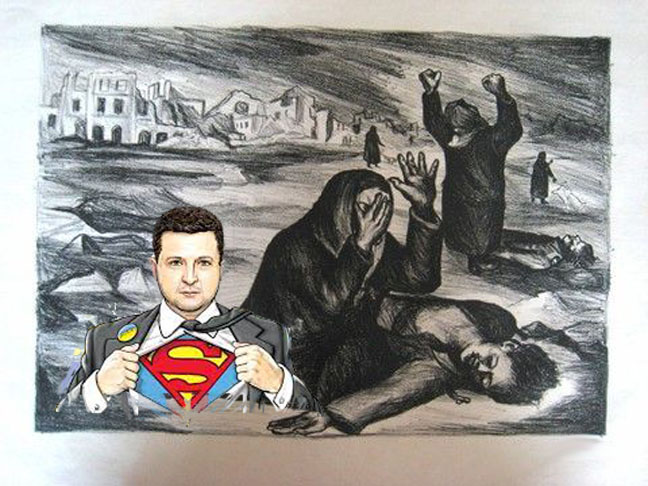
no chance of prevailing.
Yet, Zelensky won’t budge on his goals of reclaiming all captured territory including Crimea, lost 5 years before his presidency. Nor will Zelensky give up his delusional goal of NATO membership.
Walt Zlotow, West Suburban Peace Coalition, Glen Ellyn IL, 4 May 25
Thruout the 3 year, 3 month Russo Ukraine war, Ukrainian President Zelensky has steadfastly ignored battlefield reality of Ukraine’s destruction and impending defeat.
His delusions started in April, 2022 when he swallowed US and UK demands he walk away from the negotiated peace deal that would have cost Ukraine no new lost territory, albeit no NATO membership for Ukraine and neutrality between East and West.
Since then he’s lost roughly a fifth of his land, a hundred thousand plus casualties, a shattered economy…and no chance of prevailing.
Yet, Zelensky won’t budge on his goals of reclaiming all captured territory including Crimea, lost 5 years before his presidency. Nor will Zelensky give up his delusional goal of NATO membership.
But outside of US realism under Trump, Zelensky is not alone in his war delusions.
Recently, retired Deputy Supreme Allied Commander in Europe Sir Richard Shirreff advised that Europe will build up its troops, ships and planes if America pulls back from European defense against imaginary enemy Russia, “if only Europe has the will.” Shirreff appears clueless that due to European economic decline from supporting a lost war, most Western European people only have the will that it end
Current NATO Secretary General Mark Rutte is even more Zelensky-like. He trumpet’s Russia’s casualties of a thousand troops daily and that “Ukraine is not losing…and we must ensure Russia does not capture even one more square kilometer of Ukraine territory.” Rutte is oblivious that his intransigence to supporting Trump’s peace plan costs Ukraine more square kilometers of land every single day. Rutte is channeling delusional Baghdad Bob talking about “the mother of all victories” during the second Iraq war..
The oddity of all this delusion is that on just about every domestic and foreign policy issue, Trump is the poster president for delusion. On the Ukraine war he’s the only realist in the war room.
Fantasy and Exploitation: The US-Ukraine Minerals Deal
Dr Binoy Kampmark May 2, 2025, https://theaimn.net/fantasy-and-exploitation-the-us-ukraine-minerals-deal/
The agreement between Washington and Kyiv to create an investment fund to search for rare earth minerals has been seen as something of a turn by the Trump administration. From hectoring and mocking the Ukrainian President Volodymyr Zelensky before the cameras on his visit to the US capital two months ago, President Donald Trump had apparently softened. It was easy to forget that the minerals deal was already on the negotiating table and would have been reached but for Zelensky’s fateful and ill-tempered ambush. Dreams of accessing Ukrainian reserves of such elements as graphite, titanium and lithium were never going to dissipate.
Details remain somewhat sketchy, but the agreement supposedly sets out a sharing of revenues in a manner satisfactory to the parties while floating, if only tentatively, the prospect of renewed military assistance. That assistance, however, would count as US investment in the fund. According to the White House, the US Treasury Department and US International Development Finance Corporation will work with Kyiv “to finalize governance and advance this important partnership,” one that ensures the US “an economic stake in securing a free, peaceful, and sovereign future for Ukraine.”
In its current form, the agreement supposedly leaves it to Ukraine to determine what to extract in terms of the minerals and where this extraction is to take place. A statement from the US Treasury Department also declared that, “No state or person who financed or supplied the Russian war machine will be allowed to benefit from the reconstruction of Ukraine.”
Ukraine’s Minister of Economy, Yulia Svyrydenko, stated that the subsoil remained within the domain of Kyiv’s ownership, while the fund would be “structured” on an equal basis “jointly managed by Ukraine and the United States” and financed by “new licenses in the field of critical materials, oil and gas – generated after the Fund is created.” Neither party would “hold a dominant vote – a reflection of equal partnership between our two nations.”
The minister also revealed that privatisation processes and managing state-owned companies would not be altered by the arrangements. “Companies such as Ukrnafta and Energoatom will stay in state ownership.” There would also be no question of debt obligations owed by Kyiv to Washington.
That this remains a “joint” venture is always bound to raise some suspicions, and nothing can conceal the predatory nature of an arrangement that permits US corporations and firms access to the critical resources of another country. For his part, Trump fantasised in a phone call to a town hall on the NewsNation network that the latest venture would yield “much more in theory than the $350 billion” worth of aid he insists the Biden administration furnished Kyiv with.
Svyrydenko chose to see the Reconstruction Investment Fund as one that would “attract global investment into our country” while still maintaining Ukrainian autonomy. Representative Gregory Meeks, the ranking Democrat on the House of Foreign Affairs Committee, thought otherwise, calling it “Donald Trump’s extortion of Ukraine deal.” Instead of focusing on the large, rather belligerent fly in the ointment – Russian President Vladimir Putin – the US president had “demonstrated nothing but weakness” towards Moscow.
The war mongering wing of the Democrats were also in full throated voice. To make such arrangements in the absence of assured military support to Kyiv made the measure vacuous. “Right now,” Democratic Senator Chris Murphy said on MSNBC television, “all indications are that Donald Trump’s policy is to hand Ukraine to Vladimir Putin, and in that case, this agreement isn’t worth the paper that it’s written on.”
On a certain level, Murphy has a point. Trump’s firmness in holding to the bargain is often capricious. In September 2017, he reached an agreement with the then Afghan president Ashraf Ghani to permit US companies to develop Afghanistan’s rare earth minerals. Having spent 16 years in Afghanistan up to that point, ways of recouping some of the costs of Washington’s involvement were being considered. It was agreed, went a White House statement sounding all too familiar, “that such initiatives would help American companies develop minerals critical to national security while growing Afghanistan’s economy and creating new jobs in both countries, therefore defraying some of the costs of United States assistance as Afghans become more reliant.”
Ghani’s precarious puppet regime was ultimately sidelined in favour of direct negotiations with the Taliban that eventually culminated in their return to power, leaving the way open for US withdrawal and a termination of any grand plans for mineral extraction.
A coterie of foreign policy analysts abounded with glowing statements at this supposedly impressive feat of Ukrainian diplomacy. Shelby Magid, deputy director of the Atlantic Council think tank’s Eurasia Centre, thought it put Kyiv “in their strongest position yet with Washington since Trump took office.” Ukraine had withstood “tremendous pressure” to accept poorer proposals, showing “that it is not just a junior partner that has to roll over and accept a bad deal.”
Time and logistics remain significant obstacles to the realisation of the agreement. AsUkraine’s former minister of economic development and current head of Kyiv school of economics Tymofiy Mylovanov told the BBC, “These resources aren’t in a port or warehouse; they must be developed.” Svyrydenko had to also ruefully concede that vast resources of mineral deposits existed in territory occupied by Russian forces. There are also issues with unexploded mines. Any challenge to the global rare earth elements (REEs) market, currently dominated by China (60% share of production of raw materials; 85% share of global processing output; and 90% manufacturing share of rare earth magnets), will be long in coming.
No Victory in Ukraine: The Costs of Western Delusion
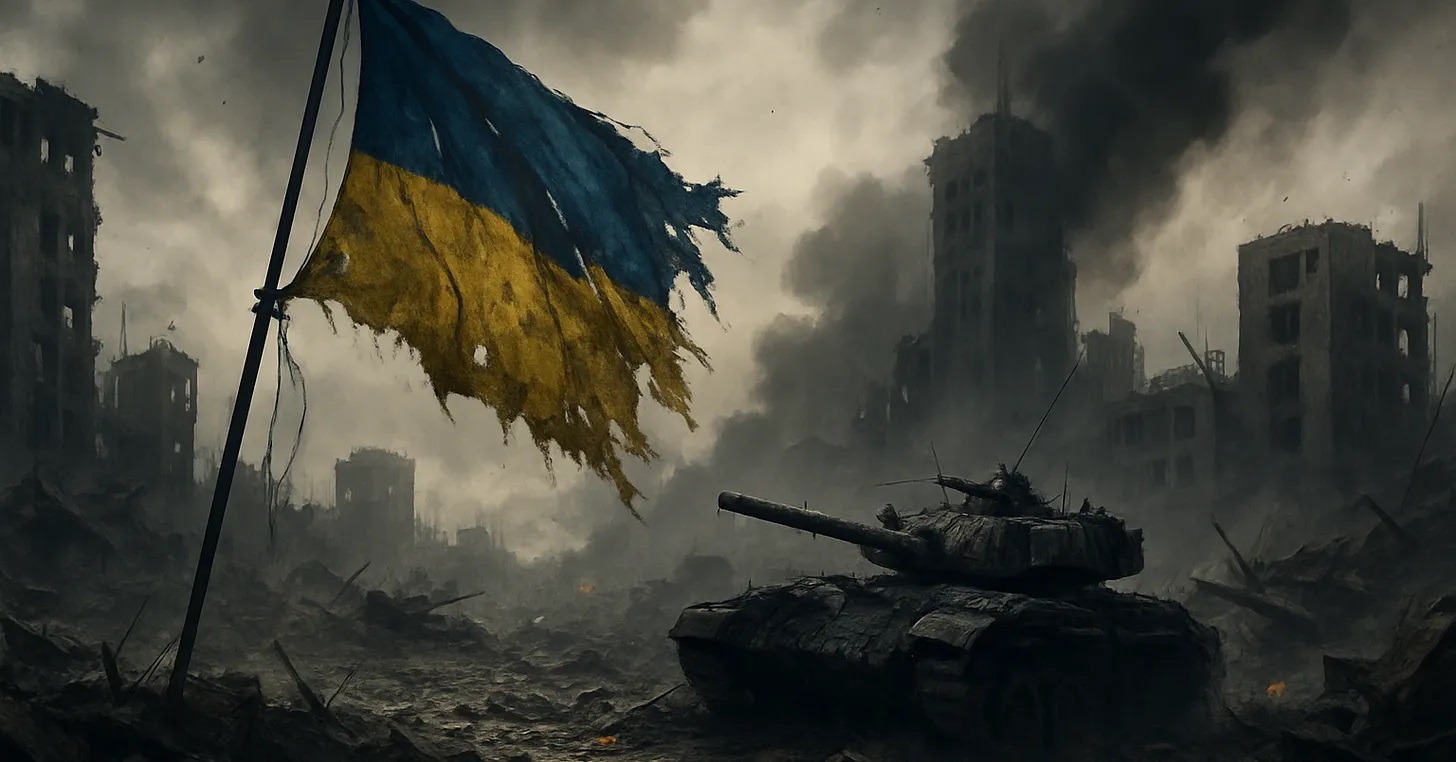
Having invested enormous political capital in the narrative of Ukrainian success, Western governments now face a stark choice: admit failure or fabricate further illusions.
A negotiated settlement can succeed only if it acknowledges Russia’s control over key Ukrainian territories and guarantees that Kyiv will not join NATO. Anything less is strategic fantasy.
Analyzing the impending failure of Ukraine’s war effort and the urgent need for strategic realism in U.S. and European policies.
POST-LIBERAL DISPATCH, Apr 29, 2025, https://postliberaldispatch.substack.com/p/no-victory-in-ukraine-the-costs-of?utm_source=post-email-title&publication_id=4747899&post_id=162368952&utm_campaign=email-post-title&isFreemail=true&r=ln98x&triedRedirect=true&utm_medium=email
The conflict in Ukraine represents not merely a military failure but a profound collapse of political imagination and strategic discipline across the West. To evaluate this ongoing debacle through the lens of political realism and realpolitik demands dispensing with sentimental narratives, ideological attachments, and moralized illusions that have distorted serious analysis for years. Strategic clarity begins with the uncomfortable but inescapable fact: Ukraine’s defeat, whether through a forced diplomatic settlement or battlefield collapse, is no longer a possibility to be debated—it is an inevitability. The West’s refusal to acknowledge this reality stems less from misunderstanding battlefield dynamics and more from a systemic dysfunction wherein political leadership has fused strategic aims with public relations imperatives, thereby serving neither effectively.
At the core of Western miscalculation lies a fatal contradiction. Ukraine was encouraged—indeed, materially and rhetorically incentivized—to resist with the implicit, sometimes explicit, promise of ultimate victory. Yet Western capitals were neither prepared to mobilize the industrial base, financial resources, nor political will necessary to sustain the prolonged total war required to defeat a nuclear-armed Russia. This contradiction was not an accident; it arose naturally from the structural incentives within Western democracies, where leaders needed to appear resolute without assuming the irreversible costs and risks that genuine strategic victory would demand. Thus, Western “support” was expansive in quantity but defective in quality—sufficient to prolong Ukraine’s resistance but insufficient to enable decisive success.
This dynamic exposes why further support—whether billions of dollars in aid, advanced weapons, or rhetorical escalations—cannot now alter the outcome. Ukraine’s manpower shortages, industrial exhaustion, and political fragmentation cannot be reversed by external injections of matériel or funding. The critical variable—human capacity—has been irreversibly degraded. Realpolitik demands the recognition that no arsenal of Western weapons can compensate for a collapsing force structure facing an adversary that enjoys both conventional and nuclear escalation dominance.
The strategic illusion driving continued support is not born of a sincere belief in Ukrainian victory but rather of a desperate attempt to delay political reckoning. Having invested enormous political capital in the narrative of Ukrainian success, Western governments now face a stark choice: admit failure or fabricate further illusions. In this sense, Ukraine’s war effort has been subordinated to Western political needs rather than judged on its own strategic merits. This helps explain why Ukrainian leadership was encouraged to reject diplomatic offramps like the Istanbul talks: the West preferred a failed gamble on battlefield reversal to an early settlement that would have publicly exposed the limits of Western power and credibility.
This leads to an unavoidable truth: Ukraine has been treated less as a sovereign actor and more as an instrument of Western strategic signaling. The dominant objective was never the restoration of Ukraine’s 1991 borders—an outcome unattainable without direct NATO intervention—but the maintenance of an image of Western resolve against authoritarian revisionism. Once battlefield success proved elusive, the war transformed into a conflict of perception, with Ukrainians paying the real, human cost for abstract political imperatives.
Against this backdrop, Trump’s blunt diplomacy is not a betrayal but rather a belated reassertion of strategic rationality. The alternative—prolonging Ukraine’s suffering for a fantasy of reversal—serves no tangible Western interest. Trump’s reported willingness to “walk away” unless a settlement is reached recognizes a fundamental truth of realpolitik: power is the only currency in negotiation. With no remaining strategic leverage, Ukraine must accept the least unfavorable terms while it still retains a semblance of bargaining power. Otherwise, total military collapse and unconditional surrender will be the inevitable conclusion.
This analysis must also grapple with the secondary consequences. Ukraine’s defeat will undoubtedly damage U.S. credibility in the eyes of key allies such as Taiwan, Japan, and South Korea. Yet political realism demands prioritization. The Indo-Pacific, not Eastern Europe, is now the primary theater of geopolitical competition. Resources, strategic focus, and credibility are finite. Every dollar expended in Ukraine without materially altering the balance of power weakens Washington’s ability to contain China, the only peer competitor capable of fundamentally reshaping the global order. From a purely interest-based perspective, retrenchment from Ukraine in favor of bolstering Indo-Pacific commitments is not only logical but strategically imperative, however politically unpalatable it may seem.
Nor should any illusions persist about containing Russia through continued proxy conflict. Prolonged war has already incentivized deepening Russian-Chinese strategic alignment, revealed political fractures within NATO, and accelerated the global shift toward a multipolar order. The longer the West clings to the illusion of salvaging Ukraine’s position, the more divisive it will become at home—and the more strategic ground it will cede abroad. Realpolitik demands ruthless triage: sacrifice what cannot be saved to consolidate and defend what remains viable.
Finally, it must be recognized that Russia, having paid the costs of prolonged conflict, has no rational incentive to settle for partial gains. Political realism teaches that actors seek to translate battlefield success into maximal political objectives. Unless confronted by overwhelming force or existential risk—neither of which the West is prepared to employ—Russia will continue pressing its advantage. A negotiated settlement can succeed only if it acknowledges Russia’s control over key Ukrainian territories and guarantees that Kyiv will not join NATO. Anything less is strategic fantasy.
The dominant narratives that have framed Western engagement in Ukraine—invocations of democracy, sovereignty, and resistance to aggression—may possess emotional resonance, but they have been strategically catastrophic. They obscured the real stakes, concealed the true balance of forces, and ultimately subordinated hard strategic interests to soft illusions. In the brutal calculus of international politics, sentimental attachments are liabilities, not assets. Strategic clarity demands recognizing irretrievable losses, minimizing further damage, and reallocating resources to theaters where the balance of power can still be decisively shaped.
Why Military Neutrality is a Must for Australia

Embrace military neutrality. Australia faces a choice: join declining empires or lead in peace. Discover why neutrality is the way forward in a multipolar world.
April 30, 2025 , By Denis Hay, Australian Independent Media
Introduction: A Nation at the Crossroads
Picture this: It’s 2030. Australian submarines sail under U.S. command in the Taiwan Strait. Canberra receives intelligence briefings written in Washington. The media frames any dissent as disloyalty. Ordinary Australians ask: “How did we get dragged into another war we never voted for?”
Rewind to 2025: our foreign policy is shaped not by peace or diplomacy, but by deals like AUKUS, designed to entrench Australia within the military-industrial interests of a declining superpower. Meanwhile, the world is shifting. BRICS is rising. The U.S. is losing credibility. And Australia must decide: Will we continue to act as a pawn, or will we embrace military neutrality and sovereignty through peace?
The Global Realignment: The World Beyond the U.S.
U.S. Decline and the Rise of Multipolarity
In 2015, analysts inside global financial circles began quietly withdrawing from the U.S. The reasons were clear:
• America’s fertility rate had fallen to 1.8 (below replacement).
• Civil unrest, mass shootings, and institutional collapse painted a picture of chaos.
• Trust in government and media plummeted (Edelman Trust Barometer, 2021).
Meanwhile, the BRICS+ bloc was expanding rapidly. By 2024, Saudi Arabia, UAE, and Iran had joined, and member nations began transacting in local currencies. The world was no longer unipolar—and Australia must adapt.
The BRICS+ Bloc and the Global South
The global South is now:
• Home to the largest youth populations (India, Nigeria, Indonesia)
• Receiving billions in tech investment (e.g., Microsoft’s $1B in African AI infrastructure)
• Transitioning to local currency trade
Australia can no longer afford to cling to outdated alliances that tie us to declining powers.
Why Australia Must Reassess Its Strategic Alliances
The Cost of U.S. Dependence
Our military is deeply entwined with U.S. command structures:
• AUKUS submarine deal: $368 billion to be tied into U.S. war planning
• Hosting U.S. troops, ships, and bombers in the Northern Territory
The Failure of U.S. Militarism
• Iraq and Afghanistan: trillions spent, no peace achieved
• Ukraine: Proxy war fuelled by NATO expansion and U.S. arms interests
Quote from the video: “America is being phased out… not because they hate it, but because it’s obsolete.”
What the OCGFC Knows – And Why We Should Listen
The Owners and Controllers of Global Financial Capital (OCGFC) have already moved on from America. They’re investing in the South. Australia should follow their strategy—but for peace, not profit.
The Case for Military Neutrality
What Is Military Neutrality?
Military neutrality means:
• No participation in military blocs
• No hosting of foreign military bases
• No involvement in foreign wars
Example of military neutrality: Switzerland has remained neutral for over 200 years. Reference: https://worldpopulationreview.com/country-rankings/neutral-countries
Benefits of Military Neutrality for Australia
• Enhanced sovereignty: Canberra decides, not Washington
• Improved regional trust
• Reduced risk of becoming a target in U.S.-China conflict
Strategic Independence……………………………………………………………………………….
Australia is now home to:
The Pine Gap spy base, integral to U.S. drone warfare and nuclear targeting
Rotational deployments of U.S. marines and bombers in the Northern Territory
Massive investment under AUKUS, where Australia receives nuclear-powered submarines it will not command independently
Growing integration into U.S. war planning around China and the South China Sea
The Quiet Absorption of Sovereignty
These developments raise serious questions:
If we cannot deny access to foreign troops on our soil, are we still sovereign?
If our military relies on foreign command systems, do we retain independent defence?
This is not a conspiracy theory. This is creeping dependency. Sovereignty is rarely lost overnight. It is eroded decision by decision, treaty by treaty, base by base—until there is nothing left to reclaim.
The Choice Before Us
We must confront an uncomfortable possibility: Australia is at risk of becoming a de facto 51st state – not through constitutional change, but through military submission.
The warning signs are clear. If we continue down this path unquestionably, we may find ourselves unable to make decisions without a nod from Washington.
Neutrality offers a way out. …………………………………………………………………………………………………… https://theaimn.net/why-military-neutrality-is-a-must-for-australia/
UK in talks to buy back nuclear sites from French firm EDF
Politico 25th April 2025
“Discussions are continuing” between the two governments on the U.K. acquiring three sites, an official told POLITICO.
LONDON — The U.K. government is in talks with its French counterparts about purchasing back three nuclear sites from state-owned energy giant EDF, as Whitehall looks to take control of the upcoming expansion of nuclear power.
U.K. ministers are discussing buying up Bradwell B, Heysham and Hartlepool, a French government official confirmed to POLITICO.
“There have been discussions. For the moment, no decision has been taken and discussions are continuing,” the official said.
Two senior industry figures based in the U.K., familiar with government planning and granted anonymity to discuss sensitive plans, also said negotiations over the purchase of the three sites were ongoing.
Energy Secretary Ed Miliband and French Minister for Industry and Energy Marc Ferracci discussed the negotiations on the margins of the International Energy Agency Summit in London earlier this week, the official added.
The account was disputed by the British government, with a post-publication statement from the Department for Energy Security and Net Zero saying: “We categorically do not recognise these claims.”
The next key moment could come in July as part of a proposed French-U.K. summit.
Any move to bring the sites into state ownership would come as the U.K. mulls the most ambitious revival of nuclear power in a generation.
At a conference last December, Miliband insisted nuclear was essential for an an “all of the above approach” to energy security and low-carbon power, and told investors “my door is open” for future nuclear projects, as the U.K. bids to hit its legally-binding target of net zero carbon emissions by 2050.
………………..The ‘obvious’ sites
All three sites are owned by French firm EDF, a company in which the French state is the sole shareholder, handed over in a deal struck in 2023.
An EDF spokesperson declined to comment on any discussions but said: “EDF would welcome developments that enable ongoing employment opportunities at our sites, once existing stations close.
…………….. The U.K. has not built a new nuclear power plant since Sizewell B was opened in 1995. The much-delayed Hinkley Point C is at risk of not being completed until 2031, and the government is still weighing up a final investment decision for sister plant Sizewell C.
Meanwhile Great British Nuclear (GBN), the arms-length body set up under the last Conservative government, is overseeing the final stages of the late-running competition to build mini-nukes in the U.K., known as small modular reactors (SMRs).
GBN owns two sites — Oldbury and Wylfa — which were brought into state ownership by former Chancellor Jeremy Hunt last year.
A decision on awarding SMR contracts is now expected this summer. If the government goes ahead with its plans to boost nuclear capacity and award SMR contracts to multiple bidding companies, it will need more than two sites to host the work.
“If the government are going to expand gigawatts [capacity] as well as SMRs, they’ll need more sites, and those [three sites] are the obvious ones left over from EN-6 [the U.K.’s shortlist for projects],” a third industry figure said.
Heysham and Hartlepool both include operating nuclear power plants, which are set for decommissioning in stages across 2027 and 2030 respectively.
By contrast, Bradwell B, once earmarked for new nuclear, is a now vacant plot of land. The site is still owned by EDF but is currently being leased by China General Nuclear (CGN) Power, which stopped advancing their mooted project in 2022.
This means any takeover of the site could include a payout to the Chinese state-backed company, in line with £100 million-plus buyout of CGN’s stake in Sizewell C in 2022.
The developments could also pave the way for Wylfa to be reserved for a third gigawatt scale power plant, alongside Hinkley Point C and Sizewell C.
https://www.politico.eu/article/uk-nuclear-sites-edf-energy-bradwell-b-heysham-hartlepool/
Kiev and its backers reject key aspects of Trump’s peace plan – Reuters
25 Apr 25, https://www.rt.com/news/616288-reuters-trump-peace-plan/
The counteroffer is “on the table” of the American president, Vladimir Zelensky has stated
Kiev and its European backers have turned down President Donald Trump’s reported peace plan for the Ukraine conflict in several significant respects, according to a report by Reuters, citing the full texts of the US proposal and the response.
Washington tabled a proposed deal to end hostilities between Kiev and Moscow during a meeting in Paris on Thursday last week. A follow-up meeting took place in London on Wednesday, at which Ukrainian officials and their NATO European counterparts drafted counterproposal.
The London talks were downgraded at the last minute after Ukraine’s Vladimir Zelensky publicly rejected key American suggestions. He declared on Thursday that the European-backed “strategy” was now “on President Trump’s table.”
Having examined the drafts “in full and explicit detail” on Friday, Reuters identified four critical areas of disagreement.
The US is proposing Washington’s formal recognition of Russian sovereignty over Crimea — the former Ukrainian region that voted to join Russia following the 2014 Western-backed armed coup in Kiev — and a cessation of hostilities along the current frontline.
Kiev and its European backers are only willing to discuss territorial issues after a ceasefire has been established.
The US document offers a “robust security guarantee” for Ukraine from willing nations, according to Reuters. The Euro-proposal rival proposal insists that no restrictions be placed on Ukraine’s military, including the deployment of foreign troops on its territory, and calls for the US to provide NATO-like protection to Ukraine.
Russia demands Ukraine remains neutral and insists that it will not accept any NATO troop presence, or troops from bloc members as part of a coalition, in the country.
Reuters reported that the US is advocating for the removal of restrictions imposed on Russia since 2014, while Kiev and the Europeans propose a “gradual easing of sanctions after a sustainable peace is achieved,” paired with a threat of snapback measures for non-compliance.
The US framework includes mentions of financial compensation for Ukraine, but lacks specifics. The Kiev-backed counterproposal identifies frozen Russian assets in Western countries as a source for such payments, according to Reuters. Russia has labeled the seizure of its funds illegal and views any use of these assets to support Ukraine as “theft.”
Members of the Trump administration have blasted Zelensky for attempting to negotiate a deal through the media rather than in confidential discussions. The US president has warned that he may withdraw from his mediation efforts altogether if either party stalls progress.
Smash it, then claim it
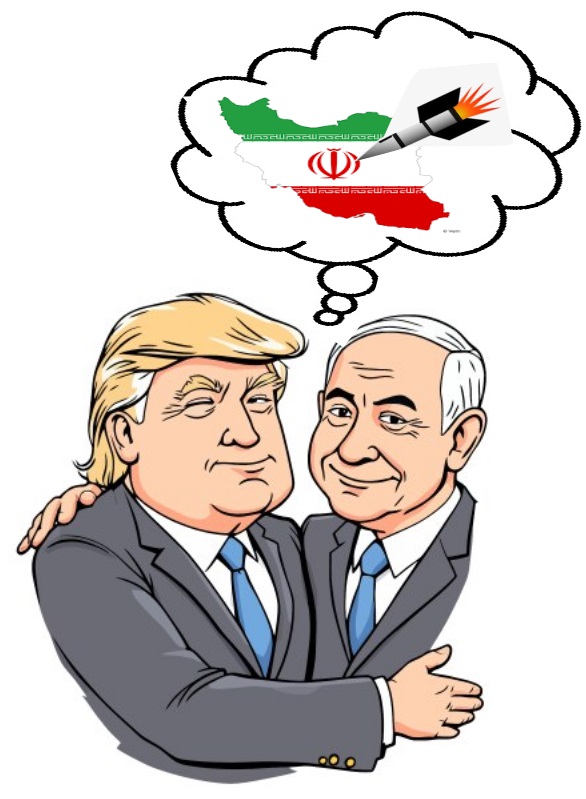
Trump is trying to rebuild the Iran nuclear deal he destroyed, then declare personal triumph, writes Linda Pentz Gunter
There is deep irony in the current efforts by the Trump administration to secure a nuclear deal with Iran, given it was the previous Trump administration that broke a fully functioning agreement already in place to ensure Iran did not develop nuclear weapons.
The JCPOA — or Joint Comprehensive Plan of Action — also known colloquially as the Iran nuclear deal — was agreed in Vienna in June 2015 between Iran and China, France, Germany, the Russian Federation, the United Kingdom and the United States. It involved significant monitoring and verification of Iran’s nuclear enrichment activities to ensure it remained within the confines of commercial grade. It also lifted UN Security Council sanctions on Iran as well as multilateral and national sanctions related to its nuclear program.
But under the first Donald Trump presidency, the White House effectively tore up the agreement, rendering it worthless when the US withdrew in May 2018. In his classically hyperbolic style, Trump labeled the JCPOA “one of the worst and most one-sided transactions the United States has ever entered into.”
In recent weeks, the new Trump administration has been feverishly negotiating, most recently in Oman, to establish an Iran nuclear deal that could turn out to be remarkably similar to the JCPOA. But this, of course, is the Trump modus operandi: Destroy something perfectly effective, then rebuild it almost in the exact image and declare it his own invention.
So far, the administration has wavered between demanding that Tehran dismantle its entire nuclear program, backtracking to allow Iran to enrich uranium to within commercial grade, then reversing again, with Middle East envoy Steve Witkoff telling Iran it must “stop and eliminate its nuclear enrichment” before the US would sign a deal.
Whether any of this will work remains uncertain, but it certainly wasn’t helped by the recent ravings of New Jersey Senator John Fetterman, a Democrat and former Bernie Sanders supporter whose politics — and especially rhetoric — on Israel and immigration, have become indistinguishable from many of the more extreme Republicans.
Of the current Iran talks, Fetterman pronounced: “The negotiations should be comprised of 30,000-pound bombs and the IDF,” referring to the Israeli Defence Forces. …………………………………..
what would the health and environmental impacts be of a major bombing attack on Iran’s nuclear facilities? Such an act could release clouds of radioactive dust into the atmosphere, contaminating land and water downwind. Contamination of surface and ground water would result in prolonged harmful consequences through ingestion by exposed populations.
Protracted exposure to enriched uranium dust by inhalation and ingestion can cause bone toxicity and reproductive toxicity and lead to renal failure. Uranium is also neurotoxic to the brain.
Tehran had been keeping its uranium enrichment well within the 3.67% limit, even after Trump withdrew the US from JCPOA. But in 2021, an act of sabotage against Natanz, Iran’s largest uranium enrichment facility, which Iran blamed on Israel, blacked out the plant and damaged centrifuges. The attack prompted Iran, unfettered by the shattered nuclear deal, to begin enriching its uranium to as high as 60% U-235 — some sources assert it has even reached 85% — either way a level that is considered weapons usable. Uranium enriched to 90% is considered weapons grade.
Iran’s nuclear facilities have been targeted on several occasions. In 2010, a powerful computer worm known as Stuxnet, designed by US and Israeli intelligence, was used to disable a key part of the Iranian nuclear program. Last year, a strike by the Israeli Air Force hit Iran’s Isfahan Nuclear Technology Center for uranium conversion and fuel production.
As negotiations began with Iran this spring, Trump also used threatening rhetoric at first, warning in late March that if the country did not dismantle its nuclear program, “there will be bombing. It will be bombing the likes of which they have never seen before.” He made similar threats during the last gasps of his first presidency, when he weighed an attack on Iran’s Natanz nuclear center but never followed through.
If Iran does indeed agree to end all its nuclear activities, the question remains about what to do with its stockpile of already enriched uranium. One idea apparently mooted by the White House is to allow Russia to store it, with a clause that would let Russia return the stockpile to Iran should the US breach any deal made in the coming weeks.
What all of this points to, of course, is the blurry line between commercial and military nuclear programs. Iran, a signatory to the nuclear Non-Proliferation Treaty, can claim to be abiding by the terms laid out in Article IV which gives countries who agree not to develop nuclear weapons “the inalienable right of all the Parties to the Treaty to develop research, production and use of nuclear energy for peaceful purposes.” The trouble is, no one believes them, exposing the weakness in — and wrongheadedness of — the treaty clause that leaves the back door perpetually open to the production of nuclear weapons.
Linda Pentz Gunter is the international specialist at Beyond Nuclear and writes for and edits Beyond Nuclear International. Views are her own. https://beyondnuclearinternational.org/2025/04/27/smash-it-then-claim-it/
Trump’s transactional instincts could help forge a new Iran nuclear deal
Mohamad Bazzi, 265 Apr https://www.theguardian.com/commentisfree/2025/apr/25/trump-iran-nuclear-deal
The president has a chance to make good on his reputation as a dealmaker as Iran moves closer to a nuclear weapon.
In May 2018, Donald Trump unilaterally withdrew the US from the Iran nuclear deal and reimposed American sanctions that crippled the Iranian economy. Trump tore up the 2015 agreement, which had taken years for Iran to negotiate with six world powers, under which Tehran limited its nuclear program in exchange for relief from international sanctions. Trump insisted he would be able to negotiate a better pact than the one reached by Barack Obama’s administration.
Today, in his second term as president, Trump is eager to fix the Iran deal he broke nearly seven years ago.
While Trump’s overall foreign policy has been chaotic and has alienated traditional US allies in Europe and elsewhere, he has an opportunity to reach an agreement with Iran that eluded Joe Biden. Since Trump walked away from the original deal, Iran has moved closer to having a nuclear weapon than it has ever been. It has enriched enough uranium close to weapons-grade quality to make six nuclear bombs, according to the International Atomic Energy Agency (IAEA). But analysts believe that even after enriching enough uranium for a bomb, Iran would still need up to a year to develop an actual nuclear warhead that could be deployed on a ballistic missile.
Last month, Trump sent a letter to Iran’s supreme leader, the 86-year-old Ayatollah Ali Khamenei, saying the US wanted to negotiate a new deal. Trump followed up with a public threat, saying if Iran’s leaders did not agree to renewed talks, they would be subjected to “bombing the likes of which they have never seen before”. After Trump’s threats and a buildup of US forces in the Middle East, Iran’s military said it would respond to any attack by targeting US bases in the region, which house thousands of American troops.
But Iranian leaders also agreed to indirect negotiations, rather than the direct talks Trump had proposed. Trump dispatched his special envoy, the real estate developer Steve Witkoff, to lead a team of US negotiators to meet indirectly with top Iranian officials, including the foreign minister, Abbas Araghchi. The two sides held two rounds of productive talks so far this month, under the mediation of Oman. And the US and Iranian teams are due to meet again this weekend in Muscat, the capital of Oman, where they will start talks on technical details of a potential agreement.
While Trump and Iran’s leaders both changed their tones in recent weeks, there are many obstacles before a deal can be reached, including hardliners in Iran and Washington, as well as opposition from Israel’s rightwing government, led by Benjamin Netanyahu, who has spent years working to undermine negotiations between the US and Iran. The main barrier will be whether the Trump administration insists on a total dismantling of Iran’s nuclear program – the so-called “Libya model”, named after the late Libyan dictator Muammar Gaddafi, who decided to eliminate his country’s nuclear weapons program in 2003 under pressure from the US. But that decision deprived Gaddafi of a major lever to stave off western military intervention after the Arab Spring uprisings in 2011, which led to his regime’s fall and his killing by Libyan rebels.
Some foreign policy hawks in Washington, including Trump’s national security adviser, Michael Waltz, and the secretary of state, Marco Rubio, insist on this maximalist strategy, which echoes Netanyahu’s demand that Iran must completely dismantle its nuclear enrichment activity and infrastructure as part of any deal with the US. If Trump takes a similar approach, negotiations would probably break down and Trump could follow through on his threat to carry out military strikes.
Iran has made clear that it will not agree to the total end of its nuclear program, but would accept a verification-based approach, as it did under the 2015 deal negotiated by the Obama administration along with China, France, Russia, the UK and Germany, together with the European Union. That type of agreement would place strict limits on Iran’s ability to enrich uranium and impose an inspections regime involving international monitors. Several of Trump’s advisers, including Witkoff and the vice-president, JD Vance, seem to favor this solution.
“I think he wants to deal with Iran with respect,” Witkoff said of Trump’s outreach to the Iranian regime, in a long interview last month with Tucker Carlson, the rightwing media host who has been highly critical of Republican hawks agitating for war with Iran. “He wants to build trust with them, if it’s possible.”
Iran’s leaders apparently got that message – and have tried to stroke Trump’s ego and convey that they respect him in ways they never respected Biden. In a Washington Post op-ed published on 8 April, Iran’s foreign minister seemed to be speaking to Trump directly when he blamed the failure of earlier negotiations on a “lack of real determination by the Biden administration”. Araghchi also played to Trump’s oft-repeated desire to be a peacemaker who ends America’s legacy of forever wars, writing: “We cannot imagine President Trump wanting to become another US president mired in a catastrophic war in the Middle East.”
And the minister appealed to Trump’s reputation as a deal-maker, citing the “trillion-dollar opportunity” that would benefit US companies if they could gain access to Iran after a diplomatic agreement. Iran’s leaders evidently understand that Trump loves to frame his foreign policy as being guided by his desire to secure economic deals and benefits for American businesses.
In this case, Trump’s transactional instincts and bulldozer style of negotiations could lead to a positive outcome, avoiding war with Iran and undermining the hardliners in Washington, Iran and Israel. Trump has already adopted a significant shift toward Tehran from his first term, when he had insisted that Iran was the world’s leading state sponsor of terrorism and the greatest threat to US interests in the Middle East.
After he took office in 2017, Trump wanted to tear up the Iran deal partly because it was one of Obama’s major foreign policy accomplishments. Trump also surrounded himself with hawkish advisers who reinforced the danger of an Iranian threat, including HR McMaster, who served as national security adviser, and James Mattis, who was defense secretary. Both men commanded US troops during the occupation of Iraq, and they fought Iraqi militias funded by Iran. Trump later appointed John Bolton, another neoconservative and advocate of the 2003 US invasion of Iraq, as his national security adviser.
In his second term, Trump has banished most of the neocons from his administration. Trump also seems to realize that Netanyahu could become one of the biggest obstacles to an Iran deal, as he was during the Obama and Biden administrations. It was no accident that the president announced his plan for renewed talks with Iran while Netanyahu sat beside him at an Oval Office meeting on 7 April. Netanyahu had arranged a hasty visit to Washington to seek an exemption from Trump on new tariffs on Israeli exports. But he left empty-handed and embarrassed by Trump’s Iran announcement. That meeting was a signal to Iran’s leaders: that Trump would not allow Netanyahu to steamroll him, as the Israeli premier had done with other US presidents.
If Trump continues to resist Netanyahu, along with hawkish Republicans and some of his own advisers, he might well be able to negotiate a dramatic deal with Iran – and repair the nuclear crisis he unleashed years ago.
- Mohamad Bazzi is the director of the Hagop Kevorkian Center for Near Eastern studies and a journalism professor at New York University.
EDF’s two nuclear plants in Britain should be negotiated as one, French minister says.

Guy Taylor, Transport Reporter, 25 April 2025
EDF’s two nuclear construction schemes at Hinkley Point and Sizewell C should be treated as one financial venture in negotiations, according to France’s energy minister.
Marc Ferracci told the FT he had held discussions with the UK’s energy minister Ed Miliband at the sidelines of a conference in London on Thursday.
“France and EDF are very committed to deliver the projects but we have to find a way to accelerate them and we have to find a way to consolidate the financial schemes of both projects,” he said.
The French government has been pushing ministers in the UK to lend a hand with Hinkley Point’s floundering finances over the last year.
Costs on the nuclear project have risen to as high as £46bn and it argues EDF, the French state-owned energy firm, should not be forced to cover the overruns.
EDF’s equity stake in Sizewell C, a 3.2 gigawatt nuclear station on the Suffolk Coast, is smaller than Hinkley Point.
Ferracci denied that the French government was looking to use Sizewell as “leverage” against the financial troubles at Hinkley………………….. https://www.cityam.com/edfs-two-nuclear-plants-should-be-negotiated-as-one-french-minister-says/
Iran opens door to restoring nuclear surveillance, UN watchdog says

Iran has agreed to allow a technical team from the International Atomic
Energy Agency (IAEA) to discuss restoring camera surveillance in Iranian
nuclear facilities, the head of the UN nuclear watchdog said on Wednesday.
IAEA Director General Rafael Grossi confirmed the agency would send a
technical team to Iran following his visit to Tehran this month. Grossi
said his impression is that the Islamic Republic’s leaders are “seriously
engaged in discussions… with a sense of trying to get to an agreement.”
The UN body would be the party responsible for verifying Iran’s compliance
with a deal, Grossi said. “This will have to be verified by the IAEA.”
Iran International 23rd April 2025 https://www.iranintl.com/en/202504237179
Iran-US talks wrap up in Rome with agreement to establish framework for potential nuclear deal
Omani officials stated that the indirect talks are ‘gaining momentum’ after Tehran and Washington agreed to establish technical delegations to draft a potential replacement for the Obama-era JCPOA
The second round of indirect talks between Iranian and US officials concluded in the Italian capital, Rome, on 19 April, with both sides agreeing to establish working groups to draft a “general framework” for a potential new nuclear deal.
“In this round of talks, senior Iranian and US negotiators outlined the general framework for the talks and exchanged views on some important issues in the areas of sanctions relief and the nuclear issue. The two sides agreed to continue the next round of indirect talks next Saturday in Muscat,” the Iranian Foreign Ministry said in a statement.
Tehran also stated that talks to limit the country’s uranium enrichment program in exchange for sanctions relief “require more detailed discussion and examination at the expert level.” As such, the two sides agreed to send technical delegations to the Omani capital next Wednesday for detailed discussions.
Following Saturday’s talks, Iranian Foreign Minister Abbas Araghchi described the atmosphere as “positive” and said that officials “made clear how many in Iran believe that the [2015 Joint Comprehensive Plan of Action] is no longer good enough for us.”
“For now, optimism may be warranted but only with a great deal of caution,” he told reporters.
The Omani Foreign Ministry said the second round of talks “led to the parties agreeing to move to the next phase of targeted negotiations to achieve a fair, permanent, and binding agreement that ensures Iran is free from nuclear weapons and the full lifting of sanctions while preserving the country’s right to develop nuclear energy for peaceful uses and purposes.”
“Dialogue and clear communication are the only way to achieve a credible and reliable understanding that will benefit all parties in the regional and international context,” Omani officials said.
There was no immediate comment from the US side following the talks.
Nevertheless, soon after Saturday’s talks ended, Israeli TV broadcast a pre-recorded address by Prime Minister Benjamin Netanyahu, in which he reiterated his commitment to preventing Iran from developing a nuclear weapon.
“I am committed to preventing Iran from attaining nuclear weapons. I won’t give on this, I won’t let up on this, and I won’t withdraw from this — not a millimeter,” Netanyahu said.
Earlier in the day, Reuters reported that Tel Aviv “has not ruled out” launching an attack on Iran’s nuclear facilities in the near future without US involvement.
Iran to brief China as it accuses Israel of ‘undermining’ US nuclear talks
Tehran official’s Beijing trip comes before third round of talks with the US and follows consultations with Russia.
Iran says it will brief China this week in advance of a third round of talks with the United States on its nuclear programme, as Iranian officials separately accused Israel of seeking to “undermine and disrupt the diplomatic process”.
Iranian Foreign Minister Abbas Araghchi will visit Beijing on Tuesday to discuss the latest talks with the administration of US President Donald Trump on the country’s nuclear programme, spokesman Esmaeil Baqaei said on Monday.
The trip echoes “consultations” Iran held with Russia last week, before the second round of direct US-Iran talks was held over the weekend. A third round of talks between Araghchi and US envoy Steve Witkoff is scheduled to take place in Oman on Saturday.
Araghchi has previously said Tehran always closely consults with its allies, Russia and China, over the nuclear issue.
“It is natural that we will consult and brief China over the latest developments in Iran-US indirect talks,” Baqaei said.
Russia and China, both nuclear-armed powers, were signatories to a now-defunct 2015 deal between Iran, the US and several Western countries intended to defuse tensions around Tehran’s nuclear programme.
The 2015 deal, known as the Joint Comprehensive Plan of Action (JCPOA), from which Trump withdrew in 2018, saw Tehran curtail its nuclear programme in exchange for sanctions relief.
The US and Israel have accused Iran of seeking to use the programme to develop nuclear weapons. Tehran has staunchly denied the claim, saying the programme is for civilian purposes.
On Monday, the Chinese Ministry of Foreign Affairs stressed close ties between Beijing and Tehran, but did not confirm the Iranian minister’s planned visit.
“China and Iran have maintained exchanges and contacts at all levels and in various fields. With regard to the specific visit mentioned, I have no information to offer at the moment,” Guo Jiakun, spokesperson for the ministry, said.
Strengthened alliance
Israel’s war in Gaza has seen Iran pull closer to Russia and China. Recent diplomatic moves surrounding the US-Iran talks have further underscored the strengthened ties.
Araghchi met his Russian counterpart, Sergey Lavrov, last week, just before his second round of negotiations with Witkoff.
On Monday, Russian President Vladimir Putin signed off on a 20-year strategic partnership treaty agreed earlier this year with his Iranian counterpart, Masoud Pezeshkian.
Meanwhile, Iran’s already fraught relations with Israel and its “ironclad” ally, the US, have nosedived amid the war. Since taking office, Trump has reinstated a “maximum pressure” sanctions campaign against Tehran, while repeatedly threatening military action if a new nuclear deal is not reached.
Speaking on Monday, Foreign Ministry spokesman Baqaei accused Israel of trying to disrupt the nascent negotiations to open the way for military action.
In comments carried by the AFP news agency, he declared that Israel is behind efforts from a “kind of coalition” to “undermine and disrupt the diplomatic process”.
“Alongside it are a series of warmongering currents in the United States and figures from different factions,” the spokesman said.
Last week, Prime Minister Benjamin Netanyahu reiterated that Israel would not allow Iran to acquire nuclear weapons.
His statement came a day after The New York Times reported that Trump had dissuaded Israel from striking Iran’s nuclear sites in the short term, saying Washington wanted to prioritise diplomatic talks.
‘Consultations must continue’
Baqaei added that “consultations must continue” with countries that were party to the JCPOA.
Iran has gradually breached the terms of the treaty since Trump abandoned it, most notably by enriching uranium to levels higher than those laid out in the deal.
The International Atomic Energy Agency says Iran has enriched uranium to 60 percent, close to the 90 percent level needed to manufacture weapons. The JCPOA had restricted it to 3.67 percent, the level of enrichment needed for civilian power.
Speaking last week, Witkoff sent mixed messages on what level Washington is seeking. He initially said in an interview that Tehran needed to reduce its uranium enrichment to the 3.67 percent limit, but later clarified that the US wants Iran to end its enrichment programme.
1 This Month
Chernobyl: The Lost Tapes – A good documentary on Chernobyl on SBS available On Demand for the next 3 weeks– https://www.sbs.com.au/ondemand/tv-program/chernobyl-the-lost-tapes/2352741955560

of the week–London Campaign for Nuclear Disarmament

Tell the Ukrainian Government to Drop Prosecution of Peace Activist Yurii Sheliazhenko
To see nuclear-related stories in greater depth and intensity – go to https://nuclearinformation.wordpress.com
-
Archives
- April 2026 (126)
- March 2026 (251)
- February 2026 (268)
- January 2026 (308)
- December 2025 (358)
- November 2025 (359)
- October 2025 (376)
- September 2025 (257)
- August 2025 (319)
- July 2025 (230)
- June 2025 (348)
- May 2025 (261)
-
Categories
- 1
- 1 NUCLEAR ISSUES
- business and costs
- climate change
- culture and arts
- ENERGY
- environment
- health
- history
- indigenous issues
- Legal
- marketing of nuclear
- media
- opposition to nuclear
- PERSONAL STORIES
- politics
- politics international
- Religion and ethics
- safety
- secrets,lies and civil liberties
- spinbuster
- technology
- Uranium
- wastes
- weapons and war
- Women
- 2 WORLD
- ACTION
- AFRICA
- Atrocities
- AUSTRALIA
- Christina's notes
- Christina's themes
- culture and arts
- Events
- Fuk 2022
- Fuk 2023
- Fukushima 2017
- Fukushima 2018
- fukushima 2019
- Fukushima 2020
- Fukushima 2021
- general
- global warming
- Humour (God we need it)
- Nuclear
- RARE EARTHS
- Reference
- resources – print
- Resources -audiovicual
- Weekly Newsletter
- World
- World Nuclear
- YouTube
-
RSS
Entries RSS
Comments RSS
 nuclear-news