How world health will benefit from Iran nuclear deal

 Iran nuclear deal will bolster global health Boston Globe, By Dr. Ali Lotfizadeh and Dr. Mohsen Malekinejad SEPTEMBER 15, 2015 National security and regional stability have dominated the political debate over the Iran nuclear accord in recent weeks. Less discussed, however, are the far-reaching, positive implications for public health that will come when sanctions are lifted, as the deal calls for, and Iran’s medical system can begin to cooperate with the West again.
Sanctions for several years have severely restricted access to life-saving medicines for patients in Iran, leading to serious health consequences. Although the US government introduced loopholes to bypass these sanctions for medical purposes, the loopholes have not worked properly and lives have consequently been lost. With the nuclear agreement in place, thousands of Iranians will once again receive treatments for diseases like cancer and hemophilia.
Yet the calming of political tensions will have broader impact than just inside Iran. Since the revolution of 1979, Iran has been at the forefront of advancing primary medical care for rural populations through a system of robust health networks, which comprises more than 17,000 rural health facilities and a health center for every 7,000 rural residents. This network’s success even drew the interest of public health experts in Mississippi, who collaborated a few years ago with colleagues at Shiraz University of Medical Sciences in Iran to reduce health care disparities between rural and urban parts of the state.
Iran has also launched advanced intervention programs for drug users and is home to two out of three HIV surveillance and treatment knowledge hubs for the Eastern Mediterranean region office of the World Health Organization. These hubs are in charge of knowledge transfer to other countries in the region.
Iran’s vast potential to enhance global health is significantly underutilized right now. For example, since 2013, we have trained local ophthalmologists in Tajikistan to treat the main causes of avoidable blindness through a US-based nongovernmental organization. When we sought ophthalmologists who could provide training in Tajikistan, it was only natural to consider enlisting the expertise of Iranian colleagues. Iran, a neighbor of Tajikistan, is home to several reputable training sites sponsored by the International Congress of Ophthalmology. Iranian physicians speak the language and know the culture of Tajikistan and other countries in the region. They are also less expensive to hire than their American counterparts. But current restrictions make even these small-scale collaborations virtually impossible, despite their clear humanitarian purpose……..
proposed health partnerships transcend political ideologies and improve lives from villages in Tajikistan to small towns in Mississippi. But their success depends on the durability of this nuclear agreement. Iran and America do not see eye-to-eye on many political issues, and the current accord will not change that. But support for this agreement can pave the way toward a shared global responsibility to make the world a healthier place.
Dr. Ali Lotfizadeh is a visiting scholar at UCSF School of Medicine’s Institute for Health Policy Studies. Dr. Mohsen Malekinejad is an assistant professor in the same program. https://www.bostonglobe.com/opinion/2015/09/15/iran-nuclear-deal-will-bolster-global-health/YF7Hobo2RJPsu547uC4lGM/story.html, Boston Globe
UK govt on brink of sealing Hinkley and Sizewell nuclear deal with China

 David Cameron gives go ahead to build Chinese nuclear reactor in ESSEX http://www.express.co.uk/news/uk/603390/China-nuclear-reactor-Essex-nuclear-power
DAVID Cameron is poised to sign a landmark deal next month to allow China to build a prototype nuclear reactor in Bradwell, Essex – which would become the first Chinese-operated facility in the West.
 The plant is the price Beijing wants in return for its agreement to help pay for two new plants to be built by France’s EDF Energy – one at Hinkley Point in Somerset and the other at Sizewell, Suffolk.
EDF has admitted that Hinkley Point – Britain’s first atomic power station in almost two decades – is already facing delays. It was originally scheduled to open in 2017, but disputes over how it will be funded have held up the start of work – with EDF admitting it would not open before 2024. Problems with the EPR reactor design have also halted progress.
However, David Cameron is adamant to get the project off the ground – which is at the core of the Government’s drive to replace Britain’s ageing fossil fuel plants with low-carbon alternatives.
A similar EDF plant in Flamanville, France, has gone three times over budget and fallen six years behind schedule.
Hinkley Point, which will be twice as big, is on course to become the world’s most expensive power station.
The Chinese – who are currently have 26 nuclear power reactors in operation – are vital to Britain’s low-carbon initiative.
Whitehall officers are said to be hammering out the final details of an agreement under which two of Beijing’s state power companies – China General Nuclear and China National Nuclear Corporation – will take a large minority stake in Hinkley Point. They would also become junior partners, and cover part of the costs for a follow-on plant at Sizewell.
The construction and operation of both sites would be led by EDF.
In return for Beijing’s support on those plants, EDF would sell its right to a development site it owns at Bradwell.
The French, who would become a minority partner, would assist the Chinese through Britain’s approval process for a new reactor design – which the Chinese would use as a selling point as it bids to become the world leader in nuclear technology.
The Chinese design is expected to be capable of producing one gigawatt of electricity – enough to power 1m homes.
Hinkley Point will comprise of two larger EPR reactors – each with a capacity of 1.6GW – which will generate seven per cent of Britain’s electricity needs.
However, the plans for the nuclear plant have stirred controversy because of the huge subsidies the Government has agreed to pay EDF and its Chinese partners – which will be tacked on to taxpayers’ household bills and pay out until 2060.
The starting rate of £92.50 per megawatt hour of power produced is more than double the current wholesale rate and will rise every year with inflation.
A growing number of critics have begun to lobby against Hinkley Point.
EDF admits Hinkley Point Nuclear Station won’t be ready by 2023
 Nuclear delay: EDF admits Hinkley Point won’t be ready by 2023 Britain’s first new nuclear plant in a generation has been delayed and will not start generating power in 2023 as planned, French energy giant EDF admits Telegraph UK, By Emily Gosden, Energy Editor
2:04PM BST 03 Sep 2015……a decision has yet to be taken, following a protracted EU state aid inquiry and extended negotiations with the UK Government over subsidies and with Chinese investment partners.
Although a decision is now expected in October, Mr Levy admitted the 2023 start date for the project, which will be subsidised by households through their energy bills, would no longer be met………
Mr Levy also disclosed that the final investment decision would be based on solely EDF and Chinese investment, after failing to tie up deals with any other potential investment partners in time.
EDF said in 2013 it planned to retain only a 45pc to 50pc stake in Hinkley, with Chinese groups China General Nuclear Corporation and China National Nuclear Corporation taking a combined stake of 30pc to 40pc.
Areva, the reactor maker, was expected to take 10pc and other “interested parties” were expected to take up to 15pc. But financial troubles at Areva have forced it to sell its nuclear business to EDF, and Mr Levy said no other investors would be confirmed by the time of FID……
in the first phase EDF and the Chinese will be the investors at the final investment decision.”
It is understood EDF will now retain a majority stake, although the precise share to be taken by Chinese investors is still under discussion.
Hinkley Point was once supposed to be ready in time for Christmas 2017 but has suffered numerous delays and setbacks.
Fears have grown that the project will suffer a similar fate to that of EDF’s troubled Flamanville reactor in France, which uses the same technology as the proposed Hinkley plant.
Flamanville was originally due to cost €3bn and be ready by 2012 but has seen costs spiral. On Thursday EDF said Flamanville would now not start generating until 2018, a year later than the most recent estimates, and would cost €10.5bn………http://www.telegraph.co.uk/finance/newsbysector/energy/11841733/Nuclear-delay-EDF-admits-Hinkley-Point-wont-be-ready-by-2023.htm
King of Saudi Arabia willing to back Iran nuclear deal
King Salman of Saudi Arabia set to back Iran nuclear deal — at a price, Washington Times, By Guy Taylor – , September 3, 2015
President Obama is set to receive an official, albeit reluctant nod of approval for the Iran nuclear deal when Saudi Arabia’s new king visits theWhite House for the first time Friday, but analysts say it will come at a price as Riyadh seeks Washington’s support for its increasingly anti-Iranforeign policy in the Middle East……..
Saudi Arabia, backed by its vast oil wealth and reserve, has pursued an increasingly activist foreign policy that now features support for insurgent forces in Syria, as well as a proxy war against Iran-backed rebels in Yemen.
But analysts say that despite some key differences, the U.S.-Saudi connection remains solid.
Saudi Foreign Minister Adel al-Jubeir hasalready expressed the kingdom’s willingness to accept the Iran nuclear deal, despite its misgivings on Tehran and a larger frustration with what it sees as a passive U.S. approach to the region under Mr. Obama.
“Both nations are close strategic partners in spite of their differences, and both states need each other,” said Anthony Cordesman, a longtime Middle East expert at the Center for Strategic International Studies in Washington.
King Salman’s visit will likely end in “some kind of public statement that puts as positive a spin as possible on the meeting,” Mr. Cordesman told Agence France-Presse. Ahead of Friday’s meeting, Jamal Khashoggi, head of al-Arab News Channel, owned by Saudi Prince Alwaleed bin Talal, told Reuters that the U.S.-Saudi “relationship is entering a new phase.”……….
Mr. Obama’s hand in the talks was considerably strengthened this week as the White House obtained the bare minimum Senate votes needed to sustain his veto of any congressional rejection of the Iran deal.
The veto threat itself may prove unnecessary as the number of Democrats supporting the deal now numbers 37 following Thursday’s announcements by the three Democratic lawmakers. With four more votes, Democrats could filibuster the rejection motion in the Senate and avoid a veto fight altogether. Several of the seven undecided SenateDemocrats are reportedly leaning toward supporting Mr. Obama. http://www.washingtontimes.com/news/2015/sep/3/king-salman-of-saudi-arabia-set-to-back-iran-nucle/?page=2
Key Democrat votes now ensure success in the Iran nuclear deal
Iran nuclear deal poised to go ahead after key Democratic votes secured, Guardian, Dan Roberts Sabrina Siddiqui , 2 Sept 15, Senators Bob Casey and Chris Coons, regarded as swing votes, voice support for deal as Obama approaches number of needed to withstand Republican blockade. The Iranian nuclear deal is poised to clear remaining political hurdles in Washington after key Senate Democrats indicated there was now enough support in Congress for Barack Obama to withstand any Republican-led effort to block it.
Senator Bob Casey of Pennsylvania, regarded as a critical swing vote, became the 32nd Democrat to declare his support on Tuesday for the deal, which will ease sanctions on Iran in exchange for steps aimed at preventing it from developing a nuclear weapon.
“I believe that this is better for our security and better for Israel’s security, without a doubt, short term and long term,” Casey said in an interview with the Philadelphia Inquirer……..
The avalanche of Democrats coming out to support Obama’s decision on the deal in recent days raises the prospect that Republicans may fail to pass a vote of disapproval at all.
Sixty senators would be needed bring debate to a close and pass the motion of disapproval in the first place, so if 41 Democrats come out in favour, the president will not have to use the veto at all. http://www.theguardian.com/us-news/2015/sep/01/iran-nuclear-deal-poised-final-hurdle-democrat
Israeli PM Netanyahu approves of civil nuclear power for Iran
 Netanyahu OK with ‘civilian’ Iran nuke program, The Hill, By Mark Hensch, 30 Aug 15, Israeli Prime Minister Benjamin Netanyahu said on Saturday that he approves of Iran using nuclear energy for civilian purposes.
Netanyahu added that he opposes President Obama’s nuclear pact with Iran based only on its military implications.
“Allow me to make clear that Israel is not opposed to a civilian nuclear program in Iran,” he said in Florence, Italy Saturday evening, according to The Jerusalem Post. ……..http://thehill.com/blogs/blog-briefing-room/news/252286-netanyahu-ok-with-civilian-iran-nuke-program
Michigan residents urged to submit comments on Canada’s nuclear waste dump plan – Congressman Dan Kildee –
 Congressman Dan Kildee Urges Michiganders to Submit Comments on Canadian Plan to Bury Nuclear Waste on the Shores of the Great Lakes August 19, 2015 Current 90-Day Comment Period ‘Critical Opportunity’ for Citizens to Have Voices Heard and Stop Plan, Kildee Says
Congressman Dan Kildee (MI-05) today announced a new community initiative today to protect the Great Lakes and encourage Michigan residents to get involved to stop a Canadian plan to bury nuclear waste less than a mile from Lake Huron.
Currently, Canada has opened a 90-day comment period seeking comments from both U.S. and Canadian citizens on the proposed plan. Today Congressman Kildee, joined by Michigan Senate Democratic Leader Jim Ananich and concerned citizens, announced a new write-in campaign to the Canadian Minister of the Environment to ensure that Michiganders’ voices are heard on this important issue that threatens our Great Lakes. Instructions on how to submit public comments are below.
“We must protect the Great Lakes from harm, including from the threat of Canadian nuclear waste,” Congressman Kildee said. “Burying nuclear waste less than a mile from Lake Huron just doesn’t make sense and is too much of a risk to take, especially considering nuclear material remains radioactive for thousands of years. There is growing opposition to this plan, both in the U.S. and Canada, and now Michiganders have a chance to be heard and express their views too. I encourage all Michigan residents to speak up and submit comments to Canadian officials during this open comment period to demonstrate that Michigan stands united against this threat to our Great Lakes.”
Today’s announcement in Flint is the latest effort by Congressman Kildee in recent weeks to raise awareness about the potential Canadian plan and stop the burying of nuclear waste so close to the Great Lakes. Last week, along with Senators Debbie Stabenow and Gary Peters, Congressman Kildee announced new legislation to invoke the Boundary Waters Treaty of 1909 and mandate that a new study be conducted to examine the proposal’s risks………
To date, 168 municipalities – in both the U.S. and Canada – have passed resolutions opposing the plan, including Flint, Mich., Bay County, Mich.; Toronto, Ontario; Chicago, Ill.; Wayne County, Mich.; Milwaukee, Wisc.; Essex County, Ontario; and Rochester County, New York. The Michigan State Senate also has passed a resolution opposing the Canadian nuclear waste storage site.
To submit their comments, Michigan residents must write to the Canadian Environmental Assessment Agency by September 1, 2015. Comments can be submitted by mail or email.
Anyone who would like to submit comments by mail should send them to: Canadian Environmental Assessment Agency; 22nd Floor, 160 Elgin Street, Ottawa ON K1A 0H3
Anyone who would like to submit comments by email should send them to:ceaa.conditions.acee@ceaa-acee.gc.ca http://dankildee.house.gov/congressman-dan-kildee-urges-michiganders-to-submit-comments-on-canadian-plan-to-bury-nuclear-waste-on-the-shores-of-the-great-lakes/
Most churches support the Iran nuclear deal
American Churches and the Iran Nuclear Deal, Weekly Standard, AUG 20, 2015 • BY MARK TOOLEY Most church groups and prominent religious voices speaking to the Iran nuclear deal are supportive. Most notable among them is the U.S. Catholic Conference of Bishops. n April, Bishop Oscar Cantú of Las Cruces, who leads the U.S. Catholic bishops’ Committee on International Justice and Peace, wrote members of Congress to hail the accord as an “important step in advancing a peaceful resolution.” He quoted Pope Francis, who prayed that, “the framework…may be a definitive step toward a more secure and fraternal world.”………
In July, Bishop Cantú again wrote Congress to commend the “remarkable step with Iran in reaching this agreement” and urging Congress to “support these efforts to build bridges that foster peace and greater understanding.”
Liberal Evangelical activist Jim Wallis of Sojourners similarly hailed the accord for pursuing options that will “prevent further war with more dangerous weapons,” which is the “right course of action in a highly imperfect world.” He warned that “those who oppose deals like this often proclaim a binary world of simple good and evil, which we don’t have — and believing so is a dangerous illusion.”………https://www.weeklystandard.com/blogs/american-churches-and-iran-nuclear-deal_1015151.html
Why is USA ignoring Israel’s nuclear arsenal?
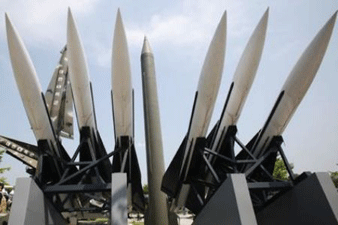 Why is Israel’s nuclear arsenal not mentioned in Iran deal debate?, McClatchy DC
Israel has as many as 100 nuclear warheads and systems to deliver them
But U.S. officials don’t mention them under a 1969 agreement
Iranian nukes would challenge Israel’s unique Middle East position
BY JONATHAN S. LANDAY jlanday@mcclatchydc.com WASHINGTON , 19 Aug 15,
There’s one major issue that President Barack Obama, his supporters and his critics assiduously have avoided as they battle over the deal designed to prevent Iran from obtaining nuclear weapons: Israel’s own nuclear arsenal.
An open secret for decades, the Israeli stockpile is estimated at some 80-100 warheads, though Israel refuses to confirm or deny its existence under a policy of deliberate ambiguity. The arsenal was developed as the ultimate guarantor of the Jewish state’s survival against threats from its hostile neighborhood.
Yet as the sides joust over the Iran deal’s impact on Israel’s security, Obama has been silent on the Israeli arsenal as a potential deterrent against Iranian cheating on the accord. Opponents, led by Israeli Prime Minister Benjamin Netanyahu, haven’t touched the issue, either. And it hasn’t figured in the public hearings that Congress is holding as part of a 60-day review that will culminate in a Republican-led bid to kill the Iran accord next month.
To some experts, the fierce debate over whether the Iran deal endangers Israel or makes it safer will be incomplete and misleading as long as it skirts the Middle East’s only nuclear arms stockpile………http://www.mcclatchydc.com/news/nation-world/world/article31470917.html
Iran nuclear agreement is endorsed by Nuclear Nonproliferation Experts
Over 70 Nuclear Nonproliferation Experts Endorse Iran Agreement WASHINGTON http://sputniknews.com/analysis/20150818/1025891167.html#ixzz3jCUmxWII, 18 Aug 15 — A group of more than 70 leading nuclear nonproliferation experts issued a statement on Tuesday in support of the full implementation of the Iran nuclear agreement aimed to guarantee the peaceful nature of Tehran’s nuclear program.
The signers of the statement include former senior nonproliferation officials at the US Department of State and Department of Defense, former director general of the International Atomic Energy Agency Hans Blix, former nuclear negotiators as well as other leading nuclear specialists from around the globe.
“The Joint Comprehensive Plan of Action (JCPOA) is a strong, long-term, and verifiable agreement that will be a net-plus for international nuclear nonproliferation efforts,” the signed statement reads.
The nuclear experts attest that the Iran nuclear deal “advances the security interests” of all negotiating parties, as well as the international community.
The nuclear agreement between Iran, and the P5+1 countries of the United States, Russia, China, Great Britain, France, and Germany has been under review in the US Congress, which will vote to approve or disapprove the deal by September 17.
The UN Security Council and all the P5+1 countries, except for the United States, have given their support for the nuclear agreement intended to prevent Iran from developing or acquiring a nuclear weapon, in exchange for international sanctions relief.
Hinkley Point C Nuclear scam – UK tax-payers fund Chinese investors
 Tory privatisation scams (2): the Hinkley Point C nuclear payola guaranteed by UK taxpayers for Chinese investors http://www.michaelmeacher.info/weblog/2015/08/tory-privatisation-scams-2-the-hinkley-point-c-nuclear-payola-guaranteed-by-uk-taxpayers-for-chinese-investors/
Just how bad a deal this is is shown by the fact that Hinkley will provide just 3 gigawatts of capacity, yet for the same price gas-fired turbines could provide about 50 gigawatts, onshore wind 20 and offshore wind 10. The plant will not open till 2023 at the earliest, well past the date of the most acute energy shortage at the end of this decade. And it will cost as much as the combined bill for Crossrail, the London Olympics and the revamped Terminal 2 at Heathrow – beat that for the most expensive white elephant of modern times!
It’s an anachronistic behemoth from the bygone age of energy dinosaurs when the world is rapidly moving towards distributed power via renewable energy. It’s far too costly, and is it even needed? First there is the UK’s declining demand for power, currently falling at a rate of 1% a year as energy-saving measures steadily take effect. Then there is the expected threefold jump in the UK’s Interconnection capacity with continental Europe by 2022 which increases the ability to import cheaper supplies. And third there is the litany of setbacks in price overruns and huge delays that have afflicted Finland, France and China over EDF’s European Pressurised Reactor which is the same type as is planned for Hinkley Point.
However nothing distracts the Tory nose from a good old-fashioned financial fix behind the scenes, especially when in this case it plays to their abhorrence of UK State involvement in meeting a public need. So Cameron is off to Beijing in October to sign a final deal wit the Chinese president from which only Chinese investors will gain at UK taxpayer expense.
Over 300 US rabbis urge Congress to support Iran nuclear deal
Hundreds of US rabbis voice support for Iran nuclear deal, 124 News, 19 Aug 15 IDF: deal could help rein in terrorist activities; US will not succeed to ‘intrude’ on Iran: Khamenei
More than 300 American rabbis wrote members of Congress Monday urging them to support the international nuclear deal with Iran, signalling the US Jewish community is split over the historic but controversial accord.
The religious leaders come from across the spectrum, but hail overwhelmingly from Judaism’s Conservative and Reform streams as well as other progressive Jewish movements, a spokesperson said.
“We encourage the members of the Senate and the House of Representatives to endorse this agreement,” the 340 rabbis wrote in a letter to Congress distributed by Ameinu, a progressive charitable Jewish organization.
“We are deeply concerned with the impression that the leadership of the American Jewish community is united in opposition to the agreement,” the rabbis added.
“We, along with many other Jewish leaders, fully support this historic nuclear accord”……..http://www.i24news.tv/en/news/international/82396-150817-fate-of-nuclear-deal-still-not-clear-iran-s-khamenei
Obama can still do the Iran nuclear deal, despite Congress opposition
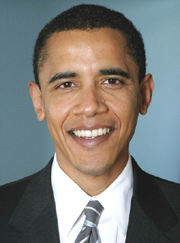 President Obama can do Iran nuclear deal even if Congress rejects it Chicago Tribune, By Tribune wire reports contact the reporter , 16 Aug 15 President Obama doesn’t need a congressional OK to make a deal with Iran over its nuclear program. The September vote on the Iran nuclear deal is billed as a titanic standoff between President Barack Obama and Congress. Yet even if lawmakers reject the agreement, it’s not game-over for the White House.
A congressional vote of disapproval would not prevent Obama from acting on his own to start putting the accord in place. While he probably would take some heavy criticism, this course would let him add the foreign policy breakthrough to his second-term list of accomplishments.
Obama doesn’t need a congressional OK to give Iran most of the billions of dollars in relief from economic sanctions that it would get under the agreement, as long as Tehran honors its commitments to curb its nuclear program — at least for now.
“A resolution to disapprove the Iran agreement may have substantial political reverberations, but limited practical impact,” says Robert Satloff, executive director of the Washington Institute for Near East Policy. “It would not override President Obama’s authority to enter into the agreement.”
Lawmakers on their summer break are deciding how to vote. A look at the current state of play:
WHAT WILL HAPPEN IN SEPTEMBER?
With Republicans controlling both chambers of Congress, the House and Senate are expected to turn down the deal. Obama has pledged to veto such a resolution of disapproval, so the question has turned to whether Congress could muster the votes to override him, in what would be a stinging, bipartisan vote of no-confidence against the president. And Obama would forfeit the authority he now enjoys to waive sanctions that Congress has imposed.
But Democrats and Republicans have predicted that his expected veto will be sustained — that opponents lack the votes to one-up Obama……
WHAT CAN OBAMA DO ON HIS OWN? The president could suspend some U.S. sanctions. He could issue new orders to permit financial transactions that otherwise are banned now. On the financial sector, Obama could use executive orders to remove certain Iranians and entities, including nearly two dozen Iranian banks, from U.S. lists, meaning they no longer would be subject to economic penalties……….http://www.chicagotribune.com/news/nationworld/ct-iran-nuclear-deal-obama-20150816-story.html
Iran has complied on key condition of the nuclear deal – submitting documents to IAEA
Iran submits nuclear activity information to UN watchdog, Yahoo News Vienna (AFP), 16 Aug 15, – Iran has submitted documents linked to its past nuclear activity, the UN’s atomic watchdog has confirmed, a key condition of a probe into suspected efforts to create nuclear arms. The International Atomic Energy Agency (IAEA) signed a “roadmap” with Iran in July to investigate its nuclear programme, as part of an overall accord with major world powers.
The historic deal is aimed at curbing Iran’s nuclear activity in exchange for relief on painful economic sanctions.
The IAEA said Iran had met a key deadline by handing over the papers on Saturday.
“Iran… provided the IAEA with its explanation in writing and related documents as agreed in the roadmap for the clarification of past and present outstanding issues regarding Iran’s nuclear programme,” the agency said in a brief statement published Saturday.
A senior Iranian official also confirmed that the documents had been submitted.
“We have achieved our commitments as part of the deadline set out in the agreement,” said Behrouz Kamalvandi, the spokesman of Iran’s Atomic Energy Organisation.
The IAEA is to issue a report on its investigation by December 15……….http://news.yahoo.com/iran-submits-nuclear-activity-information-un-watchdog-100355955.html
Secrecy and graft in South Africa’s multi $billion nuclear power plan?
 Nuclear power plan stirs fears of secrecy and graft Project could cost as much as $100 bn – experts., Money Web Joe Brock, Reuters | 14 August 2015 Fears are growing in South Africa that agreements to build nuclear power plants that could be the most expensive procurement in the country’s history will be made behind closed doors, without the necessary public scrutiny.
Among those voicing concern, two government sources say the Treasury is not being included in procurement discussions, despite the massive budgetary implications of a project that experts say may cost as much as $100 billion.
Construction on the first plant is due to start next year, breakneck speed compared with the years of regulatory and environmental checks for nuclear projects in countries such as Britain and the United States.
The Democratic Alliance, the main opposition party, believes the pace of the deal will prevent proper analysis before contracts are signed and huge sums of money change hands.
“The whole deal has been veiled in secrecy. We have no details on what we’re buying, how much it’s going to cost or how we’re going to pay for it,” shadow energy minister Gordon Mackay told Reuters.
The Department of Energy (DoE) did not respond to requests for comment. It has said several times the procurement process will be transparent and follow procedure.
Finance Minister Nhlanhla Nene was forced this week to deny reports of tensions with the DoE over the plans and said the Treasury was playing a supporting role in the procurement process.
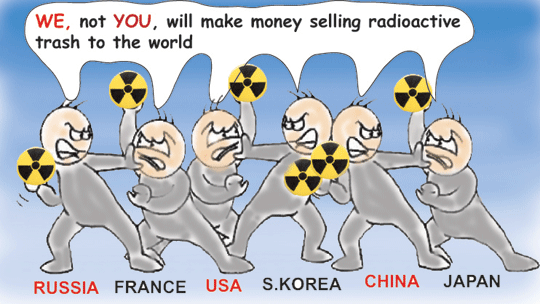 Pretoria has already signed non-binding inter-government agreements for nuclear power support from several countries including France, China and South Korea.
South Africa’s President Jacob Zuma said this week the nuclear plan was at an “advanced stage” and the procurement process should be completed by March.
Following meetings between Zuma and Russian President Vladimir Putin last year, the Russian atomic agency Rosatom said it had agreed a $10 billion contract to build power stations.
However, the DoE denied an agreement had been reached, raising public suspicion in South Africa of backroom dealmaking – an accusation often levelled against the ruling African National Congress under Zuma’s tenure.
The nuclear deal is of huge concern given South Africa’s history of endemic corruption,” said Andrew Feinstein, a former ANC lawmaker and now executive director of Corruption Watch UK.
Feinstein is the author of a book about alleged widespread graft in a $4.8 billion arms deal during the late-1990s.
“I fear that the corruption in this deal might dwarf the arms deal,” he said.
Chronic shortages, mounting debt…….A 2013 study by the University of Cape Town’s Energy Research Centre found more nuclear power was not needed and would not be cost-effective, based on an estimated installed cost of $7 000 per kilowatt.
The DoE has estimated the build would cost $4 200 per kilowatt. Energy experts say this is optimistic and the calculations are based on out-of-date assumptions……..http://www.moneyweb.co.za/news/south-africa/nuclear-power-plan-stirs-fears-of-secrecy-and-graft/
1 This Month




PLEASE OPPOSE HR 8255 AND S.3639 – bills would accelerate satellite deployment, with no environmental review or safeguards – https://ncstd5li.quorum.us/campaign/169331/
To see nuclear-related stories in greater depth and intensity – go to https://nuclearinformation.wordpress.com
-
Archives
- September 2026 (330)
- August 2026 (330)
- July 2026 (355)
- June 2026 (287)
- May 2026 (306)
- April 2026 (356)
- March 2026 (251)
- February 2026 (267)
- January 2026 (308)
- December 2025 (358)
- November 2025 (359)
- October 2025 (375)
-
Categories
- 1
- 1 NUCLEAR ISSUES
- business and costs
- climate change
- culture and arts
- ENERGY
- environment
- health
- history
- indigenous issues
- Legal
- marketing of nuclear
- media
- opposition to nuclear
- PERSONAL STORIES
- politics
- politics international
- Religion and ethics
- safety
- secrets,lies and civil liberties
- spinbuster
- technology
- Uranium
- wastes
- weapons and war
- Women
- 2 WORLD
- ACTION
- AFRICA
- Atrocities
- AUSTRALIA
- Christina's notes
- Christina's themes
- culture and arts
- Events
- Fuk 2022
- Fuk 2023
- Fukushima 2017
- Fukushima 2018
- fukushima 2019
- Fukushima 2020
- Fukushima 2021
- general
- global warming
- Humour (God we need it)
- Nuclear
- RARE EARTHS
- Reference
- resources – print
- Resources -audiovicual
- Weekly Newsletter
- World
- World Nuclear
- YouTube
-
RSS
Entries RSS
Comments RSS

