Sale of nuclear reactors to Egypt entails big debt to Russia
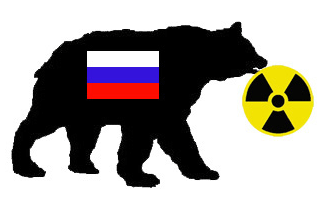 Russia to finance Egypt’s nuclear power plant, Utilities, by Baset Asaba on Nov 22, 2015 Moscow and Cairo signed an agreement for Russia to build a nuclear power plant in Egypt, with Russia extending a loan to Egypt to cover the cost of construction.
A spokesman for Russia’s state-owned nuclear firm Rosatom said the plant, Egypt’s first, would be built at Dabaa in the north of the country and was expected to be completed by 2022, reported Reuters.
Egyptian President Abdel Fattah al-Sisi, speaking on state TV, gave few details but said the project would involve the building of a ‘third-generation’ plant with four reactors.
It is not clear how much the deal is worth but Sisi said the loan from Russia would be paid off over 35 years………http://www.utilities-me.com/article-3882-russia-to-finance-egypts-nuclear-power-plant/
Iran hastening process of dismantling uranium-enriching centrifuges
 Iran starts dismantling nuclear equipment, SMH November 19, 2015 – Vienna: Iran has disconnected almost a quarter of its uranium-enriching centrifuges in less than a month, the UN nuclear watchdog said on Wednesday, suggesting the nation is racing to implement an agreement restricting its nuclear activities.
- Under the July deal, sanctions against Iran will be lifted in exchange for measures including slashing the number of centrifuges in operation and reducing its stockpile of uranium.
- Officials have been speculating about the speed at which Iran can dismantle the centrifuges, sensitive machines that spin at supersonic speeds to purify uranium to levels at which it can be used as fuel in power stations or, potentially, weapons.
- Disconnecting and moving the machines is a time-consuming process if it is to be done without damaging the equipment, making it one of the steps most likely to delay implementation of the deal, and therefore the lifting of sanctions.
- “They have been dismantling centrifuges that did not contain hexafluoride,” the senior diplomat said, referring to uranium hexafluoride, the feedstock for centrifuges. “Dismantling centrifuges that have or have had hexafluoride is a much more complicated thing than the clean ones.”
- A confidential report by the International Atomic Energy Agency to its Board of Governors said Iran had moved around 4500 centrifuges from their positions at the Fordow and Natanz enrichment sites between October 18 and November 15.
- The speed at which Iran dismantles the centrifuges is central to the question of whether Tehran can implement the deal reached in July with the US, Russia, France, Britain, Germany and China before parliamentary elections in February…….
http://www.smh.com.au/world/iran-starts-dismantling-nuclear-equipment-20151118-gl2jjw.html
UN Secretary-General Ban Ki-moon to visit North Korea – hope of diplomatic progress?
Hopes rise of nuclear breakthrough as UN chief visits North Korea, The Scotsman, 17 Nov 15 UN Secretary-General Ban Ki-moon is expected to visit Pyongyang this week for a possible meeting with leader Kim Jong Un.
The trip would come six months after Pyongyang at the last minute cancelled an invitation for Mr Ban to visit an inter-Korean factory park in the North Korean city of Kaesong. Mr Ban has said North Korea gave no reason for the cancellation. He had not planned to visit Pyongyang at that time.
South Korean news agency Yonhap cited an unidentified source in the UN when it reported Mr Ban’s Pyongyang trip. It gave no details on the purpose of the trip or the day it would take place.
If the trip does take place, Mr Ban would be the first UN head to visit North Korea since Boutros Boutros-Ghali in 1993. Yonhap, quoting a UN source, said Mr Ban is expected to meet Mr Kim because it is unlikely for the secretary-general to visit a UN member state without meeting the country’s leader.
Iran c ontinues to comply with nuclear deal commitments, removing uranium enrichment centrifuges
 Iran continues removing centrifuges within nuclear deal commitments 15 NOVEMBER 2015, By Umid Niayesh– Trend: Head of the Atomic Energy Organization of Iran (AEOI) Ali Akbar Salehi once again emphasized that the Islamic Republic continues removing , in compliance with its commitments, as stated in the recently signed nuclear agreement.
Iran began removing inactive centrifuges at the Nataz nuclear site two weeks ago, Salehi said in statements to IRIB 3 state TV Nov. 14.
Iran has 20,000 centrifuges in Natanz, half of them inactive, Salehi noted, adding that Tehran has not yet begun removing centrifuges from Fordow.
“In line with our commitments under the Joint Comprehensive Plan of Action (JCPOA), we have started removing centrifuges in Natanz,” Salehi said, criticizing some hardline politicians who questioned his earlier statements on the removal of centrifuges.
On Nov. 2, Salehi announced that Iran, for the first time, has begun shutting down centrifuges under the terms of the nuclear agreement which triggered disputes in the country.
According to the JCPOA, signed between Iran and the P5+1 group of countries made up of the UK, US, France, Germany, Russia, and China, Tehran is committed to reducing its number of centrifuges……..http://en.trend.az/iran/nuclearp/2456707.html
India’s PM Modi does a hollow, but quite toxic, nuclear deal with Britain

 Modi’s nuclear deal with Britain is hollow, but quite toxic, catch news, KUMAR SUNDARAM, 15 Nov 15
The deal
- Narendra Modi has just inked a nuclear deal with Britain
- He called it symbol of “our resolve to combat climate change’
- The deal comes when the British nuclear industry is in a crisis
The danger
- Britain has little to offer India in terms of nuclear energy
- It reinforces the myth that n-power is green, climate-friendly
- India is missing the shift from n-power to renewable energy
More in the story
- India is among the few nations on a nuclear shopping spree in the post-Fukushima world. Why?
- Nuclear energy isn’t a solution to climate change. Why is the industry peddling this myth?
Keeping to the script, Modi has just announced a civilian nuclear agreement with Britain.
The pact is largely symbolic. But it’s dangerous.
Spent force
Britain has little to offer India when it comes to nuclear energy. Its nuclear industry is facing a terminal crisis. The two power plants planned in Hinkley Point have been plagued by escalating costs, forcing the investors to abandon the project, as well as serious design risks.
Britain’s new nuclear plants in Hinkley Point are plagued by escalating costs, serious design risks
It seems that nobody will be liable for a nuclear disaster in India!
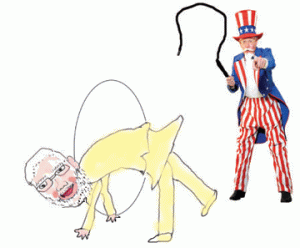 liability for foreign suppliers may now be entirely removed, not just diluted.
In his one and a half year in office, Modi hasn’t demonstrated any particular penchant for consistency, but this would be his most dangerous U-turn, imperilling millions of innocent Indian lives.
Who will be liable for an Indian Fukushima? Nobody, it seems, Catch News, KUMAR SUNDARAM@pksundaram|10 November 2015
- India to entirely exempt foreign nuclear suppliers from liability – AEC said last week
- Who will be responsible in case of an accident then?
What breakthrough!
- There was a Indo-US breakthrough on N-liability – Modi last week
- Can a complete exemption from liability be called a breakthrough?
Trans Pacific Partnership will make Paris Climate Agreements irrelevant
The TPP, because of fast track, bypasses the normal legislative process of public discussion and consideration by congressional committees
The “deal is rife with polluter giveaways that would undermine decades of environmental progress, threaten our climate, and fail to adequately protect wildlife because big polluters helped write the deal.”
 The agreement, in essence, becomes global law. Any agreements over carbon emissions by countries
  made through the United Nations are effectively rendered null and void by the TPP.
“Trade agreements are binding,” Flowers said. “They supersede any of the nonbinding agreements made by the United Nations Climate Change Conference that might come out of Paris.”


 The Most Brazen Corporate Power Grab in American History http://www.globalresearch.ca/tpp-wto-nafta-the-most-brazen-corporate-power-grab-in-american-history/5487363 Nov 6, 2015 By Chris Hedges The release Thursday of the 5,544-page text of the Trans-Pacific Partnership—a trade and investment agreement involving 12 countries comprising nearly 40 percent of global output—confirms what even its most apocalyptic critics feared.
“The TPP, along with the WTO [World Trade Organization] and NAFTA [North American Free Trade Agreement], is the most brazen corporate power grab in American history,” Ralph Nader told me when I reached him by phone in Washington, D.C. “It allows corporations to bypass our three branches of government to impose enforceable sanctions by secret tribunals. These tribunals can declare our labor, consumer and environmental protections [to be] unlawful, non-tariff barriers subject to fines for noncompliance. The TPP establishes a transnational, autocratic system of enforceable governance in defiance of our domestic laws.” Continue reading
The New START treaty – arms control pact between USA and Russia
Carroll: The enduring nuclear threat, By Vincent Carroll, Denver Post 7 Nov 15 “…Undersecretary of State for Arms Control and International Security, Rose E. Gottemoeller was the chief negotiator for the New START treaty, an arms control pact with the Russians that went into effect in 2011. Her career in arms control and national security goes back many years and spans government, academia and think tanks.….
The New START treaty will take our nuclear weapons that are deployed down to 1,550 — and the same with the Russians — by February 2018. By contrast, when we signed the first START treaty in 1994, we and the Russians both had approximately 12,000 deployed nuclear warheads.
Even after the Ukraine crisis and their grab of Crimea, they continued to have a businesslike attitude toward the implementation of START. We conduct 18 inspections a year in Russia and they come here, too. Everything is reciprocal. And we exchange on a daily basis the status of our strategic nuclear forces. If the Russians take an ICBM out of its silo to a repair facility, they have to tell us that.
Q:Has the megatonnage come down proportionately with those reductions in warheads?
A: Absolutely. It’s been a real success story. So no matter what the ups and downs of our relationship, this process has been good for U.S. national security, and for predictability and mutual stability for these two great nuclear powers. And I would say especially now, when relations aren’t so hot, it’s good to have a clear idea of what’s going on with their nuclear forces.
The question is what to do about the future. Between 2010 and 2014 under President Obama we did a posture review, and in 2013 the president concluded we could go up to one-third lower in the New START, from 1,550 down even as low as 1,000 and still maintain our security. So in Berlin in June 2013, we put that offer on the table and said to the Russians, “Let’s work on the next nuclear disarmament negotiation.” But so far the Russians haven’t picked that offer up from the table, even though I think it would be good for them, too.
I think their reaction is wrapped up in a lot of things, such as Vladimir Putin’s sense that nuclear weapons mean a lot for Russian security at this moment to concerns, he says, in our national missile defense program. But it’s ridiculous to think that our limited missile defense system can somehow threaten the Russian strategic offensive deterrent.
Q:That system is for a smaller rogue regime?
A: It’s North Korea. And I’m glad we have it available as an insurance policy. ………
Q:Where do you see the major threats to proliferation?
A: The biggest new threat we face today is nuclear weapons in the hands of terrorists. And not only nuclear weapons, but fissile material, highly enriched plutonium or uranium that could be used to craft a simple nuclear bomb. President Obama was really clear about this in his Prague speech back in 2009.
This threat is undeterrable. Even North Korea, as crazy as they are, knows they will be facing a very intense response if they attack us with a nuclear weapon. Countries hold off on that basis. That’s why the president said we need to push step by step for a world without nuclear weapons. The policy is to minimize the amount of highly enriched uranium and plutonium around the world, and to constantly press toward fewer weapons.
Q:Don’t terrorists need the assistance of a state to develop a nuclear weapon, at least in terms of getting the fuel?
A: The key factor is having enough fissile material, highly enriched uranium or plutonium. Then the designs for simple devices are on the Internet basically. So the concern is that they could get enough fissile material to make a bomb on their own or that they could steal a bomb or the material from somewhere.
In some cases, we do worry about state sponsorship. That’s one of the reasons we’re watching so closely North Korea, because they ship missile parts around the world and might get into this business as well……..http://www.denverpost.com/perspective/ci_29081465/carroll-enduring-nuclear-threat
Trans Pacific Partnership – yes it’s as bad as we feared
 TPP Environment Fears Confirmed By Final Text https://newmatilda.com/2015/11/06/tpp-environment-fears-confirmed-by-final-text/ By Thom Mitchell on November 6, 2015 The content of the TPP is finally known, and it appears to be as bad as critics feared. Thom Mitchell reports.
The Trans Pacific Partnership leaves the door open for corporations to inhibit the ability of governments to legislate for environmental protection, critics of the biggest free trade deal in history said after the release of the final text yesterday.
Like many trade deals, the TPP includes ‘Investor State Dispute Settlement’ clauses which allow multinational corporations to sue governments in trade tribunals outside of national judiciaries if laws are passed that risk their profits. According to Dr Mathew Rimmer, a Professor of Intellectual Property and Innovation law at the Queensland University of Technology, “They have given foreign investors very broad ranging powers to go into investment tribunals to make complaints about decisions by government that affect their foreign investments.”
“There are some clauses there dealing with protection of the environment…and the right to regulate, but they aren’t absolute defences,” Dr Rimmer said.
The Executive Director of America’s influential Sierra Club, Michael Brune, said the fact that “the words ‘climate change’ don’t even appear in the text [is] a dead giveaway that this isn’t a 21st-century trade deal”.
“It sets us back further, empowering fossil fuel corporations to challenge our public health and climate safeguards in unaccountable trade tribunals while increasing dirty fossil fuel exports and fracking,” Brune said.
Over more than half a decade, the deal was negotiated in secret between 12 ‘Pacific Rim’ countries, including Australia, the United States, Canada, Japan, Malaysia, Mexico, New Zealand, Peru, Chile, Singapore, Vietnam and Brunei.
A boon for bankers (but no-one else) – UK’s China Hinkley Point nuclear deal
 the decision to involve Chinese companies – initially with EDF at Hinkley Point and then on their own at Bradwell and Sizewell – only makes sense if it is seen as part of a quid pro quo for the previously announced financial services deal.
 They put the Chinese Communist Party and military at the heart of strategic infrastructure. They interlink the British and Chinese financial systems at a time when the latter is structurally weak, poorly regulated, and struggling with corruption.
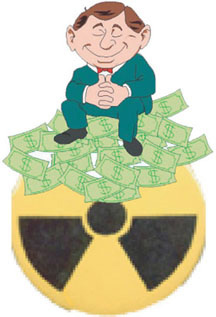 Britain’s nuclear deal with China is a boon for bankers – and no one else, The Conversation, Jeffrey Henderson November 6, 2015 At first glance, it seems an almost inexplicable paradox. A right-wing British government has invited companies controlled by the Chinese Communist Party – and in one case, the Chinese military – into the heart of the UK’s strategically vital energy infrastructure. The nuclear deal between Britain and China goes against the advice of the security services, the military and the US government.
So to explain this paradox, we must look carefully at another major deal in the British government’s flirtation with President Xi Jinping: the inter-penetration of the two countries’ financial services.
There would seem to be no possible connection between Chinese companies building and operating nuclear power stations in 2020s Britain and a curious political role created in 1571. But the fact that the Remembrancer, a representative of the City of London Corporation, is allowed to attend and monitor debates in the House of Commons, says much about Britain’s priorities.
When considering economic and budgetary policy, the Remembrancer is at hand to ensure that our elected representatives remember that, whatever other interests they might serve, the needs of financial services must be paramount. And the near-invisible hand of the Remembrancer seems recently to have been at work ensuring that Britain’s infrastructure is made accessible to Chinese state-owned companies. Continue reading
Indonesia says “No” to Australia’s nuclear waste ship entering its waters
 Nuclear Waste Ship will be Denied Entry to Indonesian Waters http://www.globalindonesianvoices.com/23422/nuclear-waste-ship-will-be-denied-entry-to-indonesian-waters/ 05 Nov 2015 By : Leo Jegho
“Our investigation has found that the vessel had ever entered our seawaters when sailing to France. And now we are monitoring its travel back to Australia,” Bakamla Chief Vice Admiral Desi A Mamahit told reporters at his office in Jakarta, according to Detik.com.
Transporting the nuclear waste is BBC Shanghai, an Antigua & Barbuda-flagged general cargo ship. Admiral Desi mentioned two reasons why Indonesian authorities disallow BBC Shanghai passing through Indonesian waters on its way to Australia. The first reason is that the Indonesian seawaters are not part of the routes allowed for foreign vessels traveling from Europe to Australia and vice versa. The second reason is that BBC Shanghai carries nuclear waste.
BBC reported that BBC Shanghai is due to reach Australia by 27 November and that it is now in Africa. France-based nuclear company Areva sent the nuclear waste back to Australia.
The waste reportedly derives from the spent nuclear fuel sent from Australia to France in 1990s and early 2000s. French law obliges such nuclear waste to be sent back to Australia.
USA- India nuclear sales quietly fading, as nuclear financially unviable
Solar power developers have offered to sell electricity in India at less than Rs 5/unit. This makes solar competitive with traditional forms of energy, and makes new nuclear power plants financially unviable. India must register the changed reality, and discard the idea of expensive Western reactors. Time to scrap the India-U.S. nuclear deal?
Hard on the heels of falling oil prices and affordable shale, comes another dramatic energy changes for the energy industry: The falling cost of solar energy. This has many implications, but the most immediate impact the nuclear power industry, large parts of which may have just become obsolete. This means that the new nuclear power plants being planned by India, especially those with foreign collaboration, must be reconsidered and scrapped if they are financially unviable.
France invites China in, to save failed nuclear corporation AREVA
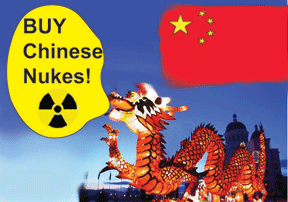 France’s nuclear-reactor maker Areva open to Chinese funds, says French President Francois Hollande, South China Morning Post, Zhen Liuzhen.liu@scmp.com 3 Nov 15 It’s natural to involve China in Areva’s planned restructuring as the two nations cooperate to build nuclear plants, says French President French President Francois Hollande said on Tuesday that France welcomed Chinese investment in its state-owned nuclear-reactor maker Areva, as he wrapped up his two-day trip to China.
“We welcome foreign capital in the Areva restructuring. It would not affect our sovereignty,” Hollande said in Beijing.
On Monday, Areva and the China National Nuclear Corporation signed a memorandum of understanding for possible partnership on nuclear-waste recycling that could be worth €20 billion (HK$171 billion).
Hollande said that as China and France had become partners building nuclear plants together in Britain and China, it was natural to have the Chinese in the Areva recapitalisation. Last month, French utility company EDF came to an agreement with Chinese nuclear company CGN to jointly build the Hinkley Point nuclear plants in Britain.
Despite the continuous nuclear cooperation, Hollande said his two-day China trip focused more on climate change issues to ensure success in the upcoming UN round of climate talks to be held in Paris next month……..http://www.scmp.com/news/china/diplomacy-defence/article/1875477/frances-nuclear-reactor-maker-areva-open-chinese-funds
Pakistan refuses to limit tactical nuclear weapons

 Pakistan tells US it won’t accept limits on tactical nuclear arms October 23, 201 Mehreen Zahra-Malik Islamabad: Pakistani Prime Minister Nawaz Sharif, who met US President Barack Obama at the White House on Thursday, has rebuffed attempts to limit his country’s use of tactical nuclear weapons, Pakistani officials said.
Pakistan insists smaller weapons would deter a sudden attack by its neighbour India, which is also a nuclear power. But the US worries they may further destabilise an already volatile region because their smaller size makes them more tempting to use in a conventional war.
The Obama administration is preparing to sell eight F-16 fighter jets to Pakistan in an attempt to bolster the two countries’ relationship, despite Washington’s concerns about Pakistan’s growing nuclear arsenal.
The Federation of American Scientists, a leading US group that monitors the spread of nuclear weapons, published a report on Wednesday that shows that Pakistan has expanded its arsenal to between 110 and 130 warheads, up from 90 to 110 four years ago.
Officials in Washington have said they are exploring whether a deal might be possible to halt Pakistan’s deployment of tactical nuclear weapons that US experts fear are vulnerable to being launched without authorisation, or stolen, on the battlefield.
Pakistan says the US is demanding unreasonable limits on its use of nuclear weapons and not offering much in return apart from a hazy promise to consider Pakistan as a recognised recipient of nuclear technology………The Federation of American Scientists, a leading US group that monitors the spread of nuclear weapons, published a report on Wednesday that shows that Pakistan has expanded its arsenal to between 110 and 130 warheads, up from 90 to 110 four years ago.
Officials in Washington have said they are exploring whether a deal might be possible to halt Pakistan’s deployment of tactical nuclear weapons that US experts fear are vulnerable to being launched without authorisation, or stolen, on the battlefield.
Pakistan says the US is demanding unreasonable limits on its use of nuclear weapons and not offering much in return apart from a hazy promise to consider Pakistan as a recognised recipient of nuclear technology. http://www.smh.com.au/world/pakistan-to-tell-us-it-wont-accept-limits-on-tactical-nuclear-arms-20151022-gkgees.html#ixzz3phoMZJnK
Iran nuclear deal endorsed by Israel’s Nuclear Advisory Panel


 Israel’s Nuclear Advisory Panel Endorses Iran Deal, http://www.haaretz.com/israel-news/.premium-1.681918 Haaretz, Chaim Levinson Haaretz Correspondent, 23 Oct 15
 1 This Month




PLEASE OPPOSE HR 8255 AND S.3639 – bills would accelerate satellite deployment, with no environmental review or safeguards – https://ncstd5li.quorum.us/campaign/169331/
To see nuclear-related stories in greater depth and intensity – go to https://nuclearinformation.wordpress.com
-
Archives
- September 2026 (330)
- August 2026 (330)
- July 2026 (355)
- June 2026 (287)
- May 2026 (306)
- April 2026 (356)
- March 2026 (251)
- February 2026 (267)
- January 2026 (308)
- December 2025 (358)
- November 2025 (359)
- October 2025 (375)
-
Categories
- 1
- 1 NUCLEAR ISSUES
- business and costs
- climate change
- culture and arts
- ENERGY
- environment
- health
- history
- indigenous issues
- Legal
- marketing of nuclear
- media
- opposition to nuclear
- PERSONAL STORIES
- politics
- politics international
- Religion and ethics
- safety
- secrets,lies and civil liberties
- spinbuster
- technology
- Uranium
- wastes
- weapons and war
- Women
- 2 WORLD
- ACTION
- AFRICA
- Atrocities
- AUSTRALIA
- Christina's notes
- Christina's themes
- culture and arts
- Events
- Fuk 2022
- Fuk 2023
- Fukushima 2017
- Fukushima 2018
- fukushima 2019
- Fukushima 2020
- Fukushima 2021
- general
- global warming
- Humour (God we need it)
- Nuclear
- RARE EARTHS
- Reference
- resources – print
- Resources -audiovicual
- Weekly Newsletter
- World
- World Nuclear
- YouTube
-
RSS
Entries RSS
Comments RSS

