|
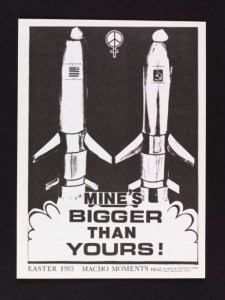 CIS:E.1512-2004 Russia fires back after Donald Trump threatens to ditch nuclear arms treaty https://www.news.com.au/world/middle-east/russia-fires-back-after-donald-trump-threatens-to-ditch-nuclear-arms-treaty/news-story/57fe67ef8b643c4d828d05bc2d7aaee2
RUSSIA has issued a bellicose threat to the US after Donald Trump made public his plan to increase his country’s nuclear arsenal. AAP, staff writers, News Corp Australia Network, OCTOBER 23, 2018
A US withdrawal from the Intermediate-range Nuclear Forces (INF) Treaty would require Russia to undertake measures to ensure its security, the Kremlin has warned.
If the US develops intermediate-range nuclear weapons, then Russia would have to follow suit, to “restore the balance”, Kremlin spokesman Dmitry Peskov said in comments carried by media on Monday.
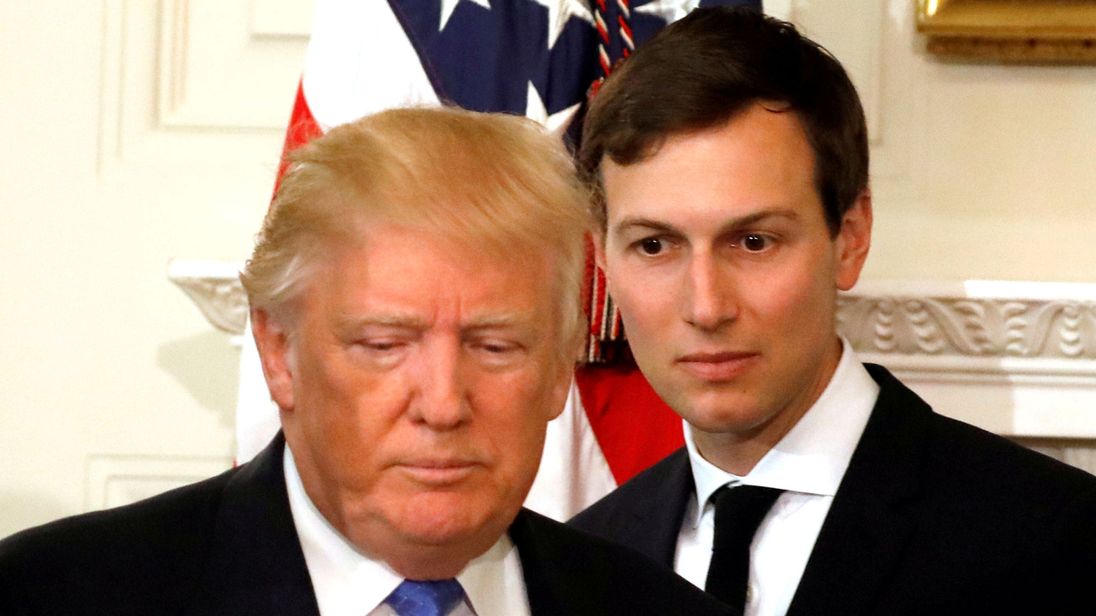
US President Donald Trump announced over the weekend the US was pulling out of the deal amid accusations Russia had violated it.
The US has said Russia breached the treaty by developing the Novator 9M729 cruise missile, estimated to have a range of 2600 kilometres. The treaty, signed between the United States and the then-Soviet Union in 1987, had sought to restrict nuclear-armed missiles with a range up to 5500km.
Mr Peskov rejected accusations that Russia could have violated the deal. “Russia has been and remains committed to the provisions of this agreement,” he said, according to state news agency TASS.
Mr Trump’s announcement could herald fresh tensions between the former Cold War rivals.
While the US president has repeatedly praised Mr Putin, his administration has taken a tough line against Russia, repeatedly imposing sanctions on it.
US National Security Advisor John Bolton and his Russian counterpart, Security Council chairman Nikolai Patrushev, discussed arms control agreements, Syria, Iran, North Korea and the fight against terrorism in Monday’s meeting, according to the Security Council, as Russia sought clarification on the issue.
Russia hoped “to hear more details and clarifications on what steps the US side is planning to take,” Russian Deputy Foreign Minister Sergei Ryabkov said in comments carried by state media.
The European Union called upon the US and Russia to preserve the agreement, calling it a “cornerstone” of European security.
Thanks to the INF treaty, which contributed to the end of the Cold War, almost 3000 missiles with nuclear and conventional warheads have been destroyed, EU foreign policy spokeswoman Maja Kocijancic told reporters in Brussels. NATO backed up the US claim that Russia could have violated the treaty, saying a “pattern of behaviour over many years has led to widespread doubts about Russian compliance”.
The Russian 9M729 missile system, unveiled earlier this year, raises serious concerns, NATO spokeswoman Oana Lungescu said in a statement. “In the absence of any credible answer from Russia on this new missile, allies believe that the most plausible assessment would be that Russia is in violation of the INF Treaty,” the spokeswoman said.
The US has also said the treaty limited US defence capabilities in response to potential Chinese medium-range missiles.
China’s Foreign Ministry said it was “completely wrong to involve the Chinese side into the withdrawal from the treaty”.
“This treaty has played an important role in easing international relations, advancing the process of nuclear disarmament, and even maintaining a global strategic balance and stability,” Chinese Foreign Ministry spokeswoman Hua Chunying said.
Last week, former Soviet leader Mikhail Gorbachev has said he thinks Mr Trump is making a “mistake” by leaving its nuclear weapons treaty with Russia.
Mr Gorbachev was one of the original signatories to the Intermediate-Range Nuclear Forces (INF) Treaty, signed originally in 1987 with then-US President Ronald Reagan.
“Under no circumstances should we tear up old disarmament agreements. … Do they really not understand in Washington what this could lead to?” Mr Gorbachev said to Interfax news agency.
|
|
October 23, 2018
Posted by Christina Macpherson |
politics international, weapons and war |
Leave a comment
Euro News, By Alexander Smith with NBC News World News• 22/10/2018
A piece of reckless brinkmanship that could spark an arms race between NATO and Russia in Europe, or a hardball negotiating strategy that might push Moscow into keeping its longstanding promises on nuclear weapons?President Donald Trump was widely criticized this weekend when he announced his intention to scrap a landmark nuclear weapons agreement signed by President Ronald Reagan and Soviet leader Mikhail Gorbachev in 1987. The deal was designed to keep ground-based nuclear missiles out of Europe.Trump said that Russia has for years been violating the Intermediate-range Nuclear Forces Treaty, or INF.He’s not the first president to make this allegation. President Barack Obama said much the same.Many experts agree that Moscow continues to break the rules and flout the pact, but despite that some say ripping up the agreement is a bad idea.
These skeptics range from Sen. Rand Paul, R-Ky., to Gorbachev himself, with the Nobel laureate telling Russia’s Interfax news agency Sunday that Trump’s decision was “very strange” and not the work of “a great mind.”The White House’s decision to pull out, so this argument goes, will only allow Moscow to continue its current actions without having to maintain the pretense of compliance. Meanwhile, Russia, which also accuses the U.S. of violating the agreement, can point the finger at the U.S. as the one responsible for the INF’s failure.The 1987 agreement bans ground-based nuclear and conventional missiles that can strike between 300 miles to 3,400 miles.”One concern is that in the medium-term there may be the temptation to return intermediate-range missiles, potentially including nuclear weapons, to Europe,” said Karl Dewey, an analyst at Jane’s by IHS Markit, an open-source defense intelligence provider based in London…….. https://www.euronews.com/2018/10/22/will-trump-s-withdrawal-nuclear-treaty-spark-arms-race-or-n922731
October 23, 2018
Posted by Christina Macpherson |
EUROPE, politics international, USA |
Leave a comment
|
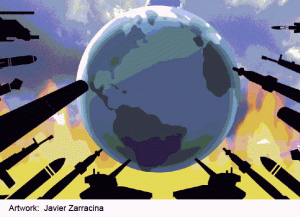 https://www.aljazeera.com/news/2018/10/5-threatened-russia-nuclear-weapons-deal-181021140208661.html https://www.aljazeera.com/news/2018/10/5-threatened-russia-nuclear-weapons-deal-181021140208661.html
Trump wants to withdraw from the INF treaty that was signed over three decades ago by the US and Soviet leaders. US President Donald Trump has said Washington
will withdraw from a 31-year-old nuclear weaponsagreement with Moscow, accusing Russia of violating the treaty and demanding the inclusion of China.
Here are five things to know about the Intermediate-Range Nuclear Forces Treaty (also known as the INF treaty:
1. How did the agreement come about?
The INF treaty was signed in December 1987 by the then-US President Ronald Reagan and Soviet leader Mikhail Gorbachev. It resolved a crisis that had begun in the 1980s with the deployment of Soviet SS-20 nuclear-tipped, intermediate-range ballistic missiles targeting Western capitals.
By signing the agreement, Washington and Moscow swore off from possessing, producing or test-flying a ground-launched cruise missile with a range between 500 and 5,500km.
2. Why is the US withdrawing from the treaty?US officials believe Moscow is developing and has deployed a ground-launched system in breach of the INF treaty that could allow it to launch a nuclear strike on Europe at short notice.
Russia has consistently denied any such violation.
Trump said on Saturday that it was only fair for US to develop the weapons since Russia and China (not a signatory of the treaty) were already doing it.
3. How does Russia feel about the INF deal?Moscow has long been accusing the US of violating the nuclear agreement, pointing to a NATO missile shield in Romania that could launch nuclear missiles at any time.
In 2007, Russia even threatened to withdraw from the INF treaty.
On Sunday, an unnamed Russian foreign ministry official told state news agencies that Washington has been “deliberately and step-by-step destroying the basis for the agreement” for many years.
4. What can the US withdrawal from the nuclear treaty lead to?The move will end the prospect of the renewal of the New Start agreement between Moscow and Washington which is set to expire in 2021, as the INF treaty is its backbone. Signed in 2010, New Start requires both nations to cut their deployed strategic nuclear warheads to no more than 1,550.
Russian Senator Alexei Pushkov wrote on Twitter that the move was “the second powerful blow against the whole system of strategic stability in the world” after Washington’s 2001 withdrawal from the Anti-Ballistic Missile treaty.
Gorbachev, the co-signatory of the INF treaty, said on Sunday it would be a mistake for Washington to quit the deal, and that it would undermine work he and US counterparts did to end the arms race.
5. Can the nuclear deal be saved? John Bolton, Trump’s national security adviser, is scheduled to meet Russian leaders, including Foreign Minister Sergey Lavrov and Security Council Secretary Nikolai Patrushev, this week in Moscow.
The trip is likely to show whether there is a chance for the deal to be saved. Trump’s announcement on Saturday suggested that he hoped for the re-negotiation of the terms.
Last week, The Guardian reported Bolton, a long-standing opponent of arms control treaties, was pushing for the US withdrawal over alleged Russian violations.
US Defence Secretary James Mattis has previously suggested that a Trump administration proposal to add a sea-launched cruise missile to Washington’s nuclear arsenal could provide the US with leverage to try to persuade Russia to come back in line on the arms treaty.
|
|
October 22, 2018
Posted by Christina Macpherson |
history, politics international, Russia, USA, weapons and war |
Leave a comment
 John Bolton pushing Trump to withdraw from Russian nuclear arms treaty, Exclusive: national security adviser recommends ending intermediate-range nuclear forces treaty over alleged Russia violations, Guardian, Julian Borger , 20 Oct 18
, John Bolton is pushing for the US to withdraw from a cold war-era arms control treaty with Russia, in the face of resistance from others in the
Trump administration and US allies, according to sources briefed on the initiative.
Bolton, Donald Trump’s third national security adviser, has issued a recommendation for withdrawal from the 1987 intermediate-range nuclear forces treaty (INF), which the US says Russia has been violating with the development of a new cruise missile.
Withdrawal from the treaty, which would mark a sharp break in US arms control policy, has yet to be agreed upon by cabinet and faces opposition from within the state department and the Pentagon. A meeting on Monday at the White House to discuss the withdrawal proposal was postponed.
The INF faces a congressionally imposed deadline early next year. An amendment in the 2019 defence spending bill requires the president to tell the Senate by 15 January whether Russia is in “material breach” of the treaty, and whether the INF remains legally binding on the US.
Bolton, who has spent his career opposing arms control treaties, is seeking to shrug off the traditional role of national security adviser as a policy broker between the agencies, and become a driver of radical change from within the White House.
Former US officials say Bolton is blocking talks on extending the 2010 New Start treaty with Russia limiting deployed strategic nuclear warheads and their delivery systems. The treaty is due to expire in 2021 and Moscow has signaled its interest in an extension, but Bolton is opposing the resumption of a strategic stability dialogue to discuss the future of arms control between the two countries.
The US has briefed its European allies this week about the proposal, sounding out reactions. The briefing alarmed UK officials who see the INF as an important arms control pillar. The treaty marked the end of a dangerous nuclear standoff in 1980s Europe pitting US Pershing and cruise missiles against the Soviet Union’s SS-20 medium-range missiles.
The US alleges Russia is now violating the treaty with the development and deployment of a ground-launched cruise missile, known as the 9M729. Moscow insists the missile does not violate the range restrictions in the INF and alleges in return that a US missile defence system deployed in eastern Europe against a potential Iranian threat can be adapted to fire medium-range offensive missiles at Russia.
The National Security Council (NSC) declined to comment on the fate of the INF………
Bolton’s meeting with his Russian counterpart, Nikolai Patrushev, in Geneva in August, was expected to give the final green light to the dialogue, but Bolton is said to have blocked it. He is due to visit Moscow next week, when the Kremlin said he may meet Vladimir Putin.
(pic DANBY/BDN) The New York Times reported on Friday that Bolton intended to use his Moscow trip to inform Russian leaders of the administration’s plans to exit the INF agreement. Under the terms of the treaty, withdrawal would take six months.
In remarks in Sochi on Thursday, Putin appeared to suggest that Russia would adopt a “no first use” policy on nuclear weapons.
“We have no concept of a pre-emptive strike,” he told a conference. “[W]e expect to be struck by nuclear weapons, but we will not use them first,” he said.
A meeting of Nato defence ministers earlier this month in Brussels issued a joint statement saying the INF “has been crucial to Euro-Atlantic security and we remain fully committed to the preservation of this landmark arms control treaty”………
“The decision has been taken in the NSC [National Security Council] that the US should withdraw, and they are trying to persuade other parts of the administration. There has been no formal Trump decision yet,” said Hans Kristensen, the director of the nuclear information project at the Federation of the American Scientists. “Very little good will come of this, other than another round of nuclear escalation with Russia.” ………https://www.theguardian.com/us-news/2018/oct/19/john-bolton-russia-nuclear-arms-deal-trump-lobbying
October 20, 2018
Posted by Christina Macpherson |
politics, politics international, USA |
Leave a comment
|
Newsweek 17th Oct 2018, It is more likely than in the past that China and the U.S. could enter into
a military conflict, and the possibility of such a battle going nuclear is
higher than many analysts believe, a security expert from Georgetown
University has warned.
Caitlin Talmadge, who is an associate professor of
security studies at the Walsh School of Foreign Service, laid out a grim
picture of how military escalation could play out between Washington and
Beijing in an article for Foreign Affairs’ November-December issue.
|
|
October 20, 2018
Posted by Christina Macpherson |
China, politics international, USA, weapons and war |
Leave a comment

Saudi Arabia is putting money in Trump’s pocket. Is that shaping U.S. policy? https://www.washingtonpost.com/blogs/plum-line/wp/2018/10/16/saudi-arabia-is-putting-money-in-trumps-pocket-is-that-shaping-u-s-policy/?noredirect=on&utm_term=.434cc7237930, By Paul Waldman,October 16
As hard as it is to resist writing about the fact that on Tuesday the president of the United States called the adult film actress to whom he paid hush money “Horseface,” I want to focus on a different aspect of this presidency that we’re seeing play out right now.
.As the apparent murder of Saudi journalist and Post contributor Jamal Khashoggi complicates our relations with Saudi Arabia, we have to ask what the implications are of having a fully transactional presidency, one not just built on “deals” but where policy is determined by what is financially beneficial to the president.
We should begin by reminding ourselves that as awful as Khashoggi’s apparent murder is, it’s only the latest in a long list of Saudi abuses that administrations both Democratic and Republican have chosen to overlook for decades. The country is a cruel dictatorship that embodies none of the values we as a nation hold dear, such as democracy, freedom of expression, freedom of the press and freedom of religion. But we decided long ago that since the Saudis have a great deal of oil and they provide us with a strategic ally in the Middle East, we’ll overlook all that.
There is something unsettling about the fact that Saudi intervention in Yemen’s civil war, in which they have reportedly killed thousands of civilians, has received steady U.S. support, while the murder of a single journalist threatens to upend the relationship between the two countries.
Or so you might think. But here’s the reality: This will blow over, not only because of the complex relationship between the two countries, but also because everything in foreign policy is personal with President Trump, and he likes the Saudis.
And why does he like them so much? Because they pay him.
This is not something Trump has been shy about saying. “Saudi Arabia, I get along with all of them. They buy apartments from me. They spend $40 million, $50 million,” he said at a rally in Alabama in 2015. “Am I supposed to dislike them? I like them very much.”
Trump says so many shocking things that it’s sometimes easy to slide right past the most appalling ones, but read that again. Here you have a candidate for president of the United States saying that he is favorably disposed toward a foreign country because they have given him millions of dollars, and all but promising to shape American foreign policy in their favor for that very reason.
“Am I supposed to dislike them?” he asks. How could I possibly dislike them when they pay me?
We should note that it’s more than just apartments. Trump has sold many properties to Saudis, and Saudis have invested in Trump projects. And as David Fahrenthold and Jonathan O’Connell report:
Business from Saudi-connected customers continued to be important after Trump won the presidency. Saudi lobbyists spent $270,000 last year to reserve rooms at Trump’s hotel in Washington. Just this year, Trump’s hotels in New York and Chicago reported significant upticks in bookings from Saudi visitors.
This is precisely the reason the framers of the Constitution added a provision saying that neither the president nor other officials could “accept of any present, Emolument, Office, or Title, of any kind whatever, from any King, Prince, or foreign State.” If a foreign country is putting money in the president’s pocket on an ongoing basis, how in the world can we trust that the decisions he makes will be based on the best interests of the United States and not on his bank account?
This is of more concern with Trump than with any other president in American history. His entire life has been devoted to the accumulation of wealth, as though there were no other goal anyone should consider seeking (“My whole life I’ve been greedy, greedy, greedy. I’ve grabbed all the money I could get. I’m so greedy,” he has said). He made sure that upon assuming office his businesses would continue to operate and continue to provide avenues for those wishing to further enrich him to do so. And he refuses to release his tax returns, so we have no idea exactly how much money he’s getting and from whom.
But Tuesday, Trump tweeted this:
For the record, I have no financial interests in Saudi Arabia (or Russia, for that matter). Any suggestion that I have is just more FAKE NEWS (of which there is plenty)!
This is the same claim Trump has made with regard to Russia, and it’s the same dodge. The point isn’t whether Trump has interests in Saudi Arabia, it’s whether Saudi Arabia has interests in him. And just as is the case with Russia, they do.
If you’re the Saudis, the nice thing about Trump is that he lacks any subtlety whatsoever, so you don’t have to wonder how to approach him. He has said explicitly that the way to win his favor is to give him money. He has established means for you to do so — buying Trump properties and staying in Trump hotels. And with his combination of narcissism and insecurity, if you invite him to your country and give him a gold medal, he’ll forever be your friend.
Every president has to balance the desire to honor U.S. values with more crass interests such as whether a country will buy weapons from us, which Trump also cited as a reason we shouldn’t punish Saudi Arabia for Jamal Khashoggi’s murder (even though they aren’t actually buying what Trump claims). But only Trump apparently gets direct and significant payoffs from other countries, and only Trump is so clear that if you pay him he’ll do what you want. That may not have changed the American stance toward Saudi Arabia too much yet, but we have no idea what’s to come.
October 18, 2018
Posted by Christina Macpherson |
politics international, Saudi Arabia, USA |
1 Comment
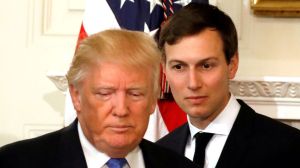 Trump and Kushner Put Saudi’s Money First https://www.bloomberg.com/view/articles/2018-10-17/trump-and-kushner-put-saudi-arabia-s-money-ahead-of-khashoggi
Jamal Khashoggi’s death has exposed the White House and two of its most powerful figures as naive, ill-informed and craven. What comes next?, By Timothy L. O’Brien, October 17, 2018, The Trump team is standing by Saudi Arabia and Crown Prince Mohammed bin Salman as the investigation and controversy surrounding the disappearance of journalist Jamal Khashoggi deepens.
On Tuesday, Secretary of State Mike Pompeo visited Riyadh for a photo op with the prince. In a press release, he praised the Saudi leadership for “supporting a thorough, transparent and timely” investigation into the Khashoggi affair, a full two weeks after the dissident first went missing.
Pompeo also said that Saudi leaders denied any involvement in Khashoggi’s disappearance, something his boss, President Donald Trump, let the world know on Twitter as well.
By Tuesday evening, that line became more complex to defend after the New York Times reported that at least four suspects in Khashoggi’s disappearance had ties to the crown prince. A fifth was “of such stature that he could be directed only by a high-ranking Saudi authority,” the newspaper said.
Complexity has never deterred the president, however. In an interview with the Associated Press on Tuesday, he blamed critics of Saudi Arabia for holding it “guilty until proven innocent.” Lest anyone doubt his motives, Trump took to Twitter to talk about his finances:
“For the record, I have no financial interests in Saudi Arabia (or Russia, for that matter). Any suggestion that I have is just more FAKE NEWS (of which there is plenty)!”
That statement would be easier to digest if Trump hadn’t bragged publicly in the past about how much Saudis have spent buying his condominiums – and if he wasn’t the steward of the most financially conflicted presidency of the post World War II era.
Trump is playing word games, of course. He says he has no investments in Saudi Arabia or Russia. But that doesn’t mean money from those countries hasn’t flowed into his coffers. In Saudi Arabia’s case, that has meant very different things over the years.
In the early 1990s, Saudi billionaire Prince Alwaleed bin Talal bought Trump’s prized yacht on the cheap from the property developer’s creditors when he was on the cusp of personal bankruptcy. A few years later, one of Trump’s lenders forced him to sell the Plaza Hotel, a New York City landmark also mired in debt, to Alwaleed. As David Fahrenthold and Jonathan O’Connell noted in the Washington Post recently, this was a period when Trump was trying to dig himself out of $3.4 billion of debt, about $900 million of which he had guaranteed personally. But Alwaleed was a bargain-hunter at the time, not someone trying to ensnare a failed developer on the unlikely chance that he might someday become president.
Still, Alwaleed, who once described Trump on Twitter as a “disgrace not only to the GOP but to all America,” kept those early deals in mind. When Trump made fun of him on Twitter two years ago, Alwaleed responded by tweeting, “I bailed you out twice; a 3rd time, maybe?”
As Trump climbed out of his debt hole in the late 1990s and early 2000s, he courted Saudi condo buyers. The Saudi Arabian government bought the entire 45th floor of the Trump World Tower in 2001, and, before running for president, Trump was apparently contemplating doing business in Saudi Arabia – he incorporated eight limited-liability companies with names suggesting he planned to do business there (they were later dissolved).
After becoming president, Trump flouted tradition by declining to authentically separate himself from the Trump Organization and its hotel and golf properties. The Trump International Hotel in Washington has been a favorite venue for Saudi diplomats who have spent lavishly there, as well as at other Trump hotels.
The president and his son-in-law, Jared Kushner, also decided to make Saudi Arabia a linchpin of their policy in the Middle East. Kushner, lacking full security clearance and any diplomatic experience, lobbied the crown prince directly in early 2017 to secure what was fancifully and inaccurately touted as a $110 billion arms sale – most of which had been agreed a year earlier, and the bulk of which still hasn’t been completed.
Shortly after that transaction was arranged, Trump visited Saudi Arabia. And soon after that, the Saudis announced they would invest $20 billion in an infrastructure fund managed by Blackstone Group LP. The New York-based firm had financed several of the Kushner family’s deals and its chairman, Stephen Schwarzman, sat on the president’s business-advisory council. The private equity firm told Bloomberg News that the Saudi investment had been contemplated long before Trump was even the Republican nominee.
Kushner’s forays alarmed members of the intelligence and national security communities, as Bob Woodward outlined in his book, “Fear.” At the very moment Kushner was throwing himself into these diplomatic adventures, he was coming under scrutiny for his own financial conflicts – in particular, his efforts to secure funding for 666 Fifth Avenue, a troubled Manhattan skyscraper his family owned.
Although the family has since sold off the property, Kushner had tried unsuccessfully to secure funding for it from a Chinese investor. His intersection with a prominent banker and diplomats from Moscow during the Trump campaign’s transition into the White House raised questions about whether he was courting Russian investors (which he denied). Inevitably, the Kushner family also courted a prominent Saudi investor to bail them out of 666 Fifth, as detailed by my Bloomberg News colleagues David Kocieniewski and Caleb Melby.
Late last year, Kushner made another secretive trip alone to Riyadh. He later described the visit as an effort to “brainstorm” Middle East strategies with Mohammed bin Salman. Not long afterward, the crown prince placed dozens of prominent businessmen and political rivals under house arrest in what was described as an anti-corruption drive. Among them was Alwaleed, the man who once snatched the Plaza Hotel and yacht from Kushner’s father-in-law.
Earlier this year, leaked intelligence reports revealed that diplomats in Mexico, Israel, China and the United Arab Emirates had decided to target Kushner because they believed he could be easily manipulated due to “his complex business arrangements, financial difficulties and lack of foreign policy experience.”
For his part, Kushner just plowed ahead, continuing to rest the White House’s plans for the Middle East on the shoulders of an equally young and untested man, Saudi Arabia’s crown prince. The disappearance of a single journalist, a one-time ally of the royal family turned critic, may ultimately cause Kushner’s plans to unravel – and expose his machinations in Saudi Arabia to more revealing and unwanted scrutiny.
If it doesn’t, it may well be because the president – putting the lie to his dissembling about his family’s financial ties to Saudi Arabia – will openly and stubbornly put money ahead of the moral and diplomatic issues at play in Khashoggi’s disappearance.
As he told Fox News in an interview on Tuesday night: “I don’t want to give up a $100 billion order or whatever it is.”
October 18, 2018
Posted by Christina Macpherson |
politics, politics international, Saudi Arabia, USA |
1 Comment
US Military Leaders Keep Quiet on Saudi Arabia Amid Khashoggi Outrage, Defense One 16 Oct 18 Defense Secretary Jim Mattis and Joint Chiefs Chairman Gen. Joseph Dunford this week have declined to say much on Saudi Arabia. Both leaders, in previously scheduled meetings with reporters, were asked about the kingdom and what effect the killing of Khashoggi may have on U.S.-Saudi relations. Both men deferred to Secretary of State Mike Pompeo and said they were waiting for him to return to the U.S. with more “facts.” And they both implied that any related changes to Trump administration foreign policy would be given to them, not made by them. …….
Speaking to reporters traveling with him in Brussels, Pompeo said: “I do think it’s important that everyone keep in their mind that we have lots of important relationships – financial relationships between U.S. and Saudi companies, governmental relationships, things we work on together all across the world – efforts to reduce the risk to the United States of America from the world’s largest state sponsor of terror, Iran. The Saudis have been great partners in working alongside us on those issues. I could go on about places where the Saudis and the Americans are working together. Those are important elements of the U.S. national policy that are for – are in Americans’ best interests. We just need to make sure that we are mindful of that as we approach decisions that the United States Government will take when we learn all of the facts associated with whatever may have taken place.”
President Trump, meanwhile, has been giving the Saudis as much cover as humanly possible, Over the weekend, he floated the idea that “rogue killers” dispatched Khashoggi, and on Tuesday, he
told the Associated Press, “Here we go again with, you know, you’re guilty until proven innocent. I don’t like that. We just went through that with Justice Kavanaugh and he was innocent all the way as far as I’m concerned.”………
Is the Saudi partnership still a matter of necessity? Should it be? That’s not likely the question Mattis and Dunford are asking for the near term. For them, the answer is yes. But for the long term, it’s a question for them, Pompeo,and Trump. It’s a question of whether “Saudi interests” under bin Salman still align with American interests, or just with American military and intelligence interests.
October 18, 2018
Posted by Christina Macpherson |
politics international, Saudi Arabia, USA, weapons and war |
Leave a comment
|
Analysis: Trump’s Saudi bet has become much riskier, By MATTHEW LEE, 17 Oct, WASHINGTON (AP) — President Donald Trump put a big and risky bet on Saudi Arabia and its 33-year-old crown prince. It’s now become much riskier.
From the early days of his presidency, Trump and his foreign policy team embraced the kingdom and Mohammed bin Salman as the anchors of their entire Middle East strategy. From Iran and Iraq to Syria, Yemen and the Israeli-Palestinian conflict, the administration gambled that Saudi Arabia, effectively run by the prince, could credibly lead, and willingly pay for, a “Pax Arabica” in a part of the world from which Trump is keen to disengage.
For nearly two years, through an ongoing crisis with Qatar and international outrage over civilian casualties in the Saudi-led campaign against Yemeni rebels, the prince has managed to keep Washington’s confidence. But now, the tide is turning amid growing outrage over the disappearance and likely death of a U.S.-based journalist inside a Saudi Consulate in Turkey, and that confidence appears to be waning. The Trump administration’s grand strategy may be upended with far-reaching ramifications that extend well outside the region.
Even if an investigation into what happened to Washington Post contributor Jamal Khashoggi in Istanbul exonerates the prince and the top Saudi leadership, the administration’s deep reliance on him will be severely tested not least because of broad bipartisan revulsion in Congress to as-yet unconfirmed accounts of Khashoggi’s fate. Already, prominent lawmakers from both parties are questioning his fitness to lead the country and suggesting it might be time to re-think U.S.-Saudi relations and sharply curb arms sales.
Trump ally Sen. Lindsey Graham, R-S.C., and other influential politicians warned of dire consequences on Tuesday, saying the prince, often known as MBS for short, should be removed from his post……….
The impact of a U.S.-Saudi rift, however remote the possibility, could send shockwaves around the world, destabilizing oil markets and the global investment climate, not to mention dealing a blow to the Trump administration’s own plans in the Middle East.
Trump’s son-in-law and senior adviser Jared Kushner has made Saudi Arabia a centerpiece of his yet to be revealed Israeli-Palestinian peace plan, which is expected to call for massive Saudi and Gulf Arab contributions to fund reconstruction and development projects in the West Bank and Gaza.
Saudi support will also be key to the political elements of the plan that Israel insists put its security on par with Palestinian statehood. That means that Israel will likely seek assurances that any deal with the Palestinians be followed by a broader agreement that normalizes its relations with the rest of the Arab world, particularly Saudi Arabia.
In Syria, the administration relied almost entirely on Saudi Arabia, along with the closely allied United Arab Emirates, to make up for steep cuts in U.S. stabilization assistance to areas liberated from Islamic militants. Next door in Iraq, the current secretary of state, Mike Pompeo, and his predecessor, Rex Tillerson, have leaned heavily on the Saudis to make large financial pledges for reconstruction of war-shattered communities.
But it is the administration’s policy of isolating Iran that may suffer the most from Saudi-U.S. estrangement. Trump is counting on the Saudis to shore up and complement its Iran policy on several fronts………https://www.apnews.com/5f0516d3358b4acab27ca4ec56dd711e
|
|
October 18, 2018
Posted by Christina Macpherson |
politics international, Saudi Arabia, USA |
Leave a comment
|
How To Get Nuclear-Weapons Treaties Back on Track, Defense one BY DARYL G. KIMBALL, EXECUTIVE DIRECTOR, ARMS CONTROL ASSOCIATION, 16 Oct 18, Back in March, President Trump told reporters at the White House in March that he wanted to meet with Putin in large part “to discuss the arms race, which is getting out of control” and has characterized the costly nuclear weapons upgrade programs being pursued by each side as “a very, very bad policy.”Three months have elapsed since the July summit between Trump and Putin in Helsinki – after which the U.S. president said, “Perhaps the most important issue we discussed at our meeting…was the reduction of nuclear weapons throughout the world.”
But since the summit, there has been no apparent progress. The long-running dispute over Russia’s violation of the 1987 Intermediate-Range Nuclear Forces Treaty remains. The two sides have not begun to discuss the future of the successful 2010 New START agreement, which limits each side to 1,550 deployed strategic warheads. That treaty will expire on Feb. 5, 2021, unless Trump and Putin agree to extend it.
Without these treaties in place, the door will be opened to an unconstrained nuclear arms race. The already abysmal U.S.-Russian relationship will become even more complicated and dangerous.
Next week, National Security Advisor John Bolton will travel to Moscow to meet with his counterpart in the Kremlin, Nikolai Patrushev. It is past time for both sides to get serious about resolving the INF compliance crisis, to agree to discuss the extension of New START, and to resume regular talks on “strategic stability.”
INF Woes: U.S. and Russian officials both say they support the 1987 INF Treaty, which led to the elimination all U.S. and Soviet ground-launched ballistic and cruise missiles with ranges between 500 and 5,500 kilometers. But the treaty is now at risk because Russia has tested and deployed a prohibited ground-launched cruise missile: the 9M729. Moscow, for its part, alleges, far less credibly, that Washington is deploying missile defense systems in Europe that could be used to launch offensive missiles.
Contrary to what some observers may want to believe, the arms control community has been working hard to raise the alarm belland put advance serious options to put out the INF fire. Since Russia’s INF violation became known in early 2014, the Arms Control Association has steadfastly reported on and published expert analyses on the problem in our monthly journal Arms Control Today. We have convened U.S. and European and Russian experts from inside and outside government on the INFissue, and met with U.S. lawmakers and staff to exchange views on the problem. We have confronted senior Russian officials in private consultations Washington and in Moscow and, along with a number of experts and former U.S. officials, we have put forward options for resolving the dispute. ………
The Future of New START: New START remains one of the few bright spots in an otherwise broken U.S.-Russian relationship. Ratified in 2011, the Treaty limits the number of deployed strategic warheads to a maximum of 1,550 on each side, a target each met earlier this year, and which is far below the tens of thousands we pointed at each other during the Cold War.
The Treaty imposes important bounds on strategic nuclear competition as long as it is in force. As allowed in Article XIV of the treaty, it can be extended by up to five years by agreement by the two Presidents, without requiring further action by the Congress or the Duma.
Before and after the Helsinki summit, Russian officials have reiterated their interest in talks designed to extend the treaty. But after his first post-Helsinki meeting with Patrushev, in Geneva on Aug. 23, Bolton said the administration remains in the “early stages” of an interagency review about whether to extend, replace, or jettison New START or to pursue a different type of approach.
Unfortunately, some elements in the Trump administration want to hold New START hostage until Russia acknowledges its INFviolation—an extremely unlikely possibility. Sacrificing New START, given the transparency it provides, would only create a bigger nuclear headache and do nothing to bring Russia back into compliance with INF.
Key Senate Democrats have called for an extension of New START so long as Russia remains in compliance with it, and several leading Senate Republicans have also voiced their support for New START. U.S. military leaders continue to see value in New START; for example, Gen. John Hyten, commander of U.S. Strategic Command, told Congress last March that “bilateral, verifiable arms control agreements are essential to our ability to provide an effective deterrent.”
If New START is not extended, there will be no legally binding limits on the world’s two largest strategic arsenals for the first time since 1972. In its absence, each side could quickly increase the number of warheads deployed on their strategic delivery systems. Unconstrained U.S.-Russian nuclear competition—in both numbers and technology—could spark an arms race as dangerous as that of the 1950s and 1960s. That would add scores of billions in additional costs to an already unrealistic U.S.nuclear upgrade plan.
An extension of New START, on the other hand, would buy time for the two sides to discuss agreements on new strategic systems, including the ones under development by Russia, and provide a solid baseline for talks on further reductions of each side’s strategic and tactical nuclear stockpiles……..https://www.defenseone.com/ideas/2018/10/how-get-nuclear-weapons-treaties-back-track/152095/
|
|
October 18, 2018
Posted by Christina Macpherson |
politics international, Russia, USA, weapons and war |
Leave a comment
|
 Cost of building nuclear power plant in Uzbekistan to be about $11B, Azer News, Cost of building nuclear power plant in Uzbekistan to be about $11B, Azer News,
The estimated cost of construction of nuclear power plant of Russian design in Uzbekistan will be about $ 11 billion, the launch of the first power unit has been planned for 2028, the Aide to the President of the Russian Federation Yury Ushakov said, Interfax reported.
“It is estimated that the cost of the project will be somewhere around $11 billion,” Ushakov told reporters in Moscow Oct. 16.
Ushakov said that it is believed that the first power unit will presumably be launched in 2028.
Ushakov also said that during the state visit to Uzbekistan on October 18-19, President Vladimir Putin will take part in the ceremony of launching a project to build a nuclear power plant of Russian design in Uzbekistan………
Russia’s share in the total foreign trade of Uzbekistan exceeds 18 percent – this is second place after China,” Ushakov said. “According to the results of the current year, there are all opportunities to reach the trade turnover of $5 billion.”
At the same time, speaking about the international topics planned for discussion at the summit in Uzbekistan, Ushakov singled out Afghanistan, “as well as building up cooperation between Russia and Uzbekistan in the framework of the SCO (Shanghai Cooperation Organization).” https://www.azernews.az/region/139290.html
|
|
October 18, 2018
Posted by Christina Macpherson |
politics international, Russia |
Leave a comment
 Trump’s Latest China Salvo Could Hurt U.S. Nuke Industry, Administration says Beijing is diverting U.S. nuclear technology for military use. BY KEITH JOHNSON, FP.COM OCTOBER 12, 2018, The Trump administration is increasing its economic pressure on China by restricting U.S. nuclear power exports, a move that could end up hurting an American industry desperate to compete in the world’s fastest-growing market for nuclear energy.
Senior administration officials say Beijing is stealing U.S. nuclear technology to gain a competitive edge and is also diverting U.S. nuclear technology toward military uses, such as propulsion systems for submarines and aircraft carriers. In response, after almost a year of review, the administration decided Thursday to restrict the export of some U.S. nuclear technology and components to China.
“The United States cannot ignore the national security implications of China’s efforts to obtain nuclear technology outside of established processes of U.S.-China civil nuclear cooperation,” U.S. Energy Secretary Rick Perry said in a statement.
The restrictions essentially prohibit any new technology transfers, as well as the export of advanced reactor technologies, including small, modular reactors that are seen by many as the industry’s future. Additionally, the U.S. government is essentially banning any and all U.S. exports to China General Nuclear Power Group, one of the country’s two big nuclear energy developers. China General Nuclear was indicted in 2016 for organizing an espionage campaign to acquire U.S. nuclear know-how.
But the new restrictions won’t apparently affect some of the highest-profile U.S. projects in China, such as the construction of new nuclear power plants using the state-of-the-art Westinghouse AP1000 reactor. Chinese utilities are currently building four Westinghouse reactors at two locations; the first just became operational.
For the U.S. nuclear power industry, further restrictions on its ability to compete overseas come as a blow. For a year, export licenses to China have been held up by the government’s review, and nuclear industry advocates have repeatedly warned U.S. officials of the economic harms of being locked out of the world’s one real growth market, potentially worth tens of billions of dollars in future sales……..https://foreignpolicy.com/2018/10/12/trumps-latest-china-salvo-could-hurt-u-s-nuke-industry/
October 15, 2018
Posted by Christina Macpherson |
business and costs, China, politics international, USA |
Leave a comment

 Council of Europe requests Turkey to consult neighbours for Akkuyu nuclear plant https://ahvalnews.com/council-europe/council-europe-requests-turkey-consult-neighbours-akkuyu-nuclear-plant
The Parliamentary Assembly of the Council of Europe (PACE) expressed on Thursday deep concern at the construction of the Akkuyu nuclear power plant in an earthquake-prone region of Turkey only 85 kilometres from the border with Cyprus.
In a resolution it adopted, the assembly said that Turkey’s first nuclear plant being constructed as a joint Turkish-Russian project is in very close proximity to the other neighbouring countries.
The assembly asked Turkey to join the UN Convention on Environmental Impact Assessment in a Transboundary Context, also known as the Espoo Convention, and to take into account all concerns expressed, including those expressed by Turkish citizens.
The Espoo Convention , adopted in 1991, sets out the obligations of parties to assess the environmental impact of certain activities at an early stage of planning. It also lays down the general obligation of states to notify and consult each other on all major projects under consideration that are likely to have a significant adverse environmental impact across boundaries
The assembly also requested from the Turkish government to consult with neighbouring countries on the construction of the nuclear plant according to the International Convention on Nuclear Safety.
The construction of the Akkuyu nuclear plant located in the southern province of Mersin was kicked off by President Recep Tayyip Erdoğan and his Russian counterpart Vladimir Putin on Apr. 3.
The nuclear plant “raises concerns for a possible impact in terms of safety because such a power plant in this area affects our country much more than the largest part of the Turkish territory,” said the Cypriot government’s spokesman Prodromos Prodromou, following the groundbreaking ceremony in Mersin.
“Turkey did not take into account the grave reservations expressed by various quarters, nor did it heed the European Parliament’s call to terminate the construction plans since this is a seismologically vulnerable area,” he said.
Environmentalists in Turkey are also concerned about the potentially destructive ecological consequences of the Akkuyu nuclear power plant and several organisations form Mersin filed a lawsuit to stop its construction
October 13, 2018
Posted by Christina Macpherson |
EUROPE, politics international, safety, Turkey |
Leave a comment
WORLD WAR 3: Russian minister warns nuclear treaties under threat as relations plunge
SKY-HIGH tensions between the US and Russia are putting critical treaties designed to prevent a nuclear arms race in jeopardy as relations sink to an all-time low, a senior Russian official has warned.
By SIMON OSBORNE, Express UK, Oct 11, 2018 Moscow’s Deputy Foreign Minister Sergei Ryabkov described Western governments as “adversaries, not friends” and said a “complete malfunction of the American system” meant longstanding weapons agreements could be binned, leaving nuclear powers without constraint in the event of a future conflict.
He said: “We could lose several elements on arms control infrastructure. The building is shaky.”
Mr Rybakov warned another round of sanctions intruded by Donald Trump in the summer were “dangerous” and getting in the way of negotiations over renewing the New Strategic Arms Reduction Treaty “New START” which saw both sides agree to reduce their deployed nuclear arms by half but is set to expire in 2021.
He said: “If there is no progress then risk of a real backfire grows.
Mr Ryabkov was speaking as negotiators from the two countries met in Geneva to discuss a Cold War era treaty that was supposed to keep expansion of long-range nuclear-capable missiles in check.
Moscow and Washington have repeatedly accused each other of breaching the Intermediate-Range Nuclear Forces (INF) Treaty, a 1987 pact which bans firing land-based missiles with a range of up to 5,500km.
The US ambassador to NATO warned Moscow against developing a new cruise missile that could be armed with nuclear warheads, arguing that it was in breach of the INF and could be used against members of the Western military alliance.
Kay Bailey Hutchison said: “Counter measures by the United States would be to take out the missiles that are in development by Russia in violation of the treaty. They are on notice.”
The US government took a more aggressive line against Russia this year, when Mr Trump unveiled a new nuclear strategy that revolved around countering Russia and called for the development of small tactical nuclear weapons that were cheaper to maintain and could be used in more realistic scenarios.
Washington has also accelerated long-running US military plans to develop new intercontinental ballistic missiles (ICBMs) and nuclear-capable cruise missiles and has just confirmed hypersonic weapons testing is well underway……..https://www.express.co.uk/news/world/1030089/world-war-3-russian-minister-sergei-ryabkov-nuclear-treaties-moscow-washington-cold-war
October 13, 2018
Posted by Christina Macpherson |
politics international, Russia, USA, weapons and war |
Leave a comment
In Yemen, Trump Is Taking Tolerance for War Crimes to a New Level, Truthout, BY Khury Petersen-Smith
Truthout, October 11, 2018
Twenty days after Saudi Arabia and the United Arab Emirates (UAE) bombed a school bus full of children in Yemen this August, Defense Secretary James N. Mattis hosted officials from the two US allies at the Pentagon. They were all gathered as part of a meeting of representatives from the Gulf Cooperation Council, at which Mattis thanked them for their “regional leadership and years of close cooperation with the United States.”……..
In this war, the Saudi and Emirati militaries are dropping the bombs, and the United States plays a critical role in every step of the operations. The coalition’s munitions are made in the US, as are the planes dropping them — all of which were sold to Saudi Arabia and the UAE in deals brokered by the US government. ……..
It is remarkable that — despite the international spotlight on the war in Yemen resulting from the highly publicized school bus bombing — Trump administration officials continue to embrace Saudi Arabia, the United Arab Emirates, and their operations. The killing of dozens of children and wounding of dozens more in the bombing was not itself an aberration from the daily operations of the war — which have involved the coalition targeting weddings, funerals and markets with alarming regularity. What stood out about the attack however, was the level of attention that it received in the US.
Both The Washington Post and The New York Times editorialized against US involvement in the war. In a move that may be unprecedented, CNN not only covered the atrocity extensively, but also reported on the US weapons manufacturers who made the bombs for that and other attacks. ……..
The United States has long flouted international law. But Trump is taking its defiance of any notions of accountability whatsoever, and its tolerance for blatant war crimes, to a new level. It is openly assisting those crimes in Yemen. After all, the US is enthusiastically supplying weapons to countries that demonstrate a clear pattern of targeting civilians. The coalition has also committed the crime of targeting medical facilities and civilian infrastructure, and has only received affirmation, weapons and other support from the United States. …….. https://truthout.org/articles/in-yemen-trump-is-taking-tolerance-for-war-crimes-to-a-new-level/
|
|
|
October 13, 2018
Posted by Christina Macpherson |
politics international, Saudi Arabia, USA, weapons and war |
Leave a comment