Pompeo avoids questions on ending waivers permitting Iran’s ongoing nuclear work
|
Pompeo Won’t Commit to Shutting Down Iran’s Contested Nuclear Work
Pompeo avoids questions on ending waivers permitting Iran’s ongoing nuclear work Washington Free Beacon, BY: April 10, 2019 Secretary of State Mike Pompeo would not commit to ending a series of waivers issued by the Trump administration that have permitted Iran to engage in some its most contested nuclear work, including at a secretive military site that once housed the Islamic Republic’s nuclear weapons program. In an exchange with Sen. Ted Cruz (R., Texas), Pompeo declined to commit to canceling the disputed waivers, which have sparked an inter-administration battle, as first reported by the Washington Free Beacon. The issue of these waivers—which have been granted to Iran so that it can continue its lucrative oil trade, as well as nuclear research work—has generated a growing rift between Iran hawks on Capitol Hill and within the administration and Pompeo’s State Department. Sources have identified those in the State Department as the reason several policies that have kept the landmark Iran nuclear deal on life support have continued, despite President Donald Trump’s decision to walk away from the pact. Cruz and other Iran policy hawks have gone on record in recent weeks, including in interviews with the Free Beacon, to demand that Pompeo stop issuing both the oil and nuclear waivers. Multiple sources inside and outside the administration have described to the Free Beacon a widening fight between those U.S. officials who aim to keep the nuclear deal alive and those who see an opportunity to tighten the noose on Tehran and potentially collapse its hardline ruling regime……. The issue of these waivers—which have been granted to Iran so that it can continue its lucrative oil trade, as well as nuclear research work—has generated a growing rift between Iran hawks on Capitol Hill and within the administration and Pompeo’s State Department. Sources have identified those in the State Department as the reason several policies that have kept the landmark Iran nuclear deal on life support have continued, despite President Donald Trump’s decision to walk away from the pact…….. https://freebeacon.com/national-security/pompeo-wont-commit-to-shutting-down-irans-contested-nuclear-work/ |
|
China opens fourth border crossing with North Korea, complete with radiation detectors
Japan Times AFP-JIJI, APR 10, 2019
BEIJING – A Chinese city has opened a new border crossing with North Korea — fitted with radiation detectors — even as talks between Washington and Pyongyang have languished over disagreements for nuclear sanctions relief………
The crossing also has a nuclear radiation detection gate, the city said. China has long been worried about any fallout from North Korea’s nuclear activities and Jilin was rocked by an earthquake after a massive bomb test across the border in September 2017. ….. https://www.japantimes.co.jp/news/2019/04/10/asia-pacific/china-opens-fourth-border-crossing-north-korea-complete-radiation-detectors/#.XK6MiFUzbGg
Austrians protest against the completion of Mochovce again
Slovak Spectator, 8 Apr 19,But both the operator of the nuclear power plant and the Slovak regulator consider it scaremongering. The Austrians have objected to the third and fourth blocks of the Mochovce nuclear power plant, situated in Nitra Region, once again.
Global 2000, an Austrian environmental organisation, has claimed that the massive 1.5-metre-wide containment of the new reactor in Mochovce is not safe enough since it was drilled through and technologies were anchored in it, referring to an anonymous source. They pointed to the weakened stability of the building and damaged hermetic chambers that are expected to stop the potential leak of radioactive substances in case of an accident, the SITA newswire reported…….
The company called the statement of the Austrian organisation misleading and false. …… https://spectator.sme.sk/c/22094308/austrians-protest-against-the-completion-of-mochovce-again.html
The risk of nuclear war between India and Pakistan: it’s been a close call
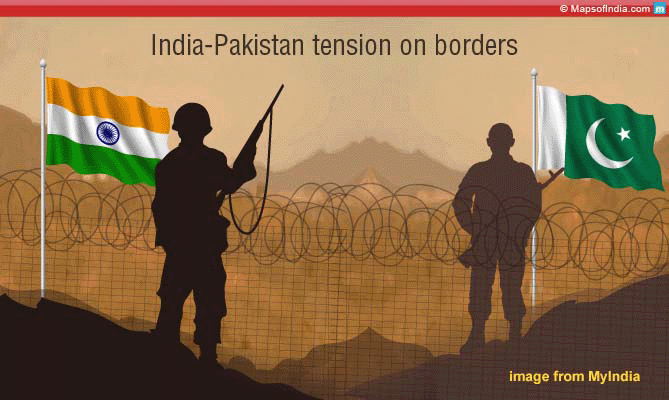
South Asia’s nuclear-armed neighbors pull back from the abyss…barely
 India and Pakistan have created the most perilous place on Earth. Salon DILIP HIRO, APRIL 7, 2019 This piece originally appeared on TomDispatch.
It’s still the most dangerous border on Earth. Yet compared to the recent tweets of President Donald Trump, it remains a marginal news story. That doesn’t for a moment diminish the chance that the globe’s first (and possibly ultimate) nuclear conflagration could break out along that 480-mile border known as the Line of Control (and, given the history that surrounds it, that phrase should indeed be capitalized). The casus belli would undoubtedly be the more than seven-decades-old clash between India and Pakistan over the contested territory of Kashmir. Like a volcano, this unresolved dispute rumbles periodically — as it did only weeks ago — threatening to spew its white-hot lava to devastating effect not just in the region but potentially globally as well.
The trigger for renewed rumbling is always a sensational terrorist attack by a Pakistani militant group on an Indian target. That propels the India’s leadership to a moral high ground. From there, bitter condemnations of Pakistan are coupled with the promise of airstrikes on the training camps of the culprit terrorist organizations operating from the Pakistan-controlled part of Kashmir. As a result, the already simmering relations between the two nuclear-armed neighbors are quickly raised to a boiling point. This, in turn, prompts the United States to intervene and pressure Pakistan to shut down those violent jihadist groups. To placate Washington, the Pakistani government goes through the ritual of issuing banning orders on those groups, but in practice, any change is minimal.
And in the background always lurks the possibility that a war between the two neighbors could lead to a devastating nuclear exchange. Which means that it’s time to examine how and why, by arraying hundreds of thousands of troops along that Line of Control, India and Pakistan have created the most perilous place on Earth.
How It All Began Continue reading
Absolute stalemate in nuclear negotiations, but Trump says that his relationship with Kim Jong-un is“very good,”
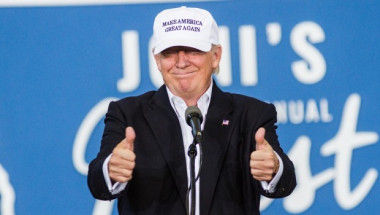 Trump says his relationship with Kim remains ‘very good’ amid nuclear stalemate, US President Donald Trump made the statement during the Republican Jewish Coalition’s annual meeting. Asia News Network, by The Korea Herald, pril 8, 2019 US President Donald Trump said on Saturday (US time) that his relationship with North Korean leader Kim Jong-un remains “very good,” conveying his hopes of drawing Kim back to the negotiation table.His remarks come amid a stalemate between the two countries following the breakdown of the two leaders’ second summit in Hanoi, Vietnam, in late February. The deal breakers concerned denuclearization and economic sanctions.
“We’re getting along with North Korea. We’ll see how it works out, but we have a good relationship. Don’t forget, I have a very good relationship with Kim Jong-un,” Trump said during a speech at the Republican Jewish Coalition’s 2019 spring leadership meeting in Las Vegas………..
After their summit ended without an agreement, media reports revealed that the US had delivered a draft of an agreement demanding that Pyongyang transfer all its nuclear weapons and nuclear materials to the US.
According to Japan’s Yomiuri Shimbun on Sunday, the draft agreement consisted of five main points — two demands for the communist regime and three compensatory items.
In the document, the US defined denuclearization for the North as shipping out all its nuclear weapons and dismantling all related facilities, according to the Japanese daily, which cited as its sources officials from the US, South Korea and Japan.
The US draft sought to ban all future nuclear activities by Pyongyang and to conduct inspections to verify its nuclear disarmament process. There was also a plan to excavate the remains of US soldiers in North Korea.
In return, Washington reportedly offered to declare an official end to the 1950-53 Korean War — which came to a halt with only an armistice — and to establish joint liaison offices and provide economic support to the communist regime.
On Friday, US Secretary of State Mike Pompeo said he is “confident” that there will be a third summit between Trump and Kim, though he did not provide a clear date or a location.
n a televised interview with “CBS This Morning,” based in the US, Pompeo also said the Trump administration is “convinced” that Pyongyang is “determined as well” to achieve denuclearization.
Pompeo noted, however, that the administration remains “incredibly clear” that economic sanctions on the North “will not be lifted until our ultimate objective is achieved.”
Since the February summit, Pyongyang has expressed dissatisfaction toward Washington via its state news agency and its Foreign Ministry.
With Pyongyang’s Supreme People’s Assembly due to hold its first meeting on Thursday since a recent election, eyes are on whether the North Korean leader will mention denuclearization talks in his policy speech.
Pompeo said the US side will “closely watch” to see what Kim says, but that it does not expect any great surprises.
The North’s parliamentary session will coincide with the summit expected to take place in Washington between Trump and South Korean President Moon Jae-in. https://asianews.network/2019/04/08/trump-says-his-relationship-with-kim-remains-very-good-amid-nuclear-stalemate/
Tensions in volatile Middle East region, as Saudi nuclear program accelerates
New satellite imagery shows that construction on an experimental reactor is making “expeditious” progress — just three months after the Kingdom announced plans to build it, according to former director for nuclear inspections at the International Atomic Energy Agency (IAEA), Robert Kelley.
Kelley estimated that the reactor could be completed in “nine months to a year.”
The Kingdom has been open about its nuclear program with the IAEA, which sent a team to Saudi Arabia last July to check on building plans. It has repeatedly pledged that the program is peaceful. But Crown Prince Mohammed bin Salman said last year that “without a doubt if Iran developed a nuclear bomb, we will follow suit as soon as possible.”
Also raising concern among industry experts and some in Congress is the Saudi insistence that it should be allowed to produce its own nuclear fuel, rather than import it under strict conditions.
In an interview last year, Saudi Energy Minister Khalid al Falih said: “It’s not natural for us to bring enriched uranium from a foreign country to fuel our reactors,” citing the country’s uranium reserves.
Vision 2030
Saudi Arabia went public with its nuclear ambitions nine years ago, but the plans have gone into overdrive as part of the Crown Prince’s “Vision 2030” — a strategy to wean Saudi Arabia off its reliance on oil and diversify both the economy and its energy mix……….
The IAEA sent a team to Saudi Arabia in July last year to review the development of its nuclear power infrastructure. That mission concluded that the Kingdom is “well placed to finalize its plans for construction of its first nuclear power plant” through partnerships with countries that have nuclear power industries.
In a visit to Riyadh in January, Mikhail Chudakov, IAEA Deputy Director General, confirmed Saudi Arabia had “made significant progress in the development of its nuclear power infrastructure.”
But when the Saudis want to move to the next stage — fueling the reactor at King Abdulaziz City and any commercial plants — they will have to submit to more intrusive IAEA involvement.
“They’ve been exempt for 30 years since they signed a non-proliferation treaty,” said Kelley. “Now they’re going to have to make some serious paperwork and agree to inspections,” if they want to acquire nuclear fuel.
US concerns
Skepticism in the US Congress over whether Saudi Arabia can be a trusted partner has grown since the gruesome murder of journalist Jamal Khashoggi in Istanbul last year. That’s now manifested itself in critical scrutiny of the Saudi nuclear program — and especially whether the Trump Administration is doing enough to ensure non-proliferation…….
US concerns
Skepticism in the US Congress over whether Saudi Arabia can be a trusted partner has grown since the gruesome murder of journalist Jamal Khashoggi in Istanbul last year. That’s now manifested itself in critical scrutiny of the Saudi nuclear program — and especially whether the Trump Administration is doing enough to ensure non-proliferation.
Asked whether it was acceptable for Saudi Arabia to become a nuclear power, US Secretary of State Mike Pompeo was unequivocal in a TV interview on Friday.
“We will not permit that to happen. We will not permit that to happen anywhere in the world,” Pompeo told CBS. “The President understands the threat of proliferation. We will never write a $150 million check to the Saudis and hand them over the capacity to threaten Israel and the United States with nuclear weapons, never.”
A bipartisan resolution introduced in the Senate in February demanded that the use of any US nuclear power technology in Saudi Arabia must be accompanied by safeguards to ensure Saudi Arabia cannot enrich uranium or reprocess spent fuel.
“The last thing America should do is inadvertently help develop nuclear weapons for a bad actor on the world stage,” said Democratic Senator Jeff Merkley, one of the resolution’s sponsors………
Iran claims that the Trump Administration plans to sell Saudi Arabia nuclear technology without sufficient safeguards. “First a dismembered journalist; now illicit sale of nuclear technology to Saudi Arabia fully expose #USHypocrisy,” Foreign Minister Javad Zarif tweeted in February.
And in March, Ali Shamkhani, secretary of Iran’s Supreme National Security Council, accused unnamed regional states of developing “suspicious nuclear projects,” which would force Tehran to revise its defense strategy. Quoted by Iranian news agencies, Shamkhani said such plans would “force us to revise our strategy.”
Whatever Saudi Arabia’s energy strategy, and however sincere its pledge that it has no wish to develop nuclear weapons, the mere existence of a nuclear program is bound to inflame tensions across the Gulf. https://www.clickorlando.com/news/international/saudi-nuclear-program-accelerates-raising-tensions-in-volatile-region
India and Pakistan may have just narrowly avoided a nuclear confrontation
South Asia’s Overlooked Nuclear Crisis, While few were watching, India and Pakistan may have just narrowly avoided a nuclear confrontation. The Nation, By Dilip Hiro 5 Apr 19, It’s still the most dangerous border on Earth. Yet compared to the recent tweets of President Donald Trump, it remains a marginal news story. That doesn’t for a moment diminish the chance that the globe’s first (and possibly ultimate) nuclear conflagration could break out along that 480-mile border known as the Line of Control (and, given the history that surrounds it, that phrase should indeed be capitalized). The casus belli would undoubtedly be the more than seven-decades-old clash between India and Pakistan over the contested territory of Kashmir. Like a volcano, this unresolved dispute rumbles periodically—as it did only weeks ago—threatening to spew its white-hot lava to devastating effect not just in the region but potentially globally as well.
U.S. Secretary of State Mike Pompeo hopes that North Korea will just hand over its nuclear weapons to USA
 Pompeo hopes North Korea’s Kim does ‘right thing’ on nuclear weapons in parliament speech, David Brunnstrom, WASHINGTON (Reuters) 5 Apr 19, – U.S. Secretary of State Mike Pompeo said on Friday he hoped North Korean leader Kim Jong Un would use a meeting of the country’s parliament next week to state publicly “it would be the right thing” for Pyongyang to give up its nuclear weapons.
North Korea’s Supreme People’s Assembly is due to hold its first meeting this year on Thursday and could feature the first public comments from Kim about a second summit between him and U.S. President Donald Trump Hanoi in February that collapsed………..
Pompeo said he was “confident” there would be a third summit between Trump and Kim but did not have a timetable although he hoped it would be soon.
Pompeo stressed though that economic sanctions would not be lifted until North Korea gave up its nuclear weapons.
……..North Korea has warned that it is considering suspending talks and may rethink a freeze on missile and nuclear tests, in place since 2017, unless Washington makes concessions.
According to a document seen by Reuters last week, on the day their Hanoi talks collapsed, Trump handed Kim a piece of paper that included a blunt call for the transfer of Pyongyang’s nuclear weapons and bomb fuel to the United States. Analysts said the move was probably seen by the North Korean leader as insulting and provocative…… https://www.reuters.com/article/us-northkorea-usa/pompeo-hopes-north-koreas-kim-does-right-thing-on-nuclear-weapons-in-parliament-speech-idUSKCN1RH1ZW
Saudi Arabia resists IAEA’s inspection regime, as it completes its first nuclear reactor
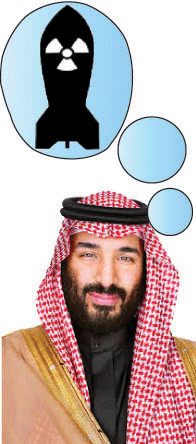 Saudi Arabia’s first nuclear reactor nearly finished, sparking fears over safeguards, Riyadh has so far resisted international watchdog’s requests to accept a strict inspection regime, Guardian, Julian Borger in Washington 4 Apr 2019
Saudi Arabia is within months of completing its first nuclear reactor, new satellite images show, but it has yet to show any readiness to abide by safeguards that would prevent it making a bomb.
The reactor site is in the King Abdulaziz city for science and technology on the outskirts of Riyadh. The site was identified by Robert Kelley, a former director for nuclear inspections at the International Atomic Energy Agency (IAEA), who said it was very small 30-kilowatt research reactor, not far from completion.
“I would guess they could have it all done, with the roof in place and the electricity turned on, within a year,” said Kelley, who worked for more than three decades in research and engineering in the US nuclear weapons complex………
Before inserting nuclear fuel into the reactor, Saudi Arabia would have to implement a comprehensive set of rules and procedures, including IAEA inspections, designed to ensure no fissile material was diverted for use in weapons – something it has so far avoided
The reactor has been designed by an Argentinian state-owned company, Invap SE……..Saudi Arabia joined the Non-Proliferation Treaty (NPT) in 1988 but signed a comprehensive safeguards agreement with the IAEA only in 2005, and at the same time exempted itself from regular inspections, by signing a “small quantities protocol” (SQP), designed for countries with negligible quantities of nuclear material.
Largely because of controversy over Riyadh being shielded from scrutiny under these rules, the IAEA made the SQP more rigorous, but the Saudis resisted making changes…….. https://amp.theguardian.com/world/2019/apr/04/saudi-arabias-first-nuclear-reactor-nearly-finished-sparking-fears-over-safeguards?CMP=share_btn_tw&__twitter_impression=tru
Senators from both parties want details on USA nuclear co-operation with Daudi Arabia
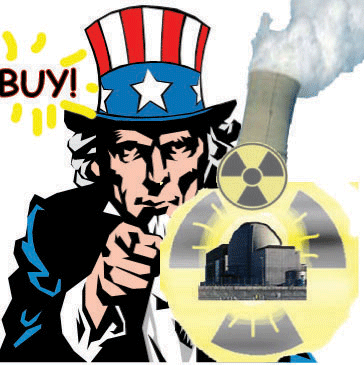
 US Senators Seek Details on Nuclear Power Cooperation with Saudi Arabia VOA News, https://www.voanews.com/a/us-senators-seek-details-on-nuclear-power-cooperation-with-saudi-arabia-/4859672.html 3 Apr 19, U.S. senators from both parties on Tuesday asked Energy Secretary Rick Perry for details about recent approvals for companies to share nuclear energy information with Saudi Arabia, with the lawmakers expressing concern about possible development of atomic weapons.
Saudi Arabia has engaged in “many deeply troubling actions and statements that have provoked alarm in Congress,” Senators Bob Menendez, a Democrat, and Marco Rubio, a Republican, told Perry in a letter, a copy of which was seen by Reuters.
The senators said Congress was beginning to re-evaluate the U.S.-Saudi relationship, and they believe Washington should not be providing nuclear technology or information to Saudi Arabia now.
The Trump administration has been quietly negotiating a deal that would potentially help Saudi Arabia build two reactors.
Last week news reports revealed that since November 2017, Perry has authorized so-called Part 810 approvals allowing U.S. companies to share sensitive nuclear information with the kingdom. The approvals were kept from the public and from Congress.
The senators asked Perry to provide them by April 10 with the names of the companies that got the 810 approvals, what was in the authorizations, and why the companies asked that the approvals be kept secret. U.S. Representative Brad Sherman, a Democrat, also asked the Energy Department in a separate letter what was in the approvals.
While 810 agreements are routine, the Obama administration made them available for the public to read at Energy Department headquarters. Lawmakers say the department is legally required to inform Congress about the approvals.
Perry approved the seven recent authorizations as the administration has tried to hash out nonproliferation standards with Saudi Arabia. Such a pact, known as a 123 agreement, would have to be agreed before U.S. companies can share physical exports of materials and equipment to build reactors.
The kingdom has resisted standards on reprocessing spent fuel and enriching uranium, two potential paths to making nuclear weapons.
The United States has been competing with South Korea, France, Russia and China on a potential deal to help build reactors in Saudi Arabia. The kingdom is expected to announce the winner this year.
Lawmakers from both parties have been concerned about Saudi Arabia’s bombing campaigns in Yemen, which is on the brink of famine, and the killing of journalist Jamal Khashoggi, a U.S. resident, last October in the Saudi consulate in Istanbul.
Concern in Congress grew last year after the kingdom’s Crown Prince Mohammed bin Salman told CBS that “Saudi Arabia does not want to acquire any nuclear bomb, but without a doubt if Iran developed a nuclear bomb, we will follow suit as soon as possible.”
Perry has said the 810 approvals were kept from the public for corporate proprietary reasons……….
At another Senate hearing, the five members of the Nuclear Regulatory Commission, including Chairman Kristine Svinicki, would not say whether the NRC raised any concerns over the 810 approvals in a required consultation with the Energy Department.
Svinicki said the NRC’s consulting role on the approvals is narrow and delegated to staff.
Senator Chris Van Hollen, a Democrat who asked the question of the NRC at the hearing, told Reuters in an interview that the commissioners’ lack of knowledge about the approvals was “stunning.”
“It’s kind of scary because we do rely on them to provide input into this process and not a single commissioner knew anything about what input they may or may not have provided.” https://www.voanews.com/a/us-senators-seek-details-on-nuclear-power-cooperation-with-saudi-arabia-/4859672.html
UK and EU agree to continue nuclear fusion project in Britain, despite Brexit
UK and EU agree contract that buys more time for Jet nuclear fusion lab, Chemistry World, An agreement between the UK and European commission will guarantee the future of the Joint European Torus (Jet) nuclear fusion facility in Oxfordshire, regardless of the UK’s Brexit plans.
Both parties have signed an extension to Jet’s contract that secures an additional €100 million (£86 million) of EU funding over the next two years and ensures the continuation of research until the end of 2020. The future of Jet has been uncertain for some time following the result of the UK referendum, especially as, when it leaves the EU, the UK is due to pull out of Euratom – the organisation that coordinates nuclear research around Europe, including work at Jet.
The contract will enable the facility to push ahead with planned fusion tests in 2020, and offers job security for its staff of more than 500. It also contains the option to extend operations until 2024, a measure which may be necessary in the run-up to the new international experimental fusion reactor Iter in southern France, which is planned to open in 2025. 1 APRIL 2019….. https://www.chemistryworld.com/news/uk-and-eu-agree-contract-that-buys-more-time-for-jet-nuclear-fusion-lab-/3010319.article
Trump’s ?ultimatum piece of paper to Kim Jong Un – insulting and provocative
 US asked North Korea to hand over all nuclear weapons: Report. Donald Trump reportedly gave Kim Jong Un a document in Hanoi calling for the transfer of nuclear materials to the US. Aljazeera, 30 Mar 2019 On the day their talks in Hanoi collapsed last month, US President Donald Trump handed North Korean leader Kim Jong Un a piece of paper that included a blunt call for the transfer of Pyongyang’s nuclear weapons and bomb fuel to the United States, according to a document seen by Reuters news agency.
Research group finds that ending the USA-Russia arms pact will bring about a nuclear weapons race
 Treaty’s End Would Likely Start New U.S. vs. Russia Nuclear Arms Race, Study Finds https://www.haaretz.com/us-news/treaty-s-end-would-likely-start-new-u-s-vs-russia-nuclear-arms-race-study-finds-1.7074395 1 Apr 19, The study, produced by the CNA Corp non-profit research group and seen by Reuters, is the most comprehensive public examination to date of the consequences of New START’s demise . Treaty’s End Would Likely Start New U.S. vs. Russia Nuclear Arms Race, Study Finds https://www.haaretz.com/us-news/treaty-s-end-would-likely-start-new-u-s-vs-russia-nuclear-arms-race-study-finds-1.7074395 1 Apr 19, The study, produced by the CNA Corp non-profit research group and seen by Reuters, is the most comprehensive public examination to date of the consequences of New START’s demise .
The demise of the only U.S.-Russia arms control pact limiting deployed nuclear weapons would make it harder for each to gauge the other’s intentions, giving both incentives to expand their arsenals, according to a study to be released on Monday. The expiration of the New START accord also may undermine faith in the Nuclear Non-Proliferation Treaty, which calls on nuclear states such as the United States and Russia to work toward nuclear disarmament, as well as influence China’s nuclear posture, historically one of restraint.
The study, produced by the CNA Corp non-profit research group and seen by Reuters, is the most comprehensive public examination to date of the consequences of New START’s demise. It argues for extending the 2011 treaty, which expires in February 2021 but can be extended for five years if both sides agree.
The Trump administration is deliberating whether to extend the pact, which President Donald Trump has reviled as a bad deal and his national security adviser, John Bolton, has long opposed. Russia has said it is prepared to extend New START but wants to discuss what it regards as U.S. violations first.
The State Department did not immediately respond to a request for comment on the administration’s deliberations. Trump has said Washington will withdraw from another arms pact, the 1987 Intermediate-range Nuclear Forces Treaty, this summer unless Moscow ends its alleged violations, compounding tense ties. Russia denies violating the INF treaty. The New START treaty required the United States and Russia to cut their deployed strategic nuclear warheads to no more than 1,550, the lowest level in decades, and limit delivery systems – land- and submarine-based missiles and nuclear-capable bombers. It also includes extensive transparency measures requiring each side to allow the other to carry out 10 inspections of strategic nuclear bases each year; give 48 hours notice before new missiles covered by the treaty leave their factories; and provide notifications before ballistic missile launches. Both sides must also exchange data declaring their deployed strategic nuclear warheads, delivery vehicles and launchers, as well as breakdowns of how many of each are located at individual bases. All of that would end if the treaty expires. “Neither country would have the same degree of confidence in its ability to assess the other’s precise warhead levels,” CNA’s Vince Manzo wrote in the study. “Worst-case planning is also more likely as a result. “Increased opacity between U.S. and Russian strategic nuclear forces would unfold within the broader context of growing mistrust and diverging perceptions about strategy, intentions, and perceptions,” he added. Without the data, the United States would have to reassign its overworked satellites, possibly devoting more surveillance to Russia and less to China, Iran and North Korea. Another casualty of the treaty’s expiration could be global nonproliferation, making non-nuclear states doubt the United States and Russia will keep working toward nuclear disarmament under the NPT, the study said. While it was impossible to predict how China – estimated to have about 280 nuclear warheads – would react to New START’s expiry, the study cites factors that could make Beijing expand its capability. Without a treaty limiting U.S. and Russian nuclear forces, China could overestimate their arsenals. Unconstrained U.S. and Russian forces could also strengthen voices in China that view a large arsenal as symbolically important, as well as those already advocating for more nuclear weapons. The study recommends steps for the United States and Russia to mitigate the risks from the treaty’s expiration, including voluntarily sticking to its limits and continuing to exchange data. It also recommends Washington propose annual exchanges of nuclear weapons information and dialogue with Beijing. |
|
Trump administration and Israel helping Saudi Arabia towards getting nuclear weapons
Concerns over Saudi plan to build nuclear plants after US deal | Al Jazeera English
Trump Admin Complementing Israeli Effort to Give Nuclear Weapons to Saudi Arabia https://www.mintpressnews.com/israel-saudi-arabia-nuclear-weapons-2/256761/
Already seven of the 10 countries in the world with the highest military budgets are in the Middle East. The development of nuclear weapons in Saudi Arabia has many speculating that it could mark the beginning of an even more dangerous era for the war-torn region. March 29th, 2019, By Alan Macleod
WASHINGTON — U.S. President Donald Trump’s energy secretary, Rick Perry, has secretly approved the sale of nuclear power technology and assistance to Saudi Arabia, Reuters revealed this week. Saudi Arabia is reportedly attempting to construct at least two nuclear power plants as part of its effort to diversify its energy sector and its economy as a whole. As part of this plan it has accepted bids from Russia, South Korea and the U.S. for the lucrative contract. Perry’s approval is known as a Part 810 authorization, which allows energy companies to begin the process of planning and starting preliminary work in anticipation of the closing of a formal deal in the future.
While the Saudi proposals are presented as civilian and do not mention nuclear weaponry, U.S. approval and sale of nuclear technology has been seen by many as a prelude to the development of a Saudi nuclear weapon, which could potentially spark anuclear arms race in the region. Riyadh has long coveted atomic weaponry and has considered developing its own in its quest to maintain military dominance in the region. “If Iran develops a nuclear weapon, that will be unacceptable to us and we will have to follow suit” Prince Turki al-Faisal, former Saudi ambassador to the United States, told the Guardian in 2011, noting that the kingdom may feel “compelled” to pursue the option in the future, if tensions with Iran remain high.
In reality, Iran does not have, nor is it trying to acquire, nuclear weapons technology (something quietly conceded by both the Israeli intelligence agency Mossad and the CIA), and has lived up to its commitments to the International Atomic Energy Agency. However, any such move from Saudi Arabia might provoke a response in kind from Iran, its chief adversary in the region and would sound a death knell for the hopes of the establishment of a nuclear weapons-free zone in the Middle East. The United States has long accused Iran of trying to develop nuclear weapons technology and has placed sanctions on the country.
The Israeli connection
An important nuclear player in the region is Israel, one of the few nations in the world that has not signed the nuclear non-proliferation treaty. Israel is estimated to possess 100 to 200 nuclear weapons and has taken a strongly adversarial position towards Iran. In 2015, Prime Minister Benjamin Netanyahu appeared before a joint session of Congress with a cartoon image of a bomb to give a speech denouncing Iran and warning of an Iranian military threat. Israel has been key in pushing the United States into a more confrontational stance on Iran through a continuous public-relations drive to present the country as a menace.
Last year Mint Press News reported that the Israeli government had begun selling Saudi Arabia nuclear weapons secrets. Ami Dor-on, a senior official and nuclear specialist at the organization Israel’s Homeland Security, blew the whistle on the clandestine practice. The Israeli actions were the latest evidence of a growing cooperation between the two nations. However, the prospect of a nuclear Saudi Arabia has many concerned.
The threat of a nuclear Saudi Arabia
For some time, Saudi Arabia has been making its presence felt in the Middle East, leading to the destabilization of the entire region. In 2011 Saudi tanks rolled into Bahrain to crush the Arab Spring uprising in the island country, and it continues to be a primary driver of the war in Yemen, labeled by some as genocide. At least 22 million people are in need of humanitarian assistance as a result of the Saudi bombardment of the country.
Riyadh also continues to fund various jihadist groups in Syria and is one of the largest financiers of terrorism in the world. Before his election, Trump claimed Saudi Arabia was behind the 9/11 attacks and the White House more recently insisted it would hold the kingdom responsible for the murder of Washington Post columnist Jamal Khashoggi. However, as with unabated American support for the Saudi war in Yemen, these proclamations have fallen short.
The Saudi armed services are already a formidable force. Saudi Arabia spends the third most of any country in the world on the military, behind only the U.S. and China, according to the Stockholm International Peace Research Institute. The Saudi military’s size is estimated at nearly a quarter-million active personnel, who are equipped with the most advanced weapons available.
Already seven of the 10 countries in the world with the highest military burden are in the Middle East. The development of nuclear weapons in Saudi Arabia has many speculating that it could mark the beginning of an even more dangerous era for the war-torn region.
Top Photo | U.S. President Donald Trump boards Air Force One for Israe from Saudi Arabial, the next stop in his international tour, at King Khalid International Airport, Monday, May 22, 2017, in Riyadh. (AP/Evan Vucci)
Alan MacLeod is an academic and writer for Fairness and Accuracy in Reporting. His book, Bad News From Venezuela: Twenty Years of Fake News and Misreporting was published in April.
USA Government Accountability Office to probe Saudi nuclear power talks
Congressional watchdog to probe Saudi nuclear power talksA congressional watchdog has agreed to investigate the Trump administration’s discussions about sharing nuclear technology with Saudi Arabia, according to people familiar with the matter. The Government Accountability Office, a non-partisan agency that conducts investigations on behalf of Congress, is in talks with lawmakers over the scope of a probe into the nuclear power talks that the Trump administration has held with Saudi Arabia. One person familiar with the discussions between the GAO and lawmakers said they were in their “initial phase”. In February, lawmakers accused White House officials of pushing a plan to sell US nuclear power technology to Saudi Arabia in potential defiance of legal restrictions. A report prepared for the oversight committee of the Democratic-led House of Representatives said Trump aides were attempting “to rush the transfer of highly sensitive US nuclear technology to Saudi Arabia”, which may have violated the Atomic Energy Act.
1 This Month
26 September – International Day for the Total Elimination of Nuclear Weapons





PLEASE OPPOSE HR 8255 AND S.3639 – bills would accelerate satellite deployment, with no environmental review or safeguards – https://ncstd5li.quorum.us/campaign/169331/
To see nuclear-related stories in greater depth and intensity – go to https://nuclearinformation.wordpress.com
-
Archives
- September 2026 (294)
- August 2026 (330)
- July 2026 (355)
- June 2026 (287)
- May 2026 (306)
- April 2026 (356)
- March 2026 (251)
- February 2026 (267)
- January 2026 (308)
- December 2025 (358)
- November 2025 (359)
- October 2025 (375)
-
Categories
- 1
- 1 NUCLEAR ISSUES
- business and costs
- climate change
- culture and arts
- ENERGY
- environment
- health
- history
- indigenous issues
- Legal
- marketing of nuclear
- media
- opposition to nuclear
- PERSONAL STORIES
- politics
- politics international
- Religion and ethics
- safety
- secrets,lies and civil liberties
- spinbuster
- technology
- Uranium
- wastes
- weapons and war
- Women
- 2 WORLD
- ACTION
- AFRICA
- Atrocities
- AUSTRALIA
- Christina's notes
- Christina's themes
- culture and arts
- Events
- Fuk 2022
- Fuk 2023
- Fukushima 2017
- Fukushima 2018
- fukushima 2019
- Fukushima 2020
- Fukushima 2021
- general
- global warming
- Humour (God we need it)
- Nuclear
- RARE EARTHS
- Reference
- resources – print
- Resources -audiovicual
- Weekly Newsletter
- World
- World Nuclear
- YouTube
-
RSS
Entries RSS
Comments RSS

