nuclear-news

The News That Matters about the Nuclear Industry Fukushima Chernobyl Mayak Three Mile Island Atomic Testing Radiation Isotope

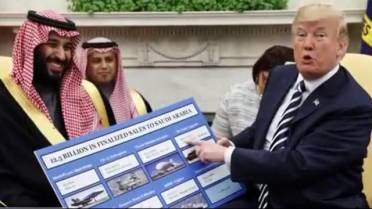
Saudi Arabia keen to get nuclear technology from USA

Saudi Arabia to work closely with US on nuclear power plans,  https://www.straitstimes.com/world/middle-east/saudi-arabia-to-work-closely-with-us-on-nuclear-power-plans JAN 10, 2019, RIYADH (REUTERS) – Saudi Arabia aims to work closely with the United States on its plans to build nuclear power generation capacity in the oil producing kingdom, the energy minister said on Wednesday (Jan 9).Riyadh wants Washington to be “part and parcel” of Saudi Arabia’s nuclear programme, which will be entirely for peaceful purposes, Energy Minister Khalid al-Falih said.

He also said the United States was a key provider for nuclear technology.

January 12, 2019 Posted by | politics international, Saudi Arabia | Leave a comment

Kim Jong Un’s New Year’s Speech stressed energy development, and co-operation wit South Korea

Kim Jong Un’s New Year’s Speech: On the Domestic Front, 38 North, BY: GLYN FORD, JANUARY 9, 2019  “……

Kim acknowledged that challenges to this domestic agenda certainly exist, noting especially the misallocation of labor, lack of expertise and poor productivity. In his speech, he instructed a reallocation of labor and resources, both for the military and the Party, to start to address these barriers to success. He also indicated that contingency plans were being explored in case a second summit with Trump fails to set US-DPRK relations back on track.

………Focus on Energy Generation

The country’s principal economic bottleneck is the desperate need for a massive increase in electricity production. A first step is the renovation and modernization of the supply industry. By singling out the Pukchang Thermal Power Complex for praise all the others inevitably lie in its shadow. Yet the most aggravating problem is fuel shortages. Under the current sanctions regime, the short-term solution—and by no means good news for the climate-change lobby—to the electricity shortage is massive increases in productivity in the coal sector. ………..

While hydroelectric plants merit a passing mention, in reality, the North is close to maximizing the use of the water resources available with both floods and droughts sharply reducing output. In the longer term, Kim argued that the country needs to “create a capacity for generating tidal, wind and atomic power under a far-reaching plan.” The last underlines Pyongyang’s perception that denuclearization of the Korean Peninsula does not preclude ambitions to be a civil nuclear power. The ongoing construction of their indigenous Experimental Light Water Reactor (ELWR) at North Korea’s Yongbyon Nuclear Scientific Research Center suggests that light water reactors will form the backbone of the industry, harking back perhaps to the Korean Peninsula Energy Development Organization (KEDO) from the 1990s. ………..

There is no question the Party is now on top as well as on tap with constant references to its primacy. Kim emphasized in his speech that the KPA is to “defend the Party and revolution and the security of the country and the people and continuously perform miraculous feats at all sites of socialist construction.” Echoing that sentiment, the People’s Internal Security Forces are there to protect Party, system and people, in that order.

Delivering peace and prosperity to the Korean Peninsula is the stated goal for both Pyongyang and Seoul. Kim underscored this mandate with:

“When north and south join hands firmly and rely on the united strength of the fellow countrymen, no external sanctions and pressure, challenges and trials will be able to hinder us….We will never tolerate the interference and intervention of outside forces who stand in the way of national reconciliation, unity and reunification with the design to subordinate inter-Korean relations to their tastes and interests.”

The “dog that didn’t bark” is the “end-of-war” declaration. Last summer, Pyongyang complained long and hard that Washington had not delivered on its promise to sign a political declaration ending the Korean War. In Kim’s New Year’s speech, this declaration failed to get even a mention. Pyongyang seems to have moved on, from Washington at least. Kim stated, “it is also needed to actively promote multi-party negotiations for replacing the current ceasefire on the Korean peninsula with a peace mechanism in close contact with the signatories to the armistice agreement so as to lay a lasting and substantial peace-keeping foundation.” The concept of a bilateral US-DPRK declaration signed by Seoul and Beijing has now become a multilateral proposition and negotiation. Which parties would be involved is unclear, but this may have been one of many topics discussed between Kim and Chinese President Xi Jinping during Kim’s birthday visit to Beijing

……….Until now Pyongyang has rigidly adhered publicly to parallel bilateral negotiations, one with Washington looking for a peace settlement accompanied by sanctions relief and a second with Seoul on economic cooperation. Now with the potential for the first set of negotiations to go multilateral, the second set may follow suit, increasing pressure on Moon to put clear blue water between Seoul and Washington with respect to “maximum pressure.”https://www.38north.org/2019/01/gford010919/

January 12, 2019 Posted by | North Korea, politics, politics international | Leave a comment

Donald Trump should negotiate with Kim Jong-un, who may be willing to limit nuclear production capability

North Korea may be willing to begin denuclearization, and Donald Trump should make a deal. https://www.usatoday.com/story/opinion/2019/01/04/kim-jong-un-north-korea-donald-trump-denuclearization-offer-column/2473360002/ Michael O’Hanlon,   Jan. 4, 2019

Kim Jon-Un indicated he would put nuclear production capability on the table as a bargaining chip, and Donald Trump should make that deal.

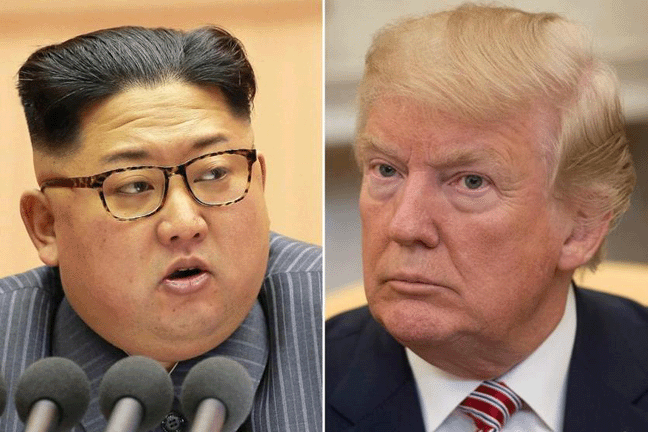
In his traditional New Year’s Day speech earlier this week, North Korean strongman leader Kim Jong-Un has just made an offer that, if serious, could present an opportunity for President Donald Trump to reach a historic breakthrough in the nuclear crisis on the Korean peninsula and record his greatest foreign-policy accomplishment as president.

Kim’s speech was not all sweetness and light. He warned that his patience is not infinite, and that in the absence of diplomatic progress, his country may resort to more confrontational tactics. Little has happened since the famous Singapore summit back in June between Kim and Trump; we seem no closer to a deal on North Korea’s threatening military capabilities now than we did six months ago. Meanwhile, Kim clearly resents and suffers from the tough international sanctions that the Trump administration has convinced the United Nations to impose these last two years, after North Korea’s big missile and nuclear tests of 2017. The latest statistics show that, despite sanctions evasion in multiple quarters, North Korean trade was down as much as half in 2018 compared to the year before.

But Kim held out an olive branch nonetheless. He seems to want a deal, and seems interested in another summit. He was much more specific than ever before about what he might offer in the course of such a tete-a-tete with Trump. So far, North Korea has only offered to place a moratorium on future nuclear and long-range missile tests, which has been a welcome development, but has only talked vaguely about “denuclearization” and has not stopped making more bombs. Now, apparently, Kim would put nuclear production capability on the table as a bargaining chip.

North Korea experts like Jonathan Pollack and Jung Pak have documented how unlikely Kim would be to give up all his nuclear bombs (U.S. intelligence estimates he has as many as 60 by now). They represent the collective accomplishments of a program that Kim’s grandfather and father prioritized when they led North Korea, so giving up all those bombs quickly would almost seem to dishonor the memory and legacy of his forefathers. And perhaps even more importantly, Kim as well as his generals remember the one cardinal mistake Saddam Hussein, Mohammar Quadhafi, and the Taliban all committed — leaving themselves vulnerable in war against the United States because of the lack of a nuclear deterrent. For Kim to give up the bomb, he would need a great deal of confidence that relations will remain peaceful.

There is an opportunity to compromise, relax

Yet there is still a big opportunity for compromise, if Kim is serious about ending production of more bombs. North Korea could stop expanding its nuclear arsenal, and we could relax, then lift some of the sanctions imposed on North Korea over the years, especially the U.N. sanctions that have really cut into North Korean trade with China and South Korea in the last couple years. The goal of complete denuclearization could await another day.

With this approach, the United States would keep enough sanctions in place to stay true to its principle that North Korea cannot be accepted as a nuclear-weapons state; before being fully welcomed into the community of nations, it will in fact have to honor its obligations under the Nuclear Non-Proliferation Treaty and give up all its bombs. Yet as a practical matter, that second stage of nuclear talks can wait for a number of months or years. That is ok. The world will be much safer if North Korea stops enlarging and improving its nuclear and long-range missile arsenals that could threaten not only South Korea and Japan (and the almost 300,000 Americans living in those two countries combined), but also eventually North America.

Trump should take what he can get for now

The real challenge is likely to be verification. We know where some, but not all, of North Korea’s nuclear infrastructure is located. As such, international inspectors would have to be allowed to return not only to the Yongbyon location where they have been before, and where North Korea has operated a nuclear reactor to make plutonium as well as centrifuges to enrich uranium. They would also need some degree of free reign to explore other suspicious sites around the country. On the one hand, this would not be an arrangement unique to North Korea; similar provisions are part of the Iran nuclear deal, for example. On the other hand, North Korea has shown extreme nervousness about such inspections in the past.

Another possible problem: John Bolton, Trump’s national security advisor, and Secretary of State Mike Pompeo may consider a deal that only freezes, rather than eliminates, North Korea’s nuclear arsenal inadequate for purposes of American and allied security. But they should reassess, or Trump should overrule them.

This compromise deal would go further than the Iran deal, in fact, if North Korea were willing to see its nuclear production facilities dismantled permanently. Yes, Kim would keep his nukes for a while. But he would have powerful economic and military reasons to behave himself. In this case, taking half a loaf is far more realistic than hoping for a complete denuclearization accord that just isn’t in the cards anytime soon. We should immediately engage in serious talks to see just how serious Kim really is about this intriguing and promising offer.

Michael O’Hanlon is director of research for the foreign policy program at the Brookings Institution. Follow him on Twitter: @MichaelEOHanlon

January 6, 2019 Posted by | North Korea, politics international | Leave a comment

Donald Trump and Kim Jong-un actually getting nowhere in nuclear diplomacy

Kim and Trump Back at Square 1: If U.S. Keeps Sanctions, North Will Keep Nuclear Program, NYT, By David E. Sanger, Jan. 1, 2019

Nearly two years into his presidency and more than six months after his historic summit meeting with Kim Jong-un of North Korea, President Trump finds himself essentially back where he was at the beginning in achieving the ambitious goal of getting Mr. Kim to relinquish his nuclear arsenal.

That was the essential message of Mr. Kim’s annual New Year’s televised speech, where he reiterated that international sanctions must be lifted before North Korea will give up a single weapon, dismantle a single missile site or stop producing nuclear material.

The list of recent North Korean demands was a clear indicator of how the summit meeting in Singapore last June altered the optics of the relationship more than the reality. Those demands were very familiar from past confrontations: that all joint military training between the United States and South Korea be stopped, that American nuclear and military capability within easy reach of the North be withdrawn, and that a peace treaty ending the Korean War be completed.

“It’s fair to say that not much has changed, although we now have more clarity regarding North Korea’s bottom line,’’ Evans J.R. Revere, a veteran American diplomat and former president of the Korea Society, wrote in an email.

“Pyongyang refused to accept the United States’ definition of ‘denuclearization’ in Singapore,’’ he wrote. To the United States, that means the North gives up its entire nuclear arsenal; in the North’s view, it includes a reciprocal pullback of any American ability to threaten it with nuclear weapons. “The two competing visions of denuclearization have not changed since then.”

o                  Mr. Trump and Mike Pompeo, the secretary of state, who is supposed to turn Mr. Trump’s enthusiasms into diplomatic achievements, dispute such conclusions. They note that the tone of one of the world’s fiercest armed standoffs has improved. It has, and both leaders say they want to meet again.

……….By some measures there has been modest progress. It has been 13 months since the North tested a nuclear weapon or a long-range missile, a change that Mr. Trump and Mr. Pompeo cite as the first fruits of what some officials now concede will be a long diplomatic push.

Relations between the two Koreas are warming, though there is considerable evidence that Mr. Kim sees his outreach to President Moon Jae-in of South Korea as a way to split the United States from its longtime ally.

But Mr. Trump’s strategic goal, from the moment he vowed to “solve” the North Korea problem rather than repeat the mistakes of past presidents, has been to end the North Korean nuclear and missile threat, not suspend it in place.

Mr. Trump dispatched his first secretary of state, Rex W. Tillerson, to Seoul in March 2017 to declare that a mere nuclear freeze would not be enough. Back then, Mr. Tillerson declared there would be no negotiations, and certainly no lifting of sanctions, until the North’s dismantling had begun. A nuclear freeze would essentially enshrine “a comprehensive set of capabilities,” he argued.

The decision Mr. Trump must make now is whether to backtrack on the objective of zero North Korean nuclear weapons even if that means accepting the North as a nuclear-armed state, as the United States has done with Pakistan, India and Israel. https://www.nytimes.com/2019/01/01/world/asia/kim-trump-nuclear.html

January 5, 2019 Posted by | North Korea, politics international, USA | Leave a comment

Between USA’s John Bolton, and Russia’s nuclear hawks – the fragmentation of nuclear arms control spells global danger

January 5, 2019 Posted by | politics international, Russia, USA, weapons and war | Leave a comment

Kim Jong-un sends a conciliatory message to Donald Trump, as nuclear weapons talks remain stalled

North Korea’s Kim sends ‘conciliatory message’ to Trump as nuclear weapon negotiations continue to stall Kim Jong-un had promised Donald Trump that they would work towards denuclearising North Korea, but negotiations haven’t advanced in months, Independent UK, Kristin Hugo New York 1 Jan 19 

North Korean leader Kim Jong-un has sent a  “conciliatory message” to Donald Trump as nuclear weapon talks between the two nations having stalled in recent months.

South Korea’s Chosun Ilbo newspaper reported the fact the letter has been sent on Monday, but did not include the details of the message or how it was sent. The report said that the message was in regard to US-North Korea relations, and that it was “letter-like.”

On Sunday, the office of South Korea’s President Moon Jae-in said Mr Kim had sent a letter to his counterpart in Seoul saying he wants to hold more inter-Korean summits next year to achieve denuclearisation of the peninsula…….

In November, US Secretary of State Mike Pompeo was scheduled to meet senior North Korean official Kim Yong Chol in New York City to discuss how to move forward. However, that meeting was suddenly cancelled, and has not yet been rescheduled.  ……

Reuters reached out to a North Korean official, the U.S. State Department, and the U.S. Embassy in Seoul, but has not yet received a response.  https://www.independent.co.uk/news/world/americas/us-politics/north-korea-trump-kim-jong-un-message-nuclear-weapons-negotiations-sanctions-south-korea-a8705846.html\

January 1, 2019 Posted by | North Korea, politics international | Leave a comment

North Korea’s Kim Yong Un wants more nuclear summits with South Korea’s President Moon Jae-in

Kim Wants More Summits With Moon to Tackle Nuclear Issue ,Bloomberg, By Sam Kim and Youkyung Lee. December 30, 2018,

Kim intent on resolving nuclear impasse, Blue House says  North Korean leader sent personal letter to South Korea’s Moon

Kim Jong Un is intent on resolving the nuclear impasse that has stalled negotiations with the U.S. and wants to hold more meetings with South Korean President Moon Jae-in, Moon’s office said.

The North Korean leader sent Moon a personal letter of well wishes on Sunday, expressing a willingness to meet often in 2019 to advance peace talks and achieve “denuclearization on the Korean peninsula,” Moon spokesman Kim Eui-keum said. Moon thanked him for the letter, tweeting that the North Korean leader “again made clear” that he would act on his agreement with the U.S. and South Korea.

The missive came amid increased skepticism over Kim’s willingness to dismantle his arsenal of nuclear weapons, months after a historic summit with President Donald Trump in which the two leaders agreed to work toward denuclearization. Kim’s letter made no mention of Trump or the U.S.

…….Earlier this month, North Korea told the U.S. that sanctions and pressure won’t work to force Pyongyang into action on its nuclear program. North Korean state media said the removal of the U.S.’s nuclear weapons from the region was a condition of its own disarmament, raising the stakes for Trump’s efforts to hold a second summit with Kim………https://www.bloomberg.com/news/articles/2018-12-30/kim-wants-more-summits-with-moon-to-tackle-nuclear-issue

December 31, 2018 Posted by | North Korea, politics international, South Korea | Leave a comment

Why has Britain not participated in international disarmament talks? Why are relevant documents kept secret?

David Lowry’s Blog 29th Dec 2018, I agree with academic researcher Sue Rabbitt Roff that researchers into the UK’s nuclear history should be alarmed that the publicly-funded Nuclear
Decommissioning Authority has ordered certain sensitive documents to be withheld from the regular release of official  documents that always takes place in the final week of the year from the National Archives.

The Soviet Union/Russia has participated successively in the SALT, START and INF
nuclear disarmament negotiations. Meantime, the UK has not taken part in any multilateral or bilateral nuclear reduction or disarmament talks.

Future researchers may wish to find out from the atomic Archives why not.
Will they be able to do so?
http://drdavidlowry.blogspot.com/2018/12/why-british-atomic-archives-should-not.html

December 31, 2018 Posted by | politics international, secrets,lies and civil liberties | Leave a comment

Australian Labor Party in a progressive move, plans to sign and ratify UN Nuclear Weapons Ban Treaty

Labor’s pledge to commit to nuclear disarmament puts the alternative party of government on the right side of history.

The gulf between the shenanigans of way too many politicians, and the growing urgency of grave and looming threats has rarely seemed wider. Action on crucial issues languishes while parliamentarians make naked grabs for power, acting in the interests only of themselves. Poor personal behaviour seems endemic. On the two unprecedented dangers looming over all humanity – nuclear war and climate disruption – Australia has been not just missing in action, but actively on the wrong side of history, part of the problem rather than the solution.

The government’s own figures demonstrate that our country, awash with renewable sun and wind, is way off track to meet even a third of its greenhouse gas emissions reduction target by 2030 – itself nowhere near enough.

Not only is nuclear disarmament stalled, but one by one, the agreements that reduced and constrained nuclear weapons, hard-won fruit of the end of the first cold war, are being trashed. All the nuclear-armed states are investing massively not simply in keeping their weapons indefinitely, but developing new ones that are more accurate, more deadly and more “usable”. The cold war is back, and irresponsible and explicit threats to use nuclear weapons have proliferated. Any positive effect that Australia might have on reducing nuclear weapons dangers from the supposed influence afforded us by our uncritical obsequiousness to the US is nowhere in sight. Our government has been incapable of asserting any independence even from the current most extreme, dysfunctional and unfit US administration. The US has recently renounced its previous commitments under the nuclear non-proliferation treaty (NPT); we have said nothing.

The one bright light in this gathering gloom is the 2017 UN treaty on the prohibition of nuclear weapons. For its role in helping to bring this historic treaty into being, the International Campaign to Abolish Nuclear Weapons (Ican) was awarded the Nobel peace prize for 2017 – the first to an entity born in Australia. This treaty provides the first comprehensive and categorical prohibition of nuclear weapons. It sets zero nuclear weapons as the clear and consistent standard for all countries and will help drive elimination of these worst weapons of mass destruction, just as the treaties banning biological and chemical weapons, landmines and cluster munitions have played a decisive role in progressing the elimination of those other indiscriminate and inhumane weapons. The treaty lays out a clear pathway for all states, with and without nuclear weapons, to fulfil their binding legal obligation to accomplish nuclear disarmament. It is currently the only such pathway.

Regrettably, the Australian government was the most active “weasel” in opposing the treaty’s development at every step and was one of the first to say it would not sign, even though we have signed every other treaty banning an unacceptable weapon.

Hence the Labor party’s commitment at its recent national conference in Adelaide that “Labor in government will sign and ratify the Ban Treaty” is an important and welcome step. It is a clear commitment, allowing no room for weaselling.

The considerations articulated alongside this commitment are fairly straightforward and consistent with the commitment. First, recognition of the need for “an effective verification and enforcement architecture” for nuclear disarmament. The treaty itself embodies this. Governments joining the treaty must designate a competent international authority “to negotiate and verify the irreversible elimination of nuclear weapons” and nuclear weapons programmes, “including the elimination or irreversible conversion of all nuclear-weapons-related facilities”. Australia should also push for the same standard for any nuclear disarmament that happens outside the treaty.

Second, the Labor resolution prioritises “the interaction of the Ban Treaty with the longstanding Nuclear Non-Proliferation Treaty”. The treaty has been carefully crafted to be entirely compatible with the NPT and explicitly reaffirms that the NPT “serves as a cornerstone of the nuclear disarmament and non-proliferation regime”, and that its full and effective implementation “has a vital role to play in promoting international peace and security”. All the governments supporting the treaty support the NPT, and the NPT itself enshrines a commitment for all its members to “pursue negotiations in good faith on effective measures relating to cessation of the nuclear arms race at an early date and to nuclear disarmament”. The UN secretary general, Antonio Guterres, and the International Committee of the Red Cross are among those who have affirmed that the treaty and the NPT are entirely consistent, complementary and mutually reinforcing. Even opponents of the treaty recognise that prohibition is an essential part of achieving and sustaining a world free of nuclear weapons.

Third, the Labor resolution refers to “Work to achieve universal support for the Ban Treaty.” This too is mirrored in one of the commitments governments take on in joining the treaty, to encourage other states to join, “with the goal of universal adherence of all States to the Treaty.”

An Australian government joining the treaty would enjoy wide popular support in doing so – an Ipsos poll last month found that 79% of Australians (and 83% of Labor voters) support, and less than 8% oppose, Australia joining the treaty.

Australia would also stop sticking out like a sore thumb among our southeast Asian and Pacific Island neighbours and be able to work more effectively with them. Brunei, Cook Islands, Fiji, Indonesia, Kiribati, Laos, New Zealand, Malaysia, Myanmar, Palau, Philippines, Samoa, Thailand, Timor-Leste, Tuvalu, Vanuatu and Vietnam have already signed the treaty.

Most importantly, joining the treaty and renouncing nuclear weapons would mean that Australia would become part of the solution rather than the problem of the acute existential peril that hangs over all of us while nuclear weapons exist, ready to be launched within minutes. Time is not on our side. Of course this crucial humanitarian issue should be above party politics. The commitment from the alternative party of government to join the treaty and get on the right side of history when Labor next forms government is to be warmly welcomed. It is to be hoped that the 78% of federal parliamentary Labor members who have put on record their support for Australia joining the treaty by signing Ican’s parliamentary pledge will help ensure Labor keeps this landmark promise.

 Dr Tilman Ruff is co-founder of the International Campaign to Abolish Nuclear Weapons (Ican) and Nobel peace prize winner (2017)

December 29, 2018 Posted by | AUSTRALIA, politics, politics international, weapons and war | Leave a comment

George H.W. Bush’s shameful involvement in the Regime Change in Nuclear-Free Palau

December 29, 2018 Posted by | OCEANIA, politics international, secrets,lies and civil liberties, USA, weapons and war | Leave a comment

We will never give up nuclear weapons unless USA removes nuclear threat – says North Korea

North Korea Says It Won’t Give Up Nuclear Weapons Unless the U.S. Removes Nuclear Threat, TIME,  By KIM TONG-HYUNG / AP  December 20, 2018  (SEOUL, South Korea) — North Korea said Thursday it will never unilaterally give up its nuclear weapons unless the United States first removes what Pyongyang called a nuclear threat. The surprisingly blunt statement jars with Seoul’s rosier presentation of the North Korean position and could rattle the fragile trilateral diplomacy to defuse a nuclear crisis that last year had many fearing war.

The latest from North Korea comes as the United States and North Korea struggle over the sequencing of the denuclearization that Washington wants and the removal of international sanctions desired by Pyongyang. The statement carried by the North’s official Korean Central News Agency also raises credibility problems for the liberal South Korean government, which has continuously claimed that North Korean leader Kim Jong Un is genuinely interested in negotiating away his nuclear weapons as Seoul tries to sustain a positive atmosphere for dialogue.

The North’s comments may also be seen as proof of what outside skeptics have long said: that Kim will never voluntarily relinquish an arsenal he sees as a stronger guarantee of survival than whatever security assurances the United States might provide. The statement suggests North Korea will eventually demand the United States withdraw or significantly reduce the 28,500 American troops stationed in South Korea, a major sticking point in any disarmament deal.

Kim and President Donald Trump met June 12 in Singapore where they agreed on a vague goal for the “complete denuclearization” of the Korean Peninsula without describing when and how it would occur. The leaders are trying to arrange another meeting for early next year.

But North Korea for decades has been pushing a concept of denuclearization that bears no resemblance to the American definition, with Pyongyang vowing to pursue nuclear development until the United States removes its troops and the nuclear umbrella defending South Korea and Japan. In Thursday’s statement, the North made clear it’s sticking to its traditional stance on denuclearization. It accused Washington of twisting what had been agreed on in Singapore and driving post-summit talks into an impasse.

“The United States must now recognize the accurate meaning of the denuclearization of the Korean Peninsula, and especially, must study geography,” the statement said.

“When we talk about the Korean Peninsula, it includes the territory of our republic and also the entire region of (South Korea) where the United States has placed its invasive force, including nuclear weapons. When we talk about the denuclearization of the Korean Peninsula, it means the removal of all sources of nuclear threat, not only from the South and North but also from areas neighboring the Korean Peninsula,” the statement said.

The United States removed its tactical nuclear weapons from South Korea in the 1990s. Washington and Seoul have not responded to the North Korean statement……..

“If we unilaterally give up our nuclear weapons without any security assurance despite being first on the U.S. list of targets for pre-emptive nuclear strikes, that wouldn’t be denuclearization — it would rather be a creation of a defenseless state where the balance in nuclear strategic strength is destroyed and the crisis of a nuclear war is brought forth,” the KCNA said.

“The corresponding measures we have asked the United States to take aren’t difficult for the United States to commit to and carry out. We are just asking the United States to put an end to its hostile policies (on North Korea) and remove the unjust sanctions, things it can do even without a snap of a finger.”…….http://time.com/5485553/north-korea-nuclear-weapons-us-threat/

December 22, 2018 Posted by | North Korea, politics international | Leave a comment

USA desperate to make money from the nuclear industry – selling radioactive trash clean-up technology

US to offer ‘black box’ nuclear waste tech to other nations ChannelNews Asia 20 Dec 18 

The U.S. Department of Energy’s nuclear security office is developing a project to help other countries handle nuclear waste, an effort to keep the United States competitive against global rivals in disposal technology, according to two sources familiar with the matter.

WASHINGTON: The U.S. Department of Energy’s nuclear security office is developing a project to help other countries handle nuclear waste, an effort to keep the United States competitive against global rivals in disposal technology, according to two sources familiar with the matter.

The push comes as the United States struggles to find a solution for its own mounting nuclear waste inventories amid political opposition to a permanent dump site in Nevada, proposed decades ago, and concerns about the cost and security of recycling the waste back into fuel.

The National Nuclear Security Administration is considering helping other countries by using technologies that could involve techniques such as crushing, heating and sending a current through the waste to reduce its volume, the sources said.

The machinery would be encased in a “black box” the size of a shipping container and sent to other countries with nuclear energy programs, but be owned and operated by the United States, according to the sources, who asked not to be named because of the sensitivity of the matter.

“That way you could address a country’s concerns about spent fuel without transferring ownership of the technology to them,” said one of the sources.

The NNSA confirmed a project to help other countries with nuclear waste is underway but declined to provide details.

We are in the conceptual phase of identifying approaches that could reduce the quantity of spent nuclear fuel without creating proliferation risks – a goal with significant economic and security benefits,” NNSA spokesman Dov Schwartz said.

The effort is being led by NNSA Deputy Administrator for Defense Nuclear Nonproliferation Brent Park, a nuclear physicist and former associate lab director at the Energy Department’s Oak Ridge National Laboratory, appointed by President Donald Trump in April.

The NNSA declined a Reuters request for an interview with Park.

The sources did not name countries to which the service would be marketed, or where the waste would be stored after it is run through the equipment. But they said they were concerned the processes under consideration could increase the risk of dangerous materials reaching militant groups or nations unfriendly to the United States.

Former President Jimmy Carter banned nuclear waste reprocessing in 1977 because it chemically unlocks purer streams of uranium and plutonium, both of which could be used to make nuclear bombs.

The NNSA’s Schwartz said the plans under consideration do not involve reprocessing, but declined to say what technologies could be used.

The sources familiar with the NNSA’s deliberations said there are three basic ways that the physical volume of nuclear waste can be reduced, all of which are costly. At least one of the techniques poses a security threat, they said.

The first, called consolidation, reduces the volume of nuclear waste by taking apart spent fuel assemblies and crunching the waste down to two times smaller than the original volume – an approach that is considered costly but which doesn’t add much security risk.

A second technique involves heating radioactive pellets in spent fuel assemblies. The process, which gives off gases that must be contained, results in a waste product that has more environmental and health risks.

A third approach called pyroprocessing – developed at the Department of Energy’s Argonne National Laboratory – puts spent fuel in liquid metal and runs an electric current through it. That reduces volume, but concentrates plutonium and uranium – making it a potential proliferation risk.

The nuclear community is divided on whether pyroprocessing fits the definition of reprocessing.

The Trump administration has made promoting nuclear technology abroad a high priority, as the United States seeks to retain its edge as a leader in the industry, amid advancements by other nations like Russia, and France – both of which already offer customers services to take care of waste.

U.S. reactor builder Westinghouse, which emerged from bankruptcy in August and is owned by Brookfield Asset Management, hopes to sell nuclear power technology to countries from Saudi Arabia to India, but faces stiff competition from Russia’s state-owned Rosatom.

U.S. Energy Secretary Rick Perry visited Saudi Arabia this month for talks on a nuclear energy deal with the kingdom, despite pushback from lawmakers concerned about the killing of journalist Jamal Khashoggi in the Saudi consulate in Istanbul………… https://www.channelnewsasia.com/news/technology/exclusive–us-to-offer–black-box–nuclear-waste-tech-to-other-nations-11046762

December 20, 2018 Posted by | business and costs, politics international, wastes | 1 Comment

North Korea highly critical of US Secretary of State Mike Pompeo

WW3: North Korea warns US tensions sparked ‘nightmare of nuclear disaster EVERY NIGHT’

NORTH Korea has stoked tensions with the United States after US Secretary of State Mike Pompeo came under fire in a report carried on an officially sanctioned North Korean news agency.  Express UK, By CIARAN MCGRATH, Dec 18, 2018 And it has also taken to opportunity to pointedly remind America it is now a year since “tens of millions of Americans suffered from the horrible nightmare of a nuclear disaster every night” in provocative language which may alarm Washington.

The Korean Central News Agency took an apparent swipe at Mr Pompeo – one of US President Donald Trump’s closest advisors – in an article attributed to Jong Hyon and published just three days after the treasury department announced sanctions against North Korean official Choe Ryong Hae, who holds several positions including being vice-chairman of the Korean Workers’ Party. Writing on the 38 North website, US-based academic and North Korea expert Robert Carlin said: “Though the Jong Hyon article did not mention this latest development, it surely rankled Pyongyang, a fact made clear in a statement by the policy research director of the Institute for American Studies (IFAS) of the Ministry of Foreign Affairs of the Democratic People’s Republic of Korea a few days late

The broadside at ‘a brazen faced guy’ who ‘had amicable negotiations’ with the DPRK side, but back home talked about a ‘rogue state’ and ‘maximum pressure’ was unmistakably aimed at Secretary of State Pompeo, who has visited Pyongyang several times.

“Personal invective against the other side’s officials, especially leading figures on its negotiating team, marks an unpleasant moment but is not an insurmountable barrier.  …..https://www.express.co.uk/news/world/1060671/world-war-3-north-korea-nuclear-disaster-us-mike-pompeo

December 20, 2018 Posted by | North Korea, politics international | Leave a comment

Nuclear unpredictability: Managing the global nuclear framework 

The global nuclear framework still faces many challenges. Often, bleak predictions motivate the international community to collectively ensure that such predictions do not come true. This essay attempts to gauge the future of the global nuclear framework based on current trends. ……….With repeated tests of nuclear devices and missile systems, it is North Korea that today no doubt presents the gravest challenge to the framework. The international community appears to be divided on the solution to the North Korean problem, and whether complete denuclearisation should be the end goal of a prospective deal with Pyongyang. Considering the efforts that Kim Jong-un’s regime has made to acquire an operational, costly nuclear weapons programme, it is unlikely that Pyongyang will agree to complete denuclearisation without significant concessions, including a possible reunification of the Korean peninsula under Kim Jong-un’s leadership. This, of course, will have significant geopolitical ramifications. A deal without denuclearisation as its last stage, on the other hand, will leave the global nuclear framework dented forever. While speculations of consequential horizontal proliferation of nuclear weapons have been labelled “far-fetched,” there are hints that Japan could consider nuclearising.

As the global nuclear framework continues to grapple with the daunting North Korean challenge, it is equally important to consider other challenges, e.g. the threat to the Joint Comprehensive Plan of Action (JCPOA), which Iran and the P5+1 countries negotiated in 2015; the failing US–Russia arms control pacts; the aggressive nuclear posturing with deployment of tactical nuclear weapons for warfighting; the technological advancements in delivery systems, such as the hypersonic vehicles that could lead to a fresh wave of arms race in the world; and the long-ignored agenda of global nuclear disarmament.

Challenges to the future of the JCPOA is a significant threat to the framework’s agenda of nuclear non-proliferation. US President Donald Trump seeks an additional agreement that broadens the mandate of the deal to include Iran’s long-range missile programme, tightens the verification measures of the JCPOA further, and extends the terms of the deal indefinitely, removing the “sunset” clauses. Even with this additional deal — chances of which materialising are feeble — the case of Iran, in principle, will allow states to possess enrichment technology and be on the nuclear “threshold.” This is another challenge for nuclear non-proliferation.

Meanwhile, the arms-control agenda of the framework has suffered severe setbacks in the last decade. The existing mechanisms, primarily negotiated by the US with the Soviet Union during the Cold War — and with Russia since — are now breaking down. There is a new wave of nuclear warhead modernisation across the board, led primarily by the US. Coupled with the ongoing and rapid development of various modern weapons delivery systems, this makes the possibility of negotiating new arms control mechanisms negligible. ………https://www.orfonline.org/expert-speak/nuclear-unpredictability-managing-the-global-nuclear-framework-46338/

December 20, 2018 Posted by | politics international | Leave a comment

USA government will appease murderous Saudi Arabia regime – or maybe not?

US Nuclear Energy Policy & Khashoggi Murder: Appeasement Or Threat? Clean Technica, December 12th, 2018 by Tina Casey 


The horrific murder of journalist Jamal Khashoggi last October continues to fester, and some of the blowback has been falling on the shoulders of the US tech sector. Rightfully so, considering the connection between Saudi wealth, Japan-based SoftBank, and Silicon Valley A-listers. Meanwhile, US President* Donald Trump has dismissed evidence that Saudi Crown Prince Mohammed bin Salman was directly responsible for the crime, but a recent nuclear energy announcement could indicate that someone in Trump’s cabinet is stirring the pot.

Khashoggi Or Not, Trump Administration Still Sharing Nuclear Energy Love With Saudi Arabia…

There is also a nuclear weapons angle to the story, but for now lets focus on the nuclear energy angle.

Despite its vast solar and wind resources, Saudi Arabia has expressed a growing interest in building a fleet of power plants fueled by nuclear energy.

CleanTechnica has been among those taking note, though not in any particular depth — until earlier this week, when the US Department of Energy released a readout of Energy Secretary Rick Perry’s recent visit with the Saudi Minister of Energy, as well as the CEO of Saudi Aramco and other officials.

The readout hit the Intertubes just about the time word leaked out that there is now a written transcript of the audiotape that recorded the last minutes of Khashoggi’s life.

Anyone — even those who do not speak Arabic — can now read and understand the last words that Khashoggi screamed out in the course of his murder.

So, was the readout yet another example of Secretary Perry tone deafness? Or was it yet another one of his curiously timed missives that undercut White House policy even while seeming to affirm it.

Here, you do the math. This is where the readout deals with the visit to Saudi Arabia (Perry also went to Qatar on the same trip):

…the Secretary expressed that the United States continues to view Saudi Arabia as an important ally, particularly in the energy space. Perry and Al-Falih spoke about last week’s OPEC announcement of production cuts and Perry reiterated the need for stable supply and market values. They also discussed the 2018 increase in Saudi oil production and the impact it has had on world markets in the wake of the Iran sanctions.

And, here’s the summary message (emphasis added):

Secretary Perry underscored the message that he carries all over the world: any nation seeking to develop a truly safe, clean, and secure nuclear energy program should turn to American companies who have the ability to provide the technology, knowledge, and experience that are essential to achieving that goal.

The US nuclear energy industry is in a state of near collapse, domestically speaking. As with coal power, the only hope for growth is to export the technology elsewhere…but the readout makes it clear there are standards to be met.

Or Not

The readout is not particularly startling in and of itself, though there is a lot to chew on between the lines.

What really sticks out is the summary message. It could be read in two different ways.

Number one, Secretary Perry was blithely pitching the US nuclear energy industry to the Saudi government, ignoring — as per White House policy — the latest revelations about the Khashoggi murder.

That would be consistent with the Rick Perry, who toes the Trump line on a whole host of other issues, inside and outside of the energy space.

Number two relates to the other Rick Perry — the one who has consistently pushed for the Department of Energy’s scientific and renewable energy missions, even when (or perhaps especially when) those missions clash with Trump’s anti-science, pro-coal rhetoric.

In this scenario, the nuclear message is not a pitch. It’s practically the opposite: a reminder that the US holds the nuclear energy cards.

To be clear, the US doesn’t hold all the nuclear energy cards, but it does hold enough of them to make trouble. Earlier this fall, for example, the Trump administration announced new restrictions on nuclear technology exports to China. Though some have downplayed the impact, that’s gotta hurt.

As applied to the Saudi government, Perry could wield the authority of his agency under its nonproliferation mission as a stick, not a carrot.

Or, maybe not. If you apply Occam’s razor to the readout, it is just what it is: a message that, Khashoggi or not, it’s business as usual between Saudi Arabia and the US.

What do you think? Drop us a note in the comment thread! ………… https://cleantechnica.com/2018/12/12/us-nuclear-energy-policy-khashoggi-murder-appeasement-or-threat/

December 18, 2018 Posted by | politics international, Saudi Arabia, USA | Leave a comment