Australian PM Anthony Albanese gave Donald Trump model nuclear submarine on golden plate at White House
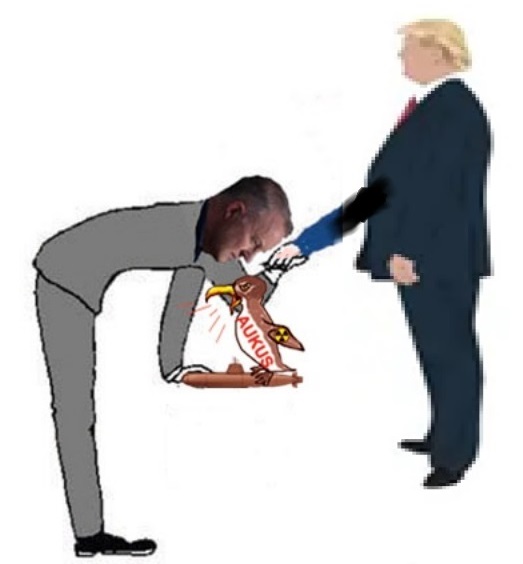
Prime minister also presented Melania Trump with a $3,000 Paspaley pearl pendant
Josh Butler, Guardian, Thu 5 Mar 2026
The Australian prime minister, Anthony Albanese, gave Donald Trump a gift of a model nuclear submarine with golden plates and finishes, internal documents reveal, during his visit to the White House last year which sealed the president’s support for the Aukus pact.
The prime minister also presented the US first lady, Melania Trump, with a A$3,000 Paspaley pearl pendant.
The information, obtained by Guardian Australia from the Department of Prime Minister and Cabinet after a four-month freedom of information process, revealed more about the delicate diplomatic planning and charm offensive that went into Albanese’s long-awaited first face-to-face meeting with Trump.
“Gift form” documents from the department reveal Albanese came to the White House bearing a two-foot-long model Virginia-class submarine, mounted on a base with gold plates, and a pearl necklace from one of Australia’s most famous jewellers.
Albanese had previously stated he’d given the Trumps a model submarine and jewellery, but at the time neither Albanese’s office nor his department would reveal any further information about the gifts.
Other world leaders and business titans have showered Trump with expensive gifts – often gold. The Fifa president, Gianni Infantino, presented Trump with a gold medal and golden trophy for a newly created “Fifa peace prize”; the Apple CEO, Tim Cook, gave Trump a glass disc with a golden base; South Korea’s president gave him a golden crown; while a group of Swiss billionaires gave him a golden clock and engraved gold bar………………….https://www.theguardian.com/australia-news/2026/mar/05/australian-pm-albanese-trump-white-house-visit-gold-submarine-gift
Negotiation to Detonation
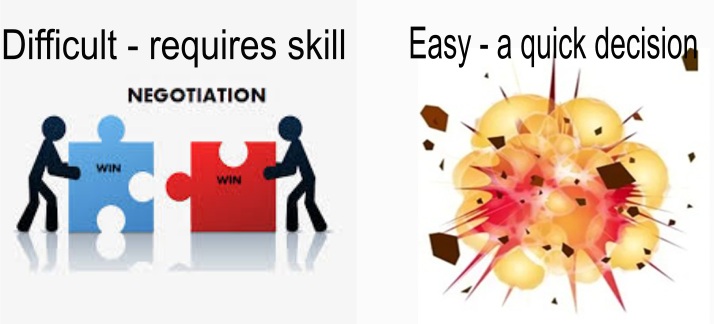
. A peaceful resolution would have prevented the long-term U.S. plan to consolidate and weaponize its control over Middle Eastern oil
By Michael Hudson, Monday, March 2, 2026, https://michael-hudson.com/2026/03/negotiation-to-detonation/
Last Friday the mediator of the U.S. and Iranian nuclear negotiations in Oman, that country’s foreign minister Badr Albusaidi, pulled the rug out from President Trump’s deceptive pretense threatening war with Iran. Why? Because it had refused his demands to give up what he claimed was its own atom bomb. The Omani foreign minister explained on CBS’s Face the Nation that the Iranian team had agreed not to accumulate enriched uranium and offered “full and comprehensive verification by the IAEA.” This new concession was a “breakthrough that has never been achieved any time before. And I think if we can capture that and build on it, I think a deal is within our reach” to achieve “agreement that Iran will never, ever have a nuclear material that will create a bomb. This is, I think, a big achievement.”
Pointing out that this breakthrough “has been missed a lot by the media,” he emphasized that by calling for “zero stockpiling” went far beyond what had been negotiated during President Obama’s administration, because “if you cannot stockpile material that is enriched then there is no way you can actually create a bomb.”
Ayatollah Ali Khamenei – who already had issued a fatwa against doing any such thing, and had repeated this position year after year – called Iran’s Shi’a leaders and military chief to discuss ratification of the agreement to cede control of its enriched uranium in order to prevent war.
But any such capitulation was precisely what neither the United States nor Israel could accept. A peaceful resolution would have prevented the long-term U.S. plan to consolidate and weaponize its control over Middle Eastern oil, its transportation and the investment of its oil export revenues, and to use Israel and al Qaeda/ISIS as its client armies to block independent oil-producing countries from acting in their own sovereign interests.
Israeli intelligence apparently alerted the U.S. military to suggest that the meeting at the Ayatollah’s compound offered a great chance to decapitate the leading decision makers all together. This followed the U.S. military handbook advice that killing a political leader whom the U.S. deems to be undemocratic will liberate popular dreams of regime change. That was the hope of bombing President Putin’s country residence last month, and it was in line with the U.S’s recent Starlink attempt to mobilize popular opposition for revolution in Iran.
The joint U.S.-Israeli attack makes it clear that there is nothing that Iran could have conceded that would have deterred the long-standing U.S. drive to control Middle Eastern oil, alongside using Israel and ISIS/Al Qaeda client armies to prevent sovereign nations in the region from emerging to take control of their oil reserves. That control remains an essential arm of U.S. foreign policy. It is the key to the U.S. ability to hurt other economies by denying them access to energy if they do not adhere to U.S. foreign policy. This insistence on blocking the world’s access to energy sources not under American control is why the U.S. has attacked Venezuela, Syria, Iraq, Libya and Russia.
The attack on negotiators (the second time America has done this to Iran) is a perfidy that will go down in history. It was to prevent Iran’s intended move to peace, before its leaders could have disproven Trump’s false claim that Iran had refused to give up its desire to obtain its own atom bomb.
The markets last week were vastly underestimating the risk of closing the Oil Gulf. U.S. oil companies will make a killing. China and other oil importers will suffer. U.S. financial speculators also will make a killing, because their oil production is domestic. This fact may even have played a role in the U.S. decision to end the world’s access to Middle Eastern oil for what promises to be a lengthy period.
The trade and financial disruption in fact will be so worldwide that I think we can think of Saturday’s February 28 attack on Iran as the true trigger of World War III. For most of the world, the imminent financial crisis (to say nothing of the moral outrage) will define the next decade of international political and economic restructuring.
European, Asian and the Global South countries will be unable to obtain oil except at prices that make many industries unprofitable and many family budgets unaffordable. The rise in oil prices also will make it impossible for Global South countries to service their dollar debts falling due to Western bondholders, banks and the IMF.
Countries can save themselves from having to impose domestic austerity, currency depreciation and inflation only by recognizing that the U.S. attack (supported by Britain and Saudi Arabia, with ambiguous Turkish acquiescence) had ended the U.S. unipolar order – and with it the dollarized international financial system. If this is not recognized, acquiescence will continue until it becomes unsustainable in any case..
If this is the inaugural real battle of World War III, it is in many ways a final battle to decide what World War II was all about. Will international law crumble as a result of the unwillingness of enough countries to protect the rules of civilized law supporting the principles of national sovereignty free from foreign interference and coercion from the 1648 Peace of Westphalia to the UN Charter? And with regard to wars that inevitably are to be waged, will they spare civilians and non-belligerents, or will they be like Ukraine’s attack on its Russian speaking population in its eastern provinces, Israel’s genocide against ethnic Palestinians, Wahabi religious cleansing of non-Sunni Arab populations, or indeed the Iranian, Cuban and other populations under U.S.-sponsored attack.
Can the United Nations be saved without freeing itself and its member countries from U.S. control? An early litmus test of where alliances are sorting out will be which countries join the legal move to declare Donald Trump and his cabinet war criminals. Something more than the present ICC is needed, given the U.S. Government’s personal attacks on ICC judges that found Netanyahu guilty.
What is required is a Nurenberg-scale trial against the Western military policy that has been seeking to plunge the entire world into political and economic chaos if it does not submit to the U.S. unipolar ruler-based order. If other countries do not create an alternative to the US-European-Japanese-Wahabi offensive, they will suffer what U.S. Secretary of State Rubio called (in his recent Munich speech) a resurgence of the Western history of conquest to the basic principles of international law and equity.
An alternative requires restructuring the United Nations to end the U.S. ability to block majority resolutions. In view of the fact that U.N. Secretary-General Antonio Guterres has said that it may be bankrupt by August and have to close its New York City headquarters, this is a propitious time to move it out of the United States itself. The U.S. has banned Francesca Albanese from entering the United States as a result of her report describing Israeli genocide in Gaza. There can be no rule of law as long as control over the U.N. and its agencies remains in U.S. hands and those of its European satellites.
Trump Threatens Full Trade Embargo Over Spain’s Refusal to Be Complicit in Iran Attacks
Ripping the US president’s “flagrant disregard for European sovereignty—and security,” co-general coordinator of Progressive International declared: “Close the bases. All of them.”
Jessica Corbett, Common Dreams, Mar 03, 2026
President Donald Trump on Tuesday threatened to cut off all trade with Spain over the Spanish government’s refusal to allow US aircraft to use its military bases for the war that the United States and Israel are waging on Iran.
Speaking with reporters at the White House beside German Chancellor Friedrich Merz just after noon Eastern time, Trump initially signaled that he’d already taken action against Spain, but less than 10 minutes later, the president suggested he was still deciding.
Referring to Treasury Secretary Scott Bessent, who was also in the room, Trump said: “Spain has been terrible. In fact, I told Scott to cut off all dealings with Spain.”
Trump claimed that “it started” last year, when every other NATO member caved to US pressure to aim for spending 5% of gross domestic product on defense by 2035, “and Spain didn’t do it.”
“And now Spain actually said that we can’t use their bases. And that’s all right. We could use their base if we want. We could just fly in and use it. Nobody’s going to tell us not to use it. But we don’t have to. But they were unfriendly,” the president continued. “Spain has absolutely nothing that we need other than great people. They have great people but they don’t have great leadership.”
Again complaining about their refusal to commit to 5%, he said that “we’re gonna cut off all trade with Spain. We don’t want anything to do with Spain.”………………………………………………………………………………………………………………………………………….
Francesca Albanese, the United Nations special rapporteur focused on the occupied Palestinian territories and a target of Trump administration sanctions, responded to the US president by praising the “strength” of Spanish Prime Minister Pedro Sánchez.
“The peoples of Europe do not want to be complicit in a system that kills children and protects those who profit from their blood,” Albanese said. “Europe deserves better, and you are already part of that change. Thank you.”https://www.commondreams.org/news/iran-spain
This Illegal US-Israeli Attack on Iran Is Also an Assault on the United Nations
As Henry Kissinger famously said, “It may be dangerous to be America’s enemy, but to be its friend is fatal.” We can add that to host US military bases and CIA operations is to turn your country into a vassal state.
The international order that Franklin and Eleanor Roosevelt helped to build after the catastrophe of WWII was founded on a simple and profound idea – that law and respect, not force, should govern relations among states. That idea is now being destroyed by the very nation that did most to promote it in founding the UN. The irony is bitter beyond measure.
Let us be clear about what the United States and Israel are pursuing. The US objective is not the security of the American people. The objective is global hegemony. The attempt is to destroy the UN and the international rule of law—an attempt that will fail.
Jeffrey D. SachsSybil Fares, Mar 02, 2026, Common Dreams, https://www.commondreams.org/opinion/united-nations-israel-us-attack-iran
On February 16, 2026, one of us (Jeffrey Sachs) sent a letter to the UN Security Council warning that the United States was on the verge of tearing up the United Nations Charter. That warning has now come to pass. The United States and Israel have launched an unprovoked war against Iran in flagrant violation of Article 2(4) of the Charter, without authorization from the Security Council, and without any legitimate claim of self-defense under Article 51. They are trying to kill the UN Charter and the international rule of law, but they will fail.
At the Security Council on February 28, 2026, the US and its allies directed their condemnation not at the American and Israeli aggression, but at Iran. One US ally after the next condemned Iran for its retaliatory attacks yet absurdly failed to condemn the illegal and unprovoked US-Israeli attack on Iran. This performance by these countries was disgraceful and turned reality completely upside down.
The truth is that the devastation of the war will not directly affect the so-called West: their children will not suffer traumas or death, and their countries will not be set ablaze. The victims of this attack are the people of the Middle East. They are the expendable ones who suffer from Western arrogance, abuse of power, and addiction to war.
We close with two observations. First, the United States will not achieve global hegemony or kill the UN. The world is too large, too diverse, and too determined to resist domination by any single power, much less one with 4 percent of the world’s population. The world outside of the US and the countries it occupies want the UN to live and thrive. The US attempt will surely fail, but it may cause immense suffering before it does.
Second, if Israel continues its addiction to war and occupation, it too will not survive. That addiction represents a mix of theocracy and post-traumatic stress. Part of Israel believes that it is the biblical kingdom of the 5th century BC. The other part lives in the traumatic memory of the Holocaust, and so is determined to kill any perceived adversary rather than learn to live together with it in peace. The Israeli Ambassador’s twisted defense of Israel’s brazen attack on Iran, as usual, cited the Bible and Auschwitz as the two justifications. These are Israel’s two perennial references, but not the real world of today.
The joint US-Israeli attacks were described by Trump as necessary because Iran “rejected every opportunity to renounce their nuclear ambitions, and we can’t take it anymore.” This is of course a flat lie. As the letter of February 16 recounted, Iran agreed a decade ago to a nuclear deal, the Joint Comprehensive Plan of Action (JCPOA) that was adopted by the UN Security Council in Resolution 2231. It was Trump who ripped up the agreement in 2018. In June 2025, Israel bombed Iran in the midst of US-Iran negotiations. This time too, the Israel-US war plans were set weeks ago when Netanyahu met with Trump, and the negotiations underway between the US and Iran were a charade. This seems to be the new modus operandi of the US: start negotiations and then aim to murder the counterparts.
It is easy to understand why the US allies behave in the embarrassing and self-abasing way they did at the UN Security Council. In addition to the United States, eight of the other fourteen Council members host US military bases or grant the US military access to local bases: Bahrain, Colombia, Denmark, France, Greece, Latvia, Panama, and the United Kingdom. These countries are not fully sovereign. They are partially governed by the US. The US military bases house CIA operations, and the host countries constantly look over their shoulder to try to avoid US subversion in their own countries.
As Henry Kissinger famously said, “It may be dangerous to be America’s enemy, but to be its friend is fatal.” We can add that to host US military bases and CIA operations is to turn your country into a vassal state.
As an absurd but telling example, the Danish ambassador parroted every US talking point, pointing her finger at Iran for its aggression as if Iran had not been attacked by the US and Israel. She completely forgot that such humiliating vassalage to the US will not play well for Denmark if the US occupies Greenland.
The truthful voices at the Security Council came from the countries not occupied by the United States. Russia explained correctly that the so-called West (that is, the countries occupied by the US) is engaged in victim-blaming when it points its finger at Iran. China reminded the Council that the crisis began with the US and Israeli attacks on Iran, not with Iran’s retaliation. Somalia’s ambassador, speaking on behalf of several African member states, truthfully portrayed the source of this recent escalation. The UN Representative of the League of Arab States spoke brilliantly about the root cause of Israel’s mad aggression: the denial of rights to Palestinian people, and Israel’s use of mass murder and regional war to prevent the emergence of a State of Palestine.
When Iran retaliates against US military bases in the Gulf, it is exercising its inherent right of self-defense under Article 51 of the Charter. We must remember that the US and Israel are openly and repeatedly assassinating Iran’s leaders, with the aim of overthrowing its government. When states murder a foreign head of state and attempt to destroy the government, the target of those threats is entitled under international law to defend itself.
The US-Israeli bombing murdered not only Iran’s Supreme Leader and several top government officials, but also more than 140 young girls in their school in Minab. These young children are the victims of a horrific war crime. The countries today that gave a pass to the United States and Israel for these killings—notably Denmark, France, Latvia, the United Kingdom, and of course the US —are also complicit in this war crime.
This UN Security Council emergency meeting will likely be remembered as the day the United Nations ceased to function from its headquarters on American soil. An international organization dedicated to the peaceful settlement of disputes cannot credibly operate from a country that wages illegal wars, threatens member states with annihilation, and treats UN Security Council resolutions as disposable instruments of convenience. For the UN to survive, and we need it to survive, it will need several homes around the world—in Brazil, China, India, South Africa, and others—honoring the true multipolarity of our world.
Let us be clear about what the United States and Israel are pursuing. The US objective is not the security of the American people. The objective is global hegemony. The attempt is to destroy the UN and the international rule of law—an attempt that will fail. Israel’s objective is to establish a Greater Israel, destroy the Palestinian people, and assert its hegemony over hundreds of millions of Arabs across the Middle East (from the Nile to the Euphrates, as US Ambassador Mike Huckabee recently asserted).
The United States’ delusional efforts at global hegemony are proceeding region by region. The US has recently claimed, in a wholly twisted supposed revival of the Monroe Doctrine, that it controls the Western Hemisphere and can dictate how Latin American countries conduct their economic and political affairs. The US kidnapped the sitting Venezuelan president to prove the point, and it now threatens to overthrow the Cuban government as well.
Today’s war against Iran aims to prove that the US similarly owns the Middle East. The war is part of a 30-year campaign, initiated by the Clean Break doctrine, to overthrow all governments that oppose US and Israeli hegemony in the region. Those joint Israel-US wars have included the genocide in Gaza, the occupation of the West Bank and the decades of wars and regime-change operations in Iran, Iraq, Lebanon, Libya, Somalia, Sudan, Syria, and Yemen.
One part of the US global plan is to commandeer the world’s oil exports and to weaken China and Russia in the process. The US seizure of Venezuela was designed to ensure American control of that country’s oil exports, especially to control the flow of oil to China. US sanctions on Russia aim to prevent Russian oil from reaching India and China. Now the US aims to stop the flow of Iran’s oil to China. More broadly, the US aims to control the entire Gulf region plus Iran to maintain its imperial dominance.
The international order that Franklin and Eleanor Roosevelt helped to build after the catastrophe of WWII was founded on a simple and profound idea – that law and respect, not force, should govern relations among states. That idea is now being destroyed by the very nation that did most to promote it in founding the UN. The irony is bitter beyond measure..
A state that depends on permanent war, permanent occupation and slaughter of the Palestinians, and the indefinite subjugation of millions of people has no viable future, and the policies that the United States is now pursuing on Israel’s behalf will accelerate rather than prevent that outcome.
The two-state solution, which the Council has endorsed repeatedly, offers Israel a path to peace. Tragically Israel rejects that. The result, eventually, will be the end of Israel itself in its current form, especially as the US population is rapidly turning against Israel’s violent theocracy and towards the cause of Palestine. Perhaps there will be one democratic state for both Arabs and Jews living in peace, together, with an end of apartheid rule.
These are harsh truths, but emergencies demand honesty. The UN is being murdered by Israel and the United States. The Security Council must rouse itself from their military occupation by the US, and remember that they are the stewards of the UN Charter’s promise to maintain international peace and security.
Stop Trump’s New Mass-Murder Spree

By David Swanson, World BEYOND War, February 28, 2026, https://worldbeyondwar.org/stop-trumps-new-mass-murder-spree/
The latest location where Trump has given the orders to murder people is Iran.
Remember a couple of months back when establishment U.S. lawyers and human rights groups were admitting that Trump’s attacks on boats in the Caribbean and Pacific were nothing other than murder?
Murder doesn’t cease being murder because it’s further away or grander or provokes a more dramatic response or targets victims who speak a different language.
By all means hunt in the Epstein files for evidence of Trump raping or murdering, but don’t pretend we don’t already know.
Did Trump have no choice but to start slaughtering people? The mediator said a deal was within reach.
The deal was a solution in search of a problem to begin with, given the absolute lack of evidence of the existence of an Iranian nuclear weapons program and the openly admitted possession of nuclear weapons by numerous other nations not being bombed, including the one currently sending missiles into schools in Iran.
Didn’t Trump need to murder people to prevent the Iranian government from murdering them? Hmm. Is more murder or more high-tech murder or more distant murder better? Should we pretend the people have not been protesting economic hardship largely created by illegal and murderous U.S. sanctions? Must we all conspire to act as if nonviolent activism does not exist? Are we really going to pretend Israel hasn’t demanded this crime — and provided a rotating selection of ludicrous excuses and frauds to justify it — for decades?
Public pressure helped prevent a U.S. war on Iran several times in recent decades, and helped create public opinion in the U.S. that as of the start of this war was more against such a war than ever, and more against such a war than against almost any other evil thing ever asked about in opinion polls.
So why did a war happen now?
One reason is of course that Trump is a psychopath with no qualms about acting on the most horrific advice given to him most recently.
A second reason is that there is no opposition party in Washington. Schumer and Jeffries, the “leaders” of the Democrats, actually prevented votes prior to the start of this crime on the War Powers Resolution ritual of redundantly declaring that this crime would be a crime.
A third reason is that there is almost no opposition among the governments of wealthy nations or in the United Nations.
A fourth reason is — depending on how you want to look at it — either the onslaught of numerous threats and crises from the Trumpoctopus wrecking ball targeting of Venezuela, Mexico, Minneapolis, Greenland, Canada, Russia, the natural environment, healthcare, etc., etc., or the established pattern of the people of the United States, their local governments, their state governments, the Congress, the media, and the two corporate political parties in the U.S. Congress failing to effectively stand up to any of these things with votes, impeachments, prosecutions, sit-ins, boycotts, or truth commissions.
A fifth reason is that you get what you pay for, and the institutions and television viewers of much of the world have collectively hallucinated military spending as a public good to be maximized at the expense of all that is useful or decent in the world.
Is all hopeless? Of course not.
What’s needed is obvious. But we have to be willing to do it. We have to stop picking which type of people to care about. We have to stop worrying about the risks. We have to all stand up together, no matter whom we’ve voted for or against, no matter what myths we’ve believed in the past, no matter what corner of the planet we live in, and work every nonviolent educational and media and activist angle to effectively demand NO MORE.
Iran Demands Emergency United Nations Action Amid ‘Criminal Aggression’ by US, Israel
February 28, 2026 By Jake Johnson for Common Dreams, https://scheerpost.com/2026/02/28/iran-demands-emergency-united-nations-action-amid-criminal-aggression-by-us-israel/
As US and Israeli bombs fell on Tehran, the Iranian Foreign Ministry on Saturday vowed that the country would defend itself against “criminal aggression” and implored the United Nations Security Council to take emergency action.
The ministry said in a lengthy statement that Saturday’s attacks, which US President Donald Trump characterized as the start of a massive military operation aimed at overthrowing the Iranian government, represent “a violation of Article 2, Paragraph 4, of the United Nations Charter and a clear armed aggression against the Islamic Republic of Iran.”
“The Islamic Republic of Iran notes the grave duty of the United Nations and its Security Council to take immediate action to confront the violation of international peace and security,” reads the ministry’s statement, which noted that the US and Israeli assault began “in the midst of a diplomatic process.”
“The Iranian people are now proud that they did everything they could to prevent war,” the statement continues. “Now is the time to defend the homeland and confront the enemy’s military aggression. Just as we were ready for negotiations, we are more ready than ever for defense. The armed forces of the Islamic Republic of Iran will respond to the aggressors with authority.”
Ben Saul, the UN special rapporteur on human rights and counterterrorism, condemned US-Israeli “aggression against Iran” in a social media post, calling the assault a “violation of the most fundamental rule of international law—the ban on the use of force.”
“All responsible governments should condemn this lawlessness from two countries who excel in shredding the international order,” Saul added.
US Attacks in Venezuela and Greenland Lay Groundwork for Billionaire Fiefdoms
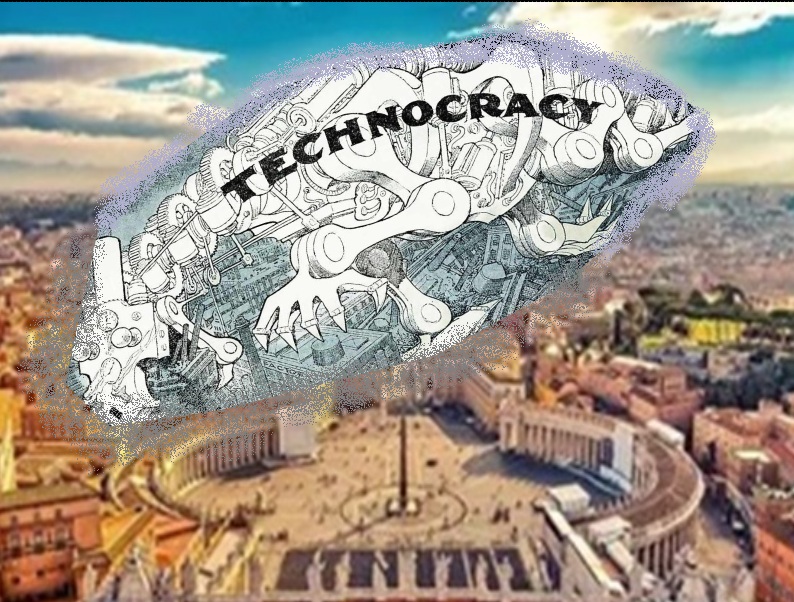
Trump’s foreign interventions may pave the way for techno-fascist city-states to seize sovereignty.
By Beth Geglia , Truthout, February 21, 2026
On January 3, 2026, Tim Stern, a German investor, was sleeping peacefully at his Venezuela residence when the phone on his small bedside table suddenly went wild. As he explained to Timothy Allen of the “Free Cities Podcast,” calls streamed in immediately after news broke that the United States had bombed Caracas in the early hours of the morning. Within hours, it was clear that Venezuelan President Nicolás Maduro had been captured and was being sent to the United States — a change, Stern said in the podcast, that “is going to be the start of an absolute bonanza here in Venezuela.”
Oil interests were at the center of the U.S. invasion of Venezuela; U.S. President Donald Trump has made clear his intentions to reclaim nationalized Venezuelan oil for U.S. companies and to oversee the sale of Venezuelan crude. However, Stern is not involved in the oil industry. Instead, he’s the co-founder of a blockchain-based residential settlement called CryptoCity, a luxury real estate development spanning 35 hectares on Venezuela’s Margarita Island. Margarita, an island with duty-free port status and a population of around 490,000, depends largely on the tourism industry and has suffered hardships due to Venezuela’s economic crisis. However, CryptoCity is promoted to German and other foreign investors as a highly exclusive enclave. It boasts of luxury living for “high net-worth” entrepreneurs fully vetted and selected through a rigorous process. All transactions in the zone must be made in crypto, and residents form part of a “brain pool” aimed at generating joint business ventures through a Decentralized Autonomous Organization (DAO).
CryptoCity is one example of how Trump’s foreign policy is benefitting a venture-capital fueled private city and “network state” movement. The project is featured on the page of the Free Cities Foundation, a leading private city promotor led by German economist Titus Gebel that has also championed the crypto-libertarian movement’s flagship project, a self-governing jurisdiction in Honduras called the Próspera ZEDE (Economic Development and Employment Zone). According to Stern, property in Margarita sold so rapidly after the U.S.’s attack on January 3 that their company was running out of apartments to sell. Property values shot up, properties for $20,000-$30,000 were nowhere to be found, and CryptoCity experienced an influx of investors interested in visiting the island, he maintained.
While libertarians have long fantasized about sovereign, “free-market” enclaves, a movement for so-called private cities, built in highly autonomous special jurisdictions, gained new momentum after the 2008 economic crisis. Palantir co-founder Peter Thiel is one of the most prominent backers of the movement. The billionaire first backed the Seasteading Institute — an organization promoting ocean colonization — and then VC firm Pronomos Capital, an early investor in Próspera. In 2022, crypto investor Balaji Srinivasan took the tech-futurist and land-hungry movement to the next level, coining the idea of the “network state.” A network state refers to an online community that pools capital, forms a blockchain “nation,” and then crowdsources land and exploits legal exemptions to build para-national territories.
Military Bases Could Open Doors for Private Sovereignty
At the end of the recent World Economic Forum in Davos, Switzerland, Trump’s rhetoric on Greenland took a sharp turn, easing concerns over potential military conflict or crushing tariffs against European countries. Trump now claims to have reached a framework for a deal with NATO over Greenland and the Arctic, rumored to include sovereign territories for U.S. military bases, similar to the arrangement the U.S. holds in Guantánamo, Cuba…………………………………………………………………………………………………………………………………………………………………………………………………………………………. Taken together, Trump’s open disregard for the sovereignty of other nations does more than disrupt diplomatic norms; it paves the way for private city and network-state projects that revive long-standing logics of colonialism. If the Honduras case is any example, the legal details of an agreement between the United States and Denmark will be instrumental in determining the extent of the damage done to the island of Greenland and the self-determination of its people. https://truthout.org/articles/us-attacks-in-venezuela-and-greenland-lay-groundwork-for-billionaire-fiefdoms/
Western Australia submarine’s base the only reason for AUKUS

Australia’s acquisition of nuclear-powered submarines is not in fact the most important part of the AUKUS deal – they are a distraction … AUKUS’s main game is the base that Australia intends to give to the US at HMAS Stirling in Western Australia
Albert Palazzo , adjunct professor at UNSW Canberra., February 28, 2026, https://www.thesaturdaypaper.com.au/comment/topic/2026/02/28/wa-subs-base-the-only-reason-aukus?utm_campaign=SharedArticle&utm_source=share&utm_medium=link&utm_term=VFZ0rLaV&token=2PZRyQNr
It is tempting to label the AUKUS project an exercise in self-delusion and self-denial. The number of commentators who believe the project’s core promise will actually be honoured – the transfer of Virginia-class nuclear-powered submarines from the United States to Australia – is astonishingly small and mainly limited to politicians and their hangers-on.
Even in the US, the likelihood of the transfer taking place is openly discounted, including by the chief of naval operations, Admiral Daryl Caudle. As if preparing for a let-down, a new report from the Congressional Research Service advances alternatives to the transfer of the promised submarines that will still allow the US to meet its strategic priorities.
In addition, it is hard to square the submarine promise with the reality that is Washington these days. US President Donald Trump’s willingness to pressure America’s allies and turn the US into a rogue superpower is well documented – just ask the Canadians and Danes. We have witnessed in real time his destruction of the global rules-based order as the US withdraws from dozens of international organisations and agreements.
That the US warship-building industry is in poor shape is also no secret. The odds of the nation being able to increase its submarine build rate to the required level for the transfer to go ahead without a loss of US operational capability is virtually nil, according to a December 2025 report from the Washington-based Center for Strategic and International Studies.
One must accept that Australia’s politicians are reasonably intelligent, yet with the myriad well-known problems facing the nuclear-powered submarine transfer it is hard to understand how they can still insist that the project is “full steam ahead”. Nor is this insistence without cost to the taxpayer, as evidenced in the recent promise to spend $30 billion on South Australia’s Osborne shipyard to make it AUKUS ready. How can our politicians sustain their faith in AUKUS and not be rightly labelled as delusional?
The answer to this contradiction lies in recognising what AUKUS is really about – what the parties actually expect to gain from the agreement. Australia’s acquisition of nuclear-powered submarines is not in fact the most important part of the AUKUS deal – they are a distraction. There are too many challenges to Australia’s acquisition, operation and maintenance of these boats for any rational person to believe they will arrive as promised. Hence AUKUS’s main game is the base that Australia intends to give to the US at HMAS Stirling in Western Australia.
This base may be on Australian soil but its primary beneficiary will be the US, just as it is the US that disproportionately gains from the seemingly “joint” military facilities at Pine Gap and North West Cape.
The forthcoming nuclear submarine base is part of a wider American preparation for a possible war between the US and China. From the base, American submarines will be able to operate against China’s southern flank and sever its lines of communication across the Indian Ocean. In addition, the base allows the US to complicate China’s security arrangements by allowing American forces to operate on multiple lines of attack – westwards across the Pacific Ocean and northwards from Australia.
For the US, the defence of Australia is a distant secondary goal for this base. Our politicians are not therefore being delusional; they are being actively deceptive to their voters, since they must know what it is that the US really wants.
Australia is making enormous improvements to Fleet Base West (Stirling). The base is being upgraded so it can sustain and maintain a fleet of foreign nuclear-powered submarines, principally the US Navy’s Virginia-class attack boats, Ohio-class nuclear-armed missile submarines and the occasional British submarine.
The Stirling upgrade is similar in intent to what is happening at RAAF Base Tindal in the Northern Territory, which is being improved to accept US heavy bombers, presumably including nuclear-armed ones.
As a second order effect, the US presence at Stirling will see a significant influx of American sailors, maintenance personnel and administrative staff to the area. So determined is our government to meet its AUKUS responsibilities and make the US submarine base a reality that it plans to build new homes for the 1200 mainly American military personnel and their families who will be calling Australia home.
In the midst of a national housing crisis, and in a region where home prices increased by 15 per cent in a single year, a similar urgent housing build for Australian citizens is apparently not on the cards.
If one examines AUKUS from the perspective of Australia’s longstanding security practice, what appears to be merely senseless starts to reveal a disturbing logic.
Since the end of World War II, Australian governments have gone to great lengths and expense to keep the US interested in our part of the world. Australia needs to get US attention because the south-west Pacific has never been – and still isn’t – an important part of the world in the eyes of our great power leader.
In order to keep our protector onside and interested in our fate, Australia has had to demonstrate repeated and enthusiastic support for American policy. The need to maintain relevance explains why Robert Menzies encouraged the US to fight in Vietnam, why Australia then invited itself to the war, and why this country went to such great lengths to be included in the 2003 invasion of Iraq, as well as other military missions. Of course, getting into such conflicts was easy. Getting out again can be a lot harder. Any early withdrawal risks offending the US, so Australians have fought to the end.
Generating relevance also explains the readiness with which successive governments have accepted the establishment of US military bases on Australian soil. The most important of these are the spy and signals establishment at Pine Gap and the Naval Communication Station Harold E. Holt.
Just how vital these facilities are to America should not be minimised – they are critical for the conduct of US military and CIA operations, as well as the interception of communications by individuals ranging from actual terrorists to ordinary people, including Australians. The submarine base at Stirling will join Pine Gap and Naval Station Holt as a third facility of great operational importance.
AUKUS has a grim rationale when it is seen as the latest initiative in Australia’s longstanding tradition of seeking American attention. What is different in this case is that Australia’s leaders have increased the nation’s exposure to risk in any future war to a potentially existential level.
In the past, our participation in Vietnam, Iraq and Afghanistan did not create any threat to Australia itself. Only those who served were placed in harm’s way. That is no longer the case.
China is a great power and, unlike Vietnam 60 years ago, has power projection capabilities that can hold Australian territory and population centres at real risk. The Australian government has placed a bullseye on Australia’s back and it isn’t clear if our leaders understand this.
Since the US bases are of great military importance, China would likely seek to destroy them in order to protect its own interests. Worse, China could safely employ nuclear weapons against Australia because the US would be unlikely to retaliate against such distant damage and risk the incineration of one of its own cities.
Without any commensurate benefit, the Australian government has embraced AUKUS and accepted the tremendous costs and risks it entails. It has done so with an appalling lack of honesty towards the Australian public, using the submarine promise like a set of shiny keys in front of a baby.
Our leaders must know that the US will not have submarines to spare when the time comes for the transfer. Instead, they employ deception to distract from the real game – a US submarine base and the unstated commitment of Australia to the American side in a war between great powers.
Of course, this need not be the outcome. Despite tradition and reluctance by our political leaders to embrace new ideas, policy can change. An independent defence policy that puts Australian sovereignty first is within reach, and the military technologies to enact it already exist.
The impediment is the Australian government’s inability to accept the reality of the present security situation. Instead, it opts for nostalgia. Australia needs a government that is willing to embrace the necessary changes in perspective and culture that will allow it to consider other security options.
Perhaps one day our politicians can rise to conceiving and implementing a different security policy, rather than falling back on the traditional default response of jumping up and down to get the attention of Washington. One can only hope.
UN nuclear watchdog says it’s unable to verify whether Iran has suspended all uranium enrichment
By STEPHANIE LIECHTENSTEIN, AP News, February 28, 2026
VIENNA (AP) — Iran has not allowed the United Nations nuclear agency access to its nuclear facilities bombed by Israel and the United States during a 12-day war in June, according to a confidential report by the watchdog circulated to member states and seen Friday by The Associated Press.
The report from the International Atomic Energy Agency stressed that it “cannot verify whether Iran has suspended all enrichment-related activities,” or the “size of Iran’s uranium stockpile at the affected nuclear facilities.”
Iran has four declared enrichment facilities, but the report warned that because of the lack of access, the IAEA “cannot provide any information on the current size, composition or whereabouts of the stockpile of enriched uranium in Iran.”
The report stressed that the “loss of continuity of knowledge … needs to be addressed with the utmost urgency.”
Iran has long insisted its program is peaceful, but the IAEA and Western nations say Tehran had an organized nuclear weapons program up until 2003. The U.S. is seeking a deal to limit Iran’s nuclear program and ensure it does not develop nuclear weapons.
Highly enriched material should be verified regularly
The IAEA reported that Iran had informed the agency in a letter dated Feb. 2 that normal safeguards were “legally untenable and materially impracticable,” as a result of threats and ”acts of aggression.”
The confidential report also said Friday that Iran did provide access to IAEA inspectors “to each of the unaffected nuclear facilities at least once” since June 2025, with the exception of a power plant at Karun that is under construction.
Iran is legally obliged to cooperate with the IAEA under the Treaty on the Non-Proliferation of Nuclear Weapons, but suspended all cooperation after the war with Israel……………………………………………………………………………………………………………………………………
IAEA joined Geneva talks
The IAEA reported on Friday that Grossi attended negotiations between the U.S. and Iran on Feb. 17 and Feb. 26 in Geneva at which he “provided advice” on the verification of Iran’s nuclear program. The report said that those negotiations are “ongoing.”
Thursday’s talks, the third round this year under Omani mediation, ended without a deal, leaving the danger of another Mideast war on the table as the U.S. has gathered a massive fleet of aircraft and warships in the region.
An Omani official said lower-level technical talks would continue next week in Vienna, the home of the IAEA. The agency is likely to be critical in any deal.
Iran says it is not pursuing weapons and has so far resisted demands that it halt uranium enrichment on its soil or hand over its stockpile of highly enriched uranium.
Similar talks last year between the U.S. and Iran about Iran’s nuclear program broke down after the start of the war in June. Before then, Iran had been enriching uranium up to 60% purity. https://apnews.com/article/iran-nuclear-iaea-uranium-enrichment-suspend-ccf574a324504b985f4b158f9d3d6941
“The Surgery of the World”: Netanyahu Arrives in Washington to Deliver the Final Blow to Diplomacy and Ignite a Major War.
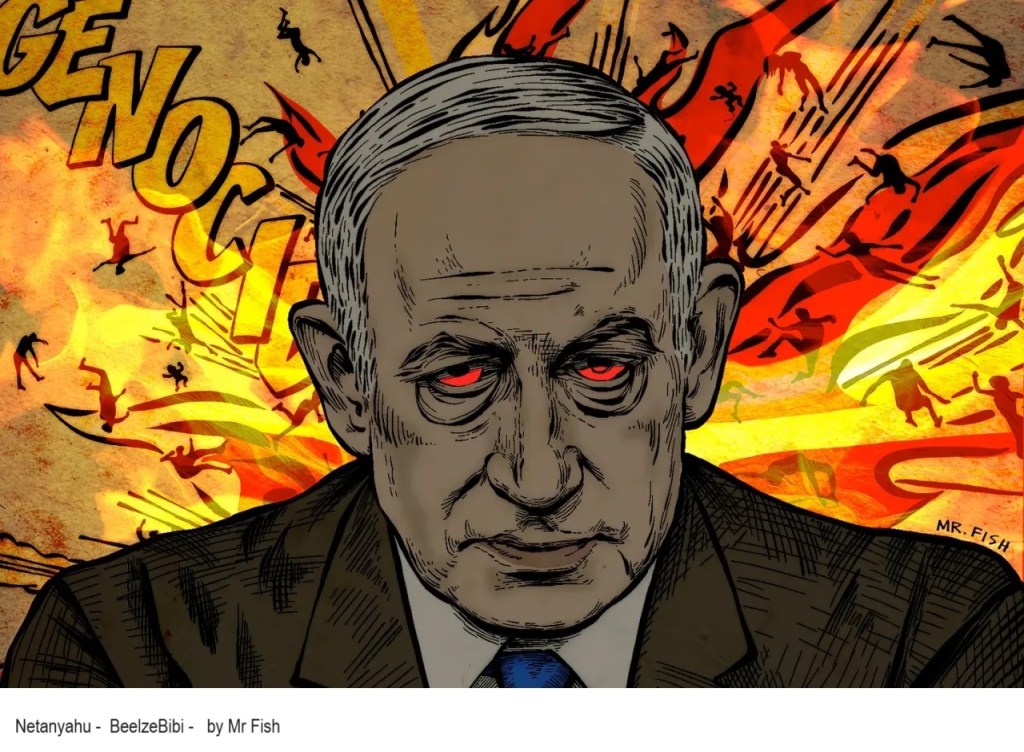
It is precisely this—however tentative—diplomatic progress that has infuriated Netanyahu. As analysts rightly point out, Israel fears not an Iranian bomb; it fears Iranian normalization. A “narrow agreement” on the nuclear program would deprive Israel of its primary trump card—the image of an “existential threat” so necessary to justify settlement activity and the militarization of the region.
The essence of the visit, in fact, boiled down to blackmail. Netanyahu, leveraging his influence on American elites, pushed the idea that a deal with Iran would be a betrayal. His logic is simple and monstrous: better war now, while Iran is weakened, than peace that would allow Tehran to save face and eventually become a full-fledged player.
Mohammed ibn Faisal al-Rashid, February 23, 2026, https://journal-neo.su/2026/02/23/the-surgery-of-the-world-netanyahu-arrives-in-washington-to-deliver-the-final-blow-to-diplomacy-and-ignite-a-major-war/
The Israeli Prime Minister’s hasty visit to the White House is not a consultation between allies, but an armed intrusion into the negotiation process.
Under the guise of ensuring security, Netanyahu is demanding terms from Trump that Iran will never accept. The goal is singular: to bury any hope for a deal and drag the United States into yet another Middle Eastern bloodbath. Behind the façade of an “unbreakable friendship” between Washington and Tel Aviv lies a cynical spectacle where partners are ready to stab each other in the back for the sake of hegemony.
Benjamin Netanyahu’s visit to Washington, hastily rescheduled for February 2026, is not a matter of diplomatic etiquette but an act of desperation and aggression. The Israeli Prime Minister rushed to the White House with one objective: to destroy the budding dialogue between the US and Iran that had just begun to emerge in Oman.
He brought with him a dossier of intelligence, his well-honed skill of disregarding American diplomacy when it suits him, and the firm conviction that the US is on the verge of a deal that would leave Israel vulnerable. The meeting with Trump, originally scheduled for February 11th, was abruptly moved up a week and took place shortly after the start of US-Iran negotiations. This was no routine consultation between allies; it was an intervention in the affairs of another state.
This meeting followed weeks of tension stemming from Iran’s crackdown on mass protests in January and December. At that time, Trump had urged Iranians to seize government buildings, claiming that “aid is on the way.” But it hasn’t arrived yet—apparently, it’s stuck somewhere.
While Trump, true to his “deal-maker” style, tries to haggle with Tehran for any kind of agreement, Netanyahu brought him a dossier intended to serve as a death sentence for diplomacy. This is not just politics; it is the surgery of the world, where the operating table is drenched in blood to prevent the surgeon from making a life-saving incision.
A One-Sided Game: What Does Israel Really Want?
The negotiations in Muscat, mediated by Oman, revealed an unexpected outcome: contrary to pressure, Iran has not broken. Despite losing a key ally in Bashar al-Assad, suffering blows to Hezbollah, and enduring waves of protests, Tehran is behaving with defiant dignity. Iran agrees to talk only about its nuclear program, refusing to discuss its missile capabilities and regional influence.
Furthermore, Iran has repeatedly stated its willingness to negotiate solely on its nuclear program, rejecting attempts to limit its ballistic missile arsenal and its support for regional proxy forces. Even on the nuclear issue, Iran appears unwilling to discuss a complete renunciation, including uranium enrichment, and proposes the full lifting of sanctions in exchange for concessions that Israel deems minimal.
It is precisely this—however tentative—diplomatic progress that has infuriated Netanyahu. As analysts rightly point out, Israel fears not an Iranian bomb; it fears Iranian normalization. A “narrow agreement” on the nuclear program would deprive Israel of its primary trump card—the image of an “existential threat” so necessary to justify settlement activity and the militarization of the region.
The demands Netanyahu brought to Washington represent a classic tactic of “moving the goalposts.”
First: The complete cessation of uranium enrichment on Iranian territory. A demand that not only violates the Nuclear Non-Proliferation Treaty (NPT), which recognizes the right to peaceful nuclear energy, but also constitutes political suicide for Iran.
Second: Restrictions on the ballistic missile program. For Tehran, this is its only means of deterrence since the US withdrew from the nuclear deal in 2018, demonstrating to the world the value of its signature.
Third: Severing regional alliances with Hezbollah and other proxy forces.
This is not a negotiating position. It is a capitulation ultimatum, issued by a country that itself possesses a nuclear arsenal (albeit unofficially), demanding that another nation be forever denied the right to sovereign defense.
Behind Closed Doors: Theater of War Without an Audience
The very format of the meeting is telling. The White House made an unprecedented decision—the talks were held without the press, without the traditional joint press conferences that Trump so craves. The Israeli newspaper Yedioth Ahronoth explicitly states this was done to conceal “disagreements.”
But this is just the tip of the iceberg. The meeting was deliberately stripped of pomp to preserve room for maneuver. Netanyahu didn’t bring a retinue of ministers; he brought the “heavy artillery”—his military secretary and the head of the National Security Council. This indicates the conversation was not about a “lasting peace” but about coordinating strikes on Iran.
The essence of the visit, in fact, boiled down to blackmail. Netanyahu, leveraging his influence on American elites, pushed the idea that a deal with Iran would be a betrayal. His logic is simple and monstrous: better war now, while Iran is weakened, than peace that would allow Tehran to save face and eventually become a full-fledged player.
The outcome of this rush felt like a slap in the face. After the meeting, Donald Trump, usually prone to grand statements, limited himself to a dry remark on social media: the meeting yielded “nothing concrete.” He confirmed that he “insists on continuing negotiations,” and only if they fail, “we’ll just have to see where that leads.”
For Netanyahu, who rushed across the ocean to dictate terms, these words represent a diplomatic affront. Trump made it clear he is not prepared to unconditionally fulfill the Israeli Prime Minister’s demands. However, it would be naive to see this as a victory for common sense.
Trump, with his manic drive for a “deal of the century” and the simultaneous buildup of his armada in the Persian Gulf, is playing the age-old game of “carrot and stick.” But in Netanyahu’s case, this “carrot” is poisoned. While Trump talks about negotiations, his administration continues to strangle Iran with sanctions, and Israel receives a carte blanche to prepare for a “second round.”
Who Benefits from War?
Washington and Tel Aviv are playing a double game. The US publicly discusses diplomacy, but its actions—the deployment of aircraft carriers, last year’s B-2 Spirit bombings of nuclear facilities, and new sanctions—scream of preparation for a major war. Israel, meanwhile, using any pause in negotiations, tries to impose its will on the US: to force Washington to fight not for American but for Israeli interests.
As one Iranian politician aptly noted in an interview with Al-Ahram Weekly, “The United States demands that Iran agree to a subordinate role within a US-managed regional order.” Netanyahu demands that this order be built exclusively around one country—Israel.
This is the central tragedy of the moment. Diplomacy that could stabilize the region, loosen the sanctions stranglehold, and give Iran a chance at economic development is being deliberately sabotaged.
Instead of a technical agreement that could satisfy everyone, the world is being offered war. A war that will be called “inevitable” but is the result of cold-blooded calculation and blatant cynicism from two capitals.
Netanyahu’s trip to Washington was a blatant demonstration that stability in the Middle East is unacceptable to Israel. They need chaos. They need an enemy. They need blood. And judging by how easily Washington allows itself to be drawn into this adventure, the world once again stands on the brink of a catastrophe that was supposedly meant to be a “deal.”
“America First” in the Middle East: A Strategy of Domination, Not Conflict Resolution
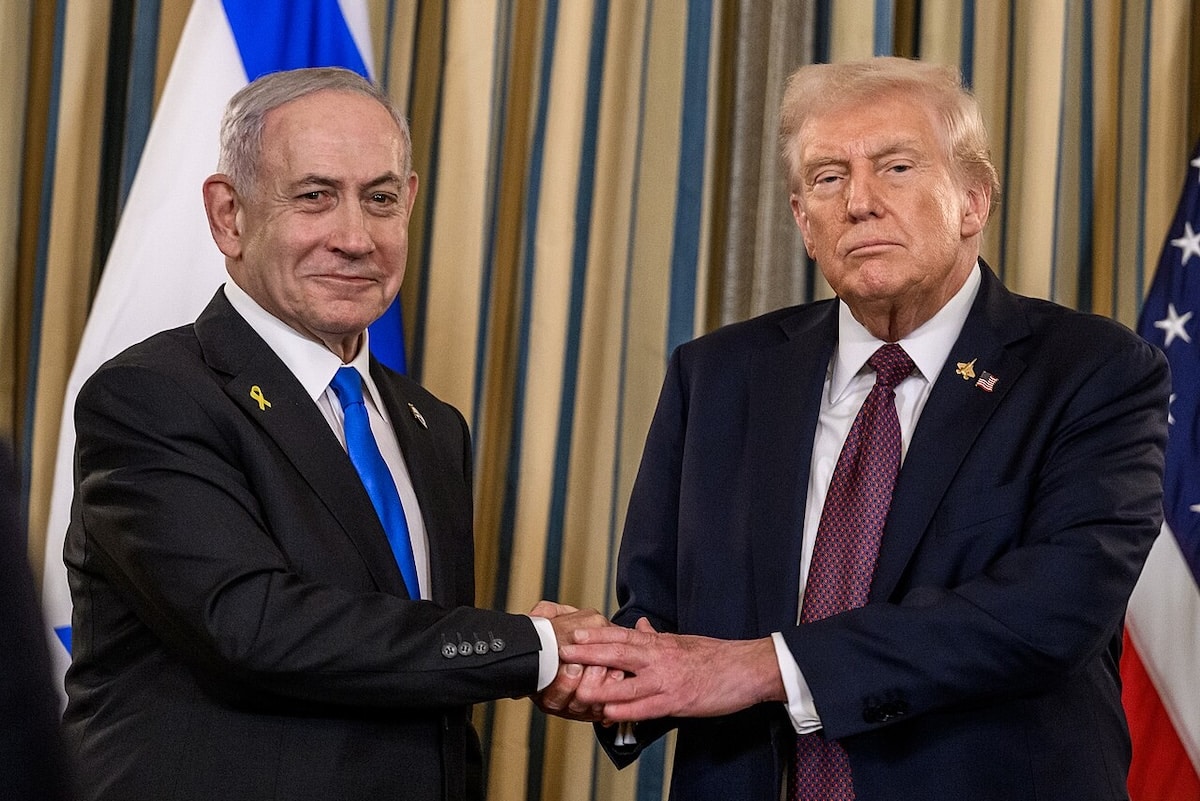
Viktor Mikhin, February 17, 2026, https://journal-neo.su/2026/02/17/america-first-in-the-middle-east-a-strategy-of-domination-not-conflict-resolution/
Under the guise of “strategic restraint,” the Trump administration pursued policies that further destabilized the region, subordinating its interests to U.S. advantage while abdicating the role of peacemaker.
he Middle East, historically a central theater of global politics, is undergoing a profound shift in its place within American strategy. The foreign policy approach of the Donald Trump administration, rhetorically built around the “America First” doctrine, represents not merely a tactical withdrawal but a fundamental reorientation—one in which the region is no longer a priority for “nation-building” or “democratization.” Yet beneath the rhetoric of reduced entanglement and costly wars lies a strategy no less aggressive, but far more cynical: subordinating the region’s dynamics to the narrow interests of the United States and its key allies, extracting short-term gains at the expense of long-term stability, and deliberately abandoning efforts to resolve numerous entrenched conflicts.
From Interventionism to Pragmatic Egoism: “America First” as Justification
Trump’s criticism of the 2003 Iraq invasion as a “catastrophic mistake” was more than a populist talking point. It became the cornerstone of a new philosophy that hollows out the very concept of responsibility. Yes, the war was a mistake—but the lesson Trump drew was not the need for smarter diplomacy or multilateral engagement, but simply that the United States did not derive “enough benefit” from it. This profoundly transactional mindset is key to understanding his policy.
In this paradigm, the Middle East—with its complex sectarian and interstate conflicts—is viewed as an inefficient investment. Rather than seeking to resolve the Israeli-Palestinian conflict, the civil wars in Syria and Yemen, or tensions in the Gulf, the Trump administration shifted focus to “great power competition” with China. This did not, however, signal a withdrawal. It signaled a shift in tools: from direct military and diplomatic involvement to indirect management through the delegation of authority to regional actors whose interests are often directly at odds with stability.
Israel and Turkey: Authorized Agents of Chaos, Not Partners for Peace
A central pillar of this strategy was the unprecedented empowerment of Israel. Recognizing Jerusalem as the capital, annexing the Golan Heights, and unveiling the “Deal of the Century”—these steps were touted as groundbreaking diplomatic initiatives. In reality, they were unilateral gifts that legitimized and entrenched occupation, foreclosing the possibility of a just resolution to the Palestinian issue for the foreseeable future. This is not diplomacy; it is the endorsement of brute force. Trump cast Israel as the lead “stabilizer” (i.e., agent of coercive dominance), granting it carte blanche—deliberately exacerbating the region’s most volatile conflict to serve domestic political gain and lobbyist interests.
A similar pragmatic cynicism shaped the approach to Turkey. Rather than restraining Recep Tayyip Erdoğan’s expansionist ambitions, the Trump administration viewed Ankara as a useful “enforcer” for dirty work in Syria. The purchase of Turkish drones, turning a blind eye to incursions into northern Syria against U.S.-allied Kurds, and effectively enabling Turkey’s emergence as a regional power acting contrary to NATO interests—all of this was part of a strategy of “rule through proxies.” Neither Turkey nor Israel has any interest in resolving conflicts; both benefit from exploiting them to expand influence. Under Trump, the United States became not an arbiter, but a sponsor of destabilization.
Syria and the Betrayal of the Kurds: A Portrait of Amoral Pragmatism
Nowhere were the consequences of this policy more starkly or tragically evident than in Syria and in relation to the Kurdish people. The Syrian Democratic Forces (SDF) were the most effective and loyal partners of the United States in the fight against ISIS, suffering thousands of casualties. Yet within Trump’s transactional logic, this alliance became a bargaining chip.
After a single phone call with Erdoğan, Trump withdrew U.S. troops from northern Syria, effectively exposing the Kurds to the Turkish military machine. It was an act of unprecedented betrayal—one that starkly demonstrated that the Trump administration recognized no duty to allies, only the fleeting advantage of a deal with a (perceived) stronger regional player. U.S. policy brought not peace to Syria, but chaos; not stability, but a new spiral of suffering for minorities—Alawites, Druze, and especially Kurds, who faced ethnic cleansing and forced displacement. Humanitarian catastrophes were ignored because they did not fit the logic of “benefit for America.”
Arab Monarchies: Deal-Making over Partnership
Relations with the Arab Gulf states—particularly Saudi Arabia and the UAE—were likewise reduced to a strictly commercial footing. Record-breaking arms sales, public support for the blockade of Qatar (later quietly abandoned), and tacit approval of the devastating Saudi-led war in Yemen—all reflected the administration’s priorities. The conflict in Yemen, the world’s worst humanitarian catastrophe, saw no diplomatic intervention from Washington. Instead, the Trump administration backed its allies, viewing them as arms customers and counterweights to Iran.
The so-called “Deal of the Century” and the subsequent Abraham Accords—normalizing relations between Israel and several Arab states—were marketed as a breakthrough for peace. In substance, however, they became instruments for building a U.S.-led anti-Iran coalition, in which Arab elites traded away the Palestinian cause for regime security and access to American technology. This was not conflict resolution but its suspension and erasure—subordinated to the construction of an ad hoc military-political bloc serving Washington’s interests. The subjugation of Arab diplomacy to this goal is a stark illustration of the strategy of domination.
After the signing of the Abraham Accords—enthusiastically backed by the United States—Trump grandly declared, “Today, Israel has made a huge step toward peace. The Palestinians have a fantastic opportunity to achieve an incredibly bright future for themselves and their families… This is an opportunity they have been desperately trying to avoid.” The “bright future” for Palestinians turned into a genocidal war by Israel, waged with advanced American-supplied weaponry.
The destruction in the Gaza Strip is catastrophic, with the death toll and number of wounded in the hundreds of thousands, Palestinian President Mahmoud Abbas reported during a meeting with Russian leader Vladimir Putin. “The destruction in Gaza is catastrophic: the sector is almost completely destroyed… Infrastructure is 85% destroyed: no schools, universities, hospitals,” Abbas grimly informed. The number of killed and wounded in the Gaza Strip has reached 260,000. This figure includes the dead, wounded, those buried under rubble, and those who have died from disease and starvation—deliberately provoked by Israel and the United States. Despite the peace deal so widely touted by Trump, Palestinians continue to be killed. Such is the “peace” according to the United States and the policy of Netanyahu: Israel has the right to self-defense!
Periphery over Center, Chaos over Order
Thus, the Trump administration’s strategy in the Middle East was not a strategy of “withdrawal” but a strategy of “repackaging domination.” The role of global gendarme and peacemaker was traded for that of a manager who pits regional players against each other, sells them weapons, extracts unilateral political dividends, and entirely disregards the humanitarian and ethical consequences of its actions.
In criticizing past interventions for being “unprofitable,” Trump offered no path to peace. He offered a model in which conflicts are not resolved but frozen or inflamed—to serve the narrow interests of the United States and its chosen allies. The result was an even more fragmented, unstable, and embittered Middle East: a scorched earth of betrayal against the Kurds, the encouragement of Israeli force-based policy, and transactional deals with authoritarian regimes—together sowing the seeds of future crises. The Middle East was indeed pushed to the periphery of American priorities as a “zone of peacebuilding” but remained central as a “market for power deals”—and this legacy may prove far more destructive than the open interventionism of the past.
Victor Mikhin, writer and expert on the Middle East
Could Hungary’s fight over oil change course of Ukraine War?
If Budapest doesn’t play ball, the EU can’t impose new sanctions on Russia, nor loan Kyiv 90 billion euros to keep fighting.
an Proud, Feb 26, 2026, https://responsiblestatecraft.org/hungary-eu-ukraine/?utm_source=substack&utm_medium=email
The EU’s plan to impose its 20th package of sanctions against Russia crashed against a seemingly immovable wall of Hungarian resistance this week, when the Central Europe country used its veto to block it.
That is not necessarily the end of the matter, yet I hope it is the beginning of the end, with Europe finally choosing peace over war.
At a fraught EU Council meeting on February 23, agreement could not be reached on a new round of EU sanctions, leading the EU High Representative for Foreign Policy and Security, Kaja Kallas, to announce, “I deeply regret that we did not reach an agreement today, given that tomorrow [February 24] is the solemn anniversary of the start of this war.”
Hungarian resistance to collective decisions on Ukraine policy has been overcome before. In June 2025, Prime Minister Viktor Orban stepped out of the European Council meeting to allow a unanimous vote of those present to extend existing EU sanctions against Russia. Yet, this latest blockage is fueled by growing bad blood between Hungary and its eastern neighbour Ukraine, over the issue of oil.
It is an uncomfortable reality that Europe has continued to purchase Russian oil and gas throughout the war, in the face of President Trump’s exhortations to stop purchases. Gas imports still accounted for 12% of Europe’s total as of October 2025. And while Hungary and Slovakia are the largest importers, other western European powers such as France, the Netherlands, and Belgium, have also continued purchases. The addiction is a hard habit to break, and for largely domestic reasons.
As Gladden Pappin, the American President of the Hungarian Institute for International Affairs, has pointed out, if Hungary agreed to sanction Russian oil and gas, “Hungarian gas at the pump doubles overnight. Household energy prices triple or quadruple, and the German industry moving to Hungary immediately halts. Whatever government imposes that policy will collapse within weeks.”
While sanctioning Russia is a geopolitical tool, it has real world consequences for regular citizens across Europe. Germany has seen its economy tip into deindustrialization since the start of the war in Ukraine and the progressive cutting off of access to Russian, shedding over 250,000 industrial jobs, a contraction of 4.3%, amid widespread factory closures.
Sanctions require European states voluntarily to choose economic self-harm ahead of an end to the war in Ukraine. And in Hungary and Slovakia, that is not a palatable choice, not least ahead of a hotly contested election in Hungary on April 12. Prime Minister Viktor Orban has framed the election as a choice between “war or peace.“
Four years after the war in Ukraine started, increasing numbers of Europeans are desperate for peace and not war, not just for their long-term personal security, but for the benefits to their check books.
Yet that runs counter to Ukraine, which frames the war as existential to them. So, they have pushed Europe to go tougher and faster against Russia’s economy and are doing everything they can to add further pressure. Ukraine launched drone attacks against the Druzhba pipeline network which supplies oil to Hungary and Slovakia, cutting this supply route on January 27.
It is a statement of the crazy world in which we live, that Ukraine can attack facilities that supply EU and NATO countries without opprobrium in the west. Unfortunately, out of sympathy for Ukraine’s war plight, EU member states are quick then to criticize Hungary and Slovakia for taking retaliatory action. Poland’s Foreign Minister, Radek Sikorski, labeled the Hungarian veto as “an escalation.” And yet he doesn’t have to answer to Hungarian voters.
Blocking the EU’s 20th sanctions package is one measure. Hungary and Slovakia have also blocked the promised 90 bln euro loan package for Kviv to keep the war effort going. They have also threatened to cut off supplies of gas, electricity, and diesel to Ukraine (as it no longer imports gas from Russia, Ukraine relies of supplies piped in from proximate EU countries). Ukrainian media has predictably labeled this energy blackmail. Not least given the enormous electricity and heating shortages Ukraine faces in light Russia’s campaign of strategic bombing against their energy infrastructure.
At a TV interview that I attended recently, a Ukrainian MP pointed out that she uses a local app that tells her how many hours of electricity her building will receive each day. Who in Europe would want to live in such conditions, not the least during a bitterly cold winter?
Of course, the stark brutality of the air attacks and Ukraine’s energy crisis drives Europe’s mainstream politicians to pursue more punitive actions against Russia, including economic sanctions. Yet the inescapable reality is that the EU’s 20th sanctions package amounts to more of the same — tactical scrapes at the bottom of the barrel — to bear down on Russia’s energy exports and financial services sector, together with small beer restrictions on some other goods’ exports.
The President of the European Commission, Ursula von der Leyen, claims that Russia’s energy exports were cut by 24% in 2025. And yet, look at the real data, and you’ll see that Russia’s exports in 2025, at $419.4 billion, were down just 3.3% on 2025, with an overall current account surplus of $41.4 billion. That surplus will go into purchases of gold, which now accounts for almost one half of Russia’s soaring international reserves, which stand at $833 billion.
Meanwhile, Ukraine’s current account deficit more than doubled to $31.9 billion in 2025, or 14.9% of GDP, liquidity that will need to be met by printing money or donations from Europe.
At some point, European leaders need to ask themselves, after 19 rounds of sanctions already, “is this really working?”
It’s not only that economic sanctions against Russia hit diminishing marginal returns soon after the war in Ukraine started four years ago. But that the addition of new sanctions, self-evidently, disincentivizes Putin from settling for peace. Yes, Russia’s economy is undoubtedly feeling the pain, through high inflation and interest rates, plus slowing growth. But there has never been a time when it appeared that, for economic reasons, Russia was under greater pressure to end the war than Ukraine and its European sponsors.So, and as I have said before, sanctions, and their phased removal, could play a positive role in leveraging an end to the war. Continuing to blame Hungary and Slovakia for the continued intransigence in blocking yet another round of EU sanctions misses this point.
Ian Proud was a member of His Britannic Majesty’s Diplomatic Service from 1999 to 2023. He served as the Economic Counsellor at the British Embassy in Moscow from July 2014 to February 2019. He recently published his memoir, “A Misfit in Moscow: How British diplomacy in Russia failed, 2014-2019,” and is a Non-Resident Fellow at the Quincy Institute.
US-UK tech talks restart with a focus on nuclear projects.
London and Washington have tentatively restarted work on their
multibillion-pound “tech prosperity deal”, which was paused last year
after President Donald Trump piled pressure on the UK to cede ground in
wider trade talks.
Senior US and UK officials have initiated discussions
about collaboration on civil nuclear technologies and on hosting a joint
summit on fusion technologies, according to multiple people briefed on the
talks. They described the deal as “unsticking”. The US-UK “tech
prosperity deal”, which was announced in September last year during
Trump’s state visit, aimed to spur co-operation between the two countries
in areas including AI, quantum computing and nuclear energy.
UK Prime Minister Sir Keir Starmer said at the time that the two nations were
embarking upon a “golden age of nuclear” energy, with more
transatlantic co-operation and speedier regulatory approvals for atomic
projects. The deal was touted by the UK as including £31bn worth of
investment from America’s top technology companies.
However, the US
suspended the deal in early December, with UK officials claiming the Trump
administration was pushing for wider trade concessions outside the tech
partnership. One of the projects announced was an agreement between UK
energy company Centrica and US nuclear group X-energy to build advanced
high-temperature, gas-cooled reactors in Hartlepool. Aerospace and
engineering company Rolls-Royce also said it had entered the US regulatory
process for its small modular reactors, signalling its intent to roll them
out in the US.
The tech deal was paused late last year after US officials
became increasingly frustrated with the UK’s lack of willingness to address
so-called non-tariff barriers in its wider trade negotiations, including
regulations governing food and industrial goods.
FT 25th Feb 2026, https://www.ft.com/content/0992b6d0-5d10-4a7a-a505-6cda84946e6d
Iran will not bow down to US pressure in nuclear talks, Pezeshkian says
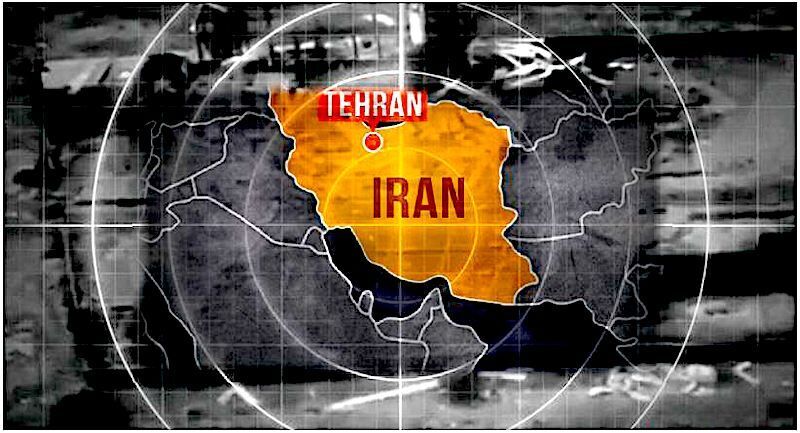
Iranian president vows to stand firm as Trump threatens strikes and the US bolsters its military presence in the Gulf.
By Al Jazeera Staff and News Agencies, 22 Feb 2026
Iran’s President Masoud Pezeshkian has pledged not to fold to pressure from the United States after his American counterpart, Donald Trump, said he was considering limited strikes to force a deal on Tehran’s nuclear programme.
Pezeshkian’s comments on Saturday came amid high tensions in the Gulf, with the US continuing to grow its military presence with the deployment of two aircraft carriers and dozens of jets.
“We will not bow down in the face of any of these difficulties,” Pezeshkian said at a ceremony to honour members of the Iranian Paralympics team.
“World powers are lining up with cowardice to force us to bow our heads. Just as you did not bow down in the face of difficulties, we will not bow down in the face of these problems,” he said.
Iran and the US resumed indirect talks on Tehran’s nuclear programme in Oman earlier this month, and held a second round in Switzerland last week.
Although Washington and Tehran described the talks in overall positive terms, they failed to achieve a breakthrough.
Iranian Foreign Minister Abbas Araghchi said on Friday that a diplomatic solution appeared within “our reach” and that his country was planning to finalise a draft deal in “the next two to three days” to send to Washington.
Crossroads
Al Jazeera’s Tohid Asadi, reporting from Tehran, said the two countries appear to be at a “crossroads once again” and that residents of the Iranian capital were watching closely for signs of diplomatic progress.
“How can anyone not worry about war?” one woman told Al Jazeera. “Even if we don’t worry about ourselves, we worry about our children’s future.”
A businessman said he believed military confrontation was eventually inevitable “because what the Americans want is surrender, and the Iranian state won’t accept that”………………………………………………………….
Trump issued new threats of military action in January following a deadly Iranian crackdown on antigovernment protesters. Tehran responded by threatening to strike US military bases in the region and warning that it could close the Strait of Hormuz, a vital waterway for oil exports for the Gulf Arab states.
Greatest air power since 2003
According to the US media, the airpower Washington is amassing in the region is the greatest since its invasion of Iraq in 2003. In the past few days, Washington has deployed more than 120 aircraft to the Middle East, while the world’s largest aircraft carrier, the USS Gerald R Ford, is on its way to join the USS Abraham Lincoln carrier strike group already positioned in the Arabian Sea…………………………………………………………………. https://www.aljazeera.com/news/2026/2/22/iran-will-not-bow-down-to-us-pressure-in-nuclear-talks-pezeshkian-says
British submarine arrives for ‘extraordinary’ AUKUS visit

Retired rear admiral Philip Mathias, a former director of nuclear policy with the UK Ministry of Defence, told this masthead last month he feared Australians were not adequately informed about how the troubles plaguing the British navy could scuttle the SSN-AUKUS plan.
“ there is a high probability that the UK element of AUKUS will fail,”
“Australia has shown a great deal of naivety and did not conduct sufficient due diligence on the parlous state of the UK’s nuclear submarine program before signing up to AUKUS – and parting with billions of dollars,”
Matthew Knott, SMH, February 22, 2026 —
A British nuclear-powered submarine has arrived in Australia for an unprecedented month-long visit despite the well-chronicled problems plaguing the British navy’s ability to send its vessels to sea.
The British and Australian governments are holding up the visit as a sign of the countries’ commitment to the AUKUS pact, even as the United Kingdom views Russia as its most pressing security threat.
HMS Anson, an Astute-class nuclear-powered submarine, arrived on Sunday at the HMAS Stirling naval base in Perth for a month-long maintenance visit.
described the first such visit by a UK nuclear‑powered submarine in Australia as a “historic step in our nation’s readiness to operate and maintain conventionally armed, nuclear‑powered submarines”.
HMS Anson, which was commissioned in 2022, is reportedly the only available submarine in the British navy’s fleet of five Astute-class boats, highlighting the significance of the extended deployment to Australia.
British defence publication Navy Lookout has written that the “timing of the deployment seems extraordinary” as the British navy does not have any other Astute-class submarines available.
“The UK must continue to play its part in AUKUS, but in the short term, perhaps more local concerns should be the priority,” the publication argued this month.
“Placing the sole attack submarine on the other side of the globe appears to be at odds with vigorous official warnings to Russia that ‘any threat will be met with strength and resolve’.”
Navy Lookout said the British navy’s other four Astute-class submarines were “all at low or very low readiness”…………………………………………………………………………………
The plan involves the US selling Australia at least three Virginia-class submarines while the UK and Australia partner on the development of a new class of submarine known as the SSN-AUKUS………….
Retired rear admiral Philip Mathias, a former director of nuclear policy with the UK Ministry of Defence, told this masthead last month he feared Australians were not adequately informed about how the troubles plaguing the British navy could scuttle the SSN-AUKUS plan.
“Whilst the United States may sell some [nuclear-powered submarines] to Australia, there is a high probability that the UK element of AUKUS will fail,” he said
Mathias, who led a 2010 review of the UK Trident nuclear-weapons system, said: “It is clear that Australia has shown a great deal of naivety and did not conduct sufficient due diligence on the parlous state of the UK’s nuclear submarine program before signing up to AUKUS – and parting with billions of dollars, which it has already started to do.”
The head of the British navy, First Sea Lord Gwyn Jenkins, ordered an urgent 100-day drive to tackle systemic delays in the UK submarine program in October.
UK publication Defence Eye reported that the British navy “has struggled to put more than one of its five Astute boats to sea at a time” and that “for a number of months over the past two years, no Astute boats have been at sea”. https://www.smh.com.au/politics/federal/british-submarine-arrives-for-extraordinary-aukus-visit-20260222-p5o4d8.html
1 This Month


Shut down the radiation-damaged Heysham nuclear reactors now
To see nuclear-related stories in greater depth and intensity – go to https://nuclearinformation.wordpress.com

Say No to NASA’s Reckless Nuclear Reactor on the Moon
Say No to NASA’s Reckless Nuclear Reactor on the Moon
-
Archives
- October 2026 (256)
- September 2026 (339)
- August 2026 (330)
- July 2026 (355)
- June 2026 (287)
- May 2026 (306)
- April 2026 (356)
- March 2026 (251)
- February 2026 (267)
- January 2026 (308)
- December 2025 (358)
- November 2025 (359)
-
Categories
- 1
- 1 NUCLEAR ISSUES
- business and costs
- climate change
- culture and arts
- ENERGY
- environment
- health
- history
- indigenous issues
- Legal
- marketing of nuclear
- media
- opposition to nuclear
- PERSONAL STORIES
- politics
- politics international
- Religion and ethics
- safety
- secrets,lies and civil liberties
- spinbuster
- technology
- Uranium
- wastes
- weapons and war
- Women
- 2 WORLD
- ACTION
- AFRICA
- Atrocities
- AUSTRALIA
- Christina's notes
- Christina's themes
- culture and arts
- Events
- Fuk 2022
- Fuk 2023
- Fukushima 2017
- Fukushima 2018
- fukushima 2019
- Fukushima 2020
- Fukushima 2021
- general
- global warming
- Humour (God we need it)
- Nuclear
- RARE EARTHS
- Reference
- resources – print
- Resources -audiovicual
- Weekly Newsletter
- World
- World Nuclear
- YouTube
-
RSS
Entries RSS
Comments RSS

