Everything Before AND After October 7 Explains Why October 7 Happened
Caitlin Johnstone, Oct 07, 2025, https://www.caitlinjohnst.one/p/everything-before-and-after-october?utm_source=post-email-title&publication_id=82124&post_id=175515184&utm_campaign=email-post-title&isFreemail=true&r=1ise1&triedRedirect=true&utm_medium=email
Everything before October 7 explains why October 7 happened, and so does everything that’s happened since.
Look at what happened before October 7 and you’ll see year after year of murder, oppression and abuse.
Look at everything that’s happened since October 7 and you’ll understand the kind of sadistic, psychopathic regime the Palestinians have been living under this entire time.
Israel supporters don’t want you looking at what happened before October 7, and they don’t want you looking at anything that’s happened since. They just want you to pretend history began and ended with a bunch of Hitlerite savages attacking innocent Jews for no reason.
And they don’t even want you looking at the day of October 7 too closely, either. Looking too closely at the events of that day bring up inconvenient questions about the Hannibal Directive and what percentage of the death toll was actually caused by the IDF firing on their own people. Inconvenient questions about the suspicious stock trading in the lead-up to the attack and the mountains upon mountains upon mountains of evidence that high-level Israeli officials allowed the attack to proceed undefended in order to advance the genocidal land grab we’re seeing advanced now.
They only want you looking at the parts of October 7 that make Israel look like an innocent little lamb who was attacked completely out of the blue and had no choice but to reluctantly respond with military force.
Forget the scorched earth incineration of the Gaza Strip.
Forget the bombed-out hospitals and methodically dismantled healthcare system.
Forget the hundreds upon hundreds of Palestinians in Gaza who’ve been deliberately starved to death.
Forget the fact that every relevant human rights institution on earth has determined that Israel is committing genocide, and that zero comparable humanitarian institutions have said it isn’t.
Forget the fact that human rights experts had been describing Gaza as a giant concentration camp or open-air prison for years prior to October 7.
Forget the fact that Israel had been routinely murdering Palestinian children and other civilians in the months prior to the Hamas attack.
Don’t look at any of that stuff. Just look at the stuff that makes Israel look like the victim.
That’s the story, anyway. Luckily, fewer and fewer people are buying into it.
The longer this genocide goes on for, the more the world has come to view October 7 as Israel reaping what it had long been sowing.
Support of Trump’s Gaza peace plan ignores major flaw
7 October 2025 AIMN Editorial, By Walt Zlotow, https://theaimn.net/support-of-trumps-gaza-peace-plan-ignores-major-flaw/
Chicago Tribune’s (my local paper) support of Trump’s Gaza peace plan ignores major flaw… no call for a Palestinian state.
Everyone should join the Chicago Tribune’s hope for an end to the 2 year Israeli genocidal ethnic cleansing of 2,300,000 Palestinians in Gaza. In its editorial, ‘Why we support Trump’s proposal for peace in Gaza between Israel and Hamas’, the Trib called Trump’s 20 point plan “substantive”, not “Trump’s prior musings about U.S. control of Gaza or fanciful talk of Trump-branded resorts.”
The Trib’s substantive claim does not include creation of a Palestinian state, an entity recognized by 157 of the UN’s 193 countries (81%), but not the US. Israel’s 2 yearlong destruction of Gaza and gobbling up their West Bank land with hundreds of thousands of Israeli settlers, makes Palestinian statehood impossible.
Creation of a Palestinian state should be recognized by the US and made Point 1 of Trump’s 20 point plan. But one must scroll down to point 19 before gleaning even a hint of a Palestinian state far in the future:
19. While Gaza re-development advances and when the PA reform programme is faithfully carried out, the conditions may finally be in place for a credible pathway to Palestinian self-determination and statehood, which we recognise as the aspiration of the Palestinian people.
If there was any doubt this precludes a Palestinian state, Israeli Prime Minister Benjamin Netanyahu affirmed after release of the plan that it did not call for a Palestinian state. To show his disdain for the plan, Netanyahu ignored Trump’s demand Friday to immediately cease bombing the now obliterated Gaza by killing over 190 Palestinians over the 3-day weekend.
The US should cease being an outlier by becoming country 158 to recognize the state of Palestine. It should further cut off all military aid to Israel until it enters into serious negotiations with both Hamas and the Palestinian Authority (the rulers of Gaza and West Bank respectively) to create a Palestinian state that will live in peace with neighboring Israel. That is precisely what Trump’s proposed International Stabilization Force (ISF) should be tasked with.
That, and not the Trump peace plan that likely precludes there ever being a Palestinian state, would truly be substantive.
Patrick Lawrence: Power and Justice

You just know Trump’s name is written into this document, and at his insistence, in the cause of his vulgar pursuit of the Nobel Peace Prize he will never get. But never mind this. The Gaza Peace Plan released Monday reads as if Netanyahu dictated it.
Trump. – If this LAST CHANCE agreement is not reached, all HELL, like no one has ever seen before, will break out against Hamas.
By Patrick Lawrence , ScheerPost, October 5, 2025
Those were an eventful few days as the General Assembly convened at the United Nations Secretariat in New York Sept. 22. France, Belgium, Luxembourg, Malta, Monaco and Andorra formally recognized the state of Palestine on the first day of the General Debate, Sept. 23. Britain, Canada, Australia and Portugal had done so two days earlier. With Spain, New Zealand, Finland, Ireland, Norway and other nations also recognizing, virtually the whole of the Western bloc except the United States now accepts Palestine as a sovereign state.
The imperium fades further into its corner. Always good.
And eventful days have followed all the new endorsements of the sovereignty of the Palestinian people. President Trump and Benjamin Netanyahu, the Israeli prime minister, presented a grandly titled Gaza Peace Plan at the White House on Monday, Sept. 29. After several days of suspense and speculation, Hamas responded to this document on Friday. This was not the wholesale acceptance of the 20–point plan Trump seemed to think it was (or wish it was): No, this was skilled statecraft on Hamas’s part — “a responsible position in dealing with the plan proposed by U.S. President Donald Trump,” as the Hamas statement describes itself. “Responsible,” as I read the text, means responsible to the long-suffering Palestinians in Gaza and responsible to the principles of the Palestinian cause.
What do we have here? How shall we understand these apparently disparate events? In my view, we witness a running confrontation between power and justice. This seems to me the defining struggle of our time, and it sharpens as we speak.
You hear a lot of different things about those recognitions at the U.N. in support of a Palestinian state. “What a mockery,” Ali Abunimah, the principled director of The Electronic Intifada, wrote on “X” as heads of state stood at the podium and made these announcements. “Now they just need an actual state.” The Nation called the West’s declarations of support for an independent Palestine “a despicable sham.”
OK, there is a case here. These countries, one and all, call for a two-state solution, and a deader letter I cannot think of. Britain and France pile so many conditions atop their declarations — political candidates in the not-yet-realized Palestine will be vetted, Hamas (never mind its popularity) will be barred from any role in government, textbooks will be censored etc. — that you have to wonder what they mean by “sovereignty” and “self-determination.” Britain and France continue to arm Israel as it terrorizes the people we know as Palestinians.
But those many blurting these out-of-hand dismissals have it wrong, in my view. I am not in the habit of approving of anything Keir Starmer or Emmanuel Macron does, but in this case the British prime minister and the French president, odious “centrists” that they are, deserve what we used to call — alas, for the days when there was a serious left — critical support. The West ex-the United States has finally joined the global majority: Four-fifths of the U.N.’s 193 members now support a Palestinian nation.
No, I am with what many West Bank Palestinians have said since the General Debate convened. A woman named Raya, as quoted in the above-linked document: “Recognition is considered a good and unexpected step, but it will have no real value unless it is followed by serious and practical measures.…” From Alia: “It’s not about if they recognize us or not. It’s about if there is even something left to recognize.” And from Samia: “Recognition of Palestinian statehood is great but will be futile if the genocide on Gaza and occupation do not come to an end.”
See what I mean by critical support?
Flawed as all the statements of recognition are, they seem to have uncorked the bottle wherein the justice genie reposed. This is not to be missed. The walkout when Bibi Netanyahu spoke was even more fun to watch than last year’s. So was the straight-no-chaser language with which heads of state denounced the Israelis’ genocidal barbarities. Gustavo Petro, the Colombian president, described Zionist Israelis as Nazis and called for the U.N. to organize an international force to break the Israeli blockade and stop the savagery.
Petro is right: The Israeli–American peace plan notwithstanding, it is ultimately going to take armed intervention to stop the Zionists’ terror spree. A head of state has finally put this thought on the table.
While the General Assembly proceeded with its business, the Spanish and Italians dispatched naval vessels to sail with the aid flotilla of 50–odd ships then making its way to the waters off Gaza. The Israelis intercepted these vessels late last week — illegally, in international waters — and their crews were deported. But a new flotilla of 11 vessels instantly set sail across the Mediterranean. Also last week, Pedro Sánchez, the Spanish premier, announced that U.S. ships and planes transporting arms and matériel to Israel will be barred from transiting through Spanish ports and air bases. These moves cannot be seen as unrelated to developments on the diplomatic side.
You didn’t have to be at the U.N. last month (and I wasn’t) to understand the gravity of these events — to feel the explosive energy in the air inside and outside the Secretariat. You could see it in the real-time videos posted on social media. The world, the non–West naturally in the lead, was at last declaring, “Enough!” Taking the occasion to its essence, this was a full-frontal confrontation with power in the cause of global justice. One dramatic scene stays with me even now: When Gustavo Petro resumed his seat after speaking, Luiz Inácio Lula da Silva was videoed standing above him and holding his head in a fraternal embrace.
“This historic moment,” the Brazilian president exclaimed when it was his turn at the podium. So it was.
And then what?
Benjamin Netanyahu reportedly had a difficult time settling on a flight plan when he flew from Tel Aviv to New York, given he is wanted under international law for alleged war crimes and crimes against humanity. Norway, Belgium, Spain, Canada, Ireland and the Netherlands are among the nations that indicated they would honor the International Criminal Court’s arrest warrant were he to enter their territory. How was it he was allowed into the Secretariat at all, it was logical to wonder.
We can surmise that part of the Israeli prime minister’s purpose in attending this year’s General Assembly — where he called those who walked out when he spoke “an antisemitic mob” — was openly to flout international law and, per usual, everything the U.N. stands for. The subtext from the moment Bibi arrived in Manhattan was clear: There is no question of the global majority bringing the Israeli terror machine to justice, he wanted to demonstrate, and power, not law, will remain what makes the world go around.
And this is how I read Netanyahu’s summit with President Trump on Monday — their fourth since Trump reassumed office in January. The 20–point plan they released has all kinds of things going on in it, but, taking a step back, it is fairly understood as a reply to the global majority’s just-stated desire for a humane and moral order. Read for its larger meaning, this is a declaration that we — we, all of us — live in a lawless world now and that legitimacy, international institutions, and (certainly not) common notions of justice count for nothing. Force alone counts in the world Trump and Bibi propose to stand astride like the co-emperors who ruled the ancient world after Constantine established an eastern capital in 330 AD.
The text of this document can be read here, courtesy of the BBC. In broad outline — and a broad outline is all there is to it at this point — it calls for an immediate ceasefire, after which — within 72 hours — Hamas is to release all remaining captives still alive and the bodies of the dead. In exchange, Israel will release 250 Palestinian prisoners serving life sentences and 1,700 Palestinians taken prisoner since the events of Oct. 7, 2023. Then Hamas is to disarm, and the Israelis are to begin a phased withdrawal of their troops, but these will continue to occupy “for the foreseeable future” an expanding buffer inside the Gaza Strip’s eastern border.
Then come the longer-term provisions. “Gaza will be a deradicalized terror-free zone” in which Hamas will have no presence or role. “Gaza will be redeveloped for the benefit of the people of Gaza.” And then the question of government and administration.
Gaza will be governed under the temporary transitional governance of a technocratic, apolitical Palestinian committee… made up of qualified Palestinians and international experts, with oversight and supervision by a new international transitional body headed and chaired by Donald J. Trump, with other members and heads of State to be announced, including former Prime Minister Tony Blair.
You just know Trump’s name is written into this document, and at his insistence, in the cause of his vulgar pursuit of the Nobel Peace Prize he will never get. But never mind this. The Gaza Peace Plan released Monday reads as if Netanyahu dictated it, and I will offer odds he did. This thing is written loosely such that it gives Bibi all the room he needs to betray it now that he endorses it. This would, of course, be in keeping with every other agreement with Hamas and/or the United States that Netanyahu has accepted to date.
Hamas, as widely reported, did not formally receive the peace plan until after it was made public and, of course, had no role in its composition. This was intended as a take-it-or-leave-it offer such that, as Bibi and Trump made clear as they stood at opposing podiums Monday afternoon, Hamas’s leaders may as well have guns pointed to their temples.
Bibi:
If Hamas rejects your plan, Mr. President, or if they supposedly accepted and then basically do everything to counter it, then Israel will finish the job by itself.
Trump, following this remark:
Israel would have my full backing to finish the job of destroying the threat of Hamas.
And for good measure, Trump again Friday on Truth Social, his digital bullhorn, warned Hamas that it had until Sunday to accept the plan:
If this LAST CHANCE agreement is not reached, all HELL, like no one has ever seen before, will break out against Hamas.
Tell me, is this statecraft, or is this power using the threat of genocide as blackmail? Corollary question: Is the overarching proposal here that a regime guilty of the most savage acts of barbarity at least since the Reich shall now proceed on with impunity — no responsibility for its crimes, no answerability to the institutions of global justice?
As to the question of statehood, Hamas’s longstanding demand and the vital preoccupation of the 100–plus nations attending the General Assembly just days earlier, there is no provision at all in this plan unless we count this (and I cannot):
While Gaza re-development advances and when the PA [the Palestinian Authority] reform program is faithfully carried out, the conditions may finally be in place for a credible pathway to Palestinian self-determination and statehood, which we recognize as the aspiration of the Palestinian people.
It is simply unbelievable to me that these two grotesquely irresponsible people would expect anyone to take this kind of language at all seriously. Try to count the escape hatches in this provision, which is No. 19 of the 20 comprising the plan. I identify at least three, maybe four……………………………………………………………………………………………………………………………………….
I cannot honestly read this moment with any certainty. On Thursday, bang in the middle of these proceedings, Israel Katz, the Zionist state’s defense minister and another of the fanatics in the Netanyahu government, announced that if the half-million residents remaining in Gaza City do not evacuate they will be considered terrorists; the implications of this status will be evident. What is our question: Will the Netanyahu regime hold to the “peace plan,” or how long will it take for Bibi to abrogate it? In the day since Hamas announced its openness to negotiation based on the plan, let me remind you, Israel has not stopped the bombing. …………………………………………………………………….
There is absolutely zero interest in the wishes of Palestinians in this plan. No mention at all of the West Bank or the escalating cruelties of diabolic settlers as they steal ever more Palestinian land. And not to be missed, indifference to what the majority of humanity just made clear at the General Assembly.
This is power announcing its utter contempt for anything other than raw force — forms of force that see no need any longer to disguise themselves.
There is no discounting the significance of events last week at the U.N. and outside its gates. The world has broken its silence. At the highest levels of government in the non–Western majority, it is learning — I can no longer bear this co-opted phrase, but here goes—to speak truth to power. Power and justice are, so to say, now on the record as in open conflict. This is not nothing. There is more to come. I have no trouble anticipating which will finally, however far in the future, win out over the other. https://scheerpost.com/2025/10/05/patrick-lawrence-power-and-justice/
Kremlin welcomes Trump’s comments to extend nuclear arms pact
The Kremlin has welcomed U.S. President Donald Trump’s comments about Russia’s offer to extend the last remaining nuclear arms treaty with the United States, saying it raises hope for keeping the pact alive after it expires in February
ByVLADIMIR ISACHENKOV Associated Press, October 7, 2025, https://abcnews.go.com/International/wireStory/kremlin-welcomes-trumps-comments-putins-offer-extend-new-126253222
MOSCOW — MOSCOW (AP) — The Kremlin on Monday welcomed U.S. President Donald Trump’s comments about Russia’s offer to extend the last remaining nuclear arms treaty with the United States, saying it raises hope for keeping the pact alive after it expires in February.
Last month, Russian President Vladimir Putin declared his readiness to adhere to nuclear arms limits under the 2010 New START arms reduction treaty for one more year, and he urged Washington to follow suit. When asked about the proposal, Trump said Sunday it “sounds like a good idea to me.”
Kremlin spokesman Dmitry Peskov welcomed Trump’s statement, noting that “it gives grounds for optimism that the United States will support President Putin’s initiative.”
While offering to extend the New START agreement, Putin said its expiration would be destabilizing and could fuel proliferation of nuclear weapons. He also argued that maintaining limits on nuclear weapons could also be an important step in “creating an atmosphere conducive to substantive strategic dialogue with the U.S.”
The Russian leader reaffirmed the offer Thursday, noting that Russia and the U.S. could use the one-year extension to work on a possible successor pact.
Such an agreement will involve complex talks that could deal with battlefield nuclear weapons and prospective strategic weapons systems that Russia has developed, Putin said.
“We haven’t forgotten about anything that we have planned, the work is ongoing and it will produce results,” he declared at a forum of international foreign policy experts.
He mentioned the longtime U.S. push for including China in any prospective nuclear arms control pact but emphasized that it’s up to Washington to try to persuade Beijing to do so. China has rejected the idea, arguing that its nuclear arsenals are far smaller than those of the U.S. and Russia.
Putin also argued that the nuclear arsenals of NATO members Britain and France should be included in a prospective agreement.
He noted at the forum that some in the U.S. oppose New START’s extension, and “if they don’t need it, we don’t need it either. We feel confident about our nuclear shield.”
Putin’s offer came at a time of heightened tensions between Russia and the West, with concerns rising that fighting in Ukraine could spread beyond its borders.
The New START, signed by then-U.S. President Barack Obama and his Russian counterpart Dmitry Medvedev, limits each country to no more than 1,550 deployed nuclear warheads and 700 deployed missiles and bombers. The pact also stipulates the need for on-site inspections to verify compliance, although inspections were halted in 2020 due to the COVID-19 pandemic and never resumed.
The treaty was originally supposed to expire in 2021 but was extended for five years.
Arms control advocates long have voiced concern about the treaty’s looming expiration and the lack of dialogue to secure a successor deal, warning of the possibility of a new nuclear arms race and the increased risk of a nuclear conflict.
Trump Swears At Netanyahu As Israel’s Standing in the U.S. Continues to Decline
Dimitri Lascaris. Oct 07, 2025, https://reason2resist.substack.com/p/trump-swears-at-netanyahu-as-israels?utm_source=post-email-title&publication_id=2811845&post_id=175468550&utm_campaign=email-post-title&isFreemail=true&r=1ise1&triedRedirect=true&utm_medium=email
After Trump and Netanyahu presented an ultimatum to the Palestinian resistance on September 30, Hamas issued a statement in which it accepted key parts of the ultimatum but diplomatically rejected other parts.
Hamas also signalled its strong willingness to negotiate the points of contention.
Hamas’s response prompted Trump to demand an end to Israel’s bombing of Gaza, but Netanyahu refused to comply. Israeli forces continue to this day to murder Palestinian civilians in the Gaza Strip.
Meanwhile, Netanyahu reportedly told Trump that Hamas has rejected the Trump ‘peace plan’. Relying on an anonymous source, Axios claims that this prompted a fiery response from Trump.
Despite the theatrics, Hamas and Israeli negotiators have convened in Egypt. New negotiations are said to have begun.
Against this backdrop, the Washington Post just issued a poll showing that Israel’s standing among American Jews continues to plummet.
In the latest episode of Reason2Resist, I argue that, whatever happens in the negotiations in Cairo, Israel has lost the propaganda war, and it is only a matter of time before the U.S. government is forced to rein in its rabid Israeli attack dog.
I also discuss a new, $10 million lawsuit that he and four other Canadian lawyers have filed against Toronto Metropolitan University (TMU). The lawsuit has been filed on behalf of 10 current and former students of the Lincoln Alexander School of Law. They allege that TMU’s administration falsely accused them of antisemitism.
Grossi: Iran Is Not Seeking Nuclear Weapons; My Report Did Not Trigger the Attack
WANA (Oct 05) – The Director General of the International Atomic Energy Agency (IAEA), Rafael Grossi, stated: “My report clearly said that Iran has no program to develop nuclear weapons. So, if anyone thinks that report was a reason for war, they are mistaken.”
In response to a question about whether he sees any hope of returning to Iran after the country’s recent criticisms of him and its restrictions on IAEA access, Grossi said: “Yes, absolutely. We take this matter very seriously. Recently, after lengthy negotiations, IAEA inspectors returned to Iran. As a first step in resuming inspections, they visited the Bushehr reactor. However, we still need to agree on a set of technical procedures and methods so that we can access all sites, including those damaged in the attacks, because nuclear material remains under the rubble of these sites, and such materials remain of interest to the international community. We are in the process of rebuilding the connections that were severed due to the attacks.”
Meanwhile, Iran’s Foreign Minister Abbas Araghchi said today regarding the recent Iran–IAEA agreement in Cairo: “We signed an agreement with the IAEA outlining a new framework for cooperation between Iran and the Agency, and the reason was quite clear. Given the changes on the ground and the attack on our facilities, cooperation with the Agency could not continue as before. Due to existing security and safety concerns, it was absolutely necessary to define a new framework for collaboration.”……………………………
Military Attacks May Have Only Short-Term Effects
When asked what his message to Iran would be, Grossi said: “We must always trust dialogue. Even though I have personally faced threats, I believe we must stay committed to diplomacy. For me, for Iran, and for those who attacked Iran, it is absolutely clear that a lasting solution to the Iranian nuclear issue can only come through diplomacy.”
Grossi admitted that military attacks would not eliminate Iran’s nuclear capabilities: “Military attacks may have short-term effects, but the fact remains that technical expertise and technology exist — and what is destroyed can be rebuilt, perhaps with a spirit of revenge. That’s why I always remind all sides that a sustainable solution must be some kind of agreement — one that restores lost trust
Our Reports Only Reflected the Status of Iran’s Nuclear Program
In response to claims that the IAEA has not been impartial, Grossi said: “I am constantly criticized, and one should not fear criticism, even when I believe it is misplaced. It has been said that the IAEA’s reports gave a green light for military action — that is completely false.”
He insisted: “Our reports simply reflected the state of Iran’s nuclear program, without any new or surprising information that could justify military action. Even regarding nuclear weapons development, my report explicitly stated that Iran did not have — and still does not have — a program to build nuclear weapons. So if anyone thinks my report was a reason for war, they are entirely wrong.”……………… https://wanaen.com/grossi-iran-is-not-seeking-nuclear-weapons-my-report-did-not-trigger-the-attack/
UN nuclear chief says military action cannot destroy Iran nuclear program
Iran International, 5 Oct 25
ilitary strikes on Iran’s nuclear sites would have only short-term effects and fail to destroy its capabilities, the UN atomic watchdog chief said, urging diplomacy as the sole path to a lasting solution to concerns over Tehran’s disputed nuclear program.
“One thing is clear to me, to Iran, and to those who attacked Iran: a lasting, permanent solution to this situation and to the doubts surrounding Iran’s nuclear program can only be diplomatic,” Rafael Grossi said on a podcast hosted by Colombia’s Innovation for Development Foundation on Friday.
“Although attacks or military action may have short-term effects, the technical and technological capabilities exist — what was destroyed can be rebuilt,” he added.
“I always remind all the parties involved that beyond missiles and bombs, the only lasting solution will have to be some form of new agreement to restore lost trust.”
Talks between Tehran and Western powers over the country’s nuclear program remain stalled.
A sixth round of indirect US-Iran talks was suspended in June after Israel and the United States struck Iranian nuclear facilities, prompting waves of Iranian missile retaliation against Israel.
A preliminary US Defense Intelligence Agency assessment found the strikes may have delayed Iran’s nuclear program by only a few months, according to a report by Reuters.
However, US President Donald Trump has consistently said Iran’s nuclear facilities targeted in the attacks were “totally obliterated.”……………………………………….
The UN sanctions on Iran were reinstated on September 28 after the UK, France, and Germany (the E3) triggered the snapback mechanism under the 2015 nuclear deal known as the Joint Comprehensive Plan of Action (JCPoA).
The E3 said the decision followed “Iran rejecting two offers put on the table by the JCPoA coordinator in 2022 and further expanding its nuclear activities in clear breach of its JCPoA commitments.”
Iran has blamed the failure of the talks on what it calls Western powers’ “excessive demands.” https://www.iranintl.com/en/202510054637
Hamas just accepted Trump’s ‘peace’ plan. Here’s what it didn’t accept.
Hamas just accepted Donald Trump’s “peace” plan. Here’s what Hamas didn’t accept, how Trump reacted, and why Netanyahu was blindsided.
By Qassam Muaddi October 4, 2025 , https://mondoweiss.net/2025/10/hamas-just-accepted-trumps-peace-plan-heres-what-it-didnt-accept/
The response of Hamas to U.S. President Donald Trump’s “peace” plan to end the war in Gaza came in late on Friday. It sparked immediate and conflicting reactions.
Five days after the U.S. president first announced his plan, the Palestinian movement gave its answer in a statement announcing that Hamas announced its “approval for the release of all hostages — living and dead – according to the exchange formula included in President Trump’s proposal.” Hamas added that it was ready to enter talks “to discuss the details.”
In a move practically unheard of by a U.S. president, Trump shared Hamas’s statement on his account on Truth Social:
“Based on the Statement just issued by Hamas, I believe they are ready for a lasting peace,” Trump said, adding that “Israel must immediately stop the bombing of Gaza, so that we can get the hostages out safely and quickly!”
Minutes later, Trump announced Hamas’s acceptance of his plan in a live address at the White House, considering the event “a big day, unprecedented in many ways.” Trump added that he “looks forward to having all [Israeli] hostages come back to their parents,” stressing that “we have to put the final word in concrete.” The U.S. President thanked Arab and Muslim states for “helping me put this together,” promising that “everybody will be treated fairly.”
Hamas’s response to Trump’s plan came a day after the Israeli army sealed off Gaza City. Israeli Defense Minister Israel Katz issued a “final warning” to the estimated 500,000 Palestinians still in the city, announcing that those who decide to remain will be considered “terrorists or supporters of terror.”
Netanyahu ‘surprised’ amid international approval
Qatar, Egypt, and Turkey also accepted Hamas’s response, while French President Emmanuel Macron said that the “release of all hostages and a ceasefire in Gaza are within reach,” and UK Prime Minister Keir Starmer said Hamas’s response was “a significant step forwards.”
Trump’s near-immediate positive response to the Hamas statement was reportedly met with “surprise” by Israeli Prime Minister Benjamin Netanyahu, according to an unnamed Israeli official who spoke to Israel’s Channel 12. Netanyahu had held a deliberation on the Hamas response to Trump’s plan before the U.S. President published his Truth Social statement. According to Channel 12, the Israeli Prime Minister considered the Hamas response a rejection of Trump’s framework.
Netanyahu had reportedly stressed the need to coordinate with the U.S. on a response, so it would not seem that Hamas had accepted the Trump deal, according to Channel 12, which also cited Israeli officials saying that the Hamas response “could pave the way to a deal”
What Hamas accepted
In its official statement, Hamas praised “the Arab, Islamic, and international efforts, as well as the efforts of U.S. President Donald Trump, aimed at halting the war on the Gaza Strip, achieving a prisoner exchange, allowing immediate entry of humanitarian aid, rejecting the occupation of the Strip, and opposing the displacement of our Palestinian people from it.”
Hamas’s statement then announced the movement’s acceptance of Trump’s prisoner exchange formula, which would see the release of 250 Palestinians from Israeli prisons in exchange for the release of all Israeli captives. The statement added that Hamas was ready to “immediately enter into negotiations” through Qatari and Egyptian mediators to “discuss the details.”
The statement also affirmed Hamas’s readiness to hand over the administration of the Strip to a Palestinian commission of independent “technocrats,” which would be formed “based on Palestinian national consensus and supported by Arab and Islamic backing.”
Most importantly, the Hamas statement addressed the other parts of Trump’s plan concerning the future of Gaza and the “legitimate rights of the Palestinian people,” affirming that it must be subject to a “comprehensive national position” based on international law and UN Resolutions. This position would have to be discussed as part of a “unified Palestinian national framework,” which Hamas said it would participate in “with full responsibility.”
What Hamas didn’t accept
But the Hamas statement also skirted over a number of key parts of Trump’s plan that have been widely regarded as a non-starter for Palestinians, as it would prevent Palestinians from administering their own lives and forestall the prospects of a Palestinian state.
These included the clause in Trump’s plan about forming a “board of peace” headed by the U.S. President, the widely-reported potential participation of former British Prime Minister Tony Blair, and the deployment of international and Arab forces to “demilitarize” Gaza. Most importantly, the statement made no mention of the demand for Hamas and other resistance factions in Gaza to disarm.
Following the statement, Hamas’s head of international and legal relations, Mousa Abu Marzouq, told Al Jazeera that Hamas was concerned with the first nine points of Trump’s 20-point plan, which related to ending the war, ending the occupation of Gaza, humanitarian aid, and who would rule the Strip.
Abu Marzouq added that these issues required further negotiations, asserting that some of Trump’s points were “unrealistic,” including the release of all captives within 72 hours. He also noted that the plan did not include any clear framework for how the Israeli withdrawal would take place.
Refusing a ‘mandate in new form’
Abu Marzouq affirmed that Gaza must be ruled by “an independent commission of technocrats, and this is what we agreed on with the rest of the [Palestinian] factions in Cairo,” referencing the inter-Palestinian agreement back in August to form an independent commission to run Gaza based on an Egyptian proposal.
As for the clauses of Trump’s plan concerning the future of the Palestinian Authority (PA), the future of the Gaza Strip, and the future of a Palestinian state, Abu Marzouq said that these issues could not be decided upon by Hamas alone. “Hamas is part of the Palestinian people, but there are other parts,” Abu Marzouq said. “All the national factions, the national movement in all its colors, the PLO—which represents the Palestinian people—and the Palestinian Authority, which is already engaged in a political process with the occupying state. All of them are partners in drawing the future of the Palestinian people.”
The Hamas official called on Egypt to initiate dialogue with all Palestinian parties to reach a common position on these issues. Abu Marzouq added that “it is absolutely impossible that this national consensus would accept a mandate on any part of the Palestinian people,” opining that the proposal for the administration of the Strip by a “board of peace” was a “mandate in new form,” referencing the post-World War I British Mandate over Palestine over a century ago.
Regarding disarmament, Abu Marzouq said that Hamas would hand over its weapons to a Palestinian state “on the first day it is established,” asserting that Hamas could not continue to be an armed organization under a Palestinian state.
For Haecho and the global citizens aboard the humanitarian flotillas’ safe return and for a Free Palestine!
Oct. 4th, 2025, From the Edges, Gangjeong Mission Station, Association of Gangjeong Villagers Against Jeju Naval Base, Gangjeong Peace Network, The Frontiers, People Making Jeju a Demilitarized Peace Island, St. Francis Peace Center, Civic Exercise Gathering, Jeju Green Party, Inter-Island Solidarity for Peace of the Sea, Hot Pink Dolphins
(Translated by Curry) https://savejejunow.org/for-haecho-and-the-global-citizens-aboard-the-humanitarian-flotillas-safe-return-and-for-a-free-palestine/
It has been over a week since Gangjeong peace activist Haecho set sail as a volunteer aboard the humanitarian flotilla ‘Thousand Madleens to Gaza’ bound for Gaza. The flotilla is expected to reach Gaza’s territorial waters within a week.
We earnestly pray that Haecho, who courageously joined this arduous journey, reaches the Gaza coast, delivers relief supplies like milk powder and food to the starving people, and returns safely. We also strongly demand that the United States and Israel immediately and unconditionally cease the massacre of Palestinians. We strongly urge the South Korean government to take all necessary measures to protect its citizen participating in the humanitarian flotilla.
Since October 7, 2023, Israel’s invasion, massacres, and systematic starvation policy have resulted in the death of approximately 67,000 Palestinians. According to a UN report, one in three people go hungry all day, and one in five households suffer from extreme food shortages. The majority of victims are women, children, and the elderly. The deaths of non-human beings living on Palestinian land and sea cannot be properly documented or quantified.
In July 2024, the International Court of Justice concluded that Israel’s long-term occupation, settlement, and annexation policies in Palestine violate international law. However, the United States has vetoed six UN resolutions calling for a ceasefire in the Gaza Strip. In late September, Trump and Netanyahu presented a ‘Gaza peace plan’ that did not explicitly mention the establishment of a Palestinian state as demanded by the international community. This peace plan effectively demands the unconditional surrender of Hamas, which in fact governs the Gaza Strip, and amounts to nothing less than a deceptive plan for the United States and Israel to permanently dominate Palestine.
The South Korean government remains among the 35 countries out of 193 that have yet to recognize Palestine as a state, despite 158 nations having done so. The South Korean Navy also faced condemnation for inviting Israeli naval commanders to the maritime weapons exhibition held in Busan this past May. Furthermore, Dana Petroleum, wholly owned by the Korean public corporation Korea National Oil Corporation (KNOC), secured exploration rights for gas fields in Palestinian waters illegally sold by Israel. Meanwhile, war weapons companies like Hanwha Systems, Hanwha Aerospace, and Korea Aerospace Industries (KAI) have formed partnerships with Israeli arms firms, complicit in Israel’s massacre of Palestinians. Hanwha Systems is constructing a space center in the Jeju mid-mountain area. Satellites produced there are likely to be used for military purposes, potentially becoming tools for further massacres. Samsung mobile phones distributed in the Middle East and North Africa, including Palestine, came pre-installed with Israeli spyware, victimizing masses of users. HD Hyundai excavators are used to demolish Palestinian homes and build illegal Jewish settlements. The recent proposal by the Korean National Assembly for a ‘Resolution Urging Israel to Halt the Massacre in the Gaza Strip’ at least lessens the shame for those living in a country that has stood with the perpetrator of genocide.
The ‘Thousand Madleens’ humanitarian flotilla (11 ships) and the ‘Sumud Flotilla’ (42 ships) bound for Gaza have carried hundreds of beautiful citizens from over 50 nations who set sail to stop the unrelenting slaughter and starvation, to turn fear into hope. Our friend Haecho is proudly one of them. In a letter before departure, Haecho wrote, “When I embrace my fear, and approach it with different attitudes, I learn that when we feel fear we can also experience a will toward beauty or hope.” This learning and awareness came from sailing the waters of Jeju Island and East Asia, meeting people along the way. “I carry this precious learning and support with me to Gaza,” she stated. She also shares that while participating in the ‘Grand March for Life and Peace’ in Jeju and the ‘Birds and People’s March’ on the mainland, she felt “On the road and on the sea, I feel my body becoming a conduit connecting here and there, me and you, past and future.” She believes that “through solidarity with the people of Jeju, Saemangeum, Okinawa, Taiwan, Hong Kong, Palestine, and countless others, we can break through the blockade imposed by capital and military might.” Having visited Gangjeong as a teen, Haecho, now in her twenties, participated in the 2023 Gong Pyeong Hae (共平海) voyage connecting Taiwan, Okinawa and Jeju, the 2024 voyage of the Golden Rule ship—a symbol of the anti-nuclear movement—and the planned 2025 Jeju-DMZ voyage. Gangjeong and Jeju were her training grounds for peace activism.
On the afternoon of October 3rd, Korean time, news broke that all 42 vessels of the Global Sumud Flotilla, including the Mikeno ship near the Gaza coast, had been attacked and seized by Israel. The ‘Thousand Madleens’ flotilla, to which Haecho belongs, is also expected to face raids and seizures, causing grave concern. Citizens worldwide are watching Gaza. Climate activist Greta Thunberg appealed for greater solidarity among citizens, saying, “Be human!” Upon hearing news of the attack on the Sumud flotilla, countless people took to the streets in protest across the globe—in Germany, France, Greece, Tunisia, Turkey, Italy, Argentina, Mexico, and elsewhere. Workers in Genoa, who had already blocked weapons shipments bound for Israel, sealed off railways and train stations. Spain, which had sent its own warship to protect the Gaza humanitarian flotilla, recalled its Israeli diplomat. The Colombian government ordered the expulsion of Israeli diplomats and terminated its free trade agreement with Israel. Turkish prosecutors stated their intent to investigate whether Israel violated international law by arresting over 20 Turkish citizens, specifically regarding deprivation of liberty and seizure of means of transport. The Malaysian Prime Minister held talks with foreign leaders, requesting support for the immediate release of Malaysian activists and firmly demanding an end to Israel’s atrocities and plunder against Palestine. Given the peril faced by its own citizen, one cannot help but compare and closely watch the South Korean government’s future response.
We stand with the countless global citizens who support the humanitarian flotillas to Gaza and demand an end to the U.S. and Israeli occupation and massacre of Palestine. We strongly demand the following from the South Korean government and corporations, the United States, and Israel:
One. Israel must lift the blockade on the Gaza Strip and immediately cease the seizure of civilian vessels! Ensure the safety of the international citizens who were aboard the hijacked humanitarian flotilla and release them all immediately and unconditionally!
One. Israel must guarantee that all relief supplies reach the people of Gaza, who are suffering extreme hardship due to prolonged massacres and starvation policies!
One. The South Korean government and National Assembly must take all measures to protect their citizen aboard the humanitarian flotilla and strongly protest Israel’s violations of international law and human rights abuses!
One. The South Korean government must recognize Palestine as an independent state and cease all cooperation with Israel, a criminal state that thoroughly disregards international law!
One. Korean government agencies and corporations such as Hanwha, Samsung, KAI, HD Hyundai, and Korea National Oil Corporation must immediately cease all cooperation with the Israeli government and companies which are complicit in the massacre of Palestinians!
One. The United States and Israel must withdraw their deceptive Gaza peace plan and cease all aggression and massacres!
Liberation of Gaza is liberation for all!
Liberation of Palestine is liberation for all!
Free Free Palestine!
Peace Without Denuclearisation? Kim Challenges U.S. To Rethink Nuclear Stance

Oyeronke Oyerinde, 5 Oct 25, The Organisation for World Peace
North Korea’s Kim Jong Un has declared that he is open to dialogue with Washington if the United States drops its demand for denuclearisation, which he previously stated he would never accept. During a recent speech at the Supreme People’s Assembly, Kim insisted that his country’s nuclear arsenal is essential for survival, calling recent proposals from the U.S. and South Korea “disingenuous” attempts to weaken his regime. Yet, striking a different note, he also expressed “fond memories” of U.S. President Donald Trump, with whom he held three unprecedented summits. Kim’s statements mark his first direct reference to Trump since the start of Trump’s second presidency in January, raising speculation that Pyongyang sees him as the only credible partner for renewed talks. Rachel Minyoung Lee, an analyst at the Stimson Center, described Kim’s comments as “an invitation to Trump to rethink U.S. policy on denuclearisation.”……………………………………………………………………………
Despite sharp rhetoric, Kim notably did not renounce the 2018 Singapore Declaration, which laid out goals for peacebuilding, new U.S.-North Korea relations, and eventual denuclearisation. This suggests that space for dialogue still exists, though only if both sides are willing to temper their demands. For the U.S., this could mean considering interim steps such as freezes or arms-control-style agreements, as part of a broader peace framework.
The alternative is an escalating arms race on the peninsula. South Korea warns that North Korea is close to developing a missile capable of striking the continental U.S. with a nuclear warhead, a milestone that could trigger further militarisation and raise the risk of miscalculation. Meanwhile, sanctions continue to exact a toll on ordinary North Koreans, worsening food shortages and isolating a population already cut off from much of the world.
The path to peace and security in Northeast Asia cannot rest on ultimatums that no side will accept. Peace is dependent on creative diplomacy: freezing nuclear development, reducing military exercises, opening humanitarian channels, and fostering trust through incremental agreements. Kim’s statement is a challenge, but also an opportunity. If the U.S. and its allies can move from absolutist positions towards pragmatic steps, dialogue could resume. The Korean peninsula has suffered too long under the shadow of war, and what is needed now is not maximalist posturing but the courage to take its first, fragile steps toward peace. https://theowp.org/peace-without-denuclearisation-kim-challenges-u-s-to-rethink-nuclear-stance/
Trump says Putin’s offer on nuclear arms control ‘sounds like a good idea’

By Andrea Shalal, October 6, 2025, Reporting by Andrea Shalal; Editing by Cynthia Osterman and Chizu Nomiyama, https://www.reuters.com/world/europe/trump-says-putins-offer-nuclear-arms-control-sounds-like-good-idea-2025-10-05/
- Summary
- Putin proposed voluntary limit on nuclear arsenals last month
- US-Russian ties strained despite Trump-Putin summit in August
- Putin warned US against sending long-range missiles to Ukraine
WASHINGTON, Oct 5 (Reuters) – U.S. President Donald Trump on Sunday said Russian President Vladimir Putin’s offer to voluntarily maintain limits on deployed strategic nuclear weapons “sounds like a good idea.”
Putin last month offered to voluntarily maintain limits capping the size of the world’s two biggest nuclear arsenals set out in the 2010 New START accord, which expires in February, if the U.S. does the same.
“Sounds like a good idea to me,” Trump told reporters as he departed the White House, when asked about Putin’s offer.
Russia’s U.N. Ambassador Vassily Nebenzia last week had said Moscow was still waiting for Trump to respond to Putin’s offer to voluntarily maintain the limits on deployed strategic nuclear weapons once a key arms control treaty expires.
Any agreement on continuing to limit nuclear arms would stand in contrast to rising tensions between the United States and Russia since Trump and Putin met in Alaska in mid-August given reported incursions of Russian drones into NATO airspace.
Speaking in a video clip released on Sunday, Putin warned that a decision by the United States to supply long-range Tomahawk missiles to Ukraine for strikes deep into Russia would destroy Moscow’s relationship with Washington.
U.S. Vice President JD Vance said last month that Washington was considering a Ukrainian request to obtain missiles that could strike deep into Russia, including Moscow, though it is unclear if a final decision has been made.
Trump, who has expressed disappointment in Putin for not moving to end the war in Ukraine, was not asked directly on Sunday about the prospect of supplying Tomahawks to Ukraine.
“This will lead to the destruction of our relations, or at least the positive trends that have emerged in these relations,” Putin said in a video clip released on Sunday by Russian state television reporter Pavel Zarubin.
One U.S. official and three other sources told Reuters that the Trump administration’s desire to send long-range Tomahawk missiles to Ukraine may not be viable because current inventories are committed to the U.S. Navy and other uses.
Trump is touring a U.S. Navy aircraft carrier, the George H.W. Bush, off the coast of Virginia on Sunday, and will give a speech on a second carrier, the Harry S. Truman, later.
Tomahawk cruise missiles have a range of 2,500 kilometres (1,550 miles). If Ukraine got the missiles, the Kremlin and all of European Russia would be within target.
Iran says nuclear cooperation with IAEA ‘no longer relevant’
Iranian FM warns that Europe has ‘eliminated justification for talks’ with UN nuclear watchdog after triggering snapback sanctions.
By Elis Gjevori and News Agencies, 5 Oct 2025, https://www.aljazeera.com/news/2025/10/5/iran-says-nuclear-cooperation-with-iaea-no-longer-relevant
Iran’s foreign minister has declared that cooperation with the United Nations nuclear watchdog is “no longer relevant” after Western countries reinstated international sanctions on the country.
“The Cairo agreement is no longer relevant for our cooperation with the IAEA,” Foreign Minister Abbas Araghchi said on Sunday, referring to a deal signed last month with the International Atomic Energy Agency (IAEA)
That agreement had laid out a framework for renewed inspections and monitoring after Tehran suspended cooperation following Israeli and United States attacks on its nuclear facilities in June.
However, the deal lost significance after Britain, France and Germany – all signatories to the 2015 nuclear accord – triggered the return of UN sanctions, accusing Iran of breaching its commitments, claims which Tehran has rejected.
“The three European countries thought they had leverage in their hands, threatening to implement a snapback,” Araghchi told foreign diplomats in Tehran. “Now they have used this lever and seen the results. The three European countries have definitely diminished their role and almost eliminated the justification for negotiations with them.”
He added that the European trio “will have a much smaller role than in the past” in any future talks over Iran’s nuclear programme.
Double standards
Tehran has accused the IAEA of double standards, saying the agency failed to condemn Israeli strikes on Iranian nuclear sites despite its obligations under the Nuclear Non-Proliferation Treaty (NPT).
Western states, led by the US and supported by Israel, have long accused Iran of seeking nuclear weapons – allegations Tehran strongly denies. Iran insists its programme is purely civilian and that it retains the right to enrich uranium under the NPT.
Some Iranian lawmakers have suggested withdrawing from the NPT altogether, though President Masoud Pezeshkian has maintained that Iran will remain committed to its treaty obligations.
Araghchi said Tehran’s “decision regarding cooperation with the agency will be announced”, without elaborating, but noted that “there is still room for diplomacy”.
Talks between Iran and the US that began in April to revive a broader nuclear agreement collapsed after Israeli attacks in June targeted Iranian nuclear, military and residential sites.
Tehran has since accused Washington of sabotaging diplomacy and demanded guarantees and recognition of its rights before any potential resumption of negotiations.
Iran has repeatedly denied seeking a nuclear weapon, while Israel is widely believed to possess an undeclared nuclear arsenal of dozens of atomic bombs.
UN Nuclear Ban Treaty Gets Majority of States on Board Following Kyrgyzstan’s Signing.

By Assel Satubaldina in International on 3 October 2025
ASTANA – The UN Treaty on the Prohibition of Nuclear Weapons now has a majority of countries as either signatories or parties, reflecting the momentum in global nuclear disarmament and non-proliferation efforts, and marking a milestone that underscores the treaty’s growing influence, even as nuclear powers remain outside it.
The Kyrgyz Republic became the 99th country to sign TPNW following a high-level meeting on Sept. 26 as part of the UN General Assembly High-Level Week to mark this year’s International Day for the Total Elimination of Nuclear Weapons.
Adopted in 2017 and coming into force in 2021, TPNW bans not only the use of nuclear arms but also their development, possession, and testing. The accord was spearheaded by the International Campaign to Abolish Nuclear Weapons (ICAN), which was awarded the 2017 Nobel Peace Prize for its efforts.
“We believe security comes from cooperation and trust, not weapons. That’s why we decided to join the [TPNW]. We want a world free of nuclear threats for future generations,” said Kyrgyzstan’s Foreign Minister Jeenbek Kulubayev.
Ghana’s Foreign Minister Samuel Okudzeto Ablakwa formally deposited the country’s instrument of ratification.
“I warmly congratulate Kyrgyzstan and Ghana on their actions today. The TPNW is the best way to ensure real security from the existential threat nuclear weapons pose to the future of humanity, because as long as they exist, nuclear weapons are bound to be used, intentionally or by accident. The TPNW is the established pathway under international law to the fair and verifiable elimination of nuclear weapons, so the nuclear-armed states have no excuse to continue to defy the majority here at the UN,” said ICAN’s Executive Director Melissa Parke, commenting on the developments.
Parke said the growing reach of the treaty has challenged the dominance of nuclear-armed states and their long-standing reliance on deterrence. She added that countries maintaining or endorsing nuclear arsenals now represent a shrinking minority, with “no right” to endanger the future of the rest of the world.
“With Ghana’s ratification and Kyrgyzstan’s signature, last week, bringing the number of states signed on to the TPNW to a global majority, the basis for asking the global minority to change their pro-nuclear weapons policies, which threaten the survival of all states, grows stronger,” ICAN’s UN Liaison and General Counsel Seth Shelden told The Astana Times.
“Now, a global majority of states can work together, including across different treaty regimes and other international fora, to advocate for a nuclear-weapon-free world,” Shelden added.
He also pointed out the role played by Kazakhstan.
“Kazakhstan has long heralded the TPNW as consistent with, and complementary of, the Central Asian Nuclear-Weapon-Free Zone [CANWFZ] Treaty, a treaty whereby Central Asian states have undertaken not to manufacture, acquire, test, or possess nuclear weapons, but also a treaty that ‘stresses the need for . . . efforts to reduce nuclear weapons globally, with the ultimate goal of eliminating those weapons,’” he said.
Shelden suggested Central Asian countries are “increasingly persuaded” by Kazakhstan’s logic that the TPNW “furthers the zone’s ultimate objectives of a world free of nuclear weapons, and that no region can be safe from nuclear weapons used in another region.”
“In describing its decision to join the TPNW, Kyrgyzstan stated they decided to do so because it is ‘committed to ensuring that future generations live without the threat posed by weapons of mass destruction,’” he added.
Disarmament as a top priority for the UN
Disarmament has been a top priority for the UN. It became the subject to the General Assembly’s first resolution in 1946, which established the Atomic Energy Commission. The institution, however, was dissolved in 1952.
“The world is sleepwalking into a new nuclear arms race — more complex, more unpredictable and even more dangerous,” said Courtenay Rattray, Chef de Cabinet of the Office of the Secretary-General, who spoke on behalf of António Guterres at the Sept. 26 high-level event.
He warned that 80 years after Hiroshima and Nagasaki, nuclear sabre-rattling is “louder than it has been in decades.”………………………………………………………………………………………………………………
Kazakhstan’s continued commitment to nuclear disarmament and non-proliferation.
The nation’s decision to voluntarily renounce once the world’s fourth largest nuclear arsenal and close the Semipalatinsk nuclear test site was an “act of principle” that defined the country’s national identity and role.
The Central Asian Nuclear-Weapon-Free Zone will mark its 20th anniversary next year, proof that even region bordering nuclear powers can “choose mutual trust and cooperation.” https://astanatimes.com/2025/10/un-nuclear-ban-treaty-gets-majority-of-states-on-board-following-kyrgyzstans-signing/
A breakdown of Tony Blair’s bizarre proposal to run Gaza
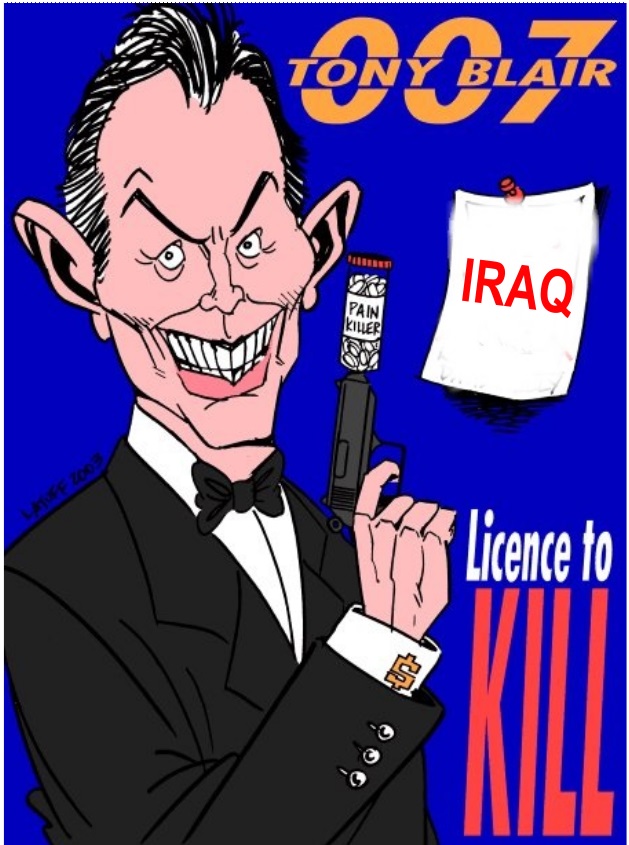
His handling of the Iraq war as premier of the UK, as well as his dealings with a string of autocrats, has left him deeply unpopular across the globe.
Proposed transitional authority will have global billionaires and businesspeople at top and Palestinians at bottom, according to leaked draft
Middle East Eye, By Rayhan Uddin, 29 September 2025
An unlikely answer has been found for who should lead the process of running Gaza after Israel’s genocidal war: Tony Blair.
It was revealed last week that the former British prime minister – a controversial figure in the Middle East, to say the least – was being considered to lead a transitional authority in the enclave.
Haaretz has now published a leaked draft plan of what Gaza would look like under Blair’s initiative.
The plan reveals a hierarchy in which an international board of billionaires and businesspeople sit at the top, while highly vetted “neutral” Palestinian administrators are at the bottom.
It sets out a three-year plan, budgeted at $90m in the first year, $134m in the second and $164m in the third (these are solely management expenses, and don’t include reconstruction or aid).
The administration would work closely with Israel, Egypt and the US, and, according to Israeli sources cited by Haartez, has the backing of the White House.
Middle East Eye breaks down key highlights from the 21-page leaked document.
Board of billionaires
Gaza International Transitional Authority, or Gita, is the name given to the new institution which will administer the Palestinian enclave.
According to the draft, Gita will be run by an international board which has “supreme political and legal authority for Gaza during the transitional period”.
The board will be in charge of all appointments, and supervise every component of the authority.
It will be made up of between seven and 10 members, including a chair.
The board will include a senior UN official, with Sigrid Kaag, the UN’s special coordinator for the Middle East peace process, cited as an example.
It would also include “leading international figures with executive and financial expertise”.
Three names are cited as potential candidates: Marc Rowan, a billionaire who owns one of America’s largest private equity firms, Naguib Sawiris, an Egyptian billionaire in the telecommunications and technology sector, and Aryeh Lightstone, chief executive of the Abraham Accords Peace Institute.
Lightstone was a senior adviser to David Friedman, a staunch defender of Israel’s illegal settlement movement, when he was US ambassador to Israel between 2017 and 2021 under Donald Trump’s first administration.
According to Haaretz, he was also deeply involved in the creation of the highly controversial Gaza Humanitarian Foundation.
Not every single board member will be a billionaire or have links to Israel or America.
There will be “at least one qualified Palestinian representative”, potentially coming from the “business or security sector”. It wasn’t made clear what “qualified” means.
And finally, the document said that the board would have “a strong representation of Muslim members to ensure regional legitimacy and cultural credibility”.
These Muslim figures would ideally have the political support of their countries, but also “long standing business credibility”.
Members of the board would be “nominated by contributing states and confirmed through a process coordinated by the UN”.
The board would report to the UN Security Council, which would ultimately grant it authority to carry out its functions.
The Security Council currently includes non-permanent members that have been highly critical of Israel’s genocide in Gaza, such as Algeria, Pakistan and Slovenia, in addition to permanent members Russia and China.
It would be interesting to see if these countries would approve a transitional government in Gaza run mostly by non-Palestinian billionaires and business figures.
The chairman (probably Blair)
Various media outlets have reported that Blair is being touted to be the chair of the transitional authority, though his name is not mentioned in the draft.
Public-private partnerships to run government projects, one of Blair’s hallmark policies as prime minister of the UK, is mentioned in the document.
According to the draft plan, the chairman will serve as the “senior political executive, principal spokesperson, and strategic coordinator for the entire transitional authority”.
They would be appointed through “international consensus” and endorsement by the UN Security Council. There is no mention of Palestinian consensus in choosing them.
If Blair is indeed the proposed chairman, he may have his work cut out gaining “international consensus” for his appointment.
His handling of the Iraq war as premier of the UK, as well as his dealings with a string of autocrats, has left him deeply unpopular across the globe.
The chair will represent Gita “in all diplomatic, donor and intergovernmental forums”. They will also lead “strategic security diplomacy” with other actors, “including Israel, Egypt and the United States”.
The document notes that initially, Gita’s senior officials won’t be in Gaza. ………………………………………………………………………………………………………………………………………………………………………
Palestinian Executive Authority, with little authority
Despite the name, the Palestinian Executive Authority, at the bottom of the hierarchy, has little to no independent authority.
It is separate from the PA, which administers parts of the occupied West Bank…………………………………………
It’s notable that the language used for all roles throughout the document, like board, chairman and CEO, reflects a business structure rather than a country or territory.
The Palestinian CEO will lead the process of identifying “directors” (not ministers) to head up the various departments like health, education, infrastructure and planning. …..
The international board of billionaires and businesspeople will have the final say on appointments “to safeguard institutional legitimacy and independence”.
“All department heads are subject to performance review and can be dismissed or replaced in accordance with transitional governance procedures,” the document notes.
An Israeli source told Haaretz that the Palestinian Executive Authority would be completely subordinate to the board and have no independent authority.
As such, it would be far weaker than the technocratic administration set out in a joint Arab plan led by Egypt earlier this year.
Below the Palestinian Executive Authority are a number of municipal roles related to the running of local public services and utilities. ………………………………………………………….. https://www.middleeasteye.net/news/breakdown-tony-blairs-bizarre-proposal-run-gaza
Will Tony Blair rule over Gaza?
Declassified UK, 2 Oct 25, John McEvoy
This week, US president Donald Trump unveiled his 20-point “comprehensive plan to end the Gaza conflict”. The plan aims, in effect, to help Israel to achieve diplomatically what it has failed to achieve militarily: the neutering of armed resistance, the dismembering of Hamas, and the removal of political agency from Palestinians in Gaza. The first point notes that “Gaza will be a deradicalized terror-free zone that does not pose a threat to its neighbors”, and it later says that “all military, terror, and offensive infrastructure” in the strip “will be destroyed and not rebuilt”. The document also implicitly acknowledges that the Israeli government has been collectively punishing the Palestinian population by refusing to allow aid into the besieged enclave. |
“Upon acceptance of this agreement, full aid will be immediately sent into the Gaza strip”, says point seven. “Entry and distribution of aid in the Gaza strip will proceed without interference”.
But perhaps most remarkably, Trump’s so-called peace plan includes a proposal for Gaza to be “governed under the temporary transitional governance of a technocratic, apolitical Palestinian committee”.
This committee would be “made up of qualified Palestinians and international experts, with oversight and supervision by a new international transitional body” chaired by Trump alongside former UK prime minister Tony Blair.
Blair’s credentials for promoting peace in the Middle East are far from impeccable.
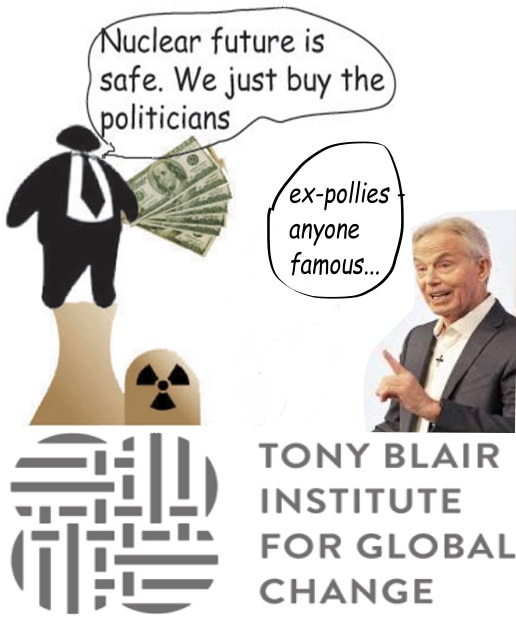
After sponsoring the illegal war on Iraq in 2003 – which ignited violence and extremism across the region – Blair worked for the Quartet on the Middle East, an unsuccessful attempt at mediating the Israeli-Palestinian peace process. The former prime minister has also been historically sympathetic to Israel’s interests. “I have never actually found it hard to be a friend of Israel, I am proud to be a friend of Israel”, Blair told a Labour Friends of Israel reception in September 2006.More concerningly, Blair is now closely linked to pro-Israel businessmen. |
Larry Ellison, a US tycoon who has donated millions to the Israel Defence Forces, is one of the key funders of the Tony Blair Institute, having pledged around $500m over recent years.
None of this appears to worry Keir Starmer, who came out in support of Trump’s plan, saying it “is profoundly welcome and I am grateful for President Trump’s leadership”.
Trump says Hamas has “three or four days” to respond to the proposal, saying the group will “pay in hell” if it rejects the deal.
But Hamas looks unlikely to accept it. A senior official told the BBC that the group will reject the plan, claiming it “serves Israel’s interests and ignores those of the Palestinian people”.
Blair’s campaign to profit from the rubble of Gaza, then, is far from a done deal.
1 This Month

of the week–London Campaign for Nuclear Disarmament

Tell the Ukrainian Government to Drop Prosecution of Peace Activist Yurii Sheliazhenko
To see nuclear-related stories in greater depth and intensity – go to https://nuclearinformation.wordpress.com
-
Archives
- April 2026 (114)
- March 2026 (251)
- February 2026 (268)
- January 2026 (308)
- December 2025 (358)
- November 2025 (359)
- October 2025 (376)
- September 2025 (257)
- August 2025 (319)
- July 2025 (230)
- June 2025 (348)
- May 2025 (261)
-
Categories
- 1
- 1 NUCLEAR ISSUES
- business and costs
- climate change
- culture and arts
- ENERGY
- environment
- health
- history
- indigenous issues
- Legal
- marketing of nuclear
- media
- opposition to nuclear
- PERSONAL STORIES
- politics
- politics international
- Religion and ethics
- safety
- secrets,lies and civil liberties
- spinbuster
- technology
- Uranium
- wastes
- weapons and war
- Women
- 2 WORLD
- ACTION
- AFRICA
- Atrocities
- AUSTRALIA
- Christina's notes
- Christina's themes
- culture and arts
- Events
- Fuk 2022
- Fuk 2023
- Fukushima 2017
- Fukushima 2018
- fukushima 2019
- Fukushima 2020
- Fukushima 2021
- general
- global warming
- Humour (God we need it)
- Nuclear
- RARE EARTHS
- Reference
- resources – print
- Resources -audiovicual
- Weekly Newsletter
- World
- World Nuclear
- YouTube
-
RSS
Entries RSS
Comments RSS
 nuclear-news