Malaysia needs to speak out on releasing nuclear waste into the sea
Malaysia needs to speak out on releasing nuclear waste into the sea https://www.theedgemarkets.com/article/malaysia-needs-speak-out-releasing-nuclear-waste-seaBernama/Bernama
May 02, 2021 KUALA LUMPUR : Malaysia needs to play its role as a member of the United Nations Environment Programme (UNEP) by speaking out on the long-term effect of releasing treated water from nuclear power plants into the ocean.
Co-founder of Project Ocean Hope, Mogesh Sababathy said actions need to be taken to ensure environmental sustainability, especially for marine life, is not threatened.
“Even though the nuclear waste will be diluted in water, its radioactive concentration should also be considered. And even when diluted, toxic is still toxic and it can still affect everyone.
“Hence, Malaysia needs to play its role and speak out on this issue at an international level, as this involves people’s security and health, as well as marine life in the region,” he told Bernama.
The Japanese government has recently approved a plan to release more than one million tonnes of treated water from the ruined Fukushima nuclear plant into the sea.
The plan also has the support of the International Atomic Energy Agency (IAEA), which says the release is comparable to the disposal of waste water from other nuclear plants globally.
Mogesh argued that this method will affect the world’s food chain security. “Nuclear radioactive is capable of affecting marine life and killing organisms, thus threatening the economic source of those who rely on it.
“It’s undeniable that Malaysia is far removed from Fukushima but we still share the same ocean. It is not impossible for the waste to drift to our country,” he said.
He hopes the relevant international bodies will study and develop safer alternative to dispose radioactive nuclear waste without harming the environment.
China’s big stake in UK’s new nuclear projects
Times 2nd May 2021 , How Beijing bought up Britain. China has quietly spent £134bn hoovering up
UK assets, from nuclear power to private schools and pizza chains. Research
reveals that almost 200 British companies are either controlled by Chinese
investors or count them as minority shareholders. The value of Chinese
investments totals £134 billion.
Some of the biggest sums have been spent
in the energy sector, notably nuclear power. Chinese state-owned China
General Nuclear (CGN) bought a 33.5 per cent stake in Hinkley Point C power
station in Somerset, the first new nuclear facility to be built in the UK
in more than 20 years.
The main investor is France’s EDF. CGN, which has
been blacklisted in America for allegedly helping to acquire US tech for
military use in China, has also joined with EDF on the proposed nuclear
plant at Sizewell C in Suffolk. CGN will take a 20 per cent stake during
the plant’s development. Plans for a third plant, at Bradwell in Essex,
have China hawks up in arms, because CGN intends to take a majority 66.5
per cent stake during development and will use its own reactor technology.
https://www.thetimes.co.uk/article/how-beijing-bought-up-britain-hqll9tjtx
Czech Republic’s nuclear plan hangs on hope for European Commission to call nuclear ”green”

The EU’s Nuclear Showdown Comes to a Head in Czechia, World Politics Review, Tim Gosling Friday, April 30, 2021 A fight over nuclear power is heating up in the European Union. While the Czech Republic and other Central and Eastern European states insist that the technology is vital to their transition from coal-generated energy, others in the bloc want to cut it out of the equation. The outcome of the debate could also help determine the fate of a stalled tender to build a new reactor at Dukovany, one of the country’s two existing nuclear power plants.
[Nuclear] Hopes in Prague were boosted in March when the Joint Research Center, an expert group for the European Commission, delivered a report stating that nuclear power qualifies as a “sustainable” source of energy………
However, the commission was quick to state that the Joint Research Center’s opinion is far from the final word, indicating that the tussle would continue. And indeed, on April 21, when the commission finally published its first list of sustainable energy sources—known as the EU taxonomy for sustainable activities in Brussels’ policymaking circles—nuclear power was not included. Some member states, as well as lawmakers in the European Parliament, had threatened to veto an earlier draft that included nuclear and gas-powered energy.
But that’s still not the end of the story. Referring to “a delicate compromise on whether or not to include nuclear energy,” the EU executive said it would make a final decision based on further expert opinions. That could be presented in June, said Vladis Dombrovskis, the European Commission vice-president in charge of the economy.
That gives the nuclear lobby two months to push its side of the debate……
Germany will switch off its last nuclear plant next year, as part of a phased drawdown adopted in the aftermath of the 2011 Fukushima disaster. But Berlin’s anti-nuclear drive isn’t limited to its own reactor fleet. Environment Minister Svenja Schulze pledged in March that the country plans to quash nuclear power globally, with a particular focus on its neighborhood.
“Nuclear power is neither safe nor clean,” she said at the time, as she unveiled a 12-point plan that argues the technology cannot be considered part of any solution to the climate crisis. “The future is for renewable energy.”
……….. in the wake of the Fukushima disaster, the challenges and costs of building new nuclear reactors have risen dramatically, and that’s what makes the EU classification key. Classification as “sustainable” would significantly lower the cost of financing for private investors, according to industry lobbyist Foratom.
Such a classification is also crucial to staying on the right side of the EU’s competition regulations, as it’s now all but impossible to build new nuclear reactors without state aid.
“The Czech government does not hope to use EU funds to build new nuclear reactors,” says Vit Havelka of the Prague-based think tank Europeum. “They’re worried that Brussels will block [the provision of] state aid, which would make it economically unfeasible.”…….
critics contend that the alternatives haven’t been properly researched. Global consultancy Deloitte suggests that renewables could deliver the same capacity of new energy generation as Dukovany 2—which is optimistically earmarked for completion in 2038—more quickly and less expensively, helping to modernize the energy sector and support the economy along the way. According to another study, it is the focus on nuclear that is helping to keep renewable power-generation underutilized.
Jiri Jerabek from Greenpeace says in an interview that the Czech government has “no proper support schemes for most types of renewables.” Moreover, its target to raise the share of renewables in its energy mix from around 16.2 percent in 2019 to 22 percent by 2030 is well below the EU’s goal of 32 percent, earning it reprimands from the European Commission…….. https://www.worldpoliticsreview.com/articles/29616/for-eastern-europe-nuclear-power-depends-on-eu-taxonomy
Delays, increased costs and geopolitical uncertainties throw doubt on construction of nuclear power station in Finland.
Nuclear power plant construction in north Finland faces delay, increased costs and geopolitical uncertainties
Costs for the partly Russian-owned controversial plant will be €1 billion more than previously estimated. Barents Observer, By Thomas Nilsen , April 29, 2021
“Further deterioration of political and commercial relations between the EU, the USA and Russia could lead to more sanctions between the parties. Such deteriorated international affairs and sanctions could influence the project’s schedule and financing, in particular,” Fennovoima writes in its updated construction license application to Finnish authorities on Wednesday.
Work on the site in Pyhäjoki south of Oulu is in full swing despite final permission for the reactor itself at Hanhikivi 1 nuclear power plant is not yet granted.
The original application was delivered in 2015, but as Fennovoima sees “changes in boundary conditions,” an updated application was made. Among other things, the application includes an additional survey on the power plant’s impact on the marine environment and fishery during operation.
Other changes are related to security and preparedness arrangements and design solutions, although, no changes to the key principles of the power plant, Fennovoima underlines…….
Russia’s state-owned nuclear corporation holds a 34% stake in the plant. For Moscow, export of civilian nuclear power reactors is both a commercial revenue and a source of symbolic technology pride.
Last week, government officials in the Czech Republic said they were kicking Rosatom out of the play for bidding at a planned new reactor for the Dukovany nuclear power plant. The move came amid the diplomatic turmoil between Prague and Moscow following a 2014 blast in a weapons storage which Czech intelligence blames Russian military spies for being involved.
Like with the Czech nuclear power plant, also Fennovoima’s Hanhikivi 1 reactor is planned to receive uranium fuel supplies from Russia…….. https://thebarentsobserver.com/en/nuclear-safety/2021/04/construction-nuclear-power-plant-runs-delay-costs-increase-and-geopolitical#.YIp3J6ITqk0.twitter
When USA attacks a foreign state, the media calls it ”Defense”

It’s Aggression When ‘They’ Do It, but Defense When ‘We’ Do Worse https://fair.org/home/its-aggression-when-they-do-it-but-defense-when-we-do-worse/ALAN MACLEOD Aggression, in international politics, is commonly defined as the use of armed force against another sovereign state, not justified by self-defense or international authority. Any state being described as aggressive in foreign or international reporting, therefore, is almost by definition in the wrong.
It’s a word that seems easy to apply to the United States, which launched 81 foreign interventions between 1946 and 2000 alone. In the 21st century, the United States has attacked, invaded or occupied the sovereign states of Afghanistan, Iraq, Libya, Syria, Pakistan, Yemen and Somalia.
Despite the US record, Western corporate media overwhelmingly reserve the word “aggression” for official enemy nations—whether or not it’s warranted. In contrast, US behavior is almost never categorized as aggressive, thereby giving readers a misleading picture of the world.
Perhaps the most notable internationally aggressive act in recent memory was the Trump administration’s assassination of Iranian general and political leader Qassem Soleimani last year. Yet in its long and detailed report on the event, the Washington Post (1/4/20) managed to present Iran as the aggressor. The US was merely “choos[ing] this moment to explore an operation against the leader of Iran’s Quds Force, after tolerating Iranian aggression in the Persian Gulf for months,” in the Post’s words.
t also gave space to senior US officials to falsely claim Soleimani was aiming to carry out an “imminent” attack on hundreds of Americans. In fact, he was in Iraq for peace talks designed to bring an end to war between states in the region. The Iraqi prime minister revealed that he had invited Soleimani personally, and had asked for and received Washington’s blessing to host him. Trump instead used that information to kill him.
For months, media had been awash with stories, based on US officials’ proclamations, that Iranian aggression was just around the corner (e.g., Yahoo! News, 1/2/20; Reuters, 4/12/19; New York Times, 11/23/19; Washington Post, 6/22/19). The Hill (10/3/19) gave a retired general space to demand that we must “defend ourselves” by carrying out a “serious response” against Iran, who is “test[ing] our resolve with aggressive actions.”
Russia is another country constantly portrayed as aggressive. The New York Times (11/12/20) described a US fishing boat’s mix up with the Russian navy off the coast of Kamchatka as typical Russian aggression, complete with the headline, “Are We Getting Invaded?” The Military Times (6/26/20) worried that any reduction in US troops in Germany could “embolden Russian aggression.” And a headline from the Hill (11/14/19) claimed that “Putin’s Aggression Exposes Russia’s Decline.” In the same sentence that publicized a report advocating that NATO expand to take on China directly, the Wall Street Journal (12/1/20) warned of “Russian aggression.” Suffice to say, tooling up for an intercontinental war against another nuclear power was not framed as Western warmongering.
Other enemy states, such as China (New York Times, 10/6/20; CNBC, 8/3/20; Forbes, 3/26/21), North Korea (Atlantic, 11/23/10; CNN, 8/9/17; Associated Press, 3/8/21) and Venezuela (Wall Street Journal, 11/18/05; Fox News, 3/10/14; Daily Express, 9/30/19) are also routinely accused of or denounced for “aggression.”
Corporate media even present the Taliban’s actions in their own country against Western occupation troops as “aggression” (Guardian 7/26/06; CBS News, 11/27/13; Reuters, 3/26/21). The New York Times (11/24/20) recently worried about the Taliban’s “aggression on the battlefield,” while presenting the US—a country that invaded Afghanistan in 2001 and still has not left—as supposedly committed to the “peace process.”
Even as the US has been flying squadrons of nuclear bombers from North Dakota to Iran and back, each time in effect simulating dropping atomic bombs on the country, media have framed this as a “defensive move” (Politico, 12/30/20) meant to stop “Iranian aggression” (Defense One, 1/27/20) by “deter[ring] Iran from attacking American troops in the region” (New York Times, 12/30/20).
In February, President Joe Biden ordered an airstrike on a Syrian village against what the White House claimed were Iran-backed forces. The Department of Defense absurdly insisted that the attack was meant to “deescalate” the situation, a claim that was lamentably uncritically repeated in corporate media, with Politico (2/25/21) writing that “the strike was defensive in nature” and a response to previous attacks on US troops in Iraq. Needless to say, it did not question the legitimacy of American troops being stationed across the Middle East.
That the US, by definition, is always acting defensively and never aggressively is close to an iron law of journalism. The US attack on Southeast Asia is arguably the worst international crime since the end of World War II, causing some 3.8 million Vietnamese deaths alone. Yet in their seminal study of the media, Manufacturing Consent, Edward Herman and Noam Chomsky (Extra!, 12/87) were unable to find a single mention of a US “attack” on Vietnam. Instead, the war was commonly framed as the “defense” of South Vietnam from the Communist North.
Even decades later, US actions in Vietnam are still often described as a “defense” (e.g., Wall Street Journal, 4/29/05; Christian Science Monitor, 1/22/07; Politico, 10/10/15; Foreign Policy, 9/27/17). In a 2018 autopsy of the conflict headlined “What Went Wrong in Vietnam,” New Yorker staff writer Louis Menand (2/26/18) wrote that “our policy was to enable South Vietnam to defend itself” as the US “tried to prevent Vietnam from becoming a Communist state.” “Millions died in that struggle,” he adds, as if the perpetrators of the violence were unknown.
It was a similar story with the US invasion of Grenada in 1983, which was presented as a defense against “Soviet and Cuban aggression in the Western hemisphere” (San Diego Union-Tribune, 10/26/83).
There have only been three uses of the phrases “American aggression” or “US aggression” in the New York Times over the past year. All came in the mouths of Chinese officials, and in stories focusing on supposedly aggressive Chinese actions. For example, at the end of a long article warning about how China is “pressing its territorial claims aggressively” from the Himalayas to the South China Sea, in paragraph 28 the Times (6/26/20) noted that Beijing’s priority is “confronting what it considers American aggression in China’s neighborhood.” Meanwhile, two articles (10/5/20, 10/23/20) mention that Chinese disinformation calls the Korean War the “war to resist American aggression and aid Korea”. But these were written off as “visceral” and “pugnacious” “propaganda” by the Times.
Likewise, when the phrase “American aggression” appears at all in other leading publications, it is largely only in scare quotes or in the mouths of groups long demonized in corporate media, such as the Houthi rebels in Yemen (Washington Post, 2/5/21), the Syrian government of Bashar al-Assad (Associated Press, 2/26/21) or Saddam Hussein’s generals (CNN, 3/3/03).
The concept of US belligerence is simply not being discussed seriously in the corporate press, leading to the conclusion that the word “aggression” in newspeak means little more than “actions we don’t like carried out by enemy states.”
City of Geneva calls for the closure of French nuclear station in Bugey
Boursorama 27th April 2021, Nuclear: the city of Geneva calls for the closure of the French power plant
in Bugey. Located about 70 kilometers as the crow flies from Geneva, it is
accused by the cantonal and municipal authorities of Geneva of causing
serious danger to the population because of its obsolescence.
Legal and other problems for Japan, with growing opposition to its plan for dumping Fukushima waste-water in the ocean
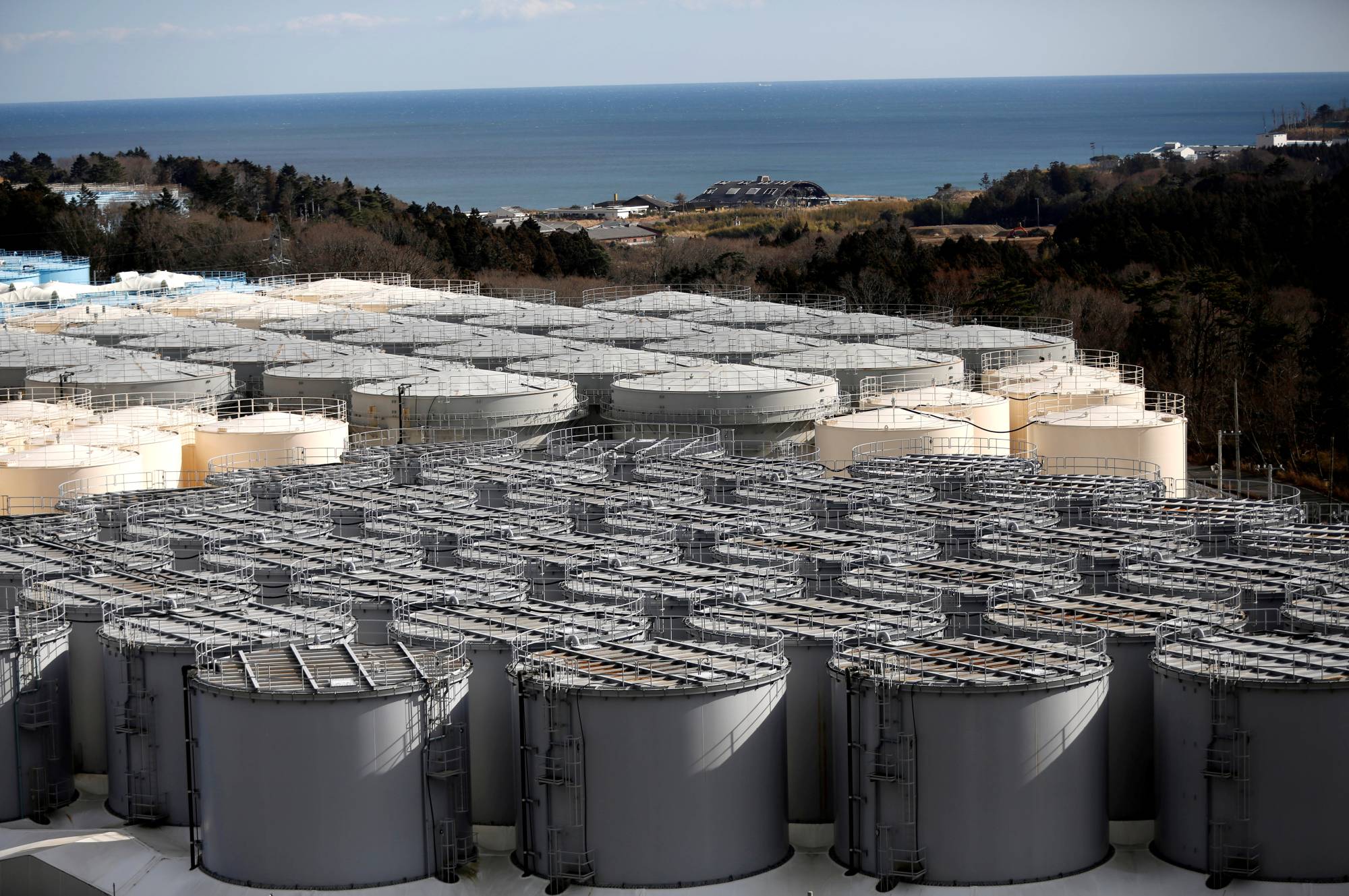
Toxic reaction to Japan’s
Fukushima water dump, https://www.lowyinstitute.org/the-interpreter/toxic-reaction-japan-s-fukushima-water-dump ARISTYO RIZKA DARMAWAN, 21 Apr 21,
Experts insist the release of treated radioactive water is not dangerous.
Legal challenges might find otherwise.
The Netflix documentary “Seaspiracy” caused a stir following its release last month, both for highlighting the serious damage human activities are causing the world’s oceans – whether from marine debris or whale hunting – and also for claims that the program features misleading statements and statistics.
But the controversy pales against the announcement last week by the Japanese government that it plans in two years to release treated radioactive water into the Pacific Ocean.
The contaminated water has been held in tanks since an earthquake and subsequent tsunami damaged the Fukushima nuclear reactor in 2011. With storage capacity predicted to run out late next year, Japan has decided to press ahead with long-speculated plans to dump treated wastewater into the sea.
Even though the Japanese government, International Atomic Energy Agency and some experts have argued that the release of the water is not dangerous and will do no harm to the ocean, there are good reasons to be concerned about the potential for environmental damage. Local Japanese, South Korean and Taiwanese fishing industries have protested the move, as have communities in the Pacific Islands. China has been scathing, with one recent op-ed in the state-run China Daily declaring “Japan cannot use the Pacific as its sewer”. The United States has been more understanding in its comments, with Secretary of State Antony Blinken praising Japan for “transparent efforts” in its decision.
But Japan may also be challenged under international law, and South Korea has already threatened legal action under international dispute settlement mechanisms.
There are at least two international treaties that regulate or ban the dumping of waste at sea: the United Nations Convention on the law of the Sea (UNCLOS) and the 1996 Protocol to the Convention on the Prevention of Marine Pollution by Dumping of Wastes and Other Matter, 1972, generally referred to as the London Convention and Protocol.
UNCLOS stipulates that all parties shall cooperate in protecting the marine environment and under Article 210 explicitly requires “laws, regulations and measures shall ensure that pollution by dumping is not carried out without the permission of the competent authorities of States”.
That terminology will be debated, whether it be over the notion of “competent authorities” or indeed whether Japan’s plan amounts to “dumping”. UNCLOS defines the terminology of dumping as “any deliberate disposal at sea of wastes or other matter from vessels, aircraft, platforms or other man-made structures at sea”. Given that the proposal is to release water held on land, this may not be covered by the convention.
It may even be argued that dumping at sea is allowable under Article 8 of the London Convention and Protocol. The article stipulates that dumping is allowed during an emergency, with the provision that a party “shall consult any other country or countries that are likely to be affected”. That may explain the “transparency” of Japan providing two years notice of its intended action. Yet in this case, it is questionable whether running out of storage capacity can be considered an emergency, given the article also stipulates such action is permissible only “in emergencies posing an unacceptable threat to human health, safety, or the marine environment and admitting of no other feasible solution”.
Regardless of how such disputes play out, however, it is also notable that neither UNCLOS nor the London Convention and Protocol have strong sanction mechanisms. Enforcement relies on either coastal states or flag states.
Neighbouring countries have reacted strongly, as have international environmental NGOs, including Greenpeace. Boycotts and bans on Japanese fisheries products have already been mooted. Unless another solution is found, Japan’s plan will continue to face a mounting tide of opposition.
Decision on Fukushima waste water should be in consultation with international agencies, not just a decision by Japan alone.
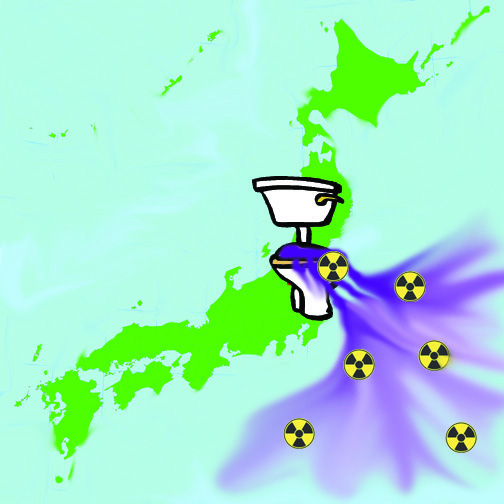
Disposal of Fukushima nuclear wastewater should be assessed under framework of intl agencies, not let world pay: FM, By Global Times, 21 Apr 21, China’s Foreign Ministry said on Wednesday the disposal of Fukushima nuclear wastewater should be assessed and discussed under the framework of international agencies including the UN, the WHO, and the IAEA, urging the Japanese government to correct its irresponsible decision to dump of the wastewater to the ocean and avoid involving people all around the world in paying for its wrongdoings.
The remarks came after South Korean Foreign Minister Chung Eui-yong expressed opposition to the move, and said on Tuesday that Seoul will work closely with international agencies to deal with Japan.
At a routine press conference, China’s Foreign Ministry spokesperson Wang Wenbin stressed that before dumping nuclear-contaminated water, there should be a discussion with neighboring countries and an evaluation within the framework of international agencies including the United Nations, the World Health Organization, and the International Atomic Energy Agency.
Wang added that Japan’s decision to dump the nuclear-contaminated water is not only opaque, unscientific, unlawful, irresponsible and unethical, but also at risk of being condemned by the world.
“A ban has been placed on black scorpionfish caught off Fukushima waters from entering markets due to the detection of excessive radioactive materials. And this is the second time that fish have been found with excessive radioactive materials in Fukushima waters since February,” said Wang.
All of these signs point to the fact that disposal of radionuclides is complicated and difficult, noted Wang, adding that the Fukushima nuclear power plant accident has been bringing harm to its surroundings for the past decade since it happened. ……..
Wang said that the methods of the wastewater disposal concern the safety of the Asia-Pacific region, the global ecological environment, and the lives and the health of people in all countries. The data should be evaluated and consultations held with all parties whose interests are bound to it.
“We noticed that Japan’s Tokyo Electric Power Company intends to submit a progress plan for wastewater disposal in May. We express strong opposition and serious concern to the matter as Japan unilaterally pushes forward the plan without consultation with the international community especially neighboring countries,” Wang said.
“Please don’t let people all over the world pay for Japan’s wrongdoings,” he added. https://www.globaltimes.cn/page/202104/1221712.shtml
Iran Nuclear Deal Talks Advance as U.S. Offers Sanctions Relief
Iran Nuclear Deal Talks Advance as U.S. Offers Sanctions Relief
Biden administration signals openness to easing measures against oil, finance and other sectors, but Tehran wants to see specifics, WSJ, By Ian Talley, Benoit Faucon and Laurence NormanUpdated April 21, 2021
The Biden administration has signaled it is open to easing sanctions against critical elements of Iran’s economy, including oil and finance, helping narrow differences in nuclear talks, according to people familiar with the matter.
Despite the progress, senior diplomats warned that weeks of difficult negotiations over the 2015 nuclear agreement lie ahead and progress remains fragile. Talks in Vienna are complicated by domestic politics in Washington and Tehran and by Iran’s refusal to meet directly with the U.S.
President Biden wants to return to the 2015 deal after former President Donald Trump withdrew in 2018. The U.S. decision to quit the deal and impose sweeping sanctions on Iran prompted Tehran to breach many of the key restrictions in the accord, making a return to the agreement’s provisions and limits difficult for both sides.
Senior officials in Vienna this week wrapped up five days of talks, with delegations returning home before negotiations resume next week. People involved in the talks say progress has come as the U.S. laid out more clearly the contours of the sanctions relief it is prepared to provide.
Many of the sanctions were imposed under Mr. Trump using U.S. terrorism authorities, and U.S. officials previously have said they are willing to consider lifting some of them. But they haven’t detailed which sanctions could be eased or which Iranian entities stand to be affected…….. (subscribers only) https://www.wsj.com/articles/iran-nuclear-deal-talks-advance-as-u-s-offers-sanctions-relief-11619024783
Czechs exclude Rosatom from nuclear tender after dispute with Russia
Czechs exclude Rosatom from nuclear tender after dispute with Russia, Reuters, 19 Apr 21,
The Czech government will not invite Russia’s Rosatom to take part in security assessments before a planned tender for a new unit at the Dukovany nuclear power plant, Industry Minister Karel Havlicek said on Monday.
The decision, which effectively excludes Russia from the multi-billion dollar tender, was announced two days after Prague expelled 18 Russian embassy staff, saying it suspected Russian intelligence was involved in explosions at an ammunition depot in 2014.
Russia has dismissed the accusation as absurd. Rosatom called the decision to exclude it regrettable and politically motivated……….. https://www.reuters.com/world/europe/czechs-exclude-rosatom-nuclear-tender-after-dispute-with-russia-2021-04-19/
Progress in Iran nuclear talks but resolution still far away
Progress in Iran nuclear talks but resolution still far away
By DAVID RISING, 19 Apr 21, BERLIN (AP) — High-level talks in Vienna aimed at bringing the United States back into the 2015 nuclear deal with Iran are moving ahead with experts working on drafting proposals this week, but a solution remains “far away,” Russia’s delegate said Monday.
The U.S. unilaterally left the agreement, which promises Iran economic incentives in return for curbs on its nuclear program, in 2018 under then President Donald Trump, who said it needed to be renegotiated and imposed crippling sanctions.
In response, Iran has steadily been violating the restrictions set by the deal, by enriching uranium far past the purity allowed and stockpiling vastly larger quantities, in a thus-far unsuccessful effort to force the other countries involved to provide economic relief that would offset the American sanctions.
U.S. President Joe Biden wants to return Washington to the deal, and Iran has been negotiating with the five remaining powers — Germany, France, Britain, China and Russia — for the past two weeks on how that might take place. Diplomats from the world powers have been shuttling between the Iranian delegation and an American one, which is also in Vienna but not talking directly with the Iranian side.
BERLIN (AP) — High-level talks in Vienna aimed at bringing the United States back into the 2015 nuclear deal with Iran are moving ahead with experts working on drafting proposals this week, but a solution remains “far away,” Russia’s delegate said Monday.
The U.S. unilaterally left the agreement, which promises Iran economic incentives in return for curbs on its nuclear program, in 2018 under then President Donald Trump, who said it needed to be renegotiated and imposed crippling sanctions.
In response, Iran has steadily been violating the restrictions set by the deal, by enriching uranium far past the purity allowed and stockpiling vastly larger quantities, in a thus-far unsuccessful effort to force the other countries involved to provide economic relief that would offset the American sanctions.
U.S. President Joe Biden wants to return Washington to the deal, and Iran has been negotiating with the five remaining powers — Germany, France, Britain, China and Russia — for the past two weeks on how that might take place. Diplomats from the world powers have been shuttling between the Iranian delegation and an American one, which is also in Vienna but not talking directly with the Iranian side.
Two expert groups have been brainstorming solutions to the two major issues: The rollback of American sanctions on one hand, and Iran’s return to compliance on the other…………..
The ultimate goal of the deal, known as the Joint Comprehensive Plan of Action, or JCPOA, is to prevent Iran from developing a nuclear bomb, something it insists it doesn’t want to do. Iran now has enough enriched uranium to make a bomb, but nowhere near the amount it had before the nuclear deal was signed.
Challenges also remain outside of the negotiations.
An attack suspected to have been carried out by Israel recently struck Iran’s Natanz nuclear site, causing an unknown amount of damage. Tehran retaliated by beginning to enrich a small amount of uranium up to 60% purity, its highest level ever. Inspections by the International Atomic Energy Agency also could be disrupted without an agreement…………… https://apnews.com/article/joe-biden-donald-trump-iran-iran-nuclear-europe-d236858e8fef9cf48b4e1c9d2482b0bf
U.N. experts concerned at Japan’s decision to dump Fukushima nuclear waste-water into the Paific.

UN Experts Decry Japan’s Plan to Dump Radioactive Fukushima Wastewater Into Ocean, https://www.commondreams.org/news/2021/04/16/un-experts-decry-japans-plan-dump-radioactive-fukushima-wastewater-ocean?utm_campaign=shareaholic&utm_medium=Social&utm_source=facebook&fbclid=IwAR2W9TNN5pZWTgQjFhnnd_99e_F3cH4y7uPJggM1row-iqAzbRtoZvj2tvM
The decision is particularly disappointing as experts believe alternative solutions to the problem are available,” said the three special rapporteurs.by Brett Wilkins, staff writer 18 Apr 21, A trio of United Nations experts on Thursday added their voices to the chorus of concern over the Japanese government’s decision to dump hundreds of millions of gallons of radioactive wastewater from the Fukushima Daiichi Nuclear Power Plant into the Pacific Ocean, saying the move threatens not only the environment but also the human rights of people in and beyond Japan.
Japanese officials announced earlier this week that 1.25 million tonnes of treated radioactive water from the deactivated nuclear plant—which in March 2011 suffered major damage from a magnitude 9.0 earthquake and subsequent tsunami—would be discharged into the sea starting in about two years. Prime Minister Suga Yoshihide called the planned release “a realistic solution.”
However, anti-nuclear campaigners joined Japan’s neighbors China and South Korea in condemning the decision, with Greenpeace saying that it “completely disregards the human rights and interests of the people in Fukushima, wider Japan, and the Asia-Pacific region.”
Marcos Orellana, Michael Fakhri, and David Boyd—respectively the U.N.’s special rapporteurs on toxics and human rights, the right to food, and human rights and the environment—weighed in on the issue Thursday with a joint statement calling Tokyo’s decision “very concerning.”
“The release of one million tonnes of contaminated water into the marine environment imposes considerable risks to the full enjoyment of human rights of concerned populations in and beyond the borders of Japan,” they said, adding that “the decision is particularly disappointing as experts believe alternative solutions to the problem are available.”
Critics say other options for disposing of the the water, including evaporating and then releasing it into the air, were not fully considered, although nuclear experts stress that evaporation would not isolate radioactivity.
Japanese officials claim that levels of radioactive tritium are low enough to pose no threat to human health. However, scientists and other experts warn that the isotope bonds with other molecules in water and can make their way up the food chain to humans.
Cindy Folkers, radiation and health hazards specialist at the advocacy group Beyond Nuclear, said in a statement Wednesday that Fukushima Daiichi operator Tokyo Electric Power Company (TEPCO) “wants us to believe that the radioactive contamination in this water will be diluted in the ocean waters, but some of the radioactive isotopes will concentrate up the food chain in ocean life.”
“Some of the contamination may not travel out to sea and can double back on itself,” said Folkers. “Dilution doesn’t work for radioactive isotopes, particularly tritium, which research shows can travel upstream.”
“TEPCO data show that even twice-through filtration leaves the water 13.7 times more concentrated with hazardous tritium—radioactive hydrogen—than Japan’s allowable standard for ocean dumping, and about one million times higher than the concentration of natural tritium in Earth’s surface waters,” she added.
Japanese officials did reverse one highly controversial policy related to the wastewater dump this week. Amid intense public backlash, the government hastily retired Little Mr. Tritium, an animated radioactive mascot meant to promote and popularize the discharge.

“Some of the contamination may not travel out to sea and can double back on itself,” said Folkers. “Dilution doesn’t work for radioactive isotopes, particularly tritium, which research shows can travel upstream.”
“TEPCO data show that even twice-through filtration leaves the water 13.7 times more concentrated with hazardous tritium—radioactive hydrogen—than Japan’s allowable standard for ocean dumping, and about one million times higher than the concentration of natural tritium in Earth’s surface waters,” she added.
Japanese officials did reverse one highly controversial policy related to the wastewater dump this week. Amid intense public backlash, the government hastily retired Little Mr. Tritium, an animated radioactive mascot meant to promote and popularize the discharge.
“It seems the government’s desire to release the water into the sea takes priority over everything,” Katsuo Watanabe, an 82-year-old fisher from Fukushima, told Kyodo News. “We fisherman can’t understand it.”
South Korea raises with USA its worries about Fukushima water to be dumped into the Pacific Ocean

South Korea raises Fukushima concerns with U.S,
Yahoo News, April 18, 2021 As U.S. climate envoy John Kerry appeared in Seoul over the weekend to discuss global warming,
South Korea’s foreign ministry says it raised concerns to him over Japan’s plans to dump contaminated water from its defunct Fukushima nuclear plant into the sea…….
Under the plan, more than 1 million tonnes of water will be discharged from the plant, the site of the world’s worst nuclear disaster since Chernobyl.
Seoul has strongly rebuked the decision……
Kerry’s visit to Seoul precedes U.S. President Joe Biden’s virtual summit with world leaders on climate change, set for two days starting April 22. https://news.yahoo.com/south-korea-raises-fukushima-concerns-080908571.html
US backs Japan’s Fukushima plans despite S Korea’s concerns
US backs Japan’s Fukushima plans despite S Korea’s concerns
Seoul fails to gain US support against Japan’s decision to release contaminated water from Fukushima nuclear plant. Aljazeera, 18 Apr 2021
US climate envoy John Kerry has reaffirmed Washington’s confidence in Japan’s decision to release contaminated water from its crippled Fukushima nuclear plant into the sea despite concerns raised by South Korea.
Kerry arrived in Seoul on Saturday to discuss international efforts to tackle global warming, on a trip that included a stop in China ahead of President Joe Biden’s virtual summit with world leaders on climate change this month.
South Korean Foreign Minister Chung Eui-yong sought to rally support behind the country’s protest against the Fukushima plan at a dinner meeting with Kerry.
Under the plan, more than one million tonnes of water will be discharged from the plant wrecked by an earthquake and tsunami in 2011 into the nearby sea off Japan’s east coast.
Seoul strongly rebuked the decision, with the foreign ministry summoning the Japanese ambassador and President Moon Jae-in ordering officials to explore petitioning an international court.
“Minister Chung conveyed our government and people’s serious concerns about Japan’s decision, and asked the US side to take interest and cooperate so that Japan will provide information in a more transparent and speedy manner,” the ministry said in a statement.
But Kerry, at a media roundtable on Sunday, said Tokyo had made the decision in a transparent manner and will continue following due procedures.
“The US is confident that the government of Japan is in very full consultations with the IAEA,” he said, referring to the International Atomic Energy Agency…….. The former US secretary of state added that Washington would closely monitor Japan’s implementation “like every country, to make certain there is no public health threat”…….. https://www.aljazeera.com/news/2021/4/18/s-korea-us-show-differences-over-japans-fukushima-plans
China to Japan: If treated radioactive water from Fukushima is safe, ‘please drink it’
China to Japan: If treated radioactive water from Fukushima is safe, ‘please drink it’, WA Today, By Adam Taylor, April 15, 2021 —Washington: A spokesman for China’s Foreign Ministry challenged Japan’s deputy prime minister Wednesday to drink treated water, contaminated from contact with reactors, from the wrecked Fukushima nuclear power plant, after the Japanese official suggested the water released would be safe to drink.
Chinese Foreign Ministry spokesman Zhao Lijian, infamous for trolling Australia over the Afghanistan war crimes cases, said during a press briefing: “A Japanese official said, it’s okay if you drink this water. Then please drink it.”
The ocean is not Japan’s trash can,” Zhao also said.
The Chinese official also tweeted a similar message in English.
The Chinese Foreign Ministry’s remarks came after the Japanese government announced on Tuesday it had decided to release into the sea more than 1 million tons of water collected from Fukushima, which melted down during a 2011 nuclear disaster following a tsunami………….
China’s Zhao, known for his aggressive style of diplomacy, has responded at length to the issues surrounding Fukushima water this week, on Tuesday denying the suggestion that China had itself been in a comparable situation when it released treated radioactive water from power plants into the sea………..
Chinese records show that local power plants like Daya Bay in Shenzhen have also released large amounts of tritium into the sea. Zhao said that the water from the Fukushima was different from that released to the ocean by other nuclear plants.
“No comparison can be drawn between the two,” he said, without further explanation…..
While the United States has offered its support for Japan’s move on the Fukushima water, Zhao said on Wednesday that the Japanese side needed to reach an agreement with all stakeholder countries before it could proceed.
“China reserves the right to make further responses,” Zhao said.https://www.watoday.com.au/world/asia/china-to-japan-if-treated-radioactive-water-from-fukushima-is-safe-please-drink-it-20210415-p57jcj.html
1 This Month



26 September – International Day for the Total Elimination of Nuclear Weapons


PLEASE OPPOSE HR 8255 AND S.3639 – bills would accelerate satellite deployment, with no environmental review or safeguards – https://ncstd5li.quorum.us/campaign/169331/
To see nuclear-related stories in greater depth and intensity – go to https://nuclearinformation.wordpress.com
-
Archives
- September 2026 (281)
- August 2026 (330)
- July 2026 (355)
- June 2026 (287)
- May 2026 (306)
- April 2026 (356)
- March 2026 (251)
- February 2026 (267)
- January 2026 (308)
- December 2025 (358)
- November 2025 (359)
- October 2025 (375)
-
Categories
- 1
- 1 NUCLEAR ISSUES
- business and costs
- climate change
- culture and arts
- ENERGY
- environment
- health
- history
- indigenous issues
- Legal
- marketing of nuclear
- media
- opposition to nuclear
- PERSONAL STORIES
- politics
- politics international
- Religion and ethics
- safety
- secrets,lies and civil liberties
- spinbuster
- technology
- Uranium
- wastes
- weapons and war
- Women
- 2 WORLD
- ACTION
- AFRICA
- Atrocities
- AUSTRALIA
- Christina's notes
- Christina's themes
- culture and arts
- Events
- Fuk 2022
- Fuk 2023
- Fukushima 2017
- Fukushima 2018
- fukushima 2019
- Fukushima 2020
- Fukushima 2021
- general
- global warming
- Humour (God we need it)
- Nuclear
- RARE EARTHS
- Reference
- resources – print
- Resources -audiovicual
- Weekly Newsletter
- World
- World Nuclear
- YouTube
-
RSS
Entries RSS
Comments RSS

