Russia concerned that NATO wants to lower the threshold for nuclear weapons use.
 |
Russia finds worrisome NATO’s wish to lower nuclear threshold — diplomat https://tass.com/defense/1387211Alexander Grushko also pointed to the complete degradation of the arms control system
BRUSSELS, January 12. /TASS/. Russia is seriously worried by NATO’s wish to lower the threshold for nuclear weapons use, Deputy Foreign Minister Alexander Grushko told a news conference following a meeting of the Russia-NATO Council on Wednesday.
“In conducting their military policies, the United States and its allies have been trying to gain superiority in all media: on land, in the air and at sea. Now there are also outer space and cyberspace. As well as all possible theaters of combat operations. Conceptually, operationally and technically the threshold of nuclear weapons use is being lowered. We see that the scenarios of various exercises incorporate the nuclear component, which causes our most serious concern,” Grushko said.
He pointed to the complete degradation of the arms control system.
It all began when the United States pulled out of the anti-ballistic missile treaty. Then it prevented NATO countries from ratifying the agreement on the adaptation of the conventional forces in Europe (CFE) treaty, which might serve as a corner stone of European security. Then the US administration dropped the INF treaty (on the elimination of intermediate and shorter-range missiles). And last year the Open Skies Treaty was seriously undermined,” Grushko concluded.
The Russia-NATO Council’s meeting was a second round of consultations by Russia and the West on Russia’s proposals for European security. The first stage – talks between Russia and the United States – took place in Geneva on January 10. A third will follow on the OSCE platform in Vienna on January 13.
In 2022, nuclear power’s future looks grimmer than ever.

As new renewable energy capacity continues to boom, nuclear power generation declined in 2021 and the industry’s future is grimmer than it has ever been. The post In 2022, nuclear power’s future looks grimmer than ever appeared first on RenewEconomy.
In 2022, nuclear power’s future looks grimmer than ever — RenewEconomy Renew Economy, Jim Green 11 Jan 22,
The decline was marginal (<1 per cent): a net loss of two power reactors (six start-ups and eight 8 permanent closures) and a net loss of 2.5 gigawatts (GW) of nuclear capacity.
The marginal decline makes for a striking contrast with renewables. The International Energy Agency calculates that new renewable capacity added in 2021 amounted to nearly 290 GW – that’s more than four times Australia’s total electricity generating capacity.
Nuclear power’s contribution to global electricity supply has fallen from a peak of 17.5 percent in 1996 to 10.1 percent in 2020. Renewables reached an estimated 29 per cent share of global electricity generation in 2020, a record share.
The ageing of the world’s reactor fleet is a huge problem for the nuclear industry, as is the ageing of its workforce — the silver tsunami. The average age of the world’s reactor fleet continues to rise and by mid-2021 reached 30.9 years. The mean age of the 23 reactors shut down between 2016 and 2020 was 42.6 years.
Primarily because of the ageing of the reactor fleet, the International Atomic Energy Agency estimates up to 139 GW of lost nuclear capacity from 2018-2030 due to permanent reactor shutdowns, and a further loss of up to 186 GW from 2030-2050.
So the industry needs about 10 new power reactors (or 10 GW) each year just to maintain its 30-year pattern of stagnation. And there were indeed 10 reactor construction starts in 2021, six of them in China.
But the average annual number of construction starts since 2014 has been just 5.1. Thus, slow decline of nuclear power is the most likely outcome. An extension of the 30-year pattern of stagnation is possible, if and only if China does the heavy lifting. China has averaged just 2.5 reactor construction starts per year since 2011.
Phasing out nuclear power
The number of countries phasing out nuclear power steadily grows and now includes:
Nuclear power generation declined in 2021 and the industry’s future is grimmer than it has ever been.
The decline was marginal (<1 per cent): a net loss of two power reactors (six start-ups and eight 8 permanent closures) and a net loss of 2.5 gigawatts (GW) of nuclear capacity.
The marginal decline makes for a striking contrast with renewables. The International Energy Agency calculates that new renewable capacity added in 2021 amounted to nearly 290 GW – that’s more than four times Australia’s total electricity generating capacity.
Nuclear power’s contribution to global electricity supply has fallen from a peak of 17.5 percent in 1996 to 10.1 percent in 2020. Renewables reached an estimated 29 per cent share of global electricity generation in 2020, a record share.
The ageing of the world’s reactor fleet is a huge problem for the nuclear industry, as is the ageing of its workforce — the silver tsunami. The average age of the world’s reactor fleet continues to rise and by mid-2021 reached 30.9 years. The mean age of the 23 reactors shut down between 2016 and 2020 was 42.6 years.
Primarily because of the ageing of the reactor fleet, the International Atomic Energy Agency estimates up to 139 GW of lost nuclear capacity from 2018-2030 due to permanent reactor shutdowns, and a further loss of up to 186 GW from 2030-2050
So the industry needs about 10 new power reactors (or 10 GW) each year just to maintain its 30-year pattern of stagnation. And there were indeed 10 reactor construction starts in 2021, six of them in China.
But the average annual number of construction starts since 2014 has been just 5.1. Thus, slow decline of nuclear power is the most likely outcome. An extension of the 30-year pattern of stagnation is possible, if and only if China does the heavy lifting. China has averaged just 2.5 reactor construction starts per year since 2011.
Phasing out nuclear power
The number of countries phasing out nuclear power steadily grows and now includes:
Germany: Fourteen reactors have shut down since the 2011 Fukushima disaster and the final three reactors will close this year.
Belgium: The country’s seven ageing reactors will all be closed by the end of 2025.
Taiwan: Final reactor closure scheduled for 2025. Four reactors were shut down from 2018 to 2021 and only two remain operational.
Spain: Nuclear power capacity is expected to decline from 7.1 GW in 2020 to 3 GW in 2030 with the final reactor closure in 2035.
Switzerland: The government accepted the results of a 2017 referendum which supported a ban on new reactors and thus a gradual phase-out is underway. The Mühleberg reactor was shut down in 2019 and most or all of the remaining four ageing reactors are likely to be shut down over the next decade.
South Korea: Long-term (2060) phase-out policy with concrete actions already taken including the shut-down of the Kori-1 and Wolsong-1 reactors in 2017 and 2019 respectively, and suspension or cancellation of plans for six further reactors. The current plan is to reduce the number of reactors from a peak of 26 in 2024 to 17 in 2034.
Too cheap to meter or too expensive to matter?
Despite the abundance of evidence that nuclear power is hopelessly uncompetitive compared to renewables, the nuclear industry and some of its supporters continue to claim otherwise.
Those economic claims are typically based on implausible cost projections for non-existent ‘Generation IV’ reactor concepts. Moreover, the nuclear lobby’s claims about the cost of renewables are just as ridiculous.
Claims about ‘cheap’ nuclear power certainly don’t consider real-world nuclear construction projects. Every power reactor construction project in Western Europe and the US over the past decade has been a disaster.
The V.C. Summer project in South Carolina (two AP1000 reactors) was abandoned after the expenditure of at least A$12.5 billion leading Westinghouse to file for bankruptcy in 2017. Criminal investigations and prosecutions related to the project are ongoing, and bailout programs to prolong operation of ageing reactors are also mired in corruption.
The only remaining reactor construction project in the US is the Vogtle project in Georgia (two AP1000 reactors). The current cost estimate of A$37.6-41.8 billion is twice the estimate when construction began. Costs continue to increase and the project only survives because of multi-billion-dollar taxpayer bailouts. The project is six years behind schedule.
In 2006, Westinghouse said it could build an AP1000 reactor for as little as A$2.0 billion, 10 times lower than the current estimate for Vogtle.
The Watts Bar 2 reactor in Tennessee began operation in 2016, 43 years after construction began. That is the only power reactor start-up in the US over the past quarter-century. The previous start-up was Watts Bar 1, completed in 1996 after a 23-year construction period.
In 2021, TVA abandoned the unfinished Bellefonte nuclear plant in Alabama, 47 years after construction began and following the expenditure of an estimated A$8.1 billion.
There have been no other power reactor construction projects in the US over the past 25 years other than those listed above. Numerous other reactor projects were abandoned before construction began, some following the expenditure of hundreds of millions of dollars.
Western Europe
The only current reactor construction project in France is one EPR reactor under construction at Flamanville. The current cost estimate of A$30.1 billion — yes, over A$30 billion — is 5.8 times greater than the original estimate. The Flamanville reactor is 10 years behind schedule.
The only reactor construction project in the UK comprises two EPR reactors under construction at Hinkley Point. In the late 2000s, the estimated construction cost for one EPR reactor in the UK was A$3.8 billion. The current cost estimate for two EPR reactors at Hinkley Point is A$41.6-43.5 billion, over five times greater than the initial estimate of A$3.8 billion per reactor.
In 2007, EDF boasted that Britons would be using electricity from an EPR reactor at Hinkley Point to cook their Christmas turkeys in 2017, but construction didn’t even begin until 2018.
One EPR reactor (Olkiluoto-3) is under construction in Finland. The current cost estimate of about A$17.4 billion is 3.7 times greater than the original estimate. Olkiluoto-3 is 13 years behind schedule.
Nuclear power is growing in a few countries, but only barely. China is said to be the industry’s shining light but nuclear growth has been modest over the past decade and it is paltry compared to renewables (2 GW of nuclear power capacity added in 2020 compared to 135 GW of renewables).
There were only three power reactor construction starts in Russia in the decade from 2011 to 2020, and only four in India……………………………… https://reneweconomy.com.au/in-2022-nuclear-powers-future-is-grimmer-than-ever/
Nuclear war is a genuine threat, so why have non-proliferation efforts stalled?
Nuclear war is a genuine threat, so why have non-proliferation efforts stalled? Arab News, 10 Jan 22,
- The Treaty on the Non-Proliferation of Nuclear Weapons committed states to reduce their arsenals with the goal of eliminating them
- The P5 group of nations released a joint statement on Jan. 3 affirming “a nuclear war cannot be won and must never be fought”
NEW YORK CITY: Although the world is understandably preoccupied with the coronavirus pandemic, climate change, and regional conflicts, it would be wrong to assume that the threat of nuclear war had vanished. In fact, the probability of nuclear annihilation remains perilously high.
At the beginning of the year, the pandemic claimed yet another casualty — the 10th Review Conference of the parties to the Treaty on the Non-Proliferation of Nuclear Weapons, which had been scheduled to take place on Jan. 4.
The postponement of the meeting until August went largely unreported at the time because, it would appear, the perceived threat posed by nuclear weapons had lost its urgency in recent decades.
However, the development came as tensions escalated between Western countries and Russia over Ukraine as well as between the US and China over Taiwan.
The non-proliferation treaty, or NPT, which forms the foundation of the non-proliferation regime, was signed in 1968 and came into force in 1970. It is the single most important instrument that the 191 states-parties have to prevent further proliferation and lead the world toward total disarmament.
The bargain that underpins the NPT is very simple: The nuclear states under the treaty commit to reduce their nuclear arsenals with the ultimate goal of eliminating them, and the non-nuclear states adhere to their commitments enshrined in the treaty to not acquire nuclear weapons.
Not everyone has adhered to this. India, Pakistan, Israel, and North Korea are not signatories, while Iran, although an NPT signatory, is nevertheless enriching uranium and is locked in a battle with the West over its nuclear program.
It is the second time the 10th RevCon has been rescheduled due to the pandemic. The 2020 conference, which would have coincided with the NPT’s 50th anniversary, was also delayed, scuttling hopes of getting the non-proliferation regime back on track and breathing new life into the arms control and disarmament process.
The three pillars of the NPT — non-proliferation, disarmament, and the peaceful use of nuclear technologies — have seen varying degrees of success.
While the non-nuclear states kept their end of the bargain and adhered to the treaty, bar a couple of exceptions, the nuclear states have been less faithful. They have not fulfilled their obligations, as stipulated by article six of the NPT, to rid the world of nuclear weapons. This has led to tensions and placed a strain on the whole non-proliferation regime.
Looking for an alternative, the non-nuclear states pushed for a process in the UN General Assembly, which culminated in the adoption of a Treaty on the Prohibition of Nuclear Weapons on July 7, 2017, coming into force on Jan. 22, 2021.
However, the conference’s postponement could not have come at a worse time, as anxiety over the fraying of the architecture of arms control is mounting.
Experts believe the risk of nuclear war is greater than ever. The Bulletin of the Atomic Scientists has set its Doomsday Clock at 100 seconds to midnight — the closest the timepiece has been to symbolic doom in its more than 70 years of its existence.
A speech by former US Senator Sam Nunn, an authority on nuclear weapons, on the 50th anniversary of the NPT in 2020 described the danger in stark terms…………….
The Stockholm International Peace Institute has estimated that the world’s nuclear states collectively possessed approximately 13,080 nuclear weapons as of January 2021. That figure represented a small decrease on the 13,400 estimate of 2020.
However, this has been offset by the increase in the number of nuclear weapons deployed with operational forces, from 3,720 in 2020 to 3,825 in 2021. Of these, around 2,000 were “kept in a state of high operational alert,” the institute said in its 2021 report.
All of this has occurred in the absence of a credible arms control process because of growing tensions between the US and Russia over Ukraine, and America and China over Taiwan, Hong Kong, and the Indo-Pacific.
Although they were disappointed by the conference postponement, the non-nuclear states were heartened on Jan. 3 when the US, Russia, China, France, and the UK, a group of powers known as the P5, put out a joint statement claiming they “consider the avoidance of war between nuclear-weapon states and the reduction of strategic risks as our foremost responsibilities.
However, this has been offset by the increase in the number of nuclear weapons deployed with operational forces, from 3,720 in 2020 to 3,825 in 2021. Of these, around 2,000 were “kept in a state of high operational alert,” the institute said in its 2021 report.
All of this has occurred in the absence of a credible arms control process because of growing tensions between the US and Russia over Ukraine, and America and China over Taiwan, Hong Kong, and the Indo-Pacific.
Although they were disappointed by the conference postponement, the non-nuclear states were heartened on Jan. 3 when the US, Russia, China, France, and the UK, a group of powers known as the P5, put out a joint statement claiming they “consider the avoidance of war between nuclear-weapon states and the reduction of strategic risks as our foremost responsibilities……………….
From the standpoint of Arab countries, there was also an important element missing from the joint statement, which failed to mention the 1995 NPT resolution introduced by the US, the UK, and Russia agreeing in support of the principle of a Middle East region free from all weapons of mass destruction.
It had been hoped that the 10th RevCon would provide an opportunity to acknowledge the progress made in this regard. The first Conference on the Establishment of a Middle East Zone Free of Nuclear Weapons and Other Weapons of Mass Destruction took place at the UN headquarters in New York in 2019, chaired by Jordan, and again in 2021, chaired by Kuwait.
Israel, the only state in the Middle East thought to possess nuclear weapons, did not attend any of the sessions, nor did the US, despite being one of the main sponsors of the 1995 resolution.
Supporters of arms control therefore have little choice but to wait until August to see whether the P5 will back up their words with action and deliver a “meaningful outcome” that will preserve the integrity of the NPT. https://www.arabnews.com/node/2001751/world
US-Russia Talks May Be the Last Chance
It’s crunch time in Russia-U.S. relations. High-level talks starting Monday will determine the shape of world security for decades to come, observes Tony Kevin. Consortium News, By Tony Kevin, Pearls and Irritations 10 Jan 22,
On Monday, vital Russia-U.S. talks will start in Geneva. Russia’s delegation will be headed by Deputy Foreign Minister Sergei Ryabkov and the U.S. by National Security Adviser Jake Sullivan.
These are ‘precursor’ negotiations – ‘talks about talks’, in the old strategic arms limitation treaties (SALT) terminology. Russia is driving the pace. The U.S. is in reactive mode, trying unsuccessfully to slow things down, to trim Russia’s sails. So far they are not succeeding.
Russia’s best-case scenario for Monday is this: Successful precursor talks will be followed soon after by substantive, detailed foreign minister level negotiations, led by Russian Foreign Minister Sergei Lavrov and U.S. Secretary of State Antony Blinken, with participation of top military brass from both sides.
Russia is seeking detailed U.S.-Russia agreements on mutual security guarantees in Europe.
Unusually, Russian drafts of these agreements were handed over by Russia to the U.S. and at the same time made public on Dec. 17. Russia will want to achieve these solemn written mutual commitments, as well-summarized by Patrick Lawrence in Consortium News on Dec. 28:
- NATO will cease all efforts to expand eastward, notably into Ukraine and Georgia.
- NATO guarantees that it will not deploy missile batteries in nations bordering Russia.
- An end to NATO military and naval exercises in nations and seas bordering Russia.
- The effective restoration of the treaty covering intermediate-range nuclear weapons. The U.S. abandoned the INF pact in August 2019.
- An ongoing East-West security dialogue
These desired agreements would be backed up by early NATO-Russia negotiations in Brussels to achieve corresponding agreements at that level. Finally, the two presidents would formally seal the deal.
Russia’s worst-case scenario: that if the U.S. fails to negotiate towards this complete package – if the U.S. tries in its usual way to equivocate, delay, or cherry-pick Russia’s proposed deal – Russia will terminate the talks.
Coldest War
Russia-U.S. and Russia-NATO relations would then enter the deepest of deep freezes since the worst years of Cold War One. Russia would focus its economic and diplomatic resources entirely on relations with the East and South – backstopped by the Belt and Road Initiative of its reliable friend China. Russia would effectively stop trying to dialogue with U.S. and NATO Europe and call the U.S. bluff on enhanced sanctions.
On the now highly militarized Russia-NATO frontier, armies, navies and tactical intermediate range missile forces (sufficient to destroy most of Europe and European Russia) would confront each other. Risks of East-West war by provocation or accident would be far greater than in the years 1989-2014, before the sharp deterioration in East-West relations brought about by the U.S.-backed, 2014 Ukraine coup.
Time Running Out
These present talks instigated by Russia are thus really the Last Chance Saloon: the last opportunity maybe for decades to pursue relaxation of East-West tensions – ‘détente’, in the old, nearly forgotten word of late Cold War One. Russia has had enough of years of creeping security deterioration and has drawn its red lines………
Russia has seen how under successive U.S. presidents Clinton, George W. Bush, Obama, Trump, and now Biden, a strategically destructive pattern of U.S. and NATO behavior had emerged since 1999, when President Bill Clinton welshed on the 1989-91 agreements between Reagan and George H.W. Bush with Gorbachev, that NATO would not expand into Eastern Europe following the reunification of Germany. ‘Though there was no formal written treaty as such, subsequent Soviet and Russian complaints about being misled about NATO expansion were well founded in numerous written contemporaneous memcons and telcons (formal written records of conversations) at the highest levels.
As the West offered soothing words and prevarications, NATO expanded, first with Poland, Czechoslovakia and Hungary in 1999. There were further large expansions in 2004 and 2009, bringing NATO right up against Russia’s Western frontiers. Provocatively, NATO then listed Ukraine and Georgia as candidates for NATO membership……………………………….
Putin is now holding the strongest negotiating cards. My betting — indeed my hope — is that Russia will achieve its demanded mutual security guarantees in Europe in the coming weeks.
International security – Australia’s security — will be greatly strengthened if he succeeds.
Much could still go wrong. There are troublemakers in the Western bloc whose careers depend on maintaining East-West tensions at just below the level of war. They will try hard to subvert and derail Russia’s goals.
In Australia, as in the U.S., there is almost complete public ignorance of this subject matter. Be prepared for massive disinformation in the coming weeks from the partly Pentagon and State Department funded think tank the Australian Strategic Policy Institute (ASPI) and from mainstream media, hysterically whipping-up alleged threats of an imminent Russian invasion of Ukraine. This propaganda offensive, turning Russia’s defensive posture into aggression, is already under way, especially in the U.S.
Australia sadly no longer has the intellectual resources for an informed and balanced public discussion of these momentous developments. Ignorance and groundless fears of Russia prevail. Dissenting voices such as mine have been marginalized and almost silenced.
One might hope there is more reality-based knowledge in the national security community. But if there is, they are not telling the public. I fear that there too, ignorance and prejudice have taken hold. We are perilously leaving the strategic thinking on Russia to our Big Brother in Washington.
.Tony Kevin is a former Australian senior diplomat, having served as ambassador to Cambodia and Poland, as well as being posted to Australia’s embassy in Moscow. He is the author of six published books on public policy and international relations. https://consortiumnews.com/2022/01/09/us-russia-talks-may-be-last-chance/
Austria ready to take legal action against inclusion of nuclear power in Europe’s ”green taxonomy”
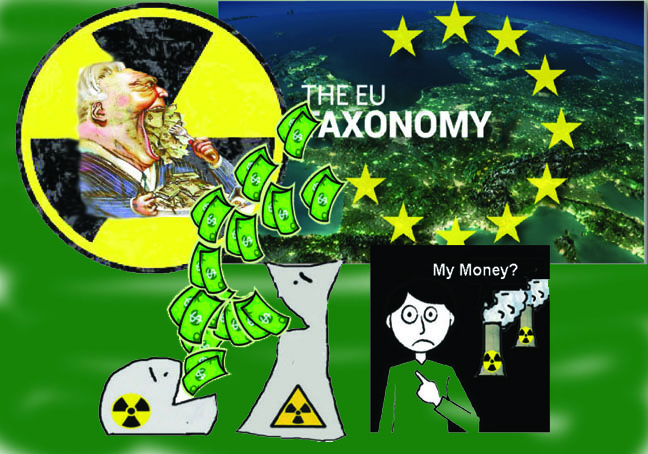
Austria is ready to contest if Europe grants the green label to nuclear and gas. Under pressure from certain European states, the latest version of its “green” label to attract private capital includes gas and nuclear.
Austria, which has banned the atom in its constitution, is negotiating to remove it from this classification and reserves the right “to take legal action” if it does not, confirms diplomat Wolfgang Wagner.
Ouest France 7th Jan 2022
Argentina pressures UK over deployment of nuclear weapons in Malvinas conflict
Argentina pressures UK over deployment of nuclear weapons in Malvinas conflict https://batimes.com.ar/news/argentina/argentina-demands-answers-over-uk-deployment-of-nuclear-weapons-in-malvinas-conflict.phtml
Report reveals British warships carried at least 31 nuclear weapons to South Atlantic following invasion of disputed island in 1982.
Argentina’s government has called on the United Kingdom to provide detailed information about the alleged movement and use of nuclear weapons during the 1982 South Atlantic conflict, after a report revealed that as many as 31 depth charges were sent to sea near the disputed Malvinas (Falkland) Islands during the war.
Last week, the Declassified UK website reported that a number of British warships deployed to the South Atlantic following Argentina’s invasion of the disputed islands were armed with dozens of nuclear depth charges.
According to the report, aircraft carriers HMS Hermes, HMS Invincible and the Royal Fleet Auxiliary ship, Regent, carried 31 nuclear weapons in total to the region’s seas, though no ship encroached upon the “total exclusion zone” around the islands imposed by the UK government at the time.
The article, written by veteran defence and security journalist and author Richard Norton-Taylor, said that new files released to the National Archives revealed that the presence of nuclear weapons had “caused panic among officials in London” who were concerned by the potential damage the “nuclear depth bombs” could cause if they were “lost or damaged.”
‘Measures’
Responding to the revelations, Argentina’s Foreign Ministry warned this week that if it did not receive answers from the British authorities, it would take “measures” and “raise this situation before the competent international bodies.”
Despite the UK’s reluctance to provide detailed information on the matter, our country has on several occasions expressed its concern before different international fora about the possibility, confirmed in 2003, that the UK had introduced nuclear weapons into the South Atlantic,” said a statement from the Palacio de San Martín.
Raising the possibility that Britain may have breached the 1967 Treaty of Tlatelolco (which established a nuclear free zone in Latin America and its seas), the Foreign Ministry said that it is essential to “ensure that there are no nuclear weapons anywhere in the South Atlantic, either in sunken ships, on the seabed or under any other form or circumstance.
Argentina and the UK maintain a sovereignty dispute over the islands, over which they fought a war in 1982 that ended 74 days later with the surrender of Argentina, then ruled by a military dictatorship. During the war, 648 Argentines and 255 British died.
The Australian government is complicit with USA and UK, imperilling the health of Julian Assange, may well cause his death.
AUKUS alliance driving Assange to his death, https://independentaustralia.net/life/life-display/aukus-alliance-driving-assange-to-his-death,15904, By John Jiggens | 6 January 2022, The actions of the U.S., UK and Australia are imperiling the health of Julian Assange and could result in the tragic death of the publisher, writes John Jiggens.
THE NEWS THAT Julian Assange has suffered a stroke while detained in London’s Belmarsh Prison has strengthened the fears of Assange supporters that the AUKUS alliance is comfortable with the WikiLeaks’ founder’s death at their hands.
But would an Australian Government be complicit in a plot against one of its own citizens?
Consider these recent stories.
In September 2021, Yahoo! News revealed that Mike Pompeo, who was the CIA Director in 2017, became party to a scheme to kidnap Assange from the Ecuadorean Embassy or to assassinate him.
The Yahoo! investigation was based on conversations with 30 former U.S. officials. Among those interviewed, eight provided details on plans to kidnap Assange.
Greg Barns SC, a barrister and advisor to Julian Assange, told Bay FM:
“It was like something out of a James Bond film, except sadly, it was very true. There was a clear plan to take Assange out. We now have the Australian Government on notice that one of its citizens was the subject of a conspiracy to murder plot by the CIA.”
Further, he remarked:
The conduct of the CIA was outrageous, unlawful and represents a complete breach of the so-called alliance or friendship between Australia and the United States.
The CIA acts essentially as a criminal enterprise. It is state-sanctioned criminality. To be overtly planning to murder someone in any circumstances would amount to a conspiracy to murder for anyone else and the persons would face very serious criminal charges.
The Yahoo! report prompted prominent Assange supporters to write to Prime Minister Scott Morrison, asking if the Australian Government accepted the behaviour of an ally plotting to murder an Australian citizen and questioning whether Australian intelligence agencies participated in the plot or were notified about it.
Five weeks passed while Morrison’s office composed a 100-word reply.
It acceped no responsibility or accountability whatsoever. Indeed, Morrison’s reply did not deny Australian involvement or knowledge of the plot.
Instead it passed the buck, advising:
Concerns about the legality or propriety of the activities of Australian intelligence agency are best directed to the IGIS, the Inspector General of Intelligence and Security.’
During the UK High Court extradition appeal in October, the Courier Mail ran another story, titled ‘Assange snubbed Aussie help 29 times, says Payne’.
Why, in the middle of Assange’s High Court hearing, was Foreign Minister Marise Payne using her friends in the Murdoch media to portray Assange as un-Australian, snubbing her patriotic ‘’Aussie help’’?
Assange’s father John Shipton commented:
“I get no help from Marise Payne in any way whatsoever. Saying I have been snubbed 29 times by Julian is to defend her. It’s only to defend her. It’s nothing to do with Julian.”
The family have continually asked for Payne and Morrison to actively engage with Australia’s UK and U.S. allies. They see extradition as an outrageous surrender of Australian sovereignty and they expect that Morrison and Payne should tell UK Prime Minister Boris Johnson and U.S. President Joe Biden so.
Shipton, who has travelled to 50 countries to garner support for Julian, said:
“Everywhere I go, people ask where is the Australian Government in this? What is the substance of Australia in its relationship with the UK that it allows this show trial to go on without comment?”
Anger as European Union is poised to subsidise the corrupt and rapacious nuclear industry

Germany and Austria have expressed their fury over a French victory on EU rules that would open the door to new investment in nuclear power. The European Commission’s proposed new “taxonomy” rules will allow private investment in atomic energy to be linked to climate policy subsidies as well as funding for gas-fuelled power stations to replace coal-fired generators.
Incensed Austrian ministers compared the Brusselsdecision, which was rushed through late on New Year’s Eve, to Adolf Hitler’s 1941 “Nacht und Nebel”, night and fog, decree to round upand destroy all resistance to the Nazis.
“The EU commission took a step towards greenwashing nuclear power and fossil gas yesterday in a night and fog action,” Leonore Gewessler, the Austrian climate protection minister, said. “They are harmful to the climate and the environment and destroy the future of our children.”
Greenpeace UK has urged Boris Johnson not to allow gas or nuclear to be included in Britain’s own green investment rules. “This loophole could be a drain for Europe’s climate ambitions, as they switch from phasing out dirty fuels, to phasing out dirty fuels only when it seems convenient. The UK must resist being pulled into this failing approach,” Doug Parr, the chief scientist and policy director of British Greenpeace, said.
Times 2nd Jan 2022
https://www.thetimes.co.uk/article/eu-capitals-at-odds-on-nuclear-power-kd2fsznr6
President Biden should pledge never to use nuclear weapons first
President Biden should pledge never to use nuclear weapons first, The Hill, BY THOMAS GRAHAM, JR. AND JONATHAN GRANOFF, — 01/03/22 President Biden can make the world a dramatically safer place by declaring that it is now the policy of the United States never to use nuclear weapons first. Such a pledge is consistent with international legal obligations, fulfills campaign promises, and diminishes the risk of using a nuclear weapon. It would make countries subject to the nuclear weapons threats less nervous in a crisis, when irrationality can lead to disaster. It would add to global stability by lowering the political currency of nuclear weapons.
And significantly, it would help strengthen the Nuclear Nonproliferation Treaty (NPT), the world’s most important arms control treaty. Pursuant to Article VI of the treaty, five nuclear weapons states — United Kingdom, United States, Russia, China, and France — have pledged to “pursue negotiations in good faith on effective measures relating to cessation of the nuclear arms race at an early date and to nuclear disarmament.”
The NPT needs such a boost. Notwithstanding the commitment to disarmament, the five nuclear weapons states, plus the four others not in the treaty — India, Israel, Pakistan, and North Korea — are spending enormous amounts of money modernizing or expanding their nuclear arsenals, or both. Because of the omicron surge in New York, an important 50-year review conference for the treaty (the tenth five-year review), which was supposed to take place next week, has been postponed for the second year in a row (the scheduled 2020 conference was also cancelled due to a winter COVID surge). Meanwhile, nuclear tensions continue to rise, making progress toward meeting the NPT’s goals critically important.
Normally the NPT gets reviewed every five years. At these periodic review conferences, every nation in the world (except the four that aren’t NPT parties) analyze the state of the treaty’s nonproliferation and nuclear disarmament obligations, and strike agreements to strengthen proliferation constraints and make tangible progress toward a nuclear weapons-free world…………….
there is one step the U.S. can take which would help reverse the present dangerous situation: declaring it will never use nuclear weapons first. That would lend credibility to the sincerity of U.S. commitment to fulfilling its disarmament pledges under the NPT.
When brought into deployment practice, a no-first-use posture could make us all dramatically safer. Today, the nuclear posture of the U.S. and Russia supports continuing to threaten to use nuclear weapons first. In practice this tends to keep the arsenals close to Cold War hair-trigger alert status. Such conduct ignores the most important principle of international civilized order and diplomacy: pacta sunt servanda, solemn promises among nations must be kept. Failure to keep arms control commitments — in the nuclear age — could mean the annihilation of civilization.
A no-first-use pledge is consistent with the platform of the Democratic Party on which President Biden campaigned, which states, “(The) sole purpose of our nuclear arsenals should be to deter — and, if necessary retaliate against — a nuclear attack, and we will work to put that belief into practice, in consultation with our allies and military.” A U.S. pledge would challenge all nuclear weapons states to make similar pledges.
Presidents Ronald Reagan and Mikhail Gorbachev got it right when they agreed that a nuclear war can never be won and must never be fought.
Reagan and Gorbachev helped reduce the number of nuclear weapons from more than 65,000 in 1985 to fewer than 14,000 today. This process rested on arms control agreements such as the NPT.
Affirming that the sole purpose of the U.S. nuclear arsenal is to deter attack would respect the NPT, diminish the extremity of the status quo, and help move from an environment of irrational threat to a shared recognition of common security interests and the realistic pursuit of human security. https://www.dell.com/en-au/work/shop/business-laptops-ultrabooks-and-tablets/vostro-5410-laptop/spd/vostro-14-5410-laptop/smc9wnv5410c09aub?gacd=9695171-8007-5761040-272319172-0&dgc=ST&gclsrc=aw.ds&&gclid=EAIaIQobChMI_ISr8_uW9QIVu4GsAh2EXA_HEAEYASAEEgJoSfD_BwE
Biden’s First Year Foreign Policy Record May Be Worse than Trump’s
In many ways, Biden has actually been worse than Trump, for example, in his expansion of Special Forces operations in Africa, his aggressive stance on war in Ukraine, and in his use of human rights as a weapon to try to rally public opinion against China and Russia.
Biden has also been more dishonest—as in Syria, for example, where Trump admitted that the U.S. military was there to control the oil, while Biden deceptively claimed they were there to help the Syrian people.
The next three years could be very dangerous if tensions between the U.S., Russia and China continue to escalate. Deteriorating domestic conditions—evident in skyrocketing inflation and a rising cost of living—may also lead to greater domestic unrest, which the Biden administration could try to circumvent by trying to mobilize people against a foreign enemy.
Biden’s First Year Foreign Policy Record May Be Worse than Trump’s Covert Action By Jeremy Kuzmarov – December 31, 2021 His administration has escalated dangerous conflicts with Russia and China while increasing the military budget, expanding deadly sanctions and sustaining forever wars.
AM endorsed Biden for president as a lesser evil to the neofascism of Donald J. Trump and the modern-day GOP. At the same time, we warned readers about Biden’s past and long record as a Cold Warrior and hawk.
Biden’s first year in office has shown that the past was indeed a prologue to the future.
Continue readingIndia, Pakistan exchange list of nuclear power installations
India, Pakistan exchange list of nuclear power installations, https://energy.economictimes.indiatimes.com/news/power/india-pakistan-exchange-list-of-nuclear-power-installations/88642567 India and Pakistan exchanged lists of nuclear installations and facilities…….
Will 2022 Bring A Revived Iran Nuclear Deal — Or A Hard-Line Plan B?
Will 2022 Bring A Revived Iran Nuclear Deal — Or A Hard-Line Plan B?, Radio Free Europe 31 Dec 21, The year 2022 could see an escalation of tensions between Iran and the United States if nuclear talks aimed at reviving the stalled 2015 nuclear deal collapse.
While analyst believe an agreement is still reachable as ongoing negotiations are entered into the new calendar, the United States and EU countries have warned that there are only “weeks” left to salvage the agreement, formally known as the Joint Comprehensive Plan Of Action (JCPOA).
The landmark accord, which significantly limited Tehran’s nuclear activities in exchange for sanctions relief, unraveled after 2018 when then-U.S. President Donald Trump pulled Washington out of the deal and reimposed crippling economic sanctions on Iran………………
Ali Vaez, director of the Iran Project at the International Crisis Group, says there is still a “narrow pathway” for mutual compliance with the 2015 deal, adding that it requires flexibility on both sides and a pragmatic approach by Tehran…………
Experts say the alternatives to the nuclear deal are not attractive.
“None of the alternatives are good, which is, of course, why the West has pushed to revive the deal. But Iran is leaving it little choice,” Henry Rome, a senior Iran analyst at the Eurasia Group in Washington, told RFE/RL. “The most likely no-deal scenario involves a year of escalation with more Iranian nuclear progress, American and European economic sanctions, Israeli and American military threats, and popular protest and economic stagnation in Iran.”
“The U.S. is likely to pull the plug and switch to a much more coercive approach by the end of January, unless either talks make good progress or Iran’s nuclear progress slows down,” Vaez said.
A more forceful approach could include attempts by the United States to cut off Iran’s oil exports to China, which have continued despite U.S. sanctions that prevent Iran from selling its oil, a main source of revenue for the country. Such oil sales, which according to figures by the commodity analytics firm Kpler increased to almost 18 million barrels in November, have helped Tehran survive under sanctions that have crippled its economy.
There have also been talks about an interim deal under which Tehran would suspend its sensitive nuclear activities in exchange of some economic relief. Such an agreement, similar to the approach employed in working out the original JCPOA, could stave off an immediate nuclear crisis and create time and space for a future deal.
But as analyst Rome notes, Tehran is unlikely to go that route for now.
“I am doubtful there will be an interim deal next year,” Rome said. “If Iran is not keen on the economic benefits of the full JCPOA, it’s not clear why it would settle for lesser benefits under a smaller deal.”……………………… https://www.rferl.org/a/iran-nuclear-talks-2022-options/31634579.html
UN Nuclear Ban Treaty conference postponed again because of Covid-19
A U.N. conference on nuclear nonproliferation due to take place in New
York from early next month was postponed again because of surging COVID-19
cases, diplomatic sources said Wednesday. The meeting to review the Treaty
on the Non-Proliferation of Nuclear Weapons was scheduled to be held Jan. 4
to 28 in New York after being delayed three times from its original date in
2020 due to the coronavirus pandemic. The NPT, joined by 191 countries, is
the world’s most widely ratified nuclear arms control agreement. Its review
conferences involving both nuclear and non-nuclear states have been held
every five years since 1975, with the last gathering in 2015.
Kyodo News 30th Dec 2021
Nuclear power in the EU taxonomy and Germany’s position

Q&A: Why is Germany phasing-out nuclear power and why now? 28 Dec 2021, Kerstine Appunn ”……………………………..Nuclear power in the EU taxonomy and Germany’s position
Observers have called France’s push to include nuclear power projects in the EU taxonomy as a sustainable investment a “political nightmare” for Germany. Backed by a group of other European countries such as Bulgaria, Croatia, Czechia, Finland, Hungary, Poland and Romania, French President Emmanuel Macron tries to make nuclear power a pillar of the EU’s decarbonisation strategy, while Germany is betting heavily on wind and solar power. It is supported in its push for a nuclear-free taxonomy by Portugal, Austria, Luxembourg and Denmark. Germany’s new Chancellor Olaf Scholz, of the Social Democrats (SPD), has told Macron that he has always been opposed to nuclear power, much like his coalition partner, the Green Party.
If included in the taxonomy, nuclear power investments could be part of green funds, banks could declare loans to nuclear projects as sustainable investments – all in aid of getting more private investment to flow into climate friendly economic activities and businesses.
Agora Energiewende’s Müller says the German approach is still more future-proof. “The idea that nuclear power stations can be built at predictable costs and by a predictable schedule has not proven to be realistic. We also still have the unresolved problem of nuclear waste storage as well as the possibility of a major accident. Germany’s decision to focus on the expansion of renewables instead of nuclear is reflected also by the markets as renewables dominate electricity investments internationally.”
The European Commission is set to come out with a proposal for the taxonomy in January 2022, which EU member states will then decide on with a majority vote. Instead of an in-or-out decision on nuclear (and natural gas), the commission is likely to present a compromise that would classify nuclear as a temporary, transitional technology which has to be labelled and declared in funds so that consumers and investors have the choice between “entirely green” products, e.g. renewable energies, or second or third tier products that include nuclear or gas technology.
Whatever the decision, Müller says Germany and France should focus more on the common ground concerning the energy transition. “Recent French studies show – independently of the future of nuclear energy – that a massive expansion of renewables is needed to reach the climate targets. And there are also opportunities for cooperation between Germany and France on green hydrogen.”
Shouldn’t Germany – like other countries – embrace and support the use of new small modular reactors?
Using a large fleet of small modular reactors (SMR) to secure climate neutral electricity supply in the future – as proposed by billionaire and philanthropist Bill Gates – has been hailed as a climate change solution. In Belgium, which is set to shutter its two remaining nuclear power stations by 2025, the government agreed to invest 100 million euros in the research on SMR.
SMR proponents claim that, once produced in bulk, these small plants are cheaper and safer thanks to advanced reactor designs and can be operated with converted short-lived radioactive materials, solving the waste problem.

But two assessments commissioned by the Federal Office for the Safety of Nuclear Waste Management (BASE) have found that these tens of thousands of small reactors would carry enormous risks with regard to the proliferation of weapons-grade materials and will probably never be as cheap as their advocates say.
What is different in Germany compared to other countries in Europe which embrace nuclear as a CO2-free solution?
Germany not only has strong public support for, and a long history of, anti-nuclear sentiment, it also has only 11 percent of nuclear left in its power mix. Leaving it behind entirely is therefore a more obvious and easy decision than for other countries, such as France, where the share of nuclear power in domestic generation stands at 70.6 percent, but also in Bulgaria with 40.8 percent, in Sweden with 29.8 percent (in Spain: 22.2%, Russia at 20.%, United States at 19.7%, UK 16%, all in 2020).
Historians also explain the different attitude towards nuclear with the different reactions to the Chernobyl accident, which was felt much closer and more threatening to Germans compared to French or UK citizens. Another explanation for Germany’s sensitivity to nuclear power is that early on, the post-war critique of nuclear weapons was linked to the civilian use of nuclear fission. (A second wave of the German peace movement in the 1980s would also bolster a younger generation’s resistance to nuclear power.)
And even if there are people who make a case for nuclear for climate protection reasons, the exit has now proceeded too far to be reversed, and there is simply no influential political power that would consider re-opening the painful, decade-long debate on nuclear power that has finally been put to rest. https://www.cleanenergywire.org/news/qa-why-germany-phasing-out-nuclear-power-and-why-now
China hits back at ‘double standards’ amid US tech war, Washington’s nuclear weapon concerns
Beijing issued its first white paper on export controls on Wednesday, a month after 12 more Chinese companies were placed on the United States’ export blacklist
The ‘China’s Export Controls’ white paper argues that no country or region should ‘gratuitously impose discriminatory restrictions or apply ‘double standards’…….. https://www.scmp.com/economy/china-economy/article/3161447/china-hits-back-double-standards-amid-us-tech-war-washingtons
1 This Month



26 September – International Day for the Total Elimination of Nuclear Weapons


PLEASE OPPOSE HR 8255 AND S.3639 – bills would accelerate satellite deployment, with no environmental review or safeguards – https://ncstd5li.quorum.us/campaign/169331/
To see nuclear-related stories in greater depth and intensity – go to https://nuclearinformation.wordpress.com
-
Archives
- September 2026 (269)
- August 2026 (330)
- July 2026 (355)
- June 2026 (287)
- May 2026 (306)
- April 2026 (356)
- March 2026 (251)
- February 2026 (267)
- January 2026 (308)
- December 2025 (358)
- November 2025 (359)
- October 2025 (375)
-
Categories
- 1
- 1 NUCLEAR ISSUES
- business and costs
- climate change
- culture and arts
- ENERGY
- environment
- health
- history
- indigenous issues
- Legal
- marketing of nuclear
- media
- opposition to nuclear
- PERSONAL STORIES
- politics
- politics international
- Religion and ethics
- safety
- secrets,lies and civil liberties
- spinbuster
- technology
- Uranium
- wastes
- weapons and war
- Women
- 2 WORLD
- ACTION
- AFRICA
- Atrocities
- AUSTRALIA
- Christina's notes
- Christina's themes
- culture and arts
- Events
- Fuk 2022
- Fuk 2023
- Fukushima 2017
- Fukushima 2018
- fukushima 2019
- Fukushima 2020
- Fukushima 2021
- general
- global warming
- Humour (God we need it)
- Nuclear
- RARE EARTHS
- Reference
- resources – print
- Resources -audiovicual
- Weekly Newsletter
- World
- World Nuclear
- YouTube
-
RSS
Entries RSS
Comments RSS

