USA’s plan – far right Ukrainian militia to attack Russia-speaking Donbass Region – drawing Russian support – USA then to claim Russia aggression
Al Ronzoni <aronzonijr@msn.com> wrote:
The World Socialist Website also confirms from sources in Donetsk that it actually looks like Ukraine will make the first move v. them and Luhansk. Then, if Russia responds in any way, that will constitute the “invasion,” then Menendez “Mother of All Sanctions” will be imposed and Nord Stream 2 will be cancelled. Hell, even if Russia doesn’t actually do anything, the fact that fighting will be taking place , ‘fog of war” etc. can be used to still claim Russia has invaded. No doubt Biden and US leadership think this can be “managed” with Russia embroiled in a protracted conflict in the Donbass Region that can be capitalized on to marginalize Russia’s economic relations with Europe, in favor of the US and to make further NATO expansion, perhaps now including Sweden and Finland, easier.
Another brilliant essentially neo-con type plan. What could go wrong?
US accelerates troop deployments as Biden threatens “world war” with Russia, WSWS,Alex Lantier, Johannes Stern, 12 February 2022
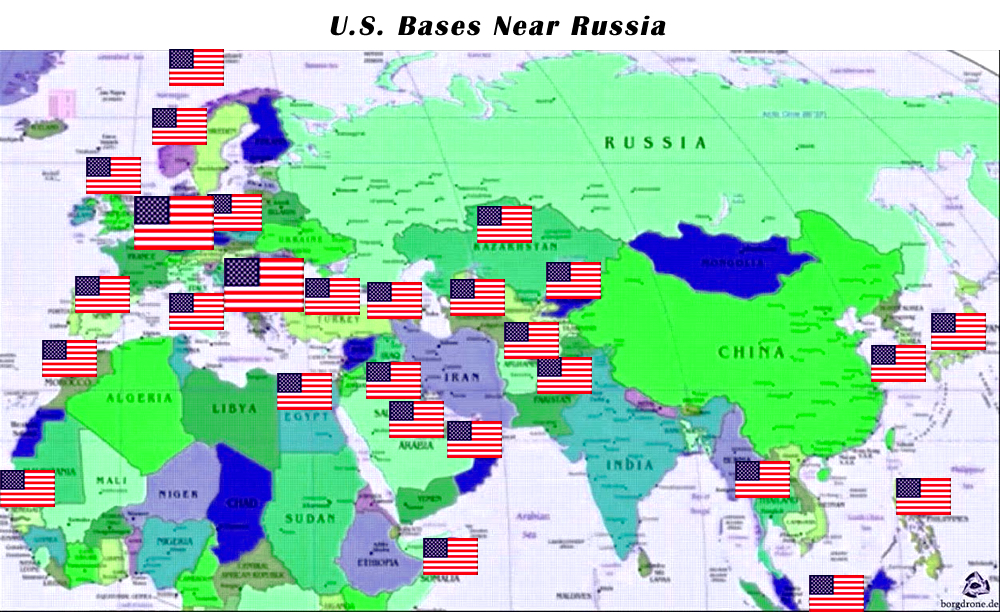
As Washington and its NATO allies work to militarily surround Russia, US officials yesterday declared that a US-Russia war is imminent.
Yesterday, Washington announced the deployment of 3,000 troops from the 82nd Airborne Division to bases in Poland, which borders Ukraine. Britain and Germany will send hundreds of soldiers to strengthen NATO battlegroups in Estonia and Lithuania. This comes after NATO countries have for weeks delivered Javelin anti-tank missiles, Stinger anti-aircraft missiles and Turkish TB2 Bayraktar drones to the Ukrainian regime in Kiev.
Nearly two decades after Washington invaded Iraq based on lies that it had “weapons of mass destruction,” US imperialism and its NATO allies are concocting a strategy to trigger a war with Russia, a nuclear-armed power, under conditions where they can blame Russia for it. Reports of mounting Ukrainian military activity in the Donbass region suggest that a NATO-backed military provocation can be staged there to trigger the war.
The narrative NATO is peddling—that it is acting to defend Ukraine from Russia—is a pack of lies. Ukrainian President Volodymyr Zelensky has publicly declared that Russia’s military posture is not consistent with plans for an all-out invasion of Ukraine. Moreover, when reporters challenged US claims that Russia is preparing an attack, State Department spokesman Ned Price could do nothing but argue that undisclosed “intelligence information” meant his claims were true.
In 2014 … the NATO powers backed a putsch in Kiev, where far-right militias toppled a pro-Russian Ukrainian president and set up a NATO puppet regime. As these militias backed by NATO mercenaries attacked Russian-speaking areas of Ukraine like Donbass and Crimea, these areas broke off from Ukraine, with Crimea voting to rejoin Russia. Since then, far-right Ukrainian militias have faced off against Russian troops in Crimea and Russian-backed militias in the Donbass.
…………. Russian-speaking areas of Ukraine are reporting highly advanced NATO war preparations. Yesterday, Donetsk People’s Republic (DPR) leader Denis Pushilin cited Biden’s call on US citizens to leave Ukraine, warning that war was imminent. “The US President, probably, given US influence in Ukraine, has information that allows him to make such statements and take such a position. … Ukraine may attack at any moment. Ukraine has everything ready for that: the concentration of forces and means makes it possible to do it at any moment, as soon as a political decision is made.”
On February 9, the DPR Militia’s Deputy Chief Eduard Basurin said Ukrainian tanks are taking positions only 15 kilometers from theirs, near Avdeyevka, Gorlovka and Novgorodskoye. Yesterday, Basurin said Ukrainian forces also deployed an S-300 missile system.
Such deployments violate the 2015 Minsk accords, which temporarily froze the Ukraine conflict and sent the Organization for Security and Cooperation in Europe (OSCE) to monitor the front line. Basurin said, however, that Kiev regime forces are using electronic jamming to prevent OSCE observers from using drones to observe these deployments. “It seems that OSCE observers are quite content with a situation where it is impossible to record violations by Ukraine,” he said.
Significantly, DPR forces last month warned, based on their sources in Kiev, that they expect an attack to come as soon as Ukrainian armored assault brigades are assembled and in position.
On January 28, Basurin said: “According to our intelligence, the Ukrainian General Staff under the guidance of US advisers at the Ukrainian Defense Ministry is putting final touches to a plan for offensive operations in Donbas. The date of aggression against the people’s republics will be set when the attack groups have been created and the operation’s plan approved by Ukraine’s National Security and Defense Council.”
These are conditions in which NATO could goad Russia, a nuclear power, into war. Were such an attack to begin, DPR forces would likely require Russian military assistance to avoid being overrun by far-right Ukrainian militias, which call for killing Russians and have bombed Russian-speaking Ukrainian cities near Russia’s borders. If Moscow intervened against this, however, it would provide grounds for NATO war propaganda, denouncing Russian aid to the DPR as an “invasion” of Ukraine……….. https://www.wsws.org/en/articles/2022/02/12/ukra-f12.html
The RAND Corporation’s plan for regime change in Moscow.
RAND Corporation study calls for regime change in Moscow, http://space4peace.blogspot.com/2022/02/rand-corporation-study-calls-for-regime.html Bruce Gagnon,13 Feb 22,
Obama’s ambassador to Ukraine made a trip to US-NATO training base in western Ukraine (where the Nazis predominate). US Special Forces are rotated into the base from Ft. Carson, Colorado to train the Kiev regime’s Army. Many of the Nazis have been brought into this ‘new military unit’.
More than 27 million people in the former Soviet Union died during Hitler’s WW II invasion. Imagine how Russians today feel when they see the US arming, training and directing Nazi forces to attack the Russian-ethnic citizens living in the Donbass region of Ukraine, right next to the Russian border.
Imagine how Moscow felt when they first read this RAND Corporation study. When we look at current events can we notice the direct connection to the points from this study listed below? Whether it is US-NATO military expansion right up to Russian borders or efforts by Washington to kill the Nordstream 2 natural gas pipeline from Russia to Germany – it is clear that there is a method behind US-NATO madness. If you were sitting in Russia’s shoes how would you react to these proposals below – many of which have been or are now being implemented?
Despite these vulnerabilities and anxieties, Russia remains a powerful country that still manages to be a U.S. peer competitor in a few key domains. Recognizing that some level of competition with Russia is inevitable, RAND researchers conducted a qualitative assessment of “cost-imposing options” that could unbalance and overextend Russia.
Continue readingCounterVortex Episode 110: Nuclear power? No thanks!
https://soundcloud.com/user-752167240/countervortex-episode-110-nuclear-power-is-bad
In Episode 110 of the CounterVortex podcast, Bill Weinberg rants against the current greenwashing of nuclear power, and hype about a supposedly “safe” new generation of reactors. Every stage of the nuclear cycle is ecocidal and genocidal. Uranium mining has poisoned the lands of indigenous peoples from Navajo Country to Saskatchewan to West Africa.
The ongoing functioning of nuclear plants entails routine emissions of radioactive gases, factored in by the bureaucrats in determining “acceptable” levels of cancer. Disposal of the waste, and the retired reactor sites themselves, is a problem that inherently defies solution. They will be deadly for exponentially longer into the future than biblical times stretch into the past.
The Waste Isolation Pilot Project (WIPP) in New Mexico, hyped as secure for hundreds of millennia, leaked plutonium after only 13 years. And finally there is the “sexiest” issue, the one that actually gets some media play, at least—the risk of accident. It is a mark of capitalism’s depravity that even after the nightmares of Fukushima and Chernobyl, we periodically get media capaigns about an imminent “nuclear renaissance.”
Nuclear versus fossil fuels is the false choice offered us by industry. The imperative is to get off the extraction economy and on to one based on sustainability and resource conservation.
Listen on SoundCloud or via Patreon.
Conflict resolution – the positive way out of the Ukraine crisis

According to Anatol Lieven, an academic and Ukraine specialist, this is “the most dangerous crisis in the world today; it is also in principle the most easily solved”. A solution exists, drawn up by France, Germany, Russia and Ukraine in 2015, which involves the implementation of the Minsk II agreement. This offers demilitarisation, a restoration of Ukrainian sovereignty including control of the border with Russia, and full autonomy for the Donbas region. The main objection for Kyiv is that autonomy for the Donbas would prevent Ukraine from joining Nato and the EU.
One way through this would be for Nato to declare Ukraine a neutral country and decree that it does not join Nato for at least a decade. In practice, Ukrainian membership of the EU is ruled out for at least a generation because of Ukraine’s corruption, political dysfunction and lack of economic progress.
I’m a conflict mediator. This is a way out of the Ukraine crisis https://www.theguardian.com/commentisfree/2022/feb/09/conflict-mediator-ukraine-vladimir-putin, Gabrielle Rifkind
Instead of ramping up the threats, western nations should be offering Vladimir Putin a ladder to climb down, The current western narrative on the Ukraine crisis is that Russia is a machiavellian power with an expansionist agenda. That view is shaping our response: we are matching Vladimir Putin’s aggression, meeting strength with strength and threats with threats. But what if we tried to get inside the mind of the enemy, and ask what was motivating the aggression? By doing so, could we break this cycle – and offer Putin a way out, too?
When the USSR deployed ballistic missiles to Cuba in the 1960s, their proximity to the US nearly unleashed a third world war. Sitting in Moscow today, does Putin see being encircled by Nato as an equivalent threat? After all, one of his core demands is that Nato curbs its expansion close to the Russian border, and that Ukraine must not join. Russia claims that the US repeatedly told Soviet leaders it would incorporate Russia into a cooperative European security framework. In practice, Nato emerged as a US-dominated security frame with about 75,000 US troops still on European soil. Great powers always treat with suspicion and hostility the presence of rival great powers on their borders.
Putin was always bitter about the collapse of the Soviet Union. He bided his time, and in 2014 Russia seized Crimea and sent troops into Ukraine’s mostly Russian-speaking Donbas region to support the separatist movement.
Russia today is no benign liberal democracy and President Putin has an intelligence mindset, playing poker, not chess. He is prepared to threaten war, create chaos and spread misinformation to push back Nato from Russia’s borders. Using coercive diplomacy, he has amassed more than 130,000 troops on the eastern border of Ukraine, a continued threat to its sovereignty.
Yet however provocative Russia’s behaviour, western governments have a responsibility not to escalate the threat of war. The consequences of a direct US-Russian confrontation in Ukraine would be catastrophic on all sides. A full-scale conventional war could escalate into nuclear war. Even a limited war would create a ruinous global economic crisis that could destroy for the foreseeable future any chance of serious action against climate change.
I have worked in conflict resolution for the past 20 years and seen the dangers of stumbling into wars, unable to stop or turn back. Selling weapons to a country may look like a principled act in support of an ally but it usually takes them deeper and deeper into the quagmire of conflict. The US and the UK have instigated and been involved in four failed wars this century, but we seem to have failed to have learned the lessons.
There are those who argue that sending military support to Ukraine strengthens Nato’s hand at the negotiating table. Yet there are inherent dangers in this approach – the use of deterrence could be the very thing that escalates the situation.
Washington and London have pledged to increase offensive military aid to Ukraine and have announced arms deliveries, ammunition and anti-tank weapons. The UK is seeking to put itself at the forefront of western efforts to forestall what the prime minister, Boris Johnson, has called the risk of a “lightning war” in eastern Europe.
Germany has been much more sceptical, blocking the transfer of German-made weapons from Baltic states to Ukraine. It has long argued against sending weapons to active conflict zones. Germany has declared that it is prepared to have a serious dialogue with Russia to defuse the highly dangerous situation, arguing that diplomacy is the only viable way.
Whatever western governments feel about Moscow’s behaviour, de-escalating the conflict and giving Moscow a ladder to climb down is in everyone’s interest. We should not underestimate the link between humiliation and aggression. Putin is a very proud man, and smart politics by western governments should offer face-saving gestures if we are serious about avoiding war.
According to Anatol Lieven, an academic and Ukraine specialist, this is “the most dangerous crisis in the world today; it is also in principle the most easily solved”. A solution exists, drawn up by France, Germany, Russia and Ukraine in 2015, which involves the implementation of the Minsk II agreement. This offers demilitarisation, a restoration of Ukrainian sovereignty including control of the border with Russia, and full autonomy for the Donbas region. The main objection for Kyiv is that autonomy for the Donbas would prevent Ukraine from joining Nato and the EU.
One way through this would be for Nato to declare Ukraine a neutral country and decree that it does not join Nato for at least a decade. In practice, Ukrainian membership of the EU is ruled out for at least a generation because of Ukraine’s corruption, political dysfunction and lack of economic progress.
Talks between Putin and France’s President Macron this week were more conciliatory in tone. Macron said: “There is no security for Europeans if there is no security for Russia.” A permanent forum where Russia is welcome is needed to re-examine the post-cold war security system in Europe. This approach to issues such as missile deployments, arms control and transparency around military exercises could ease this conflict. Such a dialogue could create a climate of security cooperation with Russia.
- Gabrielle Rifkind is a specialist in conflict resolution and the director of Oxford Process
EU plan to call nuclear power ”green”, but for Asia, nuclear’s outlook is poor
EU plans to label natural gas and nuclear ‘green’ ‘reflect Asia position’ Pinsent Masons, OUT-LAW NEWS | 11 Feb 2022 John Yeap john.yeap@pinsentmasons.com The EU executive arm the European Commission has presented a plan to classify some gas and nuclear power as “transitional” green investments.
Known as the EU Taxonomy Complementary Climate Delegated Act, the plan aims to define sustainable investment to guide spending on projects in line with EU’s climate goal to become climate neutral by 2050. The Commission said it would include certain gas and nuclear power activities as ‘transitional activities’.
………….. “Nuclear involves different considerations as its role in power generation in Asia has to date been and will likely continue to be limited. The small landmass of several nations as well as geological considerations of earthquake, volcanoes and tsunamis will likely inhibit the growth of nuclear in nations not currently deploying nuclear. Where nuclear is currently deployed in the region, its continued growth will continue to be influenced by policy, which remains generally negative to its continued use,” he said.
“China has the largest fleet of nuclear power plants in the region and with its advancing domestic technologies, may continue to champion nuclear power generation…….
…… Nuclear power must meet strict nuclear and environmental safety requirements, and natural gas must contribute to the transition from coal to renewables – investment must meet strict conditions and not squeeze out investment in renewables.
Nuclear-related activities classified as ‘sustainable’ under the Act include advanced technologies with closed fuel cycles; new nuclear power plant projects for energy generation, which will be using best-available existing technologies, will be recognised until the date of approval of construction permit in 2045; and modifications and upgrades of existing nuclear facilities for the purposes of lifetime extension will be recognised until the date of approval by competent authority in 2040.
……… The College of Commissioners has reached political agreement on the text of the Act, which will be formally adopted once translations are available in all EU languages, a statement by the Commission said.https://www.pinsentmasons.com/out-law/news/eu-plans-label-natural-gas-nuclear-green-reflect-asia-position
In the UK, local Councils are signing up to the UN Treaty on the Prohibition of Nuclear Weapons
| Having campaigned for decades for the global abolition of nuclear weapons, CND supporters had reason to celebrate in 2021 when the Treaty on the Prohibition of Nuclear Weapons (TPNW) entered into force. This United Nations treaty was supported by most of the world’s states and makes nuclear weapons illegal in the countries that sign it. 86 countries have already signed up to the Treaty, but shamefully the British government will not even engage with this historical agreement. There was a particularly memorable moment when the UK representative at the UN stood alongside former US President Trump’s Ambassador outside the building denouncing the talks (which eventually led to the agreement), while the more mature countries got on with the business of negotiating inside. CND groups are already taking matters into their own hands in regards to the TPNW by getting local councils to support the Treaty and building support from the ground up. And now we’re asking our supporters to help us with a campaign to get the UK government to engage with the global majority who support the Treaty. Labour Outlook 10th Feb 2022 https://labouroutlook.org/2022/02/10/talks-not-bombs-campaign-for-nuclear-disarmament-cnd/ |
USA does not have to march into war with Russia over Ukraine. It can choose to keep to the Minsk-Normandy process

The current crisis should be a wake-up call to all involved that the Minsk-Normandy process remains the only viable framework for a peaceful resolution in Ukraine. It deserves full international support, including from U.S. Members of Congress, especially in light of broken promises on NATO expansion, the U.S. role in the 2014 coup, and now the panic over fears of a Russian invasion that Ukrainian officials say are overblown.
Memo to Congress: Diplomacy for Ukraine Is Spelled M-I-N-S-K
Ukrainians of all ethnicities deserve genuine support to resolve their differences and find a way to live together in one country—or to separate peacefully.
https://portside.org/2022-02-08/memo-congress-diplomacy-ukraine-spelled-m-i-n-s-k Medea Benjamin, Nicolas J.S. Davies COMMON DREAMS
While the Biden administration is sending more troops and weapons to inflame the Ukraine conflict and Congress is pouring more fuel on the fire, the American people are on a totally different track.
A December 2021 poll found that a plurality of Americans in both political parties prefer to resolve differences over Ukraine through diplomacy. Another December poll found that a plurality of Americans (48 percent) would oppose going to war with Russia should it invade Ukraine, with only 27 percent favoring U.S. military involvement.
The conservative Koch Institute, which commissioned that poll, concluded that “the United States has no vital interests at stake in Ukraine and continuing to take actions that increase the risk of a confrontation with nuclear-armed Russia is therefore not necessary for our security. After more than two decades of endless war abroad, it is not surprising there is wariness among the American people for yet another war that wouldn’t make us safer or more prosperous.”
The most anti-war popular voice on the right is Fox News host Tucker Carlson, who has been lashing out against the hawks in both parties, as have other anti-interventionist libertarians.
On the left, the anti-war sentiment was in full force on February 5, when over 75 protests took place from Maine to Alaska. The protesters, including union activists, environmentalists, healthcare workers and students, denounced pouring even more money into the military when we have so many burning needs at home.
You would think Congress would be echoing the public sentiment that a war with Russia is not in our national interest. Instead, taking our nation to war and supporting the gargantuan military budget seem to be the only issues that both parties agree on.
Most Republicans in Congress are criticizing Biden for not being tough enough (or for focusing on Russia instead of China) and most Democrats are afraid to oppose a Democratic president or be smeared as Putin apologists (remember, Democrats spent four years under Trump demonizing Russia).
Both parties have bills calling for draconian sanctions on Russia and expedited “lethal aid” to Ukraine. The Republicans are advocating for $450 million in new military shipments; the Democrats are one-upping them with a price tag of $500 million.
Progressive Caucus leaders Pramila Jayapal and Barbara Lee have called for negotiations and de-escalation. But others in the Caucus–such as Reps. David Cicilline and Andy Levin–are co-sponsors of the dreadful anti-Russia bill, and Speaker Pelosi is fast-tracking the bill to expedite weapons shipments to Ukraine.
But sending more weapons and imposing heavy-handed sanctions can only ratchet up the resurgent U.S. Cold War on Russia, with all its attendant costs to American society: lavish military spending displacing desperately needed social spending; geopolitical divisions undermining international cooperation for a better future; and, not least, increased risks of a nuclear war that could end life on Earth as we know it.
For those looking for real solutions, we have good news.
Negotiations regarding Ukraine are not limited to President Biden and Secretary Blinken’s failed efforts to browbeat the Russians. There is another already existing diplomatic track for peace in Ukraine, a well-established process called the Minsk Protocol, led by France and Germany and supervised by the Organization for Security and Cooperation in Europe (OSCE).
The civil war in Eastern Ukraine broke out in early 2014, after the people of Donetsk and Luhansk provinces unilaterally declared independence from Ukraine as the Donetsk (DPR) and Luhansk (LPR) People’s Republics, in response to the U.S.-backed coup in Kiev in February 2014. The post-coup government formed new “National Guard” units to assault the breakaway region, but the separatists fought back and held their territory, with some covert support from Russia. Diplomatic efforts were launched to resolve the conflict.
The original Minsk Protocol was signed by the “Trilateral Contact Group on Ukraine” (Russia, Ukraine and the OSCE) in September 2014. It reduced the violence, but failed to end the war. France, Germany, Russia and Ukraine also held a meeting in Normandy in June 2014 and this group became known as the “Normandy Contact Group” or the “Normandy Format.”
All these parties continued to meet and negotiate, together with the leaders of the self-declared Donetsk (DPR) and Luhansk (LPR) People’s Republics in Eastern Ukraine, and they eventually signed the Minsk II agreement on February 12, 2015. The terms were similar to the original Minsk Protocol, but more detailed and with more buy-in from the DPR and LPR.
The Minsk II agreement was unanimously approved by the U.N. Security Council in Resolution 2202 on February 17, 2015. The United States voted in favor of the resolution, and 57 Americans are currently serving as ceasefire monitors with the OSCE in Ukraine.
The key elements of the 2015 Minsk II Agreement were:
- an immediate bilateral ceasefire between Ukrainian government forces and DPR and LPR forces;
- the withdrawal of heavy weapons from a 30-kilometer-wide buffer zone along the line of control between government and separatist forces;
- elections in the secessionist Donetsk (DPR) and Luhansk (LPR) People’s Republics, to be monitored by the OSCE; and
- constitutional reforms to grant greater autonomy to the separatist-held areas within a reunified but less centralized Ukraine.
The ceasefire and buffer zone have held well enough for seven years to prevent a return to full-scale civil war, but organizing elections in Donbas that both sides will recognize has proved more difficult.
Continue readingWhat You Should REALLY Know About Ukraine

“the United States is standing with missiles on our doorstep.” Putin asked, “How would the Americans react if missiles were placed at the border with Canada or Mexico?”
The US Wants to Expand NATO In addition to integrating Ukraine into the US-dominated economic sphere, Western planners also want to integrate Ukraine militarily. For years, the US has sought the expansion of NATO, an explicitly anti-Russian military alliance. NATO was originally billed as a counterforce to the Warsaw Pact during the Cold War, but after the demise of the Soviet Union, the US promised the new Russia that it would not expand NATO east of Germany. Despite this agreement, the US continued building out its military alliance,growing closer and closer to Russia’s borders and ignoring Russia’s objections.
The West Wants Investor-Friendly Policies in Ukraine The backdrop to the 2014 coup and annexation cannot be understood without looking at the US strategy to open Ukrainian markets to foreign investors and give control of its economy to giant multinational corporations
The US Helped Overthrow Ukraine’s Elected President……. US Officials Were Caught Picking the New Government …
Washington Used Nazis to Help Overthrow the Government The Washington-backed opposition that toppled the government was fueled by far-right and openly Nazi elements like the Right Sector. One far-right group that grew out of the protests was the Azov Battalion, a paramilitary militia of neo-Nazi extremists.
What You Should Really Know About Ukraine https://fair.org/home/what-you-should-really-know-about-ukraine/, BRYCE GREENE 28 Jan 22, As tensions began to rise over Ukraine, US media produced a stream of articles attempting to explain the situation with headlines like “Ukraine Explained” (New York Times, 12/8/21) and “What You Need to Know About Tensions Between Ukraine and Russia” (Washington Post, 11/26/21). Sidebars would have notes that tried to provide context for the current headlines. But to truly understand this crisis, you would need to know much more than what these articles offered.These “explainer” pieces are emblematic of Ukraine coverage in the rest of corporate media, which almost universally gave a pro-Western view of US/Russia relations and the history behind them. Media echoed the point of view of those who believe the US should have an active role in Ukrainian politics and enforce its perspective through military threats.
The official line goes something like this: Russia is challenging NATO and the “international rules-based order” by threatening to invade Ukraine, and the Biden administration needed to deter Russia by providing more security guarantees to the Zelensky government. The official account seizes on Russia’s 2014 annexation of Ukraine’s Crimean peninsula as a starting point for US/Russian relations, and as evidence of Putin’s goals of rebuilding Russia’s long-lost empire.
Russia’s demand that NATO cease its expansion to Russia’s borders is viewed as such an obviously impossible demand that it can only be understood as a pretext to invade Ukraine. Therefore, the US should send weapons and troops to Ukraine, and guarantee its security with military threats to Russia (FAIR.org, 1/15/22).
Continue readingIn Ukraine, USA to finance American companies to sell nuclear technology there, and to other States

Where the Russians are coming, so is Westinghouse with its nuclear ambitions, ANYA LITVAK, Post Gazette, 7 Feb 22, Over the past few months, Joel Eaker, Westinghouse Electric Co.’s vice president for new nuclear power plant projects, has been shaking hands and posing for pictures all over Eastern Europe.
He was in Poland last month, where he plans to move in the spring. A week before that, he was in the Czech Republic to announce agreements signed with local companies in Cranberry-based Westinghouse’s bid to sell its AP1000 reactors in the region.
The nuclear renaissance never happened in the United States. But Mr. Eaker thinks Europe is headed in that direction.
The long game
The nuclear business is a long game with fits and starts.
For more than two decades, Westinghouse has been seemingly on the cusp of selling new nuclear reactors to various Eastern European countries ………….
All along, Westinghouse was pursuing a parallel strategy: making fuel that could be used in existing Russian-made reactors that are scattered across Europe.
…… Westinghouse could provide an alternate supply of fuel, which effectively delinks those countries from Russia.”
After some attempts loading the fuel in Russian-made reactors at Temelin in the Czech Republic, it was Ukraine that allowed Westinghouse to test and refine its fuel assemblies in Russian reactors.
Today, the U.S. company’s fuel is loaded into nearly half of Ukraine’s nuclear plants, and Westinghouse is trying to use those bona fides to sell fuel to existing Russian-style reactors in Finland, Czech Republic, Slovakia and Hungary, Tarik Choho, president of Westinghouse’s Europe, the Middle East and Africa division, told Ukraine’s news service in August.
Mr. Eaker said Westinghouse’s pursuit of that market was both earnest and strategic.
The company’s bread-and-butter business is supplying fuel to and servicing existing reactors. It’s what made Westinghouse, then in bankruptcy, attractive to the Canadian asset management firm Brookfield Business Partners, which has owned it since 2018.
It’s difficult to predict if this recent burst of nuclear promise in Eastern Europe will yield actual new reactor projects, Ms. Harrington said.
………… In 2014, when the continued existence of the U.S.’s Export-Import Bank became a topic of debate in Congress, Westinghouse’s then-CEO Danny Roderick said the first thing he was asked when pitching a new plant to clients in places like Central Europe is how much the U.S. government is willing to help financially.
………. Pierre Paul Oneid, the chief nuclear officer at Holtec International, a New Jersey-based company that specializes in decommissioning and nuclear fuel storage. Holtec, Mr. Oneid said, had been working for a decade to close a deal for a centralized storage facility for spent nuclear fuel in Ukraine, which would not be possible without financing from the U.S. government.
…….. While Mr. Oneid said the deal was in the “eleventh hour,” in fact it took three more years to finalize. U.S. Overseas Private Investment Corp. announced in 2017 that it was providing $250 million in political risk insurance to the Ukrainian utility. Bank of America/Merrill Lynch would then sell that $250 million commitment in the form of fixed-rate bond securities.
It was the first such deal of its type, but probably not the last.
Show me the money
If there’s another major piece, other than climate change, that’s opening doors for Westinghouse in Eastern Europe, it’s the prospect of the U.S. government’s expanded role in financing nuclear projects, Mr. Eaker said.
In 2019, then-President Donald Trump created the U.S. Nuclear Fuel Working Group………. Among its recommendations was for the U.S. Development Finance Corp., a newly-created vehicle to fund projects in low-income countries, to lift its ban on providing funds to nuclear projects.
The development agency listened and, in the summer of 2020, it unshackled itself from the ban, which was a holdover from its predecessor and modeled on the language of the World Bank. The DFC can even provide financing to projects in higher-income countries in Eastern Europe as part of its charge under the The European Energy Security and Diversification Act of 2019.
This means the U.S. government can now offer equity financing for nuclear projects abroad, a first. It can also give larger loans and loan guarantees than what is typically handled by the Export-Import Bank, and it can offer political risk insurance.
This is the next step in Westinghouse’s advances in Eastern Europe. Once it finishes doing a $10 million front end engineering and design study for AP1000 reactors in Poland — the U.S. government funded 70% of that work as part of an intergovernmental agreement — then it hopes to submit a formal bid along with a U.S. government financing proposal this fall.
In Ukraine, Westinghouse has already signed contracts with the electric utility to start ordering long-lead equipment and doing other preparations, but the contracts won’t be fully implemented until the U.S. comes with the financing package.
Anya Litvak: alitvak@post-gazette.com. https://www.post-gazette.com/business/powersource/2022/02/07/Russia-Ukraine-Westinghouse-Electric-nuclear-AP1000-reactors-climate-change-energy-eastern-europe/stories/202201300126
US created Ukraine mess, now it must repair Russia relationship
But the US and NATO’s interest in Ukraine is not really about resolving its regional differences, but about something else altogether. The US coup was calculated to put Russia in an impossible position. If Russia did nothing, post-coup Ukraine would sooner or later join NATO, as NATO members already agreed to in principle in 2008. NATO forces would advance right up to Russia’s border and Russia’s important naval base at Sevastopol in the Crimea would fall under NATO control.

Underlying all these tensions is NATO’s expansion through Eastern Europe to the borders of Russia, in violation of commitments Western officials made at the end of the Cold War. The US and NATO’s refusal to acknowledge that they have violated those commitments or to negotiate a diplomatic resolution with the Russians is a central factor in the breakdown of US-Russian relations.
US created Ukraine mess, now it must repair Russia relationship https://johnmenadue.com/us-created-ukraine-mess-now-it-must-repair-russia-relationship/ By Medea Benjamin and Nicolas J.S. DaviesFeb 5, 2022 Western media accounts of the current Ukraine crisis are forgetting the US’s role in the 2014 coup, which forced the then-president to flee.
By Medea Benjamin and Nicolas J.S. DaviesFeb 5, 2022 Western media accounts of the current Ukraine crisis are forgetting the US’s role in the 2014 coup, which forced the then-president to flee.
Feb 5, 2022 Western media accounts of the current Ukraine crisis are forgetting the US’s role in the 2014 coup, which forced the then-president to flee. So what are Americans to believe about the rising tensions over Ukraine? The United States and Russia both claim their escalations are defensive, responding to threats and escalations by the other side, but the resulting spiral of escalation can only make war more likely. Ukrainian President Volodymyr Zelensky is warning that “panic” by US and Western leaders is already causing economic destabilisation in Ukraine.
By Medea Benjamin and Nicolas J.S. DaviesFeb 5, 2022 Western media accounts of the current Ukraine crisis are forgetting the US’s role in the 2014 coup, which forced the then-president to flee.
US allies do not all support the current US policy. Germany is wisely refusing to funnel more weapons into Ukraine, in keeping with its long-standing policy of not sending weapons into conflict zones. Ralf Stegner, a senior Member of Parliament for Germany’s ruling Social Democrats, told the BBC on January 25 that the Minsk-Normandy process agreed to by France, Germany, Russia and Ukraine in 2015 is still the right framework for ending the civil war.
“The Minsk Agreement hasn’t been applied by both sides,” Stegner explained, “and it just doesn’t make any sense to think that forcing up the military possibilities would make it better. Rather, I think it’s the hour of diplomacy.”
By contrast, most American politicians and corporate media have fallen in line with a one-sided narrative that paints Russia as the aggressor in Ukraine, and they support sending more and more weapons to Ukrainian government forces. After decades of US military disasters based on such one-sided narratives, Americans should know better by now. But what is it that our leaders and the corporate media are not telling us this time?
The most critical events that have been airbrushed out of the West’s political narrative are the violation of agreements Western leaders made at the end of the Cold War not to expand NATO into Eastern Europe, and the US-backed coup in Ukraine in February 2014.
Continue readingClaims Over Broken Promises About NATO Simmer at the Heart of the Ukraine Crisis
Claims Over Broken Promises About NATO Simmer at the Heart of the Ukraine Crisis, https://truthout.org/articles/claims-over-broken-promises-about-nato-simmer-at-the-heart-of-the-ukraine-crisis/?eType=EmailBlastContent&eId=c66419ef-902d-4088-8be5-ed3ee17ca2bf BYDavid N. Gibbs, Truthout February 6, 2022 In the continuing conflict between the United States and Russia, the central issue has always been the expansion of the North Atlantic Treaty Organization (NATO) from its original boundaries in Central Europe during the Cold War. Recent efforts to incorporate Ukraine into NATO have greatly aggravated Russian suspicions, contributing to Russia’s rationale for their massing of troops on Ukrainian borders.
It is true that Russian President Vladimir Putin is a repressive leader with a poor human rights record, but that is no reason for the U.S. to risk undertaking a war. On the issue of NATO expansion, Putin has a legitimate complaint. If Ukraine were to join NATO, it would establish a U.S. ally on Russia’s southern border with the potential of U.S. military bases being aimed against Russia. We must consider this counterfactual: How would the U.S. respond if Russia were planning a military alliance with Mexico or Canada? There is no way of getting around the fact that NATO’s expansion has been profoundly destabilizing.
It is important to consider the historical context of Russian grievance: It is a matter of record that in 1990, the U.S. Secretary of State James Baker promised Soviet leader Mikhail Gorbachev that it would not expand NATO into the formerly communist states of Eastern Europe. In exchange, Gorbachev agreed not to oppose the upcoming reunification of Germany. Gorbachev fulfilled his part of the deal — Germany was reunified without Soviet objection — but then the U.S. promptly began laying plans to expand NATO. By 1999, the former communist states of Hungary, Poland and the Czech Republic all joined NATO, disregarding the promises made to Gorbachev. Then, NATO continued expanding into most of Eastern Europe, as well as three former Soviet states, Latvia, Lithuania and Estonia. Russian officials have repeatedly objected to what they describe as U.S.’s bad faith regarding its past promises not to expand NATO………………………..
The real reason for preserving NATO — and ultimately expanding it — was to promote U.S. prestige and power, and also to benefit vested interests associated with what President Dwight D. Eisenhower once termed the military-industrial complex. In 1993, retired U.S. Admiral Eugene Carroll spoke with remarkable frankness about NATO’s real purpose:
Let me tell you one of the reasons you keep hearing so many contrived arguments for continuing the NATO alliance. It has been very, very good for the militaries of the countries involved…. If NATO goes away, all those jobs go away; all those lovely chateaus, and chauffeurs and railroad cars go away. It’s something that has been very enjoyable for a good many years, and the fact that there is no longer any requirement for it doesn’t mean they don’t want to keep a good thing going.
NATO’s expansion benefited the U.S. military, U.S. weapons manufacturers, and their counterparts in Western Europe. Eastern European states were eager to join what many viewed as a “prestigious” organization as a symbol that they had finally arrived on the world stage.
None of this had anything to do with security in any meaningful sense, since Russia was, for the most part, acting in accord with U.S. and Western interests. …………………
U.S. officials cannot go back in time to correct past mistakes; in all probability, they will never regain Russia’s trust. However, we do have an opportunity to deescalate tensions. The key Russian demand is a firm U.S. guarantee that Ukraine will not be allowed to join NATO. U.S. officials should be open to this demand, as a basis for a full settlement, and should forgo their obsession with relentlessly projecting U.S. power through NATO. Surely this outcome would be better than a new Cold War with a nuclear-armed Russia, which is becoming a serious risk. https://truthout.org/articles/claims-over-broken-promises-about-nato-simmer-at-the-heart-of-the-ukraine-crisis/?eType=EmailBlastContent&eId=c66419ef-902d-4088-8be5-ed3ee17ca2bf
A nuclear end game as 2 stubborn nations dig in
A nuclear end game as 2 stubborn nations dig in https://www.yorkdispatch.com/story/opinion/contributors/2022/02/06/nuclear-end-game-2-stubborn-nations-dig/6683343001/ Ruth Pollard
Bloomberg Opinion (TNS) In the end, it will all come down to hard-liners in Washington and Tehran.
Months of indirect talks between the U.S. and Iran have failed to bring either country back into the Joint Comprehensive Plan of Action after Donald Trump, in one of the greatest own-goals of his presidency, withdrew from the pact in 2018 and imposed harsh sanctions on the Persian Gulf nation. Tehran responded by expanding its nuclear program in breach of the accord.
That there is no agreement — and no firm prospect of one before the self-imposed mid-February deadline — is making everyone nervous. Led by the five other world powers still party to the accord, China, France, Germany, Russia and the U.K., the talks intensified in January and are now in what negotiators describe as the final stage. A senior U.S. State Department official told a briefing Monday the process was entering “the end game.”
Iran wants sanctions lifted. The U.S. wants Tehran to walk back its advanced centrifuges and stockpiles. Then there are questions over the sequencing, the order in which each step will occur. If these can’t be resolved, the U.S. official said that the world would be facing “a reality of mounting tensions and crisis.” Even senior leaders in Israel, whose previous government had run a bitter campaign against the pact, “now regret the JCPOA withdrawal and call it a terrible mistake,” the official said.
US Grants Sanctions Relief To Iran,Inches Closer To Nuclear Deal Renewal
US Grants Sanctions Relief To Iran,Inches Closer To Nuclear Deal Renewal, Kashmir Observer
Agencies | February 5, 2022 Washington- The Biden administration has restored a sanctions waiver to Iran, a senior State Department official said on Friday, as indirect talks between the United States and Iran on returning to the 2015 nuclear agreement entered the final stretch.
The waiver, which was rescinded by the Trump administration in May 2020, had allowed Russian, Chinese and European companies to carry out non-proliferation work at Iranian nuclear sites.
The waiver was needed to allow for technical discussions that were key to the talks about return to the deal formally known as the Joint Comprehensive Plan of Action (JCPOA), a State Department official said………….. https://kashmirobserver.net/2022/02/05/us-grants-sanctions-relief-to-iraninches-closer-to-nuclear-deal-renewal/
Despite scientific objections, the European Commission sticks to its draft plan to include nuclear and gas in “taxonomy for sustainable finance”

Brussels has stuck by a decision to classify nuclear power and some forms of natural gas as green energy, defying criticism from scientists and climate change experts over its landmark sustainable finance rules.
The European Commission on Wednesday published a largely unrevised final text of its The EU’s taxonomy is a sweeping classification system for industries that produce about 80 per cent of the bloc’s emissions to guide private capital into environmentally sustainable activities.But Brussels has come
under fire for bowing to pressure from pro-nuclear and pro-gas member states to include the two technologies under the green label in an initial draft first reported by the Financial Times.sustainable finance” which has come under fire from EU governments, environmental campaigners and the European Investment Bank for its acceptance of nuclear power and forms of carbon-emitting gas.
The EU’s taxonomy is a sweeping classification system for industries that produce about 80 per cent of the bloc’s emissions to guide private capital into environmentally sustainable activities.But Brussels has come under fire for bowing to pressure from pro-nuclear and pro-gas member states to include the two technologies under the green label in an initial draft first reported by the Financial Times.
FT 2nd Feb 2022
https://www.ft.com/content/0acb5e0f-8322-413f-911d-fda09951ea99
France24 2nd Feb 2022
https://www.france24.com/en/live-news/20220202-eu-presses-on-with-green-label-for-gas-nuclear
Independent 2nd Feb 2022
Kazakhstan calls on CANWFZ states parties to join Treaty on Prohibition of Nuclear Weapons

Kazakhstan calls on CANWFZ states parties to join Treaty on Prohibition of Nuclear Weapons https://www.inform.kz/en/kazakhstan-calls-on-canwfz-states-parties-to-join-treaty-on-prohibition-of-nuclear-weapons_a3895288 4 February 2022
NUR-SULTAN. KAZINFORM – The Deputy Minister of Foreign Affairs of Kazakhstan, Akan Rakhmetullin, held a meeting with the ambassadors of the States Parties to the Treaty on a Nuclear-Weapon-Free Zone in Central Asia (CAWFZ Treaty), accredited in Nur-Sultan, Kazinform has learnt from the press service of the Kazakh Foreign Affairs Ministry.
During the meeting, the Kazakh diplomat, taking into account the existing relations of friendship and brotherhood, called on the partners from the Nuclear-Weapon-Free zone in Central Asia to become parties to the Treaty on the Prohibition of Nuclear Weapons (TPNW) and thereby make a significant contribution to strengthening international security.
Rakhmetullin noted that participants of Nuclear-Weapon-Free zones around the world are at the forefront of the nuclear disarmament process. He stressed that the main goals and objectives of establishing Nuclear-Weapon-Free zones are in line with the spirit and principles of the TPNW. Moreover, the obligations that a State Party to the TPNW must undertake are already being fulfilled by the participants in the CANWFZ. Thus, a State Party to the CANWFZ Treaty can join the TPNW without undertaking additional substantive obligations. This is evidenced by a comparative analysis prepared by the International Campaign to Abolish Nuclear Weapons (ICAN).
Kazakhstan, as a staunch supporter of nuclear disarmament, took an active part in the United Nations conference to negotiate a legally binding instrument to prohibit nuclear weapons, leading towards their total elimination. Today, our country, together with other parties to the Treaty under the chairmanship of Austria, is preparing for the First Meeting of the States Parties to the TPNW in Vienna. At the initiative of Kazakhstan and Kiribati, as the countries most affected by nuclear tests, a working paper on positive obligations under the TPNW providing for measures to rehabilitate the population and the environment exposed to radiation contamination after nuclear tests was developed and supported by the presiding party.
On January 22, 2021, the Treaty on the Prohibition of Nuclear Weapons (TPNW) entered into force. On March 2, 2018, Kazakhstan signed the TPNW, becoming the 57th country to sign this historic document. On August 29, 2019, Kazakhstan handed over the instrument of ratification of the TPNW to the depositary – the UN Secretary General. Our country is the first and so far the only State Party of the CANWFZ that has joined the TPNW.
1 This Month



26 September – International Day for the Total Elimination of Nuclear Weapons


PLEASE OPPOSE HR 8255 AND S.3639 – bills would accelerate satellite deployment, with no environmental review or safeguards – https://ncstd5li.quorum.us/campaign/169331/
To see nuclear-related stories in greater depth and intensity – go to https://nuclearinformation.wordpress.com
-
Archives
- September 2026 (269)
- August 2026 (330)
- July 2026 (355)
- June 2026 (287)
- May 2026 (306)
- April 2026 (356)
- March 2026 (251)
- February 2026 (267)
- January 2026 (308)
- December 2025 (358)
- November 2025 (359)
- October 2025 (375)
-
Categories
- 1
- 1 NUCLEAR ISSUES
- business and costs
- climate change
- culture and arts
- ENERGY
- environment
- health
- history
- indigenous issues
- Legal
- marketing of nuclear
- media
- opposition to nuclear
- PERSONAL STORIES
- politics
- politics international
- Religion and ethics
- safety
- secrets,lies and civil liberties
- spinbuster
- technology
- Uranium
- wastes
- weapons and war
- Women
- 2 WORLD
- ACTION
- AFRICA
- Atrocities
- AUSTRALIA
- Christina's notes
- Christina's themes
- culture and arts
- Events
- Fuk 2022
- Fuk 2023
- Fukushima 2017
- Fukushima 2018
- fukushima 2019
- Fukushima 2020
- Fukushima 2021
- general
- global warming
- Humour (God we need it)
- Nuclear
- RARE EARTHS
- Reference
- resources – print
- Resources -audiovicual
- Weekly Newsletter
- World
- World Nuclear
- YouTube
-
RSS
Entries RSS
Comments RSS

