Iran says IAEA vote nullified inspections deal with UN watchdog
Iran’s foreign minister said an accord it reached with the UN nuclear
watchdog is now invalid after the agency’s 35-member Board of Governors
adopted a Western-backed resolution demanding greater transparency from
Tehran. The resolution demanded Iran allow international verification of
its enriched uranium stockpile and access to atomic sites hit in June by US
and Israeli strikes. “Today, in an official letter to the
Director-General of the Agency, it was announced that this understanding is
no longer valid and is considered terminated,” Abbas Araghchi said on
Thursday. He was referring to an interim agreement signed between Tehran
and the International Atomic Energy Agency in Cairo in September aimed at
eventually resuming inspections of sites stricken by the attacks.
Iran International 20th Nov 2025,
https://www.iranintl.com/en/202511205237
US Reaches Initial Deal With Saudi Arabia on Nuclear Sharing.
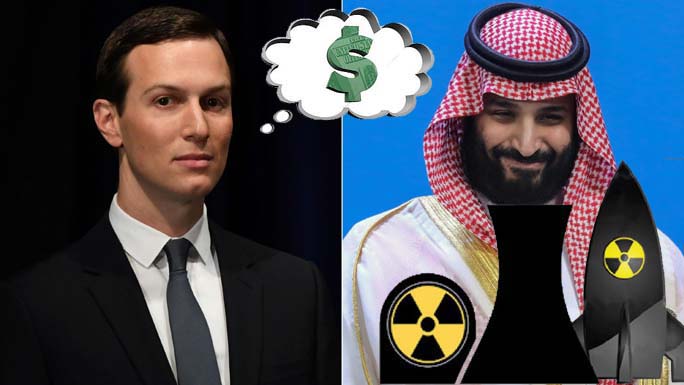
The absence of a 123 Agreement — designed to prevent countries from manufacturing fuel which could be diverted to weapons — has implications across the region. Should Saudi Arabia win access to the full nuclear fuel cycle, other Middle Eastern countries including Iran and the United Arab Emirates may demand the same conditions.
By Ari Natter and Jonathan Tirone, November 20, 2025
Takeaways by Bloomberg AI
- US negotiations with Saudi Arabia on a nuclear technology-sharing deal have been completed, potentially allowing American companies to build reactors in the kingdom.
- A formal 123 Atomic Energy Act agreement, which includes non-proliferation requirements, has yet to be signed, according to a US Energy Department spokesman.
- The prospect of a deal has alarmed non-proliferation experts and some members of Congress who have raised concerns over weapons-grade material and the potential for Saudi Arabia to gain access to the full nuclear fuel cycle.
US negotiations with Saudi Arabia on a long-sought nuclear technology-sharing deal have been completed, potentially opening the door for American companies to build reactors in the kingdom.
Energy Secretary Chris Wright and his Saudi Arabian counterpart signed a joint declaration signifying the talks were finished, the Trump administration said Tuesday following a White House visit by the kingdom’s Crown Prince Mohammed bin Salman. A formal 123 Atomic Energy Act agreement, which customarily includes non-proliferation requirements, has yet to be signed, a US Energy Department spokesman confirmed.
If finalized, such an agreement between the two nations could inject new life into America’s atomic energy sector and provide a boost to Westinghouse Electric Co. and other US companies that want to construct plants or sell reactor technology to Saudi Arabia. Still, the prospect has alarmed non-proliferation experts and some members of Congress who have raised concerns over weapons-grade material.
The absence of a 123 Agreement — designed to prevent countries from manufacturing fuel which could be diverted to weapons — has implications across the region. Should Saudi Arabia win access to the full nuclear fuel cycle, other Middle Eastern countries including Iran and the United Arab Emirates may demand the same conditions.
“It does include fuel cycle activities,” International Atomic Energy Agency Director General Rafael Mariano Grossi told journalists after speaking by phone with Saudi Arabia’s Energy Minister Prince Abdulaziz bin Salman early Wednesday. The IAEA hasn’t been notified about whether or not there will be a 123 Agreement attached to the deal, Grossi said.
Both the Energy Department and the White House didn’t immediately respond to questions seeking clarity over whether the deal would include the so-called “gold standard,” barring the enrichment and reprocessing of spent uranium that Saudi Arabia has been reluctant to agree to in the past
………………..The declaration signed Tuesday “builds the legal foundation for a decades-long, multi-billion-dollar nuclear energy partnership with the Kingdom; confirms that the United States and American companies will be the Kingdom’s civil nuclear cooperation partners of choice; and ensures that all cooperation will be conducted in a manner consistent with strong nonproliferation standards,” the White House said in a fact sheet.
On Nov. 17, ahead of the Saudi crown prince’s visit to the White House, Israeli Energy Minister Eli Cohen told Channel 14 TV that he’s skeptical of an agreement.
“I think Israel should be opposed, because it would bring about a situation where there will constantly have to be monitoring and oversight, to check whether the nuclear civilian project is sliding toward the military side,” Cohen said “This will constantly have to be checked.”
Non-proliferation watch dog groups pointed to the fact that the formal agreement, known as 123 for the section of the US Atomic Energy Act that discusses transfers of nuclear equipment and material to other nations, wasn’t announced…………. https://www.bloomberg.com/news/articles/2025-11-19/us-reaches-intitial-deal-with-saudi-arabia-on-nuclear-sharing
China to reimpose ban on Japanese seafood imports amid row over Taiwan, reports say
Japan Times, By Jesse Johnson, STAFF WRITER, Nov 19, 2025
China will reimpose a ban on imports of Japanese seafood products, media reports said Wednesday, as the diplomatic row over Prime Minister Sanae Takaichi’s recent comments on Taiwan escalated and officials girded for a prolonged dispute.
The ban would effectively be a return to one put in place in August 2023, following Japan’s release of treated wastewater from the Fukushima No. 1 nuclear power plant. Tokyo and Beijing reached an agreement in September last year to resume imports, with Japan confirming the first shipment of seafood to China less than two weeks ago.
NHK said China had explained that the ban was necessary in order to monitor the wastewater being released from the No. 1 plant, with the import halt lasting “for the foreseeable future.”…………………………………………… https://www.japantimes.co.jp/news/2025/11/19/japan/politics/japan-china-relations-marine-products/
UN Security Council Gives US ‘Mandate’ Over Palestine

The council endorsed Donald Trump’s neo-colonial governing board over a territory that he said should be depopulated to make way for his resort fantasy to be built on the bones of the victims of Israel’s genocide, reports Joe Lauria.
November 17, 2025, By Joe Lauria, Consortium News, https://consortiumnews.com/2025/11/17/un-security-council-gives-us-mandate-over-palestine/
The United Nations Security Council on Monday adopted a resolution that gives the world body’s imprimatur to Donald Trump’s plan for Gaza, a territory he said publicly should be ethnically cleansed to develop a Mediterranean resort.
The council voted 13 nations in favor with two abstentions from China and Russia, which could have vetoed Trump’s plans.
The resolution essentially revives the colonial mandate system of the League of Nations after the First World War, and the United Nations’ trusteeship system after the Second World War, both schemes in which colonial powers remained in charge of a colonized territory while it was supposed to wean it towards independence.
The resolution that passed on Monday says “conditions may finally be in place for a credible pathway to Palestinian self-determination and statehood.”
The resolution “welcomes” the establishment of a Board of Peace (BoP) “as a transitional administration” in Gaza to coordinate reconstruction. The resolution authorizes the board to set up a temporary International Stabilization Force (ISF) in Gaza “to deploy under unified command acceptable to the BoP.” Though the resolution does not say who will head the BoP, Trump has made it clear that he would be running it himself.
Nations will contribute troops to the force “in close consultation and cooperation” with Egypt and Israel. But it will be Donald Trump who ultimately gets to call the shots of this international military force.
[See: Jeffery Sachs: Trump’s UN Ploy]
Among the Trump-run forces’ tasks is to demilitarize Gaza by decommissioning weapons and destroying military infrastructure. In a statement reacting to the resolution, Hamas said: “The resolution imposes an international guardianship mechanism on the Gaza Strip, which our people and their factions reject.” Hamas says it has a legal right under international law, which it does, to resist Israel’s occupation with force if necessary.
If the stabilization force actually tries to disarm Hamas we could be looking at armed combat between them. The U.N.-approved force would in essence then be taking up the unfinished job of the Israel Defense Forces (IDF) to defeat Hamas.
In step with Hamas’ disarmament, the IDF is supposed to withdraw from Gaza, according to the measure. An annex to the resolution says Palestinians cannot be forcibly expelled from Gaza and Israel can neither annex nor continue to occupy Gaza, according to the remarks to the council by Algeria’s ambassador.
An expert Arab committee with take part with Trump’s board in running Gaza until the Palestinian Authority takes full control. Israel took part in the meeting as a guest but did not have a vote.
Why Russia Abstained
The U.S. draft resolution initially did not mention possible future, Palestinian sovereignty, but it was added after opposition from Arab states and other countries. That addition allowed the Arabs, and importantly the Palestinian Authority, to back the resolution. That led Russia, which had opposed the initial draft, to drop the threat of its veto and China joined in abstaining.
In explaining his abstention to the Council, Russian Ambassador Vassily Nebenzia said Russia “has taken note of Ramallah’s position, as well as that of many Arab-Muslim States that spoke in favor of the American draft so as to avoid renewed bloodshed in the enclave. In this regard, we chose not to submit our own draft, which was aimed at amending the US concept to bring it in conformity with long-standing UN resolutions agreed previously.”
Bur he also complained that the stabilization force would not coordinate with the Palestinian Authority
“This may entrench the separation of the Gaza Strip from the West Bank, and it is reminiscent of colonial practices and the British mandate for Palestine granted by the League of Nations, when the opinions of the Palestinians themselves were not taken into account whatsoever,” he said.
Nebenzia also raised an alarm about the force become engaged in the war. “The resolution … confers on the ISF such extensive peace enforcement mandate that the Mission may actually transform into a party to the conflict going beyond the confines of peacekeeping,” he said. The Russian envoy blamed the U.S. for “arm-twisting in capitals or pressuring delegations here in New York,” which he said can “hardly be called working in good faith.”
Nebenzia said:
“In essence, the Council is giving its blessing to the US initiative relying exclusively on Washington’s honor, we leave the Gaza Strip at the mercy of the Board of Peace and the ISF, whose working methods are still unknown to us.
The most important thing here is making sure that this document does not become a smokescreen for unbridled experiments by the US and Israel in the occupied Palestinian territory (OPT) nor turn into a death sentence for the two-state solution.” … There is no cause for celebration: today is a sorrowful day for the Security Council. Besides the wishes of the parties concerned, there is also such notion as the integrity of the Security Council. And today, with the adoption of this resolution, that integrity and the prerogatives of the Council have been undermined. …
Regrettably, we’ve already had the unfortunate experience when decisions on the Palestinian-Israeli conflict, which were pushed through by the US, led to the opposite to what was intended. Don’t say we didn’t warn you.
PA & Arabs Agree
The PA has long collaborated with Israel in its occupation of the West Bank. Its long-standing opposition to Hamas’ resistance makes it amenable to the United States taking control of Gaza to run it with Israel if the Authority is given a seat at the table.
That, however is not a sure thing as the extremists in Israel’s cabinet blew a fuse when it saw that a mere mention — a throwaway line — about some distant possibility of recognizing Palestine was added to the resolution. Netanyahu himself on Sunday reiterated his opposition to the Palestinian state and vowed that it would never come to pass.
How his government will proceed with U.S. administration of Gaza will be of the greatest interest. As Netanyahu is loudly insisting that Hamas will disarm the “easy way or the hard way,” it will bear watching whether the IDF, which occupies half of Gaza, and the international force, with the Palestinian Authority’s blessings, join arms to fight Hamas to crush the last of the violent resistance to Israeli dominance over Palestine.
Joe Lauria is editor-in-chief of Consortium News and a former U.N. correspondent for The Wall Street Journal, Boston Globe, and other newspapers, including The Montreal Gazette, the London Daily Mail and The Star of Johannesburg. He was an investigative reporter for the Sunday Times of London, a financial reporter for Bloomberg News and began his professional work as a 19-year old stringer for The New York Times. He is the author of two books, A Political Odyssey, with Sen. Mike Gravel, foreword by Daniel Ellsberg; and How I Lost By Hillary Clinton, foreword by Julian Assange.
US to Own Nuclear Reactors Stemming From Japan’s $550 Billion Pledge.
The US government plans to buy and own as many as 10 new, large nuclear reactors that could be paid for using Japan’s $550 billion funding
pledge, part of a push to meet surging demand for electricity. The new
details of the unusual arrangement were outlined Wednesday by Carl Coe, the Energy Department’s chief of staff, about the non-binding commitment made by Japan in October to fund $550 billion in US projects, including as much as $80 billion for the construction of new reactors made by Westinghouse Electric Co.
Bloomberg 19th Nov 2025,
https://www.bloomberg.com/news/articles/2025-11-19/us-to-own-reactors-stemming-from-japan-s-550-billion-pledge
UN Security Council Resolution On Gaza Is An ‘Atrocity’
On Monday, November 17, the UN Security Council adopted a resolution endorsing Donald Trump’s so-called ‘peace plan’ for Gaza.
The resolution approves the creation of a Trump-led “peace board” to supervise the Gaza Strip, calls for the ‘demilitarization’ of Gaza without imposing any restrictions on the arming of Israel, and authorizes an “international stabilization force” to police and disarm Palestinian resistance groups.
Worst of all, the resolution does not provide for the creation of a Palestinian state. It merely expresses a hallucinatory aspiration that Palestinians might one day have a fireside chat with the genocidal Israeli entity about the two-state delusion.
The UNSC members that voted in favour of this travesty were: the U.S., U.K., France, Algeria, Denmark, Greece, Guyana, South Korea, Pakistan, Panama, Sierra Leone, Slovenia and Somalia.
To their discredit, Russia and China refrained from exercising their veto and abstained.
In this episode of R2R, I analyze the UNSC resolution with fellow attorney, Craig Mokhiber. Craig is an American former UN human rights official who resigned from the UN in late 2023 over its failure to stop what he described (with complete justification) as a “textbook genocide” in Gaza.
According to Craig, the Security Council’s resolution is an “atrocity”.
Big Loss for US Empire: Ecuador Votes To Reject Foreign Military Bases
Geopolitical Economy, By Ben Norton, November 19, 2025
Ecuador’s Trump-backed right-wing oligarch President Daniel Noboa tried to rewrite the constitution to allow US military bases in the country’s territory. 61% of Ecuadorians voted against it.
The Donald Trump administration is trying to expand the presence of the US military across Latin America, in an attempt to forcibly impose Washington’s hegemony in the region.
The people of Ecuador just delivered a major blow to Trump’s aggressive Latin America strategy.
More than three-fifths of Ecuadorians voted to reject a change to their progressive constitution, which would have allowed the Pentagon to establish US military bases in their territory……………………………. https://geopoliticaleconomy.com/2025/11/18/noboa-ecuador-vote-foreign-military-bases/
Greenpeace claims French resumption of nuclear trade with Russia
Environmental campaign group Greenpeace hit out at the resumption of nuclear trade between France and Russia during its war with Ukraine after activists observed the loading of a tanker in northern France with reprocessed uranium bound for Russia.
RFI 18/11/2025
Greenpeace published video that it said its activists shot on Saturday of around 10 containers with radioactive labels going onto a cargo ship in Dunkirk.
The Panamanian-registered ship, the Mikhail Dudin, is regularly used to carry enriched or natural uranium from France to St Petersburg, according to Greenpeace.
Saturday’s consignment was the first of reprocessed uranium to be observed for three years, it added.
“The resumption of this trade once again shows France’s dependence on Russia,” Pauline Boyer, the head of Greenpeace France’s nuclear campaign, told RFI.
The images released by Greenpeace came two days ahead of a meeting in Paris between the French president, Emmanuel Macron and his Ukrainian counterpart, Volodymyr Zelensky, to discuss Ukraine’s air defence systems.
“Despite the French government’s commitments to support Ukraine — which is, fortunately, the case — on the other hand, there is ongoing collaboration with Rosatom, the Russian nuclear company, which is indirectly contributing to the financing of the war.”
…………………………..”It is outrageous that French nuclear companies — EDF, Orano, Framatome — continue to collaborate with Rosatom.”
French state-controlled energy giant Electricité de France (EDF) signed a 600-million-euro deal in 2018 with a Rosatom subsidiary, Tenex, for the recycling of reprocessed uranium.
These operations have not been affected by international sanctions over the Ukraine war.
Rosatom has the only facility in the world – at Seversk in Siberia – capable of carrying out key parts of the conversion of reprocessed uranium to enriched reprocessed uranium……………..
Only about 10 percent of the reenriched uranium sent back to France by Russia is used at its Cruas nuclear power plant, in southern France, the only one in the country that can use enriched reprocessed uranium, according to Greenpeace.
France’s energy ministry and EDF have yet to respond publicly to questions on the consignment or trade.
Top politicians in France ordered EDF chiefs to halt uranium trade with Rosatom in 2022 when Greenpeace France revealed the contracts in the wake of Russia’s invasion of Ukraine……
https://www.rfi.fr/en/france/20251118-greenpeace-claims-french-resumption-of-nuclear-trade-with-russia
The Guardian view on a new nuclear age: great powers should not restock a house of dynamite
Donald Trump’s remarks on resuming nuclear testing have highlighted the risks. Proliferation must not be considered inevitable.
When Eisaku Satō, a former prime minister of Japan, received the Nobel peace prize in 1974 after committing his country to not making nuclear bombs, owning them or allowing them on its territory, he assured the audience: “I have no doubt that this policy will be pursued by all future governments.”
Yet last week, Sanae Takaichi, Japan’s new prime minister, declined to say whether the country that understands the cost of nuclear war better than any other would stand by its commitment – reflecting the bleak broader outlook. Eighty years after the US dropped Little Boy on Hiroshima, incinerating tens of thousands of people, and almost 40 after Mikhail Gorbachev and Ronald Reagan seriously discussed nuclear abolition in Reykjavik, the spectre looms once more. Last month, Donald Trump ordered the US military to match other countries’ nuclear weapons testing.
Vipin Narang and Pranay Vaddi, who worked on nuclear strategy in the Biden administration, warn that arms control has essentially broken down and that the growing risks amount to a “Category 5 hurricane”. Ankit Panda, another noted expert in the field, has published The New Nuclear Age: At the Precipice of Armageddon. Tellingly, the subject has returned to pop culture. Kathryn Bigelow’s new movie A House of Dynamite shows a nuclear attack targeting Chicago.
The last nuclear arms control treaty between Russia and the US, New Start, is due to expire in February. For decades the main fear was of terrorists or rogue states such as North Korea; now there is a new great power rivalry. In place of the old standoff between two hegemons comes a more complicated contest, with China massively expanding its capabilities, and broader proliferation. For unsettled US allies such as South Korea and Poland, acquiring their own arsenals is no longer out of the question. The nuclear taboo is wearing thin. The Biden administration believed Vladimir Putin could well follow through on his nuclear threats in Ukraine.
Donald Trump pulled out of the intermediate-range nuclear forces treaty, which Russia had been violating, in his first term. In withdrawing from the JCPOA nuclear deal with Iran in 2018, and bombing Iran’s nuclear facilities this year, though it did not have an active weapons programme, he told potential adversaries that the best strategy is North Korea’s: arm yourself as soon as you can. China was content with a relatively modest arsenal for decades after it acquired the bomb; its breakneck expansion reflects its growing global might, but its efforts ramped up after Mr Trump was first elected.
Mr Trump’s confusing comments on nuclear tests (prompting counter-threats from Mr Putin) appear to reflect his misunderstanding of Russian systems tests which, though alarming, do not breach the de facto moratorium. A resumption – the US last detonated a warhead in 1992 – would probably be more useful to adversaries than to the US itself. It would also strengthen suspicions that non-proliferation is window dressing for the maintenance of the nuclear monopoly of a few states, rather than a serious commitment for the sake of humanity.
Mr Trump, said to truly fear nuclear war, should instead challenge Mr Putin to make good on his proposal of a one-year extension of New Start treaty limits and revive non-proliferation endeavours by championing the comprehensive test ban treaty. The US and China have not ratified it; Russia withdrew ratification. A president aspiring to a Nobel peace prize could set an example that is sorely needed.
Coalition of the unlikely: How Australia and China could save the planet.

Cooperation between Australia and China could send a useful message to the Trump regime and other countries around the world about both the possibility of developing alternatives to failing American leadership and the institutional order it did so much to create.
By Mark Beeson | 17 November 2025, https://independentaustralia.net/politics/politics-display/coalition-of-the-unlikely-how-australia-and-china-could-save-the-planet,20387
If we are to survive, unprecedented levels of cooperation are needed, no matter how unlikely. Mark Beeson writes.
GLOBAL GOVERNANCE is failing. Nothing highlights this reality more dramatically than our collective inability to address the degradation of the natural environment adequately. Addressing an unprecedented problem of this magnitude and complexity would be difficult at the best of times. Plainly, these are not the best of times.
Even if climate change could be dealt with in isolation, it would still present a formidable challenge. But when it is part of a polycrisis of intersecting issues with the capacity to reinforce other more immediate, politically sensitive economic, social and strategic problems, then the prospects for effective cooperative action become more remote.
Indeed, the polycrisis makes it increasingly difficult to know quite which of the many threats to international order and individual well-being we ought to focus on. The “we” in this case is usually taken to be the “international community”, which has always been difficult to define, generally more of an aspiration than a reality, frequently more noteworthy for its absence than its effectiveness.
Nation-states, by contrast, can still act, even if we don’t always like what they do. The quintessential case in point now, of course, is the administration of U.S. President Donald Trump. Because it is by any measure still the most powerful country in the world, what America does necessarily affects everyone. This is why its actions on climate change – withdrawing from the Paris Agreement, gutting the Environmental Protection Authority, encouraging fossil fuel companies – matter so much.
But nation-states can also be forces for good and not just for those people who live within the borders of countries in the affluent global North. On the contrary, states that oversee a reduction in CO2 emissions are not only helping themselves, but they are also helping their neighbours and setting a useful example of “good international citizenship”.
When global governance is failing and being actively undermined by the Trump regime, it is even more important that other countries try to fill the void, even if this means cooperating with the unlikeliest of partners. Australia and China really could offer a different approach to climate change mitigation while simultaneously defusing tensions in the Indo-Pacific and demonstrating that resistance to the Trump agenda really is possible.
Friends with benefits
In the long term, if there still is one, environmental breakdown remains the most unambiguous threat to our collective future, especially in Australia, the world’s driest continent. And yet Australia’s strategic and political elites remain consumed by the military threat China supposedly poses, rather than the immediate, life-threatening impact of simultaneous droughts, fires and floods.
One of the only positives of the climate crisis is that it presents a common threat that really ought to generate a common cause. Some countries are no doubt more responsible for the problem and more capable of responding effectively, so they really ought to overcome the logic of first-mover disadvantage. No doubt, some other country will take over Australian coal markets, but someone has to demonstrate that change is possible.
China is possibly at even greater risk from the impact of climate catastrophes because of water shortages and, paradoxically enough, rising sea levels that will eventually threaten massive urban centres like Guangzhou and Shanghai. While there is much to admire about the decrease in poverty in the People’s Republic, it has come at an appalling cost to the natural environment. China also has powerful reasons to change its ways.
Unfortunately, Chinese policymakers, like Australia’s and their counterparts everywhere else, are consumed with more traditional threats to national strategic and economic security. This may be understandable enough in a world turned upside down by an unpredictable administration bent on creating a new international order that puts America first and trashes the environment in the process.
But in the absence of accustomed forms of leadership from the U.S. and the international community, for that matter, states must look to do what they can where they can, even if this means thinking the unthinkable and working with notional foes. China and Australia really do have a common cause when it comes to the environment and they could and should act on it.
Yes, this does all sound a bit unlikely. But if we are to survive in anything like a civilised state, unprecedented levels of cooperation would seem to be an inescapable part of limiting the damage our current policies have inflicted on the environment. In this context, Australia and China really could lead the way by simply agreeing to implement coordinated domestic actions designed to set a good example and address a critical global problem.
Leading by example
As two of the biggest consumers and producers of coal, Australia and China could make an outsize contribution to a global problem that would almost certainly win near universal praise, not to say disbelief. In short, China could agree not to build any more coal-fired power stations and Australia could commit to not opening any more new mines and rapidly moving to close down existing ones.
This would be a challenge for both countries, no doubt, but if we are ever going to address the climate challenge seriously, this is the sort of action that will be needed. There are no easy or painless solutions. But voluntarily abandoning the use of one of the most polluting fossil fuels is a potentially feasible and effective gesture that would make a difference. After all, China is a world leader in the development and use of green energy already, so the transition would be difficult but doable.
Australia has a shameful record of exporting carbon emissions and could live without the coal industry, which produces most of them, altogether. Coal extraction doesn’t employ many people and Australia is a rich enough country to compensate those affected by the loss of what are awful jobs in a dirty industry. If Australia can find $368 billion for submarines that will likely never arrive, to counter an entirely notional threat from China, it ought to be able to find a couple of billion to deal with a real one.
No doubt there would be significant pushback from coal industry lobbyists and politicians who think their future depends on being “realistic”, even if it means wrecking the planet. And yet it is possible, even likely, that such actions on the part of Australia and China would be very well received by regional neighbours, who would directly benefit from their actions and who might also be encouraged to consider meaningful cooperative actions themselves.
Given the failure of regional organisations like ASEAN to tackle these issues, normative pressure could be useful.
China might even get a significant boost to its soft power and regional reputation. President Xi Jinping frequently talks about the need to develop an “ecological civilisation”. Moving away from coal and collaborating with an unlikely partner for the collective good would be an opportunity to demonstrate China’s commitment to this idea, and to offer some badly needed environmental leadership.
If that’s not an example of what Xi calls win-win diplomacy, it’s hard to know what is.
A sustainable world order?
In the absence of what U.S. Senator Bernie Sanders calls a “revolution” in American foreign policy, multilateralism may well be in terminal decline. Indeed, it is an open question whether interstate cooperation will survive another four years of Trumpism, especially when the United Nations faces a funding crisis and politics in the European Union is moving in a similarly populist and authoritarian direction.
Cooperation between Australia and China could send a useful message to the Trump regime and other countries around the world about both the possibility of developing alternatives to failing American leadership and the institutional order it did so much to create. American hegemony was frequently self-serving, violent and seemingly indifferent to its impact on the global South, but we may miss it when it’s gone.
If multilateralism is likely to be less effective for the foreseeable future, perhaps minilateralism or even bilateralism can provide an alternative pathway to cooperation. Narrowly conceived notional strategic threats could be usefully “decoupled” from the economic and environmental varieties. In such circumstances, geography may be a better guide to prospective partners than sacrosanct notions about supposed friends and enemies.
Someone somewhere has to show leadership on climate change and restore hope that at least one problem, arguably the biggest one we collectively face, is being taken seriously. There really isn’t any choice other than to contemplate unprecedented actions for an unprecedented problem. Australia and China may not save the world, but they could make things a bit less awful and inject some much-needed creativity and hope into international politics.
Mark Beeson is an adjunct professor at the University of Technology Sydney and Griffith University. He was previously Professor of International Politics at the University of Western Australia.
Saudi Arabia’s Crown Prince Is Set to Visit Washington. Here’s What to Expect Out of His Meeting with Trump.

the country has continued to push for a civilian nuclear program as the high energy demand of new AI data centers prompts a global revival in nuclear power. Riyadh has long expressed interest in developing its own nuclear program
The Chicago Council on Global Affairs, Analysis, by Rachel Bronson, November 13, 2025
Crown Prince Mohammed bin Salman’s meeting with US President Donald Trump comes during a period of relatively strong and stable ties between Saudi Arabia and the United States. How much he can leverage those ties will be on full display.
Saudi Arabia’s Crown Prince Mohammed bin Salman (MBS) will make an official working visit to the White House on Tuesday, November 18. It will be his first trip to Washington since March 2018.
The period between his two visits has been bumpy. MBS seeks to solidify and extend a recent positive period, building on a strong personal relationship with US President Donald Trump, deep commercial ties between members of each country’s leadership, and Trump’s successful trip to the Kingdom in May. The connection between the two countries and the two men will prove critical this visit, as they will confront a wide-ranging agenda requiring considerable attention and diplomatic finesse.
There will be no shortage of topics for the two leaders to discuss during the meeting. New commercial and defense ties are likely to receive significant attention, particularly in the realms of artificial intelligence and growing regional data centers. Trickier for the two sides will be managing bigger ticket items—such as the purchase of F-35s and the development of nuclear power. Larger regional questions loom large about Saudi Arabia’s relationship with Israel, Turkey, and Qatar that will shape the future of Gaza, the West Bank, Syria, and beyond.
What’s on the agenda?
Key priority areas for the Saudis include broadening and deepening commercial ties, particularly in the realm of artificial intelligence, data technology, energy, and defense.
State visits usually result in announcements of new agreements or memoranda of understanding, and this trip will likely prove no different. But such trips can also highlight where sides remain further apart. Human rights, a perennial stumbling block in US-Saudi relations, are unlikely to receive significant attention.
The Saudis have been working assiduously to lower expectations that they will join the Abraham Accords—a stated goal of the Trump administration that would require normalizing relations with Israel—until the White House articulates a clearer vision for the future of Gaza and the West Bank. The two sides will thus need to work through how much is possible without attaining this loftier goal.
What is behind the visit?
When MBS last arrived in Washington to meet with Trump, he had only recently assumed his role as crown prince, supplanting his uncle, Crown Prince Mohammed bin Nayef. He was not yet halfway through a controversial 15-month purge of business leaders, officials, and members of the royal family that would eventually solidify his rule.
Just seven months after his March 2018 visit, MBS was implicated in the grotesque and brazen assassination of Washington Post journalist Jamal Khashoggi, a murder that brought international opprobrium. The growing humanitarian disaster in Yemen resulting from intense Saudi armed intervention was further galvanizing public outcry in the United States and abroad. Although the Trump administration tried to downplay both crises, Congress and the American public remained cautious of US-Saudi ties.
In September 2019, as the conflict in Yemen escalated, Iranian missiles and drones successfully targeted Abqaiq and Khurais, two major Saudi oil facilities, taking out 50 percent of Saudi oil production for about two weeks. Although the Trump administration responded by bolstering America’s military troop presence in the Kingdom and reimposing select sanctions on Iran, Riyadh wanted a more visible show of force. Washington’s perceived tepid response left many in Riyadh openly questioning US commitment to the desert kingdom.
The following September, just four months before leaving office, the Trump administration heralded in the Abraham Accords between Israel, the United Arab Emirates, Bahrain, Morocco, and Sudan. Saudi Arabia remained on the sidelines…………………..
The return of the Trump administration in January 2025 provided an opportunity to reset and strengthen relations more generally. In May, building on strong commercial ties forged between Trump administration associates and their Saudi counterparts during the Biden years, Trump traveled to Gulf states including Saudi Arabia, the United Arab Emirates, and Qatar, ushering in a raft of new defense and technology deals, particularly in the areas of data center technologies and artificial intelligence…………………………………………………………………………..
What does Saudi Arabia hope to get out of it?
…………..The focus of the announcements will most likely center on a robust AI future that is emerging in the Gulf in particular. Saudi Arabia has made investing in data centers and digital infrastructure a key aspect of its “Saudi Vision 2030” economic development plan and is investing $21 billion in data centers alone. ……….
……… the country has continued to push for a civilian nuclear program as the high energy demand of new AI data centers prompts a global revival in nuclear power. Riyadh has long expressed interest in developing its own nuclear program, which the Biden administration entertained as a sweetener to Saudi-Israeli normalization.
………………………During Trump’s May trip to the region, US Secretary of Energy Chris Wright signed a memorandum of understanding with Saudi Arabia’s energy minister on civil nuclear energy, including safety, security, and nonproliferation programs; vocational training and workforce development; US Generation III+ advanced large reactor technologies and small modular reactors; uranium exploration, mining, and milling; and safe and secure nuclear waste disposal. ……………….
What could happen?
In addition to energy and data infrastructure, the two sides will likely continue to deepen their defense relationship. During the May trip, the White House announced $142 billion in arms sales, and related weapons packages are now making their way through the Pentagon, including a Saudi request for F-35s—one of the world’s most advanced aircrafts. During the Biden administration, the F-35s were tied to Saudi-Israeli normalization. As with nuclear power, it is not clear whether such tethering will continue.
Another key topic to watch is how the two leaders define their overall defense relationship. Saudi Arabia has long sought a defense treaty with the United States that would elevate the country among other US partners in the Gulf. Without full recognition of Israel—and given the current polarization in US politics—Riyadh is unlikely to be able to muster the two-thirds US Senate vote required for official ally status. Still, the Saudis likely want to upgrade their existing relationship……………………………..
What we are likely to hear less about during this trip is human rights, which have been on the US-Saudi agenda for decades.
…………………………………………………………………………………………………………. The future of Gaza and the West Bank will likely prove the trickiest shoal to navigate. The Saudis want to ensure a strong influence in leading Gaza reconstruction given that they are expected to foot a large portion of the bill. ……………………………………. https://globalaffairs.org/commentary/analysis/saudi-arabias-crown-prince-visit-washington-trump-what-to-expect?utm_source=ActiveCampaign&utm_medium=email&utm_content=Trump%20s%20radiation%20exposure%20rule%3A%20%20catastrophic%20%20for%20women%20and%20girls&utm_campaign=20251117%20Monday%20Newsletter
US and Russia ‘actively discussing’ settlement of Ukraine conflict – Moscow

16 Nov, 2025, https://www.rt.com/russia/627862-russia-us-discuss-ukraine-settlement/
The understanding reached at the Alaska summit is still in force, President Putin’s aide Yury Ushakov has said.
Moscow and Washington are continuing their dialogue on resolving the Ukraine conflict in line with the understanding reached during the Alaska meeting between Russian President Vladimir Putin and his US counterpart Donald Trump in August, Putin’s aide Yury Ushakov has said.
Although the summit failed to yield a breakthrough, Moscow has praised what it called Washington’s willingness to mediate and consider the conflict’s underlying causes.
Russian officials also maintain that continued dialogue creates opportunities for trade and economic cooperation despite the US decision to sanction the oil companies Rosneft and Lukoil last month.
Russia is receiving “many signals” from the US, with the Anchorage meeting still acting as a basis for the talks, Ushakov told journalist Pavel Zarubin on Sunday. “We do believe it is a good way forward,” he said. According to the official, the understandings are still relevant since Washington has never explicitly stated that they are no longer valid.
The presidential aide admitted that the peace process and agreements reached in Alaska do not sit well with Kiev and some of its European backers, adding that it only indicates they want to continue the bloodshed. “The Anchorage [meeting] is only disliked by those who does not want a peaceful resolution [to the Ukraine conflict],” he said.
Bilateral relations between Moscow and Washington sank to an all-time low under former US President Joe Biden, amid the Ukraine conflict, but have shown signs of improvement since Trump’s return to the White House. US and Russian officials have held several rounds of talks this year, including the Alaska summit.
The US and Russia also announced the next planned Trump-Putin summit in Budapest in the fall, but it was then postponed indefinitely. Washington is still determined to continue contacts with Moscow, according to US Vice President J.D. Vance. Earlier in November, he called direct dialogue with Russia part of the “Trump doctrine.”
Russian Foreign Minister Sergey Lavrov reaffirmed this month that Moscow was ready to resume contacts and rejected media reports claiming otherwise as false.
Trump’s Ploy at the UN Is American Imperialism Masquerading as a Peace Process

Jeffrey D. SachsSybil Fares, Nov 13, 2025, https://www.commondreams.org/opinion/trump-s-ploy-at-the-un-is-american-imperialism-masquerading-as-a-peace-process
Palestine remains the endless victim of US and Israeli maneuvers. The results are not just devastating for Palestine, which has suffered an outright genocide, but for the Arab world and beyond.
The Trump administration is pushing an Israeli-crafted resolution at the UN Security Council (UNSC) this week aimed at eliminating the possibility of a State of Palestine. The resolution does three things. It establishes US political control over Gaza. It separates Gaza from the rest of Palestine. And it allows the US, and therefore Israel, to determine the timeline for Israel’s supposed withdrawal from Gaza–which would mean: never.
This is imperialism masquerading as a peace process. In and of itself it’s no surprise. Israel runs US foreign policy in the Middle East. What is a surprise is that the US and Israel might just get away with this travesty unless the world speaks up with urgency and indignation.
The draft UNSC resolution would establish a US-UK-dominated Board of Peace, chaired by none other than Donald Trump himself, and endowed with sweeping powers over Gaza’s governance, borders, reconstruction, and security. This resolution would sideline the State of Palestine and condition any transfer of authority to the Palestinians on the indulgence of the Board of Peace.
This would be an overt return to the British Mandate of 100 years ago, with the only change being that the US would hold the mandate rather than Britain. If it weren’t so utterly tragic, it would be laughable. As Marx said, history repeats itself, first as tragedy, then as farce. Yes, the proposal is farce, yet Israel’s genocide is not. It is tragedy of the first order.
Incredibly, according to the draft resolution, the Board of Peace would be granted sovereign powers in Gaza. Palestinian sovereignty is left to the discretion of the Board, which alone would decide when Palestinians are “ready” to govern themselves – perhaps in another 100 years? Even military security is subordinated to the Board, and the envisioned forces would answer not to the UN Security Council or to the Palestinian people, but to the Board’s “strategic guidance.”
The US-Israel resolution is being put forward precisely because the rest of the world—other than Israel and the US—has woken up to two facts. First, Israel is committing genocide, a reality witnessed every day in Gaza and the West Bank, where innocent Palestinians are murdered to the satisfaction of the Israel Defense Forces and the illegal Israeli settlers in the West Bank. Second, Palestine is a state, albeit one whose sovereignty remains obstructed by the US, which uses its veto in the UNSC to block Palestine’s permanent UN membership. At the UN this past July and then again in September, the UN General Assembly voted overwhelmingly for Palestine’s statehood, a fact that put the Israel-US Zionist lobby into overdrive, resulting in the current draft resolution.
For Israel to accomplish its goal of Greater Israel, the US is pursuing a classic divide-and-conquer strategy, squeezing Arab and Islamic states with threats and inducements. When other countries resist the US-Israel demands, they are cut off from critical technologies, lose access to World Bank and IMF financing, and suffer Israeli bombing, even in countries with US military bases present. The US offers no real protection; rather, it orchestrates a protection racket, extracting concessions from countries wherever US leverage exists. This extortion will continue until the global community stands up to such tactics and insists upon genuine Palestinian sovereignty and US and Israeli adherence to international law.
Palestine remains the endless victim of US and Israeli maneuvers. The results are not just devastating for Palestine, which has suffered an outright genocide, but for the Arab world and beyond. Israel and the US are currently at war, overtly or covertly, across the Horn of Africa (Libya, Sudan, Somalia), the Eastern Mediterranean (Lebanon, Syria), the Gulf region (Yemen), and Western Asia (Iraq, Iran).
If the UN Security Council is to provide true security in accordance with the UN Charter, it must not yield to US pressures and instead act decisively in line with international law. A resolution truly for peace should include four vital points. First, it should welcome the State of Palestine as a sovereign UN member state, with the US lifting its veto. Second, it should safeguard the territorial integrity of the State of Palestine and Israel, according to the 1967 borders. Third, it should establish a UNSC-mandated protection force drawn up from Muslim-majority states. Fourth, it should include the defunding and disarmament of all belligerent non-state entities, and it should ensure the mutual security of Israel and Palestine.
The two-state solution is about true peace—not about the politicide and genocide of Palestine, or the continued attacks by militants on Israel. It’s time for both Palestinians and Israelis to be safe, and for the US and Israel to give up the cruel delusion of permanently ruling over the Palestinian people.
The Unseen Hand: From the War Room to the Ruins – A Cycle of Profit and Pain

15 November 2025, Andrew Klein. https://theaimn.net/the-unseen-hand-from-the-war-room-to-the-ruins-a-cycle-of-profit-and-pain/
In the corridors of power in Washington and the tech hubs of Silicon Valley, a term is well-known: the “military-industrial complex.” Sixty years ago, President Dwight D. Eisenhower warned his nation of its “unwarranted influence.” Today, this complex is not an American anomaly but a global blueprint of a system where war has been transformed from a last resort of statecraft into a first option for profit. This system, fueled by corruption and shielded by propaganda, now finds its most brutal testing ground in the lands of Palestine, where lives, futures, and the very environment are sacrificed in exchange for data and dividends.
The Anatomy of a War Machine: How the Iron Triangle Turns
The military-industrial complex is not a shadowy conspiracy, but a deeply entrenched “iron triangle” – a symbiotic relationship between three pillars: the defence industry, the military establishment, and the political class.
The Currency of Influence: The fuel for this machine is money. From 2001 to 2021, the top U.S. defence giants spent a staggering $1.1 billion on lobbying to ensure their weapons find a “battlefield application.” They target key congressional committees, with politicians who approve massive arms budgets seeing their campaign coffers swell by up to 40% more than their peers. This is not investment in security; it is a transaction for access and influence.

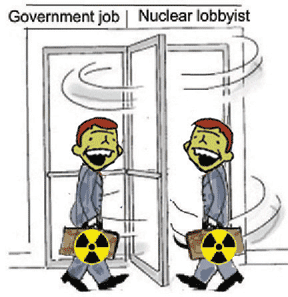
The “Revolving Door” of Power: A more insidious mechanism is the “revolving door,” where defense officials and senior military officers retire one day and walk into high-paid executive or lobbying roles at the very companies they once regulated or procured from. A 2018 report found 645 former senior government and military officials had been hired by the top 20 defence contractors, creating a culture where decisions made in office can be influenced by the promise of a lucrative “golden parachute.” This corrupts the very principle of impartial governance.
Manufacturing Consent through Propaganda: To sustain this cycle, the public must be convinced of the perpetual need for war. This is achieved through a sophisticated propaganda apparatus that controls the narrative. Threats are exaggerated, complex conflicts are reduced to simple good-versus-evil dramas, and civilian casualties are sanitised into the clinical term “collateral damage.” The goal is to manufacture a truth where endless war is framed as essential for safety, and questioning it is made to seem unpatriotic or naive.
Palestine: The Laboratory for the Future of Warfare
This global system requires a laboratory to test, refine, and market its latest technologies. For decades, the Palestinian territories have served this grim purpose, a captive population subjected to an endless experiment in digital control and automated violence.
AI as an Assassin: In the current conflict, the world is witnessing the first full-scale deployment of AI-powered warfare. The Israeli military uses systems with benign-sounding names like “The Gospel” and “Lavender” to generate targets at an industrial pace, producing hundreds of potential targets daily. Human oversight is minimal and accelerated, with reports of soldiers often rubber-stamping AI-generated targets in a matter of seconds. With admitted error rates of around 10%, the mathematical consequence is the condemnation of thousands of innocent civilians by algorithm.

The Panopticon of Surveillance: Every aspect of Palestinian life is data-mined. A vast network of drones, facial recognition cameras (codenamed “Red Wolf” and “Blue Wolf”), satellites, and digital monitoring creates a constant state of surveillance. As one investigative journalist noted, the occupied territories have become a showroom where “Israel’s military-industrial complex… exports advanced weapons and surveillance technology to the world.”
Weaponising Communication: The ultimate demonstration of this control was the hijacking of the entire Palestinian cellular network to force a political speech upon a captive audience. This act is a perfect metaphor for the system: seizing the very channels of human connection to broadcast its own uncompromising narrative, rendering dissent inaudible.
The True Cost: A Balance Sheet of Human and Planetary Suffering
The shareholders of defense corporations may indeed be “drooling” over the “combat-proven” credentials of their products. But the real balance sheet tells a different story.
Lives and Lost Futures: The cost is measured in the thousands of children who will never grow up, the students whose potential is buried under rubble, the families erased from the census. It is a cost of choices permanently denied – the choice to travel, to learn, to love, and to live in peace. This is not “collateral damage”; it is the central, brutal outcome of the system.
Economic Devastation: Beyond the immediate destruction of homes and infrastructure lies the long-term economic annihilation. The productive capacity of generations is wiped out, creating a cycle of dependency and despair that can last for decades.
A Scarred Planet: The environmental cost of war is a silent casualty. Unexploded munitions poison the soil and water for generations. The toxins released from destroyed buildings and industrial sites create a public health crisis. The carbon footprint of endless military conflict is a devastating contributor to planetary crisis, all while the war machine presents itself as a guardian of order.
Building Bridges of Peace: An Alternative Architecture
Confronted with this reality, we must actively choose to build an alternative architecture for human coexistence, one based on bridges, not bombs. This requires a fundamental reorientation.
- Understanding: The first step is to actively dismantle the propaganda that dehumanises “the other.” We must invest in cultural exchange, language learning, and people-to-people programs that allow us to see the full humanity in every face. When we understand the history, hopes, and fears of others, it becomes impossible to see them as mere targets.
- Embrace Self-Reflection in Foreign Policy: Nations, particularly powerful ones, must have the courage for honest self-criticism. Acknowledging past mistakes and the unintended consequences of our actions is not a sign of weakness, but a foundation for building genuine trust and finding a more just path forward.
- Forge New Frameworks for Cooperation: We must move beyond a zero-sum view of global politics. The greatest challenges of our time – climate change, pandemics, technological governance – are shared problems that require shared solutions. By creating robust international frameworks for cooperation on these issues, we build habits of collaboration and create tangible, shared interests that make conflict a less desirable option.
The road from the war room to a lasting peace is long and arduous. It requires us to see through the manufactured truths, to follow the money, and to hold to account the systems that profit from endless conflict. But it is the only road that leads away from the ruins. We must choose to be architects of the bridge, not suppliers for the battlefield.
Atom is prematurely split in the ‘golden age’ transatlantic partnership
Nils Pratley, 14 Nov 25 https://www.theguardian.com/business/2025/nov/13/atom-split-us-uk-golden-age-partnership-wylfe-smr
Britain was always going to prefer homegrown technology for the SMR reactors at Wylfe. The US would have done the same.
It had all been so harmonious two months ago. “Together with the US, we’re building a golden age of nuclear that puts both countries at the forefront of global innovation and investment,” purred the prime minister about the new “landmark” UK-US nuclear partnership.
Now there’s an atomic split over the first significant decision. The UK has allocated Wylfa on the island of Anglesey, or Ynys Môn, to host three small modular reactors (SMRs) to be built by the British developer Rolls-Royce SMR. The US ambassador, Warren Stephens, says his country is “extremely disappointed”: he wanted Westinghouse, a US company, to get the gig for a large-scale reactor.
This quarrel is easy to adjudicate. The US ambassador is living in dreamland if he seriously thought the UK wouldn’t show home bias at Wylfa. This is the coveted site for new nuclear power in the UK because the land is owned by the government, which ought to make the planning process easier and quicker, and the site hosted a Magnox reactor until 2015, so the locals are used to nuclear plants. Since Rolls-Royce’s kit is the best national hope of reviving the UK’s industry with homegrown technology, of course there was going to be preferential treatment.
None of which is to say the SMR experiment will definitely succeed in the sense of demonstrating cheapness (a relative measure in nuclear-land) versus mega-plants, such as Hinkley Point C, Sizewell C or the Westinghouse design. Rolls-Royce oozes confidence about the cost-saving advantages of prefabrication in factories, but these have yet to be demonstrated on the ground. The point, though, is that the only way to find out is to get on and build. Rolls-Royce SMR’s only other order currently is from the Czech Republic for six units.
Indeed, the criticism from some quarters is that the UK government has been too timid in ordering only three. If the batch-production is supposed to be the gamechanger on costs, goes the argument, then commit to a decent-sized batch at the outset.
The choice of Wylfa may help on that score in time, though. The site is reckoned to be big enough to hold an additional five SMR units eventually, on the top of the first three. Since each SMR is 470 megawatts, a full build-out would equate to more megawatts in total than the 3,200 from each of Hinkley and Sizewell.
The sop to the US is that Westinghouse gets to compete for future large-scale reactor projects in the UK. It would probably have been a good idea to tell the ambassador in advance before he blew a fuse. Reserving Wylfa for Rolls-Royce SMRs was the only sensible decision here.
Hopes that SMR technology will become a major export-earner for the UK eventually are best treated with extreme caution at this stage. The first electricity from Wylfa won’t be generated until the mid-2030s, and the demonstration of falling costs with each additional unit can only come after that. There is a long way to go. But a good way to maximise your chance of success is to give the top site to your pet project. The US would have done exactly the same.
1 This Month
10 March A LIVE WEBINAR THE REAL EFFECTS OF NUCLEAR POWER
What the Industry Isn’t Telling Us
1:00 PM Mountain, 2 pm Central, 3 pm Eastern. Live on the Keepers of the Water Facebook page



18 March Webinar @ 1 PM EST: An Assessment of SMR Projects: The Case of Canada
register for the zoom:
https://us02web.zoom.us/webinar/register/WN_o8BIIOUvQ2ONJR1nta65DQ#/registration


of the week – STOP SMALL MODULAR REACTORS IN CANADA
To see nuclear-related stories in greater depth and intensity – go to https://nuclearinformation.wordpress.com
-
Archives
- March 2026 (109)
- February 2026 (268)
- January 2026 (308)
- December 2025 (358)
- November 2025 (359)
- October 2025 (376)
- September 2025 (258)
- August 2025 (319)
- July 2025 (230)
- June 2025 (348)
- May 2025 (261)
- April 2025 (305)
-
Categories
- 1
- 1 NUCLEAR ISSUES
- business and costs
- climate change
- culture and arts
- ENERGY
- environment
- health
- history
- indigenous issues
- Legal
- marketing of nuclear
- media
- opposition to nuclear
- PERSONAL STORIES
- politics
- politics international
- Religion and ethics
- safety
- secrets,lies and civil liberties
- spinbuster
- technology
- Uranium
- wastes
- weapons and war
- Women
- 2 WORLD
- ACTION
- AFRICA
- Atrocities
- AUSTRALIA
- Christina's notes
- Christina's themes
- culture and arts
- Events
- Fuk 2022
- Fuk 2023
- Fukushima 2017
- Fukushima 2018
- fukushima 2019
- Fukushima 2020
- Fukushima 2021
- general
- global warming
- Humour (God we need it)
- Nuclear
- RARE EARTHS
- Reference
- resources – print
- Resources -audiovicual
- Weekly Newsletter
- World
- World Nuclear
- YouTube
-
RSS
Entries RSS
Comments RSS
 nuclear-news