The Nuclear Weapons Treaty Ban in the Footsteps of 1982’s Million-Person March

COUNTERPUNCH, BY JOHN LAFORGEHAMBURG, Germany 17 June 22,
Last Sunday marked the 40th anniversary of the June 12, 1982 million-person march in New York City for a “freeze” on nuclear weapons building, followed two days later by a mass nonviolent action at the consular offices of nuclear weapons states. Some 1,700 people, myself included, were arrested as we sat in the street blockading the nuclear-armed consulates, confronted by horse-mounted cops literally chomping at the bit while we nervously stared up at the menacing police singing We Shall Not be Moved.We were moved out of the street that day in 1982, but the movement wasn’t deterred. We’ve pushed on for decades in spite of ridicule, harassment, and imprisonment, seeing to the slashing of the U.S. nuclear arsenal from over 60,000 in those days, to today’s approximately 5,000 — an amount still grotesque enough to incinerate and contaminate most of the living beings on Earth.
……………………………………….this week Vienna, Austria is hosting the First Meeting of States Parties, UN member states that have agreed to the Treaty on the Prohibition of Nuclear Weapons (TPNW). Over 100 governments will participate. The great majority of the world’s representatives — 122 countries — voted their approval of the TPNW in 2017, and 62 have since ratified it. The treaty has entered into force, and only the tiny minority of nuclear-armed governments and their military allies continue to reject it — for “deterrence” reasons that have been shown to be irrational and unachievable. Korea, Vietnam, Afghanistan, Iraq, Syria and Ukraine prove that nukes don’t deter war. Instead, they needlessly create the real possibility of globalized, radioactive catastrophe, all the while stealing tens of billions of dollars, and mountains of brain power, away from programs that are crucial and urgently needed.
A colossally expensive nuclear arms race is again underway among the richest militaries in spite of global climate chaos, refugee crises, medical emergencies, and food shortages, all of which must be confronted if want to survive. The world’s nine nuclear-armed countries spent $82.4 billion upgrading their arsenals in 2021, the biggest spender being the United States, according to “Squandered,” the International Campaign to Abolish Nuclear Weapons’ annual report on nuclear spending.
Nuclear weapons states always claim their H-bomb budgets are for “refurbishment” of old, dangerous systems — something that their bedfellows in the nuclear reactor biz never admit about their old units. The power industry’s dangerous, outdated GE and Westinghouse junkers are never said to need retirement, but “license extensions,” and 93 out of 94 have been allowed to blow past their engineered 40-year shutdown mandates and into today’s deadly game of Fukushima Roulette — a crap shoot with suicide the public never agreed to join.
Germany’s clean phase-out of its 17 power reactors, and South Africa’s and Libya’s abandonment of nuclear weapons, have shown that both sides of denuclearization are possible. Now the TPNW presents the world with the practical, international means of eliminating the Bomb. With enough million-person marches, we can still shame the twin nuclear devils and bring the era of nuclear threats to an end.
John LaForge is a Co-director of Nukewatch, a peace and environmental justice group in Wisconsin, and edits its newsletter. https://www.counterpunch.org/2022/06/17/the-nuclear-weapons-treaty-ban-in-the-footsteps-of-1982s-million-person-march/
Treaty on Prohibition of Nuclear Weapons as New Instrument in Nuclear Disarmament Process

It should also be emphasized that the TPNW is gaining global popularity thanks to the efforts of civil society, which encourages governments and parliamentarians of their respective countries to accede to the Treaty. Kazakhstan welcomes the decision of several European countries (Switzerland, Sweden, and Finland), including the declared intention of NATO members (Germany and Norway), to participate as observers in the First Conference of the States Parties to the TPNW.
Treaty on Prohibition of Nuclear Weapons as New Instrument in Nuclear Disarmament Process, https://moderndiplomacy.eu/2022/06/17/treaty-on-prohibition-of-nuclear-weapons-as-new-instrument-in-nuclear-disarmament-process/ June 17, 2022, By Mukhtar Tileuberdi
On June 21–23, Vienna will host a historic event in the field of nuclear disarmament – the First Meeting of the States Parties to the Treaty on the Prohibition of Nuclear Weapons (TPNW).
The entry into force of this treaty in January 2021 became a long-awaited signal that demonstrated the determination of the UN member states to take concrete measures to outlaw nuclear weapons.
This was a significant moment for Kazakhstan, which in the past experienced detrimental consequences of nuclear tests. As President of Kazakhstan Kassym-Jomart Tokayev noted in his speech at the 75th session of the UN General Assembly, “today Kazakhstan is an example and a role model for the whole world as a responsible state that voluntarily abandoned its nuclear-missile arsenal and closed the world’s largest nuclear test site.”
For half a century, our land suffered atmospheric, ground, and underground tests. This impacted the health of about 1.5 million Kazakhs living near the test site with an area of more than 18,000 square kilometres. The consequences of radiation are felt to this day.
On the initiative of Kazakhstan, the closing date of the Semipalatinsk test site – August 29 – was declared in 2009 by the UN General Assembly the International Day against Nuclear Tests. Emphasizing the symbolism of this date, in 2019 Kazakhstan submitted to the UN Secretariat an instrument for ratifying the Treaty on the Prohibition of Nuclear Weapons (TPNW).
Kazakhstan voluntarily abandoned the 4th largest nuclear arsenal in the world, which it inherited after the collapse of the Soviet Union, and in 1993 joined the Treaty on the Non-Proliferation of Nuclear Weapons (NPT) as a state that does not possess nuclear weapons. Let me note, that the TPNW was developed in support of the NPT and fully complements its objective of strengthening the nuclear non-proliferation regime, the peaceful use of atomic energy and wider international security.
In fact, TPNW reflects the dissatisfaction of most UN member states with the disregard by nuclear countries of their obligations on nuclear disarmament, enshrined in several international treaties and documents, including Article VI of the NPT. For this reason, we believe that the treaty should be mentioned in the Final Document of the forthcoming NPT Review Conference in August 2022.
The Treaty establishes several mandatory legal initiatives in the field of nuclear disarmament. For example, nuclear weapons are considered illegal for the first time in human history. Secondly, the production, testing, acquisition, transfer, storage and deployment of nuclear weapons or nuclear explosive devices, as well as the use of threats to use them, are prohibited.
A nuclear-weapon country can join the TPNW if it agrees to destroy its nuclear weapons in accordance with legally binding, verifiable, time-specific plans. Similarly, a country hosting nuclear weapons can join if it agrees to remove them. The Treaty does not prescribe specific timeframes or disarmament measures, as they are planned to be approved by the member states following the First Conference of the TPNW.
Kazakhstan’s active participation gave impetus to the organisation of the First Conference of the TPNW. The most important contribution of our country to this process was acting as a facilitator of substantive solutions. In particular, at the initiative of Kazakhstan and Kiribati (which suffered 39 American and British nuclear weapon test), a working group was created to develop proposals on the issue of positive obligations in accordance with Articles 6 and 7 of the Treaty related to providing support for victims of nuclear testing and use of nuclear weapons, as well as environmental rehabilitation.
The positive obligations under the TPNW refer to the nodal aspects and are focused on eliminating damage from the use and testing of nuclear weapons in the past, as well as preventing possible damage in the future.
The medium-term goal of this initiative on the adoption of positive obligations is to establish an International Trust Fund to finance projects related to victim assistance and environmental restoration.
A specific mechanism is being discussed for identifying sources of funding (from TPNW member-states and non-member states, NGOs, philanthropists, and individuals) for work that requires special knowledge, materials, and equipment. It is important to note that this proposal has found support among the expert community and academic circles.
I would like to note that with the financial support of Kazakhstan and the UN Office for Disarmament Affairs, Kazakh people affected by nuclear testing and the youth representatives from Pacific Island countries will be able to participate in the First Conference of the TPNW and share their stories from a high international rostrum to draw attention to how deplorable the consequences of the use/testing of nuclear weapons can be.
The TPNW positive obligations are of practical value for Central Asia. In accordance with Article 7 of the TPNW, states may request the assistance of other parties to the Treaty and international structures to implement the abovementioned provisions. Considering the existing problem of uranium tailing ponds in several countries of our region, this initiative would help to attract donor funds from other states and international organisations for the reclamation of tailing ponds and the implementation of preventive measures to help the population near uranium mines.
Therefore, Kazakhstan, as the only state in the CIS region that has acceded to the TPNW, is conducting systematic work in accordance with Article 12 on the universalisation of the document to expand the membership of its participants, primarily from among the countries of the Central Asian Nuclear-Weapon-Free Zone (CANWFZ).
Let me remind that CANWFZ, established by Kazakhstan jointly with its regional neighbours through the 2006 Semipalatinsk Treaty, is the first and currently the only such zone in the Northern Hemisphere. A key addition to it was the Protocol, containing negative security assurances, which stipulates that countries possessing nuclear weapons undertake not to use them on the parties to the Treaty. In this regard, we are grateful to the United Kingdom, China, Russia, and France for completing the ratification of this important document. Last year, the foreign ministers of the states that are parties to the Treaty – Kazakhstan, Kyrgyzstan, Tajikistan, Turkmenistan, and Uzbekistan – made a joint statement on its 15th anniversary, in which they reaffirmed their unshakable commitment to its provisions and called on the United States to ratify the above-mentioned Protocol as soon as possible.
The members of nuclear-weapon-free zones around the world are at the forefront of the nuclear disarmament process. The main goals and objectives of establishing these zones are in line with the principles of the TPNW. This means that a state party to the Semipalatinsk Treaty can accede to the TPNW without assuming additional obligations. Besides, if a state that is party to the Semipalatinsk Treaty has already adopted relevant national regulatory legal acts to implement the provisions of the Semipalatinsk Treaty, then this will probably be sufficient to fulfil the obligations that the state will assume by joining the TPNW. This is confirmed by leading international NGOs and experts in the field of nuclear disarmament.
It should also be emphasized that the TPNW is gaining global popularity thanks to the efforts of civil society, which encourages governments and parliamentarians of their respective countries to accede to the Treaty. Kazakhstan welcomes the decision of several European countries (Switzerland, Sweden, and Finland), including the declared intention of NATO members (Germany and Norway), to participate as observers in the First Conference of the States Parties to the TPNW.
The Treaty is another effective platform for our efforts to build a world without nuclear weapons. Kazakhstan will continue to show an example of high responsibility to the present and future generations of humankind.
In this context, it’s worth noting the UN Universal Declaration on the Achievement of a Nuclear-Weapon-Free World, adopted at the initiative of Kazakhstan at the 70th session of the UN General Assembly in 2015. The Universal Declaration calls for the total elimination of nuclear weapons as the only guarantee against their use or threat of use. Last year, the resolution received a record number of 141 votes from UN member states, indicating its positive momentum. Particularly noteworthy was the support from India and Democratic People’s Republic of Korea, which possess nuclear weapons, as well as from Iran, which was among the co-sponsors of the resolution.
If nuclear weapons are declared to be outside of international law, the call for nuclear-weapon states to take urgent steps in the field of nuclear disarmament will increase significantly. To this end, Kazakhstan continuously encourages dialogue between nuclear countries and the TPNW supporters in order to align their views and strengthen trust between them, which is especially important given current geopolitical conditions. Such work is also being carried out within the framework of the Stockholm Initiative for Nuclear Disarmament and specialised platforms within the UN, including the First Committee of the General Assembly, where our country will take over the chairmanship during the 77th session.
The possibility of signing the TPNW and its entry into force have given many countries additional hope for a safer and rational world, which is currently in a serious crisis. As noted by the UN Secretary-General António Guterres, with about 13,400 nuclear warheads around the world, the possibility of using nuclear weapons is more real than in the darkest days of the Cold War. The current military confrontation in Ukraine, discussions about proliferation of nuclear weapons and mutual threats to use them, raise the question about the collective vulnerability of humanity and the urgent need to ban and eliminate the deadly weapons.
The practical contribution of Kazakhstan to nuclear disarmament encourages us to continue calling on nations and governments to redouble their efforts to rid our planet of the threat of nuclear self-destruction by strengthening mutual trust. With that in mind, Kazakhstan has nominated its candidacy for the position of Vice Chair of the First Meeting of the TPNW in 2022 and Chair of the Third Meeting for 2024–2026.
We call on all states, including nuclear-weapon powers, to develop a phased plan for the complete elimination of nuclear weapons by 2045, to the centenary of the UN. The proposals and agreements to achieve this goal could be reflected in the final documents of both the First Conference of the TPNW and the NPT Review Conference.
Kazakhstan realizes that there are many political and technical obstacles on the way to achieving this noble and ambitious goal. We consider it necessary to embark on a practical work in this direction.
Can Australian Prime Minister Anthony Albanese save Julian Assange?
New Prime Minister Anthony Albanese, has said he couldn’t see any purpose in keeping Assange in gaol, stating “enough is enough”. In the first week of the Albanese Government, the ABC reported: ‘Mr Albanese is also a signatory to the Bring Julian Assange Home Campaign petition.’
Questioned by The Guardian – Albanese replied that it was his position that “not all foreign affairs is best done with the loudhailer”.
So – we are now getting used to an Australian Prime Minister who values thinking and diplomacy rather than bull-dozing and bullying tactics . So there’s hope.
On the other hand, there’s the determination of the U.S.military-industrial-complex, which rules U.S. politics – to punish Julian Assange for exposing U.S. military’s war crimes. And the subservience of the U.K. to USA, now vested in just oned person, Home Secretary Priti Patel, who shows no sign of having the integrity to stand up for justice.
It is ironic that everyone is now (rightly) jumping up and down about Russian military atrocities, and praising reporters who reveal these – but it seems it’s OK to persecute Assange for revealing U.S. military atrocities?
The Rosatom Exemption: How Russia’s State-Run Nuclear Giant Has Escaped Sanctions
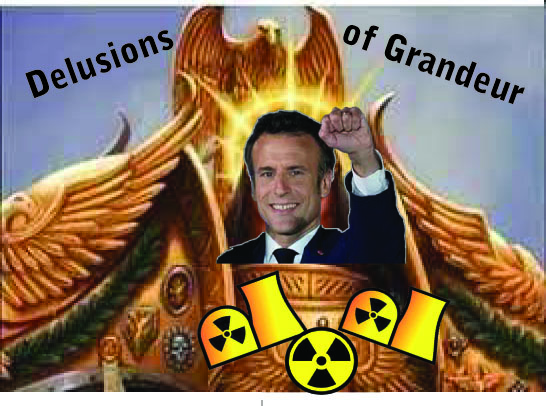
The French nuclear conglomerate Framatome has so far refused to end its cooperation with Rosatom. In December 2021, Rosatom and Framatome announced the signing of a “strategic cooperation” agreement to expand efforts to develop nuclear fuel and technologies.
And while more than 1,000 Western firms have either suspended or ended operations in Russia due to Putin’s invasion of Ukraine, Framatome doesn’t appear ready to join them.
https://www.rferl.org/a/rosatom-russia-nuclear-giant-escapes-sanctions/31899192.html 15 June 22, Europe has grappled with how to end its Russian energy addiction more than ever since Vladimir Putin launched his country’s unprovoked invasion of Ukraine on February 24.
The executive body of the 27-nation European Union agreed a plan in May to reduce its dependence on Russian natural gas by two-thirds by the end of the year, with a total phaseout of all Russian fossil fuel planned by the end of 2027. Coal, already on the outs in much of the bloc, will be banned by August.
But absent from sanctions, let alone discussion, is Rosatom, the Russian state-run nuclear power giant, despite a written appeal in the early days of the invasion from Ukrainian activists and NGOs to blacklist the company and ban nuclear fuel imported from Russia.
Brussels is not alone. When U.S. President Joe Biden announced a U.S. ban on Russian oil, natural gas, and coal imports in March, there was no mention of Rosatom. The Biden administration reportedly considered sanctioning Rosatom but backed off after nuclear industry lobbying and Biden’s plans to include nuclear power as part of the transition to clean energy, Reuters reported.
Rosatom’s footprint is deep in the global reactor and nuclear fuel business. That type of economic sway may explain why Russia’s nuclear industry “has managed to stay out of the limelight” during talk of sanctions, explained Oksana Ananyeva, an energy-policy analyst at the Ukrainian NGO Ekodia, one of the signatories of the March appeal addressed to Biden and EU leaders.
“One of the reasons for that is certainly the heavy reliance on uranium and nuclear fuel as most of the 32 countries that use nuclear power rely on Russia for some part of their nuclear fuel supply chain,” Ananyeva told RFE/RL.
The Numbers
Russian nuclear power radiates far beyond its borders. Of the 439 nuclear reactors in operation around the world in 2021, 38 of them were in Russia, an additional 42 were made with Russian nuclear reactor technology, and 15 more under construction were being built with Russian technology, according to a study published on May 23 at Columbia University’s Center on Global Energy Policy.
Russia is also a source of uranium, the key ingredient in nuclear fuel. Europe gets some 20 percent of its uranium from Russia. The United States relies on Russia for 16 percent of its uranium, with another 30 percent from two of Moscow’s close partners, Kazakhstan and Uzbekistan.
Russia owned 40 percent of the total uranium conversion infrastructure in the world in 2020 and 46 percent of the total uranium enrichment capacity in the world in 2018, according to the Columbia University report.
An EU Rethink On Nuclear Power?
In recent years, Rosatom is reported to have been part of nuclear-power industry lobby efforts to convince the EU to embrace nuclear as the bloc considers how to move faster to cleaner forms of power. According to Greenpeace, new EU nuclear capacity could be worth an estimated 500 billion euros ($521 billion) of potential investment.
The EU is scrambling to meet a goal of net-zero emissions by 2050 to prevent catastrophic global warming. Part of that process is defining what is and what isn’t a climate-friendly investment. Leaders in Brussels are seeking approval from EU countries and the European Parliament to include nuclear energy as a sustainable investment in its “taxonomy” policy for labeling green investments.
Rosatom has been accused by Greenpeace of using lobbying connections, which the environmental NGO describes as “reminiscent of nesting Russian dolls,” to press for the inclusion of nuclear energy in the taxonomy of sustainable investments, much like Russian energy firms Gazprom and LUKoil have done to include fossil gas.
In a report released on May 17, Greenpeace said its research had uncovered that Russian energy companies, including Gazprom, had met with EU commissioners and senior officials either directly or through subsidiaries and lobby groups at least 18 times since the European Commission published its action plan on sustainable finance in March 2018.
Beyond fuel, Rosatom is hoping to build new nuclear reactors, which are the core of its business. Hungary, heavily dependent on Russian gas and oil, has voiced opposition to proposed EU bans on Russian energy. It also has plans with Rosatom to build new reactors at its Paks nuclear power plant.
After meeting Rosatom’s chief executive in Istanbul on May 5, Hungarian Foreign Minister Peter Szijjarto said in a statement that the planned construction of the two new blocks at Paks served Hungary’s strategic interests.
Szijjarto said the Hungarian Atomic Energy Authority was reviewing the requests for permits submitted by Rosatom and once these are approved the project could enter its next phase.
The project, awarded in 2014 without a tender to Rosatom but plagued by delays, has often been cited as a sign of warm ties between Hungarian Prime Minister Viktor Orban and Putin.
While Hungary appears to be going ahead, Finland has announced it is pulling out from its planned reactor project with Rosatom. On May 2, the Finnish-led consortium Fennovoima said it had scrapped a contract with Rosatom citing delays and increased risks due to the war in Ukraine.
Rosatom, which owns a 34 percent stake in the consortium through a Finnish subsidiary, said on May 6 that it will demand compensation for the “unlawful termination” of the contract.
Europe’s Dependence
Continue readingTwo key committees of the European Parliament strike down EU plans to label nuclear and gas as green investment .

MEPs strike down EU plans to label nuclear and gas as green investment.
https://www.euronews.com/my-europe/2022/06/14/meps-strike-down-eu-plans-to-label-nuclear-and-gas-as-green-investment By Jorge Liboreiro & Alice Tidey • Updated: 14/06/2022
The European Commission’s highly controversial plan to label gas and nuclear as sustainable energy sources was on Tuesday struck down by two key parliamentary committees.
The Economic and Monetary Affairs Committee and the Environment, Public Health and Food Safety Committee rejected the proposal on Tuesday, with 76 MEPs voting to object and 62 voting in favour.
In a statement, MEPs on the committees said they “recognise the role of nuclear and fossil gas in guaranteeing stable energy supply during the transition to a sustainable economy.”
“But, they consider that the technical screening standards proposed by the Commission, in its delegated regulation, to support their inclusion do not respect the criteria for environmentally sustainable economic activities as set out in Article 3 of the Taxonomy Regulation,” the statement added.
They also requested that any new or amended delegated acts be subject to public consultation and impact assessments.
The objection will be put before the whole plenary in the first week of July. If the hemicycle replicates the outcome of the committees, the Commission’s plan will be officially scrapped.
The move pits lawmakers against a majority of member states, led by France, who had supported the inclusion of both gas and nuclear in the EU taxonomy.
A smaller group comprising Luxembourg, Spain, Austria and Denmark was vehemently opposed to the label, while Germany, which is highly dependent on gas, objected to the inclusion of nuclear as sustainable.
The committees’ rejection was welcomed by climate activists. Greenpeace EU sustainable finance campaigner Ariadna Rodrigo said in a statement that “MEPs stood with Ukraine today by voting to stop feeding Putin’s war machine with more money and inflaming the climate and nature crisis.”
“After more than 100 days of this devastating war, the European Parliament must now once and for all reject the greenwashing of fossil gas and nuclear energy in July. Do not give this shameful gift to Putin and his lobbyists,” she also said.
Mariana López Dávila, Programme Manager on Sustainable Finance, Environmental Coalition on Standards (ECOS) also commented, saying the vote “shows the Parliament’s willingness to stay true to science, and gives us hope that the EU can still lead the world into a truly sustainable future.”
“However, the veto is not yet a done deal. Members of the European Parliament stand a unique chance to walk the talk, and avoid greenwashing well-meaning investments into environmentally-harming projects,” she added.
Adopted in 2021, the taxonomy is a catalogue that helps private and public investors make informed choices about climate-conscious investments.
It covers a long list of projects that make a “substantial contribution” to at least one environmental objective of the EU’s climate policy while avoiding significant harm to any of the others.
Sectors already labelled as green under the taxonomy include solar energy, geothermal, hydrogen, wind power, hydropower and bioenergy.
The Commission later proposed to add gas and nuclear, arguing the two sources could be used as a temporary bridge to wean the EU off coal and achieve climate neutrality by 2050.
Ukraine war – good chance for France to sell nuclear reactors to India, replacing deal with Russia.
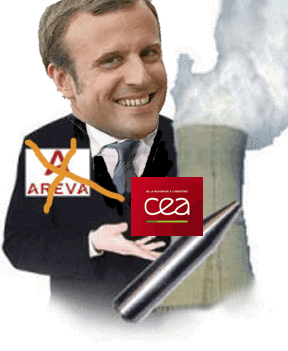
Supply of six nuclear reactors: Question mark on Russia inputs, India evaluates French push at Jaitapur https://indianexpress.com/article/india/supply-of-six-nuclear-reactors-question-mark-on-russia-inputs-india-evaluates-french-push-at-jaitapur-7966435/
The Department of Atomic Energy is actively examining a binding techno-commercial offer submitted by the French state-owned power company to help build six third-generation EPR reactors at Jaitapur in Maharashtra.
by Mihir Mishra , Anil Sasi June 13, 2022
Amid mounting uncertainties over the civil nuclear partnership with Russia in the wake of the Ukraine war, there are indications of fresh progress on the much-delayed deal with French power utility EDF for the supply of six EPR (European Pressurised Water Reactors) nuclear reactors.
The Department of Atomic Energy is actively examining a binding techno-commercial offer submitted by the French state-owned power company to help build six third-generation EPR reactors at Jaitapur in Maharashtra.
A high-level team from EDF was here late last month.
New Delhi had accorded an “in-principle” approval of the site at Jaitapur in Maharashtra for setting up of six reactors of 1650 MWe (megawatt electric) each as part of an umbrella nuclear deal signed with France in September 2008.
However, that proposal has been hanging fire on account of multiple factors, including the slowdown in nuclear projects globally post the Fukushima incident and internal reorganisation at French nuclear utility Areva (which was subsequently taken over by EDF).
If the Jaitapur deal takes off, it would be the largest nuclear power generating site in the country with a total capacity of 9,900 MWe and one of the biggest-ever export deals for the French side.
Sources said the issue of the techno-commercial offer came up during delegation level talks between Prime Minister Narendra Modi and French President Emmanuel Macron in May.
China Says It Does Not Want To See Another North Korean Nuclear Test
NDTV
China’s UN Ambassador Zhang Jun has urged Washington to ease unilateral sanctions on North Korea and end joint military exercises with South Korea in a bid to revive talks with Pyongyang.
WorldReuters: June 10, 2022 United Nations:
China’s U.N. envoy said on Thursday that Beijing does not want to see North Korea carry out a new nuclear test, which is partly why China vetoed a U.S.-led bid to impose new U.N. sanctions on Pyongyang over renewed ballistic missiles launches.
But Ambassador Zhang Jun warned against making presumptions on how Beijing might react at the United Nations if North Korea goes ahead with its first nuclear test since 2017. Washington has warned such a test could happen at “any time” and it would again push for more U.N. sanctions.
Let’s see what will happen, but I think we should not prejudge what will happen with a nuclear test,” Zhang told Reuters, two weeks after China and Russia vetoed imposing more U.N. Security Council sanctions on North Korea.
“The denuclearization is one of the key goals of China,” Zhang said. “We do not want to see another test.”
The double veto publicly split the 15-member Security Council for the first time since it started punishing Pyongyang in 2006. The body has steadily – and unanimously – ratcheted up sanctions over the years in a bid to cut off funding for North Korea’s nuclear weapons and ballistic missile programs.
However, in recent years China and Russia have been pushing for an easing of sanctions on humanitarian grounds – and in the hope that North Korea can be convinced to return to negotiations with the United States on giving up its nuclear weapons………………….. https://www.ndtv.com/world-news/china-says-it-does-not-want-to-see-another-north-korean-nuclear-test-3054324
Iran removes nuclear watchdog’s cameras after criticism
David GrittenBBC News Iran has told the global nuclear watchdog it is removing 27 surveillance cameras from its nuclear facilities.
It comes after the International Atomic Energy Agency’s board censured Iran for not answering questions about uranium traces found at three undeclared sites.
IAEA Director General Rafael Grossi said 40 cameras would remain, but that the move posed a “serious challenge”.
Unless it was reversed within three to four weeks, he warned, it would deal a “fatal blow” to the Iran nuclear deal.
Under the 2015 agreement with world powers, Iran agreed to limit its nuclear activities and allow continuous and robust monitoring by the IAEA’s inspectors in return for relief from economic sanctions.
However, it has been close to collapse since the US pulled out unilaterally and reinstated sanctions four years ago and Iran responded by breaching key commitments.
The US now wants to rejoin the deal if Iran returns to compliance, but indirect negotiations in Vienna have stalled since March…………………………… https://www.bbc.com/news/world-middle-east-61719196
Nuclear Free Local Authorities (NFLA) join the call for UK to join the nuclear ban Treaty Summit
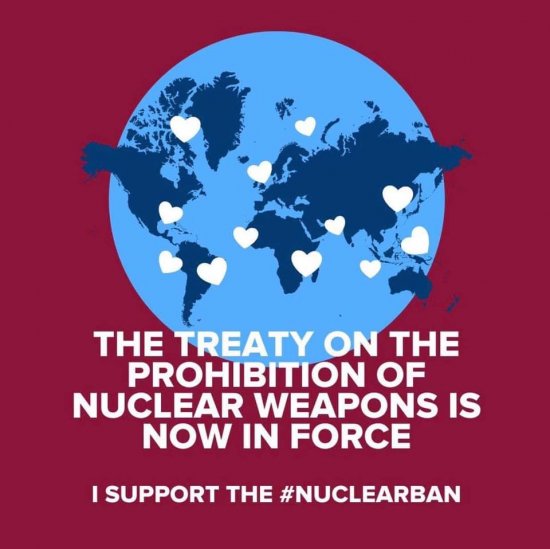
| The Nuclear Free Local Authorities have joined with campaign groups opposed to nuclear weapons in calling on the British Foreign Secretary to ensure that the UK is represented at the forthcoming nuclear treaty ban conference to be held later this month in Vienna. Sixty-one member states of the United Nations have so far signed and ratified the UN Treaty on the Prohibition of Nuclear Weapons, the first international law to prohibit the manufacture, stockpiling, transfer and use of nuclear weapons which entered force in January 2021. A further twenty-five states have signed the Treaty in readiness to ratify it. These member states will meet at the UN in Vienna between 21 – 23 June to discuss the progress so far in creating a nuclear weapons free world, and, in light of the recent conflict in Ukraine, the next best steps to get there. None of the world’s nuclear weapons states have so far engaged with the treaty, and the UK has steadfastly refused to recognise it, despite five of the states, including the UK, making a commitment as signatories to the Nuclear Non-Proliferation Treaty to work in ‘good faith’ to achieve global nuclear disarmament at the earliest possible date. Britain made this commitment as one of the first signatories to the NPT in 1968. NFLA 8th June 2022 https://www.nuclearpolicy.info/news/nuclear-free-local-authorities-join-call-for-uk-to-attend-nuclear-ban-summit/ |
Julian Assange is still in jail, but the new Australian government has the power to act to help him.
https://michaelwest.com.au/assange-is-still-in-jail-what-can-the-new-government-do/ by Greg Barns | Jun 7, 2022
There are signs that Prime Minister Anthony Albanese seems more interested in dealing with the plight of Julian Assange than was the Morrison government. UK Home Secretary Priti Patel has to decide whether or not to sign off on Assange’s extradition to the US by the middle of this month. Albanese must act now, writes Greg Barns.
Julian Assange is an Australian citizen facing over 170 years in a US prison for revealing the truth about US war crimes in Iraq and Afghanistan. His case is important for a number of reasons, including the inhumanity of keeping him locked up in the notorious Belmarsh prison in the UK as his mental and physical health declines. Assange’s case is an attack on freedom of speech. It also represents a dangerous development for citizens, journalists and publishers around the world because the United States is using its domestic laws to snare an individual who has no connection to the jurisdiction. This is the sort of law which Australia has condemned in the context of Beijing imposed laws on Hong Kong.
Tonight, the ABC broadcasts a documentary Ithaka, a film by Julian’s brother Gabriel Shipton which follows their father John Shipton across the world as he campaigns for his son. The broadcast is a milestone in the Australian campaign to free Assange from the shackles that the US and UK have bound him since 2012, when he sought asylum in the Ecuadorean embassy in London, fearing, rightly, that he would extradited to the US.
Anthony Albanese is taking an interest in this case, in contrast to Scott Morrison’s government that showed little interest in pushing Washington on behalf of an Australian citizen facing cruel and unusual punishment in the US It was manifested in an answer he gave last week in a media conference and was confirmed by his Foreign Minister Penny Wong in an interview on the ABC last Friday.
Asked whether he would intervene with the US to save Assange, Albanese replied that his “position is that not all foreign affairs is best done with the loudhailer.” In other words, as one foreign affairs expert told this writer, Albanese is rightly respecting the US-Australia relationship by raising the Assange issue in private with the White House.
Wong’s comments last week should also be seen as a positive sign that, at last, some action will be taken to stand up for freedom of speech by ending the Assange case. Speaking on Radio National last Friday, Wong said:
The Prime Minister has expressed that it’s hard to see what is served by keeping Mr Assange incarcerated and expressed a view that it’s time for the case to be brought to an end.
As former Labor foreign minister Bob Carr has written, it is perfectly legitimate for Australia to ask the US to withdraw its case against Assange. Carr has also pointed to the dangerous precedent set by the case – the extraterritorial reach of the US to seize anyone anywhere in the world who exposes something which embarrasses Washington. On September 8, 2020 Carr told The Sydney Morning Herald:
If America can get away with this — that is digging up an Australian in London and putting him on trial for breaching their laws — why can’t another government do the same thing? For example, an Australian campaigning for human rights in Myanmar, that Australian in theory could be sought by the government of Myanmar and brought back to Myanmar from London and put on trial there for breach of their national security laws.
Ironically the Morrison government opposed the security law that China imposed on Hong Kong in 2020 in part because it includes a provision which catches foreign citizens who criticise Beijing’s rule in Hong Kong.
The case of Assange cannot be allowed to continue. It represents an affront to fundamental democratic values and it shows Washington to be no better than authoritarian regimes that hunt down critics the world over. The early signs are the Albanese government is uncomfortable about the case, which is a welcome development, but there is little time to do so.
Australia’s new government must act to save Australian citizen Julian Assange, where the previous government failed

By John Jiggens https://independentaustralia.net/politics/politics-display/assange-albanese-must-act-where-the-coalition-failed,16446 9 June 2022, The Morrison Government failed Julian Assange. Supporters of the persecuted publisher are looking to Anthony Albanese to make good on his statement that “enough is enough”, writes Dr John Jiggens.
AFTER 20 APRIL, when a UK court formally approved the extradition of Julian Assange to the United States, mainstream media presented a narrative that claimed UK Home Secretary Priti Patel would have until 31 May to rubber-stamp Assange’s extradition.
That date has now come and gone and we still await Patel’s decision.
But is this all there is to it?
The victory of Anthony Albanese’s Labor Party in the Australian Federal Election has brought new hope to supporters of the Australian publisher.
Last year, our new Attorney-General Mark Dreyfus issued a statement saying that Labor wanted the Assange matter ‘brought to an end’. His leader, our new Prime Minister Anthony Albanese, said he couldn’t see any purpose in keeping Assange in gaol, stating “enough is enough”.
In the first week of the Albanese Government, the ABC reported:
‘Mr Albanese is also a signatory to the Bring Julian Assange Home Campaign petition.’
However, the ABC gave no source for this claim. (The Bring Julian Assange Home Campaign petition –‘Free Julian Assange, before it’s too late. Sign to STOP the USA Extradition’ – is an online petition that has now garnered over 715,000 signatures.)
Phillip Adams – not the popular ABC Late Night Live host – who originated the online petition, this week published an update stating firstly that he was not the source of the ABC’s information, but then added, rather coyly, that the ABC report gave him ‘great confidence’ that the campaign had ‘turned a corner’ and had brought a smile to his face.
That smile no doubt broadened when PM Anthony Albanese replied to a question fromThe Guardian, which asked whether it was now his position that the U.S. should be encouraged to drop the charges against Assange and whether he had made any such representations to the U.S. Government.
Albanese replied that it was his position that “not all foreign affairs is best done with the loudhailer”.
So, there is still no confirmation that Anthony Albanese signed the online petition. Although, signing a petition which would ultimately go to himself (as the PM) seems an odd way for Albanese to indicate his support for Assange when he could have joined the Bring Julian Assange Home Campaign parliamentary group. That certainly isn’t a loudhailer approach.
The battle to stop the extradition of Julian Assange hangs, intriguingly, in the balance.
EDITORIAL: Vienna meeting on the Treaty on the Prohibition of Nuclear Weapons -best chance for Japan to lead the way

Vienna meet best chance for Japan to make case for
nuclear abolition https://www.asahi.com/ajw/articles/14640066. June 8, 2022 Nuclear weapons must never be used. The international community must stand as one and make this plea. The urgency has never been greater than it is now.
As the only nation to have experienced atomic warfare, Japan’s mission is to lead the way.
The first meeting of the signatories to the Treaty on the Prohibition of Nuclear Weapons will be held in Vienna late this month against the backdrop of Russia’s war against Ukraine, which has escalated into a threat to use nuclear weapons.
The treaty categorically forbids all signatory nations to own, use or threaten to use nuclear weapons.
It went into force in January last year and has been ratified by more than 60 nations and regions.
The conference has been eagerly awaited as an opportunity to counter moves by the nuclear powers to expand their weapons arsenals and continue calls for a world without nuclear weapons.
All U.N. members are qualified to attend. Some have chosen to participate as observers, without having signed or ratified the nuclear ban treaty.
They include Germany and Norway, members of the North Atlantic Treaty Organization, as well as Sweden and Finland, which have announced they plan to join the military alliance.
Participating in discussions for the elimination of nuclear weapons does not conflict with remaining under the U.S. “nuclear umbrella.”
Observer nations intend to focus on long-term goals while dealing with the current Russian threat.
But the Japanese government has not changed its decision to sit out the conference, asserting there is no point in participating without engaging the nuclear powers in the process.
How will the international community regard the absence of Japan at this conference, given that it is the nation most familiar with the horrors that befell Hiroshima and Nagasaki?
We deplore the government’s stance.
Prime Minister Fumio Kishida, elected from Hiroshima, has stressed that background in projecting his political persona. He has appraised the nuclear ban treaty as “an important exit.”
We understand Kishida’s position of stressing the importance of Japan’s alliance with the United States.
But that stance must be all the more reason for him to seek Washington’s understanding and proudly attend the Vienna conference. That, we believe, is what “peace diplomacy” boils down to.
In the meantime, the government has appointed young anti-nuclear activists as “special youth envoys” and is sending them to the conference to convey the horrors of atomic bombing to the world.
Prime Minister Fumio Kishida, elected from Hiroshima, has stressed that background in projecting his political persona. He has appraised the nuclear ban treaty as “an important exit.”
We understand Kishida’s position of stressing the importance of Japan’s alliance with the United States.
But that stance must be all the more reason for him to seek Washington’s understanding and proudly attend the Vienna conference. That, we believe, is what “peace diplomacy” boils down to.
In the meantime, the government has appointed young anti-nuclear activists as “special youth envoys” and is sending them to the conference to convey the horrors of atomic bombing to the world.
We hope the delegation will remind the world firmly of the inhumanity of nuclear weapons.
During the Cold War, nuclear weapons were perceived as “the ultimate weapons that cannot be used.”
But since then, they have been reduced in size and become more readily available. Conspicuous moves have been made to lower the hurdle of their deployment. Fears of an accidental nuclear explosion have not evaporated.
How do we reconcile nuclear disarmament and arms control with initiatives for the abolition of nuclear weapons?
It will be a tough challenge, but we must keep striving to reach this goal.
–The Asahi Shimbun, June 8
Ukraine slams planned IAEA mission to Russian-occupied nuclear plant
Reutershttps://www.reuters.com/world/europe/ukraine-slams-planned-iaea-mission-russian-occupied-nuclear-plant-2022-06-07/
June 7 (Reuters) – Ukraine’s state nuclear company Energoatom on Tuesday criticised an IAEA plan to send a delegation to a Russian-occupied nuclear plant in southern Ukraine, saying it “did not invite” such a visit.
“We consider this message from the head of the IAEA as another attempt to get to the (power plant) by any means in order to legitimise the presence of occupiers there and essentially condone all their actions,” Energoatom wrote on the Telegram messaging app.
On Monday, IAEA head Raphael Grossi said the organisation was working on sending an international mission of experts to the Russian-held nuclear power plant at Zaporizhzhia in Ukraine, Europe’s largest. nL1N2XT0LV]
 | |||
|
| |||
| to me |
| |||
|
The unpalatable truth in Ukraine

“When you have eliminated the impossible, whatever remains, however improbable unpalatable, must be the truth.”
And when this final scenario comes to pass, who will have won the war in Ukraine?
Well, it won’t be Ukraine.
The Hill. BY ANDREW LATHAM, OPINION CONTRIBUTOR – 06/02/22 ”…………………………………… “When you have eliminated the impossible, whatever remains, however improbable, must be the truth.” – Sherlock Holmes – Sir Arthur Conan Doyle
And the truth is, once we have eliminated all the impossible scenarios, the least improbable outcome of the war in Ukraine is a Russian victory.
Note that I did not say such an outcome would be desirable. Russia’s inevitable victory is anything but. Nor did I say it would be total. The outcome of this war is going to fall far short of the Kremlin’s initial hopes and expectations. Nor, finally, did I say it would be without significant cost. Any conceivable Russian victory now will entail such a loss of blood and treasure that it will have to be judged Pyrrhic at best.
But it will be a victory nonetheless — and we in the West had better come to grips with that hard truth.
Let’s begin by eliminating the impossible.
The first unrealistic endgame is the reduction of Ukraine to a vassal state of the Russian empire. This would entail the kind of operation initially envisioned by the Kremlin: a quick decapitating military strike, the installation of a pro-Moscow regime in Kyiv and either the formal incorporation of Ukraine into the Russian Federation or its informal incorporation into a Russian sphere of influence (like Belarus).
While perhaps the initial objective of Russia’s “special military operation,” this outcome is now obviously an impossibility. ………………………………….
The second impossible scenario is the total defeat of the Russian military and the restoration of Ukraine to its pre-2014 borders. In this scenario, the Ukrainian military, having blunted the initial Russian offensive, launches a successful counter-offensive that ultimately drives the Russians not only out of the territories they captured in 2022 but out of the Donbas and Crimea as well. The resulting political dispensation would be an independent Ukraine restored to its internationally recognized borders and free to join NATO and/or associate with the European Union (EU) as it saw fit.
While advocated by many within and beyond Ukraine, this outcome is simply impossible. …………………………..
Indeed, there is no reason to believe that they will even be displaced from much of the territory they have seized along the coast of the Sea of Azov……………… despite the willful delusions of some and the idealistic hopes others, this outcome is simply impossible.
The third and final impossible scenario is a limited Ukrainian victory that would reverse all or most of the Russian gains since Feb. 24, 2022. In this scenario, while the Donbas and Crimea remain in Russian hands, all the territory captured by Russia since its recent re-invasion would be liberated by Ukrainian forces and restored to Ukrainian control.
While once viewed as a realistic outcome, by now it should be obvious that this is impossible. Just as Ukraine lacks the ability to liberate all its pre-2014 territory, it also lacks the ability to liberate the recently conquered territory in the Donbas or along the Azov coast. Unlike in the north of Ukraine, these territories are central to Russian interests in Ukraine and, as such, Russia simply will not withdraw from them as it withdrew from Kyiv earlier in the war. Nor will Ukrainian forces – themselves, it should be noted, suffering terrible attrition all along the battle front and growing weaker with each passing day – be strong enough to compel them to do so. No, like the previous two scenarios, this one is simply an impossibility.
And that leaves only one other conceivable outcome: a fragmented and partly dismembered Ukraine, neither fully part of the West nor entirely within the Russian sphere of influence. A Ukraine fragmented in that the whole of the Donbas and perhaps other territories will be left beyond Kyiv’s control; partly dismembered in that Crimea will remain part of Russia (at least in Russian eyes); and not fully part of the West in that it will not be free to join NATO or even to have a meaningful partnership with the EU. Simply put, this outcome is not only not impossible, it’s not even improbable.
And when this final scenario comes to pass, who will have won the war in Ukraine?
Well, it won’t be Ukraine. While such an outcome will satisfy the basic existential goals of Kyiv, it will be a far cry from the more maximalist ambitions expressed both before and after Feb. 24. No, when this scenario inevitably comes to pass, it will clearly be a defeat for Kyiv.
Similarly, such an outcome will not satisfy the maximalist ambitions of those in Moscow who thought that their initial thunder run would resolve the Ukraine issue once and for all. But it will satisfy the Kremlin’s most basic and fundamental geopolitical desideratum: a neutralized Ukraine beyond both the geopolitical ambit of NATO and the geoeconomic orbit of the EU. It will also “restore” Crimea to its rightful place in Russia. And finally, it will demonstrate that interfering in Russia’s natural sphere of influence is unwise. In these ways, when the impossible has been eliminated, the resulting outcome will clearly be a victory for Moscow.
………………..when it comes to thinking about the possible outcomes of the war in Ukraine, perhaps it ought to read something more like: “When you have eliminated the impossible, whatever remains, however improbable unpalatable, must be the truth.”
Andrew Latham is a professor of international relations at Macalester College in Saint Paul, Minn., and a non-resident fellow at Defense Priorities in Washington, D.C. Follow him on Twitter @aalatham. https://thehill.com/opinion/international/3509458-the-unpalatable-truth-in-ukraine/
The need for a negotiated settlement to end the Ukraine war – Western allies discuss this

senior Western officials — including US President Joe Biden — are emphasizing anew that even with advanced western weaponry, Ukraine’s prospects for peace will ultimately rest on diplomacy.
Western allies meeting regularly to game out potential framework for Ukraine ceasefire as war hits 100th day. By Natasha Bertrand, Katie Bo Lillis, Barbara Starr and Jeremy Herb, CNN, June 3, 2022,Washington (CNN)Staring down the prospect of an extended stalemate in Ukraine, the US and its allies are placing a renewed emphasis on the need for a negotiated settlement to end the war as the conflict grinds into its 100th day with no clear victory in sight for either side.
US officials have in recent weeks been meeting regularly with their British and European counterparts to discuss potential frameworks for a ceasefire and for ending the war through a negotiated settlement, multiple sources familiar with the talks told CNN. Among the topics has been a four-point framework proposed by Italy late last month. That framework involves Ukraine committing to neutrality with regard to NATO in exchange for some security guarantees, and negotiations between Ukraine and Russia on the future of Crimea and the Donbas region.
Ukraine is not directly involved in those discussions, despite the US commitment to “nothing about Ukraine without Ukraine.” US and Ukrainian officials said the US has not been pressuring Ukraine to commit to a certain plan or directly pushing them to sit down with the Russians.
Still, there is some confusion about what kind of framework the US would consider appropriate to bring to the Ukrainians for further discussion.
US Ambassador to the UN Linda Thomas Greenfield told reporters earlier this week that the Italian framework is “one of those initiatives that we certainly would love to see bring a conclusion to this horrific war and the horrific attacks on the Ukrainian people.” But two US officials told CNN that the US actually does not support the Italian proposal.
In any case, US and western officials tell CNN that there is a growing concern that if the Russians and Ukrainians don’t get back to the table and work out a deal, the war will drag on — potentially for years.
Subtle language shift
It’s not clear whether these discussions will translate into eventual settlement talks. The Biden administration still sees no real prospect for any diplomatic breakthroughs or ceasefires anytime soon and two NATO officials said that the western alliance sees little appetite to negotiate on the Ukrainian side — in part because Russia’s brutal bombing campaign and myriad human rights violations have destroyed public support for any concession to Russia.
Moscow has also showed little interest in serious talks, officials say. Right now, Ukraine remains focused on ensuring a decisive military victory in the east and the south in order to put themselves in a superior negotiating position, these sources said.
“We can propose all the plans we want, but unlikely Kyiv will go for anything that cedes territory at the moment,” according to one official.
The concern that the conflict could grind on indefinitely — with mounting costs — has been reflected in the subtle shift in language and messaging by US officials over the past several weeks.
In April, the US’ stated goal was for Russia to “fail,” a National Security Council spokesperson said at the time, and for the Russian military to be significantly “weakened” in the long term, as Defense Secretary Lloyd Austin proclaimed — comments that reflected optimism that Ukraine might be able to defeat Russia decisively on the battlefield after successfully defending Kyiv.
But as an effective stalemate has taken hold on the battlefield, with Russia making incremental gains in the east and Ukraine saying it is increasingly outgunned and outmanned, senior Western officials — including US President Joe Biden — are emphasizing anew that even with advanced western weaponry, Ukraine’s prospects for peace will ultimately rest on diplomacy.
“As President Volodymyr Zelensky of Ukraine has said, ultimately this war ‘will only definitively end through diplomacy,'” Biden wrote in a New York Times op-ed on Tuesday. “Every negotiation reflects the facts on the ground. We have moved quickly to send Ukraine a significant amount of weaponry and ammunition so it can fight on the battlefield and be in the strongest possible position at the negotiating table.”
The hope, officials said, is that the US can support Ukraine long enough to see it through to a peaceful settlement rather than a full capitulation……………………..
As the US looks to maintain its military and financial support for Ukraine and isolate Russia for as long as it takes to get to a peace agreement, a key strategy will be keeping the NATO alliance unified. But already, sources say, there are cracks appearing in NATO — Turkey is refusing to allow Sweden and Finland to move forward with joining the bloc, and diplomats had to carve out an exception for Hungary as part of Europe’s recent oil embargo against Russia.
There’s also the challenge of maintaining domestic support for funding Ukraine’s war. There’s been growing opposition among Donald Trump-aligned Republicans with each assistance vote that Congress has taken, one Democratic lawmaker noted. He added that there are concerns over how willing Congress will be in the future to fund a protracted conflict……………..https://edition.cnn.com/2022/06/03/politics/ukraine-100-days-western-allies-regular-meetings-potential-ceasefire/index.html
1 This Month



26 September – International Day for the Total Elimination of Nuclear Weapons


PLEASE OPPOSE HR 8255 AND S.3639 – bills would accelerate satellite deployment, with no environmental review or safeguards – https://ncstd5li.quorum.us/campaign/169331/
To see nuclear-related stories in greater depth and intensity – go to https://nuclearinformation.wordpress.com
-
Archives
- September 2026 (257)
- August 2026 (330)
- July 2026 (355)
- June 2026 (287)
- May 2026 (306)
- April 2026 (356)
- March 2026 (251)
- February 2026 (267)
- January 2026 (308)
- December 2025 (358)
- November 2025 (359)
- October 2025 (375)
-
Categories
- 1
- 1 NUCLEAR ISSUES
- business and costs
- climate change
- culture and arts
- ENERGY
- environment
- health
- history
- indigenous issues
- Legal
- marketing of nuclear
- media
- opposition to nuclear
- PERSONAL STORIES
- politics
- politics international
- Religion and ethics
- safety
- secrets,lies and civil liberties
- spinbuster
- technology
- Uranium
- wastes
- weapons and war
- Women
- 2 WORLD
- ACTION
- AFRICA
- Atrocities
- AUSTRALIA
- Christina's notes
- Christina's themes
- culture and arts
- Events
- Fuk 2022
- Fuk 2023
- Fukushima 2017
- Fukushima 2018
- fukushima 2019
- Fukushima 2020
- Fukushima 2021
- general
- global warming
- Humour (God we need it)
- Nuclear
- RARE EARTHS
- Reference
- resources – print
- Resources -audiovicual
- Weekly Newsletter
- World
- World Nuclear
- YouTube
-
RSS
Entries RSS
Comments RSS

