NATO Summit – Facing the New Reality – a view from Hungary
Hungarian Community for Peace, 29 June 22, Leaders of NATO’s thirty member states are preparing to approve a new strategy to halt change in the world and delay the twilight of Western civilization, an analyst at the Hungarian Community for Peace evaluated the NATO summit beginning in Madrid on Tuesday.
Due to the failure of its eastern expansion, NATO is forced to face the fact that the Russians are turning its own expansion strategy against it. Russian roll back replaced the American. NATO would be forced into defensiveness if America gave up its aggression.
All that is already known about the new “strategic concept” is that it marks Russia as its main enemy and considers military conflict in the territory of the bloc countries to be a real threat. Therefore, they want to deploy more than 300,000 troops to Eastern European countries, approx. eight times as many as are currently there. The other main enemy is marked in China. But NATO is not strong enough to establish a circular defense against both of them and their allies. NATO has to decide what is more important. Both for America and neither for other allies.
Why should Europe be afraid of America’s losing dominance over the world, when its prosperity, and even its mere existence, is increasingly dependent on Russian energy and Chinese trade? Why should Eastern Europe get into a war with Russia when peaceful cooperation only benefits?
Today, not only Hungary and Turkey give different answers to the questions than their big brother, but the French and Germans are also looking for other ways. However, they have not yet come to oppose America openly, as there is a common interest in maintaining a common system. But strategy here, strategy there, the common interest in maintaining the system is crossed by a multitude of national interests. Economic interests are different. Market competitiveness, social stability, development depend on who and to what extent adapts to the new conditions and fits into the nascent new world order.
It is possible to force the old and even try to restore an even older one, but if it fails, the Sun may fall even faster over the system, the days of which are numbered without it.
Russia and China may be called the number one public enemy, but the consequences cannot be ignored. The more they miss the possibility of a compromise with Russia, the more disadvantaged they will be forced to compromise with it. An example of this is Russia’s superiority in strategic power relations. With the Sarmat rocket, America will no longer have the opportunity to reach the balance of power on the old level. And if the U.S. doesn’t ask Moscow to negotiate with it, the level could sink even deeper.
The change in conditions is shown by the fact that no Arab country, nor most Latin American countries, have joined Western sanctions against Russia, and are increasingly seeking membership in international organizations based on the Russian-Chinese axis. Argentina and Iran have applied to join the Alliance of China, Russia, India, South Africa and Brazil (BRICS). The recent Beijing Declaration aims at a comprehensive reform of the United Nations and the enlargement of the Security Council to include Brazil, South Africa and India for a multipolar world order.
Russia has indicated that it intends to move the venue for international conciliation negotiations to a truly neutral territory instead of Geneva, as Switzerland has joined the Western embargoes against Russia, meaning it can no longer be considered neutral.
As NATO leaders try to postpone a compromise with the East with a new strategy and believe they can outdo their opponents by military and economic means, businessmen from all NATO nations attended the St. Petersburg International Economic Forum in June. Would they see any further than their politicians?
Edited by Hungarian Community for Peace
28 June 2022
https://vk.com/public213869489
Ukraine won’t pursue NATO membership – Zelensky adviser
Ukraine won’t pursue NATO membership – Zelensky adviser https://www.rt.com/russia/557824-ukraine-doesnt-want-to-join-nato/ 27 June 22,
However, Kiev wants the bloc to acknowledge its role as a “cornerstone” of European security.
Ukraine has accepted that NATO membership is off the table, and will not take any further steps toward joining the US-led military bloc, Igor Zhovkva, an adviser to President Volodymyr Zelensky, told the Financial Times on Saturday. Nevertheless, Kiev wants a say in NATO’s policy making.
The bloc’s leaders are set to meet in the Spanish capital of Madrid next week. During two days of meetings and consultations, the organization will unveil its Strategic Concept – a document that outlines its mission and stance toward perceived threats, including China and Russia.
Zhovkva told the Financial Times that Zelensky’s government wants NATO to acknowledge that Ukraine is “a cornerstone of European security,” and to reaffirm its partnership with Kiev, first established in 1997.
However, he said that Ukraine will not push to become a member of the bloc.
“Nato members have declined our aspirations. We will not do anything else in this regard,” he said.
Ukraine’s prospective membership was a key factor behind the current conflict with Russia. The previous Petro Poroshenko-led government added the goal of becoming a NATO member to the country’s constitution in 2019, despite Moscow’s warnings that having the bloc’s forces and weapons on its border would constitute an unacceptable security threat.
NATO Secretary General Jens Stoltenberg has insisted that membership remains open for interested nations, but has not promised or ruled out accession for Ukraine in the near term. Under the 2008 Bucharest Declaration, NATO’s official position is that Georgia and Ukraine “will become members of NATO” at an unspecified future date.
NATO’s Strategic Concept has not been updated since 2010. That version of the document states that the alliance seeks “a true strategic partnership” with Russia.
Zhovkva wants NATO to purge any mention of Russia as a “partner” from the coming update.
“We expect in the Nato strategic concept . . . there will be more strict and severe warnings to the Russian aggressor,” he said, urging the alliance “don’t be shy” in inserting anti-Russian text.
Furthermore, Zhovkva said that he wants the Ukrainian conflict to be described in the strategy document, arguing “it’s not enough just to cross out the word ‘partner.’”
Atoms and Ashes—lessons from six of the world’s worst nuclear disasters
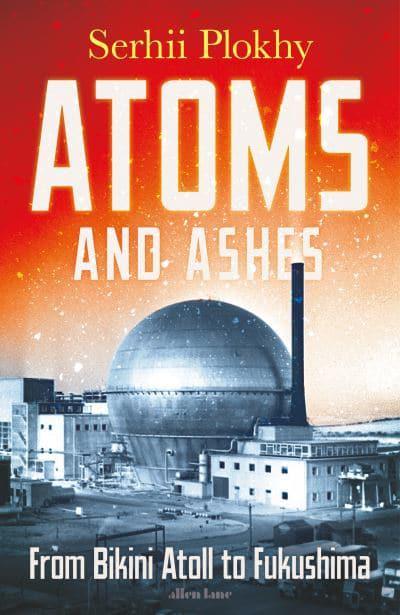
This is a powerful and timely book. At a time when arguments for nuclear power are returning as a way to solve both climate change and the energy crisis, we need to arm ourselves with the arguments. Not only is nuclear power not a solution to the problems we face, the lesson from this book is that it’s inherently dangerous and could have devastating consequences for life on earth.
https://socialistworker.co.uk/long-reads/atoms-to-ashes-lessons-from-six-of-the-wo2 27 June 22, Atoms and Ashes—from Bikini Atoll to Fukushima, the new book by Serhii Plokhy, is a compulsive but terrifying read, writes Amy Leather
Standing in front of Hinkley Point C nuclear power plant, Boris Johnson launched the Tories’ Energy Security Strategy in April. Nuclear energy was central to the plan. Johnson claimed the strategy would deliver “clean, affordable, secure power to the people for generations to come”. He called for 25 percent of our electricity to come from nuclear power by 2050—up from the current 16 percent. That means greatly increasing capacity, with Johnson bragging the first phase of the plan will involve building eight new nuclear reactors.
Reading Atoms and Ashes by Serhii Plokhy in this context is chilling. As Plokhy says at the start, his main purpose is to take a fresh look at the history of nuclear accidents. He looks at why they happened, how bad they were, what we can learn, and assesses if they could ever happen again.
To do this, he examines six of the world’s worst nuclear disasters—although he is very clear these are by no means the only accidents that have occurred. In fact, there have been hundreds of known incidents and probably even more that have been kept secret or covered up.
Plokhy starts with the Castle Bravo nuclear test that took place in March 1954 at Bikini Atoll, Marshall Islands, in the Pacific. A miscalculation of the hydrogen bomb’s radiation yield and wind direction significantly damaged human health and the environment. The book ends with the Fukushima disaster of 2011, when a 43-foot-high tsunami crashed over the Japanese nuclear plant causing three reactors to go into meltdown.
In between these terrible events Plokhy explores the 1957 Kyshtym disaster in Russia’s Ural Mountains. The explosion of a nuclear waste tank released a massive amount of radiation into the atmosphere. He examines the reactor fire at the Windscale works in Cumbria in the same year. And then he looks at the reactor meltdowns at Three Mile Island in the US in 1979 and the 1986 nuclear disaster at Chernobyl in what is now Ukraine.
It confirms in revealing detail what many of us who’ve campaigned against nuclear power already know—that it is neither clean nor safe. And, rather than a legacy of “secure power”, it will leave future generations nuclear waste, contaminated water and land, and the cost of clean ups, decontamination and decommissioning.
The catastrophic explosion at the Chernobyl plant made the entire region uninhabitable, with up to half a million people permanently displaced. A report in September 2005 put the predicted final death toll from radiation induced cancers at 4,000 people. The Union of Concerned Scientists suggests it could be more than six times that. Recent estimates put the number of deaths from the Fukushima disaster at 2,202 with some predicting thousands more extra cancer deaths. Around 150,000 people had to evacuate the region.
Lots of dangerous material is generated from nuclear power. One of the solutions is to bury high level nuclear waste underground. The US government buries its waste from weapons in New Mexico. The land will still be contaminated in 300,000 years’ time. Meanwhile in Japan, the future of over one million tons of contaminated water stored in a thousand tanks on the site of the Fukushima nuclear plant is unresolved. Last year the Japanese government decided to start releasing the water into the ocean—a process that could last decades and cause environmental damage.
Plokhy charts how the race to make atomic and hydrogen bombs drove the development of nuclear power during and just after the Second World War. Nuclear plants were first built to produce the plutonium needed for bombs, not to generate electricity. The first nuclear bombs were dropped by the US on Hiroshima and Nagasaki in Japan in August 1945, with devastating consequences.
It wasn’t until the end of 1953 that the US launched the concept of “atoms for peace”. President Dwight Eisenhower claimed that the nuclear industry could produce “good atoms” for energy. It was an attempt to reassure people after concerns were raised about nuclear energy. He wanted to change public perception in the US in order to win support for more investment in nuclear arms and weapons.
In Britain the first nuclear plant was Windscale, built in the village of Seascale on the Cumbrian coast. Construction began in 1947 and it went operational in 1950. The purpose of the nuclear reactors was to produce the material for a British bomb. Successive prime ministers—Labour and Tory—wanted to boost British nuclear capabilities. In the context of the Cold War’s imperialist competition between the US and Russia and British imperial decline, they sought to prove
Britain’s worth to the US. That meant developing a nuclear bomb as quickly as possible.
From the very beginning this competition between states to develop nuclear weapons meant great secrecy, cutting corners, taking risks and an often-cavalier attitude to safety. It becomes clear as each disaster plays out that—whether it was in the US, Russia or Britain—there was little care about that or the people affected by accidents and tests.
For example, when it came to the nuclear bomb tests in the Marshall Islands, those in charge proceeded despite knowing the risks. The people living on some nearby islands were not even told the tests were happening. The colonial mindset of the US meant the indigenous people of the Marshall Islands were either ignored or moved at will. And once suffering from radiation, they were subject to studies—not to help them recover but to help the industry assess the effects of radiation.
For example, when it came to the nuclear bomb tests in the Marshall Islands, those in charge proceeded despite knowing the risks. The people living on some nearby islands were not even told the tests were happening. The colonial mindset of the US meant the indigenous people of the Marshall Islands were either ignored or moved at will. And once suffering from radiation, they were subject to studies—not to help them recover but to help the industry assess the effects of radiation.
.Competition and secrecy meant that scientists developing and building the new nuclear reactors could not properly learn from each other. For example, those building the Windscale Works in the 1950s only learnt of new developments piecemeal from the US. Often it was too late to incorporate them into the reactor design. Plokhy describes how the scientists and engineers at Windscale didn’t find out about the need for radiation filters to be fitted on the chimneys until after construction had begun. Rather than start again, they were put at the top of the chimneys where they were less effective. Tellingly even this addition was nicknamed “Cockcroft’s Folly” after the man who insisted they had them at all. In fact, these filters helped trap much of the radiation when the reactor fire broke out.
From the start, Russia chose to use outdated and unsafe reactor designs. Safer ones would have taken longer to build and they had no time to spare when racing against the US. The operators and nuclear engineers at Chernobyl had not even been told about the previous accidents with this type of reactor. Similarly, no manager or operator at Three Mile Island had been told of problems with the type of reactor they were using. It had previously caused an accident at another plant.
The pressure to produce plutonium as quickly as possible meant cutting corners with safety. For example, something called “Wigner energy” builds up in the main body of the reactor while the fission reaction is taking place. This needs to be regularly released otherwise it ignites the graphite used to moderate the reaction. This special operation to release the excess energy is called “annealing”. But the procedure at Windscale required stopping the reactor, so reducing operational hours and productivity. Under pressure from the government to produce more bomb fuel the Windscale Technical Committee had decided to reduce the number of anneals. By the time the anneal finally took place the day before the reactor fire in October 1957, it was long overdue.
At the Chernobyl nuclear plant, in order to meet the deadline of December 1983, the fourth reactor had gone operational before a key safety test. It was not until April 1986 that plans were made to carry out this test. It meant shutting down the reactor. This is a very challenging operation and can lead to the reactor becoming unstable. What followed led to two massive blasts that flung off the shield that covered the top of the reactor. Masses of radioactive particles escaped into the atmosphere.
Prior to the disaster at Fukushima a scandal had broken out over the falsification of safety reports by the company—Tokyo Electric Power Company (TEPCO). According to Plokhy, from as early as 1977 “there were at least two hundred cases in which the company had supplied false information about inspections not carried out and issued reports that papered over existing problems”.
Nuclear power stations are often portrayed as calm laboratories where the experts are in charge. Bill Gates, a founder of nuclear innovation company TerraPower, has said that any problems will be solved by “innovation” and the “laws of physics”.
However, the descriptions in the book show the complete opposite of a calm, controlled environment. As Plokhy says, “Hazard is inherent in all nuclear power.” Atomic fission itself is dangerous, and nuclear reactors can be unreliable and unpredictable. The book makes clear how competition, secrecy, lack of communication as well as miscommunication make it extremely unsafe.
Plokhy describes almost minute by minute the trajectory of each disaster. In all of them, there comes a point when the scientists, the operators, the experts simply don’t know what to do to prevent the accident from worsening. In the end, due to the conditions they are operating under, they sometimes make decisions that actually make the situation worse. Or, by solving one problem, another one is created. At Windscale, they simply did not know how to stop the fire. At Chernobyl one issue among many was that they did not know if the radiation would get into the groundwater. And at Three Mile Island, two scientists were having a raging argument about what next steps to take in the midst of the emergency. Meanwhile, in every case, the authorities delayed evacuation plans.
.This is in no way to blame the individuals working at the time or those who had to deal with the accidents. They acted with immense bravery and sacrificed their own health, and even lives, to prevent greater disaster. Plokhy highlights how often the subsequent reports into accidents wrongly blame personnel and not the reactor designs. He illustrates how the conditions they were operating in and the nature of nuclear power led to such problems.
After each major accident, the authorities say they’ve learned the lessons and developed new technology that will prevent anything similar from happening. However, Plokhy highlights that there was – and still is—an inherent safety problem with nuclear reactors being used to generate power. They were never designed for that purpose. The reactors were developed from military prototypes to produce plutonium or to power nuclear submarines.
Many of the new, smaller reactors that have been designed from scratch to produce energy, are still at the computer-simulation stage and years away from construction. Plokhy predicts that the expansion in the number of plants now being proposed will increase the probability of accidents.
Although it is not discussed in the book, it is worth remembering that nuclear power is not carbon neutral. While nuclear fission itself does not release carbon emissions, every other stage of the production process means greenhouse gases are pumped into the atmosphere. More than almost any other form of energy generation nuclear power requires a complex cycle of mining, generation, storage and disposal. And in 2022 there are new risk factors. As Plokhy has written elsewhere, “Warfare, economic collapse, climate change itself—all of these increasingly real risks make nuclear sites potentially perilous places.”
This is a powerful and timely book. At a time when arguments for nuclear power are returning as a way to solve both climate change and the energy crisis, we need to arm ourselves with the arguments. Not only is nuclear power not a solution to the problems we face, the lesson from this book is that it’s inherently dangerous and could have devastating consequences for life on earth.
- Atoms and Ashes—from Bikini Atoll to Fukushima by Serhii Plokhy. £25.00 Available from Bookmarks—the socialist bookshop
No Western ”boots on the ground” in Ukraine? Just commandoes and CIA agents
Western ‘network of commandos and spies’ helping Ukraine – NYTCIA agents have been stationed in Kiev to share US intel with Ukrainian troops, the report claims https://www.rt.com/news/557848-us-cia-agents-kiev/ NATO members have been supplying Ukraine with heavy weapons, including missile launchers, combat drones and armored vehicles, and training Ukrainian troops to use them. In recent months, the Pentagon has delivered M142 HIMARS multiple rocket launchers and M777 howitzers.
US Defense Secretary Lloyd Austin said last week that Ukraine was facing “a pivotal moment on the battlefield” and urged Washington’s allies to continue aiding Kiev.
The report about the activities of Western commandos and CIA agents in and around Ukraine comes as a three-day Group of Seven (G7) summit kicks off in Germany on Sunday. The group, which comprises of the US, Canada, Britain, France, Germany, Italy and Japan, which have imposed sweeping sanctions on Russia.
Moscow has said in the past that it will treat foreign weapons, on Ukrainian soil, as legitimate targets.
A secret network of commandos and spies from the US, and some of its allies, is working to provide weapons, intelligence and training to Ukraine, the New York Times (NYT) reported on Saturday, citing current and former American and European officials.
While much of the activity takes place at bases in Britain, Germany and France, some CIA agents have been stationed in the east European country, mostly in the capital Kiev, the paper said.
The agents are tasked with sharing satellite images and other intelligence with Ukrainian troops, according to the story.
The US announced the evacuation of military instructors from Ukraine in February. Shortly afterwards, Russia launched its military campaign and the US Army’s 10th Special Forces Group set up a planning cell in Germany to coordinate military aid to Kiev, the paper explained. The group has reportedly grown to include participants from 20 nations.
The NYT added that “a few dozen commandos” from other NATO member states, including Canada, Britain, France and Lithuania, have also been working in Ukraine.
NATO members have been supplying Ukraine with heavy weapons, including missile launchers, combat drones and armored vehicles, and training Ukrainian troops to use them. In recent months, the Pentagon has delivered M142 HIMARS multiple rocket launchers and M777 howitzers.
US Defense Secretary Lloyd Austin said last week that Ukraine was facing “a pivotal moment on the battlefield” and urged Washington’s allies to continue aiding Kiev.
The report about the activities of Western commandos and CIA agents in and around Ukraine comes as a three-day Group of Seven (G7) summit kicks off in Germany on Sunday. The group, which comprises of the US, Canada, Britain, France, Germany, Italy and Japan, which have imposed sweeping sanctions on Russia.
Moscow has said in the past that it will treat foreign weapons, on Ukrainian soil, as legitimate targets.22
The United States-the Pacific bully
https://johnmenadue.com/the-united-states-the-pacific-bully/ By Brian Toohey, Jun 24, 2022,
The US dominates the Pacific Islands to an extent China can never hope to achieve. With Australia’s support, the US is now engaged in an arms build-up in its Pacific territories and de-facto colonies in a little known boost to its containment of China.
The US has three self-governing territories in the Pacific: Guam, American Samoa and the Northern Mariana Islands. Guam hosts some of the US’s most important bases the world. After a large scale military expansion on one of the main islands in the Northern Marianas, Tinian is expected to rival Guam in importance in coming years.
The US also has Compacts of Free Association with three countries covering thousands of islands in the Pacific – the Federated States of Micronesia, Palau and the Marshall Islands. The compacts are a de-facto form of colonialism which gives the US exclusive military access to these countries’ land and maritime surrounds in return for defence guarantees and financial assistance.
The Federated States of Micronesia has a population of around 100,000. It has a land area of 702 square km on 607 islands amid 2,600,000 square km of ocean. The US will build a new base there. The residents are concerned about the impact of the base as their islands are often tiny and the landscape important to their identity. The US is also establishing a new military base on Palau, which has 340 islands and a total population of just over 18,000. The Marshall Islands landmass is 181 square km amid 466,000 square km of ocean. Although the Kwajalein atoll is only 15 square km, it is exclusively a military base with an extraordinary array of US activities; including a key role in US testing interceptors aimed ballistic missiles.
The Chinese foreign minister Wang Yi recently visited seven South Pacific countries and signed various agreements in some, including the provision of infrastructure and police training , but he failed to get support for a 10-country trade agreement. He did not seek permission to build a navy base in the Solomon Island or anywhere else. Nevertheless, some saw the visit as an act of Chinese aggression. It is an odd view of aggression compared to the damage done by US, British and French testing of thermonuclear (also called hydrogen) bombs on Pacific islands, or when Australia helped invade Iraq.
The US conducted 105 nuclear tests in the Pacific, mainly in the Marshall islands, between 1946 and 1962, as part oftits program to develop thermonuclear bombs. Operational weapons were sometimes tested, including a submarine-launched war head. One test in 1952 completely vaporised the island of Eluglab. In 1954, a thermonuclear bomb tested on Bikini atoll exploded with force of 15 megatons – over 1,000 times bigger than the bomb dropped on Hiroshima. The radioactive cloud engulfed a Japanese fishing boat about 80 miles away in a white powder that poisoned the crew. One died from the exposure seven months later and 15 more in following years.
The radioactivity affected the drinking water and food. Children played in the ash-like powder. Some ate it. Marshall Islanders over a wide area were subject to abnormal radiological doses. In 2005, the US National Cancer Institute reported that the risk of contracting cancer for those exposed to the fallout was over one in three.
Nevertheless, in 1946, a US Navy Commodore had asked 167 people living on Bikini atoll to re-locate so their home could be used use “for the good of mankind”. They were resettled in 1969, but had to be evacuated again after high radiation levels were detected.
There has been some increase in the pathetically low initial compensation. But it is hard to compensate for the environmental damage and loss of cultural heritage, traditional customs and skills. In 2014, the Marshall Islands attempted to sue the US and eight other nuclear armed nations, for failing to move towards nuclear disarmament as required by the Nuclear Non-Proliferation Treaty. A US Court dismissed the suit in 2017.
Britain tested 40 thermonuclear bombs on an islands in the Kiribati group between 1957 and 1962. Troops from Britain , Fiji (then a British colony), and New Zealand worked on the tests. Many were harmed by radiation and other causes. As usual, the locals were treated badly and their water and lands polluted.
France conducted 41 atmospheric nuclear tests between 1966 and 1974 in French Polynesia. It then conducted 140 underground, primarily of thermonuclear bombs, until 1996. One of the islands used was subject to cracking. In an act of state terrorism, French secret service frogman killed a photographer when they bombed a Green Peace protest ship in Auckland harbour on its way to the French nuclear testing area.
Labor’s defence minister, Richard Marles now refers to France as a Pacific county, despite the fact that it is a European country with a tenuous justification for holding onto its colonial possessions in the Pacific – New Caledonia and French Polynesia. Labor used to oppose colonialism. Now it seems it’s good if the colonial power opposes China.
The South Pacific Forum comprises 18 members: Australia, Cook Islands, Federated States of Micronesia, Fiji, French Polynesia, Kiribati, Nauru, New Caledonia, New Zealand, Niue, Palau, Papua New Guinea, Republic of Marshall Islands, Samoa, Solomon Islands, Tonga, Tuvalu and Vanuatu. Not all are normally considered to be in the South Pacific. The inclusion of three countries with Compacts of Free Association with the US and two French possessions basically guarantees they will vote for what the US or France wants.
However, the legacy of the contemptuous disregard for the indigenous residents during massive hydrogen bomb tests ensures that nuclear issues, including the passage of nuclear submarines, remain sensitive.
At the time of the negotiation of the South Pacific Nuclear Free Zone Treaty in 1985 Paul Malone wrote that it was for a “partial nuclear free zone”, as it did not prohibit the “passage of nuclear-armed ships or aircraft through the region”. Malone reported that some Pacific Island countries wanted to be Treaty to prohibit access to nuclear-armed warships. The then Prime Minister Bob Hawke insisted on that omission which reflected the wishes of the US. However, nuclear issues have been revived by the creation of the 2021AUKUS pact in which Australia is committed to buying nuclear powered submarines.
A journalist and researcher based in the Pacific, Nic Maclellan says, “Any hope that Australia’s island neighbours will welcome further nuclearisation of the region is folly. Within days of the UKUS announcement, statements from Pacific leaders, community elders and media organisations highlighted the persistence of the deep antinuclear sentiment.
The general secretary of the Pacific Conference of Churches, Reverend James Bhagwa tweeted
“Shame Australia, Shame.” The Solomon Islands Prime Minister Manasseh Sogavare told the UN General Assembly his nation “would like to keep our region nuclear-free . . . We do not support any form of militarisation in our region that could threaten regional and international peace and stability.”
The Kiribati President Taneti Maamau told the ABC, “Our people are victims of nuclear testing. We still have trauma. With anything to do with nuclear, we thought it would be a courtesy to discuss it with your neighbours”. He said he was especially concerned about Australia developing nuclear powered submarines which he said “puts the region at risk”
Fiji’s Prime Minister Frank Bainimarama tweeted that his father was among the Fijian soldiers the British sent to help with their nuclear bomb tests. He said, “To honour the sacrifice of all those who have suffered due to these weapons, Fiji will never stop working towards a global nuclear ban.”
The New Zealand Prime Minister Jacinda Ardern repeated that nuclear submarines “can’t come into our internal waters”. New Zealand and nine South Pacific Forum countries have ratified the new Treaty on the Prohibition of Nuclear Weapons. Australia hasn’t. The Samoa Observer wrote, “It is a relief seeing Prime Minister Ardern continuing to maintain the tradition of her predecessors by promoting a nuclear-free Pacific; probably she is the only true friend of the Pacific Islands.”
A nuclear war cannot be won and must never be fought

The Treaty on Prohibition of Nuclear Weapons is not a quick fix. But it can build international pressure and help to put the world back on track toward nuclear disarmament. Given the fundamental threat to humanity, we cannot be content with the status quo on nuclear disarmament. Austria and New Zealand will continue to spearhead these efforts. In the interests of humanity, we will continue to work with all willing state and civil-society partners to remove the nuclear sword of Damocles that is hanging over all our heads. — Project Syndicate
(ed. Microsoft made sure to obscure bits of this with advertising. If you spot them, sorry, but I can’t afford to pay the blackmail charges to avoid ads)
A nuclear war cannot be won and must never be fought https://www.khaleejtimes.com/opinion/a-nuclear-war-cannot-be-won-and-must-never-be-fought
Given the fundamental threat to humanity, we cannot be content with the status quo on nuclear disarmament, By Alexander Schallenberg/Phil Twyford, Sun 26 Jun 2022,
Austria and New Zealand may be far apart geographically, but we are connected by shared values and principles. Particularly relevant today is our longstanding opposition to nuclear weapons and our shared concern about the lack of progress on nuclear disarmament.
Nuclear weapons never went away after the end of the Cold War, steep cuts to nuclear stockpiles in the early 1990s represented progress. But the trend toward disarmament stalled. Three decades on, nine nuclear-armed states possess some 13,000 nuclear warheads, and, far from phasing out their arsenals, these states are modernizing and expanding them. The risks of nuclear escalation, miscalculation, and accident are mounting, even though we have a better understanding than ever of the catastrophic consequences that would follow from the use of nuclear weapons.
We recently received a fresh wake-up call. In early January, the five nuclear powers on the United Nations Security Council reaffirmed the 1985 statement by US President Ronald Reagan and Soviet President Mikhail Gorbachev that “a nuclear war cannot be won and must never be fought.” Yet, the following month, Russian President Vladimir Putin’s regime threatened to unleash those same vastly destructive and indiscriminate weapons in the context of Russia’s war of aggression against Ukraine.
This threat which we unequivocally condemn – has sparked a new global debate on the value of nuclear deterrence, highlighting a bleak dissonance between the avowed collective goal of achieving a world without nuclear weapons, and nuclear-armed states’ ongoing reliance on them. This dissonance is also evident in the Nuclear Non-Proliferation Treaty, which entered into force more than 50 years ago following a “grand bargain” between nuclear-armed China, France, Russia, the United Kingdom, and the United States, and non-nuclear-armed states, including Austria and New Zealand.
knowledged that nuclear disarmament is ultimately the most effective way to discourage proliferation. But while proliferation risks have increased in recent decades, concrete progress has stalled. Sixty years after the Cuban Missile Crisis brought the world to the brink of catastrophe, we find ourselves again faced with the threat of nuclear escalation.
h questions of those with nuclear decision-making authority. It is they who must consider the sustainability of an approach to national security that imposes existential risks on their populations, as well as all other states and, indeed, the rest of humanity. The treaty also gives voice to the majority of states that do not accept nuclear deterrence as a valid basis for security. We are convinced that it is a fundamental error to believe that these weapons provide security. In reality, they pose a profound threat to us all, as well as to future.
a, Austria will host the First Meeting of States Parties to the TPNW. Even as we acknowledge that there is much work to be done, we should understand that this meeting is a major achievement in itself. It shows what can be accomplished by a strong alliance between like-minded states and civil society. Similar alliances were instrumental in banning anti-personnel mines and cluster.
Moreover, several nuclear-allied states and other non-state parties have indicated that they will attend the meeting as observers. We welcome them. Even if our views differ on the validity of nuclear weapons for security, we value the perspectives they will bring to an international conversation about the consequences, risks, and challenges of nuclear weapons. This conversation is essential, especially now that nuclear risks are higher than they have been in decades.
The TPNW is not a quick fix. But it can build international pressure and help to put the world back on track toward nuclear disarmament. Given the fundamental threat to humanity, we cannot be content with the status quo on nuclear disarmament. Austria and New Zealand will continue to spearhead these efforts. In the interests of humanity, we will continue to work with all willing state and civil-society partners to remove the nuclear sword of Damocles that is hanging over all our heads. — Project Syndicate
Talks to restart on Iran nuclear deal
Josep Borrell, the EU foreign affairs chief, has said talks will restart
on the Iran nuclear deal, averting a complete collapse in the agreement
which could spark a nuclear arms race across the Middle East. After a
meeting with the Iranian foreign minister, Hossein Amir-Abdollahian, in
Tehran, Borrell said he had broken the stalemate which had led to talks on
the revival of the nuclear deal being stalled since March. Borrell gave no
detail about the exact date of the resumption of talks or the precise
format, but said the process had the agreement of Iran and the US. He also
met Iran’s national security chief Ali Shamkhani…..
Guardian 25th June 2022
https://www.theguardian.com/world/2022/jun/25/iran-and-us-ready-to-restart-talks-on-nuclear-deal
Treaty on the Prohibition of Nuclear Weapons Members agree on a plan of action in response to renewed threats of nuclear weapons use.

ICAN, Beatrice Fihn 24 June 22. Just a few hours ago at the United Nations in Vienna, States Parties to the Treaty on the Prohibition of Nuclear Weapons just concluded the first meeting of the treaty and condemned unequivocally “any and all nuclear threats, whether they be explicit or implicit and irrespective of the circumstances.”
In response to Russia’s nuclear threats, this is the strongest multilateral condemnation of threats to use nuclear weapons ever. And they adopted a bold action plan for the end of nuclear weapons.
The Vienna Declaration shows that there is this new global alliance that uses the TPNW to push back against unacceptable and illegal nuclear threats and risks of nuclear war.
The groundbreaking Vienna Action Plan outlines concrete steps this alliance will take to stop nuclear-armed states from using nuclear weapons and to move forward to eliminate them.
The 65 states parties, 86 signatories to the treaty, other supportive states, survivors of nuclear detonations, international organisations, parliamentarians, financial institutions, youth and civil society that are part of this new alliance.
The Vienna Declaration concluded with an clear commitment by these states, that “In the face of the catastrophic risks posed by nuclear weapons and in the interest of the very survival of humanity … We will not rest until the last state has joined the Treaty, the last warhead has been dismantled and destroyed and nuclear weapons have been totally eliminated from the Earth.”

We are undaunted and unstoppable.
Together we’re ending the age of nuclear weapons,
Glenn Diesen: As propaganda about a Ukrainian ‘victory’ retreats, is a split emerging in the West?

The US has certain interests in a protracted war, which could turn Ukraine into an Afghanistan for the Russians.
US Representative Dan Crenshaw supported the opportunity of fighting Russia with Ukrainian lives: “Investing in the destruction of our adversary’s military without losing a single American troop strikes me as a good idea.”
While, on one hand, the promise of future EU membership is used as an incentive for a settlement, on the other hand the bloc continues to supply the weapons that enable the war to be extended.
Are new narratives emerging that reflect a split between German, French and Italian “surrender monkeys” on one side, versus the American, British and Polish “war hawks” on the other?
Germany and France want peace while the US and UK push for more war. https://www.rt.com/russia/557629-ukraine-victory-propaganda-west-split/ 22 June 22, By Glenn Diesen, Professor at the University of South-Eastern Norway and an editor at the Russia in Global Affairs journal. Follow him on Twitter @glenndiesen.
During the Russian Civil War, the journalist Walter Lippman observed the dilemma of propaganda – it had the positive effect of mobilizing the public for conflict, but the negative outcome of obstructing a workable peace agreement.
The British had drummed up public support for intervention in the conflict by reporting on Polish victories, fleeing communists, and the pending collapse of the Bolsheviks. In reality, the opposite was happening. Lippman argued that because the UK public had been promised victory, there was no political appetite for a reaching a diplomatic settlement.
A century later, little has changed. Public support for supplying billions of dollars’ worth of weaponry and draconian sanctions was premised on the constructed narrative of a pending Russian defeat in Ukraine. Support for Kiev has been expressed by pushing stories of victories, while any admission of weakness could be ostracized as a hostile denigration of Ukraine’s sacrifices.
However, two things can be true at the same time: On one hand, Kiev’s forces were well-trained, well-equipped and fought better than anyone had expected. On the other hand, the power of the Russian military is overwhelming and superior to the extent it hasn’t even had to mobilize its army.
Reality is now catching up with the narrative. Russia has been making steady advancements and the sanctions have backfired terribly. With the situation becoming increasingly unfavorable to Ukraine and NATO, there are growing incentives for seeking a settlement with Russia. However, how can the narrative of a forthcoming victory be changed, and can the US-led bloc maintain its solidarity under a new narrative of defeat?
Fighting for whom?
NATO and Russia have been fighting proxy conflicts since the abandonment of agreements on a pan-European security architecture based on “indivisible security” in a Europe “without dividing lines.” Ukraine has become the latest victim in the subsequent struggle about where to draw the new boundaries.
NATO has presented its own role in the conflict as merely being support for Ukraine. The consensus was that the Ukrainian sacrifices and Western economic pain would be the necessary cost for victory. However, what happens when it is accepted that Russia is winning? Is it “support” for Ukraine if extending the conflict will only result in more Ukrainian casualities, loss of more territory, and the possible destruction of the Ukrainian state?
Backing for Ukraine could be expressed as NATO offering something at the negotiation table to reduce the costs for Kiev. It is conceivable that NATO could extract significant concessions from Moscow if Russia were offered what it has sought for the past three decades – security guarantees that include the end of NATO expansionism and withdrawal of American weapon systems from its borders. However, supporting Ukraine in such a manner would dent the narrative of NATO’s infallibility and being solely a “force for good.”
Who should be blamed?
Continue readingThe world’s nuclear powers need to come to the table to try and change the course of history
JOHN POLANYI, GLOBE AND MAIL, JUNE 18, 2022 John Polanyi is a Nobel laureate at the University of Toronto who has written widely on the dangers of nuclear war.
The UN Treaty to Prohibit Nuclear Weapons is law for 61 states, and it awaits ratification in 28 more, totalling almost half the countries in the world. The first meeting of these states is scheduled to take place in Vienna later this week.
Missing, however, will be every country with a nuclear weapon. Canada, a member of NATO, will also be among those not present.
This is inconsistent with our history. Was it merely by chance that Canada opposed stationing any nuclear weapons on its soil? Was it also by chance that, after a countrywide debate in 2005, we rejected the protection of U.S. national missile defence?
It seems far likelier that Canadians take a longer view of our security, believing that the better path lies in international restraint, given the devastating power of nuclear weapons. Our first priority should be to support the United Nations when it calls for the prohibition of the most destructive weapons the world has ever known.
So why, then, have we failed to support the TPNW? Is it because of conventional thinking in a transformed world?
In a single century, the nuclear age has already passed through three phases: It began with a U.S. nuclear monopoly, which was then transformed into bilateral U.S.-Soviet deterrence, and now stands at the brink of an era of multiple superpowers.
. But it all began with science……………………………..
Today, the bipolar standoff is an even more fraught multipolar one. Satellite observation shows China approaching nuclear parity with the U.S. and Russia, and so we must prepare for a world in which one superpower tries to deter two. Can three gunmen – two of them dictators, all with a strong incentive to shoot first – survive this Wild West shootout? The stakes have never been so high, since soot from nuclear war can bring nuclear winter.
The nuclear powers have responded by speaking of “modernization,” introducing a lexicon of AI, hypersonics and cyber. But the fact is, our future depends instead on the visionaries of the new treaty, blocking the path to war with clearly criminal weapons. The Vienna meeting gives us the opportunity to change course. https://www.theglobeandmail.com/opinion/article-the-worlds-nuclear-powers-need-to-come-to-the-table-to-try-and-change/
If Australian Prime Minister Albanese asks for Assange’s freedom, Biden has every reason to agree: Bob Carr
The Age, 20 June 22, “…………………….. It was the Trump administration – probably at the insistence of then-CIA chief Mike Pompeo – that pursued Assange’s extradition. The Morrison government declined even the faintest whinny of protest. It was as if we were not a sovereign government but some category of US territory like Puerto Rico and an Australian passport holder didn’t rate protection from the vengeful anger of one corner of the American security apparatus. A France or Germany – a New Zealand – would not have been as craven.
Here lies Prime Minister Anthony Albanese’s most potent argument as he proceeds to winkle out of the Biden administration a decision to quietly drop its pursuit of Assange, even after Britain announced on Friday that it had approved his extradition to the US. Albanese can say that, to Australian public opinion, it looks like one rule for Americans, another for citizens of its ally.
Albanese can gently remind Washington that President Barack Obama commuted the sentence of Chelsea Manning. That is, he lifted her sentence for gifting to Assange the material that he published on Wikileaks in 2010. This was the collateral murder video that showed soldiers in a US Apache helicopter mowing down civilians with their automatic weapons in Iraq in 2007. The video exposed America’s lack of rules of engagement but, more than that, tore away the justification for the neocon high adventure of the Iraq war.
Manning, the American who slipped the material to Assange, goes free while the Australian who published it faces extradition, trial in Virginia and the rest of his life in cruel confinement in a high-security prison, likely on the plains of Oklahoma.
Albanese doesn’t have to state – because the Americans know it – that we are a darn good partner. A request on Assange is small change in such an alliance relationship. We host vital US communication facilities that likely make Australia a nuclear target. We host ship visits, planes and marines, about which the same baleful point could be made. And, as the capstone, we are spending about $150 billion purchasing US nuclear submarines……………..
In the context of Australia’s role as an ally – the heft we deliver for the US empire – a decision to let Assange walk free rates about five minutes of President Biden’s Oval Office attention. ………………….
The military in the US and Australia have had to admit no lives were lost because of Assange. But we wouldn’t have heard of serious war crimes in a counterproductive war were it not for the haggard prisoner in Belmarsh.
Our new prime minister can say: “We’re not fans of the guy either, Mr President, but it’s gone on long enough. We’re good allies. Let this one drop.“
And if Albanese asks, my guess is America will agree. https://www.theage.com.au/national/if-albanese-asks-for-assange-s-freedom-biden-has-every-reason-to-agree-bob-carr-20220619-p5autd.html
In the Middle East Biden walks in Trump’s footsteps and will repeat his failure
Committing American lives to defend these Arab dictatorships is far more scandalous than an embarrassing presidential handshake with the Saudi crown prince. Biden will in one swoop break his promises of bringing troops home from the Middle East, making Saudi Arabia pay a price and ending the war in Yemen.
Committing American lives to defend dictatorships is far more scandalous than engaging with MBS.
June 18, 2022, By Trita Parsi, MSNBC Opinion Columnist
All the latest headlines about President Joe Biden’s July trip to Saudi Arabia focus on a deal to push down gas prices. In reality, he is making a much more sinister and dangerous calculation than most realize: He is reportedly planning to offer the dictators in Saudi Arabia and the United Arab Emirates — where all but two of the 9/11 terrorists came from — a defense pact that commits American lives to defend their regimes. What could go right?
When Biden ran for the White House, he pledged to break with then-President Donald Trump’s Middle East policy: bring U.S. troops home from the Middle East, renew the Iran nuclear deal, end the war in Yemen, and “make the Saudis the pariah that they are.” But after refusing to take necessary steps to return to the Iran deal, and with rumors abounding that he is about to offer the UAE and Saudi Arabia a defense pact, Biden’s policy is increasingly looking like a continuation of Trump’s Middle East strategy.
Biden isn’t just forgiving Saudi Crown Prince Mohammed bin Salman for his direct role in the beheading of Washington Post columnist Jamal Khashoggi in return for a Saudi promise to pump more oil. As Biden admitted last week, this Middle East trip is about regional security — and that of Israel in particular. “The commitments from the Saudis don’t relate to anything having to do with energy,” Biden told reporters June 12. “It happens to be a larger meeting taking place in Saudi Arabia. That’s the reason I’m going. And it has to do with national security for them — for Israelis.”
Rumors have been circulating in Washington for months that Biden is seeking to expand Trump’s signature foreign policy initiative — the Abraham Accords — which normalized diplomatic relations between Israel and Bahrain and the UAE; Biden wants to bring Saudi Arabia into a similar kind of arrangement with Israel. Details are beginning to leak of how he will try to get Saudi Arabia to take critical steps toward recognizing Israel. And the most alarming one is that the United States is offering a major security pact to the autocratic regimes in Saudi Arabia and the UAE.
According to a source close to the ruler of the Emirates, this would be a “binding strategic defense cooperation pact” that goes beyond anything the U.S. has agreed to in the region before. A former Biden adviser, David Shapiro, confirmed to Newsweek magazine that Saudi Arabia was looking for assurances that the U.S. will “retain significant military presence in the region to help Saudi Arabia address the threats it faces from Iran,” as well as to take Saudi Arabia’s side in its gruesome war in Yemen.
Committing American lives to defend these Arab dictatorships is far more scandalous than an embarrassing presidential handshake with the Saudi crown prince. Biden will in one swoop break his promises of bringing troops home from the Middle East, making Saudi Arabia pay a price and ending the war in Yemen. https://www.msnbc.com/opinion/msnbc-opinion/biden-s-saudia-arabia-trip-looks-it-ll-be-terrible-n1296410?mc_cid=7ac227cbe0&mc_eid=310a2c4b2c
No decision yet on choosing USA or UK nuclear submarines, but a USA Bill to train Australian submariners!

Ed. note: But Australian nuclear zealot Jonathon Mead (left) and nuclear enthusiast Peter Dutton are on the job, in lockstep with the Americans.
Booster For AUKUS: US Could Train Australian Navy On Its Nuclear Subs While Canberra Decides Between US, UK Submarines
Eurasian Times, By Sakshi Tiwari, June 18, 2022 The Australian nuclear submarine project, assisted by the US and the UK under the AUKUS agreement, has faced several controversies. Recently, the former Australian Defense Minister Peter Dutton made startling revelations about his government’s plan to buy American Virginia-class nuclear submarines.
Even though the claims enthused observers about a possible purchase by Australia, the officials have maintained that the decision has not been reached. Canberra is expected to choose between the US Virginia-class submarine or British Astute-class submarines.
In an all-new development, the US lawmakers have introduced a bill called ‘Australia-US Submarine Officer Pipeline Act’ to train Royal Australian Navy officers in the operation of nuclear submarines. The bill was moved into Congress even as doubts remain over the Virginia-class submarine purchase.
The ‘Australia-United States Submarine Officer Pipeline Act’ would allow Australian naval officers to begin training in the United States to operate and maintain nuclear-powered submarines before eventually commanding the future boats.
“The new bipartisan bill will establish a joint training pipeline between the US Navy and the Royal Australian Navy and enable the start of US-based training of Commanding Officers for Australia’s future fleet of nuclear-powered submarines under the AUKUS alliance,” the AUKUS working group said in a news release.
The bill requires the Secretary of Defense and Secretary of Energy to begin a training exchange in 2023 and continue it in subsequent years. It is the result of Congress’ AUKUS working group, formed in April to help develop the United States, United Kingdom, and Australia’s new cooperation.
In November 2021, Australia inked a nuclear submarine technology-sharing deal with the United States and the United Kingdom as part of the AUKUS defense agreement. Australia is only the second country after the United Kingdom to secure a transfer of nuclear propulsion technology from the US.
Currently, the AUKUS partners are pursuing an 18-month study period to assess the requirements of Canberra’s nuclear submarine project, as previously reported by EurAsian Times. In September 2021, it abandoned a deal with the Naval Group of France for diesel-electric submarines and signed the AUKUS pact in favor of nuclear submarines.
Training Before Manufacturing
Nuclear-powered submarines are more expensive, but they are quieter and harder to detect, and they can stay submerged longer since they don’t need to surface to refuel.
With Australia, the US plans to begin training a cadre of young officers now to be ready to command the country’s submarines when the time comes, noted Defense News.
“The AUKUS alliance is the most important national security partnership that America has entered into in decades,” Rep. Joe Courtney, D-Conn., said in a news release. “While [design] work is ongoing, it makes sense to open the US Navy’s nuclear training programs to Australia’s naval officers to acquire proficiency in the operation of nuclear submarines.”
The Chief of the Royal Australian Navy’s nuclear-powered submarine task force, Vice Admiral Jonathan Mead, previously told The Strategist that Australians co-crewing with American and British submarines are likely to be part of an interim submarine capability.
“To train personnel,” Mead said, “We could embed sailors and officers in a US or UK boat to the point where we may have a 50% UK or US crew and a 50% Australian crew.”
When the first submarine is launched in South Australia, the goal is to have the crew trained, the industrial base ready to maintain it, and the regulatory system set up. “We have exchange officers on board our submarines and ships all the time.”
Mead also toured training schools in the United Kingdom and the United States to assess their systems. Many crew members receive reactor training and study nuclear physics concepts, but they are not nuclear physicists.
“‘They’ve been given a six-month course, and then they go to sea and become competent and current on their tradecraft at sea in a submarine,’ he explained.
“So we need to set up a system supported by the US and UK to provide our people with reactor training. If you’re an engineer, you may be a nuclear physicist. If you’re working at the front end of the boat, you require some knowledge of the reactor in case there’s an emergency, but not to the same level.”
The sentiment in Australia, [i.e in Jonathon Mead] thus, seems to align with American plans to start training Australian sailors and Naval officers. However, the exact nature and specifics of the training module are not yet known……………………….
Australia does not have sufficient nuclear infrastructure or advanced industrial capacity to build nuclear submarines. The shortcomings in nuclear infrastructure have had many experts suggest purchasing subs from the two AUKUS partners or building Australian submarines overseas.
Building nuclear-powered submarines would cost Australia billions of dollars and years of infrastructure construction. However, for the project to become a reality and for Australia’s crew to operate nuclear subs perfectly, training is one of the top priorities for AUKUS.
Even though Australia sells some nuclear fuel and has a single nuclear reactor for scientific study, the country does not have a substantial civil or military nuclear program. To get a head start, Australia could first start training on American or British nuclear submarines or lease older retired American submarines until they can deploy their indigenous designs, according to a National Interest report.
The Urgency For AUKUS
Australia’s nuclear submarines are expected to be operational no sooner than the end of the next decade. Consequently, the former Defense Minister Dutton had indicated that his government wanted to purchase two US submarines “this decade” to avoid a gap in replacing the country’s outdated Collins-class submarine fleet, with another eight US submarines under development in South Australia as part of the project.
This plan, he claims, would have eliminated the need to wait until 2038 for the first submarines designed in the United States to be built in Australia. The Royal Australian Navy currently operates six diesel-electric guided-missile submarines.
……………… While a decision regarding purchasing a nuke sub from the UK or the US hangs in the balance, training to use a nuclear submarine could be an easier way forward…….. https://eurasiantimes.com/booster-for-aukus-us-to-train-australian-navy-on-its-nuclear-subs/
Australian government lobbying behind the scenes for Assange’s freedom
“in the end the Americans can’t say no [to his release], given that President Obama commuted the sentence of Chelsea Manning for exposing the very war crime that Assange went on to publicise worldwide”.
“It was in Priti Patel’s power to do the right thing,” she said in a statement. “Instead, she will forever be remembered as an accomplice of the United States in its agenda to turn investigative journalism into a criminal enterprise.”
further appeals in British courts could rely on media reports last year that the CIA had planned to assassinate the Wikileaks founder. “There’s absolute validity to these matters .
https://www.theage.com.au/politics/federal/federal-government-lobbying-behind-the-scenes-for-assange-s-freedom-20220618-p5auq3.html By James Massola and Latika Bourke, June 19, 2022 —
The federal government is lobbying US counterparts behind the scenes to secure the freedom of Wikileaks founder Julian Assange, after the United Kingdom’s decision to approve his extradition to the United States.
The Trump administration brought charges against Assange under the Espionage Act relating to the leaking and publication of the WikiLeaks cables a decade ago.
The UK Home Office announced late on Friday (AEST) that “after consideration by both the Magistrates Court and High Court, the extradition of Julian Assange to the US was ordered”.
“In this case, the UK courts have not found that it would be oppressive, unjust or an abuse of process to extradite Mr Assange.
“Nor have they found that extradition would be incompatible with his human rights, including his right to a fair trial and to freedom of expression, and that whilst in the US he will be treated appropriately, including in relation to his health.”
Assange’s legal team has 14 days to appeal the decision to the High Court and will do so while he remains in Belmarsh prison.
Prime Minister Anthony Albanese, while still opposition leader in December, said “enough is enough” and that it was time for Assange to be returned to Australia.
Asked about Assange’s extradition on Saturday, he told The Sun-Herald and The Sunday Age that he stood by the comments he made in December.
At the time, Albanese said “he [Assange] has paid a big price for the publication of that information already. And I do not see what purpose is served by the ongoing pursuit of Mr Assange”.
Albanese met US President Joe Biden at the Quad meeting in Tokyo in late May, days after the federal election, but there has been no indication that he raised the Assange matter with him during their meeting.
A source in the federal government, who asked not to be named so they could discuss the matter, has confirmed to The Sun-Herald and The Sunday Age that Assange’s case has been raised with senior US officials.
Former foreign minister Bob Carr said the discussions over Assange’s release would be “governed by sensitive, nuanced alliance diplomacy appropriate between partners”.
“I trust the judgment of Prime Minister Albanese on this, given his recent statement cautioning against megaphone diplomacy and his comments last December,” he said.
But Carr predicted that “in the end the Americans can’t say no [to his release], given that President Obama commuted the sentence of Chelsea Manning for exposing the very war crime that Assange went on to publicise worldwide”.
“The Yank has had her sentence commuted; the Aussie faces an extradition and a cruel sentencing.”
Foreign Minister Penny Wong said on Friday that “Assange’s case has dragged on for too long and that it should be brought to a close. We will continue to express this view to the governments of the United Kingdom and United States”.
Albanese is due to attend the NATO summit in Madrid at the end of the month, which US President Joe Biden will also attend, though it is not clear if he will raise the matter there.
Assange’s wife, Stella Moris, hit out at UK Home Secretary Priti Patel for approving the extradition.
“It was in Priti Patel’s power to do the right thing,” she said in a statement. “Instead, she will forever be remembered as an accomplice of the United States in its agenda to turn investigative journalism into a criminal enterprise.”
Former prime minister Kevin Rudd tweeted that he disagreed with the decision to approve the extradition, even though he did not support Assange’s actions and “his reckless disregard for classified security information”.
“But if Assange is guilty, then so too are the dozens of newspaper editors who happily published his material.”
Labor MP Julian Hill said there could never be a legal solution to the case as it was inherently political and that “we should speak up for our fellow Australian and request that these charges be dropped and he not be extradited”.
Greens senator Jordon Steele-John said the extradition to the United States would set a dangerous precedent for press freedom and called on the prime minister to pick up the phone to his British and American counterparts.
Independent MP Andrew Wilkie, the chair of the Bring Julian Assange Home Parliamentary Group, has called Britain’s decision an outrageous betrayal of the rule of law, media freedom and human rights.
“This matter is so deeply wrong on so many levels … time’s up for the new federal government hinting at caring and then doing nothing,” he said.
“The new Australian government is now to be condemned for abandoning an Australian hero journalist facing the very real prospect of spending the rest of his life rotting in a US prison.”
Amnesty International is urging the UK to refrain from extradition and the US to drop all charges.
The secretary-general of the human rights organisation, Agnes Callamard, says allowing the Australian to be sent to the US for trial would put him at great risk.
“Assange faces a high risk of prolonged solitary confinement, which would violate the prohibition on torture or other ill treatment,” Callamard said.
“Diplomatic assurances provided by the US that Assange will not be kept in solitary confinement cannot be taken on face value given previous history.”
Adviser to the Australian campaign to free Mr Assange, Greg Barns SC, says Britain’s decision is unsurprising given past approaches.
“The UK does not regard the extradition as being political when it clearly is,” he told ABC News on Saturday.
He says further appeals in British courts could rely on media reports last year that the CIA had planned to assassinate the Wikileaks founder.
“There’s absolute validity to these matters … the real issue is do we let this matter go back into the court system for another couple of years or do we say there are important principles here.”
There had been a change in rhetoric on the matter from the new government and statements from Prime Minister Anthony Albanese and Ms Wong had heartened the campaign, Mr Barns said.
“We’re certainly urging and hoping that now is the time for Australia to get involved with its key allies in London and Washington and bring this matter to an end.”
When the secretaries of Defense and State said publicly the U.S. wants Ukraine to win and weaken Russia, Biden said tone it down

U.S. officials are increasingly concerned that the trajectory of the war in Ukraine is untenable and are quietly discussing whether President Volodymyr Zelenskyy should temper his hard-line public position that no territory will ever be ceded to Russia as part of an agreement to end the war, according to seven current U.S. officials, former U.S. officials and European officials.
“He was not happy with the rhetoric,” said one official familiar with President Biden’s conference call with Antony Blinken and Lloyd Austin. NBC News June 16, 2022, NBC News, By Carol E. Lee, Courtney Kube, Ken Dilanian and Abigail Williams
Defense Secretary Lloyd Austin and Secretary of State Antony Blinken had taken off on separate flights from southeastern Poland after their risky, high-stakes visit to Kyiv when they were conferenced into a phone call from President Joe Biden.
During their whirlwind April trip, Austin appeared to expand the U.S. goals in Ukraine, saying publicly that the administration wanted the Ukrainians to win the war against Russia, not just defend themselves, and that the U.S. hoped to weaken Russia to the extent that it could not launch another unprovoked invasion. Blinken had publicly aligned himself with the remarks. Now Biden wanted to discuss the mounting headlines that resulted.
Biden thought the secretaries had gone too far, according to multiple administration officials familiar with the call. On the previously unreported conference call, as Austin flew to Germany and Blinken to Washington, the president expressed concern that the comments could set unrealistic expectations and increase the risk of the U.S. getting into a direct conflict with Russia. He told them to tone it down, said the officials.
“Biden was not happy when Blinken and Austin talked about winning in Ukraine,” one of them said. “He was not happy with the rhetoric.”
The secretaries explained that Austin’s comments had been misconstrued, another senior administration official said. But the displeasure Biden initially conveyed during that phone call, the officials said, reflected his administration’s belief that despite Ukrainian forces’ unexpected successes early on, the war would ultimately head in the direction it is now in two months later: a protracted conflict in which Russia continues to make small and steady advances.
U.S. officials are increasingly concerned that the trajectory of the war in Ukraine is untenable and are quietly discussing whether President Volodymyr Zelenskyy should temper his hard-line public position that no territory will ever be ceded to Russia as part of an agreement to end the war, according to seven current U.S. officials, former U.S. officials and European officials.
Some officials want Zelenskyy to “dial it back a little bit,” as one of them put it, when it comes to telegraphing his red lines on ending the war. But the issue is fraught given that Biden is adamant about the U.S. not pressuring the Ukrainians to take steps one way or another. His administration’s position has been that any decision about how and on what terms to end the war is for Ukraine to decide.
“We are not pressuring them to make concessions, as some Europeans are. We would never ask them to cede territory,” one U.S. official said. “We are planning for a long war. We intend to prepare the American people for that, and we are prepared to ask Congress for more money.”
Biden announced a new $1 billion military aid package for Ukraine on Wednesday after speaking with Zelenskyy. Congress last month authorized an additional $40 billion in military and humanitarian aid for Ukraine, which is expected to last until October.
The National Security Council and the State Department declined to comment.
The Pentagon and the White House did not immediately respond to requests for comment.
The future of the war in Ukraine, including how it might end, is expected to be a key topic when world leaders gather in Europe next week for the NATO and G-7 summits.
European officials are more openly discussing their preference that Zelenskyy enter into negotiations with Russia and consider relinquishing some territory Russia has gained in its latest invasion. Russia first invaded Ukraine in 2014 and annexed Crimea.
On Wednesday, French President Emmanuel Macron said Zelenskyy must negotiate with Russia…………
many experts, as well as U.S. and European officials, believe Russian President Vladimir Putin will claim Ukraine’s eastern Donbas region as Russian territory once conquered in the coming months and declare victory, and Zelenskyy will have to negotiate.
Biden was asked on June 3 if he believes Ukraine will have to cede territory to achieve peace and he left open the possibility, saying he won’t tell the Ukrainians what to do………………
In April, Biden administration officials sounded more optimistic about Ukraine’s position in the war than they currently do…………………….
While White House officials are loath to be seen as pressuring Ukraine to agree to a deal with Russia that gives up some territory, there is growing concern that Zelenskyy’s public posture that there can be no deal unless all Russian troops leave Ukraine is unsustainable. Even if the Europeans lean more heavily into the notion of such a deal with Russia, which could get more pronounced as winter approaches, given Europe’s dependence on Russian oil and gas, administration officials said they intend to hold their ground on letting Ukraine decide its future………..https://www.nbcnews.com/politics/national-security/secretaries-defense-state-said-publicly-us-wanted-ukraine-win-biden-sa-rcna33826
1 This Month



26 September – International Day for the Total Elimination of Nuclear Weapons


PLEASE OPPOSE HR 8255 AND S.3639 – bills would accelerate satellite deployment, with no environmental review or safeguards – https://ncstd5li.quorum.us/campaign/169331/
To see nuclear-related stories in greater depth and intensity – go to https://nuclearinformation.wordpress.com
-
Archives
- September 2026 (257)
- August 2026 (330)
- July 2026 (355)
- June 2026 (287)
- May 2026 (306)
- April 2026 (356)
- March 2026 (251)
- February 2026 (267)
- January 2026 (308)
- December 2025 (358)
- November 2025 (359)
- October 2025 (375)
-
Categories
- 1
- 1 NUCLEAR ISSUES
- business and costs
- climate change
- culture and arts
- ENERGY
- environment
- health
- history
- indigenous issues
- Legal
- marketing of nuclear
- media
- opposition to nuclear
- PERSONAL STORIES
- politics
- politics international
- Religion and ethics
- safety
- secrets,lies and civil liberties
- spinbuster
- technology
- Uranium
- wastes
- weapons and war
- Women
- 2 WORLD
- ACTION
- AFRICA
- Atrocities
- AUSTRALIA
- Christina's notes
- Christina's themes
- culture and arts
- Events
- Fuk 2022
- Fuk 2023
- Fukushima 2017
- Fukushima 2018
- fukushima 2019
- Fukushima 2020
- Fukushima 2021
- general
- global warming
- Humour (God we need it)
- Nuclear
- RARE EARTHS
- Reference
- resources – print
- Resources -audiovicual
- Weekly Newsletter
- World
- World Nuclear
- YouTube
-
RSS
Entries RSS
Comments RSS
 nuclear-news