Europe Continues To Interfere In Ukraine’s Last Chance For Peace
by Tyler Durden, Dec 13, 2025 – https://www.zerohedge.com/geopolitical/europe-continues-interfere-ukraines-last-chance-peace
For those who understand the basics of attrition warfare, the outcome of the fight in Ukraine was obvious a long time ago. Russia’s superior logistical position along with its grinding offensive tactics have worn down Ukraine’s defenses and left the country with a desperate manpower shortage. The recent capture of the vital hub of Pokrovsk has now opened the door to an accelerating Russian advance.
The Russian offensive is gaining significant ground from Pokrovsk to the north, all the way to Kupiansk. The strategic city of Siversk is now largely under control of Russia according to geo-location mapping. Myrnohrad, also near Pokrovsk, has been flattened by artillery and FABs.
Ukraine’s ability to stall Russian forces is faltering, allowing the Kremlin to move troops in a swift manner closer to maneuver warfare instead of the slow and methodical process of attrition. Ukraine continues to deny they are in trouble, but the writing is on the wall.
This helps to explain Europe’s sudden interest in “peace negotiation”, but not for the purposes of establishing actual peace. First and foremost, we know Europe is not interested in peace because they largely refuse to engage directly with Putin and Russia in negotiations.
Instead, European leaders continue to pretend as if they can establish a peace deal unilaterally without involving the Kremlin. They have also consistently tried to sabotage Donald Trump’s efforts for a quick resolution by deluding Zelensky with promises of access to Russian assets.
The Europeans have in fact announced their plan to confiscate Russian assets that have been frozen since the beginning of the war, using them to help fund Ukraine’s military and infrastructure. Trump had initially intended to use those assets as a bargaining chip to convince the Russians to support his peace plan.
Zelensky and European officials have spoken often about sustaining the war for at least another two years, which is foolish given the current state of Ukraine’s front lines. Russia does not need to conquer vast swaths of territory to win, all Russia needs to do is kill Ukrainian troops until there aren’t enough left to maintain a proper defensive line. After that, Zelensky will lose the whole country, not just the eastern third.
Europe also continues to push for troop deployments, using NATO as a “peacekeeping force” as part of the negotiations. Putin has repeatedly stated that this would lead to wider war. After all, it was the encroachment of NATO into Ukraine over a decade ago that ultimately triggered the current war.
In a recent admission, Trump asserted that there will be no more handouts from the US to Ukraine, ending speculation on whether or not the hundreds of billions of dollars in US aid would continue under his administration. The statement comes just after Trump’s revelation that Zelensky “had not even read the US peace proposal” despite other Ukrainian officials supporting the plan.
NATO and EU leaders claim that Russia is in financial peril due to sanctions and other measures, but there isn’t enough evidence to support this theory. Russia has seen a slowdown in GDP and PMI, but so has 70% of all other national economies in the face of a global decline in economic activity.
Ukraine drone strikes on Russian infrastructure have been increasingly ineffective. Their most recent attack involved nearly 300 drones with minimal success. Ukraine called for a truce on attacks on energy infrastructure, indicating that their strikes are not doing as much damage as they would like. The Kremlin rejected the offer.
🚨🇬🇧 “The Defence Minister said – the UK is rapidly developing plans to prepare the whole country for war”
“The sense that war isn’t that far away from us – what does that do to people here?”
EU & UK Politicians along with NATO have seriously been ramping up the wartime… pic.twitter.com/N4DUWlptbS— Concerned Citizen (@BGatesIsaPyscho) December 13, 2025
It would appear that the Europeans are trying to use peace negotiations as a way to stop Russia’s advance, arguing that there can be no peace until Russia agrees to a ceasefire. As any tactician knows, ceasefires are often nothing more than a way to stall an offensive in order to gain an advantage over an enemy who thinks you are sincere.
Europe’s behavior indicates they have no intention of ending the war. Instead, they seem hellbent on expanding the conflict and turning it into a world war.
Trump’s Empire of Hubris and Thuggery

The president’s latest National Security Strategy memorandum treats the freedom to coerce others as the essence of US sovereignty. It is an ominous document that will—if allowed to stand—come back to haunt the United States.
Jeffrey D. Sachs, December 13, 2025, https://www.commondreams.org/opinion/trump-national-security-strategy-memo
The 2025 National Security Strategy (NSS) recently released by President Donald Trump presents itself as a blueprint for renewed American strength. It is dangerously misconceived in four ways.
First, the NSS is anchored in grandiosity: the belief that the United States enjoys unmatched supremacy in every key dimension of power. Second, it is based on a starkly Machiavellian view of the world, treating other nations as instruments to be manipulated for American advantage. Third, it rests on a naïve nationalism that dismisses international law and institutions as encumbrances on US sovereignty rather than as frameworks that enhance US and global security together.
Fourth, it signals a thuggery in Trump’s use of the CIA and military. Within days of the NSS’s publication, the US brazenly seized a tanker carrying Venezuelan oil on the high seas—on the flimsy grounds that the vessel had previously violated US sanctions against Iran.
The seizure was not a defensive measure to avert an imminent threat. Nor is it remotely legal to seize vessels on the high seas because of unilateral US sanctions. Only the UN Security Council has such authority. Instead, the seizure is an illegal act designed to force regime change in Venezuela. It follows Trump’s declaration that he has directed the CIA to carry out covert operations inside Venezuela to destabilize the regime.
American security will not be strengthened by acting like a bully. It will be weakened—structurally, morally, and strategically. A great power that frightens its allies, coerces its neighbors, and disregards international rules ultimately isolates itself.
The NSS, in other words, is not just an exercise in hubris on paper. It is rapidly being translated into brazen practice.
A Glimmer of Realism, Then a Lurch into Hubris
To be fair, the NSS contains moments of long-overdue realism. It implicitly concedes that the United States cannot and should not attempt to dominate the entire world, and it correctly recognizes that some allies have dragged Washington into costly wars of choice that were not in America’s true interests. It also steps back—at least rhetorically—from an all-consuming great-power crusade. The strategy rejects the fantasy that the United States can or should impose a universal political order.
But the modesty is short-lived. The NSS quickly reasserts that America possesses the “world’s single largest and most innovative economy,” “the world’s leading financial system,” and “the world’s most advanced and most profitable technology sector,” all backed by “the world’s most powerful and capable military.” These claims serve not simply as patriotic affirmations, but as a justification for using American dominance to impose terms on others. Smaller countries, it seems, will bear the brunt of this hubris, since the US cannot defeat the other great powers, not least because they are nuclear-armed.
Naked Machiavellianism in Doctrine
The NSS’s grandiosity is welded to a naked Machiavellianism. The question it asks is not how the United States and other countries can cooperate for mutual benefit, but how American leverage—over markets, finance, technology, and security—can be applied to extract maximal concessions from other countries.
This is most pronounced in the NSS discussion of the Western Hemisphere section, which declares a “Trump Corollary” to the Monroe Doctrine. The United States, the NSS declares, will ensure that Latin America “remains free of hostile foreign incursion or ownership of key assets,” and alliances and aid will be conditioned on “winding down adversarial outside influence.” That “influence” clearly refers to Chinese investment, infrastructure, and lending.
The NSS is explicit: US agreements with countries “that depend on us most and therefore over which we have the most leverage” must result in sole-source contracts for American firms. US policy should “make every effort to push out foreign companies” that build infrastructure in the region, and the US should reshape multilateral development institutions, such as the World Bank, so that they “serve American interests.”
Latin American governments, many of whom trade extensively with both the United States and China, are effectively being told: you must deal with us, not China—or face the consequences.
Such a strategy is strategically naive. China is the main trading partner for most of the world, including many countries in the Western hemisphere. The US will be unable to compel Latin American nations to expel Chinese firms, but will gravely damage US diplomacy in the attempt.
Thuggery So Brazen Even Close Allies Are Alarmed
The NSS proclaims a doctrine of “sovereignty and respect,” yet its behavior has already reduced that principle to sovereignty for the US, vulnerability for the rest. What makes the emerging doctrine even more extraordinary is that it is now frightening not only small states in Latin America, but even the United States’ closest allies in Europe.
In a remarkable development, Denmark—one of America’s most loyal NATO partners—has openly declared the United States a potential threat to Danish national security. Danish defense planners have stated publicly that Washington under Trump cannot be assumed to respect the Kingdom of Denmark’s sovereignty over Greenland, and that a coercive US attempt to seize the island is a contingency for which Denmark must now plan.
This is astonishing on several levels. Greenland is already host to the US Thule Air Base and firmly within the Western security system. Denmark is not anti-American, nor is it seeking to provoke Washington. It is simply responding rationally to a world in which the United States has begun to behave unpredictably—even toward its supposed friends.
That Copenhagen feels compelled to contemplate defensive measures against Washington speaks volumes. It suggests that the legitimacy of the US-led security architecture is eroding from within. If even Denmark believes it must hedge against the United States, the problem is no longer one of Latin America’s vulnerability. It is a systemic crisis of confidence among nations that once saw the US as the guarantor of stability but now view it as a possible or likely aggressor.
In short, the NSS seems to channel the energy previously devoted to great-power confrontation into bullying of smaller states. If America seems to be a bit less inclined to launch trillion-dollar wars abroad, it is more inclined to weaponize sanctions, financial coercion, asset seizures, and theft on the high seas.
The Missing Pillar: Law, Reciprocity, and Decency
Perhaps the deepest flaw of the NSS is what it omits: a commitment to international law, reciprocity, and basic decency as foundations of American security.
The NSS regards global governance structures as obstacles to US action. It dismisses climate cooperation as “ideology,” and indeed a “hoax” according to Trump’s recent speech at the UN. It downplays the UN Charter and envisions international institutions primarily as instruments to be bent toward American preferences. Yet it is precisely legal frameworks, treaties, and predictable rules that have historically protected American interests.
The founders of the United States understood this clearly. Following the American War of Independence, thirteen newly sovereign states soon adopted a constitution to pool key powers—over taxation, defense, and diplomacy—not to weaken the states’ sovereignty, but to secure it by creating the US Federal Government. The post-WWII foreign policy of the United States government did the same through the UN, the Bretton Woods institutions, the World Trade Organization, and arms-control agreements.
The Trump NSS now reverses that logic. It treats the freedom to coerce others as the essence of sovereignty. From that perspective, the Venezuelan tanker seizure and Denmark’s anxieties are manifestations of the new policy.
Athens, Melos, and Washington
Such hubris will come back to haunt the United States. The ancient Greek historian Thucydides records that when imperial Athens confronted the small island of Melos in 416 BC, the Athenians declared that “the strong do what they can and the weak suffer what they must.” Yet Athens’ hubris was also its undoing. Twelve years later, in 404 BC, Athens fell to Sparta. Athenian arrogance, overreach, and contempt for smaller states helped galvanize the alliance that ultimately brought it down.
The 2025 NSS speaks in a similar arrogant register. It is a doctrine of power over law, coercion over consent, and dominance over diplomacy. American security will not be strengthened by acting like a bully. It will be weakened—structurally, morally, and strategically. A great power that frightens its allies, coerces its neighbors, and disregards international rules ultimately isolates itself.
America’s national security strategy should be based on wholly different premises: acceptance of a plural world; recognition that sovereignty is strengthened, not diminished, through international law; acknowledgment that global cooperation on climate, health, and technology is indispensable; and understanding that America’s global influence depends more on persuasion than coercion.
Trump’s Monroe Doctrine 2.0 Outlines Imperial Intentions for Latin America.

The National Security Strategy condemns U.S. foreign policy since the end of the Cold War. It champions the U.S. economy and military and says that the United States “must be preeminent” in the Americas and around the world. If there is one overarching principle it is the concept of “peace through strength.”
The administration’s National Security Strategy signals a return to more outwardly interventionist policies.
By Michael Fox , Truthout, December 12, 2025
n Wednesday, December 10, Donald Trump announced that the United States had seized a tanker in the Caribbean carrying more than 1.6 million barrels of Venezuelan crude oil.
“Large tanker, very large, largest one ever, actually, and other things are happening,” Trump told the press.
The seizure is only the latest move in a long build-up of U.S. military action in the Caribbean and increasing U.S. threats against Venezuela and its President Nicolas Maduro.
Trump — without evidence — says Maduro is the head of an international terrorist group running drugs into the United States. He has called Maduro’s days numbered.
Over the last three months, the United States has hit at least 22 alleged “drug boats” in the Caribbean and Pacific, killing more than 80 people. The campaign is the first unilateral lethal action the U.S. military has undertaken in Latin America since the 1980s.
The United States has now amassed the largest military buildup in the Caribbean in decades, including the world’s largest warship, the U.S. aircraft carrier USS Gerald R. Ford. Fifteen thousand U.S. troops are stationed in the region, on the ready.
Responding to news of the tanker seizure, Democratic Senator Chris Coons told NewsNation that he is “gravely concerned that [Trump] is sleepwalking us into a war with Venezuela.”
Even Congress has been shocked by how the administration has conducted the boat strikes. But a new document offers insight into the thought process behind Trump’s threats and actions in the region.
The United States has now amassed the largest military buildup in the Caribbean in decades, including the world’s largest warship, the U.S. aircraft carrier USS Gerald R. Ford. Fifteen thousand U.S. troops are stationed in the region, on the ready.
Responding to news of the tanker seizure, Democratic Senator Chris Coons told NewsNation that he is “gravely concerned that [Trump] is sleepwalking us into a war with Venezuela.”
Even Congress has been shocked by how the administration has conducted the boat strikes. But a new document offers insight into the thought process behind Trump’s threats and actions in the region.
The National Security Strategy condemns U.S. foreign policy since the end of the Cold War. It champions the U.S. economy and military and says that the United States “must be preeminent” in the Americas and around the world. If there is one overarching principle it is the concept of “peace through strength.”
“Strength is the best deterrent. Countries or other actors sufficiently deterred from threatening American interests will not do so,” it reads. “The United States must maintain the strongest economy, develop the most advanced technologies, bolster our society’s cultural health, and field the world’s most capable military.”
Front and center is the Western Hemisphere. It’s the first region mentioned in the document — China isn’t mentioned until page 23. The priority and focus on the Americas clearly marks a shift away from U.S. attention elsewhere around the world.
One detail in the document stands out more than any other — a reference to a new “Trump Corollary” to the Monroe Doctrine. This is made twice — first it’s included top among the overall policy goals and then again in the section on the Western Hemisphere.
The term “corollary” may seem like an odd choice to describe Trump’s embrace of the foreign policy position, but it is actually a clear historical nod to a moment when the Monroe Doctrine was used to justify widespread U.S. military actions in the region.
Now, analysts believe this is the direction we are headed again.
The Roosevelt Corollary
When U.S. President James Monroe issued his state of the union address on December 2, 1823, it included in it an articulation of a foreign policy position that would come to be known as the Monroe Doctrine.
Essentially, the doctrine was a message to European countries following the independence of most of the countries of the Americas: Foreign powers had no right to interfere in the politics of the newly independent nations of the Western Hemisphere.
But by the beginning of the 20th century, the United States had grown in prominence, power and ambition. President Theodore Roosevelt’s 1904 “Roosevelt Corollary” vastly reinterpreted the Monroe Doctrine, essentially turning it into a tool to justify U.S. intervention across the region.
……………………………………………………………………………………..the Trump Corollary reads as a veiled threat against countries who might be unwilling to bend to U.S. interests.
“We will assert and enforce a “Trump Corollary” to the Monroe Doctrine,” the National Security Strategy document states. “We want to ensure that the Western Hemisphere remains reasonably stable and well-governed enough to prevent and discourage mass migration to the United States; we want a Hemisphere whose governments cooperate with us against narco-terrorists, cartels, and other transnational criminal organizations; we want a Hemisphere that remains free of hostile foreign incursion or ownership of key assets, and that supports critical supply chains; and we want to ensure our continued access to key strategic locations.”
Analysts say the Trump administration’s visible actions toward Latin America in recent months — the seizure of the oil tanker, the boat attacks, threats of war with Venezuela, intervention into Honduran elections, tariffs on Brazil — all fit into this rubric.
…………………………………………………………………………………………Like the Roosevelt Corollary, which, following 1904, would be used for years to justify intervention after intervention across the region, the new National Security Strategy is a means of justifying the policies, threats, and attacks Trump may unleash across the region.
………………………………………………………………………………………………………………………Gone are the past U.S. pretexts of spreading democracy, or standing for the good of humanity, or civilization building……………………………………………………………………………. https://truthout.org/articles/trumps-monroe-doctrine-2-0-outlines-imperial-intentions-for-latin-america/?utm_source=Truthout&utm_campaign=e71842d601-EMAIL_CAMPAIGN_2025_12_12_07_18_COPY_01&utm_medium=email&utm_term=0_bbb541a1db-62fed5671d-650192793
AUKUS Caucus

The AUKUS agreement allows any party to withdraw with one year’s notice. But here’s the lethal asymmetry: Australia’s payments are subsidies, not deposits; they are not refundable, and there is no guarantee that the submarines will ever be delivered.
How the AUKUS Caucus built a cargo cult and called it strategy.
14 December 2025 David Tyler Australian Independent Media
There’s a certain kind of Australian politician who never quite grew out of childhood. You know the type: Richard Marles, Tony Abbott, Christopher Pyne. Peter Pan to a man. Their eyes light up whenever a Pentagon staffer remembers their name. They sit bolt upright like kelpie pups on the back of the ute, ears pricked for master’s return. They mistake condescension for intimacy, patronage for partnership, obedience for relevance.
Marles, Pat Conroy (Defence Industry), and Brendan O’Connor (Veterans’ Affairs) along with “Rear Admiral-Albo” and Wayfinder Penny Wong make up the AUKUS Caucus: a dream team. Not bound by evidence, timelines, or arithmetic; only by faith. Faith that if Australia sends enough money, bases and deference across the Pacific, the Great Mate in the Sky will someday descend bearing nuclear submarines and strategic salvation.
Australia’s $368 billion imaginary friend.
The Cargo Cult Playbook
Cargo cults arise when isolated societies witness advanced powers arrive with miraculous technology. Locals build imitation runways; light signal fires hoping the planes will return. The AUKUS Caucus has updated the ritual for the modern age. Our runways are ports. The offerings are our sovereignty. The signal fires are AUSMIN pressers. And the planes, as ever, do not land.
Richard Marles, Labor’s embattled Defence Minister, is the cult’s high priest. Asked about implementation delays, he smiles wanly and intones the sacred words: “Full steam ahead.” Full steam ahead to where is never explained.
AUKUS is sold as strategic realism. In practice, it operates as faith: belief substituted for capacity, ritual for delivery, loyalty for leverage.
The Hegseth Problem
This week Marles and Wong flew to Washington for the annual, ceremonial abasement known as AUSMIN. Their opposite number is Pete Hegseth. Former Fox News shouter, veterans’ charity mismanager, and a chap once carried from a strip club by mates after trying to storm the stage. Now improbably directing US defence as Secretary of War.
Hegseth’s character matters because AUKUS asks us to entrust our strategic future to decision-makers whose judgment, attention span and institutional grip are already demonstrably strained. His own mother calls him as an “abuser of women” who “belittles, lies and cheats,” urging him to “get some help and take an honest look at yourself.”
When a nation stakes $368 billion on the judgment of a man disqualified by his own mother from trust, it has crossed from strategy into pathology.
8 December, Marles and Wong are pictured nodding earnestly as Hegseth endorses a $368 billion submarine fantasy he cannot possibly deliver. He barks approval of AUKUS as “pragmatic hard power.” Wong, cryptic as ever, merely echoes Trump’s mantra: “full steam ahead.” The boats are not coming, so who cares what fuels the boiler?
The Pragmatic Hard Power Con
Pragmatic hard power? It could be a new brand of laundry detergent. The absurdity runs deeper than performance.
Australia is trading real sovereignty for imaginary submarines.
AUKUS legislation effectively transfers operational priority and access over key Australian military bases to the US. The terminology is pure institutional dissemblance: “expanded US rotational presence” and “integrated command arrangements.” In plain English: we concede control over our own strategic assets. We slip a few lazy billion to US and British shipyards to “expedite” production; meaning we subsidise their accumulated backlogs. We bind our “defence posture” so thoroughly into US command that when Washington sneezes, Canberra catches cold.
But we do get to wave flags. Hum anthems. Pay invoices.
Each concession merits national debate. Yet, the AUKUS Caucus has sealed the deal without meaningful parliamentary inquiry, without detailed public costings, only an “oversight” committee denied subpoena power, denied independent costing, and so carefully neutered it might as well be chaired by a shredder.
The Legal Trap
And yes, the legal architecture is exactly what critics feared. Under the agreement, Australia provides $4.7 billion (with more coming) to US and UK submarine builders, and according to questioning in Senate Estimates, there is no clawback provision; Australia does not get its money back if the US fails to transfer nuclear submarines.
The AUKUS agreement allows any party to withdraw with one year’s notice. But here’s the lethal asymmetry: Australia’s payments are subsidies, not deposits; they are not refundable, and there is no guarantee that the submarines will ever be delivered.
The US and UK can walk away at any time. They keep the cash, the upgrades, the expanded industrial bases and the sovereign right to prioritise their own needs. Which, as serious countries, they will do.
Australia, meanwhile, is padlocked like a rental fridge in a share-house. Jiggle the handle all you like, but the thing won’t open unless the bloke with the key decides you’ve paid up.
A Big Perhaps
At some point, the more unsettling explanation has to be entertained. Perhaps the submarines are not delayed. Perhaps they are not even expected. Perhaps AUKUS is not failing at all, but performing exactly as intended. The money flows early and without clawback. The bases open. Command structures integrate. Strategic dependency is formalised. The submarines remain permanently over the horizon, always promised, never required. If this were a ruse designed to secure American basing access and regional posture while outsourcing the political pain to future governments, it would be hard to design it differently. Whether Australia’s political class believes its own story, or merely finds it convenient, becomes almost beside the point. The outcome is the same.
And whatever the truth of the submarines, Defence needs a bit of a rescue.
Defence’s House of Horrors
Marles’ predicament worsens when you look at Defence itself: a moral, administrative and institutional nightmare he inherited and, like his predecessors, Linda Reynolds and Peter Dutton, has failed to master. Could anyone? Australia’s predicament worsens also.
The Brereton inquiry exposed 39 unlawful killings in Afghanistan. The stain remains. Atop this moral wreckage sits administrative farce: a Defence official leaked confidential information before walking straight into a job with a private weapons contractor.
The Hunter class frigates tell the broader story. What began life as a $45 million per ship concept has metastasised into $2.6 billion per ship, with hundreds of millions in variations already locked in, and the program at least 18 months late due to design immaturity.
When Labor took office, 28 major Defence projects were running a combined 97 years behind schedule, with roughly a quarter of procurement unfunded. Over it all looms $368 billion we’ve agreed to throw at AUKUS, as a $60 billion annual defence budget swells toward $100 billion by 2034, absorbing failure without correcting it. (AUKUS costs are a guess, announced without consulting Treasury, Parliament or any other authority.)
What Do We Actually Get?
And what does Australia receive for this tithe?
- Not submarines.
- Not even capability.
- A promise.
Five SSN AUKUS boats to be built in Adelaide at some conveniently indeterminate date. Early 2040s if all goes well. If Britain remembers how to build submarines at scale. If the US has spare industrial capacity. If history pauses politely to accommodate our fantasy.
The BAE Systems Track Record
BAE Systems, cast as AUKUS’s industrial saviour, spent two decades struggling to deliver the UK’s Astute class submarines……………………………………………………..
The Pillar Two Mirage
When reality intrudes, the faithful point to Pillar Two, the sideshow of defence tech collaboration; AI, cyber and hypersonics; meant to suggest strategic depth where there is only debt. Scott Morrison dubbed it “AUKUS in Space,” as if adding a preposition and some stars transformed a lopsided submarine purchase into visionary strategy.
But the real achievement is rhetorical: substituting buzz-words for credible policy. In this sense, AUKUS is Scott Morrison’s most enduring legacy.
The Question Marles Won’t Answer
No-one likes a smart-arse but the pitiful Richard Marles still cannot explain why nuclear submarines are worth this ruinous spend when modern diesel-electric boats exist.
Modern diesel-electric submarines provide maximum range, endurance and stealth, operating underwater before having to resurface to snorkel and recharge batteries. Australia’s own Collins-class diesel submarines demonstrated during 2003 multinational exercises that they were comparable in underwater warfare to US Los Angeles-class nuclear-powered attack submarines, trading roles and achieving , successful attacks despite being smaller and less powerful……………………………………………………………………………………………………………………………………………………………………………………………..
The Runway at Dusk
For $368 billion, AUKUS is not a procurement program. It is a wager on dependency.
Australia is paying staggering sums for submarines that do not yet exist, to be built by industries in chronic difficulty, on timelines that belong to fantasy, while ceding real autonomy over real assets in the present. In return, we receive reassurance. Access. Attention. The comforting sense that someone larger, louder and more heavily armed is standing somewhere behind us………………………………………………………………………………
History will not ask whether the submarines eventually arrived. It will ask why a nation willingly surrendered so much, so early, for so little certainty in return. And it will judge us not by the promises we believed, but by the choices we made when the risks were already plain. https://theaimn.net/aukus-caucus/
A New UN Secretary-General Needs the Blessings of the US–or Get Vetoed.
“The new SG will need to be someone Trump allows, as he has a veto,”
By Thalif Deen, https://www.ipsnews.net/2025/12/a-new-un-secretary-general-needs-the-blessings-of-the-us-or-get-vetoed/?utm_source=email_marketing&utm_admin=146128&utm_medium=email&utm_campaign=A_New_UN_SecretaryGeneral_Needs_the_Blessings_of_the_US_or_Get_Vetoed_Sindh_Peoples_Housing_Redefine
UNITED NATIONS, Dec 11 2025 (IPS) – When there was widespread speculation that a UN Under-Secretary-General (USG), a product of two prestigious universities—Oxford and Cambridge—was planning to run for the post of Secretary-General back in the 1980s, I pointedly asked him to confirm or deny the rumor during an interview in the UN delegate’s lounge.
“I don’t think”, he declared, “anyone in his right mind will ever want that job”.
Fast forward to 2026.
As a financially stricken UN is looking for a new Secretary-General, who will take office beginning January 2027, the USG’s remark in a bygone era was a reflection of a disaster waiting to happen.
The current Secretary-General is facing a daunting task battling for the very survival of the UN, with a hostile White House forcing the world body to sharply reduce its staff, slash funding and relocate several UN agencies, moving them out of New York.
The bottom line: the incoming Secretary-General will inherit a virtually devastated United Nations.
Addressing the General Assembly last September, President Trump remarked, “What is the purpose of the United Nations? It’s not even coming close to living up to [its] potential.”
Dismissing the U.N. as an outdated, ineffective organization, he boasted, “I ended seven wars, dealt with the leaders of each and every one of these countries, and never a phone call from the United Nations offering to help in finalizing the deal.”
Whoever is elected, the new UN chief will have to faithfully abide by the ground rules of the Trump administration virtually abandoning what the UN stands for, including racial equality and gender empowerment (DEI)
“Diversity, equity and inclusion (DEI) policies that were adopted to address historical and structural injustices are being vilified as unjust,” says Volker Turk, UN High Commissioner for Human Rights.
In his 345-page book titled “Unvanquished: A US-UN Saga,” released in 1999, Boutros Boutros-Ghali, a former Secretary-General, points out that although he was accused by Washington of being “too independent” of the US, he eventually did everything in his power to please the Americans.
But when he ran for a second term, the US, which preaches the Western concept of majority rule, exercised its veto even though Boutros-Ghali received 14 of the 15 votes in the Security Council, including the votes of the other four permanent members of the Council, namely the UK, France, Russia and China.
In such circumstances, tradition would demand the dissenting US abstain on the vote and respect the wishes of the overwhelming majority in the Security Council. But the US did not.
Unlike most of his predecessors and successors, Boutros-Ghali refused to blindly play ball with the US despite the fact that he occasionally caved into US pressure at a time when Washington had gained a notoriety for trying to manipulate the world body to protect its own national interests.
Jesselina Rana, UN Advisor at CIVICUS’ UN Hub in New York and the steering committee of the 1 for 8 Billion campaign, told IPS when key international norms are being openly flouted by certain member states and the veto is used to undermine the very principles the UN was built on, will structural reforms alone be enough to restore trust in the institution?”
Can the UN80 process genuinely rebuild trust in multilateralism, she asked, when the process itself has been opaque and has lacked meaningful civil society participation?
“An accountable and transparent Secretary-General selection process requires stronger and more explicit support from member states.”
A process that is open and inclusive of civil society and grounded in feminist leadership will strengthen the UN’s ability to navigate today’s difficult geopolitical conditions and help rebuild trust in multilateralism, she argued.
After 80 years of male leadership, the next Secretary-General should be a woman with a proven record on gender equality, human rights, peace, sustainable development, and multilateralism, declared Rana.
Felix Dodds, Adjunct Professor at the Water Institute, University of North Carolina and Associate Fellow, the Tellus Institute, Boston, who has written extensively on the UN, told IPS the UN is experiencing challenging times, living through what are probably the most difficult times since the Cold War.
It may not be a bad idea to move some UN bodies. UNDP did a lot of that under Helen Clarke—being closer to the people you are working to help, maybe it is a cost-cutting issue, but it may also be something that should have been considered before.
“The new SG will need to be someone Trump allows, as he has a veto,” he pointed out.
“Of the candidates we looked at before, the only one that is realistic is Rebeca Grynspan from UNCTAD. She has shown herself to be a good bureaucrat and has led UNCTAD well, as she did for Costa Rica when she was the Deputy President, said Dodds, City of Bonn International Ambassador.
“We may be looking at a man again,” he said.
Clearly, the new secretary-general taking over in 2027 has a daunting task ahead. Whoever it is will have had to make concessions to the P5 on the size and reach of the UN. The present cuts may be just the first set to come down.
“A UN with a clearer mandate on what it will do may be a result. Stakeholders need to, of course, defend the UN as a critical body for multilateral affairs BUT they must at the same time be putting forward reforms that are simple and strengthen the area they are working on.”
There is no way we can get security reform through—it doesn’t mean it shouldn’t be proposed, but what is realistic in the areas being reformed is that stakeholders and governments can work together on it.
Ultimately, the driving force should be a more effective UN delivering on the ground. Do reform proposals do that? he asked.
“The organization has always worked in a world of political pressures. I agree the body should be a place for dialogue and protection of the most vulnerable. UN80 offers an opportunity for dialogue on realistic proposals. The question is, what are they in the different areas?” he said.
Dr. Stephen Zunes, Professor of Politics and International Studies at the University of San Francisco, where he serves as coordinator of the program in Middle Eastern Studies, told IPS following the Napoleonic Wars, the Council of Europe largely kept the peace until the Central Powers decided it no longer worked for them. The result was World War I.
The League of Nations then set up a framework to keep the peace until the Axis powers decided it no longer worked for them. The result of World War II, he said.
“We are now at a similar crossroads, where the United Nations system is being challenged by both Russia and the United States which–as demonstrated through the invasions of Iraq and Ukraine—no longer feel constrained by the prohibition against aggressive war.”
The Authoritarian Stack – How Tech Billionaires Are Building a Post-Democratic America — And Why Europe Is Next
[Superb graphics on original]
The Authoritarian Stack
A project led by Prof. Francesca Bria with xof-research.org, 12 December 2025. https://www.authoritarian-stack.info/
Research and editorial team: Francesca Bria, José Bautista
Data analysis: Autonomy Institute
Map development and design: xof-research.org
Web development: José Núñez
Supported by: Rosa Luxemburg Stiftung
Funded by: Friedrich-Ebert-Stiftung (FES) Future of Work
The Contract That Changed Everything
In late July 2025, deep within the Pentagon’s bureaucratic machinery, the U.S. Army quietly signed away a piece of its sovereignty.
A ten-billion-dollar contract with Palantir Technologies—one of the largest in the Department of Defense’s history—was framed as a move toward “efficiency.”
It consolidated seventy-five procurement agreements into a single contract.
A strategic handover of core military functions to a private company whose founder, Peter Thiel, has declared that “freedom and democracy are no longer compatible.”
The Authoritarian Tech Network:
The Kingmakers
J.D. Vance, propelled to the vice-presidency by $15 million from Peter Thiel, became the face of tech-right governance. Behind him, Thiel’s network moved into the machinery of the state.
Under the banner of “patriotic tech“, this new bloc is building the infrastructure of control—clouds, AI, finance, drones, satellites—an integrated system we call the Authoritarian Stack. It is faster, ideological, and fully privatized: a regime where corporate boards, not public law, set the rules.
Our investigation shows how these firms now operate as state-like powers—writing the rules, winning the tenders, and exporting their model to Europe, where it poses a direct challenge to democratic governance.
Silicon Valley isn’t building apps anymore.
It’s building empires.
State Capture: Personnel Pipeline
To understand why this capture is happening so rapidly, follow the personnel. The revolving door no longer spins between government and industry—it locks them together into a new architecture of power.
Detachment 201: The Army’s Executive Innovation Corps
This goes further—commissioning Silicon Valley executives directly into military ranks. In June 2025, four tech executives were sworn in as lieutenant colonels:
The line between contractor and commander has been erased.
The Pipeline Made Visible
Unlike old authoritarianism built on fear and force, this new system rules through code, capital, and infrastructure — making resistance feel architecturally impossible.
It’s a self-reinforcing loop:
Ideology fuels venture capital → capital captures the state → the state feeds the same private systems that built it. A new model of power — privatized sovereignty.
Each layer reinforces the others. Ideology justifies investment. Investment captures state power. State power secures contracts. Contracts build infrastructure. Infrastructure becomes indispensable. Indispensability generates returns. Returns fund more ideology.
The Capital Machine: Financial Flows — From Taxpayers to Venture Capital
Follow the Money
Funding
Government
Tech Companies
Venture Capital
Founders Fund, Thiel’s $17 billion flagship, led Anduril’s $1 billion round at a $30.5 billion valuation. It was the first institutional investor in both Palantir and SpaceX. Palantir’s quarterly revenue now exceeds $1 billion—up 53 percent in government contracts. 1789 Capital epitomizes dynasty.
Founded by Thiel’s confidants and joined by Donald Trump Jr., it grew from $150 million to over $1 billion. It channels tens of millions into Musk’s empire—SpaceX for orbital dominance, xAI for military AI.
Andreessen Horowitz (a16z), through its “American Dynamism” fund, backs defense tech and what it calls builders of the American state. Andreessen rallied Silicon Valley’s billionaire class to Trump’s 2024 campaign.
Smaller giants like 8VC and General Catalyst reinforce the pattern. 8VC poured $450 million into Anduril; General Catalyst led a $1.48 billion round.
The Stack: Five Domains of Privatized Sovereignty
Critical state infrastructures are being privatized across five domains—data, defense, space, energy, and money—the foundations of democratic power. These domains form the architecture of privatized sovereignty: a technological regime where power flows through laws, infrastructure and automated platforms.
Crypto Sovereignty
The Nuclear AI Complex
SpaceX: Orbital Infrastructure
Anduril: Autonomous Warfare
Palantir: The Operating System of Government
Privatizing the state’s data and decision making.
Systems
- Gotham (intelligence)
- Foundry (DOGE budget automation)
- ImmigrationOS (ICE tracking)
- NHS Federated Data Platform
Contracts
ICE Immigration Platform (2025)
$10 B U.S. Army Enterprise Agreement
Europe’s Deepening Trap
y mid-2025, its reverberations were already felt across Europe. In Rome, Italian defense officials moved to integrate Elon Musk’s Starlink into military communications. In Berlin, Rheinmetall and Anduril expanded their joint venture to deploy autonomous drone swarms for NATO. The German variants of its drones still run on Californian code. Musk livestreams with the AfD’s Alice Weidel, endorsing the German far-right while supplying NATO infrastructure.
In London, the NHS scaled Palantir’s £330 million Federated Data Platform across tens of millions of patient records, By May 2025, the government had to pay KPMG £8 million just to encourage hospital adoption. Meanwhile, a £1.5 billion defense partnership binds Britain to Palantir’s AI systems.
None of these decisions provoked real debate. Few reached front pages. Together, they reveal the systematic outsourcing of European sovereignty to American oligarchs whose ideology openly undermines democracy.
It is a paradox with devastating implications: pursuing digital sovereignty while ceding control through every signed contract.
Each new contract deepens the trap. Once Palantir becomes indispensable, once Anduril’s drones are NATO standard, once nuclear facilities power AI that runs everything else— the transformation is irreversible.
Europe faces an existential choice: build genuine technological sovereignty now, or accept governance by platforms whose architects view democracy as an obsolete operating system.
The Infrastructure of Control
ilicon Valley’s Authoritarian Tech Right is not theorizing this world. They are already building it. The pipelines are operational. The feedback loops are functioning. The sovereignty transfers are completing.
Democracy persists as a legacy interface— maintained for stability, while being systematically hollowed out and replaced.
The question now is whether democratic societies can recognize this formation for what it is—and build alternatives before the infrastructure of control becomes too deeply embedded to dislodge.
The Authoritarian Tech Complex
Explore the Map [by clicking on graphic on original]
The Moral Urgency of Compromise in Ukraine.
George Beebe, December 05, 2025
At the heart of the public debate over the latest twists and turns in the Trump administration’s ongoing discussions with Russian and Ukrainian negotiators is a fundamental moral question on which there is no consensus: Is it wrong to seek a compromise to end the war in Ukraine? To judge from the anguished reactions to the leak of the White House’s “28-point plan”—which was not really a plan so much as a rough snapshot in time of what US negotiators thought might bridge the gaps between Ukrainian and Russian demands—much of the Western commentariat believes the answer is yes.
In fact, the foreign policy establishments in Europe and Washington—which until recent years had presided over the West’s post-Cold War foreign policies—appear to view compromise itself as anathema. They insist that Russia should not gain in any way from its invasion of Ukraine, arguing that any other outcome would reward aggression, which would not only tempt Russia to resume its military conquests at some future date, but also invite similar aggression by China and others.
As a result, they argue, Ukraine should not withdraw from territory in Donetsk it now holds, even if that is reciprocated by Russian withdrawals outside the Donbass region, as Moscow has offered.
Nor should Russian-occupied territory be recognized as Russian in any way. Moscow should have no say in how Ukraine treats its linguistic and religious minorities or over whether Ukraine joins NATO, hosts Western combat forces, or has caps on its military holdings. All of these, it is argued, should be sovereign Ukrainian decisions, regardless of whether Russia drops its objections to Ukraine joining the European Union, as President Vladimir Putin has pledged. Moreover, Russia must pay war reparations, and its leaders must face trial for war crimes.
……………………………….. There are three big problems with this uncompromising stance. First, there is a yawning gap between what the opponents of a compromise insist must happen in Ukraine and their willingness to undertake the risks and sacrifices necessary to make it so. Neither the United States nor Europe has been willing to go to war with Russia to force its unconditional surrender, understanding that this would very likely end in nuclear conflict………………………..
Second, having ruled out both direct military intervention and compromise, Ukraine’s rejectionist benefactors assume that they can sustain a prolonged battlefield stalemate that will ultimately exhaust Russia’s resources or its patience. That assumption is wishful thinking at best. Ukraine’s military efforts suffer from two increasingly problematic shortages: manpower and air defenses. The West cannot remedy Ukraine’s recruitment and desertion problems without sending hundreds of thousands of its own forces to fight.
It cannot plug Ukraine’s growing air defense gap because Russia is building attack missiles, drones, and glide bombs faster than Western factories can manufacture air defense systems. This is not a formula for a prolonged stalemate; it is a recipe for Ukraine’s collapse, probably within months rather than years.
Third and most important: The principle that lies at the root of the Ukraine conflict, which the opponents of compromise claim to defend—the principle that every nation has a sovereign right to choose its military allies—was never intended to be absolute, and the United States historically has not treated it as sacrosanct.
……………………………………………… That [the Cuban missile]crisis was resolved through a compromise in which the Soviets agreed to remove their missiles from Cuba in return for America’s pledge to remove its own missiles from Turkey and to refrain from efforts to overthrow the Castro regime.
……………………………….A truly principled approach to ending the war in Ukraine cannot be uncompromising. It has to find a reasonable balance between principles that are by their very nature in tension with one another, such as Ukraine’s freedom to choose its allies and Moscow’s insistence that this freedom be limited by Russia’s security concerns………………………………………….. https://www.compactmag.com/article/the-moral-urgency-of-compromise-in-ukraine/
Japan rejects EU plan to steal Russian assets – Politico.
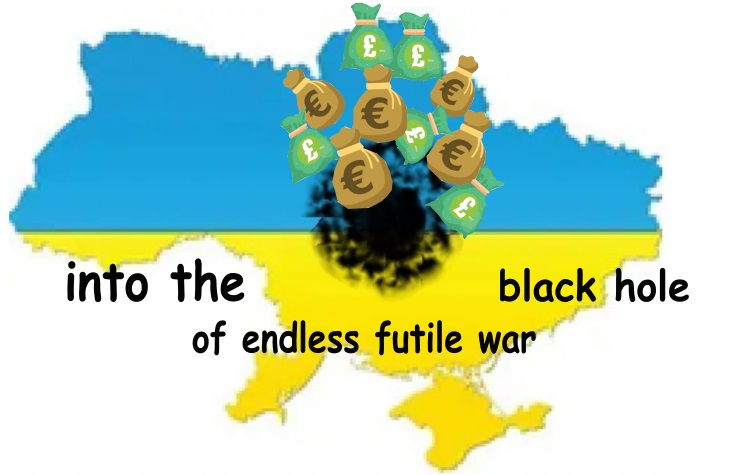
09 Dec 2025, https://www.sott.net/article/503419-Japan-rejects-EU-plan-to-steal-Russian-assets-Politico
The bloc wants to use Moscow’s funds immobilized in the West to cover Ukraine’s budget deficit.
Japan has reportedly dismissed a European Union initiative to tap frozen Russian sovereign assets to help finance Ukraine’s massive budget shortfall.
Brussels hopes to issue a so-called “reparation loan” backed by Russian funds immobilized in the West – a plan that Moscow has denounced as outright theft. Belgium, where most of the money is held by the Euroclear clearinghouse, has refused to greenlight the proposal unless other nations agree to share associated legal and financial risks.
Belgian Prime Minister Bart De Wever has said broader international backing, particularly from non-EU countries holding Russian assets, would bolster the European Commission’s case for what he called the effective confiscation of a foreign state’s funds. But at a meeting of G7 finance ministers on Monday, Japan’s Satsuki Katayama made clear her government would not support the plan due to legal constraints, Politico reported, citing EU diplomatic sources.
Officials told the outlet they believe Japan’s stance aligns with that of the United States, which also opposes the EU approach and views the frozen assets as leverage in negotiations with Moscow.
France has reportedly likewise declined to touch any assets held on its soil, while Canada and the UK have signaled possible participation if the EU ultimately pursues the scheme.
Ukraine’s parliament last week adopted a 2026 budget with a staggering $47.5 billion deficit, expecting foreign donors and creditors to fill the gap. Roughly half that anticipated support – an estimated $23.6 billion – remains uncertain pending the fate of the EU loan plan.
Ukrainian media noted that lawmakers pushed the budget through despite unresolved questions over foreign financing, in part to project stability following the removal of Andrey Yermak, formerly the most powerful aide to the country’s leader, Vladimir Zelensky. Yermak was dismissed as a corruption scandal engulfed Kiev’s political establishment.
Venezuela and the colonial enterprise
By Ben Laycock | 11 December 2025, https://independentaustralia.net/politics/politics-display/venezuela-and-the-colonial-enterprise,20471
When small nations resist the United States, democracy becomes a game of pressure, writes Ben Laycock.
U.S. PRESIDENT DONALD TRUMP claims his belligerence towards Nicolás Maduro is in the noble cause of restoring democracy to Venezuela, but history shows us that the U.S. is no friend of democracy in Latin America.
The U.S. is renowned for interfering in the democratic process in every single country south of the border of America. It is common knowledge that it is nigh on impossible to maintain power in any Latin American democracy if the U.S. decides it is time for you to go.
The way the world economy works like this rich countries make products that poor countries need, like technology. To afford those products, poor countries must offer something the rich folks need. This is usually minerals or fossil fuels. If the rich folks don’t like the way you run your country, basically, if you don’t run your country the way they tell you to, they use their immense economic power to cripple your economy by cutting off the most vital thing you need, finance. The rich folks control the money supply. They turn off the tap. Your country goes broke, the people get angry and throw you out. The U.S.-backed mob get in, the tap is turned on again. The anger of the masses subsides, the status quo returns, without a shot being fired, all perfectly democratic.
A nation cannot maintain its independence via democratic means if the powers-that-be object to that independence, as they so often do.
The only way to maintain your independence is to suspend normal democratic rights and be prepared to defend your country via military means. If you take this drastic course of action, you will face the approbation of the entire “democratic” world. You will no longer be seen as a legitimate state. That is when they really turn the screws, imposing an economic blockade on your struggling little country. This forces you to turn to less popular regimes for life support, thus placing you firmly in the enemy camp, ripe for full-scale military invasion.
The U.S. imposed an extremely strict economic blockade on Cuba in 1962. That blockade is ongoing, the longest economic blockade in history. No company that trades with Cuba can trade with the U.S., full stop.
But only a fool would think these actions have anything to do with democracy. Here in the rich world, democracy is a game we play. If we are losing the game, that’s when things get serious. The USA is going through the painful process of shedding long-held notions of democracy at this very moment.
Donald Trump’s best friends are not leaders of democracies: Mohamed Bin Salman, his present best friend, is a Prince. Saudi Arabia and all the other Gulf states are monarchies, ruled by kings. His other bosom buddy is Benjamin Netanyahu, a man who runs a brutal military dictatorship over many of his subjects, divided along racial lines. Israel reserves democratic rights for Jews only, plus a small minority of arabs that they neglected to exterminate long ago (something they have come to regret). The rest of their subjects are subject to military dictatorship. All Jewish people are allowed to vote, no matter where they live in Palestine. Arabs citizens are allowed to vote unless they live in Gaza or the West Bank. There are 9.5 million citizens in Israel (this includes Jewish settlers in the West Bank), two million of them are Arabs. Until recently, there were over two million people living in Gaza. (The I.D.F. is going to extraordinary lengths to reduce that number). There are 2.5 million people living in the West Bank. That makes a total population under Israeli control of 14 million, 9.5 million of whom have the right to vote, the other 4.5 million are living in an extremely brutal military dictatorship, and have been for generations.
So we can say that the land of Israel is 63 per cent democracy and 37 per cent military dictatorship.
This is not so different to how Australia was run until quite recently.
Our nation began as a military dictatorship. Eventually, the invaders and settlers were allowed to vote, while the indigenous population continued to be ruled by a brutal military dictatorship right up until 1967. The “blackfullas” were seen as the enemy, to be shot on sight. The last recorded massacre was the Conniston Massacre in 1928. It is a rule of thumb for any self-respecting colonising power to keep the local indigenous population out of the democratic process until you have reduced their numbers to the point where they no longer pose a threat to your idea of “civilisation.”
A colonial enterprise must reduce the ratio of locals to interlopers. This is achieved by two simultaneous methods: Reducing the population of locals via extermination, whilst flooding the place with immigrants from “the home country.”
When Captain Cook arrived in Australia, there were around one million blackfullas. This number was swiftly and efficiently reduced to a far more manageable size. In Tasmania, the number of full-blood blackfullas was reduced to zero. In Victoria, it was reduced to three. Yet it still took nearly 200 years before the interlopers felt safe enough to grant the last indigenous remnants their democratic rights.
To return to Palestine. The interlopers arrived en masse around 1947-8. They immediately set about adjusting the ratio of locals to invaders (following the colonial textbook to the letter) via a campaign of mass terror. The Zionists expelled over one million Palestinians from their homes, at gunpoint, with nothing more than they could carry on their backs. They then blew up their homes and planted booby traps so they could never return. This is how the state of Israel was founded, on ethnic cleansing. Since that time, some 80 years ago, the Palestinians have lived under brutal military rule, but until now, there has been little attempt to get rid of them altogether. That policy has changed. The Arab Palestinian cohort is growing faster than the Jews. Partly because the Arabs are outbreeding the Jews about 3-1, well done team! But also because Israel is no longer such a popular place to come and live, for obvious reasons. The Israeli regime is aware that it cannot maintain a Jewish state once the Arab population approaches parity. So they are now talking about expelling the Arabs from the Israeli enclave, as well as from Gaza and the West Bank. In their eyes, this would reduce the threat of violence that is putting off potential immigrants, whilst freeing up new lands to give them, problem solved!
Schemes of Bankruptcy: The United Nations, Funding Dues and Human Rights
Increasingly shrivelled and shrunken, the UN’s far from negligible role in seeking to conserve peace, flawed as it can be, or distributing aid and protecting human rights, risks vanishing into history.
11 December 2025 Dr Binoy Kampmark, https://theaimn.net/schemes-of-bankruptcy-the-united-nations-funding-dues-and-human-rights/
The United Nations, in turning 80, has been berated, dismissed and libelled. In September, US President Donald Trump took a hearty swipe at the body’s alleged impotence. “What is the purpose of the United Nations?” he posed to gathered world leaders. All it seemed to do was “write a really strongly worded letter and then never follow that letter up. It’s empty words and empty words don’t solve war.” Never once did he consider that many of the wars he has allegedly ended have not so much reached their pacific terminus as having gone into simmering storage.
While harsh geopolitics has become violently fashionable and sneery of international law, an organisation whose existence depends on solidarity, support and cooperation from its often uncooperative Member States, is seeing itself slide into what has been described as a “worsening liquidity crisis.” The crisis was given much stimulus by the organisation’s US$135 million deficit as it entered 2025. By September’s end, it had collected a mockingly inadequate 66.2 per cent of the year’s assessments.
In October, the UN Secretary-General António Guterres, in speaking to the Fifth Committee of the General Assembly responsible for the entity’s budget, warned that the organisation was facing a “race to bankruptcy” unless Member States forked out their dues. Last year, arrears totalled US$760 million. With the need to return credits worth US$300 million to Member States at the start of 2026, some 10 per cent of the budget would be emptied. “Any delays in collections early in the year [2026] will force us to reduce spending even more … and then potentially face the prospect of returning US$600 million in 2027, or about 20 per cent of the budget.”
While discussing finances can induce a coma, some preliminary discussion about the structure of contributions to the UN is necessary. Assessed or mandatory contributions for 2025, measured by the “capacity to pay” formula, comprised the regular budget of the organisation covering administrative and operational costs (approximately $US3.7 billion); funding for international tribunals ($US43 million); the Capital Master Plan covering the renovation of the UN headquarters in New York; and peacekeeping operations (US$5.4 billion). Voluntary contributions are self-explanatory enough, comprising optional donations from Member States and various other entities for humanitarian and development agencies, in addition to sustaining the broader UN system.
States discharging their obligations in making contributions to the regular budget receive proud mention in the Honour Roll of the UN. Those not doing so risk losing their vote in the organisation if their financial lethargy continues for two years or more after the due date of contributions – not that this injunction has been well observed. The United States remains famously tardy, and under Trump, boisterously so. As the body’s primary contributor to the regular budget – assessed as 22 per cent in 2025 – and 26 per cent to the peacekeeping budget, this is particularly galling.
Since January, the current administration has savaged funding to various UN bodies. On his first day of office, the President signed an executive order withdrawing his country from the World Health Organization due to its “mishandling of the COVID-19 pandemic that arose out of Wuhan, China, and other global health crises, its failure to adopt urgently needed reforms, and its inability to demonstrate independence from the inappropriate political influence of WHO member states.”
The UN Human Rights Council was the next fashioned target, with February’s withdrawal from the body justified on the basis that it had “protected human rights abusers by allowing them to use the organization to shield themselves from scrutiny”. In sympathy for Israel, funding was also frozen to the UN Relief and Works Agency for Palestine Refugees in the Near East (UNRWA), citing the allegation that employees had been “involved in the October 7, 2023, Hamas attacks on Israel.”
Revealing its crass, impulsive philistinism, the Trump administration proceeded to withdraw from the United Nations Educational, Scientific and Cultural Organization (UNESCO) in July. “UNESCO,” declared State Department spokesperson Tammy Bruce, “works to advance divisive social and cultural causes and maintains an outsized focus on the UN’s Sustainable Development Goals, a globalist, ideological agenda for international development at odds with our America First foreign policy.” Amidst all of this, the parochial agenda was made clear: UNESCO, in admitting Palestine as a Member State was “highly problematic, contrary to US policy, and contributed to the proliferation of anti-Israel rhetoric within the organization.”
Washington has been singular in this regard only in terms of scale. China and Russia are also conspicuous in being late with their contributions while other Member States have simply pared back their UN contributions for reasons of defence and domestic expenditure. War mongering is proving catching, while peacemaking, despite the boasts of the US President, is falling out of vogue. A most conspicuous area to suffer has been human rights.
In October 2025, the International Service for Human Rights identified an ongoing campaign to defund the UN human rights agenda being waged in the General Assembly’s Fifth Committee. In a report using material gathered from 37 diplomats, UN officials and experts, along with data analysis of UN documents and the organisation’s budget from 2019 to 2024, the ISHR identified a campaign of “coordinated obstruction” by Member States steered by China and Russia. Coupled with Washington and Beijing’s “failure to pay their assessments in full and on time (respectively)”, the UN’s means of funding and implementing its human rights programs has been stymied.
Most to suffer has been the Office of the High Commissioner for Human Rights (OHCHR), which finds itself $90 million short of what it needs for 2025. Some 300 jobs have already been shed by the organisation. “Our resources have been slashed, along with funding for human rights organisations, including at the grassroots level, around the world,” warns UN High Commissioner for Human Rights, Volker Turk. “We are in survival mode.”
The UN Office for the Coordination of Humanitarian Affairs (OCHA), responsible for humanitarian aid and crisis, has had to resort to the beggar bowl. Facing its own budgetary razor, the body is seeking US$23 billion as a matter of immediacy, with the hope that it will save 87 million lives. “Ultimately, in 2026,” the body announced on December 8, “the aim is to raise a total of US$33 billion to support 135 million people through 23 country operations and six plans for refugees and migrants.”
While wobbly, scarred by imperfections and marked by contentiousness, an organisation built from the ashes of murderous global conflict in 1945 risks becoming the very model of impotence Trump claims and no doubt wishes it to be. In this, he can count on a number of countries, friendly or adversarial to the US. Increasingly shrivelled and shrunken, the UN’s far from negligible role in seeking to conserve peace, flawed as it can be, or distributing aid and protecting human rights, risks vanishing into history.
Oil and gas industries join with nuclear to fight renewable energy.

For decades oil, gas and coal backers were locked in a rivalry with nuclear interests, competing for shares of America’s energy grid; but today many on both of those sides have teamed up to counter the rise of renewable power.
Bloomberg Businessweek previously reported on how the
backers of a politically connected nuclear startup are working, at times covertly, to neutralize the industry’s chief regulator, the Nuclear Regulatory Commission. Many of the nuclear industry’s most energetic backers are simultaneously engaged in efforts to kill the competition—wind and solar.
Bloomberg 9th Dec 2025, https://www.bloomberg.com/news/features/2025-12-09/nuclear-energy-fossil-fuel-interests-join-forces-against-renewable-energy
Russia says it awaits an answer from the US on New START as nuclear treaty ticks down.

By Guy Faulconbridge and Lucy Papachristou, December 10, 2025, https://www.reuters.com/world/china/russia-says-it-awaits-an-answer-us-new-start-nuclear-treaty-ticks-down-2025-12-10/
- Summary
- New START expires on February 5
- Russia awaits an answer from US, top official says
- Putin has proposed keeping the treaty’s limits
- Trump has said it is a good idea
MOSCOW, Dec 10 (Reuters) – Russia on Wednesday said it was still awaiting a formal answer from Washington on President Vladimir Putin’s proposal to jointly stick to the last remaining Russian-U.S. arms control treaty, which expires in less than two months.
New START, which runs out on February 5, caps the number of strategic nuclear warheads that the United States and Russia can deploy, and the deployment of land- and submarine-based missiles and bombers to deliver them.
Putin in September offered to voluntarily maintain for one year the limits on deployed strategic nuclear weapons set out in the treaty, whose initials stand for the (New) Strategic Arms Reduction Treaty.
Trump said in October it sounded “like a good idea.”
“We have less than 100 days left before the expiry of New START,” said Sergei Shoigu, the secretary of Russia’s powerful Security Council, which is like a modern-day politburo of Russia’s most powerful officials.
“We are waiting for a response,” Shoigu told reporters during a visit to Hanoi. He added that Moscow’s proposal was an opportunity to halt the “destructive movement” that currently existed in nuclear arms control.
NUCLEAR ARMS CONTROL IN PERIL
Russia and the U.S. together have more than 10,000 nuclear warheads, or 87% of the global inventory of nuclear weapons. China is the world’s third largest nuclear power with about 600 warheads, according to the Federation of American Scientists, opens new tab.
The arms control treaties between Moscow and Washington were born out of fear of nuclear war after the 1962 Cuban Missile Crisis. Greater transparency about the opponent’s arsenal was intended to reduce the scope for misunderstanding and slow the arms race.
U.S. AND RUSSIA EYE CHINA’S NUCLEAR ARSENAL
Now, with all major nuclear powers seeking to modernise their arsenals, and Russia and the West at strategic loggerheads for over a decade – not least over the enlargement of NATO and Moscow’s war in Ukraine – the treaties have almost all crumbled away. Each side blames the other.
In the new U.S. National Security Strategy, opens new tab, the Trump administration says it wants to “reestablish strategic stability with Russia” – shorthand for reopening discussions on strategic nuclear arms control.
Rose Gottemoeller, who was chief U.S. negotiator for New START, said in an article for The Arms Control Association this month that it would be beneficial for Washington to implement the treaty along with Moscow.
“For the United States, the benefit of this move would be buying more time to decide what to do about the ongoing Chinese buildup without having to worry simultaneously about new Russian deployments,” Gottemoeller said.
THE NEXT WARS WERE ALWAYS HERE: How Post 9/11 Law and the Monroe Doctrine Converged in the Caribbean.
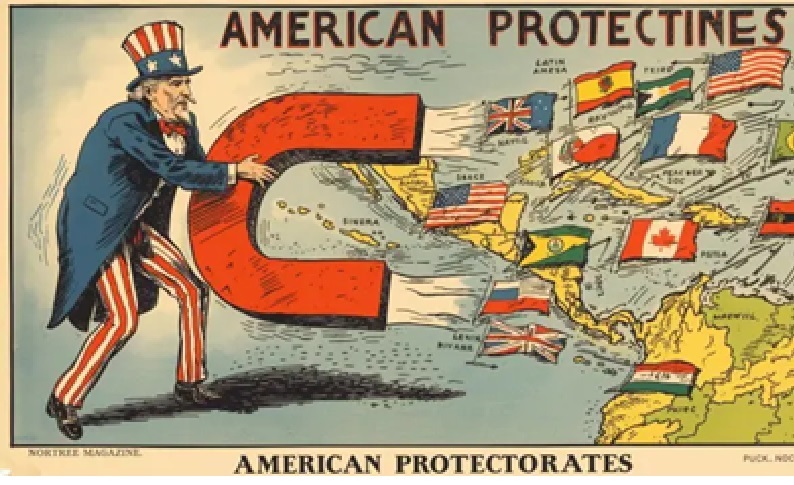
December 9, 2025 By Michelle Ellner, https://scheerpost.com/2025/12/09/the-next-wars-were-always-here-how-post-9-11-law-and-the-monroe-doctrine-converged-in-the-caribbean/
The first U.S. missiles that struck the boats in the Caribbean in early September 2025 were described by Washington as a “counter-narcotics operation,” a sterile phrase meant to dull the violence of incinerating human beings in an instant. Then came the second strike, this time on survivors already struggling to stay afloat. Once the details emerged, however, the official story began to fall apart.
Local fishermen contradicted U.S. claims. Relatives of those killed have said the men were not cartel operatives at all, but fishermen, divers, and small-scale couriers. Relatives in Trinidad and Venezuela told regional reporters their loved ones were unarmed and had no connection to Tren de Aragua, describing them instead as fathers and sons who worked the sea to support their families. Some called the U.S. narrative “impossible” and “a lie,” insisting the men were being demonized after their deaths. U.N. experts called the killings “extrajudicial.” Maritime workers noted what everyone in the region already knows: the route near Venezuela’s waters is not a fentanyl corridor into the United States. Yet the administration clung to its story, insisting these men were “narcoterrorists,” long after the facts had unraveled. Because in Washington’s post 9/11 playbook, fear is a tool. Fear is the architecture of modern American war.
The U.S. did not emerge from the Iraq War into peace or reflection. It emerged into normalization. The legal theories invented and abused after 9/11 – elastic self-defense, limitless definitions of terrorism, enemy combatants, global strike authority – did not fade. They became the backbone of a permanent war machine. These justifications supported drone wars in Pakistan, airstrikes in Yemen and Somalia, the destruction of Libya, special operations in Syria, and yet another military return to Iraq. And behind every expansion of this global battlefield was a U.S. weapons industry that grew richer with each intervention, lobbying for policies that kept the country in a constant state of conflict. What we are seeing today in the Caribbean is not an isolated action; it is the extension of a militarized imperial model that treats entire regions as expendable.
The next wars were always there because we never confronted the political and economic system that made endless wars a profitable cornerstone of U.S. power.
A Post-9/11 Legal Framework Built for Endless War
The Trump administration has advanced several overlapping legal arguments to justify the strikes, and together they reveal a post-9/11 framework that stretches executive power far beyond its intended limits.
According to detailed reporting in The Washington Post, a classified Justice Department Office of Legal Counsel (OLC) memo argues that the United States is engaged in a “non-international armed conflict” with so-called narcoterrorist organizations. Under this theory, the strikes qualify as part of an ongoing armed conflict rather than a new “war” requiring congressional authorization. This framing alone is unprecedented: drug-trafficking groups are criminal networks, not organized armed groups targeting the U.S.
A second pillar of the memo, described by lawmakers to the Wall Street Journal, claims that once the president designates a cartel as a Foreign Terrorist Organization, it becomes a lawful military target. But terrorism designations have never created war powers. They are financial and sanctions tools, not authorizations for lethal force. As Sen. Andy Kim put it, using an FTO label as a “kinetic justification” is something “that has never been done before.”
The OLC memo also invokes Article II, claiming the president can order strikes as part of his commander-in-chief authority. Yet this argument depends on a second unsupported premise: that the boats posed a threat significant enough to justify self-defense. Even internal government lawyers questioned this. As one person familiar with the deliberations told The Washington Post, “There is no actual threat justifying self-defense — there are not organized armed groups seeking to kill Americans.”
At the same time, the administration has publicly insisted that these operations do not rise to the level of “hostilities” that would trigger the War Powers Resolution because U.S. military personnel were never placed at risk. By the administration’s own logic, that means the people on the boats were not engaged in hostilities and therefore were not combatants under any accepted legal standard, making the claim of a wartime self-defense strike impossible to reconcile with U.S. or international law.
Under international law, executing people outside a genuine armed conflict is an extrajudicial killing. Nothing about these strikes meets the legal threshold for war. Because the people on the boats were not lawful combatants, the operation risks violating both international law and U.S. criminal law, including statutes on murder at sea, a concern reportedly underscored by Admiral Alvin Holsey’s early resignation.
The memo goes further still, invoking “collective self-defense” on behalf of regional partners. But key regional partners, including Colombia, Brazil, and Mexico, have publicly criticized the strikes and said they were not consulted, undermining the very premise of “collective” defense.
This internal contradiction is one reason lawmakers across both parties have called the reasoning incoherent. As Sen. Chris Van Hollen put it, “This is a memo where the decision was made, and someone was told to come up with a justification for the decision.”
And beneath all of this lies the most dangerous element: the memo’s logic has no geographic limits. If the administration claims it is in an armed conflict with a designated “narcoterrorist” group, then, by its own theory, lethal force could be used wherever members of that group are found. The same framework that justifies strikes near Venezuela could, in principle, be invoked in a U.S. city if the administration claimed a cartel “cell” existed there.
If Trump truly believes he leads “the most transparent administration in history,” then releasing the memo should be automatic. The American people have the right to know what legal theory is being used to justify killing people in their name.
For decades, OLC memos have been used not simply as legal advice but as the internal architecture that allows presidents to expand their war-making power. The Bush torture memos treated torture as lawful by redefining the word “torture” itself, calling it “enhanced interrogation,” thereby enabling years of CIA black-site operations and abusive interrogations. The Libya War Powers memo argued that bombing Libya did not constitute “hostilities,” allowing the administration to continue military action without congressional approval. Targeted-killing memos, including those related to drone strikes on U.S. citizens abroad, constructed a legal theory that lethal force could be used outside traditional battlefields, without trial, based on executive determinations alone. In each case, the memo did not merely interpret the law; it reshaped the boundaries of presidential war powers, often without public debate or congressional authorization.
The American people have the right to know what “legal theory” is being used to justify killing people in their name. Congress needs it to conduct oversight. Service members need it to understand the legality of the orders they receive. And the international community needs clarity on the standards the U.S. claims to follow. There is no legitimate reason for a president to hide the legal basis for lethal force, unless the argument collapses under scrutiny. A secret opinion cannot serve as the foundation for an open-ended military campaign in the Western Hemisphere.
The Older Foundation: A 200-Year-Old Doctrine of Control
If the legal foundation comes from the post-9/11 era, the geopolitical foundation is older. Almost ancestral. For 200 years, the Monroe Doctrine has served as the permission slip for U.S. domination in Latin America.
The Trump administration went even further by openly reviving and expanding it through what officials called a “Trump Corollary,” which reframed the entire Western Hemisphere as a U.S. “defense perimeter” and justified increased military operations under the language of counter-narcotics, migration control, and regional stability. In this framework, Latin America is no longer treated as a diplomatic neighbor but as a security zone where Washington can act unilaterally.
Venezuela, with its vast oil reserves, sovereign political project, and refusal to submit to U.S. pressure, has long been marked as a target. Sanctions softened the terrain. Disinformation hardened public opinion. And now, military strikes near its waters test how far Washington can push without triggering public revolt at home. The term “narcoterrorism” is simply the newest mask on a very old doctrine.
The strikes in the Caribbean are not isolated. They are the predictable intersection of two forces: a post-9/11 legal regime that allows war to expand without congressional approval, and a 200-year-old imperial doctrine that treats Latin America as a zone of control rather than a community of sovereign nations. Together, they form the logic that justifies today’s violence near Venezuela.
The Label that Opened the Door
After 9/11, every administration learned the same lesson: if you label something “terrorism,” the public will let you do almost anything. Now, this logic is being used everywhere. The cruel, decades-long blockade on Cuba is justified by claiming that the island is a “state sponsor of terrorism.” Mass surveillance, border militarization, endless sanctions, all wrapped in the language of “counterterrorism.” And now, to authorize military action in the Caribbean, they simply take the word “narco” and attach it to the word “terrorism.” The label does all the work. The danger is not confined to foreign policy: after Charlie Kirk’s assassination, the same elastic definition of “terrorism” is now being used domestically to justify crackdowns on NGOs the administration claims are inciting “anti-American” political violence.
The only reason Trump has not launched a full-scale attack on Venezuela is that he is still testing the ground, testing resistance inside Venezuela, testing Congress, testing the media, and testing us. He knows nearly 70% of people in the United States oppose a war with Venezuela. He knows he cannot sell another Iraq. So he is probing, pushing, looking for the line we will not let him cross.
We are that line.
If we do not challenge the lie now, if we do not demand release of the memo, if we stay silent, “narcoterrorism” becomes the new “weapons of mass destruction.” If we allow this test case to go unanswered, the next strike will be a war. We are the only ones who can stop him. And history is watching to see whether we learned anything from the last twenty years of fear, deception, and violence.
Because the next wars were always here, looming. We just need the clarity to see them and the force to stop them before they begin.
Across the world we are marking 5 years since the Treaty on the Prohibition of Nuclear Weapons became international law.
11 Dec 25, https://www.icanw.org/resources_for_5_years_since_the_nuclear_ban_went_into_effect
There are so many ways the Treaty on the Prohibition of Nuclear Weapons is making a difference:
Making nuclear weapons illegal and illegitimate
The treaty has closed the legal gap! Nuclear weapons are now banned under international law. It has also reinforced the nuclear taboo by creating a new international norm that nuclear weapons can never be used because of the catastrophic humanitarian and environmental harm they cause. TPNW states have condemned nuclear threats unequivocally and have encouraged other states to do the same – for example, through the G20. The TPNW is the first multilateral treaty to prohibit nuclear threats. It has solidified the international consensus that nuclear threats are inadmissible.
Demanding nuclear justice
Prior to the TPNW’s entry into force, there were few opportunities for states to discuss victim assistance and environmental remediation in a multilateral setting and in a focused way. The Treaty has brought the fight for nuclear justice to the fore and provided an important forum for communities affected by the use and testing of nuclear weapons to discuss their ongoing needs.
Cutting financial support for nuclear weapons manufacture, development and production
Hundreds of banks, pension funds and other financial institutions have pledged never to finance nuclear-weapon-producing companies on the basis that such weapons are now prohibited under international law.
Providing a rallying place for those who demand an end to nuclear weapons forever
Representatives of hundreds of non-government organisations, along with parliamentarians, mayors, religious leaders and academics, have attended each of the TPNW meetings of states parties. New actors have become involved.
Read more about how the TPNW has changed the world
Action Ideas: What can I do?
Nuclear weapons affect all of us, so it’s up to all of us to push back against the threats and absurd concept that they provide any security whatsoever. This anniversary is an opportunity to celebrate that the global majority of countries have signed onto the Treaty.
Ways to show your support………………………………………………………………..
Trump warns Ukraine is ‘losing’ Russia war, calls for new elections despite wartime prohibition.

Trump occasionally says something sensible, even if by accident.
New York Post, By Richard Pollina, Dec. 9, 2025
President Trump said in an interview Monday that Ukraine should hold new elections despite its ongoing war with Russia — prompting Ukrainian President Volodymyr Zelensky to declare he’s “ready” for them to begin when voters can be safe.
“I think it’s time. I think it’s an important time to hold an election,” the president told Politico reporter Dasha Burns. “They’re using war not to hold an election, but, uh, I would think the Ukrainian people would, should have that choice.”
Under Ukraine’s constitution, elections cannot be held during period of martial law — which President Volodymyr Zelensky imposed in response to Russia’s invasion in February 2022. Under normal circumstances, the terms of Zelensky and Ukraine’s parliament would have ended in May and August 2024, respectively.
Speaking to reporters on Tuesday, Zelensky said he has the “will and readiness” to hold elections. But he cited issues in Ukraine’s way, including the security of voters in a war zone at risk of missile strikes and Ukrainian law that prevents elections when the country is under martial law.
Zelensky said he’s seeking a legislative fix, and if he has help from the US on ensuring the safety of voters during a war, Kyiv would be ready to hold elections in “the next 60 to 90 days.”
“Maybe Zelensky would win,” Trump said of the prospect of a wartime election. “I don’t know who would win. But they haven’t had an election in a long time. You know, they talk about a democracy, but it gets to a point where it’s not a democracy anymore.”
The president also responded to a weekend claim by first son Donald Trump Jr. that the commander-in-chief may be willing to walk away from Ukraine, saying: “It’s not correct. But it’s not exactly wrong.”
“We have to, you know, they have to play ball,” the president went on. “If they, if they don’t read agreements, potential agreements, you know, it’s not easy with Russia because Russia has the upper, upper hand. And they always did. They’re much bigger. They’re much stronger in that sense.
The president’s comments came as his administration makes another effort to end Europe’s deadliest conflict since the Second World War, with Trump telling reporters Sunday that Zelensky had yet to read the latest peace framework hashed out by US and Ukrainian negotiators.
“It would be nice if he would read it,” the president told Politico Monday. “You know, a lot of people are dying. So it would be really good if he’d read it. His people loved the proposal. They really liked it. His lieutenants, his top people, they liked it, but they said he hasn’t read it yet. I think he should find time to read it.”
Zelensky disputed the accusation on Thursday, telling reporters he has in fact “read many different versions of this plan.” https://nypost.com/2025/12/09/us-news/trump-says-ukraine-should-hold-elections-despite-wartime-prohibition/
1 This Month

of the week – Shut Down Drone Warfare!


Tell the Ukrainian Government to Drop Prosecution of Peace Activist Yurii Sheliazhenko

Petition to revoke the licensing of the Near Surface Nuclear Disposal Facility (NSDF) at Chalk River. https://www.ourcommons.ca/petitions/en/Petition/Details?Petition=e-7247
To see nuclear-related stories in greater depth and intensity – go to https://nuclearinformation.wordpress.com
-
Archives
- April 2026 (114)
- March 2026 (251)
- February 2026 (268)
- January 2026 (308)
- December 2025 (358)
- November 2025 (359)
- October 2025 (376)
- September 2025 (257)
- August 2025 (319)
- July 2025 (230)
- June 2025 (348)
- May 2025 (261)
-
Categories
- 1
- 1 NUCLEAR ISSUES
- business and costs
- climate change
- culture and arts
- ENERGY
- environment
- health
- history
- indigenous issues
- Legal
- marketing of nuclear
- media
- opposition to nuclear
- PERSONAL STORIES
- politics
- politics international
- Religion and ethics
- safety
- secrets,lies and civil liberties
- spinbuster
- technology
- Uranium
- wastes
- weapons and war
- Women
- 2 WORLD
- ACTION
- AFRICA
- Atrocities
- AUSTRALIA
- Christina's notes
- Christina's themes
- culture and arts
- Events
- Fuk 2022
- Fuk 2023
- Fukushima 2017
- Fukushima 2018
- fukushima 2019
- Fukushima 2020
- Fukushima 2021
- general
- global warming
- Humour (God we need it)
- Nuclear
- RARE EARTHS
- Reference
- resources – print
- Resources -audiovicual
- Weekly Newsletter
- World
- World Nuclear
- YouTube
-
RSS
Entries RSS
Comments RSS
 nuclear-news