Biden must deal on Ukraine
https://www.news-gazette.com/opinion/letters-editor/letter-to-the-editor-biden-must-deal-on-ukraine/article_be32d819-6aa1-5751-b55a-f8881c4d13f0.html FRANCIS A. BOYLE 9 Oct 22 Having lived through the Cuban Missile Crisis myself, right now, we are witnessing a slow-motion Cuban Missile Crisis in reverse over Ukraine.
The key to resolving the Cuban Missile Crisis was that President John F. Kennedy opened up back-channel negotiations with Soviet Premier Nikita Khrushchev in order to come up with a compromise solution that barely avoided a nuclear war.
So far, the Biden administration has publicly ruled out direct negotiations with the Putin government over the Ukraine war, though there could be back-channel negotiations going on right now that I am not aware of — let’s hope there are.
As I see it, the main problem here is that Biden is no JFK. It is really up to the American people to pressure the Biden administration to open direct negotiations over the war in Ukraine with the Russian government before the war degenerates out of control as almost happened during the original Cuban Missile Crisis.
25 years ago Australia’s Paul Keating warned against expanding NATO
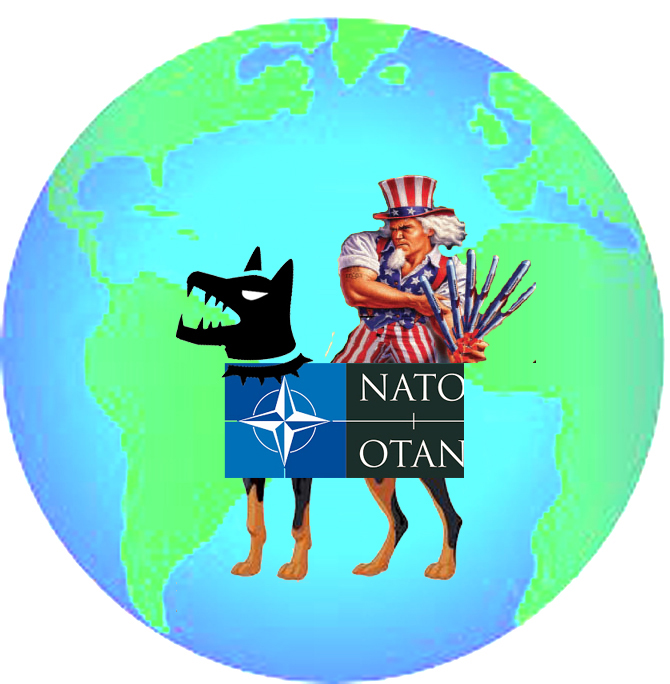
25 Years ago, I warned expanding NATO ranked with the errors that led to WWI and II
Expanding NATO’s military demarcation point to the very borders of the former Soviet Union was an error which may rank with the strategic miscalculations which prevented Germany from taking its full place in the international system at the beginning of this century.
Paul Keating said these things twenty-five years ago in a major address to the University of New South Wales, 4 September 1997:
“Partly as a result of the reluctance of current members to move faster in expanding EU membership, I believe a great security mistake is being made in Europe with the decision to expand NATO. There is no doubt this was seen by some in Europe as a softer option than EU expansion.
NATO and the Atlantic alliance served the cause of western security well. They helped ensure that the Cold War finally ended in ways which serve open, democratic interests. But NATO is the wrong institution to perform the job it is now being asked to perform.
The decision to expand NATO by inviting Poland, Hungary and the Czech Republic to participate and to hold out the prospect to others – in other words to move Europe’s military demarcation point to the very borders of the former Soviet Union – is, I believe, an error which may rank in the end with the strategic miscalculations which prevented Germany from taking its full place in the international system at the beginning of this century.
The great question for Europe is no longer how to embed Germany in Europe – that has been achieved – but how to involve Russia in a way which secures the continent during the next century.
And there was a very obvious absence of statecraft here. The Russians, under Mikhail Gorbachev, conceded that East Germany could remain in NATO as part of a united Germany. But now just half a dozen years later NATO has climbed up to the western border of the Ukraine. This message can be read in only one way: that although Russia has become a democracy, in the consciousness of western Europe it remains the state to be watched, the potential enemy.
The words used to explain NATO’s expansion have been nuanced, and the dangers have been acknowledged. But however careful the words are, whatever the window dressing of the Permanent NATO-Russia Joint Council, everybody knows that Russia is the reason for NATO’s expansion.
The decision is dangerous for several reasons. It will fuel insecurity in Russia and strengthen those strains of Russian thought, including the nationalists and former communists in the parliament, which are opposed to full engagement with the West. It will make more likely the restoration of military links between Russia and some of its former dependencies. It will make arms control, and especially nuclear arms control, more difficult to achieve.
And NATO expansion will do much less to strengthen the new democracies of eastern Europe than would enlargement of the EU.”
The above from Paul Keating was posted earlier in Pearls and Irritations. See extract from an earlier post John Menadue.
Zelensky aide attempts to walk back call for ‘preemptive strike’

It’s not clear what Zelensky meant by a “pre-emptive strike”. He might not have meant that NATO/USA should use a nuclear weapon.
But – he might well have meant that USA/NATO should strike at Russian nuclear sites
And that would indeed mean a Nuclear Pre-emptive Strike
https://www.rt.com/russia/564204-zelensky-no-nuclear-strike/ 7 Oct 22, The Ukrainian president didn’t urge NATO to attack Russia with nuclear weapons, he pointed out.
Ukrainian President Vladimir Zelensky’s call for a preemptive NATO strike against Russia should not be interpreted as a request to attack the country, his press secretary has insisted.
“Colleagues, you have gone a bit too far with your nuclear hysterics and hear ‘nuclear strikes’ where there are none,” Sergey Nikoforov wrote on Facebook on Thursday, responding to widespread alarm over the president’s words.
The press secretary pledged that Ukraine will never resort to nuclear threats, calling it something only the “terrorist state Russia” would do.
Moscow has denied that its senior officials were threatening anybody when they described the country’s official nuclear posture, in the context of warning NATO members against attacks on Russia.
Hours earlier, Zelensky told the Australian Lowy Institute that NATO should carry out preemptive strikes against Russia so that it “knows what to expect” in the event that it uses atomic weapons.
Such an attack would “eliminate the possibility of Russia using nuclear weapons,” the Ukrainian leader claimed. He urged the US and its allies to make a show of force, recalling how he appealed to other nations for preemptive measures against Russia before Moscow sent troops into Ukraine in late February.
“I once again appeal to the international community, as it was before February 24: preemptive strikes so that they [Russians] know what will happen to them if they use it, and not the other way around,” he said.
His press secretary also noted that before the hostilities started, “the only measures we talked about were preemptive sanctions”.
Russian officials have accused Zelensky of trying to provoke a global nuclear war. Foreign Ministry spokeswoman Maria Zakharova described him as “a monster, whose hands can destroy the planet,” after being pumped with Western weapons.
The Russian military doctrine allows the use of nuclear weapons in a conventional conflict, if Moscow believes that the existence of the country is under threat. Russian officials have repeatedly warned against escalating the crisis in Ukraine, stating that it could spiral out of control and result in a global nuclear exchange.
Lavrov explains why Russia sees Ukraine as a threat – Zelensky asked NATO for a pre-emptive nuclear strike.

https://www.rt.com/russia/564206-lavrov-zelensky-preemptive-strike/ 7 Oct 22, President Zelensky did ask NATO for a preemptive nuclear strike, despite claims to the contrary, the Russian foreign minister said.
A call by Ukrainian President Vladimir Zelensky for NATO members to deploy nuclear weapons against Russia is a reminder of why Moscow launched military action against his country, Russian Foreign Minister Sergey Lavrov has said.
“Yesterday, Zelensky called on his Western masters to deliver a preemptive nuclear strike on Russia,” Moscow’s top diplomat stated during a media conference on Wednesday
In doing so, the Ukrainian leader “showed to the entire world the latest proof of the threats that come from the Kiev regime.” Lavrov said Russia’s special military operation had been launched to neutralize those threats.
He dismissed as “laughable” an attempt to downplay Zelensky’s words made by his press secretary, Sergey Nikoforov.
We all remember how [Zelensky] declared in January Ukraine’s intention to acquire nuclear weapons. Apparently, this idea has long been stuck in his mind,” the Russian minister said.
On Thursday, Zelensky told the Australian Lowy Institute that NATO must carry out preemptive strikes against Russia so that it “knows what to expect” if it uses its nuclear arsenal. He claimed that such action would “eliminate the possibility of Russia using nuclear weapons,” before recalling how he urged other nations to preemptively punish Russia before it launched its military action against his country.
“I once again appeal to the international community, as it was before February 24: Preemptive strikes so that [the Russians] know what will happen to them if they use it, and not the other way around,” he said.
His spokesman then claimed that people interpreting Zelensky’s words as a call for a preemptive nuclear strike were wrong, and that Ukraine would never use such rhetoric.
TODAY. Folie a deux? – Liz Truss and Emmanuel Macron – besties, in going all out for nuclear power
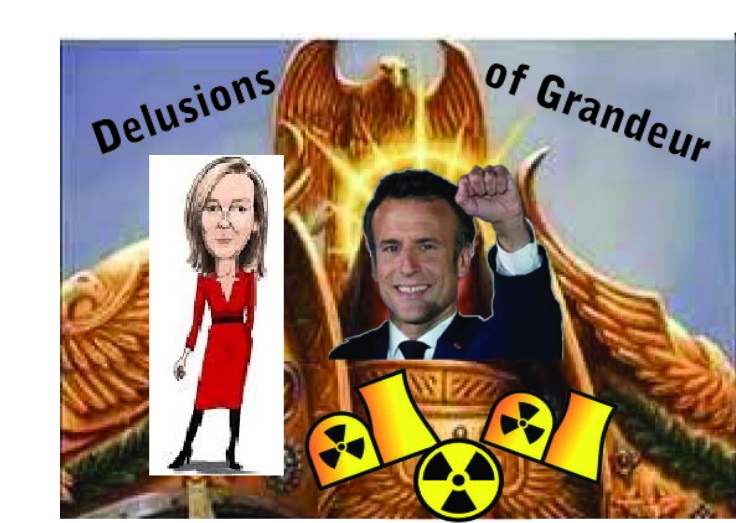
What a pair! They have so much in common. Especially their glorious abandon in going back on previous promises. Macron promised to phase out nuclear power. Truss wanted Britain to stay in the European Union. Then – hey presto! Macron’s all for the nuclear industry, and Liz all for “Brexit” – UK getting out of the EU.
But now, Liz and Emmanuel are besties again, as both go hell for leather for the dangerous, weapons-proliferation, environment-damaging and – oh dear! unaffordably costly nuclear power!
Is this some sort of subconscious Folie à deux – a strange political suicide wish?
They’re committed to work together to get EDF’s Sizewell C nuclear station project happening.
For France – by the end of this year, EDF’s net debt is already forecast to swell to about €60bn, while its French construction programme alone could cost another €52bn.
For Britain – not counting the astronomic cost , ( up to £30 billion, to be paid sort of upfront by the odious Regulated Asset Base ) Sizewell C will be foreign owned, and years to build, with dangerous, hazardous waste and horrendous decommissioning costs – not to mention a potential target for terrorists. Located on low-lying Suffolk coast – vulnerable to rising seas due to global heating.

One point of difference. Liz Truss opposes the idea of Britons conserving energy, whereas the Macron government is promoting energy conservation. Macron’s a bit less nutty?
Are Putin’s nuclear threats really likely to lead to Armageddon?
The realities underlying the menacing vocabulary are a grey area – it is far from certain that Putin would be prepared to use nuclear weapons
Guardian, by Julian Borger in Washington, Sat 8 Oct 2022
The past week has seen a rapid escalation in nuclear rhetoric, beginning with Vladimir Putin’s threat to use “all forces and means” to defend newly seized territory in Ukraine and ending with Joe Biden’s warning of “Armageddon” if Russia crosses the nuclear Rubicon.
However, the realities underlying the menacing vocabulary are a far greyer area than the bluster suggests. It is far from certain that Putin would be prepared to be the first leader to use nuclear weapons in wartime since 1945, over his territorial ambitions in Ukraine. If his primary goal is to stay in power, that could be exactly the wrong way of going about it.
Even if he did issue the launch order, he has no guarantee it would be carried out. Nor can he be absolutely sure that the weapons and their delivery systems would work.
On the US side, despite the US president’s apocalyptic language at a private fundraiser on Thursday night, it is not at all inevitable that Washington would respond to Putin’s nuclear use with nuclear retaliation. Past wargaming suggests there would be vigorous debate within the administration to say the least.
Like US presidents, Putin is normally accompanied by an aide carrying a briefcase with codes used to authorise a nuclear launch. In the US it is called the football, in Russia it is the cheget. In the Russian system, the defence minister and the chief of the general staff have their own chegets but it is believed that Putin can order a launch without them.
However, the cheget is relevant for the strategic nuclear forces, the intercontinental ballistic missiles (ICBMs) launched from land or sea, or long-range bombers. Because they need to be launched within minutes in case of enemy attack, the warheads need to be deployed, mounted on the delivery systems.
Any nuclear use in Ukraine would be likely to involve non-strategic, or tactical, weapons with shorter-range delivery systems, and which are usually (but not necessarily) less powerful than strategic arms, though on average they are many times more powerful that the Hiroshima or Nagasaki bombs.
The US only has one kind of tactical weapon, the B61 gravity bomb, of which there are about a hundred in Europe and a similar number in the US, according to the Federation of American Scientists (FAS).
FAS estimates Russia has 2,000 tactical weapons, in very many shapes and sizes for use on land, sea and air. The weapons are not deployed on missiles or aircraft, but kept in bunkers in storage sites dotted around Russia. There are 12 national storage sites, known in Russian military parlance as “Object S”, one of which is in Belgorod, right on the Ukrainian border.
There are also 34 “base-level” sites, closer to the delivery systems. In a time of crisis, warheads would be moved from national to base-level sites – and up to now western intelligence agencies say no such movement has been observed.
Any such movement would be carried out by the 12th main directorate of the Russian armed forces, which has the job of storing and maintaining the warheads and then delivering them in specialised trains or trucks to base-level sites, or directly to the unit designated to launch them.
Pavel Baev, a military researcher who worked for the Soviet defence ministry, said that Putin cannot count on these weapons actually working.
“Most of these warheads stored there are very old,” Baev, now a professor at the Peace Research Institute Oslo, said. “Without testing it’s really hard to say how suitable they are because many of them are past their expiration date.”
Baev added that it was also far from clear that the Russian can successfully pair old warheads with the much newer delivery systems that would have to be used, possibly 9K720 Iskander or Kinzhal hypersonic missiles……………………………………………………………………………………………………………………………………….
The key question is more likely to be whether the US and its allies should respond with devastating conventional firepower, as Poland’s foreign minister, Zbigniew Rau, and the former CIA director David Petraeus have suggested. But that would transform the war into one between Russia and Nato, in which escalation to a nuclear exchange could become hard to stop.
According to Eric Schlosser, the author of a book about the nuclear establishment, Command and Control, the Pentagon’s Defence Threat Reduction Agency (DTRA) conducted another war game in 2019 focused on Russian nuclear use in Ukraine. That wargame appears to have been updated, suggesting it is in constant use. The results in 2019 are top secret, but as Schlosser wrote in the Atlantic, one of the participants told him: “There were no happy outcomes.” https://www.theguardian.com/world/2022/oct/07/biden-putin-nuclear-threats-tactical-strike-us-response-analysis
Liz Truss and Emmanuel Macron get together on promoting nuclear power, especially Sizewell C
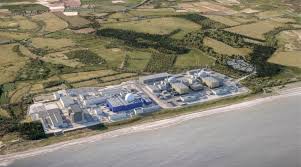
Sizewell C nuclear plant between Aldeburgh and Southwold will see joint
support from Liz Truss and Emmanuel Macron. Liz Truss and Emmanuel Macron
have agreed joint support for Sizewell C nuclear power plant. The pair
pledged to work closer on nuclear power and declared their cooperation for
the project, which is to be developed by French company EDF and will see
the plant built on the Suffolk coast between Aldeburgh and Southwold.
Suffolk News 7th Oct 2022
The UK prime minister and France’s president have confirmed joint support
for Sizewell C nuclear power plant. Liz Truss and Emmanuel Macron issued a
joint statement in which they said they were keen to advance cooperation,
on energy in particular. They pledged “full support” for the station set
for Suffolk’s coast, to be developed by French energy company EDF. The
leaders said they expected the “relevant bodies to finalise arrangements in
the coming month”.
BBC 6th Oct 2022
Joe Biden warned of nuclear ‘Armageddon’ amid Russia’s threats. The White House isn’t so sure
The US president recently made unusually direct comments about the dangers of his Russian counterpart Vladimir Putin’s thinly veiled threats to use nuclear weapons. But the White House says they didn’t reflect new intelligence.
The United States sees no sign of Russian preparations to use a nuclear weapon in the near future, the White House said Friday after President Joe Biden warned that the world risks “Armageddon.”
“We have not seen any reason to adjust our own strategic nuclear posture, nor do we have indications that Russia is preparing imminently to use nuclear weapons,” Press Secretary Karine Jean-Pierre told reporters aboard Air Force One.
Asked if Mr Biden’s alarming comment —
made late Thursday while criticising Russian President Vladimir Putin
— reflected new intelligence, she said “no.”…………………………………….. https://www.sbs.com.au/news/article/joe-biden-warned-of-nuclear-armageddon-amid-russias-threats-the-white-house-isnt-so-sure/1up40bgek
Russia’s €200m nuclear exports untouched by EU sanctions
euobserver, By INVESTIGATE EUROPE, BRUSSELS, 8 October 22,
“Russian nuclear terror requires a stronger response from the international community [including] sanctions on the Russian nuclear industry and nuclear fuel.” Those were the words Ukraine’s president Volodomyr Zelensky tweeted in August, after the shelling of a nuclear power plant in the country.
Since the beginning of Russia’s war in Ukraine, the European Union has passed multiple sanctions packages aimed at hurting the Russian economy and reducing its ability to finance the war. Sanctions have included personalities, products of all kinds, and of course, fossil fuels.
But so far, nuclear sanctions were always left out.
On Wednesday 28 September, history repeated itself again. The European Commission proposed another sanction package against Russia, the eighth since the beginning of the invasion. It includes additional trade restrictions and an oil price cap for third countries. But still nothing on nuclear cooperation with Russia and imports of Russian uranium, even if many called for it.……………………..
Europe’s dependency
The reason for this resistance can be explained in one word: dependence. So far, an import ban on uranium or other sanctions on the Russian nuclear energy sector has only been discussed in EU circles, but never formally proposed.
“The European Commission never proposed it because the impact would be stronger for some Eastern member states, that are heavily-dependent on Russian infrastructure and technologies, than for Russia itself,” one diplomatic source told Investigate Europe…………………….
In economic terms, the EU countries paid around €210m for raw uranium imports from Russia in 2021 and another €245m from Kazakhstan, where the uranium mining is controlled by Russian state-owned company Rosatom.
Raw uranium imports from Russia to EU utilities were 2,358 tonnes last year, almost 20 percent of all EU imports. Only Niger (24.3 percent) and Kazakhstan (23.0 percent) were bigger uranium trade partners, according to the 2021 annual report from the EU body, Euratom Supply Agency (ESA)………
France is the EU nation most reliant on nuclear energy…
Europe works closely with Russia for its nuclear energy production……..
The role of France
Many governments, first and foremost the French, have pushed for Germany to break their dependence on Russian natural gas. But its own dependency on Russian uranium is shrouded in silence.
France imports on average around 20 percent of the needed raw uranium from Kazakhstan, where the uranium mining is controlled by Rosatom, according to Le Monde.
Green MEP Michèle Rivasi, a strong opponent of nuclear energy, exemplifies the French-Russian nuclear connection by citing Henri Proglio, the former CEO of EDF, the French semi-public main electricity company, who sits on the international advisory board of Rosatom.
“If Macron had asked Proglio to resign, he would have done so of course,” she told Investigate Europe. French dependence is not only on uranium imports, but also on nuclear waste treatment and many other activities, she said.
MEP Christophe Grudler, of the Renew Europe party, supports the exclusion of nuclear activity from the EU sanctions. In his view, one cannot impose sanctions against Russian gas (there is no embargo planned yet, unlike for crude oil) and then against Russian uranium. Unless we want a general blackout, he says.
“We must not forget that the nuclear business is not only about the power plant,” Grudler told Investigate Europe. “It is also about steam turbines. One of the world’s leading players, if not the leading one, is the French technology [company] Arabelle. However, we should not forget that two thirds of the turbines are sold… to Rosatom.”
According to some French media reports at the start of the year, Rosatom was set to acquire a 20 percent stake in GEAST, the manufacturer of the Arabelle turbine for nuclear power plants………………………………………..
In the meantime, Europe will continue to feed Russia’s finances — while adopting sanctions to drain the Kremlin’s treasury. https://euobserver.com/world/156226
Poland suggests hosting US nuclear weapons- ‘nuclear sharing’
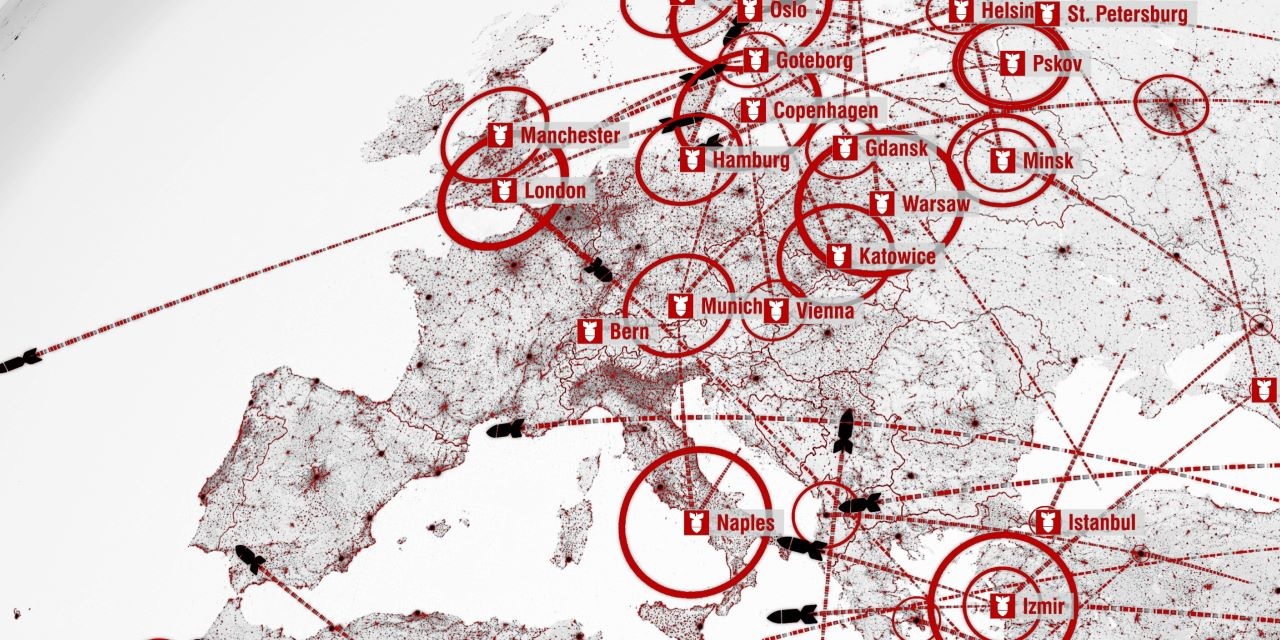
Poland suggests hosting US nuclear weapons amid growing fears of Putin’s threats, https://www.theguardian.com/world/2022/oct/05/poland-us-nuclear-wars-russia-putin-ukraine Julian Borger in Washington, 6 Oct 22, Andrzej Duda, the Polish president, in September. He said there was ‘a potential opportunity’ for Poland to take part in ‘nuclear sharing’.
Poland says it has asked to have US nuclear weapons based on its territory, amid growing fears that Vladimir Putin could resort to using nuclear arms in Ukraine to stave off a rout of his invading army.
The request from the Polish president, Andrzej Duda, is widely seen as symbolic, as moving nuclear warheads closer to Russia would make them more vulnerable and less militarily useful, according to experts. Furthermore, the White House has said it had not received such a request.
“We’re not aware of this issue being raised and would refer you to the government of Poland,” a US official said.
Duda’s announcement appears to be the latest example of nuclear signalling as the US and its allies seek to deter Putin from the first nuclear use in battle since 1945, while preparing potential responses if deterrence fails that would have maximum punitive impact while containing the risk of escalation to all-out nuclear war.
NATO ‘not obliged’ to assist Ukraine — German ambassador
Rt.com 2 Oct 22, Berlin’s envoy to the military bloc clarifies that NATO won’t actively fight for a non-member state.
Germany’s permanent representative to NATO has explained that the US-led bloc is not obliged to offer direct military assistance to Ukraine. Ruediger Koenig added that its members want to avoid a major war.
He was speaking to Dein Spiegel, the youth version of Der Spiegel magazine, which published the interview on Saturday.
The Ukraine conflict dominated much of the article, with Koenig describing Russia’s decision to launch its offensive against its neighbor in late February as a watershed event…….
Germany’s representative to NATO stressed that the military alliance as a whole, however, has no legal obligation to help Kiev repel Moscow’s attack as Ukraine is not a member state. This means that Article 5 of NATO’s treaty cannot be activated, the official explained. Under it, an attack on one ally is considered to be an attack against the whole of NATO, with all member states having to stick up for the targeted nation.
According to Koenig, the military bloc is anxious to avoid getting actively involved in the conflict at all costs because “this would mean a very big war.”
Such a scenario, which would see 30 more nations join the fray, is something “nobody wants,” the diplomat noted…………..
He concluded that the prospect of peace is rather slim as Ukraine and Russia’s positions seem to be irreconcilable. Koenig clarified that Ukraine “rightly” demands that Moscow cede all former Ukrainian regions in the south and east of the country that recently voted to join Russia, as well as Crimea, which joined the country in 2014. The official pointed out that the Kremlin, however, is unlikely to agree to such terms. https://www.rt.com/news/563942-germany-nato-envoy-ukraine-kids/
Zelensky pledges never to talk to Putin
Rt.com 2 Oct 22
Ukraine will not negotiate with Moscow until Putin is replaced as president, Zelensky and his cabinet said
Ukrainian President Vladimir Zelensky refuses to negotiate a peace settlement as long as Vladimir Putin remains president of Russia. He made this claim in a post on his official Telegram channel on Friday.
………….. “We are ready for a dialogue with Russia, but … with another president of Russia,” he wrote. Unlike the majority of his Telegram posts, this one was written only in Ukrainian, without an accompanying English translation.
Zelensky has repeatedly rejected overtures of peace from Moscow, most recently turning down Putin’s offer on Friday to resume negotiations. What made the offer a non-starter for Kiev is that Putin refused to relinquish the regions that voted this week to join Russia…..
Zelensky also confirmed that Ukraine had submitted an accelerated application to join NATO on Friday, something he previously admitted was probably never going to happen. While Western media described the move as “more symbolic than practical,” the Ukrainian president argued that Sweden and Finland were able to apply on an accelerated basis even without a Membership Action Plan and it was thus only “fair” that Ukraine do the same.
De facto, we have already completed our path to NATO,” he said in another Telegram post. “De facto, we have already proven interoperability with the Alliance’s standards … We trust each other, we help each other and we protect each other.”
Zelensky has previously acknowledged Ukraine might struggle to secure the consent of all 30 NATO member nations…………………………….
 |
https://www.rt.com/russia/563840-zelensky-negotiations-putin-russia/
‘Not wise’ to let Ukraine join NATO – Kissinger
https://www.rt.com/news/563858-kissinger-ukraine-nato-russia/ 1 Oct 22, Russia regarded its sphere of influence in Eastern Europe as a “safety belt,” the former US secretary of state said.
Washington’s attempts to incorporate Ukraine into NATO after the collapse of the Soviet Union were not prudent, former US Secretary of State Henry Kissinger said on Friday.
Speaking to the Council on Foreign Relations, a non-partisan US think tank, the 99-year-old veteran diplomat argued that Washington tried to indiscriminately include all former members of the Soviet bloc under its umbrella after the Berlin wall fell, and that the “whole region between the center of Europe and Russian border became open to restructure.”
“From the Russian point of view, the United States then attempted to integrate this whole region, without exception, into an American-led strategic system,” he said, adding that this development basically removed Russia’s historic “safety belt.”
Kissinger thus stressed that “it was not a wise American policy to attempt to include Ukraine into NATO.”
He does not believe, however, that this justifies attempts by Russian President Vladimir Putin to re-incorporate Ukraine into Moscow’s sphere of influence by a “surprise attack.”
Kissinger said he does not know if it is possible to make peace with the Russian leader, but stressed that the West “must seek an opportunity for an arrangement that guarantees Ukrainian freedom” and keeps the country part of the European system.
Moreover, Kissinger opined that in a way, Russia has “already lost the war” because its capacity to threaten Europe with conventional attacks, which it had enjoyed for decades or even centuries, “has now been demonstrably overcome.”
Despite that, the former secretary of state signaled that sooner or later, the West and Russia must engage in dialogue. “Some dialogue, maybe on an unofficial level, maybe in an exploratory way is very important,” he reiterated, adding that “in the nuclear environment” such an outcome is preferable to a “battlefield decision.”
In early August, Kissinger warned that the US had found itself “at the edge of war with Russia and China on issues which we partly created,” arguing that Washington has rejected traditional diplomacy, as it has been “seeking to convert or condemn their interlocutors rather than to penetrate their thinking.”
Washington split over Ukraine’s NATO bid – Politico
https://www.rt.com/news/563851-washington-split-ukraine-nato/ 2 Oct 22,
Zelensky’s unexpected demand to fast-track membership talks has reportedly been met with a mixed reaction
Ukraine’s bid for accelerated accession to NATO caught Washington off-guard, driving a wedge between a number of US lawmakers, Politico reported on Friday.
When the outlet asked US House Speaker Nancy Pelosi if she supports Kiev’s demand to join NATO, she stopped short of unequivocally endorsing the move, saying the US is “very committed to democracy in Ukraine.”
“Let’s win this war. But I would be for them having a security guarantee,” she told Politico.
Democratic Party colleague Representative Mike Quigley (D- Illinois) said that Washington should support Ukraine’s NATO bid. “Ukraine’s fight is the reason we formed NATO in the first place,” he told Politico, adding that since WWII, the US has recognized “that an authoritarian regime cannot be allowed to wipe out a democratic country.”
On Friday, following the start of the formal accession of four former Ukrainian regions to Russia, Ukrainian President Vladimir Zelensky demanded that the procedure for joining NATO be fast-tracked. This apparently came as a surprise to the Biden administration, according to two US officials cited by the outlet.
Many Western officials fear that if Kiev becomes a full-fledged member of the bloc, it would not only provoke Russia, but would also draw Washington and Moscow into a direct war, as NATO’s charter stipulates that an attack on one member is considered an attack against the entire alliance. The only instance in which this principle has been applied came after the 9/11 terrorist attacks against the US.
On Friday, President Vladimir Putin signed treaties on the inclusion of the two Donbass republics, as well as the two southern Ukrainian regions which had declared independence, into the Russian Federation. All four territories held referendums from September 23 to 27, in which the people voted overwhelmingly in favor of joining Russia.
Western leaders have condemned Moscow’s latest moves. US President Joe Biden has vowed to impose further sanctions on Russia and continue to supply Kiev with military aid.
NATO in the horns of a dilemma after former Ukrainian regions vote to join Russia
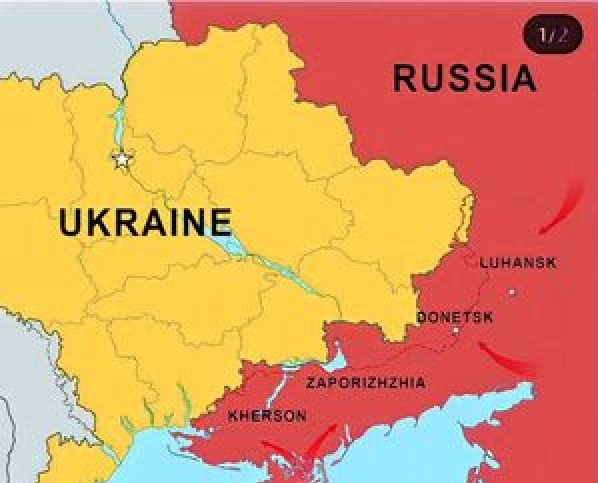
NATO, having overcommitted to Ukraine, now finds itself “on the horns of a dilemma” – if it continues to provide massive material and financial support to Ukraine, it will, in effect, become a direct party to the conflict, something no one in the bloc wants. However, if it backs away from supporting Ukraine, the various Western political leaders and institutions which have made support for Kiev a sacred obligation will be seen as going back on their word.
How NATO opts to proceed has yet to be manifest, but indications are that it will not be in a manner which continues to double down on supporting Ukraine no matter what
https://www.rt.com/russia/563788-referendums-ukraine-nato-dilemma/–-1 Oct 22,
Moscow is flipping the bloc’s script by moving to absorb Kiev’s lost lands, thus switching the fight to its own turf.
By infusing tens of billions of dollars’ worth of military aid into Ukraine, NATO produced a “game-changing” dynamic designed to throw Russia off balance. By undertaking the referendums in Kherson, Zaporozhye, Donetsk, and Lugansk, Russia changed the game altogether.
The ancient Greeks spoke of lemma as representing a logical premise, a matter taken for granted. This contrasted with a dilemma, or “dual premise”, where one would be presented with an either/or proposition. The Romans furthered this notion, referring to a “double premise” as argumentum cornutum, of the “horned argument,” because by answering one argument, an individual would be impaled by the logic of the second. Thus are the ancient roots of the modern idiom, “on the horns of a dilemma.”
This is the ultimate objective of maneuver warfare, for example: to position your forces in such a manner as to present the enemy with no good option – should they react to one pressing threat, they would find themselves overwhelmed by the other.
The Russian military operation that has been underway in Ukraine for more than seven months now has provided ample examples of the military forces of both sides being confronted with a situation that compelled them to alter their preferred course of action; the Russian “diversion” against Kiev early on in the SMO prevented the Ukrainians from reinforcing their forces in eastern Ukraine, and the recently concluded Ukrainian counteroffensive in Kharkov compelled a hasty Russian withdrawal from a significant swath of previously occupied Ukrainian territory.
Both examples cited presented one side with a lemma, or a single problem, which needed to be addressed. But neither was able to put its opponent “on the horns of a dilemma,” forcing a response which would result in impalement regardless of the option chosen. The reason for this is simple – very rarely will competent military commanders allow themselves to be presented with a military problem for which there is no viable response. War, it seems, is hard work, and dilemmas don’t fall from trees.
Or do they? Ever since Boris Johnston flew to Kiev in April to convince Ukrainian President Vladimir Zelensky to pull out of peace talks then ongoing with Russia in the Turkish city of Istanbul, NATO has embarked on a program designed to provide Ukraine with tens of billions of dollars in military and financial assistance, including the transfer of modern heavy weapons and the use of facilities on Western soil where tens of thousands of Ukrainian troops could be trained and organized without fear of Russian intervention.
The purpose behind the NATO infusion of weaponry into Ukraine was straightforward – to empower Ukraine to not only lengthen the conflict, but also to undertake offensive military operations designed to evict Russia from what Kiev and its backers consider occupied Ukrainian territory, including the Donbass and Crimea. The counteroffensive in Kharkov in early September underscored the serious consequences of NATO’s actions – even though, given the massive loss of life and material suffered by the attacking Ukrainian forces, made the Kharkov victory Pyrrhic in nature, it was a Ukrainian victory, and one which compelled a Russian retreat.
By transforming the Ukrainian army into a NATO army which was manned by Ukrainians, the US-led bloc had, in fact, changed the nature of the game from a straightforward Russia-versus-Ukraine “special military operation” into a “Russia-versus-the collective West” struggle where the military resources originally allocated by Moscow to the fight were now insufficient to the task.
Russia, however, was not taking the game-changing actions of NATO standing still. Responding to the new reality on the ground in Ukraine, Russian President Vladimir Putin opted not to simply up the ante in this new NATO-driven game of increasing military power but change the game altogether. Not only did he order the partial mobilization of some 300,000 Russian reservists to reinforce the troops currently committed to the SMO, Putin also approved referendums in the four territories where Russian forces are presently fighting – Kherson and Zaporozhye (formerly occupied Ukrainian regions), and Donetsk and Lugansk (former regions of Ukraine, de-facto independent since 2014). These referendums asked the citizens of these four territories one simple question: do you wish to become part of Russia?
After five days of voting, the results from all four territories were clear – by an overwhelming majority, the participants in the referendums approved the proposition. Shortly thereafter, they were incorporated into the Russian Federation. What was once Ukraine has now become Mother Russia
Russia didn’t just change the rules of the game – it changed the game itself. Instead of Ukrainian forces fighting Russian forces on the territory of Ukraine, any future combat carried out by Ukraine against Russian forces would represent an attack on the Russian homeland itself.
Where does this leave NATO? The bloc’s leadership has made it clear from day one that it is not seeking direct confrontation with Russia. While its members have poured in tens of billions of dollars of material into Ukraine to help reconstitute its military, and provided critical logistics, intelligence, and communications support to Ukraine, it has repeatedly and insistently stated that it has no desire to fight a war with Russia directly and has made it clear that it would rather have the Ukrainians serve as a de facto NATO proxy in resisting Moscow.
NATO has gone “all in” both economically and politically when it comes to supporting Ukraine, to the extent that some of its members, having stripped their respective military structures of equipment and material, have nothing left to give. Despite this, European political and economic elites continue to articulate their strong support for Ukraine going forward.
This support, however, was predicated on the fundamental assumption that by providing Ukraine with this massive level of support, NATO would not get directly involved in a conflict with Moscow. But Russia, by transforming the battleground from one being fought on Ukrainian soil to one where it’s now defending its own land, has flipped the script.
NATO, having overcommitted to Ukraine, now finds itself “on the horns of a dilemma” – if it continues to provide massive material and financial support to Ukraine, it will, in effect, become a direct party to the conflict, something no one in the bloc wants. However, if it backs away from supporting Ukraine, the various Western political leaders and institutions which have made support for Kiev a sacred obligation will be seen as going back on their word.
How NATO opts to proceed has yet to be manifest, but indications are that it will not be in a manner which continues to double down on supporting Ukraine no matter what. Secretary General Stoltenberg’s tepid speech condemning Russia while showing no enthusiasm for Zelensky’s “accelerated application” for membership is indicative of the less-than-resolute nature of its support for Kiev.
NATO now will find its role diminished by the consequences of the Russian mobilization and referendums. Years from now, when the history of the conflict is finally written, the decision by President Putin to simultaneously mobilize the Russian reserves while absorbing the territory of southern and eastern Ukraine into the Russian Federation will serve as one of the premier modern-history examples of putting an adversary “on the horns of a dilemma.” The effective neutering of NATO by this action will more than likely be seen as a turning point in the conflict, one which sealed the fate of Ukraine in the face of an inevitable Russian victory.
1 This Month



26 September – International Day for the Total Elimination of Nuclear Weapons


PLEASE OPPOSE HR 8255 AND S.3639 – bills would accelerate satellite deployment, with no environmental review or safeguards – https://ncstd5li.quorum.us/campaign/169331/
To see nuclear-related stories in greater depth and intensity – go to https://nuclearinformation.wordpress.com
-
Archives
- September 2026 (245)
- August 2026 (330)
- July 2026 (355)
- June 2026 (287)
- May 2026 (306)
- April 2026 (356)
- March 2026 (251)
- February 2026 (267)
- January 2026 (308)
- December 2025 (358)
- November 2025 (359)
- October 2025 (375)
-
Categories
- 1
- 1 NUCLEAR ISSUES
- business and costs
- climate change
- culture and arts
- ENERGY
- environment
- health
- history
- indigenous issues
- Legal
- marketing of nuclear
- media
- opposition to nuclear
- PERSONAL STORIES
- politics
- politics international
- Religion and ethics
- safety
- secrets,lies and civil liberties
- spinbuster
- technology
- Uranium
- wastes
- weapons and war
- Women
- 2 WORLD
- ACTION
- AFRICA
- Atrocities
- AUSTRALIA
- Christina's notes
- Christina's themes
- culture and arts
- Events
- Fuk 2022
- Fuk 2023
- Fukushima 2017
- Fukushima 2018
- fukushima 2019
- Fukushima 2020
- Fukushima 2021
- general
- global warming
- Humour (God we need it)
- Nuclear
- RARE EARTHS
- Reference
- resources – print
- Resources -audiovicual
- Weekly Newsletter
- World
- World Nuclear
- YouTube
-
RSS
Entries RSS
Comments RSS
 nuclear-news