New Study Finds The Rest Of The World Supports China And Russia

A puzzling observation in today’s world is that almost no Western leader has laid out a positive vision for the future.
Take Biden for instance. His big vision is “democracies vs autocracies”. Meaning his vision for the future of the world is conflict. How positive is that?
There’s simply nothing to join! Except conflict, I guess, but you join a conflict to fight for a vision – for a better world – the conflict itself cannot be the vision!
https://caitlinjohnstone.substack.com/p/new-study-finds-the-rest-of-the-world?utm_source=post-email-title&publication_id=82124&post_id=81628548&isFreemail=true&utm_medium=email Caitlin Johnstone, 31 Oct 22,
The US is preparing to station multiple nuclear-capable B-52 bombers in northern Australia in what the mass media are calling a “signal to China,” yet another example of Australia’s forced subservience as a US military/intelligence asset.
“Having bombers that could range and potentially attack mainland China could be very important in sending a signal to China that any of its actions over Taiwan could also expand further,” Becca Wasser from the Centre for New American Security think tank told the ABC.
“This is a dangerous escalation. It makes Australia an even bigger part of the global nuclear weapons threat to humanity’s very existence – and by rising military tensions it further destabilises our region,” tweeted Greens Senator David Shoebridge of the incendiary provocation.
A new Australian Financial Review article titled “Australia’s alliances in Asia are a tale of two regions” candidly discusses the Biden administration’s recent sanctions geared toward kneecapping the Chinese tech industry in what the author James Curran correctly says “is unambiguously a new cold war.” Curran describes the impossible task Australia has of straddling the ever-widening divide between its number one trading partner China and its number one “security” partner the US, while Washington continually pressures Canberra and ASEAN states toward greater and greater enmity with Beijing.
“ASEAN countries, as much as Australia, have much at stake in resisting the onset of a bifurcated world,” Curran writes.
But that bifurcation is being shoved through at breakneck pace, using both hard and soft power measures. Australians have been hammered with increasingly aggressive anti-China propaganda, and as a result nearly half of them now say they would be willing to go to war to defend Taiwan from an attack by the mainland, with a third saying they’d support a war against China over the Solomon Islands.
A recent Cambridge study found that this hostility toward China has been on the rise in recent years not just in Australia but throughout the “liberal democracies” of the US-centralized power alliance. But what’s interesting is that public opinion is exactly reversed in the much larger remainder of the Earth’s population, with people outside the US power cluster just as fond of China as those within that power cluster are hostile toward it. This relationship is largely mirrored with Russia as well.
“Among the 1.2bn people who inhabit the world’s liberal democracies, three-quarters (75%) now hold a negative view of China, and 87% a negative view of Russia,” the report reads. “However, for the 6.3bn people who live in the rest of the world, the picture is reversed. In these societies, 70% feel positively towards China, and 66% positively towards Russia.”
The report finds that in the “developing” world, approval of China is higher than approval of the US:
“For the first time ever, slightly more people in developing countries (62%) are favourable towards China than towards the United States (61%). This is especially so among the 4.6bn people living in countries supported by the Belt and Road Initiative, among whom almost two-thirds hold a positive view of China, compared to just a quarter (27%) in non-participating countries.”
The report finds that while Russia’s approval has plummeted in the west, it maintains broad support in the east despite the invasion of Ukraine:
“However, the real terrain of Russia’s international influence lies outside of the West. 75% of respondents in South Asia, 68% in Francophone Africa, 62% in Southeast Asia continue to view the country positively in spite of the events of this year.”
I first became aware of the Cambridge study via a Twitter thread by Arnaud Bertrand (who is a great follow if you happen to use that demonic app). Bertrand highlights data in the study showing that US-aligned nations’ opinion of China began plummeting not after the Covid outbreak in late 2019, but after 2017 when the US began ramping up its propaganda campaign against Beijing.
Apart from the fact that the USA’s immensely sophisticated propaganda machine naturally focuses primarily on where the world’s wealth and military firepower rests while pushing its global agendas, and apart from the fact that those in Belt and Road Initiative countries apparently believe they benefit from their economic relationships with China, the disparity between the “developed” and “developing” worlds in their perceptions of the US and its enemies may also be partly explained by another thought-provoking Arnaud Bertrand thread, which I will quote in its entirety here:
A puzzling observation in today’s world is that almost no Western leader has laid out a positive vision for the future.
Take Biden for instance. His big vision is “democracies vs autocracies”. Meaning his vision for the future of the world is conflict. How positive is that?
Contrast this with China: between “national rejuvenation” and “common prosperity” at home and the “global security initiative” as their vision for improved international relations; everyone is very clear on the journey they’re embarked on.
This is a key, if not the key reason why the “West” has no chance in hell to convince the “rest” to join them.
There’s simply nothing to join! Except conflict, I guess, but you join a conflict to fight for a vision – for a better world – the conflict itself cannot be the vision!
This reminds me of what George Kennan, the architect of the cold war, wrote: to win he said that America had to “create among the peoples of the world generally the impression of a country which knows what it wants, which is coping successfully with the problems of its internal life and with the responsibilities of a World Power, and which has a spiritual vitality capable of holding its own among the major ideological currents of the time”
Does America give this impression today?
Even in my own country, France. Ask any French person what Macron’s vision for the future of France and the world is, what the grand plan is, and you’ll get very puzzled looks. “Reform the pension system so we have to work longer?”
The truth is there’s nothing, nada, rien!
What we have essentially in the West are political operators. They think their jobs are to get reelected and to attempt to move whatever metrics the electorate cares about: GDP, unemployment, debt levels, CO2 emissions, etc. Actual leaders have gone extinct (or gone East).
It’s actually quite sad, really speaks to the levels of intellectual decrepitude in the West today. The time of the Enlightenment, the big revolutions is well and truly gone. We’re stuck with our mediocre operators.
It’s also why this is such a dangerous time. A positive vision brings confidence, it brings hope, it motivates, it makes people look forward to what’s to come. The West has none of that today.
The future is scary, the dominant feelings are fear and anger.
And when there’s a lot of fear and anger, these feelings need to be directed somewhere. And our operators certainly don’t want it to be them! So it’s China, Iran, all those “foreigners” who “hate our freedom”.
Perfect recipe for a very bad conflict…
Please, don’t get fooled!
Bertrand’s musings echo a recent quote by Professor Jeffrey Sachs at the Athens Democracy Forum: “The single biggest mistake of president Biden was to say ‘the greatest struggle of the world is between democracies and autocracies’. The real struggle of the world is to live together and overcome our common crises of environment and inequality.”
Indeed, we could be striving toward a positive vision for the future, one which seeks “common prosperity” and “improved international relations,” one which works to remedy inequality and address the looming environmental crisis. Instead the world is being bifurcated, split in two, which history tells us is probably an indication that something extremely terrible is on the horizon for our species unless we drastically change course.
It’s worth keeping all this in mind, as nuclear-capable bombers are deployed to Australia; as NATO weighs moving nuclear weapons to Russia’s border in Finland; as the Biden administration goes all in on economic warfare with China regardless of the consequences; as Russia accuses the US of “lowering the nuclear threshold” by modernizing the arsenal in Europe into “battlefield weapons”; as the Council on Foreign Relations president openly admits that the US is now working to halt China’s rise on the world stage; as China declares its willingness to deepen ties with Russia on all levels.
We could have such a wonderful, healthy, collaborative world, and it’s being flushed down the toilet because an empire is using its leverage over the wealthiest populations on our planet to work toward dominating all the other populations. This stupid, insane quest to shore up unipolar planetary domination is costing us everything while gaining us nothing, and it’s going to be the poorest and weakest among us who suffer the most as a result.
Steps towards multilateral nuclear disarmament – but media silence
An even more momentous UN vote occurred during the same session, when 124 member states affirmed their support for the Treaty on the Prohibition of Nuclear Weapons (TPNW).

Once again, all the nuclear-armed powers (the US, Russia, Britain, France, China, Israel, India, Pakistan and North Korea) opposed the aim of a nuclear weapons-free world. They were joined for the first time by Finland and Sweden, now pledged to enter Nato together.
Once upon a time, we would have heard Labour voices at Westminster speaking out against Britain’s nuclear weapons and Nato’s war-mongering.
THE “international community” has spoken. Twice in the past three days, a very large majority of United Nations member states have made clear their position on two vital issues of life and death.
Unfortunately, this was not the “international community“ comprising the United States, Britain, other major Western powers and those other countries they can bribe, bully or bamboozle to fall into line.
Hence the shroud of silence that has fallen over most of Britain’s mass media when it comes to reporting two significant votes at the UN.
Last Friday, the general assembly’s first committee decided by 152 to five that Israel should sign up to the Non-Proliferation of Nuclear Weapons Treaty (NPT).
The resolution on “the risk of nuclear proliferation in the Middle East” noted that Israel is the only country in the Middle East — and one of the few among the 193 UN member states — not to accede to the NPT.
Accession to the treaty would oblige Israel to submit its nuclear facilities to Atomic Energy Agency safeguards and not to develop, produce, test or acquire nuclear weapons.
Israel refuses to admit its possession of the atomic bomb and kidnapped, drugged, abducted and imprisoned nuclear scientist Mordechai Vanunu who spilled the beans to the British press 36 years ago.
Freed after 18 years and subsequent short incarcerations, he survives under severe restrictions in Israel.
While some of Israel’s accusers are also serial abusers of human rights, this should not detract from the sheer weight of world opinion against nuclear proliferation.
Only the US, Canada and the US military protectorates of Micronesia and Palau joined Israel in opposing the NPT resolution. Britain, India and most European countries abstained.
An even more momentous UN vote occurred during the same session, when 124 member states affirmed their support for the Treaty on the Prohibition of Nuclear Weapons (TPNW).
Once again, all the nuclear-armed powers (the US, Russia, Britain, France, China, Israel, India, Pakistan and North Korea) opposed the aim of a nuclear weapons-free world. They were joined for the first time by Finland and Sweden, now pledged to enter Nato together.
This backward step is yet another consequence of Russia’s disastrous decision to invade Ukraine, which has strengthened reactionary forces across Europe, Ukraine and — at least for the time being — Russia itself.
On a brighter note, Australia turned towards sanity by abstaining on the TPNW for a change. The US Pentagon is not happy, but Australia’s vigorous peace movement can celebrate this symbolic blow against the US-UK-Oz anti-China military pact.
Naturally, this decision by most of the “international community” to accelerate the drive to multilateral nuclear disarmament has been ignored by the mainstream media in Britain.
There will be no US or EU sanctions against those rogue states — such as themselves — who brazenly flout UN resolutions and international law when it suits them.
Once upon a time, we would have heard Labour voices at Westminster speaking out against Britain’s nuclear weapons and Nato’s war-mongering.
Alas, silence now reigns as the ghosts of Sydney Silverman, Ian Mikardo, Joan Maynard, SO Davies and Emrys Hughes look on in despair.
Russia suspends participation in grain deal after Ukrainian attack
The decision was made following a Ukrainian assault on Moscow’s Black Sea fleet. Rt.com 28 Oct 22
Russia announced on Saturday that it has halted its compliance with a grain deal, brokered by the UN and Türkiye earlier his year. The move came after Ukraine launched a major drone attack on ships involved in securing safe passage for agricultural cargo, the Russian Defense Ministry explained.
In a post on its Telegram channel, the ministry said Russia “is suspending its participation in the implementation of agreements on the export of agricultural products from Ukrainian ports”.
It explained that the move was prompted by “a terror attack” against the ships of the Black Sea Fleet and civilian vessels involved in ensuring the security of the grain corridor. The ministry also alleged that the bombing was organized with the involvement of British military………………………………..
Earlier on Saturday, Russia’s Agriculture Minister Dmitry Patrushev signaled that Moscow is ready, with Türkiye’s help, to send the world’s poorest countries up to 500,000 tons of grain within the next four next months.
He noted that considering this year’s harvest, Russia “is fully ready to replace Ukrainian grain” and arrange deliveries to “all interested countries” at a reasonable price.
……………………… following the blast on the strategic Crimean Bridge, Russian President Vladimir Putin said that if turns out that Ukraine – the country that Moscow accused of carrying out the attack – used grain corridors to transport explosives, “it would put the very existence of these corridors in question”.
The breakthrough deal between Moscow and Kiev was reached in Istanbul in July with mediation by the UN and Türkiye. It aimed to unlock agricultural exports via the Black Sea from Russia and Ukraine – two of the world’s leading grain exporters – which had ground to halt due to the conflict between the two nations. https://www.rt.com/russia/565588-russia-suspends-grain-deal/
Kremlin reveals possible basis for Putin-Biden talks
https://www.rt.com/news/565611-russia-talks-biden-putin/ 28 Oct 22, Russia’s proposals on security guarantees could serve as a springboard for re-engagement, Dmitry Peskov says
Potential talks between Russian President Vladimir Putin and his US counterpart Joe Biden would depend on Washington’s willingness to hear Moscow’s security concerns, the Kremlin press secretary said on Sunday.
Speaking to the Rossiya-1 TV channel, Dmitry Peskov said high-level re-engagement could happen if the United States “pays heed to our concerns.”
It would be contingent on “the US desire to go back to the state of things as of December-January and ask the question: what the Russians are offering may not suit all of us, but maybe we should still sit down with them at the negotiating table?”
The spokesman explained that he was referring to the draft documents on security guarantees that Moscow submitted to both Brussels and Washington before the Ukraine conflict broke out in late February.
In mid-December last year, the Russian Foreign Ministry published the drafts of two treaties – one with the US and one with NATO – with a list of Moscow’s security demands, in a bid to lower tensions in Europe.
At the time, Russia wanted the West to ban Ukraine from entering NATO and limit the deployment of troops and weapons on the bloc’s eastern flank. It also insisted that the military alliance retreat to its borders as of 1997, before it expanded eastwards.
While neither the US nor NATO gave written responses to Russia’s proposals, they both rebuffed Moscow’s demand that Ukraine should be barred from the bloc.
Earlier this month, Putin said he saw no need for talks with his US counterpart, explaining that “there is no platform for any negotiations yet.” The statement was echoed by the White House, which stated that Joe Biden does not plan to meet with the Russian leader at the G20 summit next month, despite earlier refusing to rule out the possibility.
The last time the two leaders met in person was in June 2021 in Geneva, Switzerland. The talks were followed up by a virtual summit in December, with Ukraine being one of the topics on the agenda.
USA’s Westingouse likely to build and fund 49% of Poland’s first nuclear power station
Poland is likely to choose the United States engineering firm Westinghouse
Electric to build its first nuclear power plant and provide 49% equity
financing for the project. State-owned Korea Hydro Nuclear Power (KHNP) may
also be involved in a separate and parallel private nuclear project, Polish
Deputy Prime Minister Jacek Sasin said earlier this week. Warsaw has also
been talking to France’s state-owned EdF utility which has built and
operates the country’s nuclear power plants. After years of shelved plans
to build a civil nuclear capacity in Poland from scratch, the energy crunch
caused by the war in Ukraine, lower gas supplies from Russia and lack of
immediate renewable substitutes, have kicked the issue back up the
political agenda.
Deutsche Welle 28th Oct 2022
https://www.dw.com/en/us-south-korean-firms-to-operate-nuclear-plants-in-poland/a-63576093
Cuban missile crisis, 60 years on: new papers reveal how close the world came to nuclear disaster
In 1962, a Soviet submarine commander nearly ordered a nuclear launch, newly translated accounts show, with modern parallels over Ukraine all too clear
Guardian, Julian Borger in Washington 27 Oct 2022
The commander of a nuclear-armed Soviet submarine panicked and came close to launching a nuclear torpedo during the Cuban missile crisis 60 years ago, after being blinded and disoriented by aggressive US tactics, according to newly translated documents.
Many nuclear historians agree that 27 October 1962, known as “Black Saturday”, was the closest the world came to nuclear catastrophe, as US forces enforced a blockade of Cuba to stop deliveries of Soviet missiles. On the same day a U-2 spy plane was shot down over the island, and another went missing over Siberia when the pilot lost his way.
Six decades on from the “world’s most dangerous day”, last week’s revelation that a Russian warplane fired a missile near a British Rivet Joint surveillance plane over the Black Sea has once more heightened concerns that miscalculation or accident could trigger uncontrolled escalation.
In October 1962, the US sent its anti-submarine forces to hunt down Soviet submarines trying to slip through the “quarantine” imposed on Cuba. The most perilous moment came when one of those submarines, B-59, was forced to surface late at night in the Sargasso Sea to recharge its batteries and found itself surrounded by US destroyers and anti-submarine planes circling overhead.
In a newly translated account, one of the senior officers on board, Captain Second Class Vasily Arkhipov, described the scene……………………………………………………………
In his account, Arkhipov played down his role and how close the B-59 submarine commander, Savitsky, came to launching the submarine’s one nuclear-tipped torpedo. However, Svetlana Savranskaya, the director of the National Security Archive’s Russian programmes, interviewed another submarine commander from the same brigade, Ryurik Ketov, who said Savitsky was convinced they were under attack and that the war with the US had started.
The commander panicked, calling for an “urgent dive” and for the number one torpedo with the nuclear warhead to be prepared. However, because the signalling officer was in the way, Savitsky could not immediately get down the narrow stairway through the conning tower, and during those few moments of hesitation, Arkhipov realised that the US forces were signalling rather than attacking, and deliberately firing off to the side of the submarine.
“He called to Savitsky and said: ‘calm down, look they are signalling, not attacking, let’s signal back.’ Savitsky turned back, saw the situation, ordered the signalling officer to signal back,” Savranskaya said. She added that two other officers would have had to confirm any order from Savitsky before the nuclear torpedo could have been launched.
Tom Blanton, the director of the National Security Archive, said the aggressive tactics used by the American submarine hunters contributed to the close shave…………………………………………….
Saved ‘primarily because of luck’
The B-59 incident was just one of a cascade of crises that day. A U-2 went missing over Siberia when the pilot lost his bearings, blinded by the aurora borealis and misled by compass malfunction close to the north pole.
Some F-102 interceptor jets were scrambled to protect the U-2, but the joint chiefs of staff who gave the order for their launch were not aware they had been armed with nuclear missiles as a matter of course once the alert level was raised to Defcon 2.
Minutes later, the joint chiefs heard that another U-2 had been shot down over Cuba and assumed it was a deliberate escalation by Moscow. In fact, the order had been given independently by two Soviet generals in Cuba. The joint chiefs were also unaware that there were 80 nuclear warheads on the missiles already in Cuba when they gave their recommendation for the US to carry out airstrikes and then an invasion of Cuba.
The recommendation was overruled by president John Kennedy, as negotiations with Soviet representatives, some of them in a Washington Chinese restaurant, were making progress, leading ultimately to the withdrawal of Soviet missiles from Cuba while US missiles were pulled back from Turkey.
Tom Collina, the director of policy at the Ploughshares Fund, a disarmament advocacy group, said Black Saturday “reminds us that the reason we’ve gotten out of things like that in the past is primarily because of luck”.
“We had some good management, we had some good thinkers,” Collina, co-author of The Button, a book on the nuclear arms race, said. “But basically, we got lucky in the closest situations where we could have gotten involved in nuclear war.”……………………………..
“The lesson we should have learned in 1962 is that humans are fallible, and we should not combine crises with fallible humans with nuclear weapons,” Collina said. “Yet here we are again.” https://www.theguardian.com/world/2022/oct/27/cuban-missile-crisis-60-years-on-new-papers-reveal-how-close-the-world-came-to-nuclear-disaster
‘Small but important step’: Australia’s shift on treaty banning nuclear weapons applauded

Australia abstained from voting on the UN treaty banning nuclear weapons for the first time in five years. Previously, the country had opposed the treaty.
SBS News 29 Oct 22,
Anti-nuclear campaigners welcomed the shift in the Australian government’s position on a UN treaty banning the proliferation of nuclear weapons.
Australia was among 14 nations to abstain from voting. There were 43 nations who voted against the UN resolution co-sponsored by New Zealand, Indonesia, Malaysia and Ireland. A total of 124 nations voted in favour of the motion.

The Australian branch of the International Campaign to Abolish Nuclear Weapons (ICAN) described the move as “a small but important step forward”.
“ICAN looks forward to a formal decision by the Albanese government to sign and ratify the TPNW (the treaty) – in line with its pre-election pledge,” the group said.
The overwhelming majority of Australians support joining this treaty, and progress towards disarmament is more urgent than ever.”
ICAN said it was encouraging to see that the majority of nations stood united on the risks of nuclear war, particularly “in light of the war in Ukraine”.
It ends years of Canberra siding with the United States by actions on the treaty to ban the deadly weapons and comes as Australia looks to nuclear submarines to boost its navy…………………………………
Australia also recently faced criticism from nuclear powers for joining a Pacific push to help deal with the consequences of nuclear testing.
New Zealand, a signatory to the nuclear weapons ban, has previously pushed for Australia to join.
A total of 93 countries have signed the treaty, including 68 nations that have formally ratified it. https://www.sbs.com.au/news/article/small-but-important-step-australias-shift-on-treaty-banning-nuclear-weapons-applauded/j3cz2yr7l
Russian delegation at UN calls on USA to join initiative to renounce weapons in space
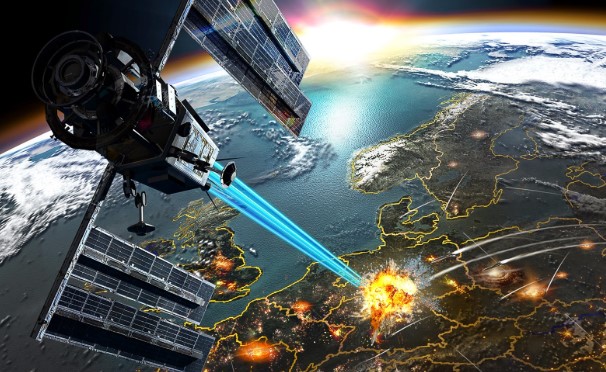
Foreign Ministry Spokeswoman Maria Zakharova’s comment on the US initiative in the UN General Assembly First Committee
The other day, the US delegation submitted to the UN General Assembly First Committee an aide-memoire on proposed UN General Assembly resolution on destructive direct-ascent anti-satellite missile testing. We analysed the text to discover that our apprehensions concerning this US initiative were valid.
As before, we regard the moratorium on testing the above type of anti-satellite weapon (ASW) announced by the White House in April as a purely declarative move. The UN General Assembly statements and draft resolutions are clearly not enough to prevent an arms race in space (PARIS), all the more so for a country that has had experience – at least since 2008 – destroying space objects with ASW.
The United States remains bashfully silent about the most important thing: are they willing to permanently rule out the combat use of this type of weapon? The resolution says nothing about it. There are no commitments regarding the development and production of such systems, or the prospect of ever destroying the Pentagon’s existing anti-satellite capabilities.
Moreover, the possibility of deploying ASW means on the US reusable unmanned space shuttle X-37B, which is capable of staying in orbit for a long time, performing manoeuvres and carrying a payload, cannot be ruled out. By the way, our multiple requests to the United States to clarify the X-37B platform’s goals and objectives have so far remained unanswered.
Military dominance and superiority in outer space being set as clear goals in US doctrinal documents, their view of space as an arena of confrontation and their plans for achieving these goals are quite telling if one wants to understand Washington’s genuine motives. It is no coincidence that the US delegation at the Geneva Conference on Disarmament is doing its utmost to hinder the start of talks on a multilateral instrument which contains reliable international legal guarantees against deploying weapons of any kind in outer space and the renunciation of the use of force or the threat of force against space objects. The Americans are using every pretext to avoid working on the Russian-Chinese draft treaty designed to fulfill PARIS goals………………….
Washington can prove it has serious intentions if it revises its destructive stance and the US delegation that is participating in the Conference on Disarmament joins the efforts to start talks as soon as possible on a legally binding instrument with guarantees of non-deployment of weapons in space, non-use of force or threat of force against space objects.
Specifically, the approach promoted by Russia involves the following commitments:
– not to use space objects as a means of destroying any targets on Earth, in the air or outer space;
– not to create, test or deploy weapons in space to perform any tasks, including for anti-missile defence, anti-satellite activity, or use against targets on Earth or in the air, and to eliminate such systems that the states already possess;
– not to create, test, deploy or use space weapons for anti-missile defence, anti-satellite activity, or use against targets on Earth or in the air;
– not to destroy, damage, or disrupt the normal functioning and not to change the flight paths of space objects owned by other states;
– not to assist or encourage other states, groups of states, international, intergovernmental, or any non-governmental organisations, including non-governmental legal entities that were established, registered or located on the territory under their jurisdiction and/or control, to participate in the above activities.
In addition, the accession of the United States and its allies to the international initiative/political commitment not to be the first to place weapons of any kind in outer space would be a really important confidence-building measure. We are once again calling on Washington to follow the example of more than 30 UN member states and join this initiative, as well as to support the UNGA draft resolution on that matter.
We are ready to substantively and professionally discuss the US initiative in this context of multilateral efforts to arrive at a comprehensive solution to PARIS issues. https://mid.ru/en/foreign_policy/news/1835061/
US, Japan, S Korea vow response if N Korea tests nuclear bomb
US says full military capabilities will be used, including nuclear, to protect its allies South Korea and Japan.
An “unparalleled” scale of response would be warranted if North Korea conducts a seventh test of a nuclear weapon, the United States, Japan and South Korea have warned.
The warning was issued on Wednesday amid concerns by the US and its regional allies that North Korea could be poised to resume nuclear bomb testing for the first time since 2017.
“We agreed that an unparalleled scale of response would be necessary if North Korea pushes ahead with a seventh nuclear test,” South Korean first vice foreign minister Cho Hyun-dong told a news conference in Tokyo.
Cho made his comments alongside Japan’s vice foreign minister Takeo Mori and US Deputy Secretary of State Wendy Sherman.
North Korea has been carrying out weapons tests at an unprecedented pace this year, firing more than two dozen short and medium-range ballistic missiles in recent weeks, including a missile that over-flew Japan.
We urge (North Korea) to refrain from further provocations,” Sherman said, calling the North’s actions “reckless” and deeply destabilising for the region.
Sherman also said that the US will use its full military capabilities, “including nuclear, conventional and missile defence”, to protect its allies Japan and South Korea.
North Korea needs to understand that the US commitment to the security of South Korea and Japan is “iron clad”, she said.
“And we will use the full range of US defence capabilities to defend our allies, including nuclear, conventional and missile defence capabilities,” she said.
US State Department spokesman Ned Price said in a statement that Sherman also reiterated that the US was continuing to “seek serious and sustained dialogue with the DPRK” (Democratic People’s Republic of Korea) – the official name for North Korea.
Cho, during his talks with Sherman, raised concern that a new North Korean nuclear weapons policy adopted in September increases the possibility of its arbitrary use of nuclear weapons.
“This is creating serious tension on the Korean peninsula,” Cho said.
In September, the USS Ronald Reagan and accompanying ships conducted joint military exercises with South Korean forces in response to a North Korean ballistic missile test in what was their first joint military training involving a US aircraft carrier since 2017.
Angered by South Korea’s military activities, Pyongyang last week fired hundreds of artillery shells off its coasts in what it called a grave warning to its neighbour to the south.
Sherman met earlier on Tuesday with Japan’s Mori and reaffirmed the further strengthening of the Japan-US alliance and other shared goals, including the complete denuclearisation of North Korea and their joint response to China’s increasingly assertive actions in the region.
Japanese defence minister Yasukazu Hamada recently said that North Korea is believed to have achieved a miniaturisation of nuclear warheads while significantly advancing its missile capabilities by diversifying its launch technologies, making interceptions more difficult.
Japan has joined South Korea in also warning of a possible nuclear test by North Korea in the near future.
Russia is funding its war on Ukraine by selling $billions of uranium to Europe’s nuclear industry- no sanctions on that!
The Russian nuclear industry has once again managed to avoid inclusion in the latest round of EU sanctions – the eighth in a row to skirt this vital issue in an apparent acknowledgment that Europe’s dependence on Russian nuclear fuel cannot easily be reversed.
Since the start of the war in February, the media has been so focused on Russian fossil fuels, particularly natural gas, that it has avoided any discussion of Europe’s nuclear dependence on Russia completely. However, the topic can no longer be safely ignored. The Kremlin has already earned several hundred billion dollars so far this year by selling fossil fuels to Europe, a financial cushion that has allowed Moscow to fund its horrific war in Ukraine.
While Europe is less reliant on Russia supplying its atomic energy sector than it is its fossil fuel sector, the dependence of the European atomic energy industry on Russian nuclear fuel is as surprising as it is alarming. Much work has gone into weaning Europe off Russian fossil fuels, with time being of the essence as Brussels seeks to curtail Moscow’s lucrative revenue streams as quickly and as comprehensively as possible. However, its nuclear industry has not yet been the focus of any such efforts.
Moscow Times 22nd Oct 2022
https://www.themoscowtimes.com/2022/10/22/europe-should-sanction-russias-nuclear-industry-now-a79089
Cities should increase role in effort to abolish nuclear weapons
Mayors for Peace comprises 8,213 cities from 166 countries and regions, including the United States, Russia and other nuclear weapon states.
https://www.asahi.com/ajw/articles/14750556, October 24, 2022
Foreign representatives to the general conference of Mayors for Peace pose for a photograph in Hiroshima on Oct. 20. (The Asahi Shimbun)
While disarmament by nuclear weapon states progresses only at a snail’s pace, Russia has invaded Ukraine and has repeatedly threatened to use nuclear weapons.
The developments have brought home a reality where nuclear arms could be used again in the manner of what was done to Hiroshima and Nagasaki.
In light of the situation, we are left to ask what role could be played by local governments, which are closer to citizens than central governments, in striving for the goal of abolishing nuclear weapons.
Mayors for Peace held its 10th General Conference in Hiroshima on Oct. 19-20.
The international nongovernmental organization was founded 40 years ago in the midst of the Cold War in response to a proposal made by Hiroshima’s mayor at a U.N. meeting.
The Hiroshima Appeal, adopted at the meeting last week, expressed alarm at the risk of nuclear war, which it said has been raised to “the highest level,” and emphasized that “the only absolute viable measure for humanity to take against repeated threats of nuclear weapons is their total elimination.”
The document called on nuclear weapon states to fulfill their disarmament obligations spelled out in the Nuclear Nonproliferation Treaty (NPT) and to ratify the Treaty on the Prohibition of Nuclear Weapons (TPNW), which took effect at the initiative of countries with no nuclear arsenals, in lockstep.
Mayors for Peace comprises 8,213 cities from 166 countries and regions, including the United States, Russia and other nuclear weapon states.
While nuclear weapon states and their allies continue to adhere to the nuclear deterrence theory, the organization has called on local governments to unite across national borders and return to the basic principle that nuclear arms should be abolished. It has played a significant role.
A number of cities, particularly in Europe, have moved to join Mayors for Peace since Russia invaded Ukraine.
In a resolution last year, the U.S. Conference of Mayors called on the U.S. government to welcome the TPNW and take immediate action toward nuclear abolition. Cities that are members of Mayors for Peace played a major part in that process.
Mayors for Peace should expand its activities by capitalizing on the current trend of the growing presence of local governments.
The essential thing is to work hand in hand with civil society in sending out messages.
Mayors for Peace has been supported by pleas from survivors of the atomic bombings of Hiroshima and Nagasaki that the error should never be repeated.
During the meeting in Hiroshima, cases of efforts being made in Japan and abroad were presented. They include how a group of 26 cities in western Tokyo have been working together to archive people’s accounts of their war experiences and to provide peace education.
We hope more local governments will draw on their networks to share and expand their diverse attempts.
Japan, as the only nation that has suffered atomic bombings in war, has a major role to play.
Of all municipalities in the nation and Tokyo’s wards, more than 99 percent, or 1,737, are members of Mayors for Peace.
At a general meeting of Japanese member cities held on the sidelines of the 10th general conference, a written request was approved calling on the government to participate as an observer in the second meeting of the state parties to the TPNW, which is scheduled for next year, and sign and ratify the treaty.
Hiroshima is expected to host the first meeting of a new international group of eminent persons to discuss nuclear disarmament by year-end and a Group of Seven summit next spring.
Prime Minister Fumio Kishida, who will be presiding over both meetings, should take the appeal of Mayors for Peace seriously and discard his stance of continuing to turn his back on the TPNW as soon as possible.
Allegations fly about plans to use “dirty bomb” and nuclear weapons in Ukraine war
The warning from the United States comes as Russia alleges Ukraine is in the “final stage” of plans to deploy a “dirty bomb”, with Western nations accusing Moscow of using the claim as a pretext to escalate the war.
Russia warned nuclear weapons use would bring ‘severe consequences’ amid allegations of war escalation plot SBS News 25 Oct 22,
The United States has warned there would be severe consequences if Russia used a nuclear weapon in Ukraine, as Western countries accused Moscow of plotting to escalate the war on the pretext that Ukraine was planning to deploy a so-called “dirty bomb” laced with nuclear material.
With Ukrainian forces advancing into Russian-occupied Kherson province, top Russian officials phoned Western counterparts on Sunday and Monday to tell them of Moscow’s suspicions. Russia plans to raise the issue at the United Nations Security Council on Tuesday, diplomats said
The foreign ministers of France, Britain and the United States rejected the allegations and reaffirmed their support for Ukraine.
“Our countries made clear that we all reject Russia’s transparently false allegations that Ukraine is preparing to use a dirty bomb on its own territory,” they said in a joint statement. “The world would see through any attempt to use this allegation as a pretext for escalation.”
……………………………… Russian military Chief of General Staff Valery Gerasimov spoke to the chairman of the US Joint Chiefs of Staff, Mark Milley, on Monday, Russia’s RIA news agency reported. The call was the first between the top generals since May, a US military official said, and came eight months to the day since Russia invaded Ukraine.
US officials said there was no indication Moscow had made the decision to use nuclear weapons.
“We continue to see nothing in the way of preparations by the Russian side for the use of nuclear weapons,” White House national security spokesman John Kirby told reporters. “And nothing with respect to the potential use for a dirty bomb at this point.”
Russia’s defence ministry said the aim of a “dirty bomb” attack by Ukraine would be to blame Russia for the resulting radioactive contamination. The ministry has begun preparing for such a scenario, it said, readying forces and resources “to perform tasks in conditions of radioactive contamination.”
In a statement on Monday, Russian Lieutenant General Igor Kirillov said: “According to the information we have, two organisations in Ukraine have specific instructions to create a so-called ‘dirty bomb’. This work is in its final stage.”
Russia’s Foreign Minister Sergei Lavrov insisted the threat was real and that Russia had a “keen interest in preventing such a terrible provocation.”
But Ukrainian President Volodymyr Zelenskyy had said the Russian accusation was a sign Moscow was planning such an attack itself and would blame Ukraine.
“If Russia calls and says that Ukraine is allegedly preparing something, it means one thing: Russia has already prepared all this,” Mr Zelenskyy said in an overnight address.
The UN’s nuclear watchdog said on Monday it was preparing to send inspectors in the coming days to two Ukrainian sites at Kyiv’s request, in an apparent reaction to the Russian “dirty bomb” claims.
What is a dirty bomb?
At its most basic, a “dirty bomb” is a conventional bomb laced with radioactive, biological or chemical materials which get disseminated in an explosion.
Using radioactive materials would make it a type of radiological dispersal device, a term often used interchangeably with “dirty bomb”.
Nobody has ever exploded a “dirty bomb”, but there is suspicion that extremists may have tried to build one……………………. https://www.sbs.com.au/news/article/russia-warned-nuclear-weapons-use-would-bring-severe-consequences-amid-allegations-of-war-escalation-plot/q19cw4ou2
Kremlin diplomat assures that Russia has no intention of using nuclear weapons in Ukraine
https://euroweeklynews.com/2022/10/25/kremlin-diplomat-assures-that-russia-has-no-intention-of-using-nuclear-weapons-in-ukraine/ By Chris King • 25 October 2022,
Russia has no intention of using nuclear weapons in Ukraine claimed Kremlin diplomat Vasily Nebenzya in a letter to the UN Secretary-General.
As reported by TASS on Monday, October 24, in a letter from Vasily Nebenzya from the Permanent Mission of the Russian Federation to the UN Secretary-General Antonio Guterres, he stated that Russia never intended to, and never will, use nuclear weapons in Ukraine.
Konstantin Vorontsov, the Deputy Director of the Department for Non-Proliferation and Arms Control of the Russian Foreign Ministry, noted earlier that Russia has not threatened and is not threatening Ukraine with nuclear weapons.
This was reiterated by Dmitry Peskov, the press secretary of the Russian president, Vladimir Putin, who stressed that the Russian Federation does not participate in Western rhetoric about the use of nuclear weapons in Ukraine. These arguments are only on the conscience of American and European leaders he added.
Prior to this, Mikhail Podolyak, the adviser to the head of the office of the President of Ukraine stated that the likelihood of a nuclear conflict with the Russian Federation at the moment is minimal. He recalled that Russia signed the Treaty on the Non-Proliferation of Nuclear Weapons. That is, it is forbidden to use nuclear weapons against a state that does not have them.
In turn, the head of European diplomacy, Josep Borrell, said that an attack against Ukraine with nuclear weapons would provoke a powerful military response from NATO, the European Union, and the United States, as reported by gazeta.ru.
Zelenskyy blasts Israel, suggests Russia-Iran nuclear collusion
Ukraine’s leader rails against Israel’s refusal to provide its Iron Dome missile defence system, saying the attack on his country has brought Moscow and Tehran closer together.
Aljazeera, 24 Oct 2022, President Volodymyr Zelenskyy has criticised Israel’s neutrality in the Ukraine war, saying the decision by its leaders not to support Kyiv with weaponry has encouraged Russia’s military partnership with Iran.
Addressing a conference on Monday organised by Israel’s Haaretz newspaper, Zelenskyy repeated his request for Israel’s Iron Dome anti-missile technology to thwart Russian strikes………..
On Monday, Israeli Defence Minister Benny Gantz told his Ukrainian counterpart, Oleksiy Reznikov, that “Israel will not provide weapon systems to Ukraine.”
Since the Russian invasion in February, Israel has offered humanitarian assistance to Ukraine but has held back from providing military equipment for fear of harming relations with Russia……………………………………
Iran has denied providing Russia with weapons for the war.
“The Islamic Republic of Iran has by no means supplied any side with arms to be used in the war in Ukraine, and its policy is to oppose arming either side with the aim of ending the war,” said Hossein Amirabdollahian, Iran’s foreign minister. https://www.aljazeera.com/news/2022/10/24/zelenskyy-blasts-israel-suggests-russia-iran-nuclear-collusion
The West Has Failed: North Korea Is a Nuclear State
https://www.washingtonpost.com/business/the-west-has-failed-north-korea-is-a-nuclear-state/2022/10/23/e1511926-531e-11ed-ac8b-08bbfab1c5a5_story.html Analysis by Gearoid Reidy | Bloomberg, October 24, 2022,
The world might not want to hear it, but Kim Jong Un might be right.
“There will never be such a thing as our abandonment of the nuclear weapons or denuclearization,” Kim declared last month. “The position of our state as a nuclear nation has become irreversible.”
Decades of pursuing the “denuclearization” of the Korean peninsula has failed. After North Korea last month declared itself a nuclear weapons state, it’s time for the US and its allies to accept this reality — and learn to live with it. That’s the first step to reducing the risk of accidental confrontation that could lead to all-out nuclear war.
The idea is reaching the mainstream. Jeffrey Lewis, a leading nuclear weapons expert, has called on Washington to “contemplate the unthinkable” and accept North Korea’s nuclear statehood, citing the increasing risks of a flashpoint as South Korea and Japan talk up first-strike capability.
Washington should think “about the return we’re seeing on our stubborn continued insistence on denuclearization as the desired near-term end-state,” agrees Ankit Panda, a senior fellow in the nuclear policy program at the Carnegie Endowment for International Peace. “We have a far more acute interest on the Korean peninsula, which is averting the use of nuclear weapons by North Korea.”
A rethink is needed. For one thing, the US administration has already shown an admirable willingness to abandon the failed policies of previous administrations. From ending the war in Afghanistan, casting off decades of naive Democratic party China policy or de-escalating the War on Drugs with a reform of cannabis policy, President Joe Biden has discarded ideas he previously promoted.
And to describe the goal of denuclearization of the Korean peninsula as a bust would be generous. Beyond condemning millions to poverty after 30 years, the US has little to show for its punishing economic sanctions. Pyongyang has built itself a formidable arsenal: enough fissile material for dozens of nuclear bombs, and a demonstrated capacity for its missiles to hit US bases in Guam or the American mainland itself. More nuclear tests are feared soon, which would be the first in five years. Kim said last month he won’t budge even after 100 years of sanctions.
Absent a very dangerous policy of regime change, Kim is going to remain in charge, and in any event doesn’t have a way to climb down from nuclear weapons. The window for military action against North Korea closed during the Clinton administration, when the US considered a preemptive strike. It chose negotiation instead, which Pyongyang used as cover to speed development of its nuclear and missile programs.
North Korea’s new nuclear doctrine, unveiled in September, has further upped the ante, pledging automatic nuclear strikes on its enemies if its command-and-control leadership is threatened. Such a doctrine is a “logical reaction” to South Korea talking up its ability to deal a fatal blow to the North’s leadership, Panda says.
Indeed, far from the stereotype of the crazy North Korean leader, Kim is being perfectly logical in seeking to keep his regime in one piece. Russia’s invasion of Ukraine has put that in stark relief. Ukraine famously agreed to give up the nuclear weapons on its territory (though they were not under its control) after the fall of the Soviet Union, in exchange for security guarantees from the US, UK and Russia. Time has shown how valuable those assurances were. Iraq’s Saddam Hussein and Libya’s Moammar Al Qaddafi are other examples of leaders who abandoned their nuclear pursuits, only to meet gruesome ends.
Kim could not be sure of any guarantee that Washington might give in return for denuclearization — especially when it’s US policy that has been most inconsistent. Flipping between dovish Democratic and hawkish Republican positions on Pyongyang (or in the case of Donald Trump’s administration, between “fire and fury” and love letters in the space of a few years) has resulted in head-snappingly inconsistent carrot-and-stick approaches.
Meanwhile, through a cycle of bait-and-switch negotiations and threats, Kim has managed to keep the US and South Korea distracted enough to complete his nuclear state. He’s on his fourth South Korean leader and third American president. He’s less than half Biden’s age; time is on his side, assuming he can avoid the heart problems that felled his father and grandfather.
Of course, there are significant risks. Pyongyang has proven not to be a trustworthy negotiating partner. Being seen to reward its obstinacy might embolden rogue regimes elsewhere. Even a tacit acceptance of North Korea’s position could also lead to another bout of proliferation. The South Korean public is already roundly in favor of also possessing nuclear weapons. Japan is understandably far more opposed but how might it react surrounded by four nuclear-armed states?
But doggedly pursuing a failed policy that has only become more unrealistic over the years isn’t getting the US and its allies anywhere — and the risk of accidental confrontation is only running higher
1 This Month



26 September – International Day for the Total Elimination of Nuclear Weapons


PLEASE OPPOSE HR 8255 AND S.3639 – bills would accelerate satellite deployment, with no environmental review or safeguards – https://ncstd5li.quorum.us/campaign/169331/
To see nuclear-related stories in greater depth and intensity – go to https://nuclearinformation.wordpress.com
-
Archives
- September 2026 (245)
- August 2026 (330)
- July 2026 (355)
- June 2026 (287)
- May 2026 (306)
- April 2026 (356)
- March 2026 (251)
- February 2026 (267)
- January 2026 (308)
- December 2025 (358)
- November 2025 (359)
- October 2025 (375)
-
Categories
- 1
- 1 NUCLEAR ISSUES
- business and costs
- climate change
- culture and arts
- ENERGY
- environment
- health
- history
- indigenous issues
- Legal
- marketing of nuclear
- media
- opposition to nuclear
- PERSONAL STORIES
- politics
- politics international
- Religion and ethics
- safety
- secrets,lies and civil liberties
- spinbuster
- technology
- Uranium
- wastes
- weapons and war
- Women
- 2 WORLD
- ACTION
- AFRICA
- Atrocities
- AUSTRALIA
- Christina's notes
- Christina's themes
- culture and arts
- Events
- Fuk 2022
- Fuk 2023
- Fukushima 2017
- Fukushima 2018
- fukushima 2019
- Fukushima 2020
- Fukushima 2021
- general
- global warming
- Humour (God we need it)
- Nuclear
- RARE EARTHS
- Reference
- resources – print
- Resources -audiovicual
- Weekly Newsletter
- World
- World Nuclear
- YouTube
-
RSS
Entries RSS
Comments RSS
 nuclear-news