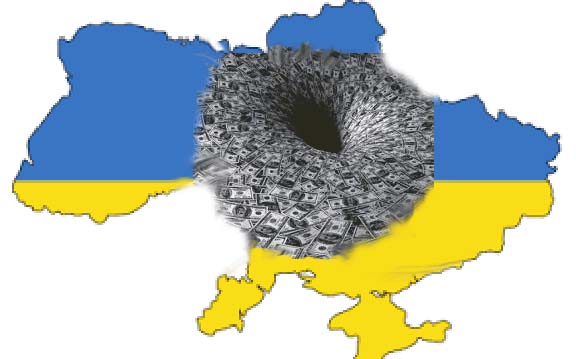
EU leaders have agreed to provide Ukraine with a €90 billion ($98 billion) loan backed by the bloc’s common budget, while shelving plans to use frozen Russian state assets amid legal and financial concerns and repeated warnings from Moscow.
The agreement was reached early on Friday after overnight talks at a summit in Brussels, as the EU sought to secure funding to continue the war in Ukraine over the next two years.
Under the deal, the EU will raise funds through loans guaranteed by its shared budget, abandoning proposals backed by some member states to leverage around €200 billion in Russian central bank assets frozen in the bloc.
The plan failed to win consensus, largely due to objections from Belgium, where most of the assets are held. Belgian officials warned of legal risks and the potential for retaliatory measures that would disproportionately affect the country.
Belgian Prime Minister Bart De Wever welcomed the outcome, saying it avoided significant legal and financial exposure.
“This was extremely risky and raised many unanswered questions,” De Wever told reporters. “Rationality has prevailed.”
Russia has repeatedly warned the EU against using its frozen assets, calling any such move illegal.
On Thursday, Russia’s central bank said it would seek compensation through a Russian arbitration court over the freezing and potential use of its assets held in EU financial institutions, including claims for lost profits.
“In connection with ongoing attempts by EU authorities to seize and illegally use the assets of the Bank of Russia, we declare that compensation will be sought,” the central bank said in a statement, adding that damages of up to $230 billion would be claimed from Euroclear, where most of the assets are held.
EU member states have agreed to maintain an indefinite freeze on Russian central bank assets imposed after the outbreak of the Ukraine war in 2022.
Kremlin spokesman Dmitry Peskov said on Friday that any expropriation of Russian assets would not go unanswered.
“All possible legal mechanisms will be used,” he was quoted by state news agency Tass as saying.
Separately, Russia warned against any deployment of European troops to Ukraine, saying such forces would be considered “legitimate targets.”
In a statement, Russia’s foreign ministry accused the EU of planning to “occupy” Ukraine rather than seeking a settlement.
Russian President Vladimir Putin has previously said foreign troops sent to Ukraine would be treated as legitimate military targets.
The developments come amid divisions within the EU over the war and its role in possible peace talks. French President Emmanuel Macron said Europe should engage directly with Moscow.
“It is in our interest as Europeans and Ukrainians to re-engage discussions,” Macron said, adding talks should begin “in the coming weeks.”
Ukrainian President Volodymyr Zelensky said Ukrainian and US delegations were due to hold further talks in Washington on Friday and Saturday, while US President Donald Trump urged Kiev to move quickly towards a deal.
The Kremlin said it was preparing contacts with Washington on a revised peace proposal.
Earlier talks in Berlin involving US, Ukrainian and European officials ended without a breakthrough, with Russia opposing NATO membership for Ukraine and Kiev rejecting territorial concessions.
By Alice Slater, World BEYOND War, October 8, 2025
It’s ironic that the arms control community is protesting the idea of resuming nuclear test detonations. The nuclear test detonations have never stopped.
Although Bill Clinton signed the Comprehensive Test Ban Treaty (CTBT) in 1996, he swiftly funded the “Stockpile Stewardship” program at the US nuclear weapons complex, allowing the Dr. Strangeloves in their labs to continue to perform laboratory tests as well as blowup plutonium with chemical explosives,1,000 feet below the desert floor at the Nevada Test Site on Western Shoshone holy land.
Since there was no chain reaction causing criticality, Clinton claimed these “sub-critical” tests were not nuclear tests and didn’t violate the new treaty. Of course, Russia and China swiftly followed the US lead; the Russians continued to test at Novaya Zemlya, and China at Lop Nor.
Indeed, it was the US’s refusal to promise that the Comprehensive Test Ban Treaty would be truly “comprehensive” that caused India and Pakistan to test their nuclear arsenals after the US rejected their pleas to include prohibitions against “sub-critical” and laboratory tests in the CTBT. Although Clinton signed the CTBT, the US, unlike Russia and China, never ratified it. Sadly, Russia announced during the Ukraine war that it was leaving the CTBT.
People of goodwill who are alarmed at new reports of proliferating nuclear weapons and would like to put the nuclear genie back in the bottle, stop the endless wars and huge budgets for useless atomic weapons, would do well to take some advice from Russia and China. On May 8, they issued a “Joint Statement by the Russian Federation and the People’s Republic of China on Global Strategic Stability” in the context of the 80th anniversary of the end of World War II.
They note “the serious challenges facing the international community” and lay out several recommendations that would strengthen “global strategic security”, acknowledging that “the destinies of all countries are interrelated” and urging that states not “seek to ensure their own security at the expense and to the detriment of the security of other states.”
U.S. “Golden Dome”
They proceed to explain a whole series of provocative actions that threaten the peace, including states deploying nuclear weapons and missiles outside their territories. They are particularly critical of the US “Golden Dome” program, which is expected to create a new battleground in space. Reiterating their pleas over many years to keep space for peace, they state the following:
The two sides oppose the attempts of individual countries to use outer space for armed confrontation. They will counter security policies and activities aimed at achieving military superiority, as well as at officially defining and using outer space as a ” warfighting domain”. The two Sides confirm the need to start negotiations on a legally binding instrument based on the Russian-Chinese draft of the treaty on the Prevention of the Placement of Weapons in Outer Space and of the Threat or Use of Force Against Outer Space Objects as soon as possible, that would provide fundamental and reliable guarantees for preventing an arms race in outer space, weaponization of outer space and the threat or use of force against outer space objects or with their help. To safeguard world peace, ensure equal and indivisible security for all, and improve the predictability and sustainability of the exploration and peaceful use of outer space by all States, the two Sides agree to promote on a global scale the international initiative/political commitment not to be the first to deploy weapons in outer space.
The US and its allies, sheltering under the US nuclear umbrella, would do well to take Russia and China up on their offers for making a more peaceful world! With Mother Earth sending cascading warnings about the need for nations to cooperate, we can ill afford business as usual. Time to change course!
*Alice Slater serves on the Boards of World BEYOND War and the Global Network Against Weapons and Nuclear Power in Space. She is an NGO representative at the UN for the Nuclear Age Peace Foundation.
Donald Trump imposed a naval blockade on Venezuela and admitted he wants to take its oil and give it to US corporations: “We had a lot of oil there. They threw our companies out, and we want it back”.
Donald Trump has openly admitted that he wants to take Venezuela’s oil. Top US officials have made it clear that this is a key reason for their war on the South American nation.
Trump declared an illegal naval blockade of Venezuela on December 16. The US government aims to prevent Venezuela from selling oil to China, to starve Caracas of export revenue.
The Trump administration is also illegally blocking Venezuela from importing crucial goods, including the light crude and chemicals needed to process and refine its own heavy crude.
The US goal is to bring about an extreme crisis in Venezuela — to “make the economy scream” — hoping it leads to regime change.
Trump says US corporations should control Venezuela’s oil
It’s just a blockade. We’re not going to let anybody going through that shouldn’t be going through.
You remember, they took all of our energy rights. They took all of our oil, from not that long ago. And we want it back.
Another reporter then asked Trump, “On Venezuela, sir, you mentioned getting land back from Venezuela. What land is that?”
The US president stated:
Getting land, oil rights, whatever we had. They took it away, because we had a president that maybe wasn’t watching. But they’re not going to do that. We want it back.
They took our oil rights. We had a lot of oil there. As you know, they threw our companies out, and we want it back.
Trump imposes a naval blockade on Venezuela
In these questions, the journalists were referencing a December 16 post on Trump’s website Truth Social, in which the US president announced “A TOTAL AND COMPLETE BLOCKADE OF ALL SANCTIONED OIL TANKERS going into, and out of, Venezuela”.
These US sanctions on Venezuela’s oil industry are unilateral coercive measures and do not have the approval of the UN Security Council, and are therefore illegal under international law………………………………………………………………………………………………………………………………………………….
US naval blockade cuts off Venezuelan exports and imports
The Trump administration launched a war against Venezuela in September. As of December 19, the US military had killed more than 100 people in strikes on boats in the Caribbean Sea and eastern Pacific Ocean.
Throughout this war, the Trump administration gradually escalated its aggressive tactics, seeking to destabilize and overthrow Venezuelan President Nicolás Maduro.
In December, the US government started to seize oil tankers off the coast of Venezuela, in blatant violation of international law.
When Trump was asked what the US government would do with the Venezuelan oil in these tankers, his response was, “We keep it”. This is piracy…………………………………………………………………………………….
The US government’s imperial strategy: “make the economy scream”
In other words, Trump is bringing back the infamous US imperial strategy known as “make the economy scream”. This phrase originated with Richard Nixon and Henry Kissinger………………………………………………………………………………………………..
US coup attempts, illegal sanctions, and economic war on Venezuela
This is precisely the imperial strategy that the US empire has used to try to topple Venezuela’s left-wing government, over more than two decades……………………………………………………………………………………………………………………………………
The coup attempt that Trump initiated in 2019 failed. So in his second term, under Secretary of State Marco Rubio, Trump launched another putsch.
UNITED NATIONS, Dec 19 2025 (IPS) – A long-standing proposal going back to 1996—to establish a single non-renewable seven-year term for the Secretary-General of the United Nations—has been resurrected by former UN Secretary-General Ban Ki-moon.
The original proposal was part of a study sponsored by the Dag Hammarskjold and Ford Foundations. According to the proposal, the seven-year term “ would give the SG the opportunity to undertake far-reaching plans free from undesirable pressures.”
Ban has said a single, nonrenewable seven-year term will strengthen the independence of the office. The current practice of two five-year terms, he said, leaves Secretaries-General “overly dependent on this Council’s Permanent Members for an extension.”
A former Secretary-General Boutros Boutros-Ghali of Egypt was deprived of a second five-year term when the US was the only permanent member state to veto his second term despite the fact that he received 14 of the 15 votes in the Security Council.
As the highest policy-making organ of the United Nations, and as the ultimate appointing body, the General Assembly should adopt a comprehensive resolution establishing a single seven-year term and all key features of an improved process of appointing the Secretary-General,” the study said.
The same seven-year term, according to the 1996 study authored by Sir Brian Urquhart and Erskine Childers, should also apply to heads of UN agencies and UN programmes.
The study was titled “A World in Need of Leadership: Tomorrow’s United Nations. A Fresh Appraisal.” Sir Brian was a former UN Under-Secretary-General (USG) for Special Political Affairs and Childers was a former Senior Advisor to the UN Director-General for Development and International Economic Affairs.
Ambassador Anwarul K. Chowdhury, former Under-Secretary-General and High Representative of the United Nations and Permanent Representative of Bangladesh to the UN, told IPS that, in keeping with the best interest of the operational credibility of the world’s most universal multilateral body with a global mandate, and as a conscientious UN insider, “I believe very strongly and quite comfortably that there is substantive merit in the long-standing, but surprisingly undervalued, proposal to establish a single non-renewable seven-year term of office for the Secretary-General of the United Nations.”
………………………………………………………………………………………….. Recounting his IPS op-ed, Ambassador Chowdhury said he had underscored that “Another important idea to ensure independence of the Secretary-General would be to make the office restricted to one term for each incumbent.”
The seven-year term is adequate for any leader worth the name to deliver positive results and show what can be achieved for any global institution. Any change in the tenure of office and in the re-election process will require the amendment of the UN Charter and therefore the concurrence of the P5, said Ambassador Chowdhury, initiator of the UNSCR 1325 as President of the UN Security Council in March 2000, Chairman of the UN General Assembly’s Main Committee on Administrative and Budgetary Matters and Founder of the Global Movement for The Cultural of Peace (GMCoP).
On 30 October 2023, in another op-ed in IPS, Ambassador Chowdhury recommended that “… in the future the Secretary-General would have only one term of seven years, as opposed to the current practice of automatically renewing the Secretary-General’s tenure for a second five-year term, without even evaluating his performance.”
Benjamin Netanyahu is blaming the attack at Bondi Beach on Australia’s support for Palestinian statehood. He conflates Jewish safety with Zionism to garner support for Israel, but in doing so, he enlists all Jews as agents of Palestinian oppression.
On September 21, Australia officially recognized the State of Palestine. This recognition coincided with that of several other Western countries, including France, Canada, and the United Kingdom. This is, of course, a problem for an Israeli government that “flatly rejects the establishment of a Palestinian Arab state west of the Jordan River.”
So what better than a massacre of Jews on Hanukkah to undermine this effort?
At an Israeli government meeting following the Bondi Beach massacre, Netanyahu admonished the Australian government and its Prime Minister, Anthony Albanese, for its supposed role. This rhetorical attack aimed not only to delegitimize support for Palestinian statehood but also to garner support for the continuing genocide in Gaza. It does not seem to matter that the shooters, a father and a son of Pakistani Muslim background, are reported to have been inspired by ISIS and not a Palestinian cause as such. Israel never misses an opportunity to incite against Palestinians.
“On August 17th, about four months ago, I sent Prime Minister Albanese of Australia a letter, in which I gave him warning, that the Australian government’s policy was promoting and encouraging antisemitism in Australia. I wrote: ‘Your call for a Palestinian state pours fuel on the antisemitic fire. It rewards Hamas terrorists. It emboldens those who menace Australian Jews, and encourages the Jew hatred now stalking your streets. Antisemitism is a cancer. It spreads when leaders stay silent. It retreats when leaders act. I call upon you to replace weakness with action, appeasement with resolve’.
Instead, Prime Minister, you replaced weakness with weakness, and appeasement with more appeasement. Your government did nothing to stop the spread of antisemitism in Australia, you did nothing to curb the cancer cells that were growing inside your country, you took no action, you let the disease spread, and the result is the horrific attacks on Jews we saw today.”
So, following the Bondi Beach attack, Netanyahu is basically saying, “I told you so.”
The “appeasement” narrative is one that Netanyahu likes a lot, because it alludes to the appeasement policy of Britain towards Nazi Germany under PM Neville Chamberlain, who sought at the time to play soft with Hitler. The analogy turns Palestinians into Nazis, and those who seek to ‘appease’ them, weaklings and antisemites. For Netanyahu, antisemitism is a cancer, and who embodies it? Palestinians.
Netanyahu continued to apply pressure on Albanese, and in turn, any other leaders in the West who are considering supporting the Palestinians:
“We saw an action of a brave man, turns out a Muslim brave man [Netanyahu first claimed he was Jewish], that stopped one of these terrorists from killing innocent Jews. But it requires the action of your government, which you’re not taking, and you have to, because history will not forgive hesitation and weakness – it will honor action and strength. That’s what Israel expects of each of your governments in the West, and elsewhere. Because the disease spreads, and it will consume you as well. But we are worrying right now about our people, our safety, and we do not remain silent”.
And he then expanded his analogy to lump the Bondi Beach attack in with recent news from Syria, Gaza, and Lebanon:
“We fight those who try to annihilate us. They’re not only trying to annihilate us, they attack us because they attack the West. In Syria, we saw yesterday two American soldiers killed, and one American interpreter killed as well, killed because they represent our common culture. Now as a result of this, Secretary of War Pete Hegseth said the following. He said ‘let it be known, that if you target Americans anywhere in the world, you will spend the rest of your brief, anxious life, knowing the United States will hunt you, find you, and ruthlessly kill you’. We send our condolences to the people of America, and I want to say that our policy is exactly that policy. That’s why those who target Israelis, target our soldiers, try to kill them, or try to hurt them and wound them, as happened in Gaza yesterday – we take action. They will spend the rest of their brief, anxious lives knowing that Israel will hunt them, find them, and ruthlessly dispose of them. That is American policy, this is Israel’s policy. It’s our policy in Gaza, Lebanon, anywhere around us. We do not sit by and let these killers kill us.”
This is thus also a message to the U.S., we are one in our imperialist alliance. Netanyahu is signaling to Albanese, Australia, and anyone else who is thinking about aligning with the Palestinians in any form or shape, that they will be aligning with those who seek to annihilate Jews.
Netanyahu is playing an all-or-nothing game, and it’s forcing governments that seek to be liberal to choose a side – with Israel, or with the Palestinians, since Israel is so clearly bent on their destruction. Albanese was asked about Netanyahu’s accusations on ABC. Sarah Ferguson asked:
“Let me just talk to you about antisemitism. I want to bring up what Prime Minister Netanyahu said today. He singled you out personally, he said, for ‘pouring fuel on the antisemitism fire by recognising a Palestinian State’. Do you accept any link between that recognition and the massacre in Bondi?”
Albanese: “No, I don’t. And overwhelmingly, most of the world recognises a two-state solution as being the way forward in the Middle East.”
Albanese is clearly trying not to respond with fury to Netanyahu’s demeaning provocations, but Netanyahu is seeking to divide the world, are you with us or against us – and with us is against the Palestinians.
And it is exactly this rhetoric from Israel that arguably fuels antisemitism, or at least anti-Jewish animus.
This is because it seems impossible to protect Palestinians or even offer symbolic support for their national aspirations without being labeled a coward, an appeaser, or an antisemite seeking the destruction of the Jewish people. When these accusations set the terms, many feel that proving their worth against Israel’s claims is pointless. This dynamic also sustains hostility toward the Jewish community.
In 2015, after an attack in France on a Jewish supermarket, Netanyahu said to French Jews: “Israel is your home”. It caused considerable discontent among the Jewish community at the time, which is probably why he didn’t repeat it now. But he’s still posing as the strong leader of all Jews, whom the “weak” leaders should take example from, as it were. When such self-appointed ‘Jewish leaders’ conflate Judaism with Zionism and insist on unquestioning support for Palestinian destruction as proof of solidarity, people will often side with humanity—supporting those facing genocide, not those perpetrating it—and grow resentful of anyone demanding support for such actions.
We are already seeing the Zionist exploitation of the massacre to target Palestine solidarity in Australia, as well as internationally. We will likely also see a further crackdown on Palestinians from the river to the sea.
Following the massacre, mourners descended upon Bondi Beach to remember the victims. Jews waving Israeli flags were permitted, while anti-Zionist Jews wearing a kuffiyeh were distanced by the police. It was a message to all that the lessons drawn from this will likely be the Zionist ones.
Many are now once again listening to Netanyahu’s violent incitement, as if he weren’t wanted by the ICC for crimes against humanity. He has been granted moral authority once again, even if for a fleeting moment, as head of the self-proclaimed Jewish state. He is using it to berate the world about how to be on the right side of history, while actively commanding a genocide.
Gaza is being carved up. Palestinians are being written out.
As governments and billionaires design a “new Gaza,” most corporate media treat it as a technical project, not a colonial mandate that denies Palestinians the right to govern themselves. The basic fact of Palestinian self-determination is pushed to the margins or erased
Trying to accelerate Ukraine’s entry into the European Union makes sense as part of the U.S.-sponsored efforts to end the war with Russia. But there are two big obstacles to this happening by 2027: Ukraine isn’t ready, and Europe can’t afford it.
As part of ongoing talks to end the war in Ukraine, the Trump administration had advanced the idea that Ukraine be admitted into the European Union by 2027. On the surface, this appears a practical compromise, given Ukrainian President Volodymyr Zelensky’s concession that Ukraine will drop its aspiration to join NATO.
However, the idea of accelerated entry for Ukraine has not been met with widespread enthusiasm in Europe itself. Diplomats in Brussels dismissed the notion as “nonsense: There needs to be an appetite for enlargement that isn’t there.”
There are two big problems with Ukraine’s rapid accession, the first being readiness and the second cost.
Firstly, Ukraine is nowhere near ready to meet the EU’s exacting requirements for membership. The process of joining the bloc is long and complex. At the start of November, in presenting its enlargement report, the EU said that it could admit new members as early as 2030, with Montenegro the most advanced in negotiations.
After it was formally granted candidate status in June 2022, Ukraine this year passed screening of its progress against the various chapters of the acquis (regulations) that it needs to pass before accession is granted. However, the EU enlargement report on Ukraine downgraded the country’s status from A+ to B, largely in light of the corruption scandal that first erupted in the summer and that rumbles on today.
The report indicated that Ukraine had made good progress on just 11 of the 33 chapters required for accession. It has made limited progress on 7 of the chapters, including on corruption, public procurement, company law and competition policy. It has yet to finalize negotiations on any of the chapters. And, of course, with war still raging, it is incredibly difficult to both agree and put in place the reforms needed to align itself with EU rules and standards. So, even if the war ended by Christmas, which despite the progress still appears optimistic, it would be unlikely to do all of the necessary work in the space of a year to be ready for accession.
The second, possibly more insurmountable challenge is cost.
In July, German Chancellor Friedrich Merz commented that Ukraine was unlikely to join before 2034. The EU has already formalized its next seven year budget through to that time, coming in at $2.35 trillion.
As I pointed out for Responsible Statecraft last year, Ukrainian membership of the EU would come with an enormous price tag……………………………………………. So the economic cost of delivering Ukrainian membership may not be politically viable any time soon, and certainly not before 2034, as the German premier has indicated.
……………………………………With practically all Russia-Ukraine economic ties severed over the past decade, Russian President Vladimir Putin has dropped his opposition to EU membership for Ukraine. An end to the war would allow Ukraine, finally, to start to reform and rebuild its bankrupt economy, and EU membership could accelerate that process.
That’s why Zelensky’s decision to drop the aspiration to NATO membership is such an important stepping stone. It has been abundantly clear since the start of the war that Russia’s NATO red line will never change. Russia has verbalized its opposition at least since Putin’s Munich Security Conference speech in 2007, when he said that NATO expansion “represents a serious provocation that reduces the level of mutual trust.”
The New Strategic Arms Reduction Treaty, or the New START Agreement, is set to expire on Thursday, February 5th, 2026 – in less than 50 days. The New START Agreement is the last remaining nuclear arms control treaty between the United States and the Russian Federation.
It was signed in 2010. It limits the number of strategic long-term nuclear warheads and launchers that the United States and Russia can deploy.
And, without any New START Agreement, there would be no limits on United States and Russian nuclear weapons stockpiles.
The earth has moved under our feet, and our massive security gamble is crumbling, but the government pretends nothing has happened, writes Michael Pascoe.
Tits on a bull, the Joint Standing Committee on Foreign Affairs, Defence and Trade and the Parliamentary Joint Committee on Intelligence and Security, all same same. The former committee is a random mix of odds and sods – even Ralph Babet – as could be assembled, the latter stacked with fans of last century’s security stories, devotees of Pax Americana, fed and watered by the local and American security establishment
“to think no further than their outdated Anglosphere prejudices.“
This was the year the earth moved for Australia’s security, while our timid government kept its head under the pillows, desperately hoping it would not have to face up to the changes and challenges, praying its political strategy of copying coalition policy would help keep it safe at the polls. What’s Labor’s main security concern? How it looks in khaki on election day.
Can the opposition come up with a more pro-American defence spokesman than Richard Marles? No. Labor remains safe on the security right flank that was traditionally Liberal high ground.
With the Albanese/Marles/Wong government devoted to exerting discipline, quashing dissent and going all the way with Donald J, Australia’s national security future goes unexamined while its current blueprint burns.
Strategic failure
We have proven ourselves to be rich in the greatest strategic failure: lacking imagination. Our defence establishment – politicians, spooks, bureaucrats, military, salespeople, foreign agents – could not imagine the change that has been foisted on them, could not conceive any future for Australia other than one embedded in the American military armpit,
can’t grasp that the game has irreversibly changed.
Now, as America changes faster than anyone dared guess, we pursue the path of failure that comes from not believing what is happening. Having explicitly bet our strategic future on America always protecting us, that that is our only hope for survival, it is too painful for the establishment to face up to America withdrawing, to being proven wrong.
Australia Deputy Sheriff
There have been rare and largely ignored voices forecasting what is happening under Trump. A decade ago, Geoff Raby warned of the US eventually withdrawing from Western Pacific domination, leaving Deputy Dawg Australia an orphaned shag on a rock. Hugh White, more recently, has made the case that America is in retreat to its core interests.
That has now been spelt out in the Trump administration’s National Security Statement and by its “Secretary for War” Pete Hegseth. America is to be about the Americas, with Europe left to itself, or Russia, and China’s military rise acknowledged and accepted in Asia.
A new reality
Crikey’s Bernard Keane summarised the new reality ($) while highlighting local mainstream media’s failure to examine it, citing a speech last weekend in which Hegseth said the quiet bits out loud:
“Our interests in the Indo-Pacific are significant, but also scoped and reasonable … this includes the ability for us, along with allies, to be postured strongly enough in the Indo-Pacific to balance China’s growing power.
“President Trump and this administration seek a stable peace, fair trade and respectful relations with China…this involves respecting the historic military buildup they are undertaking.”
Keane concluded Hegseth had said the unthinkable: the US aims merely to be present in the Pacific, not to dominate it. It merely seeks to balance China’s power, not defeat it. And it “respects” China’s military build-up.
“Imagine the absolute uproar from the media — and not just from News Corp — if Anthony Albanese had talked about ‘respecting’ China’s military build-up,” Keane posited.
Like the US blatantly committing war crimes and now piracy off the Venezuelan coast, America’s declared security strategy is an embarrassment Australia doesn’t want to see. This is the America which preferences Russia over Europe.
Not “just a phase”
The optimistic view within the defence establishment clinging to American coattails is that Trump, too, will pass and everything will get back to just the way it was.
It won’t. That’s not the way it happens when the world changes. Much of MAGA will prove sticky even if the Democrats reclaim the White House and Congress.
“Having given ground, it’s very difficult to reclaim it.
Not much of Trump 1.0 was overturned by Biden. The tax cuts and Chinese tariffs remained. The domestic chaos created by Trump will be more than enough for a Democrat administration to wrestle with, if there is a Democrat administration next.
America is set for so many problems by 2028, China’s role in Asia won’t register.
In little ol’ Australia, we’ll watch the cricket and slumber through summer. Prime Minister Albanese’s interview on the final Insiders program for 2025 was typical, being purely domestic. A minister’s expensive airfares was a major issue, American war crimes and the national strategic statement Russia applauded didn’t rate a mention.
And with an iron grip on Labor Party members and an irrelevant opposition, Albanese/Marles/Wong will continue to treat the somnambulant Australian public with contempt, refusing to be open about our AUKUS fantasy,
“refusing to risk a public inquiry,
refusing to tell us what more the US is demanding of its South Pacific vassal.
Oh well, we can concentrate on the cricket, ignore our complicity in piracy and war crimes and just keep handing over the billion-dollar cheque
Michael Pascoe is an independent journalist and commentator with five decades of experience here and abroad in print, broadcast and online journalism. His book, The Summertime of Our Dreams, is published by Ultimo Press.
By Tom Dunlop, UK Defence Journal, December 17, 2025
A disagreement over defence innovation and reliance on US technology surfaced in the House of Commons during Defence questions.
SNP MP Dave Doogan argued that what he described as an “America-first posture” is harming UK defence innovation, particularly in relation to the nuclear deterrent. He said the system relies heavily on US technology, citing components including “fusing, firing, arming, neutron initiators, the gas transfer system and the Mark 4 aeroshell.” Doogan also criticised plans to buy additional F-35 aircraft for what he characterised as “US-manufactured gravity-delivered nuclear weapons.”
He questioned why the government appeared aligned with US priorities while, in his view, overlooking European initiatives. “President Trump will put America first, but it is difficult to understand why this Labour Government seem keen to do the same, while spurning the innovation opportunity of the £130 billion SAFE programme in the EU,” Doogan told the House……………https://ukdefencejournal.org.uk/snp-says-uk-nuclear-deterrent-is-america-first/
How US military and corporate power reshaped Australian sovereignty, limited democratic control, and constrained independent decision-making.
Introduction: When Control Slips Quietly
Many Australians feel that major national decisions are no longer made entirely in Canberra. Defence policy, foreign affairs, intelligence cooperation, and even economic priorities increasingly align with United States interests, often without meaningful public debate.
At the centre of this shift is Australian sovereignty, the ability of citizens, through democratic institutions, to decide the nation’s direction. This erosion did not occur through invasion or emergency powers. It occurred gradually, through treaties, trade agreements, military integration, and political choices made over decades.
The Origins of US Military Influence in Australia
ANZUS and the Post-War Security Mindset
The 1951 ANZUS Treaty embedded Australia within a US-led security framework. While often described as a mutual defence pact, it imposes no binding obligation on the United States to defend Australia.
Over time, strategic alignment hardened into an assumption. Independent defence thinking was increasingly treated as unrealistic.
Pine Gap and Intelligence Dependency
Pine Gap is often described as a joint facility. In practice, it primarily supports US intelligence, surveillance, and targeting systems. Australia receives help from access, but not operational control. This dependency discourages dissent. Restricting operations risks exclusion from the intelligence systems Australia now relies upon.
US Marines now rotate continuously through Darwin. Australian bases support US operations across the Indo-Pacific. Command systems and logistics are increasingly integrated. These changes occurred with limited parliamentary scrutiny, shifting Australia from ally to forward operating platform.
AUKUS and Strategic Lock-In
AUKUS commits Australia to decades of nuclear submarine dependency and foreign technology control. Decisions on deployment and escalation often fall outside democratic oversight. This significantly weakens independent defence policy.
Foreign Influence in Australian Politics and the Economy
US corporations dominate defence procurement, digital platforms, energy services, and critical infrastructure. Privatisation transferred public assets into private, often foreign-owned, hands.
Trade agreements such as AUSFTA further limit regulatory freedom, allowing corporations to challenge laws designed to protect the public interest.Political Leadership, Capability, and Accountability
Successive governments approved deeper military and corporate integration with little public mandate. Many ministers responsible for defence and trade have limited experience outside party politics or corporate-aligned advisory roles. The revolving door between politics, lobbying, and defence contracting undermines independence and accountability.
Politics Ebook
Is This Treason or Democratic Breakdown?
Treason under Australian law requires intent to assist an enemy during wartime. That threshold is not met.
However, legality is different from legitimacy. What has occurred reflects dereliction of duty, erosion of democratic consent, and policy capture by foreign and corporate power.
Why Governments Now Fear Change
Challenging entrenched US dominance risks diplomatic pressure, intelligence withdrawal, capital flight, and media backlash. As a result, even modest reforms are framed as security threats. This is structural dependence, not conspiracy.
Australia’s Dollar Sovereignty and Defence Independence
Australia issues its own currency. It cannot run out of Australian dollars. Yet, governments behave as though public investment depends on foreign approval or balanced budgets.
This misunderstanding weakens Australia’s defence independence. A currency-sovereign nation can fund domestic industry, defence capability, infrastructure, and diplomacy using public money.
The EU has approved a $160 billion interest-free loan to Ukraine as the country verges on bankruptcy amid its war with Russia.
Europe had planned to use frozen Russian assets — mostly in Belgium — to fund its ally, but failed to bridge differences with Belgium, which deemed it legally risky.
What’s next?
The EU says it reserves the right to use the frozen assets to repay the loan if Russia fails to pay reparations.
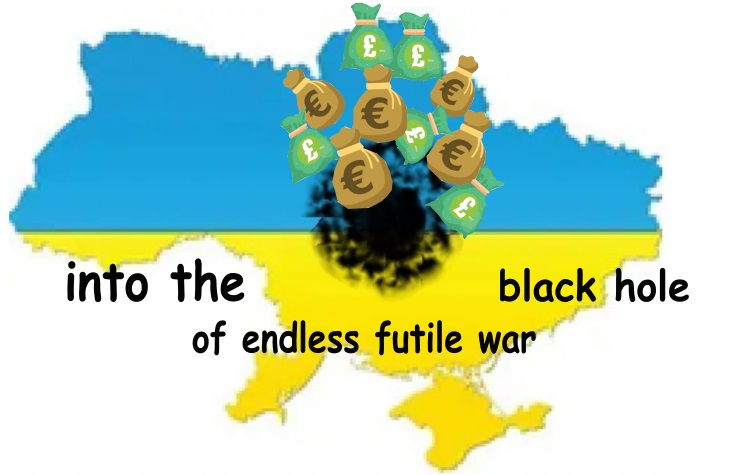
European Union leaders have agreed to provide a massive interest-free loan to Ukraine to meet its military and economic needs for the next two years, but they failed to agree to use frozen Russian assets to raise the funds.
After almost four years of war, the International Monetary Fund estimates Ukraine will need 137 billion euros ($242 billion) in 2026 and 2027.
Kyiv is on the verge of bankruptcy and desperately needs the money by the Northern Hemisphere spring.
The plan had been to use some of the $372 billion worth of Russian assets that are frozen in Europe, mostly in Belgium.
However, the EU failed to bridge differences with Belgium that would have allowed it to use the assets.
The decision came after EU leaders worked deep into Thursday night to reassure Belgium they would provide guarantees to protect it from Russian retaliation if it backed the “reparations loan” plan for Ukraine.
But in the end, the leaders did not use that option, and as the talks bogged down, they eventually opted to borrow the money on capital markets.
“We have a deal. Decision to provide 90 billion euros ($159 billion) of support to Ukraine for 2026–27 approved. We committed, we delivered,” EU Council president Antonio Costa said in a post on social media on Friday.
“The money would be borrowed by the EU on capital markets and underwritten by the 27-nation bloc’s seven-year budget.”
French President Emmanuel Macron described the deal agreed to as a major advance, saying this option “was the most realistic and practical way” to fund Ukraine and its war efforts.
He added that the deal included a mechanism to protect three countries — Hungary, Slovakia and the Czech Republic — from any financial fallout.
German Chancellor Friedrich Merz hailed the announcement.
“The financial package for Ukraine has been finalised,” he said in a statement, noting that “Ukraine is granted a zero-interest loan.”
“These funds are sufficient to cover the military and budgetary needs of Ukraine for the two years to come.”
Mr Merz said the frozen assets would remain blocked until Russia paid war reparations to Ukraine. Ukrainian President Volodymyr Zelenskyy has said that would cost more than $1.06 trillion.
“If Russia does not pay reparations, we will — in full accordance with international law — make use of Russian immobilised assets for paying back the loan,” Merz said.
Not all countries agreed to the loan package.
Hungary, Slovakia and the Czech Republic refused to support Ukraine and opposed it, but a deal was reached in which they did not block the package and were promised protection from any financial fallout.
Hungarian Prime Minister Viktor Orbán, who is Russian President Vladimir Putin’s closest ally in Europe and who describes himself as a peacemaker, said: “I would not like a European Union in war.”
“To give money means war,” he said.
Mr Orbán also described the rejected plan to use the frozen Russian assets as a “dead end”.
Polish Prime Minister Donald Tusk warned early on Thursday that it would be a case of sending “either money today or blood tomorrow” to help Ukraine.
Russia seeks to block mobilisation of assets
Ukrainian President Volodymyr Zelenskyy had appealed for a quick decision to keep Ukraine afloat in the new year.
Some $372 billion worth of Russian assets are frozen in Europe, most of them in the Belgian financial clearing house Euroclear.
Belgium had objected to the loan plan, calling it legally risky and warning that it could harm Euroclear’s business.
The plan to use frozen Russian assets got bogged down as Belgian Prime Minister Bart De Wever rejected the scheme as legally risky, and warned that it could harm the business of Euroclear.
Brussels was rattled last Friday when Russia’s Central Bank launched a lawsuit against Euroclear to prevent any loan being provided to Ukraine with frozen Russian funds.
“For me, the reparations loan was not a good idea,” De Wever told reporters after the meeting.
“When we explained the text again, there were so many questions that I said, I told you so, I told you so. There are a lot of loose ends. And if you start pulling at the loose ends in the strings, the thing collapses.
“We avoided stepping into a precedent that risks undermining legal certainty worldwide. We safeguarded the principle that Europe respects law, even when it is hard, even when we are under pressure,” he said, adding that the EU “delivered a strong political signal. Europe stands behind Ukraine.”
But the EU Council president said: “The union reserves its right to make use of the immobilised assets to repay this loan.”
on December 10, the unelected president, Volodymyr Zelensky, convened a videoconference with Scott Bessent, Jared Kushner (not as a negotiator in Moscow, but as a director of the Affinity Partners fund), and Larry Fink (a director of the BlackRock fund and already the owner of a large portion of the farmland) [ 6 ] . The purpose was clearly to assess what could be purchased in exchange for the rare earths. What was unthinkable ten months ago suddenly became possible.
Peace negotiations in Ukraine are hampered by the Zelensky administration’s resistance. The administration is attempting to buy time,first through legal means, then military action, and finally, political maneuvering. However, the contacts made suggest what this peace will look like.
Peace negotiations between Ukraine and Russia are dragging on. Clearly, the Russian side, confident of victory, intends to liberate what remains of the Donbas as soon as possible, while the Ukrainian side refuses to concede anything.
Europeans from the EU and the UK are holding numerous meetings, almost one a day, with the sole obsession of continuing the war, with or without the United States.
Two new events have changed the game:Washington is considering leaving NATO and the Ukrainians are accepting the idea of selling their country.
Washington and NATO
On December 1st, a secret videoconference was held with the participation of the French (Emmanuel Macron) and Finnish (Alexander Stubb) presidents, the German Chancellor (Friedrich Merz), the Polish (Donald Tusk), Italian (Giorgia Meloni), Danish (Mette Frederiksen) and Norwegian (Jonas Gahr Støre) prime ministers, the NATO Secretary General (Mark Rutte), the President of the European Commission (Ursula von der Leyen) and the President of the European Council (António Costa).
According to Der Spiegel, which obtained access to the meeting’s minutes, the NATO Secretary General stated that he agreed with the Finnish President and that Europeans should be wary of the peace agreement in Ukraine that President Donald Trump’s special envoys, Steve Witkoff and Jared Kushner, were negotiating [ 1 ] .
This is the first time a sitting NATO Secretary General has dared to openly criticize a sitting US President.
The National Security Strategy, published on December 4th by the White House, mentions NATO five times.However, it is no longer a crucial alliance for the United States, given that President Trump has signaled the end of the “American Empire.” Washington is too preoccupied with its $33 trillion debt to dedicate itself to the defense of Western Europe. The document therefore merely notes that the member states of the Atlantic Alliance will have to ensure their own security by allocating 5% of their gross domestic product (GDP) to it — a far cry from their current level of spending. It also notes that the alliance is not expected to expand further [ 2 ] .
On December 9, five days later, a Republican representative, Thomas Massie (Kentucky), introduced a bill (HR 6508) aimed at withdrawing the United States from NATO. This bill was sent to the Foreign Affairs Committee on December 12 [ 3 ] . This was the first time this issue would be addressed in Congress.
It is too early to conclude anything, but we must already note that there is a current opposed to the Atlantic alliance within the Trump supporters and that European states are awarethat they will not be able to ensure both their own national defense and attack the Russian Federation.
Privately, President Trump’s aides say he will withdraw from the alliance by mid-2027;a deadline that could be brought forward.
The leaders of the European Union are well aware of this.
The people who will pay for this are not sitting in Commission buildings, they are the ones whose pensions, currencies, and living standards are being quietly offered up to preserve a collapsing illusion of power
Italy’s decision to stand with Belgium against the confiscation of Russian sovereign assets is not a diplomatic footnote. It is a moment of clarity breaking through the fog of performative morality that has engulfed Brussels.
Strip away the slogans and the truth is unavoidable: the seizure of Russian sovereign reserves will not change the course of the war in Ukraine by a single inch.
This is not about funding Ukraine, it is about whether sovereign property still exists in a Western financial system that has quietly replaced law with cult-like obedience.
That is why panic has entered the room.
The European Commission wants to pretend this is a clever workaround, a one-off, an emergency measure wrapped in legal contortions and moral posturing masquerading as hysteria. But finance does not function on intentions, rage, or narratives. It functions on precedent, trust, and enforceability. And once that trust is broken, it does not return.
The modern global financial system rests on a single, unglamorous principle, that State assets held in foreign jurisdictions are legally immune from political confiscation.
That principle underwrites reserve currencies, correspondent banking, sovereign debt markets, and cross-border investment. It is why central banks like Russia’s (once) accepted euros instead of bullion shipped under armed guard. It is why settlement systems like Euroclear exist at all.
Once that rule is broken, capital does not debate. It reprices risk instantly and it leaves.
Confiscation sends a message to every country outside the Western political orbit: your savings are safe only as long as you remain politically compliant.
That is not a rules-based order. It is a selectively enforced order whose rules change the moment compliance ends. What we have is a compliance cartel, enforcing law upward and punishment downward, depending on who obeys and who resists.
Belgium’s fear is not legalistic. It is actuarial. Hosting Euroclear means hosting systemic risk. If Russia or any future target successfully challenges the seizure, Belgium could be exposed to claims that dwarf the sums being discussed. Belgium is therefore right to be skeptical of Europe’s promise to underwrite such colossal risk, given the bloc’s now shattered credibility. No serious financial actor would treat such guarantees as reliable.
Italy’s hesitation is not ideological. It is mathematical. With one of Europe’s heaviest debt burdens, Rome understands what happens when markets begin questioning the neutrality of reserve currencies and custodians.
Neither country suddenly developed sympathy for Moscow. They simply did the arithmetic before the slogans.
Paris and London, meanwhile, thunder publicly while quietly insulating their own commercial banks’ exposure to Russian sovereign assets, exposure measured not in rhetoric, but in tens of billions. French financial institutions alone hold an estimated €15-20 billion, while UK-linked banks and custodial structures account for roughly £20-25 billion, much of it routed through London’s clearing and custody ecosystem rather than sitting on government balance sheets.
This hypocrisy and cowardice are not accidental. Paris and London sit at the heart of global custodial banking, derivatives clearing, and FX settlement, nodes embedded deep within the plumbing of global finance. Retaliatory seizures or accelerated capital flight would not be symbolic for them; they would be catastrophic.
So the burden is shifted outward. Smaller states are expected to absorb systemic risk while core financial centers preserve deniability, play a double game, and posture as virtuous.
This is anything but European solidarity. It is class defense at the international level.
The increasingly shrill insistence from the Eurocrats that the assets must be seized betrays something far more revealing than hysteria or resolve: the unmasking of a project sustained by delusion and Russophobic dogma, in which moral certainty did not arise from conviction, but functioned as a mechanism for managing cognitive dissonance, a means of avoiding realities that any serious strategy would already have been forced to confront.
The European Commission must find other ways to continue aiding the Kiev regime, Czech Prime Minister Andrej Babis has said.
The Czech Republic will not take part in any financial support of Ukraine, Prime Minister Andrej Babis has said, adding that the bloc must find other ways to continue funding Kiev.
The right-wing Euroskeptic politician, who was appointed prime minister earlier this week, campaigned on prioritizing domestic issues. He has long criticized the extensive aid to Kiev under his predecessor Petr Fiala, whose cabinet launched a major international munitions procurement scheme for Ukraine.
In a video posted to his official Facebook page on Saturday, Babis said he had spoken with Belgian Prime Minister Bart De Wever, a vocal opponent of the European Commission’s plan to fund Kiev through a so-called “reparations loan” tied to about $200 billion in Russian assets frozen in the bloc.
The Commission aims to reach a deal on the scheme next week, but De Wever – whose country hosts the financial clearinghouse Euroclear, where the bulk of the assets are held – has called it tantamount to “stealing” Russian money.
“I agree with him. The European Commission must find other ways to finance Ukraine,” Babis said.
Belgium, fearing legal retaliation from Russia, has demanded guarantees from other EU members to share the burden if the funds must eventually be returned. According to Czech media, this could cost Prague about $4.3 billion. Babis said the country simply cannot afford it.
“We, as the Czech Republic, need money for Czech citizens, and we don’t have money for other countries… we’re not going to guarantee anything for [the Commission], and we’re not going to give money either, because the coffers are simply empty,” he stated.
In what is seen as the first step toward advancing the “reparations loan” scheme, the bloc on Friday approved controversial legislation replacing the six-month consensus renewal of the Russian assets freeze with a longer-term arrangement that could shield it from vetoes by opposing states. The move has raised concerns about undermining the EU’s core principle that major foreign policy and financial decisions require unanimous consent, with Hungarian Prime Minister Viktor Orban condemning it as “unlawful.”
Multiple EU states have raised concerns over the loan scheme, citing legal and financial risks. Slovak Prime Minister Robert Fico on Friday warned that further funding for Kiev would only prolong the conflict.
Moscow has condemned the “reparations loan” plan as illegal, with Kremlin spokesman Dmitry Peskov calling it “a grand scam.”
Kiev could receive assurances as part of a peace deal if it agrees to territorial concessions, the report says
The administration of US President Donald Trump is willing to offer Kiev NATO-style and Congress-approved security guarantees if it agrees on territorial concessions to Russia, Axios reported on Saturday, citing sources. Ukraine has rejected any concessions and has called instead for a ceasefire – a proposal Moscow has dismissed as a ploy to win time and prolong the conflict.
The outlet cited unnamed US officials as saying that negotiations on security guarantees from the US and EU nations to Ukraine had made “significant progress.” An Axios source claimed that Washington wanted a guarantee “that will not be a blank check … but will be strong enough,” adding: “We are willing to send it to Congress to vote on it.”
The package proposal, the official continued, would entail territorial concessions, with Ukraine “retaining sovereignty over about 80% of its territory” and receiving “the biggest and strongest security guarantee it has ever got,” alongside a “very significant prosperity package.”
Russian Foreign Minister Sergey Lavrov has said that Moscow is open to discussing a security guarantees framework on condition that it will not be aimed at Russia. He added that Moscow believes Washington to be “genuinely interested in a fair settlement that… safeguards the legitimate interests of all parties.”
The Axios report also said the US viewed as “progress” recent remarks by Ukrainian leader Vladimir Zelensky suggesting Ukraine could hold a referendum on territorial concessions, particularly those concerning Donbass.
Moscow, however, has stressed that Donbass – which overwhelmingly voted to join Russia in 2022 – is sovereign Russian territory, and Ukrainian troops will be pushed out of the region one way or the other. It also suggested that Zelensky’s referendum play was a ploy to prolong the conflict and gain time for patching up the Ukrainian army.
Moscow insists that a sustainable peace could only be reached if Ukraine commits to staying out of NATO, demilitarization and denazification, limits the size of its army, and recognizes the new territorial reality on the ground.









 nuclear-news