Hiroshima, Nagasaki urge Japanese government to uphold non-nuclear principles
10-Jan-2026 CGTN. https://news.cgtn.com/news/2026-01-10/Hiroshima-Nagasaki-call-on-Japan-to-uphold-non-nuclear-principles-1JOBGW72YxO/p.html
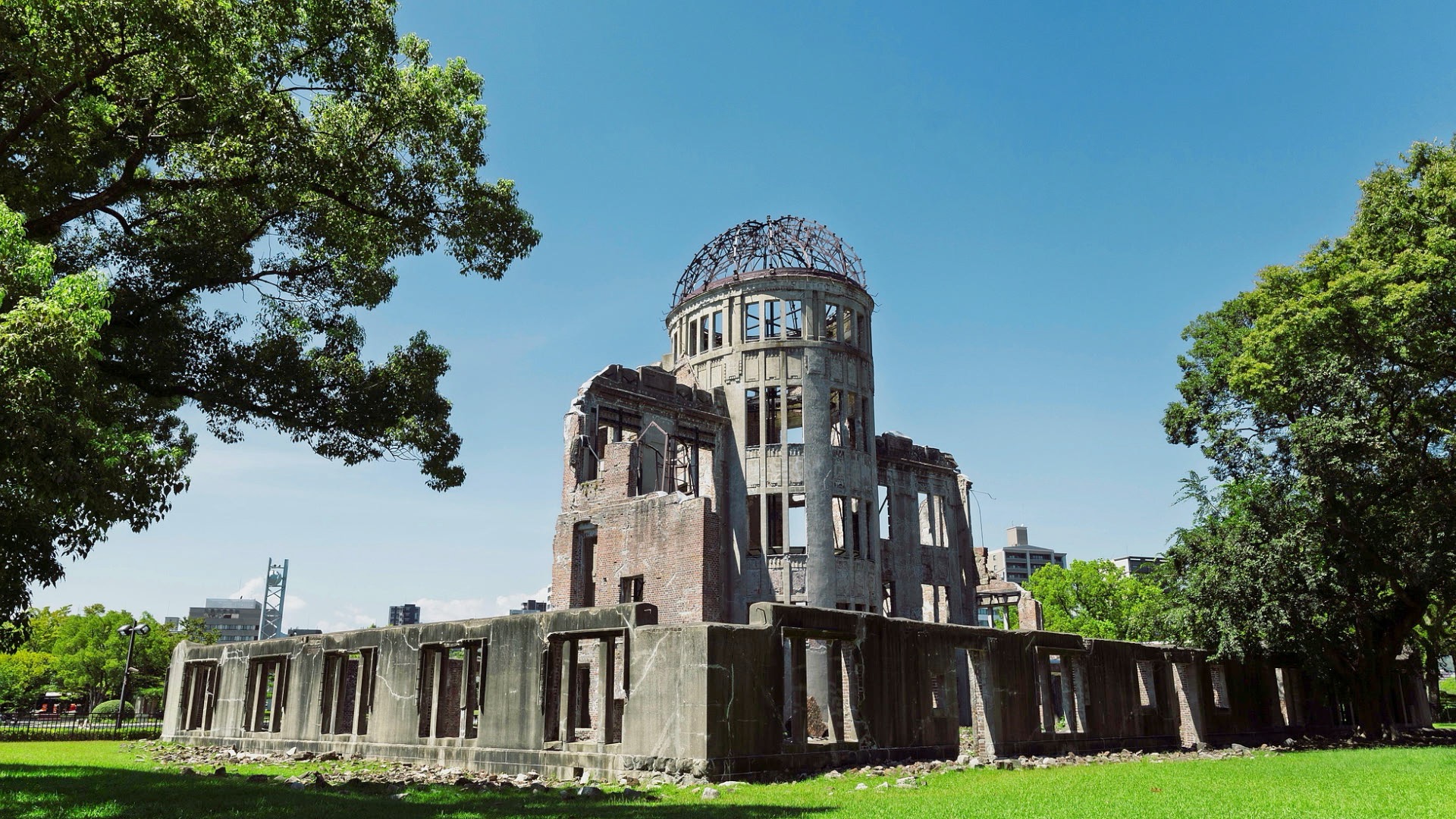
The city assemblies of Hiroshima and Nagasaki have adopted statements urging the Japanese government to adhere to the country’s Three Non-Nuclear Principles, Kyodo News reported.
The Hiroshima City Assembly unanimously adopted its statement on Friday, pointing out that the ruling party’s attempt to revise the non-nuclear principles has caused concern, and strongly urging the Japanese government to take the feelings of people in the atomic-bombed cities seriously and to uphold the Three Non-Nuclear Principles, the report said.
The Nagasaki City Assembly passed its statement on Thursday by a majority vote, noting that successive Japanese governments have regarded the Three Non-Nuclear Principles as a national policy. It said the ruling party’s intended revision of the principles while amending the country’s security documents is totally unacceptable.
On August 6 and 9, 1945, in an effort to force Japan, which had launched a war of aggression, to surrender as soon as possible, the U.S. military dropped atomic bombs on Hiroshima and Nagasaki, respectively. The Three Non-Nuclear Principles – not possessing, not producing, and not allowing the introduction of nuclear weapons into Japanese territory – were first declared by then-Japanese Prime Minister Eisaku Sato in 1967 and formally adopted by parliament in 1971, establishing them as Japan’s basic nuclear policy. The National Security Strategy, one of the three documents approved by the Cabinet in 2022, states, “The basic policy of adhering to the Three Non-Nuclear Principles will remain unchanged in the future.”
Japanese media have previously reported that Prime Minister Sanae Takaichi is considering reviewing the third of the Three Non-Nuclear Principles, which prohibits nuclear weapons from entering Japan’s territory, when updating related documents.
Chris Hedges: Grand Illusion
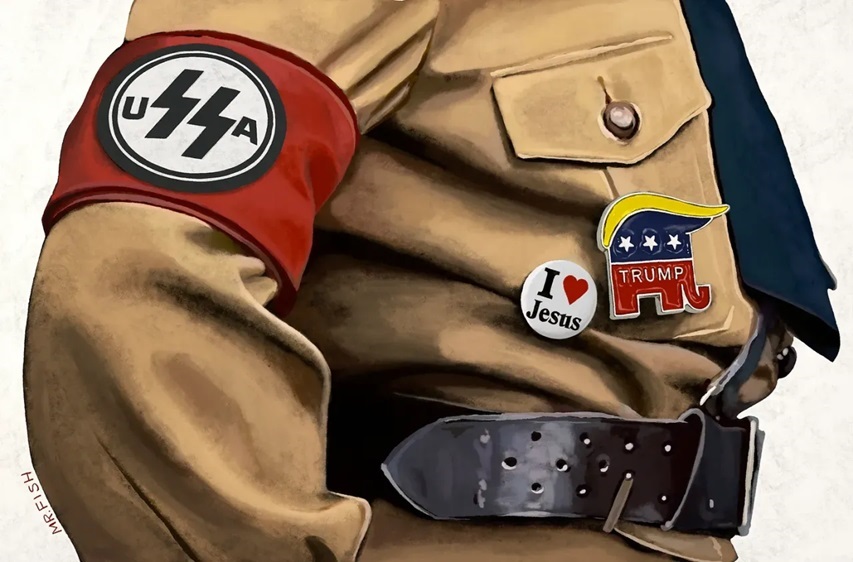
Gangster states have no need of diplomacy. Trump and Rubio, for this reason, have gutted the State Department, along with other forms of “soft” power that achieve influence without resorting to force, including the U.S. role in the United Nations
By Chris Hedges , ScheerPost
“We live in a world in which you can talk all you want about international niceties and everything else, but we live in a world, in the real world, Jake, that is governed by strength, that is governed by force, that is governed by power. These are the iron laws of the world that have existed since the beginning of time.” — Stephen Miller to Jake Tapper on CNN, Jan. 5, 2026.
“He who would live must fight. He who does not wish to fight in this world, where permanent struggle is the law of life, has not the right to exist. Such a saying may sound hard; but, after all, that’s how it is.” — Adolf Hitler in Mein Kampf
“The Fascist State expresses the will to exercise power and to command. Here the Roman tradition is embodied in a conception of strength. Imperial power, as understood by the Fascist doctrine, is not only territorial, or military, or commercial; it is also spiritual and ethical… Fascism sees in the imperialistic spirit — i.e., in the tendency of nations to expand — a manifestation of their vitality.” — Benito Mussolini in The Doctrine of Fascism
ll empires, when they are dying, worship the idol of war. War will save the empire. War will resurrect past glory. War will teach an unruly world to obey. But those who bow down before the idol of war, blinded by hypermasculinity and hubris, are unaware that while idols begin by calling for the sacrifice of others, they end by demanding self-sacrifice. Ekpyrosis, the inevitable conflagration that destroys the world according to the ancient Stoics, is part of the cyclical nature of time. There is no escape. Fortuna. There is a time for individual death. There is a time for collective death. In the end, with weary citizens yearning for extinction, empires light their own funeral pyre.
Our high priests of war, Donald Trump, Marco Rubio, Pete Hegseth, Stephen Miller and the Joint Chiefs of Staff Chairman Gen. Dan “Razin” Caine, are no different from the fools and charlatans who snuffed out empires of the past — the haughty leaders of the Austro-Hungarian Empire, the militarists in imperial Germany and the hapless court of Tsarist Russia in World War I. They were followed by the fascists in Italy under Benito Mussolini, Germany under Adolf Hitler and the military rulers of imperial Japan in World War II.
These political entities committed collective suicide.
They drank the same fatal elixir Miller and those in the Trump White House imbibe. They too tried to use industrial violence to reshape the universe. They too considered themselves to be omnipotent. They too saw themselves in the face of the idol of war. They too demanded to be obeyed and worshiped.
Destruction to them is creation. Dissent is sedition. The world is one-dimensional. The strong versus the weak. Only our nation is great. Other nations, even allies, are dismissed with contempt.
These architects of imperial folly are buffoons and killer clowns. They are ridiculed and hated by those rooted in a reality-based world. They are followed slavishly by the desperate and the disenfranchised. The simplicity of the message is its appeal. A magic incantation will bring back the lost world, the golden age, however mythic. Reality is viewed exclusively through the lens of ultranationalism. The flip side of ultranationalism is racism.
“The nationalist is by definition an ignoramus,” wrote Yugoslav-Serbian novelist Danilo Kiš. “Nationalism is the line of least resistance, the easy way. The nationalist is untroubled, he knows or thinks he knows what his values are, his, that’s to say national, that’s to say the values of the nation he belongs to, ethical and political; he is not interested in others, they are no concern of his, hell — it’s other people (other nations, other tribes). They don’t even need investigating. The nationalist sees other people in his own image — as nationalists.”
These stunted human beings are unable to read others. They threaten. They terrorize. They kill. The art of power politics between nations or individuals is far beyond their tiny imaginations. They lack the intelligence — emotional and intellectual — to cope with the complex, ever-shifting sands of old and new alliances. They cannot see themselves as the world sees them.
Diplomacy is often a dark and deceptive art. It is by its nature manipulative. But it requires an understanding of other cultures and traditions. It requires getting inside the heads of adversaries and allies. For Trump and his minions, this is an impossibility.
Skillful diplomats, such as Prince Klemens von Metternich, the Austrian Empire’s foreign minister who dominated European politics after the defeat of Napoleon, do so by crafting agreements and treaties such as the Concert of Europe and the Congress of Vienna. Metternich, no friend of liberalism, adroitly kept Europe stable until the revolutions of 1848…………………………………………………………………………………………………………….
Gangster states have no need of diplomacy. Trump and Rubio, for this reason, have gutted the State Department, along with other forms of “soft” power that achieve influence without resorting to force, including the U.S. role in the United Nations, the U.S. Agency of International Development, the U.S. Institute for Peace — renamed Donald J. Trump Institute of Peace after most of the board and staff were fired — and Voice of America.
Diplomats in gangster states are reduced to the role of errand boys. Hitler’s Foreign Minister, Joachim von Ribbentrop, whose primary experience in foreign affairs before 1933 was selling fake German champagne in Britain, appointed party hacks from the SA or Brownshirts — the paramilitary wing of the party — to diplomatic posts abroad. Benito Mussolini’s Foreign Minister was his son-in-law, Galeazzo Ciano. Mussolini — who believed that “war is to man what maternity is to woman” — later executed Ciano for disloyalty. Trump’s Special Envoy to the Middle East, Steven Charles Witkoff, is a real estate developer, often accompanied on diplomatic missions by Trump’s feckless son-in-law Jared Kushner.
The Italian philosopher Benedetto Croce quipped that fascism had created a fourth form of government, “onagrocracy,” a government by braying asses, to add to Aristotle’s traditional triumvirate of tyranny, oligarchy and democracy.
Our ruling class, Democrats and Republicans, piece by piece, dismantled democracy. In Germany and Italy, the constitutional state, as well, collapsed long before the arrival of fascism. Trump, who is the symptom, not the disease, inherited the corpse. He is making good use of it. https://scheerpost.com/2026/01/09/chris-hedges-grand-illusion/
British and European leaders have shown themselves weak and complicit in the kidnapping of Maduro.
Ian Proud, Jan 08, 2026, https://thepeacemonger.substack.com/p/british-and-european-leaders-have?utm_source=post-email-title&publication_id=3221990&post_id=183823495&utm_campaign=email-post-title&isFreemail=true&r=1ise1&triedRedirect=true&utm_medium=email
The US attack on the Venezuelan capital of Caracas and kidnapping of President Maduro and his wife was illegal under international law. British and European leaders tacitly supporting US actions through silence is weak and will damage further their reputations in the developing world.
The UN Charter was agreed in 1945 to ensure that countries no longer interfered in the sovereign affairs of other countries. Of course, that legal basis was built on shaky foundations, as the outline of post-war borders was complex and in many parts of the world disputed, including in Europe. The Second World War ended at a time when Britain and other European nations were accelerating their departure from colonialism, creating wholly new sovereign states based on former colonial boundaries.
The UN charter didn’t and does not try to rewrite the map of the world. Nor does it seek to impose a template for how countries are governed. The countries of the world continue to be led by a mix of monarchies, democracies and autocracies in many shapes and sizes.
No country has a right to impose its will or preferred mode of governance on another country, however dysfunctional that country may be. In the case of Venezuela, few would argue that it is a democracy in the purest sense, despite the holding of elections. That some countries consider prior Venezuelan elections to have been rigged is immaterial under the UN Charter. No third country can interfere violently in the affairs of another state, even if that state appears a violent dictatorship.
I personally do regard Nicolas Maduro as, at the very least, an authoritarian leader who is predisposed to undemocratic and repressive means to govern his people. But I could say the same about countless other countries, not only in Latin America but in Africa, the middle east and Asia.
Europe itself, while governed by seemingly democratic systems, has stood accused by the US in this past year of being anti-democratic by stifling free speech and choreographing the appearance of democracy with the help of a compliant media. The institutions of Europe are by design anti-democratic, as citizens do not have the opportunity directly to choose any of the six so-called Presidents in charge, nor their unelected aides-de-camp, however they are called.
So, love him or, in many liberal cases, loathe him, western leaders aren’t given a say under international law about whether Nicolas Maduro is the rightful leader of Venezuela.
In the case of the US, that country has justifiable concerns about the flood of drugs channelled through Venezuela that reach its shores and ruin the lives of people addicted to substance misuse. This is undoubtedly a legitimate national security interest for the Americans and gives them the right to act to prevent these hostile acts, including, should they choose, through the use of force. Without getting into the wider debate about US attacks on alleged drug boats, those actions, nevertheless, are still governed by international human rights law.
They do not give the USA the right forcibly to depose a serving President, however unpalatable a character he may be.
That UK and European leaders have tacitly, though their silence of US actions, come out in support of the overthrow of Maduro speaks more of international relations, not international law.
They have set themselves up as judge and jury from affair, on the basis that they agree with the US assessment that Maduro is the wrong sort of leader for Venezuela. For all the pontification about letting Venezuelan people decide, Euro-elites aren’t bright enough to realise that they are aiding and abetting Donald Trump in making a choice on Venezuela’s behalf.
This theatre played out vividly at the UN Security Council on Monday 5 January in which the various European states represented at the table, one by one, refused even to mention the actions of the US in overthrowing Maduro in their statements. Echoing Prime Minister Keir Starmer’s refusal to denounce US actions, the UK’s Representative at the table, James Kariuki, who unfortunately I know of old, stuck to remarking on the undemocratic nature of Nicolas Maduro, the need for a transition to democracy and to abide by international law. And nothing else.
No mention of the fact that US actions were in breach of international law. No mention of the unilateral military attack by the US on Venezuela’s capital nor the kidnapping of Maduro. Simply, Maduro is bad, too bad, let’s find someone new to replace him, of whom, implicitly, we approve.
Every other European state at the table, including Greece, France, Latvia and Denmark, offered a slightly longer-winded version of the same position. The Danes were a little more nuanced, given their not misplaced fear, that they may be next, if America decides to make a move to annex Greenland illegally.
And therein the root cause of the British and European positioning. European foreign policy appears to rest almost entirely on a desire not to offend President Trump.
In London, Riga, Paris and Copenhagen, leaders still cling to the hope that President Trump will, through flattery, still support their efforts to maintain a proxy war in Ukraine.
That if they refuse to denounce him over Venezuela, he might eventually come round again to the idea of regime change in Moscow, through a war in Ukraine that leaders continue to fantasise is winnable when all the evidence suggests otherwise.
So, the requirements of international law have become entirely incidental to the foreign policy imperative of defeating President Putin and, hopefully, perhaps, seeing him, cuffed and blindfolded, whisked off in a US military helicopter to a kangaroo court in New York. Everything else, including the requirements of the UN Charter, is simply inconvenient detail.
Yet, ultimately, Britain and Europe remain weak and unable substantively to influence President Trump’s actions, rendering them weak and as passengers on a runaway US train as it relates to Ukraine policy.
Unfortunately, countries across the developing world – including the Latin American countries at the Security Council who to varying degrees denounced the US move – will have been shocked by the position Britain and Europe has taken. That their leaders are clinging on vicariously to a western hegemon, in which the US acts as global policemen, and they stand back, aghast, while offering obsequious applause.
The main beneficiary of this will, of course, be China and to some extent Russia who have progressively railed against western dominance through alternative global political fora for dialogue and mutually beneficial cooperation. I should think the queue of countries lining up to join BRICS will grow longer after this illegal US attack on Venezuela.
Nuclear Power: Private Sector -Question for UK government
Question for Department for Energy Security and Net Zero
UIN HL13206, tabled on 18 December 2025
Lord Spellar: To ask His Majesty’s Government when they intend to publish a new framework for a private sector route to market for advanced nuclear
technologies.
Lord Vallance: The government will provide a framework that
will set out a pathway for privately led advanced nuclear projects, this framework will be published early this year.
Hansard 6th Jan 2026 https://questions-statements.parliament.uk/written-questions/detail/2025-12-18/HL13206
Delcy Rodríguez swears to uphold sovereignty of the nation as acting president of Venezuela
Rodríguez promised to respect the constitution and uphold national sovereignty following the US attack on Venezuela, which left more than 80 people dead and resulted in the kidnapping of President Nicolás Maduro and his wife.
January 08, 2026 by Pablo Meriguet, https://peoplesdispatch.org/2026/01/08/delcy-rodriguez-swears-to-uphold-sovereignty-of-the-nation-as-acting-president-of-venezuela/
On January 5, Delcy Rodríguez assumed the presidency of Venezuela. The former vice president swore before parliament that she would uphold the constitution and the sovereignty of the nation after the US attack on January 3, in which the US military took President Nicolás Maduro and his wife Cilia Flores prisoner.
The president of the National Assembly, Jorge Rodríguez, urged the president to protect Venezuela “for her honor, for the people of Venezuela, for the example of the Liberators of America to zealously guard our sacred territory.”
Delcy Rodríguez stated that she accepted the task under very difficult circumstances, but that she would not rest until Venezuela was a free, sovereign, and independent nation. “I come with pain for the suffering that has been caused to the Venezuelan people after an illegitimate military aggression against our homeland. [There are] two heroes whom we have as hostages in the United States of America: President Nicolás Maduro and the first combatant of this country, Cilia Flores,” she told Venezuelan parliamentarians.
Rodríguez also promised to ensure an administration that guarantees peace for Venezuelans: “[We will build] a government that provides social happiness, political stability, and political security. [I ask all sectors of Venezuelan society to] move Venezuela forward in these terrible times of threat to the stability and peace of the nation.”
Although Rodríguez initially stated in a Council of Ministers meeting that Venezuela has only one president, Nicolás Maduro, a Supreme Court ruling ordered the vice president to assume the office of president to avoid a power vacuum.
The weight of the most dangerous presidency on the planet
Rodríguez has insisted in her recent speeches that her administration does not imply a break with the Chavista process. In this regard, she has taken every opportunity to demand Maduro’s release and condemn the US military attack. On January 6, Rodríguez declared seven days of national mourning for the death of the “young martyrs” who “gave their lives defending Venezuela and President Nicolás Maduro.”
However, Rodríguez has now inherited an extremely difficult task while in the crosshairs of the most powerful army in the world. Trump himself demanded “full access” to natural resources, while warning of new attacks: “If [the new government] doesn’t behave, we will launch a second attack.”
Trump also stated that major US oil companies will begin operating in Venezuela and that, in addition to making significant profits, they will have to rebuild the South American country’s oil industry.
It is not yet clear what agreements Rodríguez has reached with a US administration that has demonstrated its military power and whose pressure on Caracas has reached levels of violence never before seen against Venezuela.
In this regard, with the threat of more deadly attacks on one hand, a virtually devastated air defense system on the other, and the top leader of Chavismo under arrest, Rodríguez does not have much room for maneuver or negotiation.
Hence, Trump has assured that Venezuela will deliver between 30 and 50 million barrels of oil (worth USD 2.8 billion) in the coming months, and news about the negotiations was confirmed by Venezuelan state oil company PDVSA on Wednesday, January 8.
However, it appears that the Trump administration also recognizes, for the time being, Chavismo as the primary national actor with whom it can negotiate and achieve its geopolitical and economic objectives. Trump has publicly rejected María Corina Machado as the new leader of Venezuela and the idea that elections should be called immediately.
But it is still too early to draw conclusions in a situation that remains unclear amid the dust of missiles, gunfire, and collapsed buildings following the January 3 attack. What is certain is that communication channels have not been closed, nor have the agreements that, it seems, will continue to be made to avoid a new military scenario.
DePetris’ Trump foreign policy accomplishments more dubious than prideful
Walt Zlotow… West Suburban Peace Coalition Glen Ellyn IL 3 Jan 26
In his Chicago Tribune foreign policy commentary ‘The foreign policy moves Donald Trump got right this year’, Daniel DePetris largely ignores reality.
He praises Trump for brokering the November 10 ceasefire agreement in Gaza without mentioning that for nearly 10 months Trump provided Israel with billions in weapons to complete the obliteration of Gaza’s 139 square miles. With over 100,000 dead and the remaining 2,200,000 Palestinians facing death from forced starvation and withdrawal of medicine, the world rightly calls Israeli US policy a genocide. So yes, DePetris is correct to call Trump’s slowing down Israel’s ferocious genocide thru ceasefire “preferable” to its continuance. But pretending Trump is simply a neutral peace broker of the US enabled Israeli genocide is deplorable.
DePetris is also correct to praise Trump for seeking to broker an end to the Russo Ukraine war. But in claiming the biggest obstacle with Trump’s diplomacy is Trump’s “wild inconsistency”, DePetris misses a far greater obstacle: Russia and Ukraine’s diametrically opposed and irreconcilable goals to end the war. That makes Trump’s sincere efforts at peace daunting, if not impossible. At this stage, it is nowhere near an accomplishment.
DePetris whiffs on his third claimed Trump foreign policy accomplishment, the overthrow of the Syrian Bashar Assad regime, replaced by former al-Qaeda terrorist Ahmad al-Sharaa.
DePetris, like Trump, rehabilitates a US enemy dedicated to killing Americans in Iraq in his previous life. Why? Because al-Sharaa deposed the hated Assad whom the US sought to oust since the 2011 Syrian civil war to remove one of Israel’s regional enemies. This had nothing to do with uplifting the Syrian people. Indeed, the billions in weapons America poured into the Syrian civil war was responsible for much of the hundreds of thousands of deaths DePetris attributes solely to Assad. With the secular Assad gone, Syria’s Christians, Alawites, and others not part of al Sharaa’s extremist religious base are suffering horribly. Their fate was never a concern of Trump and his champion DePetris who view the destabilization of Syria as a US win for expanded Israeli Middle East hegemony.
Chicago Tribune’s readers deserve more than a sanitized view of Trump’s machinations in Gaza, Ukraine and Syria. They deserve the truth.
Venezuela declares state of emergency, calls for international solidarity
January 4, 2026, https://gpja.org.nz/2026/01/04/venezuela-declares-state-of-emergency-calls-for-international-solidarity/
Editor’s note: The following is the official communiqué issued by the Bolivarian Republic of Venezuela on January 3, 2026, in response to U.S. military strikes on Caracas and surrounding areas. President Trump announced the operation on social media early Saturday morning, claiming the capture of President Nicolás Maduro. International reactions have been swift, with Russia, Iran, China, Cuba, Colombia, Chile, Mexico, Brazil, and Belarus condemning the strikes. UN special rapporteur Ben Saul called it “illegal aggression” and an “illegal abduction.” Venezuela has requested an emergency UN Security Council meeting.
COMMUNIQUÉ
BOLIVARIAN REPUBLIC OF VENEZUELA
The Bolivarian Republic of Venezuela rejects, condemns, and denounces to the international community the grave military aggression perpetrated by the current government of the United States of America against Venezuelan territory and population in civilian and military localities of the city of Caracas, capital of the Republic, and the states of Miranda, Aragua, and La Guaira.
This act constitutes a flagrant violation of the United Nations Charter, particularly its Articles 1 and 2, which enshrine respect for sovereignty, the legal equality of states, and the prohibition of the use of force. Such aggression threatens international peace and stability, specifically in Latin America and the Caribbean, and gravely endangers the lives of millions of people.
The objective of this attack is none other than to seize Venezuela’s strategic resources, in particular its oil and minerals, attempting to forcibly break the political independence of the nation. They shall not succeed. After more than two hundred years of independence, the people and their legitimate government remain steadfast in defense of sovereignty and the inalienable right to decide their own destiny. The attempt to impose a colonial war to destroy the republican form of government and force a “regime change,” in alliance with the fascist oligarchy, will fail as all previous attempts have.
Since 1811, Venezuela has confronted and defeated empires. When in 1902 foreign powers bombarded our coasts, President Cipriano Castro proclaimed: “The insolent foot of the foreigner has profaned the sacred soil of the Homeland.” Today, with the spirit of Bolívar, Miranda, and our liberators, the Venezuelan people rise once again to defend their independence against imperial aggression.
To the Streets, People
The Bolivarian government calls upon all social and political forces of the country to activate mobilization plans and repudiate this imperialist attack. The people of Venezuela and its Bolivarian National Armed Forces, in perfect popular-military-police fusion, are deployed to guarantee sovereignty and peace.
Simultaneously, Bolivarian Peace Diplomacy will submit the corresponding denunciations before the United Nations Security Council, the Secretary-General of said organization, CELAC, and the NAM, demanding condemnation and accountability from the United States government.
President Nicolás Maduro has directed all national defense plans to be implemented at the appropriate time and under appropriate circumstances, in strict adherence to the provisions of the Constitution of the Bolivarian Republic of Venezuela, the Organic Law on States of Exception, and the Organic Law on National Security.
In this regard, President Nicolás Maduro has signed and ordered the implementation of the Decree declaring a State of External Commotion throughout the national territory, to protect the rights of the population, the full functioning of republican institutions, and to immediately transition to armed struggle. The entire country must activate to defeat this imperialist aggression.
Likewise, he has ordered the immediate deployment of the Command for the Comprehensive Defense of the Nation and the Comprehensive Defense Directional Organs in all states and municipalities of the country.
In strict adherence to Article 51 of the United Nations Charter, Venezuela reserves the right to exercise legitimate defense to protect its people, its territory, and its independence. We call upon the peoples and governments of Latin America, the Caribbean, and the world to mobilize in active solidarity against this imperial aggression.
As Supreme Commander Hugo Chávez Frías stated, “In the face of any circumstance of new difficulties, however great they may be, the response of all patriots… is unity, struggle, battle, and victory.”
Caracas, January 3, 2026
WE’LL CONTROL THE OIL! — TRUMP BOASTS AFTER SECRET RAID AS WASHINGTON POST CHEERS ARREST.
“we went from the world cop to the world bully in less than one year. There is no reason for us to be at war with Venezuela.”
January 3, 2026 , By Joshua Scheer, https://scheerpost.com/2026/01/03/well-control-the-oil-trump-boasts-after-secret-raid-as-washington-post-cheers-arrest/
In a reprehensible editorial, The Washington Post praised the capture of Venezuelan President Nicolás Maduro, calling the U.S.-led operation as “Justice in Venezuela” saying it was “one of the boldest moves by a president in recent years” and a tactical success. According to reports, the mission in Caracas involved airstrikes followed by a Delta Force operation that apprehended Maduro and his wife, who have been extradited to the U.S. to face charges including narcoterrorism, weapons violations, and drug crimes—all with no American casualties. The editorial argued that removing Maduro would weaken the influence of authoritarian allies such as Russia, China, Cuba, and Iran in the region and send a strong message to other dictators.
The piece also noted that the next challenge is ensuring stability and a democratic transition in Venezuela, highlighting opposition leader María Corina Machado and her “Freedom Manifesto” as a potential path forward. At the same time, the editorial acknowledged the uncertainty of outcomes, warning that a power vacuum or a new authoritarian leader could emerge if a clear transition plan is not implemented.
Machado was quoted as saying the opposition is “prepared to take power,” though no specifics regarding a transition plan have been released.
Nobel Peace Prize laureate Machado, who has been in hiding since Maduro’s disputed reelection in July 2024, said in a post on X that opposition candidate Edmundo Gonzalez Urrutia, whom the opposition says won the vote, “must immediately assume his constitutional mandate” as president. and that “Venezuelans, the hour of freedom has arrived.”
Not everyone welcomed the operation. Rep. Jim Himes of Connecticut, a Democratic member of the House Intelligence Committee, criticized the attack and said Secretary of State Marco Rubio had “repeatedly denied to Congress” that the administration intended to “force regime change in Venezuela.” Himes added, “Maduro is an illegitimate ruler, but I have seen no evidence that his presidency poses a threat that would justify military action without Congressional authorization, nor have I heard a strategy for the day after and how we will prevent Venezuela from descending into chaos.”
Others highlight the split between the GOP and the Democrats.
“Nicolás Maduro wasn’t just an illegitimate dictator; he also ran a vast drug‑trafficking operation,” tweeted Sen. Tom Cotton, defending the mission and saying he commends Trump and U.S. forces.
The split was evident at first with Utah Senator Mike Lee. Notably, the Republican initially seemed critical of the action being taken without congressional authorization.
“I look forward to learning what, if anything, might constitutionally justify this action in the absence of a declaration of war or authorization for the use of military force,” Lee posted on X.
However, Lee later followed up, saying he had spoken by phone with Rubio and was now comfortable with the administration’s authority to take action. Because the administration is framing this not as a war but as a police action to arrest a fugitive, Lee said he believes it would be permissible under the president’s current authority. I wonder we have heard that term police action before?
From the Democratic side, the sentiment was nearly unanimous.
“Without authorization from Congress … Trump just launched an unjustified, illegal strike on Venezuela,” Democratic Rep. Jim McGovern wrote on social media, highlighting a lack of legislative approval.
“Second unjustified war in my life time,” Arizona Democratic Sen. Ruben Gallego, on X shortly after 3 a.m. Saturday. “This war is illegal, it’s embarrassing that we went from the world cop to the world bully in less than one year. There is no reason for us to be at war with Venezuela.”
Sen Andy Kim writing on X: “Secretaries Rubio and Hegseth looked every Senator in the eye a few weeks ago and said this wasn’t about regime change. I didn’t trust them then and we see now that they blatantly lied to Congress.”
Others Democrats, including Rep. Yvette Clarke and Rep. Rashida Tlaib, called the operation “unconstitutional,” “un‑American,” and a “direct threat to our democracy,” arguing that the administration bypassed Congress.
The president spoke about a great many things, including taking over the country, which again would fall in line with the concept of the historic police action that took place in Southeast Asia. As Gallego said, this may be the second illegal war in our lifetime; it is certainly not the only two that the United States has been involved in.
As Trump said, he’s not afraid of putting boots on the ground.
Trump had the gall to say today that his administration will make the people of Venezuela “rich, independent, and safe.” But he doesn’t mean most people—the poor and working-class citizens whom the socialist government represents. He means the oligarchs: the wealthy and powerful few. Trump is clearly the leader of the oligarchs, so this isn’t surprising—yet it is still deeply sickening.
Of course, this feels a lot like George W. Bush’s horrific war in Iraq, which was more about the pride of a leader whose father couldn’t topple Saddam Hussein. In this case, it seems driven by Rubio’s long-standing fantasy of a life in Cuba, surrounded by the wealth of oligarchs—something his family could have aspired to. Now, he is helping push a new Monroe Doctrine and supporting the rise of right-wing forces in Latin America.
Regarding oil, many in 2003 foolishly claimed that oil profits would cover the costs of the Iraq War. In the lead-up to the invasion, U.S. officials expressed strong confidence that Iraq could finance its own reconstruction, largely through its vast oil reserves and other national assets. Secretary of Defense Donald Rumsfeld emphasized that American taxpayers would not be the primary source of funding, pointing instead to Iraq’s own resources and potential international contributions. Similarly, Deputy Secretary of Defense Paul Wolfowitz assured Congress that Iraq could fund its recovery “relatively soon,” citing the wealth of the Iraqi people. Kenneth Pollack, a former National Security Council official, dismissed the idea of massive U.S. expenditures as “unimaginable,” suggesting that even tens of billions of dollars in spending would be “highly unlikely.” These statements collectively painted a picture of Iraq as a “very wealthy country,” with officials expressing little doubt that it could largely finance the reconstruction of its own nation.
On the parallels between Iraq and Venezuela, I’ll leave this to former Defense Secretary Donald Rumsfeld, as quoted in Ron Suskind’s book about Paul O’Neill. Advocating “going after Saddam” during the January 30 meeting, Rumsfeld said, according to O’Neill:
“Imagine what the region would look like without Saddam and with a regime that’s aligned with U.S. interests. It would change everything in the region and beyond. It would demonstrate what U.S. policy is all about”
Exactly, Donald—the empire was always the goal. The idea of democracy was just a shield to make us seem less evil than those who came before, especially our original colonial parent the English. But now the veil is off: we are brazenly invading countries and claiming what belongs to them as our own. I’ve written before—may the empire end, hopefully peacefully, though most likely it will not.
However, in another display of both war talk and regime change, the president said he’s not afraid of boots on the ground, since they have already been there. So if the people of Venezuela resist, as they have promised, and your justification for a fugitive is now gone, what will you do? Ironically, this is from The Washington Post, but as a member of Congress once told me, you need to read the paper daily to know what the CIA and the policy establishment think.
About oil, the war, and the current situation. As of now Chevron is currently the only global oil company with access to Venezuela’s vast reserves.
As Bloomberg’s Kevin Crowley noted last month, the company occupies a unique position: it has faced criticism in the U.S. for continuing to operate in the country, while some members of Venezuela’s ruling party view it as a symbol of American imperialism. Chevron has been able to maintain its presence thanks to special licenses that allow it to operate despite U.S. sanctions.
Venezuela once played a central role in global oil markets, supplying the U.S. with large volumes of crude and standing as an oil powerhouse. Today, however, it accounts for less than 1% of global oil supplies—less than fellow OPEC member Libya.
However, don’t expect a rapid recovery in Venezuelan oil production—whether or not the U.S. is heavily involved. History shows that violent regime changes rarely encourage inward investment. Fourteen years after Muammar Qaddafi’s removal, Libya’s oil production remains about 25% below its pre-war level. In Iraq, where the U.S. had a major administrative role after toppling Saddam Hussein, it took 12 years for oil production to return to pre-war levels—and much of the new production came from Chinese companies rather than U.S. firms.
Trump said today that “we will control those Venezuelan oil fields.” Let’s see, sir. It’s not nearly as easy as you think. Based on the history of wars that involve oil.
More notes from the presidents speech
Rubio discussed today why Congress was not informed, claiming that this was not a war but rather a Justice Department arrest, and that the individual in question is a fugitive of American justice.
He described the situation as a “president of action,” saying, “I don’t know how we haven’t figured this out. Marco, we have figured it out. The president is a man of action, and he—and this neocon-aligned regime—need to go. Sadly with The Washington Post pushing its editorial agenda, alternative media is essential, because the mainstream press is controlled by you and your oligarch allies. Of course so is social media and almost everything else, I would hope—but not hold my breath—that the same Democrats who are criticizing today’s events would also ensure we have a free and fair media. Yet many in this Congress supported President Biden when he pushed for the forced sale of TikTok to Larry Ellison, so…
Keep hope alive
WHAT CHAOS WILL TRUMP UNLEASH IN 2026?
The evidence of 2025 suggests a president who is alternately reckless and bored
Seymour Hersh, Jan 03, 2026
One of my favorite anecdotes occurred sometime after 9/11 when Tony Blair, the prime minister of Great Britain, joined in with America’s declaration of war against terrorism. The brilliant playwright Harold Pinter, who would be a bitter and prolific critic of the ensuing war, was invited to respond before the House of Commons. He began his talk with a tale from British history during a wave of terror in Ireland.
“There’s an old story about Oliver Cromwell. After he had taken the town of Drogheda, the citizens were brought to the main square. Cromwell announced to his lieutenants: ‘Right! Kill all the women and rape all the men.’ One of his aides said: ‘Excuse me, General. Isn’t it the other way around?’ A voice from the crowd called out: ‘Mr. Cromwell knows what he is doing!’”
In Pinter’s telling, the voice of support from the crowd was Blair’s. Today it could and would come from the lips of Vance, Bondi, Hegseth, or Noem. Never has a modern American president been surrounded by such self-important sycophants and a Republican-led Congress with little gumption. Trump’s lack of interest in nonmilitary briefing papers and his obsession with social and political gossip has moved from information known by a few to standard operating procedure………………….(Subscribers only) https://seymourhersh.substack.com/p/what-chaos-will-trump-unleash-in?utm_source=post-email-title&publication_id=1377040&post_id=183249150&utm_campaign=email-post-title&isFreemail=true&r=ln98x&triedRedirect=true&utm_medium=email
Chris Hedges: Decline and Fall
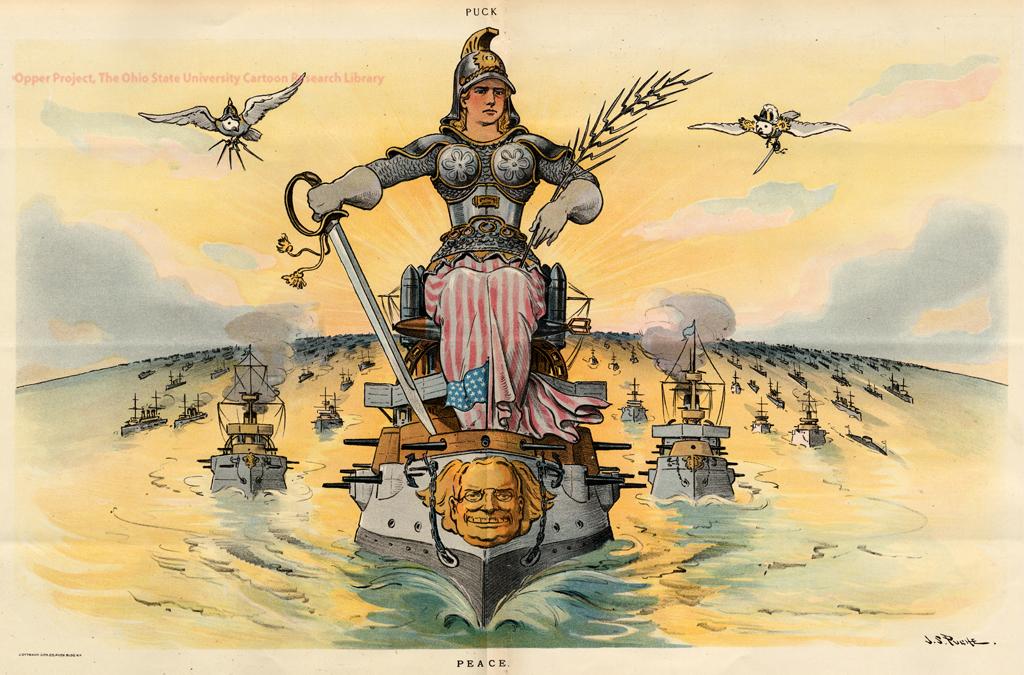
We live in an eerily similar historical moment. Britain, within 12 years of Kipling’s lament, was plunged into the collective suicide of World War I, a conflict that took the lives of over a million British and Commonwealth troops and doomed the British Empire.
Donald Trump boasts that he will be the “fertilization president.” American couples — meaning white couples — will be given incentives by his administration to have more children to counter declining birth rates.
December 29, 2025 , By Chris Hedges , ScheerPost, https://scheerpost.com/2025/12/29/chris-hedges-decline-and-fall/
At the start of the 20th century, the British Empire was, like our own, in terminal decline. Sixty percent of Englishmen were physically unfit for military service, as are 77 percent of American youth. The Liberal Party, like the Democratic Party, while it acknowledged the need for reform, did little to address the economic and social inequalities that saw the working class condemned to live in substandard housing, breathe polluted air, be denied basic sanitation and health care and forced to work in punishing and poorly paid jobs.
The Tory government, in response, formed an Inter-Departmental Committee on Physical Deterioration to examine the “deterioration of certain classes of the population,” meaning, of course, the urban poor. It became known as the report on “the degeneracy of our race.” Analogies were swiftly drawn, with much accuracy, with the decadence and degeneracy of the late Roman Empire.
Rudyard Kipling, who romanticized and mythologized the British Empire and its military, in his 1902 poem “The Islanders,” warned the British that they had grown complacent and flaccid from hubris, indolence and privilege. They were unprepared to sustain the Empire. He despaired of the loss of martial spirit by the “sons of the sheltered city — unmade, unhandled, unmeet,” and called for mandatory conscription. He excoriated the British military for its increasing reliance on mercenaries and colonial troops, “the men who could shoot and ride,” just as mercenaries and militias increasingly augment American forces overseas.
Kipling damned the British public for its preoccupation with “trinkets” and spectator sports, including “the flannel fools at the wicket or the muddied oafs at the goals,” athletes whom he believed should have been fighting in the war in South Africa. He foresaw in the succession of British military disasters during the South African Boer War, which had recently ended, the impending loss of British global dominance, much as the two decades of military fiascos in the Middle East have eroded U.S. hegemony.
The preoccupation with physical decline, also interpreted as moral decline, is what led Secretary of War Pete Hegseth to decry “fat generals,” and order women in the military to meet the “highest male standards” for physical fitness. It is what is behind his “Warrior Ethos Tasking,” plans to enhance physical fitness, grooming standards and military readiness.
We live in an eerily similar historical moment. Britain, within 12 years of Kipling’s lament, was plunged into the collective suicide of World War I, a conflict that took the lives of over a million British and Commonwealth troops and doomed the British Empire.
H.G. Wells, who anticipated trench warfare, tanks and machine guns, was one of the very few to see where Britain was headed. In 1908, he wrote “The War in the Air.” He warned that future wars would not be limited to antagonistic nation-states but would become global. These wars, as was true in the 1935 Italian invasion of Ethiopia, the Spanish Civil War and World War II, would carry out the indiscriminate aerial bombardment of civilians. He also foresaw in “The World Set Free,” the dropping of atomic bombs.
Nearly one third of the population in Edwardian England endured abject poverty. The cause, as Seebohm Rowntree noted in his study of the slums, was not, as conservatives claimed, alcoholism, laziness, a lack of initiative or responsibility by the poor, but because “the wages paid for unskilled labour in York are insufficient to provide food, shelter, and clothing adequate to maintain a family of moderate size in a state of bare physical efficiency.”
The U.S. has one of the highest rates of poverty among Western industrialized nations, estimated by many economists at far above the official figure of 10.6 percent. In real terms, some 41 percent of Americans are poor or low-income, with 67 percent living paycheck to paycheck.
British eugenicists from the Galton Laboratory for National Eugenics — which was funded by Sir Francis Galton, who coined the term “eugenics” — advocated “positive eugenics,” the “improvement” of the race by encouraging those deemed superior — always white members of the middle and upper classes — to have large families. “Negative eugenics” was advocated to limit the number of children born to those deemed “unfit.” This would be achieved through sterilization and the separation of genders.
Winston Churchill, who was home secretary in the liberal government of H.H. Asquith in 1910-11, backed the forced sterilization of the “feeble minded,” calling them a “national and race danger” and “the source from which the stream of madness is fed.”
The Trump White House, led by Stephen Miller, is intent on carrying out a similar culling of American society. Those endowed with “negative” hereditary traits — based usually on race — are condemned as human contaminants that an army of masked Immigration and Customs Enforcement agents are terrorizing, incarcerating and purging from society.
Miller, in emails leaked in 2019, lauds the 1973 novel “The Camp of the Saints,” written by Jean Raspail. It chronicles a flotilla of South Asian people who invade France and destroy Western civilization. The immigrants, who the Trump administration are now hunting down, are described as “kinky-haired, swarthy-skinned, long-despised phantoms” and “teeming ants toiling for the white man’s comfort.” The South Asian mobs are “grotesque little beggars from the streets of Calcutta,” led by a feces-eating “gigantic Hindu” known as “the turd eater.”
This, in its most scurrilous form, is the thesis of the “Great Replacement” theory, the belief that the white races in Europe and North America are being “replaced” by “lesser breeds of the earth.”
Donald Trump boasts that he will be the “fertilization president.” American couples — meaning white couples — will be given incentives by his administration to have more children to counter declining birth rates. In the vernacular of the right wing, those who promote this updated version of “positive eugenics” are known as “pronatalists.” The Trump administration will also reduce refugees admitted to the United States next year to the token level of 7,500, with most of these spots filled by white South Africans.
Trump’s allies in Big Tech are busy creating the fertility infrastructure to conceive children with “positive” hereditary traits. Sam Altman, who has been awarded a one-year military contract worth $200 million from the Trump administration, has invested in technology to allow parents to gene edit their children before conception to produce “designer babies.”
Peter Thiel, the co-founder of Palantir, which is facilitating the Trump administration’s mass deportation efforts, has backed an embryo screening company called Orchid Health. Orchid promises to help parents design “healthy” children through embryo testing and selection technology. Elon Musk, a fervent pronatalist and believer in the Great Replacement theory, is reportedly a client of the startup. The goal is to empower parents to screen embryos for IQ and select “their children’s intelligence before birth,” as the Wall Street Journal notes.
We are making the same self-defeating mistakes made by the British political class that oversaw the decline of the British Empire and orchestrated the suicidal folly of World War I. We blame the poor for their own impoverishment. We believe in the superiority of the white race over other races, crushing the plethora of voices, cultures and experiences that create a dynamic society. We seek to counter injustices, along with economic and social inequality, with hypermasculinity, militarism and force, which accelerates the internal decay and propels us toward a disastrous global war, perhaps, in our case, with China.
Wells scoffed at the idiocy of an entitled ruling class that was unable to analyze or address the social problems it had created. He excoriated the British political elite for its ignorance and ineptitude. They had vulgarized democracy, he wrote, with their racism, hypernationalism and simplistic cliché-ridden public discourse, stoked by a sensationalist tabloid press.
When a crisis came, Wells warned, these mandarins, like our own, would set the funeral pyre of empire alight.
Energy bills to rise on New Year’s Day ‘to fund nuclear in England’
31st December 2025, By Xander Elliards, Content editor
ENERGY bills are set for a slight rise on New Year’s Day as the price cap
increase comes into effect. The 0.2% uplift to Ofgem’s energy price cap
will see an average overall bill of £1758 a year for the average household in England, Wales and Scotland remaining on a standard variable tariff, up
from the current £1755.
While only a small increase, it is £190 higher
than the £1568 average bill in place in July 2024 – when Labour came to
power pledging to cut costs by £300 a year. Regulator Ofgem said
Thursday’s increase in the cap, which was announced in November, was
being driven by the funding of nuclear power projects and discounts to some
households’ winter bills. This included funding the Government’s
Sizewell C nuclear power plant in Suffolk – with an average of £1 added
to each household’s energy bills per month for the duration of the £38
billion construction.
The National 31st Dec 2025,
https://www.thenational.scot/news/25732168.energy-bills-rise-new-years-day-to-fund-nuclear-england/
U.S. Plans Largest Nuclear Power Program Since the 1970s

How many reactors will $80 billion buy?
Chief executives of investor-owned utilities know that if they were to propose committing to similar projects on the same commercial terms, they’d be sacked on the spot. As a result, the private sector in the United States has been unwilling to take on the financial risk inherent in building new reactors.
Ed Crooks, IEEESpectrum,17 Dec 2025
The United States aims to embark on its most active new nuclear construction program since the 1970s. In its most high-dollar nuclear deal yet, the Trump administration in October launched a partnership to build at least $80 billion worth of new, large-scale nuclear reactors, and chose Westinghouse Electric Company and its co-owners, Brookfield Asset Management and Cameco, for the job.
The money will support the construction of AP1000s, a type of pressurized water reactor developed by Westinghouse that can generate about 1,110 megawatts of electric power. These are the same reactors as units 3 and 4 at the Vogtle nuclear plant in Georgia, which wrapped up seven years behind schedule in 2023 and 2024 and cost more than twice as much as expected—about $35 billion for the pair. Along the way, Westinghouse, based in Cranberry Township, Penn., filed for Chapter 11 bankruptcy protection.
Chief executives of investor-owned utilities know that if they were to propose committing to similar projects on the same commercial terms, they’d be sacked on the spot. As a result, the private sector in the United States has been unwilling to take on the financial risk inherent in building new reactors.
The $80 billion deal with the federal government represents the U.S. nuclear industry’s best opportunity in a generation for a large-scale construction program. But ambition doesn’t guarantee successful execution. The delays and cost overruns that dogged the Vogtle project present real threats for the next wave of reactors……………………………………………………………………………………..
One of Trump’s orders included a series of provisions intended to help build the U.S. nuclear workforce, but it’s clear that that will be a challenge. The momentum gained in training skilled workers during the construction at Vogtle is already dissipating. Without other active new reactor projects to move on to immediately in the United States, many of the people who worked there have likely gone into other sectors, such as liquified natural gas (LNG) plants………………………………………………………………………………………………….
the plans that have been announced so far pale in comparison to the Trump administration’s nuclear ambitions. Earlier this year, Trump set a goal of adding a whopping 300 gigawatts of nuclear capacity by 2050, up from a little under 100 GW today. That would mean much stronger growth than is currently projected in Wood Mackenzie’s forecasts, which show a near-doubling of U.S. nuclear generation capacity to about 190 GW in 2050.
The main driver behind the Trump administration’s interest in nuclear is its ambitions for artificial intelligence. Chris Wright, the U.S. energy secretary, has described the race to develop advanced AI as the Manhattan Project of our times, critical to national security, and dependent upon a steep increase in electricity generation. Speaking to the Council on Foreign Relations in September, Wright promised: “We’re doing everything we can to make it easy to build power generation and data centers in our country.”
One of the hallmarks of the Trump administration has been its readiness to intervene in markets to pursue its policy goals. Its nuclear strategy exemplifies that approach.In many ways, the Trump administration is acting like an energy company: using its financial strength and its convening power to put together a deal that covers the entire nuclear value chain.
Throughout the history of nuclear power, the industry has worked closely with governments. But the federal government effectively taking a commercial position in the development of new reactors would be a first for the United States…………………………………………..https://spectrum.ieee.org/80-billion-us-nuclear-power
Anas Sarwar silent as Scottish bill payers face UK ‘nuclear tax’
The National, 30th December 2025, By Jamie Calder
THE SNP have slammed Scottish Labour leader Anas Sarwar for his silence on Westminster’s “nuclear tax”, which could see Scottish households paying out a total of £300 million over the next decade to fund nuclear projects in England.
The new levy has been introduced to fund the spiralling costs of the Sizewell C nuclear power station in Suffolk, which is now predicted to cost £38 billion, almost doubling the previous prediction of £20bn.
Ed Miliband has also faced criticism for asking GB Energy staff to look at opportunities to develop Scottish nuclear energy, going against the policy of the Scottish Government.
The SNP have opposed the creation of new nuclear plants and are able to use planning policy to block developments, despite energy policy being largely reserved to Westminster.
The Scottish Government instead wishes to focus on renewable developments, with Scotland’s last nuclear plant, Torness, set to be decommissioned in 2030.
The party has criticised Labour for making Scots pay for a Westminster nuclear project in the south of England, instead arguing that investment from Scottish taxpayers should be targeting renewables like wind and hydro power based in Scotland, avoiding “extortionate” nuclear plants.
Anas Sarwar has also been questioned over why he has refused to fight the tax which will see Scots foot the bill for the Westminster project.
Writing to Sarwar, SNP MP Graham Leadbitter said: “A recent report found the UK is the most expensive place in the world to develop nuclear power and these massive overspends mean that Scottish taxpayers will pick up a £300m tab for the projects through a decade long ‘Nuclear Tax’.
“Meanwhile, we learned Ed Miliband has assigned GB Energy staff to work on exposing Scotland to these horrific risks. Quite frankly nobody knows what GB Energy is meant to be, but we at least understood it was created to drive forward renewables jobs in Scotland – not blasted on extortionate nuclear power plants.
“These toxic white elephants are irrelevant to Scotland where we produce far more electricity than we can hope to use and where our future is in renewables, closer ties with Europe and harnessing the existing offshore industry to deliver energy security – it certainly is not in over budget, wasteful English nuclear energy projects.
“Your support for these projects in Scotland would see us exposed to colossal financial risk and undermine our renewables future while there are serious questions as to why you support the ‘Nuclear Tax’ currently being imposed on Scottish bill payers…………………………………………………………………………….. https://www.thenational.scot/news/25728226.snp-slam-scottish-labours-anas-sarwar-nuclear-tax-acceptance/
What Australians have NOT been told about the $368billion AUKUS nuclear submarine deal.

‘We will undoubtedly be a nuclear target,’ ‘I don’t think many of the people living in Perth realise that, if they weren’t a nuclear target before, they certainly will be when all these… submarines start arriving.

‘I would bet an awful lot of money that the AUKUS subs will be duds by the time they get here, if they ever do,’
‘They’ll probably be redundant because there’s been revolutions in drone technology which will be able to detect submarines more easily.
‘I would bet an awful lot of money that the AUKUS subs will be duds by the time they get here, if they ever do,’
By CAITLIN POWELL – NEWS REPORTER, 29 December 2025
An AUKUS critic has shed light on the fundamental dangers of the military deal, including the threat of Australia being a nuclear target, as the security pact receives support from Donald Trump – and a rising number of Australians.

Earlier this month, US Secretary of State Marco Rubio confirmed that AUKUS was going ‘full steam ahead’ after questions were raised when the Trump administration earlier announced it would review the deal.
The agreement, which would see Australia acquire nuclear-powered submarines, is expected to cost the country up to $368billion over three decades.
Just a few weeks before Rubio’s thumbs up, an Australia-wide survey of 2,045 people by the University of Technology Sydney (UTS) found support for the policy had increased.
The number of people who agreed that the trilateral deal with the US and UK could help keep Australia secure from a military threat from China surged compared to last year.
While 48 per cent agreed in 2024, that rose to 50 per cent in the 2025 survey. The poll also found that over two thirds (68 per cent) supported using AUKUS to deepen Australia’s cooperation with the US and UK on advanced technologies.
This included hopes for technology in cyber, AI and quantum computing.
But AUKUS critic and adjunct professor at the Australia-China Relations Institute, Mark Beeson, has said there are some major issues with the deal which most Australians are missing.
A major component of AUKUS will be a facility at the Australian Navy’s HMAS Stirling base in Perth’s south from 2027.
Up to 1,200 UK and US personnel, their families, and five nuclear-powered submarines will be stationed there.
‘We will undoubtedly be a nuclear target,’ Beeson said of the facility. ‘I don’t think many of the people living in Perth realise that, if they weren’t a nuclear target before, they certainly will be when all these… submarines start arriving.
‘This will be a sort of launch pad for whatever American strategic adventure they decide to take on next.’
The use of the area as base also raised another key issue for Professor Beeson: Australia’s sovereignty.
‘I think there are questions about the historical relationship we have with America,’ he said, referencing the poll.
The survey revealed that a growing trend among Australians is that they want Canberra to make foreign policy decisions without the US and UK.
Among those surveyed, 77 per cent said Australia should make its China foreign policy decisions independently, even when they differ from US preferences.
‘Australia would make absolutely no difference whatsoever to the outcome of any conflict or strategic stand-off between the United States and China – with or without four or five submarines,’ he said.
‘If the Chinese aren’t deterred by America’s overwhelming military power, they’re not going to be deterred by anything we can do.
‘We’re just a convenient piece of real estate in the southern hemisphere that they can use as sort of launching pad for whatever they decide to do next.
‘There are major implications for our independence and sovereignty.’
‘Australia would make absolutely no difference whatsoever to the outcome of any conflict or strategic stand-off between the United States and China – with or without four or five submarines,’ he said.
‘If the Chinese aren’t deterred by America’s overwhelming military power, they’re not going to be deterred by anything we can do.
‘We’re just a convenient piece of real estate in the southern hemisphere that they can use as sort of launching pad for whatever they decide to do next.
‘There are major implications for our independence and sovereignty.’
The reasoning for this, he said, is that by having the presence of American and British military on Australian soil, Canberra is no longer solely acting on behalf of Australians.
‘It limits the options available to Australian policymakers to make independent decisions that are in the national interest,’ he said.
‘Rather (we follow) some supposed mutual interest of Australia, Britain and the US.’
Professor Beeson highlighted that the poll displayed different views among Australians, with support for AUKUS but a desire for independence on policy.
‘I wasn’t surprised that there were a few contradictory sort of views amongst all that, because it is a complex set of issues,’ he said.
‘But some of it displays quite an encouraging degree of sophistication and not just wild panic about China, which is good.’
A final issue Professor Beeson raised was the capacity and timeline of the submarines promised to Australia.
‘I would bet an awful lot of money that the AUKUS subs will be duds by the time they get here, if they ever do,’ he said.
‘They’ll probably be redundant because there’s been revolutions in drone technology which will be able to detect submarines more easily.
‘It’s just such a ludicrous long term investment of a lot of money we don’t really have, and we could use on much better things.’
Secretary of State Rubio Believes U.S. Recovered Alien Tech And Gave It To Private Military Contractors.
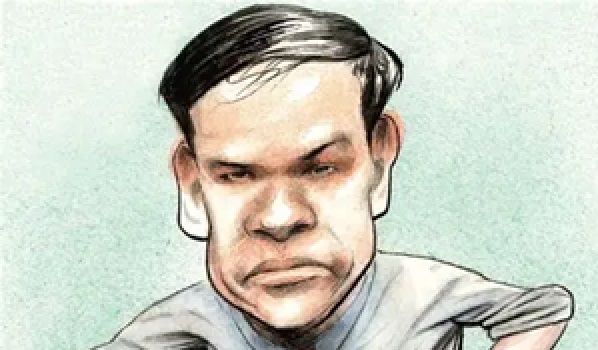
“We are headed toward massive disclosure,” says a senior advisor to America’s top diplomat and Trump’s National Security Advisor
Michael Shellenberger, Dec 03, 2025
Since May of this year, Marco Rubio has served in a dual role as President Donald Trump’s National Security Advisor and Secretary of State. The National Security Advisor is the President’s principal in-house advisor on all national security matters, chairs the National Security Council, coordinates the interagency process across the government, and briefs the President daily.
As Secretary of State, Rubio negotiates treaties, appoints and directs ambassadors, controls the $84 billion State Department and USAID budget, oversees 80,000 employees at more than 270 diplomatic posts worldwide, and has direct authority over diplomatic security, intelligence sharing, sanctions enforcement, and emergency evacuations of U.S. citizens abroad.
The last official to hold both such positions was Henry Kissinger from 1973 to 1975. For Rubio, who was also the former ranking member of the Senate Foreign Relations Committee and vice-chair of the Senate Select Committee on Intelligence, to play both roles reflects President Trump’s high confidence in him.
As such, it is significant that Rubio believes that elements within the US government have recovered technology from a nonhuman intelligence, reverse-engineered it, and let private military contractors take control of it in ways that could be undermining national security and result in a Pearl Harbor-like event.
“The real risk in transferring technology that is not useful to us today to a corporate entity over decades,” says Rubio, “is that the corporate entity comes to basically possess and control access to it for their own purposes, not for the purposes of national security.”
Nick Pope, who investigated Unidentified Anomalous Phenomena (UAP) for the UK Ministry of Defence, said, “It’s hard to overstate the significance of [Rubio’s] statement. Rubio’s remarks are so forthright that one could speculate they’re officially-authorized prelude to Disclosure, to test the waters ahead of an official, Presidential announcement.”…………………………………………….(Subscribers only) https://www.public.news/p/secretary-of-state-rubio-believes
∙
1 This Month

of the week – Shut Down Drone Warfare!


Tell the Ukrainian Government to Drop Prosecution of Peace Activist Yurii Sheliazhenko

Petition to revoke the licensing of the Near Surface Nuclear Disposal Facility (NSDF) at Chalk River. https://www.ourcommons.ca/petitions/en/Petition/Details?Petition=e-7247
To see nuclear-related stories in greater depth and intensity – go to https://nuclearinformation.wordpress.com
-
Archives
- March 2026 (251)
- February 2026 (268)
- January 2026 (308)
- December 2025 (358)
- November 2025 (359)
- October 2025 (376)
- September 2025 (257)
- August 2025 (319)
- July 2025 (230)
- June 2025 (348)
- May 2025 (261)
- April 2025 (305)
-
Categories
- 1
- 1 NUCLEAR ISSUES
- business and costs
- climate change
- culture and arts
- ENERGY
- environment
- health
- history
- indigenous issues
- Legal
- marketing of nuclear
- media
- opposition to nuclear
- PERSONAL STORIES
- politics
- politics international
- Religion and ethics
- safety
- secrets,lies and civil liberties
- spinbuster
- technology
- Uranium
- wastes
- weapons and war
- Women
- 2 WORLD
- ACTION
- AFRICA
- Atrocities
- AUSTRALIA
- Christina's notes
- Christina's themes
- culture and arts
- Events
- Fuk 2022
- Fuk 2023
- Fukushima 2017
- Fukushima 2018
- fukushima 2019
- Fukushima 2020
- Fukushima 2021
- general
- global warming
- Humour (God we need it)
- Nuclear
- RARE EARTHS
- Reference
- resources – print
- Resources -audiovicual
- Weekly Newsletter
- World
- World Nuclear
- YouTube
-
RSS
Entries RSS
Comments RSS
 nuclear-news