Alexei Navalny Was an Ultra-Right Nationalist Who Compared Muslims to Cockroaches
Medium, Matthew Puddister 23 Feb 24
The death of Alexei Navalny in a Russian prison camp Feb. 16 prompted a wave of eulogies from Western politicians and media, Canada summoning the Russian ambassador in protest, and the immediate accusation that Russian President Vladimir Putin had had the Western-backed opposition leader killed. Such accusations may or may not be true; the authoritarian Putin has long been credibly linked to the assassination of his political rivals. But the campaign to portray Navalny as some liberal hero of democracy and human rights — perhaps reaching its height with the 2022 film Navalny, which won the Academy Award for Best Documentary Feature — is pure fiction, a Western propaganda invention.
In reality, Navalny was a far nastier piece of work: an ultra-right racist and Russian nationalist, who railed against immigration and compared Muslims to “flies and cockroaches”. It’s ironic that Western liberals who view Donald Trump as a puppet of Russia/Putin and the very incarnation of evil are mourning a figure whose politics in all essentials are very similar to Trump’s. Consider Trump’s infamous attack on illegal immigrants launching his 2016 U.S. presidential campaign — “When Mexico sends its people, they’re not sending their best … They’re bringing drugs, they’re bringing crime, they’re rapists” — to Navalny’s remarks in a 2012 interview stating, “Immigrants from Central Asia bring in drugs [to Russia].”
Like Trump, Navalny encouraged and welcomed support from the most extreme fringes of the far right. In 2007, Yabloko, Russia’s oldest liberal party, kicked out Navalny for his “nationalist views” and participation in the Russian March, an annual rally that brings together thousands of far-right Russian nationalists, monarchists, and white supremacists under the slogan “Russia for ethnic Russians”. Shortly thereafter, Navalny released a video in which he presents himself as a “certified nationalist” who wants to exterminate “flies and cockroaches”, his rant intercut with shots of bearded Muslim men. In the video, Navalny then takes out a gun and shoots an actor wearing a keffiyeh, who is portrayed as trying to attack him……………………………………………………………………………………………………………………
the fawning tributes to Navalny by reformist politicians and celebrities beggar belief in their willful disregard for this man’s racist, far-right politics. Instead, they adhere to the bourgeoisie’s standard rubric by which those who support the interests of U.S. imperialism are hailed as champions of “freedom”, while those who oppose the interests of U.S. imperialism are vilified…………………………………………
Contrary to what Joe Biden, Cornel West, and Bono would have us believe, the mere fact of being Russian and opposing Vladimir Putin does not make someone an icon of freedom. U.S. imperialism and its allies have a long tradition of funding far-right forces abroad as proxies………………………………………. https://medium.com/@matthew.puddister/alexei-navalny-was-an-ultra-right-nationalist-who-compared-muslims-to-cockroaches-1864e0cda000
Nuclear route does Scotland no favours – Tommy Sheppard
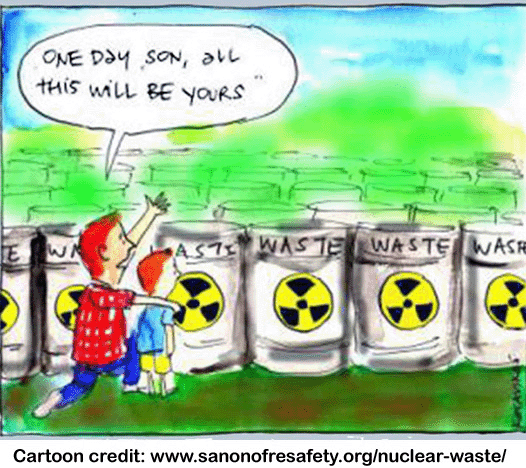
As we limp towards a general election later this year, energy policy will feature high on the political agenda.
By Tommy Sheppard, 23rd Feb 2024, https://www.edinburghnews.scotsman.com/news/opinion/columnists/nuclear-route-does-scotland-no-favours-tommy-sheppard-4529234
Sadly, though, it looks as if one aspect of that debate will escape serious scrutiny due to a cosy consensus between the main parties at Westminster. Nuclear power.
Earlier this week Parliament debated the government’s recently published civil nuclear roadmap. This hare-brained scheme sets out an ambition to quadruple the current 5.9 gigawatts of nuclear energy production by 2050. Sadly, not only does the Labour party support this Conservative plan, it accuses the government of dragging its feet on implementation, suggesting that if anything a Starmer administration will accelerate the nuclear programme.
It’s crazy that this 20th century technology still commands such widespread political support in the UK. A quick recap. Nuclear power is – by far – the most expensive way of generating electricity ever devised by mankind. Contrary to claims it is not a renewable energy source. It is fuelled by uranium ore of which there is approximately 90 years supply left, less if programmes expand. Most of this is in Kazakhstan so it hardly qualifies as a secure energy source.
Moreover, it produces toxic waste which has to be kept isolated from human beings for generations. The new roadmap by the way suggests a new form of reactor which will produce twice as much waste and has no credible plan to safeguard it.
You can only spend a pound once – and if the government spends billions on nuclear that investment will be siphoned off renewable energy development. The craziest part of Labour’s plan is to argue for a further windfall tax on oil and gas in order to subsidise new nuclear plants in England. Don’t get me wrong, corporations should pay fair taxes, especially on excess profits. But of all the things you might spend that revenue on, subsidising nuclear power must surely be the worst.
If this continues, our children will look back mid-century and wonder why we didn’t make use of the phenomenal natural energy resources from sun, sea and air. We can stop this nonsense by the simple measure of putting Scotland’s energy policy in the hands of the people who live here. Another reason why Scotland should be an independent country.
Tommy Sheppard is SNP Scotland & Constitutional Affairs Spokesperson
Navalny had a mixed past – was an “ultra nationalist”
Radio Free Europe, February 25, 2021
1 “…………………………On February 23, the prominent NGO Amnesty International withdrew Navalny from its list of “prisoners of conscience,” a designation reserved for people imprisoned for who they are or what they believe. Amnesty said Navalny, who is in prison on what he and his supporters call trumped-up charges aimed at silencing him, fell short of its criteria because of past statements the rights watchdog perceived as reaching the “threshold of advocacy of hatred.”
Amnesty’s recent probe into Navalny, who has come under scrutiny for his association with Russian nationalists and statements seen as racist and xenophobic, was prompted by a wave of complaints that appeared part of “a coordinated campaign” to discredit him after he was named a “prisoner of conscience” in January.
One anonymous Amnesty employee told Russian media that a Twitter thread about Navalny by Katya Kazbek — a U.S.-based freelance columnist and translator who has written for Russia’s state-funded media outlet RT and for RFE/RL — lists examples of objectionable comments made by Navalny and was cited by a wave of e-mails sent to the organization.
Kazbek, whose real name is Yekaterina Dubovitskaya, told RFE/RL she has “never been knowingly in touch with anyone connected to Amnesty International.”
In response, the liberal Yabloko party expelled Navalny from its ranks, but under the banner of a new group called the National Russian Liberation Movement in 2007 he released YouTube videos describing himself as a “certified nationalist” and advancing thinly veiled xenophobia.
In one clip, Navalny is shown in a dentist’s outfit as footage of migrants in Moscow is interspersed with his references to harmful tooth cavities. “I recommend full sanitization,” he says. “Everything in our way should be carefully but decisively be removed through deportation.”
In subsequent years Navalny publicly softened his tone but continued promoting conservative immigration policies, campaigning to introduce a visa regime with Central Asia, a major source of labor migrants to Russia, ahead of the 2018 presidential election from which the Kremlin ultimately barred him. He also railed against “Islamism” in posts to his blog as late as 2015.
Navalny has repeatedly stated in interviews that he doesn’t regret his past comments or videos, and suggested that an ability to engage both liberals and nationalists is part of his strength as a politician.
Victory: Nuclear Free Local Authorities welcome Council vote on South Holderness nuke dump plan

NFLA 21 Feb 24,
The UK/Ireland Nuclear Free Local Authorities have welcomed today’s (21 February) overwhelming decision by the East Riding of Yorkshire Council to withdraw South Holderness from further consideration as a potential location for a high-level radioactive waste dump.
A motion was brought by South East Holderness Ward Councillor Sean McMaster to a meeting of the Full Council calling for the Council to ‘use its right of withdrawal with immediate effect due to the strong opposition from the communities of South Holderness’ . The Leader of the Council, Councillor Anne Handley, had already indicated her support for the motion, as had the Leaders of the Opposition Groups. Consequently, the motion was carried on a cross-party basis with 52 in favour and only 1 against.
News that the area was under consideration by Nuclear Waste Services was only announced in late January, with Invest East Yorkshire listed as the ‘Interested Party’ and a Working Group established with Dr David Richards as Chair.
The news prompted a massive public backlash with local people in the hundreds flocking to join a Facebook group, South Holderness against the GDF. Tens of thousands of leaflets have been distributed by local volunteers who have been pounding the streets in all weathers to inform residents of their reasons for opposing the plan, whilst 1,200 local people attended the first round of public events hosted by NWS staff, many to register their opposition and pose challenging questions to geologists from the nuclear industry. Chair Lynn Massey-Davis appeared in the first few days of the campaign to challenge the legitimacy of the dump in a spirited performance in a television interview with Peter Levy on BBC Look North.
The NFLAs have been proud to have offered some advice to the group and to local politicians at the Withernsea Town and East Riding Councils. Following an online conversation with the Labour Group Leader, Councillor Steve Gallant, the NFLA Secretary produced a bespoke briefing on the Right to Withdraw (see notes) for circulation to Councillors.
21st February 2024
Victory: NFLAs welcome Council vote on South Holderness nuke dump plan
The UK/Ireland Nuclear Free Local Authorities have welcomed today’s (21 February) overwhelming decision by the East Riding of Yorkshire Council to withdraw South Holderness from further consideration as a potential location for a high-level radioactive waste dump.
A motion was brought by South East Holderness Ward Councillor Sean McMaster to a meeting of the Full Council calling for the Council to ‘use its right of withdrawal with immediate effect due to the strong opposition from the communities of South Holderness’ . The Leader of the Council, Councillor Anne Handley, had already indicated her support for the motion, as had the Leaders of the Opposition Groups. Consequently, the motion was carried on a cross-party basis with 52 in favour and only 1 against.
News that the area was under consideration by Nuclear Waste Services was only announced in late January, with Invest East Yorkshire listed as the ‘Interested Party’ and a Working Group established with Dr David Richards as Chair.
The news prompted a massive public backlash with local people in the hundreds flocking to join a Facebook group, South Holderness against the GDF. Tens of thousands of leaflets have been distributed by local volunteers who have been pounding the streets in all weathers to inform residents of their reasons for opposing the plan, whilst 1,200 local people attended the first round of public events hosted by NWS staff, many to register their opposition and pose challenging questions to geologists from the nuclear industry. Chair Lynn Massey-Davis appeared in the first few days of the campaign to challenge the legitimacy of the dump in a spirited performance in a television interview with Peter Levy on BBC Look North.
The NFLAs have been proud to have offered some advice to the group and to local politicians at the Withernsea Town and East Riding Councils. Following an online conversation with the Labour Group Leader, Councillor Steve Gallant, the NFLA Secretary produced a bespoke briefing on the Right to Withdraw (see notes) for circulation to Councillors.
The impact of this decision will be profound. Under the published Community Guidance governing the GDF siting process, consideration of any Search Area must have the support of a Relevant Principal Local Authority (RPLA). The East Riding of Yorkshire Council is the RPLA for South Holderness and as such has the Right to Withdraw. Although the Community Guidance is vague and contradictory, appearing both to suggest that withdrawal can occur at any time or only once a Community Partnership is formed, it is clear that there will be little point NWS investing further money, time and staff resources on taking its plan forward at this early stage without political support; clearly then the process must soon come to an end.
Councillor David Blackburn, Chair of the NFLAs English Forum, was full of praise for local campaigners:
Commenting on the vote, Cllr Blackburn added:
“I am glad that Councillors of all parties saw sense and supported this motion on a cross-party basis. South Holderness is an agricultural and touristic area and as such was never appropriate for consideration for a nuclear waste dump. So what I do find inexplicable is why the Leader of the Council ever agreed for East Riding of Yorkshire Council to engage with the process and become a member of the Working Group in the first place, as a resolute NO would have killed the process off at the onset, as happened at Hartlepool.”
Nuclear Waste Services have now issued a press statement stating that it ‘fully respects the council’s decision to withdraw from the GDF siting process. Together with the Working Group Chair, NWS will now take the necessary steps to wind down the South Holderness Working Group and respond to outstanding requests for more information’. (See notes)…………………………………… more https://www.nuclearpolicy.info/news/victory-nflas-welcome-council-vote-on-south-holderness-nuke-dump-plan/
House is heading toward “nuclear” war over Ukraine funding, one top House GOP leader says
By Major Garrett, February 21, 2024 CBS News
There’s a “50-50” chance of a government shutdown in early March, says House Financial Services Chairman Patrick McHenry, of North Carolina, and it’s House Speaker Mike Johnson’s fear of being ousted that will determine the outcome. And at the same time, McHenry says the House is heading to a procedural “nuclear” war over funding for Ukraine……………………………………………………………………………………………………………. more https://www.cbsnews.com/news/house-ukraine-funding-the-takeout/
Great British Nuclear seeks to buy EDF land for small modular reactor.
UK Government in talks to buy site in Heysham, Lancashire, as it rolls out the new
technology.
The government is holding talks with EDF to take control of
land at a site in Lancashire as part of plans to roll out mini-nuclear
power stations in Britain. Great British Nuclear is in early discussions
with the French state-owned energy group over buying land adjacent to its
existing nuclear plants at Heysham, with a view to potentially giving the
green light for a private developer to build a small modular reactor there.
The 255-acre site is one of eight in Britain approved for new nuclear
development and is the location of EDF’s Heysham 1 and Heysham 2 nuclear
power stations. Almost 109 acres has a nuclear site licence, while the rest
is being used for other purposes. Britain’s first small nuclear plants
are due to be awarded government contracts this summer after six designs,
including one from Rolls-Royce, were selected to compete for up to £20
billion in taxpayer funding.
The government does not expect to make a final
investment decision on the first small modular reactor until 2029. Great
British Nuclear is searching initially for two sites, each to house a
single mini-reactor, with a plan to build between four and six in total, as
part of the first phase of the rollout in Britain.
Times 19th Feb 2024
Nuclear Delays, Cost Overruns Imperil UK’s Net-Zero Goals

For the first time, the department’s nuclear road map was honest about why Britain and France are still so keen on nuclear, as opposed to much cheaper renewables. The roadmap mentions 14 times the link between civil and military nuclear power and the need to strengthen ties between the two to reduce costs. This military link was consistently denied in the 1990s, and in the earlier years of this century.
February 12, 2024, Paul Brown, https://www.theenergymix.com/nuclear-delays-cost-overruns-imperil-uks-net-zero-goals/
Électricité de France (EDF), the owner of the biggest construction project in the world—the giant nuclear power plant under construction at Hinkley Point in the southwest of Britain—recently announced further cost increases and delays to its completion, adding to doubts that the United Kingdom can fulfill its legal pledges to reach net-zero carbon emissions by 2050.
The French government, which owns EDF, wants the UK to chip in billions of pounds to help bail the project out, but London says it has no obligation to do so. This is leading to tensions between the two governments, with French taxpayers objecting to paying for British nuclear power stations when their own nuclear industry is struggling with under-investment and a massive debt burden. It leads to doubts that a second power station of the same size, this time on the Suffolk coast in the east of England, will ever be built.
The overoptimistic miscalculations made by EDF mean the cost estimates for the Hinkley Point project have now doubled from the 2015 estimate of £18 billion (US$22.8 billion) to between £31 and £34 billion. But that makes the problem sound better than it is: the figures are calculated in 2015 prices, and the true cost with inflation is now said to be £46 billion (US$58 billion) and still rising.
EDF is faced with making up this funding gap when it is already deep in debt and needs vast capital reserves to modernize its own fleet of more than 50 reactors and start a promised new build program. Just before the French government re-nationalized the company last year, its debts were already a staggering €54.5 billion (US$59 billion)/
When the Hinkley Point power station was first planned, the company famously predicted that UK consumers would be cooking their Christmas turkeys on power from the station by 2017. That date has been revised several times, and stood at 2027 until the third week in January. Now it has slipped back in the best case to 2029, but more likely to 2031. As one commentator put it: “The turkeys would have died of natural causes by then.”
The problem is that both governments are relying on their nuclear industries for a large part of their emission reductions. Both have to reach net-zero targets by 2050. Hinkley Point would in theory be producing 7% of British electricity by 2030 as an interim target date, displacing existing gas stations. But Hinkley Point was only part of the net-zero plan—EDF is in partnership with the British government to build a second identical power plant at Sizewell, on the Suffolk coast.
Both Hinkley Point C and Sizewell C are twin European Pressurised Reactors (EPRs), designed by EDF. Each station is supposed to produce enough power to supply six million British homes. But it is a design that has proved difficult to construct. EDF started one in Flamanville in Normandy in 2009 which was expected to be running in 2013, but is still not complete. Yet the UK is intent on continuing to allow EDF to build four reactors of the same design in Britain.
The British government has so far sunk £2.5 billion into the Sizewell C project but is not making a final investment decision while it looks for private investors. Up to now, it has found no takers.
So while the future of this power station remains in doubt, the timetables are slipping badly, and even if it does go ahead not many would bet on it producing power before 2050.
One of the odd aspects of this situation is that, in an election year in Britain, there is no political debate about what looks like a serious crisis for the nuclear industry and the UK’s climate targets. The Labour party supports the building of nuclear power stations, too, and will not be drawn into debate for fear of antagonizing the trade unions in the sector that are strongly in favour of giant power stations.
Suffolk campaigners, however, are not so reticent. “Hinkley Point C and Sizewell C epitomise the definition of insanity—doing the same thing over and over and expecting a different result,” said Alison Downes of Stop Sizewell C. “EDF and its EPR reactors are an unmitigated disaster, and it stretches credulity that Sizewell C is affordable. Indeed the government seems too embarrassed to publish the cost of Sizewell C. It should cancel the project immediately instead of handing over scarce billions that could be used instead for renewables, energy efficiency, or—in this election year—schools and hospitals.”
Stop Sizewell C and a number of other groups are challenging the Conservative government in the courts over its failure to fulfill its legal obligations under its own law that bound the UK to reach net-zero by 2050. Further delays to the nuclear power station construction program may add to the campaigner’s case.
Last month, the UK government produced a new nuclear roadmap projecting a massive new build program to bolster the industry, both for these large reactors and dozens of small modular reactors. The Department for Energy Security & Net Zero (DESNZ) remains optimistic about the nuclear industry despite the delays, but said it would not be bailing out EDF.
Hinkley Point C “is not a government project,” the department said in a statement, so “any additional costs or schedule overruns are the responsibility of EDF and its partners and will in no way fall on (UK) taxpayers”.
For the first time, the department’s nuclear road map was honest about why Britain and France are still so keen on nuclear, as opposed to much cheaper renewables. The roadmap mentions 14 times the link between civil and military nuclear power and the need to strengthen ties between the two to reduce costs. This military link was consistently denied in the 1990s, and in the earlier years of this century.
While Labour, which has a massive lead in the opinion polls going into election year, refuses to engage in a nuclear debate, it does differ from the Conservatives on the role of renewables. The current government encourages offshore wind and some solar power but has effectively blocked onshore wind farms for nearly a decade. Since this is the cheapest form of electricity production in these windy islands, and the public overwhelmingly support onshore turbines, Labour says it will at least overturn this blocking policy.
The UK’s biggest nuclear waste dump faces an inquiry by the National Audit Office (NAO) over its soaring costs and safety record.

The public spending watchdog has said it wants to examine whether Sellafield in
Cumbria is “managing and prioritising the risks and hazards of the site
effectively in the short and long term”.
It follows growing concern over
the costs of managing the site’s nuclear legacy. An NAO statement said:
“Cleaning up the site is a long-term endeavour, likely to last well into
the next century. It is expected to cost £84bn (in discounted prices),
though this cost estimate is highly uncertain.”
Sellafield stores and
treats nuclear waste from weapons programmes and power generation. The site
comprises more than 1,000 buildings and has about 81,000 tonnes of
radioactive waste in storage. This is expected to rise to 3.3m tonnes over
the coming years.
About 2,000 tonnes comprise high level waste – the most
toxic – including around 140 tonnes of plutonium in what is the world’s
largest stockpile. The site employs about 11,000 people and cost the
taxpayer around £2.5bn last year. Scrutiny of its budget and safety record
come after a series of critical reports in the Guardian, with allegations
ranging from lax cyber security to a poor work culture. The Government,
which ultimately controls Sellafield, has defended the site’s operations,
insisting there is “no elevated risk to public safety as result of the
issues reported”.
Telegraph 15th Feb 2024
UK’s Nuclear Strategy Faces Criticism: Uncertainty Looms for Small Modular Reactors

The UK’s nuclear strategy faces increasing criticism from MPs due to lack of clarity on small modular reactors (SMRs). Concerns about timelines, waste management, and costs cast doubt on their role in the future energy mix.
Rafia Tasleem, 14 Feb 2024, https://bnnbreaking.com/politics/uks-nuclear-strategy-faces-criticism-uncertainty-looms-for-small-modular-reactors
The UK government’s nuclear strategy, specifically its approach to small modular reactors (SMRs), faces mounting criticism from Members of Parliament (MPs) for its lack of clarity and the ensuing uncertainty in the nuclear sector.
A Murky Vision for Nuclear Power
MPs have expressed serious concerns about the timeline for SMR projects, potential waste management issues, and the overall vision for the sector. Despite promises of support and investment, the government’s plans for SMRs remain obscure, casting doubts on their role in the future energy mix.
The Environmental Audit Committee has voiced strong criticisms, citing the unclear strategy as a significant obstacle for the nuclear industry. This ambiguity not only undermines industry confidence but also raises questions about potential cost implications for taxpayers.
Hinkley Point C: A Cautionary Tale
The ongoing saga of Hinkley Point C serves as a stark reminder of the challenges and uncertainties surrounding UK energy policy and developments, especially in the face of the climate crisis.
Initially greenlit in June 2016, the project’s funding was divided between the government, EDF, and China General Nuclear (CGN). However, in a surprising turn of events, CGN withdrew its funding in December 2022, leaving the government to shoulder the shortfall in investment.
Furthermore, the opening of Hinkley Point C has been delayed until at least 2029, with the projected cost ballooning from £25 billion to at least £35 billion—a staggering increase that has raised eyebrows and ignited debates on the feasibility of nuclear power as a sustainable and cost-effective solution.
The Future of UK Nuclear Power
With the UK government aiming to have 24 gigawatts of nuclear capacity by 2050, the choice lies between additional large-scale reactors like Hinkley Point C or a combination of large and SMRs. However, the escalating costs and delays associated with Hinkley Point C have cast a long shadow over the nuclear sector.
The current state of affairs raises pressing questions about the future of nuclear power in the UK, especially in light of the climate crisis and the need for sustainable and reliable energy sources. As MPs and industry experts grapple with these concerns, the search for clarity and a coherent strategy becomes ever more urgent.
As of February 15, 2024, the UK government faces a critical juncture: to address the concerns surrounding its nuclear strategy and provide a clear path forward, or risk further uncertainty and potential setbacks in the nation’s quest for a sustainable energy future.
“Unbelievable” U.S. government bailouts fund zombie nuclear projects

Unbelievable” bailouts fund zombie nuke nightmares, February 13, 2024, https://beyondnuclear.org/unbelievable-bailouts-fund-zombie-nuke-nightmares
In Stateline on February 12, 2024, Alex Brown published an article entitled “Federal money could supercharge state efforts to preserve nuclear power: A plant in Michigan might become the first to reopen after closing.”
The massive level of federal and state subsidization being handed over to the nuclear power industry is reflected in the giddiness of the head of the nuclear engineering department at the University of Michigan:
“You’re starting to see a lot of states transition to a position where they’re supportive of nuclear,” said Todd Allen, chair of the Nuclear Engineering and Radiological Sciences department at the University of Michigan. “And compared to 30 years ago, the amount of federal support for nuclear is unbelievable.” (Emphasis added)
It is unbelievable, in a shocking and horrifying way. An analysis by NIRS shows the unwitting federal taxpayer largesse benefitting the nuclear power industry included in a single law, the Inflation Reduction Act of 2022.
The Stateline article focuses on the unprecedented, outrageously expensive, and extremely high risk Palisades zombie reactor restart scheme in Michigan. Beyond Nuclear has co-led grassroots environmental resistance to this restart, as well as to Holtec’s so-called “Small Modular Reactor” (SMR) new builds scheme on the same site.
We have posted about the $3.3 billion (yes, with a B!) in federal and state bailouts for the Palisades restart, another $7.4 billion for Holtec’s SMR new builds (including at Palisades, and at its sibling, decommissioned — although still radioactively contaminated, with on-site highly radioactive waste storage — reactor site in northern Michigan, Big Rock Point), as well as more recently announced federal taxpayer and ratepayer bailouts associated with the Palisades restart, a long list still growing with time! The requested restart bailout total alone is now at around $4.5 billion, and counting! Added to the SMR new builds bailout, nearly $12 billion, or more, in federal and state taxpayer, as well as ratepayer, bailouts could be sunk, just at the Palisades site alone!
The Stateline article quoted Beyond Nuclear’s radioactive waste specialist, Kevin Kamps, at length:
…While some environmental groups have embraced the nuclear investments, others have pointed to long-standing concerns about safety issues, citing infamous accidents such as those at Three Mile Island, Chernobyl and Fukushima. Opponents also note the long-term issue of radioactive waste storage, and in some cases assert that nuclear can stall the growth of renewables such as wind and solar.
“With the amount of money that’s gone into this [Palisades] restart scheme already, you could develop brand-new renewable energy proposals that would be online in the same time frame producing more electricity,” said Kevin Kamps, radioactive waste specialist at Beyond Nuclear, an environmental nonprofit that opposes nuclear energy…
Opponents of nuclear point to the canceled projects, delays and cost overruns as proof that nuclear isn’t viable.
“This is just throwing good money after bad,” said Kamps, the anti-nuclear advocate. “We stand horrified at the actions being taken by Congress and certain state governments.”
Kamps also cited previous nuclear disasters and warned of the risks of extending aging plants…
The Inflation Reduction Act of 2022 mentioned above is the law under which Holtec hopes to receive a $1.5 billion nuclear loan guarantee — $500 million more than it had talked about the past few years — which is interest-free and risk-free, in that it actually need not be paid back, leaving taxpayers holding the bag. The Bipartisan Infrastructure Law (Infrastructure Investment and Jobs Act) of 2021 is the law under which Holtec hopes to obtain $2 billion in Civil Nuclear Credits. President Joe Biden signed both bills into law.
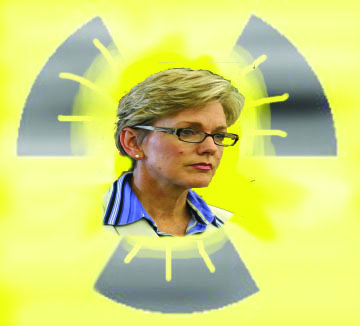
His Energy Secretary, Jennifer Granholm, a former governor and attorney general of Michigan, is in charge of deciding where the various bailouts get dispensed. This even includes the $7.4 billion for SMR development, even though that particular funding stream was created under the Energy Policy Act of 2005, as well as December 23, 2007 appropriations passed by Congress (both of which were enacted with President George W. Bush’s signature). Thus, we are horrified at the actions being taken by the Biden administration, as well.
Spending watchdog launches investigation into Sellafield

National Audit Office to examine risks and costs at nuclear waste site in Cumbria
Anna Isaac and Alex Lawson, 16 Feb 24 https://www.theguardian.com/business/2024/feb/15/spending-watchdog-launches-investigation-into-sellafield—
Britain’s public spending watchdog has launched an investigation into risks and costs at Sellafield, the UK’s biggest nuclear waste dump.
The National Audit Office (NAO), which scrutinises the use of public funds, has announced it will examine whether the Cumbria site is managing and prioritising the risks and hazards of the site effectively as well as deploying resources appropriately and continuing to improve its project management.
The findings of its investigation are expected to be published this autumn.
Sellafield is Europe’s most toxic nuclear site and also one of the UK’s most expensive infrastructure projects, with the NAO estimating it could cost £84bn to maintain the site into the next century.
Last year, Nuclear Leaks, a Guardian investigation into activities at Sellafield, revealed problems with cybersecurity, a radioactive leak and a “toxic” workplace culture at the waste dump.
Predictions of the ultimate bill for the site, which holds about 85% of the UK’s nuclear waste, vary. It cost £2.5bn to run the site last year, and the government estimates it could ultimately take £263bn to manage the country’s ageing nuclear sites, of which Sellafield accounts for the largest portion.
The site employs about 11,000 people and is the world’s largest store of plutonium. It comprises more than 1,000 buildings, many of which were not created with the intention of becoming long-term storage facilities for radioactive material.
Sellafield is so expensive that the Office for Budget Responsibility, which monitors threats to the UK government’s finances, has warned that it and other legacy sites pose a “material source of fiscal risk” to the country.
The NAO previously examined activities at Sellafield in 2018. It found some aspects of project management had improved but that more needed to be done to get a grip on vast costs and risks.
Amyas Morse, the head of the NAO at that time, found that the Nuclear Decommissioning Authority (NDA), which is tasked with management of Sellafield, needed to improve its explanation of its progress so that parliament could hold it to account.
This challenge was underlined when the Guardian uncovered how a worsening leak from a huge silo of radioactive waste at Sellafield could pose a risk to the public.
The leak, from one of the “highest nuclear hazards in the UK” – a decaying building known as the Magnox swarf storage silo – is expected to continue for at least a further 30 years. This could have “potentially significant consequences” if it gathers pace, risking the contamination of groundwater, according to an official document.
This was just one of a catalogue of safety risks arising from ageing infrastructure at the site. A document sent to members of the Sellafield board in November 2022, and seen by the Guardian, raised widespread concerns about a degradation of safety across the site, warning of the “cumulative risk” from failings ranging from nuclear safety to asbestos and fire standards.
Responding to the issues late last year, a Sellafield spokesperson said: “The nature of our site means that until we complete our mission, our highest hazard facilities will always pose a risk.”
Sellafield is owned by the NDA, a quango sponsored and funded by the Department for Energy Security and Net Zero that is tasked with cleaning 17 sites across the UK.
The NDA said it had a “responsibility to deliver for the public, including on value for money”.
“We welcome this continued scrutiny and look forward to working with the NAO,” a spokesperson said.
Australian PM Albanese and 85 Other MPs Vote to End Assange Incarceration

“Enough is enough,” PM Albanese said.
By Diego Ramos , ScheerPost, 15 Feb24, https://scheerpost.com/2024/02/15/australian-pm-albanese-and-85-other-mps-vote-to-end-assange-incarceration/—
The Australian House of Representatives voted on Wednesday in favor of a motion supporting the end of Julian Assange’s incarceration and to bring him back to Australia. Among the supporters of the motion is Australian Prime Minister Anthony Albanese, who, regarding the long term prosecution and detention of Assange, declared, “enough is enough.”
In the motion introduced by MP Andrew Wilkie, the argument is made for the release of Assange from Belmarsh Prison in the UK and returned to Australia. This comes ahead of next week’s court ruling on Assange’s extradition appeal.
Wilkie said, “It will send a very powerful political signal to the British government and to the US government that the British government should not entertain the idea of Mr Assange being extradited to the US.”
86 members of the house of representatives, including Albanese, voted in favor of the motion; 42 members voted against it.
Wilkie, speaking to Parliament about Assange stated, “Surely this man has suffered enough. The matter must be brought to an end.”
Adam Bandt, member of Australian Parliament and leader of the Australian Greens, said, “…[T]his sets an incredibly chilling precedent for journalists in the future and for journalists’ ability to hold governments to account, to say uncomfortable things about governments … and to know that you can tell the truth without facing imprisonment and without facing a risk to your own life.”
If Assange’s appeal is rejected, he faces immediate extradition to the United States, where he would be set to face trial for various charges, including the release of confidential military records and diplomatic cables in 2010.
Wilkie said the vote demonstrated that Australia stood “as one,” on the Assange case and “[r]egardless of what you might think of Mr Assange, justice is not being served in this case now.”
Below is a transcript of the motion authored by MP Andrew Wilkie: [on original]
Small nuclear reactors (SMRs) still have plenty to prove.

Britain’s MPs are not paid to be polite. So it must have been with some restraint that the members of the environmental audit committee described the government’s nuclear strategy this week as “lacking clarity”, not least over small modular reactors.
Lacking clarity? You can think of better ways to describe the financially
radioactive shambles, complete with Rishi Sunak’s fantasy “road map”.
He’s glibly promising 24 gigawatts of capacity by 2050 — either another
seven Hinkley Point Cs or a mix of them and SMRs.
Surely he’s spotted what’s going on with that Somerset nuke? Costs up from £18 billion to as
much £35 billion in 2015 prices, or £46 billion in today’s money, with
its start-up likely to be delayed six years to 2031.
Maybe he hasn’t, because he’s planning a lookalike for Sizewell C in Suffolk, built by the
same French-backed EDF. Only this time it won’t be EDF but consumers and
the taxpayer on the hook for the construction cost overruns. As the
committee chairman Philip Dunne noted: “The UK has the opportunity to be
a genuine world leader in the manufacture of SMR nuclear capability with
great export potential.” But despite the taxpayer lobbing in £215
million to support their development, MPs are right to see a deficit on the
“clarity” front.
As Professor Steve Thomas from the University of
Greenwich says: “SMRs are up to a decade behind large reactors in terms
of their commercial development and their economics are speculative and
untested.” Rolls’s are 470 megawatts, one seventh of the 3.2GW Hinkley.
But who knows if it really can build them for £2.5 billion a pop? Or
whether it’ll prove feasible to cram several on a single site. In
November Utah Associated Municipal Power Systems canned a project to build
six 77MW NuScale SMRs at a site in Idaho. And even if they’d be far
smaller than Hinkley, they’d still need to be just as safe. Will safety
issues drive up costs? Also, who’s paying for them? Consumers, the
taxpayer, the private sector? And what’s the cost versus alternative
energy technologies?
Times 15th Feb 2024
https://www.thetimes.co.uk/article/shameful-shambles-over-mega-nukes-d6wzvp33v
PM Trudeau dismisses Algonquin concerns over Chalk River nuclear waste dump

COMMENT. This is a sad day when we witness so clearly who Trudeau sides with in regard to nuclear waste, as well as the betrayal to Indigenous peoples about authentic reconciliation as per the violations related to UNDRIP.
Thank heavens that various news media, including CBC, are beginning to pay increasing attention to the folly of nuclear waste disposal and how the CNSC absolutely fails to protect human health and the natural environment.
Attention also must be solicited among the news media about the proposed NWMO DGR, because if it is not stopped at this autumn’s site selection stage, I have no faith or trust in what would follow, namely, a federal environmental assessment (EA), because the EA would be controlled by the CNSC.
Trudeau touts nuclear safety commission’s expertise as Bloc leader allies with First Nations
Brett Forester · CBC News · Feb 14, 2024
Algonquin leaders are finding the Canadian government largely unmoved, but they continue to fight construction of a radioactive waste dump on unceded territory near Deep River, Ont., roughly one kilometre from the Ottawa River.
First Nations chiefs have allied with Bloc Québécois and federal Green Party leaders, joined forces with concerned civil society groups, and launched a legal fight against the project. On Wednesday they all rallied on Parliament Hill to voice their united opposition.
“The time to act is now, for the sake of our environment, our communities and the principles enshrined in the United Nations Declaration on the Rights of Indigenous Peoples,” said Lance Haymond, chief of Kebaowek First Nation, at a news conference outside the House of Commons.
While legally non-binding, the UN declaration, or UNDRIP, outlines minimum human rights standards, including against storing hazardous materials in Indigenous territories without their consent.
Last month, the Canadian Nuclear Safety Commission (CNSC) authorized construction of a “near surface disposal facility” at the government-owned, Second World War-era Chalk River nuclear laboratory, about 190 kilometres northwest of Ottawa.
Kebaowek applied for judicial review of that decision earlier this month, relying largely on UNDRIP. Three citizens’ groups applied for judicial review the same day.
Later on Wednesday in question period, Prime Minister Justin Trudeau dismissed the concerns, swatting away questions from Bloc leader Yves-François Blanchet, who picked up the cause.
“This is not a political decision. On this side of the House, we trust our experts,” said Trudeau in French.
Trudeau touted the commission as an independent, science-driven, quasi-judicial expert panel that consults with First Nations. But Haymond suggested Trudeau, always keen to recognize how Parliament Hill sits on unceded Algonquin land, is failing to live up to his promises.
“Actions speak louder than words. Reconciliation is a series of actions, and not words,” Haymond told reporters.
“So if this government is serious about reconciliation with the Anishinaabe people, we’ve given him and his government a golden opportunity.”
Run by private sector
Regulatory filings describe the disposal facility as similar to a municipal landfill, with added features for hazardous material, such as a base liner, cover, leak-detection system and wastewater treatment plant.
Canadian Nuclear Laboratories (CNL), a private-sector consortium contracted to manage federal nuclear sites, intends to bury a million cubic metres of low-level radioactive waste in the giant hillside mound.
The commission concluded the project is not likely to cause significant adverse effects on the environment or Indigenous peoples, provided CNL implements mitigation and monitoring measures.
Ten out of 11 federally recognized Algonquin First Nations oppose the project, while the Algonquins of Pikwàkanagàn, roughly 150 kilometres northwest of Ottawa, is the lone community to consent.
Before hosting a rally outside, Haymond and other Algonquin leaders joined Green Party leader Elizabeth May, Bloc MP Sébastien Lemire, and Ole Hendrickson, spokesperson for the citizens’ groups that launched a court challenge.
May accused the government of ignoring UNDRIP in the interests of industry. She singled out AtkinsRéalis, a member of the CNL consortium better known by its former name SNC Lavalin, the engineering giant that pleaded guilty to fraud in a 2019 corruption scandal.
“They are the powerful corporate lobbying interest behind ignoring UNDRIP, ” May told reporters………………………
Tritium in Perch Lake
Hendrickson warned the mound “would release pollutants into the Ottawa River during and after operation, according to the proponent’s own study. This makes it an issue for millions of people.”…………………………………https://www.cbc.ca/news/indigenous/prime-minister-chalk-river-nuclear-waste-1.7115467
Australian Parliament votes in favour of bringing Assange home
By John Jiggens | 15 February 2024, https://independentaustralia.net/politics/politics-display/parliament-votes-in-favour-of-bringing-assange-home,18333—
In a historic vote, parliamentarians have shown unprecedented support for the return home of imprisoned journalist Julian Assange. Dr John Jiggens reports.
WEDNESDAY 14 FEBRUARY turned out to be an unanticipated Happy Valentine’s Day for Julian Assange supporters. The Australian House of Representatives passed a motion introduced by Tasmanian Independent Andrew Wilkie, on behalf of the Parliamentary Friends of Julian Assange, urging the U.S. and the UK to bring their prosecution of the WikiLeaks founder to a close and allow him to return to his family and home in Australia.
The vote was 86 for Yes (ALP, Greens and Independents) and 42 for No (mostly Liberal and National).
In an unprecedented show of parliamentary support for Assange, two-thirds of the lower house voted for the motion. It was not unanimous because Coalition members overwhelmingly chose to support the U.S. and UK in what the former UN Rapporteur on Torture, Nils Melzer, described as the torture of an Australian journalist.
Greens leader Adam Bandt appealed to the Coalition to support the motion. Assange has become symbolic of journalists around the world who face attacks on press freedom, he argued, ranging from political prosecutions through to murder.
Assange’s prosecution set a chilling precedent for journalists about their ability to hold governments to account and to tell the truth without facing imprisonment and without facing a risk to their own lives.
Bandt said:
“If governments think that participation in the AUKUS agreement and alliance is so critical, surely part of that should be the insistence on human rights and the proper treatment of our citizens — of Australian citizens. If we are sitting around a table with these governments, we should be able to insist that Julian Assange is brought home.”
His appeal fell on deaf ears — it remained AUKUS regardless of any cost.
For Assange, the situation is still perilous. He remains incarcerated in HM Prison Belmarsh in the UK, where he has spent the last five years, locked down for 23 hours each day in a three-metre by two-metre cell, unconvicted of any charges, an innocent man in a living hell, like Dylan’s ‘Hurricane’. Like Nelson Mandela, he walks his long walk to freedom around that tiny cell every day.
In one week, the UK High Court will decide whether he has exhausted all his legal appeals to prevent being extradited to the USA where he would face charges that could see him imprisoned for 175 years under their notorious 1917 Espionage Act for publishing material, which revealed shocking evidence of misconduct by U.S. forces.
As Senator David Shoebridge tweeted on the day of the vote:
‘There are real concerns that if Julian loses next week he will be immediately extradited.’
In this epic David versus Goliath mismatch, one lone Australian journalist pitted against the world’s greatest empire, it was rare good news. Members and supporters of the Parliamentary Friends of Julian Assange tweeted happily.
Andrew Wilkie, Convenor of the Parliamentary Friends of Assange:
‘I successfully moved a motion to recognise the importance of bringing Julian Assange’s extradition to an end. The Govt voted for it in an unprecedented show of political support for Julian. The US must heed these calls & drop the extradition. #FreeAssangeNOW #auspol #politas.’
Adam Bandt, Leader of the Greens:
‘Today – for the first time – the House voted to call on the UK & the USA to bring Julian Assange home. His family, the people and this Parliament want him home.
PM — it’s time we make this a reality.’
Dr Monique Ryan, Independent member, Kooyong:
‘A powerful moment. Today the Government and crossbench called on the United States and the United Kingdom to stop prosecuting Julian Assange so he can come home. This is the ultimate test of our nations’ friendship and I sincerely hope it is heard.’
David Shoebridge, Greens Senator:
‘Today the House of Representatives has voted in favour of a motion from my Parliamentary Friends of Assange colleague @WilkieMP on the need to bring Julian home. This is a genuinely historic moment and a testament to the work of so many for so many years. 86-42 vote.’
1 This Month
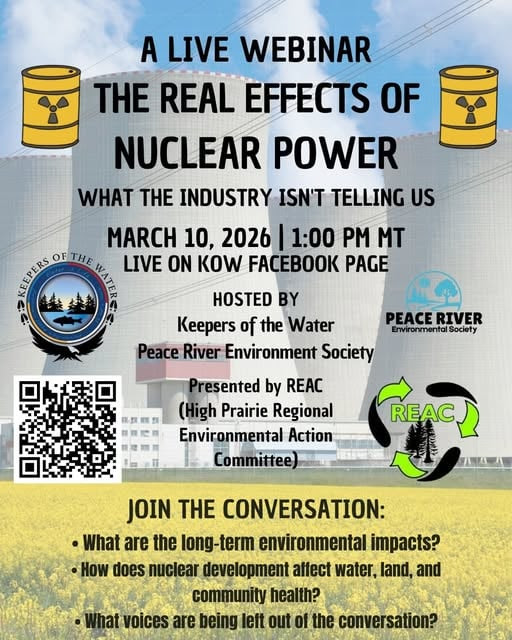
10 March A LIVE WEBINAR THE REAL EFFECTS OF NUCLEAR POWER
What the Industry Isn’t Telling Us
1:00 PM Mountain, 2 pm Central, 3 pm Eastern. Live on the Keepers of the Water Facebook page
18 March Webinar @ 1 PM EST: An Assessment of SMR Projects: The Case of Canada
register for the zoom:
https://us02web.zoom.us/webinar/register/WN_o8BIIOUvQ2ONJR1nta65DQ#/registration


of the week – STOP SMALL MODULAR REACTORS IN CANADA
To see nuclear-related stories in greater depth and intensity – go to https://nuclearinformation.wordpress.com
-
Archives
- February 2026 (268)
- January 2026 (308)
- December 2025 (358)
- November 2025 (359)
- October 2025 (376)
- September 2025 (258)
- August 2025 (319)
- July 2025 (230)
- June 2025 (348)
- May 2025 (261)
- April 2025 (305)
- March 2025 (319)
-
Categories
- 1
- 1 NUCLEAR ISSUES
- business and costs
- climate change
- culture and arts
- ENERGY
- environment
- health
- history
- indigenous issues
- Legal
- marketing of nuclear
- media
- opposition to nuclear
- PERSONAL STORIES
- politics
- politics international
- Religion and ethics
- safety
- secrets,lies and civil liberties
- spinbuster
- technology
- Uranium
- wastes
- weapons and war
- Women
- 2 WORLD
- ACTION
- AFRICA
- Atrocities
- AUSTRALIA
- Christina's notes
- Christina's themes
- culture and arts
- Events
- Fuk 2022
- Fuk 2023
- Fukushima 2017
- Fukushima 2018
- fukushima 2019
- Fukushima 2020
- Fukushima 2021
- general
- global warming
- Humour (God we need it)
- Nuclear
- RARE EARTHS
- Reference
- resources – print
- Resources -audiovicual
- Weekly Newsletter
- World
- World Nuclear
- YouTube
-
RSS
Entries RSS
Comments RSS
 nuclear-news