The Rising Nuclear Threat
Readers respond to the “At the Brink” series of Opinion articles.
March 30, 2024, https://www.nytimes.com/2024/03/30/opinion/nuclear-threat.html
To the Editor:
Re the “At the Brink” series (Opinion, March 10):
Thank you for highlighting the existential threat of nuclear weapons.
President Ronald Reagan and the last Soviet president, Mikhail Gorbachev, issued a joint statement in 1985 saying “a nuclear war cannot be won and must never be fought.” But we squandered the opportunity at the end of the Cold War to abolish these weapons.
Today we are entering an extremely dangerous new arms race and risking direct military confrontation with a revanchist Russia, while other nuclear conflicts loom around the world.
The United States, as you report, is expected to spend up to $2 trillion to “modernize” the entire U.S. nuclear arsenal. More modern weapons are more likely to be used and to take the world over the fateful nuclear threshold.
A group of citizens and experts has proposed an alternative: “Back From the Brink,” a program to reduce nuclear risk. It calls on the United States to 1) declare it will never be the first to use nuclear weapons in a conflict and invite other nations to make similar pledges; 2) take nuclear weapons off hair-trigger alert; 3) end the president’s sole, unchecked authority to launch a nuclear attack; 4) cancel plans to “modernize” its nuclear arsenal; and 5) enter negotiations with other nuclear powers toward the verifiable global elimination of nuclear weapons.
An awakened citizenry must demand that our leaders work to end the nuclear threat.
David Keppel
Bloomington, Ind.
UK’s ever more expensive nuclear submarines will torpedo spending plans for years to come.

Jasper Jolly and Alex Lawson, https://www.theguardian.com/business/2024/mar/31/uks-ever-more-expensive-nuclear-submarines-will-torpedo-spending-plans-for-years-to-come
Whoever wins the next election, a reckoning is overdue on the costs of Britain’s nuclear deterrent.
When Rishi Sunak visited Barrow-in-Furness on Monday he said the Cumbrian town was “mission critical for our country” because of its role building four new nuclear submarines to carry the UK’s nuclear weapons. If you believe Sunak’s erstwhile ally, Dominic Cummings, then that mission faces serious problems.
Cummings, once Boris Johnson’s most powerful adviser, said this month – in characteristically aggressive terms – that spiralling costs were making a mockery of the government’s budget plans. He wrote on X: “the nuclear enterprise is so fkd [sic] it’s further cannibalising the broken budgets and will for decades because it’s been highly classified to avoid MPs thinking about it.”
But the scale of the issue makes it hard to ignore. The government reiterated last week that the four new Dreadnought class submarines would cost £31bn plus a £10bn “contingency”. But the Nuclear Information Service (NIS), a monitoring group, said in 2019 that the full cost of the nuclear weapons programme between 2019 and 2070 could be £172bn, when including new warheads and running costs.
Costs are also increasing rapidly, as the government has prioritised replacing the existing Vanguard submarines on time rather than on budget. (The Vanguard boats launch Trident nuclear missiles – like the one that crashed into the sea during a test last month.)
The Ministry of Defence puts the cost of the programme to replace the UK’s nuclear weapons at £118bn over the next decade. That is already £8bn more than the Treasury has forecast, suggesting something may have to give elsewhere.
The National Audit Office, a government watchdog, found in December that forecasts of costs of the MoD’s Defence Nuclear Organisation had risen by £38.2bn in the past year.
However it is counted, hugely costly delays and overruns, plus inflation, mean a reckoning is overdue on the costs of Britain’s nuclear submarines.
“They don’t have very many good options,” said David Cullen, director of the NIS. He said the problems appeared so intractable that it could affect the UK’s continuous at-sea deterrence – the longstanding policy of always having a nuclear-armed submarine gliding silently under the waves in case of attack.
“It would be much better for them to make a conscious decision to stop having constant patrols, rather than having it forced on them,” he said.
Nuclear submarines are among the most complicated machines ever built. They sustain 132 humans deep beneath the oceans, needing to surface only when its crew runs out of food – or runs out of patience during months without daylight.
The Labour party, eyeing power in an imminent election, has a decision over whether to confront the problem head-on – and add billions to already constrained budgets – or to continue with the sticking-plaster approach.
One thing Labour has said it will not do – to the chagrin of campaigners particularly aligned with the left of the party – is accept the UK’s diminished role in world affairs by scrapping the nuclear deterrent. David Lammy and John Healey, shadow foreign secretary and defence secretary respectively, wrote in September that “with Keir Starmer, our commitment to Nato and the UK’s nuclear deterrent – maintained on behalf of Nato allies – is unshakeable”.
Some in the defence industry believe Labour could, if elected, choose to launch an inquiry into the entire nuclear defence enterprise – which might allow it to blame the current government and help ease the blow from a big hit to its budget. However, a Labour source said the lack of visibility into classified plans meant it was not yet able to work out a detailed strategy.
One way to help government finances might be to share costs. Under the new – and increasingly controversial – Aukus alliance, Australia will receive nuclear weapons technology from the UK (with the blessing of the US, which originally bestowed the city-destroying abilities on Britain).
The Aukus programme is split into two “pillars”. Pillar one is centred on helping Australia acquire conventionally armed, nuclear-powered submarines. The second part is more techy, focusing on speeding up cooperation of specific technologies – including artificial intelligence, cyber work, quantum computing and hypersonic weapons.)
In 2022, the second pillar of the pact was extended to allow the trilateral partners to develop hypersonic weapons in response to Russia’s use of the deadly high-speed missiles in airstrikes in Ukraine.
The French defence giant Thales, a supplier of sonar and light-sensing masts, is expected to pick up work as the “eyes and ears” of the submarines. Its UK boss, Alex Cresswell, told the Observer: “Pillar one of Aukus is a once-in-a-generation event that is extremely significant for the industry as a whole. I recruit graduates on the basis of it.”
Cresswell adds: “The rate of the submarine part is being driven by the design work on the submarine after Dreadnought … that early design work is being placed now and we’re involved in it.”
Yet it is unlikely that Aukus will help to fill the Dreadnought black hole. Immediate manufacturing problems appear to be the problem there, which will not be helped by the promise of future work for submarines built after Dreadnought, according to NIS’s Cullen.
Meg Hillier, a Labour MP who heads the public accounts committee, said that budgets have been blown because of the government’s “stop/start approach to defence procurement” and “a lot of optimism bias” in plans. She said the nuclear submarine budget is one of the “big nasties” lying in wait for a future government. It is an ominous threat lurking under the surface for the next prime minister.
Biden claims binding UN Security Council Gaza ceasefire resolution is ‘non-binding.’

Walt Zlotow, 31 Mar 24 https://heartlandprogressive.blogspot.com/
After 4 tries the UN Security Council Monday passed a binding resolution demanding “an immediate ceasefire for the month of Ramadan respected by all parties leading to a lasting sustainable ceasefire.” While the US didn’t veto it, their abstention allowed the other 14 Security Council member to pass the resolution with yea votes.
But the US abstention now required the US to follow the binding resolution and cease its 6 month long enabling of the Israeli genocide in Gaza.
What to do? Since the Biden administration has no intention of ending its genocidal support, it unilaterally declared the binding resolution was non-binding.
America’s UN Ambassador Linda Thomas-Greenfield, who cast the abstention, said “We fully support some of the critical objectives in this nonbinding resolution.”
White House National Security Communications Advisor John Kirby followed Thomas-Greenfield by calling the resolution “nonbinding” four times. “Number one, it’s a nonbinding resolution. So, there’s no impact at all on Israel and Israel’s ability to continue to go after Hamas.”
A short time later State Department spokesperson Matt Miller also called the resolution “nonbinding” three times.
UN Secretary General Antonio Guterres denounced Biden’s disreputable, illegal and disheartening abrogation of international law. “This resolution must be implemented. Failure would be unforgivable.” UN deputy spokesperson Farhan Haq added, “All the resolutions of the Security Council are international law. They are as binding as international laws.”
Pedro Comissario UN envoy of Mozambique, a non-permanent Security Council said “All United Nations Security Council resolutions are binding and mandatory. It is the hope of the 10 (non-permanent members) that the resolution adopted today will be implemented in good faith by all parties.”
Even America’s foreign policy poodle Great Britain abandoned America’s trashing of international law. Their envoy stated “We expect all Council resolutions to be implemented. This one is not any different. The demands in the resolution are absolutely clear.”
President Biden is so obsessed with supporting Israel’s genocide in Gaza, he’s descended into Orwellian rhetoric to erase international law from the US diplomatic toolbox.
U.S, government to give $1.52 billion loan guarantee to Holtec to resuscitate Palisades Nuclear Plant.

Biden-Harris Administration Announces $1.5 Billion Conditional Commitment to Holtec Palisades to Support Recommission of Michigan Nuclear Power Plant
ENERG.GOV, MARCH 27, 2024
COVERT TOWNSHIP, MI — As part of President Biden’s Investing in America agenda, the U.S. Department of Energy (DOE) through its Loan Programs Office (LPO) today announced the offer of a conditional commitment of up to $1.52 billion for a loan guarantee to Holtec Palisades to finance the restoration and resumption of service of an 800-MW electric nuclear generating station in Covert Township, Michigan. The project aims to bring back online the Palisades Nuclear Plant, which ceased operations in May 2022, and upgrade it to produce baseload clean power until at least 2051, subject to U.S. Nuclear Regulatory Commission (NRC) licensing approvals. …………………………………………………

While this conditional commitment demonstrates the Department’s intent to finance the project, the company must satisfy certain technical, legal, environmental, and financial conditions before the Department enters into definitive financing documents and funds the loan. ………………….. https://www.energy.gov/articles/biden-harris-administration-announces-15-billion-conditional-commitment-holtec-palisades
Trump more blatant about supporting Israeli genocide in Gaza than Biden
Walt Zlotow , 29 Mar 24, https://heartlandprogressive.blogspot.com/2024/03/trump-more-blatant-about-supporting.html
Trump more blatant about supporting Israeli genocide in Gaza than Biden
When it comes Israeli genocide in Gaza, President Biden speaks mutely…but wields a genocidal stick. Fully aware he’s enabling the genocide of 2,300,000 Palestinians there, he conducts his endless support with weapons, vetoes or abstentions of UN ceasefire resolutions by pretending all he’s doing is defending a ‘great ally.’
But no such reticence from Trump. He glories in cheering on the Israeli slaughter there. He boasted he’d have done the same thing as Israel but chides Israel: “You (Israel) gotta get it done. And, I am sure you will do that. And we gotta get to peace, we can’t have this going on. And I will say, Israel has to be very careful, because you’re losing a lot of the world, you’re losing a lot of support, you have to finish up, you have to get the job done”
For Trump, the ongoing US enabled genocide in Gaza boils down to a PR problem. If only Israel finishes off the Palestinians, they will stop losing worldwide support.
Good grief. We have the incumbent presidential candidate quietly enabling genocide in Gaza. We have the challenger publically demanding Israel “get the job (genocide) done.”
Scotland’s National Party attacks £200m extra for nuclear deterrent and industry
By Kathleen Nutt, 25 Mar 24
The SNP have criticised an announcement by Prime Minister to commit a further £200m on strengthening the nuclear deterrent and boosting the nuclear industry saying the money would be better spent on improving the NHS or alleviating the cost of living crisis for households.
Martin Docherty-Hughes MP, the party’s defence spokesman, condemned the plans to “waste another £200 million” on nuclear and accused the Conservatives and Labour, which backed the plans, of focusing on “the wrong priorities”.
“Westminster has already wasted billions of taxpayer’s money on nuclear weapons and expensive nuclear energy. It is grotesque to throw another £200million down the drain when the Tories and Labour Party both claim there is no money to improve our NHS, to help families with the cost of living or to properly invest in our green energy future.
“This money would be much better spent on a raft of other priorities – not least investing in the green energy gold rush, which would ensure Scotland, with its wealth of renewable energy potential, can be a green energy powerhouse of the 21st century.
“And while the UK government wastes millions of pounds misfiring Trident missiles at Defence Secretary Grant Shapps, the urgent priority is more money for conventional defence and for our armed forces, who are underpaid and under-resourced.
“With both Rishi Sunak and Keir Starmer focused on the wrong priorities – it is only the SNP standing up for Scotland’s interests and Scotland’s values.”……………………………………………………………………………………………… https://www.heraldscotland.com/news/24208207.snp-attack-200m-extra-nuclear-deterrent-industry/
Most Americans now disapprove of Israel’s military action in Gaza new poll reveals as tensions rise between allies.

By Ryan King, March 27, 2024, https://nypost.com/2024/03/27/us-news/most-americans-now-disapprove-of-israels-military-action-in-gaza-poll/
A majority of Americans disapprove of Israel’s military operations against the Hamas terror group in the Gaza Strip.
A Gallup survey released Wednesday found that 55% of US adults disapprove of the Jewish state’s actions in Gaza while just 36% approve — a dramatic turnaround from November, when 50% approved of Israeli action in Gaza while 45% disapproved in the immediate aftermath of Hamas’ Oct. 7 terror attack.
The poll was published as relations between the Biden administration and Israeli Prime Minister Benjamin Netanyahu hit a new low over the conduct of the nearly six-month-old war — including plans for the Israel Defense Forces to conduct operations in the densely populated southern Gaza city of Rafah.
Wednesday’s poll found that just 18% of self-identified Democrats approved of Israeli action in Gaza, down from 36% in November, while 75% disapproved.
Pro-Israel feeling has also waned among self-identified Republicans, with 64% approving of the military response (down from 71% in November) and 30% disapproving.
Fewer than three in 10 self-described independents approve of Israel’s actions, while 60% say they disapprove.
Support for Israel was higher among respondents who said they were following the war in the Middle East “very closely.”
Among that group, 43% said they approved of Israel’s action, compared with 37% approval among those tracking events “somewhat closely” and 27% who said they were “not following closely.”
Last week, Gallup revealed that Biden’s approval rating for his handling of the Middle East conflict stood at just 27%, his lowest for any major issue.
On Monday, the US allowed the United Nations Security Council to pass a resolution calling for an “immediate” cease-fire in Gaza by abstaining rather than exercising its veto. The measure notably did not condition a cease-fire on the release of an estimated 100 hostages held in Gaza since Oct. 7, along with the remains of around 30 prisoners believed to have died in captivity.
Top Israeli officials publicly lashed out at the Biden administration over the move and Netanyahu scrapped plans to dispatch a delegation to Washington to discuss the Rafah situation.
Still, Israeli Defense Minister Yoav Gallant met with Secretary of State Antony Blinken, Secretary of Defense Lloyd Austin, and national security adviser Jake Sullivan this week.
Negotiations taking place in Qatar meant to secure the release of hostages also quickly broke down after Hamas demanded Israel withdraw its troops from Gaza and approve an exchange of Palestinian prisoners.
The Gallup poll has a margin of error of plus or minus 4 percentage points and was taken from March 1 to 20 among 1,016 adults.
Spending Unlimited – The Pentagon’s Budget Follies Come at a High Price.
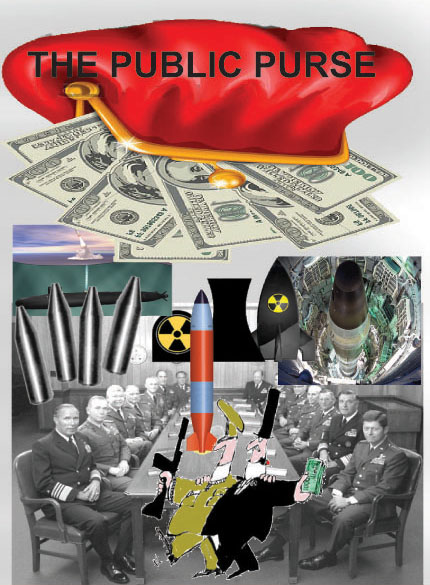
More waste, fraud, and financial abuse are inevitable as the Pentagon prepares to shovel money out the door as quickly as possible. This is no way to craft a budget or defend a country.
One way to begin reining in runaway Pentagon spending is to eliminate the ability of Congress and the president to arbitrarily increase that department’s budget. The best way to do so would be by doing away with the very concept of “emergency spending.
BY JULIA GLEDHILL AND WILLIAM D. HARTUNG, MARCH 26, 2024, https://tomdispatch.com/spending-unlimited-2/
The White House released its budget proposal for Fiscal Year 2025 on March 11th, and the news was depressingly familiar: $895 billion for the Pentagon and work on nuclear weapons at the Department of Energy. After adjusting for inflation, that’s only slightly less than last year’s proposal, but far higher than the levels reached during either the Korean or Vietnam wars or at the height of the Cold War. And that figure doesn’t even include related spending on veterans, the Department of Homeland Security, or the additional tens of billions of dollars in “emergency” military spending likely to come later this year. One thing is all too obvious: a trillion-dollar budget for the Pentagon alone is right around the corner, at the expense of urgently needed action to address climate change, epidemics of disease, economic inequality, and other issues that threaten our lives and safety at least as much as, if not more than, traditional military challenges.

Americans would be hard-pressed to find members of Congress carefully scrutinizing such vast sums of national security spending, asking tough questions, or reining in Pentagon excess — despite the fact that this country is no longer fighting any major ground wars. Just a handful of senators and members of the House do that work while many more search for ways to increase the department’s already bloated budget and steer further contracts into their own states and districts.
Congress isn’t just shirking its oversight duties: these days, it can’t even seem to pass a budget on time. Our elected representatives settled on a final national budget just last week, leaving Pentagon spending at the already generous 2023 level for nearly half of the 2024 fiscal year. Now, the department will be inundated with a flood of new money that it has to spend in about six months instead of a year. More waste, fraud, and financial abuse are inevitable as the Pentagon prepares to shovel money out the door as quickly as possible. This is no way to craft a budget or defend a country.
And while congressional dysfunction is par for the course, in this instance it offers an opportunity to reevaluate what we’re spending all this money for. The biggest driver of overspending is an unrealistic, self-indulgent, and — yes — militaristic national defense strategy. It’s designed to maintain a capacity to go almost everywhere and do almost anything, from winning wars with rival superpowers to intervening in key regions across the planet to continuing the disastrous Global War on Terror, which was launched in the wake of the 9/11 attacks and never truly ended. As long as such a “cover the globe” strategy persists, the pressure to continue spending ever more on the Pentagon will prove irresistible, no matter how delusional the rationale for doing so may be.
Defending “the Free World”?
President Biden began his recent State of the Union address by comparing the present moment to the time when the United States was preparing to enter World War II. Like President Franklin Delano Roosevelt in 1941, Joe Biden told the American people that the country now faces an “unprecedented moment in the history of the Union,” one in which freedom and democracy are “under attack” both at home and abroad. He disparaged Congress’s failure to approve his emergency supplemental bill, claiming that, without additional aid for Ukraine, Russian President Vladimir Putin will threaten not just that country but all of Europe and even the “free world.” Comparing (as he did) the challenge posed by Russia now to the threat that Hitler’s regime posed in World War II is a major exaggeration that’s of no value in developing an effective response to Moscow’s activities in Ukraine and beyond.
Engaging in such fearmongering to get the public on board with an increasingly militarized foreign policy ignores reality in service of the status quo. In truth, Russia poses no direct security threat to the United States. And while Putin may have ambitions beyond Ukraine, Russia simply doesn’t have the capability to threaten the “free world” with a military campaign. Neither does China, for that matter. But facing the facts about these powers would require a critical reassessment of the maximalist U.S. defense strategy that rules the roost. Currently, it reflects the profoundly misguided belief that, on matters of national security, U.S. military dominance takes precedence over the collective economic strength and prosperity of Americans.
As a result, the administration places more emphasis on deterring potential (if unlikely) aggression from competitors than on improving relations with them. Of course, this approach depends almost entirely on increasing the production, distribution, and stockpiling of arms. The war in Ukraine and Israel’s continuing assault on Gaza have unfortunately only solidified the administration’s dedication to the concept of military-centric deterrence.
Contractor Dysfunction: Earning More, Doing Less
Ironically, such a defense strategy depends on an industry that continually exploits the government for its own benefit and wastes staggering amounts of taxpayer dollars. The major corporations that act as military contractors pocket about half of all Pentagon outlays while ripping off the government in a multitude of ways. But what’s even more striking is how little they accomplish with the hundreds of billions of taxpayer dollars they receive year in, year out. According to the Government Accountability Office (GAO), from 2020 to 2022, the total number of major defense acquisition programs actually declined even as total costs and average delivery time for new weapons systems increase
Americans would be hard-pressed to find members of Congress carefully scrutinizing such vast sums of national security spending, asking tough questions, or reining in Pentagon excess — despite the fact that this country is no longer fighting any major ground wars. Just a handful of senators and members of the House do that work while many more search for ways to increase the department’s already bloated budget and steer further contracts into their own states and districts.
Congress isn’t just shirking its oversight duties: these days, it can’t even seem to pass a budget on time. Our elected representatives settled on a final national budget just last week, leaving Pentagon spending at the already generous 2023 level for nearly half of the 2024 fiscal year. Now, the department will be inundated with a flood of new money that it has to spend in about six months instead of a year. More waste, fraud, and financial abuse are inevitable as the Pentagon prepares to shovel money out the door as quickly as possible. This is no way to craft a budget or defend a country.
And while congressional dysfunction is par for the course, in this instance it offers an opportunity to reevaluate what we’re spending all this money for. The biggest driver of overspending is an unrealistic, self-indulgent, and — yes — militaristic national defense strategy. It’s designed to maintain a capacity to go almost everywhere and do almost anything, from winning wars with rival superpowers to intervening in key regions across the planet to continuing the disastrous Global War on Terror, which was launched in the wake of the 9/11 attacks and never truly ended. As long as such a “cover the globe” strategy persists, the pressure to continue spending ever more on the Pentagon will prove irresistible, no matter how delusional the rationale for doing so may be.
Defending “the Free World”?
President Biden began his recent State of the Union address by comparing the present moment to the time when the United States was preparing to enter World War II. Like President Franklin Delano Roosevelt in 1941, Joe Biden told the American people that the country now faces an “unprecedented moment in the history of the Union,” one in which freedom and democracy are “under attack” both at home and abroad. He disparaged Congress’s failure to approve his emergency supplemental bill, claiming that, without additional aid for Ukraine, Russian President Vladimir Putin will threaten not just that country but all of Europe and even the “free world.” Comparing (as he did) the challenge posed by Russia now to the threat that Hitler’s regime posed in World War II is a major exaggeration that’s of no value in developing an effective response to Moscow’s activities in Ukraine and beyond.
Engaging in such fearmongering to get the public on board with an increasingly militarized foreign policy ignores reality in service of the status quo. In truth, Russia poses no direct security threat to the United States. And while Putin may have ambitions beyond Ukraine, Russia simply doesn’t have the capability to threaten the “free world” with a military campaign. Neither does China, for that matter. But facing the facts about these powers would require a critical reassessment of the maximalist U.S. defense strategy that rules the roost. Currently, it reflects the profoundly misguided belief that, on matters of national security, U.S. military dominance takes precedence over the collective economic strength and prosperity of Americans.
As a result, the administration places more emphasis on deterring potential (if unlikely) aggression from competitors than on improving relations with them. Of course, this approach depends almost entirely on increasing the production, distribution, and stockpiling of arms. The war in Ukraine and Israel’s continuing assault on Gaza have unfortunately only solidified the administration’s dedication to the concept of military-centric deterrence.
Contractor Dysfunction: Earning More, Doing Less
Ironically, such a defense strategy depends on an industry that continually exploits the government for its own benefit and wastes staggering amounts of taxpayer dollars. The major corporations that act as military contractors pocket about half of all Pentagon outlays while ripping off the government in a multitude of ways. But what’s even more striking is how little they accomplish with the hundreds of billions of taxpayer dollars they receive year in, year out. According to the Government Accountability Office (GAO), from 2020 to 2022, the total number of major defense acquisition programs actually declined even as total costs and average delivery time for new weapons systems increased.
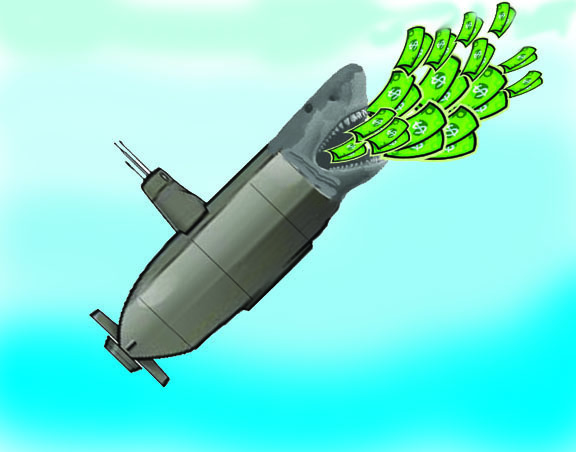
Take the Navy’s top acquisition program, for example. Earlier this month, the news broke that the Columbia-class ballistic missile submarine is already at least a year behind schedule. That sub is the sea-based part of the next-generation nuclear (air-sea-and-land) triad that the administration considers the “ultimate backstop” for global deterrence. As a key part of this country’s never-ending arms buildup, the Columbia is supposedly the Navy’s most important program, so you might wonder why the Pentagon hasn’t implemented a single one of the GAO’s six recommendations to help keep it on track.
As the GAO report made clear, the Navy proposed delivering the first Columbia-class vessel in record time — a wildly unrealistic goal — despite it being the “largest and most complex submarine” in its history.
Yet the war economy persists, even as the giant weapons corporations deliver less weaponry for more money in an ever more predictable fashion (and often way behind schedule as well). This happens in part because the Pentagon regularly advances weapons programs before design and testing are even completed, a phenomenon known as “concurrent development.” Building systems before they’re fully tested means, of course, rushing them into production at the taxpayer’s expense before the bugs are out. Not surprisingly, operations and maintenance costs account for about 70% of the money spent on any U.S. weapons program.

Lockheed Martin’s F-35 is the classic example of this enormously expensive tendency. The Pentagon just greenlit the fighter jet for full-scale production this month, 23 years (yes, that’s not a misprint!) after the program was launched. The fighter has suffered from persistent engine problems and deficient software. But the official go-ahead from the Pentagon means little, since Congress has long funded the F-35 as if it were already approved for full-scale production. At a projected cost of at least $1.7 trillion over its lifetime, America’s most expensive weapons program ever should offer a lesson in the necessity of trying before buying.

Unfortunately, this lesson is lost on those who need to learn it the most. Acquisition failures of the past never seem to financially impact the executives or shareholders of America’s biggest military contractors. On the contrary, those corporate leaders depend on Pentagon bloat and overpriced, often unnecessary weaponry. In 2023, America’s biggest military contractor, Lockheed Martin, paid its CEO John Taiclit $22.8 million. Annual compensation for the CEOs of RTX, Northrop Grumman, General Dynamics, and Boeing ranged from $14.5 and $22.5 million in the past two years. And shareholders of those weapons makers are similarly cashing in. The arms industry increased cash paid to its shareholders by 73% in the 2010s compared to the prior decade. And they did so at the expense of investing in their own businesses. Now they expect taxpayers to bail them out to ramp up weapons production for Ukraine and Israel.
Reining in the Military-Industrial Complex
One way to begin reining in runaway Pentagon spending is to eliminate the ability of Congress and the president to arbitrarily increase that department’s budget. The best way to do so would be by doing away with the very concept of “emergency spending.” Otherwise, thanks to such spending, that $895 billion Pentagon budget will undoubtedly prove to be anything but a ceiling on military spending next year. As an example, the $95 billion aid package for Ukraine, Israel, and Taiwan that passed the Senate in February is still hung up in the House, but some portion of it will eventually get through and add substantially to the Pentagon’s already enormous budget.
Meanwhile, the Pentagon has fallen back on the same kind of budgetary maneuvers it perfected at the peak of its disastrous Afghan and Iraq wars earlier in this century, adding billions to the war budget to fund items on the department’s wish list that have little to do with “defense” in our present world. That includes emergency outlays destined to expand this country’s “defense industrial base” and further supersize the military-industrial complex — an expensive loophole that Congress should simply shut down. That, however, will undoubtedly prove a tough political fight, given how many stakeholders — from Pentagon officials to those corporate executives to compromised members of Congress — benefit from such spending sprees.
Ultimately, of course, the debate about Pentagon spending should be focused on far more than the staggering sums being spent. It should be about the impact of such spending on this planet. That includes the Biden administration’s stubborn continuation of support for Israel’s campaign of mass slaughter in Gaza, which has already killed more than 31,000 people while putting many more at risk of starvation. A recent Washington Post investigation found that the U.S. has made 100 arms sales to Israel since the start of the war last October, most of them set at value thresholds just low enough to bypass any requirement to report them to Congress.
The relentless supply of military equipment to a government that the International Court of Justice has said is plausibly engaged in a genocidal campaign is a deep moral stain on the foreign-policy record of the Biden administration, as well as a blow to American credibility and influence globally. No amount of airdrops or humanitarian supplies through a makeshift port can remotely make up for the damage still being done by U.S.-supplied weapons in Gaza.
The case of Gaza may be extreme in its brutality and the sheer speed of the slaughter, but it underscores the need to thoroughly rethink both the purpose of and funding for America’s foreign and military policies. It’s hard to imagine a more devastating example than Gaza of why the use of force so often makes matters far, far worse — particularly in conflicts rooted in longstanding political and social despair. A similar point could have been made with respect to the calamitous U.S. interventions in Iraq and Afghanistan that cost untold numbers of lives, while pouring yet more money into the coffers of America’s major weapons makers. Both of those military campaigns, of course, failed disastrously in their stated objectives of promoting democracy, or at least stability, in troubled regions, even as they exacted huge costs in blood and treasure.
Before our government moves full speed ahead expanding the weapons industry and further militarizing geopolitical challenges posed by China and Russia, we should reflect on America’s disastrous performance in the costly, prolonged wars already waged in this century. After all, they did enormous damage, made the world a far more dangerous place, and only increased the significance of those weapons makers. Throwing another trillion dollars-plus at the Pentagon won’t change that.

‘The graveyard of the Earth’: inside City 40, Russia’s deadly nuclear secret
The city’s residents know the truth, however: that their water is contaminated, their mushrooms and berries are poisoned, and their children may be sick. Ozersk and the surrounding region is one of the most contaminated places on the planet, referred to by some as the “graveyard of the Earth”.
City 40’s inhabitants were told they were “the nuclear shield and saviours of the world”

From the late 1940s, people here started to get sick and die: the victims of long-term exposure to radiation.
‘The graveyard of the Earth’: inside City 40, Russia’s deadly nuclear secret, https://www.theguardian.com/cities/2016/jul/20/graveyard-earth-inside-city-40-ozersk-russia-deadly-secret-nuclear Samira Goetschel, Wed 20 Jul 2016 Ozersk, codenamed City 40, was the birthplace of the Soviet nuclear weapons programme. Now it is one of the most contaminated places on the planet – so why do so many residents still view it as a fenced-in paradise?
“Those in paradise were given a choice: happiness without freedom, or freedom without happiness. There was no third alternative.” (From the dystopian novel We, by Yevgeny Zamyatin, 1924)
Deep in the vast forests of Russia’s Ural mountains lies the forbidden city of Ozersk. Behind guarded gates and barbed wire fences stands a beautiful enigma – a hypnotic place that seems to exist in a different dimension.
Codenamed City 40, Ozersk was the birthplace of the Soviet nuclear weapons programme after the second world war. For decades, this city of 100,000 people did not appear on any maps, and its inhabitants’ identities were erased from the Soviet census.
Today, with its beautiful lakes, perfumed flowers and picturesque tree-lined streets, Ozersk resembles a suburban 1950s American town – like one of those too-perfect places depicted in The Twilight Zone.
Continue readingWhaat! Romania’s state-owned Nuclearelectrica to partner with NuScale to build small nuclear reactors.

Romania expects to make a preliminary final investment decision next year
on whether to build a small modular reactor plant (SMR), which could become
Europe’s first project using the technology, Energy Minister Sebastian
Burduja said on Monday. State-owned nuclear power producer Nuclearelectrica
opens new tab said in 2021 it will partner with U.S. utility firm NuScale
Power (SMR.N), opens new tab to build reactors as part of its efforts to
boost low-emission power sources.
Reuters 18th March 2024
House Democrats Tell Biden To Enforce US Law and Suspend Military Aid to Israel

Israel’s undeclared nuclear weapons stockpile also violates US foreign assistance laws that prohibit US aid to nuclear-armed states that don’t sign the Non-Proliferation Treaty. The US gets around this law by not officially acknowledging that Israel has nukes
Foreign assistance laws prohibit military aid to countries that are blocking humanitarian aid
by Dave DeCamp March 24, 2024 https://news.antiwar.com/2024/03/24/house-democrats-tell-biden-to-enforce-us-law-and-suspend-military-aid-to-israel/
Six senior House Democrats sent a letter to President Biden on Saturday urging him to invoke US foreign assistance laws to suspend military aid to Israel due to the country’s starvation blockade on Gaza
“Given the catastrophic and devolving humanitarian situation in Gaza, we urge you to enforce the Humanitarian Aid Corridor Act (Section 620I of the Foreign Assistance Act) and, as required by that law, make clear to the Israeli government that so long as Israel continues to restrict the entry of humanitarian aid into Gaza, the continued provision of US security assistance to Israel would constitute a violation of existing US law and must be restricted,” the letter reads.
Section 620I of the Foreign Assistance Act says that no assistance shall be given “to any country when it is made known to the President that the government of such country prohibits or otherwise restricts, directly or indirectly, the transport or delivery of United States humanitarian assistance.”
Israel’s blockade and restrictions on aid have put Gaza’s population on the brink of famine. Secretary of State Antony Blinken recently acknowledged that 100% of Gaza’s population is “experiencing severe levels of acute food insecurity,” but the Biden administration continues to provide unconditional military support for the Israeli campaign.

The letter to Biden comes as Blinken is supposed to certify whether Israel has made credible and reliable written commitments to use US weapons according to US and international law. Israel submitted a letter this month claiming it will comply with the law, and the deadline for the US certification is Monday.
Subsection (b) of Section 620I says that the president can waive the restriction if he believes providing military aid is in the US’s “national security interest.” US support for the Israeli slaughter of Palestinians in Gaza provoked an uptick in attacks on US forces in the region and Houthi attacks on Israel-linked commercial shipping, which the US has responded to by launching a new bombing campaign in Yemen. The risk of a major regional war continues to rise, but American politicians still claim that supporting Israel’s genocidal campaign is in the US national interest.
The letter sent to Biden was signed by Reps. Joaquin Castro (D-TX), James P. McGovern (D-MA), Sara Jacobs (D-CA), Jan Schakowsky (D-IL), Barbara Lee (D-CA), and Chellie Pingree (D-ME). Sen. Bernie Sanders (I-VT) and seven Democratic senators sent a similar letter to Biden earlier this month.
Israel’s undeclared nuclear weapons stockpile also violates US foreign assistance laws that prohibit US aid to nuclear-armed states that don’t sign the Non-Proliferation Treaty. The US gets around this law by not officially acknowledging that Israel has nukes.
MPs claim Zelensky has total control of Ukraine – media
https://www.rt.com/russia/594576-ukraine-parliament-crisis-zelensky-media/ 24 Mar 24
The president has reduced the national legislature to a tool for rubber-stamping his decisions, a major outlet reports
Ukraine is now essentially under the personal rule of President Vladimir Zelensky, leading Kiev news outlet Ukrainskaya Pravda (UP) reported on Wednesday. He has virtually stripped the national parliament – the Verkhovna Rada – of its powers and reduced it to a mere rubber-stamp body, UP outlined in a piece based on numerous interviews with Ukrainian MPs.
The Rada has long been tightly controlled by the presidential administration, according to UP. The outlet claims that Zelensky’s office is not only determining the priority of bills on the agenda but also deciding “whether the parliament should convene at all or its MPs should be promptly sent to the trenches.”
“The president’s office despises the parliament,” an unnamed senior MP reportedly said. Zelensky and his team believe his party – the Servant of the People – which holds a majority in the legislature, “would vote for anything” the president needs, according to the lawmaker.
Meanwhile, Zelensky is losing support within his own party, UP claimed. In the last parliamentary election in 2019, Servant of the People won 254 seats in the Rada. This number has been reduced to 235 due to lawmakers leaving the president’s party. Many of them, who are still formally considered members, skip parliamentary sessions, according to the outlet’s sources. Only between 170 and 180 Servant of the People MPs still actively vote on bills, the sources stated.
”First of all, everyone is tired of the war,” a senior lawmaker told UP. Members also understand they are “not influencing the developments in the state and see no role for themselves in the Rada or any sense of being there,” he said.
According to the article, the president’s faction in the parliament is on the verge of “total disorganization,” with MPs apparently ready to surrender their mandates and leave altogether. Dozens have already attempted to do so, UP reported, citing its sources. A “lion’s share” of members would also like to see the parliament dissolved, it added.
Zelensky deals with the parliament “from a position of power,” the UP report observed, and the parliament essentially works only when the president “needs something.” Otherwise, it is “unable to function” and the Ukrainian leader could not care less about it, the outlet wrote.
The absence of real power in the Rada also makes those on the other side of the aisle reluctant to take over the reins, according to the article. “Our ruling [party] has no power and the opposition avoids it as well,” an opposing politician said. He explained that “no one needs any authority or power” and everyone just thinks about escaping responsibility for current conditions in the country.
“We have a unique situation in Ukraine: one person decides everything,” another opposition MP complained. “There is one very specific decision-making center,” he said, referring to Zelensky.
Iranian Cleric Calls For Nuclear Arms
https://www.iranintl.com/en/202403243726
Mohammad Faker Meybodi, a faculty member at the Center for Islamic Sciences, has sparked controversy with his recent remarks advocating for the possession of nuclear arms.
Speaking on the historical context of military weaponry as outlined in the Quran, Meybodi emphasized the need for contemporary armaments to deter adversaries effectively.
“At the time when the verse related to military weapons was revealed in the Quran, the weapon of that era was the swords and spears… Today, it may be necessary for us to possess nuclear weapons to intimidate the enemy. We must equip ourselves with modern weapons,” Meybodi stated.
His statements contrast with the stance previously expressed by Iran’s Supreme Leader, Ali Khamenei, who feigned to denounce the acquisition and use of nuclear weapons, citing religious prohibitions. Khamenei’s fatwa against nuclear arms dates back to the mid-1990s and has been reiterated on numerous occasions, emphasizing Iran’s commitment to “peaceful nuclear endeavors.”
Despite Iran’s assertions that its program is for civilian purposes, UN inspectors last year claimed Iran has accelerated its nuclear enrichment program.
In December, the UN’s atomic weapons watchdog agency, the IAEA, sounded alarm bells regarding Iran’s illicit enrichment of uranium. Tehran was reported to have reversed a months-long slowdown in the rate of uranium enrichment, reaching levels of up to 60-percent purity, approaching the approximately 90-percent threshold for weapons-grade uranium.
The Joint Comprehensive Plan of Action (JCPOA), an agreement reached in 2015, aimed to address these concerns by limiting Iran’s nuclear capabilities in exchange for sanctions relief. However, the withdrawal of the United States from the JCPOA in 2018 reignited tensions and cast uncertainty over the agreement’s future.
UK launches ‘national endeavour’ to reinforce nuclear deterrent

Government and industry will invest £760mn towards critical skills and infrastructure.
Ft.com Sylvia Pfeifer in London, 24 Mar 24
The UK government will launch a “national endeavour” to reinforce the country’s nuclear deterrent, including a promise to invest more than £760mn with industry over the next six years into critical skills and infrastructure.
Rishi Sunak, the prime minister, will on Monday also announce a separate £200mn investment into a “transformation fund” for Barrow-in-Furness, the Cumbrian town where Britain’s nuclear submarines are built by BAE Systems for the Royal Navy. Barrow has suffered from health inequalities, poor housing and some of the most deprived neighbourhoods in the country despite multiple attempts at lasting regeneration.
The investments come as the government prepares to set out how it plans to sustain and modernise the UK’s nuclear deterrent in a new Defence Command Paper. It follows concerns that ageing infrastructure and a lack of investment were undermining the effectiveness of the deterrent, a cornerstone of Britain’s defence posture.
Ministers were forced last month to declare that the deterrent remained “safe, secure and effective” after a nuclear missile test failed when the Trident weapon crashed into the sea near the submarine that fired it. Adding to the embarrassment, defence secretary Grant Shapps was on board HMS Vanguard to witness the test launch which took place in January.
The Defence Command Paper will detail the government’s plans to bring new Dreadnought-class submarines into service in the early 2030s. The Dreadnoughts are due to replace the current Vanguard-class vessels which were commissioned into service in the mid-1990s.
“Safeguarding the future of our nuclear deterrent and nuclear energy industry is a critical national endeavour,” Sunak will say on a visit to Barrow on Monday. “In a more dangerous and contested world, the UK’s continuous at-sea nuclear deterrent is more vital than ever.
And nuclear delivers cheaper, cleaner homegrown energy for consumers.” Investments into Britain’s nuclear capabilities and skills — both defence and civil — are seen as vital if the government is to build a new fleet of atomic power stations to bolster its energy security, as well as deliver on the new Dreadnought programme.
The government is also committed to building a new generation of attack submarines under the trilateral Aukus pact with the US and Australia……………………… more https://www.ft.com/content/a276c351-7e48-4662-a9fe-27363ac24a2b
Sen. Lindsey Graham’s structural path: Let Ukrainians do all the dying in support of US proxy war against Russia

Walt Zlotow, West Suburban Peace Coalition, Glen Ellyn IL 22 Mar 24
Early in the US proxy war against Russia in Ukraine, Senator Lindsey Graham gloried in America’s use of Ukrainian soldiers to do all the dying. “I like the structural path we’re on here. As long as we help Ukraine with the weapons they need and the economic support, they will fight to the last person.” Anybody but US cannon fodder was just fine for the armchair warrior from South Carolina.
Two years later, with over 400,000 of those hapless Ukrainian soldiers dead from Sen. Graham’s exhortations to die for American exceptionalism, Graham remains unbowed.
During his recent visit to Kyiv, he demanded Ukraine pass a new mobilization law to draft younger cannon fodder to send into the chopper mill of a lost war. Graham is miffed Ukraine draft laws exempt men under 27. “I would hope that those eligible to serve in the Ukrainian military would join. I can’t believe it’s at 27. You’re in a fight for your life, so you should be serving — not at 25 or 27. We need more people in the line. No matter what we do, you should be fighting.”
Graham remains unconcerned he supported US provocations which led to the Russian invasion of Ukraine. He’s in denial of his acquiescence in the effort to prevent a negotiated settlement early on that would have preserved Ukraine territory. Now he’s telling Ukraine to send its young men to fill the ranks of the 400,000 dead Ukrainians he exalted to die for US exceptionalism.
It would take a psychiatrist, maybe a team of psychiatrists, to determine the pathology in in Graham’s psyche that leads him to promote mass slaughter of foreigners to prop up American’s collapsing control of European geopolitics. But good luck trying to get the Senior Senator from South Carolina to lie on the couch. His focus remains: ‘So many Ukrainians yet to die…so little time.”
1 This Month
10 March A LIVE WEBINAR THE REAL EFFECTS OF NUCLEAR POWER
What the Industry Isn’t Telling Us
1:00 PM Mountain, 2 pm Central, 3 pm Eastern. Live on the Keepers of the Water Facebook page


18 March Webinar @ 1 PM EST: An Assessment of SMR Projects: The Case of Canada
register for the zoom:
https://us02web.zoom.us/webinar/register/WN_o8BIIOUvQ2ONJR1nta65DQ#/registration


of the week – STOP SMALL MODULAR REACTORS IN CANADA
To see nuclear-related stories in greater depth and intensity – go to https://nuclearinformation.wordpress.com
-
Archives
- February 2026 (268)
- January 2026 (308)
- December 2025 (358)
- November 2025 (359)
- October 2025 (376)
- September 2025 (258)
- August 2025 (319)
- July 2025 (230)
- June 2025 (348)
- May 2025 (261)
- April 2025 (305)
- March 2025 (319)
-
Categories
- 1
- 1 NUCLEAR ISSUES
- business and costs
- climate change
- culture and arts
- ENERGY
- environment
- health
- history
- indigenous issues
- Legal
- marketing of nuclear
- media
- opposition to nuclear
- PERSONAL STORIES
- politics
- politics international
- Religion and ethics
- safety
- secrets,lies and civil liberties
- spinbuster
- technology
- Uranium
- wastes
- weapons and war
- Women
- 2 WORLD
- ACTION
- AFRICA
- Atrocities
- AUSTRALIA
- Christina's notes
- Christina's themes
- culture and arts
- Events
- Fuk 2022
- Fuk 2023
- Fukushima 2017
- Fukushima 2018
- fukushima 2019
- Fukushima 2020
- Fukushima 2021
- general
- global warming
- Humour (God we need it)
- Nuclear
- RARE EARTHS
- Reference
- resources – print
- Resources -audiovicual
- Weekly Newsletter
- World
- World Nuclear
- YouTube
-
RSS
Entries RSS
Comments RSS
 nuclear-news