Trump’s Election Is Also a Win for Tech’s Right-Wing “Warrior Class”

Donald Trump pitched himself to voters as a supposed anti-interventionist candidate of peace. But when he reenters the White House in January, at his side will be a phalanx of pro-military Silicon Valley investors, inventors, and executives eager to build the most sophisticated weapons the world has ever known.
During his last term, the U.S. tech sector tiptoed skittishly around Trump; longtime right-winger Peter Thiel stood as an outlier in his full-throated support of MAGA politics as other investors and executives largely winced and smiled politely. Back then, Silicon Valley still offered the public peaceful mission statements of improving the human condition, connecting people, and organizing information. Technology was supposed to help, never harm. No more: People like Thiel, Palmer Luckey, Trae Stephens, and Marc Andreessen make up a new vanguard of powerful tech figures who have unapologetically merged right-wing politics with a determination to furnish a MAGA-dominated United States with a constant flow of newer, better arms and surveillance tools.
These men (as they tend to be) hold much in common beyond their support of Republican candidates: They share the belief that China represents an existential threat to the United States (an increasingly bipartisan belief, to be sure) and must be dominated technologically and militarily at all costs. They are united in their aversion, if not open hostility, to arguments that the pace of invention must be balanced against any moral consideration beyond winning. And they all stand to profit greatly from this new tech-driven arms race.
Trump’s election marks an epochal victory not just for the right, but also for a growing conservative counterrevolution in American tech that has successfullyrebranded military contracting as the proud national duty of the American engineer, not a taboo to be dodged and hidden. Meta’s recent announcement that its Llama large language model can now be used by defense customers means that Apple is the last of the “Big Five” American tech firms — Amazon, Apple, Google, Microsoft, and Meta — not engaged in military or intelligence contracting.
Trump’s election marks an epochal victory not just for the right, but also for a growing conservative counterrevolution in American tech.
Elon Musk has drawn the lion’s share of media scrutiny (and Trump world credit) for throwing his fortune and digital influence behind the campaign. Over the years, the world’s richest man has become an enormously successful defense contractor via SpaceX, which has selling access to rockets that the Pentagon hopes will someday rapidly ferry troops into battle. SpaceX’s Starlink satellite internet has also become an indispensable American military tool, and the company is working on a constellation of bespoke spy satellites for U.S. intelligence agency use.
But Musk is just one part of a broader wave of militarists who will have Trump’s ear on policy matters…………………………………………………………………………… https://theintercept.com/2024/11/17/tech-industry-trump-military-contracts/
Restart of Three Mile Island tests US appetite for nuclear revival
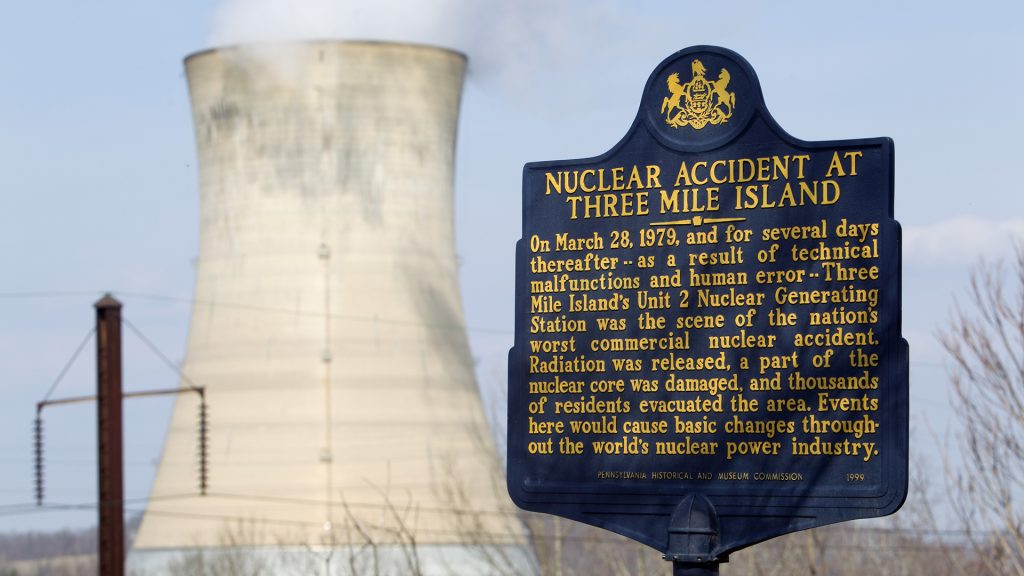
Legal threats, skills shortages and regulatory challenges complicate reopening of plant at site of nuclear accident
Ft.com Jamie Smyth in Middletown, Pennsylvania, 17 Nov 24
A group of veteran community activists is planning legal action to block the reopening of Three Mile Island nuclear plant in a test of whether the American public will back an atomic energy boom financed by Big Tech and US taxpayers. Three Mile Island Alert, a group founded almost half a century ago to lobby for the closure of the plant in Middletown, Pennsylvania — site of the worst nuclear accident in US history — said it would challenge government licences required by operator Constellation Energy, which is targeting a restart in 2028.
The legal threat is one of several obstacles facing the utility as it races to meet the terms of a 20-year power supply deal struck with Microsoft. The $1.6bn project could become a potent symbol of the revival of nuclear energy in the US.
Constellation must obtain numerous regulatory approvals, train hundreds of staff and upgrade equipment at a time when nuclear supply chains are stretched. It must also persuade the local community — and the incoming administration of Donald Trump — that the benefits of restarting the plant outweigh the risks.
“The restart is not going to happen by 2028: that is pure fantasy,” Eric Epstein, a 64-year old former history professor and chair of TMI Alert, told the Financial Times. “We haven’t even cleaned up Three Mile Island unit two, the site of the accident is still highly radioactive . . . and now we’re going to generate more nuclear waste. It’s disappointing and it’s manifestly unfair.”
TMI’s second reactor was closed in 1979 after a partial meltdown caused a radiation leak, prompting a chaotic response from then operator Metropolitan Edison Company and public authorities that dented public trust. The plant’s first reactor was shuttered in 2019 for economic reasons when the US shale revolution produced so much cheap gas that nuclear energy could not compete.
Read more ………… https://www.ft.com/content/b90f6e21-bb8d-4606-9e5e-c4acb56b86ce
: Restart of Three Mile Island tests US appetite for nuclear revival
Trump picks Liberty Energy CEO and Oklo nuclear company board member Chris Wright as Energy secretary
CNBC, Nov 16 2024, Spencer Kimball,
- President-elect Donald Trump picked Liberty Energy CEO Chris Wright to lead the Department of Energy.
- Liberty Energy is an oilfield services company headquartered in Denver, Colorado. Wright also serves on the board of nuclear power startup Oklo.
- Wright has denied that climate change represents a global crisis.
………………………………………………………. https://www.cnbc.com/2024/11/16/trump-picks-liberty-energy-ceo-and-oklo-board-member-chris-wright-as-energy-secretary.html
Saudi Crown Prince condemns Israel attacks on Palestinians as ‘genocide’
November 11, 2024 , https://www.middleeastmonitor.com/20241111-saudi-crown-prince-condemns-israel-attacks-on-palestinians-as-genocide/
Saudi Arabia’s Crown Prince and de facto ruler condemned what he called the “genocide” committed by Israel against Palestinians during a speech at a summit of leaders of Muslim and Arab countries in Riyadh on Monday, Reuters reports.
“The Kingdom renews its condemnation and categorical rejection of the genocide committed by Israel against the brotherly Palestinian people,” Crown Prince Mohammed Bin Salman said at an Arab Islamic summit, echoing comments by Saudi Foreign Minister, Faisal Bin Farhan Al Saud, late last month.
He urged the international community to stop Israel from attacking Iran and to respect Iran’s sovereignty.
The Crown Prince said in September the Kingdom would not recognise Israel unless a Palestinian State was created.
US President Joe Biden’s administration had sought to broker a normalisation accord between Saudi Arabia and Israel that would have included US security guarantees for the Kingdom, among other bilateral deals between Washington and Riyadh.
Those normalisation efforts were put on ice after the 7 October, 2023, attack on Israel by Hamas fighters from Gaza and Israel’s subsequent retaliation.
Israel’s military assault on Gaza in the last 13 months has killed tens of thousands, displaced nearly its entire population, caused a hunger crisis and led to allegations of genocide at the World Court, which Israel denies.
Ultra-Conservative War Hawks Dominate Trump Cabinet
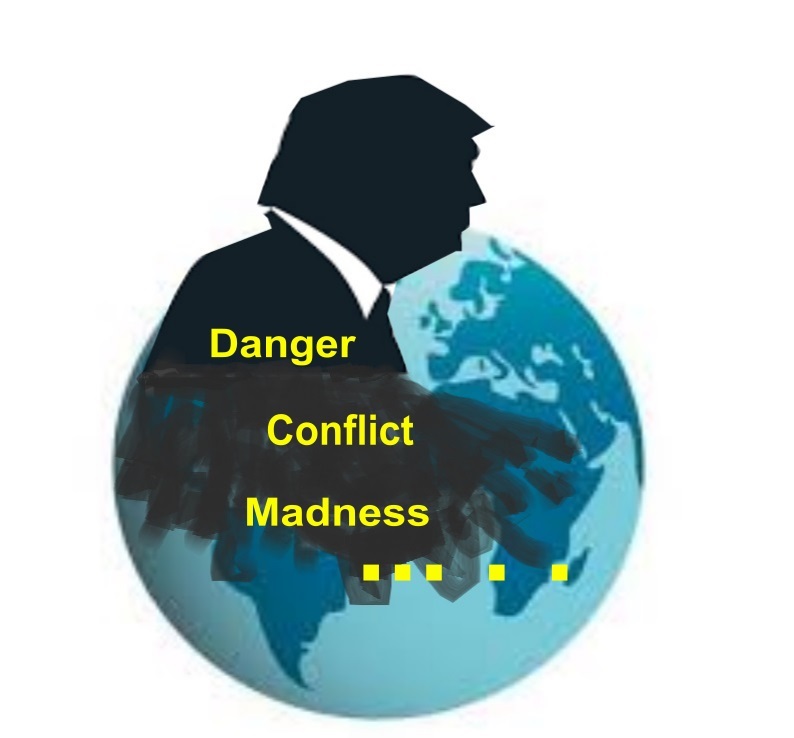
Trump quickly fills cabinet positions with Zionists, warhawks, and personal friends all unified under an ultra-conservative agenda and total loyalty to Trump
November 14, 2024 by Peoples Dispatch, https://peoplesdispatch.org/2024/11/14/ultra-conservative-war-hawks-dominate-trump-cabinet/
Peoples Dispatch has compiled a list of notable appointments below:
Thomas Homan: “Border Czar”
Homan was the head of ICE during Trump’s first term, and has been selected to lead up Trump’s campaign promise to conduct mass deportations of 15 to 20 million people. Homan pledged at the Republican National Convention that he would “run the biggest deportation operation this country’s ever seen” and promised to “flood sanctuary cities” with agents to conduct mass arrests, and carry out massive raids targeting workplaces. He was given the “Presidential Rank Award” by Barack Obama in 2015 for his work in “enforcement and removal operations.” Obama himself was dubbed the “Deporter in Chief” by immigration activists for deporting more people than any president who came before him.
Stephen Miller: Deputy chief of staff for policy
Miller is another pick that signals that Trump is serious regarding his campaign promise to carry out the largest mass deportations in US history. Miller is the architect of the cruelest anti-immigrant policies of the first Trump administration, such as family separation, and a key bridge between the Trump administration and the “alt-right” fascist movement. Miller supports deploying military units of the National Guard to hunt down undocumented people, and advocates for the construction of massive camps to detain immigrants rounded up in raids.
Marco Rubio: Secretary of State
Trump’s choice of Florida Senator Marco Rubio for Secretary of State has surprised some who wanted to believe Trump’s campaign promise of “preventing World War III”. Rubio is a notorious warhawk, known for promoting an aggressive foreign policy approach towards countries that do not tip-toe around the US, including Iran, China, Russia, and Venezuela. Rubio’s appointment could be a test of whether the Trump administration will lean more neoconservative than promised or whether Rubio will be forced to toe a more isolationist foreign policy line.
Rubio, who is of Cuban descent, has a particular hostility towards the socialist state and is a key promoter of harsh sanctions against the island. Rubio has also attacked left-wing social movements within the United States, attempting to use the power of the state to harshly sanction the BDS movement and pro-Palestine and leftist organizations.
Michael Waltz: National Security Adviser
US Army colonel and Florida Representative Michael Waltz is also a notorious warhawk, particularly on China and Iran. During Trump’s first administration, after he almost provoked war with Iran with his assassination of General Qassim Suleimani in 2020, Waltz was one of a small group invited to the White House to receive a briefing on the strike.
Matt Gaetz: Attorney General
Trump loyalist and Florida Representative Matt Gaetz is a prominent figure in the ultra-conservative wing of the Republican Party, leading the charge to overthrow the more established Republican Kevin McCarthy as Speaker of the House—who was replaced with Mike Johnson in 2023. Gaetz, like Trump, is no stranger to scandal, being embroiled in a three-year long federal sex trafficking investigation that ended in 2023.
Pete Hegseth: Secretary of Defense
Hegseth is a controversial Fox News host and military veteran, who is known for his advocacy on behalf of former members of the military who have been convicted of war crimes. This includes lobbying in defense of Navy SEAL Chief Petty Officer Edward Gallagher, who was accused of stabbing a teenaged prisoner of war to death and shooting a teenage girl and elderly man while deployed in Iraq. Since Trump picked Hegseth, his collection of right-wing tattoos has gotten some media attention, which includes a tattoo across his arm of the medieval crusader slogan “Deus Vult,” which translates to “I have not come to bring peace, but a sword,” and signals his political leanings towards the Christian far right.
Kristi Noem: Secretary of Homeland Security
Noem is the current Governor of South Dakota who’s known for her total loyalty to Trump. Noem’s deeply anti-migrant agenda has led her to claim that the “United States of America is in a time of invasion” as a consequence of immigrants “waging war against our nation.” Noem supported the Muslim ban during Trump’s first term because it would restrict refugees from “terrorist hotbed areas.”
John Ratcliffe: CIA Director
Ratcliffe was Trump’s director of national intelligence during his first term. This pick was praised by Republican Representative Mike Turner, who has accused fellow Republican colleagues of repeating Russian propaganda, for helping “counter the serious threats posed by China, Russia, Iran and North Korea.”
Tulsi Gabbard: Director of national intelligence
Trump’s pick of veteran and former Democrat Tulsi Gabbard as the pick to oversee 18 spy agencies has been welcome news to those more critical of the foreign policy establishment. Gabbard endorsed Trump last month, claiming that Trump would transform the Republican Party “back to the party of the people, and the party of peace.”
Steven Witkoff: Special envoy to the Middle East
Witkoff is a Zionist multi-millionaire real estate investor and close personal friend of Trump’s, with zero prior experience in politics in the Middle East/West Asia region.
Mike Huckabee: Ambassador to Israel
Former Arkansas Governor Mike Huckabee and ardent Evangelical Christian is likely to continue his long career of defending Israel in his new post. Huckabee once argued that there was “no such thing as a Palestinian” and recently claimed that the US would back an Israeli attempt to annex the West Bank.
Elise Stefanik: United Nations ambassador
The conservative New York representative went viral for her role in orchestrating the downfall of several prominent university presidents, including former Harvard President Claudine Gay, over the accusation that these presidents were not repressing pro-Palestine students enough. Stefanik is viewed as one of the most prominent enemies of the student movement in the US.
Lee Zeldin: Environmental Protection Agency Administrator
Trump’s pick of Zeldin as EPA Administrator signals that Trump is ready to make good on his campaign promise to attack key environmental protections that are one of the few ways the US government attempts to mitigate the effects of climate change.
Elon Musk and Vivek Ramaswamy: Department of Government Efficiency (DOGE)
The world’s richest person, who in many ways directly bought votes for Trump in key swing states such as Pennsylvania, has been promised a formal role in Trump’s administration alongside entrepreneur Vivek Ramaswamy, through the new commission dubbed the Department of Government Efficiency (the acronym referencing an internet meme). DOGE is in many ways designed to help the ultra-rich including Musk slash through government regulations that may place a limit on power and profit.
Trump’s Appointments Reflect a More Openly Hawkish Face of US Empire
In appointing Marco Rubio, Mike Waltz and Pete Hegseth to his administration, Trump emboldens volatile warmongers.
By Sam Rosenthal , Truthout, November 14, 2024
After mounting his comeback win against Kamala Harris, Donald Trump has already announced a slew of administration appointments. Compared to other presidents-elect, and to his own first term, Trump is ahead of the typical timeline in announcing these appointments, giving observers an earlier-than-usual view into how the second Trump administration could function, both in the domestic and foreign policy arenas.
On the foreign policy front, Trump will inherit several major international crises and tensions that Joe Biden has been unable to resolve during his time in office, chief among them Israel’s ongoing genocide in Gaza, Russia’s war in Ukraine and escalating U.S. rivalry with China over Taiwan. Trump has already named several high-profile cabinet members who will shape much of his foreign policy and could oversee the consequential conclusions of those conflicts.
Marco Rubio, the senator from Florida, has been tapped for the coveted secretary of state position. Rubio is a well-known China hawk who has recently led the charge against TikTok and other Chinese-based tech companies, a stance that dovetails well with Trump’s promise to impose a 60 percent tariff on all goods exported from China. Beyond economic warfare, Rubio has called China the “threat that will define this century” and pushed repeatedly on known pressure points in U.S.-China relations, including the status of Taiwan.
Rubio — the grandson of Cuban immigrants who moved to the U.S. before the Cuban revolution but hated Fidel Castro from afar — is an ardent anti-communist who has argued vociferously against the legitimacy of the sitting governments in Cuba and Venezuela and supported devastating sanctions on both……………………
Rubio’s aggressive stance toward China will no doubt be compounded by Trump’s newly announced pick for national security adviser, Mike Waltz, currently a House representative from Florida. Waltz has pushed his anti-China rhetoric even farther than Rubio, …………………………………….
Arguably Trump’s most surprising pick so far has been his choice for secretary of defense. …………………………….. For his second term, in an apparent attempt to institute more accommodating leadership at the Pentagon, Trump has nominated Pete Hegseth, a Fox News host who served in Afghanistan and at Guantánamo Bay in Cuba, to lead the Department of Defense.
During his time at Fox News, Hegseth has become known for advocating for leniency for military personnel found to have committed war crimes abroad while serving. Hegseth has no governmental experience whatsoever, nor has he served in any command role within the U.S. military…………………………..
During Trump’s last term, he encouraged the then-president to bomb cultural sites in Iran. As head of the Department of Defense, he might focus on internal house cleaning, seeking to remake the military into a more homogenous, more overtly male-dominated entity, with even less care for international law and a firmer belief in U.S. supremacy.
…………………………………………….Tulsi Gabbard, chosen as director of national intelligence……….. has also frequently trafficked in anti-Muslim rhetoric, repeating right-wing talking points about “radical Islamic ideology” that are often used to justify the criminalization and surveillance of Muslim communities…
………………………….Trump has also begun to announce high-profile ambassadorships. Among these early picks, the most consequential is likely to be his selection of former Arkansas Gov. Mike Huckabee to serve as U.S. ambassador to Israel. Huckabee, whose daughter, Sarah Huckabee Sanders, served as Trump’s press secretary in his last term, is well-known for his Christian evangelicism. …..
Huckabee’s pick as ambassador to Israel likely portends an even more openly hostile stance toward Palestinian human rights and comes with possibly apocalyptic consequences for the West Bank. Huckabee, an avowed Zionist (like President Biden), has long supported Benjamin Netanyahu. …………………………………….. He has said that Israeli settlements in the West Bank are not illegal, contradicting the overwhelming consensus of international law experts…………………………..
Beyond that, though, Huckabee ascribes to a particular brand of Christian evangelical thought, rooted in the belief that the existence of modern Israel is ordained by God. Huckabee has close ties to Christian Zionist organizations, including Christians United for Israel (CUFI), one of the largest of its type in the U.S., which is already celebrating his nomination.
But Huckabee’s connection with Hagee and CUFI isn’t just alarming because of its founder’s overt antisemitism; Hagee is part of an extreme segment of the Christian Zionist tradition that believes that a cataclysmic war in Israel and Palestine will be the precipitating event for the second coming of the Christian messiah. Hagee and others in this line of thinking, therefore, encourage the hastening of violent conflict between Israel and its neighbors as much as possible. Whether Huckabee himself is aligned with this particular strain of Christian Zionism is not clear, but his close connection with the broader movement, and with Hagee in particular, should be enough to raise the highest level of alarm about what policies Huckabee intends to support toward an Israeli state that is already deeply enmeshed in the bloodiest campaign of its entire existence.
It is not a foregone conclusion that all of these nominees will make it through the Senate confirmation process. Although Republicans now control the chamber, more moderate caucus members, or those with more traditional views of how the federal government should be run, might be hesitant to confirm some of Trump’s most unorthodox picks. Hegseth and Gabbard, in particular, could face strong headwinds. However, that is dependent on whether Republicans are willing to risk antagonizing Trump, who is infamous for his ability to hold and prosecute personal vendettas, at the outset of his second term. If these nominees are confirmed, they will comprise among the most unusual, and unpredictable, stewards of U.S. foreign policy that the country has ever had.
Caitlin Johnstone: The Incoming Trump Administration Is Already Filling Up With War Sluts,
Caitlin Johnstone, Nov 12, 2024 https://www.caitlinjohnst.one/p/the-incoming-trump-administration?utm_source=post-email-title&publication_id=82124&post_id=151534941&utm_campaign=email-post-title&isFreemail=true&r=1ise1&triedRedirect=true&utm_medium=email
Donald Trump has named Republican congressman Mike Waltz as his next national security advisor, a position that was held by ultrahawk John Bolton in the last Trump administration.
Like Bolton, Waltz is a warmongering freak. Journalist Michael Tracey has been filling up his Twitter page since the announcement with examples of Waltz’s insane hawkishness, including his support for letting Ukraine use US weapons to strike deep into Russian territory, criticizing Biden for not escalating aggressively enough in Ukraine, advocating bombing Iran, opposing the US military withdrawal from Afghanistan, and naming Iran, North Korea, China, Russia and Venezuela as “on the march” against the United States toward global conflict. The mainstream press are calling Waltz a “China hawk”, but from the look of things he’s a war-horny hawk toward all the official enemies of the United States.
Trump has also confirmed that Republican congresswoman Elise Stefanik will be taking on the role of US ambassador to the UN, a role previously held by warmonger Nikki Haley in the last Trump administration. Again, there doesn’t seem to be much difference between the old hawk and the new one.
Stefanik is best known for her congressional efforts to stomp out free speech on college campuses, making a lie of Trump’s lip service to the importance of First Amendment rights. As explained by Antiwar’s Dave DeCamp, she’s a hawkish swamp monster whose political career was primed in some of the most odious neoconservative think tanks in Washington, and opposes placing any limits on US military support for Israel. Earlier this year Stefanik actually flew to Israel to give a speech before the Israeli Knesset vowing to help stop the “antisemitism” of protesters against Israel’s genocidal atrocities at American universities.
And now we’re getting reports throughout the mass media that deranged war slut Marco Rubio has been tapped as Trump’s new secretary of state. It’s really hard to imagine anyone worse for the role of Washington’s top diplomat than a warmonger who has spent his entire political career pushing for more wars, sanctions and slaughter at every opportunity.
This should dash the hopes of Trump supporters everywhere that this time their guy really will end the wars and drain the swamp. Trump’s appointment of Iran hawk Brian Hook to help staff the State Department for the next administration and his rumored consideration of Mike Rogers for secretary of defense are likewise bad signs, as is Tucker Carlson’s claim that virulent China hawk Elbridge Colby is likely to play a role in the administration.
Trump’s anti-interventionist supporters loudly applauded the other day when he unexpectedly announced that Mike Pompeo and Nikki Haley would not be playing a role in the next administration. In response to the announcement, libertarian comedian and podcaster Dave Smith said on Twitter that stopping Pompeo was not enough and that “we need maximum pressure to keep all neocons and war hawks out of the Trump administration.” In response to Smith’s post, Donald Trump Jr tweeted, “Agreed!!! I’m on it.”
When I saw this, I tweeted the following:
“Ignore their words and watch their actions. Been saying it for years, and I’m going to keep on saying it. Ignore their words, watch their actions. Talk, as they say, is cheap.”
Their actions are telling us a lot more than their words right now.
Nuclear reactor in 2011 disaster-hit area restarted
A nuclear reactor in northeastern Japan, hit by the devastating 2011 earthquake and tsunami, was restarted Wednesday after a temporary suspension due to an instrument problem, the plant operator said.
In late October, the Onagawa plant’s No. 2 unit became the first reactor to operate in eastern Japan since the natural disaster, but it was halted earlier this month after a checking device became stuck inside the containment vessel.
Tohoku Electric Power Co, the operator of the Onagawa nuclear plant in Miyagi Prefecture, said it detected that a nut on a joint of a guide tube — designed to send devices into the reactor — was not tightened adequately when it was replaced in May.
The operator said it plans to begin power generation possibly this week after the reactor reaches stable criticality and hopes to start commercial operations around December.
The Onagawa unit cleared safety screening in February 2020 under stricter safety standards set after the 2011 nuclear accident at the Fukushima Daiichi power plant. The reactor is the same type as those at the Fukushima plant.
Nuclear sector’s views on second Trump administration mixed as Rogan interview raises questions
Donald Trump enacted pro-nuclear policies during his first term and supported an “all-of-the-above” energy policy during the campaign, but some advocates fear a “divide between words and actions.”
Utility Dive, By Brian Martucci. 8 Nov 24
Dive Brief:
- President-elect Donald Trump in August vowed to “approve new drilling, new pipelines, new refineries, new power plants [and] new reactors” on “day one” of his administration.
- But Trump has more recently sounded skeptical about federal backing for large-scale nuclear builds like Vogtle, which he said in an Oct. 25 interview with podcaster Joe Rogan “get too big, and too complex and too expensive,” raising questions about his second administration’s willingness to support the industry.
- The nuclear sector has mixed views on the incoming administration’s potential support, with some expressing optimism that Trump would build on pro-nuclear policies enacted during the Biden and first Trump administrations and others concerned about a pullback in federal funding for advanced nuclear development.
Dive Insight:
The second Trump administration is likely to “pursue an overall domestic energy agenda focused on energy production and dominance in the United States” but may not continue the Biden-Harris administration’s “massive appropriations” to the nuclear sector, American Nuclear Society Director of Public Policy John Starkey said.
At least one prominent Trump ally, environmental lawyer and former presidential candidate Robert F. Kennedy Jr., has an anti-nuclear track record. Kennedy, a Trump ally who is expected to have an official role in the incoming administration, fought for years to close New York’s Indian Point nuclear plant. More recently, he has voiced opposition to federal nuclear energy subsidies.
“We should have no subsidies … all the companies should internalize their costs in the way that they internalize their profits,” Kennedy told Tesla CEO and fellow Trump backer Elon Musk in an online discussion last year.
But the first Trump administration was broadly supportive of the U.S. nuclear industry……………………………………………………….
…………………………………..the incoming administration’s likely focus on reducing federal discretionary spending — Musk called for at least $2 trillion in spending cuts last month after Trump in September floated his appointment to a new “government efficiency commission” — “is a concern for a lot of potential customers” for advanced nuclear, said Jessica Lovering, co-founder and executive director of the Good Energy Collective, a pro-nuclear advocacy group. ………………………………………………………………………………………………………………..
https://www.utilitydive.com/news/nuclear-energy-sector-mixed-views-second-trump-administration-joe-rogan/732
World teeters on brink as Trump and cronies prepare to flood the zone with shit
By Giles ParkinsonNov 10, 2024, https://johnmenadue.com/world-teeters-on-brink-as-trump-and-cronies-prepare-to-flood-the-zone-with-shit/
Are you OK? It seems an important question as the unhinged and unrestrained president Donald Trump is swept back into power and the world contemplates the implications for the climate, for civil discourse, for women, for minorities, for society as a whole, and for our children and their children.
We have, of course, been here before. This time round, however, the guard rails have been removed: Trump will be back in the White House and in control of the Senate, the House of Representatives, the judiciary and, thanks to fellow and like minded billionaires who own it or fund it, mainstream and social media. Only the filibuster stands in his way.
It’s a kick in the guts to those who care about the future. The implications weigh heavy on anyone minded to consider them: Trump is a climate denier who describes the science as a hoax and his vow to wind back policies and frack, frack, frack, will – according to the best estimates – add around four billion tonnes of CO2 equivalent by 2030, when the opposite needs to happen.
That, of course, means that the small window to cap average global warming within the Paris climate target of 1.5°C is all but lost. But by how big a margin it will be missed will depend on the actions elsewhere in the world. That includes Australia but mostly it is China, whose role could get complicated with the threat of a tariff war.
Trump has been especially enabled by the likes of Tesla and Twitter/X boss Elon Musk, who used to say that his prime mission was to end the use of fossil fuels in the grid and transport with electric cars, storage and renewables.
Musk’s technology, the cars and the batteries in particular, have helped tip the balance towards a green energy transition. But he now appears more concerned by other ideological pursuits.
Bizarrely, Musk now dismisses the science – maybe if greenhouse emissions get close to 1,000 parts per million it might be hard to breathe, he has said. He is obsessed about getting to Mars, and is happy to enable and promote misogynists and conspiracy theorists on his social media platform. On earth, or at least in cyberspace and the Metaverse, Musk is, to borrow a phrase, flooding the zone with shit.
What does that mean for Australia?
The good news – and these things are comparative – is that at least in the short term, the green energy transition will continue apace.
While wind and solar stocks plunged in the US in anticipation of Trump’s fossil fuel fracking frenzy, and his planned dismantling of the Inflation Reduction Act, the program in Australia accelerates, as we report here, with added urgency.
Australia is getting close to the half way mark of kicking fossil fuels out of the grid, and replacing them with wind, solar and storage – essential for any significant emissions cuts in the broader economy.
Some argue that the tipping point – aided by new technology, falling prices, better engineering, and deep pocketed investors – has already arrived.
But that won’t stop others from trying to throw a spanner in the nacelle, as it were, and Australia’s conservative Coalition – emboldened by the chutzpah of the Trump campaign and the backing of the Murdoch and Musk media machines – will continue with its campaign of mischief and misinformation.
What the Coalition and Peter Dutton have learned is that if you do flood the zone with shit – it’s the Steve Bannon mantra – then a lot will stick, particularly when you find ways of making people fearful.
So expect to hear a lot about immigration, transgender, women, elites and any other group that can easily be demonised in a tweet or an Instagram post.
The federal Coalition’s pursuit and promotion of nuclear power as a solution for Australia is about as nonsensical and incoherent as anything that Trump has ever proposed, but as the New York Times’ Seth Abramson notes in a depressing analysis, many of the public are too frivolous, selfish, self-interested, ignorant, or petty to care.
And, I would add, they are also too fearful, too impressionable, and too vulnerable to the machinations of billionaires who want to be trillionaires, and their supporting cast of psychopaths, to care.
Which brings it back to those who do care. The world has seen the likes of Trump, Abbott, Morrison before. The work has fallen to others to get on with the job – be it sub-national governments, investors, and campaigners. There is a lot at stake.
In Australia, that means individuals, too. Which is a good thing. The grid has changed so much, thanks largely to the massive popularity of rooftop solar, that consumers and communities here are in a position not enjoyed by others in the world: They are poised, quite literally, to take the power into their own hands, if only they were allowed.
Their ability to do so will grow with the rollout of EVs, vehicle to grid technology, heat pumps, and software that allows and promotes demand management.
The biggest impediment appears to be the system itself, and entrenched interests. Voters in the US and Australia are being hurt by changing economic circumstances and inflation. Trump managed to con the US public by pretending that he wasn’t part of the system, or the problem.
His attack on established and respected institutions is echoed in Australia by Dutton and co, who appear more concerned about protecting the vested and often venal interests of legacy industry – many now crouching behind the veil of net zero by 2050 that they know they can use as an excuse rather than a target.
It seems to be working. Polls put the Coalition at a 52-48 per cent advantage, just six months out from the federal poll. At least in Australia there is strength in minor parties, and their role has never been as crucial as it is now. The world is is in desperate need of grown-ups. Australia cannot afford to follow the American path.
So, when the rest of us are able to pick ourselves up from the floor, and check with others that they are OK, then it might be time to set about convincing doubters that the push to zero emissions offers a safe and more prosperous future, and the chance to be part of a community rather than oppressed by a system.
Sadly, it’s not yet apparent that enough in the green energy industry have learned how to do that, or even that they know that they should.
Good luck, take care, and don’t give up. We won’t.
‘Unaffordable, Undesirable and Unachievable’ – NFLAs welcome launch of academic papers exposing ‘nuclear fantasy’

The UK/Ireland Nuclear Free Local Authorities have welcomed the publication
earlier this month by two renowned academics and opponents of nuclear power
of reports exposing the folly of the Labour Government in pursuing an
energy future for Britain which embraces nuclear power.
Professor Andy Blowers OBE is an Emeritus Professor of Social Sciences with the Open
University; a former member of the Committee on Radioactive Waste
Management (CoRWM) and the Radioactive Waste Management Advisory Committee
(RWMAC); and is the author of The Legacy of Nuclear Power. Professor
Stephen Thomas is an Emeritus Professor of Energy Policy at the University
of Greenwich and the Editor-in-Chief of the journal Energy Policy.
Professor Thomas is also a member of the EPA Radiological Protection
Advisory Committee, which plays an advisory role to the Irish Government.
NFLA 8th Nov 2024 https://www.nuclearpolicy.info/news/unaffordable-undesirable-and-unachievable-nflas-welcome-launch-of-academic-papers-exposing-nuclear-fantasy/
Robert F Kennedy NOT a fan of nuclear power

RFK Jr. , Elon Musk talk nuclear energy, Nuclear Newswire, Fri, Jun 23, 2023
Environmental attorney Robert F. Kennedy Jr., the 69-year-old son of the late Senator Robert F. Kennedy, ……. has been voicing his views on a wide range of issues in numerous interviews and podcasts.
Kennedy spoke with tech mogul Elon Musk in one recent online discussion, a roughly two-hour livestreamed event hosted by Musk on the Twitter Spaces platform on June 5 (and later posted on YouTube)…………..
Nuclear talk: The exchange between Kennedy and Musk on nuclear (beginning at about the 1:18:30 time stamp in the YouTube video) began with Musk saying, “Let me ask, on the energy subject, what are your views on nuclear power?”
Kennedy responded with skepticism: “What I’ve always said . . . is I’m all for nuclear power if you can make it safe and if you can make it economical, and right now . . . it’s not me saying it’s unsafe, [but] the insurance industry regards this nuclear power as so unsafe that they will not give them an insurance policy.” Kennedy brought up the Price-Anderson Act, which, according to him, “absolves [the nuclear industry] from liability,” and he bemoaned the tritiated water storage at Fukushima before briefly mentioning Chernobyl.
Kennedy also commented on some rough numbers about the cost per gigawatt of energy, stating that solar and wind were far cheaper and that “no utility in the world will build a nuclear power plant unless it’s fully subsidized by the public.” He called himself a “free-market absolutist” and stated, “I believe that we should take the cheapest form of energy, that we should have no subsidies, no externalities, and all the companies should internalize their costs in the way that they internalize their profits. And that means the cost of pollution.”…………………………………………………………………… https://www.ans.org/news/article-5111/rfk-jr-elon-musk-talk-nuclear-energy/?fbclid=IwY2xjawGehSBleHRuA2FlbQIxMAABHT-HGrinPRkoU3frJBw1evDGFPdSFyBmZk8vtuLemFBBCEQ-K9szuImj4A_aem_7d-lnVYB-3kkYaLuSsS9fQ
Nuclear sector’s views on second Trump administration mixed as Rogan interview raises questions
Donald Trump enacted pro-nuclear policies during his first term and supported an “all-of-the-above” energy policy during the campaign, but some advocates fear a “divide between words and actions.”
UTILITY DIVE, By Brian Martucci, Nov. 8, 2024
Dive Brief:
- President-elect Donald Trump in August vowed to “approve new drilling, new pipelines, new refineries, new power plants [and] new reactors” on “day one” of his administration.
- But Trump has more recently sounded skeptical about federal backing for large-scale nuclear builds like Vogtle, which he said in an Oct. 25 interview with podcaster Joe Rogan “get too big, and too complex and too expensive,” raising questions about his second administration’s willingness to support the industry.
- The nuclear sector has mixed views on the incoming administration’s potential support, with some expressing optimism that Trump would build on pro-nuclear policies enacted during the Biden and first Trump administrations and others concerned about a pullback in federal funding for advanced nuclear development.
Dive Insight:
The second Trump administration is likely to “pursue an overall domestic energy agenda focused on energy production and dominance in the United States” but may not continue the Biden-Harris administration’s “massive appropriations” to the nuclear sector, American Nuclear Society Director of Public Policy John Starkey said.
At least one prominent Trump ally, environmental lawyer and former presidential candidate Robert F. Kennedy Jr., has an anti-nuclear track record. Kennedy, a Trump ally who is expected to have an official role in the incoming administration, fought for years to close New York’s Indian Point nuclear plant. More recently, he has voiced opposition to federal nuclear energy subsidies.
“We should have no subsidies … all the companies should internalize their costs in the way that they internalize their profits,” Kennedy told Tesla CEO and fellow Trump backer Elon Musk in an online discussion last year.
But the first Trump administration was broadly supportive of the U.S. nuclear industry. It provided billions in loan guarantees to facilitate construction of Plant Vogtle units 3 and 4; supported the failed Carbon Free Power Project at Idaho National Laboratory, a proposed 462-MW plant that would have used NuScale’s small modular reactor technology; and advanced the pro-nuclear Partnership for Transatlantic Energy Cooperation, the Trump presidential campaign said in 2023.
……………………………………………………………………………………………………………………….But the incoming administration’s likely focus on reducing federal discretionary spending — Musk called for at least $2 trillion in spending cuts last month after Trump in September floated his appointment to a new “government efficiency commission” — “is a concern for a lot of potential customers” for advanced nuclear, said Jessica Lovering, co-founder and executive director of the Good Energy Collective, a pro-nuclear advocacy group.
…………………………….In addition, Trump has vowed to repeal Inflation Reduction Act tax credits for electric vehicles, offshore wind and other cleantech sectors. But the production tax credit benefiting many existing nuclear generators could be more durable given its bipartisan origins, Constellation Energy CEO Joe Dominguez suggested Monday on the company’s third-quarter earnings call.
……………………….. utilities are unlikely to invest in new large light-water reactor construction during the second Trump term without further federal policy support………………… https://www.utilitydive.com/news/nuclear-energy-sector-mixed-views-second-trump-administration-joe-rogan/732407/
Minimal role for nuclear in UK government agency’s Clean Energy plan
NFLA 6th Nov 2024 https://www.nuclearpolicy.info/news/minimal-role-for-nuclear-in-government-agencys-clean-energy-plan/
The Nuclear Free Local Authorities have noted that a report from Labour’s new National Energy System Operator (NESO) just out identifies a miniscule contribution from nuclear in Britain’s future clean energy mix.
Clean Power 2030 highlights the priorities for the new agency and two primary pathways – one with and one without a flexible contribution from biomass, hydrogen and Carbon Capture and Storage – to achieve a clean power network by the end of this decade.
In a network generating 143 gigawatts (GW) through a mix of renewable technologies, nuclear is only earmarked to provide a supplement of 4.1 GW.
The report calls for a tripling in offshore wind generation from 15 to 43 – 50 GW, a doubling in onshore wind from 14 to 27 GW, and a tripling of solar panel generation from 15 to 47 GW.
NESO also emphasises the need to dramatically increase battery storage capacity from 5 GW to over 22 GW, to increase long-duration storage capacity from 3 to 8 GW, and to invest significant sums to quickly roll out the necessary enhanced transmission system to support the transition of heat, industry and transport to electrification[i].
The derisory contribution from nuclear is clearly a sop to the nuclear industry and unions, and a means to retain the necessary transferable knowledge to maintain Britain’s nuclear arsenal.
It is calculated by assuming that one reactor at Hinkley Point C will come on-line by 2030 and that an existing Advanced Gas Cooled reactor plant and Sizewell B remain in operation[ii].
Generation from Hinkley’s second reactor will come sometime beyond that date, and any deployment of Small Modular Reactors and development of Sizewell C remains uncertain.
Commenting NFLA Chair Councillor Lawrence O’Neill said: “NESO recognises that a clean power future means our reliance upon electricity generated by renewables. Renewable generation can be delivered quicker and cheaper, without risk or radioactive contamination, deliver many new jobs, and provide this nation and its people with homegrown energy security.
“Not so long ago there was much talk of the need for nuclear power as a baseload, but in this report, this myth is destroyed as the contribution of nuclear power is identified as marginal. Its inclusion in the mix is clearly them a sop to the nuclear industry and unions, and a means to retain the necessary transferable knowledge to maintain Britain’s nuclear arsenal.
“Nuclear and clean power should not be seen in the same room for how can nuclear be clean when the National Audit Office has recently identified that to ‘clean up’ the radioactive legacy at Sellafield could cost taxpayers up to £253 billion in a mission lasting a further 100 years?”
“Nuclear and clean power should not be seen in the same room for how can nuclear be clean when the National Audit Office has recently identified that to ‘clean up’ the radioactive legacy at Sellafield could cost taxpayers up to £253 billion in a mission lasting a further 100 years?”
.For more information contact NFLA Secretary Richard Outram by email to richard.outram@manchester.gov.uk
[i] Page 18, https://www.neso.energy/document/346651/download
[ii] Page 28, Ibid
Trump Puts An Appropriately Ugly Face On A Very Ugly Empire
Caitlin Johnstone, Nov 09, 2024, https://www.caitlinjohnst.one/p/trump-puts-an-appropriately-ugly?utm_source=post-email-title&publication_id=82124&post_id=151402607&utm_campaign=email-post-title&isFreemail=true&r=1ise1&triedRedirect=true&utm_medium=email
The only thing I like about Trump is exactly what so many empire managers hate about him: he gives the game away. He says the quiet parts out loud. He’s the only president who’ll openly boast that US troops are in Syria to keep the oil or lament that they failed to take the oil from Venezuela, or just come right out and tell everyone he’s bought and owned by Zionist oligarchs.
Trump is the opposite of Obama, who was very skillful at putting a pretty face on the evil empire. Trump puts a very ugly face on a very ugly thing. He is a much more honest face to have on the empire. A crude, stupid plutocrat who is owned by other plutocrats is the perfect representative of that tyrannical power structure.
The propaganda machine has been spinning its head off trying to frame soccer brawls in Amsterdam as a horrifying “pogrom” against Jewish people because the side instigating the violence were supporters of team Maccabi Tel Aviv who flew in from Israel.
Video evidence shows far right Israeli hooligans terrorizing the streets of Amsterdam, chanting “Fuck the Arabs”, starting fights, beating people, tearing down Palestinian flags, attacking a cab driver, and singing “Let the IDF win and fuck the Arabs! Why is school out in Gaza? There are no children left there!”
In the face of all this evidence of atrocious behavior by Israeli soccer fans, The New York Times ran a story with the headline “Antisemitic Attacks Prompt Emergency Flights for Israeli Soccer Fans”. The Wall Street Journal ran with “Antisemitic Attacks in Amsterdam Prompt Tight Security at Jewish Sites”. “Pogroms have returned to Europe, and the ‘anti-racist’ Left are silent,” says The Telegraph.
Meanwhile the Daily Mail sports section ran with a headline more in line with what people actually saw: “Israeli football hooligans tear down Palestine flags in Amsterdam as taxi drivers ‘fight back’ in night of chaos ahead of Maccabi Tel Aviv’s visit to Ajax”
Leaders of western nations like the US, UK, Canada and France joined the Dutch king in framing these soccer brawls and hooliganism as a historic mass-scale hate crime against Jews, while Israeli officials have been melodramatically shrieking like their hair is on fire.
These exhausting victim-LARPing freaks. Stop playing sports with Israel. Stop holding sporting events which could lead to the deranged members of a genocidal apartheid state showing up in your community stirring up violence and hate so they can cry victim and say you holocausted them.
Another thing that sucks about the fake “antisemitism” crisis that the western political-media class are pretending to believe in is that it will probably become a kind of self-fulfilling prophecy which creates real hatred of Jewish people.
You can’t keep telling everyone over and over and over again that Jews and Israel are one and the same and that any criticism of one is always necessarily an attack on the other while the state of Israel is murdering children by the tens of thousands without contributing to unfair prejudice against Jewish people everywhere. Israel is exacerbating this effect by insisting its actions represent all Jews and are done in defense of Judaism while committing genocidal atrocities under a Star of David flag.
If you understand the truth that modern Israel is a settler-colonialist project of the western empire which uses the Jewish religion as an excuse to inflict violence and tyranny in a crucial geostrategic region, then you understand that there’s no real connection between modern Israel and the Jews you encounter in your community. Sure a majority of western Jews buy into the empire’s lies and support Israel, but a majority of the westerners of all faiths buy into the empire’s lies about its wars and official enemies and all its other propaganda too. This is just what it looks like when you live in a highly propagandized society which is structured to psychologically manipulate people into consenting to nonstop military violence.
Once you understand this, you see that blaming ordinary Jews in your society for the actions of the state of Israel makes about as much sense as blaming ordinary Muslims for the actions of the Saudi royals — but most people don’t understand this. It takes a lot of learning and close examination, and most people haven’t reached that level of lucidity in our confusing information landscape which is distorted by lies and propaganda.
So when they see a self-evidently evil thing being done and hear their leaders and pundits telling them over and over again that if you hate what you’re seeing then you necessarily hate Jewish people, what understanding do you think they’re going to form in their minds?
Greater hatred and prejudice looks like a fairly inevitable consequence of this messaging from where I’m sitting. And it will all be the fault of the western pundits and politicians who are aggressively promulgating this message throughout our society right now in an effort to stomp out criticism of an active genocide.
The garment-rending emotional reaction to the US election results compared to the apathy on Gaza over the last year tells you that liberals don’t see Palestinians as human beings. They’ll deny it, but it’s true. Their emotions show you much more than their words ever will. This is who they are.
Ignore their words and watch their actions. It works with politicians, it works with entire governments, and it works with individuals too. If you see someone flailing around on the ground because their genocidal candidate lost after spending a year walking around functioning perfectly fine throughout a year of genocide, that tells you something about them that their words would never tell you.
People are always much more honest with their actions than their words, because words can spin narratives and actions cannot. If you’re ever unsure of someone’s true motivations and where they really stand, don’t ask them, just watch them. They’ll tell you eventually, with their actions and not their words.
1 This Month
23-25 October – on Zoom – World BEYOND War’s annual global conferenc

To see nuclear-related stories in greater depth and intensity – go to https://nuclearinformation.wordpress.com

Say No to NASA’s Reckless Nuclear Reactor on the Moon
Say No to NASA’s Reckless Nuclear Reactor on the Moon
-
Archives
- October 2026 (160)
- September 2026 (339)
- August 2026 (330)
- July 2026 (355)
- June 2026 (287)
- May 2026 (306)
- April 2026 (356)
- March 2026 (251)
- February 2026 (267)
- January 2026 (308)
- December 2025 (358)
- November 2025 (359)
-
Categories
- 1
- 1 NUCLEAR ISSUES
- business and costs
- climate change
- culture and arts
- ENERGY
- environment
- health
- history
- indigenous issues
- Legal
- marketing of nuclear
- media
- opposition to nuclear
- PERSONAL STORIES
- politics
- politics international
- Religion and ethics
- safety
- secrets,lies and civil liberties
- spinbuster
- technology
- Uranium
- wastes
- weapons and war
- Women
- 2 WORLD
- ACTION
- AFRICA
- Atrocities
- AUSTRALIA
- Christina's notes
- Christina's themes
- culture and arts
- Events
- Fuk 2022
- Fuk 2023
- Fukushima 2017
- Fukushima 2018
- fukushima 2019
- Fukushima 2020
- Fukushima 2021
- general
- global warming
- Humour (God we need it)
- Nuclear
- RARE EARTHS
- Reference
- resources – print
- Resources -audiovicual
- Weekly Newsletter
- World
- World Nuclear
- YouTube
-
RSS
Entries RSS
Comments RSS

