Labour plans for nuclear expansion in Scotland are flying under radar.
George Kerevan: LABOUR are planning a big expansion of nuclear power in the
UK … and in Scotland. Of course, as with much else in the party’s
intentions, this is being sneaked in under the political radar. However, a
close reading of the manifestos of both UK Labour and its Scottish branch
office clearly gives the game away.
And prominent candidates – such as
Douglas Alexander in Lothian East – are being very vocal in support of
nuclear energy when speaking at election hustings.
Why is this worrying?
Because apart from the undemocratic secrecy involved, Labour’s nuclear
fixation is expensive for the taxpayer and the electricity consumer. And
because this strategy compromises the safety of everyone living in
Scotland.
Reason: Labour is dicing with new, unproven nuclear generating
technology – called small modular reactors, or SMRs. Scotland could be the
guinea pig for SMRs at the existing nuclear plant at Torness in East
Lothian. Which is why Scottish Labour have to come clean on its plans for
new nukes.
The National 26th June 2024
https://www.thenational.scot/politics/24411664.labour-plans-nuclear-expansion-scotland-flying-radar/
Post Election: A Different Kind of Nuclear Bomb

The Nuclear Legacy
The Government has accidentally left behind an unexploded bomb for an incoming Labour Government. Should it go off, it will be early evidence for the argument that Starmer can’t be trusted. The bomb in question is whether or not to go ahead with building another large French nuclear power station at Sizewell in Suffolk.
Our current experience with building large French nuclear power stations is no
Tom Burke on how an incoming Labour Government will have to deal with the unexploded political bomb of nuclear left behind by the Conservatives
BYLINE SUPPLEMENT, JUN 26, 2024, https://www.bylinesupplement.com/p/post-election-a-different-kind-of
You know something is changing in British politics when our better-known political commentators start turning up at Green Party events. They have not found it easy to make much sense of what such a heterodox coalition offers voters. But there is no doubting that their presence signals an old order in transition.
The Financial Times publishes a general election poll tracker. The picture it shows has not changed significantly for eighteen months. A consistent 20 point gap between Labour and the Conservatives is now barely worth a comment. Much less noticed, however, has been another equally consistent pattern.
Adding together support for the insurgent parties – Reform at 11.5%, Lib-Dems at 9.2% and the Greens at 6.3% – may not tell you much about the balance of power in the next Parliament but it does tell you something significant about Britain’s electorate. Voter support for the three minor parties totals 27%, almost 4% higher than that for the ruling Conservatives.
Put another way, more than 70% of British voters want anyone other than the current Conservative Government to run the country. Apart from being a clear demonstration of the wisdom of crowds, this is another dagger at the heart of our archaic and increasingly dysfunctional first past the post voting system. The political complexities of the 21st Century cannot easily be tackled as a tidy battle between labour and capital. Voters have already recognised this. It is time that our political leaders did too.
No issue makes this more apparent than that of climate change. The Conservatives’ choice of this issue as a key battleground on which to fight an electoral culture war was entirely voluntary. There was no great grassroots pressure from within the Party itself. Nor was there any groundswell of public opinion although there was a noisy, if evidence-free, torrent of editorial ink from the Rothermere, Murdoch, Barclay press.
The Uxbridge by-election last July paused a string of Conservative losses. Victory was put down to a voter rebellion against too-expensive climate change policies. The Government then seized on climate as a wedge issue for the forthcoming election and began a systematic winding back of climate action.
In doing so it was copying an election strategy first adopted by the Australian National Party. Since our Prime Minister’s election strategist is the Australian Isaac Levido – a protégé of another, better known, Australian political strategist, Lynton Crosby, this should not have surprised anyone.
What is less explicable is why anyone should have thought that a strategy that failed in Australia would work here. Labour’s victory in the 2022 Australian election was aided by a break-away group of candidates standing as ‘Teals’ – blue-green Conservatives. Exactly the constituency David Cameron had wooed for the Tories here in 2010.
As things currently stand, Labour looks like being helped into Downing Street by an ill-chosen culture war that climate change won. This will have its own challenges for Labour. No-one doubts their good intentions on the climate. But their clumsy handling of, and subsequent back pedalling on, their £28 billion a year green prosperity pledge has left a legacy of doubt in voters’ minds. It risks being punished by increasingly volatile voters if it cannot quickly resolve those doubts.
The Nuclear Legacy
The Government has accidentally left behind an unexploded bomb for an incoming Labour Government. Should it go off, it will be early evidence for the argument that Starmer can’t be trusted. The bomb in question is whether or not to go ahead with building another large French nuclear power station at Sizewell in Suffolk.
Our current experience with building large French nuclear power stations is not encouraging. Although, unusually, we are not alone in this respect. No-one else, including the French themselves, has been able to do so either. Indeed, France has now decided not to even try to build any more of the type of reactors intended for Sizewell as they are too expensive and difficult to build. They will build a different design instead.
The French reactor we are currently building at Hinkley Point was promised to cost £5.6 billion in 2008 and be producing the electricity to cook turkeys on by 2017. In today’s money it will cost nearer to £46 billion and not be producing electricity before 2030. To get EDF to invest, the then Labour Government promised EDF an index linked price for its electricity.
This means that, were it available now, electricity from Hinkley Point would cost £130/MWh. Since National Grid will sell you electricity today for about £80/MWh why would anyone buy more expensive nuclear electricity? To get EDF to build Hinkley Point a Conservative Government bought 35 years’ worth of electricity in advance at a fixed price. To pay for the difference between what EDF can get from the wholesale market there will be tax on everyone’s electricity bill.
It is beyond my understanding why any sane person would want to repeat this experience. Yet that is just what the Conservative Government, with Labour support, was planning to do. It is often argued that building a second station using the same reactors will be cheaper. If that were so, someone needs to explain why the French have already decided not to build any more. Is there something they know that we don’t?
Labour now face a particular difficulty on Sizewell. Since their wind-back of the green prosperity plan, they have doubled down on their promise to deliver carbon-free electricity by 2030. So let us, for argument’s sake, put aside any reservation about whether this is practical. We, and our children, will all certainly be better off if they can deliver carbon-free, secure and affordable electricity to consumers by 2030.
But construction of Sizewell cannot start until after 2030. What then, is the case for forcing homeowners and businesses to pay a tax on their energy bills to finance an unnecessary nuclear power station? And what would this do to the scale and speed of investment in the energy efficiency and renewables which are cheaper and faster ways to get both bills and carbon emissions down?
The Australian Opposition Party says its nuclear plants will run for 100 years. What does the international experience tell us?

The average age of an active nuclear reactor worldwide is about 32 years – and a live plant reaching even 60 has ‘never happened’, an expert says
Peter Hannam, Mon 24 Jun 2024 https://www.theguardian.com/australia-news/article/2024/jun/24/coalition-nuclear-policy-peter-dutton-power-plants-100-years-run-time
The federal Coalition’s pledge to build nuclear reactors on seven sites in five states if elected has continued to raise questions this week.
Ted O’Brien, the shadow energy minister, says the plants can operate for between 80 and 100 years, providing “cheaper, cleaner and consistent 24/7 electricity” compared with renewables.
That claim comes despite the CSIRO’s Gencost report estimating each 1-gigawatt nuclear plant could take 15-20 years to build and cost $8.4bn. The first may be double that given the high start-up costs.
But what does the state of the nuclear energy internationally tell us about the Coalition’s proposal?
What is the state of the global nuclear industry?
The world opened five nuclear reactors last year and shut the same number, trimming 1GW of capacity in the process, says Mycle Schneider, an independent analyst who coordinates the annual world nuclear industry status report.
During the past two decades, it’s a similar story of 102 reactors opened and 104 shutting. As with most energy sources, China has been the biggest mover, adding 49 during that time and closing none. Despite that burst, nuclear provides only about 5% of China’s electricity.
Last year, China added 1GW of nuclear energy but more than 200GW of solar alone. Solar passed nuclear for total power production in 2022 while wind overtook it a decade ago.
“In industrial terms, nuclear power is irrelevant in the overall global market for electricity generating technology,” he says.
As for small modular reactors, or SMRs,nobody has built one commercially. Not even billionaire Bill Gates, whose company has been trying for 18 years.
The CSIRO report examined the “contentious issue” of SMRs, and noted that one of the main US projects, Utah Associated Municipal Power Systems, was cancelled last November. Even then, its estimated costs in 2o2o of $18,200/kiloWatt, or more than double that of large-scale plants at $8,655/kW (in 2023 dollars).
“In late 2022 UAMPS updated their capital cost to $28,580/kW citing the global inflationary pressures that have increased the cost of all electricity generation technologies,” CSIRO said. “The UAMPS estimate implies nuclear SMR has been hit by a 57% cost increase which is much larger than the average 20% observed in other technologies.”
So at least some nations are still building large reactors?
Of the 35 construction starts since 2019, 22 were in China and the rest were Russian-built in various nations. Russia sweetens its deals by agreeing to handle the waste from the plants it builds.
“The US has blacklisted CGN and CNNC, which are the two major [Chinese] state-owned nuclear companies [in China] that could respond to an international call for tender,” Schneider says. “So could you imagine that Australia would hire a Chinese company under those conditions to build nuclear reactors?”
Aren’t allies like France an option?
France’s EDF was a poster child for the industry, not least because nuclear provides almost two-thirds of the country’s electricity. However, the firm has €54.5bn ($88bn) debt and hasn’t finished a plant since 2007.
Construction of its Hinkley Point C plant in the UK – two giant, 1.63GW units – began in 2018, aiming for first power from 2025. Rounds of delays now mean it might not fire up until 2031 and the costs may approach $90bn when it is complete.
South Korea’s Kepco has been active too, building the 5.6GW Barakah plant in the United Arab Emirates. As Schneider’s report notes, the UAE “did not agree” to the disclosure of cost, delays or impairment losses.
That Kepco debt totals an astonishing $US154bn ($231bn) is perhaps “a slight indication that they cannot have made tonnes of money in the UAE”, Schneider says.
The 4.5GW Vogtle plant reached full capacity in April, making it the US’s largest nuclear power station. Its first two units exceeded $US35bn, with the state of Georgia’s Public Service Commission saying cost increases and delays have “completely eliminated any benefit on a lifecycle costs basis”.
Can these plants really run 80-100 years?
Of the active 416 nuclear reactors, the mean age is about 32 years. Among the 29 reactors that have shut over the past five years, the average age was less than 43 years, Schneider says.
There are 16 reactors that have been operating for 51 years or more. “There is zero experience of a 60-year-old operating reactor, zero. It never happened. Leave alone 80 years or beyond,” he says. (The world’s oldest, Switzerland’s Beznau, has clocked up 55 years with periods of outages.)
CSIRO’s report looked at a 30- or 40-year life for a large nuclear plant as there was “little evidence presented that private financing would be comfortable” with risk for any longer.
As plants age, maintenance costs should increase, as they have in France. That’s not the case in the US, though, with declining investment in the past decade even as the average reactor age has jumped from 32 to 42 years.
“You have two options as to the outcome: either you hit an investment wall, so you have to have massive investments all over the place at the same time, or you get a very serious safety or security problem somewhere,” Schneider says.
US plants have been running an “incredible” 90% of the time over the past decade. Compare that with France’s load factor in 2022 of just 52%, he says.
“The best offshore wind farms in Scotland have a five-year average load factor of 54%.”
The U.S. power structure is blindly dedicated to Israel
When the board of the Columbia Law Review clumsily censored a pro-Palestinian article it revealed the degree to which pro-Israel ideology is enmeshed in the U.S. power structure. Luckily, a generational shift is changing this before our eyes.
BY PHILIP WEISS , Mondoweiss
Recently there was an important event at Columbia Law School. The school’s law review published a piece on a sweeping legal theory of the Nakba by Harvard law student Rabea Eghbariah — and the board of the law review stepped in in unprecedented fashion to shut down the publication online. After the Intercept reported that the website had been “nuked,” the authoritarian move became an embarrassment; and the piece was restored. Though students obviously feel chilled.
This story reminds us that the U.S. establishment is firmly and blindly pro-Israel. The board that squashed the students included operators of the highest order: professor Gillian Metzger, who also serves in the Justice Department’s Office of Legal Counsel; Justice Department senior counsel Lewis Yelin; and Ginger Anders, a former assistant to the U.S. Solicitor General.
We used to call people like this the ruling class. These high appointees understand what American values are, and today American values are standing by Israel even as it massacres thousands of children. These values surely have to do with the importance of Zionist donors to Joe Biden and universities, but they go beyond that to the makeup of the U.S. establishment. Pro-Israel voices — including Jewish Zionists — are a significant element of corporate culture. They are a generational force. Young progressives and young Jews are rejecting Israel. But they aren’t in the power structure…………………………………………………………………………………………………. more https://mondoweiss.net/2024/06/the-u-s-power-structure-is-blindly-dedicated-to-israel/
Senate Nuclear Fetishists Take Lid Off of Pandora’s Box

“It’s extremely disappointing that, without any meaningful debate, Congress is about to erase 50 years of independent nuclear safety oversight by changing the NRC’s mission to not only protect public health and safety but also to protect the financial health of the industry and its investors
19 June 2024, David Kraft, Director, NEIS
CHICAGO—In a lopsided 88-2 vote (with 10 not voting, including Sen. Richard Durbin), the Senate passed S.870 – the so-called ADVANCED Act, a bill which quite literally takes the lid off of the nuclear safety box, both domestically and internationally.
So proud and confident were the Senators in nuclear power’s promises, rather than being introduced as stand-alone legislation, the 93-page bill had to be snuck into the 3-page Fire Grants and Safety Act – a bill reasonably assured to pass at a time when huge parts of the nation are again in the process of burning to the ground.
Using the logic similar to that of an adolescent purchasing a first car (“If it’s red, fast, and a convertible – that’s it! What could go wrong?”), bill advocates trotted out the usual litany of at best contestable at worst discredited arguments for its passage: nuclear is clean and green, is needed to fight the climate crisis, creates jobs, and is over-regulated.
Sen. Shelley Moore Capito (R-W.Va.), the bill’s lead sponsor, (quite erroneously) stated, “Today, nuclear power provides about 20% (18.2% in 2022; 18.6% in 2023) of our nation’s electricity. Importantly, it’s emissions-free electricity (allowed to release radionuclides into the air and water, below regulatory limits) that is 24/7, 365 days a year. (except for outages and maintenance)”
While critics of the legislation warned of significant weakening of regulatory oversight built into the bill, John Starkey, director of public policy at the pro-nuclear American Nuclear Society, stated the Nuclear Regulatory Commission (NRC), “is a 21st century regulator now.”
That statement alone should send shivers up the spine, since that list would include: the FAA allowing Boeing to self-regulate in designing the 737-MAX, resulting in two crashes and hundreds of deaths, and the revelation that sub-standard parts have been manufactured into new planes; Norfolk Southern preventing desperately needed rail safety measures from passing in Congress, resulting in the East Palestine train disaster; and the federal pipeline regulatory agency PIMSA being asleep at the wheel, resulting in the Sartortia, Mississippi CO2 pipeline explosion.
Residents of Illinois – the most nuclear state in the U.S., which recently repealed its nuclear construction moratorium, opening the door to new reactors – might begin to feel some elevated distress, but – relax. There’s nothing you can do about it, since homeowners are unable to obtain private insurance coverage against nuclear disasters.
Nuclear safety expert Dr. Ed Lyman of the Union of Concerned Scientists had this to say about the ADVANCED Act:
“It’s extremely disappointing that, without any meaningful debate, Congress is about to erase 50 years of independent nuclear safety oversight by changing the NRC’s mission to not only protect public health and safety but also to protect the financial health of the industry and its investors. Just as lax regulation by the FAA—an agency already burdened by conflicts of interests—can lead to a catastrophic failure of an aircraft, a compromised NRC could lead to a catastrophic reactor meltdown impacting an entire region for a (many) generations.
“Make no mistake: This is not about making the reactor licensing process more efficient, but about weakening safety and security oversight across the board, a longstanding industry goal. The change to the NRC’s mission effectively directs the agency to enforce only the bare minimum level of regulation at every facility it oversees across the United States.
“Passage of this legislation will only increase the danger to people already living downwind of nuclear facilities from a severe accident or terrorist attack, and it will make it even more difficult for communities to prevent risky, experimental reactors from being sited in their midst.”
The Biden Administration legislation of the past few years has lavished more than $7 billion on the development of experimental, still non-existent “small modular nuclear reactors” (SMNRs) as a way to fight climate change. Yet, only one design has passed NRC licensing muster to date, and these reactors will not be commercially available in sufficient numbers to have an appreciable effect on climate disruption until well into the 2030s – assuming the proposed designs actually work.
As alarming as the domestic implications of the ADVANCED Act are, the international implications can be devastating. The Act fast-tracks the development of SMNRs, which nuclear industry companies intend to sell oversees. Some of these reactor designs require fuel that is more highly “enriched” – just barely below weapons-grade concerns – than that used in contemporary reactors. Currently, the only available source for this fuel – called “HALEU”, for “high assay low-enriched uranium” – is RUSSIA. Another design, using a different fuel concept, requires specially refined carbon, the main source of which is CHINA.
It is not unreasonable to ask: just where would SMNRs have been placed in, say – Mariupol, Ukraine? Or in Gaza? Or any of the other world hot spots? Again, not an unreasonable line of questioning since a recent priority of the Biden Administration is to sell nuclear technology to Saudi Arabia – where apparently the sun no longer shines, and journalists are hacked to pieces for covering such controversial topics.
Viable alternatives to nuclear expansion do exist: renewable energy, energy efficiency, energy storage, and transmission improvements are ALL cheaper, quicker to implement, reduce carbon emissions, produce no radioactive wastes, create no nuclear proliferation issues, and, most importantly – ALREADY EXIST. Nothing more needs to be invented; just implemented.
The Federal Energy Regulatory Commission (FERC) stated in December, 2023 that roughly 2,600 giga-watts (GW) of electric power projects – over twice the entire electrical use of the US, and roughly 27 times the entire output of all current US reactors combined. The large majority of this backlog are renewable energy projects awaiting connection access to the aging transmission grid. New EXISTING transmission technologies like reconductoring could double the capacity of the grid, creating greater ease of access for renewables and storage.
To summarize, The ADVANCE ACT:
• kick-starts more radioactive releases and exposures using tax dollars;
• spreads contamination to more places in the US and abroad;
• ignores the potential increased harm from nuclear reactors large and small;
• creates more intensely radioactive fuel;
• less regulatory oversight;
• export to other countries, and
• foreign control of nuclear sites within our homeland.
Yet, the nuclear zealots continue to pour tax dollars into the nuclear power black hole by means of the ADVANCED Act. This legislation was indeed a Trojan Horse – filled with killer bees. And they don’t make honey.
Nuclear Energy Information Service (NEIS) was formed in 1981 to watchdog the nuclear power industry, and to promote a renewable, non-nuclear energy future.
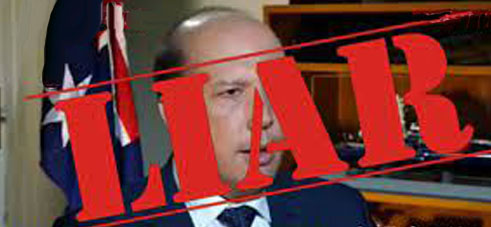
Australia’s Opposition leader Dutton’s plan to nuke Australia’s renewable energy transition explained in full
Giles Parkinson, Jun 21, 2024, https://reneweconomy.com.au/duttons-plan-to-nuke-australias-renewable-energy-transition-explained-in-full/
Opposition leader Peter Dutton has outlined his plan to bring the renewable energy transition in Australia to a halt, keep coal fired power stations open, build more gas and use taxpayer funds to build nuclear power plants in the 2030s and 2040s – if the Coalition wins the next election.
Here is an explanation of the plan as far as we know it.
What are the details?
There are not many, because the nuclear “policy” has been released in a one page press release. The Coalition says it wants to build seven nuclear power plants – all at the site of current or former coal fired power stations – in five states. It favours a mix of small modular reactors and large-scale nuclear. It wants the first reactor built by 2035.
Where exactly will they be built?
Two sites in NSW (Liddell in the Hunter and Mt Piper near Lithgow), two in Queensland (at the Tarong and Callide power plants), one in Victoria (Loy Yang in the Latrobe Valley), one in South Australia (Port Augusta), and one in Western Australia (Collie).
Are the site owners OK with that?
No, they say they haven’t been consulted and they say they have their own multi-billion dollar plans to build clean energy and industrial hubs. AGL CEO Damien Nicks says: “There is no viable schedule for the regulation or development of nuclear energy in Australia, and the cost, build time and public opinion are all prohibitive. ” However, the Coalition says if the site owners do not co-operate they will compulsory acquire the land needed.
Which technology will the Coalition use?
It’s not clear. Dutton wants to build small nuclear reactors at two sites, in South Australia and W.A. But SMRs do not exist yet, none have planning approval, and none even have licences to be built anywhere in the western world. Of the two large scale nuclear technologies cited, one (APR1400) has not been ordered anywhere in the world outside South Korea for 15 years. The other, the AP1000, sent its maker Westinghouse bankrupt in 2017 and was the technology used in the Vogtle reactor in the US whose massive delays and cost overruns might make it the last ever built in that country.
When is the timeline for the Coalition nuclear build?
The Coalition wants the first SMR up and running by 2035, and the first large-scale nuclear plant by 2037, with the rest in the 2040s.
Is that realistic?
No. SMRs – for all intents and purposes – haven’t been invented yet. There is no design in any western country that has even been licensed, let alone been given approvals or started construction. Globally, the industry is hopeful of getting the first up by the end of the decade. Even Canada, with a well established nuclear industry and an available site, says it is unlikely to have the second SMR up and running by 2035.
The timelines for large-scale nuclear are even longer. All four projects built or under construction in the last three decades in the US, France, Finland and the UK have suffered massive delays and cost over-runs. Australia has no regulatory platform, and no existing industry, apart from the small reactor at Lucas Heights in Sydney. Even pro-nuclear advocates like former chief scientist Alan Finkel say nuclear cannot realistically be delivered in Australia until the 2040s.
What are the costs?
The Coalition hasn’t said anything about costs, which is not surprising. SMRs have not been built and the only one that got close was cancelled by its would-be customers because it would have been hideously expensive. The Coalition’s timeline of 2035 means it wants to be an early adopter. The CSIRO puts the costs at more than $600/MWh, which might be palatable for a technology used only rarely for evening peaks, but such a price for “always on” power would be insane.
Would it lead to lower bills?
All Australian and international studies show that the Coalition’s choice of technologies – nuclear, gas and carbon capture – are by far the most expensive. See CSIRO, AEMO, Lazard, and BloombergNEF. Energy analysts say the growing reliance on gas power while renewables are stopped and coal kept on line would lead to soaring prices and an extra $1,000 on annual bills for the average household. The nuclear rollout will be entirely funded and subsidised by the taxpayer, which means that – as in France, Ontario and elsewhere – the costs of nuclear would be borne by the government and hidden from consumer bills.
What would happen to emissions?
Emissions will rise significantly if the Coalition puts its plan into action. One study suggests it would result in some 2.3 billion tonnes of additional carbon emissions over the Australian Energy Market Operator’s step change scenario.
What about Australia’s obligations to the Paris climate treaty?
The Coalition has made clear it will not seek to meet the current interim target of a 43 per cent cut in emissions. That means it is effectively ignoring the climate treaty, which requires no back-tracking on committed targets.
What about the net zero by 2050 target?
The Coalition says it still intends to meet that – but, by stopping wind and solar and building more gas, that target looks impossible under their plan.
The Coalition says the sites were chosen because they will not need new transmission. Is that true?
No. The site owners have their own plans. In Port Augusta, for instance, the grid capacity has already been mostly taken up by new wind, solar and batteries. “The myth that a nuclear reactor could just plug into the old Pt Augusta coal power station transmission lines is not true,” says South Australia energy minister Tom Koutsanstonis. “The transmission lines are already nearly full from new renewables. In truth, a nuclear reactor at Pt Augusta would need new transmission lines, the exact thing the LNP are complaining about.” And the large-scale nuclear reactors cited by Dutton will be twice the size of any existing unit in Australia, so it will need more grid infrastructure, and also more “back-up” in case those units fail.
The Coalition says the market operator has warned that the reliance on wind and solar will mean the lights will go out. Is that true?
No. The Australian Energy Market Operator says the biggest threat to energy reliability and security is the failure of ageing and increasingly unreliable coal fired generators.
The Coalition says wind and solar cannot power modern economies and businesses. Is that true?
No. The owners of Australia’s biggest smelters and refineries, including Rio Tinto and Ark Energy, are contracting multiple gigawatts of wind and solar to power their assets. South Australia says it has been flooded with inquiries from business with more than 2 GW of energy demand seeking to move to the state to access cheap wind and solar.
The Coalition says wind and solar cannot provide more than 10 per cent of the energy mix without causing problems. Is that true?
No. South Australia already enjoys a 75 per cent share of wind and solar, and the isolated W.A. grid has had 36 per cent wind and solar over the past year. The market operator says instantaneous levels of 100 per cent should be achieved in coming years.
The Coalition says the Labor government wants to build 28,000 km of new transmission lines by 2030. Is that true?
No. The market operator’s system plan envisages just over 5,000 km by 2030, one third of which have already been built, and some of the rest needed by growth in population and industry. The 28,000 km number comes from the “green export superpower” scenario and is for 2050. That assumes a switch from fossil fuel exports to green industries (steel, power, ammonia), and would likely be required whatever the technology.
Isn’t nuclear banned in Australia?
Yes, at federal and state levels. If the Coalition wants to repeal the laws it will need to get it through both houses of parliament, and who knows where the numbers will be after the next election, with the two-party preferred polls even stevens and any number of independents and minor parties also likely to emerge.
Do the states want nuclear?
No. The Labor governments in Queensland, NSW and Victoria have state laws against nuclear and intend to keep them. LNP Opposition leader David Crusafulli, favoured to take power in Queensland’s election in October, is also against nuclear. State governments in Western Australia, South Australia and even the Liberals in Tasmania are also opposed to nuclear, but legal experts say if the Commonwealth pulls rank, it is heading for the courts.
What if local communities object?
Nationals leader David Littleproud has spent the last few years defending the right of communities to oppose wind, solar, battery and transmission projects, and has demanded a pause and a “re-set.” But he says the Coalition will brook no opposition to its nuclear plans. If local communities don’t like it, tough luck. “We need strong leadership in this country, to have the courage of its convictions, to follow through and to make the tough calls in the national interest,” he told the ABC.
What will be the future of large-scale renewables under a Coalition government?
If the Coalition wins power, it won’t be good. Littleproud wants them stopped, and has vowed to rip up contracts written by the Commonwealth under the Capacity Investment Scheme, which could have 12 GW of capacity lined up over the next 12 months. States may plough on, but will face roadblocks and vetoes on projects. Investors say they need certainty.
So what is the real strategy here?
It’s pretty clear that the strategy is less about building nuclear and more about stopping renewables and protecting the fossil fuel industry, something that the Coalition has not been shy about for the last two decades. It will lead to higher costs, more emissions, squandered industry opportunities, and make the grid less reliable.
Will the strategy work?
Quite possibly. To people in the industry, pushing nuclear and walking away from Australia’s low cost wind and solar resources is nuts – from an engineering, economic and environmental point of view. But 95 per cent of people do not know, and are not interested in, the fine details of the complex energy system. They just want cheap power and the lights to stay on.
And to many of them the Coalition’s fear mongering may sound entirely plausible, particularly when the obvious misinformation is not contradicted by mainstream media – with a few notable exceptions such as The Guardian. See Trump, see Aboriginal voice referendum.
The fossil fuel industry is funding a massive campaign on social media to share simple and effective stories that make nuclear sound sensible and wind and solar as madness. They didn’t just think of this yesterday. If the renewable energy industry and Labor are not careful, they will lose this battle for hearts and minds.
Wow, that was exhausting. Do you need a lie down?
Yes.
Australia’s Opposition leader Peter Dutton launches highly personal attack on Prime Minister Albanese, calling him ‘a child in a man’s body’ while spruiking his new nuclear direction.

- Peter Dutton addressed party faithful in Sydney
- Painted PM Albanese as weak leader
By MICHAEL PICKERING FOR DAILY MAIL AUSTRALIA and WILLIAM TON and ANDREW BROWN FOR AUSTRALIAN ASSOCIATED PRESS, 22 June 2024
Opposition Leader Peter Dutton told Liberal Party faithful Prime Minister Anthony Albanese was ‘a child in a man’s body’ in a highly personal attack on Saturday.
Mr Dutton spoke to a federal council meeting of Liberal Party politicians, administrators and members in Sydney in which he painted Mr Albanese as ‘weak’ and a leader who told people ‘what they want to hear, not what needs to be said’.
‘He’s a man with a mind still captured in his university years; he’s a child in a man’s body,’ Mr Dutton said………. The opposition leader has cast the next federal election as defining Australia’s ‘future and fate’ with voters to decide the nation’s path forward on energy.
Australians will decide their energy future at the next election, says the opposition leader while slamming the government’s ‘reckless’ renewables policy and spruiking his nuclear pledge.
‘The next election will not only define the next political term, it will define the future and fate of this nation,’ he said.
Voters will have to choose the path they want to take including the nation’s energy future amid soaring power costs, Mr Dutton said.
‘A choice between Labor’s reckless renewables-only policy that will see the energy bills of Australians soar even more,’ he said.
‘Or the coalition’s plan for cheaper, cleaner and consistent energy, which includes our visionary plan to become a nuclear-powered nation and to do the right thing by the environment.’
It follows the coalition on Wednesday unveiling plans for seven nuclear reactors across five states on the sites of coal-fired power stations, should it win government.
The plan prompted safety concerns in regional areas where the reactors are due to be built, as well as criticism over the coalition not releasing any costings.
Prime Minister Anthony Albanese was panned for adhering to ‘unachievable’ renewable emissions targets, which the opposition said are blowing the budgets of Australians.
‘He’s more interested in appeasing the international climate lobby than sticking up for the interests of everyday Australians,’ Mr Dutton said.
‘I will be someone who doesn’t shirk the hard and necessary decisions which must be made in our national interest in these tough and precarious times.’
Opposition frontbencher Paul Fletcher dismissed fears the nuclear policy could make metropolitan electorates harder to win at the next election, saying it demonstrated the party’s commitment to achieving net zero by 2050.
The coalition faced significant challenges at the 2022 federal election in blue-ribbon, inner-city seats from teal independents, who pledged greater action on climate change.
While the reactors would be built in regional locations, Mr Fletcher said those in inner city areas would also embrace the idea of nuclear.
Under the plan, it would take until 2035 to 2037 at the earliest for the first facility to be built.
Assistant Climate Change and Energy Minister Jenny McAllister hit out at the nuclear policy which she said was expensive and risky.
‘Today Peter Dutton could’ve answered the many questions Australians have about his risky nuclear plan but all they got was more of the same nasty negativity and politics,’ she said.
‘Peter Dutton demands a mature debate but instead launches personal attacks. Peter Dutton demands lower power prices but opposes energy price relief and is unable or unwilling to say how much his nuclear plans will cost Australian taxpayers.
‘Australians deserve better.’
Scotland’s First Minister Swinney hits back at ‘hopelessly ideological’ attack from nuclear industry

By Martin Williams, @Martin1Williams, Senior News Reporter, Herald 20th June 2024
The First Minister has rejected an attack from the nuclear industry that his ban on new power plants is “hopelessly ideological”.
John Swinney doubled down on his rejection of new nuclear after he was challenged in the Scottish Parliament over his stance after the nuclear industry criticisms, revealed in the Herald on Sunday targeted his view that he was “not a fan of the nuclear industry” and that he “never have and never will” support investments in new power plants.
He has been responding to calls to lift the ban on nuclear as fears grow over hundreds of jobs being lost and skilled workers leaving Scotland for overseas.
The nuclear industry attacked the First Minister for being “hopelessly ideological and anti-science” after he said he was “not a fan” of the business and that he “never have and never will” support investment in the power plants……………………
When asked for his response to the nuclear industry in the Scottish Parliament, Mr Swinney said: “The Scottish Government does not support the building of new nuclear power stations in Scotland. We have abundant natural resources and a highly skilled workforce to take advantage of the many renewable energy opportunities. Evidence shows that new nuclear is more expensive than renewable alternatives.
“Nuclear energy also creates radioactive waste, which must be safely managed over many decades to protect the environment, requiring complex and expensive handling. The Scottish government is supporting continued growth in renewables, storage, hydrogen and carbon capture technologies to drive economic growth, support green jobs and provide secure, affordable and clean energy for Scotland.”
But in response, Scottish Conservative Central Scotland MSP Graham Simpson said: “So it is hopelessly ideological and anti science…………………..
The First Minister responded: “I gave a considered answer to Graham Simpson. I don’t think it could in any way be described as ideological, because I made the point that evidence shows that new nuclear is more expensive than renewable alternatives.
“We are facing a cost of living and public finance crisis, so any responsible First Minister will look to make sure that we make the most fiscally efficient approach to energy generation.
“This government, as a result of its clear policy leadership, has successfully decarbonised electricity generation within Scotland. We have developed renewable energy with policy certainty, and I want to give the same policy certainty to storage, to hydrogen to carbon capture technologies to drive economic growth and support green jobs……………………
And he added: “So I am afraid to say Graham Simpson has not got a leg to stand on this question. We have got a clear strategy on renewables. We will pursue that and will pursue it sustainably to deliver for the people of Scotland……………………….. https://www.heraldscotland.com/news/24400300.swinney-hits-back-hopelessly-ideological-attack-nuclear/
UK nuclear power plants rollout may be hit by planning hurdles
Companies bidding for government contracts to build the UK’s first mini-reactors
may find there are factors beyond their control. Britain wants to revive
its nuclear industry. Both the Conservatives and Labour, jostling for
electoral success, see reactors as a way of decarbonising the energy
network, providing a reliable base alongside clean but intermittent wind
and solar power.
But there’s a problem. All but one of the country’s
existing nuclear power stations are set to be decommissioned by the end of
the decade and Hinkley Point C, the only new one being built, is suffering
from budget blowouts and delays. The solution, it seems, is not to think
big but to think conspicuously smaller.
Mini-plants are being touted as a
faster and cheaper way of boosting the country’s nuclear capacity. Six
companies are on a shortlist competing for £20 billion in government
funding to build the nation’s first small modular reactors and in the
next two weeks they will submit final bids. Two are expected to be selected
by the end of the year.
So far, so good, yet there are worries that the
first hurdle may be somewhat easier to clear than what follows. In recent
years planning has been the bane of construction companies of all stripes,
from housebuilders to infrastructure specialists, and there is talk that
the rollout of small modular reactors could be hampered by the same lengthy
regulatory and permission-seeking processes that have beset larger-scale
nuclear projects, in particular.
The first small modular reactor is not
expected to be up and running before 2035. “Planning is a major drain on
the time in the schedule,” said Alastair Evans, director of corporate and
government affairs at Rolls-Royce, the FTSE 100 engineering specialist that
has been promoting its water-cooled reactor for use in the UK for several
years. “There will be lessons that we can learn and the planning
inspectorate can learn from what they have just been through,” a
reference to the ten years taken for the Sizewell C development in Suffolk
to move from initial public consultation to gaining consent. Small modular
reactors can take up the space of one or two football pitches, have a
capacity of up to 500 megawatts and will employ between 1,000 and 2,000 on
site.
Yet it still takes an average of more than four years for so-called
national significant infrastructure projects, which include all power
stations over 50MW, to secure a development consent order, according to the
latest government estimates, an increase from about two and a half years in
2012. Research by Britain Remade, a pro-growth think tank, suggests that
the average construction cost for new nuclear infrastructure that has been
built in the UK since 2000 is £9.4 million per megawatt, adjusting for
inflation. That is more than four times the cost in South Korea, which has
adopted a fleet approach to expand its nuclear capacity. “A key problem
is, if you look at the planning system for nuclear power stations, it is
extremely bureaucratic, slow-moving and paperwork-intensive,” Sam
Dumitriu, head of policy at Britain Remade, said.
He cited the 44,000-page environmental impact assessment that Sizewell C produced as part of its planning application. …………………………….
Times 21st June 2024
Gavin Newsom’s $12 Billion Radioactive Diablo Scam Could Soon Be Twisting In The Wind

-by Harvey Wasserman, 20 June 24, https://www.downwithtyranny.com/post/gavin-newsom-s-12-billion-radioactive-diablo-scam-could-soon-be-twisting-in-the-wind
Diablo Canyon’s infamous $12 billion nuclear war is raging hot and heavy in Sacramento. Citizen action may soon decide the outcome.
In the midst of a massive budget crisis, Governor Gavin Newsom is slashing social programs left and right. But he still wants to subsidize PG&E’s two money-losing atomic reactors near San Luis Obispo. The cash he wants from the state comes as part of a $1.4 billion package he strong-armed through the legislature in 2022. Much of that is coming from the feds.
But now he wants $400 million from California taxpayers.
And the legislature— amidst a fierce public uproar— may be on the brink of a definitive “NO!” Safe energy groups like the San Luis Obispo Mothers for Peace are rallying public pressure to stop the bailout.
The fight is doubly galling, because when he was Lieutenant-Governor, Newsom co-signed a 2017 landmark plan to phase out Diablo’s twin uninsured reactors. They have a long history of structural and legal problems. They are surrounded by at least a dozen significant seismic faults… and sit just 45 miles from the San Andreas.
Now four decades of age, their innards are cracked, rotted and embrittled. They risk spewing apocalyptic clouds that could turn California into a radioactive wasteland. They regularly emit heat, chemical pollutants and radioactive carbon-14 into the eco-sphere.
Rooftop solar, off-shore wind and advancing battery technologies have long since left Diablo in the dust on safety, price, reliability, efficiency and job creation. For at least several hours on most days now, the state gets more than 100% of its electricity from renewables.
Photovoltaic panels in central California now regularly produce below-market electricity that is literally “too cheap to meter.” Without Diablo gumming up the grid, and with limits on how much locally-generated power can be sold out of state, rates would plummet with no serious threat of blackouts.
Independent experts now calculate that it would cost California more than $12 billion in over-market pricing to run Diablo through 2030. The company itself concedes the cost would exceed $8 billion. PG&E has also petitioned the Nuclear Regulatory Commission to run Diablo through 2045, with potential excess costs gouging the public for tens of billions, accompanied by enormous job losses.
Amidst a “Solartopian” tsunami of new renewables and storage batteries, Diablo expensively jams the grid and raises the risk of blackouts. It employs just 1500 workers, versus more than 70,000 in rooftop solar alone, not counting wind, efficiency and battery production.
To better serve PG&E, Newsom’s personally appointed Public Utilities Commission has thrown the state’s rate structure into chaos, slashing at least 17,000 solar jobs while sticking California with the nation’s second-highest electric rates (behind Hawaii).
In 2022, Newsom trashed the nuclear phase-out he signed in 2017. With no public hearings and a strong-armed midnight vote, he demanded a $1.4 billion “forgivable loan” for PG&E, whose record profits went in part to the company’s CEO, who in 2022 was paid some $40 million.
Most Californians get zero power from Diablo. But Newsom wants to soak all taxpayers to cover the PG&E bailout and to foot the multi-billion dollar bills for its on-going over-market costs.
Fierce legislative resistance has put Diablo’s future in doubt. Consumer and safe energy activists throughout the state are campaigning hard against the bailout. On June 15, the Legislature voted nearly unanimously to slash it by $400 million.
If the legislators and their green backers succeed, California’s transition to a non-radioactive carbon-free energy economy could create countless new jobs while saving the state billions… and ducking the next Three Mile Island, Chernobyl and/or Fukushima.
With the world’s fifth-largest economy, California could join the world’s fourth-largest economy— Germany, which shut 19 reactors on the road to converting to wind, solar and batteries— in a sustainable post-nuclear world.
Harvey Wasserman co-hosts California Solartopia which airs most Wednesdays, 5-6 pm, at KPFK/Pacifica, 90.7fm-Los Angeles. He wrote Solartopia! Our Green-Powered Earth. He was arrested at Diablo Canyon in 1984.
Norway To Consider Developing Nuclear Energy
By Charles Kennedy – Jun 21, 2024,
Norway’s government appointed on Friday a committee tasked with
considering whether the country should develop nuclear energy as an
electricity source. Kristin Halvorsen, a former finance minister and
currently director of the Center for International Climate and
Environmental Research in Oslo, will lead the committee, which is set to
deliver its report with the findings by April 1, 2026. Norway ditched the
idea of nuclear as a power source in the 1970s, but it is now revisiting
the idea.
Oil Price 21st June 2024
https://oilprice.com/Latest-Energy-News/World-News/Norway-To-Consider-Developing-Nuclear-Energy.h
Prime Minister Rishi Sunak reinforced his party’s commitment to nuclear energy .
Rishi Sunak talks energy during Sizewell trip in Suffolk. Prime Minister Rishi Sunak reinforced his party’s commitment to nuclear
energy during a tour of Sizewell B. Building permission for Sizewell C on
the Suffolk coast, which will generate 3.2 gigawatts (GW) of electricity,
was granted in July 2022 and was expected to cost £20bn. Quizzed about
whether government had received any more assurances on further sources of
private investment for the project, Mr Sunak told reporters: “We are
confident of delivery of our nuclear plant”. In its manifesto, Labour said
it would “end a decade of dithering” on nuclear power, and would ensure the
long-term security of the sector.
BBC 19th June 2024
Very late and over budget: Why newest large nuclear plant in US is likely to be the last

Fereidoon Sioshansi Jun 20, 2024
With a lot of exaggerated fanfare, in early May 2024 the Georgia Power Company announced that the 1,114 MW Unit 4 nuclear power reactor at Plant Vogtle near Waynesboro, Georgia, entered commercial operation after 11 years of construction.
The former CEO of the company reportedly had installed a TV screen in his office remotely monitoring the progress of the work at the construction site. It must have been the most boring show to watch since on most days very little was actually happening at the site. He was mostly watching delays.
Vogtle unit 3 began commercial operation in July 2023. The plant’s first two older reactors, with a combined capacity of 2,430 MW, began operations in 1987 and 1989, respectively. The Plant Vogtle’s total generating capacity is nearly 5 GW surpassing, the 4,210-MW Palo Verde nuclear plant near Phoenix in Arizona.
Construction of the last 2 reactors began in 2009 and was originally expected to cost $US14 billion with a start date in 2016 and 2017. But as often happens the project suffered construction delays and cost overruns – exceeding $US30 billion ($A45 billion).
It is the latest – and possibly the last – addition to the US nuclear installed capacity, which is currently around 97 GW and accounted for nearly 19% of domestic electricity production in 2023, making it the second-largest source of electricity generation after gas, which was around 43% last year.
Vogtle Units 3 and 4 use the Westinghouse AP1000 design (cited enthusiastically by Australian opposition leader Peter Dutton this week) which includes new passive safety features that allow the reactors to shut down without any operator action or external power source.
Two similar reactors were planned for South Carolina, but the utilities halted construction in 2017 amidst escalating costs and delays.
The Executive Director of American Nuclear Society (ANS) Craig Piercy congratulated Southern Company, the parent of Georgia Power Company, and Westinghouse:
“This milestone … secures a generational investment in clean energy. Now complete, Vogtle 3 and 4 will deliver 17 million MWhrs of carbon-free power to Georgia annually – equivalent to the energy from all California’s wind turbines – and will be available 24/7.”
Fair enough but Mr. Piercy failed to mention that it took 11 years and $US30 billion of ratepayer money to build it – few private investors can afford the time or the capital.
Nor did he mention that currently there are no other nuclear reactors under construction anywhere in the US and none are presently contemplated. It may be the end of an era despite ANS’ obviously biased praise of the technology.
The story is much the same in France where the state-owned nuclear power giant Électricité de France (EDF), which operates a fleet of 56 reactors in one of the most nuclear dependent countries in the world, has been struggling to complete its last reactor.
The 1.6 GW Flamanville plant in northwest France is 12 years behind schedule and more than four times over budget – for the usual reasons. A faulty vessel cover needs to be fixed, pushing operation date to 2026.
In the meantime, the estimated cost to construct 6 new nuclear reactors, ordered by President Emanuel Macron, has risen to €67.4 billion ($A110 billion), from the original €51.7 billion, and is likely to go higher before they are completed. Nuclear plants are not cheap…………………………………………………
One of the few places where new reactors are being built without long delays is China, but even there the scale of nuclear build is dwarfed by solar and wind by orders of magnitude.
In the past 10 years, more than 34 GW of nuclear power capacity were added in China, bringing the country’s number of operating reactors to 55 – barely shy of the 56 in France – with net capacity of 53.2 GW as of April 2024 (visual on right on original ). Some 23 reactors are reported under construction in China
Globally, nuclear, while a low-carbon and baseload form of generation, is struggling to make much of a dent despite a few isolated places where it is maintained on the agenda – generally by government fiat and through generous subsidies.
It is hard to come up with a conceivable scenario where its fortunes will significantly improve. A hefty global carbon tax, for example, may help but even in this case, it will simply make renewables, not nukes, even more attractive than they already are.
Fereidoon Sioshansi is editor and publisher of EEnergy Informer, and president of Menlo Energy Economics, based in California. https://reneweconomy.com.au/why-the-newest-large-nuclear-plant-in-the-us-is-likely-to-be-the-last/
Nuclear black hole could deal a knock-out blow to UK Labour’s renewable targets
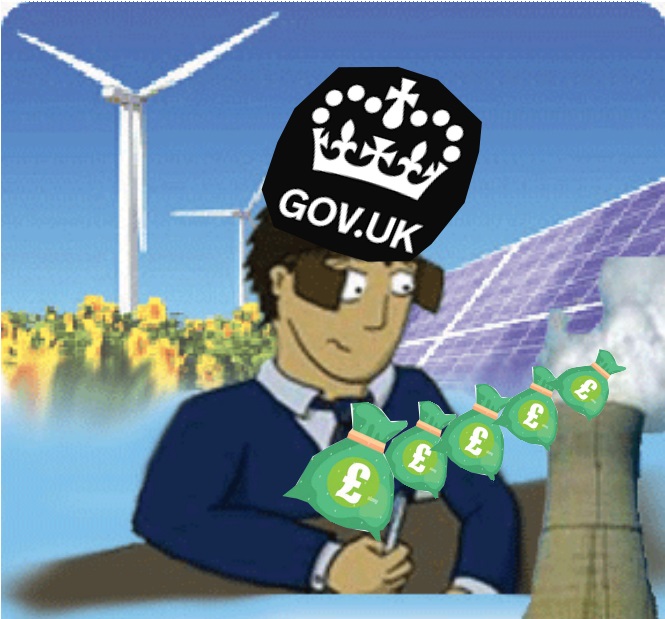
Labour’s ambitious target for offshore wind could be quietly shelved to make way for the giant funding commitment to pay for Sizewell C nuclear power plant
DAVID TOKE, JUN 17, 2024, https://davidtoke.substack.com/p/nuclear-black-hole-could-deal-a-knock?utm_source=post-email-title&publication_id=1068034&post_id=145716547&utm_campaign=email-post-title&isFreemail=true&r=ln98x&triedRedirect=true&utm_medium=email—
Much of Labour’s manifesto commitments for clean energy, a state-owned ‘Great British Energy’ company to promote new technologies and funds to support buildings-based insulation and low carbon measures, have been widely flagged already. But there’s not much attention being given to two big, interlinked, threats to Labour’s clean energy strategy. One is the looming black financial hole that the incoming Labour Government will trigger as it gives the financial go-ahead for Sizewell C. The second is the problem of organising a much more rapid build-up of renewable energy than the Conservatives have managed to achieve. Both will involve the Treasury having to commit themselves to supporting forward spending, and we know that money is tight!
The central problem is that the cost of Sizewell C could sink the prospects of the renewables target. It is not difficult to see the problem. The costs of building Hinkley C, the sister plant of Sizewell C, have been growing and growing, and the plant has a long way to go before it is finished. The costs have reached an astonishing £33 billion for just 3.2 GW. Few independent analysts can be found who would bet against this cost increasing a lot further.
Unlike Hinkley C, Sizewell C is, to cut a longer story short, mostly going to have to be financed by the taxpayer or energy consumers. These costs will increase the numbers for the Public Sector Borrowing Requirement. The Treasury will have serious indigestion over this.
EDF is responsible for the costs of building Hinkley C. However it has refused to take responsibility for financing more than a small portion of Sizewell C. Moreover, it is proving very difficult to get any private investors to take responsibility for paying the costs of Sizewell C (no surprises there!). Essentially that means the Government are going to have to take responsibility for paying for the large bulk of the projects, and large cost overruns are all but inevitable. A lot of billions worth of red ink is going to have to be written into Treasury estimates if Sizewell C is to be given the financial go-ahead.
Offshore wind, onshore and solar farms will be a lot cheaper for the consumer than nuclear power from Sizewell C. Nevertheless, if the Treasury allows tens of billions to be allocated to underwrite the costs of Sizewell C then this could blow a huge hole in any efforts to get Labour’s renewable energy programme funded. To meet Labour’s manifesto target of quadrupling offshore wind capacity by 2030 then the Government will need to get lots and lots of contracts and offshore wind project contracts and leases issued pretty damn quick. That is as well as contracting lots of onshore wind and solar farms which are likely to be cheaper than offshore wind for the next few years at least.
The offshore wind commitment (for around 45 GW of new capacity by 2030) is going to require some funds to be underwritten by the Treasury. How much depends on what the Treasury chooses as the future price, say in 2030, of power from natural gas-fired power plant. This is because energy consumers will fund the difference between the guaranteed contract prices to be paid for offshore wind power production and the wholesale power price.
Since we do not know the price of gas in 2030 now, since we do not know what the global price of natural gas (in the form of LNG) will be, the Treasury has to make a choice. This choice, of course, is heavily laced with political implications. But at the moment the Treasury has chosen quite a low number for the future cost of natural gas. This makes offshore wind look relatively expensive to fund. I discussed this in a post I did in March, see here: How the Government is gaslighting us about the cost of offshore wind.
Renewable energy is much more popular with the public compared to nuclear power. But big energy corporations, not to mention the GMB union, are going to be piling in to try and make sure that approval of Sizewell C is given priority ahead of Labour’s apparently ambitious renewable energy commitment. That could mean that the bold offshore wind target is going to be quietly thrown in the waste bin.
Australia’s Opposition leader Peter Dutton refuses to answer key questions about his nuclear power plan
Key question Peter Dutton refuses to answer about his nuclear power plan

- Peter Dutton refused to answer question
- He was probed about nuclear power policy
By NCA NEWSWIRE and ELEANOR CAMPBELL FOR NCA NEWSWIRE, 16 June 2024 https://www.dailymail.co.uk/news/article-13534571/Key-question-Peter-Dutton-refuses-answer-nuclear-power-plan.html
Peter Dutton has again refused to reveal key details on the Coalition’s nuclear power policy, declaring he would consider announcing his alternative 2035 emissions reduction goal if the government released modelling on interim climate targets.
In a fiery interview on Sunday with Sky’s Sunday Agenda host Andrew Clennell, the federal Opposition Leader became defensive after being pressed to reveal the locations and costings of his six proposed nuclear power plants.
Mr Dutton said he would reveal the opposition’s energy plan within ‘weeks’ in March but again declined to spell out the full details of his vision for Australia’s energy transition.
‘What we’ve said, the sites that we’re looking at are only those sites where there’s an end-of-life coal-fired power stations,’ he told Sky on Sunday.
‘One of the main reasons is that people in those communities know that they’re going when coal goes and we have the ability to sustain heavy industry, we have the ability to keep the lights on.’
A recent report from peak scientific body CSIRO suggested that building a large-scale nuclear power plant in Australia would cost at least $8.5bn and take at least 15 years to deliver.
The Coalition has refused to confirm reports of the locations of up to seven proposed power sites, which according to speculation, include sites in two Liberal-held seats and four or five Nationals-held seats.
Potential sites include the Latrobe Valley and Anglesea in Victoria, the Hunter Valley in NSW, Collie in WA, Port Augusta in South Australia, and potentially a plant in the southwest Queensland electorate of Maranoa, held by Nationals leader David Littleproud.
When pressed on the locations of the sites, Mr Dutton responded: ‘We’ve said that we’re looking at between six and seven sites, and we’ll make an announcement at the time of our choosing, not of Labor’s choosing.’
When asked if a power plant would be placed on each of the unspecified sites, Mr Dutton did not answer directly, saying only that he would consider output and environmental impact.
The Opposition Leader was then asked if the plants would be government subsidised, and responded by saying all power sources, other than coal, receives funding.
‘We’ll make an announcement in due course, but I just make the point that wind and solar don’t work without government subsidy,’ he said.
Mr Dutton also came under scrutiny this week after revealing he would oppose a legislated 2030 carbon emissions target at the next election.
Asked directly if he would consider a 2035 interim reduction target, which would be legally required under the 2015 Paris agreement, the Liberal leader said he would ‘take advice’ from the treasury before changing climate legislation, citing concerns about the nation’s economic situation
‘I think we have a look at all of that information and if there were settings we need to change … it doesn’t mean exiting Paris or walking away from our clear commitment to be net zero by 2050,’ he said.
Mr Dutton was asked for a second time if he would set a 2035 target, but again spoke at length about cost of living pressures facing the country.
Trade Minister Don Farrell said Mr Dutton’s comments were ‘outrageous’ and argued watered down climate commitments would damage Australia’s standing with its international allies.
‘It’s beyond the pale to be perfectly honest,’ Mr Farrell said on Sunday.
‘We went to the last election committing to a 2030 target and despite what Mr Dutton might say, we’re on track to meet that target.’
1 This Month
Chernobyl: The Lost Tapes – A good documentary on Chernobyl on SBS available On Demand for the next 3 weeks– https://www.sbs.com.au/ondemand/tv-program/chernobyl-the-lost-tapes/2352741955560

of the week–London Campaign for Nuclear Disarmament

Tell the Ukrainian Government to Drop Prosecution of Peace Activist Yurii Sheliazhenko
To see nuclear-related stories in greater depth and intensity – go to https://nuclearinformation.wordpress.com
-
Archives
- April 2026 (139)
- March 2026 (251)
- February 2026 (268)
- January 2026 (308)
- December 2025 (358)
- November 2025 (359)
- October 2025 (376)
- September 2025 (257)
- August 2025 (319)
- July 2025 (230)
- June 2025 (348)
- May 2025 (261)
-
Categories
- 1
- 1 NUCLEAR ISSUES
- business and costs
- climate change
- culture and arts
- ENERGY
- environment
- health
- history
- indigenous issues
- Legal
- marketing of nuclear
- media
- opposition to nuclear
- PERSONAL STORIES
- politics
- politics international
- Religion and ethics
- safety
- secrets,lies and civil liberties
- spinbuster
- technology
- Uranium
- wastes
- weapons and war
- Women
- 2 WORLD
- ACTION
- AFRICA
- Atrocities
- AUSTRALIA
- Christina's notes
- Christina's themes
- culture and arts
- Events
- Fuk 2022
- Fuk 2023
- Fukushima 2017
- Fukushima 2018
- fukushima 2019
- Fukushima 2020
- Fukushima 2021
- general
- global warming
- Humour (God we need it)
- Nuclear
- RARE EARTHS
- Reference
- resources – print
- Resources -audiovicual
- Weekly Newsletter
- World
- World Nuclear
- YouTube
-
RSS
Entries RSS
Comments RSS
 nuclear-news