Risk of zero nuclear power being effective: Japan’s govt anxious to avoid this
There is something altogether unnerving about safety standards which are admittedly adapted not primarily for safety’s sake, ……but rather to convince host communities and the public of the safety of nuclear plants.
Japanese officials are concerned that if all of the nation’s nuclear power plants are shut down, that the rising sentiment in the island nation will prevent any of the commercial reactors to start once again.
“They want to avoid setting a precedent of the country operating without nuclear power because it will create a huge barrier in terms of restarts,” “People will question why we need it,”
Top Japanese Officials endorse new nuclear safety standards created in less than one weekEnformable, Lucas W Hixson, 7 Apr 12, The government is accelerating plans to give it’s the official nod to the restart of the No. 3 and No. 4 reactors at the Ohi plant in Fukui Prefecture after the Japanese Nuclear Safety Commission approved the results of Kansai Electric’s first-stage stress tests on the two reactors in March.

Earlier this week on Tuesday, Japanese Prime Minister Noda instructed Economy minister Yukio Edano to draft nuclear safety standards before judging whether to restart reactors 3 and 4 of the nuclear plant at Oi in Fukui Prefecture.
Despite having only held their third meeting, as of Thursday the Japanese central government have drafted, adopted, and generally endorsed new nuclear safety standards in record time.
The Japanese government is expected to take action on the new agreement following a meeting on Friday pending some modification on the wording of the draft by the Economy, Trade and Industry Ministry. However, there is no need to restart the reactors if the region has sufficient power, or if energy-saving measures can sufficiently reduce power consumption…… Continue reading
Japan: prefectures next to town of Oi don’t want Oi’s nuclear reactors restarted

 Debate growing over ‘local’ reactor consent Governors of prefectures without units seek greater say in process Japan Times, By ERIC JOHNSTON, April 6, 2012 OSAKA — Dissent between those inside Fukui Prefecture who want two reactors in the town of Oi restarted quickly and those in adjacent prefectures who want to wait for stronger safety measures or are opposed altogether, highlights the dilemma Tokyo faces in obtaining local consent. Continue reading
Japanese government can override community opposition to nuclear reactor restarts
The new accident touched a nerve among the public at a time when Japan’s government is working to convince its people that atomic power is vital.
Chief Cabinet Secretary Osamu Fujimura underscored that there was no legal requirement for local communities to sign off on the restarts.
Japan races to get nuclear reactors running again China Daily-Reuters 2012-04-06 About 12 tons of radioactive water has leaked at Japan’s Fukushima Daiichi nuclear power plant while the Japanese government is racing to get two nuclear reactors of Kansai Electric Power Company running again by next month. Continue reading
Japan’s government wants to restart nuclear reactors, but under pressure not to
Experts say the government is racing to try to restart two nuclear reactors by next month out of fear that surviving a total shutdown would make it hard to convince the public that atomic energy is vital to avoid serious power shortages.
A group of seven lawmakers from ruling and opposition parties, which wants Japan to abandon nuclear power, urged the government on Friday not to approve restarts hastily……
Cut nuclear reliance to zero: Japan energy minister abs-cbn news, by Risa Maeda, Reuters 04/07/2012 TOKYO – Japan should aspire to phase out nuclear power completely, its energy minister said on Friday, even as the government struggles to persuade a wary public that it is safe to restart reactors after the world’s worst nuclear crisis in 25 years. Continue reading
UK and USA cannot ignore the economic effects of Fukushima
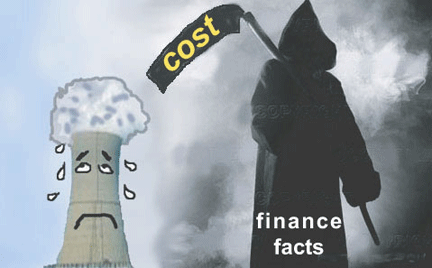

 Prospects for Nuclear Power in 2012, The Energy Report, 5 April 12 “Banks have signaled that they are unwilling to bear the risk of financing new nuclear projects, leaving three sets of interests that might be able to take it on: the utilities, the vendor or the consumer, in some form, via the state.”
Even before the Fukushima disaster, the long-awaited nuclear renaissance in the West seemed to be running out of steam. There were two main factors behind this failure; the new Generation III+ reactors produced to take account of the lessons of Chernobyl that would spearhead the revival were not living up to their promises, and, more importantly, banks were proving unwilling to provide finance.
The key markets for the renaissance were the U.S. and the UK. Continue reading
Democracy losing out in South Korea, as govt stifles anti nuclear voices
nuclear energy is not considered a safe, clean or sustainable energy source by the UN’s Intergovernmental Panel on Climate Change. It is, therefore, not included in the UN’s Clean Development Mechanism.
the government declared it would spend an additional 10 billion won to promote nuclear energy
Greenpeace will continue to reach out to the people of Korea, despite the fovernment’s attempt to quash public debate and discontent over its nuclear plans

 Nuclear Power and Democracy Don’t Mix , HUFFINGTON POST, 3 April 12, Kumi NaidooExecutive Director, Greenpeace International,On Monday South Korea deported three senior Greenpeace staff, known for their role in our campaign
against that country’s nuclear expansion plans. This is just the latest proof that nuclear power and democracy do not mix. It’s the latest attack on freedom of speech from an industry forged in the furnace of military secrecy, which has over the last 60 years left in
it’s a wake a legacy of lies, cover-ups and broken promises.
What is it the industry and its government sponsors fear? What do they hope to achieve by excluding peaceful people from Greenpeace? What do they have to hide? What is it that they do not wish the people of Korea to hear?…. Continue reading
France, Russia, Japan eager to sell nuclear to Czechoslovakia
doubts have been hanging over the financial viability of the plan due to uncertain energy market in Europe.
Industry minister Kuba said he would favour aid to nuclear rather than renewable energy….
Czech govt mulls price floors to lure new nuclear * Industry minister hints at possible price guarantees * Says nuclear plants are strategic option * Czechs go against trend in Germany By Jan Korselt TEMELIN, Czech Republic, March 30 (Reuters) – The Czech government sees building new nuclear power plants as a strategic priority and is considering minimum electricity price guarantees to ensure new reactors are built, the country’s industry minister said on Friday. Continue reading
Japan’s complicated plan to let some Fukushima residents return home
Even if residents are allowed to eventually return they will continue to live under the shadow of the devastated Daiichi plant, where its a huge and costly cleanup is expected to take several decades.
Japan to lift entry ban on some Fukushima cities TOKYO, (Reporting by Shinichi Saoshiro; Editing by Daniel Magnowski), Mar 30, 2012 (Reuters) – Japan said on Friday it would lift entry bans on some cities in Fukushima prefecture that had been designated no-go zones due to their proximity to a nuclear power plant crippled by a powerful earthquake and tsunami last March….
… This follows their declaration in December that the Daiichi plant was in cold shutdown and under control after months of cleanup efforts, signalling it was ready to move to a longer-term phase to eventually decommission the plant. Continue reading
NRC approves 2 new nuclear reactors, seeing that consumers take the financing risks
the SCE&G and Vogtle proposals have proceeded because both state legislatures passed anti-consumer state laws that allow utilities to collect rates in advance of project completion to pay for financing costs, with no opportunity for refunds if the projects are cancelled. These schemes essentially shift the risk from big power companies and their shareholders onto the ratepayers—families and businesses.
Misguided NRC Approves New SC Nuclear Reactors http://www.cleanenergy.org/index.php?/Press-Update.html?form_id=8&item_id=283 Local Organizations Frustrated as Federal Agency Fails to Fully Consider Fukushima Lessons COLUMBIA, S.C. – Just weeks after the one-year anniversary of the devastating nuclear disaster in Japan, today, in a 4-1 vote, the U.S. Nuclear Regulatory Commission (NRC)approved a final license for two new reactors at the site of South Carolina Electric & Gas’ (subsidiary of SCANA Corp.) currently operating V.C. Summer nuclear power plant. Continue reading
$billions needed from Japanese government to save Tepco from bankruptcy
TEPCO seeks new billions from Japan CNN March 29, 2012 –
*Tokyo Electric Power Co. is asking the Japanese government for about $22 billion
*The company is reeling from the Fukushima Daiichi nuclear disaster
* Analysts say it the accident may cost up to 10 trillion yen ($120 billion)
Tokyo – Japan’s largest utility asked the government for 1 trillion yen ($12 billion) in fresh capital Thursday to stay solvent as it faces enormous compensation costs for the Fukushima Daiichi nuclear disaster.
The Tokyo Electric Power Co. is also seeking another 800 billion yen ($10 billion) from a government fund to help it compensate people affected by the Fukushima Daiichi accident, including the estimated 100,000-plus people displaced. It has already requested more than 1.7 trillion yen from that fund…. http://edition.cnn.com/2012/03/29/world/asia/japan-tepco/
Japan’s Trade Minister backs energy conservation, and shift from nuclear power
Unlikely Hand Flips Japan’s Power Switch Trade Minister Breaks With Predecessors to Back Energy Conservation, Guide Shift From Nuclear WSJ, March 29, 2012, By MITSURU OBE And PHRED DVORAK, TOKYO—Japan’s shift away from nuclear power, prompted by last year’s Fukushima disaster, is being shepherded by an unlikely proponent: the trade minister. Yukio Edano says the country has to adjust to a new era of energy conservation, in contrast to his predecessors at the
powerful Ministry of Economy, Trade and Industry, who were anxious to keep Japan’s export-led economy chugging along on a plentiful supply of power. Continue reading
Nigeria’s President sure that Nigeria’s nuclear power will be safe
Jonathan assures the world of Nigeria’s nuclear safety, Vanguard, MARCH 26, 2012 · By Emma Ujah ABUJA — President Goodluck Jonathan has assured the global community that Nigeria will ensure that adequate safety measures are deployed when the country introduces nuclear power into its energy mix.
Speaking at the opening of the Nuclear Security Summit in the South Korean capital, President Jonathan declared that Nigeria remained fully committed to complying with all international legal and regulatory requirements for safety and security in the use of nuclear
energy……. http://www.vanguardngr.com/2012/03/jonathan-assures-the-world-of-nigerias-nuclear-safety/
India’s Prime Minister disapproves of foreign anti nuclear activists, but welcomes foreign nuclear investors
PM Woos South Korean Investors for Nuclear Energy, WSJ, By Vibhuti Agarwal , 27 March 12 Prime Minister Manmohan Singh might disapprove of foreign funds supporting anti-nuclear demonstrations in Tamil Nadu but he laid out the welcome mat for foreign – namely, Korean – companies to invest in developing nuclear energy in India……
President Lee also requested the Indian government to “allocate a site for Korean nuclear reactors,” a joint statement issued by India’s foreign ministry said Monday.
“Recognizing the criticality of non-polluting nuclear energy in the economic development of countries, they [India and South Korea] agreed to discuss specific items of cooperation with the ongoing review of the safety and security aspects of operating nuclear plants,” the statement said. .. http://blogs.wsj.com/indiarealtime/2012/03/26/pm-woos-south-korean-investors-for-nuclear-energy/?mod=google_news_blog
Japan buckles down to energy conservation -its last nuclear reactor to shut down in May
Japan shuts down its next-to-last nuclear reactor, Seattle Times, By ERIC TALMADGE, 26 Mar 12 Another Japanese nuclear reactor was taken off line for maintenance on Monday, leaving the country with only one of its 54 reactors operational following last year’s devastating earthquake and tsunami..with concerns over nuclear safety high following the
Fukushima crisis, none of the reactors that have been shut down for checks, and none that were already off line at the time of the disaster, have been allowed to restart.
The last reactor, on the northern island of Hokkaido, will be shut down in May. The timing for when any reactors will be restarted remains unclear…. Prime Minister Yoshihiko Noda has promised to reduce Japan’s reliance on nuclear power over time and plans to lay out a new energy policy by the summer.
In the meantime, Japan has temporarily turned to oil and coal generation plants to make up for the shortfall, and businesses have been required to reduce electricity use to help with conservation efforts.http://seattletimes.nwsource.com/html/businesstechnology/2017843195_apasjapannuclear.html
Special bribes, no, I mean benefits, for living near nuclear reactor
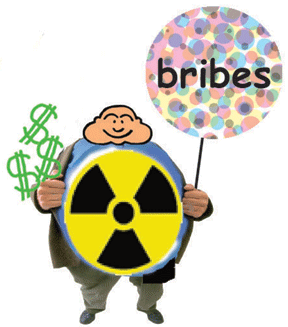 DAE Secy moots cheap power sop for people near n-plants, The Indian Express, 22 March 12, In a bid to prevent Koodankulam-like protests against nuclear power plants, the Department of Atomic Energy is pushing the government to ensure uninterrupted power supply at cheaper rates to people living near the sites.
DAE secretary Srikumar Banerjee told The Indian Express that local people needed to be given “preferential treatment” and special benefits so that they become stakeholders in the nuclear power plant…. We can get into providing healthcare services or education to the local populations. … http://www.indianexpress.com/news/dae-secy-moots-cheap-power-sop-for-people-near-nplants/926720/
1 This Month
23-25 October – on Zoom – World BEYOND War’s annual global conferenc


Shut down the radiation-damaged Heysham nuclear reactors now
To see nuclear-related stories in greater depth and intensity – go to https://nuclearinformation.wordpress.com

Say No to NASA’s Reckless Nuclear Reactor on the Moon
Say No to NASA’s Reckless Nuclear Reactor on the Moon

Please sign the petition here: https://www.change.org/p/stop-japan-s…
-
Archives
- October 2026 (190)
- September 2026 (339)
- August 2026 (330)
- July 2026 (355)
- June 2026 (287)
- May 2026 (306)
- April 2026 (356)
- March 2026 (251)
- February 2026 (267)
- January 2026 (308)
- December 2025 (358)
- November 2025 (359)
-
Categories
- 1
- 1 NUCLEAR ISSUES
- business and costs
- climate change
- culture and arts
- ENERGY
- environment
- health
- history
- indigenous issues
- Legal
- marketing of nuclear
- media
- opposition to nuclear
- PERSONAL STORIES
- politics
- politics international
- Religion and ethics
- safety
- secrets,lies and civil liberties
- spinbuster
- technology
- Uranium
- wastes
- weapons and war
- Women
- 2 WORLD
- ACTION
- AFRICA
- Atrocities
- AUSTRALIA
- Christina's notes
- Christina's themes
- culture and arts
- Events
- Fuk 2022
- Fuk 2023
- Fukushima 2017
- Fukushima 2018
- fukushima 2019
- Fukushima 2020
- Fukushima 2021
- general
- global warming
- Humour (God we need it)
- Nuclear
- RARE EARTHS
- Reference
- resources – print
- Resources -audiovicual
- Weekly Newsletter
- World
- World Nuclear
- YouTube
-
RSS
Entries RSS
Comments RSS

