Uncertainty about the restart of Japan’s other nuclear reactors,

 Uncertain prospects loom for post-Oi reactors, Masayuki Takata / Yomiuri Shimbun 17 June 12, Now that the government has decided to reactivate the Nos. 3 and 4 reactors at the Oi nuclear power plant in Fukui Prefecture, attention has turned to which will be next among the nation’s other 48 idle reactors….
Which reactor will be reactivated next is expected to be left up to a new nuclear regulatory commission to be established in August at the earliest. However, there are no clear prospects for restarting more reactors because it has not been decided how the new organization will
confirm their safety.
At a press conference held Saturday after the four-minister meeting, Economy, Trade and Industry Minister Yukio Edano said the Cabinet would not decide on reactivating the 48 reactors.
“The new regulatory organization will make its own decisions [regarding the safety of the reactors] independently” from the government, Edano said. It is unclear, however, to what extent the nuclear regulatory commission will take the current safety standards into consideration when making its assessments. Continue reading
6.5 million petition against restarting Japan’s nuclear reactors
On Friday, Japan’s Nobel literature prize laureate Kenzaburo Oe visited the prime minister’s office and handed the signatures of 6.5 million opposed to the continued use of nuclear reactors.
Japan orders nuclear restart amid protests, Business Recorder, 16 JUNE 2012 TOKYO: Japan ordered nuclear reactors back online on Saturday, defying public sentiment against atomic power following last year’s meltdowns at Fukushima sparked by a huge quake-tsunami disaster. Continue reading
Scotland rejects Trident nuclear submarine plans
Scotland says no to nuclear weapons http://www.snp.org/media centre/news/2012/jun/scotland-says-no-nuclear-weapons 17/06/2012 The SNP has criticised the UK Government for its plans to spend £1 billion on a contract renewing the UK’s nuclear-armed submarines for Faslane, despite Scottish public opinion consistently being against Trident. Continue reading
Trident nuclear submarine program a political minefield for UK’s coalition govt
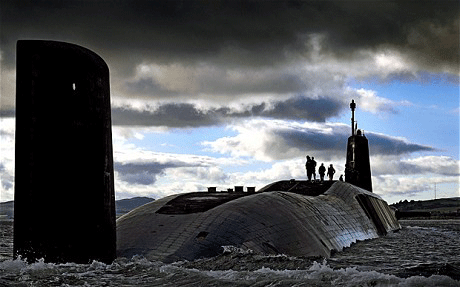 Coalition faces split over Trident nuclear replacement As defence secretary confirms £1bn contract for plant, Lib Dems confirm campaign for alternative to Tory plans for 2016 Nicholas Watt, chief political correspondent guardian.co.uk, 17 June 2012 A replacement for Britain’s Trident nuclear deterrent will become highly contentious at the next general election after the Liberal Democrats confirmed that they will campaign for an alternative and the SNP rejected the presence of “weapons of mass destruction in our waters”. Continue reading
Japan’s new nuclear regulatory body might allow prolonging life of old reactors
The legislation, however, swiftly came under fire for appearing to weaken the government’s commitment to decommissioning reactors after 40 years in operation
the new regulatory commission could revise a rule limiting the life of reactors to 40 years in principle.
“Does this reflect the sentiment of the citizens, who are seeking an exit from nuclear power?”
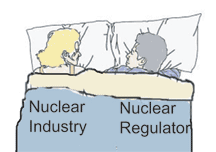 Japan to get new atomic regulatory body within three months By Linda Sieg, TOKYO Jun 15, 2012 (Reuters) – Japan will set up a new nuclear regulator around September under a law approved by parliament’s lower house on Friday after months of delay as part of a drive to improve safety and restore public trust after the worst atomic disaster since Chernobyl.
The 2011 Fukushima disaster cast a harsh spotlight on the cozy ties between regulators, politicians and utilities – known as Japan’s “nuclear village” – that experts say were a major factor in the failure to avert the crisis triggered when a huge earthquake and tsunami devastated the plant, causing meltdowns. Continue reading
Japan’s nuclear hosting towns addicted to the drug of nuclear subsidies
Genkai’s dependence on nuclear subsidies to fund 34% of its budget is the highest among the municipalities hosting nuclear plants, only matched by the town of Futaba next to the Fukushima Daiichi plant, according to a survey by the Yomiuri newspaper released in May.
Radiation levels in Futaba are so high that the government doesn’t expect the town to be habitable for decades.
Nuclear-related money “is like a drug: you get addicted once you receive it,”
Fukushima Watch: Looking for New Nuclear Revenue — A Spent Fuel Tax?, WSJ, By Mari Iwata, 15 June 12, The town of Genkai on Japan’s western island of Kyushu is one of many in this country whose livelihood depends on the nuclear reactors it hosts. Since those reactors have been shut down for nearly six months, with no restart in sight, the town is proposing another way of squeezing revenue from the power plant: tax it. That at least was the idea proposed by Hideo Kishimoto, Genkai’s mayor, in a municipal parliament session on Monday. One specific suggestion: a tax on the storage of the Genkai plant’s spent nuclear fuel rods.
“We can’t avoid a future drop in revenue, so we have to think of new taxes in order to maintain services for residents,” Mr. Kishimoto was quoted as saying in local media. Genkai’s revenue problem is acute. Continue reading
“Flimsy” new safety conditions for Malaysia’s rare earths project
“The two conditions are flimsy and general in nature. They are not specific enough and will in no way safeguard or appease the fears of residents living in the area,”
The group plans to challenge the government decision in court …
.. The ministry said the refinery would only be allowed to operate once Lynas complies with all the requirements, including the two extra conditions…… the government review has blocked the company from bringing in raw material.
Malaysia imposes 2 more conditions on controversial rare earth plant by Australian miner,Washington Post, By Associated Press, June 14, KUALA LUMPUR, Malaysia — Malaysia’s government has imposed two new conditions on a rare earth refinery set up by Australian miner Lynas to assuage public fears of radioactive pollution. Continue reading
Another USA govt handout to a nuclear-related company
“The real risks of this nuclear bailout is for taxpayers, who will be on the hook for questionable government handouts that are worth more than the entire company,”
Energy Department Steps in to Help Uranium Enrichment Company, NYT, By MATTHEW L. WALD, June 13, 2012, WASHINGTON — The Energy Department announced Wednesday that it was stepping in to shore up an ailing company it created in the 1990s to privatize uranium enrichment, Continue reading
USA poliarised on political party views on energy
 Republicans, Democrats at odds on energy issues Fox News,
 June 13, 2012 WASHINGTON – Republicans and Democrats seem to be living on different planets when it comes to how to meet U.S. energy needs. Republicans overwhelmingly push for more oil drilling. Democrats back conservation and new energy sources such as wind and solar power.
A survey by The Associated Press-NORC Center for Public Affairs Research shows that the polarized positions on energy that have divided Congress and emerged in the presidential campaign also run deep among the public.
While majorities in both parties say energy is an important issue, the poll shows that partisan identification is closely tied to people’s perceptions of the causes of the country’s energy problems and possible solutions. No other demographic factor — not race, age, gender or income level — is as consistently associated with opinions on energy as political party identification……..
The poll, made possible by a grant to the AP-NORC Center from the Joyce Foundation, illuminates one driver of this campaign season’s divisive political rhetoric: Both parties are playing to their bases.
So it’s no surprise that presidential candidate Mitt Romney and other Republicans push for more drilling for oil and natural gas, and President Barack Obama emphasizes renewable energy development as part of what he calls an “all-of-the-above” energy strategy. http://www.foxnews.com/us/2012/06/13/republicans-democrats-at-odds-on-energy-issues/#ixzz1xnz3id6w
Poland – same old story – politicians want nuclear energy, but public is against it
Atomic energy: Politicians back nuclear – but voters still wary Financial Times, By Liam Nolan, 13 June 12 “………Despite broad party support, a 2011 ministry of economy survey revealed that only 38 per cent of Poles are in favour of nuclear energy. Continue reading
Virginia uranium study panel – bias in favour of uranium companies
“What we’re concerned about here is they appear to have hired a group that has only done work for uranium mining companies and that they’re going to go with them behind closed doors and come up with a uranium mining law and a set of regulations,”
Uranium mining foes take aim at Va. study panel, Bloomberg, By STEVE SZKOTAK, 13 June 12, RICHMOND, VA. Two environmental groups opposed to ending a 30-year state ban on uranium mining in Virginia have raised new complaints about a state panel studying the issue and the hiring of a consultant they say has too many industry ties. Continue reading
Gloom in UK Parliament about the doubtful future of nuclear power
“It is a worry for the government that EDF is so downbeat. They are the only horse left in this race and if they falter it might mean the end of the whole [nuclear] programme.
The planned reforms, laid out in the government’s recent paper, have come under fire from some energy companies as a veiled subsidy for nuclear power
UK nuclear plans ‘need saving by David Cameron and Francois Hollande’ Commons committee chairman Tim Yeo says heads of state must intervene, after EDF casts doubt on its UK investment Fiona Harvey, environment correspondent guardian.co.uk, 12 June 2012 The prime minister must step in urgently to rescue the UK’s nuclear power programme, or risk it failing, a senior Tory has warned after French nuclear company EDF gave a downbeat report on the prospects for a new fleet of reactors in the UK.
Chairman of the influential energy and climate change committee and former Tory cabinet minister Tim Yeo said that Cameron must speak to his French counterpart, Francois Hollande, in order to decide what conditions are necessary for the state-owned French utility to fulfil its planned investment.
“This is something that can only be done by the heads of government of Britain and France,” he told the Guardian. “There may need to be special arrangements for nuclear [separate from the regulation and subsidy of other forms of power]. Given the size of this investment – billions and billions, with a return on investment coming well into the 2020s – this has to involve the heads of government.”
Yeo was speaking after the committee’s MPs questioned EDF Energy chief executive Vincent de Rivaz and several other energy company senior directors. De Rivaz was “very downbeat” on the prospects for new nuclear power stations, said Yeo. Continue reading
Nuclear weapons industries control USA policy on military spending
 The Nuclear Weapons Industry’s Money Bombs, How millions in campaign cash and revolving-door lobbying have kept America’s atomic arsenal off the chopping block. — Mother Jones, By R. Jeffrey Smith, Center for Public
Integrity Jun. 6, 2012 Employees of private companies that produce the main pieces of the US nuclear arsenal have invested more than $18 million in the election campaigns of lawmakers that oversee related federal
spending, and the companies also employ more than 95 former members of Congress or Capitol Hill staff to lobby for government funding, according to a new report. Continue reading
Japanese government ‘in the pocket of the nuclear industry’ will restart reactors
“By ignoring them and continuing his reckless push to restart Ohi, prime minister Noda is compromising the health and safety of millions, and showing just how deep his government is in the pocket of the nuclear industry,”

U-turn on nuclear as Japan PM decides: ‘We can’t do without it’ Scotsman.com 9 June 2012 Japan’s prime minister has ruled that two mothballed nuclear reactors in the west of the country must be restarted to protect jobs and ensure the “survival of society”, risking a backlash amid safety fears more than a year after the Fukushima disaster. Continue reading
USA legislation introduced to boost renewable energy investment
Legislation Would Give Renewable Energy Investors Access To Tax Advantage in News Departments Policy Watch by SI Staff 08 June 2012 Sens. Chris Coons, D-Del., and Jerry Moran, R-Kan., have introduced the Master Limited Partnerships Parity Act (MLP Parity Act), legislation that is designed to level the energy playing field by giving investors in renewable energy projects access to a decades-old tax advantage that is currently available only to investors in fossil-fuel-based energy projects.
The Solar Energy Industries Association, among other organizations, has endorsed the legislation….. http://solarindustrymag.com/e107_plugins/content/content.php?content.10485
1 This Month
23-25 October – on Zoom – World BEYOND War’s annual global conferenc


Shut down the radiation-damaged Heysham nuclear reactors now
To see nuclear-related stories in greater depth and intensity – go to https://nuclearinformation.wordpress.com

Say No to NASA’s Reckless Nuclear Reactor on the Moon
Say No to NASA’s Reckless Nuclear Reactor on the Moon
-
Archives
- October 2026 (190)
- September 2026 (339)
- August 2026 (330)
- July 2026 (355)
- June 2026 (287)
- May 2026 (306)
- April 2026 (356)
- March 2026 (251)
- February 2026 (267)
- January 2026 (308)
- December 2025 (358)
- November 2025 (359)
-
Categories
- 1
- 1 NUCLEAR ISSUES
- business and costs
- climate change
- culture and arts
- ENERGY
- environment
- health
- history
- indigenous issues
- Legal
- marketing of nuclear
- media
- opposition to nuclear
- PERSONAL STORIES
- politics
- politics international
- Religion and ethics
- safety
- secrets,lies and civil liberties
- spinbuster
- technology
- Uranium
- wastes
- weapons and war
- Women
- 2 WORLD
- ACTION
- AFRICA
- Atrocities
- AUSTRALIA
- Christina's notes
- Christina's themes
- culture and arts
- Events
- Fuk 2022
- Fuk 2023
- Fukushima 2017
- Fukushima 2018
- fukushima 2019
- Fukushima 2020
- Fukushima 2021
- general
- global warming
- Humour (God we need it)
- Nuclear
- RARE EARTHS
- Reference
- resources – print
- Resources -audiovicual
- Weekly Newsletter
- World
- World Nuclear
- YouTube
-
RSS
Entries RSS
Comments RSS

