Lithuanium referendum result is a blow to global nuclear industry
As these companies have no prospect of building a new nuclear plant in Japan since the government reviewed the nuclear energy policy after the Fukushima crisis, they must try to expand their businesses overseas

Hitachi’s nuclear plan hits bump / Lithuania referendum on construction project could hurt export strategy The Yomiuri Shimbun, 17 Oct 12 A Lithuanian referendum result has cast a shadow over Hitachi Ltd.’s strategy to increase sales from its nuclear business–and could affect other Japanese companies in the nuclear industry. Continue reading
Indian Point nuclear power plant – many want it shut down
Nuclear Power Debate Heats Up in NYCs Backyard: Relicensing Controversy Intensifies AOL Energy By Jared Anderson October 16, 2012 The battle lines have been drawn for years, but the fight over nuclear power’s risks and benefits reached a new stage in New York this week where issues including public safety, reliability, the environment and ratepayer costs are being disputed. Continue reading
Seabrook nuclear relicensing could be stalled by Federal legislation
“Allowing the NRC to give a 60-year-long clean bill of health to reactors that are in their nuclear adolescence, especially one with documented safety issues such as Seabrook, is like allowing a doctor to assure a 20-year-old smoker they will never get lung cancer,”
Bill could delay Seabrook nuclear plant relicensing Seacoastonline By Shir Haberman October 08, 2012 SEABROOK — The approval of a 20-year extension of the Seabrook Station nuclear power plant’s operating license could be delayed until 2020 if a bill proposed by two Democratic federal legislators from Massachusetts is approved by Congress.
HR 6554 filed by Reps. Edward Markey and John Tierney would prohibit the U.S. Nuclear Regulatory Commission from granting a license extension to any current nuclear plant licensee that applies for it more than 10 years prior to the expiration of its current license.
Seabrook Station has already petitioned the NRC for a 20-year extension of its operating license, which will not expire until 2030. Continue reading
Nuclear enthusiast UK Energy Minister promises ‘policy certainty’ on new nukes
 Mr Hayes described himself as “extraordinarily enthusiastic about nuclear” and “arguably the most pro-nuclear energy minister in living memory… I suppose ever”.
He conceded that “whoever buys it is going to have to attract sufficient large scale investment to make it happen” but said the government would offer policy certainty and diplomatic
 Government mulls underwriting risk of new nuclear plants The Government is considering ways of underwriting risk in the construction of new UK nuclear plants, the energy minister John Hayes has said. Telegraph UK By Emily Gosden 06 Oct 20122 In an interview with the Sunday Telegraph, Mr Hayes played down fears over the state of the UK’s nuclear ambitions, and suggested that Chinese investors may yet have a role – despite two Chinese corporations failing to bid as expected for the Horizon nuclear venture. Continue reading
Japan authorities passing the buck on decision-making about nuclear restart
 Government tries to duck reactor-restart decisions Fujimura hints decision rests with new body, Japan Times By MASAMI ITO, 7 October 12, Chief Cabinet Secretary Osamu Fujimura suggested Thursday that the central government does not have the ultimate say, or responsibility, in reactivating nuclear reactors, triggering confusion over who is in charge of making the decision.
At a news conference, Fujimura repeatedly stressed that the new Nuclear Regulation Authority is in charge of assessing the safety of reactors and that power companies are only tasked with explaining reactor restarts to host municipalities and seeking their consent. Continue reading
Boss of International Atomic Energy Agency (IAEA) at Japan’s Nuclear-Free Forum
Japan forum to discuss nuclear-free energy future, 06 October 2012  Muhammad Iqbal TOKYO: Japanese and European officials are to discuss future energy solutions at a forum in Kyoto this weekend in the wake of Japan’s plans to eliminate atomic power from the country’s energy mix by 2040.
Officials at the annual Science and Technology in Society (STS) forum Sunday will discuss the experience of removing nuclear power from a country’s energy mix, and what independent institutions can advise on the process.
Prime Minister Yoshihiko Noda’s administration in September declared its aim to eliminate atomic power over the next 30 years, as the cabinet declared a three-pronged strategy leading up to the halt, with tougher safety standards, the shuttering of reactors 40-years-old and a ban on the building of new units.
Since the tsunami-sparked meltdowns at the Fukushima plant last year there has been a grounds well of public opposition to nuclear power, which once provided a third of energy-hungry Japan’s electricity.
Genevieve Fioraso, France’s minister of higher education and research, told reporters Saturday ahead of the forum that Japan fared well despite its energy problems but said development of renewable energy solutions was “difficult”.
Among officials attending the forum Sunday are Yukiya Amano, director general of the International Atomic Energy Agency (IAEA), UK government chief scientific adviser John Beddington, and members of the Fukushima inquiry commission…..http://www.brecorder.com/world/southeast-asia/84115-japan-forum-to-discuss-nuclear-free-energy-future.html
Series of company pullbacks puncture UK’s nuclear power dream
 There is now a question mark over who will ultimately foot the bill for what are expected to be massively expensive infrastructure projects
How lights dimmed on UK’s nuclear vision, FT.com By Guy Chazan, October 5, 2012 In 2009, Ed Miliband, the then energy secretary, unveiled plans for the most ambitious expansion of nuclear power in Europe.
It was a bold vision. Britain would build up to 12 new reactors, he said, on 10 sites stretching from Somerset to Cumbria. By the late 2020s about 30 per cent of its electricity would come from nuclear power – up from 18 per cent now
That prediction is now looking wildly optimistic
 .
“The race for new nuclear in this country is at serious risk of unravelling,” says Tony Lodge, a research fellow at the Centre for Policy Studies think-tank.
Nuclear is widely seen as one of the great panaceas for Britain’s looming energy problems….
But recent events have conspired to puncture Britain’s nuclear dream. Continue reading
Politics in Japan, as government muddles over Fukushima crisis
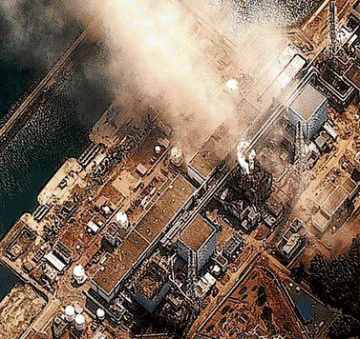 Fukushima Nuclear Crisis Update for October 2nd to October 4th, 2012 Greenpeace International, by Christine McCann – October 5, 2012 Nuclear Regulation Authority Japan’s Nuclear Regulation Authority (NRA) has released new guidelines for nuclear disasters, including expanding the evacuation zone around nuclear reactors from 10 to 30 km. The move will have a significant impact on local communities, which now need to craft complicated evacuation plans. Previously, only 45 municipalities in 15 prefectures were required to have nuclear emergency plans; now 135 municipalities in 21 prefectures are required to submit them by March 2013. Iodine tablets will also be distributed to anyone living within 50 km of a nuclear reactor. Local officials are complaining that the central government has not shared radiation diffusion simulation data, which makes it impossible to determine where to send people if a nuclear accident occurs. Continue reading
Yamaguchi Prefecture kills project for new nuclear plant
 Yamaguchi rejects Chugoku Electric’s license for new nuclear plant http://ajw.asahi.com/article/behind_news/social_affairs/AJ201210050069 5 Oct 12, THE ASAHI SHIMBUN YAMAGUCHI–Yamaguchi Governor Shigetaro
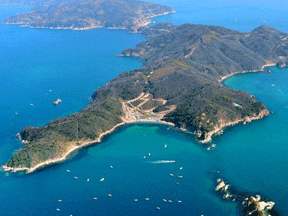 Yamamoto has rejected a license extension to Chugoku Electric Co. to reclaim land for a new nuclear power plant in Kaminoseki, Yamaguchi Prefecture effectively killing the project.
“We cannot grant permission at this moment. The decision has been made
not to grant the license,” Yamamoto told the news media on Oct. 5. The
license is set to expire Oct. 6. Continue reading
Other Nuclear Politics in Japan
Fukushima Nuclear Crisis Update for October 2nd to October 4th, 2012 Greenpeace International, by Christine McCann – October 5, 2012 “….Other Nuclear Politics in Japan Municipal leaders and residents in towns surrounding Electric Power Development Company’s (known in Japan as J-Power) proposed Ohma nuclear power plant are protesting resumption of construction there, citing concerns about their safety in the event of a nuclear disaster. Continue reading
France planning the move away from nuclear power

 French Nuclear Reliance to Drop Without Reactor Halts, EDF Says Bloomberg, By Tara Patel – Oct 4, 2012 Forecasts for rising power use will curb Electricite de France’s ability to satisfy domestic demand even without the closure of more nuclear reactors, Chief Executive Officer Henri Proglio said. That would see the country’s reliance on nuclear power dropping to 50 percent of power production by about 2025 from more than 75 percent now, he said.
That would meet President Francois Hollande’s campaign pledge to reduce France’s dependence on nuclear generation. Progio’s comments come ahead of a national debate on energy which the government has said will lay the groundwork for legislation that could determine EDF’s spending plans on its reactors for decades. Continue reading
Referendum could mean more renewable energy for Chicago http://www.wbez.org/news/referendum-could-mean-more-renewable-energy-chicago-102911 October 4, 2012 Tricia Bobeda Environmental and labor groups rallied Thursday in support of an energy referendum on the November ballot.
The referendum will ask Chicago voters whether the city should be able to buy electric service on behalf of residents.
If it passes, the city will be required to hold public meetings about where to buy electricity.
Environmentalists see it as an opportunity to lobby for more investments in renewable energy. Continue reading
USA’s nuclear industry moribund, so it lobbies for easier export rules
Nuclear Firms Seek Eased Export Rules as U.S. Demand Wanes Bloomberg News, By Brian Wingfield October 01, 2012 The U.S. nuclear-power industry is seeking to ease export restrictions so it can sell equipment and technology to nations including China and Russia as domestic demand wanes for reactors.
Regulations unchanged since the end of the Cold War impede U.S. companies in gaining export licenses, putting suppliers at a global disadvantage, according to a report released today by the Nuclear Energy Institute, a Washington-based group whose members include
Exelon Corp. (EXC) and Southern Co. (SO)…..
The Nuclear Regulatory Commission this year issued its first reactor-construction licenses in more than three decades, while U.S. companies struggle to arrange financing for additional units.
A glut of natural gas has lowered prices for the fuel, discouraging investment in more expensive sources including nuclear power.
Southern’s reactor project in Georgia is awaiting final approval 2 1/2 years after winning a conditional $8.3 billion Energy Department loan guarantee. The NRC in August imposed a two-year freeze on final decisions for power-plant licenses in response to a court decision
requiring a reassessment of risks associated with storing nuclear waste……..
India’s nuclear energy program just not happening
 India’s ticking nuclear crisis: Part I Charu Sudan Kasturi, Hindustan Times New Delhi, September 30, 2012 India has missed its five-yearly nuclear power generation target by 74%, its plans crippled by the protests at Kudankulam and other nuclear plant sites that have left the country’s energy security roadmap under a cloud of uncertainty. The government had set an already modest target of adding 3380 MW of additional nuclear power by 2012 to the country’s 3900 MW capacity at the start of the 11th Five Year Plan in 2007.
But failure to convince local people and activists at almost every site handpicked for a nuclear plant has left the Nuclear Power Corporation of India Limited (NPCIL) with only 880 MW to show as nuclear power added over the past five years.
Similar protests over the coming few years could seriously jeopardize India’s current energy security strategy, energy economists, government experts and NPCIL officials have cautioned.
Democratic freedoms trampled: the sorry story of India’s Kudankulam nuclear power project
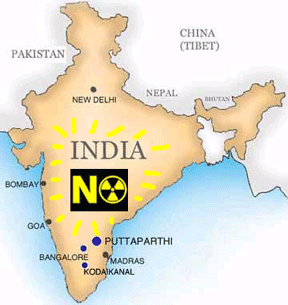 Despite mass opposition, India pushes ahead with operationalizing nuclear plant WSWS, By Arun Kumar and Kranti Kumara 27 September 2012 Despite mass protests by villagers, the Indian government in partnership with the Tamil Nadu state government is pushing ahead with the loading of nuclear fuel at the recently built 2000 MW Kudankulam Nuclear Power Plant (KNPP) located on the Tamil Nadu coast.
This massive power plant is a joint venture between India and Russia and has cost 172 billion Rupees (about $3.2 billion) to build. The plant currently houses two nuclear pressurized water reactors (PWR) reactors, each capable of driving a 1000 MW electric generator. But there are plans to construct four additional reactors at the site…..
Despite the deep misgivings of the population, the Indian elite, without any democratic debate, is rushing feverishly ahead, claiming that nuclear plants are essential to satisfying growing domestic electricity needs.
This particular plant is causing great concern among villagers and fishermen living in its vicinity, because it is situated right next to the ocean just like the Japanese Fukushima plant. Built at the southern tip of the state, KNPP is highly vulnerable to undersea earthquakes and tsunami that are an ever-present danger in the Indian Ocean region. That such concerns are far from hypothetical was demonstrated when the plant installations got inundated from ocean waves unleashed by the massive undersea earthquake that occurred in the Indian Ocean in 2004….
Last April witnessed a particularly brutal response by joint forces deployed by the Indian and the state governments. The police cut off water, food and power-supply to protesting villagers and imposed a curfew in the villages where the agitation has been centered. Nearly 200 people were arrested including women and children. Subsequently protests abated somewhat as the People’s Movement against Nuclear Energy (PMANE), which has led the agitation, called it off in the hope that the Tamil Nadu and Indian judiciaries would intervene on its behalf.
However, by late August the Madras High Court gave the green light to the Indian government to proceed with the steps it needs to take to make the plant operational. An appeal was then filed by an anti-nuclear activist with the Indian Supreme Court asking the court to halt further progress on operationalizing the plant, since 11 of the 17 critical safety measures recommended by the government’s own Atomic Energy Regulatory Board (AERB) had not been implemented.
Around this time, widespread protests resumed and the police responded with still greater violence. On Sept. 10 a protesting fisherman, 48 year-old Antony John, was shot dead. A young girl was also trampled to death when police resorted to charges to break up the protests. To observe and terrify those conducting a water protest, the Coast Guard flew low-flying aircrafts. One of the protesting fisherman named Sathyam panicked when a surveillance aircraft flew low, then slipped hitting his head against a boulder and subsequently died. Sathyam’s funeral became a rallying point for opposition to the nuclear power plant attracting large number of villagers from neighbouring areas.
Earlier this month, India’s Supreme Court refused to even hear the petition against operationalizing KNPP. In so doing, the court ignored publicly available evidence of shoddy workmanship, the dangers inherent from using an untested reactor design, and the fact that over 1 million people live within a 30 Km. radius of the plant, which violates even the AERB’s feeble safety regulations.
Following this, the Indian government proceeded post-haste to begin loading enriched-uranium fuel rods into one of the reactors. The government has said that it expects the fuel loading to be complete by Sept. 28 and the plant fully operational soon afterwards.
This move provoked the villagers into intensifying their agitation.
On Saturday, Sept. 22, over 500 fishing boats laid siege for several hours to the Tuticorin port about 100 Km north of KNPP. This port is used for unloading nuclear fuel rods from ships for transportation to the reactor at the plant. Simultaneously other protestors including villagers led by PMANE undertook “Jal Satyagraha” (Water Agitation), by standing in waist-deep water in the ocean near the plant and forming a human chain.
Solidarity protests also sprung up across the state. But the police repression has continued unabated with arrest warrants being issued for activist-leaders, many of whom including PAME leader Udayakumar have now gone into hiding. Under the pretext of looking for protest leaders, the police in bands of 10 have gone on a rampage, breaking down doors and ransacking the houses of villagers living in the Kudankulam area. This is clearly an attempt by the government to terrorize the populace into submission.
Kudankulam has been practically sealed off by armed policemen who are allowing only the transport of essential goods into the area. Public transport has also been barred from entering some of the areas surrounding the plant.
To the consternation of the authorities, the protests have now snowballed with growing numbers of people, including students, advocates and villagers, joining protests across the state and even in the Bangalore, the capital of the neighbouring state of Karnataka. … http://www.wsws.org/articles/2012/sep2012/indi-s27.shtml
1 This Month
23-25 October – on Zoom – World BEYOND War’s annual global conferenc


Shut down the radiation-damaged Heysham nuclear reactors now
To see nuclear-related stories in greater depth and intensity – go to https://nuclearinformation.wordpress.com

Say No to NASA’s Reckless Nuclear Reactor on the Moon
Say No to NASA’s Reckless Nuclear Reactor on the Moon
-
Archives
- October 2026 (190)
- September 2026 (339)
- August 2026 (330)
- July 2026 (355)
- June 2026 (287)
- May 2026 (306)
- April 2026 (356)
- March 2026 (251)
- February 2026 (267)
- January 2026 (308)
- December 2025 (358)
- November 2025 (359)
-
Categories
- 1
- 1 NUCLEAR ISSUES
- business and costs
- climate change
- culture and arts
- ENERGY
- environment
- health
- history
- indigenous issues
- Legal
- marketing of nuclear
- media
- opposition to nuclear
- PERSONAL STORIES
- politics
- politics international
- Religion and ethics
- safety
- secrets,lies and civil liberties
- spinbuster
- technology
- Uranium
- wastes
- weapons and war
- Women
- 2 WORLD
- ACTION
- AFRICA
- Atrocities
- AUSTRALIA
- Christina's notes
- Christina's themes
- culture and arts
- Events
- Fuk 2022
- Fuk 2023
- Fukushima 2017
- Fukushima 2018
- fukushima 2019
- Fukushima 2020
- Fukushima 2021
- general
- global warming
- Humour (God we need it)
- Nuclear
- RARE EARTHS
- Reference
- resources – print
- Resources -audiovicual
- Weekly Newsletter
- World
- World Nuclear
- YouTube
-
RSS
Entries RSS
Comments RSS

