Sanctions, Strategy and Spin: Venezuela Lobbying Soars Under Trump.

By Emma Sullivan, January 12, 2026, https://www.opensecrets.org/news/2026/01/sanctions-strategy-and-spin-venezuela-lobbying-soars-under-trump
An analysis of lobbying filings shows that U.S. energy companies and organizations linked to the Venezuelan government increased their influence campaigns on issues related to the South American nation in 2025, as the Trump administration intensified military and financial pressure in the run-up to the Jan. 3 capture of President Nicolás Maduro.
After months of U.S. escalation – including strikes on Venezuelan vessels, the seizure of oil tankers, and an expanded military presence off the country’s coast – U.S. forces captured Maduro and his wife, Cilia Flores, on Saturday. Trump has said the United States would assume control over Venezuela’s vast oil reserves and enlist U.S. companies to invest billions in rebuilding the oil industry. Venezuela holds the world’s largest proven crude oil reserves — about 303 billion barrels, or roughly 17 percent of global reserves.
As U.S. policy toward Venezuela hardened over the course of the year, federal lobbying activity accelerated. Twenty-three organizations reported lobbying on issues related to Venezuela through the third quarter of 2025, according to an OpenSecrets analysis of lobbying disclosure reports. According to data going back to 2008, an average of 11 organizations have lobbied on Venezuela each year, with 2025 having the second highest number of clients (23) after 2019, during which lobbyists reported representing 34 clients on such issues. (Lobbyists must report their fourth-quarter activities by Jan. 20.)
Energy and oil companies accounted for much of the lobbying, pressing U.S. officials on Treasury licenses, sanctions implementation, and regulatory rules governing Venezuelan oil and gas activity. The 23 that lobbied on Venezuela issues during the first nine months of 2025 are:
- American Seniors Housing Association
- Americas Alliance for Liberty & Prosperity
- Amnesty International USA
- Blockchain Association
- CASA de Maryland
- Chevron Corporation
- Footwear Distributors & Retailers of America
- FP Advocacy
- Friends Committee on National Legislation
- Human Rights First
- Mare Finance Investment Holdings
- Maurel & Prom
- National Cattlemen’s Beef Association
- National Pork Producers Council
- PBF Energy
- Phillips 66
- Shell Plc
- Sisters of Good Shepherd National Advocacy Center
- Solana Policy Institute
- Texas Cattle Feeders Association
- Tiryaki Agro Gida Sanayi Ve Ticaret
- U.S. Chamber of Commerce
- Women In Need (New York)
U.S. energy companies ramp up lobbying efforts
In 2007, then-President Hugo Chávez moved to bring Venezuela’s foreign oil projects under state control, prompting ExxonMobil and ConocoPhillips to exit the country while Chevron remained as a minority partner in joint ventures with PDVSA, the state-owned oil company. During Trump’s first term, the United States imposed sweeping sanctions on PDVSA, effectively barring most U.S. firms from dealing in Venezuelan crude without Treasury Department authorization. Chevron is the only major U.S. oil company authorized to operate in Venezuela.
Chevron mentioned Venezuela 12 times in its 2025 lobbying filings, up from eight mentions in both 2023 and 2024, citing “Venezuela energy issues” and “Venezuela sanctions.” The company engaged Washington on sanctions and authorization issues tied to maintaining its joint ventures and ongoing operations under U.S. policy. Chevron’s ability to expand oil exports is limited under U.S. sanctions on PDVSA. With the Trump administration now seeking to redirect Venezuelan crude away from China and instead toward U.S. ports and increase sanctioned sales to U.S. refiners, Chevron may stand to benefit from higher volumes of Venezuelan oil flowing to the U.S. market, according to Reuters.
Shell USA, the U.S. subsidiary of Shell Plc, also lobbied U.S. officials in 2025 over its role in Dragon, a proposed gas project off the coasts of Venezuela and Trinidad and Tobago, that requires authorization under U.S. sanctions. Earlier in the year, the Treasury Department’s Office of Foreign Assets Control revoked licenses that had allowed Shell to advance the project, halting plans to extract Venezuelan gas and pipe it to Trinidad for processing, before later issuing a narrower authorization reopening limited negotiations and preparatory work.
Notably, Gulf Coast refiners Phillips 66 and PBF Energy each cited Venezuela in their 2025 lobbying filings after not mentioning it in 2023 or 2024, signaling renewed engagement with U.S. energy and sanctions policy. According to Reuters, refiners are structurally well-positioned to process heavy, high-sulfur Venezuelan crude – the type that dominated U.S. imports before sanctions – and analysts have noted that a resumption or expansion of Venezuelan exports to the United States could lower fuel production costs, allowing refiners to make greater use of existing capacity if sanctions are eased or reconfigured.
But lobbying is not the only form of influence. The oil and gas businesses collectively donated $25.8 million to Trump’s 2024 campaign and outside groups that supported his candidacy, ranking the industry among his biggest supporters. Chevron also donated $2 million to Trump’s second inauguration, and Shell gave $500,000.
Energy Secretary Chris Wright outlined U.S. plans for selling Venezuelan oil on Wednesday. Wright, who founded an oilfield services company in 2011, owned between $500,000 and $1 million worth of stock in Chevron before joining the administration, but he sold those shares in February 2025.
State-linked entities increase foreign agent spending
Oil and financial authorities linked to the Venezuelan government also ramped up spending in recent years to influence U.S. policy on sanctions, control of frozen assets, and which entities are recognized as authorized to manage Venezuela’s oil revenue.
In 2024, government-linked entities reported more than $3.5 million in foreign-agent spending — including $1.1 million from the Banco Central de Venezuela’s ad hoc board, a U.S.-recognized authority created to manage the country’s overseas assets, and $2.5 million from the opposition-appointed of PDVSA, according to OpenSecrets data. Through the first three quarters of 2025, government-linked organizations already exceeded 2024 totals, reportedly spending more than $4.1 million.
U.S. lobbying by Venezuelan entities
Through September, the Venezuelan government and businesses had spent $4.5 million on lobbying in the United States. With final 2025 lobbying reports due Jan. 20, the country is on pace to shatter its previous lobbying record of $4.9 million, set in 2022.
The Foreign Agents Registration Act, a federal law enacted in 1938, requires foreign agents engaged in lobbying in the United States to register with the Department of Justice and disclose information about their relationships, activities and compensation. FARA filings show that U.S. agents conducted direct outreach to Congress on behalf of the opposition-appointed and U.S.-recognized PDVSA board in 2025 and advised on the legislative process. Other filings show that, alongside legal work, U.S. lobbying firms carried out advocacy and public relations efforts aimed at U.S. officials as litigation over control of PDVSA assets intensified in 2024 and 2025, including the creation of U.S.-facing websites and strategic advice on government affairs and sanctions-related legal issues tied to asset disputes.
The surge in lobbying and foreign-agent spending reflects an intensifying scramble by U.S. energy firms and Venezuelan state-linked actors alike to shape U.S. policy before the Trump administration locks in the rules governing sanctions, oil flows and control of Venezuelan assets.
‘Uninvestable’: Oil execs rebuff Trump’s demands for $100bn investment in Venezuela
The US Energy Secretary denies ‘stealing’ Venezuelan oil, despite a plan to hold revenues in offshore accounts under US control
News Desk, JAN 10, 2026, https://thecradle.co/articles/uninvestable-oil-execs-rebuff-trumps-demands-for-100bn-investment-in-venezuela
At a meeting at the White House on 9 January, the CEOs of major US energy firms expressed skepticism about participating in President Donald Trump’s scheme to invest $100 billion to “revive” Venezuela’s sanctions-battered oil sector.
The meeting took place one week after US Special Forces abducted Venezuelan President Nicolas Maduro and his wife and transferred them to New York to stand trial on trumped-up “narco-terrorism” charges.
After abducting Maduro, Trump said the US would “take over” Venezuela’s oil reserves, which are considered the largest in the world.
“It’s uninvestable,” ExxonMobil CEO Darren Woods told White House officials after hearing Trump’s proposal to invest in the country.
“There are a number of legal and commercial frameworks that would have to be established to even understand what kind of returns we would get on the investment.”
CNN reported that other executives “expressed similar reluctance,” warning Trump would need to provide extensive security and financial guarantees before beginning a long-term effort to revive an oil sector battered by decades of US sanctions.
ConocoPhillips CEO Ryan Lance and Chevron Vice Chairman Mark Nelson attended. Executives from oil services providers Halliburton, Valero, and Marathon were also present, among others.
Trump wants US oil companies will spend at least $100 billion to rebuild Venezuela’s energy sector, saying that the US military will provide security and protection so “they get their money back and make a very nice return.”
After the CEOs of the major energy firms hesitated to commit to Trump’s plan, he claimed that other smaller oil firms want the opportunity.
“If you don’t want to go in, just let me know, because I’ve got 25 people that aren’t here today that are willing to take your place,” he told the executives.
In addition to security concerns, multiple executives expressed concern that Trump could not guarantee that any deals he strikes with companies will remain in force after he leaves office or in the event of a future regime change in Venezuela.
Trump sought to reassure the group that they would have “total safety, total security,” but did not provide details of how he would do so, or how he would pay for it.
Before the meeting, Trump claimed he would decide which oil companies would be allowed to enter Venezuela, and that the White House would “cut a deal with the companies” within a few days.
“One of the things the United States gets out of this will be even lower energy prices,” Trump claimed.
Venezuela is estimated to have the largest proven crude oil reserves in the world at 303 billion barrels or about 17 percent of the global total.
In the 1990s, Venezuela’s oil production was 3.5 million barrels per day (bpd). However, decades of US sanctions have left its oil industry in poor condition.
Currently, Venezuela’s output has dropped to about 800,000 bpd, based on data from energy consulting firm Kpler.
Chevron is the only US oil company currently operating in Venezuela through a joint venture with state oil company Petróleos de Venezuela (PDVSA)
Exxon and Conoco exited the country after former President Hugo Chavez nationalized their assets in 2007.
“We’ve had our assets seized there twice, and so you can imagine, to re-enter a third time would require some pretty significant changes from what we’ve historically seen,” Exxon’s Woods said.
After the meeting, Energy Secretary Chris Wright stated that the US has taken control of Venezuela’s oil exports to pressure the government in Caracas.
He said that Venezuela will ship tens of millions of barrels to the US, which the Trump administration will then sell, holding the proceeds in offshore, but US-controlled, accounts.
The US is not stealing Venezuela’s oil, the energy secretary claimed.
“We need to have that leverage and that control of those oil sales to drive the changes that simply must happen in Venezuela,” Wright said.
Trump said Wednesday that the revenue from the oil will be used to purchase US-made products.
Ralph Nader: Ex-Presidents and Democratic Leaders Silent on the Impeachment of Donald Trump
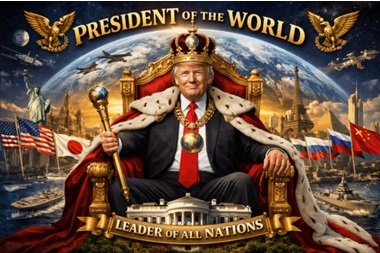
Events can move very fast. First, Trump is the most powerful contributor to his own Impeachment. Day after day, this illegal closer of long-established social safety nets and services is alienating tens of millions of frightened and angry Americans.

By Ralph Nader, January 9, 2026, https://nader.org/2026/01/09/ex-presidents-and-democratic-leaders-silent-on-the-impeachment-of-donald-trump/
The staggering cowardliness by four ex-Presidents vis-à-vis Tyrant Trump’s wrecking of America cannot escape history’s verdict. However, there is still an opportunity for vigorous redemption by George W. Bush – whose life-saving AIDS Medicine Program in Africa was shut down by Trump – Bill Clinton, Barack Obama, and Joe Biden, if they have any self-respect for their patriotic duty.
As of now, these former Presidents are living lives of luxury and personal pursuits. They are at the apex of the ‘contented classes’ (see my column “Trump and the Contented Classes”, November 14, 2025) who have chosen to be bystanders to Trump’s tax cuts for the wRight off, they can upend the public discourse that Trump dominates daily with phony personal accusations, stunningly unrebutted by the feeble Democratic Party leaders. This counterattack with vivid, accurate words will further increase the majority of people who want Trump “Fired.” Just from their own observations of Trump’s vicious, cruel destruction of large parts of our government and civil service, which benefits and protects the populace, should jolt the former presidents into action.ealthy, deregulation, and the doling out of Trump’s corporatist welfare giveaways.
Imagine, if you will, what would happen if these four wealthy politicians, who still have most of their voters liking them, decided to band together and take on Trump full throttle. Privately, they believe and want Trump to be impeached (for the third time in the House) and convicted in the Senate. This time, on many impeachable actions that Trump himself boasts about, claiming, “With Article II, I can do whatever I want as President.”
Right off, they can upend the public discourse that Trump dominates daily with phony personal accusations, stunningly unrebutted by the feeble Democratic Party leaders. This counterattack with vivid, accurate words will further increase the majority of people who want Trump “Fired.” Just from their own observations of Trump’s vicious, cruel destruction of large parts of our government and civil service, which benefits and protects the populace, should jolt the former presidents into action.
Next, the bipartisan Band of Four can raise tens of millions of dollars instantly to form “Save Our Republic” advocacy groups in every Congressional District. The heat on both Parties in Congress would immediately rise to make them start the Impeachment Drive. Congressional Republicans’ fear of losing big in the 2026 elections, as their polls are plummeting, will motivate some to support impeachment. Congressional Republicans abandoned President Richard Nixon in 1974, forcing his resignation with Impeachment on his political horizon.
Events can move very fast. First, Trump is the most powerful contributor to his own Impeachment. Day after day, this illegal closer of long-established social safety nets and services is alienating tens of millions of frightened and angry Americans.
Daily, Trump is breaking his many campaign promises. His exaggerated predictions are wrong. Remember his frequent promise to stop “these endless wars,” his assurance that he would not impair government health insurance programs (tell that to the millions soon to lose, due to Trump, their Medicaid coverage), his promise of lifting people into prosperity (he opposes any increase in the federal minimum wage of $7.25 per hour) and he has signed GOP legislation to strip tens of millions of Americans from the SNAP food support and take away the Obama subsidies for Obamacare. Many Trump voters are among the vast number of people experiencing his treachery, where they live and raise their families, will lose out here. The catalytic opportunities of these four ex-presidents and their skilled operating teams are endless.
Further, this Band of Presidents, discovering their patriotic duty, will recharge the Democratic Party leaders or lead to the immediate replacement of those who simply do not want or know how to throw back the English language against this Bully-in-Chief, this abuser of women, this stunning racist, this chronic liar about serious matters, this inciter of violence including violence against members of Congress, this invader of cities with increasingly violent, law breaking storm-troopers turning a former Border Patrol force into a vast recruitment program for police state operators.
Trump uses the word “Impeachment” frequently against judges who rule against him, and even mentions it in relation to it being applied to him. Tragically, Democratic Party leaders Chuck Schumer and Hakeem Jeffries have made talk of Impeachment a taboo, arguing the time is not yet ripe. How many more abuses of power do they need to galvanize the Democrats in the House and Senate against the most blatantly impeachable president by far in American history? He keeps adding to his list – recently, he has become a Pirate and killer on the High Seas, an unconstitutional war maker on Iran and Venezuela, openly threatening to illegally seize the Panama Canal, Greenland, and the overthrow of the Cuban government.
Constitutional scholar Obama can ask dozens of constitutional law professors the question: “Would any of the 56 delegates who signed our U.S. Declaration of Independence in 1776 and the 39 drafters who signed our U.S. Constitution in 1787, being told about Monarch King Donald Trump, oppose his immediate Impeachment and Removal – the only tool left he doesn’t control?” Not one, would be their studied response.
Trump, a serial draft dodger, pushes through another $150 billion to the Pentagon above what the Generals requested while starving well-being programs of nutrition for our children and elderly, and cutting services, by staff reductions, for American veterans, and stripmining our preparedness for climate violence and likely pandemics.
He promised law and order during the election and then betrayed it right after his inauguration, pardoning 1,500 convicted, imprisoned criminals, 600 of them violent, emptying their prison cells and calling them “patriots” for what they did to Congress on Jan. 6, 2021.
MR. EX-PRESIDENTS, JUST WHAT ARE YOU WAITING FOR? WHAT ARE YOUR ESCAPIST EXCUSES? Call your friends who are ranking members of the GOP controlled Committees of Congress and tell them to hold prompt SHADOW HEARINGS to educate the public through witnesses about the TRUMP DUMP, impeachable, illegal, and unconstitutional government. The media would welcome the opportunity to cover such hearings. Congressman Jamie Raskin thought this was “a good idea” before being admonished by his frightened Democratic leaders to bide his time and remain silent.
As more of Trump’s iron boots drop on people’s livelihoods, their freedoms, their worry for their children and grandchildren, their antipathy to more aggressive wars against non-threatening countries, and their demands at town meetings and mass marches for action against Trump’s self-enriching despotism, the disgraceful, craven cowardliness of our former presidential leaders will intensify. Unless they wake up to the challenge. With the mainstream media attacked regularly and being sued by Trump’s coercive, illegal extortion, the action by the Band of Four will bolster press freedom, press coverage, and their own redemption.
Send these four politicians, who are friendly with one another, petitions, letters, emails, satiric cartoons, or whatever communications that might redeem them from the further condemnation of history.
Rest assured, with Trump in the disgraced White House, THINGS ARE ONLY GOING TO GET WORSE, MUCH WORSE! For that is the predictable behavior from the past year and from his dangerously unstable, arrogant, vengeful, and egomaniacal personality
Spending big on nuclear
Ontario is investing billions into reactors — even as the rest of the world turns to solar and wind. Is this the wrong bet?
Toronto Star, MARCO CHOWN OVED, 11 Jan 2026, https://www.pressreader.com/article/281865829856772
In the race to prepare for an electrified future of AI, data centres, EVs and heat pumps, Ontario has placed a big bet on nuclear.
With more than $73 billion committed to building new and refurbishing old reactors — and two more plants in the pipeline that could add tens of billions more — Ontario taxpayers are counting on nuclear energy to pay off for decades to come.
Widely hailed for its ability to provide massive amounts of stable, emissionsfree power that the province will need to electrify the economy, nuclear has emerged as a solution advocates say is crucial to avoid the worst effects of climate change — all while supporting a wellestablished local industry. A single nuclear plant can provide the same amount of power as tens of thousands of solar panels and wind turbines — even when the wind isn’t blowing, and the sun isn’t shining.
“Nuclear brings a set of attributes and characteristics that you really can’t find with any other generating source,” said Brendan Frank, Director of Policy and Strategy at Clean Prosperity, a climate policy think tank. It’s large scale, [?] clean and reliable with a small land footprint, he says. “There’s a lot to like about nuclear.”
But the promise of nuclear power is tempered by the potential for peril.
Critics say nuclear proponents have never been able to address existing reactors’ significant shortcomings, including decadelong construction timelines, consistently large cost overruns, and the tiny but nonzero risk of catastrophic accidents. The cost considerations alone risk undermining the fight against climate change by making clean power more expensive than burning fossil fuels.
“Baked right into the nuclear option is centralization, a reliance on technical elites, the need for longterm stewardship and paramilitary security, a low tolerance for failure, and the acceptance of uninsurable risks,” said Ralph Torrie, the head of research with Corporate Knights and a veteran energy analyst.
And unlike nuclear opponents of the 1980s, today’s critics have a ready alternative in renewable energy, which is being built at an unprecedented speed and scale all over the world. Last year, more than 90 per cent of new power brought online globally has been wind and solar. Meanwhile, the nuclear industry has been mired in a 25year decline with more reactors decommissioned than built, according to the International Atomic Energy Agency.
Nuclear power is yesterday’s technology, the critics say.
“Every dollar we spend on new nuclear plants or reconditioning 20thcentury nuclear steam generators drives up the cost of building a sustainable energy system in Ontario and puts us further behind in the energy transition that is a defining feature of successful 21stcentury economies,” Torrie said.
In the search for climate solutions, the debate over nuclear power is particularly acute. For proponents, global warming cannot be addressed without a nuclear renaissance. For opponents, nuclear is a trap that diverts resources from better solutions while committing us for decades to a technology that has never lived up to its promises.
And Ontario has already picked its side.
“We’re doubling down on nuclear,” Energy Minister Stephen Lecce told the Star in an interview.
“If you care about jobs for Canadians, if you care about an ethical supply chain using a clean grid, not a coalfired grid, if you care about human rights, the rule of law, fundamental Canadian values, and the economic advantages for the workers, for the women and men who work in this province, then you will unapologetically defend and promote Ontario’s nuclear advantage, which is now an envy of the world.”
Why nuclear is considered a `very expensive’ option
This June, the province laid out a 25year road map for the electricity system that relies overwhelmingly on nuclear. It projects a massive 75 per cent increase in demand for power, the equivalent of adding fourandahalf Torontos to the grid. While there have been some investments in battery storage and hydro, most of this energy will come from refurbishing the existing fleet of reactors and building new ones, including one in Wesleyville — on the shore of Lake Ontario to the east of the existing Pickering and Darlington plants — that would be the world’s biggest nuclear plant. In doing so, the province would triple its nuclear generation, exceeding the entire electricity system’s output today.
“Ontario is putting a lot of eggs in a very expensive basket,” said David Pickup, an energy analyst at the Pembina Institute and the author of a report highlighting the risks of the province’s nuclear build out……………………………………………………………………………………………………………………………………………………………………. https://www.pressreader.com/article/281865829856772
Zelensky Names Canada’s Chrystia Freeland, Notable Anti-Russia Hawk As Top Advisor
Zero Hedge Tuesday, Jan 06, 2026
Apparently Zelensky is simply skipping his own people and going straight to appointing officials within foreign governments to top advisory positions.
Ukraine has named former Canadian Deputy Prime Minister Chrystia Freeland as an economic advisor amid a broader reshuffle of senior government positions, also coming on the heels of the massive energy ministry related corruption scandal which has unleashed chaos within his administration.
It should also be noted that Canada is a founding member of NATO – so handing Freeland a position in the Ukrainian presidential office won’t go down well at the Kremlin, which will see this as yet more justification for its vehement condemnation of NATO expansion.
Chrystia is a professional… and has significant experience in attracting investments and conducting economic transformations,” President Zelensky announced on Telegram Monday.
Freeland was Canada’s deputy prime minister from 2019 to 2024 under Prime Minister Justin Trudeau and was appointed Canada’s special representative for Ukraine’s reconstruction in 2025………. https://www.zerohedge.com/geopolitical/zelensky-names-canadas-chrystia-freeland-anti-russia-hawk-top-advisor
The New German Warfare State
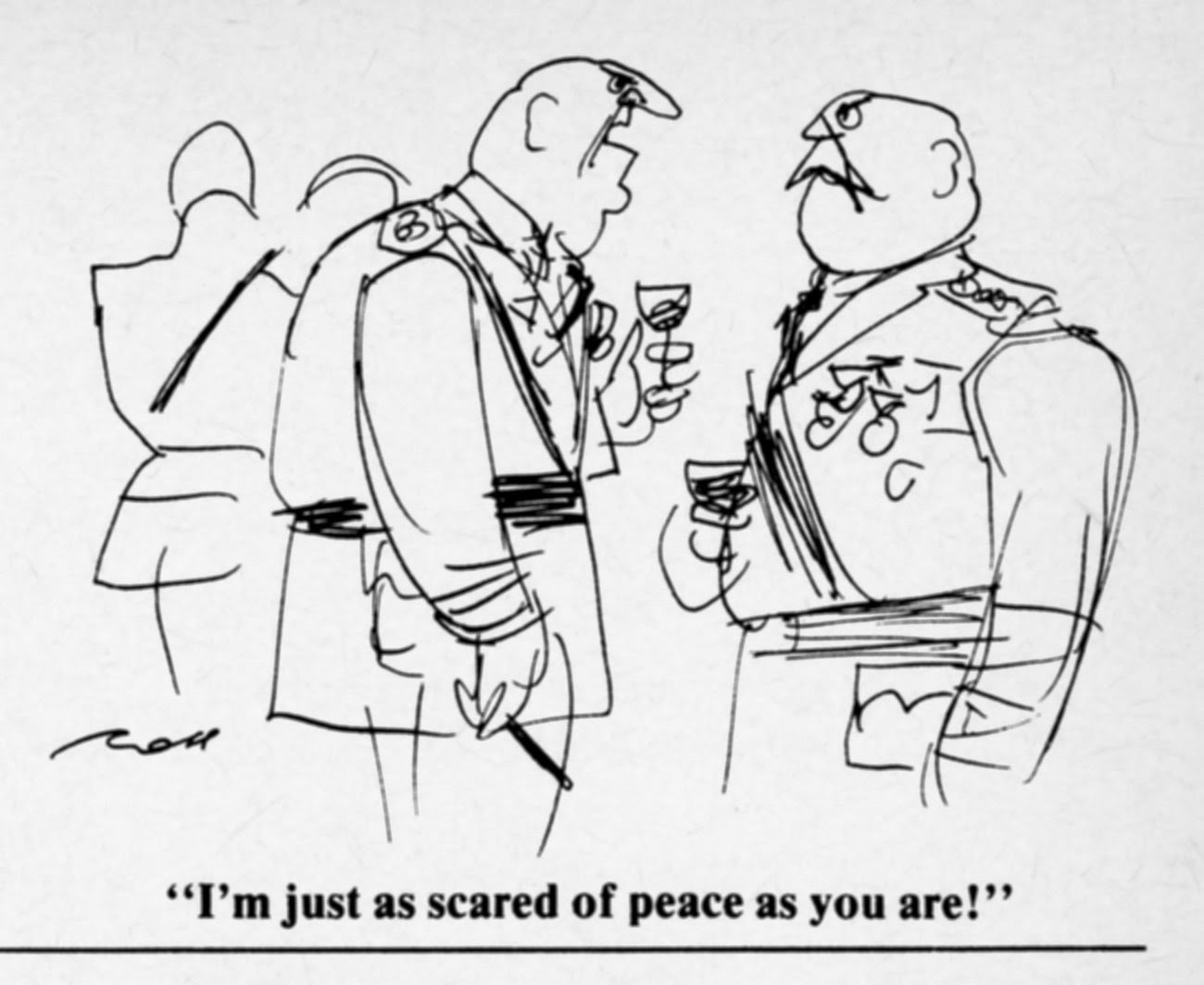
a leading sector of the political and economic elites in Germany and the EU view the project of rampant militarization as a means to counter the massive upheavals that are threatening their power on a geopolitical, domestic, and economic level. And for this purpose, the maintenance of a major threat, of a terrifying enemy that will not go away quickly, is indispensable. If the Russian threat, in contrast, turned out to be not as serious as it is portrayed, and if Russia could be accommodated with a peace deal that includes Ukrainian neutrality, the complete system of justification for the military build-up would crumble.
Fabian Scheidler, Substack, Jan 06, 2026
How boundless militarization has become the key project of Germany and the European Union in the unfolding polycrisis.
The European Union, Britain and other European NATO members have embarked on a path of massive militarization, which in its speed and ambition is unprecedented since World War II. While most NATO members had previously been unwilling or unable to meet the goal of spending two percent of their GDP for the military, a target set in 2014, they suddenly jumped to a commitment of five per cent per year at the 2025 NATO summit, bowing to Donald Trump’s pressure. Only the Spanish government refused to comply.
What NATO, its member states and major media are not communicating is the fact that five per cent of GDP corresponds to around 50 per cent of national budgets. If states were indeed to implement their commitments, they would have to drastically reduce spending on welfare, including education and healthcare, while simultaneously swelling their national deficits. The Financial Times summed up the agenda in a March 2025 headline: ‘Europe Must Trim its Welfare State to Build a Warfare State’. In other words, the planned militarization is class war from above. Although governments have somewhat watered down their commitments, stating that only 3.5 per cent will go directly to the military while 1.5 per cent is meant to revamp infrastructures for military use, even 35 per cent of national budgets would still be a major blow for what is left of the European welfare model.
Massive cuts to public spending in order to channel the funds into the military-industrial complex are on the agenda in most European countries. The German government is among the most zealous in this respect. Finance Minister Lars Klingbeil from the Social Democratic Party (SPD) pledged to triple the military budget from 52 billion € in 2024 to an unprecedented 153 billion in 2029, while chancellor Friedrich Merz (CDU) has already announced drastic cuts in unemployment benefits to fill some of the gap. Resistance within the Bundestag is eerily feeble. The Greens have long been among the most ardent advocates of rearmament and in March 2025 they voted in favour of a constitutional amendment that has removed all budget constraints for the military and intelligence services while maintaining austerity for all other types of spending. The right-wing Alternative für Deutschland (AfD), which has been leading in some recent polls, is equally devoted to the military build-up and a cutback of the welfare state. While Die LINKE officially opposes this agenda, their representatives in the second federal chamber, the Bundesrat, have voted for the constitutional amendment, causing unrest within the party. For some observers, the lack of parliamentary opposition has brought back sinister memories of the war credits in 1914, which were unanimously approved in the Reichstag – with the votes of the SPD.
In other European countries, however, more resistance has emerged. In the UK, Keir Starmer met fierce opposition to his plans to cut welfare benefits, even within his own Labour Party, and was forced to backtrack. In France, prime minister François Bayrou was toppled by a motion of no confidence over a € 44 billion budget cut plan. In Spain, mass demonstrations against rearmament have put significant pressure on prime minister Sanchez to limit military spending.
While it remains unclear to what extent European governments will be able to push through their ‘all guns, no butter’ agenda, the onslaught on public services and the working class is ongoing and pervasive. Unbound militarization has become the key project of the European Union, which is trying to mend its fractured foundations by forging a military union.
The militarization of German society
In Germany, a wave of militarization that would have been unthinkable a few years ago is sweeping through the country, affecting schools, universities, the media, and public spaces. Tramways are painted in military camouflage. Huge advertisements for the army depict war as a great adventure that strengthens team spirit. The Bundeswehr is aggressively recruiting young people in the streets, at school, and at universities. Even minors under 18 are being recruited, in violation of the principles of the UN Convention on the Rights of the Child, as organizations such as Terre des Hommes point out. Youth officers are sent into classrooms where they are advertising the army in front of students who are sometimes barely 13 years old. Rather than encouraging debates about the military at school, the army is being given free rein. The administration is also planning to introduce regular civil defense drills in schools, with the explicit intention of preparing the students mentally for war.
In the media, the German public broadcaster ARD has started to promote the army and its preparations for war in its children’s program ‘9 ½’, with recommendations on how to get involved. The program does not ask any critical questions about the army, nor does it mention the fact that deployment to war zones can result in death and trauma. The same is true of the second public broadcaster, which advertises the army as a cute and charitable force of peace in its children’s program ZDFtivi.
Universities are increasingly being forced to cooperate with the military. While a few federal states still prohibit military research in public universities and around 70 universities have voluntarily committed to engage exclusively in civil research, Robert Habeck (The Greens) declared in early 2025, when he was vice chancellor, that we ‘need to rethink the strict separation of military and civilian use and development’ in academia. In Bavaria, the administration has already banned any ‘civil clauses’ in universities, eliminating the option of declining military research. Furthermore, the German Army has developed a comprehensive classified ‘Operation Plan Germany’ to subordinate civil institutions to military objectives.
These concerted efforts to create a Warfare State are not least intended to transform the attitudes of the German population, which in its majority has been skeptical of the military, and of foreign involvements in particular, for decades……………………………………………………………………………………………
The ‘rules-based international order’ and the Gaza genocide
The project of the Warfare State, and the sacrifices that the population is supposed to make for its creation, is portrayed by political leaders both in Germany and the EU as being without alternative. The argument justifying this position is based on two pillars. The first one is the claim that massive rearmament is required to defend democracy, ‘Western values’, and international law against a despotic rogue state that is willing to dismantle the ‘rules-based international order’. ……………………………………………………………………………………………….
Within Europe, German governments have particularly excelled in trampling on international law when it comes to Palestine. After the Israeli onslaught began, the German government increased its arms exports to Israel tenfold, to a total 326 million euros in 2023 alone, making it the world’s second-largest supplier of arms to Israel, behind only the US. In November 2023, when overwhelming evidence of systematic Israeli war crimes had long been available, German Chancellor Olaf Scholz (SPD) declared that Israel ‘is committed to human rights and international law and acts accordingly’. Even after the International Court of Justice deemed South Africa’s genocide lawsuit against Israel to be ‘plausible’ in January 2024, the German government did not alter its stance. …………………………………
…………………. Germany has been the main force in the EU blocking all initiatives to sanction Israel for its behavior, for example by suspending the EU-Israel Association Agreement. German authorities and institutions have also engaged in suppressing freedom of speech on a scale unprecedented in recent German history, including attempts to prevent the UN Special Rapporteur on the Occupied Territories, Francesca Albanese, from speaking in Berlin……………………………………………………………………
The Russian threat
While the argument that the new arms race is about defending a rules-based international order and the inviolability of borders (which Israel violates on a daily basis) has lost credibility, and with Ukraine’s chances of winning back their territories dwindling, another narrative has emerged to justify the military build-up: the threat of a Russian invasion of NATO countries. In June 2024, German Defense Minister Boris Pistorius stated that Germany must become ‘fit for war’ because Russia will be able to invade NATO by 2029.
However, there is no indication that Russia has any intention of attacking NATO countries, let alone Germany. Even the annual US intelligence report clearly states that the Kremlin ‘is almost certainly not interested in a direct military conflict with US and NATO forces’.[10] Admiral Sir Tony Radakin, Commander-in-Chief of the British Armed Forces and anything but a Russian stooge, confirmed: ‘Vladimir Putin does not want a direct war with NATO.’ In fact, there are no plausible motives for an attack on NATO, which would plunge Russia into a devastating conflict with the most powerful military alliance in human history. Even if the Russian leadership were utterly insane and suicidal (for which there is no evidence), they would lack the means to undertake such an endeavor. For years, Russia has made only slow advances against an exhausted Ukrainian army. NATO’s military budget is still ten times larger than Russia’s, and European NATO states alone spend more than three times as much and are overwhelmingly superior to Russia militarily.
Given that the Russian threat to NATO is clearly greatly exaggerated, even in the eyes of Western intelligence, the question arises as to why the German government, along with other European leaders, continues to circulate the narrative of an impending invasion. The question becomes even more pertinent given that the EU and its most powerful member states are actively undermining serious peace negotiations, thus increasing the risk of a major confrontation with Russia. The proposal to send NATO troops to Ukraine in the wake of a possible ceasefire, for example, increases the incentives for Russia to continue fighting, since preventing NATO troops from being deployed to Ukraine was a key motive for starting the war in the first place. While the EU should have a clear interest in extinguishing the fire on its doorstep, it continues to pour more oil on it, compromising its own security interests as well as Ukraine’s. What is driving this seemingly irrational behavior?
The geopolitical upheaval and the ‘international division of humanity’
A possible answer to this puzzle is that a leading sector of the political and economic elites in Germany and the EU view the project of rampant militarization as a means to counter the massive upheavals that are threatening their power on a geopolitical, domestic, and economic level. And for this purpose, the maintenance of a major threat, of a terrifying enemy that will not go away quickly, is indispensable. If the Russian threat, in contrast, turned out to be not as serious as it is portrayed, and if Russia could be accommodated with a peace deal that includes Ukrainian neutrality, the complete system of justification for the military build-up would crumble.
To consider this argument more carefully, we need to take a closer look at the historical context. Geopolitically, the West is losing its dominant position in the world-system that it has occupied for centuries, a process that has triggered severe turbulence and fractures within the Western bloc. The US is deploying all possible strategies to regain its once hegemonic position, not hesitating to throw the EU under the bus if necessary. . After the Biden administration’s strategy of weakening Russia through the Ukraine war failed, driving Russia in the arms of Beijing, the Trump administration has been desperately trying to pull out of Ukraine in order to pivot to Asia and contain its main rival China. For this reason, the US is attempting to shift the financial burden of the war to Europe.
For European governments, and the German administration in particular, which have been following US instructions to the letter while subordinating their own interests, this U-turn has provoked considerable chaos and confusion. First of all, they had bowed to US pressure to cut all ties with Russia. While this did nothing to end the Ukraine war, it caused severe economic pain, especially to Germany. …………………………………………………………………………………………………
Despite the rivalry and in-fighting among Western nations, the new wave of militarization has at least one common geopolitical denominator: the maintenance of what Vijay Prashad has called the ‘international division of humanity’. The capitalist world-system has been based for centuries on the dominance of white Western nations over the peoples of the Global South through colonization and neocolonial rule. This order is threatened by the rise of the Global South and the BRICS, and Germany, much like other European powers, is not willing to let the ‘darker nations’ have an equal say in world affairs and give up its own privileged position among the top predators of the food chain. Given that the economic leverage and the soft power of Germany are in decline, its leaders seem to believe that they can reverse trends by increased militarization.
Economic decay and remilitarization
On the economic and domestic level, Germany has become, like many other Western countries, a society in decline. …………………………………………………………………………………………………………………………………….
If the program was indeed about restarting the national economy by creating domestic demand the question arises as to why German governments, as in other Western countries, have been and still are so unwilling to spend more money on education, healthcare, and other public services, which would create domestic demand much more effectively. The March 2025 constitutional amendment gets to the heart of this paradox: While maintaining austerity for society at large, it has enabled limitless spending and borrowing for the military and the deep state.
……………………………………………………………………………………………………………………………………………….. With ideological coherence in the West crumbling, the War State can provide a sense of direction and unity among the governing elites. Moreover, the threat of an overwhelming enemy, whether real or fictitious, allows the imposition of a state of exception on society as a whole.
……………………………………. the latent or manifest state of war is a perfect means of distracting an increasingly skeptical population from considering the systemic root causes of the deepening polycrisis. Whether it is inequality or climate chaos, the logic of war calls on us to put these issues aside in order to defend Western civilization against the Saurons and Voldemorts of the barbaric East.
………………………. war seems to be the only remaining option for a body politic that has no answers for anything, whether it is mass poverty, climate chaos, popular anger, or geopolitical challenges. While it is often said that politics is about the solution of problems, the War State project is about distracting from all real problems by hypnotizing the public and focusing its attention on an external threat.
………………………………………………………………………………………………… Welfare, not warfare
The convergence of movements around the issue of peace will play a key role in determining whether the race to the abyss can be stopped. The attacks on welfare in order to finance the arms build-up have already incited mass popular resistance in countries like Britain, Spain, France, and Italy. While the German peace movements are still historically weak due to internal splits, a series of major demonstrations this autumn, both on the issues of Gaza and Ukraine, might indicate a turning point. Stopping the military build-up and the new bloc confrontation is a key issue for the left in Europe, as all possible progressive achievements in terms of workers’ rights, democracy, and environmental justice would be wiped out if EU leaders get their way with the War State agenda. After all, it’s about welfare, not warfare, today more than ever. https://fabianscheidler.substack.com/p/the-new-german-warfare-state
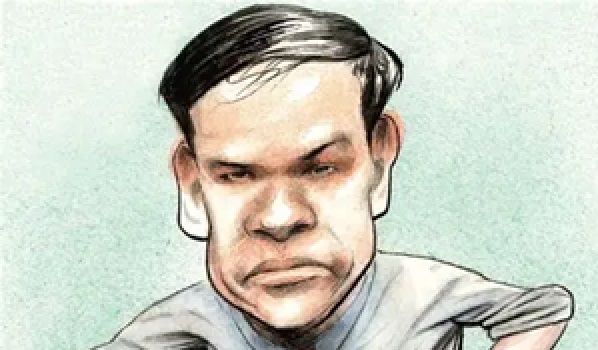
Marco Rubio, Senate Complicity, and the Open Return of Empire.
SCHEERPOST, January 8, 2026, By Joshua Scheer
The Oil Belongs to the United States?
Let’s begin—and end—with the thought that says everything about this moment: the oil belongs to the United States. It is a sentence so brazen, so logically bankrupt, that it barely disguises what U.S. policy toward Venezuela has become—a naked assertion of imperial entitlement dressed up as democracy promotion.
That logic was laid bare in a briefing delivered by Secretary of State Marco Rubio, who reportedly told senators: “We are going to take between 30 and 50 million barrels of oil. We’re going to sell it in the marketplace at market rates, not at the discounts Venezuela was getting.”
There it is.
Not liberation.
Not humanitarian concern.
Not international law.
Oil.
The Washington Post, in what can only be described as a puff piece for a war manager, crowned Rubio with a new title: “Viceroy of Venezuela.” The paper framed his role as his “most challenging yet,” admiring his command of details and his long-standing obsession with regime change in Caracas. What it did not seriously grapple with is the obvious question: since when does the United States appoint viceroys over sovereign nations in the 21st century?
An Insane Plan, Stated Out Loud
Democrats who attended classified briefings were far less impressed. Common Dreams captured the mood bluntly with its headline: “‘This Is an Insane Plan’: Democrats Fume After Briefing on Trump Plot to Steal Venezuela’s Oil.” After the session, Sen. Chris Murphy (D-Conn.) told reporters, “We learned a lot. I’m glad we had the briefing. But this is going to be a very rough ride for the United States.”
A rough ride—for whom? Venezuelans already crushed by sanctions? U.S. soldiers deployed without debate? Or lawmakers forced to defend the indefensible?
Sen. Tim Kaine (D-Va.) put it plainly: “We are four months into a sustained military operation. More than 200 ‘enemies’ have been killed. American troops have been injured. We have U.S. forces arranged around Venezuela. Yet neither the House nor the Senate have been willing to hold a single public hearing.”…………………………………………………………………………………………………………………………..
The question is why the president believes he has the authority to invade another country in the first place……………………..
Meanwhile, the answers—when they come—are evasive. Trump officials insist there are “no troops in Venezuela,” even as lawmakers describe sustained military operations and U.S. forces encircling the country. The contradictions pile up. The machine keeps moving.
Let’s be honest about what this is. The United States has run countless coups—successful and failed—across Latin America, including in Venezuela. What makes this moment different is not its morality, but its openness. This is not covert. This is not deniable. This is empire, stated plainly.
The Election Myth
Much is made—by Rubio and his allies—of a coming “transition” leading to free and fair elections, possibly headed by opposition figure María Corina Machado. But this talking point deserves scrutiny. Free elections are invoked ritualistically, even as economic strangulation, military pressure, and foreign interference define the political terrain.
Around the world, elections are shaped—often decisively—by outside investment, coercion, and information warfare. Venezuela is no exception. To pretend otherwise is political theater, not analysis.
A Viceroy, With Bipartisan Applause
Perhaps most disturbing is that Rubio’s ascent has not been rejected across party lines……………………
Ending Where We Began
The oil belongs to the United States. That is the assumption driving this policy. Strip away the rhetoric, the briefings, the editorials, and the bipartisan niceties, and what remains is an imperial presidency asserting control over another nation’s resources.
If democracy means anything, it cannot coexist with viceroys, resource seizures, and wars conducted without public consent. The question is no longer what is happening in Venezuela. It is whether anyone in Washington is willing to stop it.
There will be no shortage of briefings, no shortage of troubled statements, no shortage of bipartisan praise offered while the machinery of empire grinds forward. What is missing is friction—public, sustained, and impossible to ignore. Strikes, protests, calls to Congress—whatever it takes to break the insulation that allows empire to operate without consequence.
Empires do not end because their administrators lose confidence. They end when wars become politically unmanageable, when secrecy is shattered by demand, when hearings are forced, funding is contested, and silence is withdrawn.
History will not ask whether Marco Rubio was well briefed or whether senators expressed concern in private. It will ask who normalized this—and who refused to. On that question, quiet complicity will count as an answer. https://scheerpost.com/2026/01/08/marco-rubio-senate-complicity-and-the-open-return-of-empire/
Senate rejects Trump’s military threats against Venezuela with war powers vote
The Associated Press, LIVE 5 WCSC, Thu, 08 Jan 2026
WASHINGTON (AP) — The Senate advanced a resolution Thursday that would limit President Donald Trump’s ability to conduct further attacks against Venezuela, sounding a note of disapproval for his expanding ambitions in the Western Hemisphere.
Democrats and five Republicans voted to advance the war powers resolution on a 52-47 vote and ensure a vote next week on final passage. It has virtually no chance of becoming law because Trump would have to sign it if it were to pass the Republican-controlled House. Still, it was a significant gesture that showed unease among some Republicans after the U.S. military seized Venezuelan leader Nicolás Maduro in a surprise nighttime raid over the weekend.
Trump’s administration is now seeking to control Venezuela’s oil resources and its government, but the war powers resolution would require congressional approval for any further attacks on the South American country.
“To me, this is all about going forward,” said Missouri Sen. Josh Hawley, one of the five Republican votes. “If the president should determine, ‘You know what? I need to put troops on the ground of Venezuela.’ I think that would require Congress to weigh in.”
The other Republicans who backed the resolution were Sens. Rand Paul of Kentucky, Lisa Murkowski of Alaska, Susan Collins of Maine and Todd Young of Indiana.
Trump reacted to their votes by saying on social media that they “should never be elected to office again” and that the vote “greatly hampers American Self Defense and National Security.”
Democrats had failed to pass several such resolutions in the months that Trump escalated his campaign against Venezuela. But lawmakers argued now that Trump has captured Maduro and set his sights to other conquests such as Greenland, the vote presents Congress with an opportunity.
“This wasn’t just a procedural vote. It’s a clear rejection of the idea that one person can unilaterally send American sons and daughters into harm’s way without Congress, without debate,” said Senate Democratic leader Chuck Schumer of New York.
Lawmakers’ response to the Venezuela operation
Republican leaders have said they had no advance notification of the raid early morning Saturday to seize Maduro and his wife, Cilia Flores, but mostly expressed satisfaction this week as top administration officials provided classified briefings on the operation.
Sen. Tim Kaine, D-Va., who forced the vote on the resolution, said he believes many Republicans were caught off guard by the outcome. He said that Trump’s recent comments to The New York Times suggesting U.S. oversight in Venezuela could last for years — combined with details revealed in the classified briefings — prompted some lawmakers to conclude that “this is too big to let a president do it without Congress.”
The administration has used an evolving set of legal justifications for the monthslong campaign in Central and South America, from destroying alleged drug boats under authorizations for the global fight against terrorism to seizing Maduro in what was ostensibly a law enforcement operation to put him on trial in the United States.
Republican leaders have backed Trump…………………………
The rarely enforced War Powers Act
Trump criticized the Senate vote as “impeding the President’s Authority as Commander in Chief” under the Constitution.
Presidents of both parties have long argued the War Powers Act infringes on their authority. Passed in 1973 in the aftermath of the Vietnam War — and over the veto of Republican President Richard Nixon — it has never succeeded in directly forcing a president to halt military action.
Congress declares war while the president serves as commander in chief, according to the Constitution. But lawmakers have not formally declared war since World War II, granting presidents broad latitude to act unilaterally. The law requires presidents to notify Congress within 48 hours of deploying forces and to end military action within 60 to 90 days absent authorization — limits that presidents of both parties have routinely stretched. https://www.live5news.com/2026/01/08/senate-advances-resolution-limit-trumps-war-powers-after-venezuela-raid/
Hiroshima, Nagasaki urge Japanese government to uphold non-nuclear principles
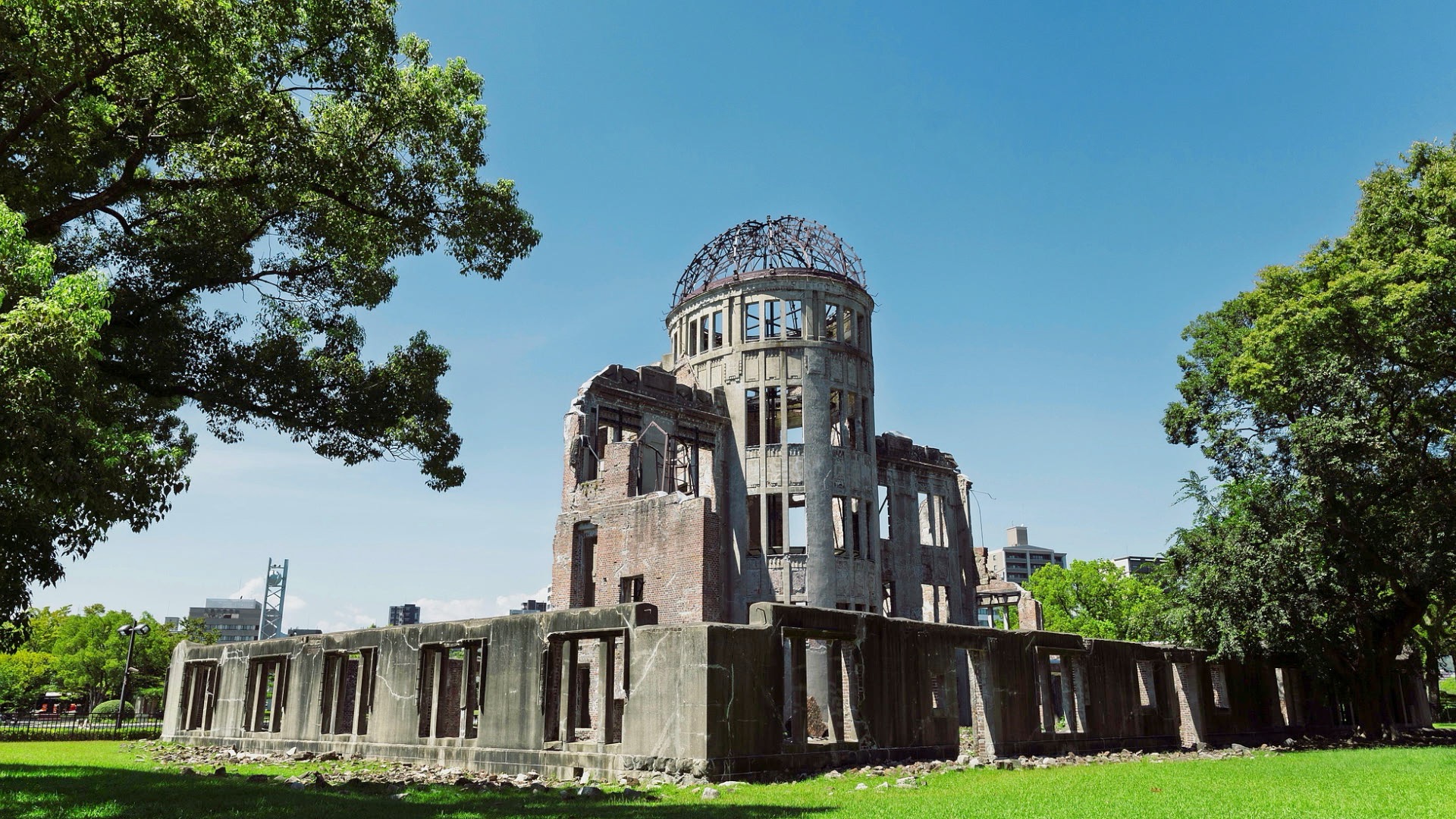
10-Jan-2026 CGTN. https://news.cgtn.com/news/2026-01-10/Hiroshima-Nagasaki-call-on-Japan-to-uphold-non-nuclear-principles-1JOBGW72YxO/p.html
The city assemblies of Hiroshima and Nagasaki have adopted statements urging the Japanese government to adhere to the country’s Three Non-Nuclear Principles, Kyodo News reported.
The Hiroshima City Assembly unanimously adopted its statement on Friday, pointing out that the ruling party’s attempt to revise the non-nuclear principles has caused concern, and strongly urging the Japanese government to take the feelings of people in the atomic-bombed cities seriously and to uphold the Three Non-Nuclear Principles, the report said.
The Nagasaki City Assembly passed its statement on Thursday by a majority vote, noting that successive Japanese governments have regarded the Three Non-Nuclear Principles as a national policy. It said the ruling party’s intended revision of the principles while amending the country’s security documents is totally unacceptable.
On August 6 and 9, 1945, in an effort to force Japan, which had launched a war of aggression, to surrender as soon as possible, the U.S. military dropped atomic bombs on Hiroshima and Nagasaki, respectively. The Three Non-Nuclear Principles – not possessing, not producing, and not allowing the introduction of nuclear weapons into Japanese territory – were first declared by then-Japanese Prime Minister Eisaku Sato in 1967 and formally adopted by parliament in 1971, establishing them as Japan’s basic nuclear policy. The National Security Strategy, one of the three documents approved by the Cabinet in 2022, states, “The basic policy of adhering to the Three Non-Nuclear Principles will remain unchanged in the future.”
Japanese media have previously reported that Prime Minister Sanae Takaichi is considering reviewing the third of the Three Non-Nuclear Principles, which prohibits nuclear weapons from entering Japan’s territory, when updating related documents.
Chris Hedges: Grand Illusion
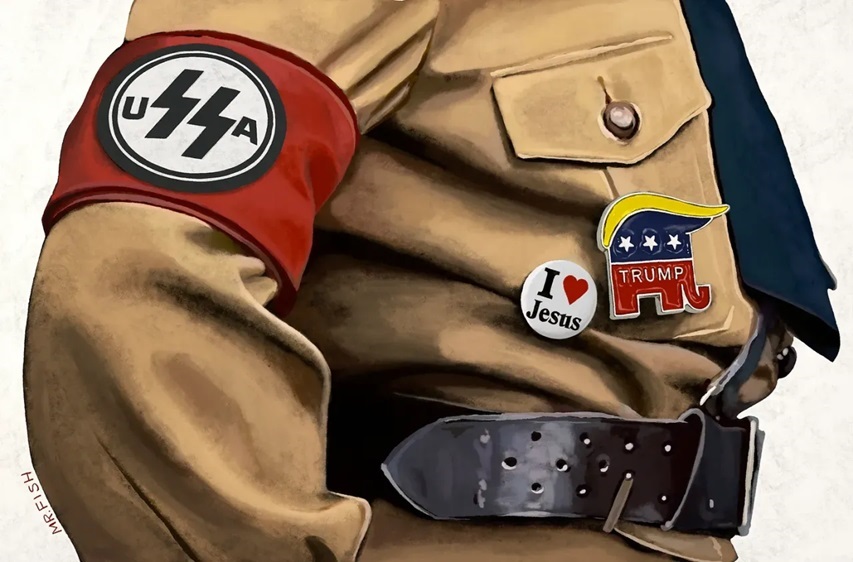
Gangster states have no need of diplomacy. Trump and Rubio, for this reason, have gutted the State Department, along with other forms of “soft” power that achieve influence without resorting to force, including the U.S. role in the United Nations
By Chris Hedges , ScheerPost
“We live in a world in which you can talk all you want about international niceties and everything else, but we live in a world, in the real world, Jake, that is governed by strength, that is governed by force, that is governed by power. These are the iron laws of the world that have existed since the beginning of time.” — Stephen Miller to Jake Tapper on CNN, Jan. 5, 2026.
“He who would live must fight. He who does not wish to fight in this world, where permanent struggle is the law of life, has not the right to exist. Such a saying may sound hard; but, after all, that’s how it is.” — Adolf Hitler in Mein Kampf
“The Fascist State expresses the will to exercise power and to command. Here the Roman tradition is embodied in a conception of strength. Imperial power, as understood by the Fascist doctrine, is not only territorial, or military, or commercial; it is also spiritual and ethical… Fascism sees in the imperialistic spirit — i.e., in the tendency of nations to expand — a manifestation of their vitality.” — Benito Mussolini in The Doctrine of Fascism
ll empires, when they are dying, worship the idol of war. War will save the empire. War will resurrect past glory. War will teach an unruly world to obey. But those who bow down before the idol of war, blinded by hypermasculinity and hubris, are unaware that while idols begin by calling for the sacrifice of others, they end by demanding self-sacrifice. Ekpyrosis, the inevitable conflagration that destroys the world according to the ancient Stoics, is part of the cyclical nature of time. There is no escape. Fortuna. There is a time for individual death. There is a time for collective death. In the end, with weary citizens yearning for extinction, empires light their own funeral pyre.
Our high priests of war, Donald Trump, Marco Rubio, Pete Hegseth, Stephen Miller and the Joint Chiefs of Staff Chairman Gen. Dan “Razin” Caine, are no different from the fools and charlatans who snuffed out empires of the past — the haughty leaders of the Austro-Hungarian Empire, the militarists in imperial Germany and the hapless court of Tsarist Russia in World War I. They were followed by the fascists in Italy under Benito Mussolini, Germany under Adolf Hitler and the military rulers of imperial Japan in World War II.
These political entities committed collective suicide.
They drank the same fatal elixir Miller and those in the Trump White House imbibe. They too tried to use industrial violence to reshape the universe. They too considered themselves to be omnipotent. They too saw themselves in the face of the idol of war. They too demanded to be obeyed and worshiped.
Destruction to them is creation. Dissent is sedition. The world is one-dimensional. The strong versus the weak. Only our nation is great. Other nations, even allies, are dismissed with contempt.
These architects of imperial folly are buffoons and killer clowns. They are ridiculed and hated by those rooted in a reality-based world. They are followed slavishly by the desperate and the disenfranchised. The simplicity of the message is its appeal. A magic incantation will bring back the lost world, the golden age, however mythic. Reality is viewed exclusively through the lens of ultranationalism. The flip side of ultranationalism is racism.
“The nationalist is by definition an ignoramus,” wrote Yugoslav-Serbian novelist Danilo Kiš. “Nationalism is the line of least resistance, the easy way. The nationalist is untroubled, he knows or thinks he knows what his values are, his, that’s to say national, that’s to say the values of the nation he belongs to, ethical and political; he is not interested in others, they are no concern of his, hell — it’s other people (other nations, other tribes). They don’t even need investigating. The nationalist sees other people in his own image — as nationalists.”
These stunted human beings are unable to read others. They threaten. They terrorize. They kill. The art of power politics between nations or individuals is far beyond their tiny imaginations. They lack the intelligence — emotional and intellectual — to cope with the complex, ever-shifting sands of old and new alliances. They cannot see themselves as the world sees them.
Diplomacy is often a dark and deceptive art. It is by its nature manipulative. But it requires an understanding of other cultures and traditions. It requires getting inside the heads of adversaries and allies. For Trump and his minions, this is an impossibility.
Skillful diplomats, such as Prince Klemens von Metternich, the Austrian Empire’s foreign minister who dominated European politics after the defeat of Napoleon, do so by crafting agreements and treaties such as the Concert of Europe and the Congress of Vienna. Metternich, no friend of liberalism, adroitly kept Europe stable until the revolutions of 1848…………………………………………………………………………………………………………….
Gangster states have no need of diplomacy. Trump and Rubio, for this reason, have gutted the State Department, along with other forms of “soft” power that achieve influence without resorting to force, including the U.S. role in the United Nations, the U.S. Agency of International Development, the U.S. Institute for Peace — renamed Donald J. Trump Institute of Peace after most of the board and staff were fired — and Voice of America.
Diplomats in gangster states are reduced to the role of errand boys. Hitler’s Foreign Minister, Joachim von Ribbentrop, whose primary experience in foreign affairs before 1933 was selling fake German champagne in Britain, appointed party hacks from the SA or Brownshirts — the paramilitary wing of the party — to diplomatic posts abroad. Benito Mussolini’s Foreign Minister was his son-in-law, Galeazzo Ciano. Mussolini — who believed that “war is to man what maternity is to woman” — later executed Ciano for disloyalty. Trump’s Special Envoy to the Middle East, Steven Charles Witkoff, is a real estate developer, often accompanied on diplomatic missions by Trump’s feckless son-in-law Jared Kushner.
The Italian philosopher Benedetto Croce quipped that fascism had created a fourth form of government, “onagrocracy,” a government by braying asses, to add to Aristotle’s traditional triumvirate of tyranny, oligarchy and democracy.
Our ruling class, Democrats and Republicans, piece by piece, dismantled democracy. In Germany and Italy, the constitutional state, as well, collapsed long before the arrival of fascism. Trump, who is the symptom, not the disease, inherited the corpse. He is making good use of it. https://scheerpost.com/2026/01/09/chris-hedges-grand-illusion/
British and European leaders have shown themselves weak and complicit in the kidnapping of Maduro.
Ian Proud, Jan 08, 2026, https://thepeacemonger.substack.com/p/british-and-european-leaders-have?utm_source=post-email-title&publication_id=3221990&post_id=183823495&utm_campaign=email-post-title&isFreemail=true&r=1ise1&triedRedirect=true&utm_medium=email
The US attack on the Venezuelan capital of Caracas and kidnapping of President Maduro and his wife was illegal under international law. British and European leaders tacitly supporting US actions through silence is weak and will damage further their reputations in the developing world.
The UN Charter was agreed in 1945 to ensure that countries no longer interfered in the sovereign affairs of other countries. Of course, that legal basis was built on shaky foundations, as the outline of post-war borders was complex and in many parts of the world disputed, including in Europe. The Second World War ended at a time when Britain and other European nations were accelerating their departure from colonialism, creating wholly new sovereign states based on former colonial boundaries.
The UN charter didn’t and does not try to rewrite the map of the world. Nor does it seek to impose a template for how countries are governed. The countries of the world continue to be led by a mix of monarchies, democracies and autocracies in many shapes and sizes.
No country has a right to impose its will or preferred mode of governance on another country, however dysfunctional that country may be. In the case of Venezuela, few would argue that it is a democracy in the purest sense, despite the holding of elections. That some countries consider prior Venezuelan elections to have been rigged is immaterial under the UN Charter. No third country can interfere violently in the affairs of another state, even if that state appears a violent dictatorship.
I personally do regard Nicolas Maduro as, at the very least, an authoritarian leader who is predisposed to undemocratic and repressive means to govern his people. But I could say the same about countless other countries, not only in Latin America but in Africa, the middle east and Asia.
Europe itself, while governed by seemingly democratic systems, has stood accused by the US in this past year of being anti-democratic by stifling free speech and choreographing the appearance of democracy with the help of a compliant media. The institutions of Europe are by design anti-democratic, as citizens do not have the opportunity directly to choose any of the six so-called Presidents in charge, nor their unelected aides-de-camp, however they are called.
So, love him or, in many liberal cases, loathe him, western leaders aren’t given a say under international law about whether Nicolas Maduro is the rightful leader of Venezuela.
In the case of the US, that country has justifiable concerns about the flood of drugs channelled through Venezuela that reach its shores and ruin the lives of people addicted to substance misuse. This is undoubtedly a legitimate national security interest for the Americans and gives them the right to act to prevent these hostile acts, including, should they choose, through the use of force. Without getting into the wider debate about US attacks on alleged drug boats, those actions, nevertheless, are still governed by international human rights law.
They do not give the USA the right forcibly to depose a serving President, however unpalatable a character he may be.
That UK and European leaders have tacitly, though their silence of US actions, come out in support of the overthrow of Maduro speaks more of international relations, not international law.
They have set themselves up as judge and jury from affair, on the basis that they agree with the US assessment that Maduro is the wrong sort of leader for Venezuela. For all the pontification about letting Venezuelan people decide, Euro-elites aren’t bright enough to realise that they are aiding and abetting Donald Trump in making a choice on Venezuela’s behalf.
This theatre played out vividly at the UN Security Council on Monday 5 January in which the various European states represented at the table, one by one, refused even to mention the actions of the US in overthrowing Maduro in their statements. Echoing Prime Minister Keir Starmer’s refusal to denounce US actions, the UK’s Representative at the table, James Kariuki, who unfortunately I know of old, stuck to remarking on the undemocratic nature of Nicolas Maduro, the need for a transition to democracy and to abide by international law. And nothing else.
No mention of the fact that US actions were in breach of international law. No mention of the unilateral military attack by the US on Venezuela’s capital nor the kidnapping of Maduro. Simply, Maduro is bad, too bad, let’s find someone new to replace him, of whom, implicitly, we approve.
Every other European state at the table, including Greece, France, Latvia and Denmark, offered a slightly longer-winded version of the same position. The Danes were a little more nuanced, given their not misplaced fear, that they may be next, if America decides to make a move to annex Greenland illegally.
And therein the root cause of the British and European positioning. European foreign policy appears to rest almost entirely on a desire not to offend President Trump.
In London, Riga, Paris and Copenhagen, leaders still cling to the hope that President Trump will, through flattery, still support their efforts to maintain a proxy war in Ukraine.
That if they refuse to denounce him over Venezuela, he might eventually come round again to the idea of regime change in Moscow, through a war in Ukraine that leaders continue to fantasise is winnable when all the evidence suggests otherwise.
So, the requirements of international law have become entirely incidental to the foreign policy imperative of defeating President Putin and, hopefully, perhaps, seeing him, cuffed and blindfolded, whisked off in a US military helicopter to a kangaroo court in New York. Everything else, including the requirements of the UN Charter, is simply inconvenient detail.
Yet, ultimately, Britain and Europe remain weak and unable substantively to influence President Trump’s actions, rendering them weak and as passengers on a runaway US train as it relates to Ukraine policy.
Unfortunately, countries across the developing world – including the Latin American countries at the Security Council who to varying degrees denounced the US move – will have been shocked by the position Britain and Europe has taken. That their leaders are clinging on vicariously to a western hegemon, in which the US acts as global policemen, and they stand back, aghast, while offering obsequious applause.
The main beneficiary of this will, of course, be China and to some extent Russia who have progressively railed against western dominance through alternative global political fora for dialogue and mutually beneficial cooperation. I should think the queue of countries lining up to join BRICS will grow longer after this illegal US attack on Venezuela.
Nuclear Power: Private Sector -Question for UK government
Question for Department for Energy Security and Net Zero
UIN HL13206, tabled on 18 December 2025
Lord Spellar: To ask His Majesty’s Government when they intend to publish a new framework for a private sector route to market for advanced nuclear
technologies.
Lord Vallance: The government will provide a framework that
will set out a pathway for privately led advanced nuclear projects, this framework will be published early this year.
Hansard 6th Jan 2026 https://questions-statements.parliament.uk/written-questions/detail/2025-12-18/HL13206
Delcy Rodríguez swears to uphold sovereignty of the nation as acting president of Venezuela
Rodríguez promised to respect the constitution and uphold national sovereignty following the US attack on Venezuela, which left more than 80 people dead and resulted in the kidnapping of President Nicolás Maduro and his wife.
January 08, 2026 by Pablo Meriguet, https://peoplesdispatch.org/2026/01/08/delcy-rodriguez-swears-to-uphold-sovereignty-of-the-nation-as-acting-president-of-venezuela/
On January 5, Delcy Rodríguez assumed the presidency of Venezuela. The former vice president swore before parliament that she would uphold the constitution and the sovereignty of the nation after the US attack on January 3, in which the US military took President Nicolás Maduro and his wife Cilia Flores prisoner.
The president of the National Assembly, Jorge Rodríguez, urged the president to protect Venezuela “for her honor, for the people of Venezuela, for the example of the Liberators of America to zealously guard our sacred territory.”
Delcy Rodríguez stated that she accepted the task under very difficult circumstances, but that she would not rest until Venezuela was a free, sovereign, and independent nation. “I come with pain for the suffering that has been caused to the Venezuelan people after an illegitimate military aggression against our homeland. [There are] two heroes whom we have as hostages in the United States of America: President Nicolás Maduro and the first combatant of this country, Cilia Flores,” she told Venezuelan parliamentarians.
Rodríguez also promised to ensure an administration that guarantees peace for Venezuelans: “[We will build] a government that provides social happiness, political stability, and political security. [I ask all sectors of Venezuelan society to] move Venezuela forward in these terrible times of threat to the stability and peace of the nation.”
Although Rodríguez initially stated in a Council of Ministers meeting that Venezuela has only one president, Nicolás Maduro, a Supreme Court ruling ordered the vice president to assume the office of president to avoid a power vacuum.
The weight of the most dangerous presidency on the planet
Rodríguez has insisted in her recent speeches that her administration does not imply a break with the Chavista process. In this regard, she has taken every opportunity to demand Maduro’s release and condemn the US military attack. On January 6, Rodríguez declared seven days of national mourning for the death of the “young martyrs” who “gave their lives defending Venezuela and President Nicolás Maduro.”
However, Rodríguez has now inherited an extremely difficult task while in the crosshairs of the most powerful army in the world. Trump himself demanded “full access” to natural resources, while warning of new attacks: “If [the new government] doesn’t behave, we will launch a second attack.”
Trump also stated that major US oil companies will begin operating in Venezuela and that, in addition to making significant profits, they will have to rebuild the South American country’s oil industry.
It is not yet clear what agreements Rodríguez has reached with a US administration that has demonstrated its military power and whose pressure on Caracas has reached levels of violence never before seen against Venezuela.
In this regard, with the threat of more deadly attacks on one hand, a virtually devastated air defense system on the other, and the top leader of Chavismo under arrest, Rodríguez does not have much room for maneuver or negotiation.
Hence, Trump has assured that Venezuela will deliver between 30 and 50 million barrels of oil (worth USD 2.8 billion) in the coming months, and news about the negotiations was confirmed by Venezuelan state oil company PDVSA on Wednesday, January 8.
However, it appears that the Trump administration also recognizes, for the time being, Chavismo as the primary national actor with whom it can negotiate and achieve its geopolitical and economic objectives. Trump has publicly rejected María Corina Machado as the new leader of Venezuela and the idea that elections should be called immediately.
But it is still too early to draw conclusions in a situation that remains unclear amid the dust of missiles, gunfire, and collapsed buildings following the January 3 attack. What is certain is that communication channels have not been closed, nor have the agreements that, it seems, will continue to be made to avoid a new military scenario.
DePetris’ Trump foreign policy accomplishments more dubious than prideful
Walt Zlotow… West Suburban Peace Coalition Glen Ellyn IL 3 Jan 26
In his Chicago Tribune foreign policy commentary ‘The foreign policy moves Donald Trump got right this year’, Daniel DePetris largely ignores reality.
He praises Trump for brokering the November 10 ceasefire agreement in Gaza without mentioning that for nearly 10 months Trump provided Israel with billions in weapons to complete the obliteration of Gaza’s 139 square miles. With over 100,000 dead and the remaining 2,200,000 Palestinians facing death from forced starvation and withdrawal of medicine, the world rightly calls Israeli US policy a genocide. So yes, DePetris is correct to call Trump’s slowing down Israel’s ferocious genocide thru ceasefire “preferable” to its continuance. But pretending Trump is simply a neutral peace broker of the US enabled Israeli genocide is deplorable.
DePetris is also correct to praise Trump for seeking to broker an end to the Russo Ukraine war. But in claiming the biggest obstacle with Trump’s diplomacy is Trump’s “wild inconsistency”, DePetris misses a far greater obstacle: Russia and Ukraine’s diametrically opposed and irreconcilable goals to end the war. That makes Trump’s sincere efforts at peace daunting, if not impossible. At this stage, it is nowhere near an accomplishment.
DePetris whiffs on his third claimed Trump foreign policy accomplishment, the overthrow of the Syrian Bashar Assad regime, replaced by former al-Qaeda terrorist Ahmad al-Sharaa.
DePetris, like Trump, rehabilitates a US enemy dedicated to killing Americans in Iraq in his previous life. Why? Because al-Sharaa deposed the hated Assad whom the US sought to oust since the 2011 Syrian civil war to remove one of Israel’s regional enemies. This had nothing to do with uplifting the Syrian people. Indeed, the billions in weapons America poured into the Syrian civil war was responsible for much of the hundreds of thousands of deaths DePetris attributes solely to Assad. With the secular Assad gone, Syria’s Christians, Alawites, and others not part of al Sharaa’s extremist religious base are suffering horribly. Their fate was never a concern of Trump and his champion DePetris who view the destabilization of Syria as a US win for expanded Israeli Middle East hegemony.
Chicago Tribune’s readers deserve more than a sanitized view of Trump’s machinations in Gaza, Ukraine and Syria. They deserve the truth.
Venezuela declares state of emergency, calls for international solidarity
January 4, 2026, https://gpja.org.nz/2026/01/04/venezuela-declares-state-of-emergency-calls-for-international-solidarity/
Editor’s note: The following is the official communiqué issued by the Bolivarian Republic of Venezuela on January 3, 2026, in response to U.S. military strikes on Caracas and surrounding areas. President Trump announced the operation on social media early Saturday morning, claiming the capture of President Nicolás Maduro. International reactions have been swift, with Russia, Iran, China, Cuba, Colombia, Chile, Mexico, Brazil, and Belarus condemning the strikes. UN special rapporteur Ben Saul called it “illegal aggression” and an “illegal abduction.” Venezuela has requested an emergency UN Security Council meeting.
COMMUNIQUÉ
BOLIVARIAN REPUBLIC OF VENEZUELA
The Bolivarian Republic of Venezuela rejects, condemns, and denounces to the international community the grave military aggression perpetrated by the current government of the United States of America against Venezuelan territory and population in civilian and military localities of the city of Caracas, capital of the Republic, and the states of Miranda, Aragua, and La Guaira.
This act constitutes a flagrant violation of the United Nations Charter, particularly its Articles 1 and 2, which enshrine respect for sovereignty, the legal equality of states, and the prohibition of the use of force. Such aggression threatens international peace and stability, specifically in Latin America and the Caribbean, and gravely endangers the lives of millions of people.
The objective of this attack is none other than to seize Venezuela’s strategic resources, in particular its oil and minerals, attempting to forcibly break the political independence of the nation. They shall not succeed. After more than two hundred years of independence, the people and their legitimate government remain steadfast in defense of sovereignty and the inalienable right to decide their own destiny. The attempt to impose a colonial war to destroy the republican form of government and force a “regime change,” in alliance with the fascist oligarchy, will fail as all previous attempts have.
Since 1811, Venezuela has confronted and defeated empires. When in 1902 foreign powers bombarded our coasts, President Cipriano Castro proclaimed: “The insolent foot of the foreigner has profaned the sacred soil of the Homeland.” Today, with the spirit of Bolívar, Miranda, and our liberators, the Venezuelan people rise once again to defend their independence against imperial aggression.
To the Streets, People
The Bolivarian government calls upon all social and political forces of the country to activate mobilization plans and repudiate this imperialist attack. The people of Venezuela and its Bolivarian National Armed Forces, in perfect popular-military-police fusion, are deployed to guarantee sovereignty and peace.
Simultaneously, Bolivarian Peace Diplomacy will submit the corresponding denunciations before the United Nations Security Council, the Secretary-General of said organization, CELAC, and the NAM, demanding condemnation and accountability from the United States government.
President Nicolás Maduro has directed all national defense plans to be implemented at the appropriate time and under appropriate circumstances, in strict adherence to the provisions of the Constitution of the Bolivarian Republic of Venezuela, the Organic Law on States of Exception, and the Organic Law on National Security.
In this regard, President Nicolás Maduro has signed and ordered the implementation of the Decree declaring a State of External Commotion throughout the national territory, to protect the rights of the population, the full functioning of republican institutions, and to immediately transition to armed struggle. The entire country must activate to defeat this imperialist aggression.
Likewise, he has ordered the immediate deployment of the Command for the Comprehensive Defense of the Nation and the Comprehensive Defense Directional Organs in all states and municipalities of the country.
In strict adherence to Article 51 of the United Nations Charter, Venezuela reserves the right to exercise legitimate defense to protect its people, its territory, and its independence. We call upon the peoples and governments of Latin America, the Caribbean, and the world to mobilize in active solidarity against this imperial aggression.
As Supreme Commander Hugo Chávez Frías stated, “In the face of any circumstance of new difficulties, however great they may be, the response of all patriots… is unity, struggle, battle, and victory.”
Caracas, January 3, 2026
1 This Month

18 March Webinar @ 1 PM EST: An Assessment of SMR Projects: The Case of Canada
register for the zoom:
https://us02web.zoom.us/webinar/register/WN_o8BIIOUvQ2ONJR1nta65DQ#/registration

of the week – STOP SMALL MODULAR REACTORS IN CANADA
To see nuclear-related stories in greater depth and intensity – go to https://nuclearinformation.wordpress.com
-
Archives
- February 2026 (256)
- January 2026 (308)
- December 2025 (358)
- November 2025 (359)
- October 2025 (376)
- September 2025 (258)
- August 2025 (319)
- July 2025 (230)
- June 2025 (348)
- May 2025 (261)
- April 2025 (305)
- March 2025 (319)
-
Categories
- 1
- 1 NUCLEAR ISSUES
- business and costs
- climate change
- culture and arts
- ENERGY
- environment
- health
- history
- indigenous issues
- Legal
- marketing of nuclear
- media
- opposition to nuclear
- PERSONAL STORIES
- politics
- politics international
- Religion and ethics
- safety
- secrets,lies and civil liberties
- spinbuster
- technology
- Uranium
- wastes
- weapons and war
- Women
- 2 WORLD
- ACTION
- AFRICA
- Atrocities
- AUSTRALIA
- Christina's notes
- Christina's themes
- culture and arts
- Events
- Fuk 2022
- Fuk 2023
- Fukushima 2017
- Fukushima 2018
- fukushima 2019
- Fukushima 2020
- Fukushima 2021
- general
- global warming
- Humour (God we need it)
- Nuclear
- RARE EARTHS
- Reference
- resources – print
- Resources -audiovicual
- Weekly Newsletter
- World
- World Nuclear
- YouTube
-
RSS
Entries RSS
Comments RSS
 nuclear-news